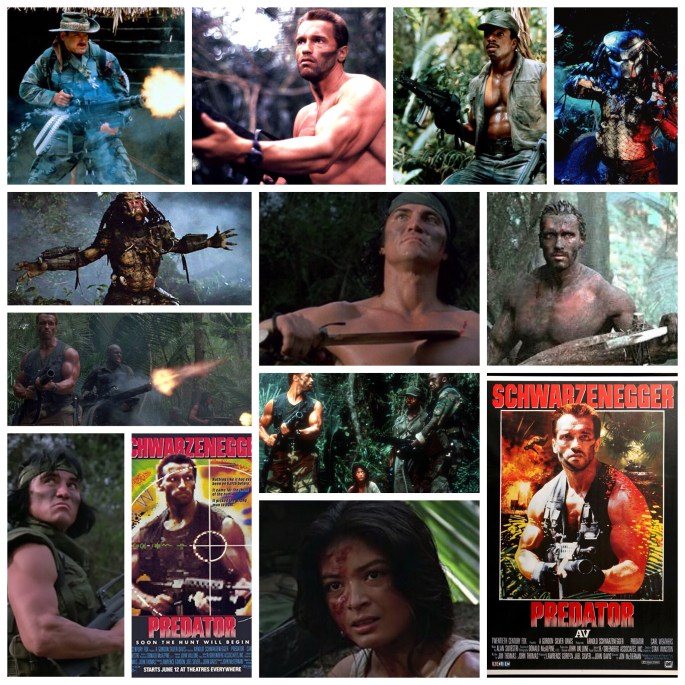
John McTiernan’s Predator

Action doesn’t get more rough, badass or straight up entertaining than John McTiernan’s Predator. The popcorn summer movie mantle was designed for stuff like this and throughout the 80’s and 90’s each one made its own influences and shaped the way the blockbuster has evolved. This is arguably Arnold Schwarzenegger’s best, just behind or right along side the Terminator films. Packed to the gills with the kind of gruesome, blood soaked action intrigue we don’t see much anymore or at least without glossy CGI. Here the violence is tactical, doused in gallons of blood and amped up for maximum impact, like when Arnie’s Dutch and his team of rough n’ ready mercs stumble upon bodies that have been skinned alive. Called in for a routine black ops mission in the jungles of Central America, they discover there’s something far worse out there than rebels, and that something happens to be an eight foot tall trophy hunter from another galaxy, with whiplash dreadlocks and a face that would give Freddy Krueger nightmares. He’s essentially an extraterrestrial big game hunter who picks off humanity’s toughest customers in the ultimate intergalactic safari, and Arnie happens to be right in his path. His team is made up of the most colourful badasses the 80’s has to offer including wiseass Jesse Ventura, jumpy Carl Weathers, spooked out Bill Duke and stoic tracker Sonny Landham, who’s my favourite by far (“there’s somethin in that jungle, and it ain’t no man”). Also on their team is Shane Black, of all people, which I didn’t realize until my most recent rewatch but it makes sense since he’s the mastermind behind this fall’s The Predator, which I’m very excited for. The highest praise doesn’t even do this film justice; it’s simply one of those ones that isn’t even up for debate in terms of quality, it practically spawned its own genre. Arnie & Co. light up the jungle with enough heavy artillery to launch a coup, the Predator uses cunning tactics and brutal tricks of its own to hunt them one by one, and the whole region erupts with the sound, fury, carnage and commotion of their fight for survival. This has gone on to produce a sequel (which is just as brilliant, fight me), a Robert Rodriguez helmed update (also great), a couple crossovers with the Alien franchise (which were just plain awful) and the aforementioned Shane Black rendition. This started it though, from Arnie chomping up cigar after cigar to Ventura levelling the trees with a giant mini gun to Landham feverishly taking on the Predator with just his 13 inch hunting knife, it’s an action palooza that’s very of it’s time and therefore refreshingly un-PC (I trust in black to keep that spirit alive for his version), and has stood the time as a gold standard of action sci-fi genre heaven. Don’t forget to get to that chopper.

-Nate Hill
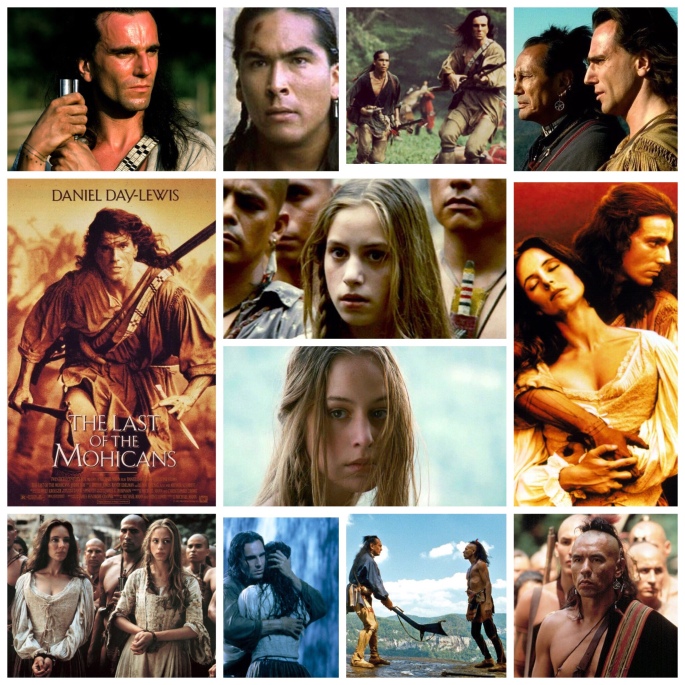
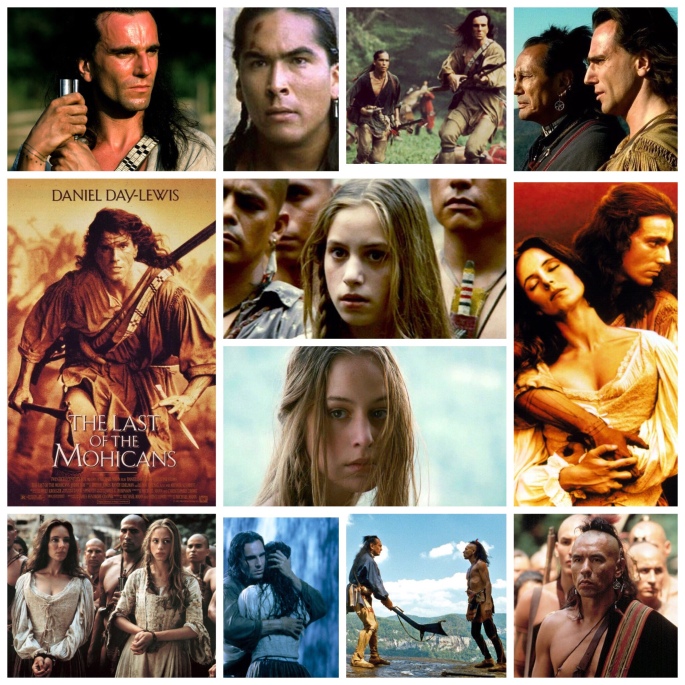
Michael Mann’s The Last Of The Mohicans

Before Terrence Malick lyrically explored the relationship between settlers, natives and nature in The New World, Michael Mann crafted the emotionally gripping, beautifully feral The Last Of The Mohicans. Take Mann out of his comfort groove of big city crime epics and whatever new avenue he explores is going to be incredibly fascinating (his much forgotten, sadly panned The Keep is further evidence). Trading in looming urban skyscrapers for equally imposing trees of the frontier, high powered weaponry for one badass long-shot rifle and the onslaught of rapid fire combat for incendiary cannon fire, the colonial times suit him splendidly and he rocks this period piece for all its worth. Daniel Day Lewis is a force of nature as Nathaniel Hawkeye, the white man raised by his adoptive father (Russell Means) and brother (Eric Schweig) in the wild. Madeleine Stowe is a dark haired candle of radiance and fiercely spirited as the lovely Cora Munro, brought from the prim, lacy traditions of Olde England out to the wild, uncompromising new land, with her impressionable young sister (Jodi May is low key brilliant). Wes Studi gives the bitter hearted warrior Magua a steady grace and brutal resolve. The film is lovingly made, sweeping from thundering battles to cascading waterfalls to meticulously constructed war forts to uneasy treaties to verbose politics to romance that stirs the heart and unlocks the tear ducts. But it’s all about those last twenty minutes, man. Holyyy fuck does this movie have an ending. When the final, white knuckle climax happens atop the scenic yet unforgiving Promentory Ridge, hearts, bones and dreams are broken as all the characters collide in a tragic, inevitable confrontation that leaves fire in your heart and tears in your eyes. James Newton Howard and Trevor Jones provide a legendary, soul stirring musical score that swells for the final act and carries it to transcendent heights. Mann directs with a compassionate, objective eye, never designating anyone as the good or bad guy, but simply showing us human beings fighting for survival, love and revenge in a land only just finding its cultural identity. A real classic and one of the best of the 90’s. Oh, and avoid the director’s cut at all costs. That’s not usually advice I’d give for any film but Mann somehow thought it necessary cut an incredibly important final scene of dialogue between Lewis, Means and Stowe that gives thematic weight to the story and caps off the characters arcs gorgeously. Rookie move, Michael, that’s a key scene and bookends the film beautifully.

-Nate Hill

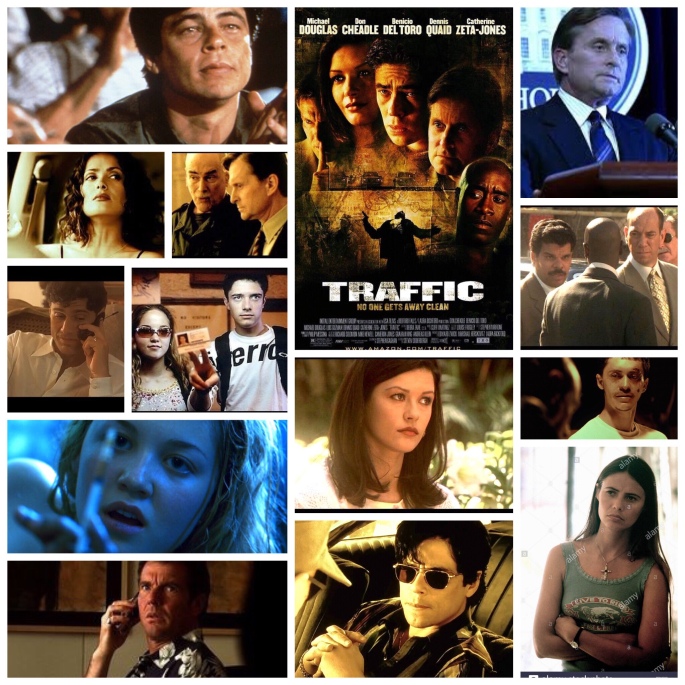
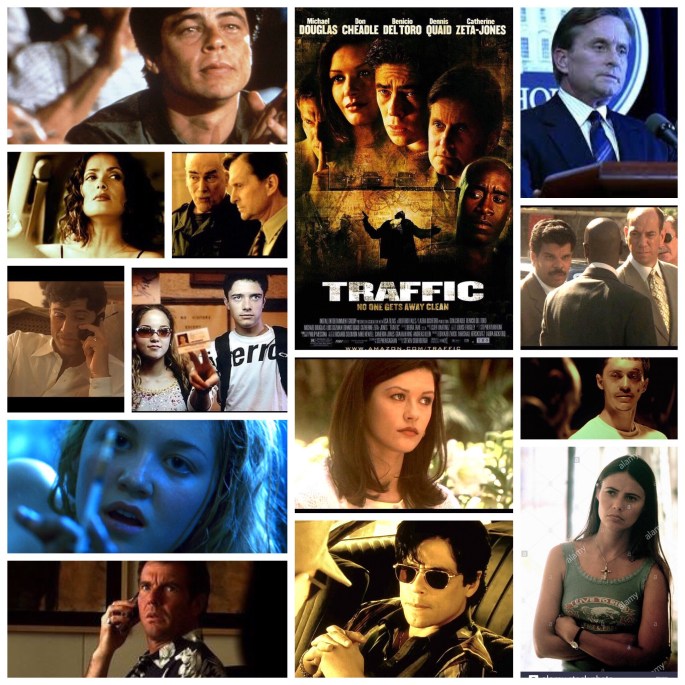
Steven Soderbergh’s Traffic

I feel like the one thing to take away from Steven Soderbergh’s Traffic is that the war on drugs isn’t working in any sense. That’s the short answer, but at nearly three hours runtime, Soderbergh isn’t interested in any kind of short answers, let alone clean cut, definitive or resolute ones that help anyone sleep at night. It’s a sprawling, complex international labyrinth of a film that scans every faction from the loftiest echelons of American politics to the poorest slums of Mexico, not necessarily looking for answers but digging up new questions and conundrums. In Washington, the president elects a straightforward family man (Michael Douglas) as the new drug czar and face of the crusade, except that his daughter (Erika Christensen) is knee-deep in hard drug addiction and heading down a dark path. Across the border, a Mexican cop (Benicio Del Toro, fantastic) tries to prevent corruption from eating away at his country and the soul of his partner. Back stateside, two undercover narcs (Luis Guzman and Don Cheadle) prep a captured mid level smuggler (Miguel Ferrer stealing scenes like nobody’s business) to testify against the higher ups. The wife (Catherine Zeta Jones) of an imprisoned kingpin (Steven Bauer, sadly only glimpsed briefly) deals with her husband’s enemies while his slick dick lawyer (Dennis Quaid) eyes her up for the taking. A scary Mexican military General (Tomas Milian) fights drug running for his own mystery goal, and many other stories play out both in the US and Mexico. Soderbergh gets together a treasure chest of cameos and supporting talent that includes the likes of Clifton Collins Jr., Emilio Riveria, Topher Grace, Peter Riegart, James Brolin, Albert Finney, Marisol Padilla Sanchez, Viola Davis, John Slattery, Yul Vasquez, Jack Conley, Benjamin Bratt, Salma Hayek and more. This isn’t a tunnel vision action flick or even your garden variety ensemble crime piece, there’s a distracted, fractured feel to the narrative that no doubt mirrors the very difficult nature of how this all works. Opinions and alliances shift, people die, others prosper and it all kind of seems for nought, except that almighty dollar. Del Toro and Douglas fare best in terms of bearing witness to it all; both are changed men by the time their final scenes roll around and the arcs come full circle. They anchor the vast network of people from respective sides of the border, showing the multilayered damage that such a problem, and the ‘war’ against it unleashes. Endlessly fascinating film.

-Nate Hill

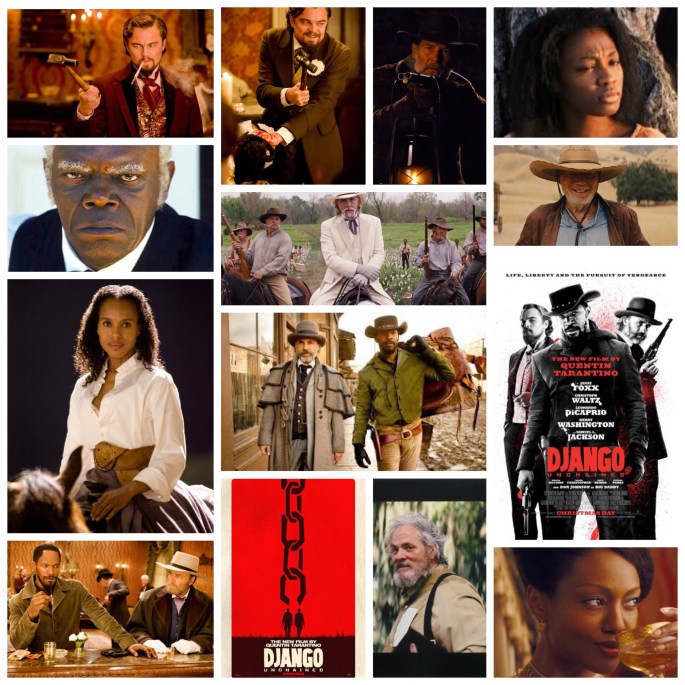
Quentin Tarantino’s Django Unchained

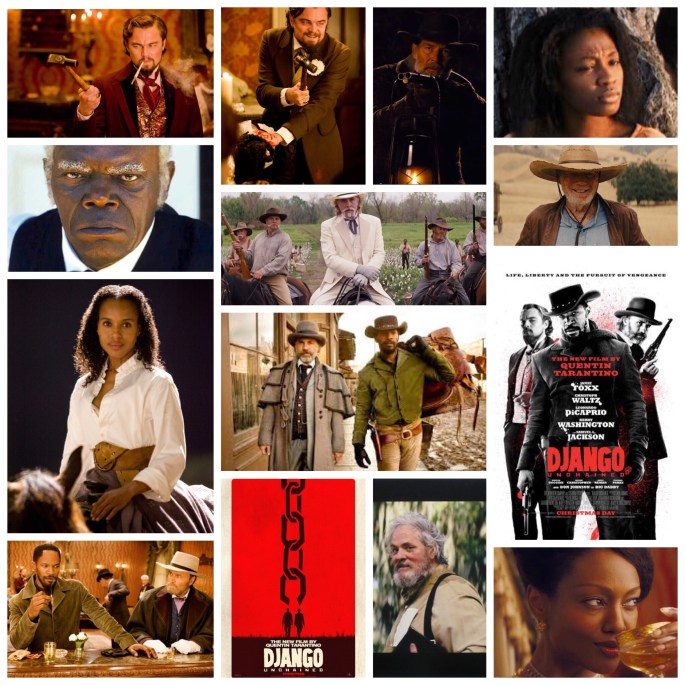
Quentin Tarantino’s Django Unchained really and truly feels like the old school exploitation epics that he was going for in everything from style, music, dialogue and especially pacing. Movies were longer back then in more ways than just length, which sounds odd so I’ll try and explain: Django has a great big laconic violent narrative that takes its time like a talkative houseguest and lingers for a while, until it seemingly ends. Then after that ending, there’s like another forty minutes of movie after, as if somehow with this one we discovered that staying past the credits magically extends the film into further, hidden acts. Seems crazy now but that’s the way some movies were back then. People have said that that feels lopsided and is a downfall for Django, but I disagree and think it gets a lot of it’s charm from that structural padding, no doubt purposeful on QT’s part. It’s also some of the most colourful, flat out ballistic and fun pieces he’s ever done. Post Kill Bill, he really delved into the past for some specific genre stabs at various key time periods, in some cases even rewriting history to meet his pulpy, shock ‘n awe oeuvre. Unchained tells the story of intense self freed slave Django (Jamie Foxx), jovially verbose bounty hunter Dr. King Schultz (Christoph Waltz, the soul of the picture), bratty, psychopathic plantation baron Calvin Candie (Leonardo DiCaprio refreshingly cast against type), and a whole sweaty myriad of other cowboys, slaves, businessman and opportunists in a very vivid Old West. Django and King aim to free his imprisoned wife Broomhilda (Kerry Washington) from Candieland, a hellish property ruled over by traitorous head house slave Steven (cantankerous Samuel L. Jackson) and hordes of vicious, tumbleweed thugs. To say violence ensues is a big old understatement; the blood flows like Niagara here, the heads get shot off in double digit count and bullets tear through people like they’ve got barbed wire on them. Hyper stylized, yes, but never a case of style over substance, as QT’s scripts always see to. The friendship between King and Django is allowed to percolate like their tin campfire coffee pot long before any serious chaos ensues, these two make a stalwart pair. DiCaprio is a grinning antagonist whose heinous personality is obvious in Waltz’s gradual revulsion, a setup ripe with gleeful, knee slapping suspense. Joining them is an all star supporting cast including James Remar in sly dual roles, James Russo, Zoe Bell, Miriam F. Glover, Russ Tamblyn, Amber Tamblyn, M.C. Gainey, Walton Goggins, Laura Cayouette, Dennis Christopher, Dana Gourrier, Franco Nero, Don Stroud, Bruce Dern, Michael Bowen, Robert Carradine, Jonah Hill, Lee Horsley, Tom Savini, James Parks, QT himself with a horrendous Aussie accent, a Michael Parks cameo and Don Johnson as a hilarious plantation pimp called Big Daddy. The soundtrack samples everything from Rick Ross to Morricone to Johnny Cash to amp up the proceedings, and cinematography traverses rough hewn deserts, snowy peaks and buzzing bayous to provide sharp, succinct atmosphere for this extreme yarn to play out in. QT’s career comes in two halves for me: The hard boiled, present day set gangster flicks that segued into Kill Bill, still set in our times. For the second half he’s gone historical and turned up the dial on violence, characterization, action and colour, and Django can arguably be called the showcase picture in latter day Tarantino. It’s big, bold, audacious,

unapologetic and I love every second of it.

-Nate Hill

William Monahan’s Mojave

William Monahan‘s Mojave is garbage dressed up in hopeful noir tropes, a flick that could go either way when you see the promising trailer, but ultimately ends up as the little movie that tried, and failed pretty darn bad. What works, or at least helps it limp through its extremely violent final act, is a performance from Oscar Isaac that’s a lot of fun, if never exposited very well. It’s like The Shining by way of The Dark Half but with less King and more paradoxically muddled pseudo supernatural desert pulp, which admittedly sounds great when I write it like that but really is just repetitive and frustrating. Garrett Hedlund does a moody turn as a morally twisted Hollywood screenwriter who is ready to punch his own ticket. On a spontaneous solo trip out into the desert, he meets a mysterious, sinister weirdo (Isaac) who causes nothing but trouble and chaos from the moment he enters the narrative. Latching onto Hedlund, he follows him back to the city, makes his life hell and they slowly play a circular game of cat and mouse that the filmmakers don’t quite realize is only their own narrative circling the drain from being too exhausted and deliberately oblique. Walton Goggins shows up as a sleazy Hollywood figure and Mark Wahlberg has an amusing cameo as a producer, but it’s mostly Isaac growling out dark, nonsensical platitudes and not making much sense, despite being pretty entertaining in his efforts and putting in good villain work. Parts of this seem to have come from a better movie where… I dunno, where things actually make sense, but the way everything is organized and presented here is one big shitty head scratcher, and misses the dartboard overall. Pass.

-Nate Hill

Peter Berg’s Mile 22

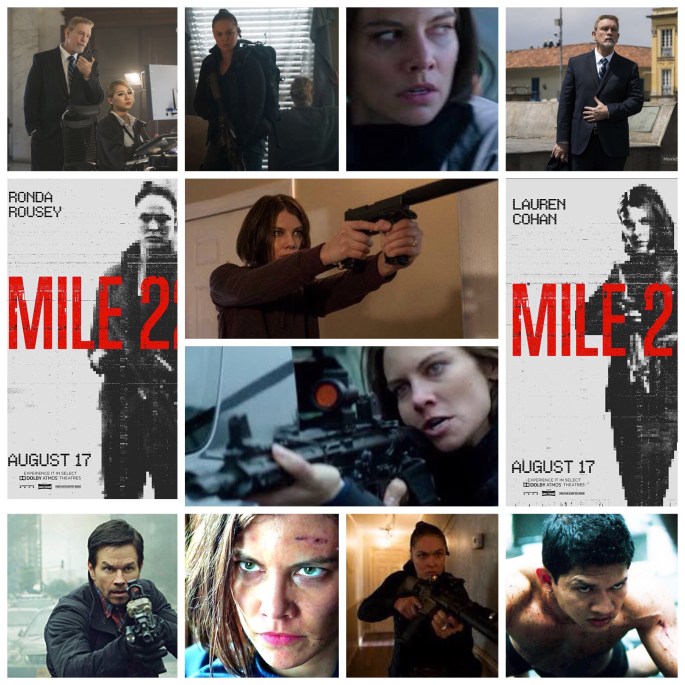
Peter Berg’s Mile 22 is one of the weirder ones I’ve seen this year, in a good way I suppose, or rather just a… weird way. It’s a hardcore action flick and a lot pulpier than his past two efforts (the fantastic Deepwater Horizon and the so-so Patriot’s Day), with a cool cast of tough guys and gals involved in some really applause worthy set pieces and sequences of extreme violence. Mark Whalberg heads up a covert Bourne-esque unit called Overwatch, who take the assignments no one else will and are remote handled by a team of caffeinated techies headed up by John Malkovich, quirky as always. Joined by Lauren Cohan, Rhonda Rousey and others, he’s assigned to protect and transport an Indonesian ex-cop and defector (The Raid’s Iko Uwais) across town and fight off hordes of corrupt officials, terrorists and more. The fight scenes and car chases are brilliant, CGI bereft, next level brutality that should be proud, but here’s the thing: Berg goes off the rails in the script and characterization department of his direction. Whalberg’s character is a hyper annoying, verbally abusive loudmouth whose lengthy monologues berating both enemies and his own team (Malkovich even tells him to shut the fuck up over coms at one point) become really tiresome and grating really fast. I’m not sure what they were going for with his character, but it doesn’t quite work and resulted in me just wanting to bitch slap the guy. Also, as cool as the film’s whopper of a twist is, it doesn’t follow through with a proper ending and I couldn’t tell if they just forgot to wrap it up or if they’re trying to set it up for a sequel, which is a ballsy assumption on their part. Nevertheless it’s still a wicked sharp juggernaut of a flick, with the rest of the cast really giving ‘er. Cohan was my favourite, she’s dynamic and adds the most to her role, while Rousey, although great in her brief appearance, doesn’t get a whole lot to do. Uwais is explosive as ever and gets the best action moments, especially a blood soaked, bone shattering close quarters ambush in an infirmary where he lays waste to his enemies using any medical instruments in his path. An interesting flick, but I feel like Berg overthinks his writing sometimes and throws around too much strained quirk and awkward flourish when he should be focusing on the task at hand, which in this case is making a solid action picture. He succeeds about two thirds of the way in that goal.

-Nate Hill

Albert Hughes’s Alpha

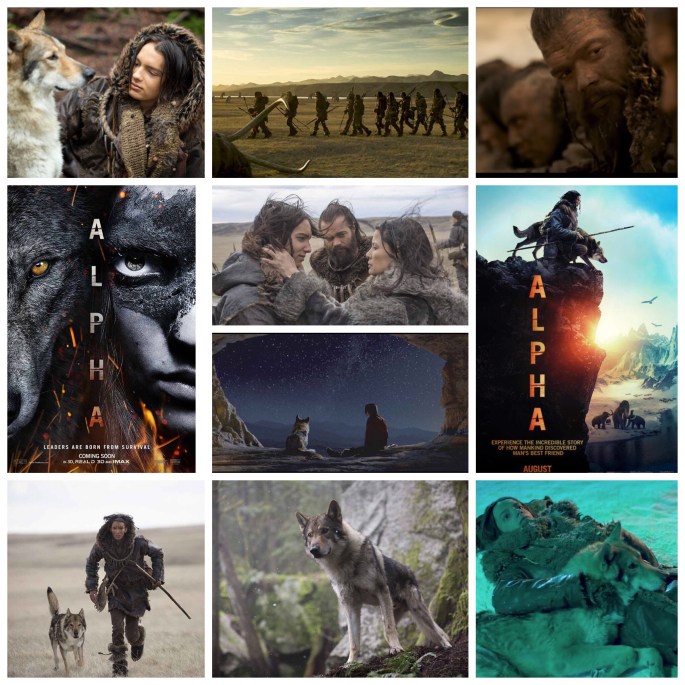
You don’t have to be an avid dog lover to appreciate the atmospheric grandeur and rock solid yet comfortingly simple storytelling of Albert Hughes’s Alpha, but being an animal lover certainly gives you more stakes to invest in the story of humanity’s first friendship with canines, now evolved into one of the most beloved relationships in nature. Set in the shadowy primordial past, we see a rugged clan of plain dwellers hunting thundering herds of bison to survive the long winter. Young Keda (Kodi Smit McPhee) is the son of the Chief (Johannes Hauker Jóhannesson, who I’ve never heard of before but simply rocks his performance here) and an inexperienced hunter, plummeting halfway down a cliff following a standoff with several angry bison. Mourned and left for dead by his tribe, he awakens alone, injured and surrounded by danger on all sides. After narrowly escaping a hungry wolf pack and injuring one of them, he feels compassion for the animal and nurses it back to health, forming a bond with her that saves both their lives and carries him on a perilous journey back to his home. It’s so simplistic, and it’s done with earnest, tunnel vision sensibility, but so engaging is the story and so beautiful the visuals that it comes out a complete winner. His father gravely lays down thematic points in a mentor’s form, relating to him that life is rough, and survival is earned, not handed over easily. Hilarious when you look at the capable vitality of people back then and the overweight, disability pay human race of today, but I cheekily digress. It’s survival and friendship done to a T, and my favourite aspect of the film has to be atmosphere. Clearly some CGI was used as well as practical elements, but they’re blended reasonably. The gorgeous, otherworldly locations of Vancouver, Alberta and Iceland bring a sense of scope and vast, uninhabited nature to the surroundings, and the score by Joseph Debeasi and Michael Stearns is some seriously elemental, mood setting work that may be the strongest asset, especially when paired with images of the dazzling Milky Way and endless plains below. As much as they could they used a real pupper for Alpha’s scenes, a gorgeous Czechoslovakian wolfhound named Chuck who acts up a storm and wins hearts. This isn’t going to reinvent the wheel (or invent it at all, considering the time period it’s set in) and it’s certainly nothing incredibly new or unique, but if you want an invigorating, immersive time at the cinema, it works small wonders as a terrific summer movie.

-Nate Hill

Larysa Kondracki’s The Whistleblower

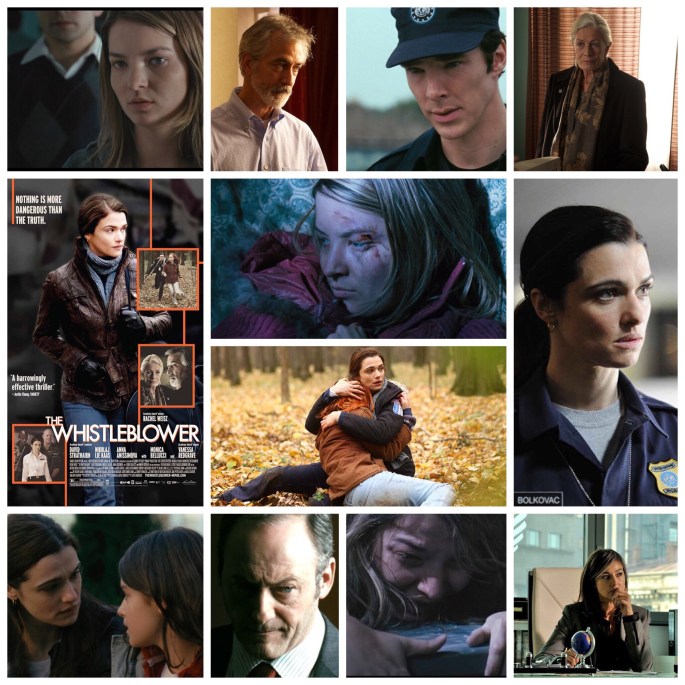
Larysa Kondracki’s The Whistleblower requires a strong stomach to sit through some of the true life atrocities depicted, but it also begs that one doesn’t look away, or the efforts of one intrepid UN worker (Rachel Weisz) would have gone unheeded, because almost everyone else besides her turned a blind eye when scores of young woman in post war Bosnia were being held captive and brutalized in the illegal sex trade. I can’t think of anyone more adept than Weisz at playing someone this relentlessly compassionate; there’s just something in her warm brown eyes, comforting voice and genuine aura that that camera and dialogue practically melt over. Horror like this almost always follows the fog of war, when the barriers of civilization have taken a hit and the darkness they held at bay roams free for awhile, plus it’s hard to keep track of people after something like that wipes records, destroys towns and fucks up infrastructure. In any case, Weisz’s Kathryn Bolkovac discovers dozens of underground brothels where young girls are held, raped and tortured by mercenaries every day. Her boss at the UN (Liam Cunningham in a chilling portrait of casual indifference) tells her to lay off and they they’re “whores of war, that’s how it works.” Faced with that kind of betrayal from her own people snaps something in Kathryn and she feels deeply compelled to launch her own personal crusade to save the girls, but it proves to be a dangerous task when she realizes that not only do organizations not really care, but some may actively have interests in stopping her. Using contacts in various departments including Monica Bellucci, a kindly Vanessa Redgrave, Benedict Cumberbatch and a fantastic David Strathairn, she gradually gets to the centre of this evil maze, towards truth and freedom for hundreds of innocent girls. The great thing about this film is that it functions as both a superbly exciting political thriller in the vein of Bourne, but really it’s a deeply human, very personal and harrowing study of evil taking root in a region, as the light that Kathryn keeps in her heart wth which to fight it. This is represented in a key relationship between Kathryn and a young Bosnian girl named Raya (Roxana Kondurache, phenomenal) who she takes a special interest in and becomes poster child for these girls. Also, it’s a very carefully researched true story too and that always makes events like this far more affecting onscreen. Just go in with the right mindset and guardrails up because the scenes of sexual abuse and torture are almost unbearable, but necessary to the story arc. A winner in every sense of the word.

-Nate Hill

Martin Scorsese’s The Departed

Martin Scorsese’s The Departed is like being at a frat party where you slowly begin to realize that every other person there is an irredeemable asshole, but they’ve somehow strung you along with charm and charisma thus far. Like a nihilistic den of wolves where everyone involved is out to get each other, its quite simply one of the most hellbent, devil may care, narratively self destructive crime flicks out there. I admire that kind of reckless abandon in a huge budget Hollywood picture with a cast so full of pedigree it’s almost like The A list agencies just packed up all their talent in a clown car, drove it to South Boston and turned them loose on the neighbourhood. By now you know the fable: Two roughnecks, one a mobster (Matt Damon) who has infiltrated the state police, the other a deep cover operative (Leonardo DiCaprio) who is posing as a crime figure. Both are are intrinsically connected to Boston’s most fearsome gangster Frank Costello, played by Jack Nicholson in a performance so balls to the wall one almost feels like his 89’ Joker ditched the makeup and left Gotham for Southie. He’s a calculating maniac who openly mocks the veteran sergeant (Martin Sheen) putting in every effort to take him down, and rules over his vicious soldiers (Ray Winstone is a homicidal bulldog and David O’ Hara gets all the best comic relief) like a medieval despot gone mad. At well over two hours, not a single scene feels rushed, drawn out or remotely dawdled, there’s a breathless tank of violent machismo and wicked deception that never runs out, as the artery slashing editing reminds you every time it cuts to a new scene before the soundtrack choice has made it past the intro. The supporting cast has work from the gorgeous Vera Farmiga as a sneaky cop shrink, Anthony Anderson, James Badge Dale, Kevin Corrigan and more. Mark Whalberg also shows up to do the bad cop routine in a role originally meant for Denis Leary, and as solid as he is I kind of wish old Denis took a crack at it because you can obviously see how perfect he would have been, and is the better actor. As much as Jack Nicholson eats up the spotlight and chews more scenery than the T-Rex from Jurassic Park, my favourite performance of the film comes from Alec Baldwin as the head of the police tactical team. Spouting profanity like a fountain, slamming Budweiser as he swings his 9 iron and kicking the shit out of his employees, he’s a mean spirited, violently comical force of nature and I fucking love the guy. Scorsese has clearly set out to not deliver a heady message or lofty themes here as some do with crime epics; the characters all operate from the gut, use animal instinct and never pause to ponder or pontificate. The only message, if any, is the oft spouted ‘snitches get stitches’ as you can clearly see by the film’s final shot, also the only frame containing anything close to a metaphor. I admire a film like that, and certainly enjoyed the hell out of this one.

-Nate Hill

The Age Of Adaline

The Age Of Adaline shouldn’t work as well as it does or be as great as it is, but there you go. What really holds it together are two spectacular, well thought out performances from Blake Lively and Harrison Ford, who take material that could have come across as hokey and do something really special with it. The lush, garden themed cinematography by David Lanzenburg doesn’t hurt either. Adaline Bowman (Lively) isn’t your average one hundred year old woman. Due to some quasi-cosmic rift in reality, she has been stuck at the age of 29 for going on 80 years, and has amassed both a wealth of worldly knowledge and a charismatic gravitas one might imagine would accompany such an odd life path. When she meets and reluctantly falls for handsome Ellis (Game Of Thrones’s Michael Huisman), it’s a predicament as love has never seemed to really work out, given her condition. When she meets his parents (Ford and Kathy Baker) things get downright weird; decades ago, Ford and Adaline were lovers and the aghast look on his face when he sees her waltz in not only with his son but not a day older than he remembers, is truly something to see. Speaking of aghast, the guy they got to play young Harrison Ford in flashbacks is so uncannily similar to the actor in look and voice that I feel like the director just stole a time machine from the government for the film. It’s kind of like the world’s weirdest love triangle built upon a fantasy concept that’s thrown in from hard left field, and as ridiculous as it all sounds, it’s actually quite the subdued, affecting experience. Her name should be Blake Lovely because she’s just that, always a force of radiance in any role she takes (even as the Boston gutter slut in Ben Affleck’s The Town, an angelic vibe snuck through the smeared eye makeup and hoop earrings), she gives Adaline a dignified independence and occupies every second of frame with the character. This has to be one of Harrison Ford’s finest hours too, ditching the smirky roguish charm and going straight for the heart in a turn that’s both vulnerable and rooted in emotion. Ellen Burstyn does fine work too as Adaline’s daughter, now looking freakishly older than her. The story has none of the silliness you’d expect upon reading a synopsis, and if anything is more down to earth than most romantic films thanks to Lively and Ford, as well as the world’s gravest narration from Hugh Ross. The San Francisco setting is actually a cleverly disguised Vancouver, but plays a quaint role in the setting too. This one is a treat.

-Nate Hill