B Movie Glory: Dark Asylum

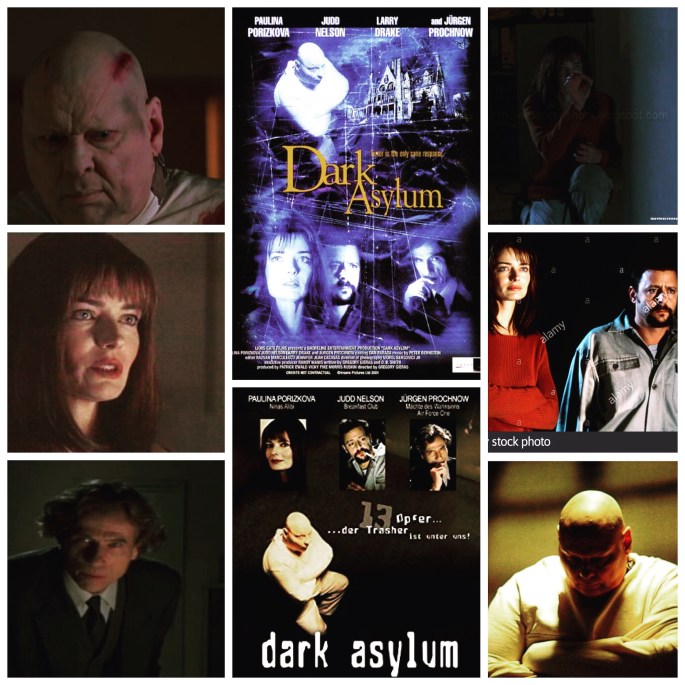
Dark Asylum is one of those dimly lit, cheesy horror efforts that plays on cable somewhere in the wee hours, a trash exercise in low budget exploitation that leaves little impression other than spotting which character actors are in the roll call to collect a paycheque. In a conveniently remote location, a young psychologist (Paulina Porizkova) arrives at a sanitarium to examine a freaky serial killer called The Trasher (Hollywood’s resident extraterrestrial, the late Larry Drake). The head doctor of the asylum (Jurgen Prochnow), seems to have a relaxed attitude towards security and before you can say Hannibal Lecter, The Trasher escapes captivity and runs about the place killing and terrorizing anything that moves, including a hapless custodian played by Judd Nelson. The whole premise is one of those ridiculously staged things where the killer seems superhuman, can survive everything from sixty pound fire extinguisher hits to the head to being run over by a vehicle, despite being human (I’m reminded of Hollow Man). It’s ok when Michael Myers survives all that shit because he’s.. you know, Michael Myers, he’s earned the esoteric badge, but any old killer in any old B flick surviving everything thrown at him grows old and lowers the stakes pretty quick. Anyways it’s not a terrible movie, just pretty middle of the road, non-special horror filler with enough atmosphere to warrant a watch.

-Nate Hill

“Why did you try to kill me?” A review of Hereditary – by Josh Hains

I do not hate, or dislike, Hereditary. I do not like it either, though I do avidly admire it. To clarify, it is difficult for me to say I like a movie that is so atmospherically dour, so tonally bleak, and so disturbingly grotesque, that makes me feel like I need to bathe in molten lava to burn away the residue of it. However, it’s easy for me to say I admire nearly everything about it.

The same can be said for similarly dark and bleak cinematic ventures like Sicario, You Were Never Really Here (my current vote for the best film of 2018), and Annihilation, to name a trio. Hereditary is as joyless an experience as they come, which makes it inherently difficult to for me recommend to friends of mine whose humongous appetites for horror are in desperate need of some quenching. This isn’t your archetypal, audience friendly and accessible popcorn horror flick one could take a date to and enjoy being scared from, complete with ample cheap or earned jump scares (such as The Conjuring), or heaps of deliciously over the top gory carnage (like in The Cabin in the Woods). I don’t find Hereditary scary per se, just unsettling and disturbing, much like iconic but hollow The Shining.

It is however, the kind of intricate, meticulously crafted psychological horror movie that uptight horror cinema snobs are constantly reminding the rest of us that Hollywood so rarely constructs and releases these days. Nearly every facet of the movie, from the performances (Toni Collette is truly Oscar worthy with her passionately raw performance of a fractured soul) to the cinematography to the editing to the eerie sound design, is handled with top notch laser guided precision worthy of the heaps of praise it’s received for months now since its premiere at the Sundance Film Festival on January 21st. It might not be the best horror movie of the year (which is easily A Quiet Place by miles), or the best movie of the year for that matter (that’d be a huge stretch, considering that honour should most definitely be bestowed upon You Were Never Really Here), but it’s certainly a great little horror picture in its own right.

As great as those and other elements are, the movie becomes dreadfully problematic in the script department after the initial 45 minutes or so. Initially, the movie has absolutely no problem both setting and maintaining a particular psychological horror aura, which is rather sadly, gradually pushed to the side after a major event in the first half hour of the movie, in favour of typical paranormal horror elements. This leads to an ending (that will go unspoiled here), that despite being set-up right from scene one onward, and makes sense to the overarching narrative that’s been told leading up to that point, feels ported over from The Witch (another horror release by the same studio that produced Hereditary, A24), and that doesn’t match the tone of everything that’s come beforehand, and requires one too many suspensions of disbelief in the laughably ludicrous twists. Aside from the tonality issues derived from an unnatural shift in the tone at the midway point in the movie, and a nearly unforgivably ridiculous tacked on ending that doesn’t gel with the rest of the movie, Hereditary is a masterful psychological horror movie bound for the glory of classic horror movie status, though those tonality and ending issues will likely haunt it for decades to come.

As I observed in an article I can’t recall the source of a couple of days ago regarding Hereditary, it’s the “other kind” of horror film, the meticulously crafted, bleak, and unrewarding kind, a rare find these days. The film studio A24 (whom released Hereditary, The Witch, and It Comes At Night), along with Paramount (who’ve also had divided reaction with mother, Annihilation, and the Cloverfield series) and others, seem passionately keen on continuing to churn out these more obscure and psychologically perplexing and taxing horror movies.

I don’t blame them for wanting to.
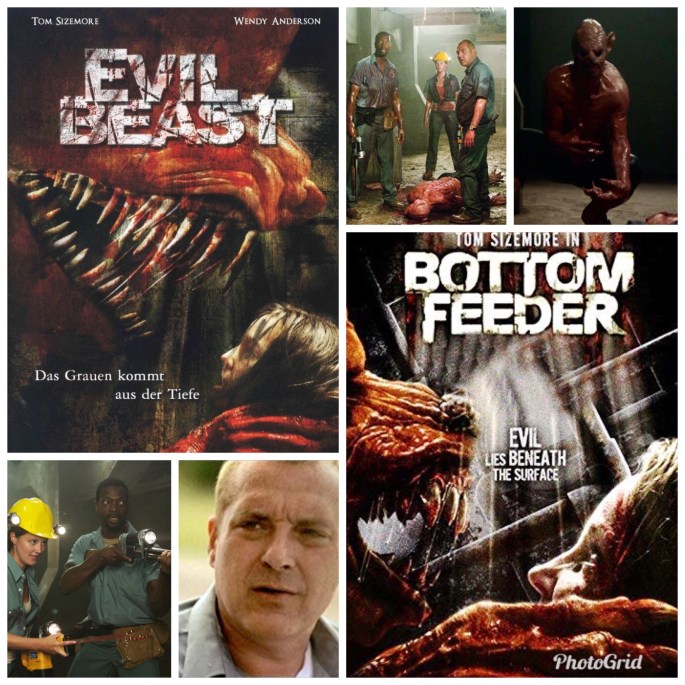
B Movie Glory: Bottom Feeder

It’s ironic that Tom Sizemore starred in a B flick called Bottom Feeder, because he’s been called worse by many in Hollywood. Jokes aside I love the guy, he’s up there with my favourite actors and I’ve had to reconcile his behaviour next to my admiration for years. It’s also no secret that he’s made some piss poor cash grab films, like this one, which lives up to it’s name. Sizemore is clearly emerging from the hazy doldrums of rehab here (the timelines check out), and as such is more subdued than his trademark zany, jumping bean persona. That and he probably had zero interest in putting an effort into material this low brow and schlocky. He plays the head of a maintenance crew here who are dispatched into the catacombs of a city sewer system. Coincidentally, it’s also the home of a maniac scientist who shoots himself up with a weird genetic serum, feeds on a live rat and turns into a giant gooey rat/hooman hybrid that immediately starts hunting people down there. Sizemore’s team has all kinds of theories that reach conspiracy level but at it’s core this is just a standard made for SyFy channel mess, and if it weren’t for his name above the billing, it wouldn’t have even blipped on anyone’s radar, especially mine. The monster looks like a weird ramshackle cross between the thing in Stephen King’s Graveyard Shift and the gross giant rat that Tom Savini becomes in From Dusk Till Dawn, except way less cool than both of those beasties. This is a bottom feeder flick, derivative of basically everything in other better horror flicks and bereft of any of its own originality. Hard pass.

-Nate Hill

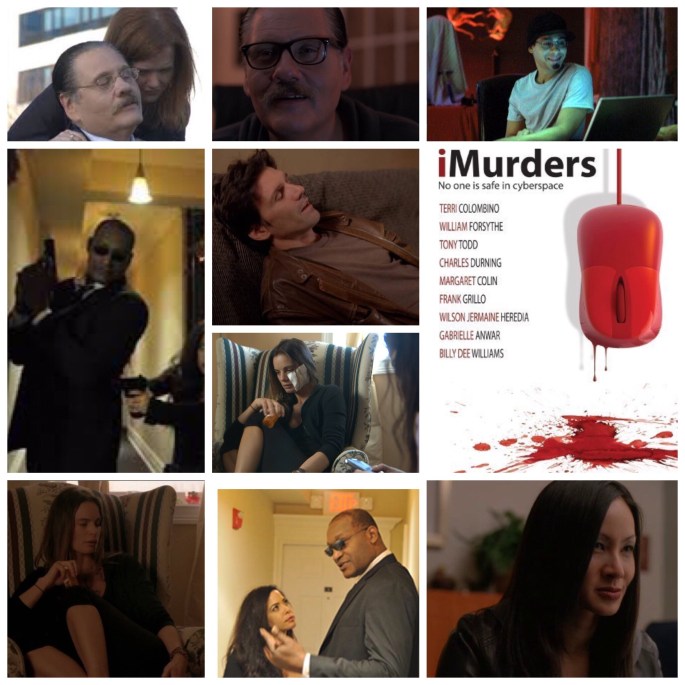
B Movie Glory: iMurders

iMurders. Just let that title sink in. It’s worse than it sounds. A movie about a series of murders related to an online internet chat room should at least have the trashy decency of something like Pulse or One Missed Call, but this thing plays like a soap opera that got cancelled after the pilot. Cheap, lazy and ridiculous, the only saving grace is the comforting presence of a few character actors to brighten your day. It’s a roundtable whodunit with a series of characters, all who might be the killer stalking them via ‘cutting edge’ technology that resembles nothing Apple has actually ever put out. There’s a tragic shooting from years before that has somehow spurred this lunatic to torment a MySpace group like this, but honestly it’s all a bunch of narrative mud. There’s a scandalous college professor (the great William Forsythe), Gabrielle Anwar (who honestly deserves better than this) as a girl with a few skeletons in her closet, a detective (Frank Grillo) with some personal ties to the case, and more. The one decent strand sees a mysterious psychiatrist (Charles Durning) interviewing a girl (Miranda Kwok), and the two appear to be in some weird other dimension, probably one where the horror films are better than stuff like this. Tony ‘Candyman’ Todd shows up as a sarcastic FBI agent. The whole thing has a silly Fisher Price feel to it and we never buy anything as legit, and even on the standards set by B Movies this is shameless, and that’s all I have to say. Oh and Billy Dee Williams is apparently in it too, but I’ll be fucked if I remember who he is.

-Nate Hill

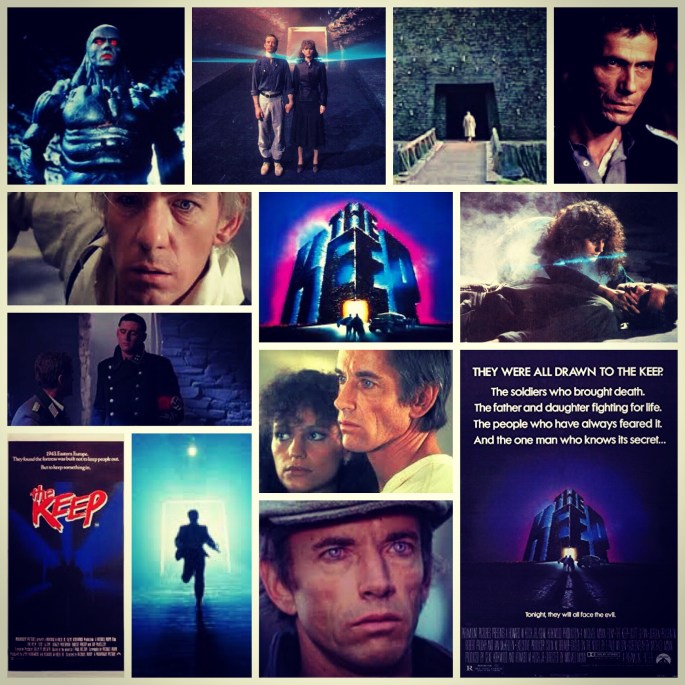
Hoping for resurrection: Michael Mann’s The Keep

It’s a shame that Michael Mann feels the way he does about The Keep, and although I can’t really blame him after the Leatherface worthy hack job the studio inflicted on his original three plus hour cut, it’s a heartbreak and a half that we may never see a director’s version because what is left is still one of the most haunting, beautifully done Lovecraftian horror fever dreams one can find in VHS-land. Based on a brilliant novel by F. Paul Wilson, Mann employs a legion of smoke machines, a troupe of eclectic character actors all cast against type and giving marvellous work, and a drop dead gorgeous original score from Tangerine Dream that remains in my top OST’s to this day. Somewhere deep in the Romanian mountains, a squadron of German soldiers led by weary Captain Woerman (Jurgen Pröchnow) comes a across a tiny hidden village that harbours a dark secret: just beyond the township is a looming, mysterious structure built to keep something locked inside, and has lain dormant for centuries. Their gravest mistake is setting up camp in this unholy basilica, for soon they’ve awoken whatever resides within, and it really wants out. Cue the arrival of sadistic SS officer Kaempffer (a very young Gabriel Byrne) and his Nazi bastard crew, as well as a professor of ancient languages (Ian Mckellan) with his daughter (the late Alberta Watson). Elsewhere in Europe, otherworldly stranger Glaecken (the great Scott Glenn) is stirred by the happenings at the Keep and treks across the war torn continent towards an unknown end. What follows is an entrancing supernatural fusion mixup of old school prosthetic effects, genocide metaphors, lovingly creaky production design and synth music that will scorch your soul. Glenn plays the shadowy warrior better than ever here, with a paranormal gleam in his eyes and the stone-faced, gravel voiced resolve to see his strange quest through to a brutal conclusion. McKellen emotes fiercely both in and out of some well done old age makeup, sometimes almost unrecognizable but always spirited and present. Pröchnow rarely gets non villain roles with depth but this might be his best ever, early in his career too. He turns the Captain into a sorrowful picture of regret and compassion that one doesn’t often see in Hollywood based German army roles from WWII. Watson is a doe eyed beauty whose loss of innocence and discovery of love is portrayed wonderfully by the actress, who sadly passed away long before her time. Byrne is evil incarnate, with a startling cropped haircut that would be right at home in this day and age it seems. Mann favourite Robert Prosky also shows up as a local priest with knowledge of The Keep. Somewhere out there in someone’s garage there lies a full cut of this film, just waiting for an extended Blu Ray transfer, complete with tweaks on sound design (its fuzzy commotion at times), special features and the redemptive treatment that a sterling genre addition like this deserves. There’s so much quality to be found in it, from the alluring atmosphere that’s so thick it finds its way into your dreams after, to the aforementioned Tangerine Dream soundtrack that haunts the film’s visual landscape like an auditory phantasm to the silver and purple hued neon production design, resplendent in its tactile, tangible glory, it stands as a flawed classic with the potential to be so much more, if Mann mans up and makes the effort to give one of his very best efforts that care and time it deserves to rise from the void and soar again. If only. Oh and one more thing: there’s one more scene before the credits that isn’t in the actual cut, but go find it on YouTube because it’s really worth it and adds a lot to the story.

-Nate Hill

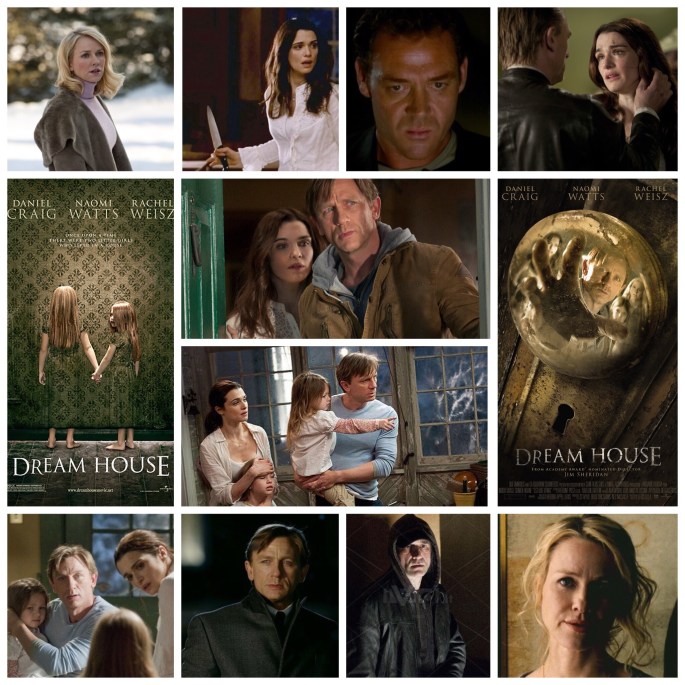
Jim Sheridan’s Dream House

Imagine the potential for a concept like Dream House, and then look at how badly, how royally they fucked up the script and eventual film that came after. It’s like someone had a really cool idea for a thriller that could have been something great in the vein of Shyamalan or Hitchcock and it just ended up a flat, lifeless, boring exercise in.. well… not much. Sadder still is the talented, first rate cast stuck in it, and when you consider the director has a heavily Oscar nominated film from back in the day under his belt, it boggles the mind. Okay, maybe the last two points are unfair, artists sometimes don’t have control over what projects cross their desk, but I would have jumped ship at the premiere if I were them, paycheque in hand. The premise is certainly interesting: a publisher from New York (Daniel Craig) moves with his wife (Rachel Weisz) and two young daughters to a quaint manor in quiet New England to get away from it all. The house, naturally, has a troubled past and is sorta kinda haunted, in one of those twisty roundabout ways I can’t say without spoiling the whole deal (*cough* The Others). Craig has to solve the mystery of a brutal crime that took place in his new home, avoid freaky stalkers that seem to follow his family, and with the help of a kind, benevolent neighbour (Naomi Watts), figure out just what’s going on. There is a twist, that shows up midway through the film instead of near the end and because of that feels entirely like a silly gimmick once we know, a misjudged pacing decision if there ever was one. The thing that sucks is there are well done aspects; the acting from everyone is great, the cinematography and production design beautifully done, it’s just story that takes a nose dive, and almost right off the bat, too. The payoff and resolution for such an ‘out there’ setup just feels dry and voided of the mysticism and otherworldly spookiness that the film set you up with, and the result is you just feel cheated. Not even capable actors like Elias Koteas as a shady hitman and Marton Csokas as an even shadier businessman can bring antagonists with enough life into the fold, and their thankless presence is wasted. After this film I kind of wish I watched it again without any sound or subtitles on like a silent version, because the imagery and visual element is too good to be wasted on a script as badly drawn and executed as this.

-Nate Hill

John Krasinski’s A Quiet Place

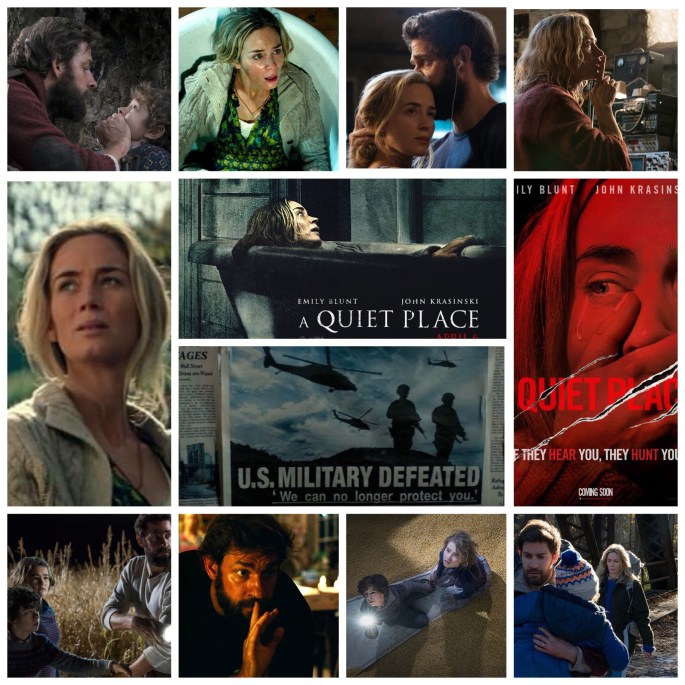
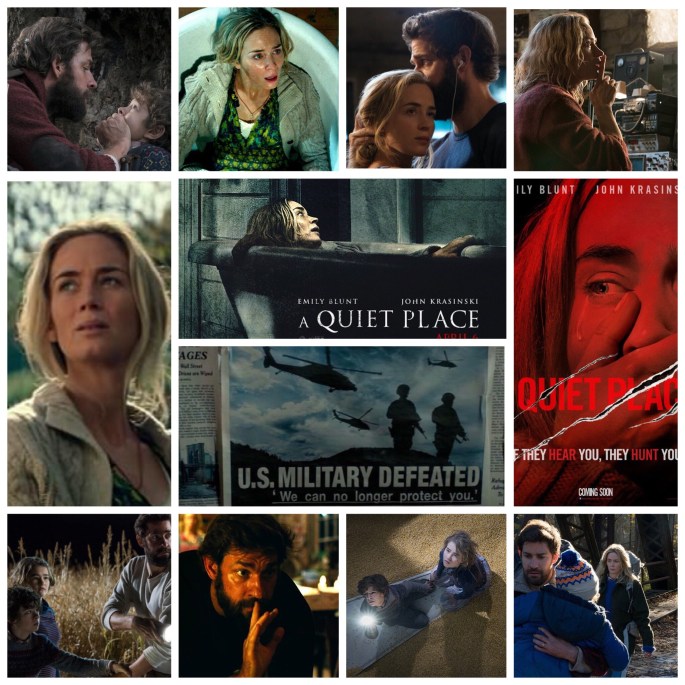
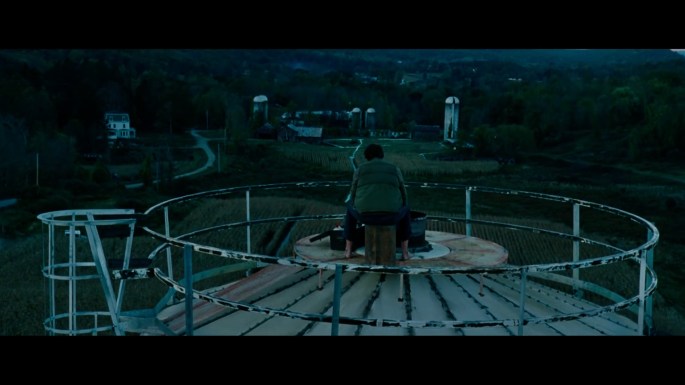
John Krasinski’s A Quiet Place surprised me by investing more in its fright flick concept than just shrieking banshee monsters and a flurry of hastily shot chase action/close calls. For a film that focuses so much on hearing and an auditory mood-scape, Krasinski is an excellent visual storyteller and as far as first time directors go, should be very proud. Not to mention the fact that he tells a human story amongst the horror, one that actually gets us feeling closer to the characters until we really give a shit when they’re being hunted by the screamers. It doesn’t hurt that he and real life wife Emily Blunt give two breathlessly alive performances that paint a dual portrait of parents who will stop at nothing to protect their children. Sometime in a desolate future, vicious predators of unknown origin (could the brief shot of a newspaper clipping claiming “meteorite hits in Mexico” have anything to do with them?) invade the world and slaughter humans en masse. They’ve got mutant ear drums that can hear a wood-bug sneezing from sixty miles out, but they’re also blinder than Stevie Wonder. Using your inside voice, or no voice at all if possible, is an imperative mantra for Krasinski and clan, as they must exist in monk worthy silence for fear of being run down by these things. The trailers tend to spoil a lot of things, and I guess marketers think that just because a sequence is in the prologue that people wouldn’t want it to still be left a surprise, but oh well. Early on there’s a tragedy that causes kind of a rift in the family, particularly between Krasinski and his deaf daughter (Millicent Simmonds, brilliant work). Flash forward a year or so and he’s built an impressive rural stronghold for his family on an abandoned farm, complete with grain silo watchtowers and a homemade electric light alarm system. It’s this innovative and careful design that sets it apart from other horror flicks that just go for the throat without and character development or world building to draw you in. Eventually the screamers do come for them, in one long extended night from hell that plays out like the most stressful chain reaction of mishaps you could imagine, with enough suspense to bring on a heart attack. I call them screamers, and I read one review on Facebook whining that they’re the same CGI clicking beasts in every other horror flick these days, but I think that’s an unfair assessment. They’re neatly rendered and have a clearly visible biology to explain their uncanny sense of sound, and I never once tuned out or felt removed from the atmosphere while watching them. The human element is well done and treated with care here, and while I can’t quite understand why they would decide to have a baby, which are notoriously loud individuals, in a world that’s gone so badly to shit (maybe they couldn’t find condoms when scavenging abandoned towns), they’re resilience and love for their children are brought fiercely to life by the two actors, who knock it well out of the park. You gotta love Marco Beltrami’s original score too, which is shadowy and ominous in one instance and switches gears quickly to orchestral catharsis when needed. A real surprise out of horror-town, this one was, and one of the best I’ve seen so far this year. Oh, and try to find a more badass, adrenaline soaked ending scene to a film so far this year, I dare ya.

-Nate Hill

B Movie Glory: Russell Mulcahy’s Tale Of The Mummy

Russell Mulcahy’s Talos: Tale Of The Mummy is a fascinating failure of huge proportions, a well casted, unbelievable muck-up that has to be seen to be believed. When your low rent Mummy flick comes out at pretty much the same time as Stephen Sommer’s classic The Mummy, you know you have no shot at getting it out there past a few cable runs, especially when the film has been plagued by one nightmare of an editing fiasco from day one, not to mention low budget and more pacing issues than spastics in a sack race. There’s two apparent versions of it, a 115 minute international cut that was edited down to 88 minutes because of some humour that was in bad taste and aforementioned pacing problems. I saw the shorter version, and I can’t imagine the flow of the film being any worse than what I bore witness too, so maybe they should have just gone with the original cut, but who can really say. The film is essentially just two very cluttered, chaotic prologues jam packed with cameos and creaky special effects, and then one long boring extended horror sequence set in London, so you never get the feeling that they knew what they were doing before the editing process even commenced.

The opening sees archeologist Christopher Lee unearthing some ancient tomb in Egypt with his assistant (Jon Polito), both getting very quickly dispatched by some evil via a flurry of visual effects that are either really cool or really bad, jury is still out on that one for me, they’re just weird more than anything. Skip ahead some years and yet another team falls victim to this Talos Mummy thing, led by Louise Lombard, Brit tough guy Sean Pertwee and Gerard Butler of all people, in what is probably his first movie gig ever. Flash forward to London some months later, we see the Mummy thing roaming around killing people at will, and also seemingly at random. Two detectives played by Jason Scott Lee (looking very out of place in England) and Jack ‘Commodore Norrington’ Davenport investigate and the story just loses itself to nonsensical doldrums and lame ‘scares’ for the rest of the duration. Shelley Duvall bizarrely shows up as a journalist, as well as Honor Blackman and the Sean Pertwee character, now a raving madman who no one will believe when he says the Mummy is out to get them. I’m still aghast at the sheer number and variety of notable actors Mulcahy got to appear in this thing, most of them fleeting or short lived but still making hilarious impressions in a story they had to know was just plain silly. There’s a few things that work; the FX in the Christopher Lee sequence are a neat, schlocky blend of CGI and practical and work on their own scrappy terms. There’s a very brief flashback sequence to Ancient Egypt that shows how Talos became an evil creature that’s visceral and well designed, but doesn’t last long enough to boost the overall quality. Everything in London with the two cops is just laaammee though, and drags it all down the sewer. Talos there resembles a filthy shower curtain that went through a paper shredder and subsequently got carried away by a strong gust of wind, neither remotely scary nor stylish, just your average half assed B flick monster. Worth a watch simply for the odd spectacle of it all, and for research purposes.

-Nate Hill

Russell Mulcahy’s Razorback

Russell Mulcahy’s Razorback is a dusty old monster flick set in the doldrums of Australia, and features a gigantic murderous wild boar that terrorizes local townsfolk and carries off infants into the night. It’s silly, it drags on in places and has two of *the most* irritating human antagonists, but there’s some really neat practical effects, an atmospheric dream sequence that is like a brilliant little short film within the whole, and some creaky production design that gives it personality. It’s just the human element that suffers a bit in these type of films, and very much so here. I’ve often wondered how cool it would be if they did a creature feature where the humans are almost entirely without dialogue or forced, unnecessary idiosyncratic scenes that don’t succeed in getting us invested, but rather annoyed with them. The writing is never great in stuff like this, so why have much, or even any at all? Just my two cents. The best to be found here is some gorgeous outback cinematography, moody interludes of dust-bucket scenery and a really great original score that kicks up the synths in aforementioned dream sequence. I’ve heard that they spent 250 grand on the animatronic boar beastie, which we only get to see in full in the last part of the third act, which is of course the tradition here, but they could have benefitted from more schlock and tusk action way earlier on to stir the pot and make it more interesting. On the plus side, I also heard that Steven Spielberg gave Mulcahy a phone call after seeing the film and asked how he managed to achieve the FX in the dream sequence, which is praise enough, as it’s a wickedly tactile little nightmare. While not in the sterling tier of monster films or horror flicks for me, it has its charms in places, and it’s yawn moments in others.

-Nate Hill

“I will protect you. I promise.” A spoiler free review of A Quiet Place by Josh Hains

A Quiet Place will be starting, the first frames slowly unfolding, and your audience will probably still be talking, their voices filling the air. Not too loudly, but loudly enough for the noise to annoy you, to grate on your nerves and make you wish you could shout at them to ‘shut up’, or worse. The ruffling of popcorn and candy bags, and the munching of said delicious delights will only further cloud the air. They need to stop making noise, you can’t hear the movie. But within the first half a minute of the movie your audience will have grown so incredibly quiet, the dropping of a pin against the floor would echo like thunder throughout the room, because they’ve realized that while you can’t actually hear much of anything, save for the scrapes of bare feet across a floor, or the slight thump of a pill bottle against a counter top, you still have to listen, and these small sounds are being drowned out by bigger sounds. The dead silence of your audience will become a requirement. John Krasinski has forced you into silence and a world devoid of big sounds, leaving you with the blowing winds, the rustling of grass and leaves, the crunching of white sand beneath bare feet. You and your audience won’t be able to anticipate when the louder sounds, like the effects of a toy rocket, or the screeching of the alien monsters rushing to snatch their potential victim (and in doing so setting the stakes of the movie), will come, and so each and every one of you will be on the edge of your seat in stone silence, fearful of the louder sounds yet to come, bracing for their impacts in the hopes you won’t jump out of your skin. All this, and the movie hasn’t even cut to black and shown you the title card yet. Imagine 90 consecutive minutes of this, and how suspenseful, tense, and quiet the experience will become long before the final frames snap to black.

Now imagine living in a world where you can’t make a sound, or the fast moving blind aliens that attack those same sounds will rip you to shreds. Imagine having to walk across long trails of sand everywhere you venture outside because sand is quieter to tread than twigs and grass. Imagine playing the board game Monopoly with balls of cotton, because the if you’re too loud using the metal car, one of those monsters will come a knocking. Imagine being pregnant like the mother, due in two or three weeks, and the fear that the sounds of a newborn baby’s cries will bring death to your doorstep. Imagine being hearing impaired like the daughter, unable to tell if you’re making noise, let alone how loud it could be. Picture being afraid of every sound like the son, scared of what lurks in the shadows and the idea that the loud noises you could make will get you killed. Try to think of the pressure you must feel being the father, the primary protector of your family, the resourceful one that’s kept most of you alive for over a year. How much longer can you keep it up? What if you can’t protect the ones you love? Put yourself in the shoes of the Abbott family (John Krasinski, Emily Blunt, Millicent Simmonds, Noah Jupe). You’ll grow to care for them so much that the thought of harm coming to any one of them will only further enhance the creeping sensation of suspense you’ll undoubtedly feel. The performances, so subtle and nuanced in their presentation, reliant on facial expressions and physicality, including American sign language, will quietly blow you away. And the scares, when they come, will remind you that the best of jump scares work not because they’re loud, but rather because they strike when you are least expecting them to, much like this film’s monsters. A Quiet Place will make whatever you’ve conjured up in your mind look like Sesame Street by comparison, as nothing I have said up until this point can prepare you for this movie, because I’ve hardly revealed a thing about this brilliant lean thriller.

Don’t wait to see it on Netflix, go see A Quiet Place on the biggest screen you can find with a top notch sound system and a packed house. See it writ large and booming in your ears. To not see this likely classic of the sci-fi horror/thriller genre in such a fashion will do yourself, the movie, and the white-knuckling experience of it all an irreplaceable disservice. You’ll thank me later.