B Movie Glory: Francis Delia’s Freeway


In the vein of highway set psycho thrillers, stuff like Robert Harmon’s The Hitcher and Steven Spielberg’s Duel paved and pioneered the way, fertilizing the ground for countless other similar efforts, some terrific and others not so much. Freeway falls into the former category, an atmospheric little B movie that delivers more clammy thrills than it frankly has any right to. It’s not to be confused with the classic Reese Witherspoon trash-terpiece of the same name though, this is a different animal altogether. There’s a serial killer terrorizing the nocturnal arteries of the L.A. highway system in this, an unhinged whacko in a Lincoln of or some such automobile of equally austerity, firing off love rounds into people’s faces whilst bellowing out bible verses extremely out of context all over the overpass in the wee hours. He’s mostly heard and unseen, but he’s played by none other than Billy Drago when he does show that leering visage, and the man let’s it rip in a performance that should be legendary. He’s hunted by another cool-as-ice character actor, tough guy James Russo as a Detective of few words and tons of action, namely shooting anyone that won’t give answers or spur his leads. There’s a dark, dreamy nocturnal aura to this, love and care put into atmosphere, showing is that the filmmakers, despite working with a low budget, actually give a darn about quality in their work as opposed to a throwaway second tier genre mad dash where the lack of passion is evident. A low rent classic in the realm of homicidal vehicular themed exploitation. 

-Nate Hill
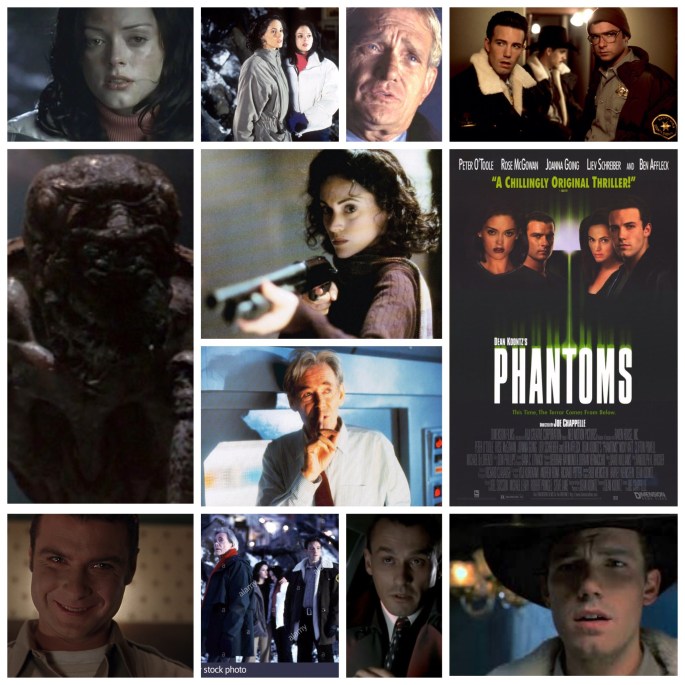
Dean Koontz’s Phantoms 


Dean Koontz’s Phantoms is one of those that I was really stoked on for years and would recommend at the drop of a hat… until I got around to reading the book. Koontz’s novel is brilliantly paced nocturnal nightmare fuel, detailed, imaginative and specific in it’s thrills and chills. This film is a brisk, truncated version of that story, not only that but it takes severe liberties and deviates quite a bit from the tale, resulting in a film that bears little resemblance to the book. It’s good on it’s own, for sure, atmospheric and freaky on terms that don’t include the big picture, but when seated alongside the novel it pales like the large number of paralyzed corpses that pop up all over an eerie abandoned village somewhere in the Midwest. Two sisters (Joanna Going and Rose McGowan) drive into town expecting to visit kindly relatives, and find only death and desertion instead. They wander about, plagued by visions and radios that play spooky old timey music of their own accord, spine tingling in this context. The only townsfolk they find are starched cadavers, killed by some unseen force that watches, waits and refuses to be defined. It’s in this first act that the film is scariest, achieving impressive levels of dread through isolation and uncertainty. As soon as Sheriff Ben Affleck and his shitkicking deputies shows up, the effect dims a bit and degenerates into schlocky survivalist gimmicks, still entertaining yet not as effective as the opening. Things get downright silly when the FBI delegates a crusty old professor of cryptozoology or some such farfetched endeavour (a peppy Peter O’ Toole) to come on over to town, analyze the mystical menace and.. well that’s about it from him. Clandestine hazmat teams are dispatched, Body Snatchers/The Thing homages ooze all over the place and the film putts along in standard horror gear, never getting near to as good as it was in the first twenty minutes or so, let alone the quality of the book. Liev Schreiber is memorable as one of Affleck’s boys who goes a little nutty, Bo Hopkins and Robert Knepper score points in cameos as cheeky G-Men, and there’s work from Clifton Powell Nicky Katt. For what it is it ain’t bad, just expect to be a little deflated if you watch this first and then go check out the book, because there’s no kind comparison to make. 

-Nate Hill

B Movie Glory: The Alphabet Killer


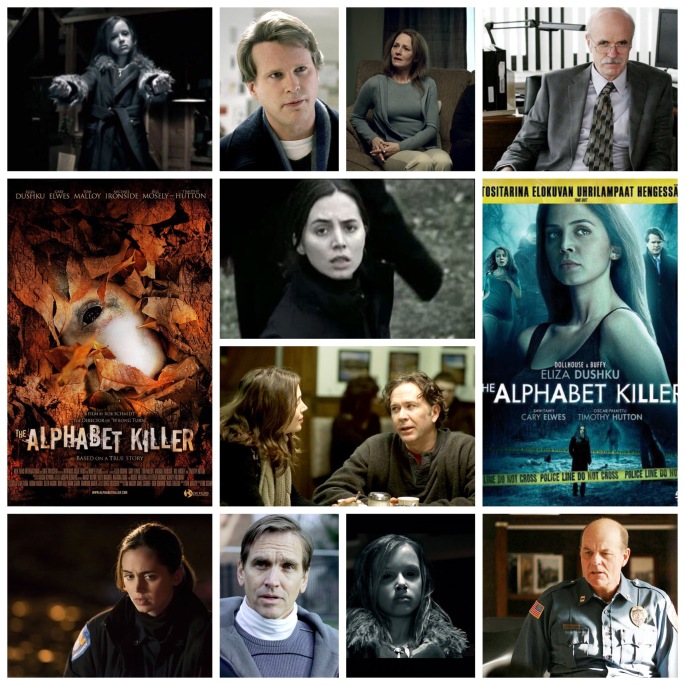
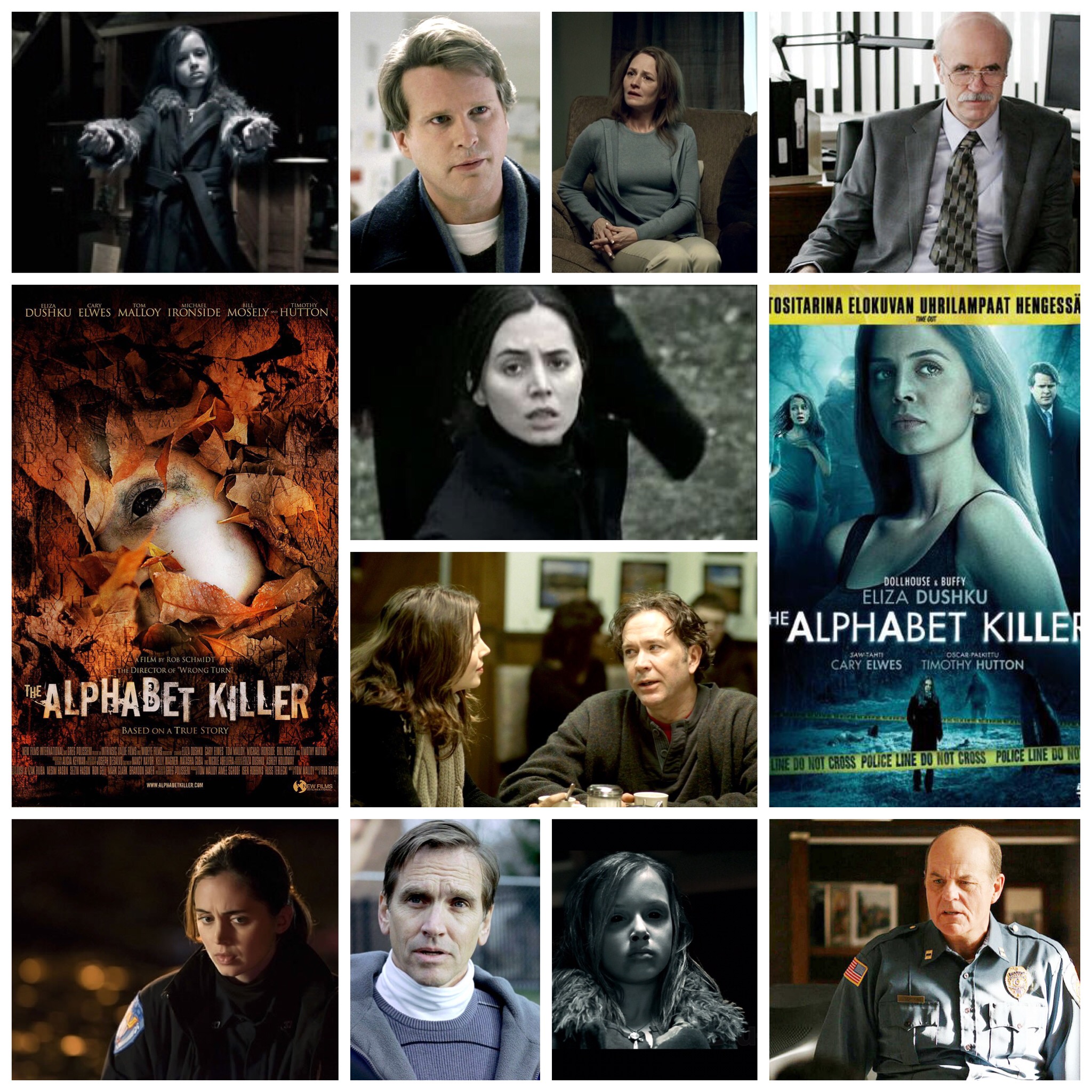
The Alphabet Killer is a silly one, a stone-serious account of some serial killer out there that tries to go the route of straightforward, down to earth fact tracking, and then deliberately messes up it’s own tone by tossing in cheap, ineffective ghostly gimmicks that seem so out of place one wonders if the editor accidentally spliced in frames from an episode of Supernatural or something. The film would have been something pretty decent without those jarring schoolyard level scare tactics tossed in, but I guess shit happens. This is very, very loosely based on an actual set of murders over in Rochester, NY, but what actual similarities to that case we see here is beyond my knowledge and, I suspect, pretty scant. What we get is Dollhouse veteran and cutie pie Eliza Dushku as a determined cop, hunting a killer of children all over upstate New York, while an impressive load of a character actors make slightly unnecessary yet well acted cameos, if only to pad the pre credit billing on the DVD cover and boost rentals. Tom Noonan, who has a running theme in his career of playing exactly the type of beast she’s tracking here, switches it up to play her stern Police Captain boss. Michael Ironside briefly plays a belligerent small town sheriff who withholds information gleefully, Bill Moseley as a reformed sex offender who’s tagged as a suspect, Timothy Hutton her wheelchair bound scholar and consultant buddy, as well as Cary Elwes and Melissa Leo. None of these actors do much but show up for a minute or two to make their presence known, and recede into the frays of supporting plot, until it’s time for one of them to resurface as the killer in the third act, the end of a whodunit guessing game we’ve seen countless times over. It wouldn’t be such a tiresome thing if they left out the spooky-dooky stuff, but there you have it. The film’s otherwise fascinating, earnest docudrama style is somewhat ruined by the occasional presence of moaning, white eyed spectres of murdered children that leer out at Eliza like minimum wage kids doing weekend shifts in the haunted house at the local county fair. Shame. 

-Nate Hill

B Movie Glory: Killer Buzz aka Flying Virus


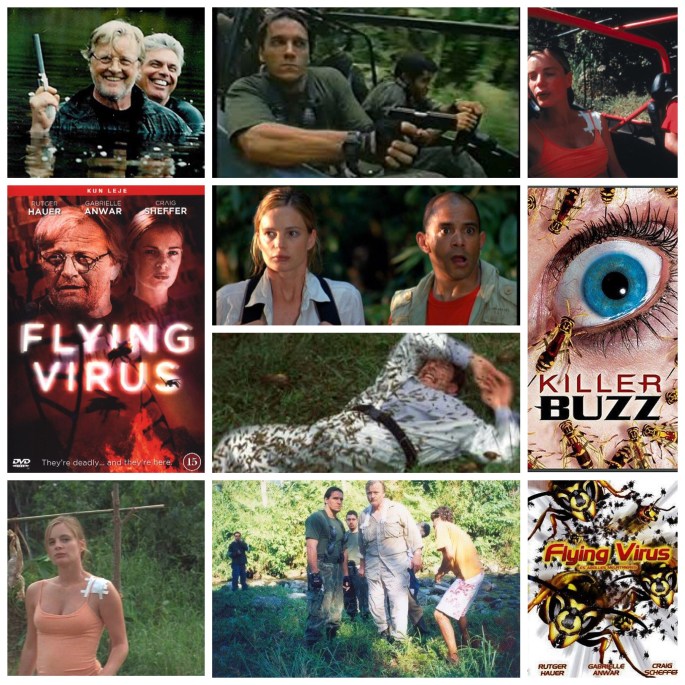
Killer Buzz, aka ‘Flying Virus’, is every bit the ludicrous SyFy turd you’d expect, and follows on the heels of several other B movies starring real life couple Gabrielle Anwar and Craig Sheffer, who inexplicably insist on starring together in bilge water like this (check out the third sequel to Turbulence and you’ll see what I mean). All you need to know about this one, besides the fact that it sucks, is that it’s about genetically altered killer wasps brought to life by windows 98 screensaver effects, and a sorry bunch of actors running away from them, one of which unfortunately happens to be Rutger Hauer. Anwar plays some journalist who uncovers a plot hatched by the government to kill humanity using giant monster wasps (how’s that for a plot), and makes a vague effort to stop it. Hauer is a hard nosed mercenary in charge of distributing these mutant stingers, and the shittiest, bottom feeding schlock ensues for a mercifully short eighty minute runtime. The special effects for the wasps really are a pitiful effort, even by these second tier standards, they look like pixelated crazy-frogs made of yellow paper mâché. The only memorable part is when someone warns Hauer about how dangerous they are and he growls in deadpan, “actually, bees are allergic to me”, brandishing a sidearm that wouldn’t do any good against them anyways. I kind of wanna go get a shirt printed at Bang-On of him saying that and giggle like a hipster when no one on the planet but me gets the reference. In all honesty, Killer Buzz is a giant buzz kill and should be avoided like a swarm of…. wasps. 

-Nate Hill

Paul W.S. Anderson’s Resident Evil


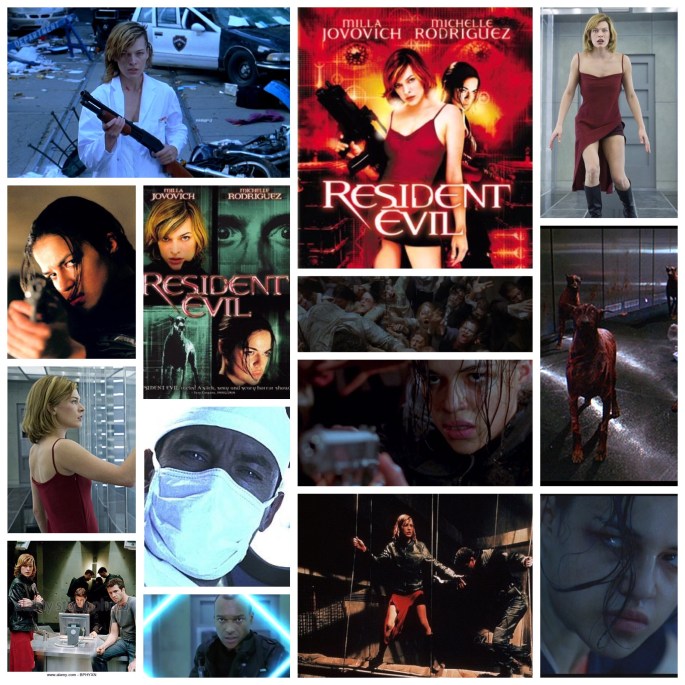
Paul W.S. Anderson’s Resident Evil is probably the second best video game adaptation out there (I’ll remain vague so you all lose sleep arguing about what the best is) and a damn fine horror/shocker flick. I’d stay away from most of the sequels unless you’re really invested in Milla Jovovich’s ass kicking Alice character (guilty here), but it can be said that this lean, mean initial entry is a genuinely terrific film full of grisly traps, gnarly zombie dogs and a butch Michelle Rodriguez that’ll make you weak at the knees. The world’s most irresponsible biotech corporation Umbrella is perpetually up to no good, and their underground research lab ‘The Hive’ has been overrun with monstrosities of their own creation which will eventually spill out into the streets of fictitious Raccoon city, and the entire world beyond in some of the bombastic later sequels. Minimalistic claustrophobia is what makes this one work so good, as a hardened team of mercenaries led by Rodriguez and Colin Salmon descend into this manufactured hell for a bit of shoot em up fun. Jovovich is Alice, security expert turned survivalist who they find down there and recruit as a tag along and just happens to be wearing an impractical yet eye catching red dress for the duration. It’s a deliriously fun female bromance between her and Rodriguez, with just the right dose of sexual chemistry, while the rest of the team, including Eric Mabius and James Purefoy as Alice’s shady ex husband, fare pretty well. Anderson regular Jason Isaacs also has an inexplicably brief cameo as Umbrella’s head honcho mad scientist, a character who would later be recast by Ian ‘Ser Jorah Mormont’ Glen in the following films, even though the guy is clearly credited as Dr. Isaacs, begging one’s curiosity as to just what drove Jason away from the role. The thing that makes this one work so much better than any of it’s sequels is the sweaty single location format: we’re with these characters inside the Hive for the entire film as opposed to watching them slice their way through some helicopter filled globetrotting apocalyptic gong show, a classic case of too much thrown into the pot ruining the recipe. Keep it simple, a few scattershot mercs navigating a haunted funhouse full of lethal canine mutants, slobbering undead and bone slicing laser beam grids, all watched like a hawk by a ruthless AI security system designed to look and sound like the red queen from Alice In Wonderland. Pretty cool, eh? I thought so, and still do every time I give it a rewatch during Halloween season. 

-Nate Hill

Forgotten gems:  Remembering 1988’s hypnotic, bizarre Heart Of Midnight 


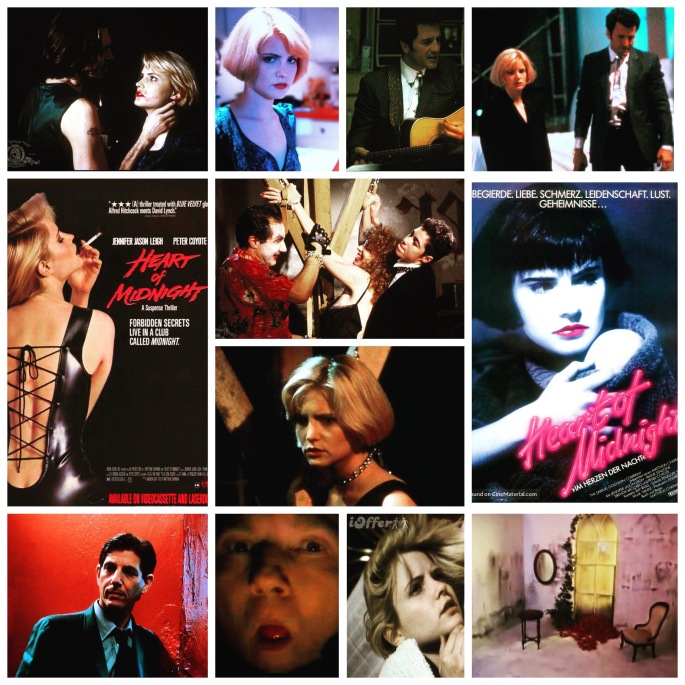
Somewhere between the dustbowl basilicas of 1980’s VHS town and the restless urban decay of metropolitan Americana lies the Heart Of Midnight, a dilapidated abandoned sex fetish nightclub full of nightmarish corridors, dead end rooms with ominous stains on the wall and a perpetual sense of acrid dread. Jennifer Jason Leigh is the reluctant heir to this heap, passed on to her by a weird old uncle she barely remembers, now deceased. It’s in a ruined, crime ridden part of town that still seems safer compared to the various themed rooms of this erotica dungeon, but she’s a trooper anyways, giving her best efforts to fix the place up and make something decent of it. Leigh seems to have deliberately go out of her way to pick kinky, controversial roles since her career began, always with sexual undertones and never short on psychological turmoil. She’s put through a wringer here, as the sordid, perverse and highly disturbing history of both the club and her uncle comes back to haunt her in full sleazy swing, a turn of events not for the squeamish or puritan side of the crowd. Walls seem to move, eyes peer through cracks and haunted cries echo through the fissures in the structure, as well as howling bad dreams that distort her reality. When a detective (Peter Coyote, brilliant work) shows up to help, he’s just as unsettling and shady as the building itself, clearly in the know or up to something. The only borderline sane character is another cop played by Frank Stallone, getting some of the best much needed comic relief of the piece. It’s priceless to see Leigh wander into the police station looking for answers only to find him in the middle of a ukulele folk ballad with the rest of the precinct belting out the chorus. Things don’t go very well for our heroine, as the dark forces playing with her seem to close in for a suffocating finale that leaves you feeling violated and disoriented. This is a film that seeps right to the root of human unpleasantness and psychosexual decadence, and one should firmly equip oneself mentally before going in. It’s also a film of startling dark beauty and alluring atmosphere, like a dreamy black velvet orchid that warbles a lullaby both dangerous and seductive, beckoning you to let your guard down until you wish you hadn’t, and are under it’s spell. One of the most overlooked mood pieces of the 80’s, a gorgeously horrific phantasm of a film that gets under your skin and crawls into your dreams. 

Neil Jordan’s In Dreams


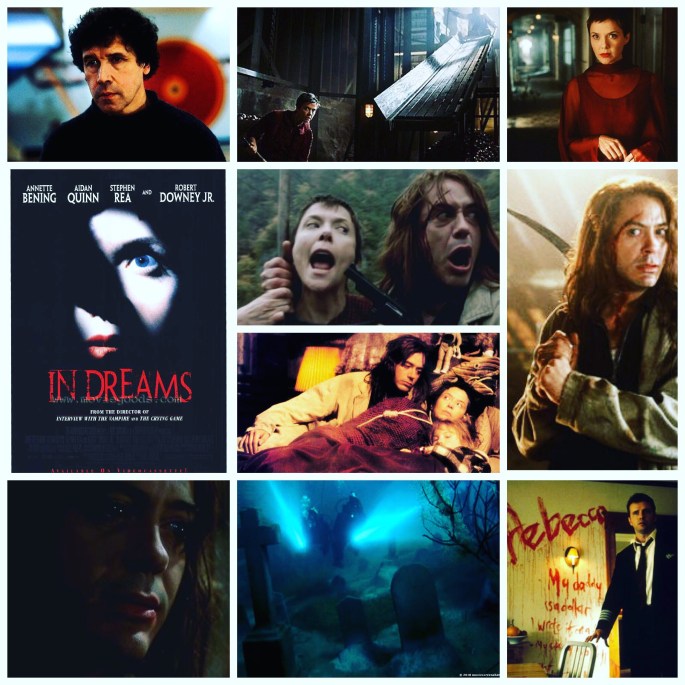
Neil Jordan’s In Dreams will blow you away as far as the style department goes, if being a little short up in terms of story. It’s your serial killer chiller given a supernatural twist a lá The Cell: Annette Bening plays a relatively innocuous woman who shares a sort of psychic bond with a murderer out there somewhere, his motives and actions related to her in atmospheric dream sequences that use specific imagery and sound to provide vague clues. The danger hits closer to home, however, when her own daughter is kidnapped by this killer. Her dreams are dismissed by her shrink (Stephen Rea) and a detective (Paul Guilfoyle), but when her pilot husband (Aiden Quinn) is also put in the crosshairs, she’s forced to use what scant, surreal information she has to track down the source and stop him. He’s played by Robert Downey Jr. of all people, who is already an odd enough choice before you take into account the mop of dreadlocks he’s adorned in once he does show up. He’s menacing enough in his own Downey way, but I can’t help feel it was a bit of a stunt cast on Jordan’s part. The main draw and enjoyment I got out of it is the hyper stylized, meticulously lit dream sequences that could be lifted right off the screen and put on canvas, they’re simply gorgeous. The story just can’t seem to keep up with the visuals though, it’s a retread we’ve seen many a time without much deviation from the path. Still, the colour palette and stark imagery hold enough power to deem this a winner in that respect. 

-Nate Hill

Ridley Scott’s Hannibal


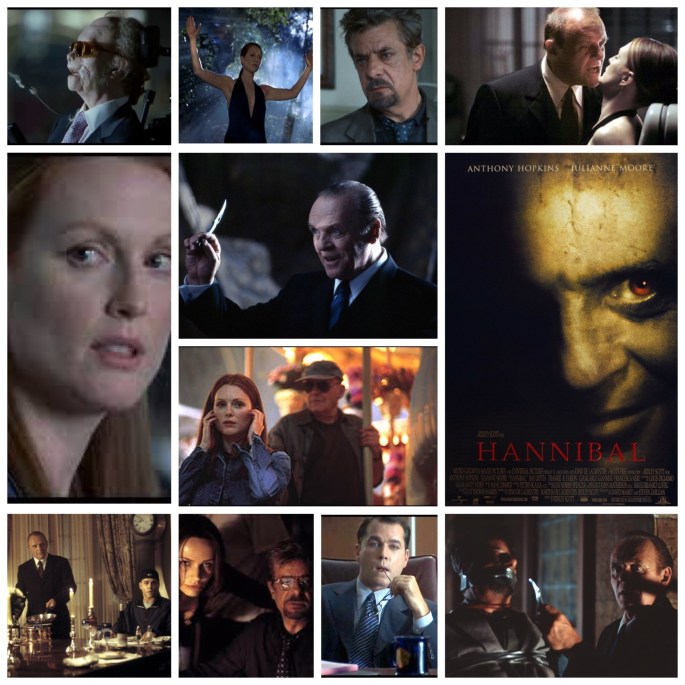
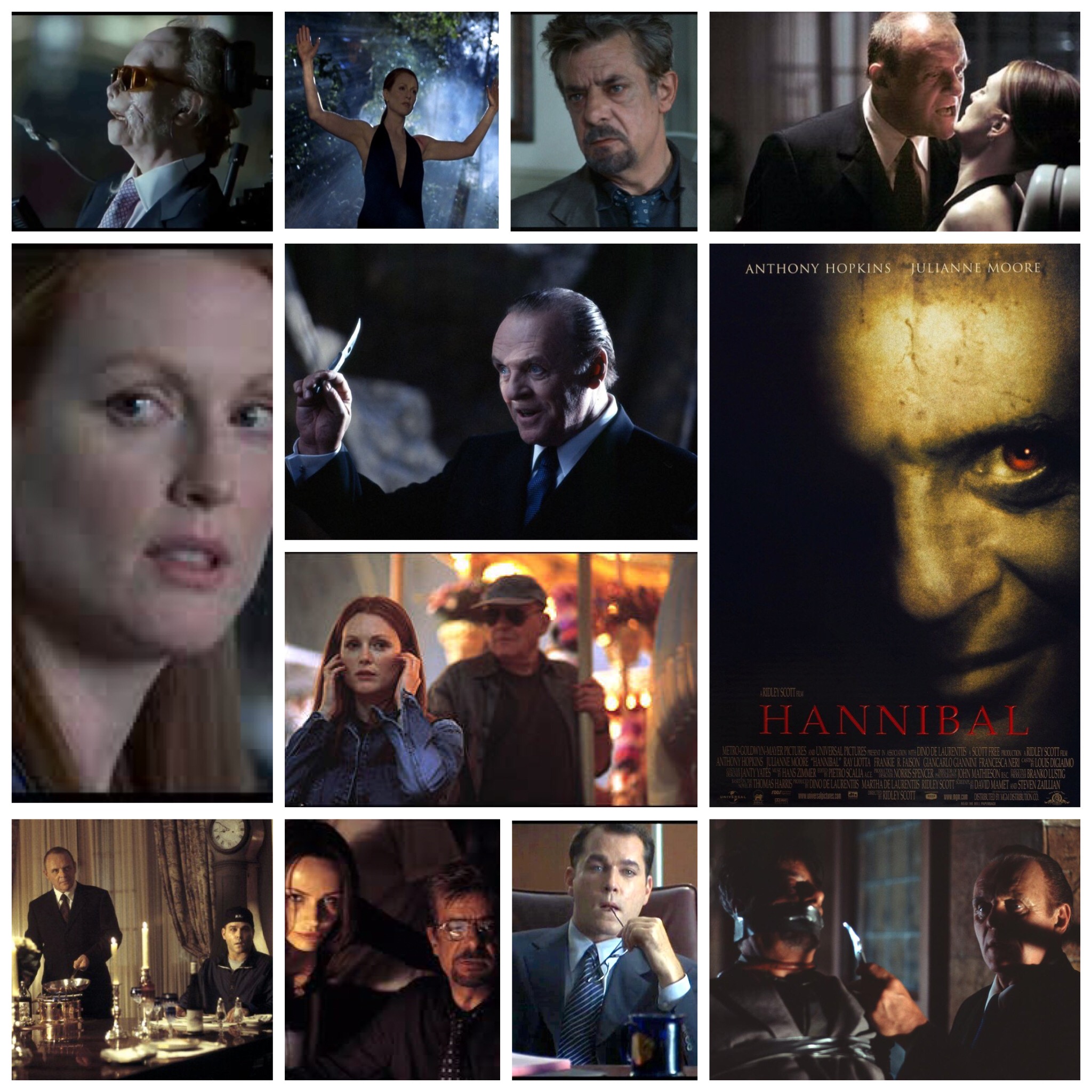
Many of us get so wrapped up in the legacy of Silence Of The Lambs that we sometimes forget just how great Ridley Scott’s Hannibal is. Lambs is a wicked clinical shocker, full of psychopathic deviance and razor suspense, but Hannibal is just as good, instead coming from a place of lush, baroque opulence and velvet gilded carnage that overflows with style. They’re two very different films populated by the same characters, chief being Anthony Hopkins’ disturbed cannibalistic serial killing psychiatrist. Lecter has settled down in Italy when we find him, where one foolish police detective (Giancarlo Giannini, terrific) thinks he can lure the good doctor into a trap. Big mistake, although his efforts do gain the attention of FBI Agent Clarice Starling once again, this time played with grit and grace by Julianne Moore. Lecter is fascinated, perhaps even attracted to Starling, and it’s a treat watching them play a complex game of European cat and mouse whilst other various characters dart in and out of the tale. Ray Liotta blunders into their path as Starling’s ill fated bureau handler, a loudmouth who… doesn’t quite… keep his head screwed on tight (yes I went there). Gary Oldman shows up too, although you’d never know it was him as he’s uncredited and slathered up under a metric tonne of Chernobyl waste prosthetic makeup, playing perverted millionaire Mason Verger, who has a bone to pick with Lecter and I mean that quite literally. Hopkins had aged some since Lambs and doesn’t have quite the same unsettling virile charisma he did there, but he’s lost none of the malevolence or cunning, showing once again what a manipulative monster Hannibal can be. This film is all style, and even the frequent graphic violence, although abhorrent, is done with all the flourish and hues of a renaissance painting. The horror is somehow numb as well, or relaxed would be a better term. Lambs was all in your face with jump scares and spine shuddering yuckyness, while here the horror is rich, deep and vibrant, terrifying yet oddly aesthetic. Goes without saying that this is the closest Lecter film, in terms of style, to NBC’s masterful tv version we’ve been blessed with today, and much inspiration was no doubt culled from this gem. Beautiful, harrowing stuff. 

-Nate Hill

B Movie Glory: Dark Moon Rising 


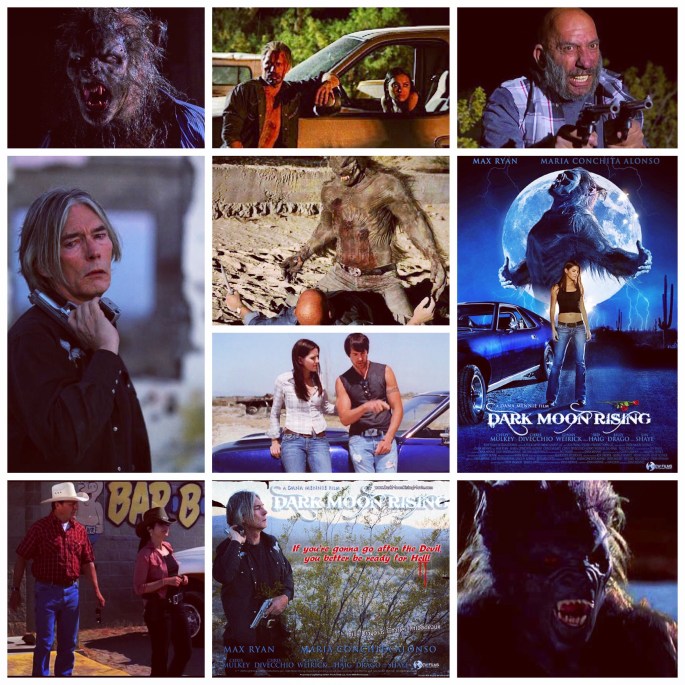
You want a romantic werewolf flick that rises above the vomitus of Twilight and gives you nostalgic pangs for stuff like The Howling and Bad Moon? Dark Moon Rising is your ticket, and proves that you don’t need heaps of PG-13 gloss, mopey teen bottom feeder ‘actors’ and a vacuous script to make a young adult oriented horror film. This one is admittedly low budget and feels just south of finished in spots, but it’s well crafted, made with love and bereft of CGI. The story couldn’t be simpler: a small town girl (Ginny Weirick), her stern Sheriff father (Chris Mulkey) and the new boy in town (Chris Delvecchio) who just happens to be a werewolf. Young love is always just a stone’s throw away from danger, which arrives in the form of the boy’s dangerous, monstrous father Bender (Max Ryan) who also happens to be a werewolf. You can imagine how it goes: steamy New Mexico supernatural melodrama with a few buckets of gore tossed in and a handful of super cool genre actors. Sid Haig, Lin Shaye and Maria Conchita Alonso have wonderful extended cameos, but the standout is Billy Drago, a staple villain actor who gets to do something different here. Blessed with a reptilian visage that just demands evil behaviour from him, he’s given a sympathetic detective role here, a heartbroken lawman on the hunt for Bender to appease personal anguish. The makeup and prosthetics are terrific, retro latex nightmares that made me miss the good old days before I was born when every horror flick had to rely on the ingenuity of a hardworking team of gorehounds. Despite a few weird pacing issues (tighter editing would have been appreciated), this one is a little indie horror well worth your time. 

-Nate Hill

Disturbing Behaviour 


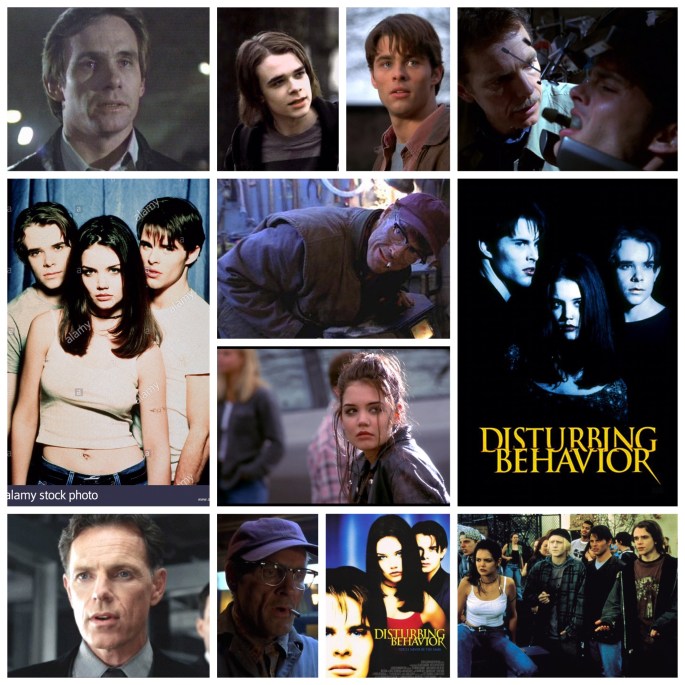
Everyone knows that high school teenagers are the most lawless, degenerate, ill adjusted scoundrels out there, but what to do about it? Radically unethical, mandatory brain modification of course, or at least that’s what mad scientist school principal Bruce Greenwood has in mind in Disturbing Behaviour, a Scream/Faculty esque 90’s shocker that didn’t get half the attention it deserved upon release. Shame because it’s a sleek, well oiled little horror outing. James Marsden and Katie Holmes are the new kids in town, siblings thrust into the savage Serengeti of high school and forced to jump through that fiery hoop of social interaction. Nick Stahl channels his inner awkwardness as the brooding outcast who befriends them, and the trio soon notice some weird activity from their peers. Behavioural patterns are erratic, robotic and vicious, their classmates seemingly not themselves anymore. A creepy local cop (always nice to see Steve Railsback) seems to know what’s up but eerily keeps it hush hush, and calmly maniacal Greenwood definitely has a few skeletons in a few closets. It’s up to them to figure out what’s going on, escape the cerebral rescanning net before they end up dead or worse. Assisting them is a scene stealing, nearly unrecognizable William Sadler as the school’s eccentric, hard-nosed janitor. Working from a script by word wizard Scott Rosenberg and beautifully spooky cinematography from John Bartley that captures the unsettling North Vancouver and Bowen Island coastlines, this flick has a lot going for it and should have gotten way more kudos. 

-Nate Hill