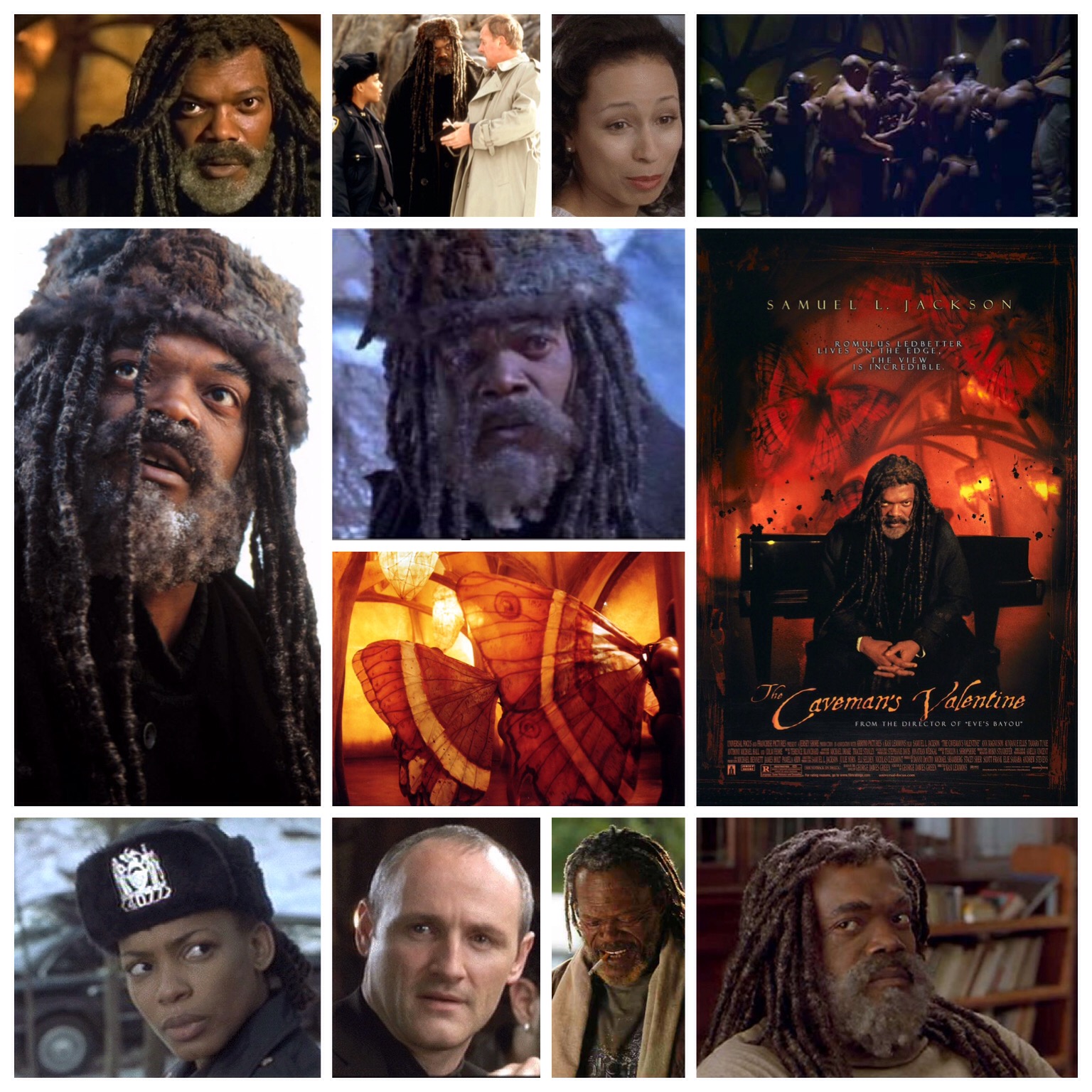
The Caveman’s Valentine: A Review By Nate Hill


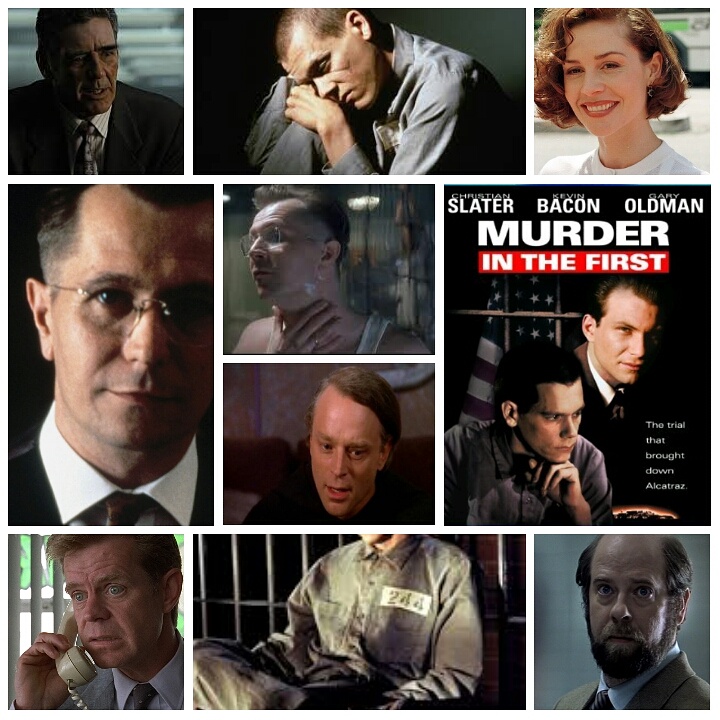
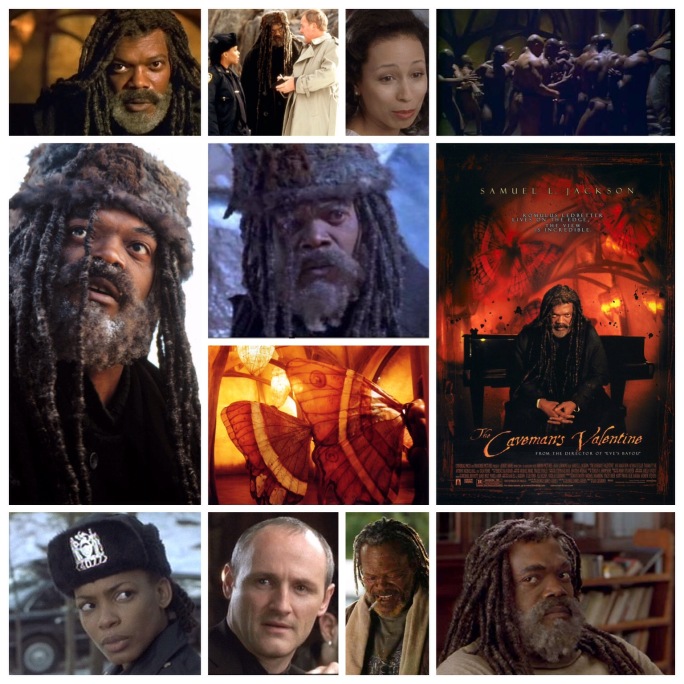
 The Caveman’s Valentine has always fascinated me. As someone who has a mental illness, I’ve always tried my best to seek out films that portray such conditions in a respectable, inquisitive and enlightening tone. While this one cushions it’s earnestness with a slightly lurid and generic murder mystery, much of its desire to explore its character’s inner mindset shine through superbly and with much more authenticity than other films that try the same. Unless you suffer through, or have some intimate experience with someone like this protagonist, it’s tough to artistically represent their state. This one manages very well, and Samuel L. Jackson gives one of the most memorable, affecting and curiously overlooked performances of his career so far. Jackson is an actor who almost always gets cast in assured, authoritative roles. Here he portrays exactly the opposite of that as Romulus, a severely schizophrenic man who lives in a cave in Central Park, New York City. Romulus was once a brilliant pianist and a student at Juilliard, before his illness cut his career and personal life painfully short. He spends his days in confusion, raving in delusion about an all powerful man named Stuyvesant who secretly manipulates everyone in the city. When a young man is found murdered near his cave door, he feels an internal compulsion to find out what happened to him. As you might imagine, a man with his affliction might not make the most reliable detective, but Romulus tries his best and in between bouts of paranoia he makes his way towards weirdo avant grade photographer David Leppenraub (always excellent Colm Feore) who may have had something to do with the homicide. He also has a daughter (Aunjanue Ellis) who is a policewoman and somewhat resents him through her ignorance, and a wife (Tamara Tunie) who no doubt left, but still speaks to him in segments of his visions. Because his perceptions can’t be trusted, even by himself, it makes it a touch and go plot-line that’s heavily accented by frequent visual detours into his own consciousness, where humanoid Moth Sarefs hauntingly play unearthly instruments. Director Kasi Lemmons is not only a woman, but an actress herself, both traits which I believe lead to a certain intuitive advantage in filmmaking. I absolutely love how she moulds the narrative to patiently linger with Romulus’s perception of events and never make them sensationalistic or rushed. Even though Romulus walks through a dangerous, real world story of murder and corruption, the film always sticks with his childlike, abstract and very intangible internal view of the world, a choice which most films either don’t possess the courage or aren’t allowed to do. Jackson is subtle, complex dynamite in what is for me the best work of his career, playing completely against type and most definitely the opposite of his usual instincts to give us something truly special, to any viewer who wishes to exhibit the same patience and understanding that the filmmakers have strived for in making this unique piece. 

Summer Love, aka Dead Man’s Bounty: A Review by Nate Hill

image

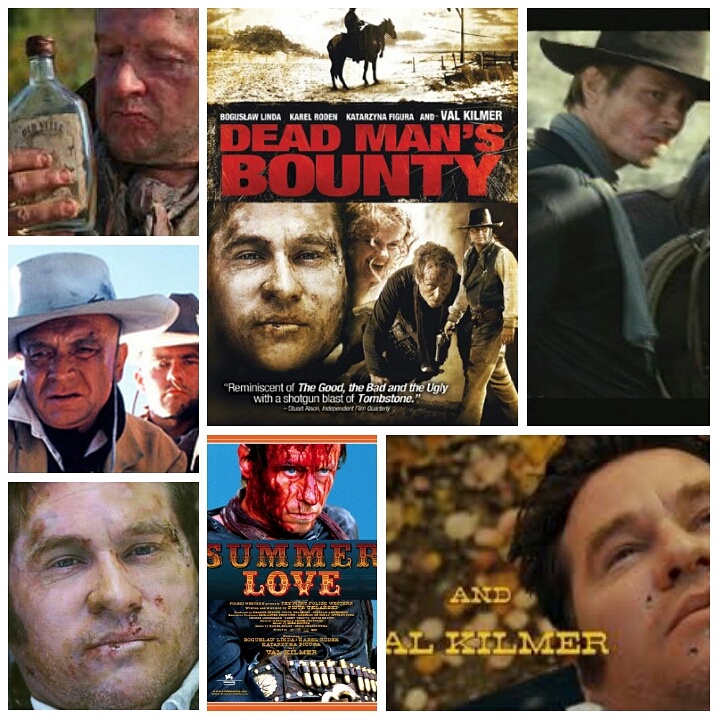
Ever wish there was a movie where Val Kilmer plays a dead corpse? Like…the whole movie? Well you’re in luck, because in Summer Love he does just that. It’s funny because there aren’t even any flashbacks, any death scene or any instances where he’s alive. He’s just a dead body for the whole. friggin. movie. Now you might think what an lazy, pay cheque collecting half ass move, but let me assure you that shit isn’t easy. I’ve played a corpse in films for maybe minutes at a time after I’ve bee killed, and that was bad enough. Thinking about having to lie still and do that for an entire film gives me hives. So kudos to Val who sticks through it like a champ, spending every frame all rigor mortis-ed up and dead as disco. The film was released in North America unde the dvd title ‘Dead Man’s Bounty’ a decidedly more genre title than Summer Love, which is all part of an effort to label it as a violent action western. It’s It’s a western, alright and it’s plenty violent. But action? No sir. It’s slower than the service I get at McDonald’s and very, very European. Most of the actors besides Kilmer are Polish, kind of like Eastwood waltzing around with a bunch of Italians in a spaghetti western. I guess the term for this one would be perogy western. The lead actor is actually Czech, the ever awesome Karel Roden, playing a perpetually wounded and apparantly mute gunslinger who arrives in a dinghole of a town with Kilmer’s body, looking to collect his bounty. The town is a sour, miserable, derelict place, populated by bad tempered, booze gulping men, and one much abused whore (Katarzyna Figura). The sheriff (Boguslaw Linda) is a stumbling, incapable drunkard whose first thought is to rob anyone who passes through his town. Roden silently navigates this cesspool outpost, keeping Kilmer near and his guns at the ready. Not much actually happens in the film, mostly everyone just sits around drinking and mumbling incoherently to themselves in tones that no doubt sound poetic to their heavily inebriated minds. The whore gets slapped around a whole lot which will no doubt put some viewers off, if they aren’t already asleep. The ‘Summer Love’ title comes from the chorus of a song which is played in an opening sequence that proves to be one of the few sparks of life in this fairly dead affair. Kilmer’s trademark peppiness is nowhere to be found because… well… he’s a dead guy, and the rest of the cast are basically drunk western zombies who have all lost their scripts. Morbidly fascinating, never enjoyable, startlingly bad.

Tony Scott’s Beat The Devil: A Review by Nate Hill


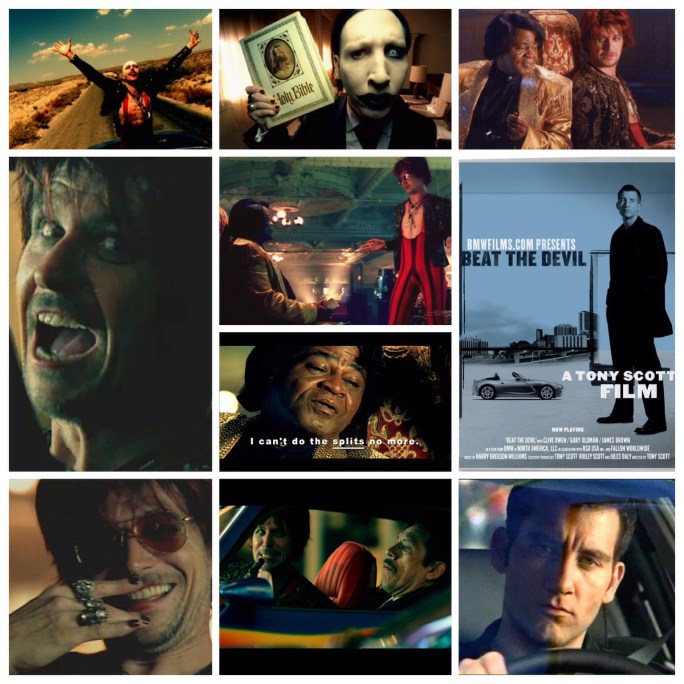
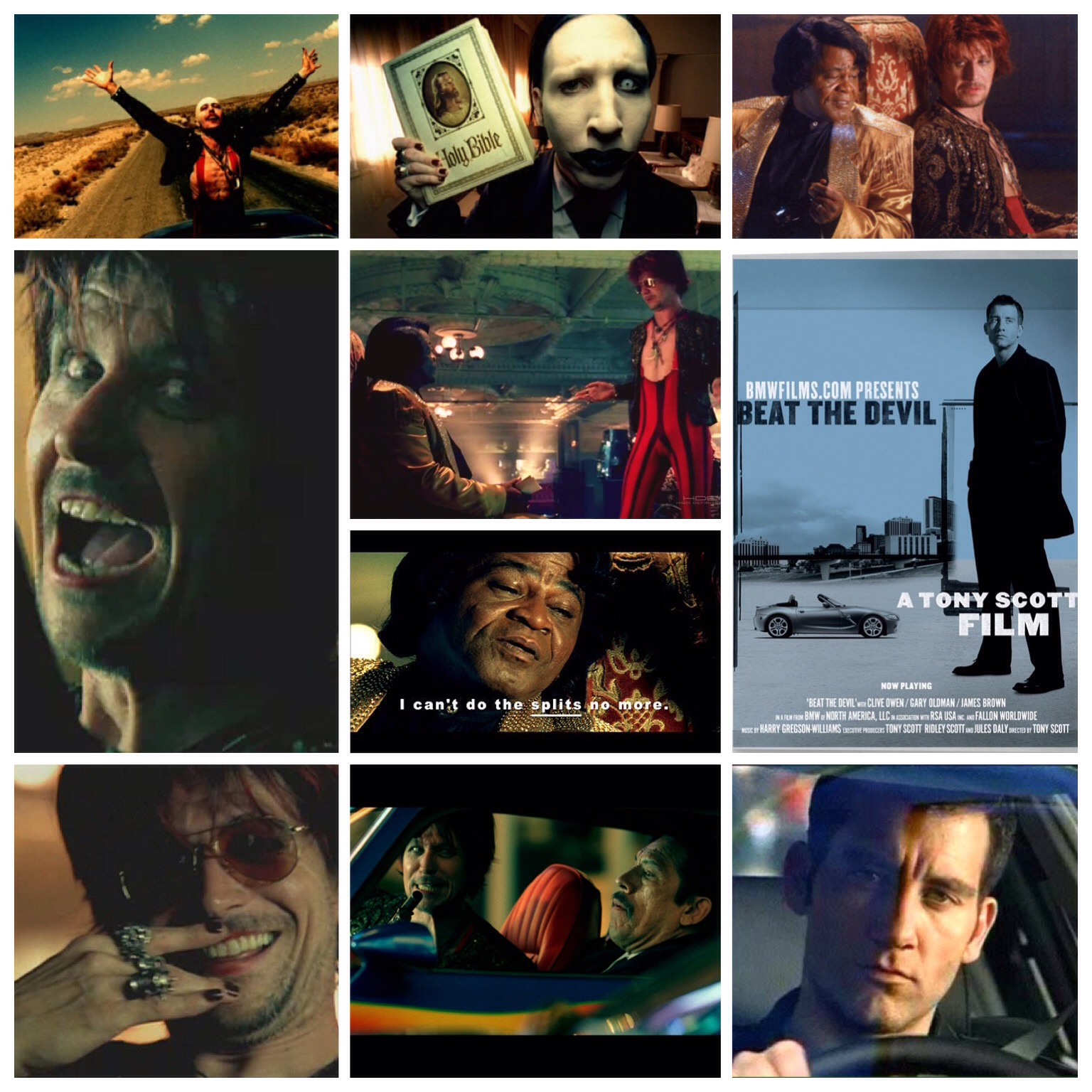
Tony Scott’s Beat The Devil is one part of a multi episode series of promotional short films called The Hire, themed around, and sponsored by BMW. An unbelievable amount of acting heft and prolific directors were brought in to make these, including Scott, Joe Carnahan, Alejandro Gonzales Inarritu, Guy Ritchie, Ang Lee and more. They’re all wonderful and different in their own way, but Scott’s is my favourite of the bunch hands down. From the eclectic cast, all having a blast, to the sheer kinetic momentum and adrenaline soaked velocity of the stylistic direction, it’s pure moviemaking. Tony Scott’s very distinct and polarizing visual aesthetic rears its beautiful head here for a literal crash course which would go on to emerge from the chrysalis and fully spread its wings in the director’s two best films, Man On Fire and Domino. This one is a delicious little treat and obvious precursor to those. The story is fable in nature, starring James Brown as himself (!), pining about his old age. He hires the 007 sequel Driver (Clive Owen, stars in every one of these films, drives a BMW all the time and ties them all together), who takes him to Las Vegas to see The Devil (Gary Oldman, who else), who he sold his soul to decades earlier for fame and fortune. Brown wants to renegotiate the terms of contract, or simply put. Wants to live as a youth longer. Oldman is a sight to see, adorned in crimson lipstick and all manner of kitschy wardrobe numbers, a flamboyant debutant who acts like a Dr. Seuss character in drag. He makes a deranged proposal: the two of them will race the Vegas strip at dawn, Owen against Devil’s driver Bob (a deadpan perfect Danny Trejo). If Brown wins, he gets an extension on life and youth. The race is pure Tony Scott, a commotion fuelled superstorm of breakneck editing, colours flying off the saturation charts proudly and auditory assault as only the guy can craft. It’s the most fun out of the Hire series, careening along on its own delirious and joyful reckless abandon. Watch for a priceless cameo from Marilyn Manson as well.

THE TRANSFORMERS: THE MOVIE – A REVIEW BY J.D. LAFRANCE

Tftm1986e

Before Michael Bay decided to piss all over our nostalgic memories of The Transformers cartoon with his live-action monstrosities, there was a feature-length animated film that for all of its clunky animation and cheesy, dated soundtrack is better than the entirety of Bay’s series of movies. For those of us who grew up watching the cartoon every day after school in the early 1980s, the movie came as quite a shock. Most of us, at that early, impressionable age, were unprepared for the much darker tone and the increased level of violence, including some of the show’s most popular and beloved characters getting quickly killed off in the first few opening scenes. The Transformers: The Movie (1986) was a commercial and critical failure but went on to develop a strong cult following among fans.

It is 20 years into the future (making it, at the time, 2005!) and the war between the Autobots (a race of good transformable robots) and the Decepticons (their evil counterparts) continues to rage. The Decepticons have taken control of the transformers’ home world of Cybertron. The Autobots are planning to retake the planet but need to get more energy from Earth in order to do so. Unfortunately, the Decepticons learn of these plans and their leader Megatron (voiced by Frank Welker) intercepts the ship headed for Earth with the intention of launching a sneak attack on the Autobot’s base. Unbeknownst to the Autobots and the Decepticons, a planet-sized transformer named Unicron (Orson Welles) is devouring entire planets to feed its insatiable desire for energy. Only the Matrix of Leadership, housed in Optimus Prime (Peter Cullen), leader of the Autobots, can stop him.

The dark tone of the movie is set right from the prologue, which features Unicron mercilessly destroying an entire planet of transformers. No one is spared. We even see one escape pod almost make it before getting sucked into Unicron’s massive, gaping maw. For kids used to the relatively tame television series this sequence came as quite a surprise. This was nothing compared to what came next as soon afterwards the Decepticons ambush a ship carrying several Autobots that are quickly and casually killed off! It was one thing to see anonymous characters with nothing invested in them be destroyed but it was something else entirely to see characters we had grown to like on the series dispatched so suddenly and coldly. These deaths do raise the stakes considerably as if the filmmakers were making a statement that all bets are off with this movie – any character, no matter how beloved, is fair game.

Clearly the powers that be (i.e. the toy company) meant to clear the decks for a new generation a.k.a. a new line of toys for kids to buy but I think they underestimated just how profound an effect all these deaths would have on their audience. This culminated with the death of Optimus Prime – the most popular transformer. Not since Darth Vader cut down Obi-Wan Kenobi in Star Wars (1977) had the death of a heroic character been so traumatic for its fanbase. At least Prime got to go out in style with an epic one-on-one slugfest with his nemesis Megatron. For kids at the time, it was an emotional moment because we cared about Prime. His death scene, in particular, had gravitas and meant something to the fans of the show. This is something that the Bay movies never were able to replicate with their multi-million dollar budgets.

Another memorable aspect of the movie is the scope and scale. Where the T.V. show’s action was largely confined to Earth, the movie opens things up by introducing other worlds and races (even if they are all transformers). And so we are presented with the Planet of Junk, one of the more fascinating additions to The Transformers universe. It is inhabited by the Junkions and their leader Wreck-Gar who speaks in T.V. clichés mainly derived from advertisements. In an inspired bit of casting, he is voiced by Monty Python alumni Eric Idle. Their world is a metallic compost heap masquerading as a planet and rather fittingly their theme song is performed by none other than Weird Al Yankovic. This race of robots provides a much-needed moment of levity in what up to that point had been a very dark film.

The battles are also bigger and more intense as Unicron transforms into an enormous robot that attacks Cybertron but this almost pales in comparison to the intensity of the epic battle between Optimus Prime and Megatron that left many fans shocked by its outcome. No one was prepared for what went down and the film never quite recovers from this moment. Speaking of gravitas, who better to play a transformer the size of a planet than Orson Welles, the brilliant filmmaker who made Citizen Kane (1941)? His digitally augmented voice has the dramatic weight befitting the scale and power of Unicron. The filmmakers needed a formidable actor to play a formidable character and they found their ideal candidate in Welles. This gig would be his last and he died five days after completing his work from a heart attack.

One of the things that dates The Transformers movie the most is its soundtrack of awesomely bad generic ‘80s hair metal, complete with the show’s cool theme song redone by Lion. Most memorably is Stan Bush’s “The Touch,” which went on to be hilariously immortalized in Paul Thomas Anderson’s Boogie Nights (1997). The one song that acts as a crazy counterpoint to this bloated arena rock is Weird Al Yankovic’s theme for the Junkions, “Dare to Be Stupid.” His goofy, non-sensical lyrics (anticipating Beck by a few years and actually goofing on Devo) are perfect for this absurdist, almost Dada-esque race of transformers.

After the first two seasons of the television show, toy company Hasbro wanted to eliminate many of the characters and introduce a new line. Season three would feature several new characters and the feature film would make that transition. Toy lines are discontinued for new ones and so the dilemma facing the screenwriters of the movie was how to make this transition seamlessly. According to story consultant Flint Dille, “So, we had this one scene where the Autobots basically had to run through a gauntlet of Decepticons. Which basically wiped out the entire ’84 product line in one massive charge of the light brigade. So whoever wasn’t discontinued, stumbled to the end.” The scene didn’t quite play out that way but over the first third of the film, several of seasons one and two characters were killed off. Not surprisingly, it was Hasbro that dictated the story of the film, “using characters that could best be merchandised for the movie. Only with that consideration could I have the freedom to change the storyline,” said director Nelson Shin in an interview.

The Transformers: The Movie
’s pacing is fast and furious with never a dull moment – perfect for kids with short attention spans and actually works in its favor as any narrative fat is trimmed, packing a lot of action into its running time (again something the live-action films failed to realize with their bloated lengths). While I don’t know if the movie exactly lives up to its poster’s tag line, “Beyond good. Beyond evil. Beyond your wildest imagination.” It was a pretty mind-blowing experience for this impressionable youth back in the day. So, I come at this movie now with nostalgic baggage in tow, unable to really look at it objectively. I can only imagine what kids of today think of it now. Sadly, they probably don’t even know/care of its existence having been bombarded by the Michael Bay movies, which is too bad because they lack the imagination, the ambition (which are largely earthbound while the animated film takes place mostly in outer space) and the substance that makes The Transformers: The Movie by far superior. Plus, I’d take the likes of Stan Bush and Lion over the bland nu metal stylings of Linkin Park any day.
Wrong Turn At Tahoe: A Review By Nate Hill

  
I’ve been ragging a lot on Cuba Gooding Jr. The past few reviews, so I’ll go easy and speak about a good one instead. Wrong Turn At Tahoe has a script that should have been given the royal treatment; it’s wise, brutal, thought provoking and very violent, with many sets of morals clashing against each other in true crime genre style. It didn’t get a huge budget or a lot of marketing, but what it did get was a renakably good cast of actors who really give the written word it’s justice, telling a age old story dangerous people who inhabit the crime ridden frays of both society and cinema. Cuba plays Joshua, a low level mafia enforcer who works for Vincent (Miguel Ferrer), a ruthless mid level mobster who runs his operations with an OCD iron fist. He also rescued Joshua from a crack house when he was a young’in, forging a father son bond that runs deeper than terms of employment. When a weaselly informant tells them that local drug runner Frankie Tahoe (Noel Gugliemi, reliably scary) has it in for them, Vincent brashly retaliates first by viciously killing him. That’s where the shit starts to get deep. Frankie was an employee of Nino (Harvey Keitel) that most powerful crime boss on the west coast and not a man to cross. Nino Wants hefty payment for the loss of Frankie, who was a good operative. Vincent, being the proud and belligerent son of a bitch that he is, bluntly refuses. So begins a bloody, near Shakespearean gang war in which both sides rack up heavy losses and the phrase ‘crime doesn’t pay’ collects it’s due. All parties were inevitably headed to a bitter end whether or not the Tahoe incident occurred, and I think the writer simply used that inciting incident as an example of many ways in which a life like that will always end up at a dead end. The writing is superb, especially for Gooding, Keitel and Ferrer, a vicious triangle indeed, all at the top of their game and then some. Johnny Messner is great as Gooding’s cohort who can’t keep his mouth shit, and watch for Mike Starr, Leonor Varela, Paul Sampson and Louis Mandylor too. Dark deeds, unexpected betrayal, self destructive ego, combustible machismo and ironic twists of fate are explored here in a script the remains as one of my favourite of that year. Really excellent stuff. 

The Last Rites Of Joe May: A Review by Nate Hill

image

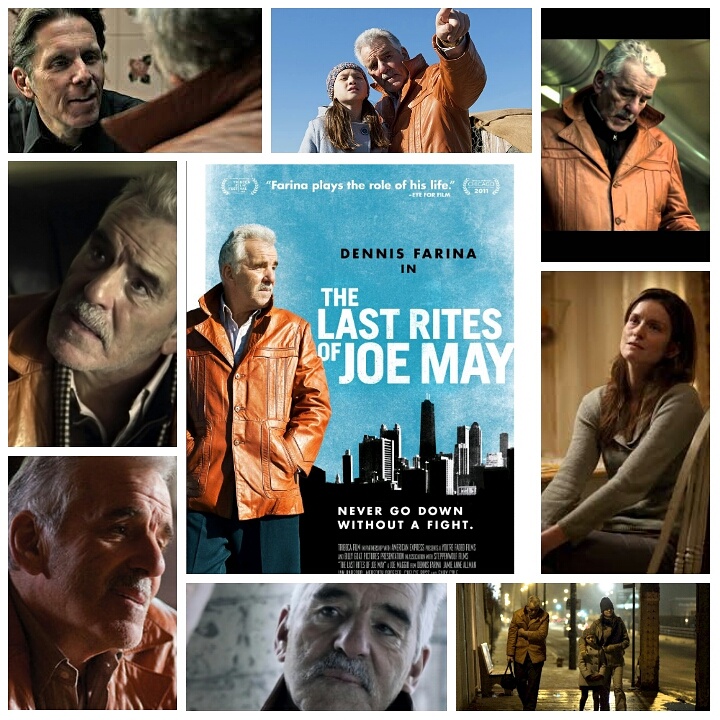
The Last Rites of Joe May is Dennis Farina’s bittersweet swan song, his final exodus from a long, epic and beloved career, showcasing the actor in the role he was always meant to play, and a lead role no less. He did a few other films after this one and a priceless cameo on Family Guy, but this is the spiritual final entry, and when you look at the story of the film, it’s both eerie and fateful that the man would go on to pass away just a few years later. He plays Joe May here, a Chicago wiseguy and short money hustler who has been in the hospital with pneumonia for almost a year. Upon returning to his borough, he finds his apartment rented out to a woman (Jamie Anne Allman) and her daughter (Meredith Droeger), all his belongings sold, and his presence pretty much forgotten, with some even under the belief that he has died. The woman takes pity on him and let’s him stay in his apartment with them if he helps her out, and he goes back to the same hustling, or at least tries too. All his ventures have gone dry, his former boss (a splendid Gary Cole) giving the cold shoulder. Joe starts to realize that one must face the eventual consequences of a life lived in selfishness and foolhardy actions, as he finds himself alone in the world and shunned even by his own son. He gets a shot at redemption upon having the little girl in his life, and being there to help out her mother who has one lowlife monster of a boyfriend that just happens to be a cop. Farina is sensational in every scene, and it’s a shame the guy didn’t ever get more lead roles. He makes Joe a grim yet sympathetic being who serves as a sorrowful reminder of how we all will arrive at the end of our road someday, and how important it is to line said road with good deeds, kindness, respect and worthwhile ventures, even if they only show up in the last few miles of it. This is a Tribeca festival film so it’s tough to find, but anyone with a love for Farina or simple, well told and emotional stories should definitely check it out. The beautiful piano score adds to the loneliness of Joe and his state of mind, as does Farina’s performance which a a gift to filmgoers and contains see of the hardest work and piercing truth I’ve ever seen from the guy. RIP.

Chattahoochee: A Review by Nate Hill

image

Chattahoochee tells the sad and disturbing tale of Emmett Foley (Gary Oldman) a Korean War veteran who has returned home with severe PTSD. In a tragic and scary sequence, he shoots up his neighborhood in confusion and fear, injuring himself in the process. He is then sent to a ‘maximum security’ mental facility, and anyone who has heard what places like that were like in the 1950’s cam imagine what he’s in for next. The place is an unkempt, filthy sinkhole where the inmates are abused, neglected and subjected to inhuman maltreatment. So now, in addition to dealing with his mental illness, Emmet must witness this miscarriage of medical treatment on a daily basis, and suffer through it himself. He is befriended by deceptively cavalier Walker Benson (a funny and touching Dennis Hopper), and the two of them try to seek out better treatment and conditions for their fellow inmates. Only problem is, the beauricratic faction doesn’t want to hear any of this, stone walling and throwing it in their faces with callous indifference. It becomes the struggle of Emmet’s lifetime to win the day against this rotten system, and he’s aided by his sister (Frances Mcdormand) in his efforts. Oldman is as intense as you’d imagine with subject matter like this, an implosive tsunami of dread and outrage as he both bears witness and cries out in protest. Ned Beatty plays a nasty doctor, and there’s also work from Matt Craven, Gary Bullock, M. Emmett Walsh, Richard Portnow and Pamela Reed. This one is tough to find, and a tad forgotten, but it’s worth the hunt. It’s also based on a true story about a real veteran  named Christopher Calhoun, who later wrote a book detailing his experiences. Harrowing, but important stuff. 

B Movie Glory with Nate: Hardwired

image

The first IMDB review to pop up when you look up Hardwired has the log line “wtf?”, which just about sums up the movie. It’s straight up cow dung, a stunningly bad attempt to emulate everything from Blade Runner to Minority Report, failing in all imaginable ways. It does, however, possess a few deranged qualities which are worth a look purely for your own mirth and amusement. Let’s start with Val Kilmer’s hairdo. He sports a getup that looks as if someone threw the head of a mop into a wheat thresher, put it on his head and tried to style it like an emo anime character. It’s baffling, shocking and the hairpiece gives a better performance than the former Bruce Wayne sitting beneath it. Now,here’s the curious thing: on the dvd cover, Kilmer has a garden variety haircut, with no trace of the horror to come once you hit play. This makes not a bit of sense to me;  if I were the filmmaker and it was my movie and I’d chosen that epic Goku hairdo for Kilmer, let alone get him to agree to it, I’d advertise it loud and proud, and put his image like nine different times all over the cover art. It’s ironic that a film about excessive commercialism is guilty of false advertising, but there you have it. Anywho, Kilmer and the hair play Virgil Killiger, a whacky PR manager of a mega corporation  whose main revenue comes from serial advertising, in a half assed future where society has reached the oft imagined 1984 dystopia. He’s tasked with harassing Luke Gibson (Cuba Gooding Jr.), a man who owes a heavy debt to the company due to their products saving his life following an accident. Only problem is, it doesn’t end there. The corporation gets greedy and tries to insinuate itself into every aspect of people’s lives. Gooding bands together with a group of cyberpunk hackers led by Michael Ironside, and together attempt to bring down the company once and for all. It’s al big dumb dumb of a flick that doesn’t even put a modicum of effort in most of the time. Lance Henriksen fans beware: despite a credit, he’s not even in the thing, except for a single recycled photograph which sets the film up for sequels that I will bet my left testicle will never get made.

Murder In The First: A Review by Nate Hill

image

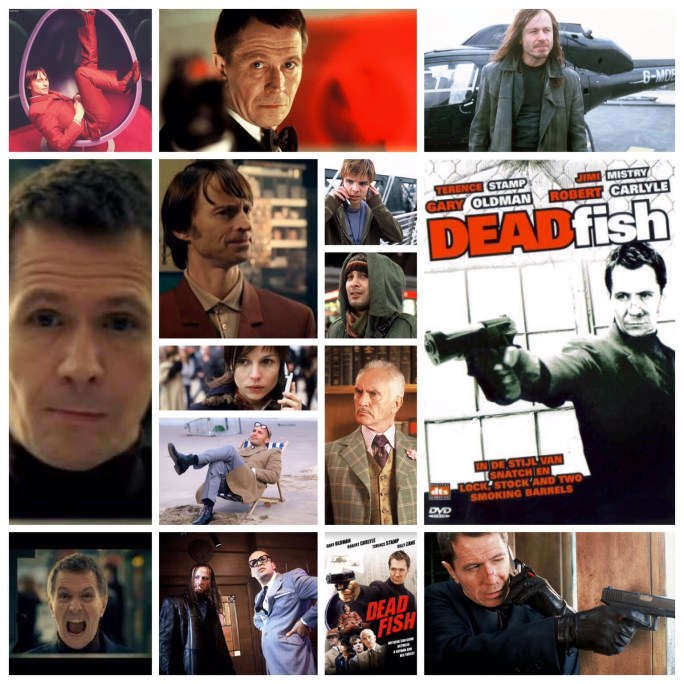
Murder In The First examines courtroom intrigue in San Francisco, concerning an Alcatraz inmate (Kevin Bacon) who has been accused of killing a fellow prisoner upon being let out of a cruelly long stint in solitary. In fact, the word cruel seems to be the running theme of his incarceration, at the hands of sinister and sadistic Warden Milton Glen (Gary Oldman). A decade prior, Bacon almost succeeded in escaping the island, which seems to have given the correctional officers the idea that they can do whatever they want to him. His plight creates ripples in the D.A.’s office, and soon a young, inexperienced attorney (Christian Slater) is assigned to his case. His boss (Stephen Tobolowsky) seems to think, and I quote, that a monkey would be more suited for the job. The D.A. (William H. Macy) has hope. And so it happens, with Bacon arriving in an obvious shellshocked state, Slater trying to exploit his maltreatment at the Warden’s hands and win not only his innocence, but his freedom. Bacon can swing his internal compass from victim to villain at the drop of a hat, taking up the bruised martyr mantle here and proving to be quite affecting. Slater is… Slater, the guy doesn’t have endless range but can carry a scene decently enough. Oldman is sly and scary, covering up the true nature of Glen’s monstrosity underneath a beauricratic sheen. The cast is wonderful, with further standouts from Brad Dourif as Slater’s veteran lawman brother, Embeth Davidz as a key witness, R. Lee Ermey as the stern judge overseeing the trial and brief appearances from Mia Kirshner, Charles Cyphers and Kyra Sedgwick. The expert cast carries it along with innate talent and applied teamwork, with Bacon and Oldman taking front and center. Now I’m not entirely sure if this is based on a true story, but it’s very fascinating nonetheless and serves to show the rotten places in the penal system which definitely do exist in real life. Solid stuff.

Dead Fish: A Review by Nate Hill


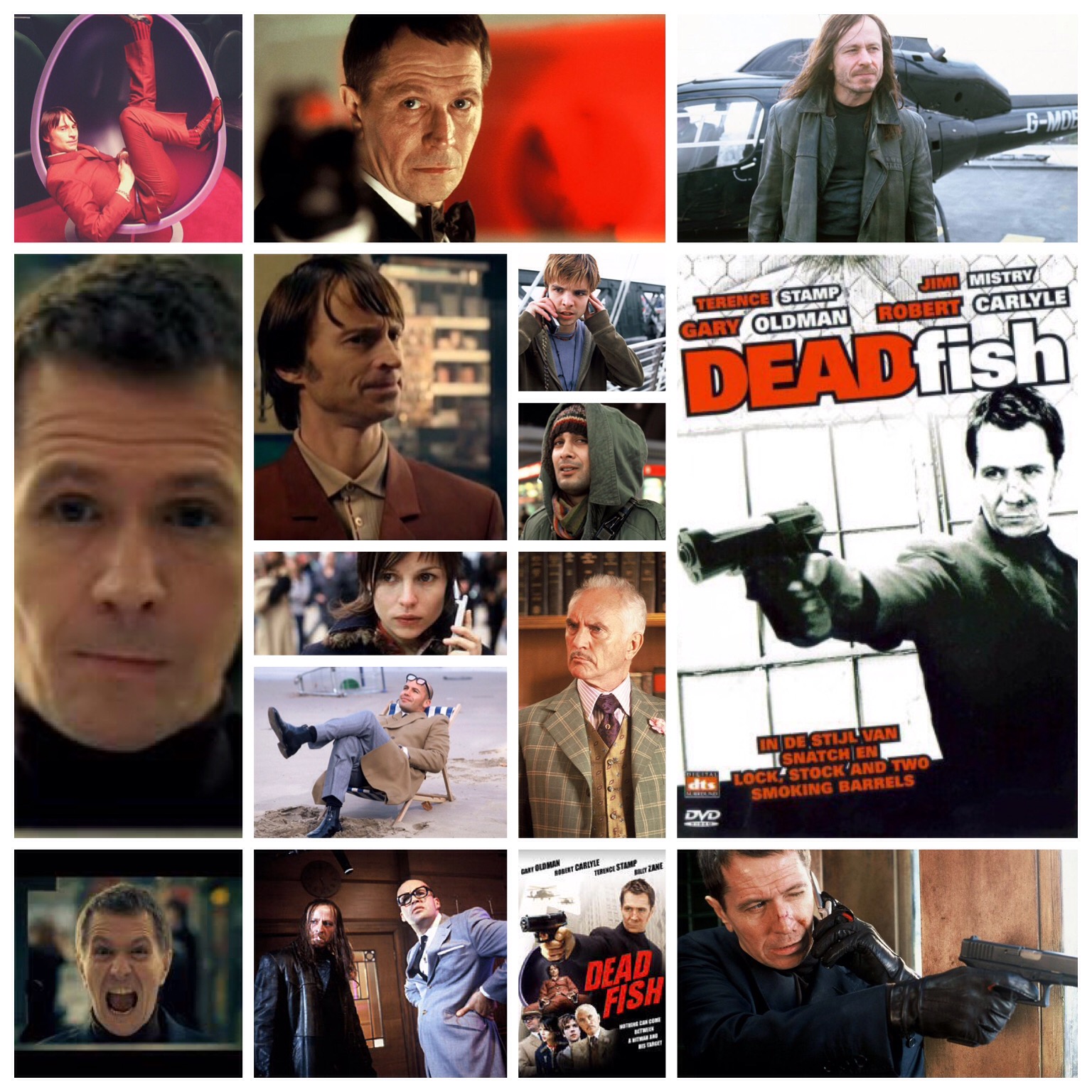
There’s a minefield of British gangster flicks out there, riding the colourful wake of Guy Ritchie’s output, and similar fare. Some are solid, and some blow up in your face with mediocrity when you come across them. Dead Fish falls somewhat in between those two reactions. On the one hand, it’s slick, visually adept, well casted and for the most part acted and knows how to set up a stylized scene. On the other hand, parts of it are silly, incongruent to the piece as a whole and kind of.. Shitty. It’s both a good bad movie and a bad good movie, and I know that doesn’t give much of a concise picture or really tell you whether to watch it or not, but too bad, that was my conflicted reaction. Gary Oldman, in one of his last loopy performances before he reigned it in, plays Lynch, a lively assassin with an unstable personality. He jumps from contract to contract, until a beautiful girl (Elena Anaya) catches his eye, and he’s struck with alarming and slightly creepy lovesickness for her. She’s got an American boyfriend (Andrew Lee Potts, who almost brings the film toppling down with his shoddy acting) who is on the run from violent loan shark Danny Devine (Robert Carlyle, frothing at the mouth like a pissy little windup toy). Lynch collides with them all including Pott’s stoner buddy (Jimi Mistry always looks like he needs to pee really bad and he’s waiting for them to say “cut”). It’s not super clear what Oldman’s character objective is besides going off on a freaky bi-polar tangent as he pursues his perceived dream girl and seems ready to forsake the high paying hitman job he seems so comfortable in. Nevertheless it’s fun to see him run around shooting people and being a mental head, and no one can do that like our Gary. The plot thickens, or rather becomes unintelligible, when two secret spy operatives are brought in by some agency to.. do…man I don’t even know. Billy Zane is a weird loony toons caricature as Virgil, a stuffy old spook with a plummy upper crust accent and some… wardrobe issues. He’s paired with Eastern European psycho Dragan (the always excellent Karel Roden) and the two literally spend their portion of the film bickering, cat fighting and squabbling, having actually no real interaction or function with the plot. Oh well, they’re amusing if nothing else. There’s also a brief appearance from Terence Stamp, who classes up the affair as Samuel Fish, a shady businessman with a vaguely coherent part to play in the madness. It’s all very strange and seems assured that it knows what it’s doing and where it’s going, even if at times the audience has not a clue. On the plus side, this is the only film I can think of where you can behold Gary Oldman break out into a musical number whilst tied down by a 250 pound S&M hooker. Yikes. Keep your ears peeled for a sonic little score from Groove Armada as well.