Robert Atman’s The Gingerbread Man: A Review by Nate Hill


Robert Altman’s The Gingerbread Man isn’t the director’s best, but it’s worth a looky-loo just to see this solid cast cavort around in a sweltering Georgia atmosphere and play out a narrative that’s part sultry seduction thriller and part hard boiled whodunit. I remember watching it and going ‘meh, I’ve seen this type of thing a thousand times and this one didn’t raise the bar at all.’ I’m thinking now that perhaps my mindset was in the wrong space, and that Altman set out to simply bring us the romantic murder mystery in its purest form, without deviation or higher ambitions. In that case he’s made a neat little potboiler with a suitably ludicrous ending, some truly effective red herrings and a really great troupe of actors, so,e going nicely against type. The multitalented Kenneth Branagh plays suave Georgia lawyer Rick MacGruder, who finds himself in deep trouble when he has an affair with sexy, slinky and shady Mallory Doss (the very underrated Embeth Davidz). She’s a good enough girl, but she has a backwoods nutcase of a father named Dixon (Robert Duvall being uber strange and loving every second of it) who is stalking and threatening her. Dixon is a bedraggled, cult-leading swamp rat and Duvall plays him to the frenzied hilt of uncomfortable ticks and unkempt theatrics. MacGruder, being smitten with Mallory, is of course compelled to use his legal and personal power to help her, and concocts a convoluted scheme involving a subpoena to Mallory’s belligerent ex husband Pete Randle (a cranky Tom Berenger blusters about in the third act). This of course sets off all kinds of back door motivations and sweaty double crosses that are hard to keep track of until all is revealed in the final act, prompting a collective audience reaction of “huh??”. It’s all in good fun though and at times it seems like Altman is deliberately dipping into B movie territory just to shirk his high art mantle and spice up this gumbo with some trashy, lowbrow flavour. I say bring it, that’s exactly the way to my heart. Writing this review I’m now realizing I probably like this film way more than my ending statement might suggest, but sometimes we need to hash it all out on paper (or in this case a cramped iPad keyboard) to reevaluate our perception of a certain piece. The cast gets juicier, with Robert Downey Jr. doing a quick bit as Macgruder’s slick buddy who works as a private investigator for the law office, Daryl Hannah and Famke Janssen as Rick’s jilted wife as well. It’s based on a John Grisham novel, and Altman seems to be the first director to adapt his work with a ramped up style and personal flair that goes beyond the academic thrills on the page. This one feels heightened, sultry and oh so sweaty in the way that only a southern set thriller can be. Cool stuff. 

CAPTAIN AMERICA: THE FIRST AVENGER – A REVIEW BY J.D. LAFRANCE

cptamerica-trailer-197

The popular comic book superhero Captain America had his debut in March 1941 courtesy of Joe Simon and Jack Kirby who created him as a patriotic symbol in response to the actions of Nazi Germany in the years leading up to the United States’ involvement in World War II. Like any enduring comic book icon, Cap has undergone all kinds of changes over the years but as had few cinematic incarnations. He first appeared on film in a 1944 serial and then in a 1990 film that was so ill-conceived that it was released direct to home video in North America. One problem with the character is that his costume does not translate well to a live-action film. It didn’t help that at the time of the 1990 version, Marvel Comics, which owned the character, had little interest in cinematic adaptations of its titles until X-Men (2000) proved to be a surprise hit.

Since then, they’ve had a spotty track record with their properties. The Blade and Iron Man series were very successful but both Daredevil (2003) and Ghost Rider (2007) were box office and critical failures respectively. Part of the problem is the talent attached to these films. Getting the right director and cast that understand the characters and the worlds they inhabit is crucial and explains why the first two X-Men films were so good. For Captain America: The First Avenger (2011), the powers that be wisely hired Joe Johnston to direct. Since it was decided that the film be set during World War II who better to recapture that old school action/adventure vibe then the man who helmed The Rocketeer (1991) and Hidalgo (2004)? For the pivotal role of Captain America, Chris Evans was cast. He already had experience with superhero films playing the Human Torch in the awful Fantastic Four films and, as a result, was understandably reluctant to take on another comic book adaptation. The question remained, how would such an earnest, idealistic character translate in our cynical times and would movie-going audiences be able to relate to him? Judging by its opening weekend box office haul, quite well indeed.

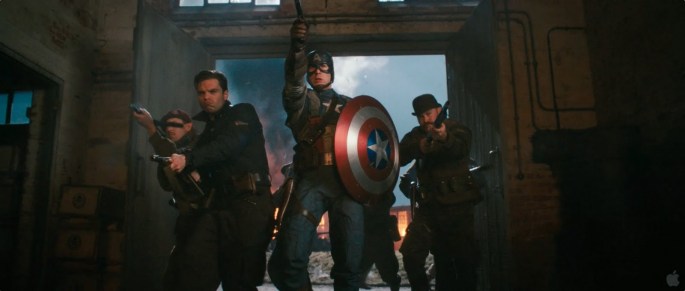
Steve Rogers (Chris Evans) is a skinny weakling who just wants to do his part for his country during wartime but he’s wracked with too many health problems to join the army. So, he volunteers for a risky top-secret experimental program known as Project Rebirth run by Colonel Chester Phillips (Tommy Lee Jones at his crusty, ornery best) and Peggy Carter (charmingly played by Hayley Atwell). Rogers may not be physically strong but he’s brave, determined and willing to sacrifice himself for the greater good. Dr. Abraham Erskine (Stanley Tucci) and playboy inventor Howard Stark (Dominic Cooper) conduct the actual procedure that transforms Rogers into the perfect physical specimen, a Super Soldier complete with superior strength and agility.

Instead of putting him on the front lines where he wants to be, Rogers dons a corny costume (that pokes fun at previous cinematic incarnations), dubbed Captain America, and ordered to sell war bonds to the American public in a lame dog and pony show. While entertaining American troops in Italy, he hears that his best friend Bucky Barnes (Sebastian Stan) has been captured by Hydra, a research wing of the Nazis who are so ambitious that they split from the Germans for playing it too safe. With Peggy and Stark’s help, Rogers disobeys orders to rescue his friend and 400 prisoners of war. Meanwhile, Hydra leaders Dr. Arnim Zola (Toby Jones) and Johann Schmidt (Hugo Weaving) have discovered the Tesseract, a cosmic cube endowed with powerful magical energy that they harness so that it can be used to not only win the war but also take over the world. Schmidt was the first recipient of the Super Soldier formula and it transformed him into the Red Skull, a hideous-looking evil genius.

Hugo Weaving brings a suitably creepy menace to the role of the power hungry Red Skull aided in large part by the impressive and appropriately garish makeup job. Hayley Atwell is downright delightful as the brassy dame Peggy Carter who is more than capable of taking care of herself. The chemistry between her character and Rogers is nicely realized with snappy, slyly flirty dialogue reminiscent of a Howard Hawks film. The screenplay, written by Christopher Markus and Stephen McFeely, does a nice job of developing their relationship over time, keeping their romance simmering just under the surface for most of the film until its tragic conclusion that carries a surprising emotional resonance because we’ve become invested in them. After all kinds of supporting roles over the years, Chris Evans finally gets to prove that he has the chops to carry a big budget blockbuster. He brings a no-nonsense charisma to the role and conveys Cap’s idealism without coming across as forced or phony.

Joe Johnston brings the same old school Classic Hollywood vibe he brought to The Rocketeer complete with a refreshing lack of cynicism and irony as he delivers a straightforward action/adventure tale. And like with that previous film, he includes all sorts of nice comic book touches, like the introduction of the Howling Commandos, a ragtag group of soldiers that fought alongside Nick Fury in the comics and fight with Cap in the film. In particular, the actors who play Dum Dum Dugan (Neal McDonough) and Gabe Jones (Derek Luke) bear an uncanny resemblance to their comic book counterparts right down to how they look and act. Unlike Zack Snyder (Watchmen, Sucker Punch), who imposes too much of his personal style, Johnston understands that the film’s style should service the story – anything else is a distraction. He even employs Snyder’s trademark “speed-ramping” technique but in a way that fits seamlessly with the action sequences, which are exciting and expertly choreographed, devoid of schizophrenic editing. You always know who is fighting whom and where. Captain America may not reinvent wheel in terms of the comic book superhero genre but it doesn’t have to. It is a crowd-pleasing popcorn movie with nothing else on its mind but to tell an entertaining story.

House Of Sand And Fog: A Review by Nate Hill

image

House Of Sand And Fog is an emotional thunderclap in ways you won’t see coming, leaving the viewer gutted after a finale that feels spare and detached yet wracked with emotion in the same moment. You feel haunted after witnessing the story unfold, and I was particularly affected by Ben Kingsley’s determind, tender performance for days after my viewing of the film. He plays an Iranian man, a proud man who was a Colonel in the air force in his home country, and has been forced to work construction labor jobs in America to support his family, and to keep up the appearances of their lifestyle. When neglected taxes force a troubled woman (Jennifer Connelly) out of the house she grew up in, Kingsley sees an opportunity to buy the the property for a fraction of what it’s worth, essentially leaving Connelly homeless. She has a history of alcoholism and instability, and this unfortunate situation really worsens her condition, leading to angry and confrontational behaviour towards Kingsley. He has no ill will towards her, he’s simply trying to make a better life for his family whom he loves very much. His wife (Shohreh Aghdashloo) is still very much rooted in Iranian culture, and much of what’s going on goes over her head. There’s also a cop (Ron Eldard) who strikes up a reckless romance with Connelly and tries to strong arm Kingsley into selling the house back to her, pretty much reasoning with his dick instead of his brain. This is a film that refuses to take a side, showing us unblinking and compassionate views of both people within the conflict, and never lifting a judging eyebrow. It’s a sad, sad turn of events and the film wants to show us the tragedy, but it does so with the utmost care, and always has a loving hand in presenting it’s two lead characters. Connelly is heartbreaking, showing us the burning humiliation that frays her spirit to the last sinew. Kingsley is flat out brilliant in the kind of performance that holds up for decades to come. He rightly won an Oscar for his galvanizing turn that breaks hearts and opens tear ducts. Ron Eldard is the only piece that doesn’t fit, because he’s usually not fund in this type of stuff. He’s really talented as an offbeat character actor, but just seems out of place here playing it straight, and it also doesn’t help that his character is just damn unlikable. Aghdashloo is the third leg of the acting table, and her work earned her an Oscar as well, she is plain superb. Be careful of what mood you’re in when you give this one a go, it’s pretty devastating. It’s also powerful cinema, and a story that could happen to anyone, anywhere in the world, giving us something real to latch onto and connect with.

Judge Dredd: A Review by Nate Hill

image

Ah yes, the 90’s version of Judge Dredd, featuring a hopped up Sylvester Stallone as the titular comic book lawman. There is so much hate floating around for this flick that I feel like radios have picked up some of it right out of the air. There used to be a lot more loathing, but then the 2013 version graced our presence, and it was so good, so true to the source material and such a kick ass flick that the collective bad taste left the fan’s mouths, leaving this version somewhat forgotten and to many people, for good reason. But.. but… bear with me for just a moment, readers, and I’ll tell you why it’s not as bad as it’s utterly poopy reputation. Yes it’s silly, overblown, altogether ridiculous and Stallone takes off his helmet to yell about the law a lot. Basically pretty far from the source material and weird enough to raise eyebrows in many others, and prompt the torch and pitchfork routine from fans of the comic series. But it’s also a huge absurdist sci fi spectacle that will blow up your screen with its massive cast, opulent and decadent special effects and thundering, often incomprehensible plot. It’s in most ways the exact opposite of the 2013 version, all the fat that was trimmed off of that sleek, streamlined vehicle is left to dangle here, resulting in a chaotic mess that looks like a highway pileup between Blade Runner, Aliens and some Roger Corman abomination. But.. is it terribly unwatchable?  Not in the least, or at least not to me. Like the highway pileup, it’s so off the rails that we can’t help but gawk in awe, and if we’re not some comic book fan who is already spiritually offended to the core by it, even enjoy that madness and lack of any rhyme or reason in it. Stallone uses his bulk to inhabit the character, and infuses a level of stagnant processed cheese to his dialogue that would be distracting if it weren’t for the electric blue contact lenses he sports the whole time, which look like traffic lights designed by Aqua Man. He’s embroiled in one convoluted mess of a plotline involving a former sibling (a hammy Armand Assante with the same weird eyes). Joan Chen and Diane Lane fill out the chick department, the former being some kind of cohort to Assante, and the latter a fellow judge alongside Dredd. Dredd has two superiors, the noble and righteous “” (Max Von Sydow in the closest thing he’ll ever make to a B-movie), and the treacherous Griffin (a seething, unbridled Jurgen Prochnow). The cast is stacked from top to bottom, including a rowdy turn from James Remar who sets the tone early on as a rebellious warlord who is set straight by Dredd. Rob Schneider has an odd habit of following Stallone around in films where his presence is wholly not needed (see Demolition Man as well), playing a weaselly little criminal who pops up whenever we’re off marveling at some other silly character, plot turn or risible costume choice. Scott Wilson also has an unbilled bit as Pa Angel, a desert dwelling cannibal patriarch, and when one views his scenery chomping cameo, although no doubt awesome, it’s easy to see why he had his name removed from the credits. The whole thing is a delightful disaster that shouldn’t prompt reactions of hate, at least from the more rational minded crowd. Yeah its not the best, or even all that good, but it’s worth a look just for the sake of morbid curiosity, and to see an entire filmmaking, acting and special effects team strive way too hard and throw everything into the mix, forgetting that less is more as they pull the ripcord of excess. Sure I’m generous, but I’d rather be puzzled and amused rather than bitter and cynical when a lot of work still went into this and me as an average joe has no right to bring down artists when my greatest life accomplishments so far are riding a bike with no hands while I have a beer in one and check my phone in the other. Such silliness is what we find in this movie, and I gotta say I was tickled by it.

The Excorcist III: A Review by Nate Hill

image

William Peter Blatty’s The Excorcist III is my favourite in the series, and if that leaves some people aghast with disbelief, I’ll still hold my stance. Don’t get me wrong, the first film is a classic of atmospheric dread, the sequel is a psychedelic oddity that’s also very underrated, but there’s something about this one that just sat better with me than any of the others, including the two prequels with Stellen Skarsgard. This one deviates from the pattern as well as lifts the focus from Linda Blair’s character, paving a cool new story for itself and breaking new ground. It’s also got one of the single most terrifying moments I’ve ever seen on film, orchestrated perfectly enough to give a good dose of goosebumps to the strongest of spines. The immortal and always excellent George C. Scott plays Kinderman, a police lieutenant who is on the trail of a bloodthirsty serial murderer nicknamed The Gemini Killer. The killer himself has actually been long deceased, but uncanny similarities in the current crimes have freaked the police right out, and so he follows the clues to a foreboding psychiatric facility. It soon becomes clear that there’s something very mysterious going on, and something very wrong with the patients. Skittish Dr. Temple (Scott Wilson) seems to know what’s going on, but also seems not to, or to be too scared to divulge anything. A terrifying patient named James Venuman (Brad Dourif is so scary you’ll want to hide behind the couch) seems to contain something malevolent inside him, his ravings making eerie sense to the detective. There’s a few surprise cameos from veterans of the franchise, as well as work from Ed Flanders, Nicol Williamson and, believe it or not, an appearance from Fabio, of all people. The atmosphere is so thick you could choke on it, the dread hanging in the air like clammy mist, helped in part by the disturbing choice of location, Dourif’s sheer ghoul act and cinematographer Gerry Fisher’s camera, which lurks along walls and corridors and turns the facility into a haunted house, and our nerves into a jittering mess. Underrated as both a standalone fright flick and as an entry in the Excorcist series. Top notch creepfest. 

Michael Cimino’s Year Of The Dragon: A Review by Nate Hill

image

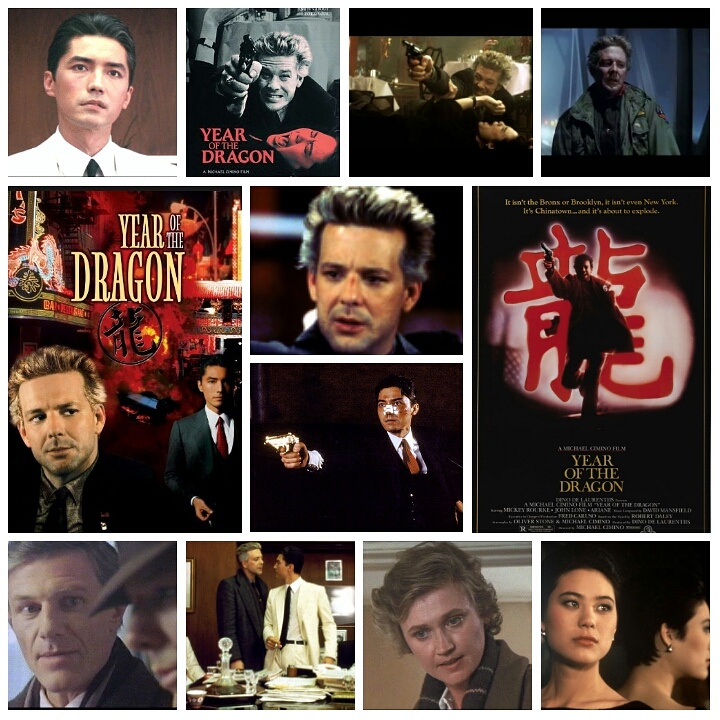
Michael Cimino’s Year Of The Dragon is a visceral blast of pure Americana as only the man could bring us. It kills me that he suffered through that whole Heaven’s Gate fiasco (which is actually a really good movie, but that’s another story and argument entirely) because it extinguished any hopes of him making future films, and in doing so the studios effectively committed genocide against their own. Sure the guy was crazy as hell, but damn could he ever make a great film. This one is one of the most criminally overlooked cop flicks of all time, partly due to Cimino’s scorching direction and partly due to a a performance of monolithic grittiness from Mickey Rourke as Captain Stanley White, the cop who won’t stop. White is fresh out of Nam and mad as hell, launching a unilateral crusade of racist violence and self righteous fury against the Chinese crime syndicate in New York City, particularly a young upstart in their organization named Joey Thai (John Lone). Thai is as ruthless as White is determind, and the two clash in ugly spectacle, causing leagues of collateral damage on either side and inciting them both to roar towards an inevitable, bloody conclusion. Thai’s elderly superiors warn him of men like White, men who are fuelled purely by anger, bitterness and nothing else, smelling the fire and brimstone in the air and wisely stepping out of the way. Thai is of a younger, more petulant generation and foolishly decides to meet the beast head on by essentially kicking the hornet’s nest. White is warned by his caring wife (Caroline Kava) and fellow cop and friend Lou (Raymond J. Barry is excellent, firing Rourke up further with his work) not to mess with such a dangerous crowd. He has a volatile relationship with a beautiful Chinese American reporter (Arianne is the only weak link in the acting chain) who puts herself on the line for him by digging around in dangerous corners. The intensity level of this film is something straight from the adrenal gland; even in episodic scenes of introspect we feel the hum of the character’s emotions, and when the conflict starts again, which it does in fast and furious amounts, the actors are simply in overdrive. Rourke has never been better than he was in the 80’s, it was just his zenith of power. This isn’t a role that gets a lot of recognition, but along with Angel Heart, Rumble Fish and Pope Of Greenwich Village, I think it’s his best. He puts so much of himself into Stanley White that the edges which separate performer from performance begin to blur and waver, until we are locked into his work on a level that goes beyond passive consumption of art and elicits something reflective in us. Not to sound too hippie dippy about it, but the guy is just that fucking good. On the calmer side of the coin, John Lone brings both evil and elegance to Joey, a slick surface charm that’s constantly disturbed by Rourke’s hostility, leading to an eventual meltdown that’s very cool to see in Lone’s expert hands. This is one for the ages and should be in the same pantheon with all timers like Heat, Serpico, The French Connection and others. Rourke fires on all cylinders, as do his colleagues of the craft, and Cimino sits cackling at the switchboard with a mad calm, yanking all the right levers in a frenzy of unhinged genius. Not to be missed.

Sinner: A Review by Nate Hill

image

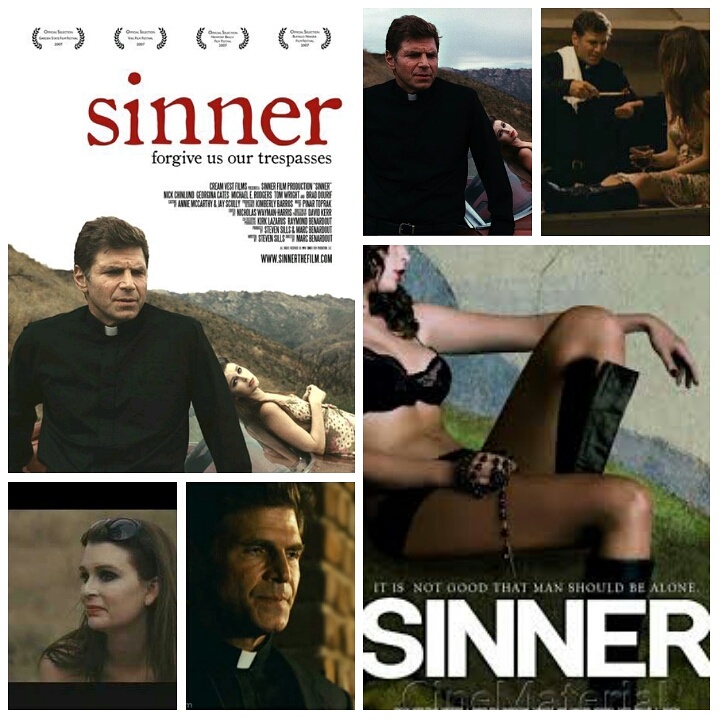
Sinner is a 2007 indie buried in the depths of obscurity, and defined by its very bold choice to cast an actor in the lead role whose career so far has been so different from the type of character he plays here, it’s a true blessing for fans to see him in this new light. The actor in question is Nick Chinlund, a rough looking bruiser with a filmography almost entirely made up of villainous creeps, grizzled detectives and other assorted hardcases (see Con Air, Training Day, The X Files and The Chronicles Of Riddick for his most critically celebrated work). Here he drops every trait he’s been known for, playing small town catholic priest Anthony Romano, a man with a troubled past and an almost bankrupt parish who is facing an internal crisis, only made worse by the arrival of skanky grifter Lil (Georgina Cates) who preys on celibate priests, amongst other bottom-feeding life choices. After an incident involving Romano’s lecherous fellow preacher, he allows Lil to take refuge from the police in his rectory, against better judgment. She’s a nasty piece of work at first and Cates’s performance is far too over the top, only simmering down to meet the character arc in the script long after it calls for action, making her work too little, too late, yet still rather affecting. Chinlund is nothing short of mesmerizing, giving Romano the internal conflict and vulnerability the character deserves, which is not an easy task when one considers the complex nature of the writing. Underrated doesn’t begin to describe this actor, and lately I’ve been sad to see he hasn’t been given many roles that are worthy of his talent. I’ve searched far and wide for Sinner many years, finally finding an amazon seller who would send me a copy. I loved it, and it made me so happy to see Chinlund get the kind of role that goes against the grain of much of his work. Romano uses the sort of golf as a release from priestly and personal hardships, the script using lots of golfer’s lingo as sly similes for his personal issues. Tagging along with him is his scrappy and seemingly imaginary Caddy, played by Brad Dourif. Dourif can make any role, and I mean any, into pure magic with his dedication to the craft. Seeing him and Chinlund share a few wonderful scenes with bushels of chemistry was a nerd’s dream come true for me, and part of the reason I searched so long for a copy of this film. For casuals this may be a bit offbeat to really sink into, but for fans of the actors and idiosyncratic indie flicks, this is a bona fide goldmine.

Clay Pigeons: A Review by Nate Hill

image

Clay Pigeons is one of the odder films floating around out there, but it’s a damn good time at the movies. It fits into a subgenre that I have lovingly dub as ‘desert noir’, other prime examples being Oliver Stone’s U Turn and John Dahl’s Red Rock West. Intrigue and murder abound under a sun soaked, parchment dry landscape in these types of films, always with a healthy helping of dark humour and unsettling, psychopathic characters running around, perpetually up to no good. Joaquin Phoenix (adding to the U Turn vibe) plays Clay, a good guy who seems to have a real problem with bad luck. He finds out his friend has killed himself, which seems to be the first swirl in a spooky spiral of trouble that veers towards him like a dust devil. Soon nosy FBI agent Dale Shelby (reliably perky Janeane Garofalo) comes to town, turning her attention towards him. Dan Mooney (ever great Scott Wilson stealing scenes with perched stealth) is Clay’s friend and the town Sheriff, also on the lookout for clues. These two are the least of his worries though, as the worst is yet to come with the arrival of charming serial killer Lester Long (Vince Vaughn). This is my favourite Vince Vaughn performance because he shows his versatility with the brittle, lightning quick turns of personality injected into Lester. One minute he’s your best buddy and a lovable loudmouth, the next a coiled viper with untold violence beneath the jovial exterior. They always say serial killers are charmers, and Vince Vaughn takes that sentiment, dances around you in circles with it and then proceeds to strangle you with it when you least expect it. So yeah. The bodies pile up and no one seems to be able to tie them to anyone. Lester treats everyone like his best friend until they’re too comfortable to see the blind side coming, and poor Phoenix wanders around looking disshvelled and stressed out. It’s good fun all the way through, doing a nice see-saw rhythm between quaint, cartoonish antics and a grim, scary turn of events. Underrated and more than worth your time.

B Movie Glory With Nate: Oblivion

  
“It’s high noon at the far end of the universe”, the dvd poster of Oblivion states. Years before the underrated Cowboys & Aliens came out, Oblivion came along, and it’s definitely gives the concept a better, and quirkier run for its money. Granted it’s essentially a B movie, and it’s meagre budget shows to the point where it looks like a grade school play. But therein lies it’s charm. It’s got a cast of supremely wacky old west stereotypes played by some surprising, familiar genre faces who you’d never thought to be seen rough housing together in the same flick. It also has some lovingly crafted, creaky stop motion animation that calls Harryhausen to mind and brings to life some super weird alien hybrid thingies that look almost Henson-esque as well. When a lone spaceship lands on the outskirts of an intergalactic desert town, it’s occupant brings trouble along with him. He’s a nasty, one eyed reptilian alien gunslinger named RedEye, played by the inimitable Andrew Divoff. He growling, bad tempered son of a bitch, and his first order of business is to ruthlessly slay the town’s sheriff, and claim it for himself. What he doesn’t count on is the Sheriff’s son (Richard Joseph Paul), a prospector who soon returns to Oblivion looking for answers, along with his Native friend Buteo (the late great Jimmie F. Skaggs). All kinds of townsfolk end up in the crossfire, including drunken Doc Valentine (a priceless George Takei), slinky brothel owner Miss Kitty (Julie Newmar), a cyborg police deputy (Meg Foster), a pawnbroker (Isaac Hayes) and the town’s elegant undertaker, played by Carol Struckyen who some may remember as the giant from Twin Peaks. RedEye has a smoking hot henchwoman and girlfriend named Lash, played by B movie scream queen Musetta Vander, who gets the vibe they’re going for here and sinks her teeth into the material with admirable abandon. The film sticks to its guns despite being obviously silly and somewhat falling apart in a climax that oddly is too darkly shot to make out properly. What it lacks in resources it makes up for in imagination, which it has in spades. Alien scorpions, cyborg deputies, leather clad babes are but a few of the genre mashing treats to be found here. Great stuff. Oh and check out the sequel as well, called Oblivion 2: Backlash, it’s a nice companion piece. 

Denis Villeneuve’s Enemy: A Review By Nate Hill

  
Denis Villeneuve’s Enemy is one of the most unsettling film experiences you will ever sit through, and the damn thing is only 90 minutes. It’s disconcerting, ambiguous and seems to exist simply to spin the viewer’s anxiety reflex into a storm and make our stomach turn loops. It’s a trim entry into the psychological upset sub genre, and puts a frazzled looking Jake Gyllenhaal through a wringer as he pursues a mysterious doppelgänger through the streets of Toronto, a bustling city that feels oddly desolate as glanced upon by Villeneuve’s camera, adding to the themes of paranoia and mental unrest. Gyllenhaal plays a twitchy college professor who is stuck in a closed loop routine: he gives lectures at the local university, drives home to his emotionally inaccessible girlfriend (Melanie Laurant), rinse and repeat. A chink appears in the chain when he becomes aware of another man in the city who appears to be his identical twin. The other man is a small time actor with a pregnant wife (Sarah Gadon) and a decidedly more nasty approach to the situation than the professor. The two of the, circle each other in a disturbing game of not so much cat and mouse, but Jake and Jake, both of them having not a clue as to what is going on, the edges of madness inching closer to both of their perception. Are they twins? Are there even two? Is it just one of them, losing their mind? There’s very freaky dream sequences with the constant imagery of spiders, both large and small, and what do they mean? Who’s to tell? Denis has stated in interviews that there is both rhyme and reason to his creation here, but whether he will ever divulge them remains to be seen. Perhaps it’s better left illusory, a formula for entrancing audiences that has already proved to work well for David Lynch. The moment that the man behind the curtain reveals the conscious meaning of his very subconscious efforts, the spell is no doubt broken. In any case, it’s a very hard film to process or focus on, our nerves jittering constantly and sabotaging any modicum of rational though that we might employ in deciphering the piece. This may be called style and atmosphere over substance by some, but even in not comprehending what’s going on, we feel deeply that there is some sort of cryptic cohesion if we are able to feel between the lines, maybe coming up empty handed ultimately, but knowing within us that we’ve attained wealth to our soul simply by bearing witness. I can’t say it’s a film that I love, or that I would watch again, but it’s certainly one that won’t leave my memories any time soon, and that is an achievement no matter how you look at it. It’s also got one of the scariest and most unexpected endings to any film I’ve ever seen, taking you so off guard that you feel like you’re going to have a coronary. It’s filmed in sickening piss yellow saturation which adds to the overall disconcerting nature, and quite the striking colour choice as well. I can see why this one was released with little fanfare or marketing, despite the presence of heavyweights Villeneuve and Gylenhaal. It’s difficult stuff, a movie that frustratingly soars above your head, onward towards its intensely personal and psychological destination. It’s up to us to jump, grasp and attempt to reach as high as the piece in order to get what we will out of it. Good luck.