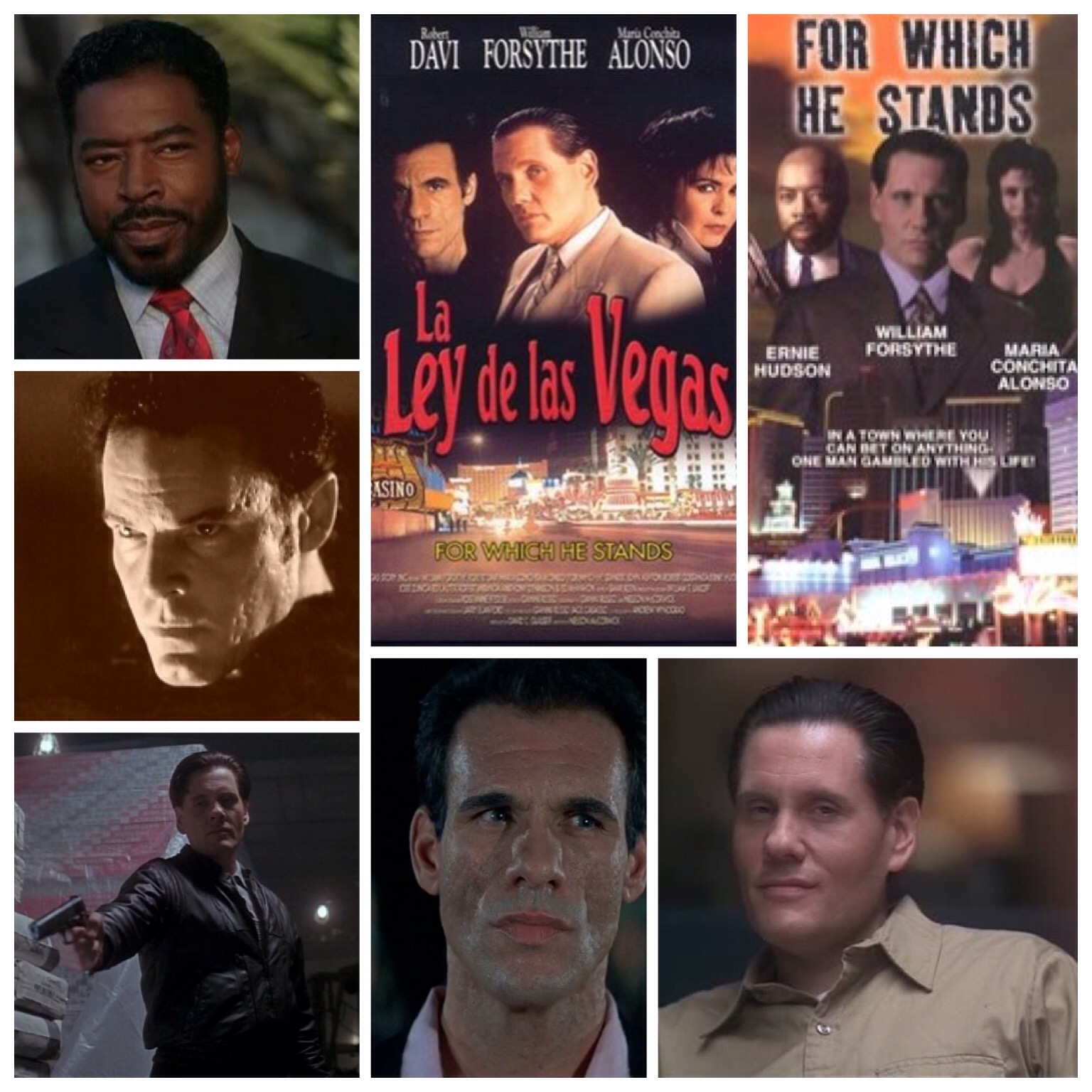
B Movie Glory with Nate: Mutant Chronicles

image

Mutant Chronicles is a solid gem, as both a b movie and a legit exercise in bloody high concept fantasy. It’s got a sci fi vibe meshed nicely together with a grinding steam punk sensibility, and it’s pure visceral gold. The vague plot, as I best remember it: Some form of extraterrestrial intellegience takes up residence deep within the earth’s core, using a gigantic machine to turn humans into mindless, rabid killing machine with nasty, pokey, king crab looking things for limbs. The warring corporations who control the remaining resources on the planet commission a crew of dirty dozen style bad asses to venture deep into the earth, stopping the mutants and their makers, and silencing the evil contraption forever. Thomas Jane is Major Mitch Hunter, the stoic tough guy leading the group with grit and guts. He’s also searching for his missing superior officer Nathan Rooker (Sean Pertwee). Along with him is strong, silent monk Brother Samuel (Ron Perlman), his mute daughter (Anna Walton), and other assorted warriors including Benno Furmann and Devon Aoki. That’s pretty much all you get for a plot. The rest is screaming zombie esque hordes that ambush them at every turn and provide especially grisly action set pieces. There’s a really impressive journey in a rickety spaceship that looks like a cross between a hot air balloon and a toaster, and a cameo from an extremely bored looking John Malkovich. Jane and Perlman use their tough guy charisma to bring the story to life, and the special effects are pretty damn cool. This one has bite, imagination and buckets of gore, particularly in a frenetic finale deep within the earth’s interior. Great stuff.

THE MEAN SEASON – A REVIEW BY J.D. LAFRANCE

MSDMESE EC004
THE MEAN SEASON, Kurt Russell, 1985. ©Orion Pictures Corporation

The 1980s was quite a prolific decade for actor Kurt Russell. Sprinkled between the genre classics he made with director John Carpenter, the actor tried his hand at a wide variety of roles, from shifty used car salesman in the comedy Used Cars (1980) to a nuclear power plant worker in the docudrama Silkwood (1983) to a police detective in the neo-noir Tequila Sunrise (1988). Often forgotten during this busy decade is a nifty little thriller called The Mean Season (1985). Based on the bestselling 1982 novel In the Heat of the Summer by John Katzenbach, this well-executed film acts as the cinematic equivalent of an engrossing page turner.

Set in Miami during the hot, late summer months, the film opens with an urgent brassy score by the great Lalo Schifrin that plays over shots of stormy skies juxtaposed with the busy printing presses of the Miami Journal, foreshadowing how both will play a prominent role later on. Malcolm Anderson (Kurt Russell) is a veteran crime reporter that has just come back from hiatus/job hunting in Colorado. He’s burnt out, lacking both ambition and drive. He wants a change of pace and threatens to quite… again. But before he can bring it up, Bill Nolan (Richard Masur), his editor, assigns him to cover the murder of a young woman that has been shot in the head.

The crime scene sequence speaks volumes about Malcolm’s character. He’s covered the beat long enough to be on friendly terms with homicide detective Ray Martinez (Andy Garcia) but not his partner Phil Wilson (Richard Bradford). He also knows how to get the guy who found the body to open up and talk then has the decency not to use the man’s name in the article. Malcolm is also tactful and understanding with the mother of the murder victim, listening to the woman’s reminisces about her child while still getting what he needs for the article. This is in contrast to Andy Porter (Joe Pantoliano), the crime photographer who shadows Malcolm on his assignments and has no problem taking a picture of the grieving parent during a particularly vulnerable moment. This scene is important because it establishes that Malcolm is good at what he does and he is a decent person so we like and identify with him.

Malcolm finally confronts Bill about his desire to quit in a scene between veteran character actor Richard Masur and Russell. Bill tells Malcolm, “You haven’t been at this long enough to be as burned out as you like to think you are.” Malcolm feels like he’s seen and done it all but still hasn’t found his Watergate yet – the dream of all ambitious investigative reporters. Malcolm sums it up best when he tells Bill, “I don’t want to see my name in the paper next to pictures of dead bodies anymore.” The editor counters, “Now we’re not the manufacturer, we retail. News gets made somewhere else, we just sell it.” It’s a nice scene that is well-played by both actors as their characters touch on the nature of ethics in reporting the news. How far are they willing to go to get a story that makes their career? Malcolm is about to find out as he gets a phone call from the man (Richard Jordan) that killed the teenage girl. He admires Malcolm’s writing and wants the reporter to be his mouthpiece as he plans to kill again.

Bill is practically salivating at the possibilities while Malcolm’s ambition kicks in as he realizes that he’s found his Watergate. However, as the murders continue, Malcolm finds himself getting more involved in the story until he’s as much a part of it as the killer, which puts his life and that of his girlfriend (Mariel Hemingway) in danger.

While the set-up and plot of The Mean Season are nothing special – the reporter who gets in way over his head – both are executed well enough that you don’t mind and this is due in large part to the engaging performances of the talented cast that do their best to sell the material. Kurt Russell certainly comes across as a believable newsman. He’s got the lingo down and seems to know his way around the newsroom and the beat that Malcolm covers. The actor does a nice job of conveying his character’s transition from someone reporting on the news to the one making it. He also manages to get a chance to show off some of his action chops in an exciting bit where Malcolm races across town to find his girlfriend before the killer does. His frantic, desperate race is intense because the actor knows how to sell it, running full tilt over several blocks like a man possessed, and because we know more than he does. We know just how much danger his girlfriend is in.

Mariel Hemingway is good in the thankless girlfriend role. She and Russell have good chemistry together. They make a nice couple together and her character ends up acting as the voice of reason when Malcolm gets too involved. Hemingway does her best to avoid the damsel in distress stereotype but it is pretty easy to figure out how it’s all going to go down. She is part of a solid supporting cast that includes Andy Garcia as the dedicated cop that cares and Richard Bradford (The Untouchables) as his older, more experienced partner who thinks that Malcolm is a parasite. The aforementioned Richard Masur (The Thing) is also memorable as the opportunistic editor who just cares about selling papers. The great William Smith (Darker than Amber) has a memorable bit part as a pivotal witness that helps Malcolm and the cops track down the killer. He has only one scene with a decent amount of expositional dialogue to convey but he nails it.

Director Phillip Borsos (The Grey Fox) also does a nice job orchestrating the cat and mouse game between Malcolm and the killer thanks to the smartly written screenplay by Leon Piedmont. They manage to hit all the right notes and fulfill all the right conventions of the thriller genre – the grudgingly helpful cops, the ambitious reporter, the sociopathic killer, and so on – and stir it all up. Borsos employs no-nonsense direction like a seasoned studio pro, which lets the actors do their thing. I also like how he conveys a sense of place with the sweaty, summer weather, coupled with the impending hurricane that is almost tangible. It all comes to a head at the exciting and atmospheric climax when Malcolm confronts the killer in the Everglades.

John Katzenbach was a veteran crime reporter who based his debut novel In the Heat of the Summer on years of experiences and that of his colleagues. Producer David Foster, a journalism graduate, had been looking for a good screenplay about reporters for years. He came across the manuscript for Katzenbach’s novel and was impressed by it. He met with the author and they talked about how to accurately convey the life of a newspaper reporter on film.

In April 1984, Borsos and his crew arrived at the Miami Herald offices to study a typical day in the newsroom and on that day Christopher Bernard Wilder, suspected of kidnapping and murdering several young women, shot himself as the police closed in. The resulting flurry of activity at the Herald helped Borsos create a realistic newsroom atmosphere in his film. Katzenbach urged Kurt Russell to hang out with his fellow reporters in preparation for the film. To that end, Russell and Joe Pantoliano accompanied a reporter and a photographer from the newspaper to the scene of a grisly double murder in North Miami. Much like in the film, the actor found cameras were trained on him and later saw footage of himself on the evening news. In addition, Richard Masur spent days and nights on the Herald’s city desk.

Borsos’ previous film The Grey Fox (1982) did not make a profit and so to pay off his debts he agreed to direct The Mean Season. Unfortunately, he had creative differences with Foster over the tone of the film. According to Borsos, he wanted the film to look “somewhat stylized and slightly unreal, more what you would call a 1950’s film-noir type of picture.” In contrast, Foster wanted a more realistic-looking film as Borsos said, “Mr. Foster’s vision was more of action-packed thriller instead of a character-thriller.” It also didn’t help that the director resented the producer’s constant presence on the set. The newsroom scenes were actually shot at the Miami Herald late at night with several staff members used as consultants and extras. Russell and two fellow actors used three real newsroom desks that were outfitted with authentic-looking notepads, books, dictionaries and computer printouts. In addition, Katzenbach was frequently present during filming and acted as a consultant.

The Mean Season
is an entertaining film that falters a little bit at the end with a clichéd “twist” that sees Malcolm suddenly transform into an action hero but Russell does his best to make it work. At times, it feels like there are two kinds of films competing – the character-driven thriller that Borsos wanted to make and the action-packed thrill machine that Foster envisioned. The result is a sometimes uneven effort. Not every film has to try and reinvent the wheel by offering some novel take on the genre. There’s something to be said for a thriller that has nothing more on its mind then to entertain and tell a good story and that’s something The Mean Season delivers on both counts.

In The Bedroom: A Review by Nate Hill

image

In The Bedroom is tough cinema, packed with the kind of substance and human drama that often drives casual viewers away, their psyches scorched by the lack of generic plotting and warm, fuzzy story arcs. To those who actively seek out realism, heartbreaking emotion and films which probe the complex corners of the human soul for answers that weigh heavier in your thoughts than the questions, this one is a treat. It lulls you in with an opening montage of summer romance, giving you no context of the challenging character arcs to come. We begin with Frank (Nick Stahl) a man barely out of his teens, in the midst of a passionate fling with Natalie (a fantastic Marisa Tomei), a woman far older than him who has two kids and a troublesome ex husband (William Mapother). Frank’s parents differ on their opinions as far as his relationship goes. His no nonsense mother (Sissy Spacek), calmly disapproves, while his loving father (Tom Wilkinson) encourages simply by sitting back and going along with it. Then, out of nowhere, the plot takes a sharp turn into tragedy. Frank is killed in a struggle involving the volatile ex husband, leaving everyone behind to grieve. This film isn’t content with a simple, standard grieving process. It insists on holding a steady, nonjudgmental gaze upon the parents, and the agonizing state they are left in. The killer is released on extended bail. The mother is torn apart knowing he is out there. The father actively downplays the devastation simply because he isn’t capable of letting out what’s inside him, twisting him in silent despair every moment of every day. Wilkinson is emotional dynamite, like a bleak cloud with flashes of sorrowful lightning beneath, a time bomb of implosive sadness. Spacek carries herself magnificently, especially in a third act verbal showdown with Tom that leaves you gutted and stunned. These two play their roles with uncanny precision, every movement and mannerism a roadmap leading straight to the core emotion, and shellshock of the tragedy, still being absorbed by their characters with every  frame we see. It’s a brave script for any group to undertake, and one which you must go into utterly prepared or you will either fall short of telling the story to its potential, or be consumed and disarmed by it, and arrive with a finished product with a tone deaf mentality. Not this one. Every aspect is treated with care, attention and focus by all involved, miraculously pulling this hefty piece off without a hitch. It’s often a struggle to sit through films that don’t make you feel all that great, films that tear off the superficial cloth that much of cinema is cut from, delving beneath for an unwavering look at what really goes on in this world of ours, be it large scale or intimate. It’s important to experience this occasionally though, as it can often teach you valuble truths and awaken parts of your perception that lie dormant during a lot of other movies. This one won’t hold your hand and provide an emotional blueprint for you to follow, but in being let off the leash, the experience may just be more rewarding. 

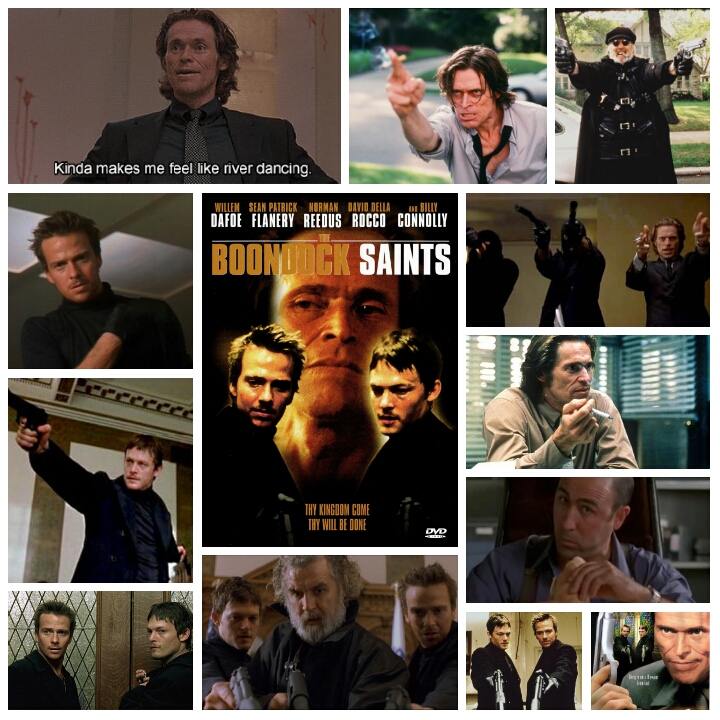
The Boondock Saints: A Retrospective Review by Nate Hill

image

The Boondock Saints is an interesting movie for me, as it’s kind of evolved along with my consciousness as I’ve gotten older. Some films you initially dislike, yet they grow on you gradually until you see them in a new light. Some films you are crazy about right off the bat, yet over time the attraction dims and you realize you don’t really care for them anymore. And then there’s this one. While I can’t say I’ve grown to dislike it, because that’s just not the case, I will concede that as I’ve gotten older and new information on it has crossed my path, I’ve come to regard it in a new light. Also, the parts of my personality which went ape shit for anything pulpy and crime ridden back then have receded a bit as my tastes matured. But try as I might, I can’t bring myself to completely see it in a negative light, despite recognizing certain negative aspects of it which were once not so obvious to me. Saints is a tricky film because on the one hand you have the rabid fans who make up the cult following and have brought it the infamy it has today, as well as it’s sequel, which is really not that great. On the other hand you have the lofty monarchy of high film criticism, bashing it six ways to Sunday, the bad taste of it’s conception and production still on their tongues. Recently I watched the documentary Overnight (a biased film with its own glaring issues, but that’s another story), which chronicles the meteoric rise and fall of director Troy Duffy, who foolishly squandered a gift horse with immature and selfish behaviour, or at least that’s what the film shows. The film had the potential to be a big budget flick with huge stars involved and the backing of Weinstein. That never happened. Duffy’s ego swiftly sent the script into oblivion, until it finally got made years later for less than half the original offered budget, and landed in film purgatory before being squeaked into a meager distribution. A tragedy, say some. But.. is it though? Fate is a strange beast, and if everything went according to plan, we’d have a slick studio monster that might have been good, and no choppy, unique cult favourite to gain unprecedented momentum decades after its chaotic birth. Some food for thought. Anywho, on to the film. It’s low budget for sure and one can tell it’s made by a guy who’s never directed before, but it’s got a silly, cartoonish charm and cinematic flair for style that will keep you watching. Two rowdy Irish brothers named Connor (Sean Patrick Flanery) and Murphy (Norman Reedus) accidentally kill some scary russian mob soldiers in one of the most inventive scenes ever staged, and they discover they have a spiritual affinity for knocking off evil men. So, with no tactical experience whatsoever, they set out on a mission from God to end the lives of the Boston criminal underworld. Dragging their hapless, loveable buddy Rocco (David Della Rocco) along, its only a matter of time before the law tags them, and soon they have loony FBI honcho Paul Smecker after them. Willem Dafoe has to be seen to be believed in what is a career weirdest for him. He plays it like the Joker crossed with Bugs Bunny, never allowing an ounce of restraint or subtlety into the performance. I’d be interested to see the actor/director relationship which led to getting something this zany in the can. Smecker struggles morally, part of him believing the Saints to be a necessary force. They are faced with Italian mafia bosses including a scuzzy Ron Jeremy and Carlo Rota as Giuseppe ‘Pappa Joe’ Yakavetta, a ham fisted Don who wants the Saints gone. Rota is the only one who comes close to matching Dafoe’s maniacal energy, playing Yakavetta to unhinged, mustache twirling delight. Reedus and Flanery hold up their end with physicality and quite a lot of energy, making the McManus brothers two fun protagonists to hang around with. Billy Connolly shows up as Il Duce, an almost invincible assassin from hell who proves to be quite the obstacle for our boys. The concept for the film is relentlessly juvenile, and the action set pieces veer into silliness quite a bit and there’s a slapdash, haphazard feel to the whole thing, an unfinished varnish, or lack thereof to the whole process. It’s just such lurid, reckless fun though, filled with excessive profanity, comic book violence, laughable religious symbolism and deeply questionable morals that seem to have been penned by an eighth grader who’s just completed a John Woo and Charles Bronson marathon back to back. This is a movie that loves the fact that it’s a movie and acts accordingly, throwing everything it can get its hands on at you and yelling ” Look! Look how cool I am”. Is it cool? Up to you. It’s certainly one you won’t forget about. It almost ducks the ‘good film’ litmus test in the sense that you’d be wasting breath in claiming it’s a bad movie. It couldn’t care less about that, and the fans, of which I have to say I still am, seem not to either. It’s not really good, bad, terrible or anything. It’s just The Boondock Saints.

SKY CAPTAIN AND THE WORLD OF TOMORROW – A REVIEW BY J.D. LAFRANCE

Sky Captain and the World of Tomorrow empire state building

Sky Captain and the World of Tomorrow (2004) was a film bound to polarize audiences and critics alike. Loving homage or blatant rip-off? It really depends on whether you love or hate this movie. Personally, I was transported away to this cinematic dreamland for the entire running time. Kerry Conran’s labor of love is an unabashed tribute to the old pulp serials of the 1920s and 1930s (Doc Savage, Flash Gordon, etc.). It succeeds where previous pulp serial homages of the 1990s failed (The Shadow, The Phantom, Dick Tracy). Like those films, Sky Captain successfully captures the look and feel of these vintage serials but, most importantly, it also stays true to their spirit — something that these other films failed to do (The Rocketeer as the lone exception). The road to its creation is a fascinating one, from a black and white independent film to big budget movie released by a major studio.

A striking image opens the film: a gigantic zeppelin docks with the Empire State Building while the night sky is filled with lightly falling snow. The world’s top scientists have gone missing and ambitious newspaper reporter Polly Perkins (Gwyneth Paltrow in Lois Lane mode) is covering the story for The Chronicle. She meets secretly with the last scientist who hints at a top-secret project. She soon has an idea of just how important this project is as huge, flying robots swarm over the city’s skies. They begin attacking the city, turning cars over like tinker toys.

Before you can activate your Commander Cody decoder ring, Joe “Sky Captain” Sullivan (Jude Law) and his squad of fighter planes arrive to save the day. It becomes obvious that Joe and Polly have a history together. There is a sexual tension between them as they form an uneasy alliance: she shares information with him in exchange for an exclusive scoop on the source of the robots and the mysterious Dr. Totenkopf (Laurence Olivier). They are aided in their adventure by Joe’s trusty sidekick, Dex (Giovanni Ribisi), a whiz technician capable of inventing a deadly ray gun, and Captain Franky Cook (Angelina Jolie), Joe’s ex-girlfriend and commander of a squadron of flying fortresses.

Kerry Conran grew up on films and comic books of the ‘30s and 1940s and commented in an interview, “The stuff that was most visually striking were the covers of the ‘30s and ‘40s. The graphic images just in the covers, I thought, told stories on such a grand scale…The artwork of that era, they just dreamed up things on that level.” He and his brother, Kevin, were encouraged by their parents to develop their creative side at a young age. According to Kevin, their mom “didn’t buy us coloring books and have us color them in, she’d bring us blank pads of paper with pencils and you’d make your own picture and color it in, that sort of stuff, which didn’t seem like a big deal, but it sort of is. We always had a lot of support in that respect.” The Conran brothers were also influenced by the designs of Norman Bel Geddes who did work for the 1933 Chicago World’s Fair and designed exhibits for the 1939 New York World’s Fair. Geddes also designed an Air Ship that was to fly from Chicago to London. Another key influence was Hugh Ferriss, one of the designers for the 1939 World’s Fair and who designed bridges and huge housing complexes.

Conran went to CalArts, a feeder program for Disney animators and became interested in 2-D computer animation. While there, he realized that it was possible to apply some of the techniques associated with animation to live-action. He remembers trying to “use the computer that was just emerging as a technology that was viable for filmmaking, and use a technique that was used traditionally forever – you know, the blue screen – but taken to a real extreme conclusion.” Conran had been out of film school for two years and was trying to figure out how to make a film. He figured that Hollywood would never take a chance on him — an inexperienced, first-time filmmaker. So, he decided to go the independent route and make the movie himself.

In 1994, Conran set up a blue screen in his living room and began assembling the tools he would need to create his movie. He was not interested in working his way through the system and instead wanted to follow the route of independent filmmakers like Steven Soderbergh. Initially, the Conrans had nothing more than “just a vague idea of this guy who flew a plane. We would talk about all the obvious things like Indiana Jones and all the stuff we liked.” Conran spent four years making a black and white teaser trailer in the style of an old-fashion newsreel on his Macintosh personal computer. Once he was finished, Conran showed it to producer Marsha Oglesby, who was a friend of his brother’s wife and she recommended that he let producer Jon Avnet see it. Conran met Avnet and showed him the trailer. Conran told him that he wanted to make it into a film. They spent two or three days just talking about the tone of the film because, according to Avnet, he wanted to “make sure we were on the same page, because he was going to write it. It wasn’t written at that point.”

Avnet and Conran spent two years working on the screenplay and developing a working relationship. Then, the producer took the script and the trailer and began approaching actors. In order to protect Conran’s vision, Avnet decided to shoot the movie independently with a lot of his own money. “I couldn’t protect him from the studios. I prayed we could shoot the movie and then show it to the studios. And we’re lucky, they all wanted it.” The producer realized that “the very thing that made this film potentially so exciting for me, and I think for an audience, which was the personal nature of it and the singularity of the vision, would never succeed and never survive the development process within a studio.”

When it came to casting actors in the movie, Avnet used his connections and reputation and started “looking for people who fit the look, looking for people who had the right theatrical pedigree, if possible, looking for people who weren’t over-exposed.” In 2002, he showed Jude Law the teaser trailer and the actor was very impressed by what he saw. He remembers, “All I got at that early stage was that he’d used pretty advanced and unused technology to create a very retrospective look.” Avnet gave him the script to read and some preliminary artwork to look at. Law: “What was clear was also that at the center was a really great cinematic relationship, which you could put into any genre and it would work. You know, the kind of bickering [relationship]. I always like to call it African Queen (1951) meets Buck Rogers.”

Avnet wanted to work with Law because he knew that the actor had “worked both period, who worked both having theatrical experience, who worked on blue screen, who hadn’t hit yet as a major action star.” The actor had just come off doing Cold Mountain (2003) and was intrigued at going from filming on real locations to working on a movie done completely on a soundstage. Law recalls, “At the time, there was no money attached, and he [Conran] was a first time director. It took us a year and a half to put it together and even then, we didn’t have a studio deal.” The actor believed so much in Conran’s movie that he also became one of the producers and used his clout to get Gwyneth Paltrow involved. Once her name came up, Law did not remember “any other name coming up. It just seems that she was perfect. She was as enthusiastic about the script and about the visual references that were sort of put to her, and jumped on board.” Paltrow said in an interview, “I thought that this is the time to do a movie like this where it’s kind of breaking into new territory and it’s not your basic formulaic action-adventure movie.”

Giovanni Ribisi met with Avnet and, initially, was not sure that he wanted to do the movie but after seeing the teaser trailer, he signed on without hesitation. Angelina Jolie had literally come from the set of Tomb Raider: The Cradle of Life (2003) and agreed to work on the movie for three days. Despite her small role, she had conducted hours of interviews with fighter pilots in order to absorb their jargon and get a feel for the role.

Avnet went to Aurelio De Laurentiis and convinced her to finance the film without a distribution deal. Nine months before filming, Avnet had Conran meet the actors and begin rehearsals in an attempt to get the shy filmmaker out of his shell. Avnet recalls, “By the end of three days of rehearsals, I remember where he said something, describing the ice cave where the dynamite is, and I could see the actors looking really, really intently on him. I realized that he got them.”

Ten months before Conran made the movie with his actors, he shot it entirely with stand-ins and then created the whole movie in animatics so that the actors had an idea of what the film would look like and where to move on the soundstage. To prepare for the movie, Conran had his cast watch old movies, like To Have and Have Not (1944) with Lauren Bacall for Paltrow’s performance and The Thin Man (1934) for the relationship between Nick and Nora that was to be echoed in the one between Joe and Polly.

Working on a soundstage surrounded entirely by blue screens required a new way of looking at the acting process. Ribisi remembers, “The analogy that you say to yourself is it’s like doing theater or avant-garde theater. There’s just a stage and the actors and all of that. But no, it is different, and it’s something that actors are going to have to be getting used to and [they need to] develop some degree of technique for that.” Law echoed these sentiments: “It almost felt like make-believe playing, rather than limiting because I couldn’t see something specific.” Avnet constantly pushed for room in this meticulously designed movie for the kind of freedom the actors needed, like being able to move around on the soundstage.

Conran and Avnet were able to cut costs considerably by shooting the entire film in 26 days (not the usual three to four months that this kind of film normally takes) and working entirely on blue screen soundstages. After filming ended, they put together a 24-minute presentation and took it to every studio in June of 2002. There was a lot of interest and Avnet went with the studio that gave Conran the most creative control. They needed studio backing to finish the film’s ambitious visuals. At one point, the producer remembers that Conran was “working 18 to 20 hours a day for a long period of time. It’s 2,000 some odd CGI shots done in one year, and we literally had to write code to figure out how to do this stuff!”

Sky Captain
is an absolutely gorgeous looking movie filled with eye-popping visuals and drenched in atmosphere. Everything is bathed in a warm sepia filter and captured in a soft focus lens clearly meant to evoke the glamour of classic Hollywood cinema. Sky Captain is a marvel of set design and visual effects. The movie’s elaborate backgrounds were created through a series of photographic plates and 3D animation. By creating an entire world through CGI, Conran raised the bar on these kinds of films. Now, filmmakers are only limited by their imagination… and their budgets.

The problem with most films of these kinds is that the actors are often overwhelmed by the striking visuals. Fortunately, Conran has assembled a strong cast. Jude Law does an excellent job as the wisecracking, square-jawed matinée hero while Gwyneth Paltrow is his ideal foil, criticizing him at every opportunity but you know that it is done out of love. Law remembers that he “tried doing it like an American using 1930’s speak, but it felt like we were sending it up and what we wanted to do was to play it for real, so people didn’t think that we were making a modern version of a 1930’s movie.” Everyone is clearly enjoying breathing life into these archetypal characters. High caliber actors like Law, Paltrow and Angelina Jolie take these intentionally cliché characters and make them interesting to watch.

Sky Captain
has all the markings of a debut by a first-time filmmaker. There is a go-for-broke, let’s-cram-everything-in-this-one attitude that a first-timer has a tendency to adopt because they do not know if there are going to get another chance. Conran has said that his intention was to create something “almost innocent and fun, the things that inspired me in wanting to make movies, the qualities of why I wanted to go to the movies. You lose yourself and escape into a world that didn’t exist anywhere else but in the movies.” Sadly, Sky Captain failed at the box office thus insuring the unlikely prospects of a sequel. It is too bad because the movie presents a richly textured and detailed world with fun and exciting characters.

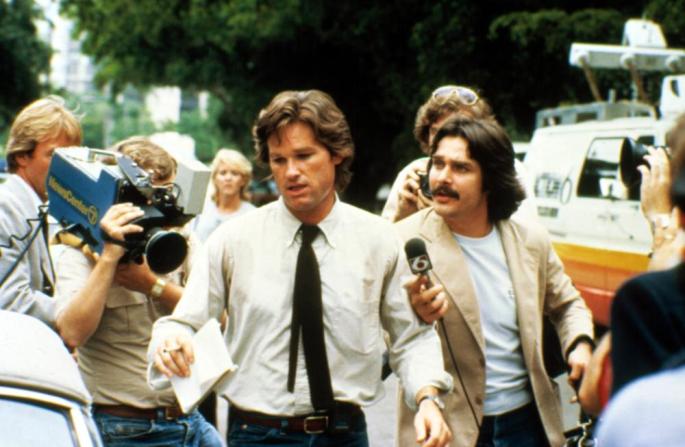
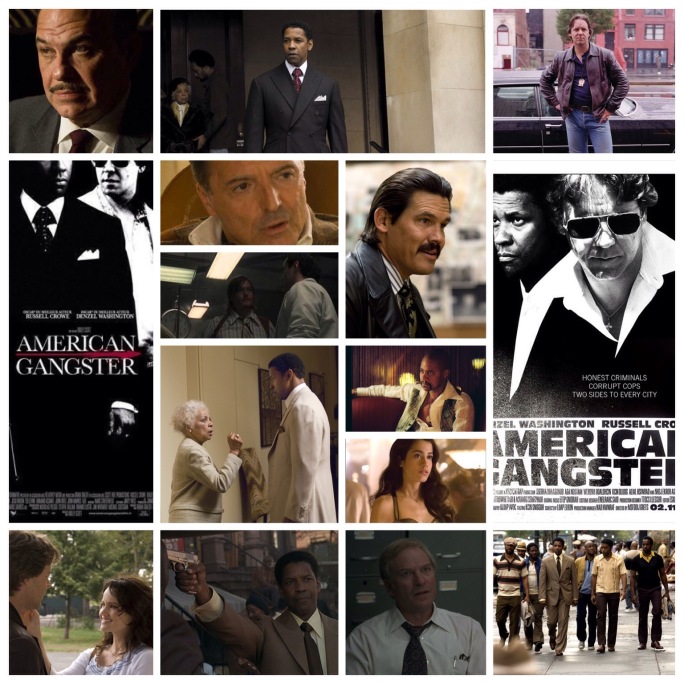
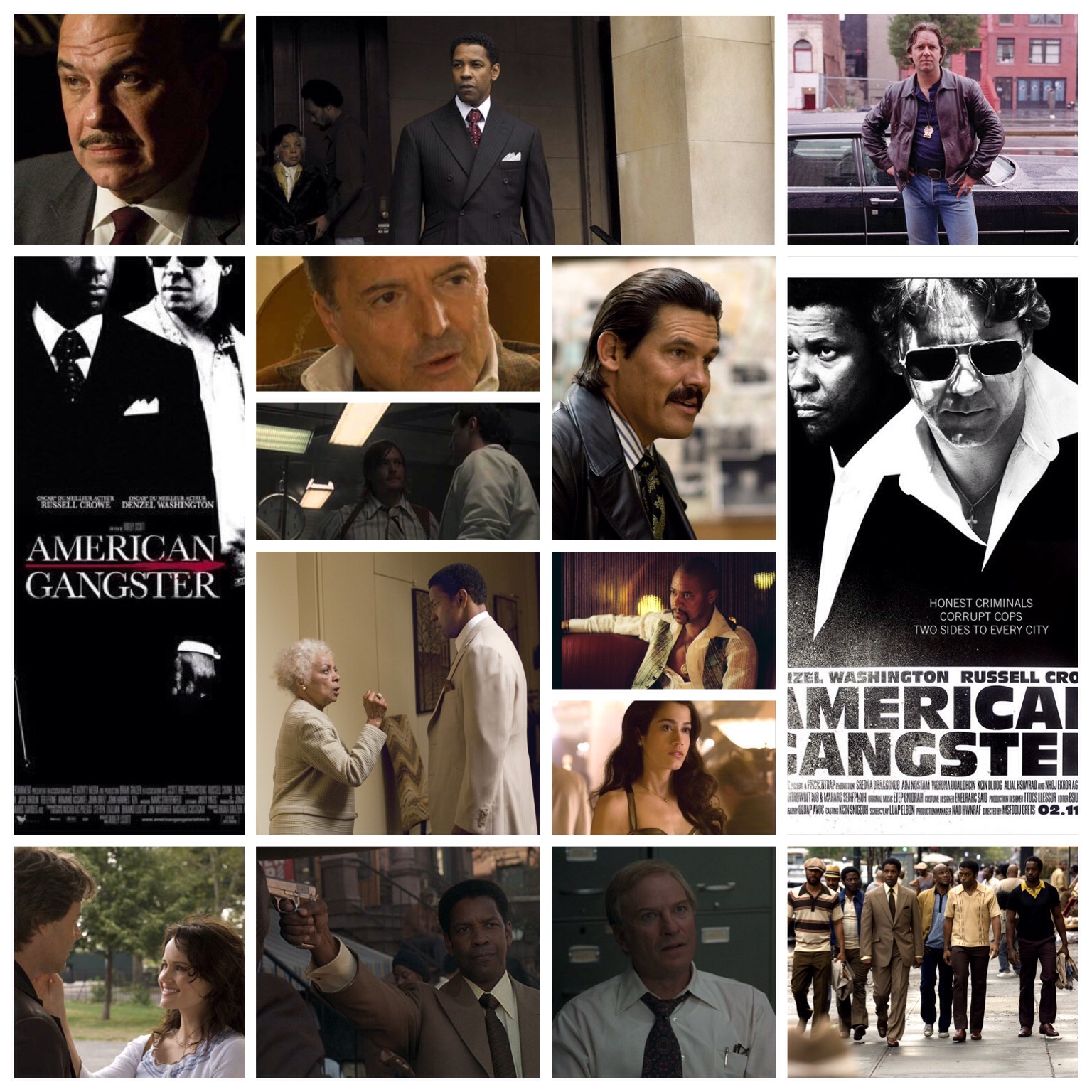
Ridley Scott’s American Gangster: A Review by Nate Hill


Ridley Scott’s vast, intricate crime epic American Gangster is one of the director’s finest achievement in film to this day. It’s sprawling in nature, expansive in scope but never chaotic or muddled. It always maintains a laser focus on its characters and story, thumping along at a rhythmic pace which swells and falls to the time of one of the most iconic stories in true crime. It’s Scott’s Heat, a titanic tale of cop vs. criminal in which neither are the villain or hero, but simply men adhering to rigid, ruthless principles moulded by the environments they have grown up in. Both men have an intense set of morals completely different from the other, yet equally as captivating. Russell Crowe is a troubled bruiser as Detective Richie Roberts, a cop so determined to convince himself of his own upstanding nature that he won’t take any illicit payoff in any amount or context. In contrast, every other aspect of his life is a shambling mess. Denzel Washington is quiet fury as Frank Lucas, an enterprising gangster and drug smuggler who rides the tidal wave of capitalism like there’s no tomorrow, flooding the streets of Harlem with pure heroin directly from the southeast Asian source, and rising swiftly to the peak of underworld infamy. The two are on an inevitable collision course, two juggernauts with different empires backing them who will stop at nothing. Lucas believes himself to be untouchable, shirking the flashy, preening nature of his peers and remaining out of the limelight, until cunning Roberts catches onto him. The rough and tumble world of New York in the 60’s and 70’s is lovingly brought to life by Scott, his cast and crew who go to impressive lengths in order to bring us that grit, realism and specific anthropological aura of another time, another setting. Speaking of cast, this has to be one of the most rip roaring collection of actors ever assembled, even to rival that of Heat itself. In Richie’s corner there is senior Detective Lou Toback (a sly Ted Levine, perpetuating the vague Michael Mann vibe even further), a scummy colleague (Yul Vasquez), and an off the books team of gangbusters including John Ortiz, John Hawkes and a mumbling RZA. He also clashes with his bitter ex wife (Carla Gugino) in an ugly custody battle for their young son. Over on Frank’s side of the hill are his huge extended family including Common, TI, Chiwetel Ejfor and Ruby Dee in one of the film’s finest performances as his strong willed, passionate mother, one of the only people who could talk sense into him and keep the animal inside at bay. Lymari Nadal is great as his bombshell Puerto Rican wife as well. His rivals include superfly-esque Nicky Barnes (Cuba Gooding Jr.) and a brief, hostile turn from Idris Elba. He also deals with the Italian mafia, personified by a hammy Armand Assante, an earnest Jon Polito and a slimy Ritchie Coster. One of the best performances of the film comes from Josh Brolin as positively evil corrupt narcotics detective Trupo, threatening everything that moves with his grease slick hair, porno moustache and silky, dangerous tone. As if that army of talent wasn’t enough, there’s also work from Kevin Corrigan, Joe Morton, Clarence Williams III in a powerful turn as an ageing Bumpy Johnson, and a blink and you’ll miss it cameo from Norman Reedus as well. What. A. Cast. The whole thing rests on Crowe and Washington, though, and both are like Olympian titans of crime and conflict, sweeping up everyone around them in a whirlwind of explosive violence, shifting alliances and the booming arrival of capitalism giving the American people in every walk of life a defibrillator jolt of economic change, laying the foundation for the world we live in today, one brick, one bullet, one business deal at a time. Scott achieves legendary heights with this one, a crime film for the ages that one can always revisit to see not how one hero cop took down a villainous drug lord, but how the forces which inexorably bind humans to various fates in accordance with their decisions swept up two extraordinary yet mortal men into historic infamy. In a word: Epic.

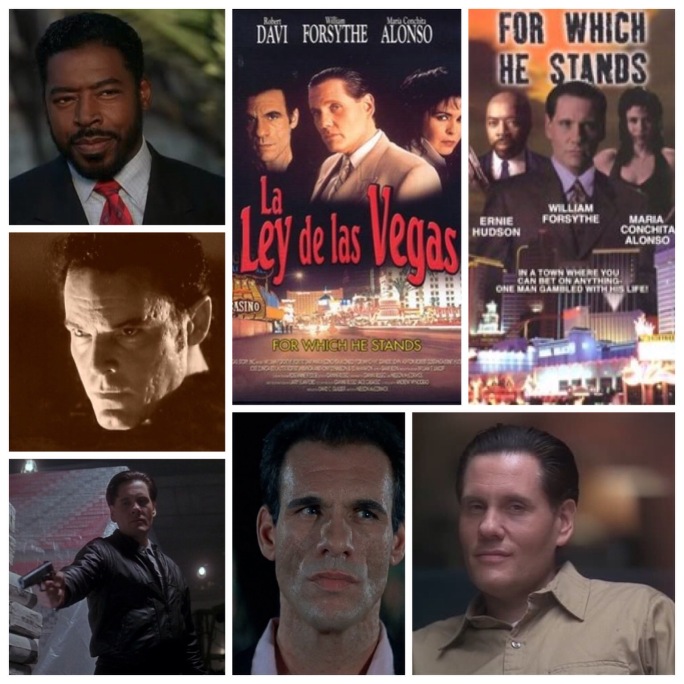
B Movie Glory with Nate: For Which He Stands

  
For Which He Stands is a lean, mean, nasty crime drama and cautionary fable about the dangers of pride and ego, and the spiralling disaster ones life can turn into when these qualities within the human nature go unchecked. It’s also a shamelessly slimy B movie treat featuring a tough as nails lead performance from William Forsythe as Johnny Rochetti, a small time Vegas casino mogul who runs afoul of some extremely dangerous South American criminals. He plays the role like Liotta from Goodfellas crossed with Bronson from Death Wish, an initial belligerent cockiness wiped promptly out of his personality by the very real danger stalking him, replaced by a reckless calm and willingness to get his hands dirty to defend his loved ones. One night, a Latin scumbag causes a raucous in his casino by violently threatening a girl. Johnny has a reflex reaction to defend her, and inadvertently kills the prick. This makes him a local hero, but also paints a huge target on his back for the Colombian cartel, who his deceased quarry had connections with. He’s forced to leave his wife (Maria Conchita Alonso) and contend with the dangerous criminal forces aiming to eliminate him. There’s some truly freaky cartel baddies here, including Andrew Divoff in a cameo as a gravel voiced psycho, and Robert Davi in a fire so,e turn as Carlito Escalara, a ruthless assassin hell bent on destroying Johnny. He’s got some legendary villain roles in over the years, and this one is among the nastiest, and best. Johnny’s only help comes from an intrepid federal agent (Ernie Hudson) and a D.A. (John Ashton’s). It’s Forsythe’s show though, and his transformation from untouchable big shot to caged animal on the run to eventual pistol packing hero is fun to watch. The atmosphere is pure crime cinema, told almost like a dark fairy tale that just happens to be set in Vegas. This one is positively buried in obscurity though, I had to seek out a screener VHS copy of a dusty corner of Amazon to get my hands on it. Good luck. 

Leaving Las Vegas: A Review by Nate Hill

image

Upon my first ever viewing (I know) of Mike Figgis’s Leaving Las Vegas last night, I discovered that it’s not the film I thought it was all these years. I had an image of a quirky, star crossed lovers tale with a modicum of sweetness. What I got wasn’t insanely far off the mark, but I have to say I was disarmed and deeply affected by the sense of decaying bitterness which prevails throughout the story and hangs over it like the sour, neon stained moon over a feverish, perpetually nocturnal Vegas. Every character besides the two leads sort of flits dimly in and out of the story, never having any impact further than they need to service the plot with. This leaves Nicolas Cage and Elizabeth Shue eerily alienated and gives the movie a hypnotic flair. Even though these two abide in a bustling setting, it oddly seems at times that they are the only two human beings in existence. That also most likely stems from the film’s willingness to take the time to get to know them, lingering on every glance, murmur and mannerism, be it mundane or essential, to try and get a feel for these two completely broken souls. Cage is Ben, a failing Hollywood screenwriter who is quite literally drowning in alcoholism, plagued by some tragic past of which we never learn about. He is fired and splits for Vegas to hole up in a motel and deliberatly drink himself to death. There he meets Sera (Shue) a hooker with a heart of gold (Shue torches the cliche bravely). They are immediately attracted, and begin a relationship.  She continues to see Johns, after being freed of her sadistic Latvian pimp (Julian Sands, terrifying). He makes her promise to not attempt to stop his drinking. Their romance is born out of the primal lonliness that each human being feels to a certain extent, that instinctual urge to reach out and grab for anything, anyone to put out the pain. Cage is everything in the role: pathetic, charming, sad, manic, desperate and deeply, scarily committed to his lethal quest of inebriation. The scenes of liquor consumption in this film go beyond excess and make Denzel in Flight look like a high schooler. It will make many uncomfortable, but looking away for our own peace of mind takes away from the urgency and dark poetry of Cage’s situation. Booze is a low burn, but it’s still suicide, and an agonizing method for anyone to behold in action: the person has an extended period of time to rethink, reevaluate, and if they don’t, then their resolve is extended and far more disturbing than a split second decision. Cage displays this in harrowing form in a career highlight. Elizabeth Shue is heartbreaking as the girl who loves him but can’t quite say why, a girl who has spent years in loveless copulation, confused and torn upon feeling it for the first time. Her character goes through some truly hellish things here. You will cry for her, fall in love with her alongside Cage and swell with admiration at her steely resilience in the face of some of the ugliest things life has to offer her. Each member of the supporting cast is like a star in the desert sky, a moment of flickering purpouse before fading into the background again to let Cage and Shue continue their dance of the damned. Graham Beckel as a shaken bartender, Xander Berkeley as a cynical cab driver, Valeria Golino as as a Barfly and R. Lee Ermey as a taken aback conventioneer are all perfect. Director Mike Figgis composed the score himself, a moody blues melody that clings to your perception after the film like a dream that won’t let go. Just to make the film more haunting, it’s based on a novel by a severely alcoholic writer who took his own life two weeks after production was underway, furthering the disconcerting vibe to a saturation point. This one is a tough watch, and you’ll be forced to see two human beings at the absolute end of the road, miles past rock bottom with seemingly no hope in sight. And yet, if you are patient and try to empathize, you will see the kind of flickering positivity and briefly life -affirming intimacy and light that humans cling to even in the darkest of times. Cage and Shue beautifully paint a bittersweet portrait of this through their work. It’s overbearing with the better, but that makes the sweet all the more precious and lasting. Just watch something happy after.

Michael Mann’s The Insider: A Review by Nate Hill

There are some films that are so perfectly made in every way possible that
I sit there thinking ‘Every persons effort and every element of creative energy that went into making this movie has been implemented flawlessly, arriving here and now to give me the viewing experience I’m getting. A perfect movie’. Michael Mann’s The Insider is such a movie. I held off on reviewing it for a couple days after seeing it, partly to let it sink in but mostly to see if I’d feel any different about it once my synapses had cooled down and the frames had dimmed from my consciousness. Perhaps the fiery reaction it drew from me in the moment was cheaply earned, or I was just in the right mood to love it at that time. Not a chance. If anything I’ve become more enraptured by it as time has passed, already aching for a second viewing. Every performance and aspect of is just so rich, deep and rewarding that for its two and a half hour runtime I found myself externally distracted not once. Occasionally Mann deviates from his comfort zone in the nocturnal crime zone. The occult themed period piece, the colonial adventure, the psychological horror, and this, the blistering drama based on a true story. One might not think the subject matter deserves a two and a half hour film, let alone would make a great one, but Mann has the cinematic Midas touch, and never half asses it. His films always contain traces of a true master at work, telling little details that engrave the film with a sense of immaculate skill and unwavering dedication to telling the story in its finest, and most honest form. The Insider tells the story of Jeffrey Wigand (Russell Crowe), a chemist who turns whistleblower on the tobacco corporation he was once employed by, finding shelter under the wing of CBS News’s 60 minutes, and particularly hard nosed reporter Lowell Bergman (Al Pacino). The network wants his take, in order to do an exposé on Big Tobacco, a plan with predictably disastrous and dangerous results, for both Wigand and CBS. The film shakes off any impending sensationalism or deliberately emotional stylistic cheats, instead keeping a microscope focus on the three lead performances and letting all the hurt, determination and emotion come forth naturally through their work, as opposed to smothering their story with an overbearing score and cheap cinematic manipulation. I’ve never been that won over by Russell Crowe until now. He always seems ‘halfway there’ in his work, like he’s missing something. This changed things for me. He’s like a raw nerve here, a family man pushed to the precipice of an impossible decision. One can almost see him wrestling with his conscience behind those haunted eyes, a storm with a lid barely kept on and anchored by Crowe in his finest hour. Pacino holds us captive with his work until we realize we’re not breathing. He’s the moral compass of the piece, and to see him explode at the injustices served up to him will give you goosebumps. The third leg of the table is Christopher Plummer as Mike Wallace, the 60 minutes anchor who also struggles morally with the situation they are in. Plummer is so good you forget you’re watching a film, giving Wallace buried gentleness and chiselled emotional intensity that you can scarce believe is even possible through the craft of acting. The supporting cast is peppered with bushels of talent. Colm Feore, Philip Baker Hall, Gina Gershon, Stephen Tobolowsky, Diane Venora, Nester Serrano, Rip Torn, Michael Gambon and an unusually sedated Debi Mazar are superb. It’s Bruce McGill, however, who almost steals the film in one blistering scene, playing a lawyer with enough righteous anger to shatter your tv screen. A career best for him. No one puts you into a story by forcing you to feel alongside the characters quite like Mann. Here he guides us through the trials that Crowe, Plummer and Pacino face with steady hand and heart until we are invested. Then he pulls the ripcord and let’s the sparks fly, making monumentally intense work of events that could seem pedestrian in lesser hands. We really feel for Crowe and clutch the seat with the same desperate intensity that he clings to his family, and sanity. We feel the same jilted fury alongside Pacino as he wades through sickening bureaucracy for a shot at retribution. We take pause with Plummer as he ponders his legacy and are incredulous with all three at the snowball effect the entire proceeding has had on them, devastating us as an audience the same as them, in turn making us feel closer to them. This is all laced with the incredibly heartfelt music from Lisa Gerrard, who sang alongside Crowe in Gladiator and was a favourite of Tony Scott as well. Mann is a ceaseless monster of storytelling, tone and pacing. The story has flair simply because he doesn’t wantonly throw it in the mix; the feeling and reaction come from story and character and not the razzle dazzle. Mann knows this, and let’s the fireworks naturally spring from the absence of deliberation, like music in the vacuum of space. This one will live on to stand the test of time far longer than the decade and a half its help for already. It’s a revelation. 

B Movie Glory with Nate: Cyborg 2: Glass Shadow

image

The fact that Cyborg 2: Glass Shadow has almost nothing to do with the first Cyborg is probably a good thing. I’ve seen both, and the first one is an ugly, grimy early starring vehicle for Jean Claude Van Damme that plays like an episode of American Gladiators on PCP. This sequel, however, is a scrappy little sci fi delight. It takes plays in a futuristic B-Movie realm where maniacal corporations wage war on each other for the control of lucrative artificial intelligence, cyborgs who can be programmed to be slaves, soldiers or whatever you want. Angelina Jolie is Casella ‘Cash’ Reese, a gorgeous warrior Cyborg held under the watchful eye of the Pinwheel corporation, ruled by a hammy Allen Garfield. Her trainer, a mercenary named Colton Hicks (Elias Koteas) starts to fall in love with her. In this particular B movie universe, it’s implied that there are fragments of what may resemble a soul that begin to grow inside the cyborgs, and gradually Cash falls for him as well. They plan their escape, and embark into a delightfully cheap looking metropolis of the future, seeking an oasis far away that’s basically a non extradition zone for robots. Pinwheel sends some dangerous bounty hunters after them. There’s fighting. And running. And shooting. And Cyborg sex including a 17 year old Angelina going fully topless, which makes me wonder how the filmmakers ducked the authorities on that one. Not that I’m complaining. Aside from baring her chesticles, she makes a pretty solid action heroine at that age, and even before making a name for herself she carries the film pretty well. Koteas is pretty much capable of anything as far as acting goes, breezing through this one in his sleep whilst still keeping one eye open to give Hicks a vulnerability and desperation that the film hardly deserves. Character actor Billy Drago gives a scene stealing performance of sheer unbridled lunacy as Danny Bench, a terrifyingly unhinged contract killer who pursues the pair and has an absolute smackdown of a fight sequence with Koteas. That old salty dog Jack Palance even shows up for an amusing, warmhearted supporting role as a mysterious hacker who helps the duo out and in turn gets his own retribution. Get one thing straight right now: this a B movie. If you go into one of these with your critic’s brain shoveling coal into the fires of cynicism, you’re gonna have a bad time. These films are overtly cheap, chock full of deliberate plot holes and speckled with acting that could wilt flowers. But I love them anyway. I grew up watching an endless stream of direct to video horror, sci fi and thriller flicks that maybe ten people on planet earth besides me have seen. I love them, they are amazing and they exist in a realm far, far outside film ‘criticism’. It’s best to gear your brain into fun mode before hitting play, then just relax and enjoy. If you’re the type of person that can do that, you’ll love this kind of stuff. If not, steer well clear. Cyborg 2 is the perfect example of a B movie done right, and I’ll be the first to admit that there’s plenty that are made with the kind of lifeless ineptitude that doesn’t even deserve a place in the genre. This one’s cheaply made, doesn’t have much of a budget to its name, yet admirably creates it’s own little world with what it has, spinning a story of action, romance, robots and Angelina Jolie. Honestly, who can say no to those things? You, that’s who.