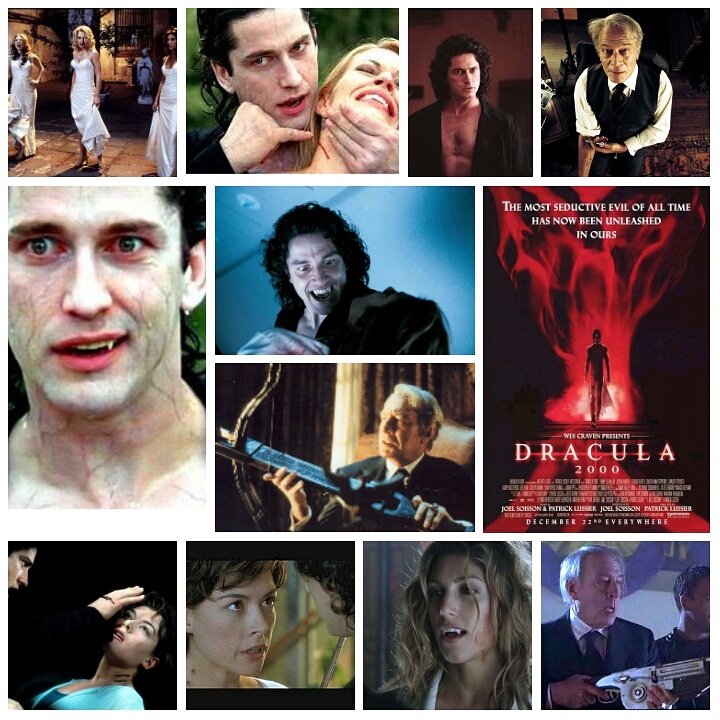
Wes Craven’s Dracula 2000 is one of those horror flicks that proudly slaps his name over the title like he runs the show, when in fact he’s only participating under a vague executive producer credit. Now that we’ve got that little detail out of the way we can talk about what a thoroughly awesome movie it is, and how the haters can go suck it. It’s a high concept slice of bloody fun and has easily one of the best pairings of an actor with the Dracula mythos ever: Gerard Butler. He’s young and lean here, before he turned into a tank later in his career, and he makes one hell of a kick ass Dracula. The story is too good to be true: a team of arch criminals, led by Omar Epps and also including Hyde from That 70’s Show (lol) break into the European mansion of Dr. Abraham Van Helsing (Christopher Plummer) and steal the heavy duty coffin which he has stashed in his basement and used to contain Vladdy for over a hundred years. Helsing has always used a compound derived from his blood to keep himself alive all that time and ensure that he never gets loose. The burglars have no idea what they’re on for, and pretty soon Butler is loose and ready to get freaky, tearing apart their getaway plane and running off into the chaotic streets of New Orleans during Mardi Gras. He’s searching for a girl (Justine Waddell) to have sex with her and fulfill some horrific prophecy (nice little nod to End Of Days there). Dracula, Mardi Gras, Gerard Butler, Christopher Plummer; four ingredients to pretty much ensure your movie is gonna rock. Plummer makes one of the best onscreen Van Helsings in my books, rivaled only perhaps by Anthony Hopkins. Butler is a sleek, hip and sensual Dracula, playing the role to the bloody hilt and sedimenting a really cool rendition of the character, with a surprising twist ending that adds some depth to the guy. Watch for work from Jennifer Esposito, Sean Patrick Thomas, Shane West, Lochlyn Munro and Nathan Fillion as well.
Great retelling, or rather addition to the legend, held up by Butler.
Tag: movie reviews
THE MUMMY – A REVIEW BY J.D. LAFRANCE

Many cinephiles view director Stephen Sommers as the cinematic equivalent of Satan, and with everything that has gone horribly wrong with Hollywood blockbuster films. And, to be fair, with films like Van Helsing (2004) and G.I. Joe: The Rise of Cobra (2009) on a not-too impressive resume (in fact, looking over his filmography, there’s only one film of his I like), he’s hardly a filmmaker one equates with quality, but I will admit to being quite fond of The Mummy (1999). As far as Indiana Jones rip-offs go, it is pretty good. If that sounds like faint praise, I don’t mean it to be as Sommers’ film is actually a lot of fun and entertaining as hell.
The movie is the very popular re-imagining of the old Boris Karloff classic and would go on to spawn two inferior sequels and transform Brendan Fraser into a bonafide leading man. Up to that point he had a reputation for starring in forgettable comedies like Encino Man (1992), The Scout (1994), and Airheads (1994). With The Mummy, he demonstrated some serious action film chops with a hint of romantic leading man qualities that were complimented by his knack for comedy, thankfully doled out in relative moderation this time. The end result is a satisfying popcorn movie with no other agenda than to entertain.
It’s 1923 and the French Foreign Legion engage the Medjai, descendents of Pharaoh Seti I, in battle at the legendary Hamunaptra, the City of the Dead. When his superior officer deserts, Rick O’Connell (Fraser) finds himself in charge, much to his chagrin. It certainly is an exciting way to introduce our leading man as he and his fellow soldiers attempt to stand their ground on the city walls as the Medjai attack in wave after wave. Brendan Fraser shows some decent action movie skills as his character valiantly tries to stay alive despite being overwhelmed by superior numbers and abandoned by his cowardly sidekick (and comic relief) Beni (Kevin J. O’Connor). Rick narrowly escapes and runs off into the desert where the Medjai leave him to die.
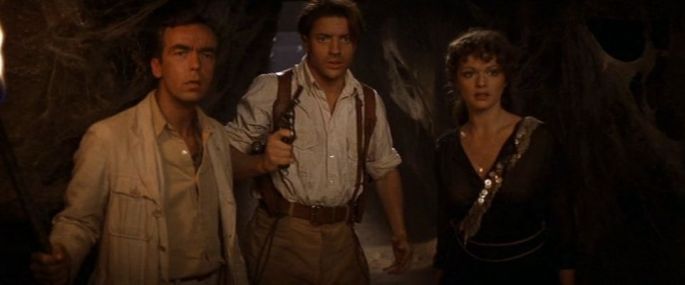
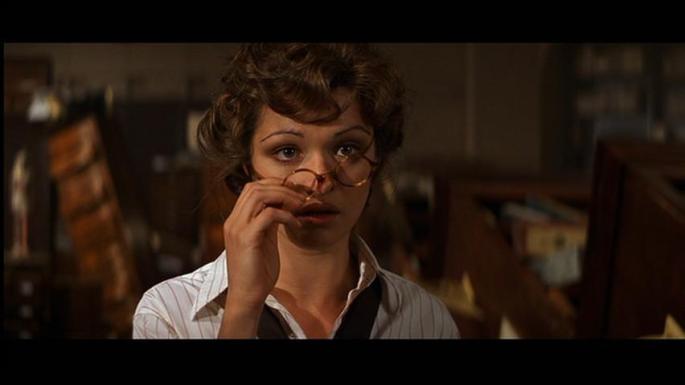
Three years later in Cairo, we meet bookish librarian Evelyn Carnahan (Rachel Weisz) at the Museum of Antiquities as she single-handedly manages to topple over a room full of towering bookcases like dominoes when she attempts to shelve a book. It’s a cute bit of slapstick that establishes Evelyn as one of the most not-so graceful people on the planet. With her hair tied up and sporting a thick-rimmed pair of glasses, the movie’s greatest special effect may be trying to convince us that the gorgeous Rachel Weisz is a socially awkward bookworm (yeah, right). Evelyn’s application to bigger and better things has been rejected yet again because she doesn’t have enough field experience. Along comes her older ne’er-do-well brother Jonathan (John Hannah) who has discovered a trinket at an archaeological dig in Thebes. Inside it contains a map to the mythic Hamunaptra, the place where the earliest Pharaohs are said to have hidden the wealth of Egypt. No one has ever found it and naturally Evelyn’s boss scoffs at the notion of its very existence.
It turns out that Jonathan actually stole the map from Rick who is rotting away in prison. Jonathan and Evelyn pay him a visit and he agrees to tell them where the City of the Dead is located but only if they free him. They do (and just in the nick of time) and set out for the site with a rival expedition of American fortune hunters also looking for it. As luck would have it, they are led by Beni, setting up a personal rivalry between him and Rick. Both groups arrive at the City of the Dead and split up, each looking for treasure. However, the American fortune seekers uncover a curse that condemns their party to death.
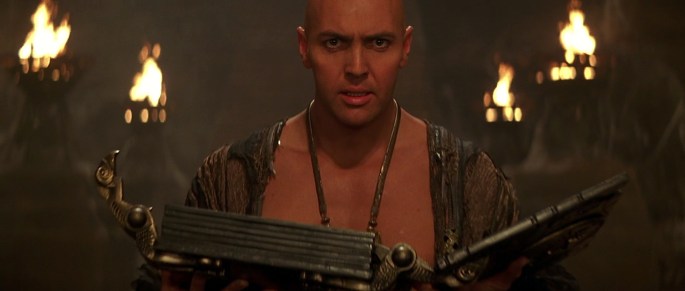
Meanwhile, Rick and Evelyn uncover the coffin of Imhotep (Arnold Vosloo), the ruler of Hamunaptra and who carried on a forbidden affair with Seti I’s wife Princess Anck-su-namun (Patricia Velasquez). He was buried alive for his indiscretions while she killed herself. Evelyn unlocks the legendary Book of the Dead and reads from it, unwittingly resurrecting Imhotep who proceeds to kidnap Evelyn with the intention of sacrificing her so that his lover will also come back to life. It’s up to Rick, Jonathan and Ardeth Bey (Oded Fehr), the enigmatic leader of the Medjai, to stop Imhotep.
One of the things that makes The Mummy work is the chemistry between Brendan Fraser and Rachel Weisz. At first, Evelyn sees Rick as an uncouth mercenary and he sees her as a naive stuffed shirt. But the more time they spend together, especially in death-defying situations, the more they grow to admire and respect one another. The two actors handle this development quite well and certainly make for an attractive couple with Fraser’s matinee idol good looks and Weisz’s beautiful appearance – a little something for everyone. They manage to transcend the predictable screenplay and often clichéd dialogue through the sheer force of their natural charisma. This is readily apparent in the campfire scene where one-night Rick teaches Evelyn a bit about hand-to-hand combat even though she’s had a little too much to drink. She ends up passing out just before they kiss, much to his bemusement. There’s a bit of an old school Hollywood vibe to this scene and to how these actors approach their respective roles that works.
As far as Indiana Jones clones go, Rick doesn’t quite bring the slight air of danger that Harrison Ford brought to Raiders of the Lost Ark (1981), the most obvious influence on The Mummy. Not to mention, Fraser has more hulking boyish good looks as opposed to Ford’s roguish charm. Also, Fraser relies more on comedy than Ford but as far as action-oriented treasure hunters go, you could do worse than Rick O’Connell. Fraser hasn’t really been able to capitalize on the success of this film, appearing in several generic children’s adventure films – although, he showed some promise co-starring with Michael Caine in an adaptation of The Quiet American (2002).
While Evelyn is certainly not as feisty and as capable as Marion in Raiders, she has more of an arc as she goes from sheltered academic to damsel in distress to experienced adventurer. At the time, Weisz was known for appearing in small, independent films and the success of The Mummy would launch her into the A-list stratosphere. She has fared the best of the cast, appearing in delightful romantic comedies like About a Boy (2002) and Definitely, Maybe (2008), and winning an Academy Award for her excellent work in The Constant Gardener (2005).
Sommers handles the action sequences with refreshing simplicity (something that would be absent from his subsequent films). We always know what’s going on and where everyone is. He clearly took notes while watching Raiders and manages to capture its flair for 1930 cliffhanger serials. The Medjai siege on the boat to Hamunaptra early on in the movie is particularly exciting and well-staged, evoking a real Indy Jones vibe.
As with so many big budget tent-pole movies for Hollywood studios, The Mummy was a project that gestated for years and went through many hands before it wound up with Sommers. This new version’s origins lie with producer James Jacks who decided in 1992 to update the original film for the 1990s. He struck a deal with Universal Pictures who agreed to back it but only on a budget around $10 million. Jacks remembered that the studio “essentially wanted a low-budget horror franchise.” To this end, he hired filmmaker/writer Clive Barker whose version was about the head of a contemporary art museum built like a pyramid. The man was actually a cultist trying to reanimate mummies. Jacks described it as “dark, sexual and filled mysticism.” Sadly, after several meetings, Barker and Universal lost interest in the project and parted ways.
Once Barker was off the project, George Romero was brought in and he wanted to make a zombie-style horror film along the lines of his legendary feature film debut, Night of the Living Dead (1968). However, Jacks and the studio wanted to make a mainstream film and felt that Romero’s vision was too scary. Next up was Joe Dante with a contemporary reincarnation tale with elements of a love story starring Daniel-Day Lewis as a brooding Mummy. John Sayles even co-wrote the script but Universal was only willing to spend $15 million on his vision. Jacks then offered the project to Mick Garris and also Wes Craven, both of whom passed.
In 1997, Stephen Sommers contacted Jacks with his take on The Mummy “as a kind of Indiana Jones or Jason and the Argonauts with the mummy as the creature giving the hero a hard time.” He saw the original film when he was only 8-years-old and with his version wanted to recreate the things he liked about it only on a bigger scale. He had wanted in on the project since 1993 but other writers or directors were always involved. Seizing a window of opportunity, he prepared an 18-page pitch to Universal. As luck would have it (for Sommers, that is), the studio had taken a bath on Babe: Pig in the City (1998) and in response, decided to revisit its successful franchises from the 1930s. Executives were so thrilled with Sommers’ concept for The Mummy that they increased the budget from $15 million to a staggering $80 million. Once he got the gig, he spent six months researching the film and then eight weeks writing the screenplay.
When it came time to cast Rick O’Connell, Jacks offered the role to Tom Cruise, Brad Pitt, Matt Damon, and Ben Affleck but they were either not interested or too busy. Jacks and Sommers were impressed with the box office receipts from George of the Jungle (1997) and cast Brendan Fraser as a result. The actor was drawn to the project because he was looking for an action film and liked the idea that Universal was reinventing one of its properties from the 1930s. For the character, he drew inspiration from the likes of Robin Hood, Buck Rogers and Sinbad. Most importantly, he understood that Rick was the kind of character who didn’t “take himself too seriously, otherwise the audience can’t go on that journey with him.”
The Mummy was shot over three months in Morocco and not in Egypt because of the unstable political conditions there. They also had the official support of the Moroccan army. In a reassuring touch, the cast had kidnapping insurance taken out on them. In addition, the cast and crew had to deal with blinding sandstorms and bad-tempered camels. The production had wranglers on set to catch snakes, scorpions and spiders at the end of every shooting day. This still didn’t prevent many crew members from being airlifted out after being bitten. Everyone also had to worry about dehydration when filming moved to the Sahara Desert. The production’s medical team ended up creating a beverage that the cast and crew had to drink every two hours.
Looking back, whatever good will Sommers garnered with The Mummy, he has subsequently pissed it all away with The Mummy Returns (2001), which reduced the number of quiet moments that developed the characters and told the story in the first movie in favor of wall-to-wall frenetic action and the addition of a bratty child (Rick and Evelyn’s offspring, natch) into the mix. Sommers didn’t return for the third and most disappointing installment (neither did Weisz) which is just as well. The damage had already been done with The Mummy Returns but the first movie is still a rousing, entertaining ride.
Out For Justice: A review by Nate Hill
As much of a goof as Steven Seagal is these days, he does have a few very solid and badass flicks from back in the day, the best of which is probably Out For Justice. There’s a whole pile of his flicks out there both new and old, and you have to know how to approach this particular minefield. There’s a bunch that are awesome (Under Siege, The Glimmer Man, Above The Law) and an even bigger bunch that stink to high hell (literally anything after 1999). You can’t go wrong with this one though. It’s a violent, nasty gut punch of criminal activity set on the very mean streets of NYC. Seagal is pathetic in the sense that he doesn’t even realize that every single film he does is stolen from under his very nose by the villain, both in terms of acting and character. I rent a Seagal flick not for Seagal, but for whatever grizzled character actor plays his nemesis, and here that slot is thoroughly rattled by a psychotic William Forsythe. Seagal plays NYC cop Gino, who is on the hunt for the killer of a childhood friend, perpetrated by unhinged lunatic Richie Madano (Forsythe), a maverick of a villain who constantly eludes Gino and plays a deadly, reckless game until he is finally caught up with. Forsythe is a juggernaut, whether trash talking his own henchman and kicking the shit out of them or taking road rage to a whole new level when he shoots a mouthy motorist in the head for looking at him the wrong way. He’s the homicidal life of the party here, and Seagal struggles to live up to his talent, which he can only do via his undeniable physicality. Gina Gershon has a sheepish, slutty bit as Richie’s sister, and watch for Jerry Orbach doing his thing as well. About as awesome a flick as you’ll find in Seagal’s career, and a total blast.
Wake In Fright: A Review by Nate Hill
Wake In Fright is like one of those clammy nightmares where you are stuck in some godawful place full of ugliness and depravity, and try as you might, you simply can’t escape or outrun the horror around you. Such is the plight of John (Gary Bond) a schoolteacher in a desolate county of the Australian outback, on his way to Sydney for a little R&R on winter break. His journey takes him to a pit stop in Bundanyabba, an ass backwards mining town in the middle of the middle of nowhere. He stops by the bar, where the leathery sheriff (Chips Rafferty) offers to buy him a beer. And another. And another. And another. You see, the Yabba is such an isolated doldrum of a place that it’s inhabitants resort to extreme alcoholism on a daily and nightly basis, which combined with their sun baked brains leads to some harrowing displays of excessive and whacked out behaviour, that poor John comes face to face with. It’s funny that his last name is Bond, because he has the air of sophistication akin to our dear old 007, and it clashes with these yowling yokels like baking soda and petrified vinegar. His composure starts to creak as each pint of lager cascades it’s way down his esophagus, until the line between civilization and primal Instinct starts to scare him. But is it too late by then? He somewhat befriends Doc Tydon (Donald Pleasence) a raging drunkard who hangs around with a group who do nothing but drink, howl like lunatics, fight and hunt kangaroos. Pleasence is transfixing as a once cultured man of medicine whose soul has been drenched in the endless consumption of beer and calcified by the mad, acrid sun, until the whites of his eyes begin to reveal the decay beneath. The scenes of alcohol drinking in this film are staggering, frequent and very, very disturbing. The lonliness has bred this behaviour and these people know nothing else but inebriation and idle time wasting, their lives reduced to one long episodic bout of day drinking and nocturnal revelry. John veers eerily close to falling directly in line with them and going to far down that path, especially during a nighttime kangaroo hunt that serves as some perverted form of an initiation ritual. I must warn you: not only are the hunting scenes very, very graphic, but they’re completely un-staged. The adage “it’s just a movie” doesn’t apply to these sequences, and the carnage we see unfold is horrifying geniune. The hunts were supervised by the Australian government and conducted in an overpopulated area by experts. None of that makes them any easier to watch. This film serves as an anthropological treatise on what happens to human beings who live in the farthest and most remote corners of the world, left to their own devices by seclusion and time, relegated to near animalistic states that to them is just another day in the Yabba. Billed as a horror film, but the horror comes solely from the human elements, which to me is always far scarier. Deliverence ain’t got nothing on this baby, and we’re lucky we even got to see it at all. Some years after the film’s bitterly received release (Australians were pissed at the depiction of their people, and probably stung deep by the truth of it) it disappeared so far into obscurity that all prints seemed to be gone, and the consensus was that it was lost forever. One day the editor was cleaning his garage on the very day he was going to liquidate everything he didn’t need, and found a single print. This was nearly twenty years after the film’s release, and today you can watch it on netflix Canada. Quite the story, quite the film. Just strap on a thick skin, it’s a sweaty, dusty, boozy rollercoaster that dips to the very rock bottom of the human condition.
Bound: A Review by Nate Hill
Before the Wachowskis rocketed into the stratosphere of cinema with their big budget world building and brilliant, lofty ideas, they made Bound, a down n’ dirty, kinky little slice of mob pulp that’s as much fun as it is sexy, potent and dangerous. Gina Gershon plays Corky, a hard nosed opportunist with a keen eye for making money and a fondness for beautiful women. Jennifer Tilly is Violet, the bored wife of weaselly gangster Ceasar (a lively Joe Pantoliano), who has just come into a whole wacky of shady cash via his employer Mickey, played by one of the great character actors of his generation, John P. Ryan, who is sadly no longer with us. Ceasar has been given the money to launder, but Violet has other plans that involve double crossing him and making off with it. When she happens to wander into the gay bar that Corky frequents, sparks fly. And I really mean it, for soon enough the two are in bed together for one of the single most hot and heavy sex scenes you will ever see in a film. Seriously, you’ll want to open some windows for this baby. As soon as Corky gets wind of the money, the plot simmers as everyone makes a discreet mad dash for riches and no one is sure who is screwing over who. Gershon is tough, sexy as hell and leaves a faint trace of vulnerability in her excellent performance. Tilly is crafty and secretive, deliberately making people underestimate her until it’s too late. This was Ryan’s last film role, and he makes the most of it as a salty old thug with a dash of class, a touch of kindness and the unnerving tendancy to snap at the drop of a hat. Christopher Meloni is hilariously pathetic as his second in command who irritates everyone around him, especially Ceasar, who has a scary little temper of his own. One senses real danger for our two female leads, because despite the somewhat playful and often satirical tone towards tell gangsters, the Wachowskis have still fashioned them to be formidable and cruel, a wise tonal choice that grounds the viewer and distills geniune suspense. The characters are all brilliantly written and realized, so if you read this review thinking this was a trashy little lowbrow affair, it’s not. It’s It’s a real world tale that just so happens to take place in a lurid part of movie town, and contains one scorcher of a lesbian love affair that is as affecting in dialogue and body language as it is with sex. A special film, and not one to be missed.
In Bruges: A Review By Nate Hill
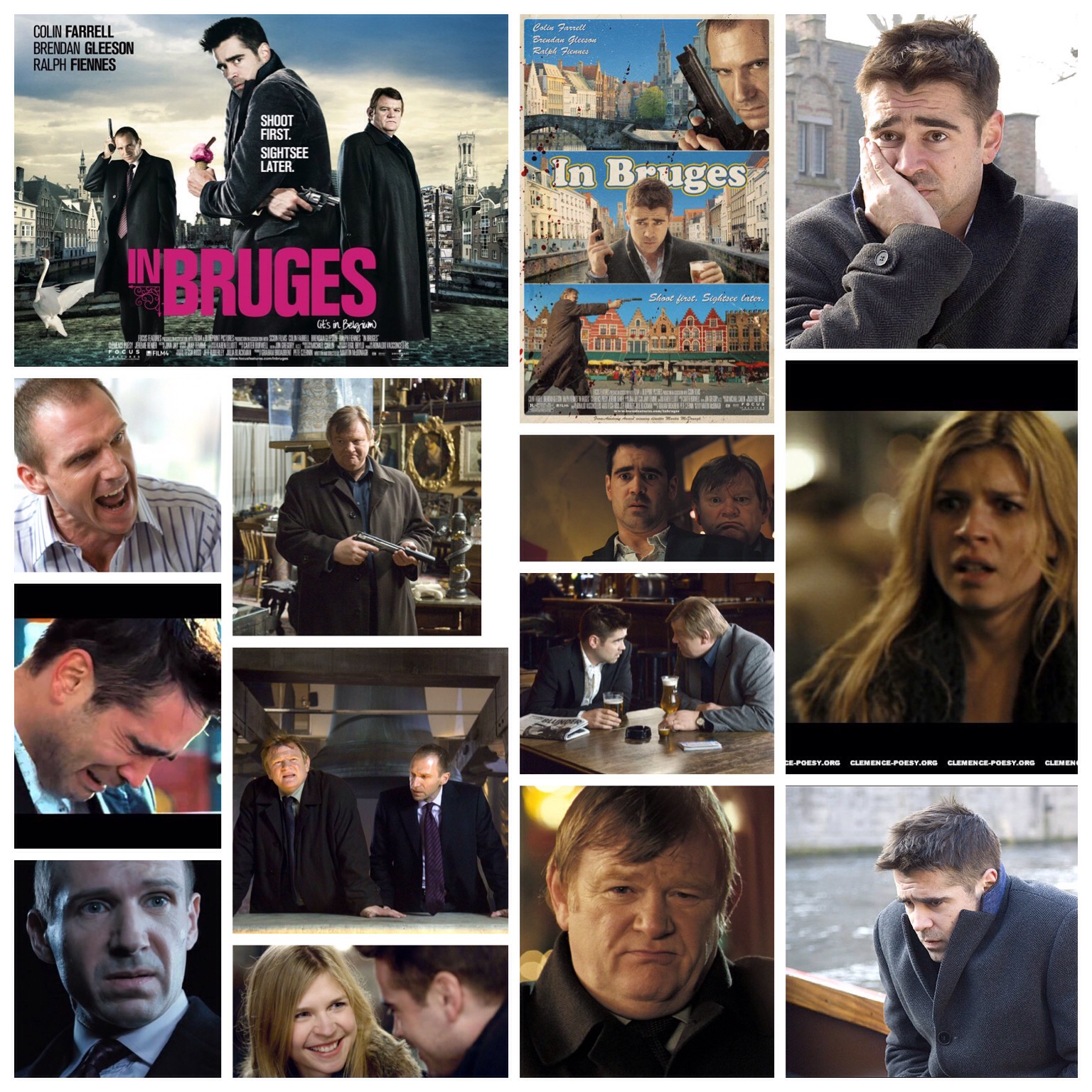
I can’t really say in enough words how much I love In Bruges. In fact there aren’t words in my language which can express how deeply in tune to it I feel every time I put the DVD in for a watch, which is at least every four months or so. The dual forces of comedy and tragedy have combined here using Martin McDonough’s genius scriptwriting as an avatar to create something raucously funny and profoundly moving. The comedy is of the spiciest and very darkest nature (my favourite), and the tragedy tugs at both the heart strings and the tear ducts, scarecly giving you time to wipe away the tears of laughter from the scene that came before. The best in UK crime fare, some of the most balanced, peculiar writing and fully rounded characters who are as flawed as human beings get. Colin Farrell delves deep and gives the performance of his career as Ray, a would be hitman who has fucked up bad, and now heads for Bruges (it’s in Belgium) with his mentor Ken (Brendan Gleeson, pure brilliance and humble class). Ken loves eccentric little Bruges, with its historical architecture and quaint townsfolk. Ray is bored to tears and pouts like a toddler. They meander around the town getting into all sorts of mischief including a dwarf (who has fascinating ideas about the ultimate race war), museums, cocaine, the Belgium film industry and more. Ray sets his sights on the gorgeous Chloe (), and Ken does his paternal best to keep him out of trouble while wrestling with his own gnawing guilt. The film gets a shot of pissy adrenaline when their boss Harry comes looking for them, in the form of a knock it out of the park funny Ralph Fiennes. Fiennes rarely cuts loose and bounces off the walls like he does here, and his Harry is a delightful creature to watch in action. Angry, petty, volatile, clever and out for blood, just a joy to behold. As playful as the script is, there’s a purgatorial sadness to Ray’s situation, a fateful sense that he’s been dumped in Bruges not just to fool around, get drunk and utter witty barbs in that brogue (which he does do a lot) but to deeply ruminate on his choices and ponder where his actions will lead him moving forward from his terrible deed. Maturity permeates each exchange between him and Ken, a fledgling and an old timer shooting the breeze about heavy topics which neither of them pretend to understand, but both are neck deep in. I always cry at certain scenes, always laugh my ass off at others, and never cease to be affected right to my emotional center and the marrow of my funny bone each time I watch this. Look for a brief cameo from Ciaran Hinds in the opening few minutes. Every second of this piece is filled with lush, thought provoking dialogue, awesomely un-politically correct dialogue that doesn’t censor a single impulse from its characters, and a yearning to explore the decisions which cause people to be labeled ‘good’ or ‘bad’, something that’s inherently complex yet feels lightly treaded on here. Masterpiece.
Indie Gems with Nate: Dreamland
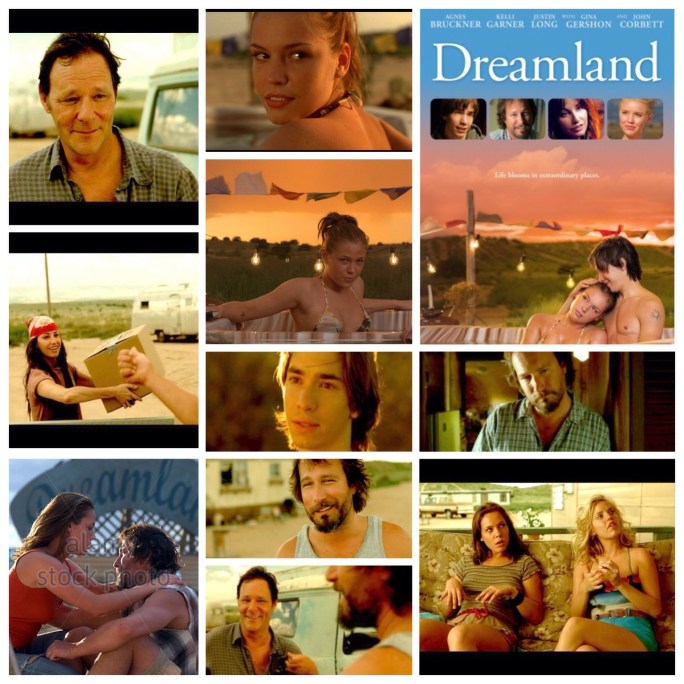
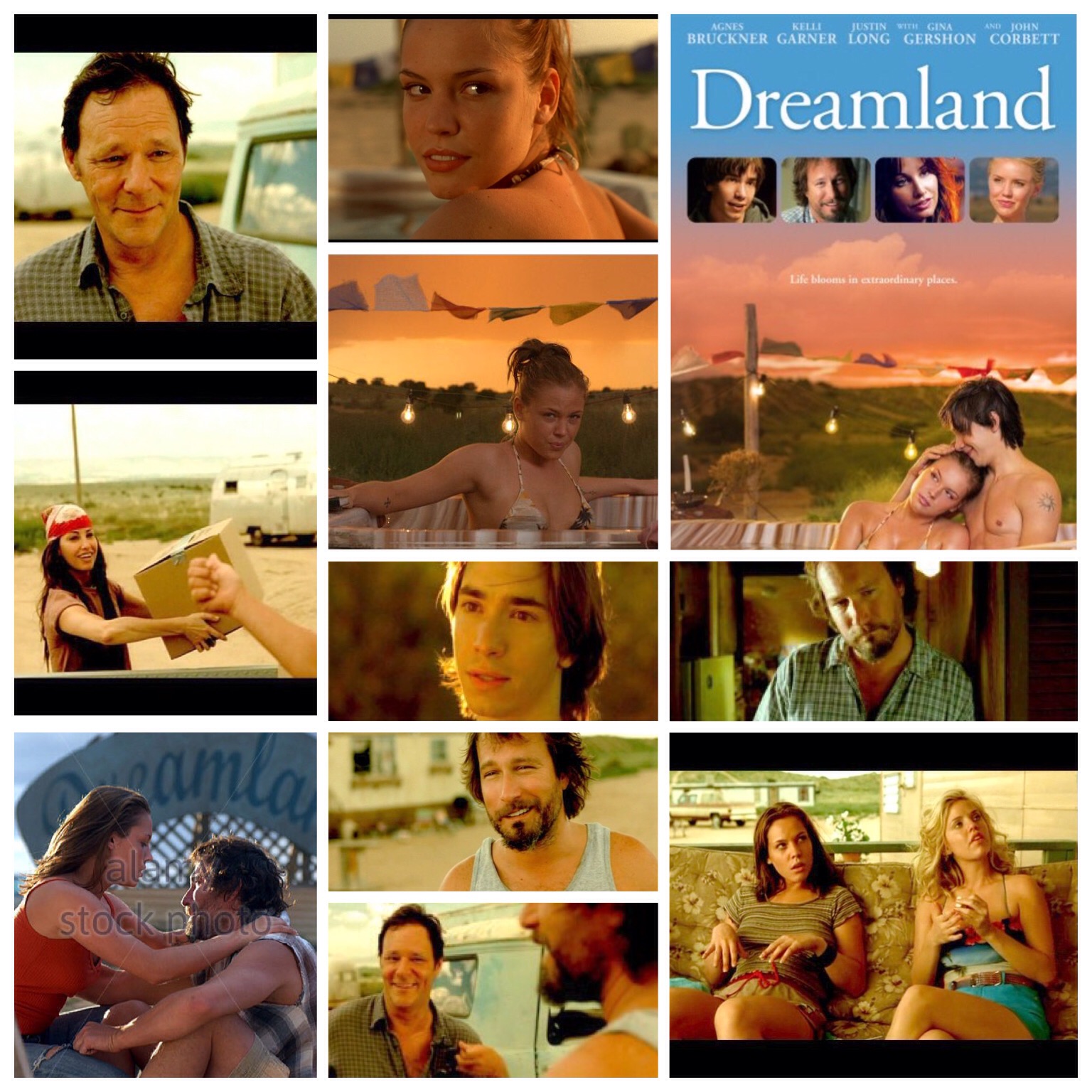
Dreamland is an introspective little indie drama concerning the life of Audrey (Agnes Brucker). She lives in a sleepy trailer park way out in the desert somewhere, far and away from anyone else. She longs for a life somewhere else, but is torn between that and caring for her agoraphobic father (John Corbett), who is severely broken following the death of his wife and her mother. Fresh life is breathed into their environment with the arrival of kindly Herb (Chris Mulkey), and his musician wife Mary (Gina Gershon). Along with them is Herb’s son Mookie (Justin Long is a tad miscast), who immediately has eyes for Audrey. The two strike up an easygoing romance that is tested by her rebellious nature, and the commitment she feels for her ailing father. Corbett is sensational, giving the best performance of the film as a damaged soul that needs caring for, and to find the strength to move on. Mulkey and Gershon are real life guitars strummers, giving their characters an authentic, earthy feel. The title matches the tone nicely; everything is non rushed, relaxed, laid back and dreamy, as one would imagine life out there might be. I was lulled into the hazy routines and moving relationships that bloom for these individuals out on the far side of nowhere. Great stuff.
B Movie Glory with Nate: Borderline
Borderline plays around with the grey areas of the human mind that control impulse, empathy and rational thinking, showing (albeit in slightly stunted and blunt B movie form) us a recently released psychiatric patient with Borderline Personality Disorder who becomes obsessed with bis former doctor. Gina Gershon is Lila Coletti, a prison psychiatrist who is very good at her job. Maybe too good. When she sanctions the release of Ed Baikman (Sean Patrick Flanery), she has no idea the heap of trouble she’s headed for. Ed is anything but rehabilitated, just a charmer who’s great at disguising his instability. Pretty soon people in Lila’s life start to get mysteriously injured, and even killed. She is protected by her boyfriend, Detective Macy Kobacek (a slick Michael Biehn), but it may not be enough to put a stop to Ed’s crafty, dangerous game. Gershon has always been a strong force, despite being saddled with a lot of… I don’t want to use the M word, but let’s say, promiscuous roles. She holds her own as a lead female protagonist in a real world context even better, and I wish she’d get more roles like this. Flanery is creepy without resorting to gimmicky grimacing or run of the mill psycho stuff. Biehn is Biehn, he’s just a legend in any role. Most of the acting besides those three is pretty patchy, but one can only hope for so much with this kind of low budget fare. Worth it for fans of these actors (they’re all favesies of mine), and a not too shabby little thriller.
Cast Away: A Review By Nate Hill
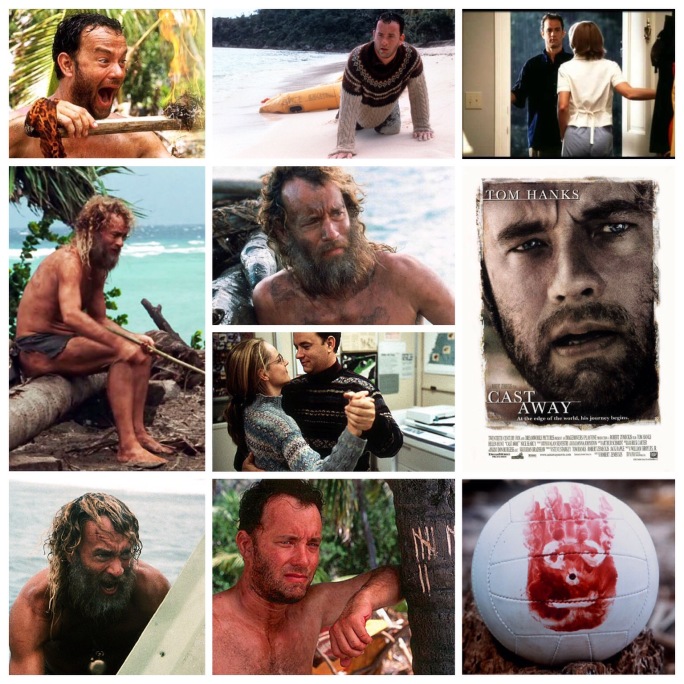
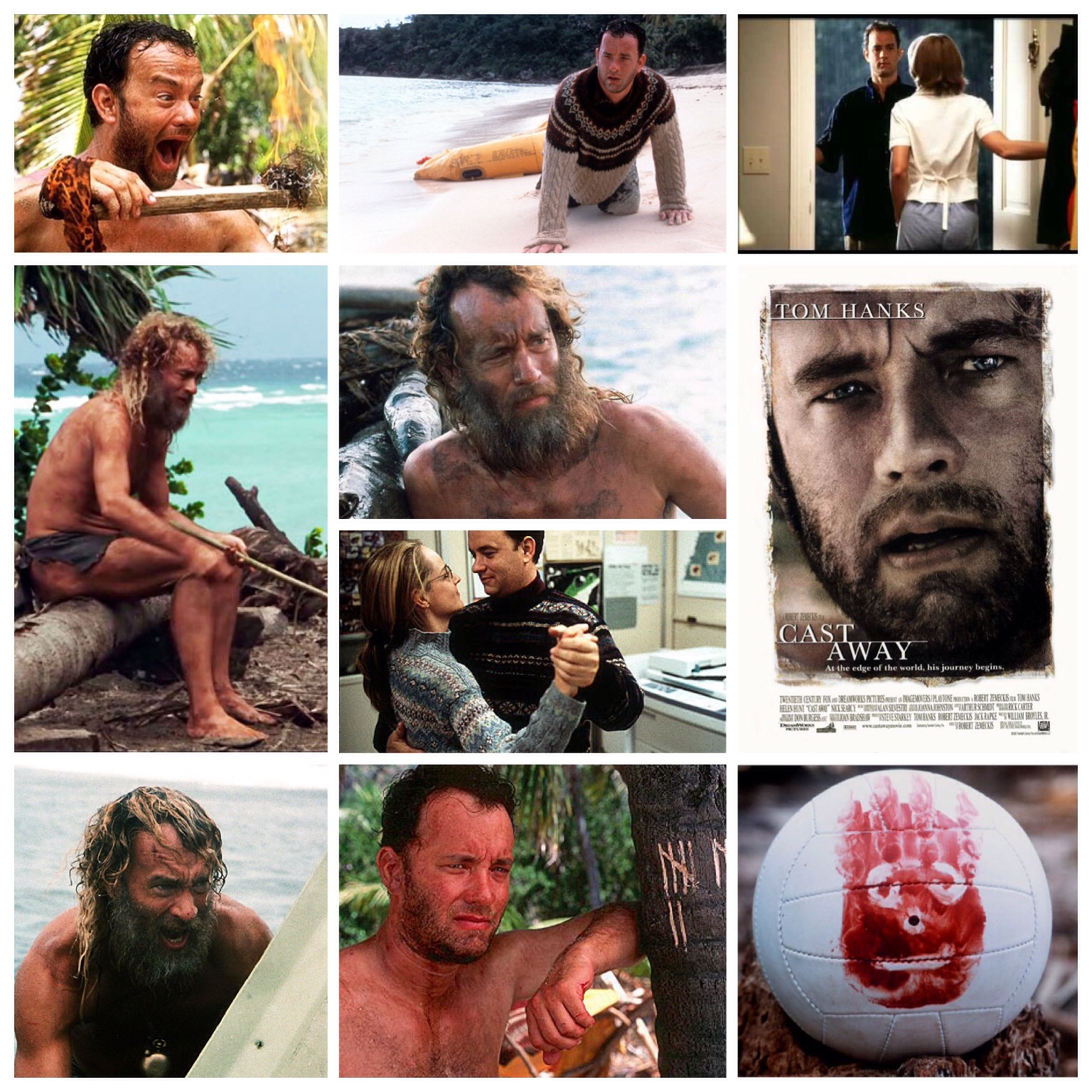
Up until two days ago, I had never seen Cast Away. Not once in my life. I know, try not to have a heart attack. I knew the whole story, each and every beloved plot twist mapped out for me by eager friends, word of mouth, online fare and pop culture over the years. I just never sat down and actually watched the darned thing. Well I did two nights ago, and damn if I didn’t wish I’d done that sooner. It’s every bit as incredible as I’ve heard all this time, and more so. It’s one thing to know everything about a film just because of its notoriety, and quite another to see it, obviously. I experienced every scene, every landmark event in the film for the first time ever, and my foreknowledge of it did not dampen one wondrous second of the experience. Few films bring you as close to their protagonist as this does, for two and a half patient, spellbinding hours in the life of a man whose path has taken a turn for the extraordinary. Tom Hanks is the right guy for the job, and then some. He’s immediately likeable and exudes currents of good nature and humility. Perfect casting choice. He plays Chuck Noland, a FedEx honcho with a busy life that scarcely makes room for his doting girlfriend (Helen Hunt). One Christmas eve, he’s forced to run out on her for an overnight package flight. As we all know, his plane crashes somewhere in the South Pacific, and he’s forced to survive on a deserted island for almost half a decade. We feel every empty minute, every momentous triumph right alongside Chuck, from the first dazed stroll along the wave speckled beach of his new home, to the final, raging ditch effort to find his way back to civilization. Director Robert Zemeckis let’s this larger than life tale unfold with steady, earnest shots and a down to earth score, a very simplistic approach that let’s Hanks do most of the heavy lifting. And lift he does, in a performance of sheer courage and transformative qualities. We see Chuck go from suburban joe and real world businessman to a near feral being, forged into something more than himself by the same forces that govern and mold the geography which he now inhabits, while never losing his humanity in the wild chaos. The time spent stranded is sandwiched between two segments that bookend the film, in which we see his life in civilization before, and eventually after his experience. The impeccable pacing tricks the audience into feeling like we’ve been watching this play out for as many years as he’s been living it. I mean this as a profound compliment to the filmmakers and not to say the film ever drags, in fact, for a two plus hour running time it feels surprisinly slight. It all rests on Hank’s shoulders, and he carries it beautifully, selling this man’s plight with truth, humour and resilience. An experience for the ages, and one that you should see right out of the gate in your cinematic exploration, as opposed to waiting till your mid twenties like someone we know. Masterpiece.
Picture Claire: A Review By Nate Hill
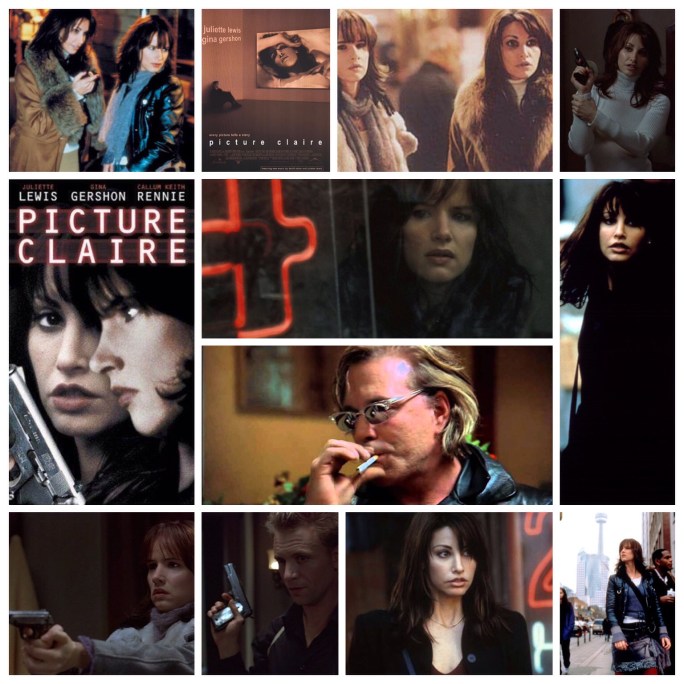
It figures that a decent Canadian film, which lets face it, is a rare commodity, would me mishandled, neglected and not properly promoted, resulting in its exile into the inter zone of obscurity. Picture Claire is an original, stylish little crime thriller with two solid female leads and a story to tell, a story that has regretfully made its way to far too few audiences. Juliette Lewis plays Claire Beaucage, a confused and awkward French Canadian girl who finds herself in way over her head with dangerous, sexy jewel thief Lily Warden (Gina Gershon, in yet another physically demanding role that adds to my wish that she got a crack at playing Catwoman). Lily is on the run from Laramie (Callum Keith Rennie, the king of charisma) a mobster who wants something she stole, which through circumstance is now in the unwitting hands of Claire. The chase then starts, through the unmistakable streets of Toronto and from one violent encounter to the next. The film is a thriller, and a chase flick at heart, but in that heart it’s got an almost old world, European flavour. Claire has quaint, almost Amelie esque inner monologues which give us insight into her character. She doesn’t speak English, and everyone around her does, which somewhat alienates her. These interludes give us something to latch onto with this strange girl who is more in the dark about what’s going on than even we are, watching from behind our screens. Watch for a profane cameo from Mickey Rourke as Gershon’s lowlife partner in crime, a scene stealer as always. Thoroughly overlooked, and a true delight.