Prepare your eyes for maximum bogglement, work out your abs so you don’t bust a gut laughing, and most importantly, dust off that childlike sense of wonder before going to see Rudyard Kipling’s The Jungle Book, boldly and lovingly retold by Jon Favreau in what is the most flat out exciting, adventurous film of the year thus far. The director pulls off a balancing act between palpable tension, character interactions that come straight from the heart and land squarely in ours, and some of the most believable, jaw dropping CGI I have ever seen on screen. The animals look so impressive and lifelike that after seeing them I shelved away some of my inherent reservations about computer generated effects as a dominant force in a piece, and simply gave in. The atmosphere is lush, intoxicating and deeply detailed, with a naturalistic feel and tone. Young Neel Sethi is tasked with being the only fully human component, and is perfect. His interactions seem real and rehearsed, immersing the viewer further into the visuals. Mowgli is a young man cub, found on the edge of the jungle by the panther Bagheera (stately, compassionate Ben Kingsley) and given to a wolf pack to be raised by alpha Akela (Giancarlo Esposito) and Raksha (Lupita Nyong’o). Not all in the animal kingdom are receiving of this man cub, especially a terrifying Bengal tiger called Shere Khan, given the rumbling tones of Idris Elba, inspiring fear in animals and audience alike. He has a rocky relationship with man, and wants Mowgli dead. Bagheera takes him far into the jungle, where they are separated and Mowgli’s adventure truly begins. He wanders into the path of Kaa (a slithery Scarlett Johansson) a monstrous, seductive python, and is taken under the wing of Baloo, an adult Winnie the poo voiced by Bill Murray. Murray is one of the film’s great delights, and as soon as he shows up we forget about all the menace and threat which preceded his arrival, and are swept up into his affable, lounging lifestyle and brightly colored neck of the woods. Murray clearly ad libbed a lot of Baloo’s dialogue, and anything he didn’t he still gives that unmistakable, winking ‘Murray’ twinge that I so love. Mowgli’s adventure continues, as he stays one step ahead of Shere Khan and is visited by the king of the monkeys, a twenty foot tall, lumbering orangutan named Louie, voiced with demented, pithy glee by Christopher Walken. As soon as he showed up the laughs erupted from within me, and reached a manic peak as he belts out the ‘Oobie Doo’ song in priceless Walken fashion, his monkey mannerisms uncannily starting to resemble Walken’s own distinct visage. Many of the animals serve as differing parental figures to Mowgli, representing elemental factions of raising one’s young. Bagheera is cautious, doubting and skeptical. Baloo is the fun loving, lenient one. Even Shere Khan has a curdled paternal feel to him, like the brutal stepfather who is damaging to his offspring. Raksha is the unconditional mother, and that devotion comes out wonderfully in Nyong’o’s souful performance. The vocal performances are aided by the stunning effects; the CGI of facial features allow the actors work to truly extend into the realm of what’s visible, with real emotions displayed by the creatures, and not a single rendering that’s anything short of lifelike. The film evokes true wonder and primal excitement, escapism that takes itself seriously yet knows when and how to play, a dazzling technical marvel, a timeless story well told, all in one cinematic package that is not to be missed. Oh, and stick around for the credits, instead of Walken out of the theatre and missing a final musical treat.
Tag: movie reviews
Passengers: A Review by Nate Hill
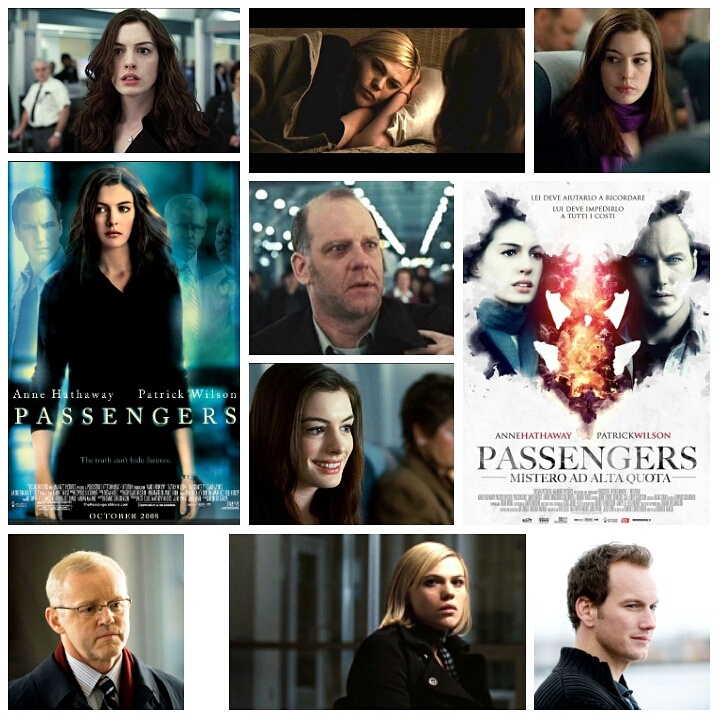
Passengers is a low key supernatural drama that came and went with little fanfare or attention back in 2008. Part of the reason for that could have been that it was marketed as a thriller, which is not so much the case. There is an eerie vibe to it, and certainly a paranormal component, but it’s quieter and much closer to the chest than advertising might suggest. It wasn’t reviewed very well, branded as predictable and derivitive. Some of its plot devices have been used before in the past, to be sure, but I greatly enjoyed the film and loved the way in which it’s story unfolds, told very well by its sturdy cast. Like Mark Pellington says, fuck the people, that’s why there’s 31 flavors. Anne Hathaway is excellent as Claire, a grief counselor who is tasked with looking out for a handful of people who have survived a catastrophic plane crash. She’s new to her profession, her eagerness laced with self doubt, yet she remains hopeful. All of a sudden, the patients in her cate begin to disappear mysteriously, and she starts to question the situation, as well as her own reality. The survivors are damaged and not fully willing to open up to her, collectively scared of some unseen threat. Claire has repeated run ins with a unknown and very distressed man (Andrew Wheeler, local vancouver actor and former teacher of mine) who has ties to the accident. It’s all hush hush and quietly unsettling, until we slowly begin to realize what’s actually happening, and the it changes gears and becomes very touching and thoughtful. Clea Duvall is great as one of the skeptical survivors, Patrick Wilson solid as always, and there’s work from Dianne Wiest, William B. Davis, Andre Braugher and briefly David Morse. Sure, this type of story has been done to death time and time again, draining new efforts of some of their effect, but if one comes along that gets it right, tells it’s story in a way that holds both my emotion and interest in its spell, I’m all ears. This one did just that.
B Movie Glory With Nate: The Last Stop
Agatha Christie takes a trip to the Pacific Northwest in The Last Stop, a chilly little indie B movie in which we have the pleasure of watching Adam Beach and Rose McGowan try to smoke out a killer amidst a group of people stranded in a remote motel during a blinding snowstorm. A welcome setup for intrigue indeed, if you’re into cozying up to these actors for a tense little 90 minute guessing game packed with just the right amounts of cheesiness and tension. Beach plays a local Sheriff who is stuck at the establishment while its Proprietor (the great Jurgen Prochnow, refreshingly cast against type) struggles with a guest overload as the storm gathers steam. Beach’s old flame (the ever alluring McGowan) has resurfaced in his life with little explanation. There’s also an obnoxious hustler (Callum Keith Rennie) a sleazy would be cowboy (Winston Reckert) and other disconcerting weirdos lurking about. Some are red herrings, some simply filler for the narrative, and all are entertaining, whether intentionally or not. The plot meanders in snowy, typically nonsensical b-movie form until it pulls itself together for a very grounded finale that seems misplaced given what came before, but welcome all the same. McGowan could dub a Korean pop song and still be riveting, and it kills me she isn’t in more stuff, but she’s made it clear that acting was never her first love. Nevertheless she’s great as both the most mysterious and fascinating character. Shades of The Hateful Eight, Eye See You with Stallone, and many a snowbound mystery. Fun stuff.
Anamorph: A Mini Review by Nate Hill
Anamorph is a loving ode to the wilfully nasty serial killer flicks of the 90’s, obviously borrowing heavily from a few specific ones, the clearest example being Fincher’s Sev7n. It’s got the same dank, dispirited tone of that one, a restless urban nightmare wherein one lone detective searches for a heinous murderer that seems to elude him every step of the way, leaving increasingly grisly crimes in his wake. The detective here is Stan Aubrey (Willem Dafoe), a troubled fellow suffering from OCD, as if he didn’t have enough to handle, with a killer on the loose. Dusky New York streets are the predator’s playground, and he kills using some very elaborate, and very u settling techniques. Anamorphosis is a method used during times such as the Renaissance, where a painter would create a seemingly nonsensical sprawl with neither shape nor form, but when looked at through a tiny window of exposure (camera obscure), or from a painstakingly meticulous angle, a new image comes to light, in this case providing Dafoe with clues. Now this isn’t any Renaissance painter we’re dealing with, and he doesn’t use oil base, if you catch my drift. The crime scenes in this film are very, very horrifying and hard to watch, almost on the level of Sev7n. Dafoe gets help from his art fanatic buddy Blair (Peter Stormare), and tries to look after the troubled Sandy (a moody Clea Duvall), the relative of a deceased friend. There’s also work from Yul Vasquez, Scott Speedman, Don Harvey and the late James Rebhorn. Nasty stuff, this one, but stylish and well worth a late night watch with the lights low and your nerves on edge.
Lee Tamahori’s Mulholland Falls: A Review by Nate Hill
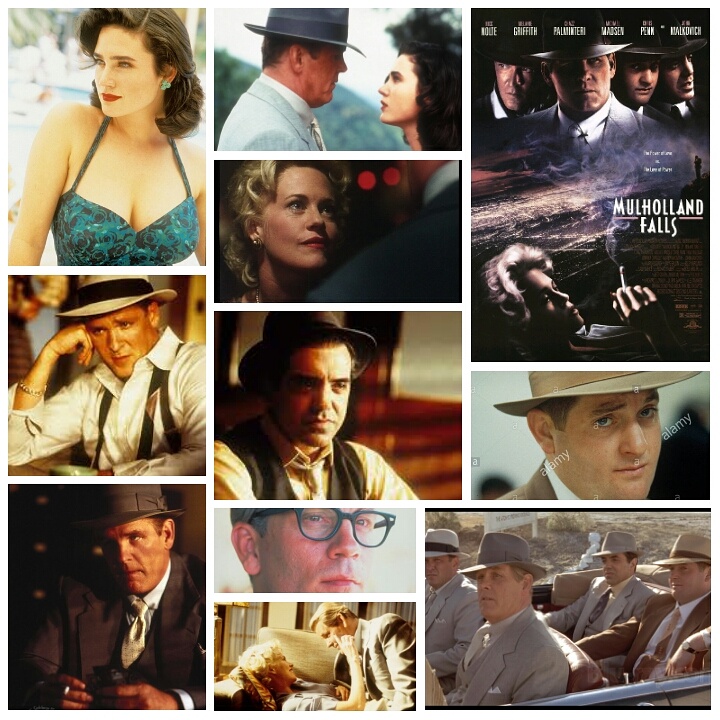
Lee Tamahori’s Mulholland Falls gets a bad rap in some circles for being boring and uneventful despite its charismatic cast and opulent setting that’s ripe for peppy action sequences. I think they are confusing boring with the concept of a paced and very slow burn, yet one with all the texture and richness of an action film, one that admirably decides to take the route of the old school noir, with loving care put into story and character, two elements which the action and violence live simply to serve, and not to take the driver’s seat against. Or it’s simply not some people’s cup of tea, which is totally okay too. Personally though, I love a good L.A. cop yarn that has a story to go with the toughness. This one bears striking similarity to 2013’s Gangster Squad, which also had Nick Nolte playing a 1940’s Los Angeles cop in charge of a squad that operates outside of the law. That film is pure cheese, all razzle dazzle and no plot. Mulholland Falls falls somewhere between Gangster Squad and L.A. Confidential; not quite up to delving into the serpentine intrigue of the latter, yet infinitely more interested in telling a worthwhile story than the former. And tell it does, in high flying style that only a crime film set in that time period can do. Nick Nolte plays Hoover, a whiskey voiced, take no prisoners LAPD badass who heads up an elite anti corruption task force that operates far outside the red tape and pretty much do what they want to stomp out corruption. His squad consists of Michael Madsen, Chris Penn and a scene stealing Chazz Palminteri as the oddball of the bunch, with serious impulse control issues. A straight up dream cast of tough guys, and although I’ll admit that Penn and Madsen are a tad underused, their presence alone boosts the film’s credentials into an epic pantheon. The film revs up with a kicker of an opening sequence in which the squad severely roughs up a troublesome mobster (an uncredited William L. Petersen). “This isn’t America, it’s Los Angeles” Nolte growls to him, stating the tone of perverse lawlessness which permeated the city back then. Soon he’s drawn into a tawdry scandal involving the murder of a young prostitute (Jennifer Connelly) who he previously had encounters with. The search leads him far and wide, crossing paths a sleazy photographer (Andrew Mcarthy), a dying air force tycoon (John Malkovich manages to ham it up even at his most laid back) and his stern lieutenant (Treat Williams). Nolte also has a poor jilted wife played nicely by Melanie Griffith in limited but effective screen time. The plot is hard boiled to the bone, with Nolte in one his most gruff mid career roles and loving every stressed out, rage fuelled second of it. The conclusion is his show, with a whacked out Palminteri in tow for a spectacular sequence set aboard a doomed military aircraft. The cast gets deeper, believe it or not, with Daniel Baldwin, Ed Lauter, Kyle Chandler, Titus Welliver, Louise Fletcher, Rob Lowe and Bruce Dern contributing gamely. This one’s got style on it’s side and then some, replicating a sense of time and place with the torque ramped up to near Sin City levels. Admittedly not perfect, but a pure and simple blast of a flick, in my opinion.
Metro: A Review by Nate Hill
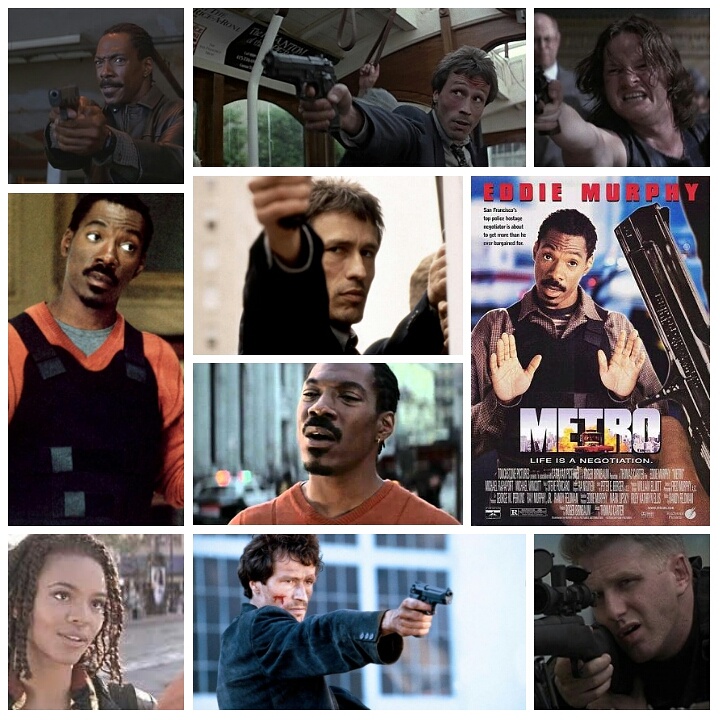
The 80’s and 90’s saw the momentous rise of beloved funnyman Eddie Murphy within the action comedy genre, particularly the wise cracking cop niche. 48 Hrs kicked it off, the Beverly Hills Cop trilogy added to the snowball effect, and so it went. His manic charisma led to many a starring role, including the somewhat forgotten actioner Metro, one thats notable because it shows the actor in just as many serious situations as comedic ones. There’s a tether on his sense of humour here, which in other films has been set to roam and end up where it may, often halting entire scenes for his non stop antics to play out. Here he gets a few moments like that, but even more to get seriously angry and tough, most likely helped by the fact that he’s up against one of the most truly heinous villains he’s ever had to face. Here he’s Scott Roper, a fast talking, resourceful San Francisco hostage negotiator who flexes both brain and brawn in a tense opening confrontation with a loose-screw criminal (Donal Logue). We see right off the bat what an efficient dude he is, a nice precursor for the trying times ahead. He’s inhabits a world chock full of every necessary genre element: a cranky police captain (Denis Arndt), a sexy girlfriend (stunning British gal Carmen Ejogo), a fresh out of the academy rookie partner (Michael Rapaport, not given much to do) a recently deceased former partner (Art Evans) to avenge, slain by the obligatory arch criminal, in this case psychotic jewel thief Michael Korda (Michael Wincott). Wincott makes Korda a truly detestable guy. Vile, slithery and absent of any shred of remorse, killing his way through the city with Roper hot on his tail. And there you have it, every necessary element in place for a solid cop flick, and one that’s gotten very little attention over the years. There’s neat action set pieces including a showstopper set aboard a speeding trolley car, endearing bits of comedy now and then from Murphy and some savage violence that proclaims the film’s hard R rating proudly. Murphy and Wincott have a sizzling verbal dual, separated by prison glass that launches the scene into the stratosphere of intense profanity, with F bombs spewed off in rapid fire, tempers and talents of both actors in overdrive. Lukewarm reviews can be found all over for this one. Yeah its no 48 Hrs, but it earns it’s stripes and to me is one of Murphy’s very best, helped along quite a bit by Wincott’s snarling, evil presence. Great fun.
B Movie Glory with Nate: Bone Dry
Bone Dry is fantastic little piece of sun soaked, revenge fuelled melodrama that serves as a glowing showcase for its two leads, Luke Goss and a ferocious Lance Henriksen. Lean, mean, gritty and reminiscent of 1970’s revenge outings, it’s a bloody delight of a flick. Luke Goss, an actor who can give Henriksen a run for his money in the intensity department, plays Eddie, a well dressed dude with a suspiciously murky past, winding his way through the desolation of the Mojave Desert. After breezing through a lonely cafe run by a girl (always nice to see Dee Wallace) who clearly has eyes for him, he sets out through a particularly lonely stretch of the terrain, and that’s where he finds himself in serious trouble. He’s soon stalked by a menacing, mysterious man named Jimmy (Henriksen), who is intent on tormenting, taunting and fucking him up at every turn. Jimmy is an ex war monster a man whose taken it upon himself to put Eddie through every ring of hell that the Mojave has to offer, all in service of some deeply buried reasons that emerge from the sand late in the third act, shedding scorching light on the two men’s character arc, and giving the film quite the emotional boost. When I say hell, I mean it. Eddie suffers through some unspeakably horrific scenarios, including a scene involving a cactus that will induce mass cringing among audience members. Director Brett A. Hart has a heightened, almost Walter Hill-esque style to his film, with the intensity metre ratcheted up past the maximum, and editing trimmed down to whip smart strokes that put you right in the middle of Eddie’s clammy desperation and Jimmy’s enigmatic fury. Henriksen spends the first half of the film with his face shrouded, adding to the mystery of his character. He’s a master of the craft who slowly lets the breadcrumb trail fall with every portentous mannerism and glowering posture until we finally see what Jimmy is really about. One his best performances. Goss doesn’t let the energy sag for a single second, something he has always been great at. There’s further work from the legendary Tommy ‘Tiny Lister’ Jr. as well, filling in another subplot stranded out there in the sand. This one is genre bliss, brutal and blistering until it cools off for a conclusion that cuts the viewer some respiratory slack after the breathlessness of its juggernaut setup. Terrific stuff.
Wildflowers: A Review by Nate Hill
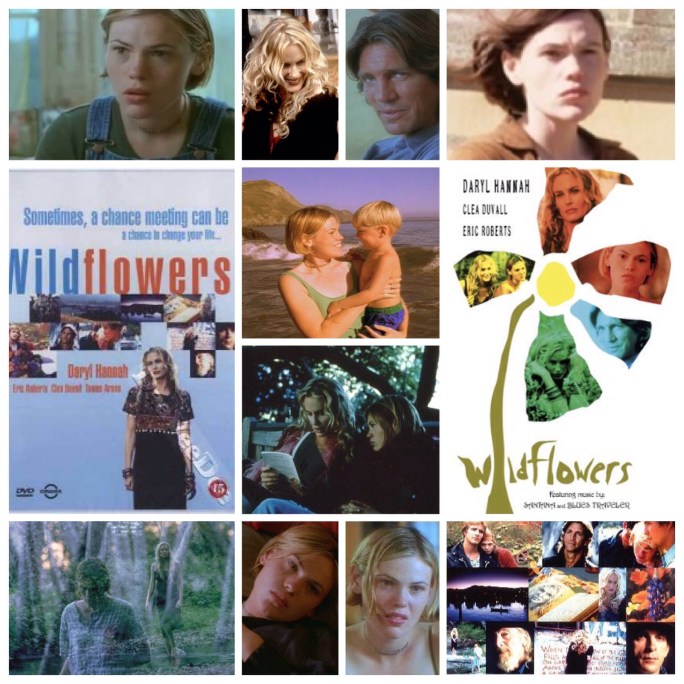
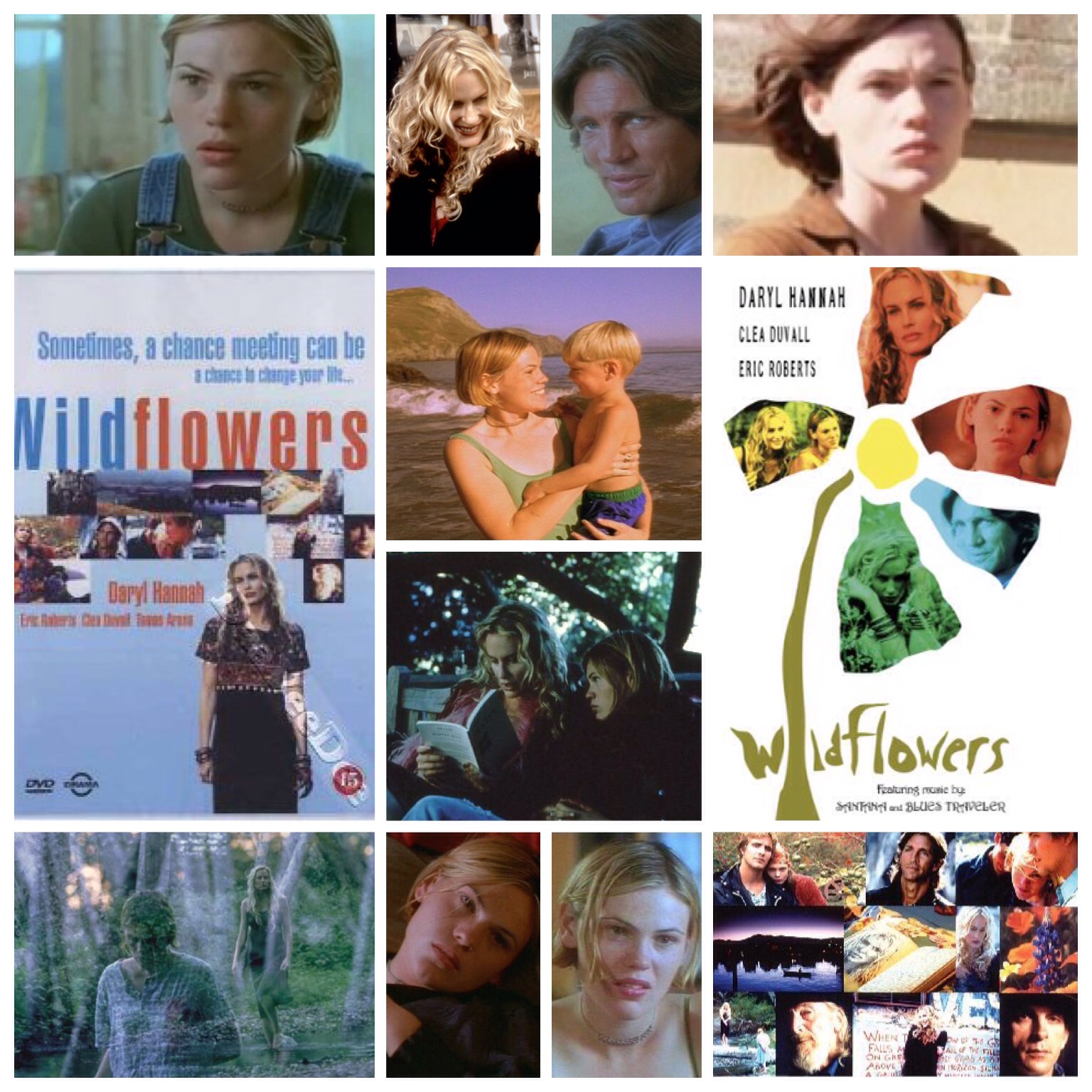
Wildflowers is a film that examines the aftermath of 1960’s counterculture and the hippie movement. The free love sentiment produced many children who were raised unconventionally, and in some cases outright abandoned by their flower power parents. Cally (Clea Duvall) is one such girl, a wild tomboy who lives with her sometimes employed father (Thomas Arana), and spends her days cavorting around with adolescents in similar situations. It’s rare that Duvall gets a starring role, and she’s absolutely wonderful here, steering Cally along with longing, resentment and just a bit of touching ‘lost girl’ emotion. She’s an actress who needs to be cast in more stuff to showcase her talent, and not just thrown into lesbian roles because she identifies as such (grrr!). She steals the show and proves what a magnetic presence she is. Cally never knew her mother, and hope arises with the arrival of mysterious Sabine (Daryl Hannah) a woman old enough to be her mother and seemingly connected to her somehow. Sabine is a free spirit with a turbulent mindset, a result of the fragmented lives that people led back in that time period, often leading to wayward souls with no sedimentary existence to slide into after the show finishes and they realize they aren’t as young as they used to be. Cally’s story plays out beautifully, a girl just coming into her own and realizing who she is, via experimentation and intuition. She meets a drug dealer named Jacob, played by Eric Roberts. He’s the friendly drug dealer, a cinematic archetype often sought after by filmmakers. Roberts could play an evil dictator and still come off like Prince Charming, he’s just that likeable, and as such is perfect for the role, a kindly rapscallion with lessons and advice for Cally which don’t quite play out as one might think. In the end, it’s Duvall’s show, one of the only lead roles she has that is even out there to hunt down, such is the rarity of many films in her career. It’s filled with terrific scenery, a whimsical yet real world aura and performances of emotional truth. Worth tracking down for Clea’s fans (I’m proudly a die hard) and a delight for the casual viewer.
Disney’s Zootopia: A Review by Nate Hill
Disney’s Zootopia is the kind of animated film that passes with flying colors in just about every damn category it needs to, making it a thoroughly endearing classic that will stand the test of time and delight countless new fans as time goes on. It’s the best of its kind since last year’s Inside Out, and one that will be hard to top this time around. It’s got the most treasurable kind of story, one that has all the fun, flash and zip that the kids will take a shine to, some hilariously subversive and cheeky humour for the the adults to chuckle at, and some vital, important messages within its themes that adults will knowingly relate to, and the kids will subconsciously perceive. Never preachy nor pandering, all of its ingredients are mixed harmoniously. And let’s talk about that animation, good lord. Every year these films get more cutting edge and eye boggling, and this one busts the blueprints in its attempts to dazzle, with every kind of texture, glint and rendered gold on display. Animals of all shapes and sizes run, scamper, dart and dive throughout the film, to the point where I felt that only with multiple viewings could I appreciate every loving detail and subtle joke. Ginnifer Goodwin gives perky vocals to Judy Hops, a small town bunny who dreams of being a big city cop. Just leagues away from the tiny carrot farm she was raised on lies Zootopia, a sprawling metropolis where the denizens of the animal kingdom live in civilization, or rather, their brilliantly realized version of it. She is told time and time again that she’ll never become a cop, but pays no heed. And whadd’ya know, she becomes a cop. Left to rot on parking duty by stern bison Sergeant Bogo (growly Idris Elba) she fumes and longs for real action. Soon she meets wily fox and street hustler Nick Wilde (Jason Bateman in possibly the best vocal performance in years), and both are whisked away on an adventure through Zootopia to find some bad cats (and every other creature imaginable) who are up to no good. The city itself is a marvel in every sense of the word. Divided into detailed, vast and climatized zones including Tundra Town, Little Rodentia (laughed hardest at this sequence, purely inspired) and a subtropical tree house lined Rainforest area. The cast has buckets of fun, including JK Simmons as Mayor Lionheart, Bonnie Hunt and Don Lake as Judy’s endearing parents, Tommy Chong as a yak hippie, Peter Mansbridge as Peter ‘Moosebridge’, and more. Shakira shows up essentially as herself in animal form, with an original composition called ‘Try Everything’ which gives the film a lot of its charm and heart. Bateman just has to be commended for a performance so full of real conflict and shades of grey its hard to belive hes playing a fox in a Disney flick. Despite being in the most hyper real of all genres, hes walked right out of real life amd nails every note. There’s so many highlights I could write for pages, but I won’t spoil the fun, of which there’s no end. There’s also a very grounded head on the film’s shoulders, saying some important things about not giving up on your dreams (sounds clichéd, I know, but not the way the writing addresses it here), and never assuming one thing about a specific group of animals just because of the way a few of them behave. Subversive stuff for a kids movie, and I’d have it no other way, as the undercurrents of film forge minds and opinions for the young ones. Simply put, it’s destined to be a classic, and comes up a winner no matter how you look at it. Oh, and try not to bust a gut laughing at the sloth sequence, I dare you.
Neil Jordan’s Interview With The Vampire: A Review by Nate Hill
Neil Jordan’s film version of Interview With The Vampire is simultaneously one of the most sumptuous and tedious visions of the affliction to ever hit cinema. On the one hand, it’s an absolutely gorgeous, atmospheric and old worlde glance at two damned souls who carry out their macabre destiny with flair and vicious grace. I say tedious as some kind of bitter compliment, because no other film has quite captured the internal torture of eternity or the nocturnal gloom that must prevail over such an existence quite as well as this film has. It barely runs over two hours and we feel like we’ve been planted in front of the screen for years. Such is the dedication of director Jordan, a sneakily versatile gent who augments his stylistic and tonal approach to whatever material he is working with. The film is exciting and raises a pulse, but only on its terms, and for long periods of time we sit through languishing despair that no doubt adds to the mood, but exists to serve the psyches of our two leads, and dares the viewer to suffer alongside them. I have somewhat of a bone to pick with certain producers behind the scenes who no doubt had a forceful hand in the casting of Brad Pitt and Tom Cruise. You see, author Ann Rice had her heart set on a filmic version starring Rutger Hauer as Lestat, and Lance Henriksen as Louie. Now, Cruise and Pitt are at the utter opposite end of casting types in Hollywood, and while Jordan is never a guy to compromise or chase stars right off that bat, I am still sour when I think of the film we’ll never see, starring two actors infinitely more fascinating and vampiric that Brad and Tom. Nevertheless, I have som much appreciation for the film that I can’t take it too hard, and remain a steadfast fan. Pitt plays Louie, a depressed Louisiana plantation owner with nothing left, especially to lose. He meets roaming vampire Lestat (Cruise), who promptly turns him, and the two embark on a century spanning odyssey of nighttime escapades, thoroughly fraught with homoeroticism. It’s isn’t so much an organized narrative as it is a lengthy look at these two, trapped by their condition and making the bitter best of it. They meet others along the way, including Armand (a slinky Antonio Banderas), Santiago (Jordan regular Stephen Rhea, lively evil incarnate) and Claudia, a child who Louie turns. She’s played by Kirsten Dunst in the best performance of the film. A young girl with the vampire curse thrust upon her at such an age, who mentally matures into a steely, furious woman trapped in the body of a ten year old. Not many actresses could succeed at that, but she is a spitfire little shryke who dominates every scene. All this is being retold by Louie to a 1990’s journalist (Christian Slater) who morphs from bemused disbelief to cold terror, and eventual morbid fascination. It’s a slog to get through, but an ornately beautiful one with some really bloody effects and the always terrific stewardship of Neil Jordan, whose films are never short of mesmerizing, whichever genre they fall into. A dark, dingy horror with lacy elegance at its core.