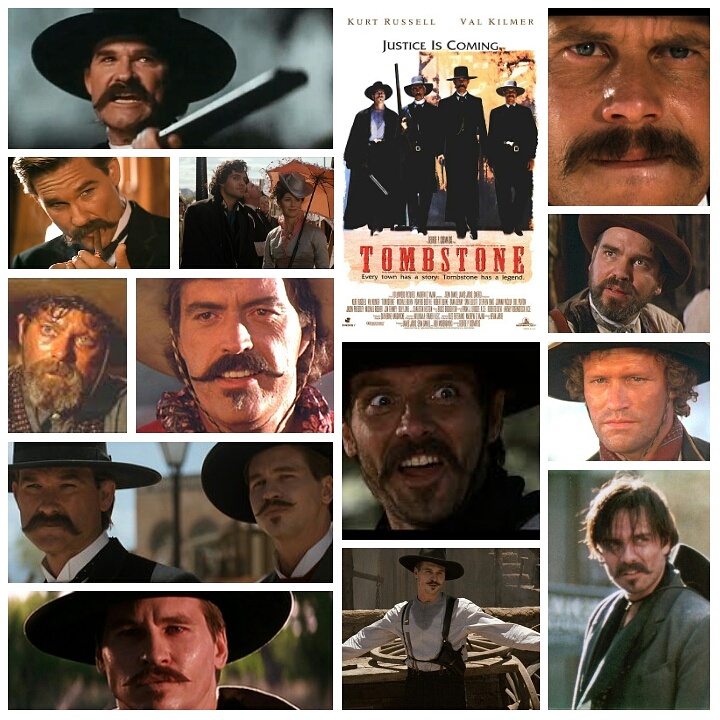
Tombstone: A Review by Nate Hill 

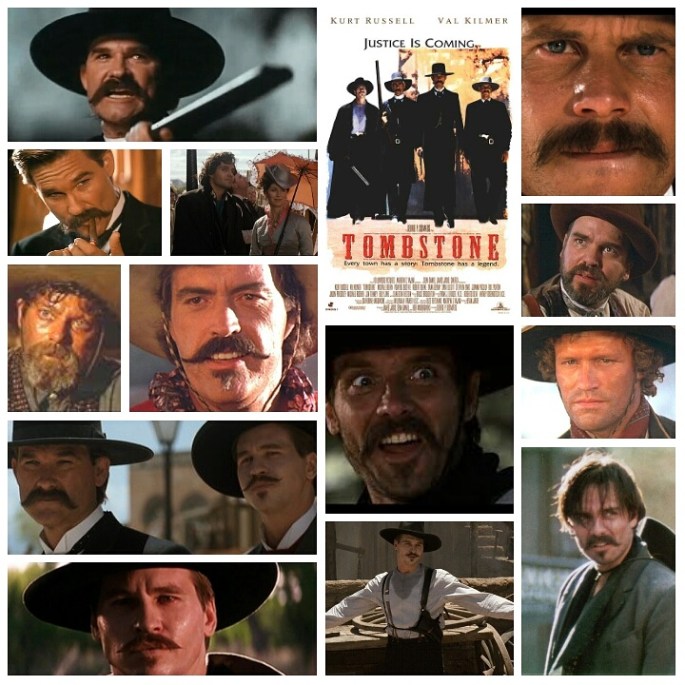
There are two main film versions based on the life of infamous outlaw Wyatt Earp: a serious, sombre one with Kevin Costner (and a whole lot of others), and a rolkicking circus sideshow starring Kurt Russell, bedazzled with a jaw dropping supporting cast that doesn’t quit. Both films are great, but if you held a six shooter to my head and demanded a preference, I’d have to give Tombstone the edge. It’s just too much fun, one wild screamer from start to finish, filled with swashbuckling deeds, evil outlaws and bawdy gunfights galore. It should have been called It’s A Mad Mad Mad Mad World In The Wild West. Kurt Russell is in mustache mode again here, but looks younger and leaner than last year’s western double feature his mutton chops starred in. Along with his brothers Virgil (Sam Elliott) and Norman (Bill Paxton) he arrives in Tombstone with a life of law enforcement in his dust and designs on retirement and relaxation. He gets pretty much the opposite though, when every lowlife bandit and villain in the area comes crawling out of the woodwork to give him trouble. Michael Biehn is the worst of them as crazy eyed Johnny Ringo, a deadly smart and ruthless killer, and Powers Boothe hams it up terrifically as drunken scoundrel Curly Bill Brocius. They are the two main causes of grief for the Earps, backed up by all sorts of goons including Michael Rooker, Billy Bob Thornton and a petulant Stephen Lang as Ike Clanton. Russell is joined by an off the wall Val Kilmer as Doc Holliday, the wheezy southern prince with a silver tongue that’s constantly fuelled by booze. He gives the best work of the film, and it’s fascinating to compare it to its counterpart, Dennis Quaid’s turn in the other version. Theres also great work from Billy Zane, Dana Delaney, Thomas Haden Church, Paula Malcomson, Tomas Arana, Johanna Pacula, Paul Ben Victor, Robert John Burke, John Corbett, Terry O Quinn, Robert Mitcham and even Charlton Heston good lawd what a cast. The standoffs, both verbal and physical, are a thing of beauty and the reason we go to the movies. Of all the westerns out there, this has just got to be the most fun. It’s constantly alive, there’s always something going on, a cheeky glint in its eye and a vitality in every corner of every frame, like a kid that won’t sit still. Russell is a champ as Earp, a no nonsense killer, plain and simple, but a man of both style and charisma, two weapons that are equally as important as his side arms. Kilmer gets all the best lines and goes to town with his portrayal, creating electric tension whenever he faces off with Biehn, who is equally mesmerizing in a more intense way. The three of them kill it, and along with the howling mess hall of a supporting cast, make this simply the liveliest western I’ve ever seen in the genre. 
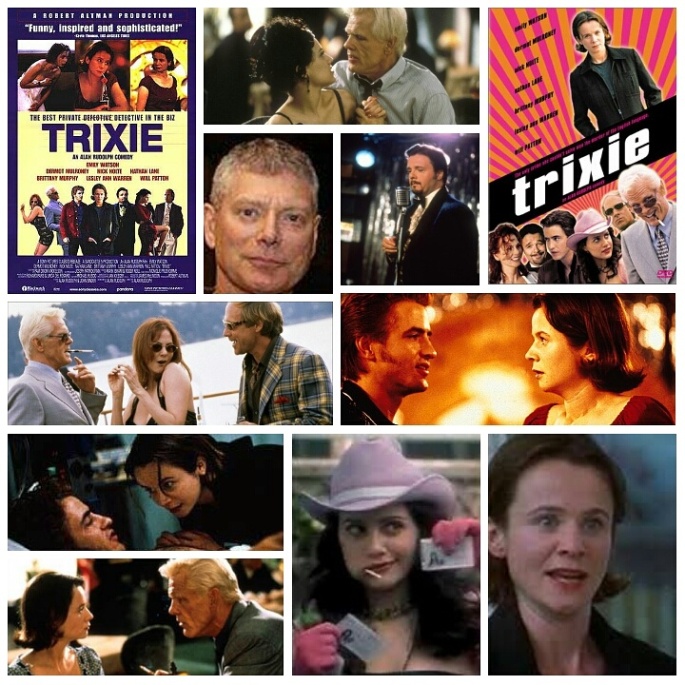
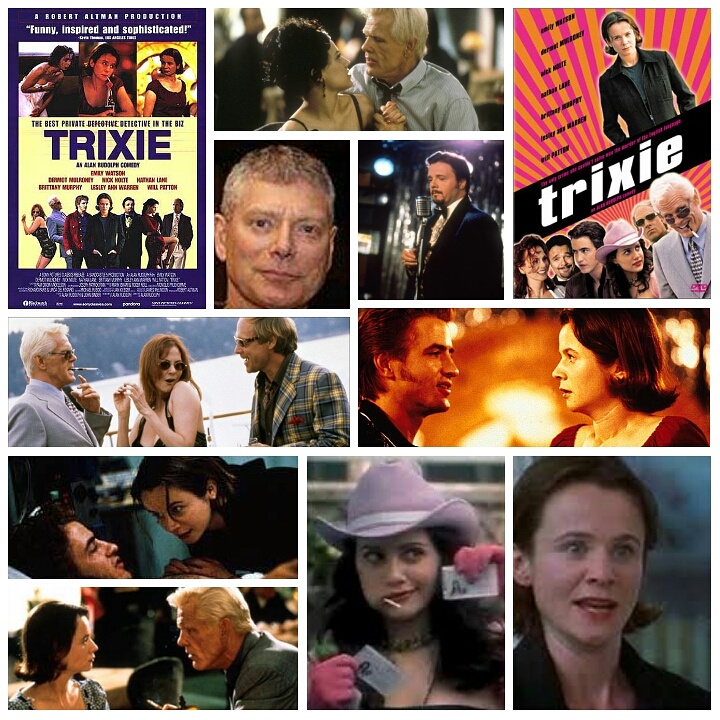
Alan Rudolph’s Trixie: A Review by Nate Hill 

What the hell did just watch. Oh boy, what can I say about this one without tearing it a new one. Alan Rudolph’s Trixie is a dud, a paperweight, a misguided, clumsy disaster of the highest order. It has the tonal equilibrium of heart attack on a flow chart, and a troupe of actors who mercilessly embarrass themselves into the ground with work that goes beyond tireless pantomime. It’s sad, because I’ve seen this type of thing work nicely before, with the right amounts of quaint and quirky qualities, but here the mixture tanks in a god awfully messy cannonball of a landing. It tries to be a detective story, but fails to realize that you need some semblance of a  story to care about, and I just…. didn’t care. It’s a slog to get through, a struggle to stay focused on, and basically a big awkward failure on every level. Also puzzling is the fact that cast, all of which are excellent actors who I love in almost everything they do, all made me want to hit them here, and when you’ve got a cast this good, that’s no easy feat. Emily Watson will make you want to tear your hair out as titular Trixie, a casino security guard with aspirations of taking on a big detective case, an irritating Chicago accent and apparantly mild brain damage that causes her to mispronounce every expression, figure of speech and slang term in a fashion that is neither cute nor funny. She’s wooed by Dex (Dermot Mulroney) a goon who works for sleazy land developer Red Rafferty (Will Patton). Soon, through a set of circumstances both inane and cartoonish, they find themselves deep in some sort of backhanded scheme involving murder most foul, tied to a corrupt state senator played by Nick Nolte, who is the peacock of the bunch, sucking all the energy out of the room with dialogue that is literally lifted straight from political speeches from the past. I’m not even kidding, he blusters out platitudes that vaguely have a place in whatever seen is going on, but barely. There’s also a hot young waitress (a bouncy Brittany Murphy), a flamboyant lounge singer (Nathan Lane is excruciating), a washed up pop star (Lesley Ann Down) and a bizarre cameo from Stephen Lang who attempts an accent that made me supremely uncomfortable. It’s weird, cumbersome and altogether pointless as everything it tries: comedy, thriller, romance, whodunit.. all fall miserably flat. Bummer. I’m gonna go make a list of all the things I could have been doing with the two hours I spent on this wreck.

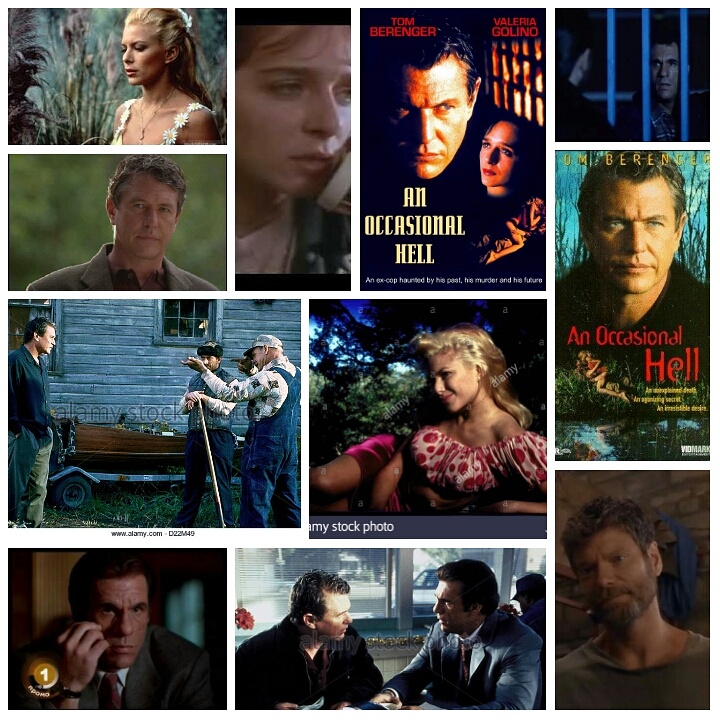
B Movie Glory with Nate: An Occasional Hell 

An Occasional Hell is one of countless cable TV crime melodramas that start to blur together if you’ve seen enough. They don’t often have high budgets, and as such usually only contain a few elements: a handful of actors, a murder mystery, deception, eroticism and very little in the way of fancy special effects. This one has a solid lead in Tom Berenger, who can make anything watchable, and great supporting players who pitch in as well. The story, or lack thereof, is where the problem arises. Berenger plays an ex cop and forensics wizard turned college professor, who is hired by sultry widow Valeria Golino (remember her from Hot Shots? Lol) to solve the murder of her husband and his hot young mistress (Kari Wuhrer), who has vanished. It turns out the mistress may have been involved with drug runners (random) the state troopers get involved and it’s all one big mess that neither Berenger nor the plot can seem to figure out. There’s a cynical lead Trooper played by a snarky, laid back Robert Davi, and other assorted people including Richard Edson, Ellen Greene, Geoffrey Lewis and a kooky Stephen Lang, who shows up in flashbacks as Golino’s eccentric civil war enthusiast husband. None of it makes all that much sense or seems to flow in a way that’s believable, but Berenger makes it somewhat worthwhile, as do that other players. Just below average stuff. 

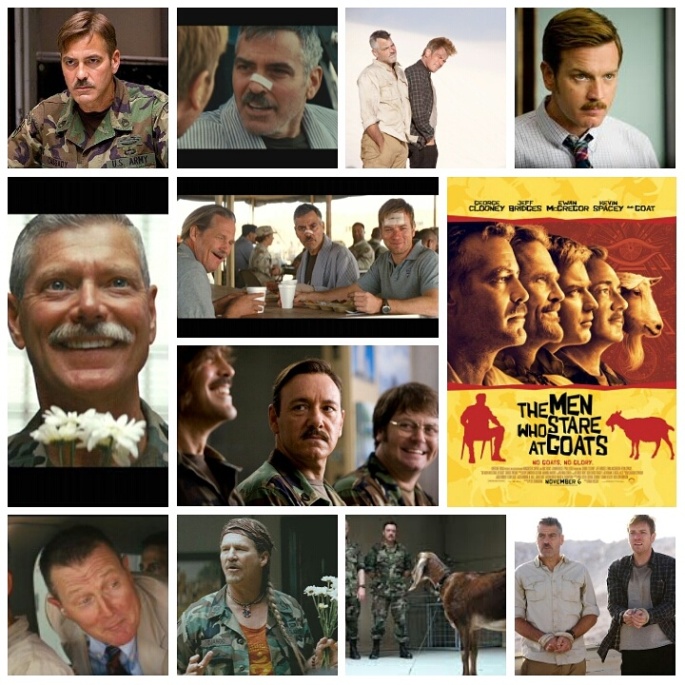
The Men Who Stare At Goats: A Review by Nate Hill 

Stephen Lang Week: Day 2 
There’s a scene early on in The Men Who Stare at goats where hapless General Dean Hopgood (Stephen Lang) attempts a platform 9 & 3 quarters style sprint towards a solid wall, in attempt to use ‘psychic abilities’ he is being taught at a hush-hush military base. He smashes headlong into it, and in the most deadpan drawl, mutters “damn” in all seriousness. This one moment sort of sums up the absurd vibe that thrums throughout the whole film. It’s kind of like a Coen Brothers thing; you either get it or you don’t. This film isn’t quite as hilarious as it’s sister, Burn After Reading, but damn if it doesn’t try, and come out with some really weird and memorable stuff. It’s colorful hogwash that the cast sells with the enthusiasm of a drunken used car salesman, and speaking of cast, wow there are a lot of heavy hitters playing in the sandbox here. George Clooney, in yet another of his patented lovable goof roles, plays Lyn Cassidy, a former US Army nutjob who claims to have been a part of a clandestine program called the New Earth Army, employing paranormal powers in their missions. Bemused journalist Ewan McGregor is shanghai’d into following him on a mad goose chase to find out if any of his stories are true, but mostly just to babysit him, as he’s kind of a walking disaster. Ineptitude reaches a breaking point when we meet pseudo hippie Bill Django, played by Jeff Bridges who channels every other oddball role he’s done for maximum effect. Bill headed up the program until he got stymied by opposing official Larry Hooper (Kevin Spacey), a tight ass skeptic with no patience for such silliness. In fact, one must have a huge tolerance for such silliness to sit through this, and a sense of humour just south of normal to appreciate what it has to offer. I have both, and greatly enjoyed it, despite being thoroughly bewildered. Watch for Stephen Root, Glenn Moreshower, Rebecca Mader, Nick Offerman and good old Robert Patrick in a cameo as some sort of vague spy dude. A clown show to rival a high school play, no doubt, and I mean that as a compliment. 

The I Inside: A Review by Nate Hill 

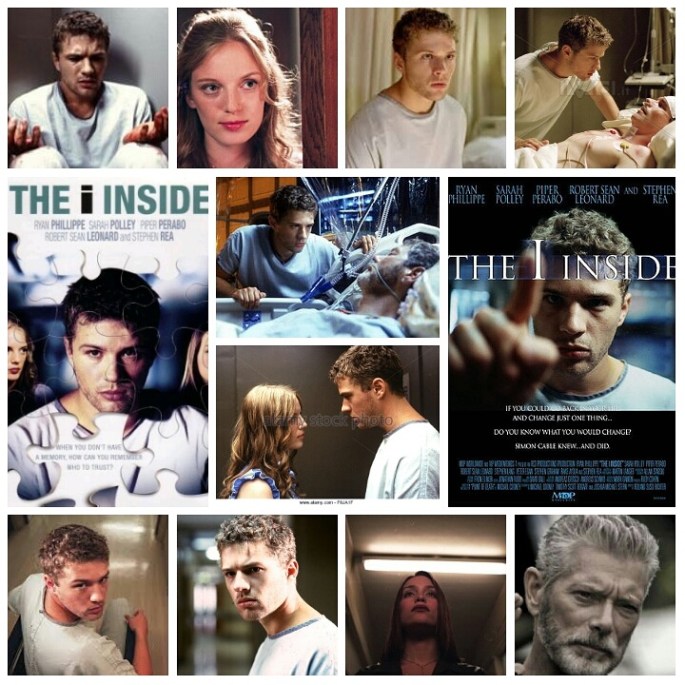
It’s mind-bender time with The I Inside, a supremely trippy little psychological thriller with shades of everything from Stay and Jacob’s Ladder to Memento and The Jacket. It’s not derivitive though, finding it’s own little bubble of confusing plot twists and unreliable reality for our protagonist, played by Ryan Phillipe, to navigate. He plays a man who awakens in a hospital with no memory of the last two years, how he got there or what went wrong. The head doctor (Stephen Rea) informs him he’s come out of a coma, but offers little other information. Soon time blurs out of mind and he awakens yet again, this time two years in the future, once again in the same hospital. Somehow he can travel in a rift between 2000 and 2002, and must find the connection between the two, and how it relates to him. Now, forewarning: This is one goddamn confusing film. I’m usually pretty adept at distilling dense, scattered or otherwise inaccessible story lines, but this is a doozy. I’ve only seen it once and wound up not having a clue how it all ended up, whether it was due to scattershot writing, or the filmmakers deliberatly making it near unfathomable just to put you in his predicament for effect. Either way, it’s a confounding blizzard of time shifts, strange characters, mental blank spots and perceptive trickery that I’ll need at least a few more viewings to get a handle on. Two different women show up at various points in time, played by Piper Perabo and a chilling Sarah Polley, each claiming to be his wife and messing with his head even more. The only thread that links the two time periods besides him is a mysterious heart trauma patient (an excellent Stephen Lang) who recognizes him in the future and gets his own dose of WTF in the process. This is based on a stage play called Point Of Death, and as such has that intimate, one location feel. We’re never allowed to see outside the hospital in either era, adding to Phillipe’s paranoia and unease. I sometimes think about this film, and what it all really meant, and keep reminding myself to slot in time for a revisit. Take a look, and see if you can figure it out the first time around. 

Joss Whedon’s In Your Eyes: A Review by Nate Hill 

JOSS WHEDON ALERT
Now that I have your attention, let’s talk about In Your Eyes, a lovely little romantic/fantasy/drama written by the J Man, concerning a boy and girl who have shared a strange psychic bond over hundreds of miles since they were kids, despite never having met. 

  Its a slightly unconventional romance, a charming, breezy little piece that took me by surprise, having known nothing about it going in except Whedon’s involvment. It starts with his lovely script, laying down the bones for two adorable leads (Zoe Kazan and Michael Stahl David) to go to work. Dylan and Rebecca have never met. They live on opposite sides of the US, and lead considerably different lives. They would have nothing in common if it weren’t for an odd metaphysical connection. They can periodically (and often at inconvenient times) see into each others lives like a perceptive window, complete with senses like smell, taste and touch. When they are growing up its confusing and stunted, but I imagine it blossoms along with every other attribute, and suddenly they’ve discovered they’re not both crazy, and that there’s a real person on the other end of this bewitching mutual conduit. Soon they are communicating, much to the puzzlement of everyone else in their lives, who just observes them talking to themselves like loons. Romance isn’t far off, as we can well guess, and soon they are deeply in love in spite of their differences and the great gulf of distance between them. He’s a troubled fellow with a criminal past, a lenghthy RAP sheet and a nosy parole officer (Steve Harris). She’s a mild mannered, fragile girl married to a prissy control freak of a Doctor (Mark Fuerstein). Both of their lives are continuously disrupted by their relationship until they’re at the brink of crisis, and it seems the only way out is to find one a other in person. The almost supernatural aspect of their connection  is treated frankly, like more of a biological anomaly as opposed to ghostly gimmicks. It can be seen as Whedon exploring the nature of love in our world, finding “the one” who is always out there, somewhere, waiting. Or are they? The real hero is his incredibly down to earth script, an easy going, hilarious and poignant piece of writing. The cast is from all walks of Hollywood and includes Nikki Reed, Shameless’s Steve Howey, Richard Rhiele and a priceless cameo from Dirty Dancing’s Jennifer Grey, who is starting to look like a character from Desperate Housewives. Kazan and David are just the cutest, most earnest couple I’ve seen in a romantic film of late. She’s unsure, passionate and intuitive, he’s a scrappy patchwork teddy bear and together they’re perfect, capturing the essence of the relationship in a single very unique sex scene, nestled in with all of their “spiritual Skype” bonding, and eventual face to face meeting. Whedon loves his characters, right down to the bit parts and it shows. His writing is never short of sterling, and this one is another winner for him. 

Joss Whedon’s In Your Eyes: A Review by Nate Hill 

JOSS WHEDON ALERT
Now that I have your attention, let’s talk about In Your Eyes, a lovely little romantic/fantasy/drama written by the J Man, concerning a boy and girl who have shared a strange psychic bond over hundreds of miles since they were kids, despite never having met. 

  Its a slightly unconventional romance, a charming, breezy little piece that took me by surprise, having known nothing about it going in except Whedon’s involvment. It starts with his lovely script, laying down the bones for two adorable leads (Zoe Kazan and Michael Stahl David) to go to work. Dylan and Rebecca have never met. They live on opposite sides of the US, and lead considerably different lives. They would have nothing in common if it weren’t for an odd metaphysical connection. They can periodically (and often at inconvenient times) see into each others lives like a perceptive window, complete with senses like smell, taste and touch. When they are growing up its confusing and stunted, but I imagine it blossoms along with every other attribute, and suddenly they’ve discovered they’re not both crazy, and that there’s a real person on the other end of this bewitching mutual conduit. Soon they are communicating, much to the puzzlement of everyone else in their lives, who just observes them talking to themselves like loons. Romance isn’t far off, as we can well guess, and soon they are deeply in love in spite of their differences and the great gulf of distance between them. He’s a troubled fellow with a criminal past, a lenghthy RAP sheet and a nosy parole officer (Steve Harris). She’s a mild mannered, fragile girl married to a prissy control freak of a Doctor (Mark Fuerstein). Both of their lives are continuously disrupted by their relationship until they’re at the brink of crisis, and it seems the only way out is to find one a other in person. The almost supernatural aspect of their connection  is treated frankly, like more of a biological anomaly as opposed to ghostly gimmicks. It can be seen as Whedon exploring the nature of love in our world, finding “the one” who is always out there, somewhere, waiting. Or are they? The real hero is his incredibly down to earth script, an easy going, hilarious and poignant piece of writing. The cast is from all walks of Hollywood and includes Nikki Reed, Shameless’s Steve Howey, Richard Rhiele and a priceless cameo from Dirty Dancing’s Jennifer Grey, who is starting to look like a character from Desperate Housewives. Kazan and David are just the cutest, most earnest couple I’ve seen in a romantic film of late. She’s unsure, passionate and intuitive, he’s a scrappy patchwork teddy bear and together they’re perfect, capturing the essence of the relationship in a single very unique sex scene, nestled in with all of their “spiritual Skype” bonding, and eventual face to face meeting. Whedon loves his characters, right down to the bit parts and it shows. His writing is never short of sterling, and this one is another winner for him. 

Captain Fantastic: A Review by Nate Hill 

Somewhere deep in the rugged mountainsides of the Pacific Northwest, a mother and father have chosen to raise their five children off the grid, away from society and by a completely different set of rules and customs than anyone in our day and age is used to. Viggo Mortensen doesn’t take on just any film, and in fact since his breakout role in Lord of The Rings which allowed him some clout, he’s done nothing but carefully thought out, worthwhile cinema, Captain Fantastic being probably one of the best. He is intense and caring as Ben, an intellectual renaissance man who has been bitterly put off of capitalism and commercialism. His wife (Trin Miller, angelic in flashbacks) is mentally ill and eventually passes away, leaving him on his own with the brood. He does what he knows best, sticking to the rigid physical and intellectual education plan in place for them. They learn to hunt wild game with homemade tools, read from classics like Lolita and Brothers Karamazov every evening, grow all their own grains and vegetation, practice complex defense, combat and survival skills, and live a life of elemental potency, far from the lemming’s march of consumerism just beyond their verdant and very isolated homeland. Trouble has a way of finding paradise though, however well it hides, and here it arrives in the simplest form of all: the absence of a mother. Things aren’t the same following her death, and they all take up arms and head south to New Mexico for her funeral, in a big old repurpoused school bus. They’re the most ecentric family you’ve ever met, and the ironic part is they’re the closest thing to what we were meant to live like in this world you’ll find. The real absurdity is the technicolor strip mall fast food fever dream we inhabit today, far removed from our earthy origins. It’s just because it’s become so commonplace that it seems normal to us. The family clashes spectacularly with an unprepared outside world who react to their behaviour in many different ways. The children all have the physique of a professional athlete and the academic abilities of six college professors, but somewhere along the way Ben forgot to teach them about what matters most: How to interact with one another, how to care for and love another human, and the simple social cues one aquires from growing up around a large number of people. His jaded father in law (knockout work from Frank Langella) sees Ben as a loose cannon, a danger to his grandchildren and the cause of his daughter’s death. At one point the film levels out and let’s us see things in a complete objective way: yes there are extreme benefits to a method of raising children like this, an experience that no one else could have and an implementation of their human potential that goes several degrees farther than usual. But how far is too far? Is there a dangerous element to their training and conditioning that goes beyond what they’re capable of and poses a threat? Mortensen is a picture of conflict, his undying love for his children tested when he’s thrown out of the comfort coccoon he has forged for them. Suddenly he is not the all knowing protector they’ve gotten used to, and the world outside is just as much a cause of fear for him as it is for them. They are a family though, which is achingly, evidently clear in each performance. George Mackay is the eldest and bears the brunt of realization when it comes time to meet other people. The others, including Annaliese Basso, Shree Crooks, Nicholas Hamilton and Samantha Isler are all sensational and have a lived in, well worn and often quite hilarious dynamic. It’s essentially a fish out of water story that begs us to question both the water and the land, and how going from one environment to the other, both worlds apart but in the same realm, can affect a human being. This is the best film I have seen so far this year, one that challenges us to ponder what we see unfold, urges us to be more than just another fish in the school, but to laugh, be crazy, think for ourselves and pitch in an effort to find the scattered pieces of the puzzle we call the human condition. Fantastic is the word indeed.

Ron Howard’s The Missing: A Review by Nate Hill 

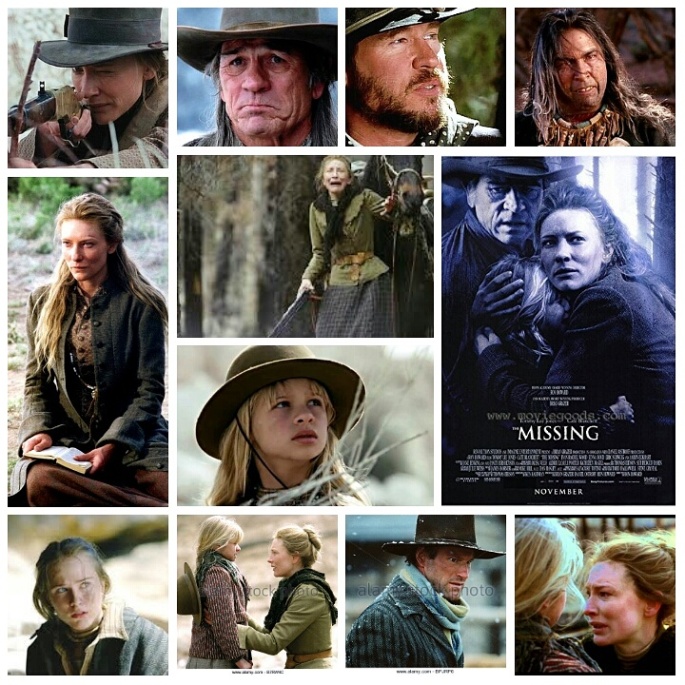
Ron Howard usually plays it both straight and safe, never taking too many risks, never siding too much with abstraction or grey areas, and over the years this has made me somewhat of a non fan. Not a hater, simply seldom blown away or challenged by his work. With The Missing, however, he strayed from the path and brought us a dark, threatening picture of life on the frontier in all its brutal, treacherous glory. With the success of last year’s brilliant Bone Tomahawk, I couldn’t help but be reminded of this beauty, as there are elements of horror and evil dancing on a thread with origin points in both films. Different altogether, but from the same elemental stew and highly reminiscent of each other. Cate Blanchett is hard bitten single mother Magdalena, trying her best to raise two daughters (Evan Rachel Wood and the excellent Jenna Boyd) with only the help of her sturdy farmhand (Aaron Eckhart). One misty night, someone or something snatches Wood right out of her bed and disappears into the wilderness with her. Magdalena is raw and determined, launching a desperate search across woods and plains to find her kin. Joining her is her half breed injun father Samuel, played by an eerily convincing Tommy Lee Jones. Samuel left her years before and only re-emerges in her life for fear of being punished for forsaking his family in the beyond. Gradually he turns around and a bond is formed through the crisis, an arc which Jones nails like the pro he is. It turns out they are tracking a group of despicable human traffickers who take girls and sell them across the border into sex slavery. They are led by a mysterious witchdoctor (Eric Schweig) whose tactics border on voodoo prowess. It’s scary stuff, never outright horror, but sure aims for that with its hazy nocturnal atmosphere in which any denizen of the night could be poised behind the next thicket or cluster of trees, ready to pounce. Blanchett is tough as nails, a terrific female protagonist blessed with a mother’s love and a winchester to back it up. Jones is gruff and badass, believable as a native american and treated as a well rounded character seeking redemption in his twilight years. There’s also fine work from Steve Reevis, Clint Howard, Elizabeth Moss and a cool cameo from Val Kilmer as a sergeant who helps them out. My favourite Ron Howard film by far. Just a mean, dark genre piece that aims to thrill and chill in equal measures and comes up aces. 

The Hobbit: An Unexpected Journey – A Review by Nate Hill 

Some people give me funny looks when I say I enjoyed the Hobbit films. There’s this giant festering stigma around the entire trilogy that’s hard to wade through if you are one who geniunly did enjoy a lot of what Peter Jackson brought us with his second barrage of Middle Earth sagas. Now don’t get me wrong, there’s plenty of things he muffed up, the chief aspect being editing and length. We did not ask for, need or want an entire LOTR lenghth trilogy based on a book that could have fit into one volume of that series. Jackson has a tendancy to overreach, film too much and throw it all into his final cut. It started with the extended cuts of LOTR, which were somewhat unneeded, continued with King Kong, which could have been at least 45 minutes shorter, and has now climaxed with The Hobbit films. They’re so long and stretched out that at times we realize we’re not even watching stuff from Tolkien’s annexes or archives, but simply shit old Petey made up to pad the waistline of content that’s begging to be slimmed down. I’m still waiting for a fan edit that condenses everything down into what is necessary to tell the story, and pitch everything else into the purgatorial halls of DVD deleted scene land. And therein lies my argument: There’s gold to be found here, but a lot of folks are so turned off by all the unnecessary razzle dazzle that they have become blind to what actually worked. An Unexpected Journey kicks off the trilogy and definitely fares the best, feeling the most akin to the book. Martin Freeman is lovely as a young Bilbo, baffled to find thirteen rowdy dwarves dumped on his doorstep, the work of Gandalf The Grey (Ian McKellen, like he never left the role), who wishes to prod him in the direction of a most dangerous and thrilling adventure. Bilbo is a mild creature and deeply in love with the comforts of home, but is whisked along all the same, after a chaotic dinner party and plate throwing contest from this knobbly group of mountain dwelling pygmies. Orcs, Wargs, Goblins, colossal mountain giants and an appearance by the ever fascinating Gollum await them. There’s an interlude into Elrond’s heavenly glade where Gandalf, Saruman (Christopher Lee) and Galadriel (Cate Blanchett) have a little CSI: Rivendell episode with an ancient dagger that hints towards the return of Sauron. One thing Jackson added that is a highlight is additional wizard Radagast The Brown (Sylvester McCoy) an eccwntric hippie who rides a chariot led by massive rabbits in breakneck bouts of Need For Speed: Middle Earth with Orcs atop Wargs. A distinct feature about these films compared to LOTR is the ramping up of CGI; many Orcs are no longer stuntmen in gloriously goopy makeup, but giant computer rendered behemoths, taking some of the texture and authenticity away. Jackson also chose to shoot in many more frames per second than the human eye is used to, giving everything a strange, wax museum sheen that is pretty distracting. Close your bag of tricks and make us a goddamn straightforward flick Pete. Fuck sake. For all the issues, it’s terrific to be back in Middle Earth, however different it looks and feels. The production design is still an elaborate wonder of creative design and decoration, Howard Shore’s now timeless score makes a triumphant return and there’s a beautiful new song courtesy of the dwarves. Say what you want, bitch and moan til the Wargs come home, I love this first outing dearly and rank it nearly as high as LOTR. I can’t say the same for the next two, especially the exhausting Battle Of Five Armies which diminished my patience for Jackson and his tricks a whole lot. But, like I said, there’s always gold to be mined from the needless padding that’s been tossed in. One day someone will edit that perfect cut for us, and we’ll have that definitive Hobbit film. Until then, cherry pick the best parts and try to put the rest from your mind.