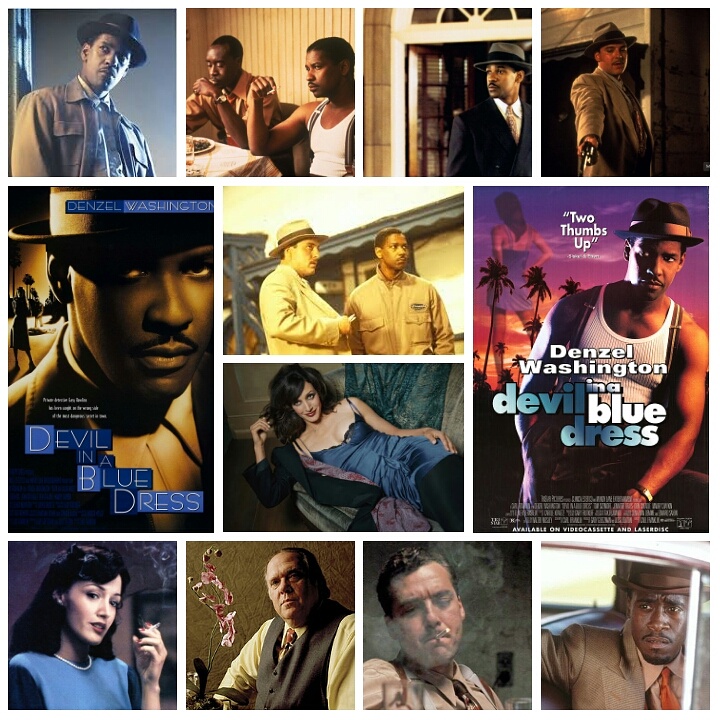
Devil In A Blue Dress takes the classic Raymond Chandler mystery form and uproots it just a smidge, setting it in the African American community of 1948 Los Angeles, with terrific results. Noir takes on a double meaning (naughty pun) as WWII vet turned private eye Ezekial “Easy” Rawlins (Denzel Washington) finds himself mired in the quick sands of corruption, coersion and murder most foul after taking on a job that’s led him straight to the dirtiest little secret in town. After he accepts a missing persons inquiry from mysterious DeWitt Allbright (Tom Sizemore, first shady and then downright scary when we see what he’s really about), he finds himself searching for a girl named Daphne (Jennifer Beals) a runaway with ties to a very powerful politician (Maury Chaykin makes your skin creep and crawl) with some seriously disturbing extra curricular activities. Rawlins recognizes danger when he sees it and tries to back out, but by then he knows too much and it’s way late in the game. Now he must navigate the scene like the pro he to escape not only with answers, but perhaps his life. Washington gives him the underdog treatment, a worn out gumshoe who still has some grit left, enough for one last ride in any case. There’s an L.A. Confidential type feel to the plot in the sense that it ducks some conventions in order to service true surprise from its audience. Sizemore is a charming viper as the kind of dude you never want to trust (isn’t he just the best at playing that?) and Beals subverts the damsel in distress archetype by injecting her performance with a jolt of poison. In terms of L.A. noir this baby is fairly overlooked, but holds its own to this day. Watch for Don Cheadle as well.
Tag: movie
Safe House: A Review by Nate Hill
Safe House is cut from the same cloth as many a spy movie, but this horse doesn’t have quite as much piss and vinegar as other ones in the stable, notably the Bourne trilogy. It’s more of a slow burn, peppered with a few purposeful action sequences and quite a lot of time spent with Denzel Washington’s world weary spook Tobin Frost, a veteran operative who has gone severely rogue after escaping the grasp of a nasty CIA interrogator (Robert Patrick). He’s soon in the hands of rookie agent Matt Weston (Ryan Reynolds) who has been left to guard an agency safe house in Europe, now overrun with shadowy special ops dudes out to snuff Frost. The two of them are forced on the run together, and attempt to smoke out those behind the chaos, who turn out to be a little closer to home than they thought (don’t they always, in these types of movies?). Weston is young, naive and idealistic, Frost is bitter, jaded and ready to burn the agency down around him for what his career has made him do. They’re a formulaic pair made believable by the two actors, both putting in admirable work. Brendan Gleeson is great as Westons’s dodgy handler, Vera Farmiga shows moral conflict in those perfect blue eyes as another paper pusher in Langley, and Sam Shepherd smarms it up as the CIA top dog. It was nice to see Ruben Blades as well, who doesn’t work nearly enough, and watch for a sly cameo from Liam Cunningham as an ex MI6 agent. It’s not the greatest or the most memorable film, but it does the trick well enough, has a satisfying R rated edge to its violence and benefits from Washington being nice and rough around the edges. There’s a downbeat quality to it to, as Weston watches the futility inherent in the life of a spy unfold in Frost’s actions, which are leading nowhere but a self inflicted dead for a cause that’s bigger than both of them, but ultimately leaves them in the dust. Solid, if just above average stuff.
Slow West: A Review by Nate Hill
Slow West clocks in briskly under 90 minutes, which is usually unheard of for a western. You can stamp out any thoughts of it being rushed or too slight of a flick though, because it’s exactly what it needs to be every step of the way. It’s a beautifully scored, tightly plotted and boldly characterized (the key ingredient in the genre, if you ask me) mix that saunters along like a mule of the plains, before kicking up the dust for a bloody, atmospheric finale that leaves you stunned and breathing hard. Westerns are often ambitious, lofty affairs and can get quite moody and too densely packed for their own good. Not this baby. It breezes by like a summer wind, with just enough violence, character development and aching catharsis to billow out its chipper narrative during the brief stay we are treated to. Kodi Smit McPhee plays a young Scottish lad who is a tad out of his depths in the American west, searching for a girl (Caren Pistorius) who had to flee the country with her father (The Hound himself, Rory McCann). McPhee is naive to the dangers of this new territory, and nearly finds himself at the receiving end of a bullet before being saved by a roaming outlaw (Michael Fassbender) who takes him under his wing with much gruff and huff along the way. Reluctance is doled out along with sympathy on Fassbender’s part as he shields the boy from a dangerous bounty hunter and former employer of his, played by a wonderfully greasy Ben Mendelsohn, perpetually shrouded in acrid cigar smoke and snuggled up in one epic and fabulous fur pelt. These three wayward misfits gravitate towards the obligatory final shoot out, which takes place in the girl’s hideaway house on the picturesque pretty plains. Impressive is an understatement for this sequence: yellow grass sways, a hailstorm of bullets punctuate the horizon and the mournful tones of Jed Kurzel’s lonely score, grim fates are earned in a gorgeous set piece that resembles something like Wes Anderson making an Oater. Everything before and winds up to this sequence, and the payoff is superb. If I’ve made it sound dark or off putting, think again. It’s all crafted with the utmost light and poetic buoyancy, a lilting sadness to the violence that hits home but never batters you. The performances echo this as well, Fassbender a world weary, affable and altogether dangerous man, Mendelsohn slithering about with a dry silver tongue and an itchy trigger finger, and a fish out of water McPhee stuck in between. The visual palette is quite something to see, accented by the music perfectly. I’m beyond anxious to see what first time director John Maclean comes up with for us for his next ride, for he’s knocked it out of the ranch with this one. Ho for the West.
Virtuosity: A Review by Nate Hill
Nothing says the 90’s like Virtuosity, a big hunk of circuit board sleaze and cheese that is so of it’s time that it’s hard to watch it these days without believing it to be some kind of spoof. Re-reading that sentence it sounds like I was making some kind of underhanded compliment, which I suppose is a better outcome for a film to arrive at than some. It could have gotten stale or dated in a bad way. Well it’s definitely not stale (it is dated though), in fact it’s one of the liveliest flicks from back then, thanks mostly to a ballistic characterization from Russell Crowe. Crowe is Sid.6, a virtual reality program molded from the personalities of several different serial killers and designed to basically wreak havoc. This is exactly what happens when he escapes, or rather is let out by one of the maniacs at the research centre (Stephen Spinella). Sid is now flesh, blood and roughly 200 pounds of extremely skilled, remorseless killing material, running wild in the unsuspecting streets. The head of the Institute (William Forsythe) has the brilliant idea to recruit ex-cop whack job Parker Barnes (Denzel Washington) to hunt Sid down and destroy him. Barnes has a bleak history with artificial intelligence, one that has left him with a cybernetic replacement arm and a huge chip on his shoulder. This is one mean, mean spirited film, as we are subjected to a manic Crowe as tortures, murders and maims innocent civilians with a grinning cavalier cadence the Joker would applaud. He’s off his nut here, something which clumsy bruiser Crowe rarely gets to do, so it’s a rare and extreme outing for him. Washington is perpetually angry, ill adjusted and violent here, and the lengths he goes to destroy Sid are almost as bad as his quarry’s homicidal antics. The cast is stacked with genre favourites, so watch for Costas Mandylor, Kevin J. O’Connor, Louise Fletcher, Kelly Lynch, Traci Lords and a weaselly William Fichtner. The special effects… well what can I say, this was the 90’s and they look like a computer game that’s been drenched in battery acid, then souped up with caffeine. There’s brief homages to video games in fact, and the opener where Crowe is still inside the program is fairly creative. I don’t know if the creators of the film were trying to say something about the dangers of virtual reality, but whatever it was, it’s sort of lost in a hurricane of unpleasent shenanigans that are admittedly entertaining. One thing that’s evident is that anyone who makes a computer program with the persona of one, let alone a handful of murderers is just begging for an incident. I suppose that’s the point here though, the catalyst for the whole deal. Crowe and Washington are great though, both down and dirtier than their characters in the next royal rumble they’d share, Ridley Scott’s American Gangster. Fun stuff, if you have a strong gag reflex and don’t take yourself too seriously.
Donnie Darko: A Review by Nate Hill
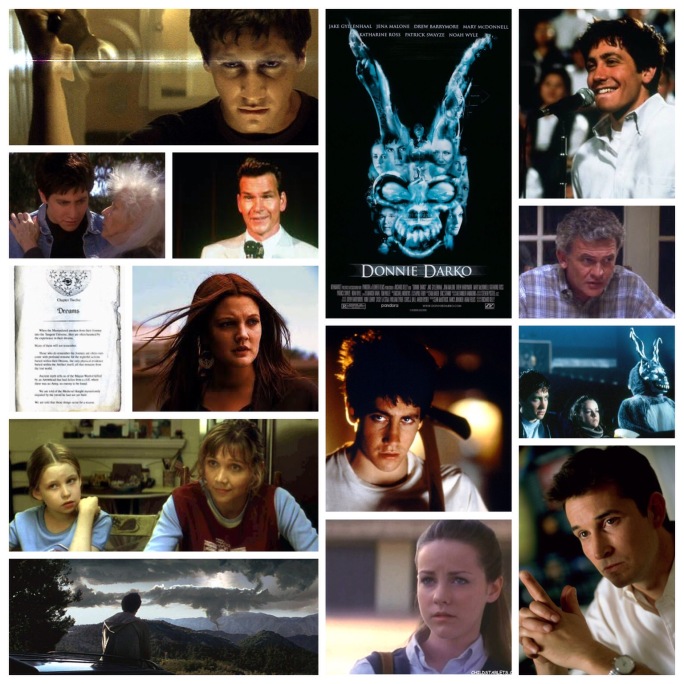
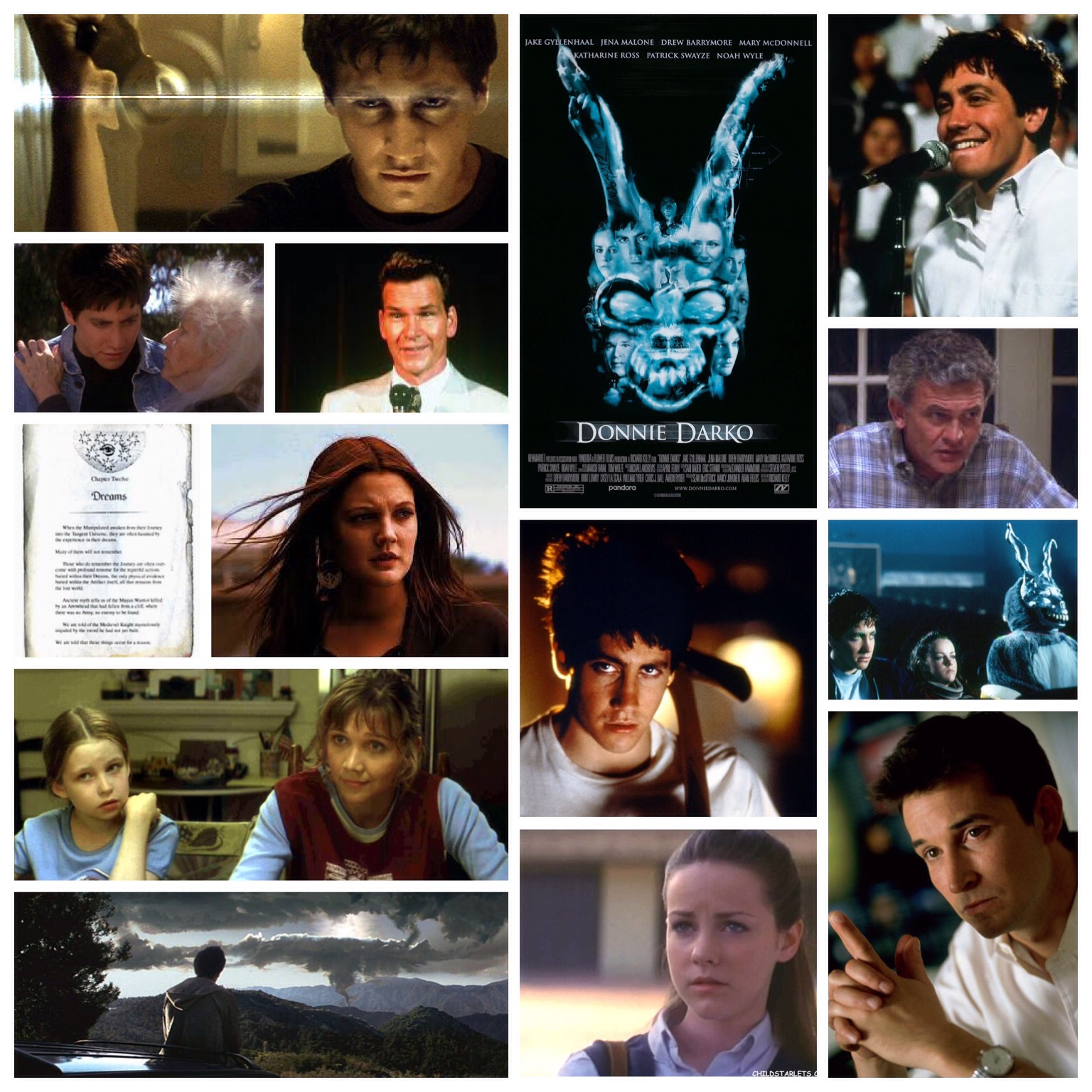
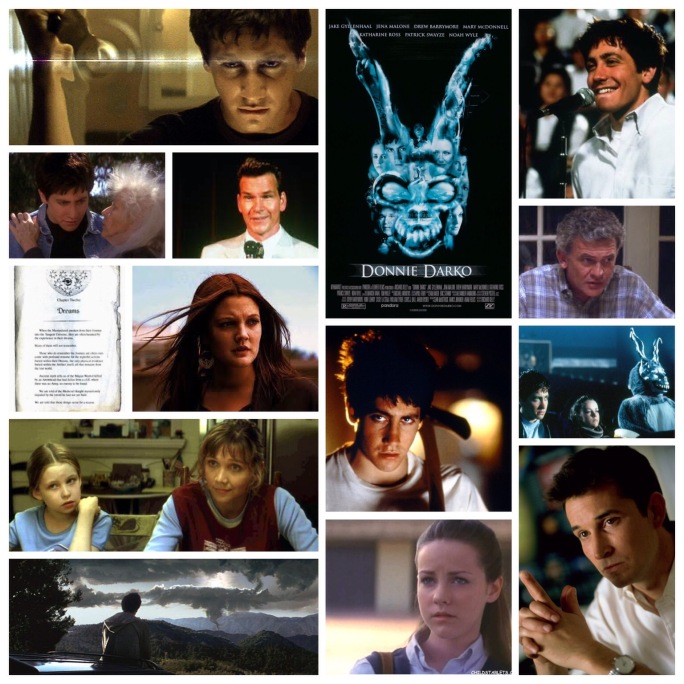
The director’s cut of Richard Kelly’s Donnie Darko is one of the most profound experiences I’ve ever had watching a film. It transports you to its many layered dimension with unforced ease and tells it’s story in chapters that feel both fluid and episodic in the same stroke. It has such unattainable truths to say with its story, events that feel simultaneously impossible to grasp yet seem to make sense intangibly, like the logic one finds within a dream. These qualities are probably what lead to such polarized, controversial reactions from the masses, and eventual yearning to dissect the hidden meaning which at the time of its release, didn’t yet have the blessing of the extended cut and it’s many changes. A whole lot of people hate this movie, and just as many are in love with it as I am. I think the hate is just frustration that has boiled over and caused those without the capacity for abstract thought to jump ship on the beautiful nightmare this one soaks you in. Movies that explore the mind, the unexplainable, and the unknowable are my bread and butter, with this one taking one of the premier spots in my heart. Kelly has spun dark magic here, which he has never been able to fully recreate elsewhere (The Box is haunting, if ultimately a dud, but his cacophonic mess Southland Tales really failed to resonate with me in the slightest). Jake Gyllenhaal shines in one of his earliest roles as Donnie, a severely disturbed young man suffering through adolescence in the 1980’s, which is bad enough on its own. He’s also got some dark metaphysical forces on his back. Or does he? Donnie has visions of an eerie humanoid rabbit named Frank (James Duval) who gives him self destructive commands and makes prophetic statements about the end of the world. His home life should be idyllic, if it weren’t for the black sheep he represents in their midst, displaying behaviour outside their comprehension. Holmes Osborne subtly walks away with every scene he’s in as his father, a blueprint of everyone’s dream dad right down to a sense of humour that shows he hasn’t himself lost his innocence. Mary McDonnell alternates between stern and sympathetic as his mother, and he has two sisters: smart ass Maggie Gyllenhaal (art imitating life!) and precocious young Daveigh Chase (also Lilo and Samara from The Ring, funnily enough). The film also shows us what a showstopper high school must have been in the 80’s, with a script so funny it stings, and attention paid to each character until we realize that none are under written, and each on feels like a fully rounded human being, despite showing signs of cliche. Drew Barrymore stirs things up as an unconventional English teacher, Beth Grant is the classic old school prude who is touting the teachings of a slick local motivational speaker (Patrick Swayze). The plot is a vague string of pearls held together by tone and atmosphere, as well as Donnie’s fractured psyche. Is he insane? Are there actually otherworldly forces at work? Probably both. It’s partly left up to the viewer to discern, but does have a concrete ending which suggests… well, a lot of things, most of which are too complex to go into here. Any understanding of the physics on display here starts with a willingness to surrender your emotions and subconscious to the auditory, visual blanket of disorientation that’s thrown over you. Just like for Donnie, sometimes our answers lies just outside what is taught and perceived, in a realm that has jumped the track and exists independently of reality and in a period of time wrapped in itself, like a snake eating it’s own tail. Sound like epic implications? They are, but for the fact that they’re rooted in several characters who live in a small and isolated community, contrasting macro with micro in ways that would give David Lynch goosebumps. None of this malarkey would feel complete without a little romanticism, especially when the protagonist is in high school. Jena Malone is his star crossed lover in an arc that finds them spending little time together, yet forming a bond that that feels transcendant. Soundtrack too must be noted, from an effective opener set to INXS’s Never Tear Us Apart to the single most affecting use of Gary Jules’s Mad World I’ve ever heard. It’s important that you see the director’s cut though, wherein you can find the most complete and well paced version of the story. There’s nothing quite like Donnie Darko, to the point where even I feel like my lengthy review is stuff and nonsense, and you just have to watch the thing and see to truly experience it.
Donnie Darko: A Review by Nate Hill
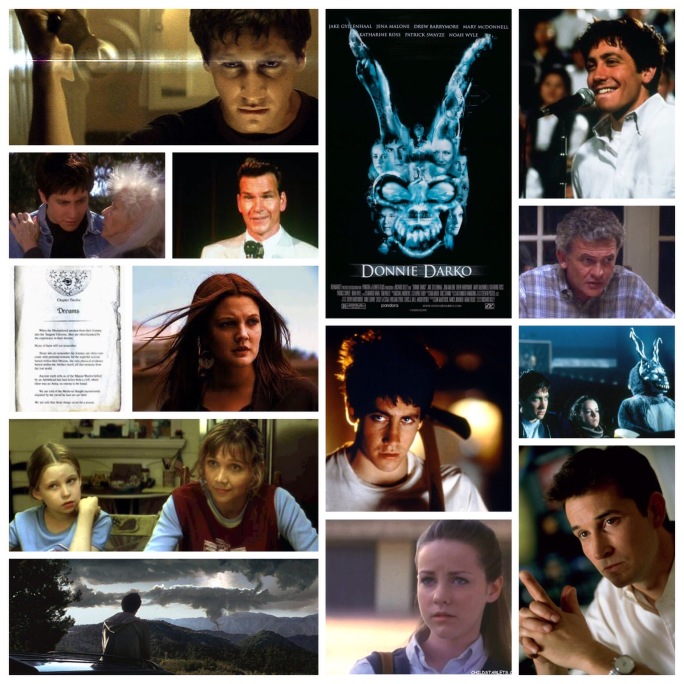
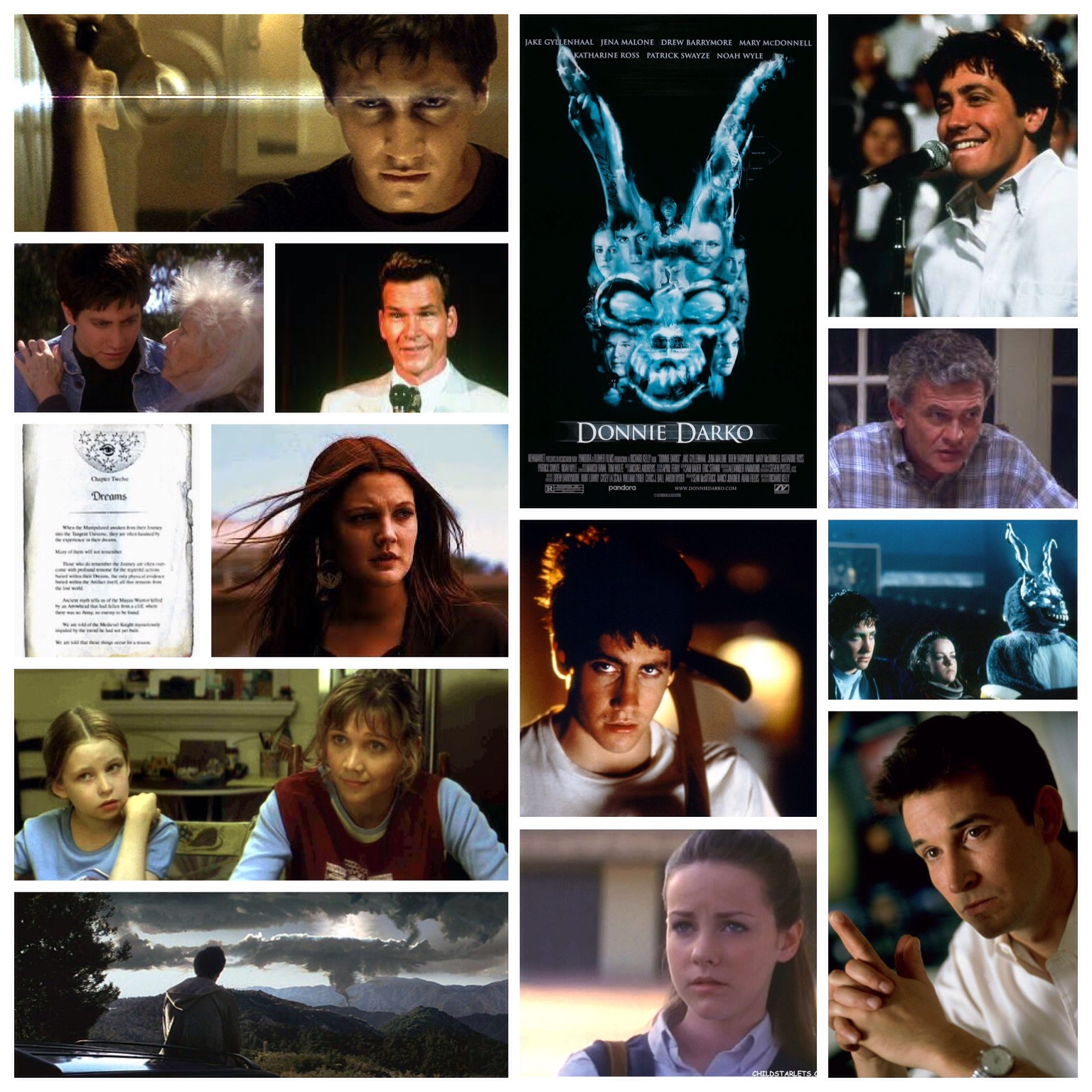
The director’s cut of Richard Kelly’s Donnie Darko is one of the most profound experiences I’ve ever had watching a film. It transports you to its many layered dimension with unforced ease and tells it’s story in chapters that feel both fluid and episodic in the same stroke. It has such unattainable truths to say with its story, events that feel simultaneously impossible to grasp yet seem to make sense intangibly, like the logic one finds within a dream. These qualities are probably what lead to such polarized, controversial reactions from the masses, and eventual yearning to dissect the hidden meaning which at the time of its release, didn’t yet have the blessing of the extended cut and it’s many changes. A whole lot of people hate this movie, and just as many are in love with it as I am. I think the hate is just frustration that has boiled over and caused those without the capacity for abstract thought to jump ship on the beautiful nightmare this one soaks you in. Movies that explore the mind, the unexplainable, and the unknowable are my bread and butter, with this one taking one of the premier spots in my heart. Kelly has spun dark magic here, which he has never been able to fully recreate elsewhere (The Box is haunting, if ultimately a dud, but his cacophonic mess Southland Tales really failed to resonate with me in the slightest). Jake Gyllenhaal shines in one of his earliest roles as Donnie, a severely disturbed young man suffering through adolescence in the 1980’s, which is bad enough on its own. He’s also got some dark metaphysical forces on his back. Or does he? Donnie has visions of an eerie humanoid rabbit named Frank (James Duval) who gives him self destructive commands and makes prophetic statements about the end of the world. His home life should be idyllic, if it weren’t for the black sheep he represents in their midst, displaying behaviour outside their comprehension. Holmes Osborne subtly walks away with every scene he’s in as his father, a blueprint of everyone’s dream dad right down to a sense of humour that shows he hasn’t himself lost his innocence. Mary McDonnell alternates between stern and sympathetic as his mother, and he has two sisters: smart ass Maggie Gyllenhaal (art imitating life!) and precocious young Daveigh Chase (also Lilo and Samara from The Ring, funnily enough). The film also shows us what a showstopper high school must have been in the 80’s, with a script so funny it stings, and attention paid to each character until we realize that none are under written, and each on feels like a fully rounded human being, despite showing signs of cliche. Drew Barrymore stirs things up as an unconventional English teacher, Beth Grant is the classic old school prude who is touting the teachings of a slick local motivational speaker (Patrick Swayze). The plot is a vague string of pearls held together by tone and atmosphere, as well as Donnie’s fractured psyche. Is he insane? Are there actually otherworldly forces at work? Probably both. It’s partly left up to the viewer to discern, but does have a concrete ending which suggests… well, a lot of things, most of which are too complex to go into here. Any understanding of the physics on display here starts with a willingness to surrender your emotions and subconscious to the auditory, visual blanket of disorientation that’s thrown over you. Just like for Donnie, sometimes our answers lies just outside what is taught and perceived, in a realm that has jumped the track and exists independently of reality and in a period of time wrapped in itself, like a snake eating it’s own tail. Sound like epic implications? They are, but for the fact that they’re rooted in several characters who live in a small and isolated community, contrasting macro with micro in ways that would give David Lynch goosebumps. None of this malarkey would feel complete without a little romanticism, especially when the protagonist is in high school. Jena Malone is his star crossed lover in an arc that finds them spending little time together, yet forming a bond that that feels transcendant. Soundtrack too must be noted, from an effective opener set to INXS’s Never Tear Us Apart to the single most affecting use of Gary Jules’s Mad World I’ve ever heard. It’s important that you see the director’s cut though, wherein you can find the most complete and well paced version of the story. There’s nothing quite like Donnie Darko, to the point where even I feel like my lengthy review is stuff and nonsense, and you just have to watch the thing and see to truly experience it.
Paul W.S. Anderson’s Soldier: A Review by Nate Hill
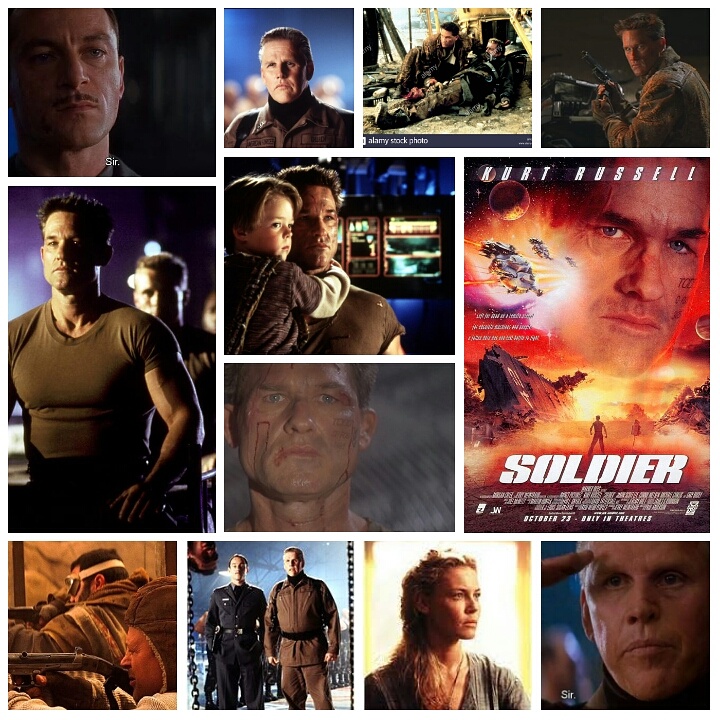
Before poor Paul W.S. Anderson made a fatal misstep with Alien Vs. Predator and was maligned, he made a few really excellent genre flicks back in the mid to late 90’s, one of them being the mostly forgotten and excessively fun Soldier, starring a mostly mute and wholly badass Kurt Russell as a genetically bred super soldier who has fallen on hard times. His name is Todd 3465, and he’s from the last line of soldiers who are in fact real humans, albeit altered. There’s a new program moving in, wherein actual replicants are produced, rendering Todd obsolete. The head of the new outfit is sadistic Colonel Mekum (Jason Isaacs in full evil prick mode), who wants to do away with anything that isn’t state of the art. Todd is thrashed in a one on one smackdown with Mekum’s lead soldier (Jason Scott Lee), and then left to die on a remote planet used only for trash disposal and inhabited by wayward crash survivors who scavenge what they can. Todd is immediately the outsider, an unfeeling asset bred only for combat and alien to human qualities. A few among the group, including their leader Mace (Anderson regular Sean Pertwee) and Jimmy Pig (Michael Chicklis) attempt to connect, but it’s gorgeous Connie Nielsen who finally breaks the ice. He may be conditioned to kill, but he’s still a human man after all, and there’s some base instincts you just can’t ignore. Trouble brews when Mekum shows up again, that bastard. Now he wants to vaporize their planet on the grounds that the refugees are essentially squatting. Undermining him is Todd’s former boss Church (an unusually restrained Gary Busey), an honorable military veteran who’d love to put Mekum six feet under and restore order. Todd must help his newfound friends, fight tooth and nail against replicants and win his superiority back. Russell is a tank in the role, letting both silence and action speak volumes, a one man old school ass kicking hero of the highest order. The world building and outer space effects are incredibly fun, the villains are broadly characterized with the force of a western, and the whole film knows what people want for a good time at the cinema. Oohh and fun fact: this takes place in the same cinematic universe as Blade Runner, and you can listen for the brief tie in reference that only die hards will pick up on. Great stuff.
The Wedding Singer: A Review by Nate Hill
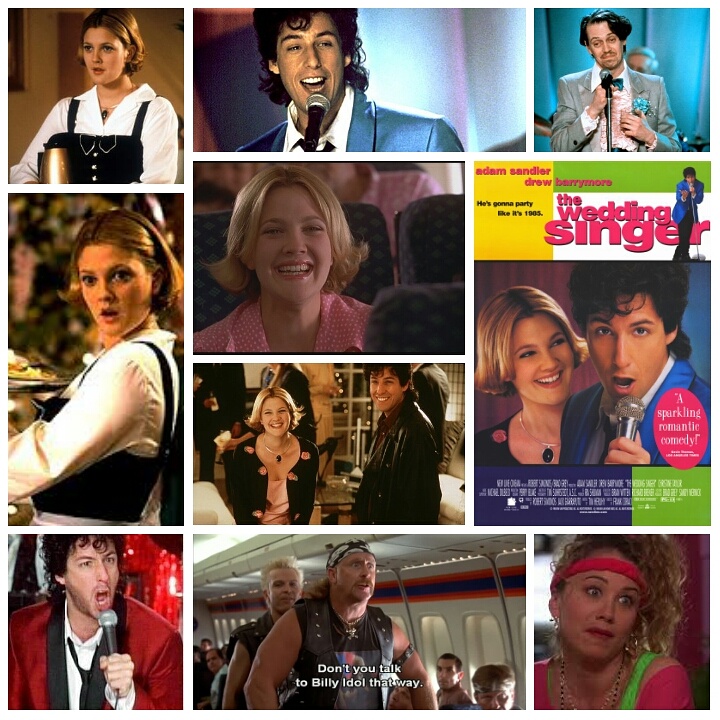
I’m not usually very stoked on Adam Sandler movies, I’ll say that right off the bat. I mean, there’s a lucky select few that are either geniunly funny or have nostalgic value (Happy Gilmore, Big Daddy and the absurdly fascinating Little Nicky come to mind), but he’s just such a ball of cancer onscreen it’s hard to actively see his stuff. The Wedding Singer, however, is a really sweet little movie, and works well thanks to an impressive 80’s soundtrack and the presence of Drew Barrymore, who frequently hangs around in Sandler’s stuff. He plays Robbie Hart here, a singer who belts out the hits of the 1980’s at weddings, parties, you name it. After being left at the alter by his fiance, he spots waitress Julia (Barrymore), who uncannily seems to be working every event she is. The two form a bond, but she is engaged to another dude (Matthew Glave), who quickly is revealed to be kind of a jerkoff, prompting Robbie to go to great lengths to prove, and win Julia’s heart. The film makes the absolute most of its setting, as any period piece should. The music is a delight, right down to the amusing dawn of the ‘CD’, and a great little cameo from a rock legend aboard an airline. Some of the usual troupe of Sandler disciples pop up here, including Christine Taylor, Allen Covert, Kevin Nealon, Peter Dante, Jon Lovitz and Steve Buscemi, who can be counted on to appear in pretty much any Adam flick you can think of. Sandler and Barrymore handle the comedic romance well and have decent chemistry (perhaps while theyre always paired). It’s light, sweet, carried on by the rockin soundtrack and detailed production design.
The Nice Guys: A Review by Nate Hill
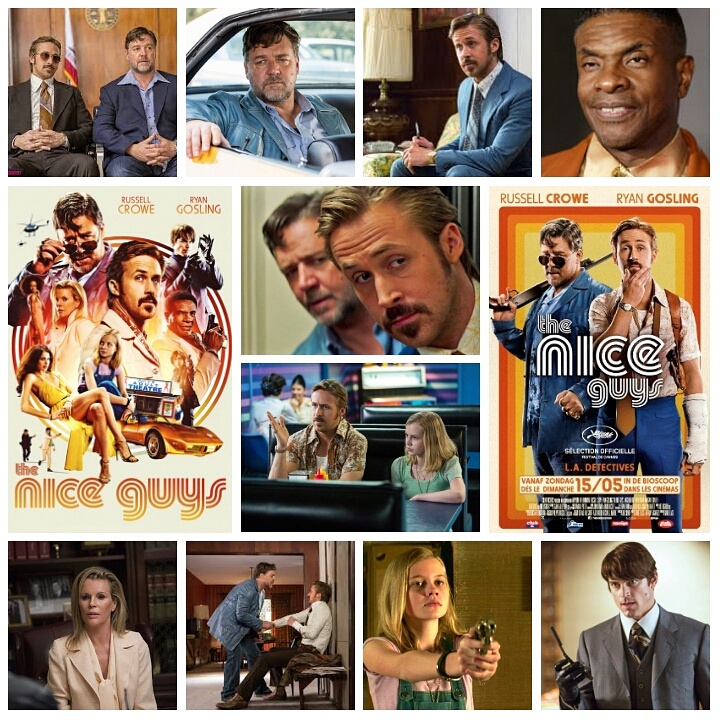
The Nice Guys is a torrential downpour of laughs, prat falls and lovable idiocracy, a formula which director Shane Black perfected with his super underrated Kiss Kiss Bang Bang. This one is no doubt it’s sister film, and while it has comedy in spades, top tier performances all round and luscious 1970’s production design, it’s just a we bit under-plotted. Having said that, that’s my one and only complaint about it. It’s the funniest film of the year by far, thanks to the rough and tumble pairing of Russell Crowe and Ryan Gosling. Crowe is Jackson Healy, a mopey hired thug who will put the hurt on anyone if the dollar is right. This occupation has him cross the path of Holland March (Gosling) an ex cop PI who, according to his daughter (Angourie Rice), is the world’s worst detective. He’s certainly a buffoon, a trait which forms one half of their comedic shtick, the other being Healy’s laid back exasperation everytime March gets them into trouble, which is pretty much throughout the entire film. The two of them unwittingly stumble into a dangerous turn events involving the justice department, murder, the apparant suicide of a porn star (Margaret Qualley), a very scary assassi (Matt Bomer) and one angry goon played by an afro’d out Keith David. It’s tough to make heads or tails of what’s really going on, but like Kiss Kiss Bang Bang it’s not about the plot or the outcome, it’s more about watching the characters trip over each other in style as they get there. Crowe is terrific, a bear of a dude who’s in way over both his head, IQ and pay grade, aghast at Gosling’s antics at every turn. Gosling’s character belongs to that special class of stupid that is so clumsy that he circumnavigates his own ineptitude and ends up falling right into clues, without a clue how he got there. After a string of recent stoic introvert roles, he’s the most animated character of the film and is clearly having a ball. None of what the duo do would be possible without March’s precocious 13 year old daughter, played with uncanny ability by Rice, whose star is going to be solidly on the rise, I’d wager. A reunion of sorts occurs with the arrival of Kim Basinger as the head of the justice department, joining Crowe again after their work in L.A. Confidential. Basinger isn’t given much to do ultimately, but her presence is a welcome addition to the vibe. Black deserves kudos for his gorgeous recreation of L.A. in the 70’s, right down to the sickening lampshades pastel suits and souped up cars it’s a treat to see. The energy from Crowe and Gosling is where it’s at with this one, and they both eagerly tuck in to the dialogue, making this one groovy, delirious riot of a flick.
Mr. Right: A Review by Nate Hill
As I was watching Mr. Right, I started thinking to myself, this is stupid. It’s absurd and silly. So why does it work so well? The premise isn’t unique or original. Girl meets boy. Girl falls in love with boy. Boy turns out to be hitman/secret agent. Boy drags girl on mad escapade against some dastardly villains, the bond between them getting stronger in the process. It’s an ages old formula. It sorta kinda worked with Tom Cruise and Cameron Diaz, and elsewhere failed miserably with Katherine Heigl and Ashton Kutcher. So why then does it work so well with Sam Rockwell and Anna Kendrick? Well, exactly that: It’s Sam Rockwell and Anna Kendrick. The two are so suited for each other it’s adorable. The both of them are quirky, awkward, unconventionally attractive and very unpredictable in their work. Neither are what you’d call traditional romantic leads or action stars, and it’s in that sense that the film finds its groove. I’ve heard other critics bash on Max Landis’s script for being to busy or too stoked on itself, but in a studio system that tosses us garbage like the Kutcher/Heigl version, I’ll take anything I can get that puts in an admirable effort, flaws and all. Anna plays a jilted girl who is on a speeding rebound train that has a chance run in with Mr. Right (Sam Rockwell). He’s charming, super into her and the chemistry they have is obvious right off the bat. Soon they’re being appallingly cute and pretty much dating… that’s where the trouble begins. Rockwell is an infamous assassin on the run from several baddies including his former agency mentor (Tim Roth has even more fun with accents here than he did in The Hateful Eight) who has lost his marbles, and a trio of mafia brats played by a volatile Anson Mount, a hammy James Ransone and a wicked Michael Eklund as that nastiest of the bunch. The film tries hard to balance the two tones, and fpr the most part succeeds, blending them with the helpful notes of craziness from everyone. The violence is brutal, stylized and often darkly comical, the romance is sweet but never gushy with just a hint of mental instability from both parties (sounds weird, I know… it works). Rockwell adds shades of his off the rails work in Seven Psychopaths, albeit with less psychosis. Kendrick is endlessly cute, and endearingly klutzy. Throw in RZA as a hapless killer who can’t decide what side of the fence he’s on, and you’ve got a diverse little cast with enough collective and individual talent to make this a good time. It won’t be for everyone; I can picture many people I know big annoyed, or simply finding themselves unable to buy into it. But for fans of Rockwell and Kendrick (even if you’re not, there’s no scoffing at both their skills) it’s a charming blast of fun.