
León & Cocina’s The Wolf House

There are many ways to symbolically impart real world events in film, and sometimes when the events are particularly grim it helps to bathe your message in a healthy dose of artistic abstraction, as not to overwhelm your audience in grisly details or bring the mood down with a stifling sense of literacy. Joaquín Cociña/Cristóbal León’s The Wolf House is based upon (in spirit) the true life tale of a horrible former Nazi who started a nightmarish, controlling doomsday cult who abused hundreds of children in the Chilean mountains sometime after WWII. After one young girl is punished for allowing pigs to escape, she runs away from the commune herself and it’s this basic framework that allows a terminally surreal stop-motion Dreamscape to play across the screen. There is no actual story to the events onscreen and one would have to either read up on the film or come across a review like this to even fully grasp the theme and backstory. There’s a quick and deliberately ominous infomercial for the commune right at the start of the film but even that is untethered of context and quickly segues into a consistently unearthly theatre of the bizarre. This isn’t succinct, structured stop motion animation in the way someone like Tim Burton would create, this is something so wild, so artistically expressive I can almost not even put it into words, but my review is accompanied by a PhotoGrid mood-board as always, so feast your eyes. The tactility and sculpted bazaar of mâché, clay and many other materials creates a swirling, never placid, always metamorphosing subconscious ballet of scintillating, melting, dissolving image and sound that is truly, singularly unlike any other medium I’ve ever seen. The film reportedly took five years to make, and honestly I would have guessed double that with how complex and elemental the design is. One has to watch it at least that many times to fully absorb everything on display as we see figurines constantly disintegrating mid-scene, transforming into inanimate objects, suddenly becoming ectoplasmic vapour that creeps across the walls of the detailed dioramas they inhabit in forms of movement that are anything but of this world. Because of how non-traditional the experience is, the viewer must use mood sensors and subconscious intuition to intake the film’s essence, and abandon all hope of a clearly discernible plot. A scene where the animated figurine of three German children sing a haunting lullaby together was the emotional core and the closest the filmmakers get to outright exposition, it’s a heartbreaking image when contrasted against the Wikipedia knowledge about the cult in real life, which was a horrible and senseless event that could have been avoided. This is an art installation come to life, not a narrative story, and inside the circus of paint, colour and dynamism we can sense the undertones of menace and tragedy if we’re tuned into the film’s far out frequency. Highly recommended for creative types who enjoy films that not only function outside the box of what’s considered normal and palatable, but barely seem like they’re from this dimension at all. A wonderful experience, streaming on Shudder for anyone interested.

-Nate Hill

Indie Gems: Paolo Barzman’s Emotional Arithmetic

Paolo Barzman’s Emotional Arithmetic is a stunning independent drama that, despite a ridiculously prolific cast, ultimately slipped through the cracks into obscurity. It’s well worth hunting down to see four seasoned professionals as the top of their game in telling the story of various characters dealing with the lingering horrors of the Holocaust, both directly and indirectly. Susan Sarandon plays a Canadian woman sometime in the 80’s who survived a concentration camp at a very young age, and has invited two fellow survivors (Max Von Sydow & Gabriel Byrne) to a reunion at her house in the Quebec countryside where they will reconnect after decades of separation following a tragically abrupt parting from each other and will have the chance to meet her much older husband (Christopher Plummer) and their son (Roy Dupuis). It’s a pleasant, cathartic enough reunion but the collective scars they share from enduring such a horrific phase of their lives are apparent in each of them, in different ways. Byrne’s quiet, introspective character has buried his trauma under a cloak of calm, Von Sydow deliberately tried to forget using electroshock therapy, while Sarandon herself has obsessively documented, scrapbooked and reflected on their past very openly over the years to employ her own process. Plummer’s character is the outsider, having never gone through what they did and starts the film off in a sort of cavalier, borderline insensitive way until the grave reality of what his wife and her friends have suffered through hits home and he becomes more compassionate. All of the performances are absolutely magnificent and I really wish more people were able to see this moving film because each of these actors provide showcase work and should be very proud. If you are lucky enough to find a DVD, please ignore the misleading, stupid Hallmark style artwork and silly alternate title (Autumn Hearts, are you kidding me? Lol) because it’s as if the distribution company didn’t even watch the film and just did whatever the hell they wanted. This is not a sappy, syrupy film at all, it’s a deep, thoughtful, challenging interpersonal drama that stirs the soul in a realistic fashion without cheap manipulation. Highly recommended, wonderful hidden gem of a film.

-Nate Hill
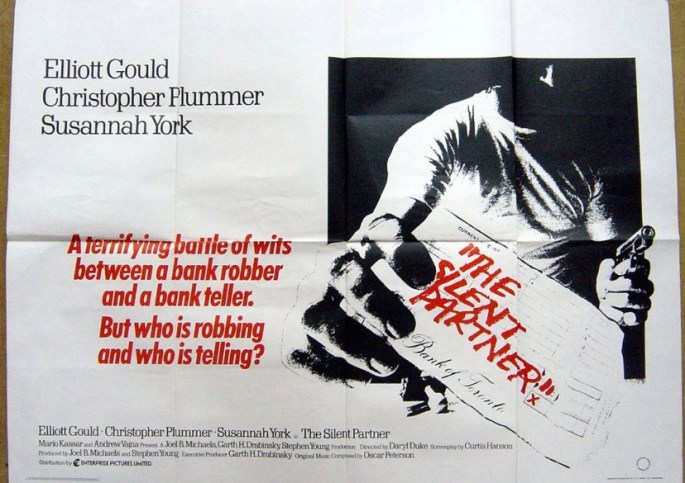
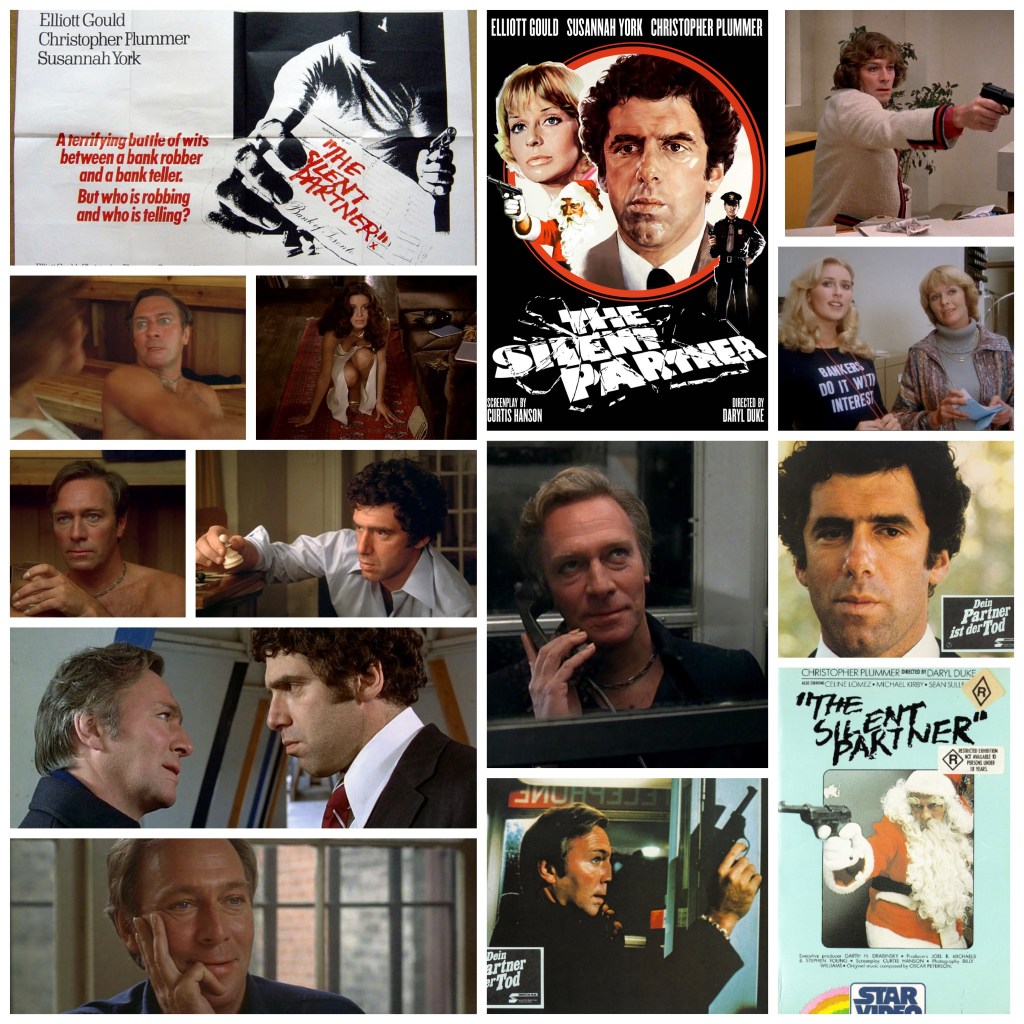
Daryl Duke’s The Silent Partner

If you think Billy Bob Thornton was a Bad Santa wait until you see Christopher Plummer in The Silent Partner, he gives him a run for his money and then some as a psychopathic, profoundly evil criminal who hits a Toronto bank for all its worth disguised as the local mall Santa. Only problem is, shrewd bank teller Elliot Gould realizes he’s going to do it while he’s still casing the joint, steals all the cash for himself minutes before the hit, and thinks he’s got away with it. Plummer is also a smart dude here and not the kind of fellow you want to pull a stunt like that on, soon he comes around looking for the money he believes to rightfully be his and so ensues a vicious game of cat, mouse and morally bankrupt working professional as these two individuals, one not particularly likeable and the other downright abhorrent, battle each other for the prize. Two girls are involved with both of them, confused fellow bank teller Susannah York and French Canadian femme fatale Céline Lolez but they end up being more collateral damage in the narrative than anything else. So… this film has a huge cult following, glowing reputation and overall hype surrounding it and I wish I could fully get onboard with that, but I just wasn’t as taken by it as many seem to have been. I liked it, I didn’t love it. Let’s start with the film’s strongest asset: Christopher goddamn Plummer. The man goes fully into bizarro world here to play this character, and the guy is a villain for the ages. Heinously violent, gruesomely misogynistic, volcanically volatile, decked out in super femme eyeshadow and heaps of mascara and decorated with bangles of silver bling on every limb, he’s a flamboyantly nasty piece of work and steals the film, whether he’s being an evil Santa or showing up in drag which he gets to do later on. Gould plays his bank teller as very intelligent but also very awkward and somehow stilted in expression and line delivery, I couldn’t really get a sense of his character beyond stoic idiosyncrasy and I feel like he’s an actor who perhaps didn’t find his groove until later in his career when he appeared in stuff like Ocean’s 11, where he’s far more engaging and charismatic than this younger incarnation. Roger Ebert raved about this one being a taut, clockwork tight narrative and I kind of feel different.. the first and third acts are terrifically suspenseful, exciting and ruthless but the film’s midsection wastes a lot of runtime on languid romantic subplots featuring the two girls that don’t add much overall, don’t feel believable with a guy as odd as Gould’s character having that much game with the ladies and bog the narrative momentum down quite a bit. Still, when the film is in its highest gear it’s quite a mean machine, especially when Plummer has anything to say or do about it, which he does. Careful with this one if you’re sensitive about violence towards women, there’s a couple sequences that push the envelope on that just about are far as you can go (even by 1978 standards) and are tough to watch. I found this to be a good if not great suspense thriller with some very well done set pieces and plot turns, and one truly despicable turn from Plummer, who is also playing very against type and loving it. Not as much of a gem for me as it was for a lot of others, but definitely worth a watch.

-Nate Hill

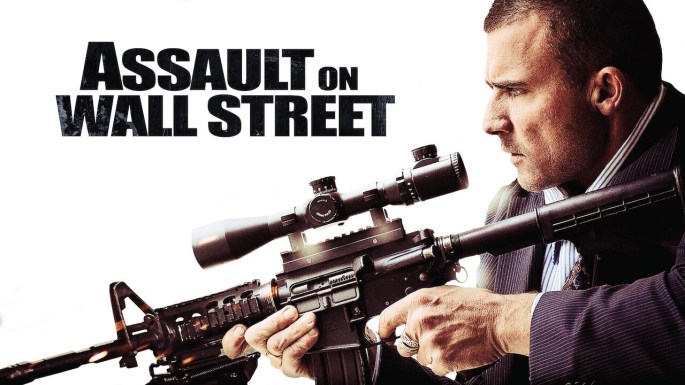
Uwe Boll’s Assault On Wall Street

I know that Uwe Boll has this terrible reputation both behind the camera as a director and in real life and to be fair he has made some ten-ton duds while adapting various video games, but he has also made some films that I have to say are really damn good genre exercises with impassioned sociopolitical undercurrents that he very clearly cares about. He did one about the Sudanese genocide in Darfur which was excellent but so fucking raw and intense in its depictions of those atrocities it gave me a panic attack and I couldn’t finish it, but I’ll review that one day. His more recent film Assault On Wall Street, however, couldn’t be a more timely, relevant or infuriatingly emblazoned piece when you consider how the tides of economic inequality have reached the breaching point on the shores of civility and infrastructural disproportion. Dominic Purcell plays a working class guy in NYC (very recognizably shot in VanCity tho) who has a titanic run of bad luck: his wife (Erin Karpluk) is diagnosed with a terminal illness, he’s laid off from his armoured truck job and the looming financial collapse causes him to lose everything (and I mean *everything*) in the space of a few weeks. He fights desperately, using first the system as best he can and when every avenue of established order fails him, he goes rogue and quite literally takes up arms and holds a bunch of wealthy Wall Street pricks hostage in their building with a gun after killing the corrupt hedge fund advisor (Barclay Hope) who betrayed him. It’s a very startling turn of events and it comes across in several ways simultaneously: a tragic, genuinely heartbreaking downward spiral that feels immediate, a lurid, stylistically heightened tale of pulpy vigilantism and a straightforward siege thriller. Boll doesn’t always juggle all these elements together in a way that feels cohesive or believable, but just enough to have them coexist in the same narrative and work for me as a viewer. Purcell is terrific, he often gets thrown these stoic tough guys after his star making turn on Prison Break but they trust him with an albeit equally tough but strikingly vulnerable and sad individual here who you can relate to and root for later on, if you can reconcile his extreme actions (I definitely could) in the face of utter negligence from his fellow human beings in greater positions of power. The cast is exceptional and includes the late John Heard as an abrasive, morally deficient Wall Street kingpin, Keith David, Edward Furlong and Michael Paré as Purcell’s compassionate coworkers and Eric Roberts himself as a slimy lawyer he hires who doesn’t help anyone much at all. This isn’t a perfect film and at times feels over the top and ‘arch’, but I’d be lying if I said it wasn’t a believable, cathartic and rousing experience; all of us middle class peeps at one time have most likely felt as betrayed, slighted or mistreated by the system as Purcell’s character does here, and his violent call to arms might not necessarily be something to aspire to or even condone, but it’s as scathing an indictment and act of defiance against the strong arm of corrupt, anarchic capitalism as can be expected. Very effective film.

-Nate Hill

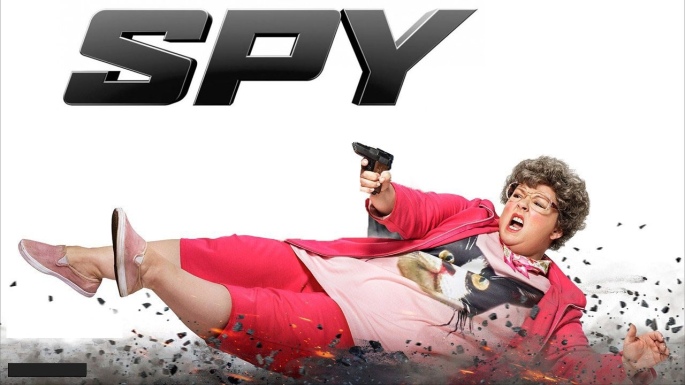
Paul Feig’s Spy

I didn’t expect much from Spy, but it’s kind of one of the funniest films I’ve seen and, of the countless espionage spoofs out there, one of the most effective and witty efforts that sends up aspects of the Bond franchise and others in high style. It’s also a great starring role for Melissa McCarthy because for the first time since her absolutely wild career has taken off I got the sense that we were able to laugh ‘with’ her instead of laugh ‘at’ her, which is nice because she seems like kind of a sweetheart. This is also due to the fact that her reasonably competent agency analyst is perpetually surrounded by coworkers and enemies alike who, to quote a character from another spy spoof, are all ‘fricken idiots.’ She’s a low level desk jockey who serves as the techie eyes and eyes for Jude Law’s slick debonair super-spy who is a seemingly worldly but ultimately vacuous fellow. He manages to get himself in deep shit overseas and the agency’s impossibly jaded Director (Allison Janney, funny af) sends McCarthy and spectacularly klutzy coworker Miranda Hart on a globetrotting mission to find him and take down international arms smuggler Rose Byrne and her band of thugs. They’re also followed by Jason Statham as a rival agent who might actually be one of the dumbest people on planet earth and provides much of the film’s relentless, pulverizing and inspired humour. McCarthy is terrific here and initially has the hallmarks of the aloof caricature we’re used to seeing from her but by the end of her arc she’s earned her stripes and we believe she really has run this gauntlet for real and that the most unassuming character in our spy flick can make it as a field agent. Byrne is sultry, slick and unreasonably sexy as the bratty, moody villainess supreme and finds the right notes of menace, petulance and exasperation when she, like McCarthy, must stare down utter ineptitude in her own ranks. Statham sends up his own British tough guy image and is more around to be this agency court jester of thick-brained fuckery than serve any plot function, he’s a walking disaster and is loving every second of it. There’s also welcome appearances from Richard Brake, Bobby Cannavale, Morena Baccarin, 50 Cent and more. British comedian Peter Serafinowicz nearly walks off with the film as an agency contact in Europe that they have to babysit, he’s basically this hyperactive, incredibly pervy Italian weirdo who’s constantly trying to fuck, grope and sweet talk anything that moves and can barely be understood underneath his marinara soaked accent, it’s an acting creation that has to be seen to be believed. I had a lot of fun with this film when I didn’t expect much overall, but there’s a lot more going on than the glossy veneer of the marketing campaign might suggest. It’s a satire that understands every facet of the genre it’s trying to make fun of, feels at home in its tone and setting and provides this wonderfully written, crisply costumed, fast paced playground for all the actors to have some self aware, manic fun in. Great film.

-Nate Hill

Kong: Skull Island

What’s everyone’s beef with Kong: Skull Island? Not tophat n’ coattails, high-tea cinema enough? I’m joking but I’ve waded through so much negativity surrounding this film over the years that I avoided it, and when I finally came round to watching it I found a perfectly thrilling, super entertaining monster flick that I have little to no issues with. The 70’s Viet Nam CCR aesthetic is an interesting choice for the Kong myth and I think it works, as John Goodman’s half insane journalist leads Samuel L. Jackson’s all the way insane military commander and his platoon on a voyage to fabled Skull Island, joined by Tom Hiddleston essentially playing a cross between Indiana Jones/James Bond and badass Brie Larson? How could that not be fun? Throw in and all the way insane and then some John C. Reilly as a downed WWII pilot surviving on the island and heavily channeling his Steve Brule character from Tim & Eric and I once again ask you, how could this not be fun? Then there’s Kong himself, who is an absolute unit here and way huger than I ever remember him being, measuring in at several hundred feet tall at least and fiercely protecting his kingdom from an armada of weird giant reptilian dragon things. There’s also giant water Buffalo, spooky natives and these bizarre stilt-walking arachnid nightmares that had me on edge and demonstrated some really impressive VFX. Jackson steals the show as far as human talent goes, playing a soldier who never saw enough combat in Nam to satisfy him before the war ended, is looking for a good old fashioned dust up and lives to regret being so eager before going completely, certifiably bonkers and trying to singlehandedly take down the big guy, on his own home turf no less. Throw in a solid supporting cast including Shea Wigham, Toby Kebbell, John Ortiz, Erin Moriarty and a sly cameo from Richard Jenkins and you’ve got one all star lineup, with the MVP moment going to Reilly as he hilariously delivers the film’s best line and one allowed F-bomb in true Steve Brule fashion. Kong delivers the goods too, he’s an angry, very physically lethal sonofabitch big ass monkey who doesn’t take kindly to anyone threatening his homeland, be they big scaly monsters, the US military or other. It’s also very subtly antiwar, but just enough so that it does feel preachy and still knows how to have a blast. Pulpy in the dialogue realm, brilliant red n’ orange tinged in the cinematography department, retro steampunk vibe to some of the costuming and deadly fucking fun on the giant creature mayhem side of things. While Peter Jackson’s monumental 2005 version will likely always be my favourite version of King Kong, this Skull Island iteration is a flippin’ knockout of popcorn entertainment, audacious visuals and rock em sock em jungle war-games. Great stuff.

-Nate Hill

André Øvredal’s Scary Stories To Tell In The Dark

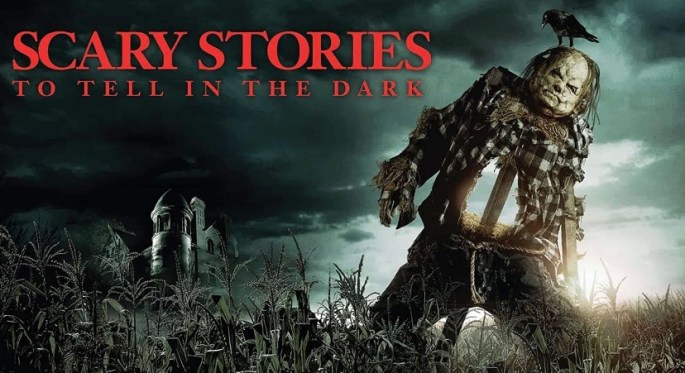
Scary Stories To Tell In The Dark would have been more effective if they’d kept the film adaptation as scary, and as dark as the famed book series and I understand that some cohesion in plot and script continuity was needed to give us a feature film, but I kind of wish they’d gone the artsy, surreal route and just adapted each story in an independent black & white ether from one another instead of trying to make them ‘make sense’ logically and have this… YA, Stranger Things teen angst template laid overtop, which really just sucks the spooky air out of the room. That’s not to say this is a bad film, there are some nicely terrifying set pieces, unnervingly tactile practical effects and thrillingly suspenseful sequences.. it’s just the framework that didn’t quite do it for me. The original book series was blissfully simple: just a bunch of random horror fables, independent of one another. The film makes up this cockamamie jargon about some Necronomicon-Lite book that has power over each monster from each respective tale, a book which a cliche ridden group of local kids must destroy as its contents come after them after the reading of each chapter. It’s complete with the small town vibe, bully, love triangle thing and all the rest, which I’m not sure was the right way to go, but like I said, I understand the decision to do so. Having said that, the special effects team has done wonderful work with the monsters and made them about as visually true to the books as possible without quite retaining the stark, ghostly potency of the illustrations we know so well. The contorting Jangly Man is an unholy terror and quite effective, especially as he storms a nearly deserted police station and scares the piss out of its disbelieving Sheriff (Gil Bellows). Harold the Scarecrow is eerie enough but doesn’t get a whole lot to do, while the shambling corpse looking for its Big Toe is pretty darn fucked up and uncomfortable. Most effective is the unnerving Pale Girl, who terrorizes a teen in the abandoned hallways of an asylum from all sides in a sequence that’s the closest the film comes to downright terrifying and, for a time, successfully lives up to the legacy of the books. Producer Guillermo Del Toro’s aura is felt here in the wonderful monster design and director André Øvredal (who helmed the brilliant and far scarier Autopsy Of Jane Doe) keeps the stylistics and suspense going nicely, if not always consistently. Sometimes the switch from the Black & White of the books to a colour palette here can feel a bit demystifying and less otherworldly, I wish they had just gone the Sin City route and done a complete monochrome wash with the odd splash of colour here and there, would have been much more evocative. It’s a decent enough horror film with some truly great monsters, creepy moments and immersive atmosphere… I just could have done without the teen drama subplots, expository connective tissue and this ever present need to *explain* everything and give every horror concept a ‘backstory’ instead of just trusting the source material to be enough on its own and just filming *that* without a bunch of silly narrative bells and whistles that feel familiar and stale.

-Nate Hill

Remembering Christopher Plummer: Nate’s Top Ten Performances

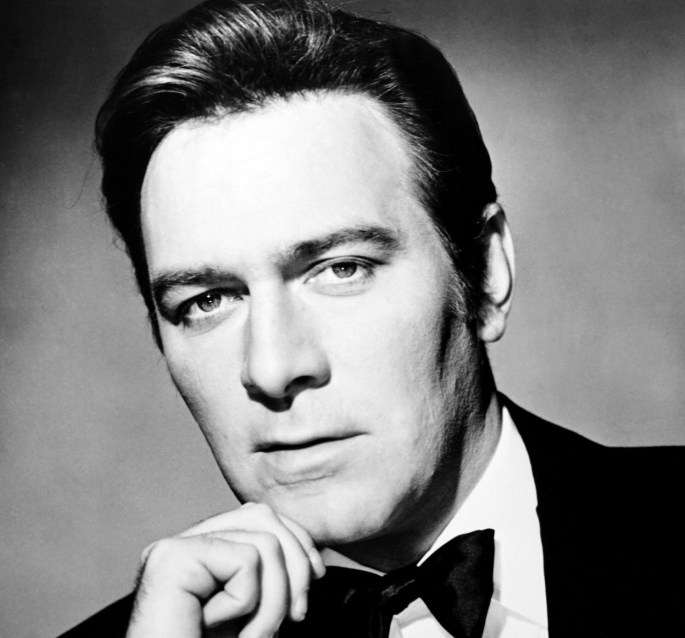
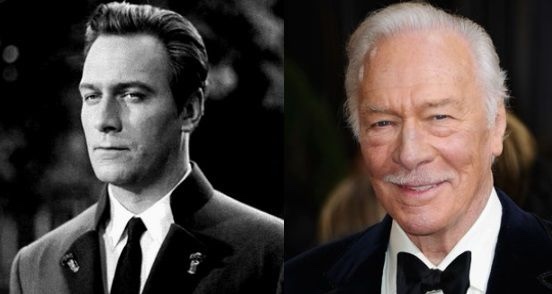
Classically trained, unbelievably versatile, unmatched in charisma, Christopher Plummer was an acting titan of the highest order and there will never be another like him after his passing on this week. He could play snarky politicians, compassionate fathers, romantic leads, Machiavellian arch-villains and real world figures with class, nobility and always a good dose of humour. His trademark half smile and gleaming eyes and impossibly capable line delivery made him one of my absolute treasured actors, and I’d like to share with you my personal top ten performances of his in cinema! Enjoy..

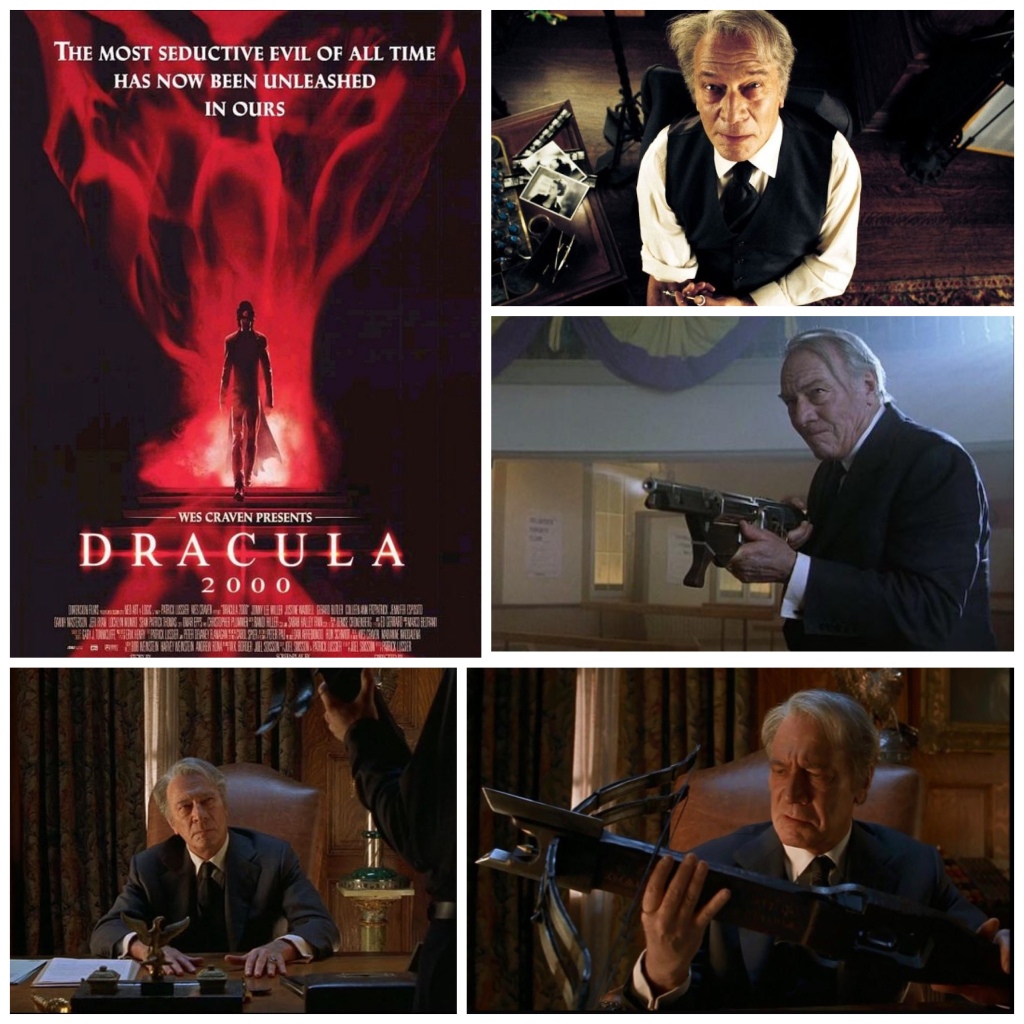
10. Abraham Van Helsing in Dracula 2000

I’ve always loved this modern reiteration of the Dracula myth with a very effective Gerard Butler in the title role. Christopher makes a stately, badass and solemn Van Helsing and looks damn good carrying around a crossbow too.

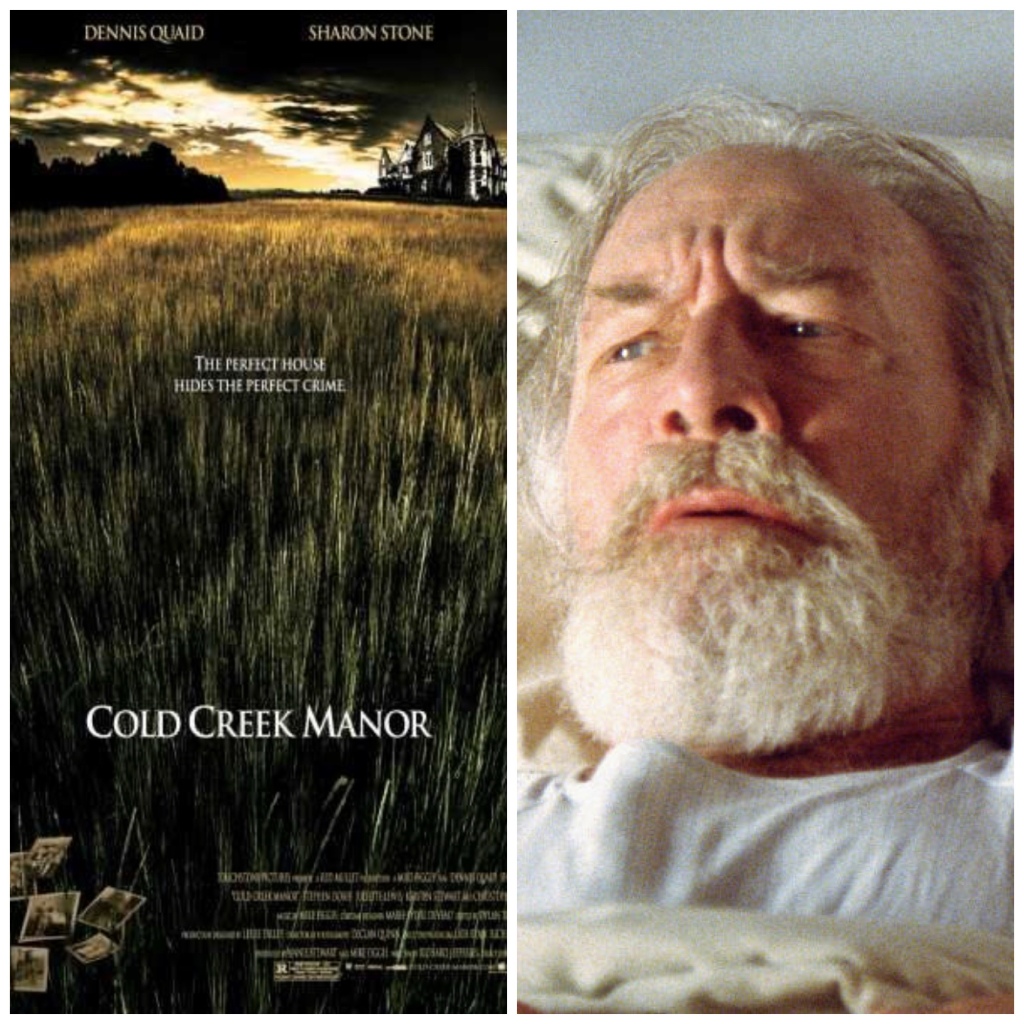
9. Mr. Massie in Mike Figgis’s Cold Creek Manor

This is essentially a bedridden, dementia addled cameo as some senile old bastard that Dennis Quaid goes to for information, but his work here always felt downright chilling to me. Between bouts of confusion and barking out for the “chocolate cherries” in his bedside drawer, we get a sense of the volcanically abusive, powerfully evil man Massie once must have been, and Christopher makes deft, diabolical work of a very quick appearance.

8. Bob Blair in Joseph Ruben’s Dreamscape

This visually delicious 80’s SciFi sees Plummer play a scheming, war mongering politician, a cold hearted, seditious prick and the last kind of person you’d want in a position of power. He relishes the role while staying restrained yet always vaguely threatening.

7. David Winters in Paolo Barzman’s Emotional Arithmetic

This little seen yet star studded Canadian drama is a wonderful piece about Holocaust survivors, families joining up and time healing hurt, or at least doing its best. Christopher is the odd one out here as his younger wife (Susan Sarandon) rekindles bonds with two fellow prisoners (Max Von Sydow & Gabriel Byrne) who also escaped concentration camps. His character is blustery and initially impatient with these healing people as he’s never experienced anything like that but as time goes he softens, it’s a wonderful arc in a very underrated film.

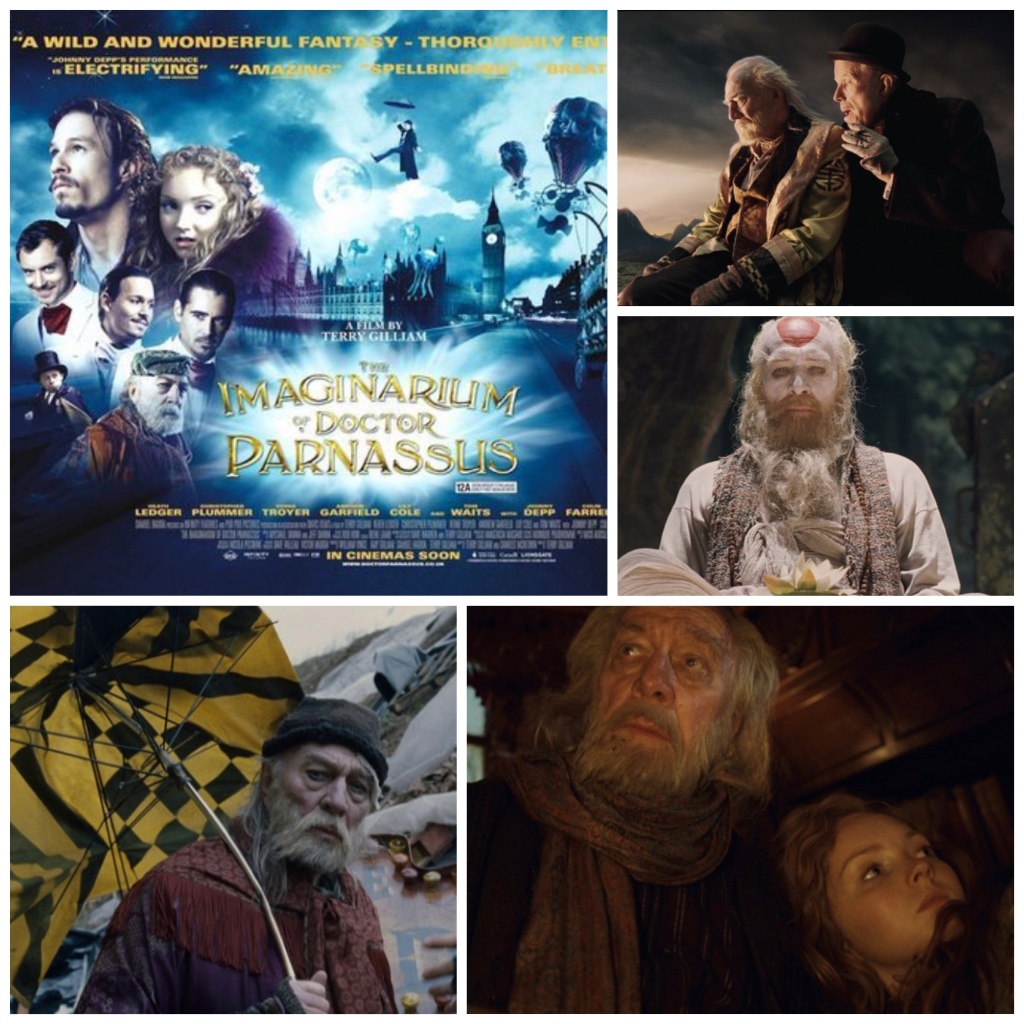
6. Doctor Parnassus in Terry Gilliam’s The Imaginarium Of Doctor Parnassus

Gilliam delivers a reliably mind boggling visual experience with a troubled production and a boisterous, drunken yet commanding lead role from Plummer as a sort of travelling gypsy magician extraordinaire who regularly has conversations with the Devil himself (Tom Waits) and fights fiercely to protect his young daughter (Lily Cole).

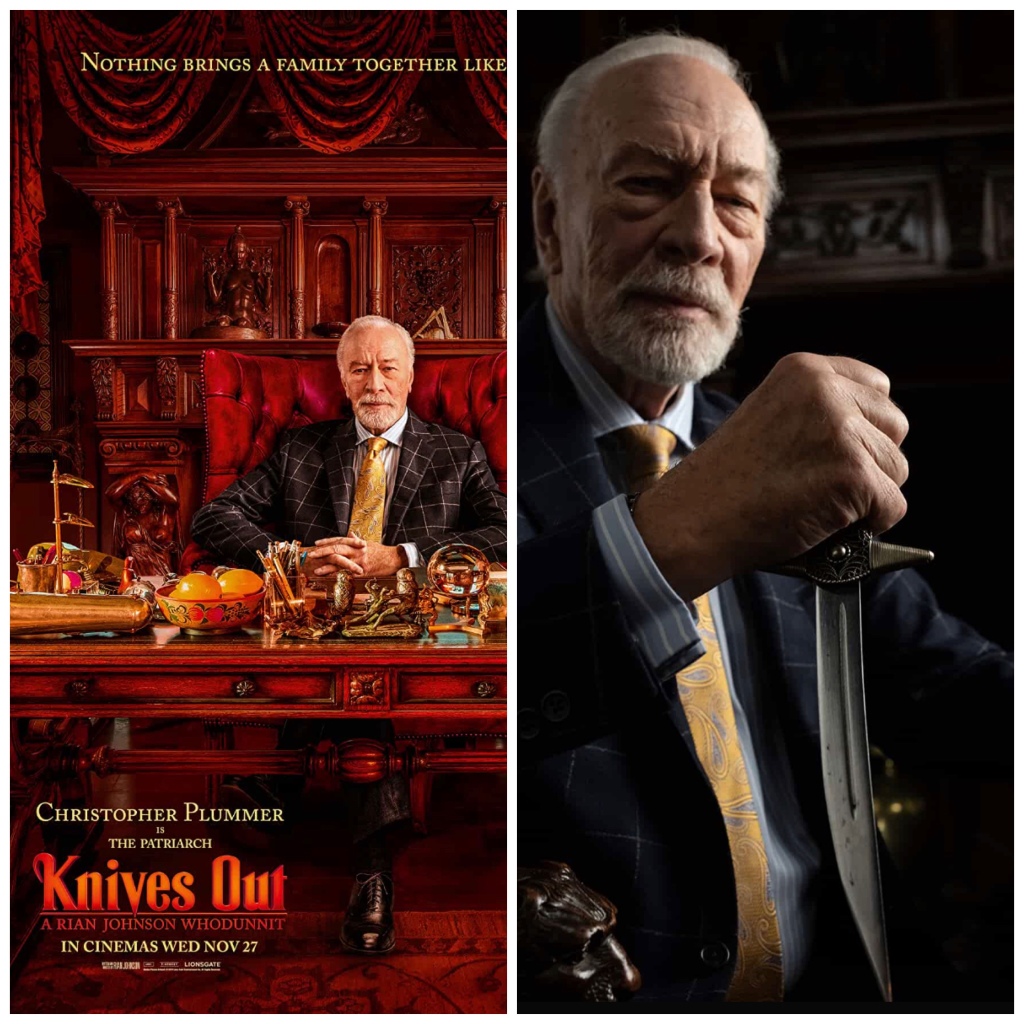
5. Harlan Thrombey in Rian Johnson’s Knives Out

It’s ironic that his character here spends much of the film dead when Christopher actually gives the liveliest performance of a very large ensemble cast. Harlan is an aging horror novelist who suspects each and every one of his family of mutiny and trusts only his young nurse (Ana De Armas). His work here is utterly hilarious, injecting stinging, self aware gallows humour into the role and thoroughly stealing every damn scene.

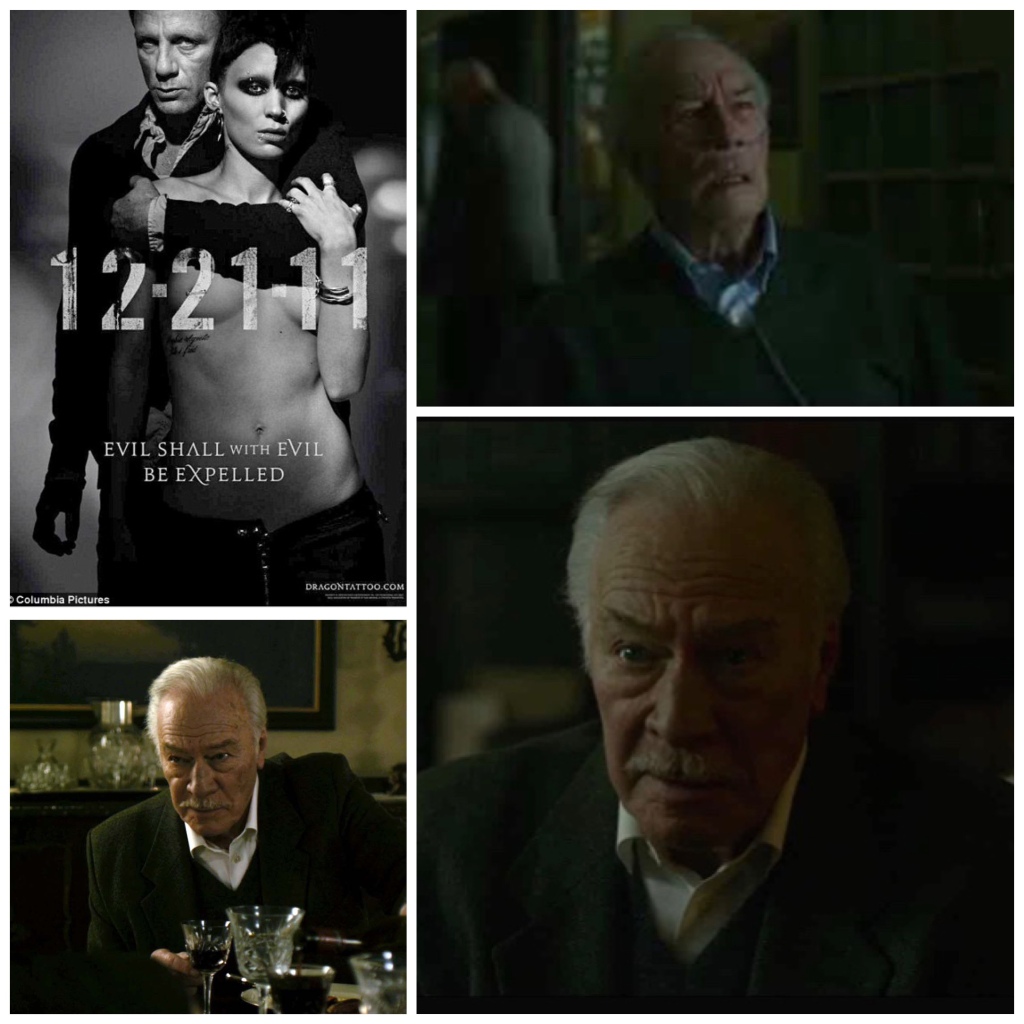
4. Henrik Vanger in David Fincher’s The Girl With The Dragon Tattoo

Henrik is the character who essentially sets the gears of the central mystery in motion here, a tortured patriarch haunted by the memory of a missing daughter he couldn’t save. He captures the hurt, desperation and refusal to give up the search excellently.

3. Hal in Mike Mills’ Beginners

Some people reach the most important decisions and realizations later on in life, as we see with Hal, a man who was married for four decades before coming out as gay to his son (Ewan McGregor) and subsequently finding out that he’s terminally ill. Christopher is loving, warm, playful and full of life in the role that earned him his Oscar.

2. Mike Wallace in Michael Mann’s The Insider

This is a towering portrayal of 60 Minutes producer and media mogul Wallace around the time his network hushed up an expose on big tobacco. His palpable outrage and righteous fury are truly something to behold, especially when he verbally debases a smug junior executive (Gina Gershon) who doesn’t show him proper respect.

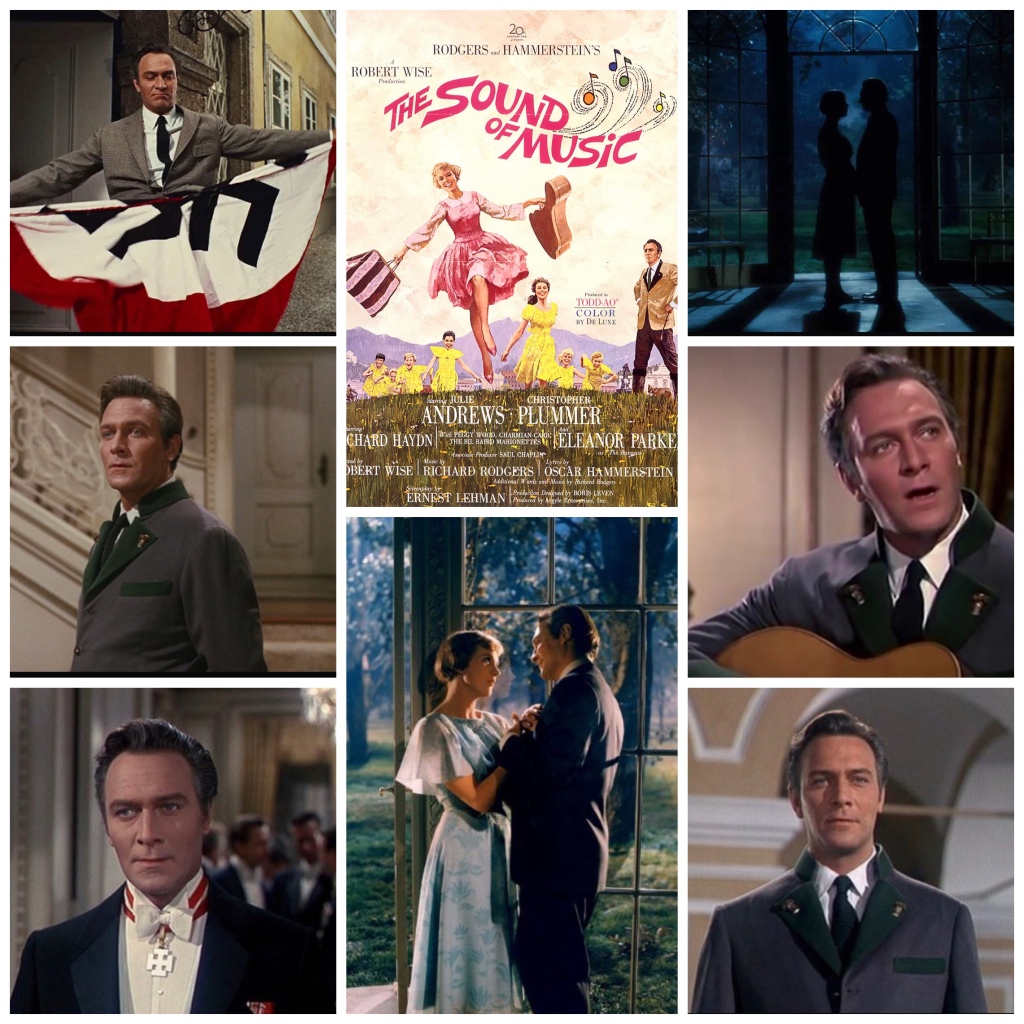
1. Captain Von Trapp in The Sound Of Music

This is the crown jewel performance for me. This was the first film I *ever* saw in cinema, and I was so young I knew Captain Von Trapp before I even knew he was played by an actor called Christopher Plummer. A harsh militaristic man, he has been turned somewhat cold and distant by the death of his wife and the ominous turn of the political tide in his country, until Julie Andrew’s Maria arrives to change all that and awaken in him the compassionate, romantic and morally steadfast man he always was but lost sight of. Christopher handles this arc with utmost class, charm and gravitas, and some of my earliest, fondest memories are of him singing Edelweiss, his fierce refusal to bend to Hitler’s incoming agenda and the tender moonlit scene where he and Maria catch their first real feels for each other. He will be missed by me more than I can say.

-Nate Hill

Ric Roman Waugh’s Greenland

Ric Roman Waugh’s Greenland is an uncommonly superb, heartbreakingly intense, strikingly subversive disaster film, the best of its kind in probably decades, to be honest. Usually when I see a Gerard Butler disaster film coming down the pipeline I promptly step to one side and let it pass by without taking notice, like the lame-brained Olympus Has Fallen series or GeoStorm. Let’s face it, the guy’s agent hasn’t been the best at landing decent projects for him, and for a long time too. Let’s hope this is the start of something new in his career because it’s a staggering work that uses its big budget not for flashy, glossy CGI or needlessly elaborate but ultimately hollow blockbuster set pieces. This is a much more intimate disaster flick that uses character, emotion, spacing, nighttime, growing mass hysteria and poignancy to get its point across. Butler plays a Florida structural engineer trying to get his wife (Morena Baccarin) and kid (Roger Dale Floyd) out of Tampa as a disintegrating comet pummels earth with fragments and the countdown to the end of the world begins. The powers that be have a plan to shelter those with good genetics and useable skillsets in fortified bunkers located in Greenland through a selective process using iPhone emergency alerts and Butler’s family has been chosen but there are many elements that make their journey difficult, mainly the widespread chaos and panic as well as the continued decimation of their planet by falling debris. Butler is fantastic here and sells the frenzied desperation well, while Baccarin has never been better and I never would have thought that Deadpool’s girlfriend was capable of such an affecting, raw performance as she gives here. Others give vivid impressions including Hope Davis, Holt McCallany, Madison Johnson, Gary Weeks, Merrin Dungey and many more. Special mention must be made of Scott Glenn as Morena’s father with whom they briefly take shelter with. He brings his usual gritty gravitas and shares a scene with her that brings out the best in both actors and is the film’s emotional lynchpin. The scenes of disaster aren’t obnoxious, grating or show-boaty like many films of this kind; there’s a haunted, celestial quality to the visuals of the descending comet that is both beautiful and terrifying, like ethereal dying stars entering our atmosphere and lighting up our skies in one final display of sustained, painterly cosmic reverence before the inevitable destruction. If Big Hollywood took notes from Waugh and his team on what they’ve achieved here and employed such creative wisdom into all of their disaster films then maybe the genre overall would be taken more seriously because this is one gorgeously produced piece of work that, for me, now sits as the disaster movie gold standard. Great film.

-Nate Hill

Atom Agoyan’s Remember

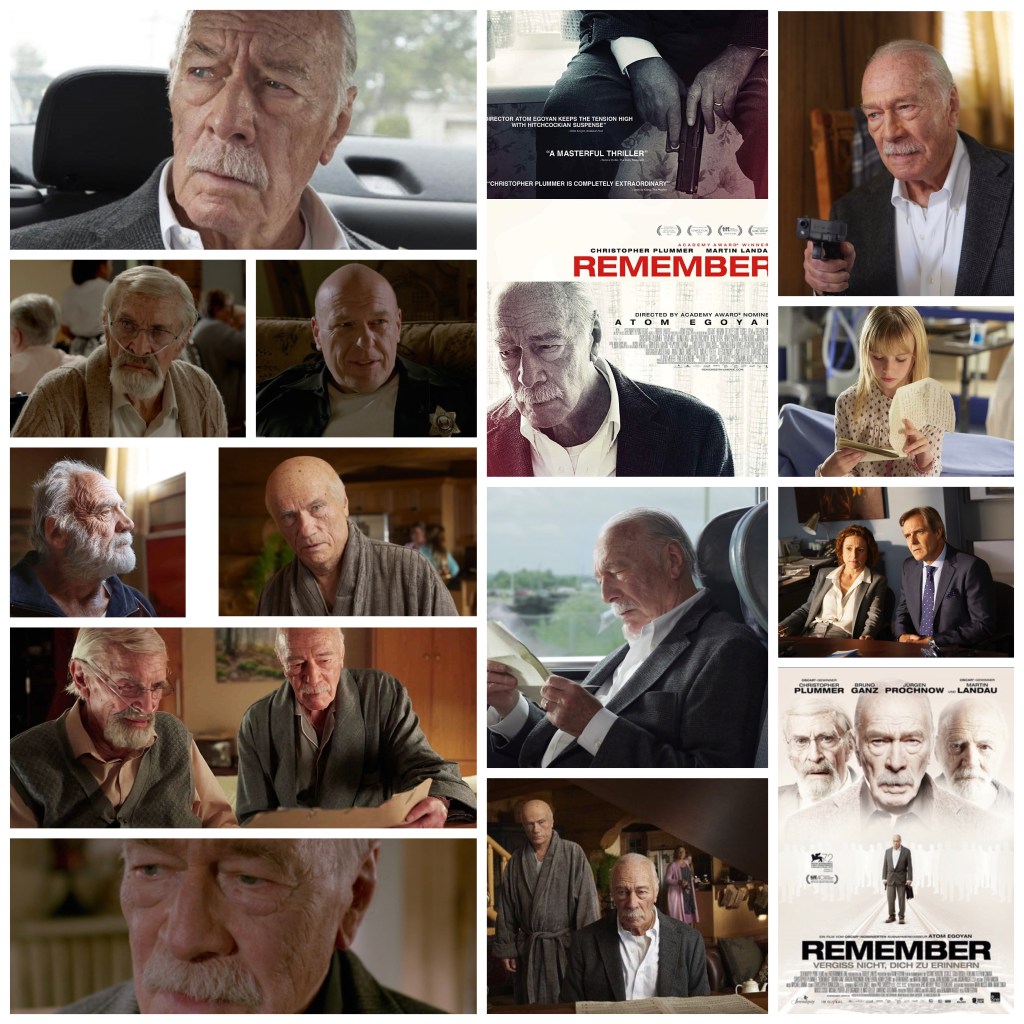
Atom Agoyan’s Remember is a totally uneven film that teeters dangerously on the line between earnest, emotional drama and lurid, shock value thriller. It yanks the rug out from under the audience violently and overall isn’t perfect.. but damn if I don’t admire the sheer balls in trying to pull off a story this unorthodox, a narrative so weird that I could almost picture it happening for real. Christopher Plummer gifts a tricky role with a brilliant performance here as Zev, a Holocaust survivor living in an Ontario retirement home who embarks on a personal journey to track down the Nazi commandant responsible for the murder of many of his community decades before. Only problem is, Zev suffers from pretty severe dementia and needs to be coached over phone correspondence by his pal Max (Martin Landau) who is back at the home. This is a risky endeavour for many reasons; his dementia and age make moving about and tracking down identities and records long lost to time very difficult, and plus he was never supposed to even leave the home unsupervised so his kid (Henry Czerny) is subsequently also trying to find him and bring him back. He meets many along his journey and there’s an excellent supporting cast including Bruno Ganz, Dean Norris and Jürgen Prochnow. Aside from all the hurdles I mentioned above that Zev must endure, there’s a dark secret hovering over the proceedings, a hidden bit of poison knowledge that literally upends the narrative and it is at this point some viewers will decide this isn’t what they’d call a good film and has shit the bed, which I find totally understandable and wouldn’t fault anyone for doing so. The film asks a *lot* of the viewer in accepting such a turn of events as plausible, concise and even in good taste and while I don’t want to get into the specifics of it or say whether I personally think it ruins or brightens up the film, I will say that it certainly provides a fascinating, horrifying and altogether chilling third act that, like the film’s title beckons you to do, I Remember to this day. Perhaps that’s better than going the generic dramatic route, unboxing the Kleenex and cloying for overdone emotional resonance, which this film certainly does not. You decide for yourself.

-Nate Hill