-Nate Hill-
Sam Peckinpah’s The Osterman Weekend is so strangely plotted, so illogical and hard to understand, that not even John Hurt providing a play by play from an ever present tv monitor can seem to make sense of it. It’s not that it’s a bad film, parts are very well done and there’s that nostalgic Cold War vibe that 80’s espionage thrillers always have, it’s just that somewhere along the way, whether in the editing room, the shot list or scheduling, someone quite literally lost the plot. It’s enjoyable, well acted and supplies some of that classic Peckinpah grit he’s known for, but it’s just one massive loose thread that no one bothered to pull taut, which is a shame when you look at the talent involved. The film opens with the murder of a beautiful woman, the wife of a CIA spook (Hurt). Now, this inciting incident is what spurs on the rest of the plot, but the how and the why seem to be missing, and the matter of his wife doesn’t come into play again until all is almost said and done, and seems to have not a lot to do with the entire rest of the film. The bulk of it focuses on controversial talk show host John Tanner (Rutger Hauer), a man who lives to rub people the wrong way and put men of power on the spot with provocative, candid questions, all from the safety of his brightly lit studio. He’s forced to get his hands dirty though when Hurt contacts him, informing him that his three friends he’s planned to spend the weekend with (Craig T. Nelson, Dennis Hopper and a sleazy Chris Sarandon) are in fact soviet spies in hiding. Forced to bug his weekend home and play host to Hurt as he watches them all via hidden cameras, tensions arise as they try to smoke the three out and figure out… something. But what? It’s anyone’s guess what three potential traitors have to do with a murdered agent’s wife, and I’m sure the novel by Robert Ludlum on which this is based covers that a little more pointedly, but this film is just all over the place. It drags where it should glide, and skips hurriedly over scenes with potential to be great. Nevertheless, they achieved some level of class at least, with a crackling on-air conclusion that cathartically weeds out some corruption and provides almost a glimmer of an answer to what’s going on. There’s a fight scene between Nelson and Hauer that’s excellently choreographed, the performances are committed and engaging, and I’m always a sucker for cloak and dagger theatrics. But the thing just can’t seem to cohesively pull itself together and present a story that makes sense. It’s not even that it doesn’t make sense in a Tinker, Tailor, Soldier Spy sense, because I’m sure that if I sat down and watched that film like five times in a row, id get it, it has a plot buried under all of it. This one though, it’s like there’s pieces missing, and the ones that are left are either out of order, or from a different puzzle entirely. Close, but no cigar.
Tag: Movies
Predator 2

-Nate Hill-
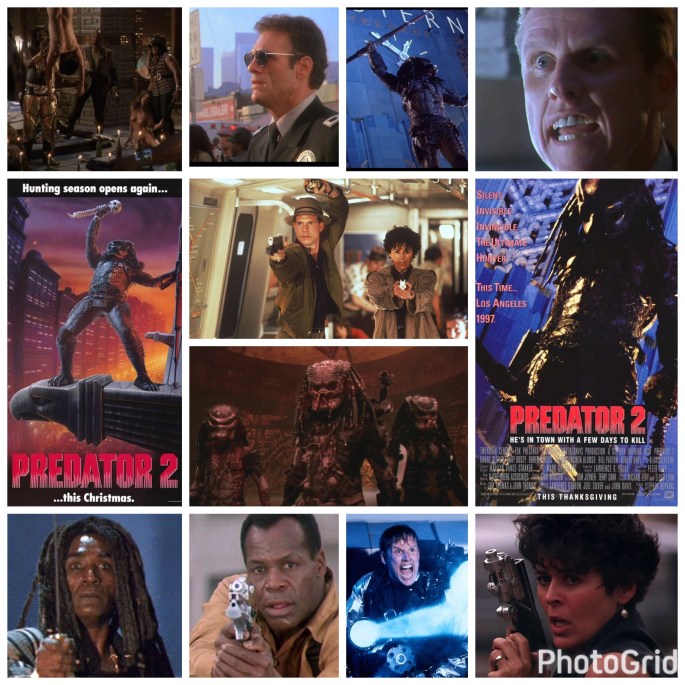
Predator 2 is a gem of a film, and don’t let anyone ever try and convince you otherwise. It’s just so different and so much crazier than the first that I think people had a knee jerk ‘wtf’ reaction and panned it. It’s tough to top the sheer bombastic overdrive of the first one, which is considered a classic, but if anything the sequel switched the nitrous dial past maximum and blasts off into the stratosphere of excessive R rated chaos, an impressive feat. It also switches settings, from the sweaty jungles of South America to the equally sweaty and opulent grime of the urban jungle, namely Los Angeles of the future, bursting at the seams with so many over the top criminals and hectic, delirious violence that by the time the Predators show up they not only fit in, but seem relatively sane compared to everyone else. Seriously, every human character in this film is a coked up tornado of cartoonish energy and brashness it’s hard to keep up unless you’ve hoovered up a few rails yourself prior to sitting down and popping in the blu ray (the blu ray of this is wicked by the way, gorgeous transfer). So get this: Danny Glover, before he got too old for this shit, basically serves as a renegade SuperCop in this hellhole of a metropolis, waging all out war on loads of feral gang members and degenerates, constantly leaned on by the obligatory pain in the ass of a police commissioner (Robert Davi, god bless his republican ass) and backed up by a team of state of the art badasses, including Aliens’s Bill Paxton, who gets all the best lines and delivers them with the gusto the material deserves. He’s also backed by Ruben Blades and tough girl Maria Conchita Alonso, whose appearance and scenes with Paxton call to mind him and Jannette Goldstein side by side in Aliens, or is that just the fanboy in me having an aneurysm? Together they achieve 80’s action movie squad goals by messily wiping out as much of the criminal faction in the city as they can, including weird Rastafarian crime lord King Willie (Calvin Lockhart, spooky as all hell), until something else comes along. Something they can’t see, hear, or easily empty clips at whilst cheerfully spewing profanity. The predators have branched out, and this time there’s more than one, giving their inherent tactical nature a whole new twist. So who better to take on these extraterrestrial game wardens? Glover of course, who positively froths at the mouth. You know you’re overacting when Gary Busey has to keep up with you, and he does his loony best as some hush hush Fed who has been keeping tabs on the Preds for sometime, and has big notions of taking them down. It’s all in good fun, with jaw dropping, spectacularly brutal set pieces, violence that would not go over well these days (the 80’s didn’t give a fuck, man) and a seriously chaotic vibe humming through the whole breathless ordeal. I’d even be so bold as to say that this is the better of the two Predator films, upon getting all misty eyed and craving a rewatch after writing this. Go ahead, shame, me. It’s just too great of a flick to be as under appreciated as it is. Oh, and watch for a sly cameo from another otherworldly baddie late in the third act.
Edge Of Tomorrow

-Nate Hill
Tom Cruise, dare I say, has been making really decent stuff these days, some of which is downright brilliant. Oblivion had its moments, carried on wings of an M83 score that was better than the film itself (hello Tron Legacy syndrome), Jack Reacher was solid badassery all round, but Edge Of Tomorrow is just pure class and could almost be considered an instant classic. I waited a long time to finally see it, because in most cases a pg-13 sci fi blockbuster starring Tom would be cause for me to cruise right on by in the Netflix/on demand lineup and pick something else. The reviews were uncommonly good though, and so I inevitably went for it. I’m sorry I waited, because it’s flat out spectacular. What makes it so? Well, it is everything I described above. A sci fi, blow ’em up blockbuster starring Tom Cruise, packed to the gills with action, aliens and stuffed with more Independence Day fireworks than you can shake a stick at. The catch? It has the plot, script and character development to match. This is one seriously thought out story, with heroes who don’t start off that way, conflict among the ranks of characters and genuine, honest to god arcs. You can hurl all the cash you want at a film and blow up as much shit as you can, but if you don’t have those core elements of story in place, and well so, you’ll end up with a hollow piece of vapid space garbage (like that Independence Day sequel). No, this one earns its stripes, opening up during a chaotic intergalactic war between humans and a formidable alien race, who are winning fast and stamping out any hope for our race. Cruise plays a weaselly military PR puppet who talks shit but has never seen a moment of actual combat, until he’s thrown directly into it by chance, with neither skills nor experience to keep him afloat. Stuck in a Groundhog Day esque time loop (I won’t spoil the how and why, but it’s a wicked smart premise that logically plays out), our coward gradually gains what it takes, day by day, to become a hero and save the planet. It takes a lot of dying and starting over though, each day beginning in the same fashion, the possibilities ripe for him to finally get that perfect round and win the day. Emily Blunt, that adorable badass, plays the most adorable badass thus far in her career, a resilient and vulnerable valkyrie who’s rage at the marauding fiends burns through terrifically, providing moments of grit, warmth and humour as needed. Bill Paxton plays a gung-ho military honcho with the same gee whiz charm that made Pvt. Hudson (Aliens, for you plebs) so memorable, and Brendan Gleeson does a third act encore as another General who takes a fair bit of convincing to get onboard with their plan. It’s so much fun you never want it to end, the high concept used for all it’s worth, supported by truly inspired creature design, detailed steam punk style weaponry and old school Hollywood fanfare rationed out in deliciously measured portions, resulting in that perfect recipe, an effects driven crowd pleaser with the brains to back it up. Who knew they could still make that? It’s a thing of beauty.
Indie Gems: Traveller

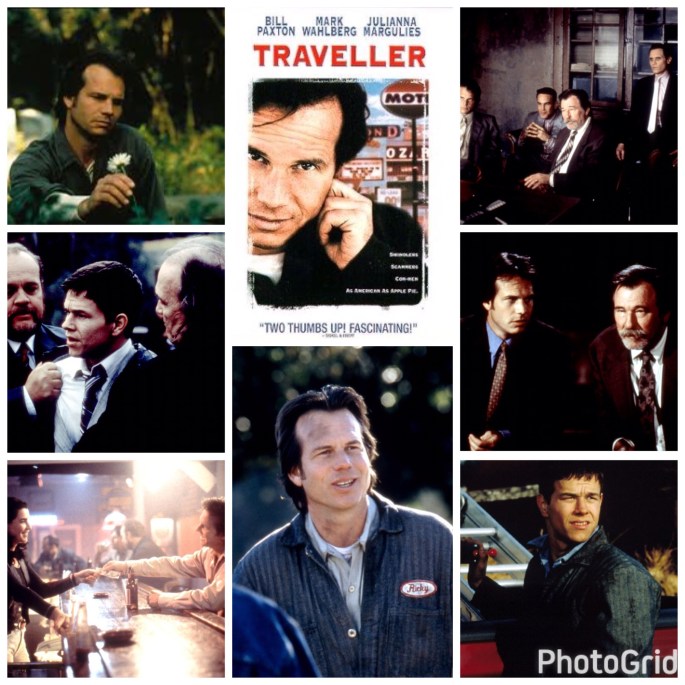
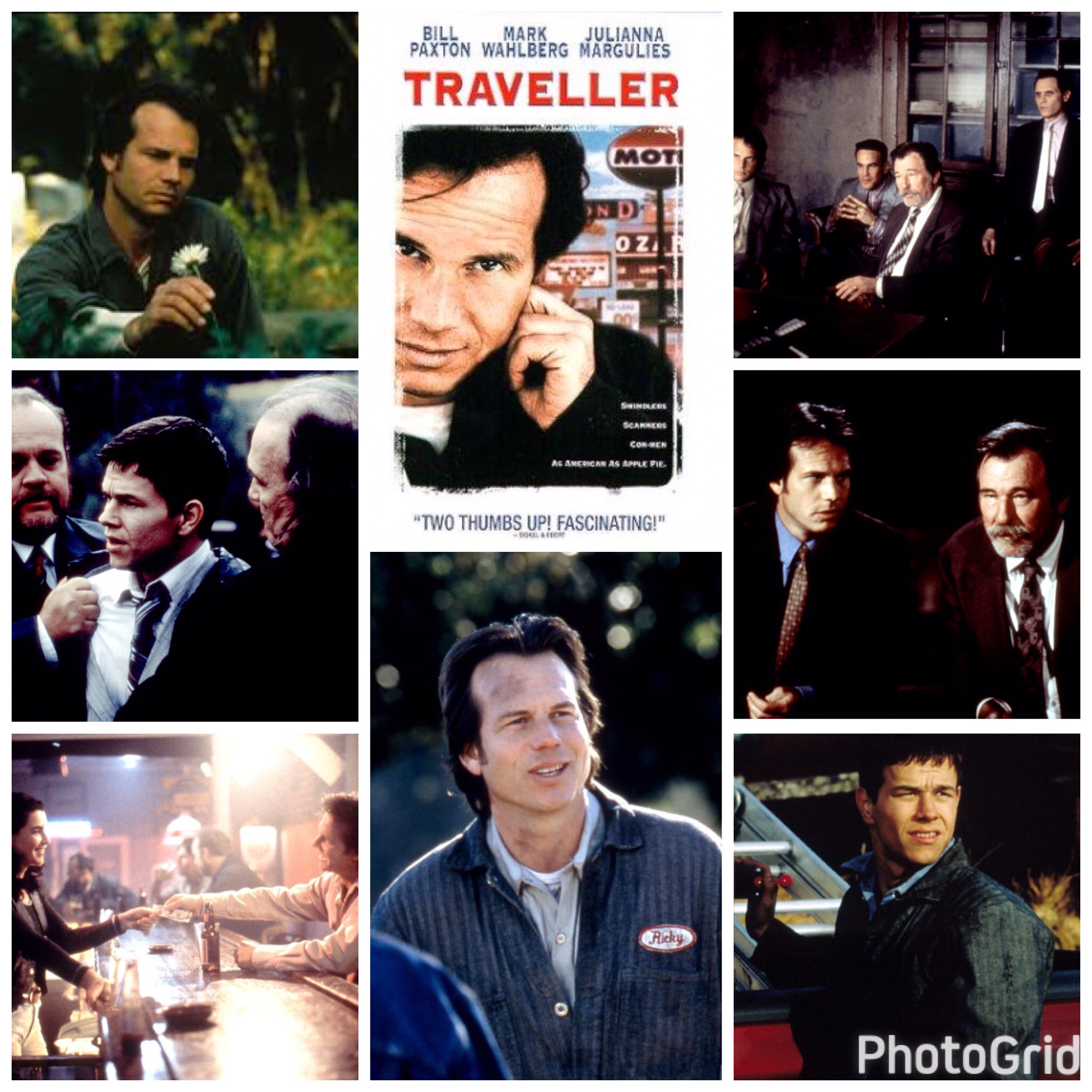
Films about con men can go a lot of ways. They can be intelligent with a worthwhile and earned payoff (2004’s Criminal), they can be hollow, nonsensical, all flourish and no gravity (2003’s Confidence) or deviate any which way from these examples. Traveller takes the quaint indie route, meaning I’m probably the sole person on the planet who has even heard of it, despite Marky Mark Whalberg appearing on one of the starring roles. It’s a shame because this is a bona fide gem, a low key little charmer with a roguish lead performance from Bill Paxton, a plot that gets cleverer the more you ruminate on it afterwards, and an easygoing style to it. Marky Mark plays Pat, a young man descended from Irish ‘travellers’, who are essentially gypsy hustlers and live as such in a sleepy North Carolina community. Pat wants to reconnect with his roots, but his kinfolk are a tribal bunch who don’t really fancy outsiders, however distantly related they may be. Cousin Bokky (Paxton) is the only one to take him under his wing, showing the ropes of a very specific, time honoured idiosyncratic lifestyle. Pat is young, cocky and sticks out like a sore thumb in Bokky’s world, who himself is weathered and moves about with ease and experience, slowed down by the dynamic which his young prodigy presents, and also looking for a way out of this life, and even romance with gorgeous Julianna Margulies. As light as these proceedings are, the film doesn’t fail to show the give dangers that being a con man puts them face to face with. It’s all fun and games until… well until it isn’t, and we get to see some of that ugliness rear it’s head, for without it there would be no stakes. Joining them is grizzled and now deceased character actor James Gammon, playing a salty veteran grifter who crosses their paths more than a few times, causing as much trouble in the process. I’ve not a clue how close to real life fact and tradition this film gets, but I imagine fairly on the nose, as it just has that notion that it knows what it’s doing, it’s researched, capable, and does it all with ease and enjoyment.
-Nate Hill
John Hillcoat’s Lawless

John Hillcoat’s Lawless is the very definition of badass. Bathed in blood and moonshine, gilded by Nick Cave’s rustic, textured musical score and brought alive by vivid and varied performances from an eclectic, grizzled cast, it’s one of the most enjoyable gangster pictures to come along in recent years. It follows the rough and tumble Bondurant brothers, fabled bootleggers who defy prohibition and run their product all over the aptly named ‘wettest county in the world’, until the greedy and very corrupt arm of the law snakes its way into the territory. The eldest and toughest is Forrest, a grumbly, shambling Tom Hardy who’s something of a gentle giant, until the straight razor comes out and he’s not. Jason Clarke is Howard the booze hound, who has sour mash coursing through his veins and a temper to prove it, and Shia Leboeuf, somewhat miscast, does his best as the youngest of the three. The three of them run an idyllic little manufacturing and distribution ring spiralling out of their county into the nearby area, until trouble comes looking for them, in the form of a monster played by Guy Pearce. Now when I say monster, I mean it.. when the villain in your film is scarier than Gary ‘Scary’ Oldman’s roguish supporting work, you know you have one hell of an antagonist. Pearce, sporting a sour look and parted hair that Moses could lead his people through, is Charlie Rakes, some kind of government dispatched deputy whose sole purpose is to make out heroic trio’s lives exceedingly difficult. Cheerfully sadistic and ruthlessly corrupt, Rakes is a bona fide moustache twirling psychopath and Pearce milks the role for all it’s worth, as per usual in his case. Oldman does appear briefly but memorably as lively gangster Floyd Banner, a shark of a businessman with a fondness for tommy gun tantrums resulting in vehicular mayhem. The film walks a line between two distinct tones, which can be seen in the characteristics of the pair of older brothers: Hardy is laid back, laconic and ambles along at his own pace, which any film set in the south just has to have a bit of, whilst Clarke is volatile, fired up and hot blooded, also needed in crime fare. So you have a relaxed, violent, wistful piece with a mean streak that sneaks up on you more than a few times. Any Ozark tale wouldn’t be complete without a romantic flair, as Hardy is swept off his feet by mysterious, plucky Jessica Chastain and Lebeouf has an eye for a beautiful Amish girl played by Mia Wasikowska. The film looks visually magnificent, shot in broad, sturdy rural strokes by Benoit Delhomme, and strict, impressive attention to detail is paid throughout. While maybe not as gritty or mythic as it wants to be, or at least as far as Hillcoat’s previous work has been (The Proposition remains the stomach churning gold standard), it’s a full blown, R rated crime picture, something more than welcome in an age when the genre has had its blood somewhat watered down. Highly recommended.
Back to Graceland: An Interview with Demian Lichtenstein by Kent Hill
If you have seen the restored Lawrence of Arabia then there’s a chance you’ve seen the extras on the second disc? One such extra is an interview with Spielberg, in which he recounts sitting down with David Lean for a screening of the film. As they watched, Lean provided what Spielberg describes as a ‘live’ director’s commentary, pontificating about all aspects of the production while the pair sat through the movie.
Now Spielberg himself doesn’t do commentaries, but a lot of directors do. Of course I have a list of films that to date, do not boast a commentary track which I wish, so badly, that they did. Near the top of that list are a pair of movies that stick out. One is John Milius’s Farewell to the King and the other is Demian Lichtenstein’s 3000 Miles to Graceland.
But now for something really cool.
At the close of 2016 I had the chance to chat with Demian, and what eventuated was quite extraordinary. I was working my way through my questions when, all of a sudden, Demian started to unload his fantastic tales from the production, and it just kept getting better. As I listened, I imagined Spielberg listening to Lean, receiving first-hand all of those astonishing insights, and here I was in a similar situation getting the good oil on the production of Graceland.
It has become a cult film with the passage of time, but there remains no chance of Demian ever being gifted the ability to go back in and retool his movie. Perhaps in some small way set certain things to right.
I was tired when we spoke, it was 3am here Down Under, but, by the time we were through, I was energized and so sat back and re-watched 3000 Miles to Graceland with fresh eyes. Demian’s stories swirled in my head. When we were talking, just when I thought it was over, he went on. I received scene-specific commentary and even insights into scenes that were written but never shot.
It was a genuine thrill, along with being a great and one of the most surprising interviews I’ve ever done.
3000 Miles to Graceland is out there waiting for you to watch it again or to discover it for the first time. It makes me proud as a fan to think that this interview may serve as the bonus material we never received. A director’s commentary of a splendidly intricate and playfully unique movie with great anecdotes, favorite scenes and even deleted scenes in the form of unrealized story elements.
So, for all you fans and even the first-timers, the journey of 3000 Miles back to Graceland begins here, for your listening pleasure.

For the Love of the Movies: A Conversation with Paul M. Sammon by Kent Hill
Those of us who love the movies were bitten by the bug at an early age. Paul M. Sammon is no different, though as he told me, his options regarding entertainment whilst growing up on a military base were limited. If you were athletic there was baseball, if you were a reader there was a library. Then of course there was the cinema.
When you are young there is no such thing as a bad movie. You devour all you can of the sights, the sounds, the sensations that rip through your entire being as screen comes alive and you are transported. At times to far-flung stars, only to be besieged by angry armies of giant bugs or thrust into the midst of a crime wave, surrounded by urban decay only to turn and find yourself staring down the barrel of a gun in the hand of a cyborg police officer who instructs you in no uncertain terms to, “think it over creep.”
Paul M. Sammon has spent over thirty-five years in and around the movie business. His ferocious zeal and meticulous attention to detail have garnered him a reputation. Not merely for his comprehensive and passionate coverage of the films that he admirers but also (and in this I share his passion in equal measure) for the journey that a film must undertake from its inception to its coming soon to a theatre near you.
He has brought his veracious eye for intricacies to many a fine piece that has graced the pages of publications such as The American Cinematographer, Cinefantastique and Cinefex. He has served within the industry as everything from a special effects coordinator to a still photographer. Then of course there are his books; the most memorable of these being Future Noir: The Making of Blade Runner. During his time on the production he came to know better the film’s director Ridley Scott, whom he would later serve as biographer.
He has rubbed shoulders with many of Hollywood’s finest talents and been present to document the triumphs and the tragedies that have occurred on the film sets, upon which the lamentable and the legendary have been photographed at twenty-four frames a second.
To converse with Paul was everything I had hoped for and more. His candidness, his cleverness, his unbridled joy for cinema ebbs and flows from his deliciously detailed delivery. But that’s enough from me.
Sit back and enjoy this reminiscence, as a great storyteller reflects on his adventures in the sometimes fun, sometimes fickle but often fascinating land where movies are born, raised and once in a while butchered.
Ladies and Gentlemen, I give you, Paul M. Sammon…
A chat with filmmaker Jack Perez: An interview by Nate Hill
Excited to bring you my latest interview, with filmmaker Jack Perez. Jack is responsible for one of the coolest, most unique indie films of the 1990’s, La Cucaracha. Starring genre icons Eric Roberts and Joaquim De Almeida and featuring an early career turn from Michael Pena, it’s a film like no other, a severely underrated south of the border morality play with shades of everything from Peckinpah to Walter Hill, a style all its own and a script that is genuinely one of a kind. The film has just been remastered for streaming release on Amazon prime, and I have included a link to the new trailer here, it’s not a film to be missed. Enjoy!
Nate: What led you to filmmaking? Was it something you always knew you wanted to do, or did you fall into it?
Jack: I got into it very young, one of those Super 8 kids who borrowed the family camera and drafted my sister into doing homemade monster movies. My father was a movie nut, and our primary mode of communication was watching old films together, so that’s what started it.
Nate: Who are some filmmakers that you would say influenced your work, or you are a huge fan of and have looked up to?
Jack: Peckinpah definitely, probably above all others. His work was personal and mythical and expressionistic and truthful. And totally alive! Scorsese, of course – his mastery of the medium also melded with a powerful personal vision. Robert Aldrich, who did such a great range of work: VERA CRUZ and THE DIRTY DOZEN and KISS ME DEADLY. Altman and Polanski. Hitchcock and Hawks. Wyler and Wilder. Again, my father is the one who first introduced me to the classics, so by the time I went to film school I was pretty well saturated and ready to look at European cinema and cool experimental work (like Maya Deren!).
Nate: If you could have the rights to any novel/graphic novel series to undertake as your dream project, what would it be?
Jack: I don’t know if it could be done, or even should be done (probably not), but Dan Clowe’s LIKE A VELVET GLOVE CAST IN IRON. Overwhelmingly striking.
Nate: La Cucaracha: How did the idea come about, and did the end result look anything like what you first started out with on paper?
Jack: My writing partner, Jim McManus, and I were very much into Peckinpah at the time, and the whole idea of gringos getting into trouble south of border was very much on our minds. BRING ME THE HEAD OF ALFREDO GARCIA was a huge influence, but we were also enamored with THE WAGES OF FEAR and TREASURE OF THE SIERRA MADRE and RIDE THE PINK HORSE. The south-of-the-border noir is kind of a mini-genre unto itself and we wanted to use that as a backdrop for a new kind of story. Something more character-driven and personal. Actually, Jim’s original concept – the one that set the whole thing in motion – was that the Walter Poole character would literally roll into town in his wheelchair at the climax, guns blazing ala Rooster Cogburn, and go down in a hail of bullets. An nifty idea. Of course, by the time we actually got to the end of the screenplay that ultimately resulted, that kind of hyperbolic nihilistic ending didn’t fit anymore. Also I had intended to shoot it on location in Mexico and use the actual landscape and real people as part of the film’s fabric. But budgetary considerations brought us to the backlot of Universal, and the result was a Mexico much more mythical than intended (which I have to say, I kind of preferred in the end because it allowed for a more expressionistic look overall).
Nate: Working with Eric Roberts: you can honestly claim that you have directed him in what is, for me at least, in the top three greatest performances he’s ever given. How was the working relationship? What is he like? Do you guys keep in contact?
Jack: It was great working with Eric, and we’ve remained close over the years – him and his wife, Eliza. Eric works a lot, but I think he came to see LA CUCARACHA as an opportunity to really create a character, and show dimensions and vulnerabilities that he sometimes doesn’t get a chance to play. He knew I was deadly serious about making this picture the best it could be and, to his credit, attacked the role accordingly. He was a joy and a lot of fun to hang out with. Great sense of humor and loves animals (as I do).
Nate: Working with Joaquim De Almeida: a criminally underrated actor who rarely gets to show his true range and versatility. How was it working with him, especially in his intense and emotional scene near the end of the film? You can also claim to have seen probably the best and most truthful work he has ever done.
Jack: I totally agree. A great actor – like Eric – sometimes limited to roles that don’t show what he’s truly capable of. Here, he went for it as well. In fact on the day we shot the Sunday Schoolroom scene, where he tests Walter’s character and actually steps on his head – he had a huge, complex 2-page monologue that, when he finished – the crew literally jumped to its feet and broke out in applause. Ive never seen that happen on any set. He was also a real gentleman, bright, warm and thoughtful. And unafraid. The scene at the end that you mentioned required him to be emotionally naked, and he went there.
Nate: How did the remastered version of La Cucaracha come about? To be honest it’s nice to see it now widely available, I searched for it for nearly five years before finally finding a second hand DVD, being blown away and wondering why it wasn’t on every shelf of every store out there.. Did Amazon approach you for this?
Jack: I pushed for it. I too was bummed it was sorta out of circulation. Certainly not in HD or in the proper aspect ratio (the DVD release cropped the the original 1.85 image). So I approached Renascent Films, who had acquired the streaming rights, and asked if they would pursue it. Thankfully they agreed and I set about tracking down the 35mm negative, which was no longer in the original lab and wound up – through a corporate buyout – in the vaults of Technicolor. We did the telecine there and I’m happy with the results and genuinely excited it’s out there on Amazon Prime.
Nate: What’s life like for you these days? Any upcoming projects, film or otherwise, that you are excited for and would like to speak about?
Jack: I’m always going after the next project. The more personal the better. Though to make ends meet or just for the quick junkie filmmaking fix, I’ll do a TV project or a genre pic for hire. But the real joy is doing work that is personally necessary, ideally in an environment where not too many people fuck with you. That limits you to the world of independent financing. Anyway, we’re close to raising the bucks for a female-driven action-thriller I wrote called SHOTGUN WEDDING. I’ve wanted to do it for years and am I’m psyched for that!
Nate: Thank you so much for you r time, Jack, it’s been an honour and I’m very much looking forward to seeing La Cucaracha once again remastered!
Morgan: A Review by Nate Hill

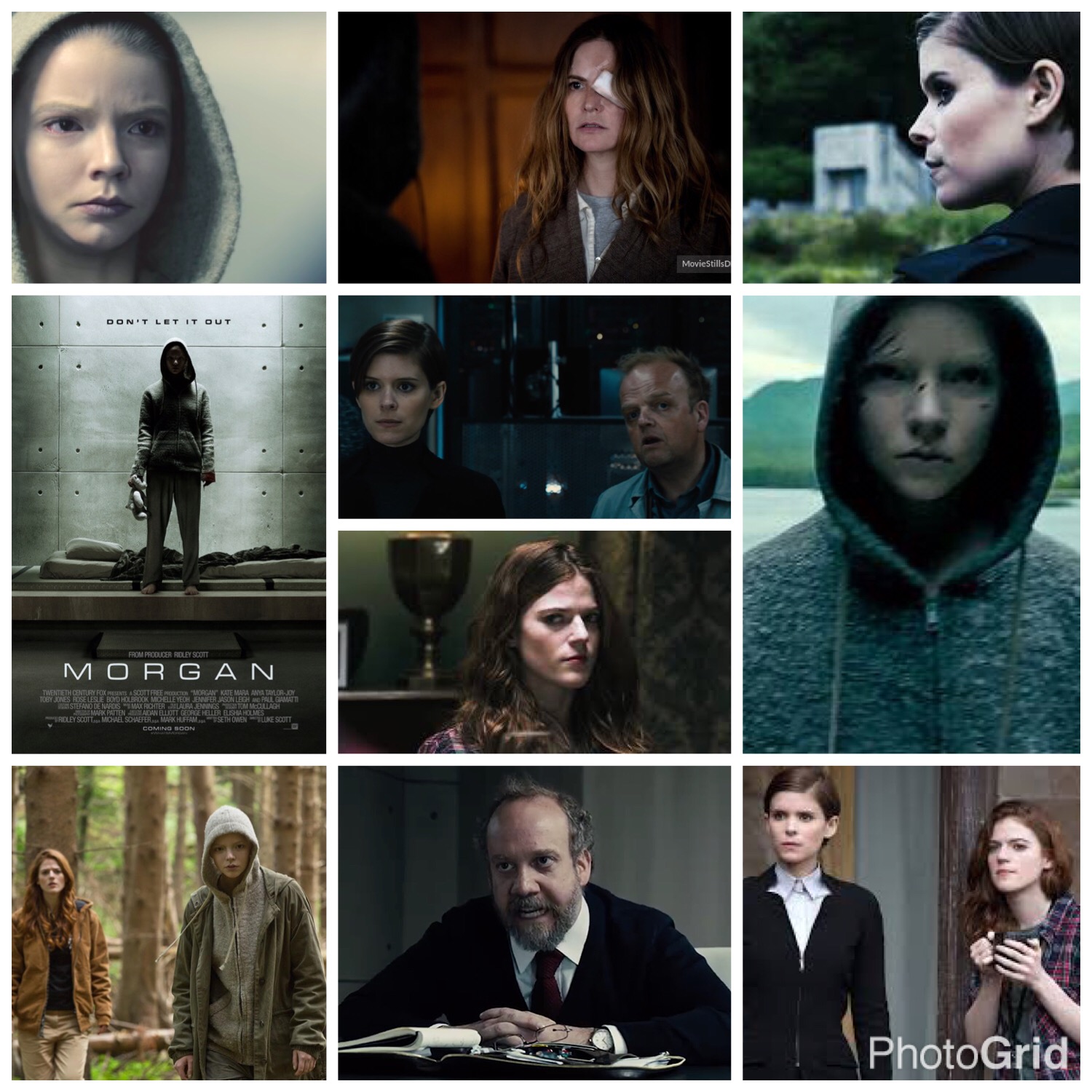
Morgan is one of the slickest genre flicks I’ve seen in recent years, finely tuned like a barbed wire tightrope, full of nasty surprises, throat ripping action and that ever present ethical turmoil that hangs about in any films that deal with artificial humanoid beings. It’s only weakness is exactly that stylistic strength: it’s so tight and streamlined that one occasionally feels like the scales tip in the favour of style over substance, but it’s a minor quibble when you take a step back and look at just how entertaining and fired up this piece is. The filmmakers are minimally concerned with the moral grey areas that cloning wades into, and subsequent philosophical pondering, but more than anything they just want to pull the ripcord and blast full throttle into an adrenaline soaked, R-rated sci-if tale with vague aspects of a character study. The title refers to Morgan (The Witch’s Anya Taylor-Joy in a performance both terrifying and heartbreaking), a genetically engineered humanoid girl held at a secluded facility alongside researchers, one of which she has just had a violent incident with. The corporate honcho (Brian Cox in a sly, all too brief honcho) dispatches a cold, clinical asset in the form of Kate Mara, sent to assess the situation and implement any measures necessary. She is an outsider, a callous bicep who flexes at the whims of the company. The researchers and handlers, however, are not. They have grown up around Morgan, invested time and, somewhat unwisely, emotion into her and will stop at nothing to ensure her survival. Paternal Toby Jones, opinionated Jennifer Jason Leigh and compassionate Rose Leslie prove to be a formidable armada against Mara’s evaluation, and tensions arise. Morgan has her own cloudy agenda though, and whether by flawed design, ghost in the shell syndrome or pure survival instinct, proves to be the greatest danger of all. She experiences people at their best, worst and most enigmatic, and her startling behaviour is a reflection of all of it, and a sobering example of humanity’s pitiful inability to perfect the creation of artificial life, at least in this film’s universe anyway. From Mara’s threatening presence, to an intense evaluation from a particularly nasty psychiatrist (Paul Giamatti overacting so hard he almost sucks the set dec up into his orbit), it’s no wonder Morgan snaps. Now when she snaps, the film more or less whips all its chips on the table, flips said table and hulk slams it two floors down. All subtlety and thought provocation kind of get left in the dust as everything careens towards an especially visceral climax, and that’s okay, as long as it doesn’t leave you feeling underwhelmed. I kind of had the intuition it was going to take the rambunctious root overall, and took comfort in the fact that it at least somewhat focused on the delicate aspects earlier on. It’s a well oiled machine, impeccably casted, given just enough pathos to keep our sentimental sides invested, and more than enough visceral hullabaloo to get our pulses dancing, all set to a score both thundering and graceful. Great stuff.
“What happened to you?”A review of The Autopsy of Jane Doe by Josh Hains
The R rating description for the Autopsy of Jane Doe reads “bloody horror violence, unsettling grisly images, graphic nudity, and language”, a misleading description that may give future viewers the impression they’re in for a hearty gore fest. I thought I might be in for a suspenseful slasher, something akin to a cross between Don’t Breathe (another great horror entry from 2016) and The Ring, but with a greater focus on gory splatter. I wasn’t disappointed per se, but the graphic qualities of this movie don’t unfold the way you might expect them to, which admittedly caught me off guard yet pleasantly surprised me.
Without giving anything away (as this is a spoiler free review), I can tell you that this particular horror movie actually shows barely any on-screen violence. In fact, the bulk of the “bloody horror violence” actually comes in the form of the autopsy itself, which doesn’t shy away from giving viewers prolonged sequences of dissection, which plays directly into the “unsettling grisly images” of the rating description. Think of any CSI: Crime Scene Investigation autopsy scene, but make it run for an hour and twenty six minutes. The graphic nudity doesn’t come from an impromptu sex sequence, but from Jane Doe’s seemingly lifeless corpse laying nude on the cold steel table. It’s nothing exploitive or fetishized, just protocol when examining a dead person for cause of death. And as far as the language portion of the description is concerned, you might find more profanity in one scene in Planes, Trains, and Automobiles than in the entirety of this film, not that it’s a bad thing.
The movie introduces us to a gruesome multiple murder scene where a nameless nude young woman is found buried in the sands of the house’s basement floor and whisked off to the mortuary run by Tommy (Brian Cox) and Austin Tilden (Emile Hirsch), a father-son coroner duo, given until the early morning hours to find Jane Doe’s cause of death for the sheriff. Austin has plans with his girlfriend for the night, but once Jane Doe shows up, he feels compelled to stick around and assist Tommy, despite his girlfriend’s immediate unhappiness with being ditched yet again. Jane Doe’s is an extremely odd case for the duo, her entire outer body in perfect condition but her insides boasting a series of horrifying injuries including broken ankles and wrists. With how she died becoming a more frightening answer with every new internal injury discovered, the autopsy draws on, and as an unseen storm outside increases in its catastrophic potential (as heard via a radio that provides comfort music) several unexplainable supernatural occurrences begin to manifest, eventually trapping the duo in the mortuary and threatening to terrorize them all through the cliche dark and stormy night.
Early exchanges of dialogue between father and son, both personal and professional, as well as the blatant chemistry between the two actors, illustrate a believable history and relationship between the characters. You could change Hirsch’s last name to Cox and never doubt for a second that he is indeed Cox’s son, and it’s that believability that elevates the material from standard issue to fare to something special and unique. Both actors bring their A-game, and are not just convincing as family but also as coroners, the technical jargon adding another layer of authenticity and believability to the film. Your eyes and ears might be drawn to Cox more than Hirsch, as Cox has so often been a magnetic scene stealer everything from Manhunter to Braveheart to Red, but don’t underestimate Hirsch’s nuanced work here; this is his finest hour since Into The Wild.
For his first foray into American cinema, director André Øvredal (Trollhunters) does a splendid job of crafting a movie that contains characters we believe in and come to care for, all the while gradually among up the suspense as the movie unfolds. It’s always a delight when a movie sets up an intriguing premise while simultaneously providing characters worth watching, and not just the usual dumb victims.
The first hour of The Autopsy of Jane Doe is both interesting and totally suspenseful, but sadly the movie becomes a less interesting (yet still suspenseful) endeavour as more information about the titular Jane Doe is revealed. You’ll stick around to find out the fates of the characters, but after a third act exposition dumping of information about Jane Doe that lacks the subtlety of the scenes that precede it, the plot stops dead in its tracks: there is no plot left to tell. Once that information comes to light, the focus of the movie shifts to the survival of the characters against the overwhelmingly horrifying odds and lacks the surprise and intrigue of earlier scenes. I still found myself deeply involved, but not necessarily surprised or shocked by the revelations. This misstep by no means makes Jane Doe a bad movie, just underwhelming.
Regardless of how I might feel about the third act reveals, I have to admit I still really enjoyed watching the movie right up until the final frames snapped to black. I especially enjoyed the relationship between Tommy and Austin, and even appreciated the brief but effective appearances of the girlfriend Emma (Ophelia Lovibond) who thankfully didn’t feel like a cliche and more like a real breathing human. I also appreciated the technical jargon and the extensive look at the practice of being a coroner and conducting an autopsy. It’s grisly stuff, sure to make even some of the most hardcore gore hounds’ stomachs churn, but in the context of the movie and its unique premise, makes complete sense and doesn’t feel like shoehorned gratuitous gore. The Autopsy of Jane Doe isn’t a perfect horror movie, a tall order these days, but it’s still a great and unique entry into a genre in need of a little spicing up. Somehow, despite the underwhelming feeling I got from the third act, I found the ending oddly satisfactory albeit predictable and not at all surprising. It works, like a knife through butter. If you’re in the mood for a good horror movie, open up your heart to The Autopsy of Jane Doe. You just might thank me after the sun shines in.