“Do we really suck, or is this guy really that good?” : An Interview with Michael Davis by Kent Hill (PART 1)

michael-davis-1465395106

I really love this gig. I really do. I’ve had the distinction of being able to converse with many a hero and much admired artist over my time at PTS. There have though, been a few surprises along the way – and this was one of them.


I have long wanted to chat with Michael Davis. Part of it, and I’m sure you’ll agree having seen his films, that here is a man who went from making 100 Women to writing and directing the most-excellent, ballet of bullets that is Shoot ‘em Up. And you just need a few minutes of talking with Michael to understand how this was possible.

They say Scorsese has a machine-gun-mouth. Well listening to Michael is like standing next to Jesse Ventura firing Ol’ Painless. And – WOW – what a delight, the frenetic and passionate electricity that this man generates in infectious.


Michael’s initial overview of the birth of his career is one of the most entertaining I’ve ever heard. From his beginnings as a storyboard artist, to various writing assignments (don’t say Double Dragon out loud), to his eventual directorial debut; it’s a madcap movie marathon coming at you – at high speed!


Our conversation was so enthralling, so engaging, that I would be doing my guest a severe injustice to cut even a moment of it. So I shall be presenting it to you as a trilogy. Each section I promise is as entertaining as the last. So, don’t touch that dial, and prepare yourself to experience the filmmaking personification of the perfect storm that is . . . Michael Davis . . . . . . PART 1.

shoot-em-up-8


Just wild about Larry: An Interview with Steve Mitchell by Kent Hill

Error
This video doesn’t exist

Steve Mitchell has been on quite a ride. Having begun in the world of comics, he has the distinction of inking the very first book by a guy you might have heard of . . . Frank Miller. But being in New York with all his friends heading west, Steve, after forging an impressive beginning to his career, took a phone call one night from his another friend and filmmaker Jim Wynorski. Jim wanted an opinion on an idea that, if he could make it work, they might be able to get the picture made. From that conversation a film would be born. It was the cult classic Chopping Mall.

Steve-Mitchell-1-600x671

So like Horatio Alger before him, he went west and continued writing for both the worlds of film and television. The fateful moment would come one day while looking over the credits of the legendary maverick auteur, Larry Cohen, on IMDB.  Astounded by the length and breadth of Cohen’s career, Steve saw an opportunity to possibly make a documentary that would chronicle the life and exploits of the successful filmmaker.

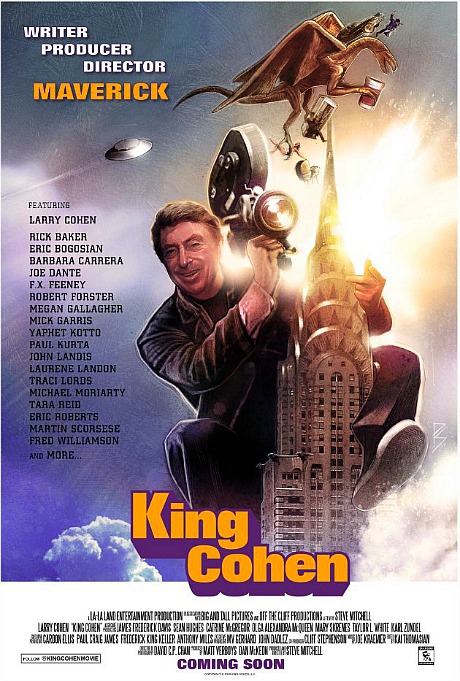
kingcohenposterB

After receiving a blessing from the man (Larry) himself, Steve set about the mammoth undertaking of  not only pulling together the interviews with Cohen’s many collaborators, all of the footage of his many works , but also the financing to bring these and the countless other elements together to form KING COHEN: The Wild World of Filmmaker Larry Cohen.

This truly insightful and utterly entertaining look at the, thus far continuing, career of Cohen is the passion project of a man with whom I share a kinship. Not only for the stories behind the men who make the movies, but also how the films we know and love were pieced together with money, dreams, light, shadow and the technical tools which help capture and refine the many wondrous adventures we as cinema goers have been relishing since our very first experiences.

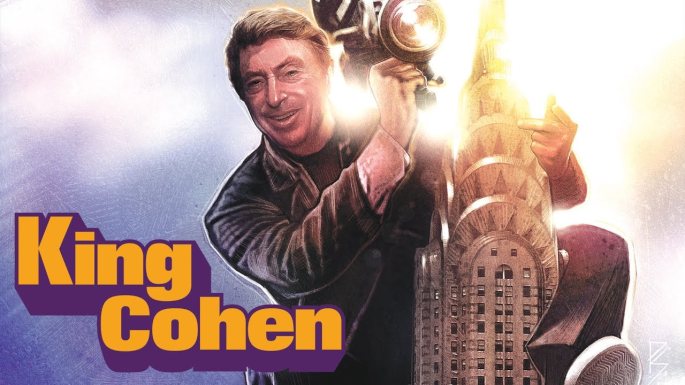
King Cohen Fantasia 2017-thumb-430xauto-67916

KING COHEN is a great film made by a really great guy, and it is my hope, as it is Steve’s hope, that you enjoy the story of Larry Cohen, but also come away from watching the film wishing to then seek out and discover the movies contained within that you may have only experienced for the first time as part of the documentary. The films of the filmmaker that inspired Steve’s film in the first place. (that’s a lot films)

Enjoy…

It’s good to be the King: An interview with Larry Cohen by Kent Hill

There is a quote attributed to Robert Rodriguez (another independent maverick filmmaker) that states:

“If you are doing it because you love it you can succeed because you will work harder than anyone else around you, take on challenges no one else would dare take, and come up with methods no one else would discover, especially when their prime drive is fame and fortune. All that will follow later if you really love what you do. Because the work will speak for itself.”

It is the always interesting, ever-changing, always inventive, ever professional life and work of Larry Cohen that really personifies the above quotation. King Cohen has been out there in one form or another in an impressive career spanning multiple decades. He has been the director of cult classics; he has been the writer of hot scripts that have incited Hollywood bidding wars. His work has been remade, imitated, venerated.

These are the hallmarks of a man and his movies whose personal voice rings out loud and clear, high above the commercial ocean of mainstream cinema that carries, beneath its shiny surface, schools of biodegradable blockbusters that are usually forgotten about only moments after having left the cinema.

This is not true of the films of Larry Cohen. For his work is the stuff (pardon the pun) that came before, the stuff the imitators latch on to, the stuff from which remakes and re-imaginations are conceived. This is the fate of the masters. The innovators come and bring forth art through trial and error. They are followed by the masters who take the lessons learned from the innovators and make them, shape them by sheer force of will. But, then there comes the imitators who stand on the shoulders of these giants and take home the glory.

Still, when there is an artist that is in equal parts innovator and master; this causes the imitators to stand baffled.

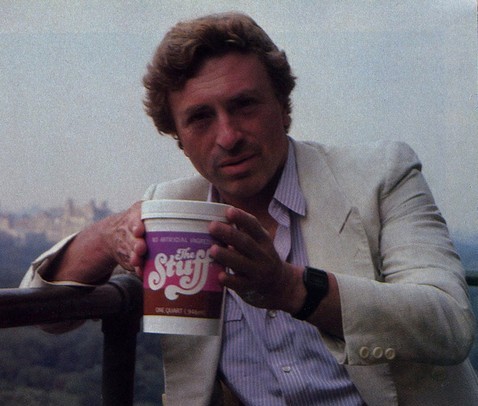
behind-the-scenes-the-stuff-larry-cohen-1985-2

Rather than accepting my humble oration, I urge you to seek out Steve Mitchell’s most excellent documentary KING COHEN. Watch it, marvel, rejoice, and remember that there are great filmmakers out there. They may not be coming soon to a theatre near you, but they did once, and their work still stands, silently, waiting to be discovered.

Until you get to see KING COHEN please, feel free to bask in my little chat with the king himself, Larry Cohen, a gentleman of many parts, many stories and of course . . . many movies.

Ladies and Gentlemen . . . Larry Cohen.

IMG_0691

Robert Rodriguez’s Desperado 

Robert Rodriguez’s Desperado is the original south of the border shoot em up bloodbath, bar none. I’m aware it’s a sequel/remake of Robert’s breakout debut El Mariachi, but the now legendary style and brutality he cultivated started to blossom here in the Mexican desert with scowling Antonio Banderas and his guitar case packed with heavy artillery. The aesthetic coalesced into something measurable here, whilst in Mariachi we only saw fits and starts. Here the tone is solidified and paves the way for the magnum opus that is Once Upon A Time In Mexico, my favourite Rodriguez flick. It all starts with the image of Banderas sauntering into a scumbucket cantina, full of sweaty machismo and smouldering angst, laying waste to the place with more phallic firepower than the entire wild Bunch. It’s a time capsule worthy sequence that demonstrates the pure viscerally intoxicating effect that the action film has on a viewer, when done as well as it is here. Narrated by wisecracking sidekick Buscemi (Steve Buscemi, naturally), Banderas positively perforates the place, fuelled by the internal furnace of revenge, shrouded in the acrid scent of gunpowder and awash in tequila delirium. As soon as this sequence blows past, the credits roll up and we’re treated to a Mariachi ballad sung by Antonio himself, belted out with his band to ring in this hell-beast of a movie. Together, those two scenes are some of the very, very best opening sequences you can find out there, timelessly re-watchable. The rest of the film pulls no punches either, as we see El leave a wanton gash of carnage in his wake across Mexico, on a vision quest of violence as he works his way up the ranks of organized crime, starting with slimy dive bar owner Cheech Marin. Quentin Tarantino has a spitfire cameo, rattling off a ridiculous joke before El steps into yet another bar and the shit (as well as the blood) hits the fan. His endgame target is crime boss Bucho, played with terrifying ferocity by Joaquim De Almeida. It’s hard to picture an angrier performance than Banderas’s before Almeida shows up, but this guy is a violent livewire who’s not above capping off his own henchman like ducks in a row, puffing on a giant cigar and casually blowing the smoke in his concubine’s face mid coitus. El has a love interest of his own too, in the form of ravishing, full bodied Carolina (Salma Hayek). Hayek is a babe of the highest order, and their steamy candle lit sex scene is one of the most full on ‘jizz your pants’ rolls in the hay that 90’s cinema has to offer. This is an action film to the bone though, and they’ve scarcely mopped up and caught their breath before he’s forced to dispatch another horde of Bucho’s degenerates in high style. One has to laugh a bit when a guitar case becomes a full on rocket launcher during the earth shattering finale, but such are the stylistic dreams of Rodriguez, a filmmaker who is never anything short of extreme in his work. As if the guns weren’t enough, Danny Trejo shows up as a mute assassin who like to hurl throwing knives at anything that moves, and it’s this Baby Groot version of his Machete character years later that comes the closest to punching El’s ticket. The stunt work is jaw dropping as well, a tactile ballet of broad movements, squib armies that light up the screen, accompanied by gallons of blood that follows the thunder clap of each gunshot wound like crimson lightning. It’s a perfect package for any lover of action, romance, action, darkest of humour, action, oh and action too. When discussing films that have held up in years or decades since release, this one is not only a notable mention, it’s a glowing example and a classic that has just aged gorgeously.

-Nate Hill

Four Rooms


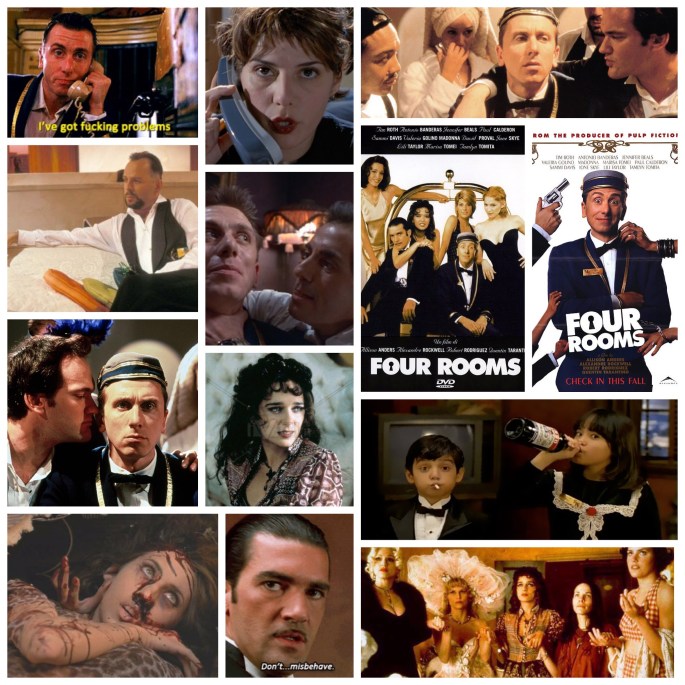
Four Rooms is an anthology film of sorts, segmented into four episodes, two of which are pretty inspired as they just happened to be helmed by Robert Rodriguez and Quentin Tarantino. The other two outings… well, let’s just say they kind of bring the whole film down. As solid as Robert and Quentin’s efforts are, they’re two quarters of a whole that needs to be engaging all the time to work as a cohesive package, and sadly that’s not the case. These four tales all take place in one hectic and seedy L.A. hotel, in various rooms that showcase a host of troubled weirdos just trying to get through the night. This quartet of nocturnal misadventures is tied together by one central character, Ted The Bellhop (a peppy Tim Roth). In the first, which is also the weakest, a goofy coven of witches carry out some asinine ritual. This is a well casted bit as we see the likes of Madonna, Ioan Skye, Valeria Golino, Lilli Taylor and Alicia Witt, but the tone comes off as grade school level shenanigans and there’s many a cringe to be had. The second is an oddly placed noirish bit that finds Ted caught between an unhinged gun wielding whacko (If I’ve said it once, I’ve said it a hundred times, David Proval is criminally underrated) and his femme fatale wife (Jennifer Beals). This one isn’t as awful as the first, yet feels a little off putting and claustrophobic. The third sees Robert Rodriguez step up to bat with ‘The Misbehavers’ a riotous black comedy concerning an upper class couple (Antonio Banderas and Tamlyn Tomita) who leave Ted in charge of their troublemaker kids for the night as they go out dancing. Anything can and does go wrong here, as the youngsters get into all kinds of shit including finding a half decomposed hooker (Patricia Vonne) stuffed in a mattress. Rodriguez shows comedic flair in fits and starts in the pulpy action side of his oeuvre, but here he’s purely having fun and the result is a sleazy hoot of a good time. The fourth and best is by Tarantino, and as such is mostly talking. But what talking it is; Ted stumbles into the penthouse suite which is home to a string out Hollywood film crew, and they’ve decided to place a dangerous bet that involves bodily dismemberment. Quentin is usually a fairly awful actor, but he’s not bad here as the motor mouthed ringleader of this insane posse, while Paul Calderon, Marisa Tomei and a very stressed out Bruce Willis chime in as well. This segment is pure gold, with an abrupt, trademark Tarantino payoff that leaves you chuckling darkly. All kinds of folks have cameos, so watch for the recently disgraced, supremely ugly Kathy Griffin, Lawrence Bender, Salma Hayek and others. There’s always stronger and weaker entries in an anthology film, competition is par for the course. This one has quite the ups and downs though, and would have been far better off being just a Tarantino/Rodriguez double feature, but oh well. 

-Nate Hill

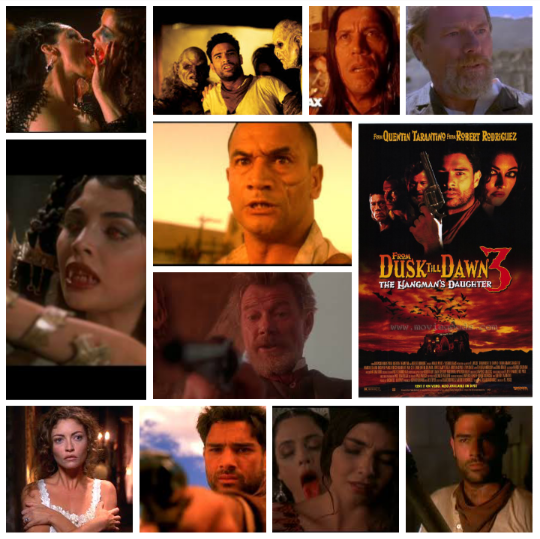
From Dusk Till Dawn 3: The Hangman’s Daughter- A Review by Nate Hill 

Some franchises feel stale and wrung out by the time the third effort comes along, but not From Dusk Till Dawn. In fact I’d even be so bold as to say that despite not having quite such a budget and resources as the original Tarantino/Rodriguez splatter party, this prequel almost has more in the way of imagination. The first came out of the gate roaring and paved the way, the second was a more mellow heist orientated flick that incorporated the horror elements in as it went, but the third does something altogether different. It’s a period piece, set a hundred years in the past, sometime around the Mexican/American war. When notorious outlaw Johnny Madrid (Marco Leonardi) dodges the hangman’s noose and escapes, he brings abused daughter Esmerelda (Ara Celi) along and scrambles for the state line. The ferocious hangman is none too pleased, given the menacig scowl of Maori bad boy Temuerra Morrison, who played Jango Fett in another prequel we all love. Rounding up a posse, he hunts Madrid and his scurvy gang through the terrain. Madrid is unknowingly headed for a far worse danger though, when he and Esmerelda run straight into the iconic Titty Twister bar, dressed up like a frontier whorehouse this time around. Also along for the ride are a group of wagon travellers including a young newlywed couple (Rebecca Gayheart and Lennie Loftin), oddball Ezra (Orlando Jones) and the real life writer Ambrose Bierce, played with alcoholic grit and gallows humour by Michael Parks. Bierce is famous for actually disappearing somewhere in that area back then, and I like how the film cleverly weaves fact and fiction, putting in a commendable effort to make the turn of events fascinating beyond just a servicable horror level. Danny Trejo also returns, as he must, playing pretty much the same character he did in the first and second, never mind the fact that he keeps dying (you can’t really kill Danny, everyone knows this). I love the formula for these films; they always start out with a slower paced, pulp/crime style narrative that suddenly explodes into creature FX, blood orgies and vampire mayhem without much warning. The first was the bank robbers on the run with hostages, the second was the heist crew and the third is a rousing Desperado style actioner that morphs into the horror we all know is coming. Well produced with a lot of love and some real thought put into the story, exciting and provides more than enough for any horror fan. Definitely the better of the two sequels. 

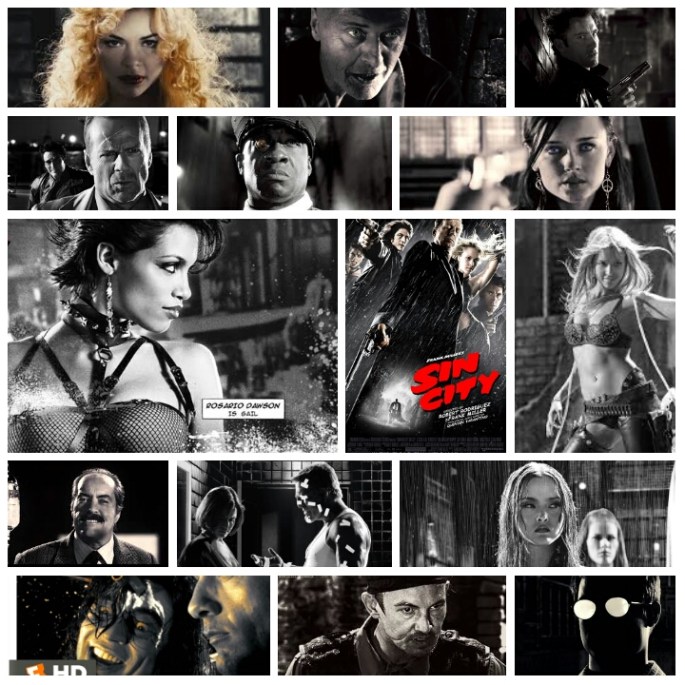
Sin City: A Review by Nate Hill 

I remember seeing the edgy character posters for Robert Rodriguez’s Sin City hanging on the movie theatre wall when I was younger, having no idea what Sin City was or any knowledge of the books, but thinking they looked incredibly cool and enticing. Then the trailer came out, and it was all I could think, talk or breathe about for months leading up to its release. I was obsessed. When opening weekend arrived I got my dad to take me, and spent two unforgettable hours of cinematic nirvana in a dark auditorium that was packed to the gills with fans old and young alike, each basking in the delectable black, white and colour speckled glow of the piece unfolding in front of us. I had never seen anything like it, and it blew my system into sensory orbit like nothing had before. Around this time I was just discovering a lot of Rodriguez’s and Tarantino’s career, poring over pulp and crime thrillers from all across the decades as my love for cinema expanded, and this was something I just knew would be special as soon as I saw that first provocative teaser poster. The innovation and artistic ambition used by the ever resourceful Rodriguez and his team led to gleaming critical reception, a massive box office hit and one of the most gorgeous pieces of art in the motion picture realm. His decision to simply lift the still frames out of Frank Miller’s graphic novels was something that not every director would be able to go along with, let alone wrap their minds around (director’s are a finicky lot who always have thir own bright ideas, even when the source material is already gold). Rodriguez was so in love with the books that he envisioned them onscreen just the way they were drawn, and that’s pretty much what you get in the film. The pre-credit sequence sets the dark, vibrant, moody and impossibly lurid setting of Basin City, a rotting heap of corruption  where almost everyone is either corrupt, sleazy or just outright evil, and even the ones that aren’t deal out some pretty heinous bouts of violence themselves. The prologue involves girl in in a red dress (Marley Shelton) conversing with a mysterious, well dressed man (Josh Hartnett). The scene takes a turn for the dark and tragic, we zoom out as Rodriguez’s self composed gutter lullaby of a score grinds into motion, and the glowering opening credits trundle by, a moment of a pure joy for anyone watching. The film is separated into three central vignettes, each from a different volume of the comics. The first, and strongest, features a sensational Mickey Rourke as Marv, a hulking bruiser built like six linebackers and basically impervious to anything that could kill a human being. After a heavenly night with hooker Goldie (Jaime King), he wakes up to find her lying dead next to him, not a mark on her. This gives his set of talents a purpouse beyond bar fights and roughing up abusive frat boys, and he wages a war of ultraviolence in her name, to his grave if he must. There are some villains in these stories that seem to be dredged up from the very bottom of the last pit of hell, just the worst of humanity’s many deplorable qualities. Marv eventually runs into evil arch bishop Cardinal Roark (a devious Rutger Hauer) and insane cannibal ninja sicko Kevin (Elijah Wood will haunt your nightmares)., on his bloody quest. Rourke’s genius even shines out through 12 pounds of prosthetic makeup slapped all over his mug, and he captures the wayward warrior soul in Marv, a restless anger and old school, Charles Bronson esque charm by way of Frankenstein’s monster. His work is a great way to kick off the first third of the film, and the gravelly narration hits you right in the film noir nostalgia. The second segment is a lot more lively, with far more people running around, sans the melancholy of Rourke’s bit, and instead emblazoned with a war cry of a story starring Clive Owen as Dwight, a hotshot tough guy who gets on the wrong side of seriously scummy dirty cop Jackie Boy (a growling Benicio Del Toro having a ball) who likes to beat up on waitress Shelley (Brittany Murphy). Dwight pursues him to Old Town, a district run by lethal militant prostitutes lead by no nonsense Gail (Rosario Dawson can use that whip and chain on me anytime). Then everything goes haywire (I won’t say why), and Michael Clarke Duncan gets involved as a weirdly articulate, golden eye sporting otherworldly mercenary named Manute. This middle section is the one that feels most like a comic book, where as the other too have more of a noir flavor, like their old Hollywood roots. The third and most depraved chapter (which is no light statement in this town), sees aging Detective John Hartigan (Bruce Willis) lay his life down in order to protect young Nancy Callahan from a terrifying pedophile child killer (Nick Stahl) who is the spawn of despicable US Senator Roark (Powers Boothe sets up a cameo of the pure evil he would go on to exude with his much larger role in the sequel). Jessica Alba plays the adult version of Nancy, now an exotic dancer and once again in danger from Stahl, who now has some… interesting changes to bis appearance, courtesy of genital mutilation from Hartigan years before. It’s one demented set of stories that would be almost too much to take in the real world, but this is Sin City, a realm that exists in the darkest dreams of Raymond Chandler and his ilk, a seething netherworld of stunningly beautiful women, ghastly corruption and terror,  and good deeds that go unheralded in the night, bloody retribution perpetrated by antiheros and tragic scapegoats who know damn well what a pit of hell their town is, and that nobility is but a drop in the bucket of injustice they wade through on their way to violent exodus. The cast list goes on for miles longer than I’ve mentioned so far, but look out for Alexis Bledel, Carla Gugino, Michael Madsen, Jude Ciccollela, Nicky Katt, Nick Offerman, Tommy Flanagan and Devon Aoki as Miho, a deadly little hooker assassin who can turn you into a pez dispenser with her razor sharp katana. The level of violence on display throughout the film is so far over the top that after a while it seems almost Looney Toons in nature. Throats are slashed, heads are removed, testicles are ripped off, skulls are crushed and all manner of maiming and murder inflicted. What made it acceptable with the ever gay MPAA though is the fact that mic of it exists in the black and white mode of visual storytelling, and only a few instances of actual red blood seen.  That goes for more than just the violence though in terms of color. Amid the sea of stark black and white there are beautiful hidden gems of colour that you have to train your eye to find. A pair of green eyes, a crimson convertible cadillac, the sickly yellow pallor of Stahl’s mutated skin. That’s but a taste of the patchwork quilt of visual artistry you are treated to here, and has constantly been emulated in either work since, but never quite effectively as here. That’s the idea of it though, a heavily stylized piece of hard boiled neo noir that exists simply to plumb the very depths of darkest genre territory, do justice to Miller’s books with a laundry list of wicked actors, a bonus scene directed by Quentin Tarantino and a story that’s pure noir to its bloodstained bones.

MACHETE – A REVIEW BY J.D. LAFRANCE

danny-trejo-as-machete

When he made his half of the Grindhouse double bill (2007), Robert Rodriguez also put together a trailer for a film he would like to see. And so, Machete (2010) was born – a Mexploitation action film about an ex-federale who is set-up, double-crossed and left for dead. However, the origins for this project go back even further to 1995 when Rodriguez made Desperado, the second film in his El Mariachi trilogy. It would be the first time (but certainly not the last) he worked with veteran character actor and professional badass Danny Trejo. He’s someone you’ve probably not heard of but have definitely seen. If you need a tough-looking tattooed henchman, he’s your man. While working on Desperado, Rodriguez envisioned Trejo starring in a series of action films as Machete but at that time the director did not have the clout to get someone to bankroll a Latino action film that didn’t feature someone with movie star looks like Antonio Banderas.

Rodriguez never forgot about his pet project and over the years cast Trejo in several of his films. Even though the Grindhouse films were a commercial failure, audiences loved the faux trailer for Machete. Rodriguez managed to convince a Hollywood studio to finance it with a modest budget and used his connections to assemble an impressive cast that included the likes of Robert De Niro, Jessica Alba, Steven Seagal, and “introducing” Don Johnson. However, what worked as a movie trailer be too much of a good thing as a feature film?

The prologue sets up everything we need to know about Machete (Trejo) – he’s a badass Mexican federale set-up by his corrupt superior and left for dead by local druglord Torrez (Seagal). It also sets just the right tone as we see Machete hacking and slashing his way through a house of bad guys with bloody abandon. Meanwhile, in the United States, a corrupt, ultra-conservative Texan senator named John McLaughlin (De Niro), campaigns on a platform of preventing illegal immigrants from crossing the border. He even employs a border vigilante group, led by the brutal Von Jackson (Johnson), to enforce his policies.

Sartana Rivera (Alba) is an upstanding Immigrations enforcement officer investigating the problem through legal channels and ends up crossing paths with Luz (Michelle Rodriguez), a no-nonsense taco stand operator who moonlights as a revolutionary operating an underground railroad of sorts for her Mexican brothers and sisters. Machete, now a day laborer (or, at least that’s his cover), is hired by Michael Booth (Jeff Fahey), a local businessman, to kill the Senator for $150,000. Machete is set up, shot and forced to go into hiding. With the help of Rivera and Luz, he plots revenge on the men that betrayed him.

It’s awesome to see Danny Trejo finally get to carry a film for once and play a character that doesn’t get killed off. He brings his customary intensity as the strong, silent man of action and in many respects the film is Rodriguez’s present to the actor as he has him take down tons of bad guys, look cool doing it, and hook up with many of the film’s lovely ladies, including Michelle Rodriguez, Jessica Alba and Lindsay Lohan! Robert De Niro is a lot of fun to watch playing a John McCain meets George W. Bush-esque xenophobic politician. It’s also great to see Steven Seagal as a powerful criminal and Machete’s arch-nemesis, not to mention appearing in a mainstream film that didn’t go straight-to-home video.

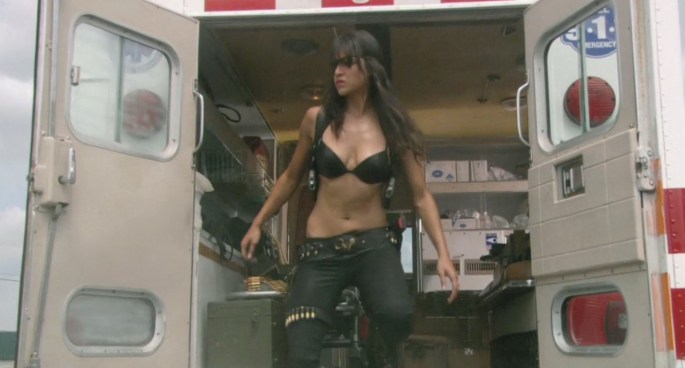
Michelle Rodriguez adds another tough chick role to her resume as she portrays the female Mexican equivalent of Che Guevara but with a dash of Snake Plissken. Another fun bit of casting is Lindsay Lohan playing the messed up celebutante child of Booth. She and Rodriguez have some fun riffing on her public persona and kudos to the director for not bowing to peer and public pressure about her party girl reputation and showing that regardless, she still has the acting chops. Rodriguez regulars Tom Savini and Cheech Marin show up in memorable bit parts as a deadly assassin and Machete’s ex-federale now-priest brother.

It’s no secret that Rodriguez is a filmmaker that wears his influences on his sleeve. For example, Desperado was an homage to the Hong Kong action films of John Woo and From Dusk Till Dawn (1996) and Planet Terror (2007) evoked the films of John Carpenter and George Romero. Growing up in the 1980s, Machete is Rodriguez’s love letter to the films produced by Cannon Films during that decade. They were responsible for cranking out an endless stream of generic action films starring the likes of Charles Bronson, Chuck Norris and Michael Dudikoff. In these films, the action stars were often a one-man army capable of wiping out the fighting force of a small country seemingly single-handedly. The same goes for Machete who is an unstoppable killing machine bent on revenge.

Machete is full of outrageous, over-the-top violence and inventively staged action sequences, like one scene where Machete bungee-jumps from one floor of a hospital to another with the aid of an evil henchman’s large intestine. In this respect, the film has the same gonzo, go-for-broke action that Rodriguez orchestrated in the underrated Once Upon a Time in Mexico (2003). Living up to his namesake, Machete finds all sorts of ways to kill the bad guys with a vast assortment of sharp weapons. Machete is a lot of fun and never outstays its welcome as Rodriguez knows how to keep things moving so that things never get boring.

michelle-rodriguez-as-luzMachete not only features all kinds of wild action sequences but also has something on its mind, commenting on the rampant immigration problems that continue to plague the states along the United States/Mexico border. Along the way, Rodriguez plays up and makes fun of Latino stereotypes (they are all day laborers and love tricked out cars) only to twist them into a rallying cry, a call for revolution that takes full bloom by the film’s exciting conclusion in a way that has to be seen to be believed. Best of all, Rodriguez has created yet another awesome Latino action hero. Forget Sylvester Stallone’s The Expendables (2010), Machete is the real deal and a no-holds-barred love letter to ‘80s action films. As great as it was to see many of the beloved action stars from the ‘80s and 1990s, I felt that Stallone’s film never went far enough. Rodriguez’s film doesn’t have that problem as it gleefully goes all the way with its cartoonish violence.

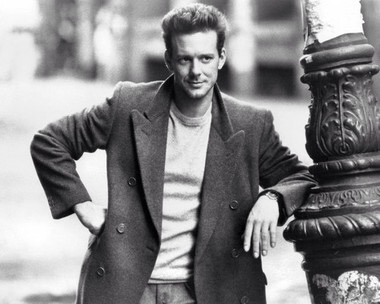
Top Ten Mickey Rourke Performances: A list by Nate Hill


Mickey Rourke has been called the Hollywood outlaw by some, a difficult outsider by others, a master of his craft by anyone with sense, and has never not been a completely surprising thespian who refuses to reside within one box for long. He’s an outspoken, candid guy who has never been afraid of speaking his mind or laying down the verbal hammer. For me, Mickey is an undisputed genius of his craft and has shined like a brilliant nebula of talent, intuition and brilliance in each and every role he has brought to our screens. Here are my personal top ten performances from one of my all time favourite actors: 

10. Billy Chambers in Once Upon A Time In Mexico
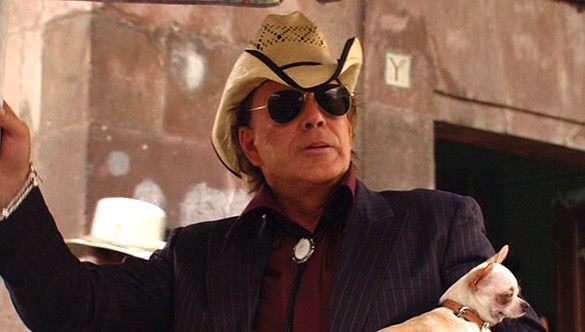
  

Director Robert Rodriguez allowed Mickey to carry around his own personal chihuahua (something that he has walked off of a set in a huff over in the past), and encouraged him to wear his personal shiny purple suit to play Chambers, a gruff cowboy hiding out in Mexico and working for a ruthless cartel boss (Willem Dafoe, a frequent Rourke collaborator). Chambers seems like a sly amalgamation of several early characters he played, world weary from too many skirmishes and events gone wrong, marinating in the Mexican sun and wishing for an exodus from criminal life. Billy has trouble with the sadistic tasks which the cartel orders him to carry out, showing a delineation between a life of crime and an evil path. Regretful, posturing and laconic, the first team up between Rourke and Rodriguez turns out to be a delight. 
9. Captain Stanley White in Year Of The Dragon
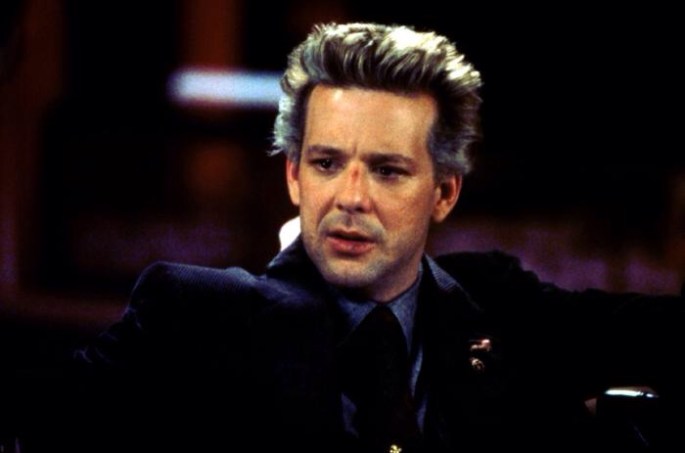
  

Rourke first did a bit part for manic maestro Michael Cimino in the notorious Heaven’s Gate, a precursor to his turn in this blistering cop film as a belligerent, hard nosed and uncompromising cop who will do anything in his power, and even a few things outside it, to bring down a Chinese crime syndicate. White has tunnel vision, a Viet Nam war veteran whose internal battery is set on search and destroy mode regardless of any collateral damage, of which there is a considerable amount. Rourke takes a blow torch to the character until the edges flare and fray, never letting the heat lower for a second, be it an introspective moment that smoulders or one of many thunderous outbursts of self righteous, racist fury. 
8. Randy ‘The Ram’ Robinson
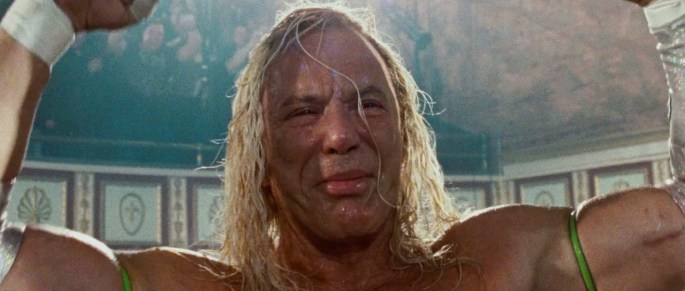
  

Some see this role as Rourke’s comeback, but similar to Randy ascending the ranks of his former glory only to take a hazardous dive off the ring and back down again, such was the case for Rourke, who is back to smaller films. For a single piercing couple hours, he brought us legendary work in an Oscar nominated turn that burns deep, encased in Darren Aronofsky’s intrepid direction. Randy is a fallen Titan who is looking for another shot in both his professional and personal life, and Rourke gives him the presence to hit home. 
7. The Motorcycle Boy in Rumble Fish
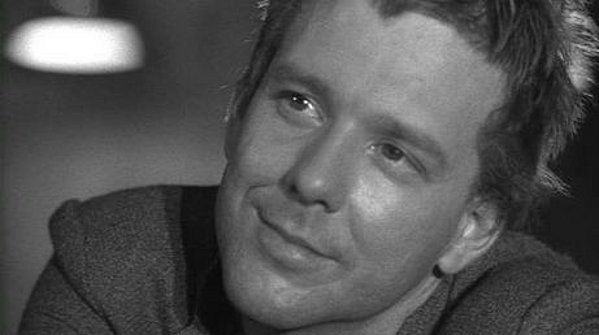
  

Returning from a mysterious motorbike odyssey, speaking in cryptically poetic fashion and filling out the restless bad boy archetype like no other, this is one of Rourke’s most fascinating turns, in a surreal black & white tumble town that evokes the 1950’s beautifully. He’s relaxed yet uneasy, friendly yet vaguely portentous and obtains an intangible state of heightened awareness with his work that you can never quite pin down or explain properly in words. His character’s resolution seem fittingly oblique, matched by his performance that simultaneously cries out and holds back, often mirroring each other eerily. 
6. Jim Olstadt in The Pledge
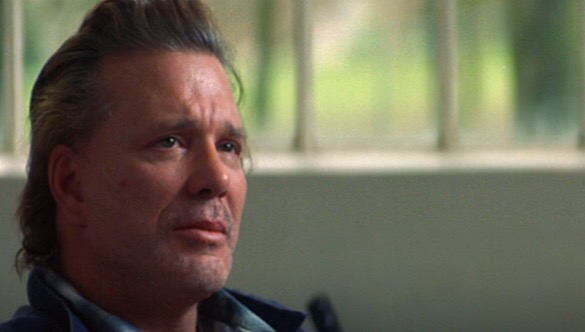
  

Sean Penn cast Rourke for an appearance that lasts for less than a minute, and he manages to quietly devastate and then some within that time. He plays a grieving father who is questioned by Jack Nicholson’s obsessed detective about his young daughter, who disappeared several years before. Unshaven, chain smoking and hiding behind a vacant expression, Nicholson’s queries trigger a well of raw anguish which spill out unforced into the certain and seem remarkably genuine. It’s uncomfortable, despairing and you just want to walk right into the screen and give poor Olstadt a hug. His work is that good, a gem of an appearance in probably the best film on this list. 
5. Marv in Sin City
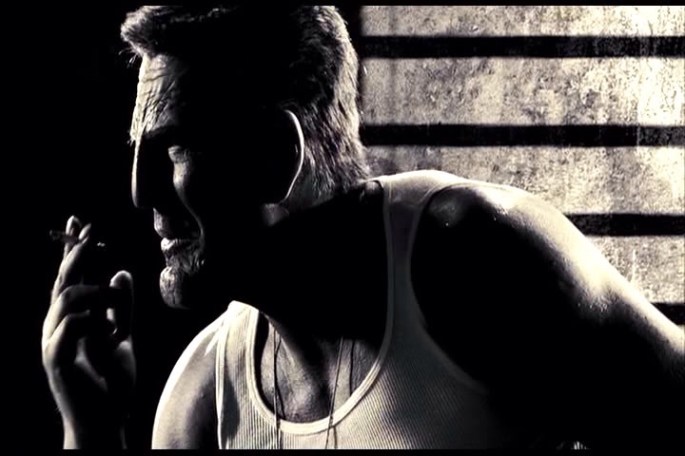
  

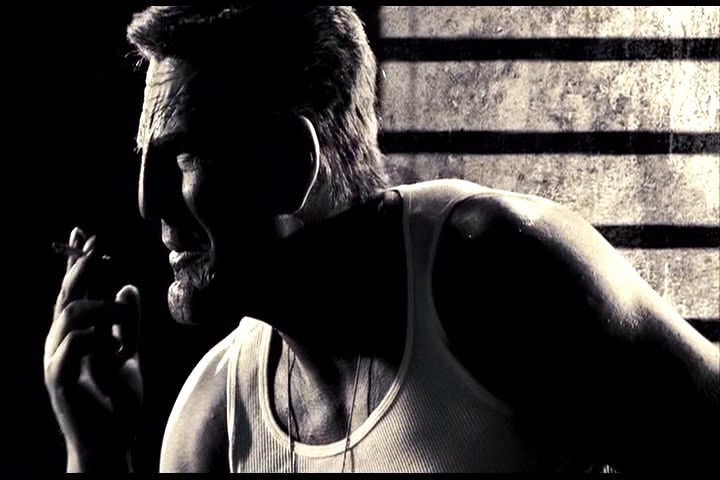
When Robert Rodriguez told Frank Miller of his notion to cast Rourke as the hulking bruiser Marv, Miller’s response was “What, that skinny guy from Body Heat?”. Rodriguez had a vision though, which Rourke followed through with in legendary fashion. Marv has to be played by a performer with the right presence (Ron Perlman and Clancy Brown could have taken a decent crack), someone with somber grit and just the right shot of blackest humour. Rourke sets the role on fire, filling every gorgeously composed frame with his Boulder tough, terrifying and surprisingly touching take on the character.
4. Ed Moseby in Domino
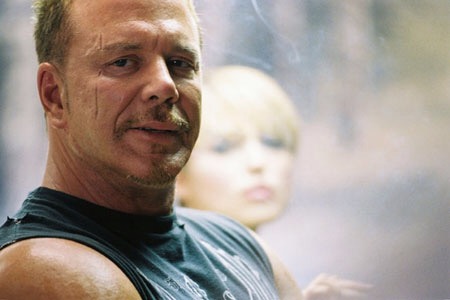
  

The title of most legendary bounty hunter in Los Angeles is a pretty steep hill for any actor to start out on in at the beginning of their performance. Mentor to Domino Harvey, street smart professional, world weary badass and all around character, Ed is one third of the film’s psychedelic soul and Rourke charges full guns ahead with the work, pausing at penultimate crossroads to show us the seething regret and sadness that Ed harbours beneath the violence and tough guy shell. There’s one scene with co star Edgar Ramirez that seems pulled straight from Rourke’s own history, where the camera sits still long enough to allow him to show piercing truth. 
3. Charlie in The Pope Of Greenwich Village
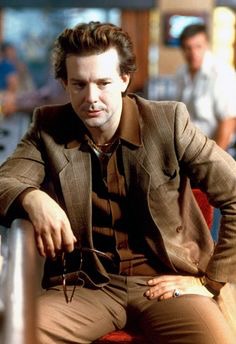
  

Charlie is a small time thug who does his absolute best to not be a screw up. Only problem, he’s saddled with best friend Paulie (Eric Roberts) who happens to be the biggest screw up this planet has ever seen. The pair are comic dynamite, Rourke setting off on exasperated tirades whenever Roberts gets them in hot water, and then using his brand of cunning and survival instinct to bail them out. Rourke shows a fox-like resourcefulness, a hurricane of anxious energy that cools over when evasive action is required. Charlie is Rourke in his youth and loving the game, firing synaptic bursts of energy at Roberts and receiving them back in synergy, showing off what a great onscreen duo they make.
2. The Cook in SPUN
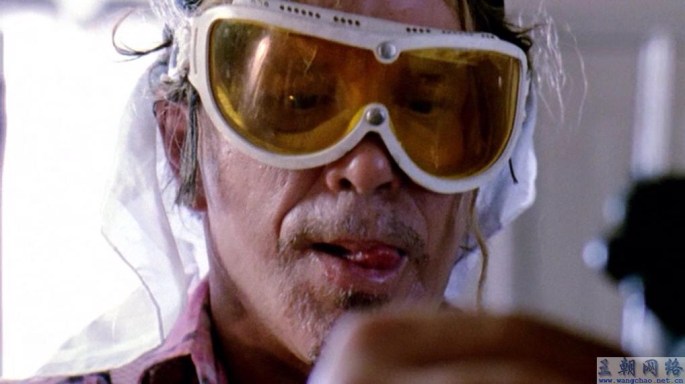
  

A cowboy hat wearing, meth cooking oddball hardly seems like the type of character to land an emotional punch, and for the most part you’d be right to think that. Rourke is like Jim Carrey in the mask here, inhabiting an overblown and dizzyingly stylistic aesthetic that exists to show us the unhinged lifestyle of meth addicts. He jumps from serious to scary to funny to sad so quick it’s hard to put the puzzle of his character together, until a n emotional wipeout of a monologue that’s delivered late in the last act, bringing his sad arc full circle. Be it a seminar on the political qualities of Pussy, a whopper of a tiff with girlfriend Brittany Murphy or a brief tongue in cheek encounter with Eric Roberts, it’s glitzy grungy playtime all the way, until we get to that one extended speech, which halts the mayhem and sobers the viewer up post-delirium. It’s tearful in a film where you’d last expect it, and Rourke handles the 180 degree turn like the master he is. 
1. Harry Angel in Angel Heart
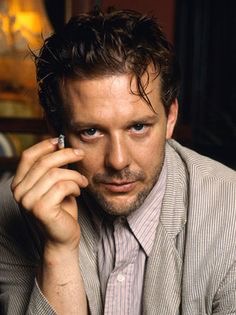
  

In one of the finest and most flat out unnerving southern gothic horror films ever made, Rourke throws himself at the role of a down and out private detective who is hired by a sinister Robert De Niro to find a missing singer who doesn’t even seem to exist at all. Harry starts off in control, assured, well travelled. His nerves begin to shake when a trail of hideously murdered bodies pile up behind him, seemingly connected to his search. Rourke slowly unscrews the lid of Harry’s sanity in a sweaty frenzy of fractured machismo and blossoming terror, his fear riling up the audience with each new grisly discovery. There’s plot revelations, shocking violence, the mother of all graphic sex scenes, steeped melodrama and a near constant state of primeval fear, all infused into his performance with skill and tact. For me, Rourke has never been more ‘Rourke’, in all facets, than he was as Angel. 
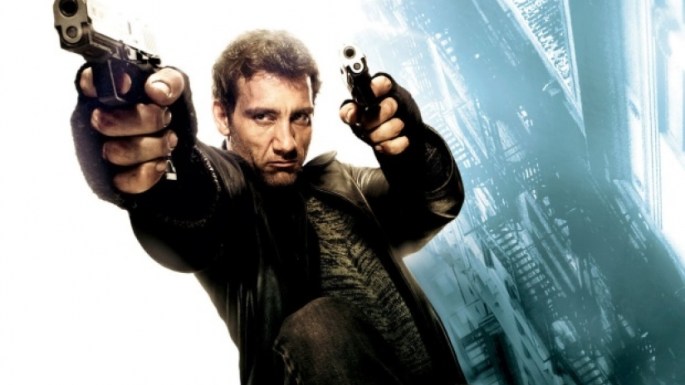
SIN CITY: A DAME TO KILL FOR – A REVIEW BY J.D. LAFRANCE

sin-city2

In 2005, Robert Rodriguez adapted the comic book Sin City into a film with help from its creator Frank Miller who co-directed it. Convincing the veteran comic book writer/artist to come on board was a smart move on the filmmaker’s part as it assured that Miller’s luridly violent noir tales would be faithfully translated. This was achieved through a then-groundbreaking green screen environment that allowed Rodriguez to place his actors in Miller’s stylish world with a striking look comprised of black and white with strategic splashes of color. This innovative approach attracted a star-studded cast that included Bruce Willis, Mickey Rourke, Clive Owen and Benicio Del Toro among others. The final result dazzled audiences and was a commercial success.

A sequel seemed inevitable, but instead Rodriguez went on to team up with Quentin Tarantino on the box office misfire that was the Grindhouse double bill (2007) while Miller applied the Sin City aesthetic to a disastrous adaptation of Will Eisner’s comic book The Spirit (2008). Over the years, talk of a sequel surfaced occasionally with the likes of Johnny Depp and Angelina Jolie being mentioned in potential leading roles. Nine long years later and the stars (and money) aligned for Rodriguez and Miller to reunite with Sin City: A Dame to Kill For (2014). The film promptly tanked at the box office and received mixed to negative reviews. What happened? Did Miller and Rodriguez wait too long? A green screen-heavy film is no longer a novelty. Two cast members with characters in the film had passed away and some roles have been recast. The general consensus seems to be that they waited too long to make a sequel and interest in the film had waned.

Some might complain that A Dame to Kill For is just more of the same. As a big fan of the first film this is not necessarily a bad thing. After seeing Sin City, I wanted to see more of Miller’s stories brought to life. In addition to adapting A Dame to Kill For and the short story “Just Another Saturday Night” from the Booze, Broads, & Bullets collection, Miller created two new stories specifically for the film – “The Long Bad Night” and “Nancy’s Last Dance.” By doing this, he has given the fans a real treat by offering two stories where the outcome is not known and introducing new characters into this universe.

In “Just Another Saturday Night,” Marv (Rourke) wakes up amidst a car accident unable to remember how he got there. He proceeds to recall what happened via flashback on a snowy Saturday night. This segment is a nice way to reacquaint us to the brutal yet darkly humorous world of Sin City. “The Long Bad Night” introduces us to Johnny (Joseph Gordon-Levitt), a confident gambler who decides to take on Senator Roark (Powers Boothe), the most powerful man in the city, in a high-stakes poker game and gets more than he bargained for. It’s a lot of fun to see Joseph Gordon-Levitt square off against Powers Boothe, the former playing a young upstart and the latter an evil, influential man.

The centerpiece of the film is “A Dame to Kill For,” which features Dwight McCarthy (Josh Brolin) as a private investigator taking photographs of a businessman (Ray Liotta) cheating on his wife with a hooker (Juno Temple). When the man tries to kill her, Dwight intervenes. He has a tortured past, which involves keeping his homicidal impulses in check. Afterwards, Dwight gets a call from an ex-lover by the name of Ava Lord (Eva Green), a beautiful woman married to a very rich man. She’s in some kind of trouble and he finds himself drawn into her tangled web yet again. He soon runs afoul of her imposing bodyguard Manute (Dennis Haysbert) who proceeds to work him over. Realizing that he’s out of his depth and bent on rescuing Ava, Dwight enlists Marv’s help, which only complicates things in typical noir fashion.

In “Nancy’s Last Dance,” Nancy Callahan (Jessica Alba) is an exotic dancer still haunted by the death of her lover John Hartigan (Bruce Willis) and is obsessed with avenging his death by killing Roark, the man responsible for it. Over time, she’s counseled/haunted by Hartigan’s ghost, which drives her increasingly crazy.

Actors Josh Brolin, Joseph Gordon-Levitt and Eva Green slip seamlessly into the Sin City world. It helps that they have that old school noir look, especially Brolin with his chiseled tough guy features and gravelly voice – perfect for his character’s voiceover narration. In no time, the actor makes you forget that he plays a character once portrayed by Clive Owen. Gordon-Levitt is excellent as the young newcomer with a secret and manages to elicit sympathy for his ultimately doomed character. Green plays Sin City’s reigning femme fatale. The stunning actress has an alluring, exotic look and can turn a vulnerability on and off at will all the while playing a cold-hearted manipulator of men. Green gives key line deliveries the right venomous spin that makes Ava Lord a fearsome figure in this world.

It’s great to see Mickey Rourke return to the role of Marv, a character he inhabits so well. He brings a world-weary charm and a much-needed dose of dark humor to the film. Powers Boothe, who only had a minor role in the first film, gets a much meatier part in A Dame to Kill For and it’s a lot of fun to see him sink his teeth into such a deliciously evil character. Unfortunately, Jessica Alba is once again miscast as Nancy, the stripper with a heart of gold. While she looks the part, the actress doesn’t have the chops to pull off the tricky evolution of character that goes from sweet girl traumatized by the death of loved one to a revenge-obsessed vigilante. Miller’s stylized dialogue needs to be delivered a certain way. Some actors can pull it off and others can’t. Alba falls into the latter category and it becomes painfully obvious in her segment. Even her dancing is unconvincing.
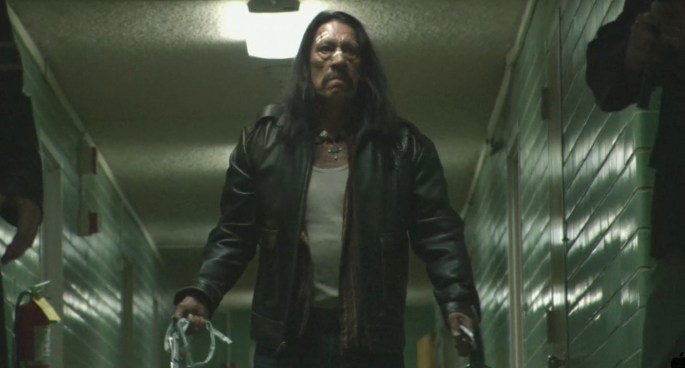
While it no longer has the technological novelty factor as an incentive (shooting it in 3D really didn’t help either), there is certainly no other film out there that looks like Sin City. There have been a few imitators since, most notably The Spirit and Max Payne (2008), but the look of the film is so specific to its universe that few have dared to emulate it. Rodriguez has said that with the first Sin City he held back somewhat stylistically for fear that it would be too much for audiences. Emboldened by its commercial success, he took the look further and made it even more faithful to Miller’s comic book. So, there are things like Ava being rendered in black and white accentuated with red lips and green eyes, and visual flourishes like Marv recounting past exploits while a tiny car chase revolves around him, or the moody storm clouds that hang heavy in the cemetery where Nancy visits Hartigan’s grave. And why not? It’s not like the characters or the world they inhabit are based on any kind of reality. They exist in a hyper-stylized neo-noir universe drenched in atmosphere.

The dialogue in A Dame to Kill For is riddled with clichés and the characters are drawn from archaic stereotypes, but that’s the point. Miller is paying homage to the Mickey Spillane crimes stories he clearly idolizes. The film immerses itself in noir clichés and wears them proudly like a badge of honor, refusing to make any excuses for trading in them. There’s really nothing more to it than that, which may make the film seem instantly forgettable, but Rodriguez’s film never aspires to be art as it is unrepentedly sexual and violent with very few if any redeeming characters. The first Sin City film came out at the right time and tapped into popular culture zeitgeist. A Dame to Kill For is not so lucky, but you have to give Miller and Rodriguez credit for sticking to their guns and delivering another faithful adaptation of the comic book, which may only appeal to fans and probably won’t convert the uninitiated.