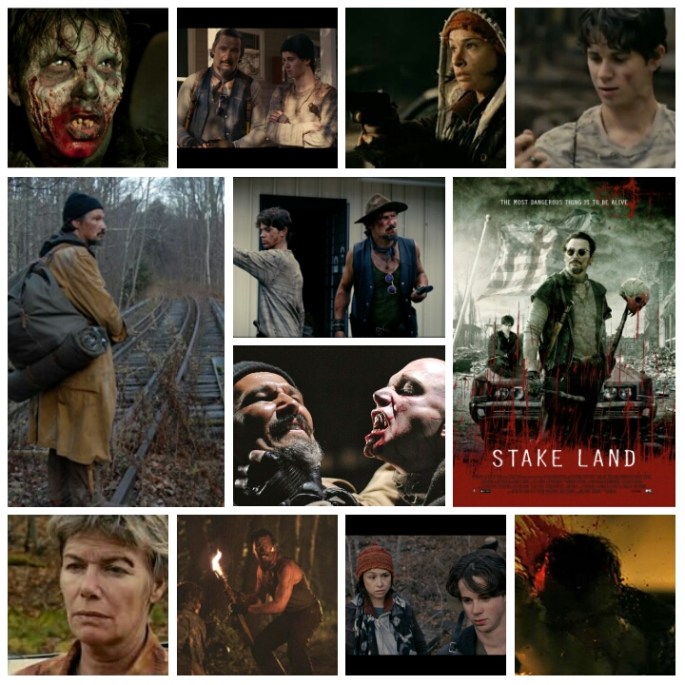
Jim Mickle’s Stake Land: A Review by Nate Hill 

Jim Mickle’s Stake Land is one of my favourite vampire films of the last twenty years, ousted only by 30 Days Of Night, but that one is tough to compete with in anyone’s book. The vampire movie and all it’s trimmings has been done to death a million times over, under every stylistic filter and narrative tweak you could imagine, so this one can’t really break too much new ground simply by default, but what it does do is show us a bleak, lived in and worn out world, a world that has been under attack from vampires for a long time, and as such is starting to fray at the seams. These aren’t quiet, regal, brooding vamps either, they’re quick, feral nasties who actually pose a threat and cause a lot of damage, as our young hero Martin (Connor Paolo)  finds out in an arresting opening sequence set in a farmhouse. Left without a family in a world he not ready for, he’s taken under the wing of gruff and rugged Mister (Nick Damici, also the brilliantly talented writer behind Mickle’s films), and the two set off on an increasingly tragic, Cormac Mccarthy esque trek across a broken world, finding lost souls and ravenous monsters at every turn. One thing that seems to escape many vampire films is an emotional core, something to latch onto amidst the cold and clinical happenings, but this one finds that in several key places, including the father son dynamic between Mister and Martin, as well as an encounter with a wounded pregnant girl (Danielle Harris in what is probably her best work so far). It’s sad, downbeat stuff though, without much hope or solace for anyone involved. Kelly McGillis of all people has a brief appearance you can keep your eyes peeled for. Grungy, desolate, tragic, extremely well made, touching and unique in the vampire subgenre. Highly recommended. 
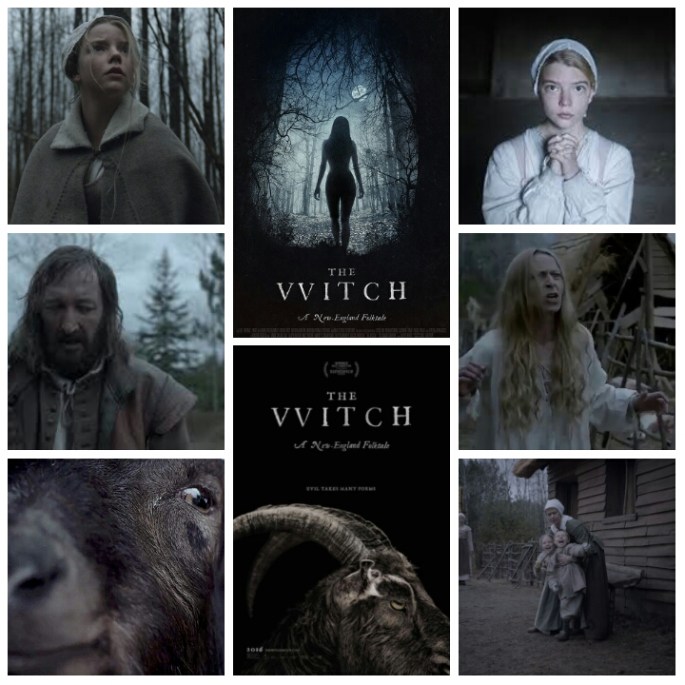
The Witch: A Review by Nate Hill 

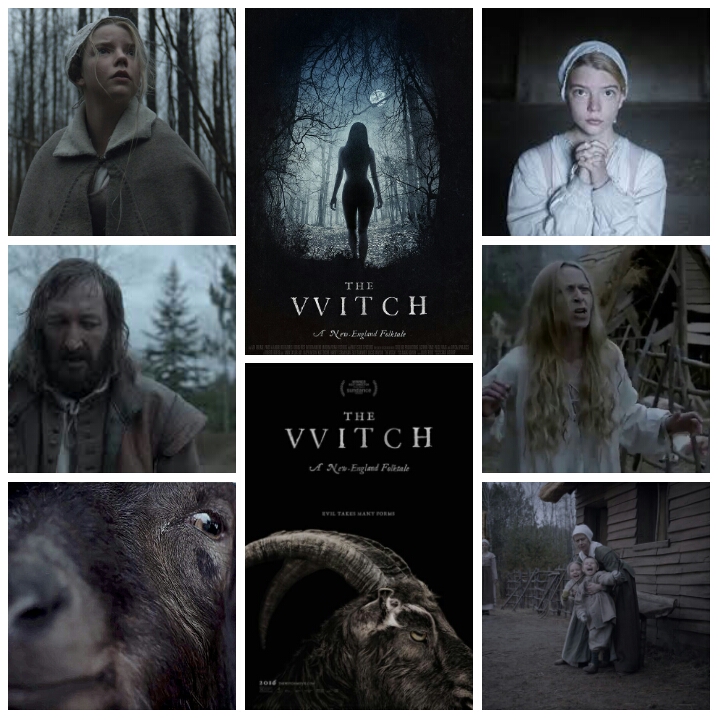
 The Witch offers up an oppresively freaky folktale that still manages to go for broke with demented and disturbing stuff, whilst still keeping it moody and reigned in in equal measure, walking an admirable tightrope with style on one side, substance on the other. The substance lies in the interpersonal relationships between a hapless New England pioneer family trying to hack it alone in the land, living next to a deep dark forest that serves home to the titular cretin, plaguing their existence at every turn. The style lies in that forest, as well as a musical score that kwill shake your bones up and then some, accenting a tale of religious dread, insidious distrust and primal paranoia in a time before reason had grasped humanity, it seems. Plus there’s a big scary fucking goat called Black Philip who seems sentient, which was enough to give me the creepin willies. The family is booted from a plantation for some vague religious politics involving the haughty patriarch (Ralph Ineson is excellently fervent and riled up). Tryon to start a homestead on their own proves to be one nightmare after another out there though, especially when virginal daughter Thomasin (Anya Taylor Joy, a striking beauty) loses the young baby during a split second game of peekaboo on the outskirts of the forest. Things go depressingly downhill from there as the collective sanity of this clan starts to evaporate into feverish mania, while the woods and the witch constantly loom over everything. The dialogue is all period specific which helps with authenticity, and as far as atmosphere goes, you practically drown in it, quite an achievement really. I took quite a long time in getting to see this, and I didn’t quite expect then level of literal horror on display. I was thinking it’d be more unseen, metaphorical, slow paced. It really does mean witch though, as well as that nasty damn goat. You’ll watch your back at the petting zoo after sitting through this one. Well done. 

The Sentinal: A Review by Nate Hill 

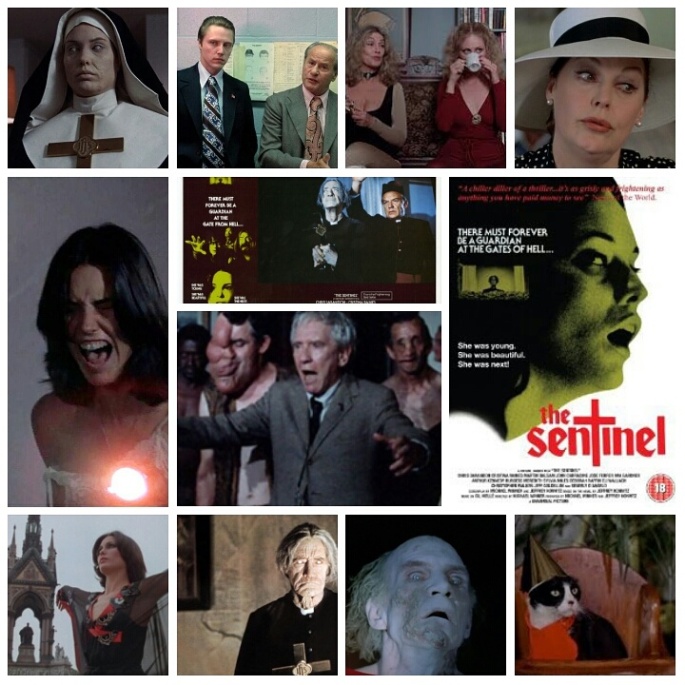
The Sentinel is one of the weirdest thing you’ll ever see. It’s less of a horror and more just a parade of bizarro world situations strung together loosely by a vague haunted apartment story. A young model (Christina Baines) has found a sweet deal on an uptown flat, inhabited by only herself and a blond priest (John Carradine). It’s just too bad that when a deal seems to good to be true in these kinds of movies, there’s almost always some kind of sinister agenda behind it. It’s not too long before spooky stuff comes along, starting with strange physical problems, creepy encounters with her odd lesbian neighbors, flashbacks to her attempted suicide and psychic disturbances that can’t be explained. She soon realizes that she has been brought to this building for a very specific and decidedly sinister reason. The way I described all that sounds kind of routine and pedestrian, but trust me when I say that there’s nothing generic or run of the mill about this absurdity of a film. Everything has a very disconcerting and surreal feel to it, particularly in a whopper of a climax where a portal to hell is opened and all sorts of babbling loonies pour out, deformed, whacked out and adorned in some of the most creatively gross practical effects that will give your gag reflex a solid workout. The film also speckled with a diverse group of actors, some of them quite young looking when you remember that this was 1977. A chatty Eli Wallach shows up as a detective, with a youthful Christopher Walken in tow as his partner, Ava Gardner of all people has a cameo, and watch for Burgess Meredith, Jerry Orbach, Beverly D’Angelo, William Hickey, Jeff Goldblum, Richard Dreyfuss, Chris Sarandon, and Tom Berenger in what must have been one of his very first gigs, a literal walk on part. Very distinct and memorable film, one that pushed the boundaries considering the time period, and never let’s the weirdness mellow down for a single minute. 

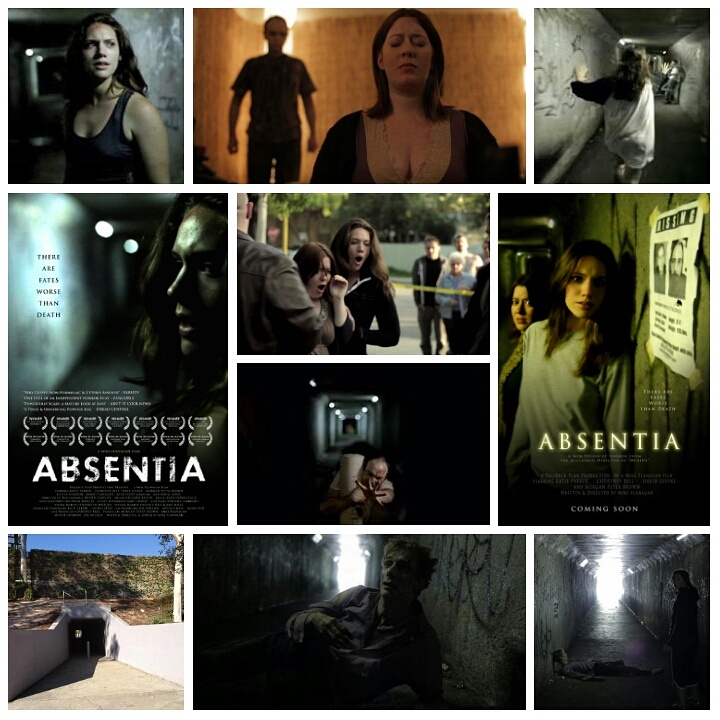
Absentia: A Review by Nate Hill 

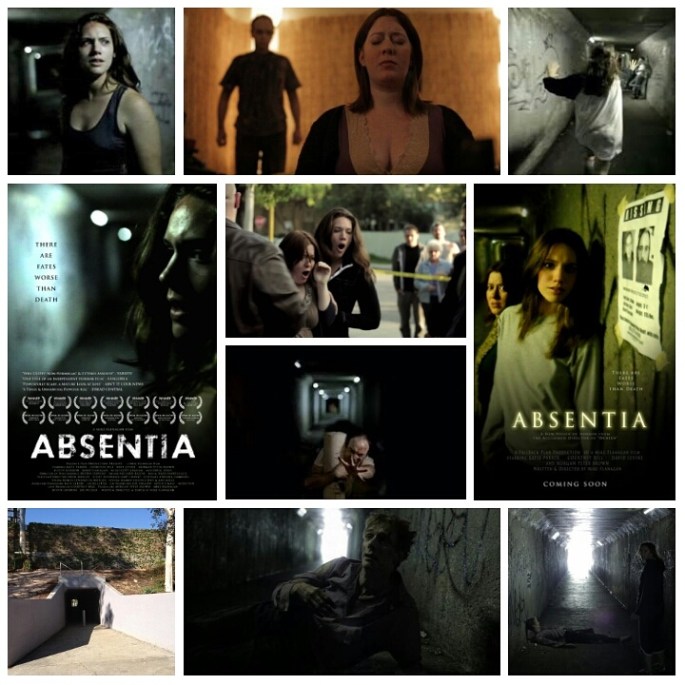
You’ll think twice about taking that shortcut through through the tunnel on your way home from work after watching Absentia, a spooky little indie with its heart in the right place and the filmmaking talent to back it up. There’s a tunnel that’s home to some unspeakable scuttling fiend in a local neighborhood, and two sisters who live nearby, as well as a few unfortunate other folks, stray directly into it’s path. Pregnant Tricia (Courtney Bell) and her younger sister Calley (Catherine Parker) are just trying to get by, literally and figuratively, but every routine trip into this hellish part of the neighborhood ends in disappearances, freaky apparitions from a spindly Doug Jones, this time not playing the monster, and tragic loss of life. I won’t give away what the threat is or what it even looks like (you’ll piss your pants), and such is the beauty of a minimalist scarefest like this. You go in not knowing much beyond the hype or word of mouth, and have your pants scared off. There’s a wonderfully atmospheric score at play here, no psycho strings of operatic swells, the film instead favoring a quiet, emotional melody that contrasts the extremely bleak story arc and grim happenings rather nicely. Jones is the only prolific actor we see here, but his work amounts to not much more than a cameo anyway, the brunt landing on our two protagonists, and a local detective (Dave Levine) who assists them, and they all give very solid efforts. The tunnel is a pure unbridled nightmare though, the fates of those who wander in something that you pray never happens to anyone ever, as you cling to whoever is closest to you on the couch (or bed, preferably). Horror should illicit some empathy from viewers as well as scare them, which will in turn be more disturbing for all. This little baby does just that with it’s characters, truly making you feel sorrow and dread for these poor people and their predicament, adding to the creep factor. A gem. 

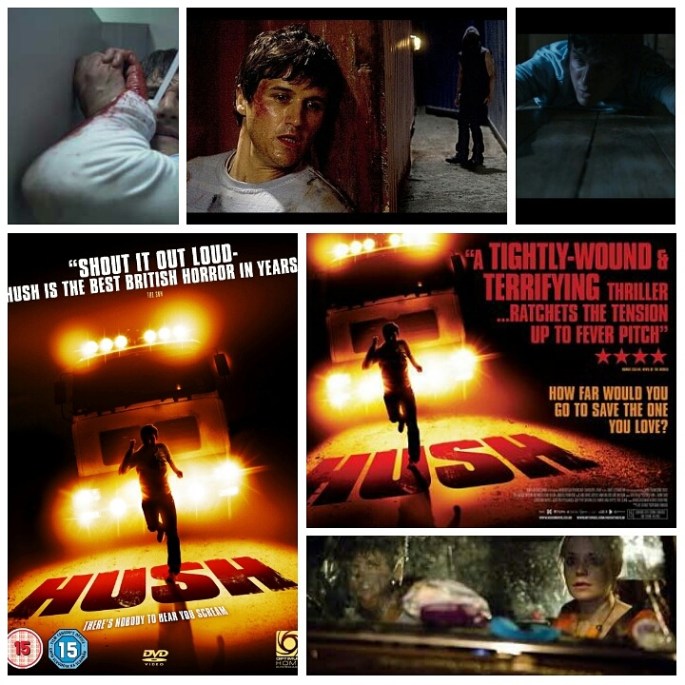
Hush: A Review by Nate Hill 

Hush is a pulverizing little exercise in extreme suspense. I’m not talking about this year’s Hush, a sleek little home invasion shocker that’s worth your time too. No, this Hush is a little seen British flick from back in 2008, and it’s a proper nerve jangler. In the tradition of Duel, The Hitcher, Joyride and others, it takes place on a bustling motorway somewhere in great Britain. A young couple trundle through the night on a highway, and find themselves behind  a great big creepy semi truck. In one split second, the doors of it’s trailer come unstuck and open just a crack, allowing the to see what’s inside. It’s only a glimpse, but it’s unmistakable: a girl, badly hurt and tied up, screams for help before the motion of the vehicle causes the doors to slam shut again. What would you do? This couple bravely pursues the truck and it’s villainous driver across many miles of road, trying to rescue the girl inside, avoid getting killed themselves and put an end to whatever is going on. It’s one merciless ride into gut churning suspense, and I marveled at the film’s ability to keep such high tension up for a streamlined ninety minutes of pure horror nirvana. It’s not too lenghthy, never sags or drags and always keeps the vibe as taut as the ominous chain holding those truck doors in place. Swift and sensible in resolution, stylish as all hell and scary in spades. Any horror fan owes it to themselves to take a look. 

Sam Raimi’s Evil Dead 2: A Review by Nate Hill 

Sam Raimi’s Evil Dead 2 is similar to Robert Rodriguez’s Desperado in the sense that it takes what was already there, in this case Evil Dead, and tells the same story once again, simply smoothing out edges, ramping up certain areas, using more money than it had before and generally giving the story a tune up. It also gets quite a bit funnier than Evil Dead, which although schlocky was pretty much outright horror. The sequel emphasizes comedy far more, and is the more definitive of the two in terms of the franchise’s legacy. The story is more or less the same: Ash (the eternal Bruce Campbell) and a group of friends venture to that creepy, archetypal cabin in the woods and foolishly set loose a rambunctious horde of unholy demons, zombies, cackling fiends, rapey trees and a mountable deer head with a disconcerting case of the giggles. This marks the first time Ash donned his now iconic chainsaw hand and picked up that ol’ boom stick to give the nasties a good whupping. And whup he does, like the smooth talking badass that he is. I love the aesthetic in these films; the monsters all have a devilishly mischievous attitude that provides endless laughs, always trolling, taunting and teasing the poor victims. Nothing beats the sight of Ash’s severed hand flipping him off before it scuttles off into the corner like an angry facehugger. That’s one key element which the 2013 remake ditched: I liked what they did in terms of special effects, but the pissy humour wasn’t there, the decayed, sarcastic ADHD madness that I came to love so much was replaced by something far too grim and somber. Bad move. No, kids, this is the ultimate Evil Dead flick, the most complete and entertaining entry into a franchise that has influenced every facet of the horror genre for decades. Ash is now a household name, a beloved halloween costume, a celebrated pillar of pop culture and still one of the most enjoyable protagonist’s to spend time with, as we now get to see with Starz’s terrific Ash Vs. Evil Dead. The original Evil Dead spawned it all, but this baby turned the dial up past eleven, tossed on the buckets of gore and has more than earned it’s place both in our hearts, and horror infamy. 

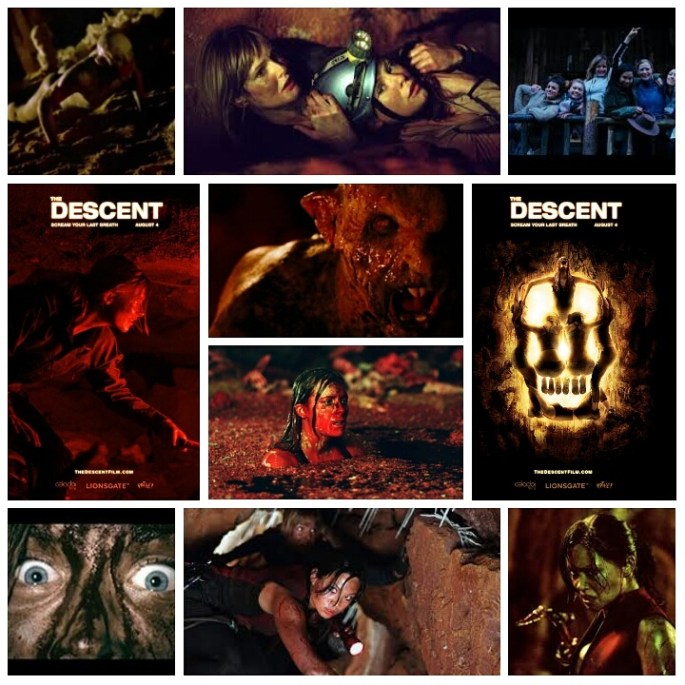
Neill Marshall’s The Descent: A Review by Nate Hill 

Don’t watch Neil Marshall’s The Descent if you suffer from claustrophobia. Just… don’t. This film does for caves what Alien did for derelict space stations and what The Ring did for videotapes. Cleverly combining close quarters panic, the gnawing fear of losing your way in a near infinite set of tunnels and some visceral, throat ripping terror, it’s one horror package that will leave you reeling. I believe this is the one that put Marshall on the map, and since then he’s been doing mostly medieval style action adventure (he helmed the pilot for Game Of Thrones). This is his first, and most effective outing in a really solid career. The premise is simple: a group of girls decide to go on an excursion deep within a cave system in Eastern Europe. They run into a string of bad luck though, as they first find themselves hopelessly, sickeningly lost. Then the real fun begins as they realize they’re not alone down there, and that something is hunting them. Terrifying subterranean creatures emerge like Gollum on bathsalts, fast, wiry, agile terrors from the deep that know the system inside out and prey on these poor girls one by one. Once they show up its a chaotic bloody free for all that will shred your nerves, but I almost found everything leading up to that even more scary. The slow buildup where they realize they are just so lost and may be stuck down there forever just puts a knot in your stomach and instills a hopeless dread that can’t really be equalled by any monster or gory scene. Still, those things are pretty gnarly and provide more than a few wicked scares, especially when the girls first catch fleeting glimpses of them around corners and between cracks, dismissing them as tricks of the light. Marshall also employs cunning narrative tricks to perpetuate the lack of any kind of way out, one in particular that just curdles the blood in its ruthless, resolute sense of doom. The scariest film you will ever see set in a cave, and one of the premier fright fests ever made.