Steven Soderbergh’s Ocean’s Eleven

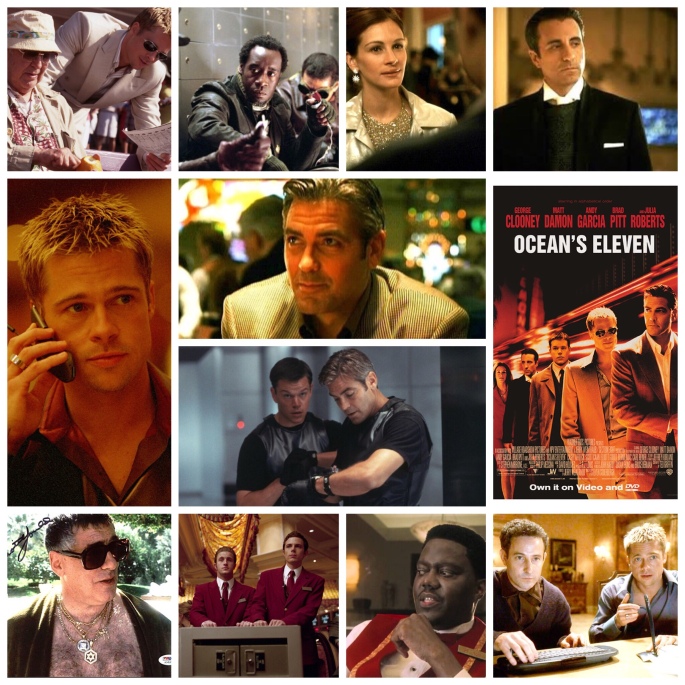
I’ve seen Steven Soderbergh’s Ocean’s Eleven so many times I couldn’t count on the hands I have, or all twenty two of those attached to the gaggle of slick, fast talking lounge rats who pull of the most laidback, easygoing casino heist in Vegas history. Most heist flicks have a breathless cadence and at least one high powered action sequence. Not this baby. It’s like the weekend R&R of robbery films, the classy brunch of crime stories. Hell, even Heat, as hypnotic and subdued as it was, had gunplay here and there. It’s in that refusal to get its hands dirty, the insistence on a relaxed, pleasant vibe that has made it the classic it is today. George Clooney and Brad Pitt are iconic now as ex jailbird Danny Ocean and fast food enthusiast Rusty, two seasoned pros who plan to take down tycoon Terry Benedict (Andy Garcia, looking and sounding more constipated than a police commissioner at a 420 rally) and his three giant casinos. To do this, they round up the most eclectic bunch of scoundrels this side of the wild bunch, including fussy, flamboyant businessmen Elliot Gould, slick card shark Bernie Mac (“might as well call it white jack!”), twitchy techie Eddie Jamison, dysfunctional petty thief Matt Damon, eternally squabbling wheelmen brothers Casey Affleck and Scott Caan, acrobatic guru Shaobo Qin, rowdy safecracker Don Cheadle (with a piss poor attempt at a cockney accent, I might add) and grizzled grifter Carl Reiner. Oh, and a sultry Julia Roberts as Danny’s ex wife, because no caper flick would be complete without the high stakes and charm of a woman involved. What a pack. The logistics and steps of their plan have a labyrinthine feel to them, especially the sheepish twist that seems just easy enough to work and just far-fetched enough to earn friendly chuckles. Soderbergh did his own cinematography for this, which explains why the vision here is so singular and unforgettable; he shoots Vegas like a subdued nocturnal dreamscape full of fountain soaked vistas, dazzling light displays and ornate casino floors, and directs his actors with all the lithe, cordial and cucumber cool personas of the born n’ bred Vegas characters you can spot whilst on vacation there. Ebert wrote of this, “Serious pianists sometimes pound out a little honky-tonk, just for fun.. this is a standard genre picture, and Soderbergh, who usually aims higher, does it as sort of a lark.” Oh, Roger. This is my main pet peeve with film criticism and analysis: the distinct differentiation between ‘genre fare’ and ‘high art’, a snooty attitude that devalues both forms and axes a rift into a medium that at the end of the day, is all storytelling. Some of Soderbergh’s best films (this, Out Of Sight and last year’s Logan Lucky) are exercises in storytelling without the burden of subtext or lofty behind the scenes ambition, and are somewhat the better for it. Rant over. In any case, this is style, charm, wit and lovable caper shenanigans done just about as best as they could, and remains one of my favourite films of this century so far.

-Nate Hill

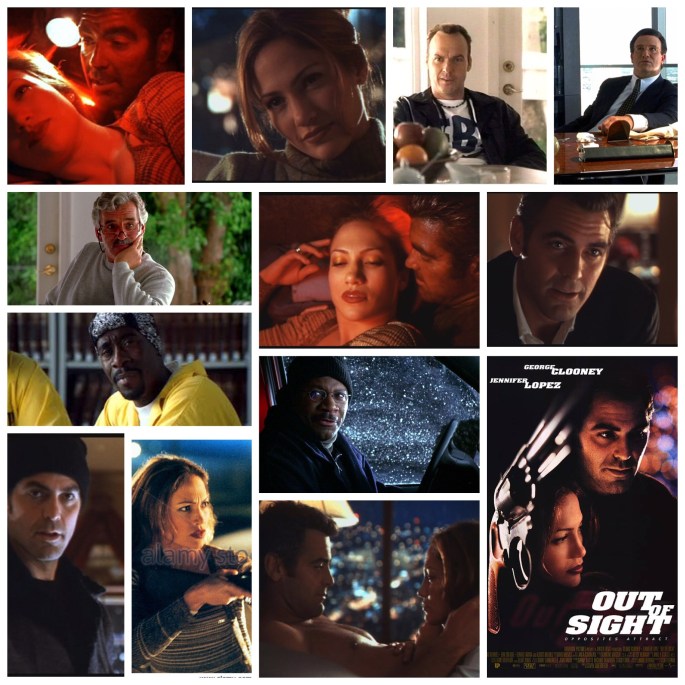
Steven Soderbergh’s Out Of Sight


No one does the breezy, goodnatured crime drama like Steven Soderbergh, and after rewatching his 1998 romantic caper Out Of Sight, I’ve realized it’s my favourite of his films by a mile. The easygoing love story between George Clooney’s hapless career criminal Jack Foley and Jennifer Lopez’s feisty federal Marshall Karen Sisco is a pairing for the ages, and the two not only smoulder up the screen with their obvious presence, but have effortless chemistry in spades and know how to sell the romance until you feel that tug on the ol’ heartstrings when the stakes are raised. It doesn’t hurt that cinematographer Elliott Davis beautifully frames each encounter with them, the best being a gorgeous airport dinner where the two croon out Elmore Leonard’s savoury, measured dialogue against a snow laden Tarmac outside, the perfect romantic ambience. Foley is a trouble magnet, embroiled in scheme after scheme with his older, wiser partner Buddy (Ving Rhames). After their dipshit pal Glen (a stoned Steve Zahn) gets them mixed up in a plot to rob a pompous Wall Street millionaire (Albert Brooks) via some truly nasty jailbird thugs from their collective past (Don Cheadle provides the film’s only true dose of menace amongst the charm), all hell breaks loose and against odds, Jack and Karen find themselves falling in love. Elmore Leonard’s scripts always seem to find their way to great directors (Barry Sonnenfield made magic with Get Shorty), richly varied casts (Jackie Brown is an ensemble for the time capsule) and end up as films that are simply timeless. Dennis Farina mellows out as Karen’s concerned ex-cop father, Luis Guzman does his grimy cholo rat shtick, and watch for Catherine Keener, Nancy Allen, Isiaah Washington, Paul Calderon, Viola Davis, an uncredited Michael Keaton playing none other than his Jackie Brown character (an Elmore Leonard cinematic universe!) and a surprise cameo right at the end that I won’t spoil except to say it sets up any potential sequels nicely. The whole deal rests on Lopez and Clooney’s shoulders though, and they’re nothing short of mesmerizing. It’s a rag tale romance, classy but down to earth, two beautiful souls from very opposite sides of the tracks who generate sparks and circle each other like cosmic magnets. Stuck together in the trunk of a speeding car, they discuss life, love and films, reminding us that no romance is alike to another and the best way to start off something like that is perhaps on the wrong foot and in the least imagined circumstances possible. Like any love story it knows that a pinch of sadness is necessary to balance the bittersweet recipe and tweak our emotions just right. A career best for George, Jennifer and Steven and a film worthy of classic status. 

-Nate Hill

THE LIMEY – A Review by Frank Mengarelli

Steven Soderbergh’s THE LIMEY is the epitome of a hard nosed genre film, fused from the late 1960’s to mid 1970’s films that rarely get made today. Sure, every once in a while we get a token film here or there, but few live up to the masterful craftsmanship of Steven Soderbergh.

The Limey 1

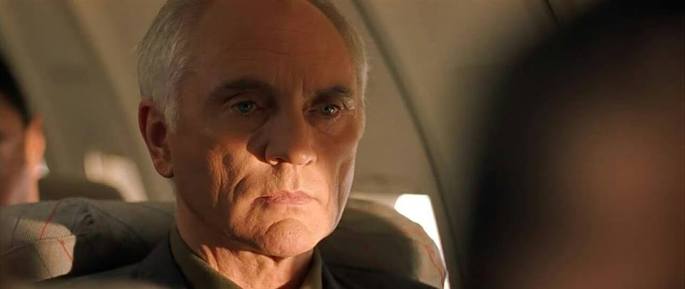
The film’s tone is set instantly. The gravely voiceover by Terence Stamp that quickly cuts to him stoically sitting on an airplane with The Who’s THE SEEKER drowning out anything your mind is thinking about, forcing you quickly focus solely on the film.

Soderbergh, who’s career has taken a precise and taut trajectory, created something of an anomaly with this film. While he’s relied on the brilliance of Cliff Martinez scores, he never quite dabbled in the usage of popular music like he did with THE LIMEY.

THE SEEKER completely sets the tone, as well as the story instantly. Stamp is a man on his way into a bombastic suicide mission of finding the man or men responsible for the death of his daughter, and killing them and anyone who gets in his way.

As phenomenal as Stamp’s intro music is, Soderbergh one ups himself by using The Hollies KING MIDAS IN REVERSE to introduce us to one the coolest cinematic antagonists ever to be on film, Peter Fonda as the sleek, yet smarmy, Teddy Valentine.

The Limey 2

Soderbergh’s casting is paramount in this revenge thriller. Along side Stamp and Fonda, are seminal actors from the era of the film’s kinship including Leslie Ann Warren, and Barry VANISHING POINT Newman.

The most fascinating aspect of the film is Sarah Flack’s editing. I’m not saying she’s Alan Heim, but she’s pretty damn close. The timeline jumping, fast paced editing is unlike any other film, and not only is it convenient as a plot device for foreshadowing, but it completely and utterly turns the film into a quick paced, nonstop clinic on not only filmmaking, but film editing.

THE LIMEY remains my favorite Soderbergh film, among a body of work that is made up of sheer quality and proficiency that can be comparabled to the works of Woody Allen. If anyone is studying filmmaking, in particular film editing, you need to watch ALL THAT JAZZ and THE LIMEY. On repeat.

CHE – A REVIEW BY J.D. LAFRANCE

hero_EB20090114REVIEWS901149990AR

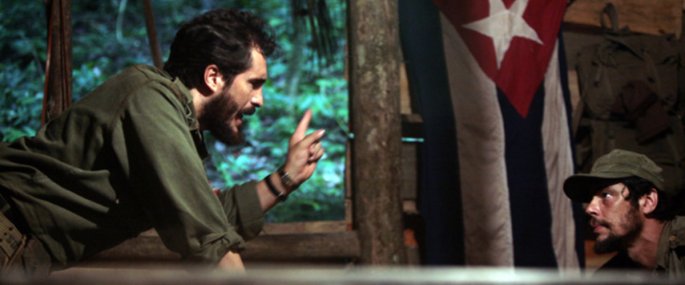
Che (2008) began as a personal project for actor Benicio del Toro around the time he was making Traffic (2000) with Steven Soderbergh. Originally, he planned on making the film about iconic revolutionary Ernesto “Che” Guevara with Terrence Malick and its focus was to be on the disastrous Bolivian campaign in 1967. Malick eventually dropped out to go off and make The New World (2005). Soderbergh helped out Del Toro by agreeing to direct and in the process expanded the film’s scope by depicting Che’s role in the Cuban Revolution as a way of explaining his motivations for going to Bolivia.

Amazingly, Soderbergh raised the $58 million budget entirely outside of North America, which allowed him much more creative freedom. The result was a four-and-half-hour epic that refused to champion or demonize Che and instead opted to objectively depict his rise in Cuba and his fall in Bolivia. This approach ultimately doomed Che’s chances in North America where, despite breaking the film up into two, more digestible parts, it received limited distribution. Predictably, it divided critics and was criminally ignored by all of the major award ceremonies – rather fitting for a film about someone who refused to rest on his laurels, always hungry to get back to the jungle and get back to work.

I think that the key to understanding Del Toro and Soderbergh’s take on Che comes from an interview with director where he said, “Clearly this is a guy whose priority is going into the jungle and starting a revolution. That is the most important thing in his life … If you take away all the words and just look at what he did, the guy kept going back into the jungle.” Del Toro and Soderbergh were faced with the daunting task of making a film about an iconic historic figure, someone whose image has graced countless t-shirts and posters. Che is an extremely polarizing figure and so it makes sense that they would step back and take a more objective look at the man. Then, it would be up to the audience to decide how they felt about him.

Those looking for a crowd-pleasing underdog story a la Erin Brockovich (2000) will be disappointed by Che. The famous Argentinean is not as easy to like as the scrappy Brockovich. As depicted in Che, he’s a much more complex individual. He cares about the cause and those that fight with him but does not feel the need to show a lot of emotion. When he’s in the jungle it is all about the task at hand and living in the moment. Che never loses sight of what his objective is and his conviction never wavers, not even in the face of death. He’s like a Method actor that stays in character on and off-camera during a shoot.

Part One juxtaposes Che’s efforts to remove Batista from power in Cuba in 1958 with him addressing the United Nations in 1964 and in doing so we see Che in his element, putting into practice guerrilla warfare tactics, and we see Che the superstar espousing his beliefs to the media in New York City and the international community at large. At first, the Bolivia campaign as depicted in Part Two starts off well enough with Che sneaking into the country and meeting with his fellow revolutionaries. We see them get supplies and train in preparation for the task at hand. However, the country’s Communist party refuses to support an armed struggle, especially one led by a foreigner. The support of the peasants, so crucial in Cuba, is lacking in Bolivia, making food hard to come by. A feeling of dread creeps in as government troops gradually close in on Che, cutting off any avenue of escape.

Soderbergh maintains an objective stance by refusing to show any close-ups of Che. We always see him from a certain distance and often grouped with others. During the battle at El Uvero on May 28, 1957, Soderbergh conveys the noisy, chaotic nature of combat as men are seemingly wounded at random but there is never any confusion visually about what is going on. Twice during the battle, he takes us out of it by having a voiceover by Che where he espouses his philosophy of guerrilla warfare. With a widescreen aspect ratio, Soderbergh opens things up in Part One and this is particularly evident during the battle scenes. In Part Two, this all changes, as the smooth camerawork is replaced with hand-held cameras and a more standard aspect ratio which creates a claustrophobic feel and look. The long takes and deliberately slow pace may frustrate some expecting a more traditional biopic but I found it a welcome change from the cookie cutter mentality of most Hollywood depictions of history.

During the Cuban campaign it is evident that Che is very much a man of the people, whether it is making contact with and befriending peasants that he comes across in the jungle or treating a wounded comrade. However, Che eschews character development in favor of showing the nuts and bolts of a revolution. As Che says at one point, “A real revolutionary goes where he’s needed. It may not be directly in combat. Sometimes it’s about doing other tasks … finding food, dressing wounds, carrying comrades for miles … and then, taking care of them until they can take care of themselves.” The film takes this philosophy to heart by showing the day-to-day activities of Che and his fellow revolutionaries. We see him dressing wounds, the wounded being carried through the jungle and strategizing with his men and Fidel Castro (Demian Bichir).

Benicio del Toro effortlessly becomes Che and tones down his tendency to sometimes resort to Brando-esque acting tics (see The Way of the Gun) and plays the iconic revolutionary as a man confident of his own convictions. He conveys Che’s sharp intellect with his eyes and also does an excellent job with the physical aspects like his recurring asthma that constantly plagued him. Del Toro provides us insight into the man’s character through attitude, behavior and the way he acts towards others.

24a125_34547ac222f04702b5e68cb83dd8629cChe is ultimately a study in contrasts. What worked in Cuba did not work in Bolivia. Soderbergh’s film illustrates the differences. In Cuba, the revolutionaries were able to get the trust and support of the peasants while in Bolivia they feared the rebels. It must also be said that Castro played a key role in the success of the Cuban revolution and his absence in Bolivia, the galvanizing effect he had, is sorely missed. With Che, Soderbergh has created an unusual biopic that does its best to not try and manipulate you into feeling one way or another about the revolutionary. Instead, it shows two very different examples of the man’s philosophies put into practice and how they played out – one a success and the other a failure. Che was a polarizing historical figure long before this film came along and will continue to be long afterwards.

OCEAN’S THIRTEEN – A REVIEW BY J.D. LAFRANCE

Ocean_s_Thirteen_2007_BRRip2

Despite its impressive box office returns, Ocean’s Twelve (2004) was considered something of a disappointment by its director Steven Soderbergh who felt that the plot was too complicated. While not quite as fun as Ocean’s Eleven (2001), it was a fine film in its own right – one that had a more satisfying emotional pay-off and doesn’t deserve the lousy reputation that it seems to have. Ocean’s Thirteen (2007) was seen as a return to the fun, breezy vibe of the first film by bringing it back to Las Vegas with style. The result was a very satisfying conclusion to the Ocean’s films.

As the revenge picture cliché goes, this time it’s personal. When Reuben Tishkoff (Elliott Gould) is muscled out of a business deal by slick businessman Willy Bank (Al Pacino), resulting in a heart attack, Danny Ocean (George Clooney) and his crew reunite for one last job: to ruin the opening night of Bank’s casino, The Bank, by making sure he loses a huge amount of money, which involves rigging all the games and slot machines. Bank wants the Five Diamond Award – the top accolade for hotels and will do anything to get it. Danny and the boys use this as a way to get at Bank. To this end, they devise an elaborate plan with the help of their arch-nemesis Terry Benedict (Andy Garcia) who bankrolls the operation. They also bring in Roman Nagel (Eddie Izzard) from Ocean’s Twelve to crack a state-of-the-art artificial intelligence security system.

Soderbergh kicks things off rather stylishly as we get a beautiful shot of Rusty Ryan (Brad Pitt) walking across a runaway tarmac to an awaiting plane at dusk with the sky an impossibly deep dark blue that, accompanied by David Holmes’ groovy score, is absolutely breathtaking. Once again, the director shoots the hell out of the film by employing all sorts of zoom ins and outs, pans and split-screens that, along with a saturated color scheme, keeps things visually interesting.

This time out, Matt Damon gets a juicy subplot where he goes undercover as Lenny Pepperidge, the assistant to a Mr. Weng (Shaobo Qin as The Amazing Yen, also undercover), a very high roller, in order to get close to Bank’s lovely assistant, Abigail Sponder (Ellen Barkin). Part of his disguise involves wearing a ridiculous fake long nose – a sly fuck you to Harvey Weinstein who wouldn’t let Damon wear said nose for his character in Terry Gilliam’s The Brother’s Grimm (2005) because he felt it would obscure the actor’s good looks and hurt the film’s box office potential. Well, it didn’t hurt Ocean’s Thirteen box office as the film went on to gross a very respectable $311 million worldwide.

It is also a lot of fun to see Ellen Barkin reunited with her Sea of Love (1989) co-star Al Pacino. She appears to be having a good time playing a confident businesswoman succumbing to Damon’s “seductive” charms. It is also fun to see Pacino go off autopilot for a change and sink his teeth into a juicy bad guy role. Who else could Soderbergh get to pose as a credible threat to the likes of George Clooney and Brad Pitt but someone of the legendary star caliber like Pacino? He plays Bank like the offspring of his take on Ricky Roma from Glengarry Glen Ross (1992) and Gordon Gekko from Wall Street (1987) – a smooth-talking unscrupulous bastard. In another nice bit of casting, the inventor of the artificial intelligence security system is played by none other than Julian Sands, an actor whose big break through came in A Room with A View (1985), but whose career settled into mostly direct-to-home video fare so it was a pleasant surprise to see him appear in a big mainstream film like Ocean’s Thirteen.

Another amusing subplot involves Virgil Malloy (Casey Affleck, sporting a ridiculous-looking mustache) organizing a revolution/strike among the workers at a dice-making factory in Mexico. He goes from complaining about a lack of air conditioning to tossing Molotov cocktails on the strike lines. At one point, he and his fellow co-workers drown their sorrows at a local bar and Virgil asks them, “Have all of you forgotten Zapata?” He goes on to offer inspirational words that fire them up. How this whole subplot plays out is quite funny. In another nice twist, Terry Benedict is helping Danny out albeit with all kinds of conditions. After all, he resents Bank’s lack of taste and the competition he represents. There can only be on top dog in Vegas and Benedict clearly feels that he is the one. Andy Garcia looks like he relished the opportunity to be in on the joke instead of being the target as he was in the last two films.

While working on Ocean’s Twelve, Steven Soderbergh began thinking about Ocean’s Thirteen. He thought about how fun it would be to set it back in Las Vegas. The motivation to make the film was a desire to work with everyone again but all eleven cast members had to want to do it. Producer Jerry Weintraub contacted them 18 months before hand and told them filming would take place during the summer of 2006 and to clear their schedules. He was able to find a way to juggle all these movie stars’ busy lives and add Al Pacino and Ellen Barkin into the mix.

For the film’s story, Soderbergh felt that Danny and his crew weren’t driven entirely by money and that they would reunite for friendship and revenge. The director came up with the notion of Reuben being betrayed and his friends helping him out. Weintraub hired Brian Koppelman and David Levien to write the screenplay. They had written the script for Rounders (1998) and created the gambling television cable show Tilt, and so they were familiar with the world of con men and gamblers. Soderbergh and Weintraub were both big admirers of Rounders and the director met with the screenwriters in New York City over lunch. They talked about great con movies, the nature of heists, and how the characters had evolved since Ocean’s Eleven. Within minutes, Soderbergh knew they were who he wanted to write the script and were working on it within minutes: “There was not a long list of people that we thought could step into this specific universe and pick up the language and the sense of humor.”

Koppelman and Levien had spent years exploring Vegas culture and the gambling lifestyle. They had every book they could find about con artists and thieves. Early on, Soderbergh told them that he wanted the film’s focus to be on the friendship between Danny and his crew. They understood that getting revenge on Willy Bank was what drove the entire story of Ocean’s Thirteen. They also wanted to “’flip’ the casino so that the patrons would win every time, which would spell disaster for Bank.” Soderbergh also told them that the bad guy should be a casino owner and they imagined Al Pacino and wrote Bank with him in mind. George Clooney also offered some ideas, mostly things to do with the revenge scheme that reunited the crew.

Some exterior scenes were shot in Las Vegas, but the casino interiors were mostly shot on one of the largest soundstages on the Warner Bros. lot in Los Angeles because it would have taken too long to film in actual casinos as they had done with Ocean’s Eleven. Soderbergh said, “In order to get the shots that I wanted, I needed to completely control the environment.” He instructed production designer Philip Messina to build a hotel and casino that would reflect Bank and his huge ego. Messina decided to go with a quasi-Asian theme and make it visually overwhelming. He purposely broke the rules in Vegas by designing a multi-level gaming floor because the production didn’t have a lot of horizontal space to work with.

Like Ocean’s Eleven, Ocean’s Thirteen pays tribute to the classic era of Vegas as Danny and co. restore Reuben’s honor. He’s an old school player who still believes in following a code and prides himself in being part of a select group of insiders that got to shake Frank Sinatra’s hand back in the day. Like Benedict, Bank represents the current corporate mentality of making money over the personal touch that the Mob-run casinos used to provide. If the first two films were about Danny and Rusty’s respective relationships with the loves of their lives, then Ocean’s Thirteen is about their friendship with Reuben. He mentored them when they were just starting out and taught them about respecting history as well as those who came before them. Like with the previous films, going after the bad guy is a matter of personal honor and hitting them where it hurts – in Bank’s case it’s his monster ego. Ocean’s Thirteen ends much like Ocean’s Eleven did thus bringing the trilogy full circle and with a truly satisfying conclusion as the bad guy gets what’s coming to him and Reuben’s honor is restored. Likewise, the film did very well at the box office and garnered fairly positive reviews going out on a well-deserved high note. It serves as an example of a star-studded big budget Hollywood film that entertains without insulting your intelligence.

OCEAN’S TWELVE – A REVIEW BY J.D. LAFRANCE

Brad-Pitt-in-Ocean-s-Twelve-brad-pitt-15567639-853-480

After the commercial failures of Full Frontal and Solaris in 2002, there was pressure on Steven Soderbergh when he announced that his next film was to be the sequel to the wildly successful Ocean’s Eleven (2001), to not only come up with a box office hit but to also outperform the previous film. With big budget, star-studded casts like the one in Ocean’s Twelve (2004), there is always the danger of having them look too smug and self-indulgent instead of having fun along with the audience. Ocean’s Eleven managed to straddle this line quite well, resulting in an entertaining popcorn movie. Soderbergh kept his cast in check, never letting them go too far over-the-top and shooting it with a style that was always interesting to watch. The big question for the sequel was if he could pull off the same feat without repeating himself too much. Ocean’s Twelve ended making less than its predecessor (but still a lot of money) and cost more while also dividing critics but in some ways I find it a better film.

Danny Ocean (George Clooney) is supposed to be retired and enjoying domestic bliss with Tess (Julia Roberts). However, old habits die-hard and the lure of pulling heists is always calling. She catches him casing a jewelry story on their anniversary. To make matters worse, Terry Benedict (Andy Garcia) is still hot on their trail, tracking down all of the original eleven and letting them know, in his own casually menacing way, that he wants the $160 million, plus interest, that they stole from him in Ocean’s Eleven, and in two weeks time. The montage of him doing this mirrors the one in the first film where Danny and Rusty recruited their crew. If Benedict was an imposing figure in the first film, Andy Garcia makes him even more of a threatening presence in this montage by doing little except exude menace with his eyes and the all-business tone of his voice.

So, Danny gets everybody back together to figure out what to do. Obviously, they need to pull another job but they are too high profile in the United States, so they go to Europe and cross paths with a truly formidable opponent and rival master thief known as the Night Fox (Vincent Cassel), a bored French playboy. He’s jealous of Danny’s status as the world’s greatest thief and is out to prove that he’s the best by having the both of them go after the same thing: the Faberge Imperial Coronation egg. Vincent Cassel plays the Night Fox as an ultra-confident, cocky man in such a way that you want to see Danny and company knock him down a peg.

Ocean’s Twelve
ups the difficulty level for our heroes even more by having most of the crew neutralized leaving only Basher (Don Cheadle), Linus (Matt Damon) and Virgil (Scott Caan) left to pull off an impossible heist. So, they bring in Tess to pose as, well, Julia Roberts. Unfortunately, another major movie star is staying at the same hotel, which only adds to the meta aspect. Said movie star gamely plays a fictional version of himself. The scene where he meets Tess as Julia Roberts is very amusing as Damon and Roberts act all star-struck in front of him. It is also interesting in that the meta aspect that was present in Ocean’s Eleven is made even more explicit – something that turned off some critics and audiences but I think works extremely well because Soderbergh isn’t having a cutesy cameo of a movie star for the sake of it but actually incorporating them into the plot and making them an integral part of the scam.

If the first film was about Danny’s redemption by reconciling with Tess, then Ocean’s Twelve is about Rusty’s (Brad Pitt) redemption by reconciling with his past love, Isabel Lahiri (Catherine Zeta-Jones), a determined and quite beautiful Interpol agent. Like Danny’s feelings for Tess potentially compromising his involvement in the heist in Ocean’s Eleven, Rusty’s feelings for Isabel leaves him potentially vulnerable in Ocean’s Twelve. To her credit, Catherine Zeta-Jones fits right in with the European vibe, maintaining just the right mix of determination in nailing Danny and his crew and vulnerability when she’s with Rusty. Their relationship elevates the film ever so slightly above the standard heist story and the conclusion of her subplot is surprisingly emotional and poignant – the highpoint of the trilogy and something you don’t expect from a film like Ocean’s Twelve, which is essentially a feature-length lark.

Matt Damon demonstrates excellent comic timing in this film and is the real stand-out of this strong cast. Early on, Linus asks Rusty if he could have more to do this time out and this moment comes across as quite self-reflexive. It’s as if Damon were almost asking if he could have more screen time in the film itself. In some respects, he is the group’s stammering conscience. There is an amusing scene where Linus, Danny and Rusty meet a contact by the name of Matsui (Robbie Coltrane) for a potential job. Danny, Rusty and Matsui all speak cryptically, which leaves poor Linus totally confused. Damon plays the scene so well as he looks desperately to his cohorts for help or some sort of clue as to what he should say. Put on the spot, Linus finally responds by quoting lyrics from “Kashmir” by Led Zeppelin to hilarious effect.

While doing a press conference in Rome during the promotional tour for Ocean’s Eleven, Steven Soderbergh fell in love with the city and over dinner with producer Jerry Weintraub began thinking about the story and structure for a sequel. He got the idea to set it in Europe and was so inspired that he started writing down ideas. After returning to Los Angeles, Weintraub discovered George Nolfi’s screenplay, entitled Honor Among Thieves, about the greatest thief in America going up against his equal in Europe. It was originally developed for John Woo to direct but Weintraub sent the script to George Clooney, Brad Pitt and Soderbergh. The director came up with the basic idea for the film and thought that it “would be more fun if Twelve was the movie in which everything goes wrong from the get-go.” He ended up merging Nolfi’s script with his own ideas. Soderbergh saw this film as more emotional, character-driven and complicated on a narrative level than the first one.

Prior to the start of principal photography, which lasted 77 days, Julia Roberts found out that she was pregnant and Soderbergh incorporated it into the script. He also met with Vincent Cassel at the 2003 Cannes Film Festival and asked the actor if he would be interested in being in Ocean’s Twelve. He agreed without reading the script because he trusted someone with a reputation like Soderbergh’s. Once filming began, the production spent ten weeks globetrotting all over the world with stops in Chicago, Amsterdam, Paris, Monte Carlo, Lake Cuomo, and Rome. Principal photography concluded with four weeks on three Warner Brothers soundstages in L.A.

Once again Soderbergh keeps the pace brisk and breezy, making the two-hour running time fly by. Like its predecessor, Ocean’s Twelve is beautifully shot with atmospheric lighting and saturated color as evident in the bright yellow that permeates Isabel’s Europol lecture or the green lighting that illuminates the underwater sequence during a heist that Danny and his crew pull off, or the red lighting that dominates the nightclub where Rusty and Isabel meet. Most of the film takes place in Europe and Soderbergh adopts the look of a European film from the 1960s, which also applies to the eclectically groovy soundtrack from David Holmes that evokes a ‘60s Euro-lounge vibe. The director even described the film’s aesthetic as “the most expensive episode of a ‘60s television show ever.” He and Holmes agreed that the score would be completely different from Ocean’s Eleven in order to complement the different look and feel.

Soderbergh is an excellent visual storyteller and this is evident in several scenes that he depicts without any dialogue, instead resorting to music married to visuals that conveys exactly what’s going on. He understands the kind of movie he’s making and doesn’t try to be too cute or wink knowingly at the audience, instead focusing at the task at hand: making a confident, entertaining movie. Granted, Ocean’s Twelve is no Traffic (2000), and it’s not meant to be, but you could do a lot worse with two hours of your time.

OCEAN’S ELEVEN – A REVIEW BY J.D. LAFRANCE

o11DVD33

“Ocean’s Eleven was my opportunity to make a movie that has no desire except to give you pleasure, where you surrender without embarrassment or regret.” – Steven Soderbergh

Fresh from the one-two success of Erin Brockovich (2000) and Traffic (2000), Steven Soderbergh made a conscious decision to shift gears and make a purely entertaining film for a major studio. He managed to convince movie stars George Clooney (whom he had already worked with on Out of Sight) and Brad Pitt to take major cuts in their multi-million dollar salaries and headline a remake of the Rat Pack heist film Ocean’s Eleven (1960). With Clooney and Pitt on board, Soderbergh was then able to get an impressive cast including the likes of Matt Damon and Julia Roberts (both of whom also agreed to take pay cuts) and avoid having his film come across as nothing more than a vanity project for a bunch of smug movie stars. On the contrary, Ocean’s Eleven (2001) is a slick heist film in the tradition of The Sting (1973) in the sense that you know the outcome (the good guys win) but the fun is in how they get there as Soderbergh utilizes every stylish technique that he has available at his disposal.

Daniel Ocean (Clooney) has just been released from prison and is eager to return to his high-end criminal enterprises. He sets his sights on Las Vegas with plans to rob three prestigious casinos: the MGM Grand, the Mirage, and the Bellagio, all of which keep their considerable sums of money in an ultra-secure hi-tech vault controlled by Terry Benedict (Andy Garcia) who, incidentally, is currently dating Danny’s ex-wife Tess (Roberts). It’s not going to be easy and so, with the help of his good friend and ace fixer Rusty Ryan (Pitt), they recruit nine experts to help them pull off a near-impossible heist. In addition to the heist, which serves as the main plot, Ted Griffin’s screenplay expertly weaves in a subplot involving Danny attempt to reconnect with Tess.

This film oozes cool right from the opening credits that play over a fantastic shot of the Atlantic City skyline at night accompanied by funky trip-hop type music by Northern Irish disc jockey David Holmes. We meet Rusty wasting his time teaching young movie stars (Holly Marie Combs and Topher Grace among others making fun of themselves) to play cards. We meet him in Hollywood with a cool groove playing over his establishing shot. This sequence is a bit of meta fun as we see Pitt, one of the biggest movie stars on the planet, teaching other movie stars playing a parody of themselves being totally clueless at playing poker only to eventually be hustled by a bemused Danny. Soderbergh even slides in a few sly inside jokes, like Danny asking Topher Grace if it’s hard to make the transition from television to film, which, of course, is exactly what Clooney did. Or, how Grace gets mobbed by autograph hounds while Clooney and Pitt are completely ignored.

One of the best sequences in the film is when Danny and Rusty recruit their crew. The scene where they convince Reuben Tishkoff (Elliott Gould) to bankroll their operation is a wonderful example of how expositional dialogue being delivered in the right way by the right actor can be entertaining and informative as Elliott Gould does a fantastic job of warning Danny and Rusty of just how dangerous Benedict is. From there, each character that Danny and Rusty approach is given their own introduction that briefly and succinctly highlights their unique skill and distinctive personality traits. Linus Caldwell (Damon) is an up-and-coming pickpocket with uncanny dexterity. There’s the Malloy brothers, Virgil (Casey Affleck) and Turk (Scott Caan), two drivers by trade with one of them having an affinity for remote controlled devices and a perchance for bickering and irritating each other, which provides a good source of humor. Livingston Dell (Eddie Jemison) is an electronics expert in the area of surveillance. Basher Tarr (Don Cheadle) is a demolitions expert with Don Cheadle sporting an obviously exaggerated Cockney accent. Yen (Shaobo Qin) is a diminutive top-of-the-line acrobat that can get in and out of any tight space. Finally, there is Saul Bloom (Carl Reiner), a retired flimflam man coaxed back into action by Rusty. Each actor is given at least one scene, often more, to come front and center and do their thing and this is done in a way that doesn’t distract you from the story at hand, which is quite an accomplishment with such a large cast.

David Holmes expertly mixes jazz, funk, soul and hip hop in a way that evokes groovy trip hop or acid jazz but in a retro way that evokes Quincy Jones circa the 1970s. The often-fat bass lines give certain musical cues a confident swagger. There is also plenty of Hammond organ and vibraphone looped to give a lounge-y kind of vibe at times. Later on in the film, Holmes brings in strings and brass to accentuate the romantic subplot between Danny and Tess. Holmes also incorporates songs, like Elvis Presley’s “A Little Less Conversation” to fantastic effect. This came out of watching the original Ocean’s Eleven as Holmes explained in an interview, “Then I tried to think of ways to identify with what was going on – with it being a contemporary film, how to be original, but set within the heart of Las Vegas. Which is where the Elvis song ‘A Little Less Conversation’ came about, because obviously Elvis had a really strong affiliation with Las Vegas, and that track has a very contemporary feel.”

Steven Soderbergh read Ted Griffin’s screenplay in an afternoon in January 2000. The next day he called producer Jerry Weintraub and told him he wanted to direct the film. What he liked about the script was that it didn’t evoke the original 1960 version but “had this one foot back in the heyday of the studio star-driven movie, like Howard Hawks or George Cukor.” Soderbergh had always been drawn to heist films because, “the conflicts are so clear and dramatic. This seemed to be everything that you want a big Hollywood film to be, on the script level.” He had just made two dramas – Erin Brockovich and Traffic – and wanted to make a fun movie. To prepare for shooting Ocean’s Eleven, he watched Ghostbusters (1984) because he was impressed at “that sort of physical scale [that] feels so tossed-off, with such understated performances and obvious generosity among all the performers.” He also studied films by David Fincher, Steven Spielberg and John McTiernan because they knew how to “orchestrate physical action the way I like to see it.” He looked at how these filmmakers used lens length and height, camera movement and editing, as well as, “how they used their extras, how they structured movements within shots that carried you to the next movement and the next.”

Soderbergh got George Clooney involved and half-jokingly told him, “let’s make it an Irwin Allen movie, where they used to have 10 stars.” Originally, the director considered casting Luke and Owen Wilson, Bruce Willis, and Ralph Fiennes as the villain. Once Clooney was on board, they got the rest of the cast to commit at radically reduced rates, starting with Brad Pitt. However, during filming, the cast stayed in their own 7,000-square-foot villas at the Bellagio. Before shooting, Soderbergh told his cast, “Show up ready to work. If you think you’re just going to walk through this, you’re mistaken. If anybody gets smug, we’re dead.” Soderbergh wanted to shoot in the Bellagio, the MGM Grand and the Mirage – an impossible feat for more mere mortals; however, Weintraub had the connections and the clout to make it happen. The production was allowed to shoot on the floor of the casinos during the day, which nobody is given access to and the casino bosses even shut down entire pits for Soderbergh to shoot in. This allowed the director to design shots that were complicated and large in scale.

Soderbergh wanted the lighting for Ocean’s Eleven to be based in reality and to look like it wasn’t lit at all – not a problem in Las Vegas, a place overloaded with every kind of light imaginable. At times, Soderbergh would add some color to enhance the mood for dramatic purposes in order to put the audience inside the world of the film. He also realized that the locations played a large part in the plot and was interested in showing as much of the environment as possible. One challenge Soderbergh faced was the logistics of filming big dialogue scenes with Danny and his crew in a visually interested way. He had a lot of people in confined spaces and didn’t want these scenes to be boring. So, he attempted to frame shots that clearly established where everyone was while also giving them enough depth and geometry to make the characters interesting to look at.

In a nice touch, Ocean’s Eleven never waxes nostalgic about the original film but instead is wistful about Las Vegas as it was in the 1960s when the casinos were still run by the Mob and had yet to be corporatized and Disney-fied. This is reinforced in one of the motivations Danny has of robbing Benedict. It’s not just that he’s dating his ex-wife but Benedict also recently demolished one of the last old school casinos left in Vegas. Unlike Benedict, Danny respects the past and recruits Reuben and Saul, veteran con artists whose heyday was the ‘60s. It’s great to see Soderbergh giving actors like Gould and Reiner screen-time in a major studio film. These guys don’t work nearly enough and their performances in Ocean’s Eleven are a potent reminder of how good they can be if given the right material and the opportunity. Entrusted with only his second major studio film with an A-list budget, Soderbergh effortlessly orchestrates a fun, engaging popcorn movie like an old pro that has been doing this for their entire career.

OUT OF SIGHT – A REVIEW BY J.D. LAFRANCE

“It’s like seeing someone for the first time. You can be passing on the street and you look at each other and for a few seconds there’s this kind of recognition. Like you both know something, and the next moment the person’s gone. And it’s too late to do anything about it. And you always remember it because it was there and you let it go. And you think to yourself, what if I stopped? What if I said something? What if?” – Jack Foley

This bit of dialogue from Out of Sight (1998) perfectly captures the essence of the relationships between the characters in this film. It is about the what ifs and the what could have beens. What the characters do and, more importantly, what they don’t do that directly determines their fate.

As the film begins, Jack Foley (George Clooney), a career bank robber, escapes from a Florida prison with the help of his loyal accomplice Buddy (Ving Rhames). In the heat of the moment they kidnap a beautiful Federal Marshall named Karen Sisco (Jennifer Lopez). She and Jack are stuffed in the trunk of her car as they make a hasty retreat. Trapped in such a small, confined space Jack and Karen have nothing to do but engage in idle chitchat. Even though they are on completely opposite sides of the law there’s a spark, an initial attraction that blossoms into something more as the film progresses and their paths inevitably cross again.

Out of Sight
is based on the book of the same name by Elmore Leonard. He had wanted to do a bank robber story for a long time. Several years ago, he saw “a picture in the Detroit News of an attractive young woman who was a Federal Marshal standing in front of the Federal Courthouse in Miami. She held a shotgun which was resting on her cocked hip and as soon as I saw that picture, I knew it was a book.” Danny DeVito bought the rights to a previous Leonard book Get Shorty for his production company Jersey Films. After the success of that film, he bought the rights to Out of Sight.

The film came to George Clooney and Steven Soderbergh at a time when both of their careers had reached a critical junction. Clooney was coming off the commercial and critical train wreck known as Batman and Robin (1997). Soderbergh had completely shunned the mainstream with the one-two punch of Gray’s Anatomy (1996) and Schizopolis (1996). Both men were looking for a hit that would put them back on the map. Soderbergh had already made two films for Universal and one of its executives, Casey Silver, offered him Out of Sight with Clooney attached. Soderbergh was close to making another project and was going to pass but Silver told him, “These things aren’t going to line up very often, you should pay attention.”

Soderbergh and screenwriter Scott Frank achieve a perfect mix with Out of Sight. The film’s pace moves with effortless ease and self-confidence. They know when to slow things down and savor the moment as well. As Frank proved with his excellent screenplay for Get Shorty (1995), he perfectly understands Leonard’s distinctive cadence and the speech patterns of his characters. Cinematic adaptations of books are almost always inferior because so much has to be cut out or changed to fit into a two-hour film. However, Leonard’s books are tailor-made for movie adaptations because they are very visual and almost entirely dialogue and character-driven — ideal for the screenplay format. Out of Sight is one of those rare movies that is actually better than the book.

Soderbergh and his cameraman, Elliot Davis (White Oleander), paint their film with a specific color code. The bright colors of the Florida scenes — especially the prison sequences with vibrant blue and the bright yellow prison uniforms worn by various characters — provide a nice contrast to the second half of the film, which consists mainly of a gun-metal blue color scheme. The Detroit scenes have a cold, metallic feel to them and this really comes out. David Holmes’ catchy R&B score comes in and instantly transports the viewer into this world. He mixes in his own brand of funky electronica with old school tunes from the likes of the Isley brothers and Willie Bobo. From the atmospheric noises in the background to Holmes’ superb trip hop beats, this is a great sounding film.

After a string of so-so films, George Clooney finally found the right project that suited his particular talents with Out of Sight. With his movie star good looks and suave charm, he is perfectly cast as the smooth talking criminal. This may be his finest performance to date. For Clooney what attracted him to this role was the chance to play a character that evoked his cinematic heroes of the past. “When I was growing up the heroes for me were the bankrobbers — you know, the Cagneys and the Bogarts, Steve McQueen and all those guys, the guys who were kind of bad and you still rooted for them. And when I read this, I thought, This guy is robbing a bank but you really want him to get away with it.” Clooney’s style of acting is perfect for this role as he plays Foley with the right amount of laid-back charm. This is typified by his character’s introduction — the most pleasant, non-violent bank robbery ever committed to film. Clooney has such a likable screen presence that you want to see his character succeed.

Conversely, Jennifer Lopez is his perfect foil as a smart, tough law enforcement officer who can’t help but fall in love with this charismatic criminal. She is a very attractive woman but not above wielding a shotgun to apprehend a fugitive. There is a genuine chemistry between the two actors that makes their romance work. And it is this relationship that gives Out of Sight its depth. There is more to this film than snappy banter and a hip soundtrack. Incredibly, Sandra Bullock was originally considered to play Karen Sisco opposite Clooney, however Soderbergh said, “What happened was I spent some time with [Clooney and Bullock] – and they actually did have a great chemistry. But it was for the wrong movie. They really should do a movie together, but it was not Elmore Leonard energy.” Someone must’ve listened as the two ended up acting opposite each other years later in Gravity (2013).

A killer cast supports the two lead actors. Steve Zahn, an underrated character actor, is perfect as Glen, a stoner screw-up who looks up to Jack but is a royal pain in the ass. Dennis Farina plays Karen’s laid-back dad who buys his daughter a handgun for her birthday and just wants to see her married to a lawyer or a doctor. Albert Brooks is Richard Ripley, a bumbling white-collar criminal type who is in way over his head and sports a truly awful toupee. Don Cheadle plays “Snoopy” Miller, a tough guy-wannabe that is a classic schoolyard bully. Rounding this cast out is Ving Rhames, Jack’s tough, God-fearing partner in crime who always has his friend’s back.

Despite its lackluster performance at the box office, Out of Sight received widespread critical praise. It was clearly a career turning point for both Clooney and Soderbergh. The actor said in an interview that “Out of Sight was the first time where I had a say, and it was the first good screenplay that I’d read where I just went, ‘That’s it.’ And even though it didn’t do really well box office-wise — we sort of tanked again — it was a really good film.” Clooney went on to success with O Brother, Where Art Thou? (2000) and Ocean’s Eleven (2001). Soderbergh saw Out of Sight as “a very conscious decision on my part to try and climb my way out of the arthouse ghetto which can be as much of a trap as making blockbuster films. And I was very aware that at that point in my career, half the business was off limits to me.” The film’s critical reaction gave Soderbergh a foothold in Hollywood that led to the commercial success of Erin Brockovich (1999) and Oscar gold with Traffic (2000).

Out of Sight
is a film about making choices and taking chances despite the sometimes inevitable, painful consequences. It is also an entertaining look at a collection of colorful characters and the exciting world they inhabit. This is a smart, sexy and wonderfully stylish crime thriller that was ignored by audiences (due to lousy advertising and an even worse release date) but garnered strong critical reaction (winding up on many Best Of lists that year). Fortunately, Out of Sight has been re-discovered on home video and recognized as one of the best Elmore Leonard adaptations ever put to film.

PTS PRESENTS: 15 QUESTIONS WITH COSTUME DESIGNER ELLEN MIROJNICK

ELLEN

Award winning costume designer Ellen Mirojnick has been a part of some of the biggest, most exciting films and TV programs over the last 30 years. With work stretching various genres and styles, she’s collaborated with some of the industry’s true heavyweights, including Steven Soderbergh, Ridley Scott, Adrian Lyne, Paul Verhoeven, John Woo, Richard Attenborough, Renny Harlin, Mark Rydell, Angelina Jolie, and the late Tony Scott, to name only a bunch. An Emmy and Costume Designer Guild Award winner for her spectacular work on the HBO film Behind the Candelabra, Ellen continually applies her love and passion for the arts to each project she takes on, with results that are always eye-catching and wholly appropriate to the material. Podcasting Them Softly is proud to present an interview with Ellen, as she discusses her inspirations, some of the key films on her resume, her dynamic work on The Knick, and what she has in store for the future. We hope you enjoy!

knick mixer

  1. How did you get your start with costume design and what are some memories from your first job?
FQ

I was designing junior sportswear in NY. My husband was working on a film in New Orleans called French Quarter. The film didn’t have a costume designer. I was visiting, they offered me the job, and I was hooked! I did everything from designing the costumes through full wardrobe on set, including sewing. And I can’t sew! So I had holes in my fingers and had to continually wipe blood off the clothes!

  1. Who were some of your inspirations when you were starting out, and growing up, what were some of your favorite films, or the films that spoke to you the most?

Auntie_Mame_Poster

Well of course Edith Head. But my favorite film was Auntie Mame, so I couldn’t get enough of Orry-Kelly’s work. I’ve always loved movies! As a kid and while growing up, I went all the time to the cinema. The only films I didn’t see were scary ones. I loved all of Audrey Hepburn’s films, Auntie Mame as I said, and Some Like It Hot was a favorite. I really responded to film noir, the French New Wave, and I just really loved sitting in the movie theater dreaming in the dark.

  1. What was your first “big break” in the industry?

fatal_attraction_xlg

I had a few big breaks. I was given a film to design and was immediately a Costume Designer. I would say my career as we know it began with Fatal Attraction.

  1. You have worked with some absolutely legendary filmmakers – Ridley Scott, Adrian Lyne (multiple times), Oliver Stone (multiple times), John Woo, Kathryn Bigelow, Steven Soderbergh (multiple times), Paul Verhoeven, and Tony Scott, just to name a few. Has there been one filmmaker, on this list or not, who you feel you’ve been especially “in tune” with?

NEW YORK, NY - DECEMBER 05: American film director Steven Soderbergh attends

I was in tune with all of the above when we worked together, all were momentous experiences! But the legendary filmmaker who I love working with and would say I’ve been “in tune with” the most is Steven Soderbergh. I call him The Grand Master.

  1. Which currently working filmmakers would you love to collaborate with?
nolan

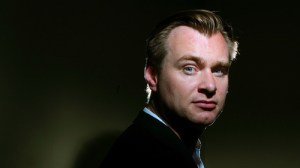
I would love to collaborate with Steve McQueen, or somebody brand new, who is passionate about telling stories. Christopher Nolan, I love how he is fascinated by alternate or parallel universes. Marty Scorsese would be the ultimate New York State of Mind, and I’d still love to work again with everyone I’ve previously collaborated with.

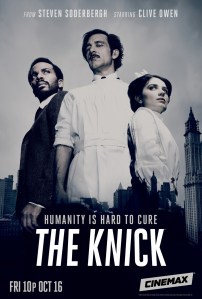
  1. After working with Soderbergh on the fantastic Behind the Candelabra which won you an Emmy, he brought you on to his revolutionary new TV show The Knick. What’s it been like working on that show?
knick_ver20_xlg

There aren’t enough words to describe working with Steven. I feel blessed to be a member of this amazing team. We were all tremendously excited to do something as adventurous as The Knick. 10 hours of storytelling, the complexity of the characters, a true time in history with the early 1900’s, and yet strangely, it still feels very much like today. It was absolutely ELECTRIC putting the pieces together. We built a hospital and a city through a lens we hadn’t seen before. It doesn’t get much better, needless to say, when watching great actors exploring the unknown! Steven has an idea and we get to explore it. He is very trusting with his crew, and he allows us great freedom interpreting the material. He doesn’t micro manage! The goal, as it’s been said by others, is that the actors come onto the set and you know everything works when he picks up the camera and begins to shoot, it’s time for action! The show has been a magnificent challenge, and my joy comes from meeting the various challenges every day, and working with my team, especially with Production Designer extraordinaire Howard Cummings.

  1. The Knick feels like cinema turned into TV. How has this show differed from other TV programs you’ve worked on?2The Knick doesn’t compare with anything. When you are involved with a project that breaks the rules, the rebel in me, as with all the members of the team, rises far and beyond anyone’s wildest dreams! I have only done the occasional TV pilot, all of which have sold and went on to become successful series. And one other TV film, Cinderella, which was lots of fun. But the Knick is great storytelling, chapter by chapter, with great actors loving their characters and their challenges. We shoot it like you shoot a film and I don’t know anyone else that can shoot 560 pages in 73 days! Steven can and does!
  1. This fall sees the release of Angelina Jolie’s By the Sea, which looks emotionally draining and very much a throwback to 70’s filmmaking. What was it like working with her and Brad Pitt on this seemingly quite personal looking film?

by_the_sea_xlg

Working with Angelina and Brad was great! I didn’t know what to expect but they were great collaborators. It’s a difficult film that was very demanding and an intense assignment, but rewarding none the less.

  1. John Woo’s Face/Off is one of the greatest American action pictures ever made, and the stylish costumes, especially the suits, were a big component of that film’s overall sense of visual flair. What can you remember about working on that bullet fest?
CAGE

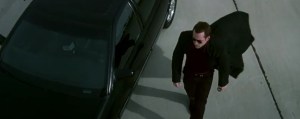
I was thrilled to work with John Woo. I was a great fan of all his Hong Kong films. I loved that I always liked his bad guy! Face/Off was originally going to take place in the near future. I came along and suggested that at the core of the film lived the same man, both sides of him, good and bad, just like the work John does best. They changed the film’s time frame to present day and the characters just spoke to me. John had an idea that when Nic Cage   walked across the tarmac, his coat would fly open as in Lawrence of Arabia. We were able to achieve it with the aid of wind machines! Everyone thought it was a spectacular leather coat and it went on to inspire many future iconic film characters. It wasn’t leather, but rather, it was a polyester priest robe!

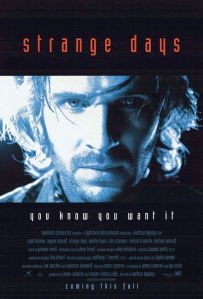
  1. Strange Days is one of the most ambitious science fiction films ever made, and everything about the look and feel of that film is tremendous, especially the distinct wardrobe worn by every scuzzy character. What can you remember about working with Kathryn Bigelow on this masterpiece of cinema?
strange_days_ver2

Working with Kathryn was quite fulfilling. The film took place at the turn of the decade, the year 2000. It was 1994 if I remember correctly when we were shooting, and 2000 wasn’t that far into the future. I helped to create a world that was a hyper mix, with various ethnicities, different time periods, rock ‘n roll, etc. It was divine ecology with nothing being wasted; the rich were rich, the poor were desperate. I remember wanting it to be decadent and sexy. I think it was ahead of its time for sure…

  1. One of the most underrated films on your resume is Lee Tamahori’s Mulholland Falls, aka, “The Hat Movie.” That film has an extraordinary sense of style, and the costume work was nothing short of brilliant. What was it like doing a full blown period noir and getting a chance to work with that incredible male ensemble, all of whom looked beyond snazzy in their outfits?
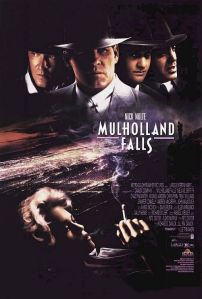
mulholland_falls

I’m so happy you feel that way about this film as I loved working on it! I love designing for men, it’s pretty clear. I had trouble being thought of as one to design period films, so when I was asked to do this film I felt like I had finally gotten a chance. It was my first period film since Chaplin, and I went into it full on. Nick Nolte, Chazz Palminteri, Michael Madsen, the late Chris Penn, John Malkovich, Melanie Griffith, Jennifer Connelly, and all the supporting players, including Rob Lowe – what a fabulous cast to work with! I loved working on the colors of the suits, and we found original fabrics for all the guys, and all the hats were handmade for the picture. I had a great time, but the story no one knows is that the real life detectives all wore white suits and cruised the strip in a white convertible! The producers thought the studio would be expecting “Men in White”, but after meeting with Frank Mancuso, the head of the studio at that time, he told us we had made the right choice.

  1. Nancy Meyers is a filmmaker who has a very specific style of storytelling and set decoration. What was it like working with her on What Women Want, which is one of the more thoughtful entries on her resume of entertaining comedies?
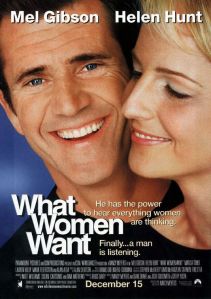
what_women_want

Nancy and I have very similar tastes in most areas, which made for a really good collaboration. It’s always a pleasurable working experience when your taste aligns with that of the filmmaker.

  1. Is there a genre you’d like to work in that you previously haven’t?
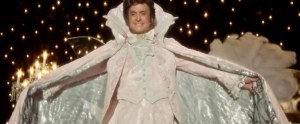
DOUGLAS

I’d love to do a musical or a fantasy, maybe a nitty-gritty thriller or something definitely not pretty. Actually, anything with a great story and an inspired storyteller – that’s what I’m looking for in new projects.

  1. Who are some of the other current costume designers who inspire you to continuously do great work?

knick_ver11

There are so many great designers working today and I don’t want to leave anyone out!

  1. If you’re able to divulge any information, what projects do you have coming out in the near future, and what are you currently working on?

father

I’m currently in Cambodia, about to shoot Angelina Jolie’s next directorial project. It’s adapted from the book by Loung Ung called “First They Killed My Father: A Daughter Remembers.”

Mirojnick Banner

(This interview was conducted via email in November 2015, and was edited by Nick Clement.)
STEVEN SODERBERGH’S SIDE EFFECTS — A REVIEW BY NICK CLEMENT

2

Side Effects is a slick, smart, and deceptively layered thriller from Steven Soderbergh and writer Scott Z. Burns, who before this under the radar gem crafted the irreverent comedic masterwork The Informant! Side Effects is an extremely stylish head game that loves toying with the audience at all times, and it also happens to be very sexy, which is something that Soderbergh isn’t routinely known for; this is one of the more juicy and nervy offerings from this most eclectic filmmaker. Rooney Mara was absolutely terrific (not to mention disturbingly hot) and Jude Law was the perfect chump to get pulled into her web of potential deceit with possibly dangerous ramifications. The entire cast shines due to an unpredictable narrative that makes your head spin during the final reel, and as usual for Soderbergh, the film is just as interesting for what it doesn’t do than for what it does do. Upending conventions is Soderbergh’s typical stock in trade, and while this film was marketed as one thing, it really was something totally different than what had been suggested or what might be expected. This is one to watch again and again in order to fully appreciate all of the cinematic sleight of hand on display; it’s Soderbergh’s ode to Hitchcock. Also, Vinessa Shaw, as usual, was fantastic – she needs more work!

5