Arthur Hiller’s Nightwing

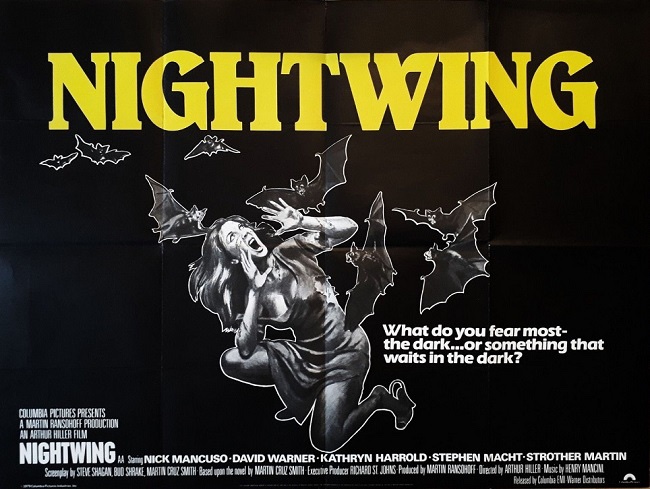
Arthur Hiller’s Nightwing is ostensibly billed as a horror flick about bats plaguing a native reservation in New Mexico and yes it is about that, but it’s less about the beasts themselves in the traditional monster movie sense and more about the very well written characters, the sociopolitical underpinnings and economic issues in the region, the indigenous mysticism and shaman folklore surrounding the situation and the biological threat of very real vampire bats, all coalescing into one hell of an entertaining film. I admire a script and execution that makes room for all facets of a story and doesn’t just opt for a cheesy creature feature with no real narrative or thematic heft. Nick Mancuso plays a sheriff from the Maski tribe who is investigating mysterious human and livestock deaths in his jurisdiction while carrying out the burial ritual of his mentor and local witchdoctor, a man greatly feared by others in the tribe. At the same time a vivacious, worldly bat hunter (the great David Warner) arrives and warns everyone that there may be a massive colony of deadly vampire bats roosting in the canyons nearby, while another opportunistic Maski (Steven Macht) wants to sell mining rights on their land to a nasty oil company and all of the factions get the surprise of a lifetime when the bats start attacking. You also get a cantankerous old Strother Martin as the local general store owner who married into a Maski family and still has the balls to talk shit about them to their faces. I’m not gonna lie, the bats themselves aren’t that impressive overall, they’re just a standard combo of shots of real bats flying and then rubber prosthetics for the actual attacks. There’s a scene inside a makeshift ‘shark cage’ style contraption that generates good suspense and a terrific sequence inside their creepy cave, but they’re not the most memorable monsters I’ve seen. What this film does have is atmosphere, very well written characters and genuine sense of place. It’s filmed in New Mexico and the scenery is breathtaking, brought to life by a wonderful score from Henry Mancini that samples Native instruments and echoes off the canyons eerily. There’s very cool shaman lore and the performances are exceptional, especially Mancuso’s fierce tribal cop, Macht’s slippery, morally secretive entrepreneur and Warner’s bat hunter who makes an almost religious, zen like fervour out of the vocation. Good times.

-Nate Hill

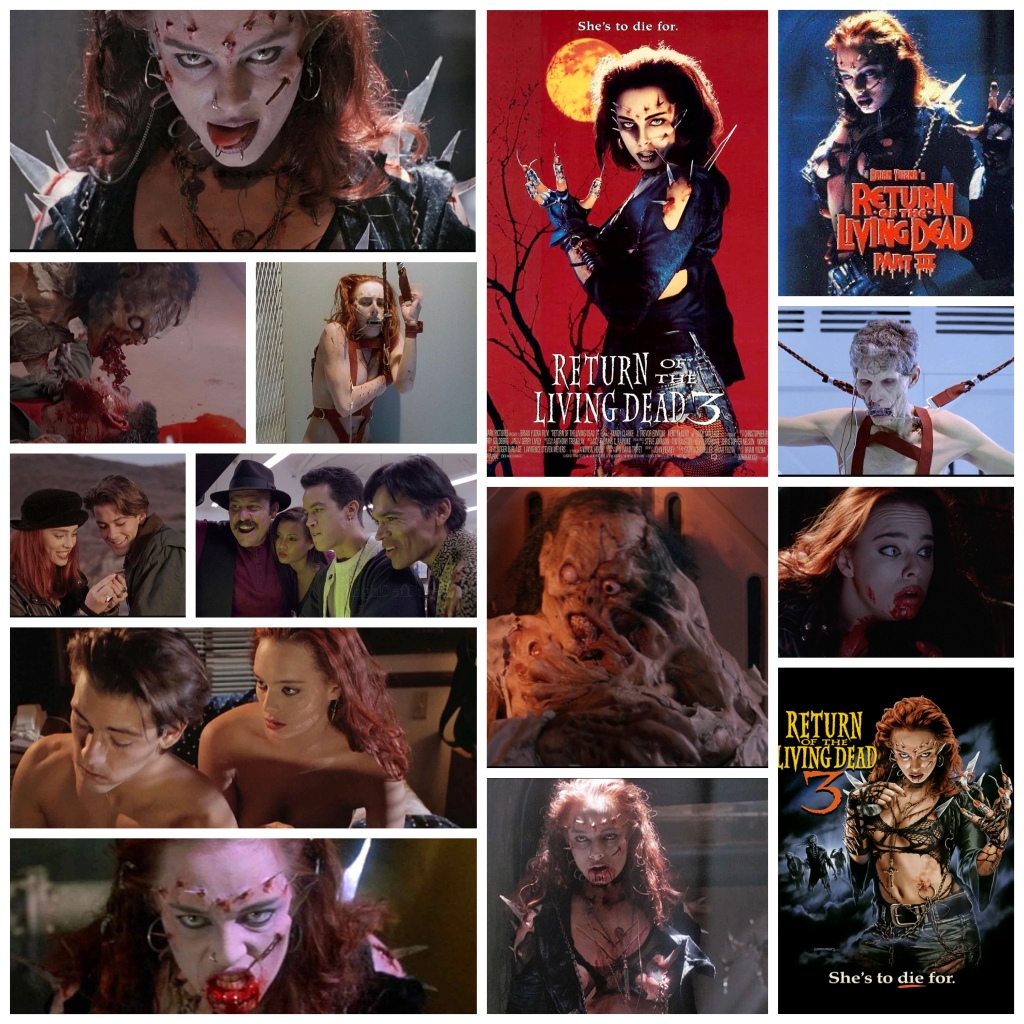
Brian Yuzna’s Return Of The Living Dead 3

Brian Yuzna’s Return Of The Living Dead 3 is my baptism into this franchise, so to speak, and while I try overall to not just haphazardly launch into a franchise midway without regard for chronology, this was recommended to me by a friend and it’s one of her favourites so here we are. This was an absolute blast, and although it’s obvious this franchise had reached its ‘weird’ zenith, it’s ‘Jason Goes To Hell’ or ‘Michael Myers is actually in a Druid cult’ area of bonkers sequel writing, I love the ideas, special effects and fresh spin on the zombie genre found here, even if I had no context in regards to the many Living Dead films that led up to this point. There’s an army base where a gruff Colonel (Kent McCord) conducts bizarre experiments on the undead in a world that has been living with the existence of zombies so long they’ve just become like, part of the scenery, less of a novelty threat and more of a given. The general’s kid (J. Trevor Edmonds) is one of those motorbike riding, earring sporting, dreamy 90’s bad boys whose rebellious nature is constantly at odds with the shirt tucking, militaristic nature of his pops, who doesn’t approve of the girlfriend (Melinda Clarke) that he’s clearly very in love with. After a horrific bike accident leaves her on deaths’s door, the kid sneaks her into his dad’s facility in hopes of using the strange zombie necromancy within to resurrect his love. Well.. that just sounds like a recipe for chaos and indeed the film turns the dial way past eleven as some kind of otherworldly magick takes the girl over and she gains these snazzy, Hellraiser style clothes, weaponry and undead powers, with the makeup and costume department making her look fearsome and raw for the latter half of the film. What’s fascinating is that she doesn’t really lose her humanity either and doesn’t become a shambling corpse, she metamorphoses into this mesmerizing amalgamation of a bloodthirsty monster who needs to eat human flesh but with her emotions, drives and her thinking skills of a human being still clearly intact, gilded by these striking costume choices and surgically implanted, jagged looking weaponry. The character is a stroke of genius, actress Clarke sells every facet of it from the longing for her former self and her love for her boyfriend to her burgeoning primordial need to cause mayhem and carnage, she’s one of the most interesting characters I’ve ever seen in horror and I would have loved to see a whole spinoff franchise just about her. There’s a rather silly subplot where a loud, obnoxious Mexican street gang begins to transform into zombie-like creatures as well and it’s got its charms including a neat effect where a detached spinal column terrorizes anyone around it. The film works best when it focuses on the girlfriend and her chrysalis-esque remoulding into this spectacular undead demigod though, and I’d heavily recommend the film just for that event alone. Soon I’ll explore this franchise more in depth and have a better grasp on the world building and storytelling, but if the rest are anything like this, baby I’m sold.

-Nate Hill

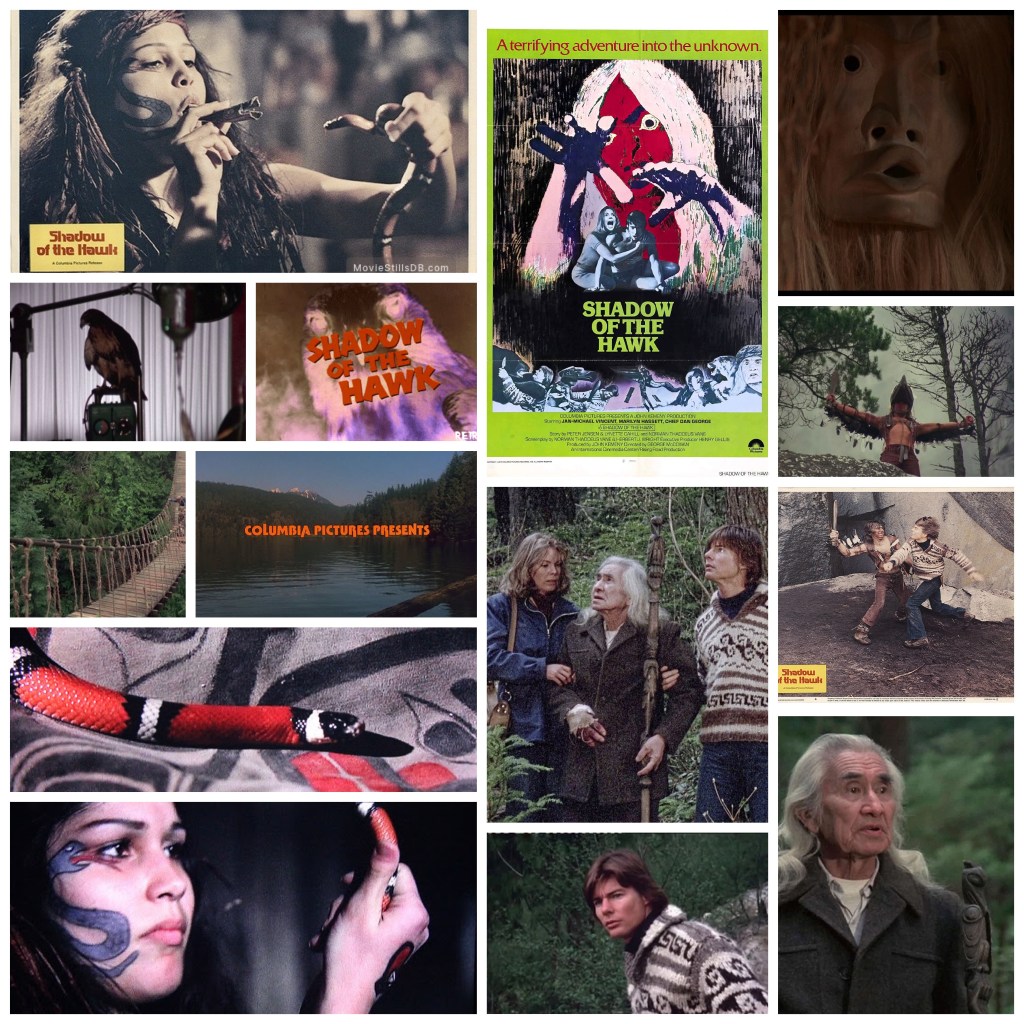
Shadow Of The Hawk

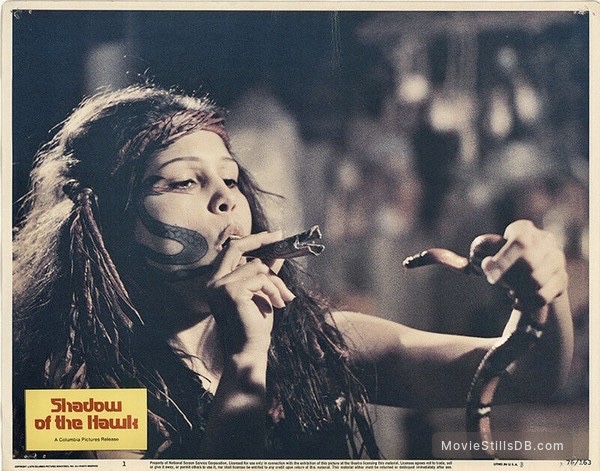
I expected Shadow Of The Hawk to be campy, cheesy or at the very least creaky, but this is a genuinely spooky, effective and quite earnest old school ghost story with three good natured lead performances, absolutely gorgeous Vancouver locations and eerie, atmospheric indigenous mythology. The great Chief Dan George plays a Native elder who voyages from his home in the British Columbia mountains to find his halfbreed grandson (the late Jan-Michael Vincent), to get his ancestral help in battling the ghost of an ancient sorceress who has put a deadly curse on their bloodline. Grandson is less than happy to be pulled into a facet of his life that he’s actively distanced himself from, but has no choice really as the dark magician and her evil minions are plaguing his life too. Together with a helpful reporter (Marilyn Hassett) they embark on a road trip into the sacred lands of BC to contend with these powerful dark forces amassing against them and cleanse their family lineage of this voodoo mysticism. Being an obscure 70’s horror flick theres naturally a touch of camp, most notably in Vincent’s doe eyed, slightly androgynous aura, but for the most part this plays it straight and spooky. The spirit of this witch first manifests as a legitimately terrifying masked phantom that haunts the characters wherever they go accompanied by some sound design that truly stood my hairs on end, then later she shows up in dreamy flashbacks as a snake charming witch-doctor played by Vancouver indigenous actress Marianne Jones. There are very well done set pieces here including a white knuckle suspension bridge crossing, an ongoing car chase between our three leads and a mysterious, supernatural black car that tails them all around the BC landscape. Vincent must fight a bear to death and as if that wasn’t strenuous enough then a Wolf as well *and* some masked cultist acolytes of the sorceress high atop a craggy bluff in a confrontation that has some Last Of The Mohicans vibes. It’s a fun film, with some really engaging visual atmosphere, very frightening score and a neat ‘modern world clashing with ancient spiritualism’ feeling as our characters venture from the cement and glass world of 70’s Vancouver out into the lush, elemental Pacific Northwest wonderland of British Columbia.

-Nate Hill

John Erick Dowdle’s No Escape

There may not be much of a, shall we say, culturally tactful or sociopolitically subtle premise behind No Escape, but I’d be lying if I said that this isn’t an almost unbearably suspenseful, purely nightmarishly effective thriller. Owen Wilson and Lake Bell play a wealthy American couple on a business trip to some unnamed southeast Asian country that is going through kind of a rough patch, politically and economically. When the hotel they are staying in is stormed by a citizen’s army of ruthless, barbaric rebels staging an infrastructure-shattering coup, they are forced to flee through the dangerous streets of the city with no law enforcement or anyone to help them, save for one British intelligence agent played by Pierce Brosnan, an undercover operative who does his best to help them amidst the chaos of a country turning itself inside out. Now, I see from this director’s filmography that his work is almost all in the horror genre so far, which makes sense because this film is so punishingly, exhaustively suspenseful and tense that it could almost be classified as horror itself. The rebels are a terrifying, almost inhuman threat around every corner and are both willing and capable of inflicting frightening atrocities, as this family dodges them at every turn. If I were this director though I would have mayhaps lent my talents to a better, more tasteful script though, and here’s why: Wilson and his kin barely register as characters of their own, but rather blank, terrified chess pieces being frantically shunted across the board of pre-constructed dangers with no real agency or unpredictability of their own. The rebels are a faceless army of homicidal, rape inclined psychos and we get zero grasp on their cause or agenda beyond hunting this family down at al costs. The city they’re in doesn’t even have a name, and that’s how much this script cares for specificity or nuance. The only believable, well rounded character is Brosnan’s guilt ridden agent, he brings an obligatory Bond-esque charisma to the role while retaining this sort of haggard, world weary resolve too and is actually quite good. But his character and the unbelievable talents of the director in generating horrific suspense could have been put to use in a much better setting, premise and story beyond ‘white American family is brutalized by savage Asians in a crumbling third world.’

-Nate Hill

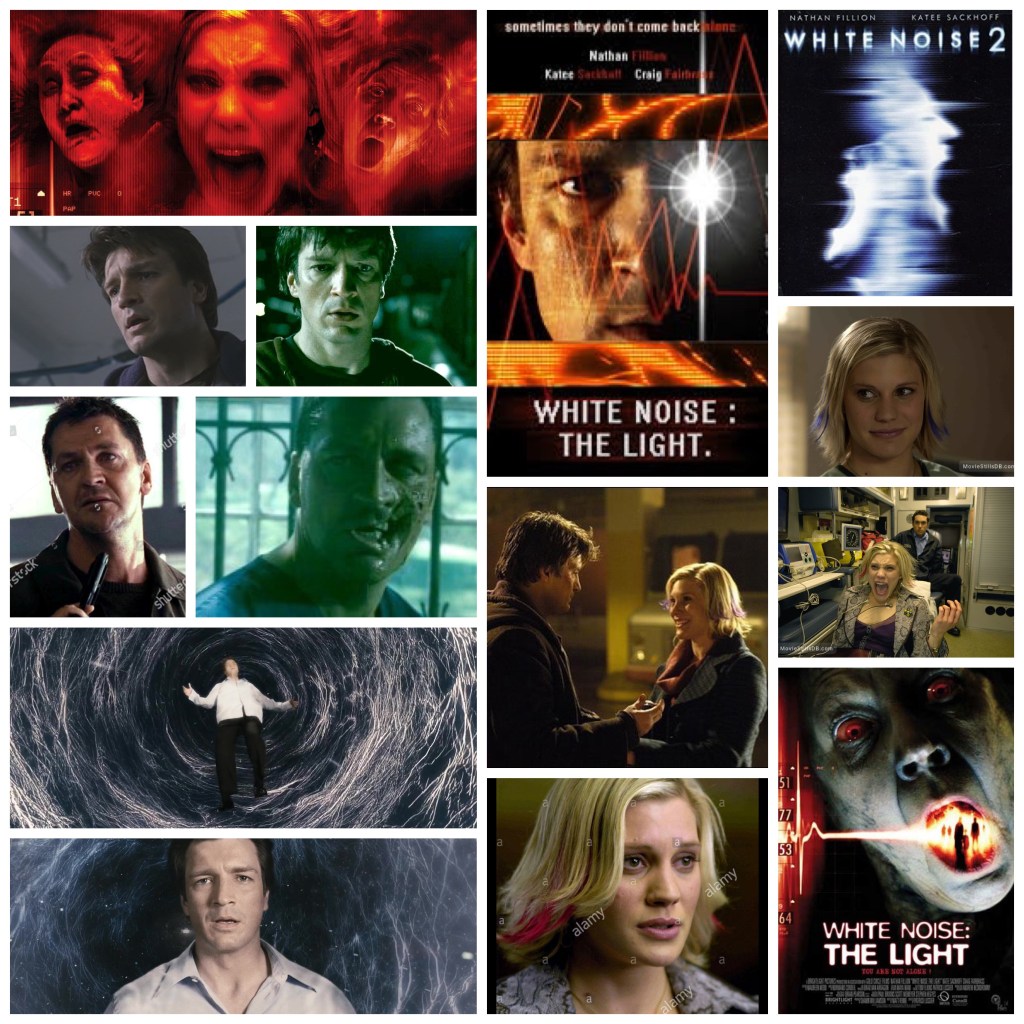
White Noise 2: The Light

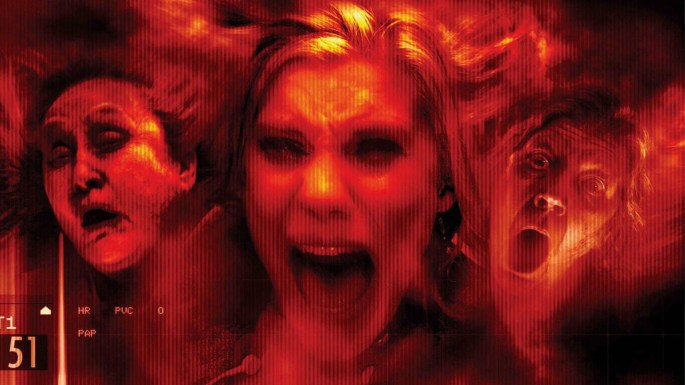
It can be jarring when horror sequels do something almost entirely different with their concept but still use that same franchise name as the first one, it either means bravely pioneering new ground or gravely deviating from an already solid blueprint into a morass of sideshow muck. In the case of White Noise 2: The Light I couldn’t tell you which of those two categories it fits into because it was such a confounding, nonsensical story I really didn’t make too much sense of any of it, so I suppose the second one if I had to say. Following the exploits of the excellent first film in which we saw Michael Keaton communicate with the dead, including his wife, via spooky VHS tape static, this one goes in a drastically different direction. Nathan Fillion plays a guy whose wife and child are murdered in the opening scene of the film by a disturbed, gun wielding maniac (perennial UK tough guy Craig Fairbrass) before the man blows his own head off. Lost in a pit of despair, Fillion attempts suicide himself and has a brief trip to the afterlife (cue the XBox 360 cutscene effects) before returning to make it a near death experience and discovering he has certain… abilities. Premonition, foresight, the power to sense impending catastrophes and save those in their path and the clairvoyance to know when certain seemingly benign people are going to perpetrate horrible acts of their own, kinda like the guy… well you can see where this going. He meets a friendly nurse played by the wonderful Katee Sackhoff and I must admit that their pairing is pretty much a casting match made in Heaven and the best thing the film has going for it, even if the script doesn’t do all that much with them together. The cast beyond them aren’t people I recognized except for a hilarious early career cameo from Jared Keeso, who Letterkenny fans will be just tickled to see here and may even do a double take. The film is set in Vancouver again and as always it adds a lot of atmosphere, but you can only do so much for a story that’s told as loosely and unconvincingly as this. There’s no real reference to the first film or it’s premise, this for sure didn’t even need to be called White Noise at all, it’s more a sequel to that Sandra Bullock flick Premonition than anything resembling a tie-in to the Keaton one, and it’s just not gripping, interesting, scary or affecting enough to recommend whatsoever. If you must give it a look to see Fillion and Sackhoff gently flirting for a few scenes then go for it, I don’t blame you, but just don’t expect anything close to an involving thriller here.

-Nate Hill

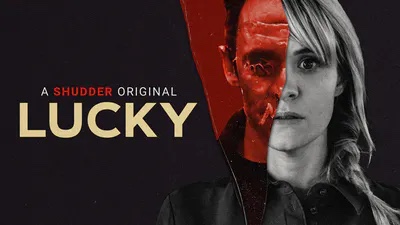
Brea Grant’s Lucky

I struggled with Lucky, a new horror film billed as innovative and groundbreaking and yes it’s well made, yes it’s themes are incredibly important but you have to fashion a story that makes sense and draws you in around said themes or all you’re left with is abstraction without any proper narrative tissue to cling to. This is written by and stars Brea Grant, an actress whose work I loved in Rob Zombie’s Halloween II and some of the later seasons of NBC’s Heroes, where she played the Quicksilver proxy. Here she plays a suburban woman who is attacked one night in her own home by a masked man. She wounds the guy and he runs off, but the next night he shows up again. And the next night again. And again, and so on. When she tells her husband he more or less shrugs it off with a non-reaction. Her friends and the police seems to have the same lukewarm indifference so she’s stuck in this surreal twilight zone where she’s the only person who finds it concerning that the same intruder comes back night after night to torment her, no one in her life properly believes, listens or takes her seriously and she feels alienated and outmatched by both her attacker as well as the people and support systems in her life that are supposed to care. See where this is going? It’s a fabulous concept for a film and the fear, panic and paranoia is well executed on top of a terrific performance from Grant… however… the script does absolutely *nothing* to explain this concept from a story/script point of view beyond “she’s attacked every night by the same dude, no one really believes her and she’s basically on her own in fighting back.” Then, it starts happening on a mass scale all throughout the city like some kind of violent epidemic and everyone who is not the attacker or the victim seems to just carry on like nothing much of anything’s happening. The film makes absolutely zero effort to explain this beyond simply showing it happening, and as a result it completely tanks itself, and doesn’t work whatsoever as anything close to a coherent narrative. Now, this is a tricky one to review because of the subject matter itself so let me spell it out clearly: there is no doubt in my mind whatsoever that these themes are incredibly important, that violence/assault towards women is a very serious matter that needs to be addressed both in art or society, and so too the endemic indifference and non-believing nature of others in their lives who either turn a blind eye or don’t care. It’s so important. However: these filmmakers made their story *purely* from an abstract, allegorical point of view and didn’t mesh in a storytelling device or proper narrative to support it, and that to me felt lazy, incomplete and incoherent, and I disliked the film. Anyone out there hollering “you just didn’t get it because you’re a man and this film wasn’t made *for* you” into the echo chamber can stop right there. I succinctly and pristinely understood these themes, and understand how important they are, but that doesn’t change the fact that the film itself, as a piece of art, was not a successful endeavour and my saying so in a review doesn’t immediately imply that I’m discrediting anyone’s experiences or these social issues overall. I shouldn’t have to explain this so in depth but some people out there really seem to struggle with it, so there it is. Well made film from a technical standpoint, an absolute knockout of an original score by Jeremy Zuckerman, fantastic performance by Brea Grant and very important themes… but ultimately it falls flat on its face.

-Nate Hill

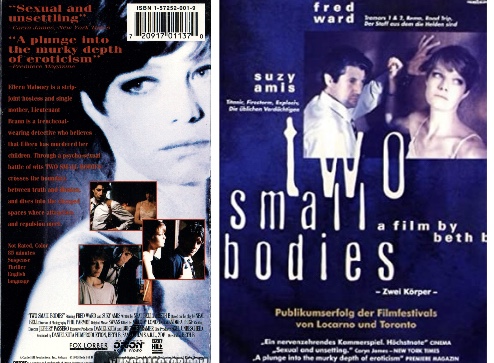
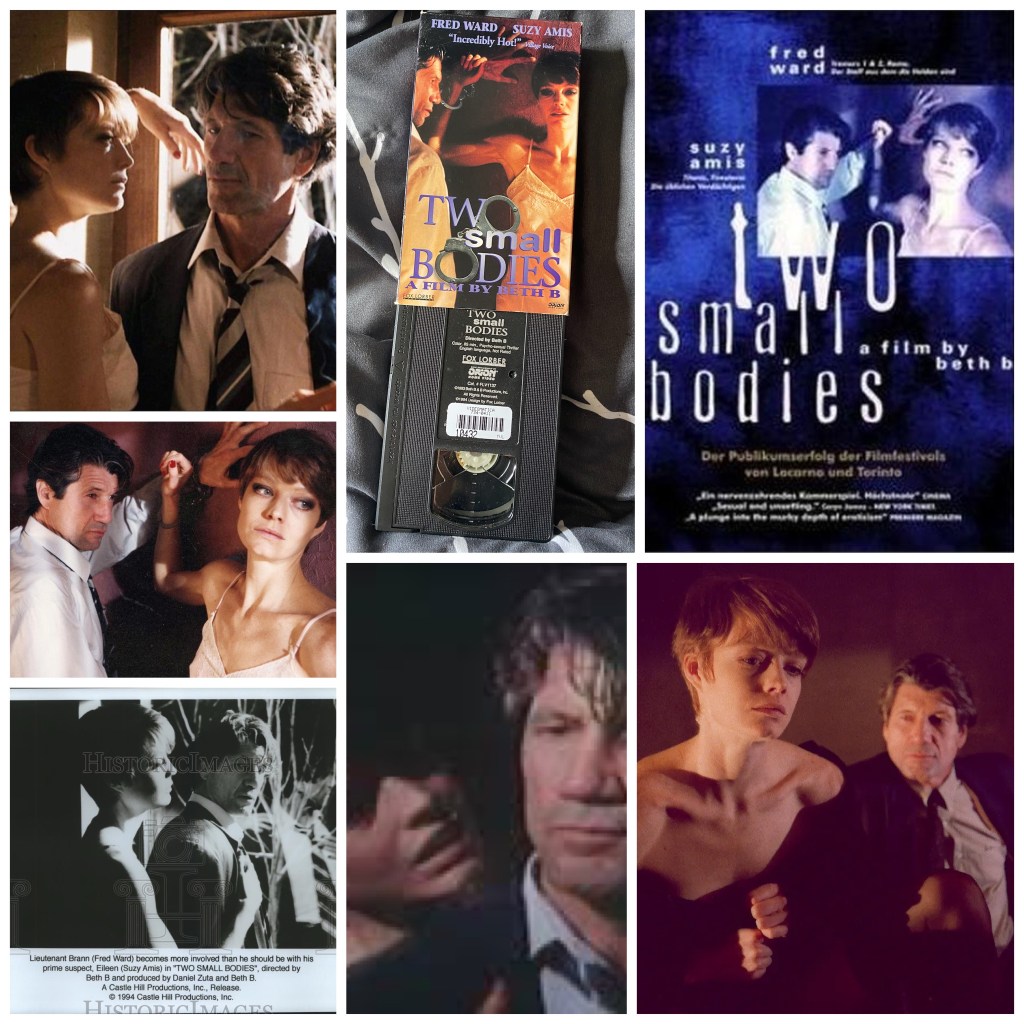
The VHS Files: Two Small Bodies

Today’s VHS File is an odd one called Two Small Bodies, essentially a grim two person drama that sees a police lieutenant (Fred Ward) relentlessly interrogate a single mother (Suzy Amis) who has reported her children as missing. They hang about her house as he goads, manipulates, probes and generally just drives a wedge into her life in an attempt to find out what happened to her kids, and he cultivates a growing suspicion that she’s the guilty party herself. This is based on a stage play, so we just have this one location, two actor story without anything else in the way of dynamics. Thankfully our two leads are both excellent, particularly Ward who is at his most… manic, Jim Carrey style acting I’ve ever seen him in a career full of mostly straight shooter authoritarian/cop roles. His cop (I began to wonder if he even was a real cop) here is a piece of work, and takes full advantage of the fact that Amis’s character is a stripper in his tirade of investigative fury towards her. The film is directed by cult filmmaker Beth B so the kinky underground vibe is there, but she struggles somehow in getting this story successfully across. You can only go so far with a constant back and forth barrage between two characters before you need narrative innovation and for your story to, you know… go somewhere! Unfortunately this doesn’t go anyplace concise beyond having the two leads engage in bizarre, borderline surreal roundtable dialogue and questionable behaviour and then just sort of leaves the ending open for us to figure out. I had a vague idea myself of who these two really were, what happened to the kids and what their situation was really about but the film (not sure how the play goes) does little to solidify any concreteness and let’s the final frames billow out in ambiguity like the perpetually windswept curtains in this woman’s nocturnal abode. That’s not to say it’s inherently a bad choice, ambiguity can be an especially *strong* choice if implemented correctly, but you just never know how each viewer will respond to that, and I was left a little lost. A fascinating exercise, if an incomplete one.

-Nate Hill

April Mullen’s Wander

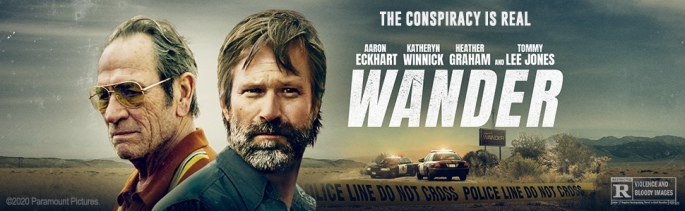
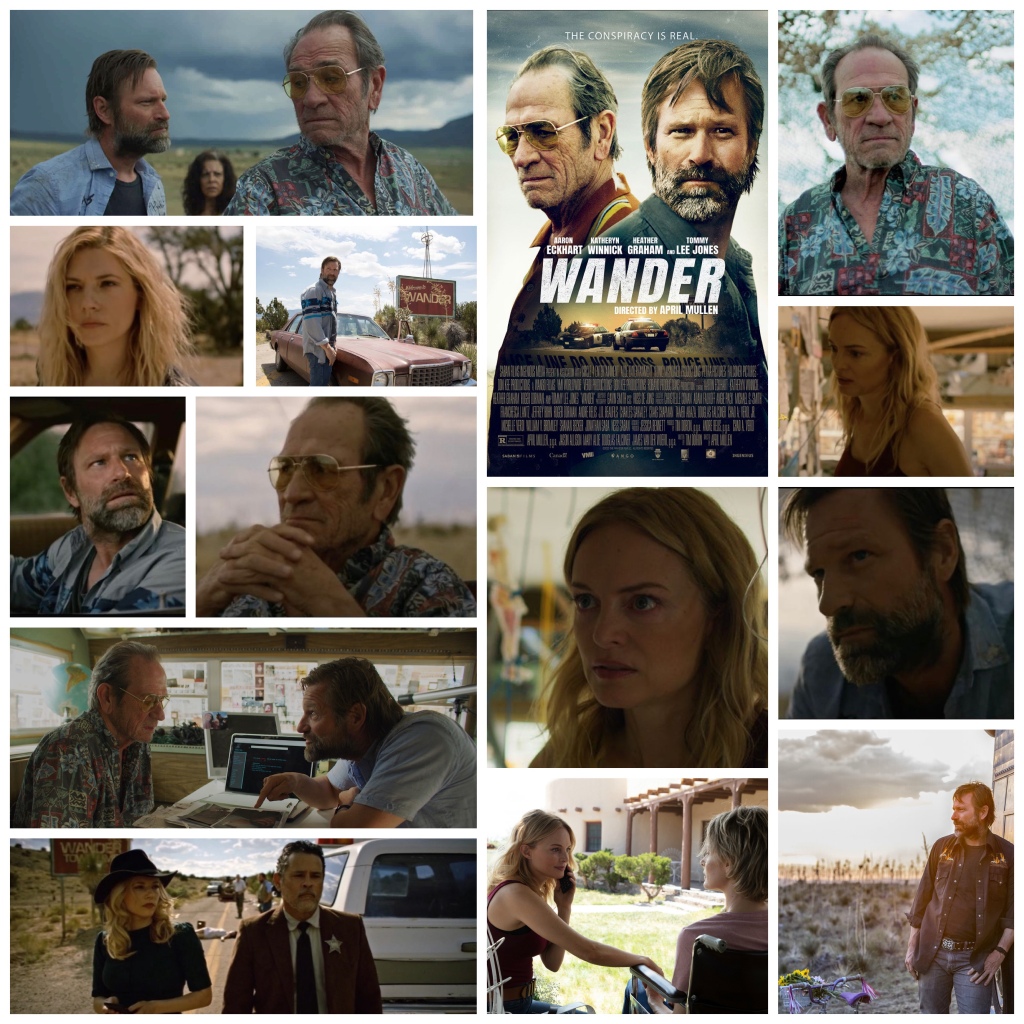
I wasn’t quite sure what to expect with April Mullen’s Wander and my hopes may have not been that high just based on reviews but I honestly loved this wild, scrappy, unconventional, ‘pulp arthouse’, sociopolitically conscious bauble of a film so much. Many won’t vibe with it and that’s okay because it’s supremely weird, visually stylish and kinetic in the fashion that filmmakers like Tony Scott and Oliver Stone traffic in and, quite frankly, all over the place in terms of tone, editing and plot to the point that many viewers will feel assaulted by commotion. I love it for all the reasons mentioned because my tastes always gravitate towards the wild, wooly, artsy and just plain strange. Aaron Eckart and Tommy Lee Jones give perhaps the two performances of their career that are most… ‘unlike their essence’, playing a couple of crusty, paranoid conspiracy theorists who run a tinfoil hat podcast from their dusty trailer. One night a distraught mother calls into their show claiming her daughter was kidnapped by shadowy government factions and corrupt law enforcement and enlists their help, so they pack up and venture out to Wander, NM, a literal one horse town with a nervous sheriff (Raymond Cruz) who knows more than he lets on and a mysterious cowgirl (Kathryn Winnick) who lurks about the place. Eckhart’s character has a lot to contend with beyond the task at hand, he’s ridden with PTSD from a former accident that killed his daughter and left his wife in brain damaged catatonia. Their investigation leads them to some pretty disturbing revelations that I won’t spoil here but there’s an interesting psychological juxtaposition between what’s really going on and what’s a facet of their already fractured collective mental states. Eckhart is wonderfully intense, barking and growling out his lines with the ferocity set on low burn and looking frantic as a wild animal, while Jones is the cunning old dog who is marginally more put together and tries to steady his pal but is still completely out of it himself. Heather Graham gives a wonderfully soulful supporting performance as a good friend of Eckhart’s who does her best to help him through what’s going on. What I really loved about this film is how many tones and styles tributary together for an often raucous but incredibly singular experience. The film opens with a preface paying respect to indigenous and all peoples of colour who have been displaced and mistreated along many borders and immediately begins with a jarring prologue as a Native woman flees unseen forces in a speeding car. Director April Mullens uses elaborate, tricky, swooping, unbelievably dynamic camera movements and chopper/drone shots to bring the story to life in an immersive and breathtaking way, and the musical talent of Canadian indigenous artist Jeremy Dutcher adds haunting atmospherics to the soundscape. This film is a lot of things, and it will no doubt be too much, or too ‘out there’ for many but it’s right up my dusty backcountry alley. Bizarre, confounding, melodic, emotional, frightening, it’s altogether like nothing I’ve seen and truly one for the books.

-Nate Hill

The VHS Files: Yesterday’s Target

Today’s VHS File is a dusty old SciFi time travel flick called Yesterday’s Target whose plot I just couldn’t get a handle on, despite it having some cool ideas, ambient atmospherics and neat set pieces. It stars one of the Baldwin brothers, and you pretty much know what you’re in for when they headline something. Daniel Baldwin is an unassuming factory worker who is recruited by a shadow organization because of his untapped psychic talents, targeted by a mysterious rogue military scientist played by Malcolm McDowell in one of his classic mega villain roles but he’s curiously restrained and relaxed here. Baldwin basically goes on a cross country road trip to find other psychics like him including a clairvoyant (Stacey Haiduk), a short order cook who is a firestarter (T.K. Carter from The Thing in this film’s liveliest performance) and others. They’re pursued by McDowell’s top man, a cowboy hat wearing Levar Burton in a bizarrely cartoonish performance that doesn’t work and brings the film somewhat down whenever he’s onscreen. There’s an absolute deluge of expository mumbo jumbo, arbitrary subplots and just garbled SciFi clutter here including some secret society that travels through time to prevent people from having shitty lives, a child prodigy, Vegas card sharking, McDowell’s random personal life with his wife and all sorts of interludes that muck about until I really wasn’t sure what this film was even about beyond a vague idea of ‘time travelling clairvoyants.’ Still, it’s very atmospheric and some of the performances are a lot of fun. It’s also quite muted and laidback and even when there’s gunplay or a pursuit it feels just… hushed and soothing somehow. There’s a deliberately anticlimactic ending as Baldwin and McDowell standoff only to surprise each other with revelations regarding identity, time loops and serendipitous phenomena that again, I wasn’t clear on, but allows Malcolm to inject some real poignancy into an otherwise standard villain role, if even for a brief moment when all is almost said and done. It’s worth a look but nothing special. I have no memory of where I even got the VHS tape but it’s another one of those screeners that nobody is supposed to sell yet somehow find their way to good homes. I see this is also streaming on something called Tubi though, if anyone is at all curious.

-Nate Hill

The VHS Files: Conundrum aka Frame By Frame

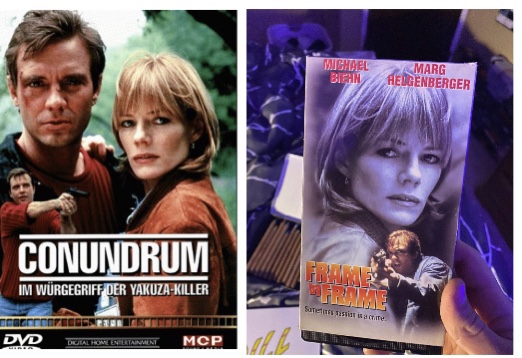
So here’s a fun idea (I hope)… I have hundreds of unwatched, obscure VHS tapes ive collected over the years and I’ve recently organized them, fired up the VCR and begun to explore the darkest corners of Z-Grade 70’s, 80’s and 90’s analog nirvana, so I’ll do a series of intermittent reviews based on these random, unheard of treasures with a snapshot of the tape itself, just for fun. First up is one called Frame By Frame, which I guess is officially called Conundrum on IMDb. It stars Michael Biehn and Marg Helgenberger as two inner city cops who begin to have a fiery affair amidst the aftermath of gangland killings stirred up by a Chinese crime syndicate. His family is murdered to set an example, this event brings them closer as she comforts him but before you know it other nasty secrets are unleashed and the classic obligatory ‘web of deceit, betrayal, twists and kinky obsession’ of the essential 80’s B movie potboiler is set into motion. Biehn and Helgenberger are perfect for each other, and on top of being two of the absolute sexiest cult icons of their day, they actually turn this run of the mill script into something fun thanks to their vivid characterizations. He’s as wild eyed and frantic as he was in Terminator and even gets one sly ‘big emotion’ scene that takes on new meaning once all the twists unfold, and she does this tough girl tomboy thing with her accent and mannerisms that’s fun too. The story kind of goes wildly all over the place and I didn’t quite follow every hairpin turn or believe in this brand of convolution but hey, it’s an ancient DTV flick and half the fun is watching these two stars rip snort their way through the hard boiled narrative anyways. I’m fairly sure I may be the only person to have ever seen this film because the tape I have is one of those promotional screeners that aren’t for resale (but they always are anyways), there are positively zero user reviews on IMDb or even critics reviews out there elsewhere on the interwebs and one can barely find traces of its existence at all beyond the tape I have. Good times though, especially if you love Biehn and Marg as much as this viewer.

-Nate Hill