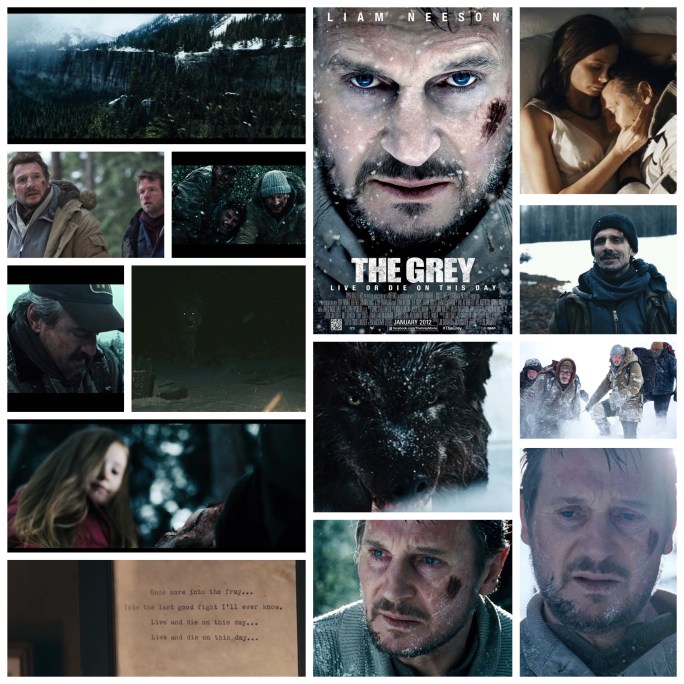
Joe Carnahan’s The Grey

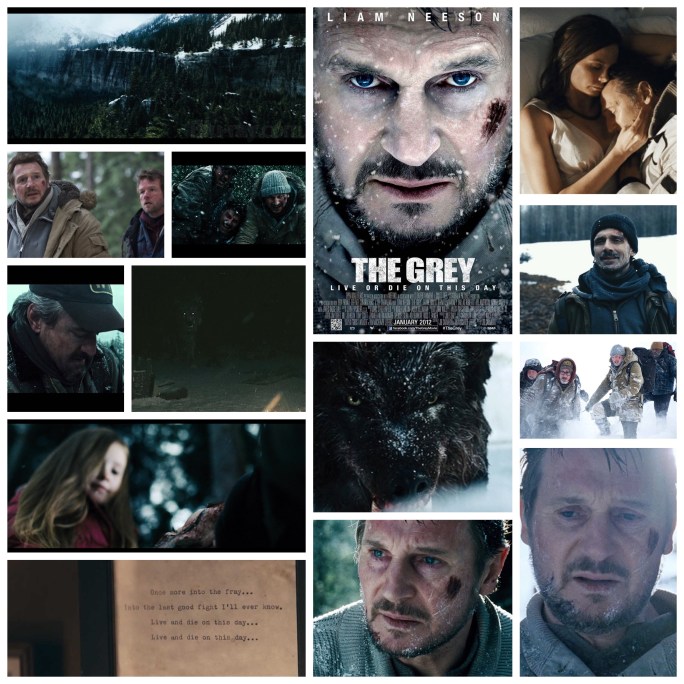
When the marketing campaign came along for Joe Carnahan’s The Grey, they really tried their hardest to make it look like ‘that Liam Neeson movie about punching wolves.’ It’s understandable, because what we really got was a heartbreaking, human survival story rooted in character, streaked with sorrowful existentialism and so far from the rugged action film advertised. That kind of film is hard to sell in Big Hollywood, but it’s always better as filmgoers to receive something this thought out, carefully made, entertaining and deep when visiting the multiplex, and it’s gone on to become one of the best films of recent decades as well as a personal favourite.

Neeson is scary good as Ottway, hired gun for an oil company and resident badass at the remote Alaskan rig where hordes of rowdy labourers chase that paycheque they’re just gonna blow on booze the same night. On a routine transport back to Anchorage their plane crashes horrifically, scattering the tundra with bodies and leaving a handful of survivors to fight their way across the desolation. Led by Ottway, they soon realize their path has cut right trough the hunting ground stalked by a hungry pack of wolves, and they are now in the crosshairs as well as at odds with the cruel indifference of Mother Nature. The wolves here are never really seen clearly and don’t mimic what you might see on BBC’s Planet Earth, instead we get snarls, gristle, sinew and nasty unseen phantoms growling out there in the dark until one of them lunges for a kill. They serve not so much as literal wildlife but rather as harbinger of inevitability, a spectral reminder of one’s mortality in a situation like that, and the ever present fear of death.

Carnahan has a background in what you might call ‘manly movies,’ previously helming the excellently gritty Narc, the fabulous and underrated Smokin Aces and the silly reboot of The A Team, but The Grey is a brand new bag. Deadly serious, deeply thoughtful and surprisingly emotional, this is a film that loves its characters despite putting them through icy hell. Neeson is uncannily good, his character goes through sadness in ways that mirror real life tragedy the actor has been through, events we can see echo in his haunted, career best, primal howl of a performance. Dermot Mulroney makes brilliant work of Talget, a pensive man who just misses his daughter and holds onto that as will to live. Frank Grillo brings down the igloo as Diaz, a macho, hard bitten jerk-off who quickly discovers that such abhorrent behaviour is something both his fellow survivors and the wolves have no time for. Other fantastic work comes from James Badge Dale, Joe Anderson, Dallas Roberts, Nonzo Anozie, Ben Hernandez Bray, Anne Openshaw and more.

Roger Ebert said that the only time he ever walked out on a film was the next one in line after seeing this, and that sort of encapsulates the almost profound effect this one has. The first time I saw it was a bleary bootleg version on a laptop and I sat there stunned in silence after. There’s many aspects that went into attaining that quality, but what resonates and makes it work so well for me is how much it respects, loves, and treats its characters like actual human beings instead of cannon fodder victims for the wolves. They are all well developed, non-archetypal individuals, and it’s that that pulls you right into the story. There’s a scene where Neeson eases the passing of a fatally wounded man with comfort and grace, it’s easily the most devastating death scene I’ve ever seen filmed, made so by blunt realism and uncomfortable truth. My favourite scene has to be the remaining survivors sitting around a campfire, simply talking. They banter, Neeson shares a poem his father wrote, Mulroney tells a story about his daughter he misses so much and Grillo lightens their collective mood with a bit of humour. You feel like you’re sitting right there with them. A masterpiece on many levels.

-Nate Hill

Hidden Gems: Reto Salimbeni’s One Way

Reto Salimbeni’s One Way literally starts off one way and throws curve ball after left field turn after another until you really begin to appreciate a truly original script for once. Granted he produced his film in indie land where there’s considerably more creative freedom than the studio system but still, this is one unique film and I promise you it’s not the action thriller that the US market has tried to sell it as.

As the film opens, teenage Angelina is pursued and sexually assaulted by several boys alongside a riverbank. Suddenly a mysterious military general (the late, great Michael Clarke Duncan) appears out of nowhere and, after gaining her permission, positively ventilates them with a sub-machine gun. Jump cut to a decade or so later and we see hotshot advertising exec Eddie (Til Schweiger), married to the boss’s daughter (Stephanie Von Pfetten) but cheating on her every chance he gets with multiple women. Grown up Angelina (Lauren Lee Smith) works for the firm too, and they both get entangled up in a murder investigation involving the boss’s son (Sebastian Roberts), who is a sadistic rapist and very dangerous given his position of power.

I’ve done my best to somewhat describe the story so you have a vague idea of what this is all about but it’s tough to impart just how twisty and unexpected the thing gets, and that’s half the fun. Schweiger isn’t exactly an actor of dramatic heft, often appearing as stylized characters or posturing tough guys, but he does alright here as the sheepish philanderer who learns his lesson big time. Smith is fantastic as the most sympathetic character and the closest we come to a clear cut protagonist, dealing with the most tragic, yet ultimately heroic arc and nailing it beautifully. Duncan is the most striking character and is seen the least but always makes a huge impression, here in a small but incredibly key role. Watch for Art Hindle, Kenneth Welsh, Ned Bellamy and Eric Roberts in a brilliant extended cameo as a defense attorney who gets a few big dramatic moments of his own.

I can see why this film was tough to market as there is so much going on tonally, narratives weaving together at their own leisure and nothing really conventional about it at all. There’s corporate espionage, courtroom intrigue, emotional interpersonal drama and many more elements at play. Really though it’s about confronting your past, dealing with trauma particularly when it comes to sexual abuse and standing up to people who attack with impunity. Smith’s character takes front and center here, getting a gruesome revenge scene that rivals The Girl With The Dragon Tattoo in it’s intensity. She has to face the horrors of her past full on here, whilst dealing with the legal problems Schweiger has thrown into the mix and it all makes for a unique, emotionally stirring and hypnotic hidden gem of a drama that I highly recommend.

-Nate Hill

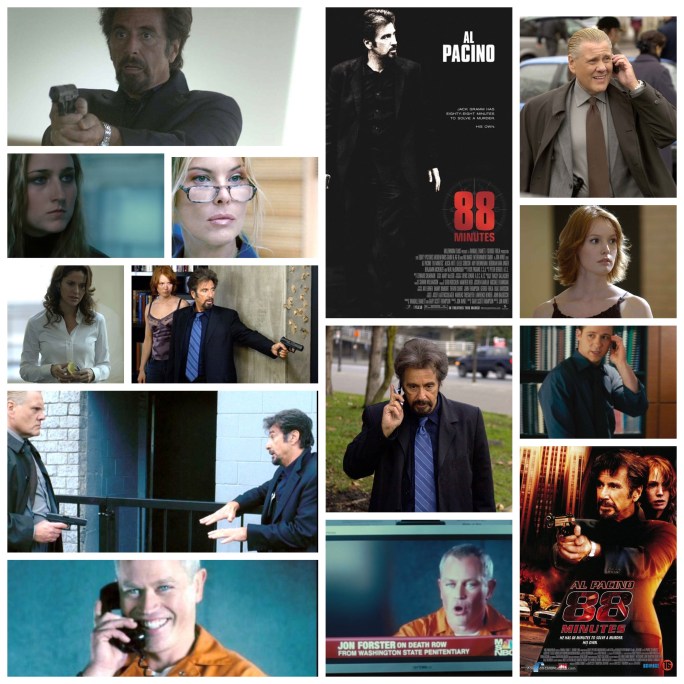
Jon Avnet’s 88 Minutes

It takes less than 88 Minutes into Jon Avnet’s aptly titled Al Pacino thriller vehicle to realize you’ve kind of waded into a mess, but the viciously bad reputation this one has is kind of overblown, at least for me. Yes it’s a big implausible house of mirrors but instead of mirrors there’s cliches and WTF plot turns, there’s absolutely way too many characters running about and the pace is all across the board, but I enjoyed it anyways, in a fun TV movie kind of way.

Pacino and his pacemaker play Jack Gramm, an FBI profiling guru who is forced to marathon run around Seattle (naturally Vancouver, cue eye roll) overturning stones, under which there may be murder suspects. There’s a nasty serial killer (the always awesome Neal McDonough) who is sitting on death row, days away from execution. He proclaims himself innocent and whaddya know, an hour or so after that some incredibly convenient copycat murders start happening, giving him the seeds of reprieve. It’s up to ol’ Al, his tough guy Bureau boss (William Forsythe, again always an awesome familiar face to see) and others to smoke out this co-conspiracy… or something like that.

Pacino is still trying to do the ladies man shtick here with a shock of grey hair and a leather coat hide, but if you ask me it never really worked for him anyways, at least not in the traditional sense. Take Taylor Hackford’s The Devil’s Advocate for example, where he naturally plays The Devil. There’s a scary, untrustworthy glint in this actor’s eye that makes him most at home in arch villain and sort of renegade roles, but when he tries to play the straight arrow type thing, it feels off. He’s serviceable here though, doing a lot of running, shouting and gun waving and mugging for the camera like a curb-side mine. McDonough does most of his mugging from behind a newsroom camera as some network does a special on his last few days and he barks thinly veiled threats to the masses. Forsythe does his stalwart G-Man thing and the rest of the roster is actually pretty impressive and includes Benjamin Mackenzie, Amy Brenneman, Stephen Moyer, Alicia Witt, the great Deborah Kara Unger and eternally babyfaced Leelee Sobieski as one of Pacino’s students who, inexplicably, has the hots for him.

Speaking of all things inexplicable, the plot traffics in them like currency and by the end we wonder just how long the writers can manipulate these chess piece suspects around the board before we begin to call bullshit on this bonkers narrative. All silliness aside though I had fun with this one, it’s like Agatha Christie by way of Criminal Minds with so much extra gobbledygook thrown at the wall that I couldn’t help have fun despite not following the plot at any given minute. Give it a go on beer night.

-Nate Hill

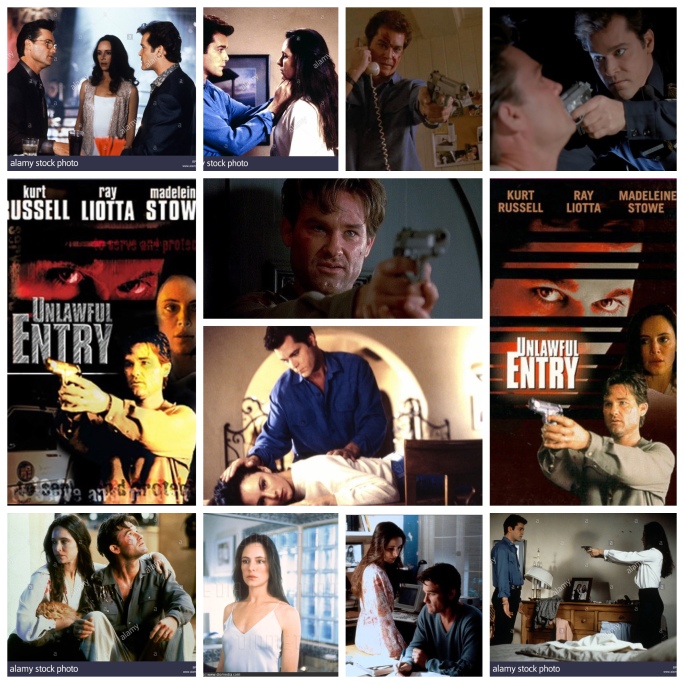
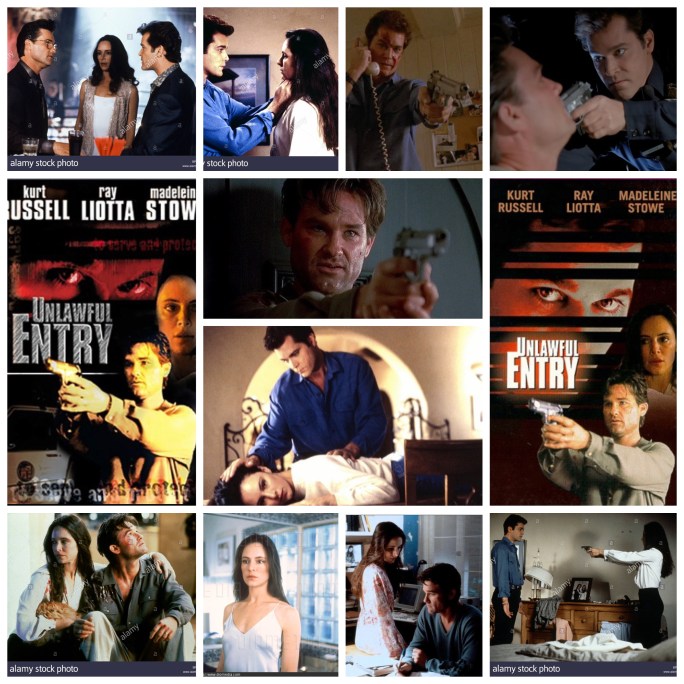
Jonathan Kaplan’s Unlawful Entry

What if a cop decided that instead of serving and protecting civilians, he would instead stalk and terrify them? How would you deal with a scenario like that? Cops, after all, hold the power to arrest you or worse and unless you resorted to extreme measures, you’re kind of fucked. Jonathan Kaplan’s Unlawful Entry is a terrifying psycho thriller that explores this idea deeply and thoroughly enough to give any law abiding citizen nightmares. Kurt Russell and Madeleine Stowe play a nice yuppie couple whose home is broken into one night by a petty criminal. No one is injured, and the cop who shows up to investigate assured them that he’ll do everything in his power to keep them safe. The only problem is, this cop is played by Ray Liotta and in a film billed as thriller, that’s a dark omen. He’s affable and kind at first, but begins to envy this couple their suburban oasis, particularly placing an unnerving interest in Stowe, and pretty soon he’s gone full monster on them, with complete impunity no less. He wants her for himself, or maybe even isn’t sure what he wants but is nonetheless dead set on wedging himself into their lives like a juggernaut of violent, negative energy. Russell is helpless especially when the officer’s partner (Roger E. Mosley) wants nothing to do with their plight and won’t raise a hand against his comrade, perhaps out of fear himself. This is a scary film not just for the way it’s executed but for the fact that this *could* actually happen in real life. If you turn on the news or scroll through your phone’s feed you’ll see handfuls of headlines about cops getting up to all sorts of no good, reminding us that they too are only people and subject to fallacy and shortcomings. Liotta goes way way beyond that here though into outright monsterville, this is one of his trademark unhinged lunatic roles and instills straight up dread. It’s tough to watch scene after scene of Stowe being terrorized and traumatized by the guy and between and Tony Scott’s Revenge she really got put through a wringer early in her career, but if you’re the female lead in a horror thriller alongside Liotta, you can kind of see the storm on the horizon ahead of time. This is an intense, fucked up film that has razor sharp suspense, three very strong lead actors and a a spooky atmosphere. It also makes a great double feature with Jonathan Mostow’s Breakdown, another high strung Kurt Russell thriller where he yet again has to contend with a psycho who has his wife, albeit trading in rogue cops for rogue truckers. Both great films.

-Nate Hill

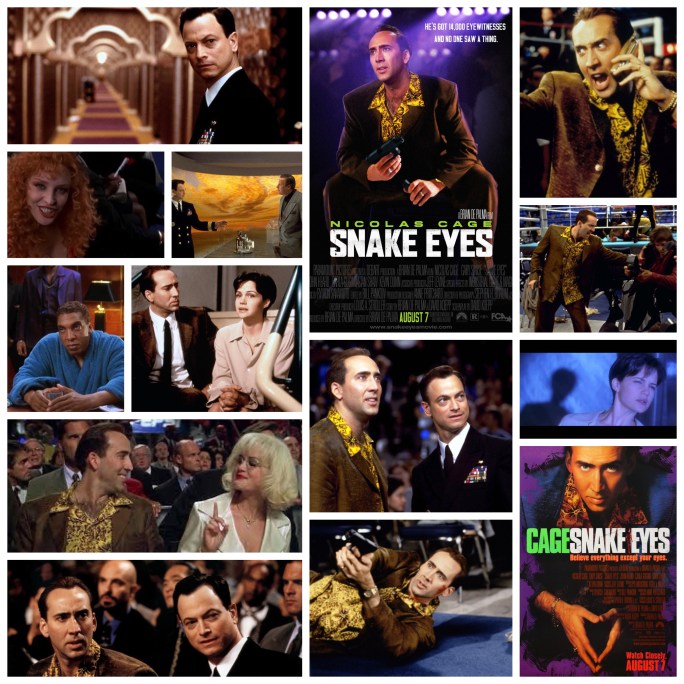
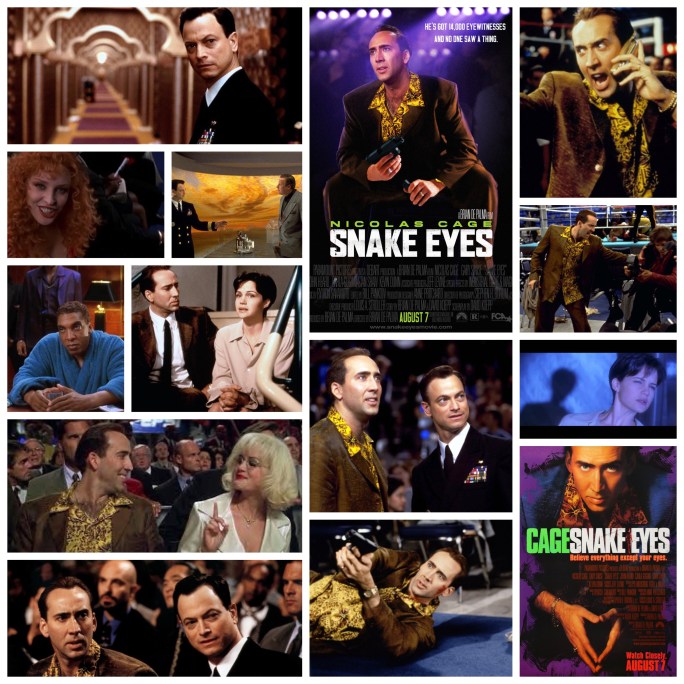
Brian De Palma’s Snake Eyes

I love those films that revolve around a feverish, high profile celebrity boxing match, whether the stakes are placed on the fight itself or on the characters spectating. There’s a sense of intrigue and danger to that kind of sporting event that makes for great mood setting and story establishment. In Brian De Palma’s Snake Eyes, Nicolas Cage and Gary Sinise find themselves pulled into a shadowy assignation attempt on the life of the Secretary of Defense as a fight rages just past ringside in Atlantic City (Vegas Lite).

The character dynamic between the two actors here is superb; Cage is Santoro, a cheerfully corrupt detective who dresses like a pimp, ruthlessly schmoozes his way into profitable exchanges and has hopes of one day being the mayor simply due to the fact that he’s well connected. Sinise is Commander Dunne and couldn’t be cut from a more different cloth, he’s a buttoned down, modest, even toned military man who resents Santoro for being such a merciless showboat but has reconciled that with the fact that they grew up together. After the chaotic assignation, they’re tasked with interviewing any and all witnesses and let me tell you in an arena that crowded and fired up, this is no easy task. Stan Shaw (remember him from Fried Green Tomatoes?) is terrific as Lincoln Tyler, the hulking prizefighter who clearly knows something based on the dark, sheepish looks he casts around when being interrogated. Others involved include Carla Gugino as a mysterious operative, John Heard as a fast talking politician, Kevin Dunn, Michael Rispoli, Luis Guzman, Mike Starr, Peter McRobbie, Tamara Tunie and more.

I’ve heard claims that this film builds into a third act that’s bombastic and ridiculous, but hello people, this is a Brian De Palma film and the guy is in love with overblown sensationalism. That’s not to say he doesn’t have tact or skill in building slow suspense either. He has a way with long, uneasy tracking shots (I’ve always thought he’d be a great helmer for a Michael Myers Halloween film) as characters pursue each other through detailed, densely populated environments. There’s an extended sequence set in a hotel here where a baddie searches for a witness with cold resolve that’s among the best thriller set pieces I’ve seen anywhere. Of course it gets kind of WTF in the third act but I love that turn of events just as much, it adds a level of political paranoia that rises above simply a few people conspiring to take out a leader they don’t like, and the fun is in watching each hilarious new piece of the puzzle land with a boom n’ crash. I’ll tell you one thing, although I could have guessed early on who the mastermind behind all this hubbub is, I would have *never* in a million years guessed why or how it plays out or the reasons behind the whole thing, and you have to give De Palma and screenwriter David Koepp mad props for pulling that off. Plus the thing just has energy, adrenaline, personality and fucking awesome visual panache to spare. Great film.

-Nate Hill

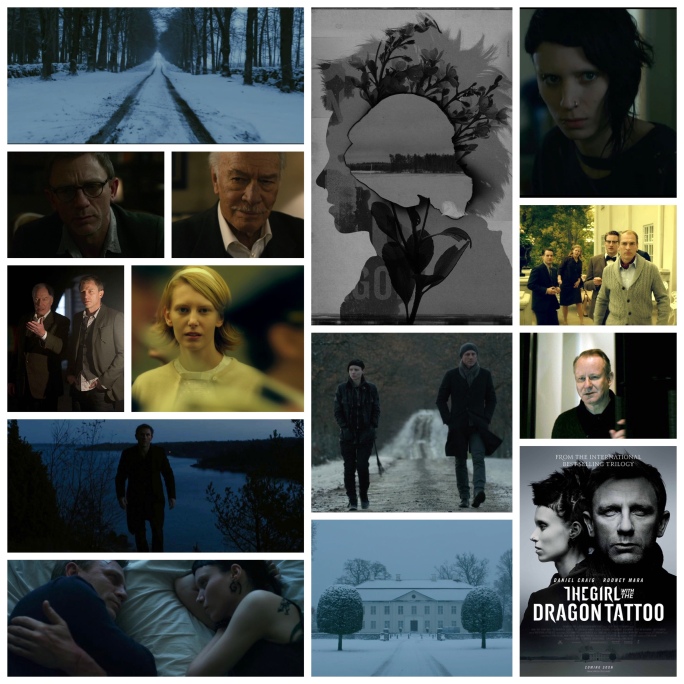
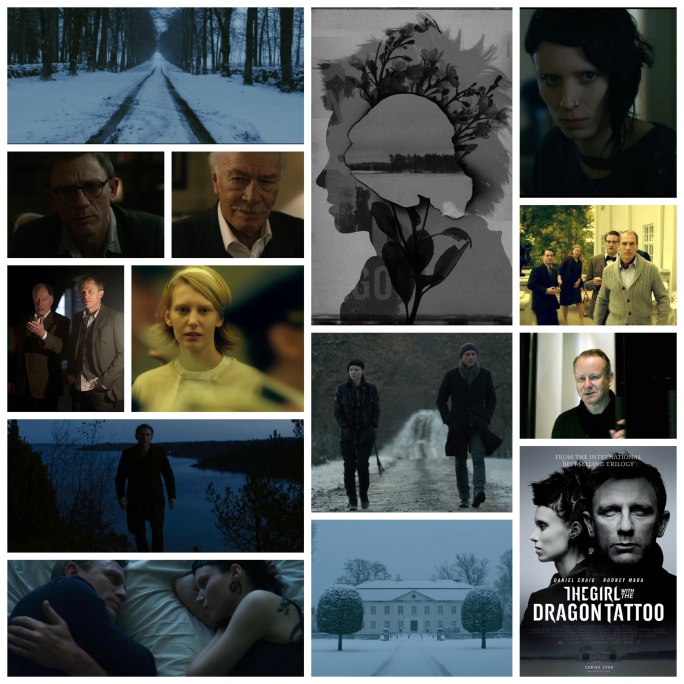
David Fincher’s The Girl With The Dragon Tattoo

If you think about it, the source material for a story like The Girl With The Dragon Tattoo is the perfect kind of thing for director David Fincher to have a whack at. It’s dark, kinky, and riddled with detailed clues, any of which could spell survival or a scary end for the two protagonists, and there’s an overall misanthropic edge as well. Not to say that Fincher deliberately picks dark, fucked up projects in his work, but there’s a definite gravitation towards the macabre, he has an eye for it. I love this film a lot, it’s among my favourites in his stable and I think he improved on not only the book by Stieg Larsson, but also made a better film version than the first adaptation. The original was serviceable but in a mystery like this I feel like atmosphere is key, and Fincher provides enough to get lost in. This is a story spanning decades, outlining years of dark deeds and unearthing secrets buried within secrets and as such it should feel eerie, ambient, be lit in ways that evoke the passage of time and have a soundscape that not only freaks you out but guides your focus and has you searching for clues right alongside the heroes. I feel like he definitely has those boxes solidly checked off.

Rooney Mara makes a more detached, colder Lisbeth Salander than Noomi Rapace’s hot blooded take and you could argue all night who was better in the role, but I don’t think that’s really the point. What matters is Mara is a fantastic Lisbeth, emotionally complex, seemingly shut off yet injecting pockets of warmth in where you least expect it and losing none of the caged animal or ruthless survival instinct that is so important to the character. Daniel Craig has the perfect jaded half smirk to play a guy that enters the story disgraced and surrounded by scandal, I think he rocks his role too and the chemistry between both is as tangible as the spooky Swedish ambience that Fincher turns them loose in. There’s a killer out there, one who has been operating with relative impunity for many years and right under the nose of the spectacularly dysfunctional Vanger family, whose industrialist patriarch (Christopher Plummer, excellent) enlists Craig’s help in finding the truth. His daughter went missing from their secluded island home some thirty years before as we see in dreamy flashbacks where Julian Sands steps in for Plummer. Craig’s Mikael and Mara’s Lisbeth are a pair of introverted workaholics who both come from rocky pasts and understand the kind of risk involved with this type of work, but neither are prepared for the brand of sick horrors that revolve around this mystery. Fincher carefully casts the film with impressive talent including Joely Richardson, Steven Berkoff, Robin Wright, Yorick van Wageningen, Goran Visnjic, Donald Sumpter, Embeth Davidzt, Alan Dale, Geraldine James and scene stealer Stellan Skarsgard as another key member of the Vanger family.

One of the most effective aspects of the film is the original score by Trent Reznor and Atticus Ross, a subtle atmospheric composition that brings on feelings of dread, unseen danger and anticipatory anxiety wonderfully. As Craig’s car snakes along the long driveway of Plummer’s extravagant yet isolated mansion, a strange warble of tubular bell style music fills the snowy air, giving off incredibly creepy vibes and in turn giving me chills every time. Fincher cranks up the dial on violence and sex about as far as one could in a Hollywood film and as such you get some deeply disturbing scenes to sit through, especially involving Lisbeth’s deranged legal guardian, who really made me question the foster system in Sweden. None of it is glorified though and all serves to tell this dark story in the most affecting way. There’s a shadowy blanket over the film, everything seems frosty and frigid thanks to the cinematography from Jeff Cronenworth, as if there’s some spell of dark magic laying over the land and protecting those hiding within it as Lisbeth and Mikael race to find them. This is a perfect tale to get transported away by, a nightmarish yet strangely picturesque mystery to get lost in like a snowy night, until you arrive at the wrong doorstep alongside our heroes and then the real thrills begin. Great film.

-Nate Hill

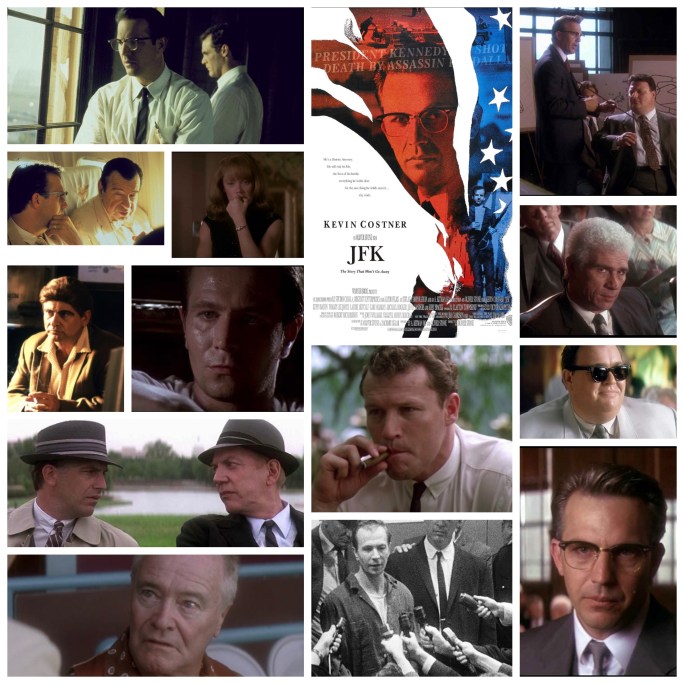
Oliver Stone’s JFK

I’m not so much for political films but Oliver Stone’s JFK is an engrossing, obsessive, feverish and altogether brilliant piece of clandestine intrigue and I loved every minute of its impossibly long runtime (the director’s cut runs well over three hours). It might be excessive to take such an indulgent amount of time for one story to play out but Stone is fixated on every single aspect and detail of his narrative, scrutinizing the dark corners of shadowy politics, leaving no stone unturned and the result is a film that draws you in so close that at times the effect is breathless, a surging momentum full of moving parts, characters and secrets all unfolding in a mammoth production.

Stone has taken the real life investigation of New Orleans District Attorney Jim Garrison, used it as a launching pad and blasted off into his own theories, queries and plot turns. Kevin Costner is excellent and uncharacteristically vulnerable as Garrison, an idealistic family man determined to shine a light on the truth until he realizes he and his firm are in over their heads. This thing has one of the most jaw dropping ensemble casts I’ve ever seen assembled, right down to supporting turns, cameos and walk-ons populated by recognizable faces. Costner and his team are the constant, a dogged troupe that includes varied folks like Laurie Metcalf, Wayne Knight, Jay O. Sanders, Gary Grubbs and the always awesome Michael Rooker. We spend the most time with them as they discuss theories at length, argue in roundtable fashion, interview witnesses and it all feels eerily as if every discovery they make leads to ten more even more unnerving ones. Others show up throughout the film and when I say this is a cast for the ages I’m not even kidding. Jack Lemmon does paranoia flawlessly as a nervous informant they visit, Gary Oldman is a super creepy Lee Harvey Oswald, Joe Pesci impossibly rambunctious as oddball David Ferrie, Tommy Lee Jones and his poodle wig are icky as a corrupt US Senator and that’s just the start, there’s great work from everyone under the sun including John Candy, Walter Matthau, Sissy Spacek, Vincent D’onofrio, Kevin Bacon, Martin Sheen, Pruitt Taylor Vince, Edward Asner, Frank Whaley, Brian Doyle Murray, Bob Gunton, Lolita Davidovich, John Larroquette and more. Donald Sutherland is pure showstopper as a mystery man who has an epic, sixteen minute long tinfoil hat monologue that is so well delivered and perfectly pitched that we don’t even really notice what a massive enema of exposition it is simply because he and Stone keep up the energy levels and, in turn, us riveted.

That’s the thing here, I went in expecting perhaps something intriguing but maybe a little dry in places or bits that might lag because it is, after all, a three plus hour film revolving around politics. This is Stone though, and the way he films it is taut and immersive the *entire* way through, which is just so fucking impressive. He plays rogue agent with the facts, using established suspicions to draw one wild conclusion after another until we aren’t sure if everyone we see onscreen perhaps had something to do with JFK’s death. That’s his goal here though, he seeks not to provide concrete answers (how could he) but instil the kind of creeping dread, mounting uncertainty and fear that I imagine gripped the nation for years following this event. Conflicting conspiracy theories, clues that lead to nothing, unexplained and admittedly suspicious witness deaths, it’s all here and it all makes for one damn good mystery film.

-Nate Hill

Quentin Tarantino’s Kill Bill Volume 2

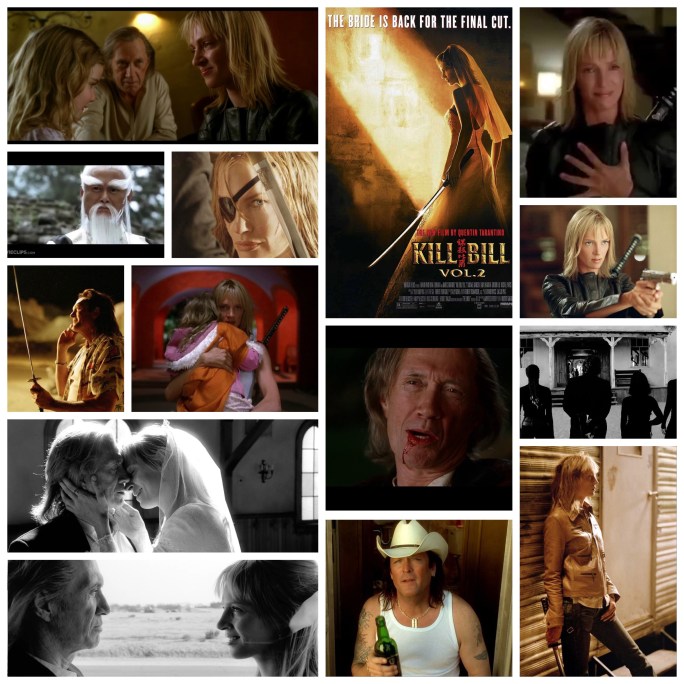
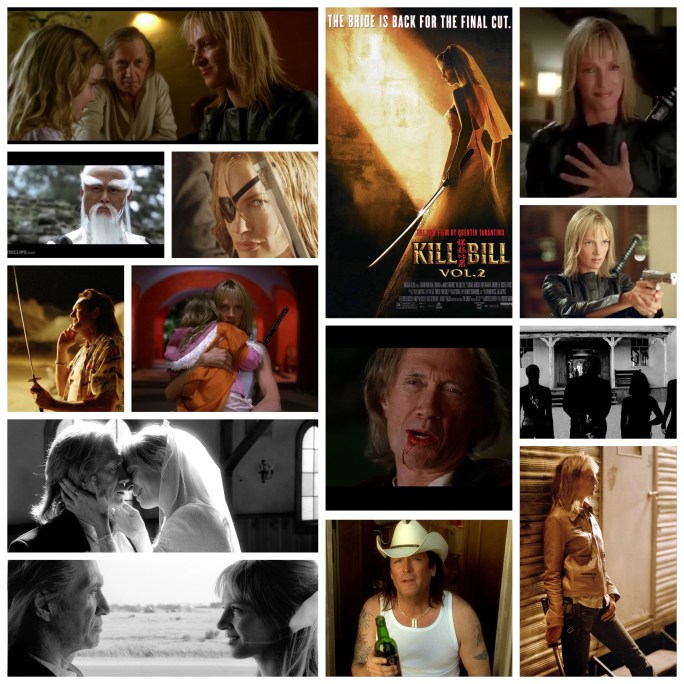
Roger Ebert observed about Quentin Tarantino’s Kill Bill Volume 2 that although it takes place in a heightened reality that’s removed from the realism of our own, the human behaviour and emotions explored couldn’t be more real or more relatable. That insight is precisely why it is my favourite Tarantino film and in particular I think that the last half hour or so is the best, most thoughtful and intuitive thing he’s ever directed in a career that for the most part hasn’t dug that deep in such a way.

Every filmmaker must duck expectations and adapt or fall victim to self parody and repetition, and the guy understands this well. Volume 1 is a thrilling love letter to samurai films, peppered with sword fights, hectic editing and celebrates movement, choreography and synergistic expression. With this film though he moves inward, not just showing us the extreme actions of these characters, but why they’re doing them. The first film opens with the how, as Bill (David Carradine) tenderly puts a loaded gun to the temple of The Bride (Uma Thurman) and pulls the trigger. This film shows us what led to that, and the consequences yet to come, why indeed she feels the need to Kill Bill. It’s a beautiful story that’s acted to the nines by Thurman and Carradine, both giving their career best. The samurai vibe is somewhat present again but here the tone is that of a spaghetti western. Anyone who knows or loves this genre (pauses typing and raises hand) is familiar with the aesthetic: languidly paced shots, long glances lingered on by a camera that moves slowly, stolidly. Orchestral significance placed upon seemingly mundane or small gestures and measured, introspective performances. It’s all here, from the glorious wide shots of the California desert to the laconic inwardness of Michael Madsen’s Budd to the Morricone strains that Quentin loves to sample.

The Bride continues her quest stateside, taking on Madsen’s lowkey deadly cowboy, tussling with Daryl Hannah’s treacherous banshee Elle Driver, punching her way out of a sealed coffin six feet deep and even finding time to stop in for a quick visit with Michael Parks, sneakily playing a different role than Volume 1. Madsen is off the chain spectacular as Budd, a gruff, sadistic badass who has seen better days and seems done with life until she brings out the fire in him once again. His quiet scene with Carradine outside the rundown trailer is a showstopper, as is his priceless expression when chewed out by an asshole boss (Larry Bishop, providing the funniest moment in either of the two films). Tarantino brings out the best in Madsen and this is their finest collaboration, proving in tandem what creative forces both or them are.

This is the Uma and David show when it gets down to it though, their eventual confrontation is what we’ve been anticipating since the beginning, but he doesn’t quite give us what we expect. They meet at a quiet Mexican villa, she sees her daughter for the first time and the words spoken between them cut deeper than any of the physical blows, of which there are barely any. Both The Bride and Bill know exactly what their respective actions have done to them both individually and as a couple, and that there’s no going back from a betrayal like that. The fascinating thing, for me at least, is seeing how despite this anguish and hatred, they are still very obviously in love with each other, something that isn’t easy to get across without spelling out, but these actors nail it. I love the writing here, the body language, the time and attention spent on exploring the pathos, I think it’s Quentin’s showcase sequence and the one that dispels anyone from thinking of him only as ‘that guy who makes violent movies.’

He often works with his pal Robert Rodriguez and most people might immediately think of GrindHouse or Sin City but this is my favourite of their collaborations. Robert isn’t seen or present behind the camera but he composes an original score that is heartfelt, evocative of the western genre and altogether a brilliant composition, particularly the cues around Madsen. This is unique in the fact that it’s the only film Tarantino has made using a score in a career of distinctive soundtrack choices.

From the stunning opening sequence shot in dreamy black and white and aching with palpable yet guarded emotion to the intense, exhaustive training montages with warrior Pai Mai (Gordon Liu, also showing up in a different role) to the blood n’ dust takedown of Elle and Budd in the bone dry desolation out west to the final showdown and reconciliation of sorts with Bill, this is a fantastic story and one hell of a piece of filmmaking on every level. The two Volumes are so very different and I noticed the other day that although I’ve seen both probably hundreds of times, I’ve never watched them back to back. They are separate entities, two sides of the same coin. Bill tells The Bride that her side ‘always was a little lonely.’ The same goes for Volume two, there are less characters, more time spent on emotion and a slightly mournful feeling that the frenzy of Volume one just didn’t have time for. I love this portion of the story the most, I’ve always felt just a tiny bit more at home in Volume 2, and I will never have anything but absolute love for it.

-Nate Hill

Mick Jackson’s The Bodyguard

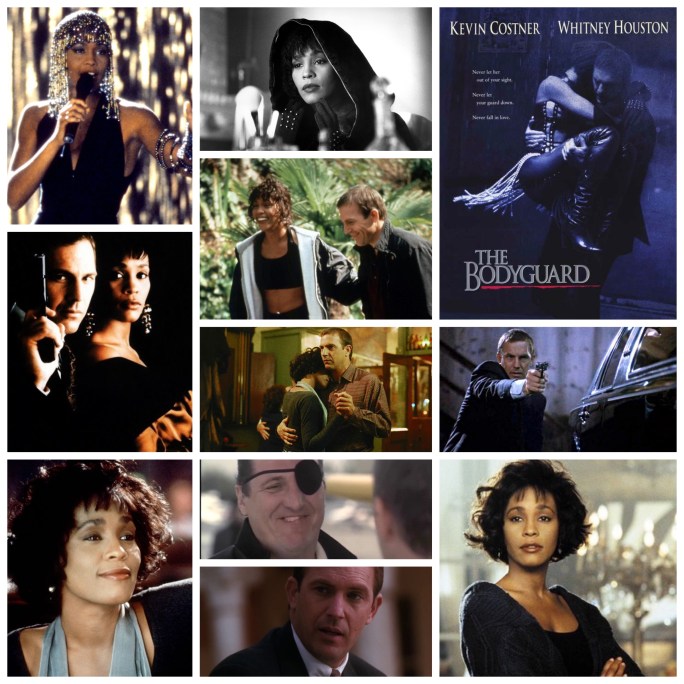
I really wanted to like The Bodyguard, and I even convinced myself during it that it’s a better film than it is, but at the end of the day i had to reconcile that it’s just messy, unfocused and doesn’t sell us enough on the story. By now everyone know what’s up here: sombre, serious personal bodyguard Kevin Costner is hired to protect free spirited, social butterfly pop star Whitney Houston from any assailants or stalkers. She’s reluctant at first, he’s a paranoid micro manager who uneases her entourage. There’s a rapport that leads to romance, and they fall in love. Once the stakes are high, an elusive, dangerous stalker begins to make moves on her, threatening everyone’s life and the romance we are supposed to care deeply about. But…do we? There is a modicum of natural chemistry between the two, but it isn’t allowed to bloom organically and ends up both choked and smothered by an overelaborate thriller baseline full of ludicrous plot turns and sensationalistic stuff. Their affair is periodically put on hold by threats, the faux academy awards, a trip up north to visit Costner’s father (Ralph Waite) and other diversions but in a film with this much potential I expected much more time spent solely on these two, their interactions and what they mean to each other. The thriller elements are played up to maniacal heights and I really wish they would have calmed their shit with it, I know that’s part of the deal here but they’re trying to be In The Line Of Fire or something and it’s laughable. The film finds some footing in Houston, who gives a fantastic performance and the best work in sight here, but neither Costner, the script or the overall resulting film rise up to meet her. She’s soulful, vulnerable and full of life while everyone around her seems sort of vaguely confused and preoccupied with nothing in particular, apart from Mike Starr who shows signs of life as a loyal member of her posse. The thriller machinations aren’t believable and a character who is purported to be so keen and intelligent as Costner is here would have realistically figured out the identity of the killer an act earlier than he does here, but the plot requires him not to until the very last minute, frustratingly so. Don’t even get me started on the ending that is so not earned by a well cultivated relationship that came before, or the super awkward, random final shot that had me laughing but not in a good way. Worth it for Whitney, it’s obvious here why she a superstar and she has the acting chops to back up that beautiful voice, but she really deserved a far better film than this.

-Nate Hill

Peter Medak’s Romeo Is Bleeding

Somewhere out there in an anguished desert enclave along one of the many desolate stretches of American highway is Jim Dougherty (Gary Oldman), stranded in exile at a lonely rest stop cafe as Peter Medak’s brilliant, haunting neo-noir Romeo Is Bleeding opens.

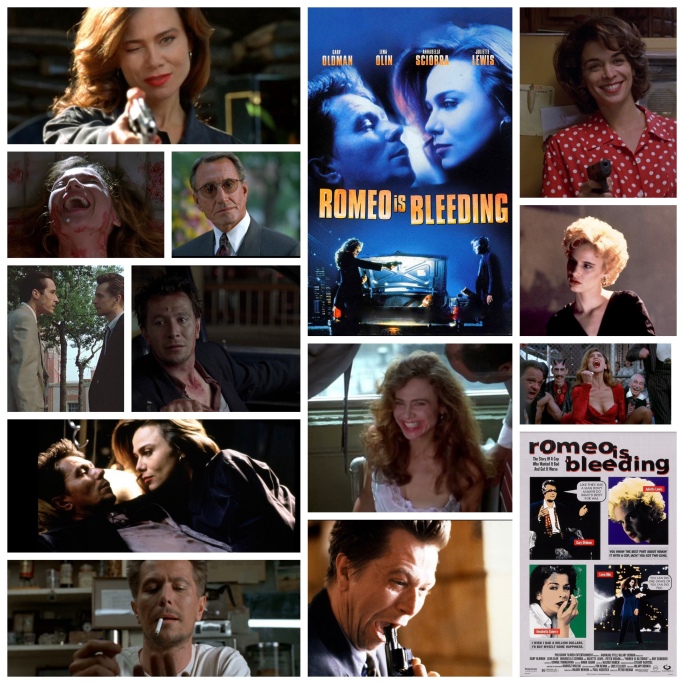
Jim, as we learn through forlornly narration, was once a spectacularly corrupt NYC cop named Jack Grimaldi, a man who got too ambitious in the worst way and learnt every lesson the hardest possible fashion he could. Jack was a greedy, scheming piece of work who two timed his loyal wife (Annabella Sciorra, fantastic) with a ditzy cocktail waitress (Juliette Lewis) and did his best to upend everything the department works for by playing it against the mafia with increasingly disastrous results, stuck on a hollow treadmill chasing dollar signs. But his wife and mistress weren’t the only women in his life, as he soon meets Mona Demarkov, a seductive Russian contract killer played by Lena Olin in a performance that is to be applauded, feared and lusted after in equal measures. Mona is the wild card, the hurricane that upends an uneasy equilibrium Jack has toiled sweatily to set up like a house of cards, ready for her to blow down. Dumped in his lap by the Feds to babysit until mob operatives arrive to kill her, she manipulates, seduces and torments Jack within moments, but she’s only just begun. She escapes into New York and leads everyone on a terrifying goose chase of bloody mind games and gangland espionage, threatening to tear both organizations, not to mention Jack’s sanity, to pieces.

Oldman has never exuded the specific kind of sweaty desperation he showcases here, he’s got three women too many, nasty mafia Don Falcone (a quietly dangerous Roy Scheider) breathing over his shoulder and fellow cops inches away from sniffing out the rat in plain sight. Gary somehow comes across as likeable despite all this heinous behaviour, like a lost puppy who wandered into the wrong cave. Olin really lets loose with her work, she’s a villain not just for the noir hall of fame but for the ages, a murderous black velvet spider on a wanton spree of anarchic, sociopathic, psychosexual destruction and loving every minute of it. They’re supported by an epic roster of talent including Will Patton, David Proval, Larry Joshua, James Cromwell, Ron Perlman, Tony Sirico, Stephen Tobolowsky, Dennis Farina as a gregarious mafioso and the great Michael Wincott as Jack’s underworld pal Sal who turns on him like a jackal when things get out of control.

Many people seem to see this as an interesting yet ultimately flawed piece with uneven tone and what have you, but I couldn’t disagree more. For me this is pretty much as close to perfect as a film can get. Jim sits out there on the lonely byways of some forgotten region and recounts the tale of Jack, there’s such a beautifully mournful melancholy to his story, a true tragedy and cautionary tale laced with grit, jet black humour and an ever so subtle fairytale vibe. Writer Hilary Henkin spins a wild, surreal and slightly self aware screenplay here, while Mark Isham’s creepy, music box infused score gives off bushels of atmospheric portent. I feel like this is another one that was maybe ahead of its time, or perhaps just an acquired taste. I’m happy to see it has a budding cult following these days because it really deserves people’s time, it’s one of the very best crime films of the 1990’s and one of my all time favourite stories out there.

-Nate Hill