One Man’s Hero


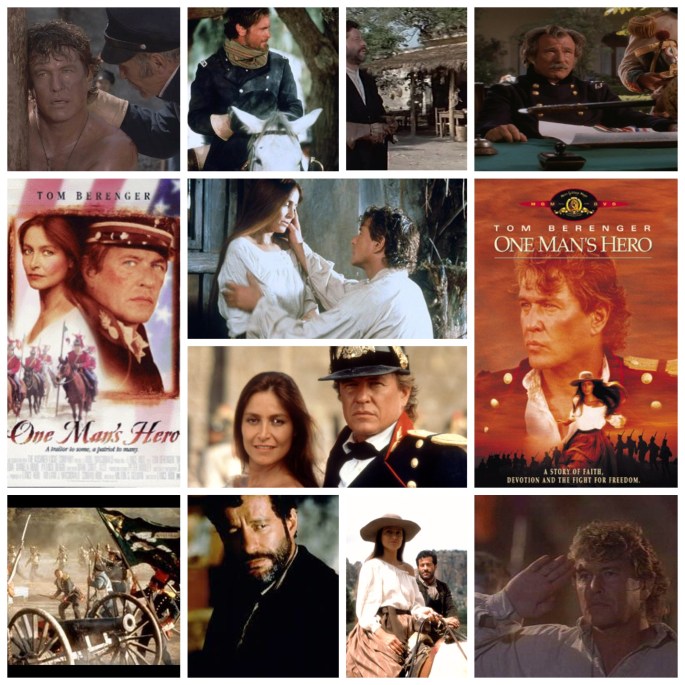
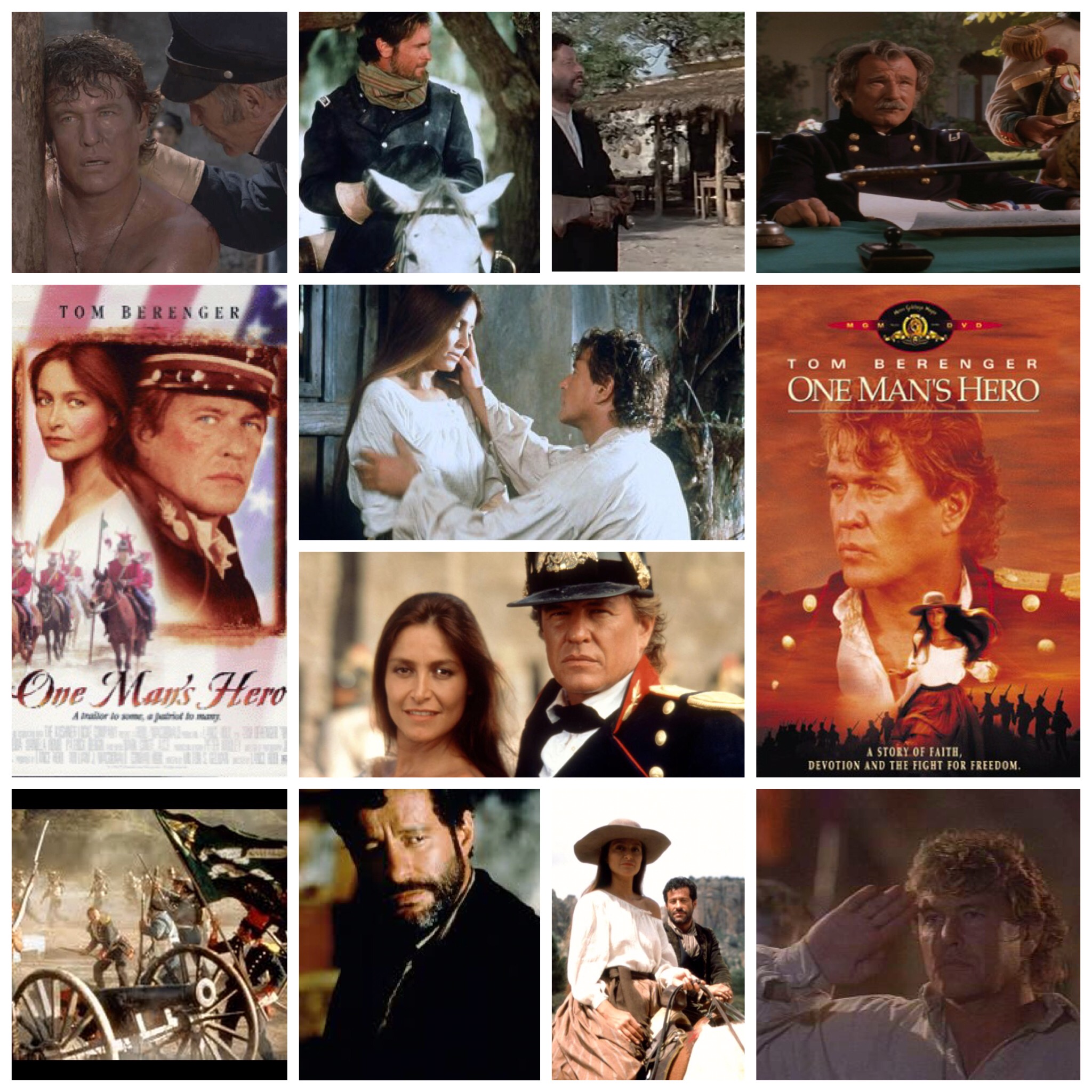
One Man’s Hero takes place during a conflict that doesn’t get all that much coverage in Hollywood, the Mexican American war. With a sweeping Patriot-esque vibe and a world weary starring turn turn from Tom Berenger, it’s an affecting tale that whether or not is based on truth, still packs an emotional whallop. Berenger is Riley, an Irish American who leads his mostly immigrant troupes through racial prejudice beset on them by their own American superiors, just one more obstacle thrown in with the already taxing war itself. Defecting from the troops, Riley is commissioned to lead his men on the opposing force, banding together with fiery, disillusioned Mexican revels leader Cortina (Joaquim De Almeida) and fight for acceptance and survival while navigating both sides of the conflict. Although there are a few impressive battle sequences staged here and there, the film is more about the private and personal wars fought amongst the ranks themselves, the notion that one army isn’t always just focused on the task and can get caught up in internal conflict, which often, including in this case, leads to unnecessary tragedy. Berenger and Almeida go at it fiercely in a love hate companionship constantly tested by the war and their mutual affection for beautiful fellow freedom fighter Marta (Daniela Romo). Underrated Patrick Bergin shows up in a severely powdered wig, Stephen Tobolowsky plays yet another one of his loathsome, letcherous roles and the late great James Gammon is the perfect embodiment of crusty yet compassionate General Zachary Taylor. Not a title that crosses many people’s vision when discussing war films, but a really solid effort despite a lower budget, a story that needed to be told and a star turn from Tom to remember. 

-Nate Hill

Eye See You 


You know those films that you just seem to get fixated on and love for no particular reason, like they’re not even that good, you just… really like them? That’s Eye See You for me (known as D-Tox to all you folks across the pond), a heavy handed snowbound horror vehicle for a sedated Sylvester Stallone. It’s silly to the max, thoroughly implausible and perforated with cliches, but for whatever reason I just can’t get over the damn thing. Now, I admittedly have an affinity for the Agatha Christie style murder mysteries, especially ones set in the snow (cue fond memories of Hateful 8 and The Thing), and this one piles on a blizzard of red herrings, multiple shady characters, extremely graphic violence and paranoid unease. Maybe it’s that cast, a platoon of tough guy characters actors backing Sly up in one serious roster of a supporting cast. Old Rocky plays a big city FBI agent who is trying to find a jarringly vicious serial killer that targets law enforcement and has that classic obsession with his pursuer. After his girlfriend (Dina Meyer) falls victim to this beast, Sly unravels and following a suicide attempt, is sent up north by his mentor (Charles S. Dutton) for a little R&R,

and both R’s in that stand for rehab in a special remote facility designed just for cops with issues to work out. The place is run by Krusty Kris Kristofferson, and home to so many recognizable faces one has to give the casting director a tip of the fedora. A disgraced Mountie (Robert Prosky), emotionally fragile ex SWAT commander (Sean Patrick Flanery),

former Scotland Yard (Christopher Fulford), hostile ex narc (Jeffrey Wright with some pretty Harvey Dent facial scars), an insufferable macho asshole (Robert Patrick), ex military (Tom Berenger) who serves as caretaker, sympathetic therapist (Polly Walker) and a seriously creepy Stephen Lang. That’s a whole lot of suspicious characters to pick a killer from, because (you guessed it) the meanie has followed Sly out to the mountains and is posing as a member of their group. It’s a guessing game right up until one severely bloody climax, with ex cops dropping dead all over the place along the way, and Stallone looking more hollow and dishevelled as each body turns up. He’s not in action mode here at all, hell, he’s not even in sorta kinda Cop Land action mode, he’s a broken man trying to heal who’s forced back into shit kicking, and it puts a visible strain on him that the actor handles surprisingly adeptly. The rest do their job terrifically, with Flanery standing out in the scant but affecting screen time he’s given, and Patrick blustering through every scene until you’re just praying for the killer to target him next. There’s downsides galore, mind you, this isn’t well thought out territory, it’s gory genre nirvana and not much else. There’s a level of predictability that could have been avoided by making the identity of the killer a bit less… obvious, for lack of a non spoiling term, but oh well. It’s also just overblown lurid potboiler madness, but what else do you expect from this type of thing? I get exactly what I want out of it: a nice helping of ultra-violent intrigue to tune into on a cozy night, and not much more. In fact, I think I feel a revisit happening this week.

-Nate Hill

The Sentinal: A Review by Nate Hill 

The Sentinel is one of the weirdest thing you’ll ever see. It’s less of a horror and more just a parade of bizarro world situations strung together loosely by a vague haunted apartment story. A young model (Christina Baines) has found a sweet deal on an uptown flat, inhabited by only herself and a blond priest (John Carradine). It’s just too bad that when a deal seems to good to be true in these kinds of movies, there’s almost always some kind of sinister agenda behind it. It’s not too long before spooky stuff comes along, starting with strange physical problems, creepy encounters with her odd lesbian neighbors, flashbacks to her attempted suicide and psychic disturbances that can’t be explained. She soon realizes that she has been brought to this building for a very specific and decidedly sinister reason. The way I described all that sounds kind of routine and pedestrian, but trust me when I say that there’s nothing generic or run of the mill about this absurdity of a film. Everything has a very disconcerting and surreal feel to it, particularly in a whopper of a climax where a portal to hell is opened and all sorts of babbling loonies pour out, deformed, whacked out and adorned in some of the most creatively gross practical effects that will give your gag reflex a solid workout. The film also speckled with a diverse group of actors, some of them quite young looking when you remember that this was 1977. A chatty Eli Wallach shows up as a detective, with a youthful Christopher Walken in tow as his partner, Ava Gardner of all people has a cameo, and watch for Burgess Meredith, Jerry Orbach, Beverly D’Angelo, William Hickey, Jeff Goldblum, Richard Dreyfuss, Chris Sarandon, and Tom Berenger in what must have been one of his very first gigs, a literal walk on part. Very distinct and memorable film, one that pushed the boundaries considering the time period, and never let’s the weirdness mellow down for a single minute. 

B Movie Glory with Nate: An Occasional Hell 

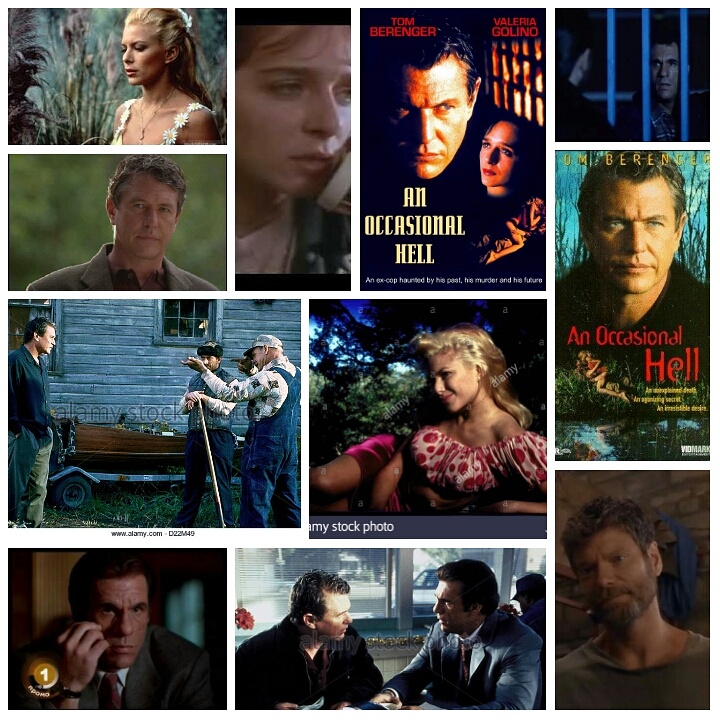
An Occasional Hell is one of countless cable TV crime melodramas that start to blur together if you’ve seen enough. They don’t often have high budgets, and as such usually only contain a few elements: a handful of actors, a murder mystery, deception, eroticism and very little in the way of fancy special effects. This one has a solid lead in Tom Berenger, who can make anything watchable, and great supporting players who pitch in as well. The story, or lack thereof, is where the problem arises. Berenger plays an ex cop and forensics wizard turned college professor, who is hired by sultry widow Valeria Golino (remember her from Hot Shots? Lol) to solve the murder of her husband and his hot young mistress (Kari Wuhrer), who has vanished. It turns out the mistress may have been involved with drug runners (random) the state troopers get involved and it’s all one big mess that neither Berenger nor the plot can seem to figure out. There’s a cynical lead Trooper played by a snarky, laid back Robert Davi, and other assorted people including Richard Edson, Ellen Greene, Geoffrey Lewis and a kooky Stephen Lang, who shows up in flashbacks as Golino’s eccentric civil war enthusiast husband. None of it makes all that much sense or seems to flow in a way that’s believable, but Berenger makes it somewhat worthwhile, as do that other players. Just below average stuff. 

Antoine Fuqua’s Training Day: A Review by Nate Hill 

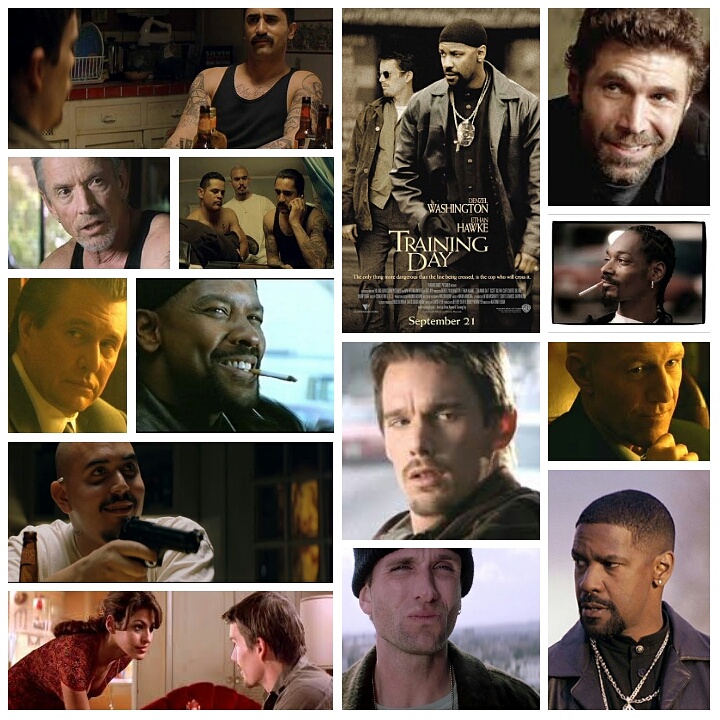
“To protect the sheep, you gotta catch the wolf, and it takes a wolf to catch a wolf.” This questionable sentiment is how rogue LAPD detective Alonzo Harris (Denzel Washington) justifies a heavy laundry list of dirty deeds, scary volatility, sociopathic backstabbing and a complete disregard for the badge that he wears on a chain like dog tags. And indeed, inner city Los Angeles can seem like a war zone, but its like he’s in fact more part of the problem than the dark angel of justice he sees in himself. Antoine Fuqua’s combustible crime drama Training Day rightly won Washington an Oscar for his unsettling runaway train of a performance, and he owns it down to the last maniacal mannerism and manipulative tactic. The film takes place over one smoggy L.A. day (hence the title) that feels like an eternity for its two leads, as well as all the colorful and often terrifying people they meet along the yellow brick road that’s paved with used needles and shell casings. Harris is tasked with showing rookie cop Jake Hoyt (Ethan Hawke) the ropes in his neighborhood, in the hopes that he’ll pass the test and achieve Narc status. Jake is prepared for a run of the mill crash course, but as soon as he’s treated to a verbal beatdown from Harris in the diner they meet at, he has a feeling it ain’t gonna be anywhere close to a normal day. This is just another day for Harris though, as he drags Hoyt by the scruff through drug busts, gang warfare, the worst neighborhood in town and pulls him deeper into his very dangerous world. Fuqua has a knack for getting the atmosphere of his settings just pitch perfect, and the feverish nightmare of the inner city comes alive, seemingly possessing the characters themselves until the atrocities just seem like a way of life. The trouble really starts when they run across Harris’s old drug lord buddy Roger (a wicked Scott Glenn in a role originally intended for Mickey Rourke), who proves a valuable asset later, though not in the way you might think. Harris introduces Jake to his equally crooked and scary team, including Peter Greene, Nick Chinlund and Dr. Dre who struggles in the acting department, especially in a room full of such heavy hitters. Jake is aghast at the horrors he sees and cannot believe the streets are like this. Harris devilishly assures him that this is the job, mutilating the symbol of his badge even more by justifying such behaviour as necessary. Tension reaches unbearable heights during a visit to a Latino gang household run by Cliff Curtis, Raymond Cruz and the eternally scary Noel Gugliemi. This is the heart of darkness fpr the film, a story beat from which there is seemingly no escape, until it becomes clear that Jake has somehow evolved a step up the food chain as far as LA goes, and is now ready to put down the dog who taught him, a dog who has long been  rabid. People complain that the final act degenerates into a routine action sequence. Couldn’t disagree more. With a setup so primed with explosive conflict, it can’t end up anywhere else but an all out man to man scrap, which when followed by no flat out action sequences earlier in the film, hits hard. Their inevitable confrontation is a powerhouse, especially from Washington, who finally loses his composure and yowls like a trapped coyote, his actions caught up to him. In a role originally intended for Tom Sizemore (who would have rocked it in his own way) I’m glad Denzel got a crack at it, for he’s absolute dynamite. Watch for Harris Yulin, Raymond J. Barry and Tom Berenger as the three senior LAPD dick heads, Eva Mendes as Alonzo’s girlfriend, Macy Gray as a screeching banshee of a ghetto whore and Snoop Dogg as your friendly neighborhood wheelchair bound crack dealer. Fuqua keeps attention rooted on the dynamic between Washington and Hawke, who is excellent in as role that could have easily been swallowed up by Washington’s monster of of a performance. Hawke holds his own, and the film is really about how two very different guys view a difficult area of town, how it changes them both, and ultimately how their moral compasses end up on a collision course. One of the best crime framas out there, and quickly becoming timeless.

INCEPTION – A REVIEW BY J.D. LAFRANCE

INCEPTION

Ten years in the making, Inception (2010) was the culmination of Christopher Nolan’s career up to that point in time. This film mixed the ingenious plot twists of his independent film darling Memento (2000) with the epic scale of his Hollywood blockbuster The Dark Knight (2008). It took the heist genre to the next level by fusing it with the science fiction genre as a group of corporate raiders steal ideas by entering the dreams of their targets – think Dreamscape (1984) meets The Matrix (1999) as if made by Michael Mann. While Nolan and his films certainly wear their respective influences on their sleeve – and this one is no different (2001: A Space Odyssey, Blade Runner, Heat) – there is still enough of his own thematic preoccupations to make Inception distinctly his own. This film continues his fascination with the blurring of artifice with reality. With Inception, we are constantly questioning what is real right down to the last enigmatic image.

Dom Cobb (Leonardo DiCaprio) and his team extract thoughts of value from people as they dream. However, during his jobs, he is visited by his deceased wife Mal (Marion Cotillard), a beautiful femme fatale character that serves as an increasingly dangerous distraction from the task at hand. The film’s opening sequence does an excellent job establishing how Cobb and his team extract information from the dream of Saito (Ken Watanabe), a Japanese businessman, in a visually arresting sequence. He catches up with Cobb in the real world and offers him a new deal: plant an idea in Robert Fischer’s (Cillian Murphy) mind that will help break-up his father’s vast empire before it becomes too powerful, and do it in a way so that it seems like Fischer thought of it for it to work. This is something that has only been done once before and Cobb was the person that pulled it off but can he do it again? In exchange for completing the job, Saito will make the necessary arrangements so that Cobb can return home to the United States where his children live but where he is also wanted by the authorities in connection with his wife’s death. So, Cobb recruits a literal dream team of experts to help him pull off the most challenging job of his career.

Inception
delves into all kinds of aspects of dreams as evident in a scene early on where Cobb explains how they work, how to design and then navigate them. While there is a lot of exposition dialogue to absorb during these scenes, Nolan also keeps things visually interesting at the same time. This is arguably the most cerebral part of the film as he explores all sorts of intriguing concepts and sets up the rules for what we’ll experience later on – pretty heady stuff for a Hollywood blockbuster. And when he isn’t examining fascinating ideas, he’s orchestrating exciting and intense action sequences. There’s an incredible sequence where Nolan juggles three different action sequences operating on three different levels of dreams that are all impressively staged while also a marvel of cross-cutting editing. He anchors Inception with the character of Cobb and his desire to return home to his children while also dealing with the death of his wife. It gives the film an emotional weight so that we care about what happens to him. It also raises the stakes on the Fischer job.

Cobb continues Nolan’s interest in tortured protagonists. With Memento, Leonard Shelby tried to figure out who murdered his wife while operating with no short-term memory. Insomnia (2002) featured a cop with a checkered past trying to solve a murder on very little sleep. The Batman films focused on a costumed vigilante that waged war on criminals as a way of dealing with the guilt of witnessing his parents being murdered when he was a child. With The Prestige (2006), magician Robert Angier is tormented by the death of his wife and an all-consuming passion to outdo a rival illusionist. Inception’s Cobb also has a checkered past and is haunted by the death of loved one. Leonardo DiCaprio delivers what may be his finest performance to date, playing a complex, and layered character with a rich emotional life. Cobb must come to terms with what happened to his wife and his culpability in what happened to her. DiCaprio conveys an emotional range that he has not tapped into to this degree before. There’s a captivating tragic dimension to Cobb that the actor does an excellent job of expressing so that we become invested in the dramatic arc of his character.

Nolan populates Inception with a stellar cast to support DiCaprio. The indie film world is represented by the likes of Joseph Gordon-Levitt and Tom Hardy while also drawing from international cinema with Ken Watanabe and Cillian Murphy. Gordon-Levitt and Hardy, in particular, are stand-outs and their banter provides several moments of enjoyable levity during the course of this intense, engrossing film. And it wouldn’t be a Nolan film without his good luck charm, Michael Caine, making an appearance. As he has done in the past, Nolan plucks a once dominant actor from the 1980s, now languishing in relative obscurity – think Rutger Hauer in Batman Begins (2005) or Eric Roberts in The Dark Knight – and gives them a high-profile role. Inception gives Tom Berenger some well-deserved mainstream exposure after languishing in direct-to-video hell, reminding everyone what a good actor he can be with the right material.

Regardless if whether you like Inception or not, you’ve got to admire Nolan for making a film that is not a remake, a reboot, a sequel or an adaptation of an existing work. It is an ideal blend of art house sensibilities, with its weighty themes, and commercial conventions, like exciting action sequences. Capitalizing on the massive success of The Dark Knight, Nolan wisely used his clout to push through his most personal and ambitious film up to that point. With Inception, he created a world on a scale that he never attempted before and was able to realize some truly astonishing visuals, like gravity-defying fight scenes and having characters encounter a location straight out of the mind of M.C. Escher. It has been said that the power of cinema is the ability to transport you to another world and to dream with our eyes open. Inception does this. Nolan created a cinematic anomaly: a summer blockbuster film with a brain.
Robert Atman’s The Gingerbread Man: A Review by Nate Hill


Robert Altman’s The Gingerbread Man isn’t the director’s best, but it’s worth a looky-loo just to see this solid cast cavort around in a sweltering Georgia atmosphere and play out a narrative that’s part sultry seduction thriller and part hard boiled whodunit. I remember watching it and going ‘meh, I’ve seen this type of thing a thousand times and this one didn’t raise the bar at all.’ I’m thinking now that perhaps my mindset was in the wrong space, and that Altman set out to simply bring us the romantic murder mystery in its purest form, without deviation or higher ambitions. In that case he’s made a neat little potboiler with a suitably ludicrous ending, some truly effective red herrings and a really great troupe of actors, so,e going nicely against type. The multitalented Kenneth Branagh plays suave Georgia lawyer Rick MacGruder, who finds himself in deep trouble when he has an affair with sexy, slinky and shady Mallory Doss (the very underrated Embeth Davidz). She’s a good enough girl, but she has a backwoods nutcase of a father named Dixon (Robert Duvall being uber strange and loving every second of it) who is stalking and threatening her. Dixon is a bedraggled, cult-leading swamp rat and Duvall plays him to the frenzied hilt of uncomfortable ticks and unkempt theatrics. MacGruder, being smitten with Mallory, is of course compelled to use his legal and personal power to help her, and concocts a convoluted scheme involving a subpoena to Mallory’s belligerent ex husband Pete Randle (a cranky Tom Berenger blusters about in the third act). This of course sets off all kinds of back door motivations and sweaty double crosses that are hard to keep track of until all is revealed in the final act, prompting a collective audience reaction of “huh??”. It’s all in good fun though and at times it seems like Altman is deliberately dipping into B movie territory just to shirk his high art mantle and spice up this gumbo with some trashy, lowbrow flavour. I say bring it, that’s exactly the way to my heart. Writing this review I’m now realizing I probably like this film way more than my ending statement might suggest, but sometimes we need to hash it all out on paper (or in this case a cramped iPad keyboard) to reevaluate our perception of a certain piece. The cast gets juicier, with Robert Downey Jr. doing a quick bit as Macgruder’s slick buddy who works as a private investigator for the law office, Daryl Hannah and Famke Janssen as Rick’s jilted wife as well. It’s based on a John Grisham novel, and Altman seems to be the first director to adapt his work with a ramped up style and personal flair that goes beyond the academic thrills on the page. This one feels heightened, sultry and oh so sweaty in the way that only a southern set thriller can be. Cool stuff. 

Faster: A Review by Nate Hill

image

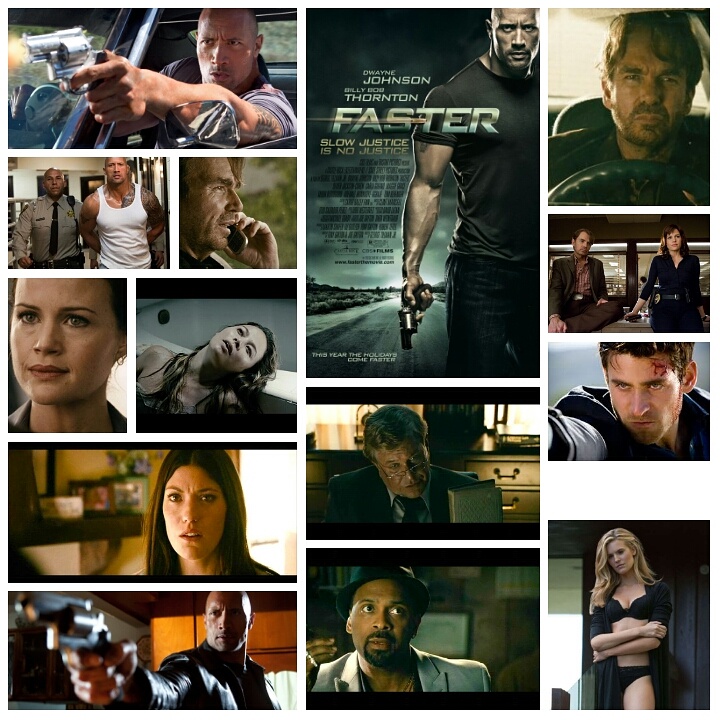
Faster is an action film with an eerie aura and a darkly unnerving bite to it. Don’t get me wrong, it’s action through and through, a genre effort right to its marrow. And yet, there’s something oddly esoteric about it, an obvious extra effort put in by the filmmakers, namely first time action director George Tillman, to give every character an off kilter, bizarre cadence to ensure we won’t forget them. There’s clichés, no doubt, but they’re eclipsed by the strange, full moon weirdness of the rogues running about the film’s story. Dwayne Johnson fires up a furious protagonist in his first action role after a long and ridiculous stint in insufferable family comedies. He plays a quiet, hulking dude known only as Driver, reluctantly released from prison by a watchful Warden (Tom Berenger). Upon exiting the gate, he runs. And runs. And runs. He arrives at a small town junkyard where he tears a tarp of a vintage Chevelle which seems to be left there for him like a care package. From there he launches a bloody crusade of revenge that knows neither mercy nor discretion, and whose reasons we are only slowly allowed to know. He’s a one man wrecking ball, the murders piling up before we really have any idea what this guy is about. He’s been greatly wronged in the past, the culprits of which should all be running scared, as he comes looking for them one by one and with the juggernaut pace of a boulder tumbling down a mountain. Pretty soon there’s two cops on his trail, intrepid Cicero (Carla Gugino) and mopey sleazeball ‘Cop’ (Billy Bob Thornton), a dilapidated piece of work who mainlines heroin and clearly has a murky past. Soon there’s one hell of a hitman (Oliver Jackson Cohen) skulking around looking for Driver, an extreme sports enthusiast who has ‘beaten yoga’ and is avidly looking for the next big thrill. Johnson jumps from one ultra violent encounter to the next with all the corrosive ferocity of the grim reaper, tallying up the corpses until we’re all but sure he’s an inhuman elimination machine. Then.. the film curveballs us and throws a glint of humanity into the mix with some late third act emotion that only goes to show the filmmakers set out with more than a one track mind. Driver has been unspeakably betrayed, and his rampage is undeniably justified, but there’s a complexity to his quest that he didn’t see coming, and neither did those of us who expected pure action without a moral conundrum in sight. I say good on it for grasping something besides the thrills. A terrific cast populates the almost Oliver Stone – esque proceedings, including Maggie Grace, Moon Bloodgood, Mike Epps, Jennifer Carpenter  (always superb), Matt Gerald, Xander Berkeley, Buzz Belmondo, Courtney Gains and more. It’s got the depth of a well written graphic novel and a level of thought out characterization that heaps of stale action entries wish they possessed.

Sinners And Saints: A Review by Nate Hill

image

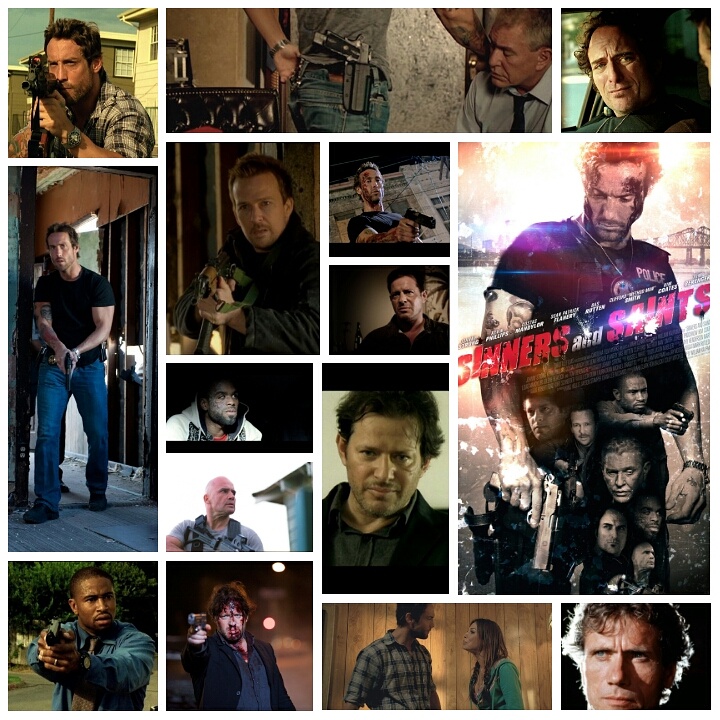
Sinners And Saints is a very adeptly made New Orleans set cop thriller that pays homage to tough archetypes of yore such as Lethal Weapon, Dirty Harry and Bad Boys. It’s far more serious and sinewy than those movies though, sucking the humour off its own bones and leaving a grim tale of one man ditching the force and going rogue in an attempt to hunt down some extremely bad people. Johnny Strong, a formidable, mscular guy, plays Detective Sean Riley, trying to sort through the post-Katrina chaos of the city whilst internally dealing with the loss of his wife and infant son. Strong is known for The Fast And The Furious as well as Black Hawk Down, quickly making it his calling card to play tough outsiders who get shit done with a fiery knack for not always playing by the rules. As it turns out, New Orleans is rife with psychopathic criminals up to no good, starting with evil mercenary Raymond Crowe (a badass, hateable Costas Mandylor), leading a crew of paramilitary scumbags into some very nefarious deeds. Riley discovers that his old army buddy Colin (the blonde half of the Boondock Saints, Sean Patrick Flanery, getting some nice, quiet moments of introspect before the firefights) is involved somehow, spurring him further into action. His commanding officer Trahan (Tom Berenger, stoically reminiscing about the youthful days in which he headlined flicks like these), worries that the path he’s headed down is too dark and similar to the men he is hunting. He’s paired with an unseasoned rookie (Kevin Philips), and an inevitable bond is forged in between and during bouts of gunfire. The action is wickedly staged, rising above the ineptitude that usually brands direct to video efforts like this. No, these filmmakers know exactly what they are doing and how to raise a pulse, demonstrating care and passion in creating their battle scenes. The cast is stacked high as can be as well. A boisterous Kim Coates has a fleeting scene to kick off the film. Resident baddie Jurgen Prochnow shows up a few times as malicious arch villain Mr. Rhykin, pulling strings which we are never fully privy to (I’ve heard rumblings about a sequel, hopefully with answers regarding his character). The other Mandylor brother Louis plays a bleach blond Australian mercenary and is beyond priceless. UFC legend Bas Rutten plays Dekker, a frightengingly nasty dude who proves a tough obstacle for Riley. Rapper Method Man even rears his head as a bad tempered, disfigured street thug who has his part to play in the whole cluster fuck. I watch countless direct to video action flicks that try their absolute adorable best to emulate the films they admire, often very lazily and without adding any new flavors. Can’t say that about this one. It fires up such a wicked, visceral punch while maintaining it’s own solid gold originality that it can scarcely even be called a B movie save for the fact that it wasn’t released theatrically. It’s pure, first class action, and demands a watch from anyone who says they’re a completist of the genre, before that claim can be validated.

JOHN IRVIN’S THE DOGS OF WAR — A REVIEW BY NICK CLEMENT

2

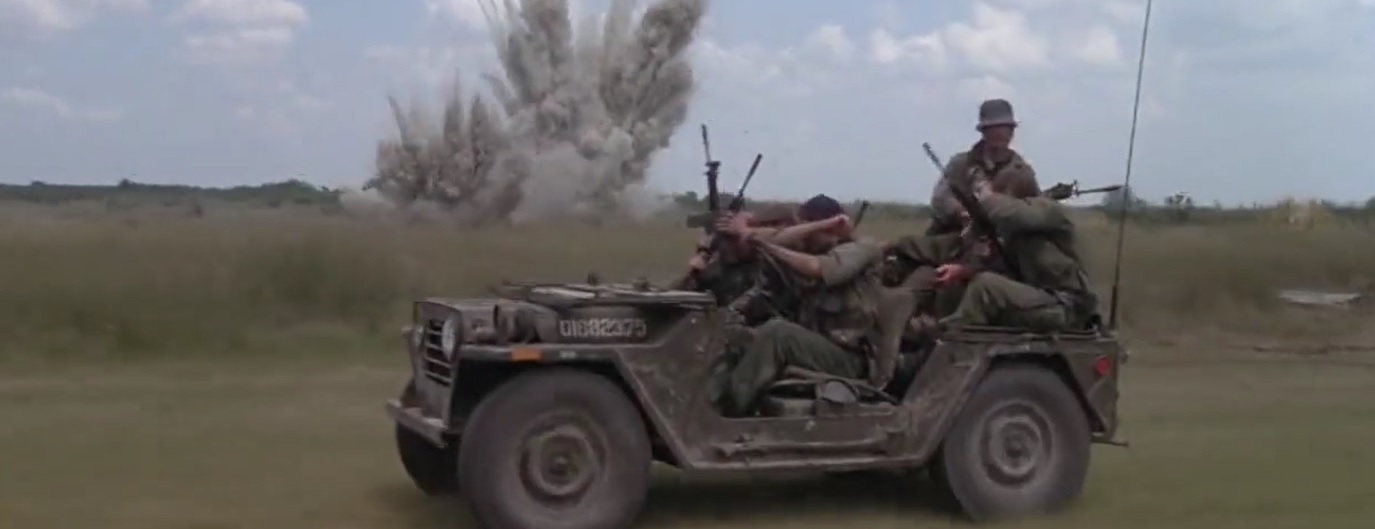
John Irvin’s take-no-shit war drama The Dogs of War is the sort of action picture rarely made these days — unsentimental, lean, and thoroughly engrossing (David Ayer’s underrated Fury feels cut from the same cloth, as do portions of Antoine Fuqua’s compromised Tears of the Sun). Gritty, violent, masculine, and shot with rugged panache by director of photography Jack Cardiff, this 1980 mercenary adventure has received the Blu-ray treatment from the fine folks at Twilight Time DVD Label and if you’re a fan of unpretentious, straight ahead war films, then check this one out. Christopher Walken and Tom Berenger deliver intense and extremely effective performances, with a surly and gruff supporting cast which included Colin Blakely, Hugh Millais, and Ed O’neil. Irvin would later direct the outstanding Vietnam film Hamburger Hill, 80’s classic Raw Deal, and the underrated Michael Caine thriller Shiner. According to the internet, Michael Cimino did a re-write on Gary DeVore and George Malko’s terse and disciplined script. The opening action sequence, which plunges the viewer into the middle a full scale Central American war-zone, is outstanding, especially for the days of zero CGI, with all sorts of for-real pyrotechnics and incredible stunt-work. The final act is essentially a battle, with some ridiculous fire-power on display. Geoffrey Burgon’s pulse-pounding score was more than up to the task. This is one of those excellent films that may have snuck through the cracks that’s totally worth re-discovering.

1