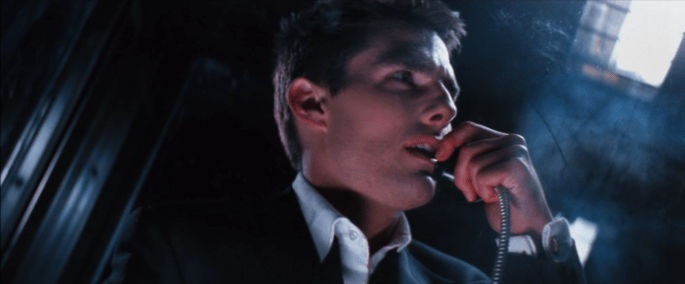
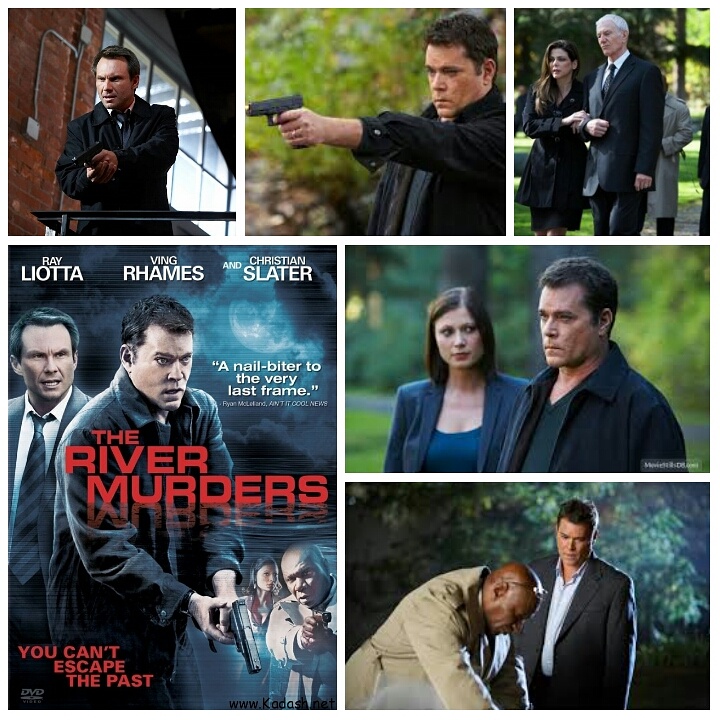
The River Murders is a fairly entertaining thriller vehicle for Ray Liotta that tries hard to be in the same grisly territory as stuff like Sev7n, and winds up looking pretty silly in its efforts. It takes place on a rural community in the Midwest, where a serial killer is leaving bodies for authorities to find. Detective Jack Verdon (Liotta) does some digging and finds that that himself and the killer may have met before in the past, making it personal. This causes unrest for both the department and Verdon’s mental state, prompting the arrival of an overzealous Federal agent (Christian Slater, annoying as hell here), and the concern of his captain (Ving Rhames). It’s fun watching Liotta spin out of control, and the film climaxes with reasonable intensity, but showcases nothing unique or noteworthy. Raymond J. Barry has a nice bit as Liotta’s father too.
Tag: Ving Rhames
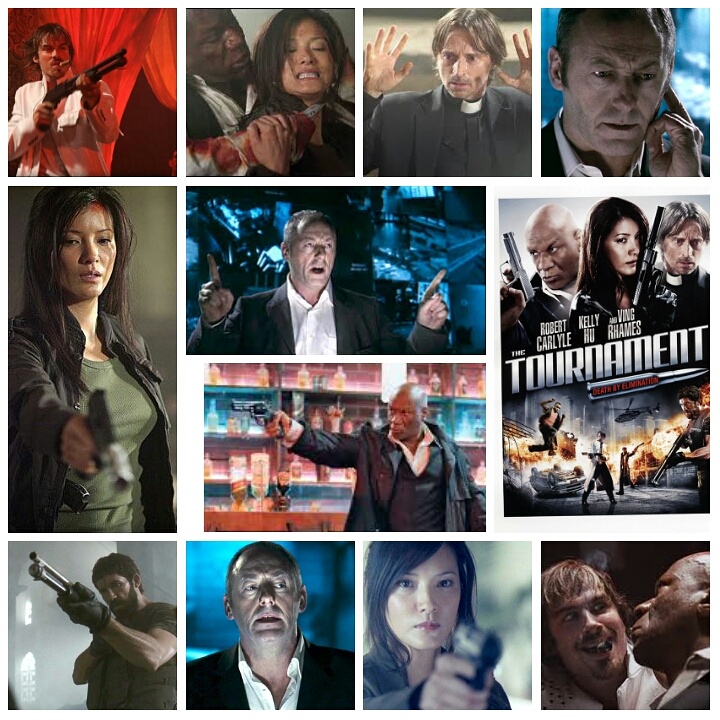
The Tournament: A Review by Nate Hill
The Tournament is just about as awesome as action movies can get, and just about as bloody too. I love films involving assassins, contests, games, violence and such. The Running Man was clearly a huge influence on this one, right down to the inclusion of a larger than life game show host, here played by Liam Cunningham. Liam plays a shadowy nut job named Powers, and every four years he arranges an elaborate and incredibly destructive Olympic games for contract killers and psychos alike. Every time he hosts it in a new city, using hidden cameras and explaining away the damage with disasters and attacks. If this sounds so very 80’s, it is. We’re in throwback city here, with a touch of modern tone not unlike Joe Carnahan’s Smokin Aces. The reigning champion is Joshua Harlow (Ving Rhames), a brutal warrior who has been coaxed back into the game with revenge on his mind. Each assassin is fitted with a tracking device so they can track each other, an idea which goes haywire when a civilian accidentally gets stuck with one and ends up in the cross hairs. The civilian in question is a drunken priest (lol) played by Robert Carlyle, who has no idea what’s going on and suddenly has a dwindling life expectancy. He catches a break when a lethal but sympathetic female competitor (beauty queen Kelly Hu is an angel of physicality) takes pity and decides to help him out. They’ve got quite an armada to cut through though, including a rowdy cockney whacko (Craig Conway) a parkour master (Sebastian Foucan), an ex Spetsnaz freak (Scott Adkins) with a habit of blowing shit up left right and center, and lastly a Texan pretty boy lunatic played cheerfully by Ian Somerhalder. He’s so evil they just had to include a bit where he shoots a stray dog in the face without batting a perfect eyelash (animal lovers, you’ve been forewarned). All this mayhem is taken in by Powers and his sickening audience of wealthy kingpins, who sit in a great big boardroom and bet on the outcome of the carnage. Cunningham is a blast of devilish charm as Powers, an amoral villain of dark showmanship and sociopathic class. Between exploding heads, grenades ripping through the streets of London, frenetic hand to hand combat, colorful personalities, over the top depictions of bad human behavior and a general sense of hedonistic, slash and burn glee, this is one for the books.
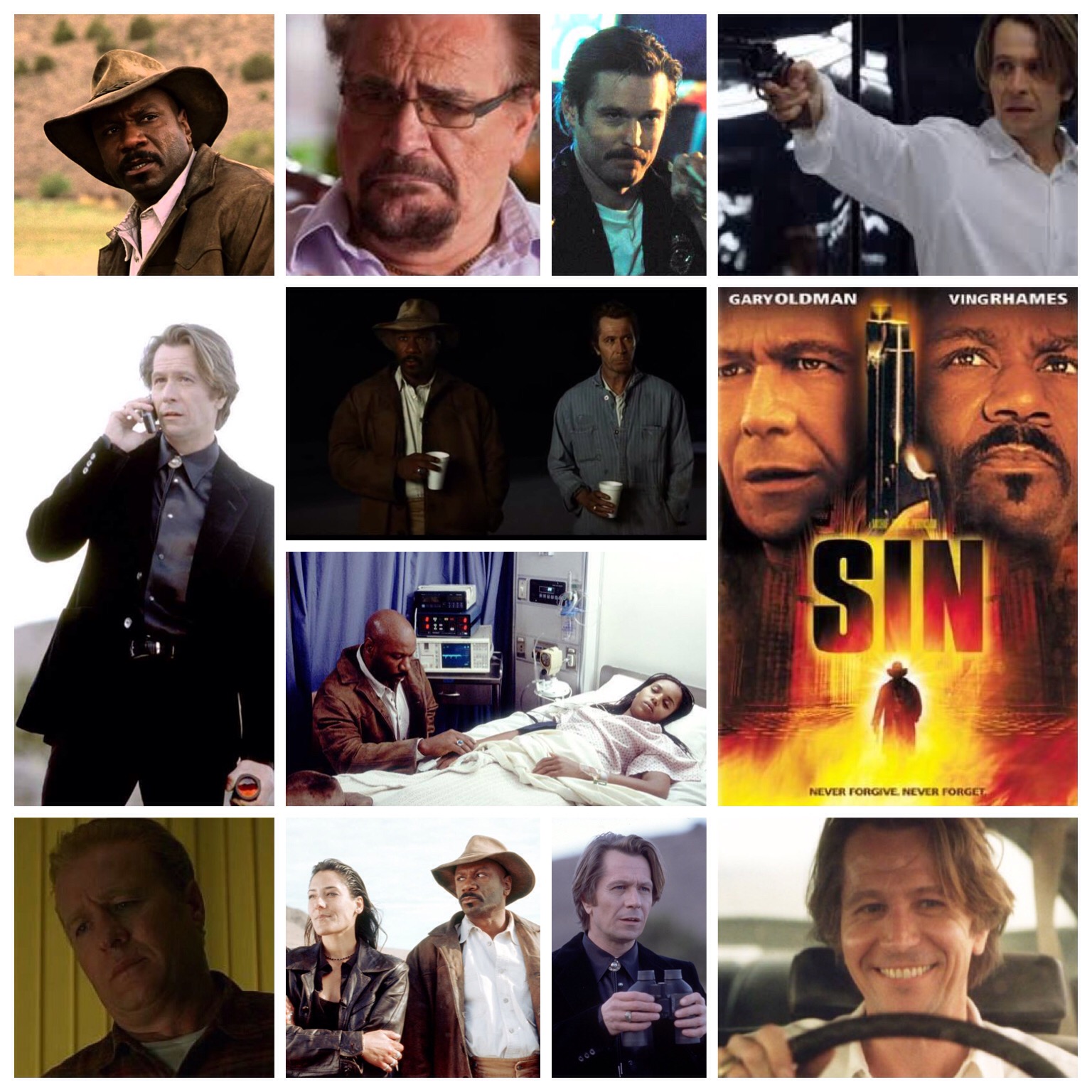
B Movie Glory with Nate: Sin
Sin is known as the B movie that Gary Oldman did, and he himself has bad mouthed it on occasion. Back then though, this was the only kind of movie like that he had to explain away. These days he has quite a few more of this type in his filmography, so he can’t really talk. It really isn’t the best movie, and functions as well as its limited budget and mediocre script will allow, but I must say there are a few moments, ones with stars Oldman and Rhames, that are just killer, and one in fact that borders on greatness. Rhames plays Eddie Burns, an ex cop or military man who lives estranged in the country, until the organized gang rape of his sister (Kerry Washington) coaxes him back into Reno Nevada. This heinous crime (a scene which borders on exploitation, to be honest) is orchestrated by Charlie Strom (Oldman), a nasty pornographer and drug kingpin who has a decades old bone to pick with Eddie. The film has some lonely atmospherics to it, the eventual confrontation between the two playing out in a poetic, if contrived fashion. For all the two bit moments in the script (and there are a lot), there’s one showstopper of a scene between Rhames and Oldman, that is reminiscent of Michael Mann’s Heat, and is quietly but surely affecting in its sadness. Brian Cox blusters through as Eddie’s former police boss, Bill Sage hangs out for a bit as a detective, and the one, the only Gregg Henry appears as a sleazy informant who feeds Rhames Intel. He also gets the best line of the film, exclaiming “I haven’t even had my morning fattie” after being rudely awakened Rhames. Watch for Alicia Coppola, Daniel Dae Kim and Arie Verveen as well. There’s some genuine ambition in the script, delving into the complex moral conundrum that exists between protagonist and antagonist, and how the two archetypes aren’t always so clear cut. Conscience and lack thereof is explored as well, with surprising results. I won’t lie and say it isn’t just a trashy b movie, but I won’t pretend there wasn’t some moments and aspects which I greatly enjoyed. It’s somewhere right in the middle.
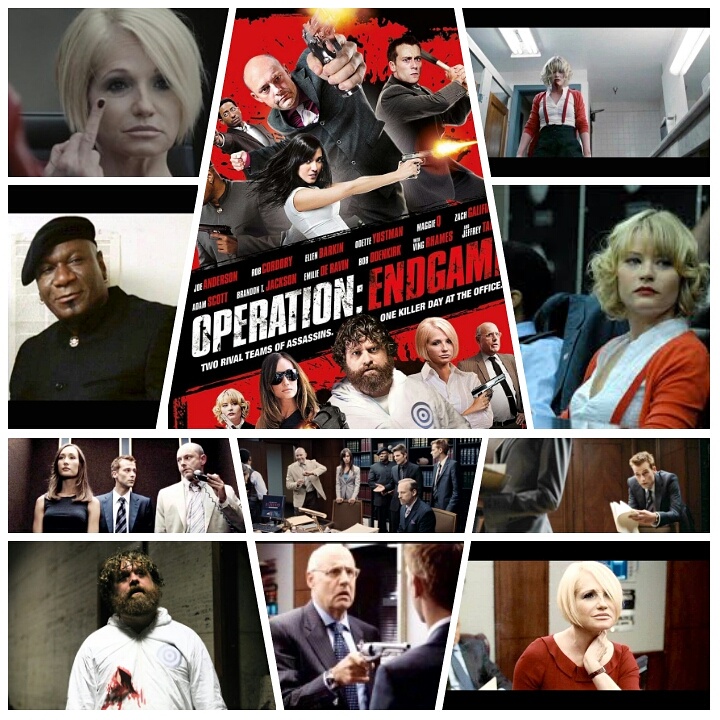
Operation Endgame: A Review by Nate Hill
Rogue’s Gallery, given the slightly lamer title of Operation: Endgame, is a very odd little amalgamation of extreme violence, comedic banter and wannabe spy intrigue. It concerns a group of government agents holed up in some remote bunker, basically taking each other out one by one after someone among them murders their boss, Emporer (Bob Odenkirk). The cast is made up of two types of actors: sleek, distinct genre bad asses and quirky, less aesthetically streamlined comedians who stand out in this type of material very strangely. Fool (Joe Anderson) is the rookie, being shown the ropes of his first day by Chariot (a hilarious Rob Cordry). That’s where the plot starts, and that is also where it lost me. The rest of the film is just al of them bickering until it gets way beyond words, and then murdering each other in shamelessly gratuitous ways. Ellen Barkin stands out as Empress, a bitchy old tart who has it in for Devil (Jeffrey Tambor) another senior operative. Emilie De Ravin steps wayyyy outside her comfort zone as Hierophant, a psychotic little doll faced southern Belle who gives hulking Juggernaut (Ving Rhames) a run for his money. There’s also work from Odette Yustman, Maggie Q, Adam Scott, Brandon T. Jackson, and Zach Galifianakis as a weird character that I still can’t figure out, perhaps because he does not much of anything at all except mope around wearing a hazmat suit and looking very hungover. It’s cool to see these actors give each other shit and fight like two raccoons in a burlap sack (the violence in this is really vicious, especially when Ravin is involved), if not much else. Very odd stuff.
MISSION: IMPOSSIBLE – A REVIEW BY J.D. LAFRANCE

A lot was riding on Mission: Impossible (1996) for Tom Cruise. Not only was it the first film he produced (in addition to starring), it was also his first attempt to kick start his own film franchise. And what better way to do this than resurrecting a classic television show from the 1960s? Cruise, always the calculated risk taker, wisely surrounded himself with talented people: Robert Towne co-wrote the screenplay, Brian De Palma directing and the likes of Jon Voight, Jean Reno, and Vanessa Redgrave in the cast. At the time, the James Bond franchise was in a transitional period and didn’t produce a new film until the following year. Mission: Impossible was a huge box office success spawning a franchise that continues to produce installments.
Jim Phelps (Voight) leads his group of IMF agents on a mission to intercept Alexander Golitsyn (Marcel Iures), a traitorous attaché, who has stolen a list of the code names for all of the CIA operatives in Europe. He plans to steal the other half of the list with their real names from an embassy in Prague. One by one, members of the team are killed off by mysterious assailants. Only Ethan Hunt (Cruise) survives the bungled mission and rendezvous later with his superior, Kittridge (a wonderfully twitchy Henry Czerny) in a restaurant. Over the course of their conversation, Ethan realizes that he was set-up and that another team was shadowing his own. Kittridge reveals that the embassy debacle was actually an elaborate scheme to expose a traitor within the IMF organization and he believes that it is Ethan and that he also killed his entire team.
De Palma conveys Ethan’s growing sense of paranoia and panic in this scene through increasingly skewed camera angles as the magnitude of what has happened begins to sink in. Henry Czerny plays the scene beautifully as Kittridge talks to Ethan as a parent might scold a child. The conversation between them culminates with a daring escape as Ethan causes a large aquarium to explode, using the ensuing chaos to make his getaway. This scene was Cruise’s idea. There were 16 tons of water in all of the tanks but there was a concern that when they blew, a lot of glass would fly around. De Palma tried the sequence with a stuntman but it did not look convincing and he asked Cruise to do it despite the possibility that the actor could have drowned.
Ethan regroups at a safe house where he meets Claire (Emmanuelle Beart), another surviving member of his team. He must find out who set him up and retrieve the list. To aid him in his endeavor, Ethan enlists the help of Claire and two other disavowed agents (Ving Rhames and Jean Reno). The film really gets going once Cruise hooks up with Reno and Rhames (playing an ace hacker no less) and they decide to break into CIA headquarters for what is Mission: Impossible’s most famous set piece. This impressively staged sequence is cheekily dubbed the “Mount Everest of hacks” by Ethan and is masterfully orchestrated by De Palma. The heart of this sequence is nearly soundless proving that one doesn’t need a ton of explosions and gunfire to have an exciting, tension-filled action sequence (Michael Bay take note).
Paramount Pictures owned the rights to the television series and had tried for years to make a film version but had failed to come up with a viable treatment. Cruise was a fan of the show since he was young and thought that it would be a good idea for a film. The actor chose Mission: Impossible to be the first project of his new production company and convinced Paramount to put up a $70 million budget. Cruise and his producing partner Paula Wagner worked on a story with filmmaker Sydney Pollack for a few months when the actor hired Brian De Palma to direct. They went through two screenplay drafts that no one liked. The screenwriting team of Willard Huyck and Gloria Katz (Indiana Jones and the Temple of Doom) wrote a draft and then David Koepp (The Shadow) was reportedly paid $1 million to rewrite it. According to one project source, there were problems with dialogue and story development. However, the basic plot remained intact. De Palma brought in screenwriter Steve Zaillian (A Civil Action) and finally Robert Towne to work on the script. According to the director, the goal of the script was to “constantly surprise the audience.”
Amazingly, even with all of these talented screenwriters working on it, the film went into pre-production without a script that the filmmakers wanted to use. De Palma designed the action sequences but neither Koepp nor Towne were satisfied with the story that would make these sequences take place. Towne helped organize a beginning, middle and end to hang story details on while De Palma and Koepp worked on the plot. The director convinced Cruise to set the first act of the film in Prague, a city rarely seen in Hollywood films at the time. Reportedly, studio executives wanted to keep the film’s budget in the $40-$50 million range but Cruise wanted a “big, showy action piece” that took the budget up to the $70 million range.
The script that Cruise approved called for a final showdown to take place on top of a moving train. The actor wanted to use the famously fast French train the TGV but rail authorities did not want any part of the stunt performed on their trains. When that was no longer a problem, the track was not available. De Palma visited railroads on two continents trying to get permission. Cruise took the train owners out to dinner and the next day they were allowed to use it. For the actual sequence, the actor wanted wind that was so powerful that it could knock him off the train. Cruise had difficulty finding the right machine that would create the wind velocity that would look visually accurate before remembering a simulator he used while training as a skydiver. The only machine of its kind in Europe was located and acquired. Cruise had it produce winds up to 140 miles per hour so it would distort his face. Most of the sequence, however, was filmed on a stage against a blue screen for later digitizing by the visual effects team at Industrial Light & Magic.
The filmmakers delivered Mission: Impossible on time and under budget with Cruise doing most of his own stunts. Initially, there was a sophisticated opening sequence that introduced a love triangle between Phelps, his wife Claire and Ethan that was removed because it took the test audience “out of the genre,” according to De Palma. There were rumors that Cruise and De Palma did not get along and they were fueled by the director excusing himself at the last moment from scheduled media interviews before the film’s theatrical release.
In some scenes, Cruise has a tendency to over-emote, like when Ethan is reunited with Claire after their entire team has been wiped out. Sleep deprived and paranoid, Ethan yells at Claire, “They’re dead! They’re all dead!” It’s an embarrassing bit of overacting on Cruise’s part but the actor redeems himself somewhat later on in a cheeky bit of acting when he cons Reno over a CD of vital information through a clever display of sleight of hand.
The film’s overriding theme is one of deception, a world where nothing is what it seems. The prologue has a disguised Ethan trick a captive man into giving up a name of a key operative. This is only one of many disguises (created by make-up legend Rob Bottin) he adopts throughout the film in order to obtain information or trick an opponent. The prologue also cleverly serves as a metaphor for filmmaking. The spy trade, like cinema, is all about creating an illusion and pretending to be something that you’re not. In addition, several members of his team are not who they appear to be as well and this keeps the audience guessing as to who is “good” and who is “bad.”
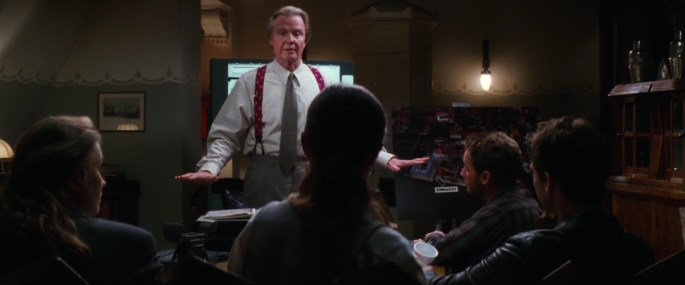
The common complaint leveled at Mission: Impossible was that it was hard to follow, fueling speculation that De Palma’s original cut was non-linear in nature and that Cruise re-cut it after disastrous test screenings. Regardless, if one is paying attention to what is happening and what is being said (or not being said, in some cases) it isn’t difficult to navigate the film’s narrative waters. The script is lean and unusually well-written for a big budget action blockbuster, which is quite amazing when you consider how many writers worked on it. Make no mistake about it; this is a paycheck film for De Palma. However, being the consummate professional that he is, the veteran director still delivers an entertaining film with some nice stylistic flourishes. What more could you ask for from this kind of film?
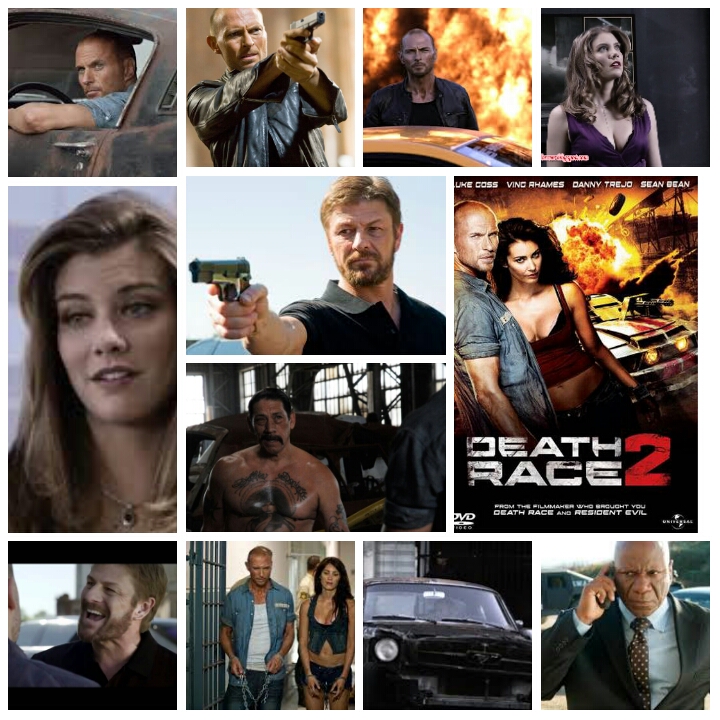
B Movie Glory with Nate: Death Race 2
Death Race 2 is one of those sequels that is a little more colorful and off the wall than the first one, and less gloomy. Death Race tried a bit too hard to play it straight and serious, and while still a gnarly flick, I personally have to give the edge to this one simply for coming a little closer to the trashy mark that the genre begs for. Any franchise with a title like Death Race has just got to have a touch of camp, some balls out B-movie action and a good dose of pulp. This one is actually a prequel, now that I think about it, taking place in the same penitentiary that the first film did, a year or so before Jason Statham’s arrival. It follows the origin of Carl Lucas (Luke Goss), who would go on to be the masked driver known as Frankenstein in the original film. Lucas starts out as a getaway driver and thief for ruthless mobster Marcus Kane (Sean Bean). When a heist gone wrong lands him in Terminal Island prison, he’s introduced to ‘Death Match’, bloody gladiatorial fare instigated by a random prison fight caught on camera and broadcasted online. The prison warden Weyland (Ving Rhames) has his moral doubts, but in swoops opportunistic corporation head September Jones (Lauren Cohan) with a sociopathic agenda to turn simple combat events into all out vehicular warfare, with state of the art machines and artillery, all privately funded. Since this genre exists in a world without anyone, government or other, to protest, Death Race is born. The rules go that if you win a certain amount of races, you go free. Kane has his own plans on the outside though, making a pretty penny off of Lucas and his driving, cruelly trying to keep him inside. Bean is a cut and dry psycho as Kane, relishing in the kind of nasty arch villain skin that action films have to offer. Goss has always had a heart and level of gravitas along with his physical intensity (his villain in Blade 2 is still legendary), which he brings out in Lucas. Danny Trejo comes along for the ride as Goldberg, Lucas’s mechanic. The first Death Race was solid, but a bit monochrome in the personality department. This one lets its freak flag fly, getting down and dirty with the bone crunching violence, and thundering motor mayhem. It sinks a level below the first one, which is sometimes a great thing for a particular franchise. It knows how over the top it needs to be, and is all the better for it.
OUT OF SIGHT – A REVIEW BY J.D. LAFRANCE
“It’s like seeing someone for the first time. You can be passing on the street and you look at each other and for a few seconds there’s this kind of recognition. Like you both know something, and the next moment the person’s gone. And it’s too late to do anything about it. And you always remember it because it was there and you let it go. And you think to yourself, what if I stopped? What if I said something? What if?” – Jack Foley
This bit of dialogue from Out of Sight (1998) perfectly captures the essence of the relationships between the characters in this film. It is about the what ifs and the what could have beens. What the characters do and, more importantly, what they don’t do that directly determines their fate.
As the film begins, Jack Foley (George Clooney), a career bank robber, escapes from a Florida prison with the help of his loyal accomplice Buddy (Ving Rhames). In the heat of the moment they kidnap a beautiful Federal Marshall named Karen Sisco (Jennifer Lopez). She and Jack are stuffed in the trunk of her car as they make a hasty retreat. Trapped in such a small, confined space Jack and Karen have nothing to do but engage in idle chitchat. Even though they are on completely opposite sides of the law there’s a spark, an initial attraction that blossoms into something more as the film progresses and their paths inevitably cross again.
Out of Sight is based on the book of the same name by Elmore Leonard. He had wanted to do a bank robber story for a long time. Several years ago, he saw “a picture in the Detroit News of an attractive young woman who was a Federal Marshal standing in front of the Federal Courthouse in Miami. She held a shotgun which was resting on her cocked hip and as soon as I saw that picture, I knew it was a book.” Danny DeVito bought the rights to a previous Leonard book Get Shorty for his production company Jersey Films. After the success of that film, he bought the rights to Out of Sight.
The film came to George Clooney and Steven Soderbergh at a time when both of their careers had reached a critical junction. Clooney was coming off the commercial and critical train wreck known as Batman and Robin (1997). Soderbergh had completely shunned the mainstream with the one-two punch of Gray’s Anatomy (1996) and Schizopolis (1996). Both men were looking for a hit that would put them back on the map. Soderbergh had already made two films for Universal and one of its executives, Casey Silver, offered him Out of Sight with Clooney attached. Soderbergh was close to making another project and was going to pass but Silver told him, “These things aren’t going to line up very often, you should pay attention.”
Soderbergh and screenwriter Scott Frank achieve a perfect mix with Out of Sight. The film’s pace moves with effortless ease and self-confidence. They know when to slow things down and savor the moment as well. As Frank proved with his excellent screenplay for Get Shorty (1995), he perfectly understands Leonard’s distinctive cadence and the speech patterns of his characters. Cinematic adaptations of books are almost always inferior because so much has to be cut out or changed to fit into a two-hour film. However, Leonard’s books are tailor-made for movie adaptations because they are very visual and almost entirely dialogue and character-driven — ideal for the screenplay format. Out of Sight is one of those rare movies that is actually better than the book.
Soderbergh and his cameraman, Elliot Davis (White Oleander), paint their film with a specific color code. The bright colors of the Florida scenes — especially the prison sequences with vibrant blue and the bright yellow prison uniforms worn by various characters — provide a nice contrast to the second half of the film, which consists mainly of a gun-metal blue color scheme. The Detroit scenes have a cold, metallic feel to them and this really comes out. David Holmes’ catchy R&B score comes in and instantly transports the viewer into this world. He mixes in his own brand of funky electronica with old school tunes from the likes of the Isley brothers and Willie Bobo. From the atmospheric noises in the background to Holmes’ superb trip hop beats, this is a great sounding film.
After a string of so-so films, George Clooney finally found the right project that suited his particular talents with Out of Sight. With his movie star good looks and suave charm, he is perfectly cast as the smooth talking criminal. This may be his finest performance to date. For Clooney what attracted him to this role was the chance to play a character that evoked his cinematic heroes of the past. “When I was growing up the heroes for me were the bankrobbers — you know, the Cagneys and the Bogarts, Steve McQueen and all those guys, the guys who were kind of bad and you still rooted for them. And when I read this, I thought, This guy is robbing a bank but you really want him to get away with it.” Clooney’s style of acting is perfect for this role as he plays Foley with the right amount of laid-back charm. This is typified by his character’s introduction — the most pleasant, non-violent bank robbery ever committed to film. Clooney has such a likable screen presence that you want to see his character succeed.
Conversely, Jennifer Lopez is his perfect foil as a smart, tough law enforcement officer who can’t help but fall in love with this charismatic criminal. She is a very attractive woman but not above wielding a shotgun to apprehend a fugitive. There is a genuine chemistry between the two actors that makes their romance work. And it is this relationship that gives Out of Sight its depth. There is more to this film than snappy banter and a hip soundtrack. Incredibly, Sandra Bullock was originally considered to play Karen Sisco opposite Clooney, however Soderbergh said, “What happened was I spent some time with [Clooney and Bullock] – and they actually did have a great chemistry. But it was for the wrong movie. They really should do a movie together, but it was not Elmore Leonard energy.” Someone must’ve listened as the two ended up acting opposite each other years later in Gravity (2013).
A killer cast supports the two lead actors. Steve Zahn, an underrated character actor, is perfect as Glen, a stoner screw-up who looks up to Jack but is a royal pain in the ass. Dennis Farina plays Karen’s laid-back dad who buys his daughter a handgun for her birthday and just wants to see her married to a lawyer or a doctor. Albert Brooks is Richard Ripley, a bumbling white-collar criminal type who is in way over his head and sports a truly awful toupee. Don Cheadle plays “Snoopy” Miller, a tough guy-wannabe that is a classic schoolyard bully. Rounding this cast out is Ving Rhames, Jack’s tough, God-fearing partner in crime who always has his friend’s back.
Despite its lackluster performance at the box office, Out of Sight received widespread critical praise. It was clearly a career turning point for both Clooney and Soderbergh. The actor said in an interview that “Out of Sight was the first time where I had a say, and it was the first good screenplay that I’d read where I just went, ‘That’s it.’ And even though it didn’t do really well box office-wise — we sort of tanked again — it was a really good film.” Clooney went on to success with O Brother, Where Art Thou? (2000) and Ocean’s Eleven (2001). Soderbergh saw Out of Sight as “a very conscious decision on my part to try and climb my way out of the arthouse ghetto which can be as much of a trap as making blockbuster films. And I was very aware that at that point in my career, half the business was off limits to me.” The film’s critical reaction gave Soderbergh a foothold in Hollywood that led to the commercial success of Erin Brockovich (1999) and Oscar gold with Traffic (2000).
Out of Sight is a film about making choices and taking chances despite the sometimes inevitable, painful consequences. It is also an entertaining look at a collection of colorful characters and the exciting world they inhabit. This is a smart, sexy and wonderfully stylish crime thriller that was ignored by audiences (due to lousy advertising and an even worse release date) but garnered strong critical reaction (winding up on many Best Of lists that year). Fortunately, Out of Sight has been re-discovered on home video and recognized as one of the best Elmore Leonard adaptations ever put to film.