Lunch with the Equalizer: A Conversation with Richard Norton by Kent Hill

Richard was a young lad from Melbourne, Australia plagued by asthma who loved martial arts.

richard_norton

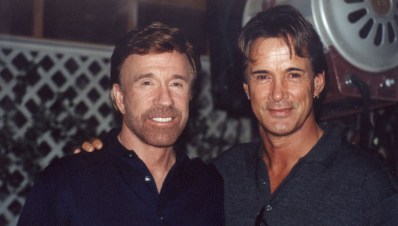
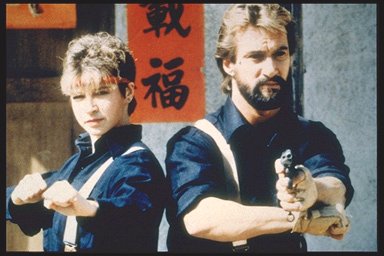
As he grew in skill, he would eventually catch the eye of the legendary Chuck Norris, who extended an invitation to the young Norton to come and train with him. It was while working as a celebrity bodyguard that he finally found his way round to the home of Norris, and from there he was offered a part in The Octagon as the masked ninja, Kyo.

Richard-and-Chuck-Norris-1024x584 norton-3

This would be the first of more than sixty screen appearances for the action film star, stuntman, stunt/fight coordinator/choreographer and martial arts trainer. He has worked on fights for “Stone Cold” Steve Austin, joined Suicide Squads, trained Scarlett Johansson  for the Manga turned motion picture Ghost in the Shell. He even braved the heat, dust and high-octane insanity on George Miller’s Fury Road.

rn2 13407327_10209910321620622_4980755475872849681_n tumblr_nl5h2gLpW11qe5f96o1_500

As a respected member of the martial arts community, Norton has remained close friends and has shared the screen with fellow industry luminaries such as Jackie Chan, Don “The Dragon”  Wilson and Cynthia Rothrock.

When I spoke with him, Richard was on his way to train the X-Men for another big screen outing, so there is no sign that the humble 67 year old from Melbourne is slowing down.

Richard Norton is a man who remembers well his origins and what it took to climb the mountain of success, upon which he stands, victorious. It was really cool to chat with him. I hope you’ll enjoy it.

So, here he is folks, the ‘real’ action man . . .  Richard Norton.

richardnorton06


PTS Presents Writer’s Workshop with MARK PROTOSEVICH

protosevich-banner

mark-protosevichWe’re very excited to be joined by screenwriter Mark Protosevich, who we are huge fans of.  Mark’s credits include THE CELL, I AM LEGEND, POSEIDON, OLDBOY, screen story for THOR, the unproduced follow-up to BATMAN & ROBIN, and the upcoming FLASH GORDON directed by Matthew Vaughn.  We go in depth with Mark, talking about his writing process, his love for cinema, and his journey to becoming a writer.  We hope you enjoy, this was an amazing chat!


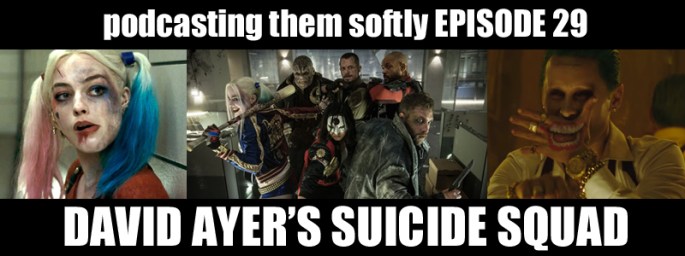
EPISODE 29: DAVID AYER’S SUICIDE SQUAD

SS POWERCAST

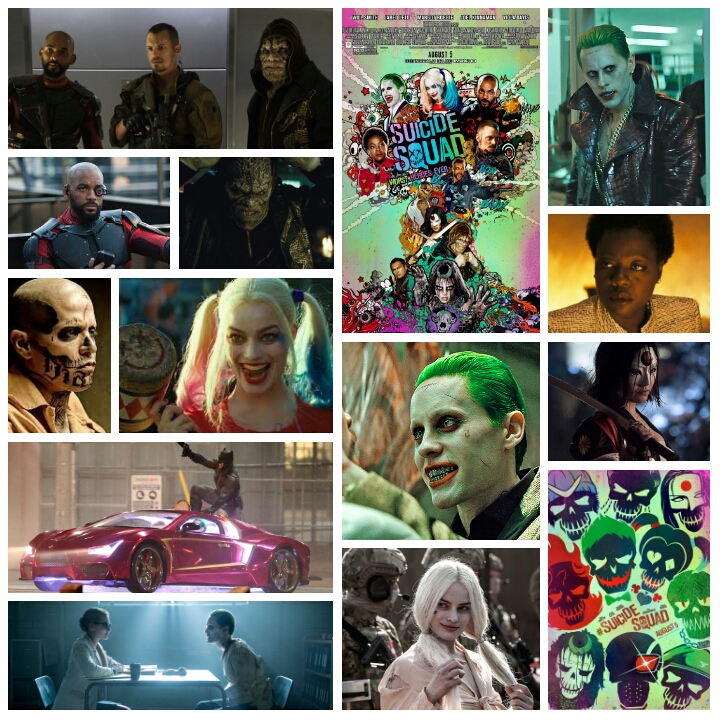
We’re back with a regular episode.  This time we talk about David Ayer’s SUICIDE SQUAD and touch upon BATMAN v SUPERMAN, and the future of the DC Universe.

Suicide Squad: A Review by Nate Hill 

Suicide Squad has left me so torn. On the one hand I just want to belligerantly profess my love for certain key aspects which I have salivated for for a long time now, to blindly just say ‘nope. Fuck it, it’s great’, like that one stupid kid in class who just won’t back down from an argument he is clearly losing. On the other hand I do have to come to terms with the very real, very problematic aspects to the whole thing, weigh it out rationally (not something I’m great at) and make heavy mention of what didn’t work (not something I enjoy doing). I also have a massive bias towards DC as well, particularly all things Batman and foes, so that needed to be taken into account too. 
  Let’s get what didn’t work out of the way: everyone is hearing that the film is a mess, and I can indeed say that yes, it’s one huge jumbled mess, like twenty unmade beds tossed into a washing machine together. It’s heavily edited in places that could have used fluidity, and flatlines in other spots where a bit of frenzy would have worked better. It’s scant on character, frankly because there are too many, packed with a soundtrack that has it bursting at the hastily sewn seams, drastically and obviously cut in specific places that are noticeable holes in which you could drive the Batmobile through, and burdened with a lazily assembled antagonist who doesn’t deserve the heroes they rumble with. That’s just off the top of my head. 
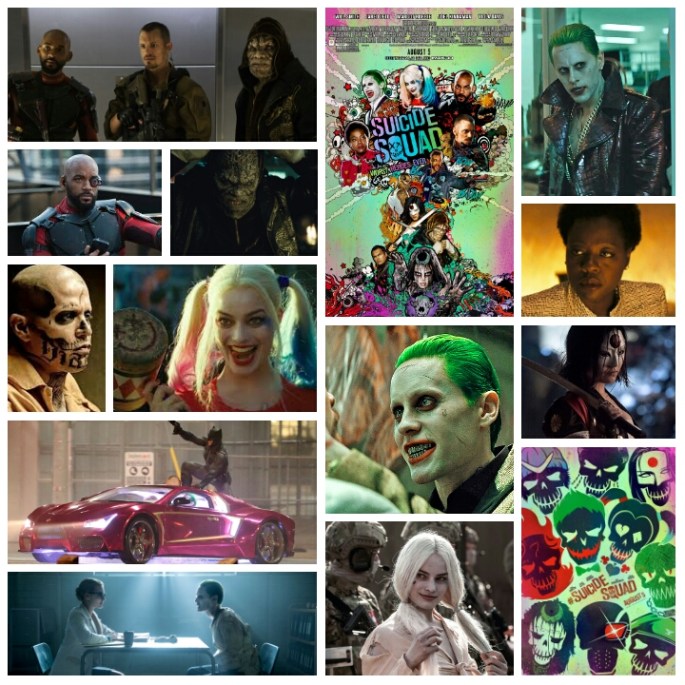
  Now, what worked: There’s a silver lining to the inane madness of the film, because in it’s confusing symphony of random candy coated antics it almost finds a trace of a beat, a rhythm that’s almost decimated by the chorus. I’m not excusing the hackjob of editing or cuts, merely saying that with all taken into account, it kind of takes on a life of it’s own that while completely tone deaf, is never boring. Let’s talk about Harley Quinn and The Joker. When the Blu Ray comes out with all them deleted scenes, I’m going to make a personal fan edit that sheds the spotlight on all the nastier stuff we missed in the theatrical version. The stuff we do get to see with Harley is pure magic, and Robbie owns the film. Maddeningly sexy, sketchy, dangerous, cute, and gloriously insane, she nails it to the wall in terms of what makes the character so special. Jared Leto as The Joker is…. different. While I didn’t like the laugh (he sounded like a geriatric hyena), I really took a shine to the direction they went with the clown this time around. A pasty ghoul who is sick with weirdo ‘love’ for Harley, this is a Joker who is way more in tune with the comics version than Ledger was. There were a few off key mannerisms and questionable little things, but for the most part I’d say he rocked it, and I’m stoked to see him square off with Batman in a standalone flick. 
  So, the rest of the squad. They’re a random bunch of nut bars who are hastily and over enthusiastically hurrah-ed onto stage by stone cold suit Amanda Waller (a terrifying Viola Davis), who is far more villainous than any of them. Davis is the consummate amoral politician, fuelled by gnawing xenophobia and given the power to push her unholy agenda to scary heights. Will Smith is a hoot as Deadshot, he just needed a little less mirth and a tad more menace in the mix. A joke or three sits well with me, but I don’t like wading through quip stew with thoughts of serious threat on the other side, only to find a backbone replaced by pining for his young daughter. Nothing wrong with pathos, but remember guys, Deadshot is a villain, and too much mush takes away from the street cred. Killer Croc is great when he’s around, which isn’t much until the climax where he gets a nice action bit, but still overall underused. I’ve been an avid non fan of Jai Courtney thus far, he’s just reeked of blandness. Well crikey, the guy does a nice job here of being the rambunctious bad boy of the pack, even if the reason for his inclusion in the squad doesn’t extend much farther than ‘he robbed every bank in australia’. Like… what? Joel Kinnaman holds his own as special ops asset Rick Flagg, and Cara Delevingne much less so as the gyrating, Grudge inspired Enchantress. She’s just not a powerful villain in any way, but damn if she didn’t turn heads in that little outfit. Cara actually fared way better as Dr. June Moon in what little time we spent with her, of which I would have loved to see more. Jay Hernandez is on fire (sorry) as Diablo, a flammable ex gang banger who grew a conscience to go with his pyrotechnic prowess. As far as Slipknot  (Adam Beach) goes, there was literally no reason, no reason at all for him to be in the film. Introduced as ‘the man who can climb anything’, he climbs like… one wall that anyone with his tools could scale….and then dies. Poor Adam. Karen Fukuhara is cool as Katana, but we’ve seen the hot Asian samurai shtick done to death, so it’s nothing altogether new. 
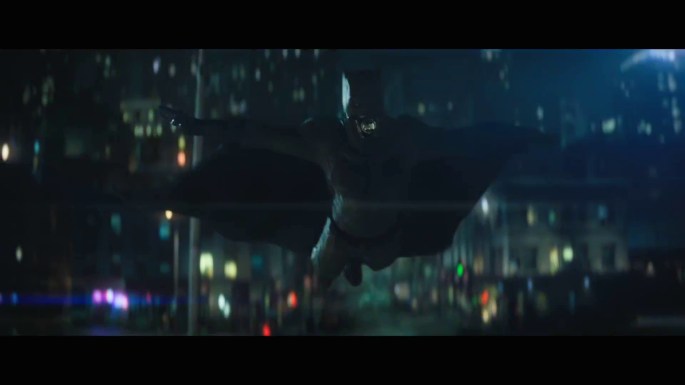
  No, the film rests on Joker, Harley and to a lesser extant, Batman. Old Bats is in it for two crucial scenes, one of which had me give out a roaring cheer, as it’s the type of thing I signed up for when I shelled out 22 goddamn dollars to see this in VIP mode. I kept wishing the whole time that I could make my own edit with all of David Ayer’s footage, because there’s so much gold found onscreen, and I know there’s more to be mined on the floors of his editing room, left there by the prudish anxieties of studio heads that just don’t. Ever. Learn. I want to see Batman and his villains thunder out in this blooming DC franchise, and while the rest of the more obscure faces in the squad are fun, I was in it for the core villains. All the stuff with Joker and Harley is inspired, and the car chase where the Batmobile tears after Joker’s purple Hotwheels Lamborghini is pretty much the best part of the whole film. I want more Batman and Co., for shit sake. In any case, there’s a lot of fun to be had, an endless grab bag of stylistic tricks, fonts, gimmicks, colors, sounds and chaotic hullabaloo running around. Some of it works. Some of it doesn’t. Tough shit. It’s certainly not a terrible movie, and I feel many critics resorted to the oft employed ‘knee jerk’ reaction instead of internalizing it all before brandishing pen and keyboard. Critics are a spastic lot of baboons who have have a tendancy, especially these days, to jump the gun and hurl verbal feces at stuff before it’s had a chance to sink in. I’ll concede that there are huge issues, but huge amounts of fun can be found too. Or not. It’s up to you. I certainly had some fraction of a blast watching it, and the only way I can describe the thing as an whole is the Looney Toons having a food fight with a bunch of fluorescent Lucky Charms. If that abstract picture chimes with you, chances are you’ll at least get some kind of kick from the this baby, and probably be just as perplexed by certain areas as I was. Good luck.

SUICIDE SQUAD – A Review by Frank Mengarelli

suicide-squad-trailer-image-79-600x252

“Will you live for me?”

SUICIDE SQUAD is a complete mess, yet it is a total glory. I know, relax. Hear me out. Since the resurrection of Christopher Nolan’s Batman, there has been a forceful push to ground a superhero film in reality. Sometimes it works, other times is does not. SUICIDE SQUAD removes itself from that universe and takes place within movie world.

wp-1470375845553.jpg


There’s a lot that is blatantly strange and oddly incoherent about the film. Whether it was from studio tinkering (panic) or that everyone was on acid while making the film. None of that matters. The film has a great soundtrack and devilishly fun performances from the entire cast.

The film isn’t bright and glossy with a drumbeat joke every five minutes, it’s sloppy and dirty with perverse humor that will curl even the most uptight hipster’s mustache, while he’s passive aggressively using the Oxford comma to demean this film.

wp-1470375812740.jpg

Will Smith’s overly stereotypical ghetto jive, the over objectifying of Margot Robbie’s butt, the uppity bitch mode of Viola Davis, and Jared Leto’s insane transformation into a Joker that’s feverishly in love, are a step away from the safe mediocrity we’ve seen in recent tent-pole films.

wp-1470375831463.jpg

Director David Ayer has received so much critical flack for this film, it isn’t even funny. This wasn’t a film made for critics, nor was it seeking the approval of top ten lists. It’s loud, it’s obnoxious, it’s gratuitous, and it’s everything that the new DC Universe should aim for going forward. Let other studios play it safe with their glossy sheen, DC; keep forming a lewd and egregious world for the rest of us.

A Suicide Squad review by Josh Hains

Don’t worry, the following review is a spoiler free zone.

Appalling. Bad. Very, very bad. Trash. Garbage. Stupid. Incoherent. Incomprehensible. Dumb. Boring. Awful. Mediocre. Disaster. Rotten. I don’t agree with words such as these being used in reviews for Suicide Squad to describe the movie as whole. I’m not being blindly dismissive like some social media users out there who are mad that this highly anticipated movie isn’t getting a great critical reception. I just don’t agree, I had a different experience, and this review will reflect that experience.

Suicide Squad has a pretty straightforward plot: government spook Amanda Waller (Viola Davis) assembles Task Force X, a motley crue of super-villains plucked from prison, and let loose in a city under attack by a malevolent meta-human. Kill the bad guy, save the city, and get some time off your prison sentences, that’s honestly as deep as it goes. But that’s not a detrimental aspect of the movie. In many comic book movies, the plot takes a back-seat to the action, humour, and character development, and Suicide Squad embraces that trope with wide open arms. With these team oriented comic book movies, it’s kind of expected that the story takes a back-seat to the character interactions and action, and if you need proof of that look no further than The Avengers movies. You don’t need an over complicated plot with far too many sub-plots for this kind of movie (I’m looking at you Batman V Superman). Simplicity is key, so by the time the plot gets thrown out of the window late in the second act you really won’t mind because director David Ayer makes up for it with great character moments, irreverent Deadpool style humour, and a wallop of fun action. Think of this movie as the DC equivalent of The Expendables, with way more humour but no gore, and you’ll be fine.

Speaking of character moments, many of the best belong to Deadshot (Will Smith), Harley Quinn (Margot Robbie), Rick Flag (Joel Kinnaman), and El Diablo (Jay Hernandez), all of whom are given just enough screen time (or more than enough) to make us care about the characters as they contend with their dire mission. I was initially worrisome about the casting of Smith as Deadshot, I thought he might end up becoming overbearing and even over the top, but he proved me wrong with a subtle and believable performance, his best since the Pursuit Of Happyness. Joel Kinnaman matches Smith’s performance, bringing a naturalistic touch to what could have been a stereotypical stubborn leader role. Margot Robbie’s Harley Quinn is exactly like the Harley I grew up watching in the animated series that her creator Paul Dini wrote (minus the jester costume), and a total scene stealer. More on her later. El Diablo, the “fire guy” as Captain Boomerang (Jai Courtney) tauntingly dubs him, has the biggest emotional journey of any of the Squad members, though not as much screen time as the trio of aforementioned characters.

Captain Boomerang gets a solid amount of time to do his thing, which is make plenty of jokes and jabs, and kick a few asses along the way, but he isn’t given quite enough to do, which is a shame because he’s quite a lot of fun. Adewale Akinnuoye-Agbaje as Killer Croc, Karen Fukuhara as Katana, Cara Delevigne as June Moon & Enchantress, and Viola Davis as Amanda Waller, don’t get much to do, and neither does the sacrificial lamb Slipknot (Adam Beach), who follows in the footsteps of other villains in Suicide Squad comic and cartoons whose sole purpose is to prove that the bad guys aren’t playing around. Davis, a blank slate lacking charisma and passion behind her delivery of lines, doesn’t do much more than manipulate a few minds and give orders, and Delevigne’s characters aren’t fleshed out enough for us to care all that much about her. Killer Croc and Katana have minor moments of asskicking, and Croc gets a couple of funny lines, but neither of them are all that relevant to the plot, and easily could have been removed from the movie altogether without hurting the final product. However brief they may be, the two much hyped cameos, which includes Batman himself (Ben Affleck), fit naturally into the movie, and lack the feeling of being shoehorned into the movie for the sake of having them there.

Now back to Harley. Margot Robbie, equipped with a believable Bronx accent, and a fresh take on the New 52 Suicide Squad comic iteration of Harley, brings life and a lot of love for the character to a performance many were worried would fall flat. She looks, sounds, and behaves exactly like the Harley Quinn fans know and fondly love, and it’s a joy to see her steal scene after scene. She’s also fortunate enough to have some of the funniest lines in the movie, which Robbie delivers with a glint of pure enjoyment in her eyes.

In my eyes, the performance I was most drawn to belongs to Jared Leto as the Clown Prince of Crime himself, The Joker. Seemingly drawing from previous Jokers such as Caesar Romero, Jack Nicholson, and Heath Ledger, as well as the vast number of animated incarnations, Leto gives us a fresh take on the iconic villain that doesn’t feel like any Joker that came before it. I’d equate the performance to that of taking all the best elements of the aforementioned Jokers, and building from the ground up a composite of what that may look like. He’s not better, or worse than Heath Ledger’s Oscar winning turn as The Joker, he’s just different in his own unique fashion. I do think he’s better than the Jokers pre-Ledger though. Leto is gleefully over the top, cackling and growling like a tiger waiting to tear the face off his next unsuspecting victim, but not too over the top. This Joker’s as unpredictable, crafty, and brutal as ever before, but not overbearingly so. Sadly, Joker’s vastly underused, with much of his screen time left on the cutting room floor. I’d love to see more of this new Joker. The relationship between he and Harley, while volatile and unhealthy, is perfectly reflective of the one seen in the pages and frames of various DC comics and cartoons, and seeing it come to life was also a rather joyous experience.

Throughout the second and third acts of the movie, the editing seems to be a bit on the choppy side, more predominantly in the third act than the second act by a mile. It became pretty clear to me that the push for a two hour crowd pleasing comic book movie got in the way of giving the sidelined characters more depth and more impactful screen presences. Somehow, despite the clunky nature of the editing (which isn’t very distracting, thankfully), these scenes that are affected by it still work fairly well until the editing seems to get back on track and working just fine.

Beyond the quibbles I have with the editing, the story, the character development, and the casting of Amanda Waller, I still enjoyed this movie a lot, in some ways more than I thought I would, and in a couple of ways, less. I do not feel that this is a bad movie by any means, I think it’s actually damn good, but it’s not quite as great as it could have been, though I wasn’t always wanting or expecting it to be great anyways. If anything, all I ever wanted was yet another fun comic book movie I could lose myself in while watching these badass villains kick all kinds of ass six ways to Sunday. David Ayer gave me that in spades.

Now where’s the sequel?


Barry Sonnenfield’s Wild Wild West: A Review by Nate Hill

image

I don’t get the hate for Barry Sonnenfield’s Wild Wild West. I just don’t.  It’s like I saw a completely different film than the entire rest of the continent. To my knowledge, there’s me and a couple other friends I know who love and cherish it, and the rest of the world has seemingly cast it out into the cold, inexplicably bashing it no end. Wtf. It’s a rollicking good time, full of a brilliant blend of situational and slapstick humour, lively characters from a great group of performers, incredible production design, and a dash of swash and buckle. It may not have much in common with the 1960’s era tv show its based on, but kudos to it for breaking new ground. Will Smith plays Marshall Jim West, a cocky (there’s literally a small window of freeze frame where you can see his ebony schlock in full glory. And don’t even ask me how I know that), ballsy (ok sorry I’ll stop) secret service cowboy badass who is working a case against some nasty villains who want to use president Ulysses S. Grant for diabolical ends. He’s led to old foe General ‘Bloodbath’ McGrath (Ted Levine in a show stopping, wickedly devious southern psycho role) a confederate lowlife who will hopefully lead him to whoever is kidnapping the nation’s best and brightest scientists for some Bond villain-ish scheme. West is joined by kooky inventor Artemis Gordon (a classy Kevin Kline) and the two embark on a shoot em up quest to thwart the evil plan of Dr. Arliss Loveless (Kenneth Branagh), a dastardly mega villain with plans for America that don’t involve presidents or laws or anything sane. The film is endlessly inventive, wildly funny and parades forth a reel of set pieces, each more amazing than the last until we realize we’re actually watching a fifty foot tall steam punk mechanical spider stomp all over the Utah desert (there’s a priceless story involving that and the film’s odd duck of a producer Jon Peters, which you can watch Kevin Smith regale an audience with over on YouTube). West and Gordon are joined by sultry Rita (Salma Hayek) a Femme Fatale with a hidden agenda who tags along under the guise of damsel in distress. It’s just plain fun and I still don’t get how anyone could dislike it. Witty barbs, raunchy double entendres and sarcastic banter permeate the wonderful script. Nifty gadgets, detailed costumes and clanking machinery speckle the epic production  design. An atmosphere of playful fun oversees all of it from beginning to end. Smith and Kline make a dysfunctional buddy duo for the ages, squabbling right up until the last frame. Branagh hams it up so far over the top as the bad guy that he nearly implodes on himself. Levine is deliciously creepy and crusty. Watch for other gem performances from Bai Ling, M. Emmett Walsh, Debra Christofferson, Sofia Eng, Rodney A. Grant and Musetta Vander. If you’ve seen it and already love it, good for you let’s go have a beer. If you’ve seen it and hate it, you’re a silly bum (to put it mildly). If you haven’t seen it, do so, form your own opinion and fall into one of the above two categories. It’s a classic for me.

ALI – A REVIEW BY J.D. LAFRANCE

Ali-Michael-Mann

Ever since Ali was released in 2001, I have felt that it has been one of Michael Mann’s most under-appreciated films. It received decidedly mixed reviews and underperformed at the box office. While Will Smith was praised for his impressive physical transformation into legendary boxer Muhammed Ali, the film itself was criticized for revealing nothing new about the man. Herein lies the problem that Mann faced: how do you shed new light on one of the most documented historical figures of the 20th century? His angle on the material was to look inwards.

Proposals for an Ali biopic had been around since the early 1990s when producer and one-time business partner of the boxer, Paul Ardaji, pitched the idea to the man on his 50th birthday. Ali gave the project his blessing and financing quickly fell into place. A number of scripts were written by the likes of Gregory Allen Howard (Remember the Titans) and Stephen J. Rivele and Christopher Wilkinson (Nixon), but they all failed to please the powers that be. The project bounced around various studios for years as executives tried to decide who should make it, who should star in it, and would it even make a profit? In 1991, Oliver Stone met with Ali about making a film about his life but the collaboration ended when the director refused to share creative control. In 1992, Ali’s best friend and personal photographer Howard Bingham and Ali’s wife Lonnie got together with Ardaji. Gregory Allen Howard’s take on Ali was delivered in 1996. His angle was that the key to the boxer’s life was his relationship with his father, who ignored him.

When Will Smith met Ali in 1997, the boxer asked the actor to play him in the film. Smith was flattered but said no. He was not ready and too intimidated for such a demanding role. The actor almost did it when Barry Sonnenfeld agreed to direct. Both men had worked together on the Men in Black movies and Wild Wild West (1999). Thankfully, their version never saw the light of day. After he turned 30, Smith realized that he had to make the decision about playing Ali. However, when no one could settle on a script, Sonnenfeld dropped out. There were several more rewrites and directors, including Curtis Hanson who expressed interest. Smith was ready to give up on the project.

It then came down to Spike Lee or Michael Mann to fill the director’s chair left empty by Sonnenfeld. Sony Pictures, the studio bankrolling the film, was faced with a $100+ million budget and went with Mann who had just received several Academy Award nominations and all kinds of critical praise for The Insider (1999). Upset, Lee voiced his anger through a friend in The New York Post: “Only a black man could do justice to the Cassius Clay story,” he was reported as saying. Mann responded that he “wanted the film to come from the point of view of the main character, Muhammed Ali. I’m not interested in showing a white man’s idea of how someone suffered racism. The perspective of the film has to be African-American.” When asked why he did not pick a black director Ali said that he wanted the best qualified person regardless of color, and his wife said, “Muhammad didn’t want it to be a movie just for black audiences. He wanted it to be a movie for all cultures and all people.”

When Mann was approached to direct he wasn’t even sure if he wanted to tackle such challenging subject matter but was sure of one thing; he did not want to make a docudrama or idealize Ali’s life. After meeting with Ali and his wife, they told him that they did not want “a teary Hallmark-greeting version of Muhammad Ali … What they didn’t want I didn’t want,” Mann remembers. The director liked Rivele and Wilkinson’s screenplay but rejected their flashback structure and their use of Ali’s 1978 fight, the “Thrilla in Manila,” as the present frame of the story. Mann felt that Ali’s 1974 fight in Zaire was more significant. He was also not interested in spelling things out for the audience: “I wanted to insert you into the stream of this man’s life, orient you without doing it in a blatant way with exposition.” Ironically, this is what would scare off a lot of people.

Smith’s agent arranged a meeting with Mann that changed his attitude towards the film. According to the actor, it was “the clear picture he had of the road from Will Smith to Muhammed Ali. He explained it in a way that made it seem, in my mind at least, not so utterly impossible, just marginally improbable.” Smith and Mann agreed that the film’s focus should be on ten turbulent years of Ali’s life, from 1964 to 1974. The director set the film during these years because “that formation of everything by ’74 is the beginning of what is now culturally in the United States.” Mann identified Ali with the spirit of change that occurred in the 1960s. “He consistently defied the establishment and its conventions, and we loved him for it.” Ali led such a colorful, eventful life that a focused story was crucial to the film. Mann said in an interview, “It would be catastrophic to divert into every interesting story. Everything this guy does is fascinating. I could have made an entire movie about Ali’s relation to women. Music, Cadillac convertibles and women. It would have been great.”

By February 23, 2000, Mann signed on to the film and went to work transforming Will Smith into Ali. Smith remembers that Mann created the “Muhammad Ali Course Syllabus” that began with a study of the boxer’s physical attributes: “learning to run how he ran, to eat the food he ate, spar the way he sparred. Essentially creating the physical life and physical appearance of Muhammad Ali.” From there, Smith moved on to the mental and emotional aspects and finally the man’s spirituality. Boxer trainer-choreographer Darrell Foster spent a year training Smith. Foster was Sugar Ray Leonard’s conditioning coach when the boxer turned pro. According to Foster, the key to becoming Ali was “looking for specific movements. Hand speed, ring generalship, how he made guys miss. Will had to become Ali, because you can’t demonstrate those moves through choreography.” Foster created a high-carb, high-protein diet for Smith and had him run in combat boots through snow in the thin air of Aspen, Colorado for ten months before the start of filming. His training schedule consisted of five miles of roadwork starting at 5:30 am, in the gym at 11:30 am, six days a week for three hours of ring work and weight training, watching fight films at 3 pm, and weight training in the evening. Smith put on 35 pounds of pure muscle in four months and went from bench-pressing 175 pounds to being able to press a very impressive 365 pounds. The finishing touch was being fitted with a hairpiece and a prosthetic nose.

For the fights, Foster started Smith on the basics: balance, footwork and defense. Then, he worked with the actor on the offensive aspects: a mix of overhand rights, hooks and upper cuts. Foster remembers that Smith “thought he knew how to fight because he had some street fights. But really, he couldn’t fight at all.” Smith worked on his hand and eye reflexes in order to perform eleven of Ali’s signature moves. Smith spent days studying film of Ali, including early footage shot when he was an Olympic boxing champion to interviews with Howard Cosell. Much of the material, unseen for years, was supplied by Leon Gast, a documentary filmmaker who made When We Were Kings (1996), a celebrated and acclaimed documentary about Ali’s championship bout with George Foreman. Smith also took classes in Islamic studies at the University of California.
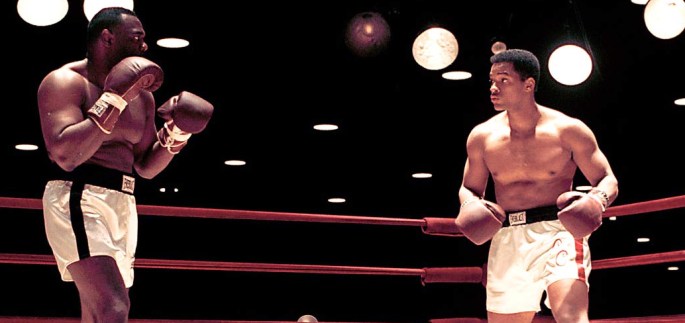
aliThe focus on the years 1964 to 1974 are arguably the most fascinating ones of Ali’s life because they are so rife with dramatic possibilities. It was during this period that Ali became the World Boxing Champion after beating Sonny Liston, then lost it when he refused to serve as a foot soldier in the Vietnam War, and finally reclaimed the Championship Title after beating the odds-on favorite, George Foreman in Zaire. It was also a time of great social and political upheaval in the United States with the assassinations of Malcolm X and Martin Luther King, Jr. Finally, Ali also shows the man’s private side: his numerous wives and failed marriages, and his friendships with Malcolm X and Howard Cosell.

Mann immediately immerses the audience in the time period with a montage of footage that features Sam Cooke performing in front of a live audience juxtaposed with Ali jogging alone at night and being harassed briefly by the police. Mann then goes into a montage of Ali training and two boxers fighting with Ali watching. Mann fractures time by also intercutting footage of Ali as a child witnessing the brutality of racism and its effects as he sees a newspaper article about the vicious beating of Emmet Till. The film then cuts back to a mature Ali sitting in on a lecture by Malcolm X. The entire montage is masterfully edited to the beats of a medley of Sam Cooke songs. This opening sequence establishes the Impressionistic take that Mann is to going to have on Ali’s life. It is also one of his most complex, layered opening credits sequence because he shifts time frames and presents us with all of these apparently unconnected images without explaining them. This is done on purpose in order to establish a mood, give an impression of the look and feel of the film and to set up that we are seeing the world through Ali’s eyes.

The fight scenes are covered from every conceivable angle as Mann cuts back and forth from shots outside and inside the ring. The first shot we get of the ring is a close-up of the red ropes and in Mann’s films this color signifies danger. There is the potential for Ali to not just lose the fight but possibly his life. This is a risk every time a boxer steps into the ring. In the Liston fight, Mann alternates between camerawork inside the ring, with tight and close point-of-view angles so that we are right in the ring with the boxers, and shots just outside of the ring but still close to the fighters. This gives the fight scenes a real visceral impact and immediacy that has not been seen since Martin Scorsese’s Raging Bull (1980). The Liston fight also shows how Ali could work a crowd of boxing fans just as well and in just the same way as the crowd of journalists before the fight.

Unlike most boxing films, Mann wanted to get inside the ring in order “to bring you inside the strategy and tactics, to bring you into the round as far as I could.” To this end, Mann would often be in the ring with the fighters with a very small digital camera. To achieve the most realistic fight scenes possible, Mann really had Smith and the other boxers hit each other. The director recalled one such incident: “When James Toney as Joe Frazier knocks Will down, we did three takes of that — every single one of those left hooks he connected. When Will stands up on the one that’s in the film, that wobble is not acting — you can tell how shaky he is.”

Mann also uses a cool, blue color to suggest intimacy and does so in the scene where Ali and Sonji (Jada Pinkett Smith), who would become his first wife, dance in a nightclub. They are close together, flirting with each other as Mann drenches the scene in blue much like he did with Neil McCauley entering his house in Heat (1995) and Will and Molly making love in Manhunter (1986). Ali is temporarily in an area of safety and love but this will change very soon.

After an interview with legendary broadcaster Howard Cosell (Jon Voight), Ali’s life takes a turn for the worse as he refuses to be inducted in the Army and is arrested. He then denounces the war in an interview and is subsequently labeled as being unpatriotic. He is stripped of his boxing title as Heavyweight Champion of the World, his boxing license and his passport. Like Jeffrey Wigand in The Insider, Ali is threatened by the powers that be for telling the truth and being his own man. It becomes obvious that this is a war of attrition in an effort to bleed Ali dry financially and threaten him with five years in jail. Then, as if to add insult to injury, the Temple of Islam suspends him just like they did to Malcolm X.

Cosell and Ali meet up and the veteran broadcaster, conscious of how bad off his friend is but not acknowledging it publicly, puts him on television despite network pressure. Cosell allows Ali to speak his piece about his ban and dazzles everyone again with his showmanship. It really is a testimony to Cosell that he did this. When everyone else had abandoned Ali, the T.V. personality stuck by him and used his considerable clout to put him back in the public eye. This interview is the turning point for Ali who wins a fight. Only then does Herbert and the Temple of Islam come back to him but Ali makes it clear that they do not own him. His eyes have been opened and he now knows just how much he can trust them.

Ali culminates with the legendary Rumble in the Jungle where Ali fought George Foreman in Zaire. Ali was not the favorite going in as Foreman was younger, stronger and the Champ. Mann, again, hints at the potential danger of this opponent when we see Foreman training, pounding a punching bag with powerful hits all with a greenish filter, a sign of peril in a Mann film. Sure enough, during this period Ali drives away his second wife (Nona Gaye) who does not like his relationship with the Temple of Islam because she feels that they are exploiting him. While still married to her, Ali becomes interested in a female journalist (Michael Michele) from Los Angeles who is in Zaire doing a profile on the boxer. This relationship effectively ruins his second marriage and Mann does not gloss over this showing that Ali was clearly in the wrong.

This portion of the film was shot in Johannesburg, South Africa and from there, an hour journey to Maputo, Mozambique because Mann liked the architecture in Maputo. In 1974, the legendary “Rumble in the Jungle” bout between Ali and George Foreman took place in Kinshasa, Zaire which had since become the Democratic Republic of Congo, but there was too much political unrest for Mann to shoot there in 2000. Associate producer Gusmano Gesaretti remembers that Mann fell in love with the architecture in Maputo. It was predominantly built by the Portuguese during the middle to later part of the century with buildings done in Art Deco-style curves and arches alongside others with straight lines in the block style of the 1960s. All were very aged and weather-beaten and looked very much the way Kinshasa was in the 1970s.

The “Rumble in the Jungle” was filmed over five weeks in Machava Stadium, five kilometers northwest of Maputo. The stadium was used to host large international soccer tournaments but had fallen into disrepair — there wasn’t even any electricity. The production spent $100,000 repairing and upgrading the 64,000-seat capacity stadium. They structurally engineered and replicated a ring and canopy that was 40 feet high, 82 feet wide and weighed over 40 tons. Over 10,000 extras were needed for the scene where Ali makes his entrance into the stadium. Fliers were distributed in Maputo inviting people to watch the filming. The production also cast 2,000 extras that would be costumed and fill seats on the floor around the ring. On the night of the scene, over 30,000 people showed up.

Known mostly for mindless, yet entertaining action films like Bad Boys (1995) and Independence Day (1996), Will Smith was not exactly most people’s first choice to play Muhammad Ali. However, Smith shows that he has the capacity for more substantial work with Six Degrees of Separation (1993) but he had never attempted anything as challenging as this project. Smith captures Ali’s distinctive speech patterns, especially his flamboyant, larger-than-life public persona. Like Anthony Hopkins before him in Nixon (1995), Smith does not look exactly like the actual person he is playing. Instead, he manages to capture the essence and the spirit of the man. He also does a good job of conveying Ali’s conflict between his loyalty to Islam and to his family and friends. Smith peels back the layers to show that there was so much more than Ali’s flashy public side. For example, most people only saw Ali and Cosell as antagonists, but this was only for show. In fact, they were good friends and the sportscaster was willing to help him out in any way possible.
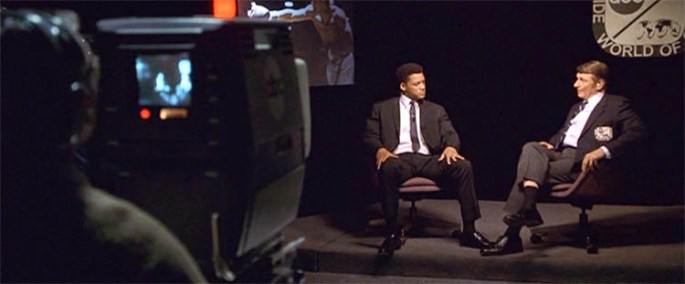
Ali-Howard-CosellWhile Smith was praised for his impressive physical transformation into legendary boxer Muhammed Ali, the film itself was criticized for revealing nothing new about the man. Herein lies the problem that Mann and company faced: how do you shed new light on one of the most documented historical figures of the 20th Century? Ali eschews the traditional docudrama for a more impressionistic take on the man and life. Mann’s film may not say anything new about the famous boxer, but it does depict an exciting ten years of his life in a masterful and richly evocative fashion. It’s a surprisingly soulful take on Ali and an excellent addition to Mann’s impressive body of work.
Episode 25: 88th ACADEMY AWARDS POWERCAST

OSCAR PODCAST

Join us for our Oscar podcast.  We give our predictions in all the major categories, and we discuss what we think will win and what should win.  Tune into the Oscar’s and see if we are geniuses or complete idiots!