PTS Presents Director’s Chair with ALEX COX

cox-banner

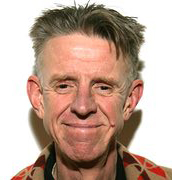
alex-coxWe are so incredibly proud to publish our latest chat in our Director’s Chair series.  We were joined by filmmaker ALEX COX.  We had limited time with him, and cannot thank him enough for his time, but we were able to ask him about SID & NANCY, WALKER, REPO MAN, and a film he’s in talks with releasing through the Criterion Collection, HIGHWAY PATROLMAN!  We hope you guys enjoy!

GORE VERBINSKI’S RANGO — A REVIEW BY NICK CLEMENT

3

With the new and apparently very stylish horror thriller A Cure for Wellness opening this weekend (I can’t wait to check it out…!), I went back and watched some bits and pieces from Gore Verbinski’s absolutely stunning CGI-animated adventure-comedy Rango. This is not a kid’s movie. Sure, kids will enjoy certain aspects of the film, but in general, this idiosyncratic and creepy effort feels much more designed for adults, as the plot cooked up by John Logan, James Ward Byrkit, and Verbinski essentially mimics Chinatown, the humor is sophisticated and plot-centric, and the characters, while certainly funny, have a distinct sense of menace that never quite makes any of them warm and cuddly. Johnny Depp’s voicing of the titular character is some of the most effective acting that he’s done in years; look out for the Hunter Thompson and Lawyer cameo which sets up the film’s inciting incident and opening set-piece.

2

The musical score by Hans Zimmer is one of that composer’s most underrated and offbeat, and visually, there are passages in this film that are utterly sublime, especially Rango’s existential walk through the desert under a starry nighttime sky that forces him to re-evaluate his life with Explosions in the Sky on the soundtrack. I’m a massive fan of Verbinski’s entire filmography; his Pirates trilogy is blockbusting on a grand scale, The Ring is still one of the freakiest film’s I’ve ever seen, I adore The Weather Man, and The Lone Ranger is mystifyingly underrated. He’s got a subversive streak that peppers all of his movies, regardless of budget, and he’s a maximalist in terms of his visual style and sense of cinematic atmosphere. Rango is easily one of my all-time favorite animated films.

1

For the Love of the Movies: A Conversation with Paul M. Sammon by Kent Hill

Those of us who love the movies were bitten by the bug at an early age. Paul M. Sammon is no different, though as he told me, his options regarding entertainment whilst growing up on a military base were limited. If you were athletic there was baseball, if you were a reader there was a library. Then of course there was the cinema.

When you are young there is no such thing as a bad movie. You devour all you can of the sights, the sounds, the sensations that rip through your entire being as screen comes alive and you are transported. At times to far-flung stars, only to be besieged by angry armies of giant bugs or thrust into the midst of a crime wave, surrounded by urban decay only to turn and find yourself staring down the barrel of a gun in the hand of a cyborg police officer who instructs you in no uncertain terms to, “think it over creep.”

Paul M. Sammon has spent over thirty-five years in and around the movie business. His ferocious zeal and meticulous attention to detail have garnered him a reputation. Not merely for his comprehensive and passionate coverage of the films that he admirers but also (and in this I share his passion in equal measure) for the journey that a film must undertake from its inception to its coming soon to a theatre near you.

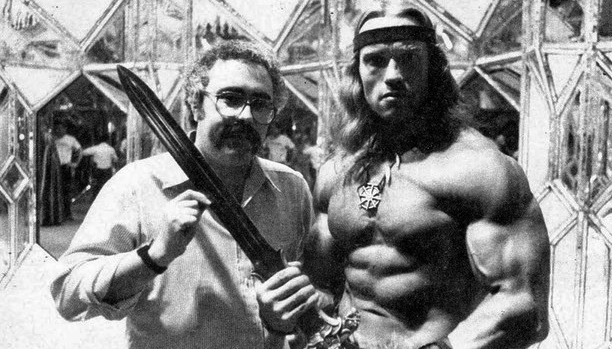
He has brought his veracious eye for intricacies to many a fine piece that has graced the pages of publications such as The American Cinematographer, Cinefantastique and Cinefex. He has served within the industry as everything from a special effects coordinator to a still photographer. Then of course there are his books; the most memorable of these being Future Noir: The Making of Blade Runner. During his time on the production he came to know better the film’s director Ridley Scott, whom he would later serve as biographer.

He has rubbed shoulders with many of Hollywood’s finest talents and been present to document the triumphs and the tragedies that have occurred on the film sets, upon which the lamentable and the legendary have been photographed at twenty-four frames a second.

To converse with Paul was everything I had hoped for and more. His candidness, his cleverness, his unbridled joy for cinema ebbs and flows from his deliciously detailed delivery. But that’s enough from me.

Sit back and enjoy this reminiscence, as a great storyteller reflects on his adventures in the sometimes fun, sometimes fickle but often fascinating land where movies are born, raised and once in a while butchered.

Ladies and Gentlemen, I give you, Paul M. Sammon…


The Blind Wolf speaks: An Interview with Kurando Mitsutake by Kent Hill

Independent film making is a minefield.

I recall Tarantino being asked for his advice on how to break into the film business. In his response he compared films to waves breaking against the shore. One after another, after another. I’m paraphrasing here, but at the end of his answer he said if you really want people to stand up and take notice, then you have to put a killer shark on one of those waves.

Kurando Mitsutake has been climbing the mountain towards success in the industry for a while now. Burdened by low budgets and tight schedules, he has refused to surrender to defeat by virtue of his tenacity and creativity. Thus he has gone on to produce a collection of eclectic, action-packed explosions that not only homage but summon the spirit of the heady days of that glorious age that saw the rise of exploitation cinema.

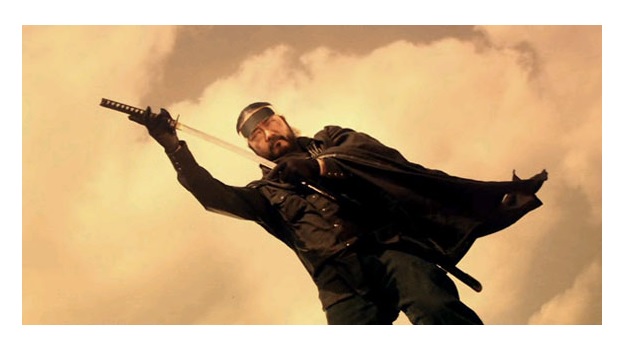
Beginning with his audacious debut Samurai Avenger: The Blind Wolf, Mitsutake brought to my mind memories of Jodorowsky’s El Topo as he would himself write, direct, produce and even star in the ultra-violent extravaganza that carried all the delightful hallmarks of a revenge western, along with shades of Kenji Misumi’s Lone Wolf and Cub series.

Success lies at the ends of roads that present everything from gentle rises to precipitous falls. Kurando has known both and has managed to endure. His ability to deliver furious and engaging movies on a shoestring has preempted his rise, and rise again. He is a filmmaker on the verge of greatness, and what he may he yet achieve with a healthier budget or, dare I say it, studio backing will be (I have no doubt) a film the likes of which the world has not yet experienced.

He was an absolute delight to talk to and I say to you now, mark well and remember – Kurando Mitsutake has only just begun. His journey will captivate, his cinema will excite.

I give now, The Blind Wolf himself . . . . Kurando Mitsutake.

DEMON (2015) – A REVIEW BY RYAN MARSHALL

It’s difficult to imagine that the most disturbing films would fail to catch up with their makers at some point. Indeed, these works of oppressively bleak terror eat away at the minds of those who dare dance with them long enough for something substantial to come of it, and some artists never return one hundred percent in-tact. One such case is Warcin Wrona, the up-and-coming Polish director who took his own life in a hotel room at the age of 42 following the premiere of his latest endeavor, DEMON, in September of 2015.

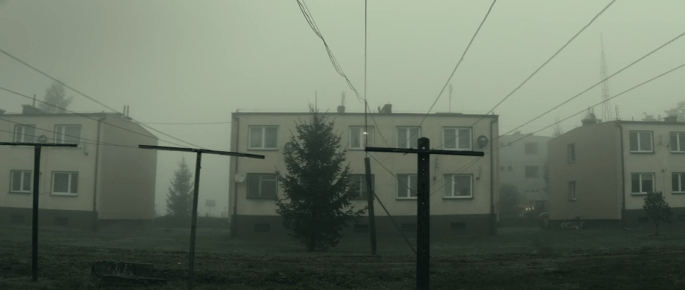
Why is it productive to take note of this tragedy? Well, for starters, its influence unquestionably hangs over the finished product at large; it is, after all, a tale of the supernatural taking place over a single unconventional wedding night, dealing directly with the consequences of digging up old ancestral bones (literally and figuratively), as if it were an exorcism for all of the filmmaker’s fellow countrymen. This may strike some as being a considerable stretch, but the film in question defies conventional categorization. Uninterested in being merely a work of exceptional social consciousness and empathy, or simply an above average genre picture, it’s an exhilarating roller coaster ride to say the least, and its most deep-seeded anxieties rest just beneath the surface.
vlcsnap-2017-02-16-14h24m53s150.png

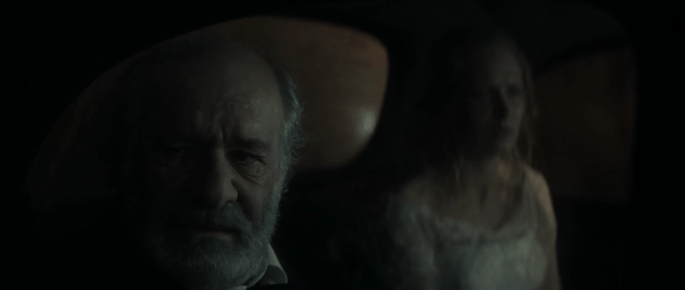
The titular entity, to be even more specific, is identified as a dybbuk, born of Jewish lore. The wandering soul takes hold of the body of Piotr, a groom arranged to marry his sweetheart in their homeland after years spent working in the United Kingdom, over the course of their reception; which, to be fair, was far from the norm to begin with, what with the alcoholic doctors and morally ambiguous best friends who appear to be harboring nasty secrets.

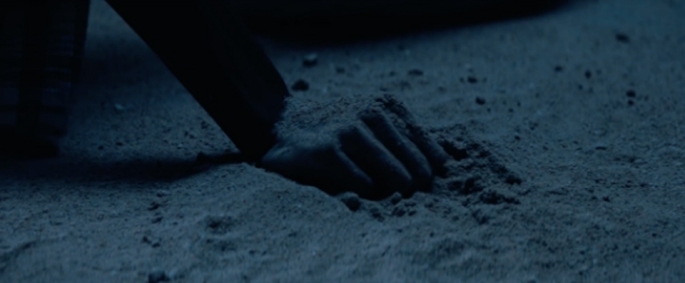
The atmosphere of this particular party is one drenched in vodka, heredity, and hallucination. Dragged under the earth by something unseen on the evening prior to the big day, the groom-to-be returns the following morning not entirely sure of himself, but it’s not until the night rages on that he begins to exhibit odd, unexplainable symptoms (initially passed off as epilepsy and/or the results of having taken hard drugs, based on his erratic convulsions on the dancefloor). Itay Tiran, in a committed and intensely physical performance that should rightfully garner a great deal of attention, initially plays Piotr as the fool, but the grace in which the performance slips into feigned innocence and alienation is nothing short of impeccable.

vlcsnap-2017-02-16-14h25m26s588.png

Furthermore, the unlikely and unassuming hero’s descent into detachment is so exquisitely realized. Pawel Flis’ cinematography seeps through to the deepest recesses of the mind, and has the tendency to soar with genuine magnificence, especially in the earlier scenes at the reception, much like the work of another madcap Polish director (Andrzej Zulawski, responsible for such glorious spectacles as 1981’s POSSESSION and 1988’s ON THE SILVER GLOBE). The more desolate the dusty basement, the wetter the ground as a result of pouring rain, and the more thoroughly occupied the barn, the deeper the creeping phantasm’s presence is felt.

Wrona doesn’t appear to be terribly interested in delivering the all-or-nothing fright-fest that his overseas audience might anticipate; which is their loss, really. He exercises impressive restraint here, tempted less by the prospect of building up to individually striking moments than he is by conjuring some terrifyingly obscure force to pervade every frame of his meticulously constructed swan song. The subtly unnerving score, courtesy of Marcin Makuc and Krzysztof Penderecki, only improves the film’s lingering influence; overall, the tone at play here is an unusually ballsy one, but Wrona orchestrates it masterfully, breaking it down when he must and seamlessly channeling all varieties of strange energies.
vlcsnap-2017-02-16-14h27m08s897.png

It’s mostly pretty grim stuff, so much as to make the moments of dark humor all the more invasive upon first impressions. DEMON is something special, something more consistently disturbing than the standard possession pic, because it faces the darkest implications of the void with genuine ferocity. Those very implications seem to say a great deal about Poland’s complicated relationship with its fascist past, that which the elders would prefer to sweep under the rug, as they always have. Like the dybbuk to the bridegroom, guilt eats at them from the inside out, until it simply cannot be ignored.

There are few clear – read: easy – answers to a few of Wrona’s more decidedly universal questions, but in the ingeniously cold and collected home stretch of his final film, his point is made perfectly clear. The spirit may be gone, it may have vanished from sight, but in truth it will never leave this place or these people. It’s hardly the most optimistic outlook, but it’s an admirable one. After all, how often is it that a horror film truly hangs its audience out to dry in such elegant fashion? It’s not the mark of laziness, or unnecessary ambiguity; instead, it signifies the work of an artist who is utterly fearless, more than capable of backing his merciless nihilism with moments of quieter intimacy, and whose career was unfortunately cut short before it could flourish to the fullest. One can only hope that he would understand the magnitude of his creation, how utterly entrancing it is, and how it is almost single-handedly able to zap new life into a sub-genre that has been dried up for some time.

vlcsnap-2017-02-16-14h27m57s232.png

Mel Gibson is the Absolute Best Choice to Direct SUICIDE SQUAD 2

3072

The Hollywood Reporter broke the news that Mel Gibson is in early talks with Warner Brothers to direct SUICIDE SQUAD 2.  While this may seem like a bizarre and odd choice to a lot of people, it makes perfect sense and is a rather brilliant move if Gibson ends up taking the job.  Gibson is hot off of HACKSAW RIDGE which yielded him a Best Director nomination, as well as a bounty of other nominations.  Warners is very happy with Gibson.

Considering how anti-PC the first SS film was, and considering Gibson’s off color past, this is an epic decision by Warners.  Gibson is one of the very best visual and world building filmmakers working today, and considering the foreshadowed darker tone of the upcoming DC films post JUSTICE LEAGUE, I think it is fair to say that if Gibson does, in fact, direct the film, it most certainly would be rated R.

MICHAEL DOWSE’S GOON — A REVIEW BY NICK CLEMENT

2

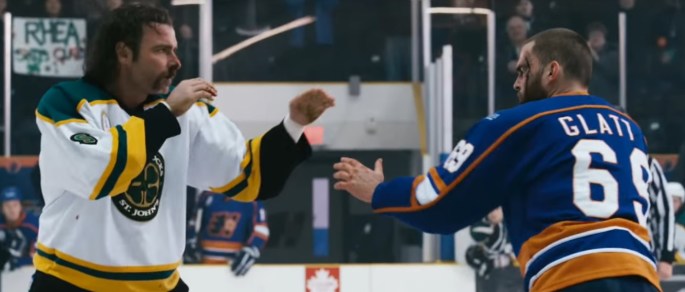
The list of truly memorable hockey movies is short, but near the very top, and definitely sitting in the penalty box for excessive fisticuffs, is Goon, the raucous and extremely bloody 2011 comedy from director Michael Dowse (What If, Take Me Home Tonight) and writers Jay Baruchel (Man Seeking Woman) and Evan Goldberg (Pineapple Express, Superbad). This rowdy little gem has two great lead performances from Sean William Scott as a dimwitted on-ice hero, and the rather amazing Liev Schreiber as a notorious league bruiser who is only out to pick some serious fights. Alison Pill, Eugene Levy, Kim Coates, Marc-Andre Grondin, and Baruchel all provided strong supporting work. Cinematographer Bobby Shore captured some truly authentic hockey action, with slick camera moves that were strongly aided by Reginald Harkema’s sharp editing. Goon may not have been a massive champion at the box office (it did $7 million worldwide), but this is the sort of hysterical and smart sports flick that has cult-classic status waiting around the corner. And while watching the film, especially if you’ve played the game, you’ll notice how the filmmakers REALLY understood hockey; this film nails the little details in the same way that Slap Shot did. Goon is partially inspired by the book Goon: The True Story of an Unlikely Journey into Minor League Hockey by Adam Frattasio and Doug Smith, with some ass-kicking footage of the actual Smith shown during the closing credits.

4

DAVID GORDON GREEN’S ALL THE REAL GIRLS — A REVIEW BY NICK CLEMENT

4
Filmmakers have been obsessed with capturing the mood and spirit of innocent romance for years, and with the poetic, sad, and beautiful film All the Real Girls, director David Gordon Green tapped into the heartstrings of an inexperienced woman who is learning to love for the first time (Zooey Deschanel in her wonderful breakout performance) and an older lothario who just so happens to fall in love with the sister of his best friend (co-writer Paul Schneider playing the womanizer; the phenomenal Shea Wigham is his unstable, potentially dangerous best friend). This is a small-town movie with perfect, small-town flavor and ambiance, but it never skimps on big, dramatic moments or honest emotional fireworks. The complicated narrative dares to explore love and sex and friendship in a brutally honest fashion, while also delving into the double-standards that our society has ingrained in our psyches. Throw in hilarious support from Danny McBride in one of his first screen roles and customarily intense work from Patricia Clarkson and you’ve got the makings of something special and unique, and that’s exactly how you could describe this gentle little gem of a film.
5
David Gordon Green brought a Terrence Malick-esque visual quality to this film, and along with his trusted, long-time cinematographer Tim Orr, crafted a lyrical ode to blossoming sexuality and the limits of the heart via exquisitely framed compositions, naturalistic lighting, and an emphasis on long takes that heighten the dramatic mood at almost every turn. This is a film that I’ve never heard someone say that they hated, and it’s one that I feel will make people laugh, cry, and smile in equal measure. Anyone who has ever fallen in love, had their heartbroken, been excited by the possibilities of a new romantic partner, or been confused as to what they want in life will find this movie to be a potent summation of all of our fears, desires, and longings when it comes to finding that special someone. I’d really love it if The Criterion Collection or Kino Lorber or Olive could put out a much deserved Blu-ray special edition of this film. It warrants that type of film buff attention.
6

The Lego Batman Movie: A Review By Tim Fuglei

the-lego-batman-movie

As we approach the 80th anniversary of The Caped Crusader joining the public consciousness, his popularity couldn’t be stronger.  We’ve seen two unique and highly successful cinematic versions played by Michael Keaton and Christian Bale in the last 30 years, countless animated versions, a new live action take introduced last year featuring Ben Affleck, and of course the comics themselves.  Tough to put a finger on just what it is about Batman that appeals to so many, since spending time with a brooding, dark vigilante doesn’t exactly scream four quadrant appeal.  That said, many incarnations of the character over the years have been lighter, and perhaps none more so than the Lego style crime fighter voiced by comedian Will Arnett two years ago.  The overly husky bravado of his voice welds perfectly with a self aware and decidedly friendlier take on Batman, balancing tribute and parody expertly throughout The Lego Movie.  Time Warner knows a winner when they own one, so a solo outing for him was inevitable.  Ironically, the genuinely strong The Lego Batman is all about giving up the brooding loner status the character’s been cast with in recent iterations and embracing what we all know Bruce Wayne lost as a child:  Family.

A triumphant, unstoppable and broadly loved Batman comes tearing in to thwart yet another Joker scheme in the opening reel, but we’re quickly shown no amount of lobster thermidor and screenings of rom coms in Wayne Manor can quite fill the hole left by his departed parents.  Dutiful butler Alfred is there to do his part as always, Jim Gordon’s retirement gives way to daughter Barbara taking the reigns, and a plucky orphan named Dick Grayson (Dick:  “My name’s Richard but everyone at the orphanage calls me Dick.” Bruce:  “Yeah, kids can be cruel”) soon winds up in the picture with ceaseless optimism and a desire to help.  Barbara wants Batman to work with the police, Robin is clearly up for being the most obedient sidekick in sidekick history, and even The Joker himself schemes a huge plot of mayhem just so Batman will admit that their twisted bromance is, in fact, a thing.  As you can imagine, the story and players seesaw between disconnection and coming together like a group of kids playing with the namesake toys themselves; I’ll skip the spoilers but based on the rating and target audience you can assume this adventure doesn’t end with anything approaching the cynicism that punctuated Nolan’s Dark Knight trilogy.

The voice cast can’t be celebrated enough; they bring the plucky script to life and even feature a familiar face or two in the credits (here’s looking at you, Billy Dee Williams).  Arnett’s windbag of a superhero delights at every turn, careening from piloting an endless stream of increasingly radical vehicles to composing his infamous brooding metal anthems, and Michael Cera is perfect as the wide eyed orphan who has his back.  Rosario Dawson brings Barbara Gordon to life as smart, tough, capable and caring, while Zach Galifianakis’ Joker is decidedly more Cesar Romero than Heath Ledger.  It’s all highly appropriate for a kid’s film that bathes the black-clad hero in a full palette of bright colors instead of the gun metal gray we’ve grown used to.  As you can imagine, the action is nonstop and the stakes are always more fun than high (any eruption of gunfire is soundtracked with “pew pew pew!”), culminating in an appropriately ridiculous, over the top final battle (or two).  At the end of the day, a healthy dose of self satire combined with a thorough understanding of the character’s history and legacy come together to recapture a degree of childhood fun that has been lost as the scowl in the cowl has headed closer and closer to an R rating at the multiplex.  Here’s to another 80 years, Batman, and may those who play in your cinematic sandbox continue to celebrate all of your aspects, including the silly ones as The Lego Batman Movie faithfully does.lego-batman-movie

Barry Jenkins’ MOONLIGHT

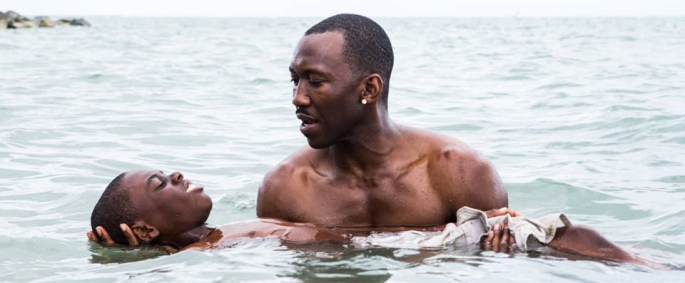
MOONLIGHT is a prime example of the power of cinema.  The film follows a young man through three stages of his life, childhood, as a teenager, and as an adult.  While the story isn’t entirely relatable to all its viewers, the power of the storyline is undeniable.

moonlight-1

Filmmaker Barry Jenkins populates this film with a plethora of unique and charged performances, yielding supporting actor nominations for Mahershala Ali and Naomie Harris, who are both amazing in their small performances that help shape the bigger picture of the film.

At times, life can be difficult, it can challenge us beyond our depths, as well as have trajectory completely different than we, and others, envisioned.  That’s exactly what MOONLIGHT is about.  Even as removed as the main character’s story can be from each of our individual lives, the constant self-discovery and reinvention of himself, loneliness and isolation is something that we all can relate to.

moonlight23

Some may say that the abundance of Oscar nominations and accolades this film is receiving is Oscar’s answer to the outrage over the lack of diversity this year and sure that argument can be made, but once you experience the film you will quickly realize that is certainly not the case.