Martin Scorsese’s THE COLOR OF MONEY 

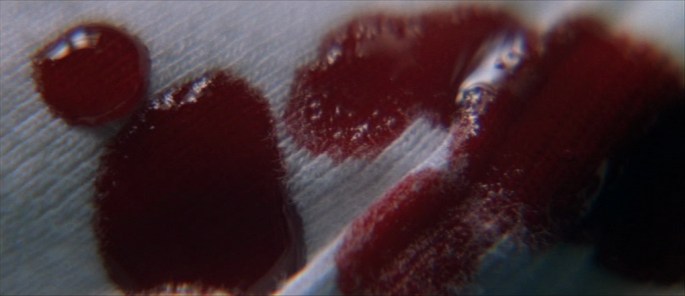
THE COLOR OF MONEY is one of those films that really shouldn’t exist, but thankfully it does. It was one of those “one for you” Scorsese films that he made for the studio so he could get other, less commercial and seminal, projects off the ground.

What’s refreshing about the film, is that it doesn’t rely, at all, on the film that came before it and the term sequel is a rather loose way to describe the picture. Paul Newman won the Oscar for his reprisal as Fast Eddie Felson and it has more times than not been called his make up Oscar, his award for a career of wonderful, unique, and cool performances. Bob Hoskins is the cinephile favorite for his turn as George in MONA LISA, and for outstanding has Hoskins was Newman more than deserved the Oscar.
The pairing of the old and stoic Newman and the young and fresh Tom Cruise is a cinematic treat, shored up wonderfully by supporting turns and the fast paced editing and camera work. Scorsese builds a quick and glossy narrative about hustling and playing the long con. 
One of Scorsese’s strengths is the use of popular music, and this film might just be one of his finest displays of his love for music. From the original score by Robbie Robinson, and Eric Clapton’s IT’S IN THE WAY THAT YOU USE IT and Warren Zevon’s seminal tune WEREWOLVES OF LONDON; this picture has a rocking soundtrack and even cooler imagery that’s cued up to the music. 
THE COLOR OF MONEY is Scorsese’s best film that’s nearly forgotten by all. Films like KUNDUN and AFTER HOURS have found their niche markets and rabid appreciation, yet THE COLOR OF MONEY is that film that quietly continues to slide under the radar and is often glossed over if discovered by most. It’s a film about survival and embracing the passion within yourself. It’s truly a great film, and one of the best of the 80s.

Christopher Nolan’s INSOMNIA

0246

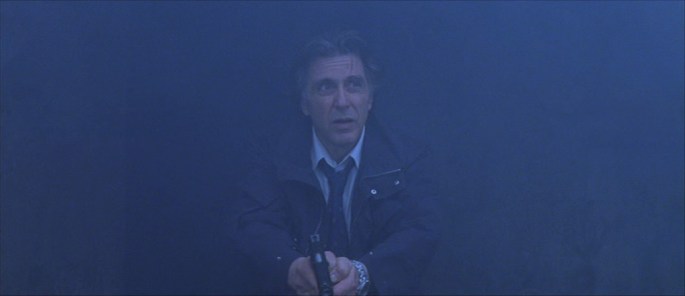
From the opening credits, Christopher Nolan assembles a sequence that not only clues us in on what is about to unfold but also tells us there is nothing but darkness and despair in what lies ahead. INSOMNIA may just be Nolan’s most overlooked film, and his most underrated.

Pitting a dreary Al Pacino against an eccentric Robin Williams is brilliant. Pacino’s slow and methodic unraveling is a marvel to witness. His turn as the tainted hero cop, Will Dormer is perhaps his finest performance of the third act of his career. He foregoes the caricature of bug-eyed screaming and gives an incredibly vulnerable performance as a cop who did a bad thing for a righteous cause, only to let that deed pull on the one string that can unravel his entire career.

Robin Williams is wonderful as the antagonist who plays it as if he really isn’t that bad of a guy, he just made a mistake, and then another mistake and then another that leads to a web of lies and the death of a sixteen-year-old girl. Williams is the only character we see on the screen that truly understands and accepts Pacino, and forgives him for his misdeeds. Nolan milks every ounce of affability he can from Williams, allowing the audience to like and sympathize with Williams. It’s a rather brilliant move in a film that is such a taut game of chess, you can almost hear Nolan slam his hand down on the chess clock.

1446

The hook of the film is brilliant, pitting Pacino against his own conscience in an Alaskan town that is so far north, the sun never sets. He makes catastrophic mistakes that lead to even worse mistakes all the while he is trying to solve a crime where suddenly he almost becomes a villain. It is almost as if he and Williams are following the same path, with one immeasurable mistake that leads to a sequence that leads to their respective unraveling.

It’s a brilliant structure that is so complex it becomes maddening. The entire film begins to turn over onto itself, causing the viewer to question there original notions of what morality is; casting complete shades of grey over the black and white of right and wrong.

For Your Ears Only: Dr. No

Image result for dr. no poster

Frank and Podcasting Them Softly’s James Bond expert, Tom Zielinski, talk about the very first official James Bond film, DR. NO. They discuss at length the lore of the James Bond Criterion Collection laserdiscs, the impression that Terrence Young made on the James Bond franchise that continues to this day,  and the immeasurable influence that DR. NO had on cinema.

The Last Word with Stuart Fink

Image result for the last word poster


Stuart Fink

Frank is joined by screenwriter Stuart Fink to discuss his latest film, THE LAST WORD staring Shirley MacLaine and Amanda Seyfried. The film was directed by Podcasting Them Softly’s very first guest and one of Frank’s all-time favorite filmmakers, Mark Pellington. THE LAST WORD is an incredibly sweet and heartfelt film that is currently available to stream on Amazon Prime.

PTS Presents the Raymond Benson Auteur Series: DAVID LYNCH Volume 1

Image result for david lynch cow

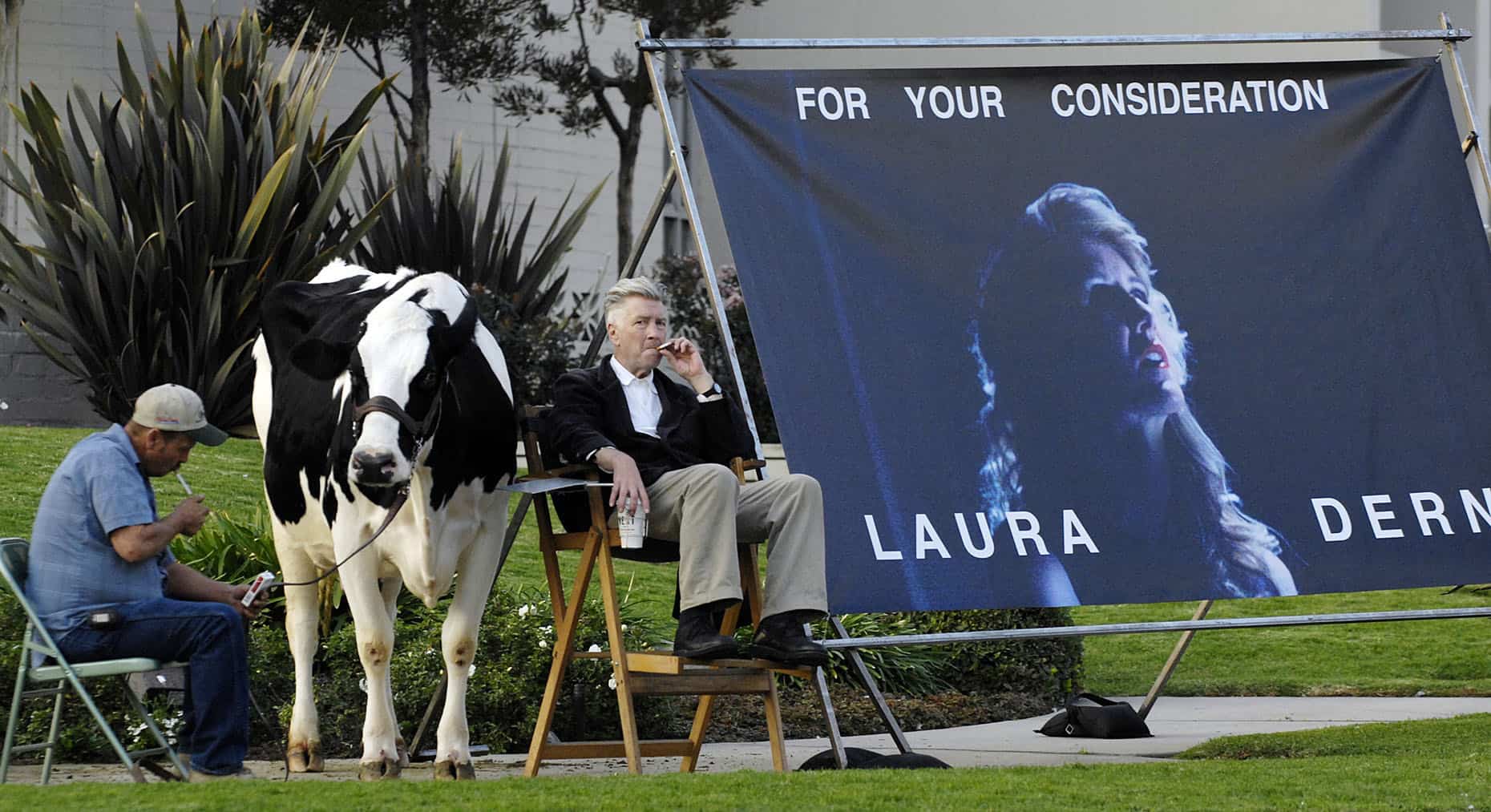
Podcasting Them Softly is incredibly excited to continue our Raymond Benson Auteur Series with our first of a two part chat about the works of David Lynch. Frank, Tim, and Raymond discuss Lynch’s early works continued through his features ERASERHEAD, THE ELEPHANT MAN, DUNE, BLUE VELVET, and the first two seasons of TWIN PEAKS. The three of them will be back soon covering Lynch’s filmography from WILD AT HEART to TWIN PEAKS: THE RETURN. For those local listeners, please check Raymond’s website for upcoming book signing appearances for Raymond’s new novel, THE SECRETS OF CHICORY LANE.

David Bowie’s Missing Pieces

Image result for david bowie


There was something about David Bowie. He wasn’t just worldly, he was out of this world. It was as if he knew something the rest of us didn’t. Bowie died on January 10th, 2016. More than a year and a half later he is not only missed by many, but he’s constantly being talked about. He was a rock star first and foremost, but he was also an actor. He wasn’t prolific, he was selective. He weaved in and out of some of the strangest films and some of the very finest. As Renny Harlin said in our podcast with him, Bowie was attached to play the villain in CLIFFHANGER opposite Sylvester Stallone, but Bowie couldn’t commit due to his concert schedule. That was a very big what if. What would it have been like to see Bowie face off against Sly?

Magnificent.

TWIN PEAKS: THE RETURN

One of the many burning questions that circled the unraveling mystery of David Lynch and Mark Frost’s phenomenon of TWIN PEAKS: THE RETURN was did David Bowie film a secret cameo reprising his FIRE WALK WITH ME role as Philip Jeffries? He was mentioned heavily throughout the show. It was obvious Jeffries played a huge part in the main narrative of the show. He first showed up in archived footage from FWWM, but his voice was overdubbed by actor Nathan Frizzell. Lynch later said that Bowie gave them permission to use the footage, but not his voice. Lynch had guessed that he didn’t like his faux Louisiana accent he used.

Instead, Philip Jeffries came back as a machine with a spout that puffed steam and GPS coordinates once again voiced by actor Nathan Frizzell. We never got Bowie, and after the show finished, David Lynch was asked about it and said that Bowie declined to reprise without a reason, and that the reason was quickly known thereafter. At the very least, the legend of David Bowie was introduced to an entirely new generation of Twin Peaks fans.

GUARDIANS OF THE GALAXY VOLUME 2

Once the film was released, and all the cameos were exposed, James Gunn quickly came out in a Facebook Q&A with fans and said that he originally sought David Bowie for one of the original Guardians members who show up at the end of the film. Had Bowie been alive and appeared in the film, it would have kept the door open for him to have an expanded role in the next phase of the Marvel Cinematic Universe.

BLADE RUNNER 2049

Recently director Denis Villeneuve said that Bowie was his first choice as the role of the villain that ultimately went to Jared Leto. Needless to say, Bowie would have been fabulous in the much-anticipated sequel. Jared Leto is a fair supplement, but wouldn’t it have been incredible to see Bowie in the Blade Runner universe?

As time marches on, and more and more people discover and devour everything that Bowie left us with, there will certainly be more stories, more “what ifs”, and as sad as that may come, it is also more than welcomed. Because thinking about David Bowie makes most of us very happy.


Julio Quintana’s THE VESSEL

Image result for the vessel 2016

For those latter-day Terrence Malick junkies amongst us, THE VESSEL is a film that has mistaken slipped under the radar. It’s a small and very intimate picture that is set in modern-day Puerto Rico where a small town is still deeply affected a tsunami’s wave that wiped out a school, killing all of the children. The dilapidation became suffocating until a series of divine events happened that instilled hope and caution.

From executive producers Terrence Malick and his, partner Sarah Green comes a film that is cut from the Malick cloth;  the film tells an acute tale but has so much more to say than the fragmented events we see on the screen. Quintana keeps a very taut narrative structure, yet with very elusive camerawork and a beautiful score by Hanan Townshed, he creates a film that is a whimsical force of nature.

Martin Sheen anchors the film as the Catholic Priest who has been the town’s shepherd since the tsunami wave that washed the life out of the town. Sheen, like in all his turns, is deeply moving with his performance, straddling the line between apathy and hope. Sheen has rarely been better, and for an actor of his caliber, that’s saying a lot.

THE VESSEL is a deeply spiritual film that breathes life into our cinematic realm that’s being taken over by whatever big budget franchise is set to implode at the nearest theatre. It’s a wonderful film filled with hope, tragedy, and inspiration.

THE VESSEL is now streaming on Starz.

Cameron McHarg: The American Badass

Frank is joined by filmmaker, writer, actor, fellow podcaster, and all around American Badass, Cameron McHarg to talk about his work, his process, Harvey Keitel, 70s films, and about his influences and future projects. Cameron is the producer, founder, and host of Triumph and Disaster, and had Frank as a guest a few months ago. Check out everything and anything about Cameron here, and their podcast on Triumph and Disaster here.

JJ Abrams’ STAR WARS: THE FORCE AWAKENS

There are three types of people. Those who have an undying love for anything and everything Star Wars, those who have a legitimate beef with the unintentional ramifications that Star Wars brought to the fertile era of 70s cinema, and then there are the overly pompous people who parade around “liking” the original trilogy yet scoffing at minute aspects of THE FORCE AWAKENS. The third type of person is a fictitious amalgam of what people loathe about other people.

What JJ Abrams, Lawrence Kasdan, and Kathleen Kennedy did with the seventh entry into the Star Wars saga was establish a whole new world of Star Wars films. Some arguments against TFA are understandable, but after decades Abrams was able to construct, shoot, and assemble a film that looks and feels like it belongs, wholeheartedly, in the saga canon. Ultimately the job of directing a Star Wars film isn’t that sexy, their artistic freedom is monitored, but it’s up to that person to hit the marks that George Lucas set with the first film, and JJ Abrams achieves that in a way makes it hard to think anyone else could do a better job.

THE FORCE AWAKENS follows a template, just like THE PHANTOM MENACE before it. It’s A NEW HOPE but in a different era with some of the same characters. Anyone who walked into the film expecting something other than a Star Wars Saga film would be better off searching the deep web for some obscure Russian film from the 1970s that they can discuss in a vapid and obtuse way. Star Wars is Star Wars is Star Wars. There’s the light side. There is the dark side. There are TIE fighters and X-Wings, and there are space aliens that make witty zingers. Oh yeah, and there’s a Death Star.
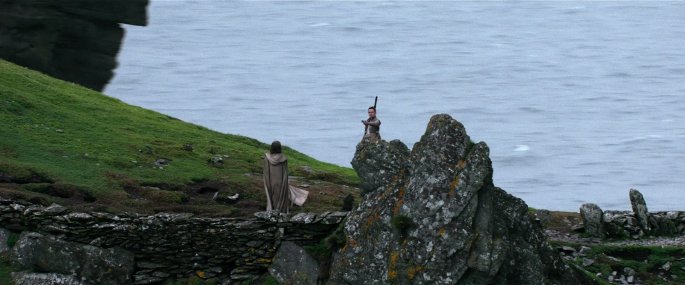
Abrams assembles a diverse cast that is inspired organically. There wasn’t a mission to check boxes of ethnicity or gender. He found the right people that were born to play that part. The new cast is simpatico with returning cast members of Mark Hamill in his ultra brief turn, Carrie Fisher in what is now a very bittersweet performance, and of course Harrison Ford as the ultimate space cowboy.

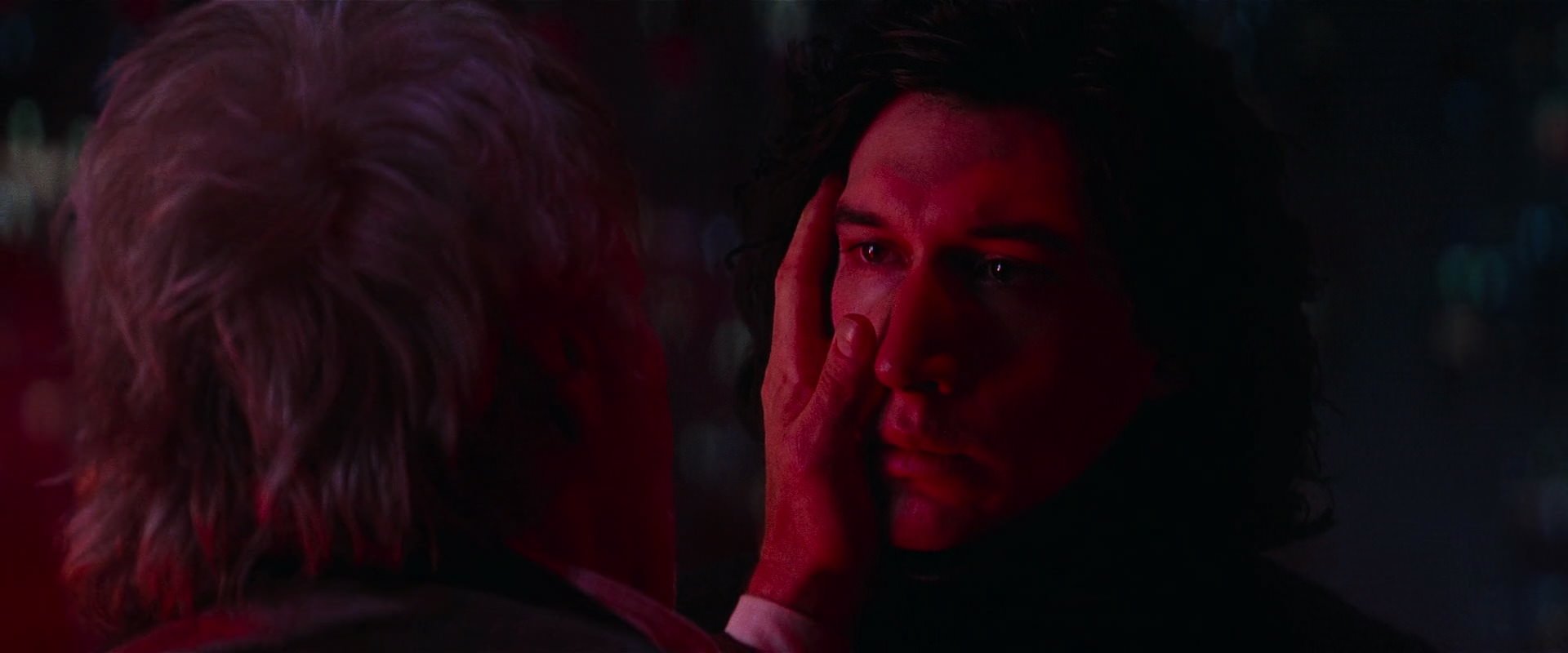
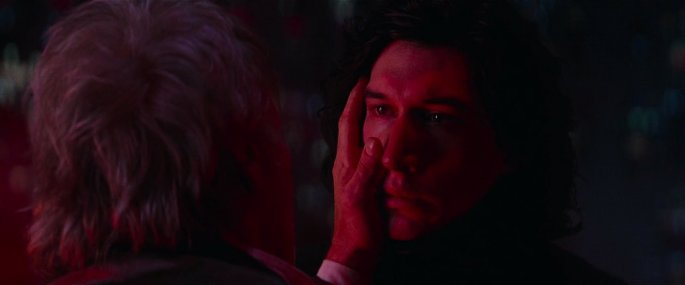
Ford brings everything as he has to his final turn as his seminal character in a career stocked to the brim with so many memorable characters and franchises. With help from Abrams and Kasdan’s script, Ford takes on the Obi-Wan esque role. Ford is perfect. He’s funny, he’s smarmy, he’s hopeful, and he’s everything you’d want Han Solo to be all these years later and more. For those who fall into the first group of people, watching Han Solo die is one of the most heartbreaking moments in cinema history. Ford’s build up; his gruffness wrapped in his sentiment and nostalgia completely sells his demise in the most beautifully tragic way possible. It’s near maddening that Ford wasn’t nominated for Best Supporting Actor.

There is a mixture of practical effects and CGI, much like the prequels. And then there’s BB-8. The new fan favorite that is an encompassment of R2-D2’s sassy personality and an ultra cute design and color scheme. It’s rather impressive how instantly beloved and welcomed BB-8 was, and after seeing the film, it’s incredibly hard not to fall hard for that little whirling dervish of love.

The picture excels on nearly every level, and if it weren’t so quickly followed up by the excellent ROGUE ONE, there wouldn’t be as much shelf wear on the film. The film is vibrant as it is dreary. Abrams not only acknowledges the prequels, he embraces the aesthetic. He mixes the original trilogy with the prequel trilogy to create his own, and predominantly new world of Star Wars. The film isn’t without some minor hiccups and narrative issues, but this isn’t the new film by Martin Scorsese. It’s Star Wars.
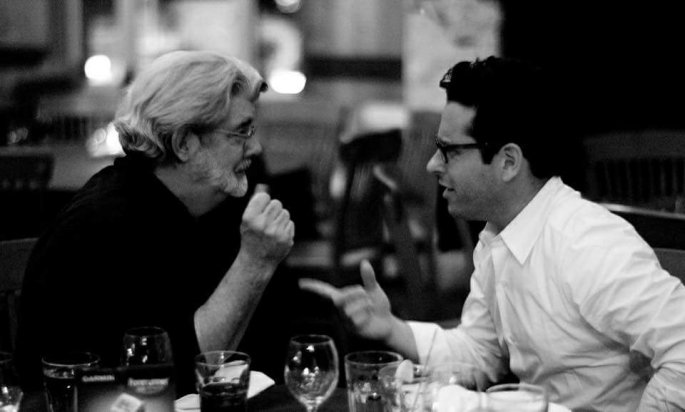
Star Wars saga films are built on nostalgia. Star Wars is nostalgia for many. And while Lucas isn’t part of the Star Wars universe moving forward, Abrams has more than proved himself as a worthy supplement. He’s inherited the mantle of Lucas, and he’s helped construct the joy of Star Wars for generations to come. What’s so ironic are those who hold such an obnoxious contempt for Lucas, yet are rabid for the new dawn of Star Wars. Those who consistently beat the drum of talking in circles to those who are as like(narrow)minded as them, that will bend over backwards to suck any joy they can out of anyone who praises Lucas. You know, the guy who created everything in the first place. Leave George Lucas alone, without him you’d have nothing to complain about and would have saved a lot of money.

PTS Presents IT DOESN’T GET ANY BLUER Episode 1

Bluer Banner

We’re back to discuss the finale of TWIN PEAKS: THE RETURN. We’ve rebranded slightly, Tim and Frank are officially joined by Mya McBriar to assemble Podcasting Them Softly’s It Doesn’t Get Any Bluer Twin Peaks podcast! Today we’ll be discussing the last two episodes of the latest season, discuss what we all think it meant, how we felt about it, and will there be any more TWIN PEAKS?