MIKE MILLS’ BEGINNERS — A REVIEW BY NICK CLEMENT

3

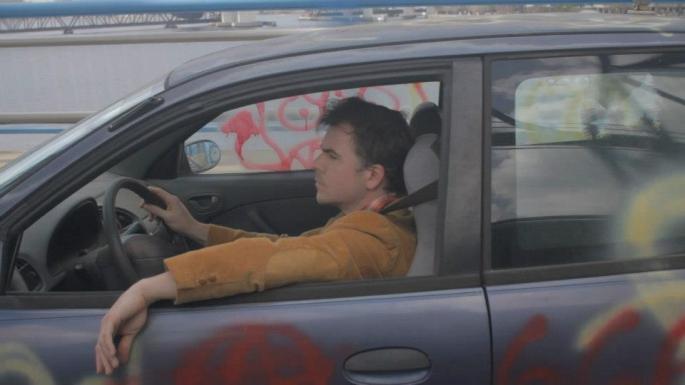
Released in 2010, Beginners is a sweet and sad little film in equal measure, with a generous and warmhearted script from director Mike Mills. Christopher Plummer was absolutely fantastic as an older man who suddenly announces that he’s gay, which brings him and his son, played by the always great Ewan McGregor, even closer together as a unit. There’s some great chemistry between McGregor and the gorgeous Melanie Laurent, who plays McGregor’s love interest, and who delights with some casual peek-a-boo nudity. Mills’ quirky directorial style, which smartly utilizes a flashback structure, punches up the film with some stylish pizzazz, while the ending contains some bittersweet notes of personal reflection that felt honest and rooted in the here and now. Kasper Tuxen’s shimmery cinematography creates a luxurious but never ostentatious visual mood, while the peppy but melancholic score from Roger Neill, Dave Palmer, and Brian Reitzell fit the story like a glove. There’s also some of the best dog acting I’ve ever seen; the reaction shots from the pooch are beyond adorable and smartly integrated into the playful narrative. Mills based the story off of his personal experiences when his father came out of the closet late in life.

1

THE HEROES OF ARVINE PLACE (2014) – A REVIEW BY RYAN MARSHALL

There’s solace to be found in an engaging, down-to-earth drama rich with the sort of essential humanism that seems all but lost in the current cinematic climate, and that’s precisely how one might describe Damian Lahey’s frequently endearing THE HEROES OF ARVINE PLACE. At just 74 minutes, it’s akin to a warm hug from a close friend or relative following a considerable absence and is equally as delightful.

Cullen Moss is marvelous as Kevin, a single father of two young girls who’s just trying to make it through the holidays after losing both his job and his car on the same day. He adopts an attitude of impressive tenacity, and over the course of the next few days, the immensely likable widower does everything in his power to make something – anything – work. Between a Christmas party at his place, a sister in the psych ward, a meeting with one of his literary idols which could determine the future of his hopeful future as a successful children’s book author, and the promise of presents for his daughters; Kevin’s got a lot on his plate, and there’s more to come.

cullen1

Sure, there’s little here that will challenged a seasoned viewer but this doesn’t appear to be Lahey’s priority, instead honing his energies towards painting an effective portrait of a down-on-his-luck guy during one of the most stressful seasons. There are hints of a deeper underlying sadness here, but it’s kind of admirable how Lahey avoids discussing these things in thorough detail at any point; much like the charming character at its core, the film is just trying not to dwell.

Considering its restricted budget, THE HEROES OF ARVINE PLACE could be seen as a testament to the individual and collective talents on both sides of the camera, and how sometimes a decent feel-good yarn is just fine when crafted with such obvious care. Lahey’s direction and script are assured, and he’s able to get some excellent performances from his cast; Tarina Reed’s photography is simple but not lacking formal depth; and Craig Moorhead’s editing is consistently efficient.

489089306_640[1].jpg

The score, from Brian Jenkins and Naarah Strokosch, is decidedly of a whimsical variety and sometimes threatens to sour the experience ever so slightly; it can feel, at times, almost as if the film is unsure of just how much it wants to indulge in fantasy and/or reality. It’s a middle ground that can feel too close for comfort, but given the material, it feels appropriate. There’s an intuitive empathy and sense of humor here that drowns out these little blemishes, and though the film may wear its heart on its sleeve to a fault, the pull of warmth reigns supreme in the end. It’s fairly easy to surrender to the film’s undeniably uplifting energies when one is in such positively personable company as this.

GREGG ARAKI’S WHITE BIRD IN A BLIZZARD — A REVIEW BY NICK CLEMENT

3
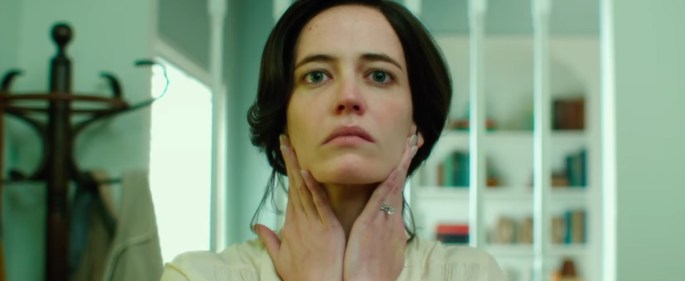
White Bird in a Blizzard is something unique – a touching coming of age story, a tense and unpredictable whodunit with a dynamite final twist, a study of marital discord, and a time capsule back to the late 80’s, all of it filtered through some surrealistic touches and flights of fancy for good artistic measure. Directed with customary style by Gregg Araki (The Doom Generation, Smiley Face, Mysterious Skin) who also wrote the genre-defying screenplay based off of Laura Kasischke’s novel, White Bird in a Blizzard feels like one of those movies that’s just waiting to be discovered by a passionate cult audience. Shailene Woodley, so wonderful in The Spectacular Now and The Descendants, was fantastic in the lead role of Kat Connor, a sexually blossoming high-school student with a phenomenally messed up mother (a whacked-out Eva Green) and a put-upon father (a quiet Christopher Meloni) who is trying to figure out what kind of woman she’s growing up to be.
2
The narrative is framed around Kat meeting with her therapist (a kindly Angela Bassett), flashbacks to Kat’s colorful childhood, and the various romances that Kat embarks upon (the boy next door, an older police officer, a college romance). Woodley is naked here – physically and emotionally – and I absolutely love watching her as an actress. She’s able to express vulnerability very well, and she has an unforced and extremely natural presence about herself as an actress. Green steals all of her scenes as the Mom From Hell, and I loved how Arakki upended expectations in more than a few instances, and then threw a killer twist at the viewer during the final moments. The bold and color cinematography by Sandra Valde-Hansen is frequently mesmerizing. This dark and lyrical film was a big surprise, and hopefully it finds a large audience at home. It’s currently streaming on Netflix.
1

ZEDER (1983) – A REVIEW BY RYAN MARSHALL

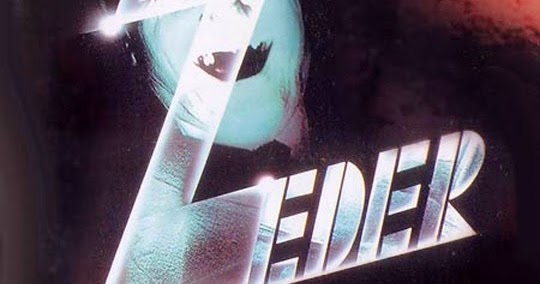
Circa 1956, young Gabriella is brought to the estate of Dr. Meyer, who believes that the girl harnesses supernatural powers and intends to put them to good use during one fateful night. After accompanying her to the basement, where she begins writhing about on the dirt-covered ground and is then attacked by something unseen when left alone, Meyer deduces that the area they’ve stumbled upon is what is known as a “K Zone” upon realizing that the man who infamously studied them, Paolo Zeder, was buried underneath the house some years ago.

vlcsnap-2017-01-06-12h48m02s515.png

Favoring petrifying ambiance over surface-level schlock, though impartial to entertaining the latter when apt, Pupi Avati’s horror films are characteristically infused with a kind of sinister, otherworldly energy; as if the man responsible for them always has one foot in reality and the other in the spirit world. In this sense, ZEDER (aka REVENGE OF THE DEAD) is straight from the heart of its maker, being (among other things) a film that deals directly with those disconcerting voices from beyond and why they are necessary to a superior understanding of our surroundings.

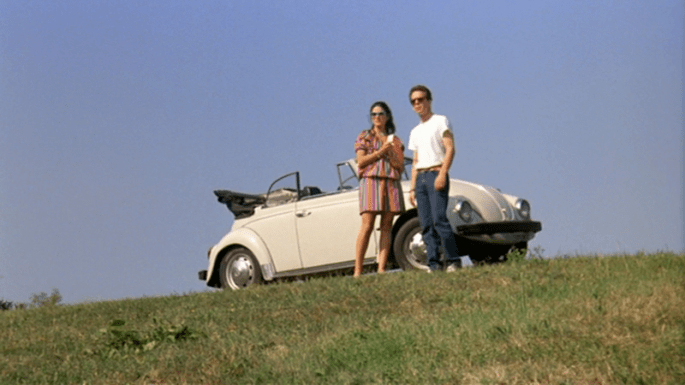
Following such a uniquely enigmatic opening, we are introduced to Stefano (Gabriele Lavia), a young novelist living in present day (1983) Bologna. He comes home one day to a surprise anniversary gift from his wife Alessandra (Anne Canovas) in the form of an old typewriter which he can’t help but test drive that same evening. Upon closer inspection of the ribbon housed inside the apparatus, he discovers an essay written by the aforementioned Zeder and becomes increasingly obsessed with the man’s studies.
vlcsnap-2017-01-06-12h49m50s260.png

Similarly to Avati’s masterful giallo THE HOUSE WITH THE LAUGHING WINDOWS, the unlikely hero often feels alone in the world. Whenever Stefano attempts to inquire about Zeder and his finds, even the most reputable members of society turn him away; and when he decides to take matters into his own hands, they tend to get a bit dirty. He must be careful who he talks to, for their lives may be endangered if he does so.

vlcsnap-2017-01-06-12h48m38s711.png

Without showing too much, Avati manages to get deep under your skin; take the K-Zones, for instance, which have something to do with reanimation, and yet that specific “something” is never explored in explicit detail. However, it’s undoubtedly better off this way. The horrors of ZEDER, beautifully rendered as they are, seem rooted in paranoia and guilt on a profoundly national scale; the film is like an exorcism for all of Italy, albeit one where the cleansing of body and soul is secondary to the painful possession of Avati’s fellow countrymen and how they attempt to evade it. While Stefano pursues the mystery at hand, Gabriella (now an adult) and Meyer scheme – it would be unwise to trust that anyone, even those closest to you, are not in on it in some way. It’s an angry, poignant, and indeed genuinely frightening state of affairs – assuming one is enticed by implication.

European horror films tend to wear their imperfections on their sleeve, and ZEDER is no exception. Franco Delli Colli’s (RATS: NIGHT OF TERROR, MACABRE, STRIP NUDE FOR YOUR KILLER) cinematography is luscious, Riz Ortolani’s score is typically fierce, the make-up effects – particularly for the undead – are refreshingly subtle, and yet there are flaws to be found in Amedeo Salfa’s editing. On a whole, the film flows exquisitely – but once in a while there’s an abrupt transition which threatens to soil an otherwise divine experience; and although this is easily redeemed, it can’t help but pale, if only slightly, in comparison to its aforementioned cinematic brethren as a result.
vlcsnap-2017-01-06-12h49m37s733

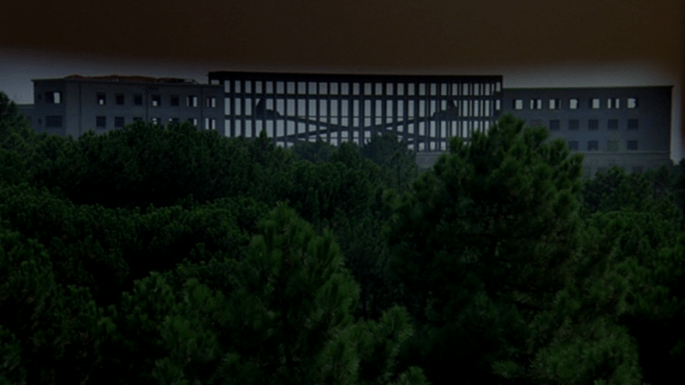
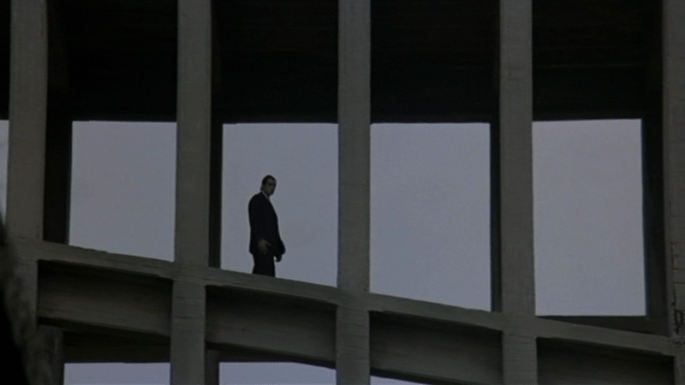
But oh, what sights Avati has to show you. From the abandoned soon-to-be-hotel which marks the high point of Stefano’s journey and the dusty tunnels running underneath to the young couple’s sleek, secure apartment, it’s remarkable how distinctive each location feels and how well the director utilizes them throughout. One feels alienated regardless of where they find themselves; the world is wired by phantoms. As is the case with some of the best, this is a film about man’s relationship with time and place in unison with his personal affairs; while the romance at the center of the story gives it a much-needed emotional backbone, it’s ultimately a vision of our ever-changing landscape and how we choose to confront those sudden transitions.

Admittedly, this could potentially disappoint viewers expecting a gorier, more straight-forward zombie yarn, but what a thing to behold. Avati has contributed something that goes far deeper than exceptional genre cinema, knowing all too well that mystery and tragedy alike account for many of the things in life which are most difficult to swallow. Some questions cannot be answered, or so the director seems to conclude at the end of this macabre tale. We can only seek so much truth before we bump up against our own limits.

vlcsnap-2017-01-06-12h52m16s121.png

RICHARD LESTER’S ROBIN AND MARIAN — A REVIEW BY NICK CLEMENT

2

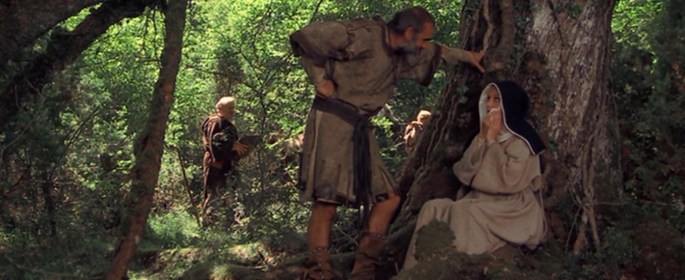
Robin and Marian is a ton of fun, directed with zest by Richard Lester (a favorite filmmaker of mine), and preformed with twinkle-in-the-eyes star-power by Sean Connery and Audrey Hepburn. Robert Shaw and Richard Harris were both fantastic (as always), and the rest of the deep supporting cast was ace down the line. How and why this film isn’t available on Blu-ray is beyond my level of comprehension; the cinematography by David Watkin is absolutely gorgeous and worthy of proper restoration. John Barry’s jaunty and romantic score perfectly sets the mood, while the final act hits some very emotional notes for the characters, with a pleasing sense of gentle melancholy hovering over the final moments. The chemistry between Connery and Hepburn was wonderful in this movie; they sell the idea of cinematic romance with serious conviction.  This was the first movie that I saw Connery in, as it’s one of my father’s favorite films, and I probably saw this with the family when I was eight or nine years old. Throughout the years, it’s been an easy choice to make in terms of a title worth revisiting, because it just puts a smile on my face.

1

GARRETT ZEVGETIS’ BEST AND MOST BEAUTIFUL THINGS — A REVIEW BY NICK CLEMENT

1

Best and Most Beautiful Things is a very intense documentary, on any number of levels, and is the type of film that will reduce some to tears while watching. It also has the capacity to make you laugh, smile, feel frustrated, and by the end, enlightened. It highlights the life of Michelle Smith, a 20 year old legally blind woman living with her mother in Maine, who also suffers from a form of autism. But these apparent setbacks aren’t enough to keep her from her fulfilling her dreams, and from finding someone special. It’s Smith’s dream to live a life that she feels is normal, comfortable, and happy, no matter how different it all may seem to others. Because director Garrett Zevgetis smartly kept such a fixed and forthright grip on his subject, and because Smith is such a lovely and positive-minded person, the potentially maudlin subject matter is given an honest ray of hope.

2

This is a unique coming of age story that will have the potential to move anyone who encounters it, a work that reminds us all that there’s a rebel inside of everyone, and how when faced with challenging odds, the human spirit is capable of glories that may not be so readily apparent. Inspiring and unexpectedly provocative, this is a piece of work that deserves to be seen, and it’s very cool to note that Kevin S. Bright, one of the producers of television juggernaut Friends, helped to get this film financed and produced. Films like this are important because they strive to show the human spirit and what people are capable of. Best and Most Beautiful Things was released in select cities last December, and is now available to stream via ITunes and is also available for purchase on DVD. The film will be added to Netflix on January 9th. http://apple.co/2hMG7xj

3

SING by Ben Cahlamer

Voice.  No, it is not the sounds uttered from your vocal cavity; it’s the inner courage to stand up for yourself; to be better than the “you” you were before a journey started.  Finding your voice is ultimately the catalyst for change and is one of the many key lessons in Garth Jennings’ vivid animated hit, “Sing”.  Christophe Lourdelet co-directs.

As a kid, Buster (Matthew McConaughey) was introduced to the theater, and fell instantly in love.  Following his heart into adulthood, he owns the Moon Theater, but can’t put a show on to save his life.  With the help of his friend Eddie (John C. Reilly), a doubtful Suffolk sheep and his trusty green iguana assistant, Karen (Garth Jennings), Buster sets up a singing competition, drawing every animal with a dream to Sing, including an overworked, but inventive piglet, Rosita (Reese Witherspoon), a streetwise mouse, Mike (Seth McFarlane), Ash (Scarlett Johansson), a young punk porcupine with big aspirations, Johnny (Taron Egerton), a mountain gorilla with a voice trying to find a path away from crime and Meena (Tori Kelly), a teenage Indian elephant with a desire to sing.  Gunter (Nick Kroll) is Rosita’s effervescent dance partner; Norman (Nick Offerman) is Rosita’s workaholic husband.  Jennifer Hudson, Rhea Pearlman, Leslie Jones and Larraine Newman round out the supporting voice cast.

Jennings’ script tries to establish each of the supporting character’s emotional states by interweaving their backstories with Buster’s struggles.  Some of the character’s stories work, certainly Johnny’s and especially Meena’s.  Unfortunately, these side stories overwhelmed the emotional impact of Buster’s story.  The songs chosen for each supporting character allows them their moment to shine during the third act, supporting their underlying emotion.

Similar story challenges arose in the inferior “The Secret Life of Pets” and “Minions”.  Hopefully, this is not a continuing trend for Illumination, which has a stellar track record in the 3D animation department; a strength in “Sing”.

Illumination Mac Guff delivered the 3D animation in spades, showing a range of motion and emotion.  Complex dance sequences with facial expressions, right down to the quivering lips carrying a note, thanks to the masters of animation, the entire experience is vibrant.  The movie was converted for 3D theaters in post-production.  The 2D image was stunning; one can only imagine what it looked like in 3D.

“Sing” is all about the audio.  And not just the music, but the ambient sounds, the voices; all of it conveys a sense of exuberance.  Then there’s the music!  Joby Talbot’s original score is breathtaking in its own right.  From Christopher Cross’s “Ride Like The Wind” to Van Halen’s “Jump”, Cyndi Lauper’s “True Colors”, Queen’s “Under Pressure” to an heartfelt rendition of “Hallelujah”, every song throughout the movie hit all the right notes in terms of finding your inner self

Despite a challenged script, “Song” ends on a high note and is Recommended.

ANTIBIRTH (2016) – A REVIEW BY RYAN MARSHALL

vlcsnap-2017-01-05-15h06m12s248

It wouldn’t be impractical to compare ANTIBIRTH, the messy (in more ways than one) feature debut from accomplished visual artist Danny Perez, to the unexpectedly PCP-laced joint or to the scatter-brained B-side to a profoundly psychedelic experience. Indeed, it’s precisely this kind of abnormal out-of-body ambiance that the film aspires to; evoking heavy shades of David Lynch, Cronenberg and many others as it stretches its admittedly thin concept to grotesque, kaleidoscopic extremes.

Brimming with all sorts of hazy, shamelessly abrasive potential from frame one, this grungy yarn concerns the plight of wayward trouble-maker Lou (Natasha Lyonne), who wakes up one morning after a night of heavy hedonism to the most sickening sensations. These are later discovered – first, by Lou’s best friend Sadie (Chloe Sevigny) – to be the symptoms of pregnancy, but neither of the two can recall the events which transpired that previous evening.

vlcsnap-2017-01-05-15h06m45s708.png

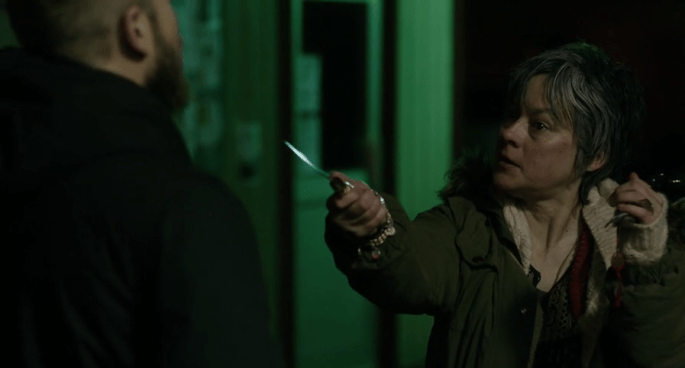
There are at least a dozen movies attempting to co-exist here, but taking precedence over most others – at least for a while – is the hang out picture. The viewer assumes a sort of sleazy fly-on-the-wall perspective for roughly the first half of the surreal narrative, watching as Lou’s situation get worse and the she engages in mundane daily routine. Suddenly, disturbing visions of obscured memories begin to plague the poor party-goer’s mind, and upon the arrival of a peculiar old woman (Meg Tilly, delightfully bat-shit) in the small mid-west town, things take an unexpectedly twisted turn.

Perez is probably best known for his collaborations over the years with Animal Collective, in which he provided the band’s heady tunes with an appropriately imaginative visual companion (see the excellent and often overwhelmingly terrifying  “visual album” ODDSAC from 2010), so it’s no secret that his first foray into more grounded narrative work would be an ambitious one. Like that earlier film, ANTIBIRTH dabbles almost exclusively in gross body horror and Perez certainly has the means of dishing it out when the time comes, which is – rather unfortunately – too late in the game.

vlcsnap-2017-01-05-15h03m52s457.png

Allowing for a better understanding of his past work, one might get the sense that Perez is more interested in exceedingly strange ideas and imagery than he is in people. This doesn’t always have to be a bad thing, but when the anti-heroine of the director’s abstracted world is one-dimensional at best and insufferable at worst, and those around her aren’t much better off, a gory good time then becomes an unnecessary struggle to locate anything of genuine substance. One could argue that the film’s indifferent attitude is embedded in its punk DNA, but when it accumulates to something as frequently unfunny, off-putting and shoddily constructed as this, it can be best chocked up to sheer ineptitude.

As expected, Perez is able to cook up some spectacular moments throughout – the idea of a quiet Michigan town teeming with experimental military activity and extraterrestrial conspiracy is an enticing one, and that sound design is pretty neat – but his stylistic flourishes end up being more debilitating – and, dare I say, amateurish – than exhilarating (the sequences set in the “Fun Zone”, a family-friendly pizzeria seemingly converted from an aging dive bar, are a fine example of this). Where it clearly wants to revel in oddity and excess, the film remains stagnant and can barely stay afloat, meandering on an already fairly weak foundation. It’s a leisurely, sedated, albeit colorful descent to whatever lies beneath the bottom of the barrel; you’re free to take that as you will, but the effort it requires to find something even vaguely inspiring isn’t really worth it.

vlcsnap-2017-01-05-15h06m06s710.png

DON CHEADLE’S MILES AHEAD — A REVIEW BY NICK CLEMENT

3

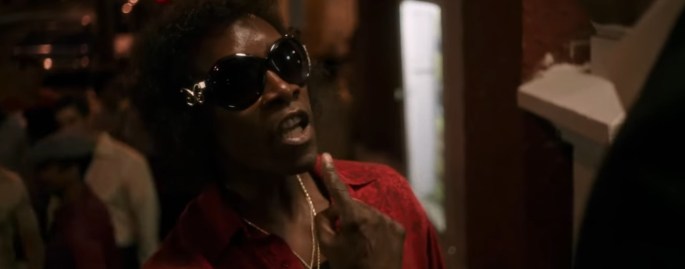
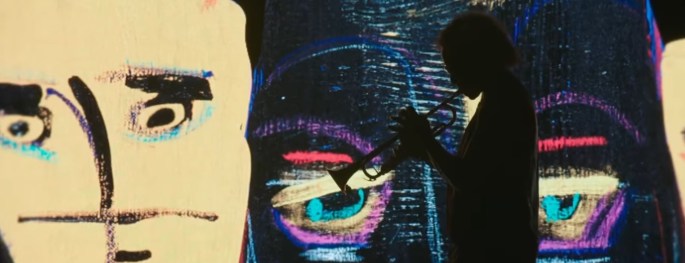
Uninterested in being a straightforward biopic and all the more enjoyable because of that fact, Don Cheadle’s impressionistic and time-jumping portrait of iconic jazz artist Miles Davis, appropriately titled Miles Ahead (the title of his 1957 album), is a celebration of its subject while still presenting a warts and all narrative that focuses on the turbulent period in the 70’s when his career wasn’t in full swing as a result of drug addiction and other factors. Ewan McGregor appears as a journalist looking for the story of his life, and Emayatzy Corinealdi was excellent as one of Davis’ former back-up dancers who became his wife and muse. This was clearly a passion project for Cheadle, who collaborated with Steven Baigelman, Stephen J. Rivele, and Christopher Wilkinson on the fast and loose screenplay, and who directed with gusto, giving the film a startling pulse, and letting Davis’ propulsive rhythms, both as a musician and as a human being, take center stage.

2

His performance is smooth and rough all at once, befitting his subject, for whom he clearly feels a tremendous affinity for, as the film is both respectful and artistic, while showcasing some of Davis’ greatest songs from all throughout his legendary career. Shot with swagger and vivid color by cinematographer Roberto Schaefer (Monster’s Ball, Quantum of Solace) and edited with a mosaic quality by John Axelrad and Kayla Emter, there’s a great sense of style to the picture, while Hannah Beachler’s evocative production design would lead you to believe that the production cost more than its reported $345,000 budget. After premiering at the 2015 New York Film Festival, Miles Ahead saw theatrical release last October, grossing $5 million in a limited run. The film is now available on Blu-ray and as a streaming option on various providers. Fun fact: the IMDB lists 36 people in various producer capacities who are associated with this film.

1