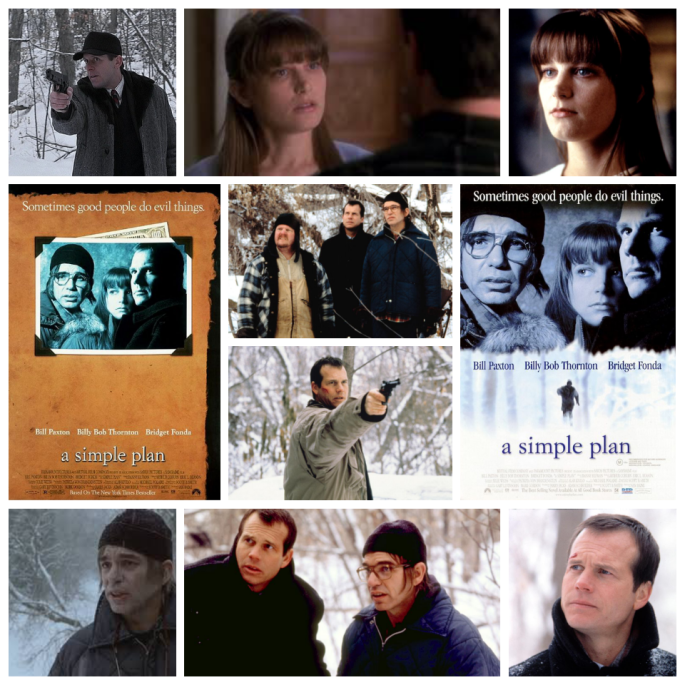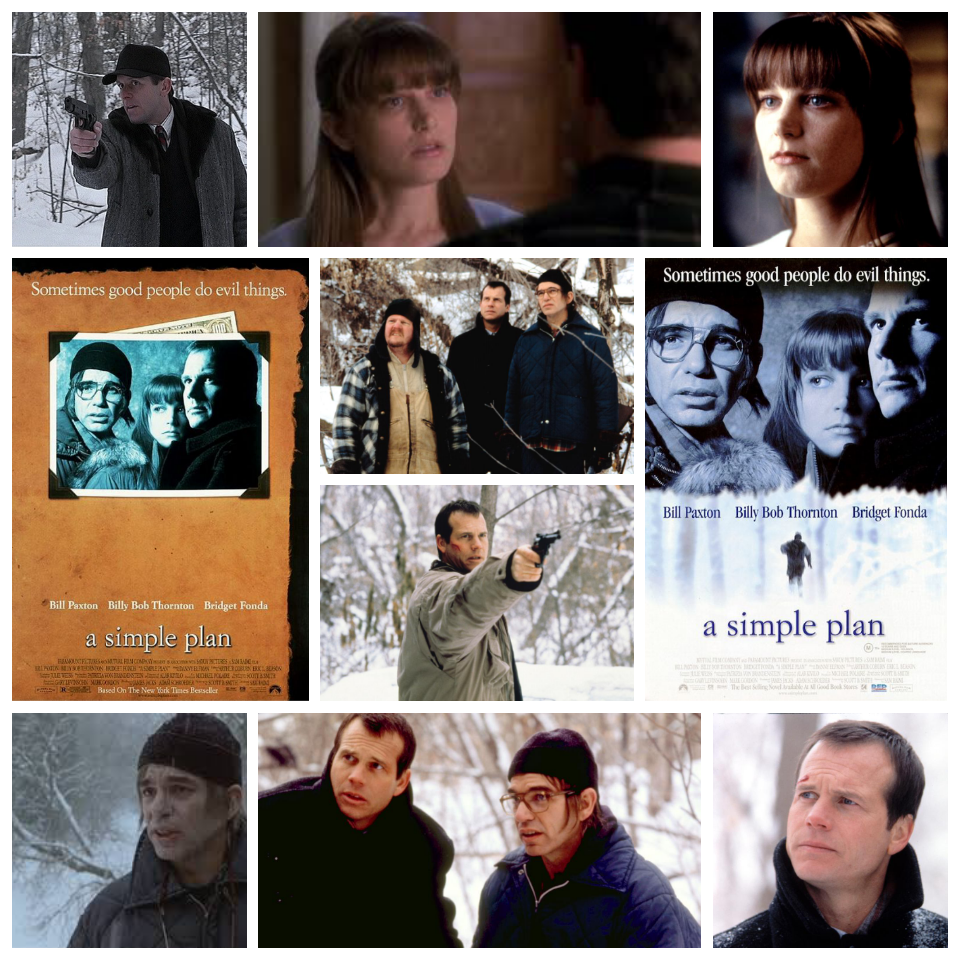


Crime doesn’t pay, and money is the root of all evil. There are countless stories of people who forsake such principles and venture down a dark, destructive path, but none quite so biting and tragic as Sam Raimi’s A Simple Plan. What haunts the viewer so much is not the fact that these characters suffer through horrific turmoil resulting from the promise of money, it’s that these are nice, good natured, everyday folks. These are the people next door, the blue collar, salt of the earth Americans, and it’s harrowing to see the downward spiral they fall headlong into. Bill Paxton is the mild mannered hardware store owner, Billy Bob Thornton his unemployed, dimwitted brother and Bridget Fonda his wife. Three regular people who could be any of us, until they find the money. Out in a snowy rural landscape, millions of dollars in cash is discovered by them, and that’s where the trouble begins. The three go to great lengths to keep their secret hidden from the local authorities, and eventually become paranoid, deceitful and hostile towards each other, leading to some truly heartbreaking outcomes. It’s not enjoyable watching these poor people go through this, because this isn’t some exploititive crime genre exercise. Although shades of noir are present, this film is set in the real world where human beings are neither good nor bad as a template, but have complex capacity for great evil or compassion. When something like the money gets in the way, though, that potential for malicious behaviour is dialed up considerably, and the resulting calamity looks something like what we see here. What’s scary about the whole thing is that it’s essentially their own fault; yes, the money turned up, and yes, its presence is what drives this wedge among them, but the money isn’t sentient, it doesn’t wish ill will, it’s simply *there*, leaving the characters to make decisions regarding it, decisions which in this case lead to their despairing downfall. What’s more, money is our own creation, not some outside influence eating away at them. This is surprising output for Raimi, who is the guy we know for rambunctious horror and genre pulp, but he shows a skilled and subtle hand with the down to earth material, letting his story be a window into a cold world of feverish greed, a world where plans are, in fact, anything but simple.

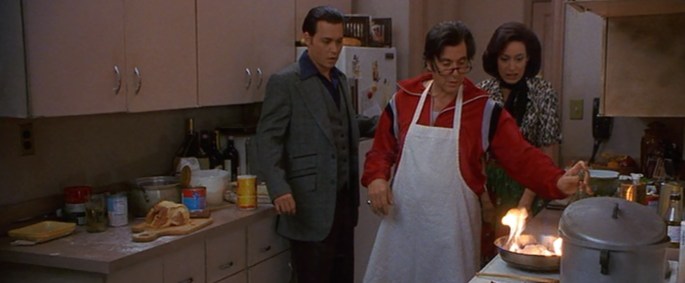
Released in 1997, Mike Newell’s gritty and superb organized crime drama Donnie Brasco features a top-flight turn from Al Pacino as an aging, low-level, worker-bee gangster with sadness behind his tired eyes, and Johnny Depp in one of his better performances as an undercover FBI agent who gets in too close for comfort with a particularly nasty set of violent mafia-men. Paul Attanasio’s intelligent, fact-based, and propulsive screenplay wasted not a moment in kicking the story off in high fashion, with Newell never overtly trying to replicate any other genre entry that has made this milieu one of the most popular in cinema history. A hit with critics and a solid box office performer, this is the type of movie that has gained an even more solid footing in the years since its release, as it’s a non-nonsense and very sturdy piece of filmmaking with some zesty supporting performances (Michael Madsen and Bruno Kirby in particular) and a few extremely memorable sequences, with an ending that leaves an emotionally conflicted lump in your throat.

Excited to bring you my first interview in some time, with the lovely Tammy Lauren!
Tammy has made vivid impressions in numerous films including Wes Craven’s Wishmaster, Costa Gavras’s Mad City, I Saw What You Did, Chains Of Gold, Tiger Warsaw and more. She has also appeared in quite a few television shows including Little House On The Prairie, Criminal Minds, ER, Two & A Half Men, Home Improvement, Crossing Jordan, MacGyver and more. She’s a great talent and was a pleasure to speak with, enjoy!
Nate: What led you to acting? Was it something you always knew you wanted to do or did you stumble into it unexpectedly?
Tammy: My parents put me in the business when I was 8 years old. My parents put me in a children’s acting class, which then led to me auditioning for a play in San Diego (The Music Man) and the director of the play told my parents I should try and do TV and film. So, I’d say I stumbled into it.
Nate: Wishmaster: incredible, iconic horror film. How was your experience working on it, with all those unbelievable special effects, and starring alongside Andrew Divoff?
Tammy: It was exhausting. All that running and crying and freaking out…I loved Andy and Bob, the director and thought having all the horror icons involved was super cool. I just saw Bob and Andy at a horror convention and they taped the three of us watching the film and commenting for the Blu Ray, which brought back a ton of memories. Andy eating jelly beans to get his voice the way it was as the Djinn, Bob FREAKING out about the special effects and Red Room (the part that was supposed to be inside the Djinn’s mind), me FREAKING out that my performance was probably JUST AWFUL.
Nate: Costa Gravras’s Mad City: How was your experience working on this one?
Tammy: Incredible. I first met John Travolta when I was a kid and he was at Paramount filming Urban Cowboy, I did a film years later that John produced and starred in, Chains of Gold and so at that point, I’d known John for a few decades. I was enamored of Dustin and of course, Costas. And this was the film set I got engaged on! My husband proposed to me in my dressing room and John and Dustin had some cake and stuff brought on stage to throw us an impromptu engagement party.
Nate: Little House On The Prairie: how did you get involved with that, and how was it working on such a legendary show?
Tammy: I auditioned for it. At the time, it was very popular so I was excited. My favorite memory from that is working with Robert Loggia, playing his daughter. He’s an incredibly talented actor. His character was supposed to terrify me, which he did but he was also SO kind to me.
Nate: A few roles over your career that have been your favorite so far?
Tammy: Homefront was a favorite role of mine. When I was young, it was Mork and Mindy because of Robin. I also really liked doing Criminal Minds because my character had rabies and honestly, how many times do you get to do THAT? 🙂
Nate: Who inspired you (actors/filmmakers) growing up and in your work as well?
Tammy: Actors – Robin Williams, Meryl Streep, Jack Nickelson, Carol Burnett. Filmmakers – Francis Ford Coppola, James Brooks
Nate: The tv movie I Saw What You Did: My favourite role of yours alongside Wishmaster. Lisa was quite the character. How was that experience for you?
Tammy: Awesome. Because Carradine brothers. And Shawnee. That was actually the second movie for television we had done together and we both played similar roles in both. I liked that one too.
Nate: Do you have any upcoming projects, film related or otherwise, that you are excited for and would like to mention?
Tammy: I’ve been in tech for a while now, I don’t act a lot anymore. It’s more a thing of someone I know is doing something and for some reason, they call me. I am not as active when it comes to pursuing work. But I do stuff occasionally.
Nate: Thank you so much for sharing, Tammy, and for your time, it’s been an honour!
Tammy: Hope this helps Nate. Hope you and yours have a very happy holidays!

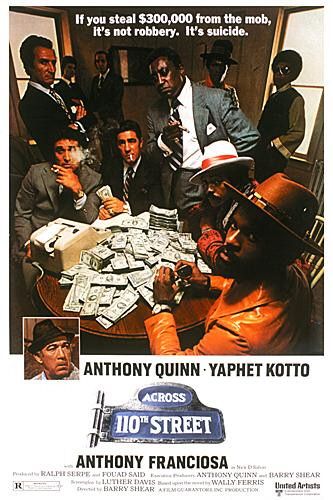
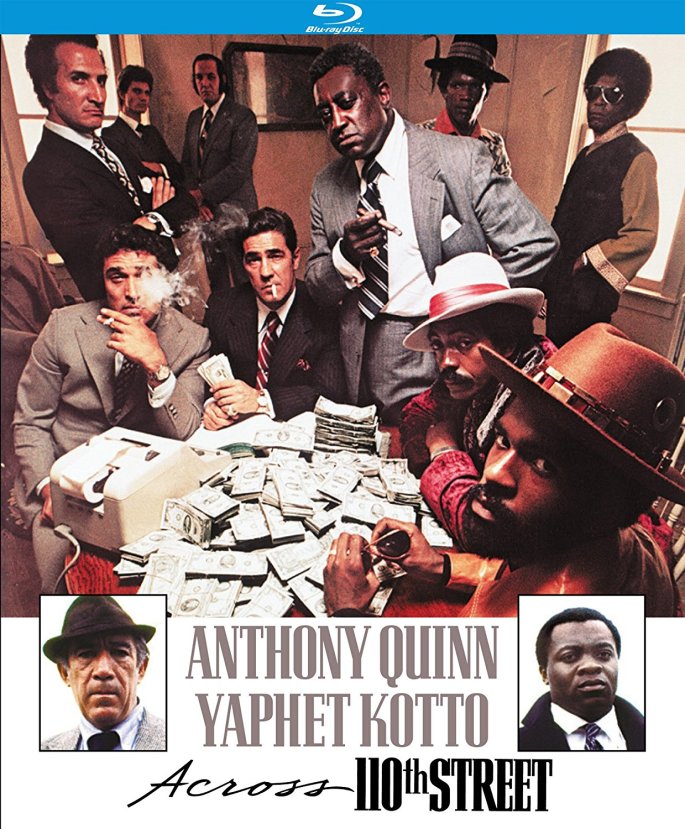
Across 110th Street is a nasty piece of business, directed with gritty verisimilitude and intensity by Barry Shear, and sporting an extremely focused screenplay by Luther Davis which maximized violence, attitude, and down and dirty action. Based on the novel by Wally Ferris and released in 1972 to both acclaim and controversy, the amazing team at Kino-Lorber made it a point to include this overachieving Blaxploitation gem in their tremendous catalog of titles, and it’s easy to see how the aesthetics utilized by the filmmakers would go on to inspire many other directors in countless films that would be released after this game-changer saw the flicker of movie projectors. Set in Harlem and chronicling a rather brutal back and forth between honest and corrupt cops, gangsters, mafia hoods, pimps, drug dealers, prostitutes, and general city scum, this is the sort of movie that makes you want to take a long, hot shower after watching it, as it was clearly shot on real locations that were very dangerous, with little set-dressing probably required. And the fact that there aren’t easy to root for characters makes the film an even richer experience than it might otherwise have been.
The in-your-face cinematography by Jack Priestly rubbed your nose in the muck and sleaze, Byron Brandt’s viciously tight editing kept the pace moving at a fast clip, the morally and ethically questionable characters all operate by their own sense of internal code which may or may not be a good or bad thing, and the general level of grim fatalism on display is rather bracing to behold; this is a picture that must’ve seemed very ahead of its time when it first was released. An amazing cast was along for the sordid ride, including a steely Anthony Quinn, Yaphet Koto doing understated, slow-burn work, Anthony Franciosa in a hugely entertaining performance, and Paul Benjamin, Antonio Fargas, Ed Bernard, Richard Ward, Gilbert Lewis, Norma Donaldson and many others rounding out the colorful supporting cast. Bobby Womack and J.J. Johnson’s influential title song would later be sampled by Quentin Tarantino during his hugely memorable opening to Jackie Brown, and by Ridley Scott in his excellent crime opus American Gangster. Across 110th Street operates as a unique early buddy-narrative while dipping its toes into true exploitation waters, supremely delivering on both fronts.


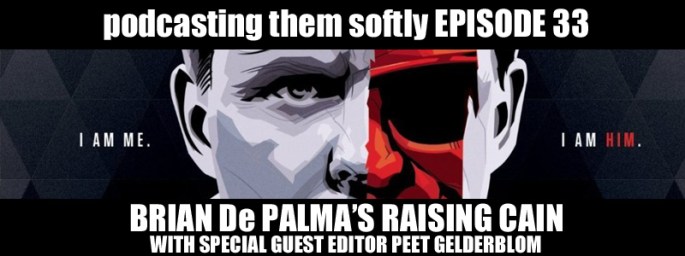
Podcasting Them Softly is extremely excited to present a chat with editor, filmmaker, and movie buff Peet Gelderblom, who most recently re-cut Brian De Palma’s 1992 thriller Raising Cain as a passion project. Indiewire posted the re-cut on Vimeo, it went viral, De Palma saw it, and it became a director approved special feature on the newly released Shout! Factory Special Edition Blu-ray. Raising Cain had a troubled production history, with changes made to the overall narrative after poor test screenings; De Palma has long felt that the released version was in a compromised state. Peet is a massive De Palma aficionado, so this was an especially fun chat to record. And considering that this personal experience for Peet is something of a surreal dream come true, we couldn’t help but gush a bit — it was very enjoyable to speak with someone who shares the same sense of cinematic excitement as all of us do at PTS. Check out Peet’s work at http://www.directorama.net/ If you’ve not seen Raising Cain, you can order it right here https://www.shoutfactory.com/film/film-crime/raising-cain-collector-s-edition And then check out Peet’s version, as De Palma himself says it’s the best way to see it!
ROGUE ONE is the most surreal theatre experience of my life. Yes, it is a STAR WARS movie that’s very much akin to the seven previous films, yet it is completely different than anything we’ve seen before. In a very odd and perplexing way, ROGUE ONE may just be the best STAR WARS film ever made.

Set months prior to the events in A NEW HOPE, we’re shown a world that we’ve never seen. The Rebellion is split in fractions, they aren’t painted with heroism, a lot of them are killers without morals all doing this for the greater good of the galaxy.
The call backs not only from the original trilogy but particularly the prequels perfectly thread the needle of anchoring this film in a familiar galaxy but with unfamiliar worlds and characters. The CGI resurrection of Peter Cushing as Grand Moff Tarkin is a flawless effects achievement, and brings a weight of establishment and riches to the film.
The new characters are a perfect addition to the STAR WARS’ cinematic canon. Felicity Jones, Diego Luna, Ben Mendelsohn, Donnie Yen, Wen Jiang, Alan Tudyk, Riz Ahmed, Mads Mikkelsen, and Forest Whitaker are all wonderful, with Ben Mendelsohn stealing every scene he’s even. Even if he’s matched up against the CGI’d Cushing or Darth Vader, he is the standout.

Bravo to Disney for making a very dark and dreary film. They haven’t done this before. They simultaneously made a film about the horrific personal repercussions of war while organically sliding it into George Lucas’ cinematic timeline. Disney had everything riding on this picture; THE FORCE AWAKENS was easy. They had the original cast, a continuation of the saga story on their side, but with ROGUE ONE they created someone new and fresh inside of a franchise that honestly didn’t need it to continue forward in public consciousness.
The new score from Michael Giacchino is absolutely wonderful. He does complete justice staying true to John Williams, yet he takes major liberties with some tracks we are already familiar with. Gregg Fraser’s cinematography is perfection. This is the best looking STAR WARS film to date, without a doubt. The aesthetic will please diehard original trilogy fans because we’re back to the utter dilapidation of the Galactic Empire.
Gareth Edwards, Kathleen Kennedy, and Tony Gilroy all deserve acclaim and recognition for the film that they have created. But without the brilliant mind of George Lucas, we would never have gotten this film. For all the undo and faux outrage Lucas constantly receives, none of this would have been made possible without him.

What makes ROGUE ONE so very special isn’t just the Easter Egg’s, the callbacks, references to BLUE VELVET and APOCALYPSE NOW, and the cameos, it’s a film that is about hope in its purist form. It is about heroes. It is about championing what you believe in regardless of the odds and sacrifices made. And for a lot of us, this is the exact film we needed at this particular moment.

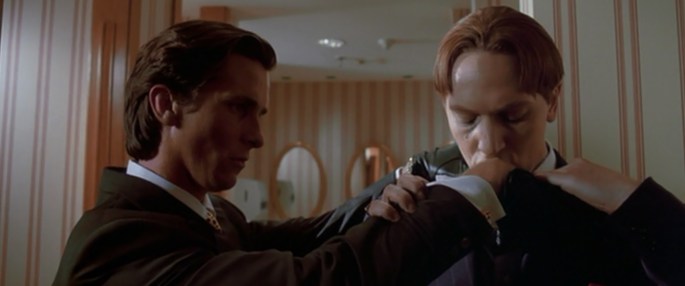
A stinging indictment of a particular way of life at at very particular time and place in America, Mary Harron’s go-for-the-jugular adaptation of Bret Easton Ellis’ incendiary novel features scalpel-sharp satire, upended expectations, hilarious performances from an absurdly deep ensemble, and a sleek visual style that speaks to the various themes of loneliness, isolation, identity, and mental anguish being explored in the multilayered narrative. Christian Bale’s towering performance as the now-iconic Patrick Bateman anchors this deranged tale of obsession, jealousy, and high-end business cards, with Jared Leto, Josh Lucas, Willem Dafoe, Chloe Sevigny, Justin Theroux, Matt Ross, Bill Sage, Reese Witherspoon, Samantha Mathis, and Cara Seymour all offering terrific supporting performances while all individually getting one or two big moments to shine. This film has so many quotable lines of dialogue and so many genuinely funny sequences that it’s no surprise that it’s become a cult favorite in the years since its in-and-out theatrical release. And considering how phenomenal and beloved that this film is and has become, it’s shocking that Harron hasn’t worked more than twice since American Psycho was released in the spring of 2000.

Rogue One: A Star Wars Story
2016. Directed by Gareth Edwards.

Making a one off prequel to one of the most iconic series in the history of film is not only a dangerous gamble, but a virtually impossible task. Gareth Edwards’s Rogue One: A Star Wars Story, not only exceeds inhumanely high expectations, it delivers a remarkably mature war film that explores the morality of insurgency and the simple moments of heroism that define generations. Featuring immersive visuals and a courageous sense of grit, Rogue One takes the Star Wars saga into the trenches, where the Jedi are but a whisper and the people fighting and dying on the ground have only their convictions as weapons.
Tony Gilroy and Chris Weitz’s script builds from the ground up. Stealing respectfully from Melville’s Army of Shadows and Pontecorvo’s The Battle of Algiers, the blueprint for impassioned defiance washes over the action, moving the birth of the rebellion into a morally gray existence that resonates throughout. The consequence of actions, of murder, are not only explored, but paramount to the film’s purpose. The dialogue has chop, but the genius of Rogue One is that no character towers among the others as the face of war is an identity unto itself. Diego Luna and Felicity Jones have the film’s best exchange, where the price of compliance and the weight of trauma becomes the focus, grounding the film in an uncharacteristically relevant tone that persists throughout the film’s jaw dropping final act.

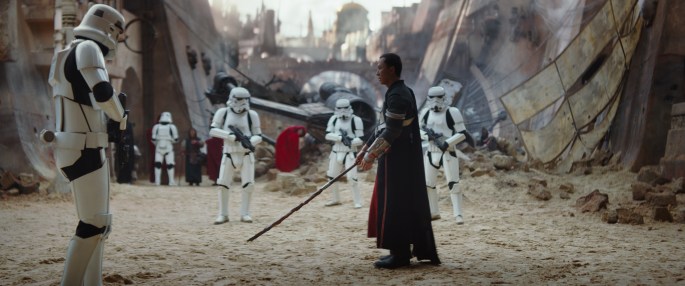
Donnie Yen delivers a thoughtful performance as a blind monk, upholding the lost ideals of the Jedi, while Alan Tudyk steals the spotlight as a reprogrammed Imperial droid. His deadpan delivery is so perfect, that it is a testament to not only phenomenal voice acting, but the pure humanity of the story. There are alien characters sprinkled throughout, and they appear as organic combatants, rather than the novelties of predecessors. Mads Mikkelson and Ben Mendlesohn support as venerable frenemies who use their formidable talents to communicate an ocean of fraternal betrayal with a handful of lines. Unbelievable CGI effects revive several characters from the original trilogy to enhance the story, using nostalgia as a springboard to build a secret history, whose importance will forever impact viewing of the other films in the series.
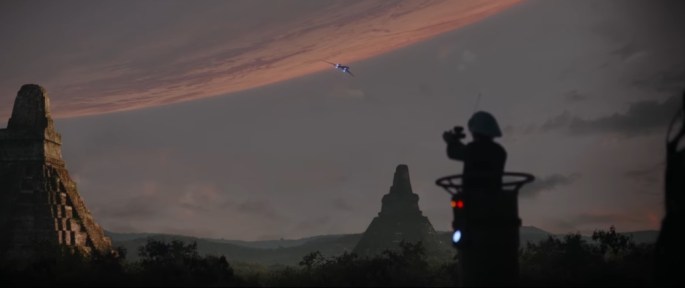
Greig Fraser’s cinematography is intimidating, offering an optical experience unlike any other Star Wars entry. This is a beautifully ugly film, with the sweat and grime of battle contrasting with plush locales and forbidden alien sanctums. Space and ground battles are intensely dappled throughout and then Edwards opens the floodgates, filling the final portion with a combat sequence that is both natural and surprisingly realistic in the science fiction context, taking a single line from A New Hope’s opening crawl and delivering a novel of blood and laser fire. The shadows receding from behemoth Star Destroyers is the perfect antecedent to the quiet desperation of the rebels making their final gambit that plays out on a sun washed planet that is beautifully out of place in the various locales previously offered. Michael Giacchino’s score emulates Williams’s legendary performance but maintains its own identity, perfectly symbolizing Rogue One’s fledgling iconography.

In theaters now, Rogue One is a stunning entry into the Star Wars universe. A bona fide war picture that is charming in its brutality and emotional in its summation, this is the Star Wars film that we’ve been promised for decades. Featuring a checklist of everything that every film in the series should supply and a copious amount of “on your feet” sequences, Rogue one hearkens back to the age when we watched movies to be entertained, and ultimately inspired by a message of resiliency and triumph.
Highly. Highly Recommend.

Guillermo Del Toro’s two Hellboy films are a wildly different pair, both incredible thrill rides and well worth anyone’s time, but I think I will always prefer the first. With the second he took the Pan’s Labyrinth approach, presenting a fairy tale world and showcasing makeup effects that were very similar to that film, an esoteric and elemental vibe. There’s just something about the Lovecraftian, steam punk WWII aesthetic of the first that works better for me, and seems to fit our red pigmented protagonist a little more. These films would be nothing without the essential and hard won casting of Ron Perlman, though. He brings a lively vitality, hulking physicality (he fits the part even before the prosthetics go on) and loveable sarcasm, and when you see him in action there is really no other actor you could envision bringing this character to life. It’s laughable to think that Del Toro fought the studio for years to get Ron in the role, turning down the likes of Vin Diesel and Nic Cage (what in the actual fuck were they thinking), not compromising for a second, knowing the film he wanted to make. Well, Ron got cast in the end, as we now know, and he’s not so much playing Hellboy, he just is Hellboy, he’s that perfect for the role. When he’s backed up by Del Toro’s near godlike creativity and imagination (the two partner on projects frequently and it’s genius every time), you get a piece of comic book escapism as exciting and adventurous as this. Hellboy was the result of a nazi experiment gone wrong, in which certifiable nut job Grigori Rasputin (freaky deaky Karel Roden) and his minions open a portal to a dark universe, in attempt to summon forth anything that could turn the tides of war (not the brightest idea, if you ask me), and instead out crawls infant Hellboy, a cranky crimson imp with a big stone appendage and an attitude to match. Kindly professor Trevor Broom (John Hurt) raises the creature to be a force of good and protection for our world, and soon enough he grows into eight foot tall, wise ass, cigar chomping, ass kicking Ron Perlman, now a valuable and formidable asset to the Bureau of Paranormal Research and Defense, an order who strives to keep the darkness at bay. Joined by his on and off flame Liz Sherman (pun intended, as she’s literally a firestarter), Professor Broom, rookie agent Meyers (Rupert Evans) and humanoid swamp thing Abraham Sapien (Doug Jones, dubbed out with David Hyde Pierce), he sets out to shield New York, the planet and the universe from Rasputin, who has returned with notions of finishing the cataclysmic work he started decades ago. The action is propulsive and rousing, initially in NYC streets and subway tunnels, and then in a far off arctic locale where a gateway to some dark dimension opens once more and a suspiciously Cthlhu esque deity of destruction peers out. Del Toro has stated before that he prefers to think of his work as ‘eye protein’ rather than eye candy. Well, call it what you will, his films are nothing short of dazzling on all levels, and Hellboy is no exception. There’s visual splendour in every frame, from the painstaking costumes, makeup and props (Perlman has a great big gun for that great big hand), to the production design and seamless computer wizardry, the world we see onscreen is immersive and entertaining for the entire journey. Roden makes a frothing madman out of Rasputin, always nailing the villain when he shows up, and stopping said show here with his theatrical and baroque insanity. My favourite has to be Kroenen though, a sharply dressed, mute nazi assassin with a face only a mother could love and a set of knives you’d be foolish to get in the way of. He’s an inspired and truly creepy villain that sets the apocalyptic dial on the highest setting when he shows up. Jeffrey Tambor provides additional comic relief as the long suffering suit who serves as the face of PR for the bureau, and props to Brian Steele as Sammael, a seriously pissed off demon set loose by Rasputin in the city streets, leading to one blockbuster of an action sequence. As far as comic book films go, this is a gold standard of filmmaking, world building and good old fashioned storytelling, all of which Del Toro is a master at. It wouldn’t have been the same without him, without Perlman and especially without the magic that happens when they work together.