Rogue One: A Star Wars Story: A Review by Kent Hill

This slideshow requires JavaScript.

So another December has come and with it comes another Star Wars movie. The reviews begin. Kevin Smith raves about it, calling it Empire Strikes Back great. In his brief thoughts following the premiere which he attended, Smith makes mention of what are really the highlights. This is an excellent chapter in the Star Wars saga. There are great tie-ins which link this film to those that have come before. Vader is badass in this movie and then there is the ending . . . that ending.

Now, unlike the case of The Force Awakens, this film has not enjoyed a triumphant reception. Those that have distaste for it are talking sooner rather than later. Before seeing the film today, I took note of some of the positive/negative stances. One thing I marked was a comment regarding the resurrection of a certain character from the original trilogy. I will not spoil this for anyone, but the review to which I refer, made the statement that the arrival of this character on screen (with the help of effects, cause he bought the farm a while ago) was something that took them out of the movie. I am going to take arms against this statement (which you may read more about if you wish here: http://geektyrant.com/news/review-disney-and-lucasfilm-play-it-safe-with-rogue-one-a-star-wars-story). Me personally, and I am referring to the pair of instances which the technology is used in the film, I feel this is one of the better examples of this type of effect used thus far in movies and remind the learned gentlemen for the prosecution of the creepy, expressionless faux-young Jeff Bridges in the lamentable Tron sequel as a better example of something that disconnects one from a film.

Still, what about the film itself? Is it Empire Strikes Good? I read Harry Knowles’ review this morning too. He though, has a tendency to gush, going so far as to list the things that he liked best. You need to be wary when film writers take such actions. The reason being? There was stuff they didn’t like in between those things they did.

Rogue One is the story of the story before the Star Wars we all grew up with – and I refer to those of us who grew up before they started using the “Episode” system. It finds the brains behind that moon that is no moon but a space station, living out his life in peace and harmony with his family. Then the empire shows up and ruins everything, as it is their want to do. From this pastoral opening we following our heroine Jyn Erso (Felicity Jones) as she is recruited by the rebels (they are rebels aren’t they?) to track down Forest Whitaker, because rumour has it, that he has received word from Jyn’s dad, Mads Mikkelsen, about a super-weapon the empire is about to unleash.

So the Star Wars story moves along, and at times it is a slow boil. There is a good comradery among the cast, along with levity and heavy-handedness in equal measure. There are also lots of droids and aliens, which are always fun to hang out with in a time of great tyranny. This film paints the best portrait of the galaxy far, far away in the wake of the rise of the empire as we know it. It’s a grimy hit-run-hide type of universe, where heroes are few and all hope seems lost.

But wait, maybe not. Though the rebellion has its own dark undercurrent of distrust and personal agenda, we find out (what those of us who are children of Star Wars already know) there is a weakness to this battle station. It soon falls to the good guys to decide what they are going to do with this intel.

When faced with a planet killer, some guys run and some guys stay. The guys that stay join with our ragtag band of heroes on their veritable suicide mission. Their objective: to retrieve the plans of the Death Star in order to exploit the flaw in its design.

This is when Rogue One finds its wings, and all of a sudden I found myself in a film that felt more like a Star Wars movie than The Force Awakens did.

The final act of the film is bold, brilliant. At one point I think I heard Sam Elliot’s voice from The Big Lebowski in my head saying: “I didn’t like seeing Donnie go.” I was looking for shots from the trailers that I liked, but I found them to be absent from school today. I thought it was a good ending which brought to mind the old chestnut: those who live by the sword shall die by the sword. I also read in those reviews from earlier today, that the characters were thinly drawn. This would imply they are like most characters in modern movies, which is to say you don’t really give a shit whether they live or die. But I cared, not for all concerned, but for some. When things finally went south, I can genuinely say I was moved by their passing.

So, is Vader badass? Yes. That’s all I’m going to say on that score.

The film looks beautiful, though please again be wary, especially when reviewers make mention of this early in their critique. Praise for the photography and locations are often code for: it looked good, but that’s all it did.

The score by Giacchino is sombre and at times melancholic, but it lifts, and there is a nice peppering of Williams which will make you smile as ever.

And thus we come to that ending. Go see it. Go see it. The best thing about the ending is you can go home and watch the story continue, unlike last year’s Star Wars where we’ll have to wait a while yet to find out what Luke is going to say, or not say, or just keep on glaring, or fart , or something like that.

Did this dude in the audience like Rogue One? He did, he did indeed. He will be going again, that is a given. The cast and crew, all involved, have made a good Star Wars movie. It’s not Empire Strikes Good, but filmmaker Mike Mendez (Big Ass Spider, Don’t Kill It), whom I interviewed recently, said it best. During our chat we talked about Spielberg and Mike’s love of Raiders of the Lost Ark. He (Mike) considers this the perfect film. He caught lightning in a bottle, and I’m paraphrasing Mike here, but Mike went on to say that as talented as Spielberg is, he doubts he could ever duplicate something like Raiders. The same could be said of this, the third coming of Star Wars. I watched it begin in the 70’s, I was there for explosive hype of The Phantom Menace. I was there last year when the force decided to wake up again.

My point is this. The lightning has already been caught. It was captured a long time ago in a galaxy far, far away. They will never be able to recapture that lightning, but so far the Star Wars we are getting is calling down the thunder and Rogue One roars across the sky. It reminds us, yet again, of that brilliant lightning that brightened our world a long time ago…

GO SEE IT!
The Golden Compass: A Review by Nate Hill 

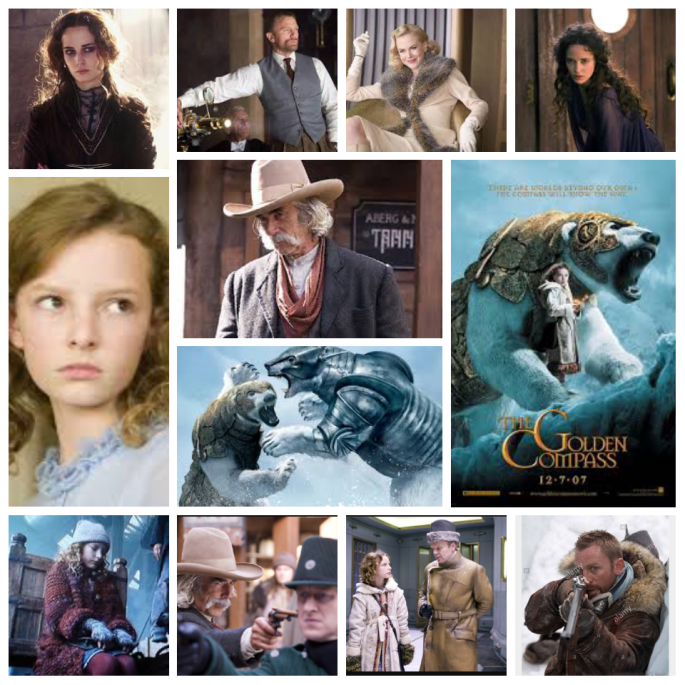
There’s a reason they never adapted another novel in Philip Pullman’s His Dark Materials series past the initial stab at The Golden Compass, and it’s the same infuriating reason why many adaptations of children’s and young adult novels fail: lack of appropriate atmosphere and true menace found in the source material. Everytime Hollywood comes along and decides to try their luck at a beloved series for youngsters or young adults, they feel this feverish need to shine it up with a candy colored, over lit vibe that leaves much of the darker elements by the wayside and as a result their final product feels neutered and bereft of any weight, stakes or attention to detail. Spiderwick. Skellig. Eragon. Hell, even Narnia only made it by the skin of its teeth, blasting out of the gate with a flawless entry, only to peter off into sequels afflicted by the very symptoms I outlined above, and not even make it to the end of the saga at that. Now don’t get me wrong, this doesn’t happen to every series they try to adapt, but to enough of them that it’s a problem, especially when a darkly creative, eerie and unique tale like this gets turned into a glossy, pandering misfire. It’s sad because some of the elements of a good film are in place, starting with casting. Dakota Blue Richards is on-the-nose perfect as Lyra, the adventurous heroine who gets swept away on a menacing voyage to arctic lands and beyond. She lives in a curious parallel universe where every human is forever accompanied by a ‘Daemon’, essentially a piece of their soul that takes animal form, and never the two shall separate. Lyra’s uncle Lord Asriel (Daniel Craig) is an explorer who has returned from the north lands with tales of a mysterious phenomenon called ‘dust’, a powerful substance purported to be able to unlock other worlds and dimensions. Lyra is curious at first and then nervous when she meets icy Mrs. Coulter (Nicole Kidman) a prim socialite with a devious agenda involving children that have gone missing in the city. She has a facility on the tundra where scary research and very bad experiments are conducted. Now in the books the descriptions and eventual confrontation with this would make your hair turn white. Pullman imparts it with weight and true blood freezing horror. The filmmakers *deliberatly* tone it down and castrate it, leaving anyone who was a fan of the series in total disgust. It just doesn’t have the same dark, otherworldly atmosphere it did on the pages, it feels too bright, chipper and lacking any real wonder. It does have some wicked visuals going for it in places, such as the two rival talking bears, voiced with baritone boom by Ian McKellen and Ian McShane, the landscape of the north as seen from the hot air balloon of grizzled sky-cowboy Lee Scoresby (Sam Elliott), and others. Eva Green also scores well as elemental witch Serafina Pekkala, but then she’s incapable of giving a bad performance anyhow. Scattered supporting cast includes Kathy Bates, Kristin Scott Thomas, Tom Courtney, Simon Mcburney, Derek Jacobi, as well, an impressive lineup all in all, but one that deserves a far better film for their talent. It’s just misguided and tone deaf. It may have been a series for adolescents, but the themes, implications and scenarios found in those books are harrowing, complex, very mature and not to be taken lightly, let alone given the full on Harry Potter theme park treatment. Shame, really, and a giant missed opportunity. Perhaps someday soon a network will get the rights and turn this tale into a film or tv show worthy of His Dark Materials.

PTS PRESENTS DAMIAN K. LAHEY RAGER POWERCAST


laheyPodcasting Them Softly is thrilled to present a passionate cinematic discussion with independent filmmaker Damian K. Lahey! A Jacksonville, Fl. native, Damian graduated from Douglas Anderson School Of The Arts High School and is an alumnus of The University Of North Carolina School Of The Arts Film School. Damian has produced and/or written several independent films including festival blazing cult faves ‘Ding-A- Ling- Less’ (2002) directed by indie maverick Onur Tukel and the critically acclaimed anti-drug film ‘Cocaine Angel’ (2006), directed by indie stalwart Michael Tully which premiered at Rotterdam International FF and South By Southwest. Damian was a staff writer/contributing editor for IndieSlate Magazine from 2006-2011. In 2008 he won a Creative Excellence Award for screenwriting at Slamdance. Damian has also worked as a freelance screenwriter, director and UPM on several commercials, music videos and shorts over the years including ‘Children For A Day'(2008), which finished up a successful festival run in 2010, winning a slew of awards. The last feature film he wrote and directed, the holiday comedy/drama ‘The Heroes Of Arvine Place'(2012), was shot in Jacksonville, Fl. and also had a very strong festival run, winning several awards and was picked up for distribution and released in December of 2014 on Blu-Ray and multiple online platforms. In July of 2014, Lahey wrote and directed the short comedy/horror piece ‘Soccer Moms In Peril’ in Los Angeles, which had its world premiere at Dances With Films in Hollywood in June of 2015. It recently finished a successful festival run, even winning a Jury Award at the prestigious Indie Memphis Film Festival and best comedy/horror film at The Chicago Horror Film Festival. Damian kicked off 2016 shooting another short film, ‘District Quarantine’ in Los Angeles, which was recently completed and will begin its festival run in 2017. Damian is currently in pre-production on another short film, ‘Captain Traer Smiles At The Stars’ which will shoot in Los Angeles in February of 2017. That will complete a trilogy of genre short films titled ‘Three Slivers Of The Moon’ which all feature star Tarah DeSpain, Damian’s long time cinematographer Tarina Van Den Driessche, sound designer Joshua Chase and editor, co-producer and all around collaborator Craig Moorhead. We hope you enjoy this exciting and entertaining chat!


TREY PARKER & MATT STONE’S TEAM AMERICA: WORLD POLICE — A REVIEW BY NICK CLEMENT

1

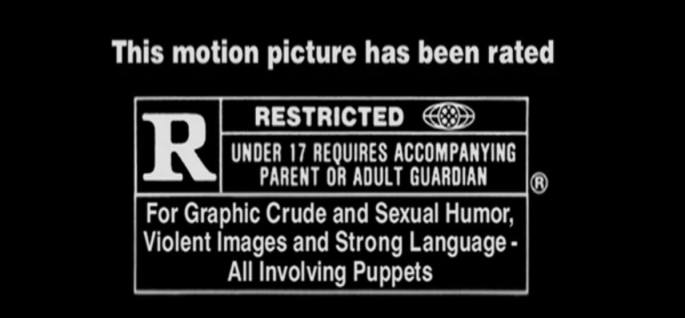
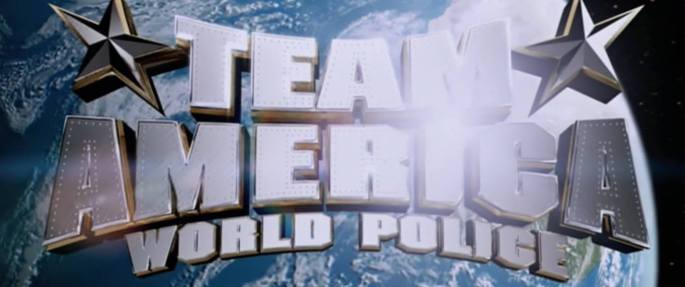
Trey Parker and Matt Stone are geniuses. They don’t give a fuck what you think of them and that’s one of the biggest reasons why I love their work so much. Listen – they dropped acid, dressed as women, and attended the Oscars, at which they were nominees. For this fact alone they’ll be heroes until the end of time. And Team America: World Police is easily one of their finest achievements in foul-mouthed satire, a film so ballsy and made with provocation so firmly on the mind, that I’m still left a tad slack-jawed by the overall combination of absurdity and smarts that they so skillfully mixed together in this celebration and skewering of action movies, Hollywood, the political landscape, and humanity in general.

4

I love how they got Harry Gregson-Williams to score the movie with his typical Bruckheimer/Scott bombast, and hiring Bill Pope as your cinematographer demonstrated that they gave a shit how their marionette-based film would look on a visual level – this movie is absolutely artful at times which makes it even funnier to behold. The level of social commentary and the evisceration of the modern action picture and hypocrisies of the movie industry were consistently brilliant and still hold up to this day (“No Gary, I’m not from Hollywood, I’m not gonna fuck your mouth, my time is VERY valuable…”), Parker and Stone’s sense of musical theater is always fascinating, inspired, and jubilant (“Everyone has AIDS!”), and the digs on North Korean lunatic Kim Jong-Il are wildly amusing.

3

The film also serves as a fairly devastating critique of American foreign policy while still keeping its head almost completely ensconced in the toilet, with a wild barrage of creatively composed obscenities on display. Also, anyone who spends the amount of time that these clowns did showing puppets in various sexual positions deserves some sort of award for just that bit of lunacy alone. This is easily one of the most off-beat studio productions imaginable, with super-producer Scott Rudin coercing Paramount to spend $35 million on a film that nobody could have had any serious expectations from. The fact that this movie was a hit in theaters, a massive hit on cable/disc, and was warmly embraced by the critical community still makes me smile.

2

Punch Drunk Love – A Review by Kyle Jonathan

Punch Drunk Love

2002.  Directed by Paul Thomas Anderson.

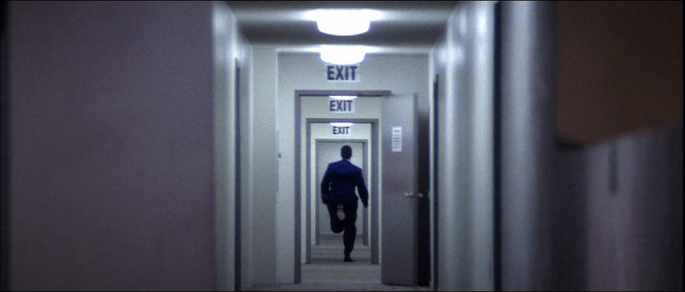
31-exits

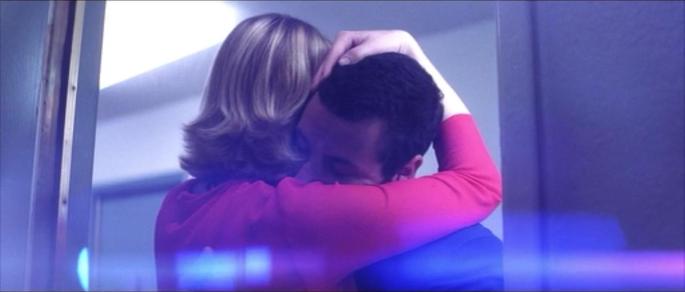
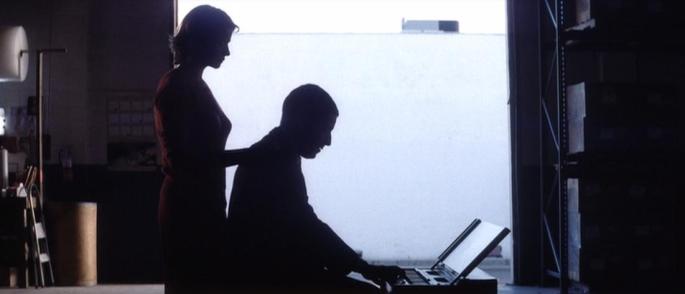
The best thing about love is when it comes unexpectedly.  An integral part of humanity is connections, fleeting moments of fortune that can define significant portions of our lives or leave us wondering on the possibilities of an unexplored chance encounter.  In any other hands, Punch Drunk Love would be a farce, a crude and jaded comical examination on the embarrassing truths of personal development and romantic evolution that have besieged the adult comedy genre over the last decade.  Paul Thomas Anderson’s delicate touch liberates the subject matter by presenting a self deprecating love story about combating the intrinsic flaws that define us and finding respite within them.

Anderson’s script tells the story of morose loner Barry Egan.  Adam Sandler’s career defining portrayal defies classification, bouncing from desperate romantic, sweepstakes huckster, and dangerous ruffian with a grace unlike anything Sander has ever displayed.  Layers of comical throwaways are peeled back to reveal what is left when the spotlight recedes, with Sandler’s fledgling pathos evoking Chaplin’s Limelight without him portraying a performer.  The genius of his performance is not only in the raw emotional gambit that Barry runs, but in the sly concession that Barry could be Sandler and vice versa, making his profane hopeful all the more relatable.  Flawed protagonists are a dime a dozen, but Anderson’s treatment of his hero takes the sexiness away and leaves the soul for examination.

cae17bd046b5ecd6d170cedea5d0a491

Robert Elswit’s cinematography is the closest that color cinema will come to golden age.  Distracting flares and intense colors are everywhere, using visual compositions to reveal the quiet distress of despondent hearts.  Jon Brion composed his score with Anderson during filming, with Anderson directing his cast to react to the beats.  The importance of this decision cannot be overstated, as the musical cues reflecting Barry’s traumatic approach to existence perfectly blend with the tranquility that supplants chaos with harmonic bliss.  Sue Chan’s art direction is the perfect accentuation, inking every set with the established cobalts and reds that are symbolic of Barry’s internal conflict and yet never feel overt.  Sandler’s performance hinges on extremes, and the seminal house of technical cards that Anderson constructs around him never shows sign of collapse.

Anderson was awarded Best Director at Cannes for his efforts, while Sandler was singled out for his performance.  Ultimately, Punch Drunk Love, is a simple, disengaging experience that reminds the viewer that imperfections are what makes us special and the unpredictable, sometimes violent, sometimes serendipitous occurrences that fill our memories have an undeniable influence on who we eventually become.  Love is not a fickle thing in Anderson’s thesis, but a potent remedy that requires courage and acceptance of the idiosyncratic baggage that is attached to every wanting soul.

punch-drunk-love-2

Available now for digital rental, or on a stunning 4K transfer blu ray from The Criterion Collection, Punch Drunk Love is the ultimate romantic comedy.  Shunning any sense of Friday night nonchalance in favor of amorous caricature, if you’re looking for something to make you smile and celebrate the awkwardness of the shared relationship experience, this is a film that demands your attention.

Highly Recommend.

punch-drunk_love

Indie Gems with Nate: The Snow Walker 

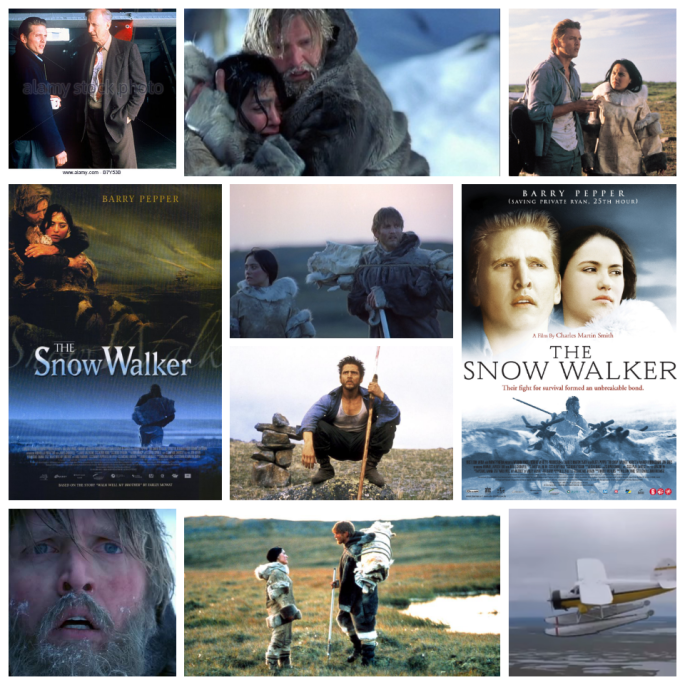
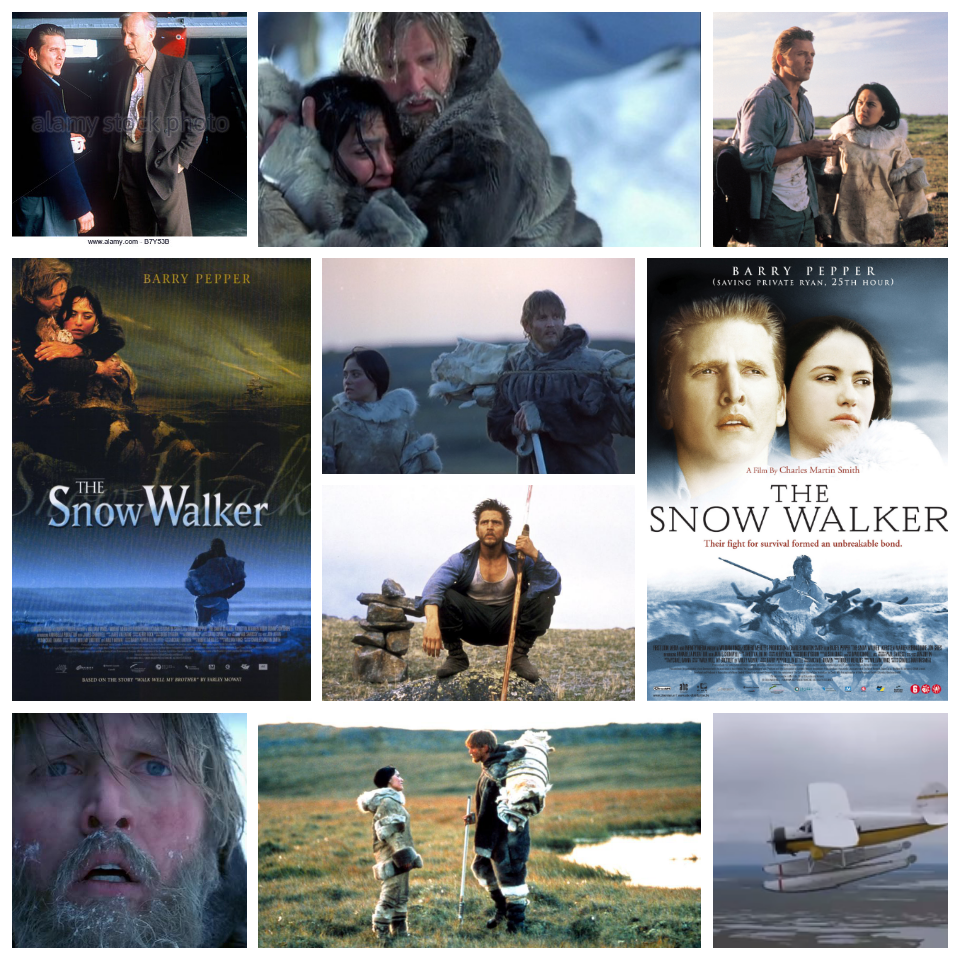
The Snow Walker is as bleak and tragic as they come, attempting to find scant traces of beauty, kinship and compassion  amidst a hopeless tale unfolding on the edge of the world. Charlie (Barry Pepper) is an ex WWII pilot who has flown a lot of missions, but none quite like the one he embarks on here. On a remote plane trip in the Arctic, he comes across a nomadic family of Inuits who are in desperate need of help. One among them, a girl named Kanaalaq (Annabella Piugattuk, fantastic), is sick with what appears to be tuberculosis, and will die if not treated soon. Charlie agrees to fly her back to civilization in exchange for a few wares, but during the voyage his plane develops mechanical problems and he is forced to make a crash landing in the middle of the wilderness. Stranded with little food, a sick girl and no hope of rescue, he and Anaalaq are brutalized by the incoming winter, tested beyond the limits of endurance by the harsh terrain around them and pushed to the point of despair. Charlie’s old friend (a sincere James Cromwell) sends a cocky bush pilot (Jon Gries) in hopes of locating him, but because Charlie took a detour end route, it’s worse than finding a needle in a haystack. There’s a mournfully poetic sense to the landscape around them, a dry and unforgiving vista that is shutting down as winter looms on te horizon, indifferent to the two of them, clinging to survival. Charlie is a loner, an outsider, and this situation tests his interpersonal skills as well as his stamina. Anaalaq speaks little to no English, and he not a word of Inuktituk, forcing deeper methods of communication and a trust in each other, warm compassion to ward off the cold anguish threatening their existence. This is not a Hollywood film (except for a random cameo from Michael Bublé, of all people), and as such is never predictable, easy or familiar. It walks it’s own road, a road into utter hopelessness. Watch something lighthearted after, your emotions will need the counterweight. 

Alan Parker’s ANGEL HEART – A Review by Frank Mengarelli

angel-heart-still

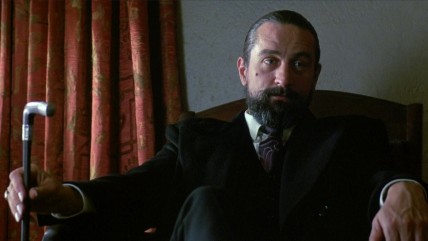
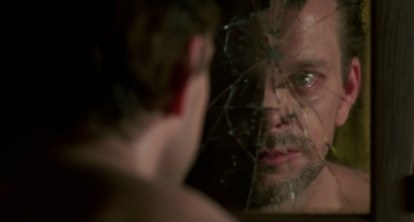
A nightmarish fever dream of despair, discovery, and darkness is what makes Alan Parker’s ANGEL HEART one of the very best films of the 1980’s. Featuring a greasy and tobacco stained Mickey Rourke, a fresh and innocent Lisa Bonet, and Robert De Niro in one of his most underrated and undervalued performances.

The brutal violence and horrifying imagery of Rourke’s downward spiral are made up of this harmoniously tranquil aesthetic that makes the film even more terrifying and unnerving. At times, the film almost challenges its viewer to look away from the screen, but it knows you cannot because you’ve become so enamored with the richly lathered story that quickly unfolds.

angelheart1

Rourke gives one of his finest, if not best performance as the amoral and skeevy private investigator who doesn’t have any limitations of what he’ll do for a paycheck. As his story arc comes to a close, Rourke transforms his character into a man who’s conflict gains nothing but sympathy from the viewer.

De Niro gives a brilliant and subtle turn as a man who is so powerful and dangerous his very presence in the film leaves you feeling violated. De Niro has often been hailed for his award-winning performances, but this role deserves as much attention and acclaim if not more.

Director Alan Parker is almost an unsung hero as a filmmaker. He’s made countless films throughout an array of genres, never allowing himself to become beholden to any of them. His films are topical, emotional, and more times than not unique pictures that find their way into your consciousness and are rarely forgotten. ANGEL HEART is a film that few have seen but no one will ever forget.

BARRY LEVINSON’S THE YOUNG SHERLOCK HOLMES — A MINI-REVIEW BY NICK CLEMENT

1

Out of all of the underrated movies that Barry Levinson has made, and there’s been lots of them, The Young Sherlock Holmes might just be his most unsung, as it’s an affectionate love letter to the classic character while going to great lengths to inject its own distinct personality into the proceedings, with a smart and playful script by Chris Columbus that’s much darker than I initially remembered it being. The cast was excellent, with Nicholas Rowe and Alan Cox making for a great team as Holmes and Watson, while Sophie Ward, Anthony Higgins, Freddie Jones, Susan Fleetwood, and Roger Ashton-Griffiths rounded out the classy and authentic ensemble. The film looks absolutely beautiful, with gorgeous widescreen lensing by Stephen Goldblatt, who stressed smoke and shadows, and evocative art direction and costumes which bolstered the Amblin production. While not a massive box-office hit, I’d like to hope that this movie has found a healthy life on video, and I think it’s totally worthy of the Blu-ray treatment.

2

Demon – A Review by Kyle Jonathan

Demon

2016.  Directed by Marcin Wrona.

full_demon2_770

Everyone has experienced an abysmal wedding.  Open bars often lead to the salting of old wounds, while decades of familial dysfunction rear their heads in defiance of matrimonial amnesty.  Marcin Wrona’s final film, Demon, takes this concept into overdrive, delivering an unrelenting allegory of loss and the bloody history of Poland that plays out during a vodka soaked wedding in which patriarchal denial, deep seeded cultural hatred, and supernatural heritage violently erode the festivities with pitch black humor and disturbing imagery.

Wrona took his own life shortly after the film debuted, and his untimely death enshrouds every aspect of the film.  On the surface, Demon presents as a dark comedy that toys with horror motifs in a Bunuel like presentation of people trapped within a central location.   The setup involves a controversial wedding held at a familial plot in Poland in which the groom is infected by a paranormal entity.  The film’s protagonist, an English pariah to the Polish family at the center of the story, slowly begins to succumb to possession by a Dybbuk, an ancient spirit of Jewish folklore.  As the groom’s behaviors continue to spiral out of control, the bride’s family members react in a variety of ways, ranging from tragic exploration of the incident to drunken dismissal, representing the various reactions of both time and memory to the holocaust and the role of Poland in the proceedings.

hero_demon-2016

Itay Tiran’s performance as the doomed Piotr involves exhausting physical contortions and uncomfortable exchanges that go beyond traditional horror expectations.  Demon’s unique presentation, in which elements from beyond expose horrific historical realities, takes an inverted approach to the typical demonic possession fodder.  There is virtually no bloodshed or brutality and yet the film’s nihilism sustains itself for the film’s 90 plus minute duration, leaving the viewer with a depressing aftertaste from the futility of redemption in the wake of millions of souls being extinguished.  Non Polish speaking viewers may lose some of the context, but the sickly manner in which the participants each flirt with the notions of protecting their perfect wedding over confronting the evils of the past is both egregious and hysterical, deliciously imparting Demon’s dark gift to the audience.

Pawel Flis’s cinematography is covered in yellowing nicotine stains and opulent speakeasy lighting that is nestled within the farmhouse’s rustic setting to create a a mood of uncertainty.  The past and present intermix through fluid physicality and nonsensical dialogue that uses drunken verve to hide that which the viewer has already seen.  While denial is the central artery that runs throughout, it is truth underneath the deception that is the film’s hopeless center.  Demon’s corrupted wedding present is the inescapable knowledge that no one, be it inebriated guest or slowly traumatized viewer, gets out unscathed.

maxresdefault

Available now for digital rental, Demon is a tough film with unsettling ideas that is completely devoid of hope.  The antithesis of feel good entertainment, if you’re interested in an unconventional horror film that explores the atrocities of the holocaust in a satirical and frightening manner, Demon will not disappoint.

Highly Recommend.

demon-vista-en-sitges1

De PALMA – A Review by Frank Mengarelli

de-palma

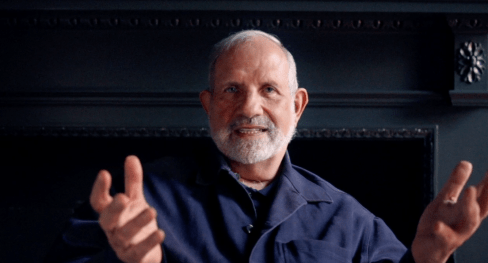
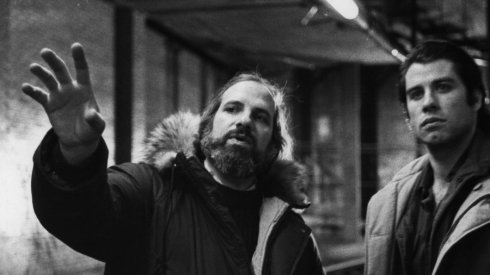
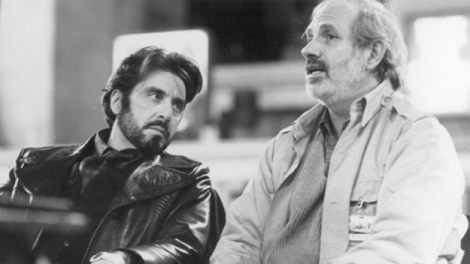
DE PALMA is without a doubt one of the best films of the year. It is a candid and refreshing documentary on one of cinema’s most important voices. He speaks about his beginnings, his failures, successes, in a very honest and touching way.

Like his filmography, the doc’s singular voice is De Palma, not once is the interviewer heard, and only once does De Palma himself address them. It is an incredible amount of joy to sit and listen to him talk for nearly two hours about each one of his films, giving us unique insight, humorous anecdotes, how his personal life affects his films, and brutally honest assessments of his work and actors he’s collaborated with.

de-palma-de-palma-still-travolta_rgb_wide-8a9f5debe007a2831070e3cee8c2226283de950c-s900-c85

De Palma doesn’t shy away from talking about his unpleasant working relationship with Cliff Robertson on OBSESSION, or his disdain for Robert Towne’s changes to MISSION IMPOSSIBLE, or how he had to have Oliver Stone removed from the set of SCARFACE. Perhaps the best story is of the constant strife between Sean Penn and Michael J. Fox on the set of CASUALTIES OF WAR.

What makes a great documentary is honesty. Particularly when the director of the doc isn’t purposefully manipulating the doc to their liking, or trying to control the subject and/or film into having a preordained outcome.

carlitos-way-brian-de-palma-al-pacino

Directors Noah Baumbach and Jake Paltrow just let De Palma talk. They allow him to speak freely about everything, and it is a marvel to watch. The only negative marks this film gets is that it’s only an hour and fifty minutes. Surely we could listen to De Palma speak for at least six hours, right?