Assault On Precinct 13: A Review by Nate Hill 

Assault On Precinct 13 is less of a remake of John Carpenter’s balls out, guerilla action treatise and more of a branch off into timeless, near western archetypes, as well as the good old siege thriller format. It’s also one of the meanest, grittiest cop films of the last few decades, deserving a higher rung on the ladder of adoration than it has so far ascended to. Dark, merciless and full of yuletide gallows humour, it’s a searing blast of gunfire and snowbound pulp starring a roster of fired up talent, starting with an intense Ethan Hawke and an unpredictable, predatory Laurence Fishburne. Fishburne is Marion Bishop, a legendary criminal kingpin wrapped tight in police custody and shipped off to a remote precinct on New Years eve with a busload of fellow prisoner transports. The station is run by a few relaxed cops, all preparing to punch that clock and get the New Year’s festivities underway. Unfortunately, a gang of corrupt detectives have other ideas, descending upon the ill guarded outpost with the fury and firepower of animals set loose, determined to murder everyone inside and level the place to the ground in order to cover up their actions. Hawke is the veteran cop with a dodgy undercover past, blessed with the grit and gristle necessary to rally the troupes and self preserve til the morning light. Drea De Matteo, who’s awesome and welcome in anything, is a tough female sergeant, Maria Bello the sharp police psychiatrist caught in the middle, Brian Dennehy the salty old dog, and a laundrey list of rabid felons who pitch in to save their own asses, including Ja Rule, Aisha Hinds, Currie Graham and a wired up John Leguizamo. Together they all make a veritable wild bunch to hold down the fort, but the forces they’re up against are tactical and terrifying. The opposition is headed up by a dangerously quiet Gabriel Byrne as deeply a corrupt Police Captain, doing a coiled viper rendition of a Christopher Walken villain, his work one of the strongest aspects of the film. Watch for Matt Craven and Kim Coates in brief cameos as well. The action is a ballistic blitzkrieg of firefights, standoffs and ditch efforts, scarcely giving the audience time to breathe, let alone tally up the casualties, of which there are many. This ain’t no cakewalk, in terms of action films. It’s down, dirty and has no time for quips, smart mouths or villains that monologue. Everyone involved in a caged animal prepared to go to extremes at the drop of a hat in order to achieve their goals, with kneejerk reactions and off the cuff violence that feels real, and cuts deep. If you are serious about your action films, and enjoy ruthless, non patronizing narratives that get as cold as the snow drifts surrounding the precinct and as casually indifferent as the bullets that ventilate it, this is your ticket. 

UNDER THE SHADOW (2016) – A REVIEW BY RYAN MARSHALL

UNDER THE SHADOW, the eerie slow-burn chiller that marks the directorial debut of Babak Anvari, indulges in a particularly dangerous dance. It’s a dance of many genres, many aspirations, and many roadblocks, and to be fair, Anvari almost gets us to a point where everything comes together to initiate a satisfying whole. In this sense, he’s already ahead of the game, even if the Iranian-born filmmaker doesn’t always seem content to be playing the field.

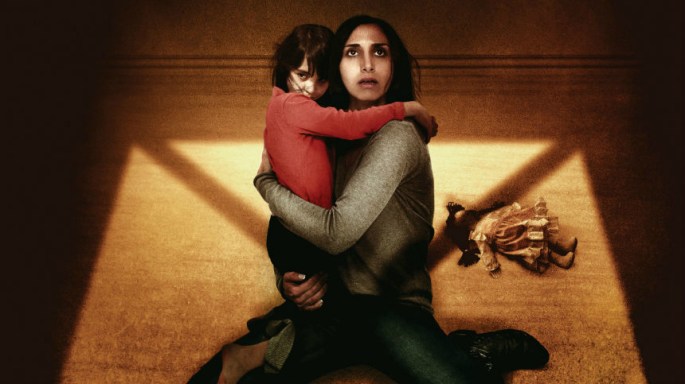
Set in post-revolution Tehran during the 1980’s, this macabre tale begins as former medical student Shideh (Narges Rashidi) is denied the opportunity to continue her studies as a result of being involved with Leftist activists in the past. At home, Shideh has plenty to worry about as it is – her husband Iraj (Bobby Naderi), a doctor, tends to openly undermine his wife’s achievements and their daughter, Dorsa (Avin Manshadi), often retreats to a fantasy world that she believes in a bit too much – while the war rages on outside.

undertheshadow1-1600x900-c-default1

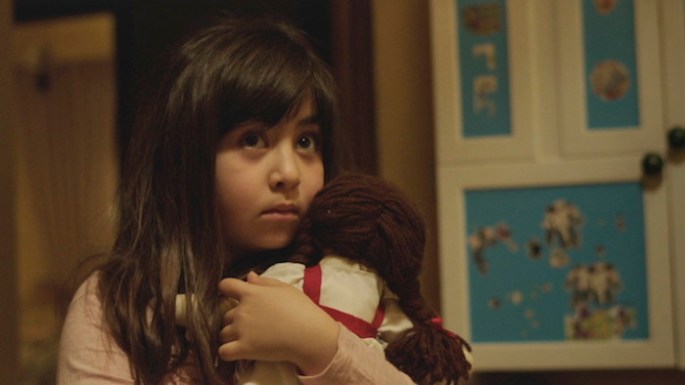
Iraj’s medical assistance is needed in the heart of the combat zone and he must leave his family in the city for an extended period of time. Soon after his departure, a missile lands on the apartment directly above theirs, resulting in the death of one of its elderly tenants. Following the incident, Dorsa’s behavior becomes slightly erratic. She loses her favorite doll and constantly searches for it inside and outside of the apartment, believing that its disappearance is linked to a malicious spirit known as a “Djinn”, which may have possessed their home.

Shideh’s initial reaction is to chalk it up to an over-active imagination, but then terrifying visions begin to plague her fragile psyche during both night and day alike, and she finds herself, much like her child, no longer able to discern reality from fantasy. Anvari handles her struggle to reclaim individual strength and identity with grace, crafting an at times clever and never less than engaging feminist parable. In terms of social-political context, it uses its monster as an obvious metaphor for the ramifications of war, and it’s in this realm of lingering, impactful terror that UNDER THE SHADOW exceeds.

under-the-shadow1

It’s also here that it tends to stumble. The film is at its brooding best when embracing the power of implication, patience, and silence all at once, but its alternating concepts of fear seem, at times, contradictory. On one hand, it makes a conscious effort to be intelligent genre fare, seldom resorting to cheap shock tactics and utilizing the widescreen compositions to their maximum, anxiety-ridden potential; but there are also far too many instances in which initially effective sequences amount to little more than underwhelming jump scares. It’s as if whenever Anvari has something beautiful he feels the need to destroy it. This unfortunately also goes for the (thankfully few) glimpses the viewer is granted of the “Djinn” itself, which – mostly due to some pretty lame CG effects – are more ridiculous than blood-curdling, save for a genuinely ominous moment involving an old man and the colossal cracks in the apartment ceiling.

This isn’t a bad film, in fact it’s mostly a pretty good one, but it clearly wants to be so much more than that and there’s absolutely no reason why it shouldn’t be. It’s well made, performed, conceived, overall well-intentioned but one can’t shake the feeling that it’s the work of a director caught up in certain contemporary genre trappings, the kind that tend to obscure a poignant message. Anvari wants to have his cake and eat it too, which doesn’t always have to be a bad thing. It’s a sign of clear ambition and, especially in his case, talent. But next time he’d be best to count his blessings and roll with them rather than drive himself into such a dark, discouraged corner as this.

MCCABE AND MRS. MILLER (1971) – A REVIEW BY RYAN MARSHALL

vlcsnap-2016-12-04-11h04m09s156.png

Surely a seasoned connoisseur of the silver screen can relate the experience of watching a film to emotional responses which seem to transcend the medium all-together. For instance, certain films may have a distinctive smell; others might even allow one to taste something either delectable or truly putrid on the tip of their tongue. Robert Altman’s MCCABE AND MRS. MILLER, a whiskey-soaked indictment of American idealism filtered through the abstracted gaze of a hazy opium den, truly has the best of both worlds – the film smells strongly of musk and is bitter to the taste but nonetheless warm once it’s in you. It has the benefit of seamlessly evoking homeliness and absolute desolation in equal measures; not once is one allowed to truly sit back and take in the spectacle on a base level, but if that’s not somehow oddly ingenious in its own right, then I’ll be damned.

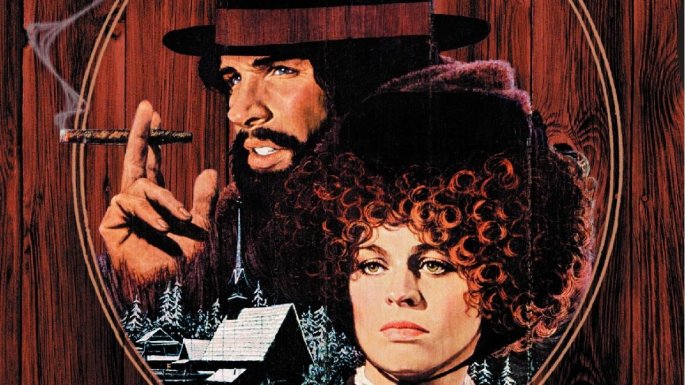
John McCabe (Warren Beaty) arrives in Presbyterian Church, Washington as a stranger, but soon establishes himself as a legend of his own distinct variety. A gambling man with a detrimental love affair with the bottle, McCabe is immediately met with suspicion on the part of the townspeople, who suspect he’s really a gunslinger that shot one of their own over a card game some time ago. Nevertheless, it’s his reputation – coupled with his intense personality – that allows McCabe to be seen as a leader among loners and losers in this quiet little Northwest town. It is here that he aspires to establish a brothel, the first step in doing so being the acquisition of three women from one of the neighboring towns.

vlcsnap-2016-12-04-11h00m37s494.png

This, of course, will hardly be substantial in the long run. Along comes another stranger, Constance Miller (Julie Christie), who proposes that the two become business partners. It’s an offer that McCabe simply can’t refuse, and they’re all the better for it; it’s not long before three girls turns into about a dozen and the establishment is doubling as a bathhouse. As rewarding as this venture appears to be, the attempted intervention on the part of a nearby mining company indicates there may be trouble ahead for both business and personal pleasure alike.

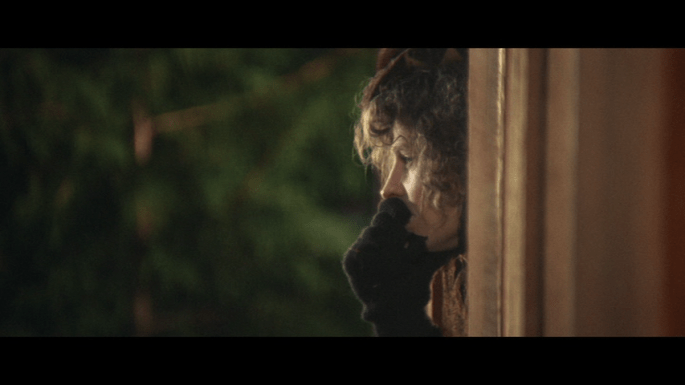
Only a select few films have a kind of palpable density that the viewer feels right in the gut, and as it turns out Altman has made quite a few of them. Throughout the course of just two hours, man himself is challenged (the tragedy of masculinity suppressing all which stands in its path), and everything – land and life alike – has a dollar value. For instance, when McCabe continually refuses the offers from the mining company’s shady representatives, they send over a trio of bounty hunters to seal the deal. Afraid for his life but unwilling to leave the town and business he helped start, McCabe turns to his lawyer for advice, but is instead treated to a spiel that basically amounts to the company’s safety being favored over McCabe’s. The poor bastard’s response is genuinely haunting: “Well I just, uh…didn’t want to get killed.”
vlcsnap-2016-12-04-11h01m11s299.png

This is a film that soars, perhaps even more-so than the average Western (MCCABE is revisionist). Altman’s uncanny genius can be traced back to his modesty, quite an appealing quality in any artist, though given the sense of scale and impeccable attention to detail present in his work it’s almost a bit amusing. And yet, even though there are moments of genuine humor, no doubt provided by McCabe himself, the character remains a tragic one; one whose deepest flaws would appear to be almost entirely of his own making. The man is an enigma and a half to the naked eye. And Mrs. Miller, who as it turns out has a bit of an opium habit, is essentially the product of an unnecessarily harsh world dominated by the opposite sex, a world in which her expertise doesn’t seem welcome. And thus, the romanticism of the genre is stripped from Altman’s warped worldview, and in its place a new kind of grandeur emerges.

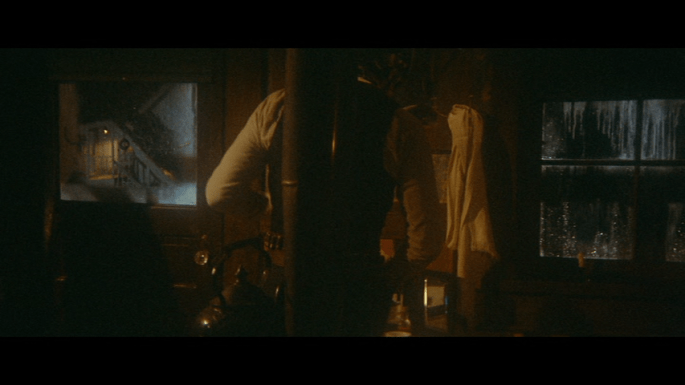
It goes without saying at this point, forty-something years after the fact, that Vilmos Zsigmond’s cinematography is absolutely note-perfect. The world in which the tortured, titular souls occupy is one largely confined to dark rooms and dusty bars; and the town’s exteriors couldn’t possibly be any rougher. There’s an inherent bleakness to it, and yet when there is any semblance of light shining bright at the end of the tunnel, it does not go unnoticed. Not only does this feel absolutely distinctive in terms of its genre, Altman and Zsigmond go the extra mile to find beauty in even the most deliberately obscured of images. Form is no longer so well-defined and the rules no longer apply in the same way that they used to.

vlcsnap-2016-12-04-11h02m07s361.png

Altman’s films tend to have rich, multi-dimensional soundscapes in which the abstraction of sonic perception gives way to a new language of its own. Here, no spoken word is free of the director’s unique grasp. Conversations are always overlapping to the point where the subject becomes more important to the viewer than the content, which is ultimately an effective method of conjuring up such an off-kilter atmosphere. Lou Lombardo’s editing is equally as inventive – time feels almost nonexistent in this town after we’ve spent a considerable amount of time there. The focus shifts between characters both integral to the central relationship and generally insignificant, adding to their collective mystique. Altman challenges us to embrace this very quality head-on, to return to a sort of exhilarating ambiguity that audiences of today have all but shunned.

The frontier unveils new angles from which to exquisitely immortalize it and the frontiersmen themselves remain largely the same. The cinema of transcendence is alive and well, drinking bourbon by the fireside, mumbling incoherently under its bearded breath. The lovely, brooding songs of Leonard Cohen allow it – and us – to drift off into a state of near unconsciousness; a state from which we’d hardly like to return. MCCABE AND MRS. MILLER is a subtly colossal achievement, especially in the positively brilliant final twenty minutes, a film of dreamy, universal resonance. It’s a world you could settle into for twice – perhaps even triple – the length we’re provided with. “I know that kind of man, it’s hard to hold the hand of anyone who is reaching for the sky just to surrender. And then sweeping up the jokers that he left behind, you find he did not leave you very much, not even laughter.”
vlcsnap-2016-12-04-11h02m46s213.png

JOSEPH SARGENT’S WHITE LIGHTNING — A REVIEW BY NICK CLEMENT

3

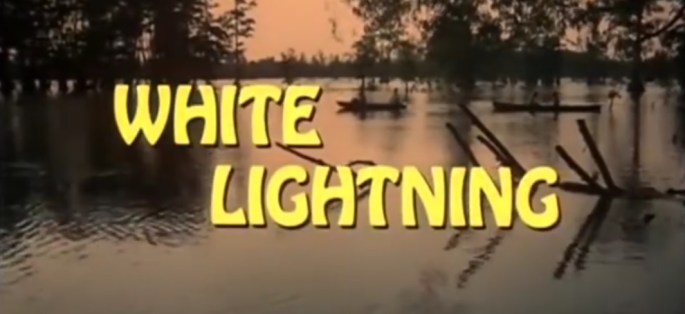
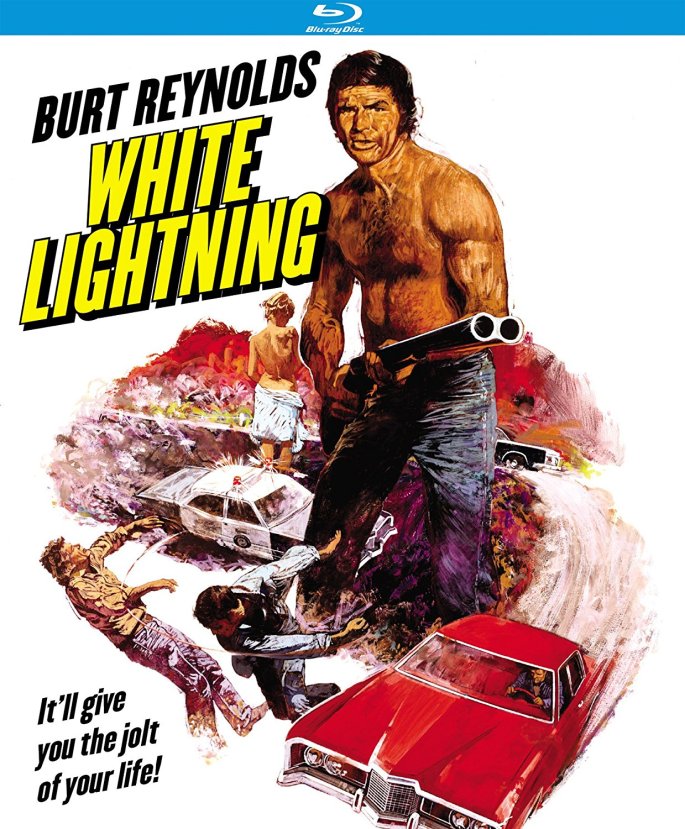
It might be hard to imagine now, but back in the day, Burt Reynolds was one of the biggest stars of his generation, appearing in a string of massive box office hits that cemented him as one of the most consistent big-screen draws of the 70’s. Released in 1973, Joseph Sargent’s hilarious and rowdy Southern-tinged action flick White Lightning was a wild and woolly introduction to the Robert “Gator” McKlusky character, giving Reynolds the perfect opportunity to project his patented brand of laconic cinematic sexiness, playing a man of action in every sense of the word. Written with pep and a penchant for idiocy by scribe turned illegal arms dealer William W. Norton (Brannigan, Gator, Sam Whiskey, The Man Who Loved Cat Dancing), White Lightning revolves around “Gator” McKlusky, an Arkansas prison inmate who was thrown in the slammer for running moonshine. Complications arise when he learns that his younger brother has been killed by a corrupt local Sheriff, who happens to be in cahoots with other rival moonshiners. He’s then removed from prison and sent undercover in a joint sting operation to bring down the crime ring.

2

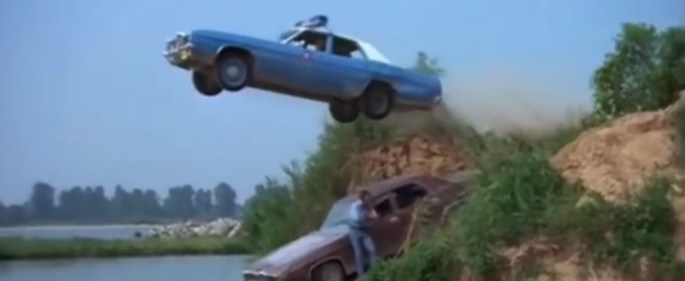
All hell breaks loose, there are numerous car chases, and an absolutely rip-roaring finale goes down with a car launch that is truly crazy. Jennifer Billingsley, Ned Beatty, Bo Hopkins, Diane Ladd, and Laura Dern in her screen debut (she went uncredited) populated the solid supporting cast, with Beatty giving a particularly fun performance as the chief baddie. Cinematographer Edward Rosson shot with what appears to be mostly natural or available light, with a particularly moody opening sequence depicting an ominous canoe excursion through the bayou that evokes nature in an unpredictable fashion. The twangy soundtrack perfectly fit the milieu, with Charles Bernstein’s original score later getting sampled by the cinematic kitsch-pop icon Quentin Tarantino in Kill Bill: Volume 1 and Inglorious Basterds. The legendary Hal Needham handled second unit direction and stunt coordination duties; his list of credits in various capacities is absolutely outrageous.

wlSargent, who also directed Colossus: The Forbin Project, The Taking of Pelham One Two Three, and the disasterpiece Jaws: The Revenge, wasted no time with the lean screenplay, and injected some sly social commentary into the proceedings; watch for a rather phenomenal long-take that incorporates various characters into a quick mosaic of Southern life. At one point, Steven Spielberg was set to make his feature directing debut with White Lightning, and you can even see some similarities between the film and his eventual big-screen introduction, The Sugarland Express. Kino-Lorber’s Blu-ray release looks and sounds excellent, with a picture quality that likely reflects the original release print, as nothing looks artificial, with that sense of shot-on-true-celluloid still intact. The film’s priceless original trailer and an new and funny interview with Reynolds are included as special features. A sequel, simply titled Gator, would be released in 1976 to similar success with audiences if not critics.

1

ROBERT WISE’S THE SAND PEBBLES — A REVIEW BY NICK CLEMENT

1

Robert Wise’s epic 1966 action adventure The Sand Pebbles, from a screenplay by Robert Anderson (who adapted from Richard McKenna’s book), stars the extra-manly Steve McQueen as a headstrong Navy officer working as a machinist on the fictional USS San Pablo in 1926, which is patrolling the Yangtze River while fighting rages between communist rebels and Chinese warlords. With the ship under threat after taking civilians aboard, the situation changes when McQueen shows that patented rebellious streak, taking matters into his own hands when he and his crew are ordered to protect American lives at all costs. Shot on location in Hong Kong and Taiwan over the course of seven months, The Sand Pebbles feels absolutely huge on all levels, boasting truly epic production values and a sense of scale that feels rather awe-inspiring considering our current day and age of create-everything-in-the-computer-laziness, while the narrative clearly doubled for a rather potent anti-Vietnam war statement.

2

Jerry Goldsmith’s brash and adventurous musical score is a major bonus, while the super-widescreen cinematography by Joseph MacDonald is positively eye-filling, with both large and small details. The deep supporting cast included Richard Attenborough, Richard Crenna, Candice Bergen, Mako, Larry Gates, Simon Oakland, and Marayat Andriane. A critical favorite and hit with audiences, The Sand Pebbles received eight Oscar nominations (including McQueen’s only Best Actor nod), and has remained a cable TV favorite for years. McQueen became physically exhausted after the extensive production, requiring a one year break from any filming, and dental work needed to repair an abscessed molar which he refused to have fixed while out of the United States. Originally released as a 182 minute feature, with a 196 minute roadshow version also screened after 14 additional minutes were discovered years after it premiered. The Sand Pebbles is available on Blu-ray and DVD in various releases.

3

Cutthroat Island – A Review by Kyle Jonathan

Cutthroat Island

1995.  Directed by Renny Harlin.

cutthroat-island-1995-stan-shaw-geena-davis-pic-2

Considered to be the biggest box office failure of all time, Renny Harlin’s robust pirate homage was doomed from its origin.  The final movie produced by Carolco Pictures, Cutthroat Island is a remarkably average adventure story encased in staggering practical effects packaging.  Taking a by the numbers approach to the tried and true swashbuckling formula, the film tells the story of a brash female captain and her ragtag crew who are searching for a fabled island that holds immeasurable wealth while being pursued by corrupt politicians and other unsavory nautical nomads.

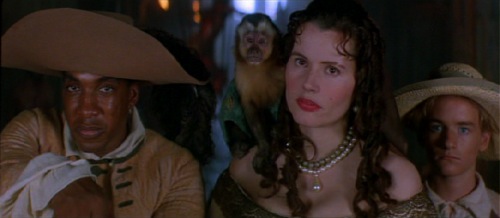
Geena Davis was married to Harlin at the time of her casting, with Harlin intending for the role to springboard Davis into other action films.  Michael Douglas was originally cast as her love interest, however, after countless difficulties, dozens of actors turned the role down and Matthew Modine was cast.  Their chemistry has a flaccid quality that never attempts to break free of the script’s tired retreading of the genre, echoing the mediocre heart at the core of Cutthroat Island’s story.  They’re supported by the wonderful Frank Langella as the villain and Maury Chaykin as a starstruck chronicler of piracy.  Langella’s sweat soaked mad dog is the standout, but even his formidable talents can’t synthesize the idea that anyone had a good time making this film.

cutthroat-island2

Robert King and Marc Norman’s script is presented as an inverted King Lear in an attempt to put a spin on the buried treasure formula, but there is never enough time.  This is a film about action set pieces, and the plot exists only as a vehicle to get you to the next one.  Peter Levy’s baked cinematography is surprisingly fun and loose, offsetting the oddness that taints the film.  Filmed on location in Malta and Thailand for the sea battles, sunlight captures the cannon smoke and gunfire in a hail of fiery oranges and grainy turquoise, Sweeping, all too familiar, camera angles capture the naval carnage aerially until nosediving into perilous close ups of the swordplay.  The explosions are the most impressive part, with one in particular being so devastating that the camera actually reverberates from the impact, taking the viewer directly into harm’s way.

Roger Cain and Keith Pain’s art direction is flawless.  The film employed thousands of extras, hundred of replica weapons, and the ships were built to scale from the ground up.  Maggie Gray’s period perfect set direction and Enrico Sabbatini’s grungy costumes combine with the practical effects to give Cutthroat Island an epic feeling that almost manages to overcome to narrative flaws.

0212

Available now for digital rental, Cutthroat Island is an impressive piece of technical film making.  Every element of the craft looks and feels authentic because they’re real.  The irony is that the human elements, the acting and the plot, feel out of place and counterfeit, overshadowed by artistic obsession and a studio that couldn’t admit it had already died.  Had the film been better marketed, it’s possible that it would have been more of a success, solely for the one of a kind craftsmanship that was involved in its construction.  Come to see things blow up.  Stay to see more things blow up.  If you’re looking for a loyal pirate adventure piece with jaw dropping action, Cutthroat Island doesn’t disappoint.

Recommend.

3917458647_723ca1b7f8

PTS Presents Writer’s Workshop with Jeremy Pikser

pikser-powercast

pikserPodcasting Them Softly is thrilled to present a chat with special guest Jeremy Pikser. Jeremy is the Oscar nominated co-writer of Warren Beatty’s hilarious and more relevant than ever political satire Bulworth. He also served as a creative consultant and did uncredited writing work on Beatty’s epic drama Reds. Other screenwriting credits include War Inc. and The Lemon Sisters with multiple new projects in the pipeline. Jeremy teaches graduate screenwriting at Johns Hopkins University, and before that, was a screenwriting teacher at NYU’s Tisch School of the Arts. He’s serves as Vice President of Writers Guild of America East, and he’s also a regular adviser at the Sundance Film Festival’s Screenwriter’s Lab. A lifelong political activist and graduate of Oberlin College, Jeremy was one of the original organizers of the Not in Our Name Statement of Conscience, which opposed the US-led invasion of Afghanistan and Iraq, while he’s written posts for The Huffington Post, The Guardian and CounterPunch. We hope you enjoy this fantastic discussion about films and politics!
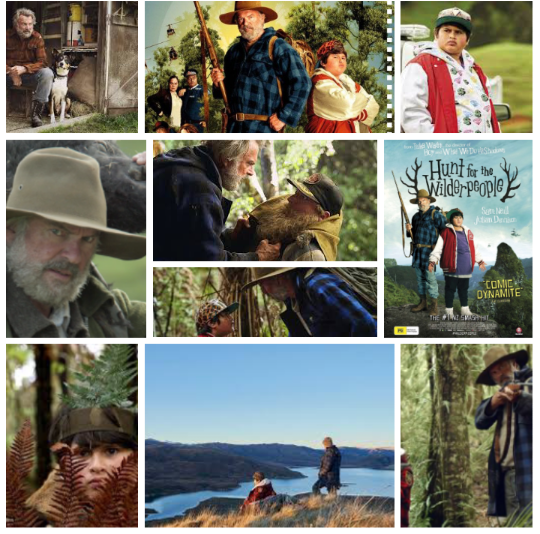
Taika Waititi’s Hunt For The Wilderpeople: A Review by Nate Hill 

Taika Waititi’s Hunt For The Wilderpeople speaks to the lost boy in all of us, tweaks our sense of humour with subtle doses in all the right places, taking what could have been a familiar feeling story and sending it miles down the road less traveled, in terms of emotion, comedy, script and pacing. This film has the largest scope of any he has made so far, but it’s purely for atmosphere; he remains steadfast in his need to explore what fascinates him the most: people. Their fears, desires, eccentricities and idiosyncrasies laid out bare and blunt, with none of the trademark gloss or cookie cutter cue card normalcy that so much writing has these days, clouding the potential for characters to feel geniune. They feel just that here though, and inhabit a world of harsh realities, unpredictable outcomes and organic, unforced interaction. Hell, even when his protagonists are vampires, they still feel far more lifelike than many a human character in film these days. The story is benign, until slowly kindled by all the elements I have just outlined. Child services, in the form of a tyrannical bitch (Rachel House), bring wayward boy Ricky (Julien Dennison, a wicked new talent) to stay with his new foster parents on a remote farm in rural New Zealand. The couple (Rima Ti Wiata and the legendary Sam Neill) couldn’t be more different than the young lad. He’s a hoodie wearing, rap rhetoric spewing, pop culture paintball gun of colloquial gibberish and big city malarkey. They are a withdrawn, earthy, isolated type of folk, content with farm life and each other’s company. Ricky is a disruption which they both need, creating a mini culture clash that provides countless moments of amusement as we wade our way into the story. The aforementioned unpredictability strikes when Neill’s wife passes away without buildup or ceremony, leaving him and a kid he barely knows, let alone likes, alone in the world. What follows is a touching, picturesque and endlessly funny glimpse at two people who are thrown into the thick of it together. These people are both lost in different ways; Ricky has never known a real family, tethered to nothing and set adrift among a sea of cyber role models and unreliable elders. Neil has just spent the majority of his life in a rock steady routine with his farmer’s wife and clockwork existence, suddenly unmoored and left with not a clue how to proceed. The two are hilarious together, providing each other with bushels of character development and scene after scene of purely inspired, bona fide human interaction that feels so utterly, blessedly unforced. They’re set among a slide show of breathtaking scenery, lively supporting work and attention to detail that adds up to quite the unforgettable package. If Waititi’s latest is any indication of what’s to come, lay down that red carpet runway post haste, because he’ll continue to take us by storm.

PETER HYAMS’ THE STAR CHAMBER — A REVIEW BY NICK CLEMENT

1

Peter Hyams made a career out of crafting extremely entertaining studio actioners, and one of my favorite efforts from this underrated helmer is the 1983 mystery crime thriller The Star Chamber, which stars Michael Douglas as a paranoid and pissed-off Judge who gets too close to a shady group who may or may not be responsible for a series of murders, with the kicker being that their targets are those who have abused the criminal system, escaping on technicalities in cases where it’s obvious that they’re guilty. Written by Hyams and Roderick Taylor (The Brave One) from Taylor’s original story, the film has fun playing games with the audience, while the plot is just over the top of enough without becoming totally absurd, allowing you to slip into “movie-land” for two hours and take a wild ride. It’s also interesting to note that The Star Chamber shares some thematic and stylistic elements that were explored in David Fincher’s criminally underrated 1997 film The Game (both films are visually obsessed with finding the appropriate shade of brown), with the main linkage between the two clearly being Douglas and his patented brand of stressed-out and volatile dramatics.

2

The superb supporting cast includes an ominous and sketchy Hal Holbrook, Yaphet Koto, Sharon Gless, James B. SIkking, David Faustino, Joe Regalbuto, Don Calfa, Larry Hankin, and David Proval. Hyams, who typically served as his own director of photography, teamed up with cameraman Richard Hannah to achieve The Star Chamber’s shadowy and burnished widescreen visual style. Michael Small’s unnerving score added intensity and suspicion to nearly every scene. Some interesting questions of morality are thrown into this pulpy genre stew, while Hyams’ sure hand behind the camera made for an extremely entertaining concoction that finishes up on an intriguing note of possibility for all of the key players. This is a shifty and nifty little actioner that is worthy of rediscovery, especially by those who are fans of Hyams’ unpretentious and rather awesome filmography.

3

Upstream Color – A Review by Kyle Jonathan

Upstream Color

2013.  Directed by Shane Carruth.

amy-seimetz-stars-as-kris-and-shane-carruth-stars-as-jeff-in-upstream-color-2013-movit-net_

What draws us to one another?  How can you explain the feeling you get when you meet someone for the first time and it’s as if you’ve known each other your entire life?  Shane Carruth’s puzzling masterpiece, Upstream Color, is an artistic triumph, a one of kind exploration of the human condition that is a transcendent science fiction emotional epic.  What begins as a hypnotic violation transforms into a careful examination of desire and intimacy, using philosophical concepts and poetic visuals to impart a story about breaking the chains that confine relationships and embracing the basic connections that define humanity.

Carruth wrote the script, which tells a cyclical love story that is compounded by a profound investigation of partnerships.  Replete with abusive symbolism, indescribable loss, and unimaginable parental terror, this is a truly unique film that deftly evades summation, requiring a surplus of patience and a complete surrender to it’s surreal presentation.  Carruth’s delicate cinematography has a dream like quality whose marriage with the film’s (also created by Carruth) entrancing score creates a world within the screen, slowly pulling the viewer into its gentle warmth with each imaginative sequence.  There is a terse mixture of brilliant colors and muted environments.  Everything brims with life, but as the characters begin to work through their situation, everything is presented as purposefully restrained, slowly, inevitably regaining more and more vibrancy as the narrative coasts towards its hopeful conclusion.

post-primer

Carruth and Amy Semietz are sensational as Jeff and Kris.  The film has a paltry handful of dialogue riveted into specific segments that act as a guide post more than an explanation, keeping the viewing within the story’s confines, but allowing them to float from one idea to another as the images and revelations entwine to form the center of Kris and Jeff’s coupling.  Semietz taps into raw primal energy and leaves everything on the screen.  Heartbreak, attraction, bereavement, revenge, and salvation are all played out with perfect nonverbal communication, whose intensity only magnifies with each viewing.  Victimization is one of the most important parts of the story, but Semietz portrays this as a natural, expected side effect of an intense relationship, rather than a pitiable aftermath.  Hurting the ones we love is a constant theme in cinema, but Carruth subverts this idea by giving the concept a metaphysical representation of a living organism that pervades through Jungian oceans of time.

Available now on Netflix, this is a thoughtful, beautifully constructed argument for the merits of the soul.  Endlessly divisive due to its lack of coherent structure and traditional dialogue, this is a movie that will confuse as much as it endears.  A touching love story with a sci-fi twist whose enigmas glacially unfold throughout its somber resuscitation, Upstream Color is an experience like no other.

Highly.  Highly Recommend.

upstreamcolorstills_0004_screen-shot-2012-12-04-at-3-15-13-pm-png