Evolution – A Review by Kyle Jonathan

Evolution

2016.  Directed by Lucile Hadzihalilovic.
images-3

Evolution is a cerebral puzzle box.  A slow burn reverse horror film, Lucile Hadzihalilovic’s second feature is the definition of high art.  Told in a deliberate whisper, with some of the most evocative cinematography of the year, this is a movie that poses endless conundrums and offers absolutely no relief.

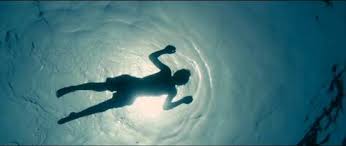
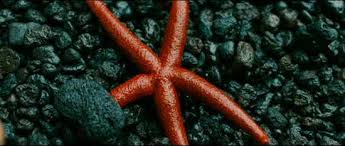
Nicolas is one of many boys who live on a secluded island with an enigmatic group of female nurses..  While swimming in the ocean, Nicolas comes upon a body with a starfish attached to its stomach.   The discovery forces Nicolas to question his reality and begin an exploration of the island’s dark secrets, leading to a terrifying discover in which the definition of humanity will be rewritten into a terrifying commentary of the propagation of a species.
images-2

Manuel Decosse’s camera work is a revelation.  Using a combination of sharp colors and blinding light, exotic animals become harbingers of terror, as extreme close ups capture natural undulations in uncomfortable contexts.  The underwater sequences, particularly in the opening, are so clear that they have a porcelain quality, perfectly representing Nicolas’s fragile world view that is precariously close to fracture. Nothing is overt, with even the film’s centerpiece, a shadowy “entanglement” being obscured in deep shadows, with torch light rippling across writhing flesh, but never fully revealing what is transpiring.

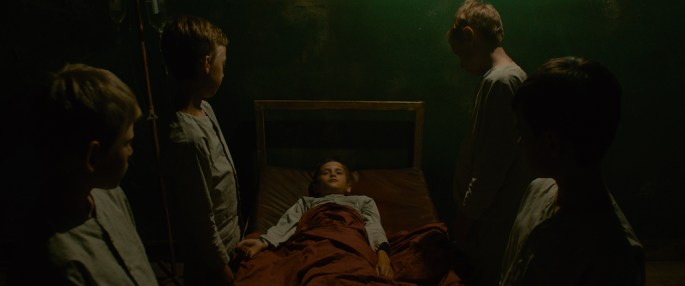
Hadzihalilovic and Alante Kavait’s script takes an extremely minimalist approach, using only the most basic of dialogue, allowing the visuals to do the lion’s share.  The ideas of evolution, primal identity, and maturation are all in play, with each forming a pillar beneath the island’s happenings.  Nurses watch surgery videos with a disquieting sense of pragmatism while the boys are subjected to archaic medical cures for a disease Nicolas doesn’t believe any of them have.  The glacial build up never pays off, with the reveal being obvious, but it’s the questions that remain that make Evolution special.
evolution

The makeup and digital effects enhance the mystery, revealing clues as to the women’s origins, infusing a sense of nautical mythology into the film that when considered along with the other evidence construes a shocking plausibility.  The cyclical nature of life and death are constantly at odds, with both Nicolas and a sympathetic nurse grappling with natural changes that neither of them can control, and it is this conflict that injects an unusual sense of hope into the final act. It’s impossible to get specific with a summation, as Evolution demands that the viewer come to their own conclusions, and that is a task that is impossible without spoiling the essence of this story.

Available now for digital rental, Evolution is a movie that is not for everyone.  Another stunning entry into the New French Extremity, proving once again that female directors are in absolute control of the surreal horror scene, Evolution is a one of kind exercise in metaphysical terror.  An anti-body horror genre entry that obliterates convention and carefully examines the very essence of humanity, Evolution is one of the most unique films of the year.

Highly.  Highly Recommend.

evolution-1

MABROUK EL MECHRI’S JCVD — A REVIEW BY NICK CLEMENT

2

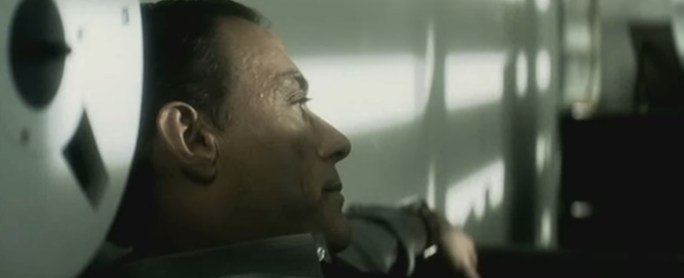
JCVD is an extremely stylish, witty, and clever send-up of action movies and of the kickboxing superstar Jean-Claude Van Damme, with a unique meta-narrative that folds over on itself in more than a few ways. Energetically directed by Mabrouk El Mechri from a script he co-wrote with Frédéric Benudis, JCVD stars Van Damme playing a slightly exaggerated version of himself: burnt out, broke, desperate, and clinging to his last remaining grips at sanity. The plot gets complicated when Van Damme is framed for the robbery of a postal office, with a Dog Day Afternoon-type scenario taking place outside. The film is a comment on the direct-to-video action movie genre, Van Damme’s celebrity status, and what it’s like be past your prime in a young man’s game. Two major highlights are the opening sequence (all one, bewildering hand-held camera shot) and a scene at the film’s mid-point where Van Damme speaks directly to the camera, delivering an apology of sorts for all of his lurid and destructive behavior, both personally and professionally. It’s oddly moving, it’s funny, it’s sad, and it’s all very well done. This will be a major surprise for most people who give it a viewing.

1

PTS Presents EDITOR’S SUITE with MICK AUDSLEY

audsley-powercast

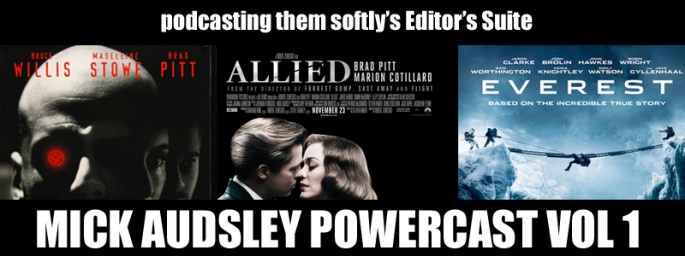
audsleyPodcasting Them Softly is thrilled to present a chat with veteran film editor Mick Audsley! His latest feature, which he co-edited with Jeremiah O’Driscoll, is the Robert Zemeckis-directed WWII action-romance Allied, which hits theaters this weekend! He’s worked numerous times with filmmaker Stephen Frears, with credits that include The Hit, My Beautiful Laundrette, Prick Up Your Ears, Sammy and Rosie Get Laid, Dangerous Liasons, The Grifters, Hero, The Van, High Fidelity, Dirty Pretty Things, Tamara Drewe, Lay the Favorite, and Muhammad Ali’s Greatest Fight.  He’s also collaborated with director Mike Newell on Love in the Time of Cholera, Harry Potter and the Goblet of Fire, Mona Lisa Smile, and Prince of Persia. He’s teamed up with director Neil Jordan on We’re No Angels and Interview with the Vampire, and has crafted multiple films with director Terry Gilliam, including the sci-fi classic 12 Monkeys, The Zero Theorem, and the Imaginarium of Dr. Parnassus. He also cut last year’s superb mountain climbing disaster film Everest, which was shot by cinematographer and friend of Podcasting Them Softly Salvatore Totino. And we also learned about Sprocket Rocket Soho, an online networking organization for filmmakers, actors, and craftspeople, which he co-founded with his wife as a way of keeping open communication between various artists. Check out the site at Sprocket Rocket Soho   We hope you enjoy this fabulous hour of passion and cinema love!

KELLY REICHARDT’S WENDY & LUCY — A REVIEW BY NICK CLEMENT

1

Kelly Reichardt’s emotionally felt and deeply poignant Wendy and Lucy is a masterwork of modesty, a film filled with nuance, subtlety, and intense compassion for the human (and animal) condition. Michelle Williams, who was robbed of an Oscar nomination, gave a deeply committed performance as a loner-type woman searching for her lost dog in small-town Oregon, etching a startling portrait of a woman who is literally at the end of her mental and physical rope. Reichardt’s unsentimental, extremely honest and affecting narrative offers multiple glimpses into the soul of a person, and how they process regret, loss, and acceptance, all over the course of 80 minutes. Sam Levy’s beautiful, naturalistic cinematography never did anything else other than capture each moment with quiet simplicity, which allowed Williams the free-range to inhibit a volatile character who is always searching for meaning in nearly every on-screen moment. There’s literally nothing wrong with any part of this film; I see no way that it could have been made better, and I usually reject the notion of being so concrete when it comes to art, because, after all, movies are a very subjective experience for everyone. But here I can firmly state that there’s not a fault to be found in Wendy & Lucy. Reichardt has unassumingly become one of cinema’s most vital voices, with unique gems such as Old Joy, Meek’s Cutoff, Night Moves, and the upcoming Certain Women (can’t wait to see it…) on her phenomenal filmography.

2

Bad Santa 2: A Review by Nate Hill


The holiday season’s best role model for children and adults alike makes a triumphantly sleazy comeback in Bad Santa 2, and I can honestly say this is one of those rare anomalous occurrences where the sequel outdoes its predecessor in almost every way. Where the first film was scummy, this one is scummier, the profanity nearly tripled and all manner of disgusting debauchery and deplorable behaviour dialled way past what we’re used to. Now a lot of folks will claim overkill, but honestly what’s the point in making a film like this if you don’t go for broke and puke up every last little cuss word and anal joke that comes to mind, particularly when it’s the sequel we’re talking about here. Billy Bob Thornton reprises what feels like his signature role, a piss poor excuse for a human named Willie Stoke, lowlife alcoholic dirtbag safecracker who masquerades as a department store Santa to rob malls blind, along with his flippant midget partner Marcus (ebony Oompa Loompa Tony Cox). This year they’ve taken a pickaxe to rock bottom and sunk even lower, aiming for a children’s charity reputed to rake in the Yuletide dough. Willie gets a surprise visit from his Ma though, an equally bitter, reprehensible diesel dyke piece of work played by Kathy Bates. You gotta hand it to the Bates-ter; this could have easily been a glorified cameo amped up just for trailers, but no, she goes all in and the extra mile to create a truly rotten bitch who almost…almost makes Willie the slightest bit sympathetic. This is one dirty, dirty film, one that milks it’s R rating like a two dollar hooker’s teat, so much so that it garnered the coveted 18a rating here in Canadian theatres, a medal not given out too lightly these days by our alarmingly lenient government. Nothing is sacred here, and I wouldn’t have it any other way in a film called Bad Santa. Christina Hendricks shits all over her classy image as the head of the charity, a slut in prudes clothing who just can’t help but play it dirty with Willie. The aptly named Thurman Murman (Vancouver’s own Brett Kelly) also makes a return, his stairs even farther away from the attic as he gets older. Replace holiday cheer with delightfully deviant black comedy, and loads of it, and you get a nasty, hedonistic little stocking stuffer like this. Just tread lightly if you can’t handle this type of humour, because it will tear you a new one.

Legend – A Review by Kyle Jonathan

Legend

1985.  Directed by Ridley Scott.

vlcsnap-2011-06-03-12h00m14s254

A not so original fairy tale brought to life, Ridley Scott’s Legend is a clinic on makeup design and world building.  Lacking a coherent plot and featuring an interesting mix of absurdity and genuine terror, this is a fantasy epic that encapsulates the 80’s trend of family films with an edge.

Once, Long Ago…

The Lord of Darkness, a demonic potentate, seeks to end daylight forever by slaying the last two unicorns.  He sends a cadre of goblins into an enchanted forest to hunt the beasts, where Princess Lily, a virginal wild heart, is in the midst of being courted by Jack, an orphaned adventurer.  A moment of weakness by Lily allows the goblins to steal one of the unicorns’ magical horns, plunging the world into an eternal winter and banishing Lily to Darkness’s personal lair.  Jack, aided by a ragtag band of fairies and dwarfs sets out on a quest to rescue his true love and stop Darkness once and for all.

image

Scott had the idea for Legend on the back burner for years, and the influence of both Alien and Blade Runner are evident throughout.  Jerry Goldsmith’s score constantly evokes the feeling of discovering dark wonders that is prevalent in Scott’s previous masterworks.  The feeling is extended through entirely hand crafted sets that create a fantastic world,  The forest sequences are glitter choked dreamscapes, captured by Alex Thomson’s entrancing cinematography.  The scenes within Darkness’s castle have a gritty dungeon like quality that fades into the shadows of the villain’s sanctum as the narrative progresses, using deep wide shots to simulate a desolate cavern and slick angular shots to obscure Darkness whenever possible.

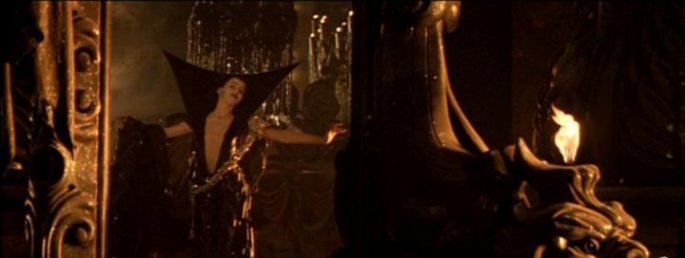
Rob Bottin’s Oscar nominated makeup effects are the centerpiece.  Tim Curry, underwent over 5 hours of makeup every day, with the final product revealing an elegant predator, a twisted demon prince with mammoth black horns and crimson flesh.  Curry’s delicious performance as Darkness is full of subtle derision and over the top grandeur, elevating the lukewarm script to a place of abject horror.  Charles Knode’s costume design, particularly with respect to Mia Sara’s “Dark” Lily is unbelievable.  There are dozens of intricacies to every ensemble, but Sara’s obsidian gown, complete with gaudy whisk collar, blazes across the screen, shimmering in the torchlight to present a damsel in fatale.  While the symbolism is pedestrian, part of Legend’s charm is its simplicity.  The bad guys are bad, the good guys are good and you know how it’s going to play out, but, thanks to the wonderful visuals, the viewer doesn’t have much time to care.

legend-mia

Available now for digital rental, including Scott’s preferred director’s cut, Legend was a critical and commercial disaster on release.  The undeniable flaw is that Legend lacks a heart, never really going anywhere with its basic story.  However, this truth has been forgotten over the years, leading to Legend becoming a cult classic, due to its outstanding makeup effects, Tim Curry’s nightmarish performance, and Scott’s patient control.  While it is easily overshadowed by Scott’s previous, iconic films, Legend remains a bastion of childlike nostalgia, telling the tried and true story of love conquering all.

Recommend.

legendmovie

BLOOD FREAK (1972) – A REVIEW BY RYAN MARSHALL

vlcsnap-2016-11-24-14h39m30s115.png

Brad Grinter’s BLOOD FREAK is a consistently bewildering acidheaded cinematic turkey; in theory, it’s a real piece of shit, but in practice, its many moralistic contradictions and aesthetic misjudgments give it a flavor that is somehow anything but dry. A select few films are permitted to get by on their boundless imaginations alone, and this is one of them – a steaming pile of 70’s counterculture and pent up anxieties, to which Grinter’s film is hardly the solution, but you can’t help but commend him for trying.

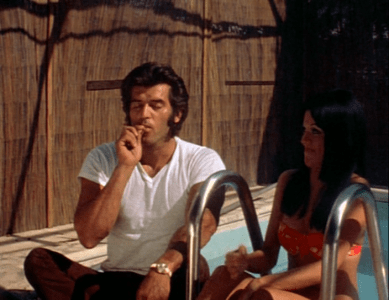
On a sunny day, Vietnam vet Herschell (Steve Hawkes) spots a pretty young thing named Angel (Heather Hues) whose car has broken down on the highway, and promptly whisks her away on his motorbike. Angel takes him back to her house, which she shares with her promiscuous sister, who offers Hershell some pot upon his arrival. At first, he refuses, but eventually gives into temptation after the sister seduces him one day by the pool. Herschell finds himself with an immediate addiction (!).

vlcsnap-2016-11-24-14h39m48s529.png

Herschell takes a job at a local turkey farm, where a couple of bumbling scientists are testing experimental chemicals on the livestock. They require a human guinea pig for this operation, and bribe Herschell into participating by promising to replenish his stash little-by-little. However, the effects of devouring the chemically altered meat prove to be nightmarish after Herschell suffers a seizure and enters a violent, hallucinatory state.

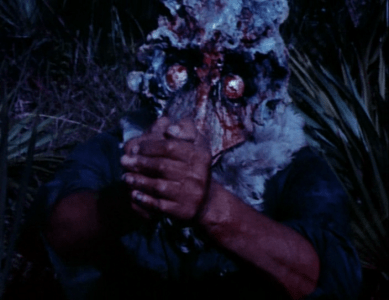
Without spoiling too much in regards to this bold new narrative direction, the film’s most memorable sequences reside after this point – any research on the film will surely lead to inspiring images of a horrible life-size papier-Mache turkey head. So that’s where this film goes; that is to say, way off the deep end. The entire last act is a hysterical collage of grotesque regurgitated sound effects and aimless animalism as Herschell carves his way through a series of sexual deviants and junkies.

vlcsnap-2016-11-24-14h40m24s543.png

This can be most obviously read as an anti-drug PSA disguised as a cheapo psych-out horror picture, which is particularly amusing when one takes note of the director’s frequent appearances throughout the film in which he chain-smokes as he comments on the action. To think that Grinter’s tongue might be planted firmly in his cheek might be giving the director the benefit of the doubt, as the way in which he handles this material is almost characteristically incompetent. For instance, it is heavily implied throughout – and later confirmed – that Herschell suffers from PTSD and is self-medicating as a result. The film ignores the poignancy of the subject and goes straight for shock value; and let’s not even begin to discuss its puerile vision of rampant drug culture.

It’s an outsider view of just about everything it claims to stand for, which proves to be quite problematic – but it is precisely these kinds of seemingly innocent miscalculations that make it so consistently entertaining. The opening scene assumes a strange kind of schizophrenic rhythm that Jess Franco might have admired and then never follows up on it, the writing is a special kind of awful, its treatment of women is even more pedestrian now than it was back in the day – and yet there is so much enjoyment to be derived from the experience, in spite of patches which veer dangerously into Dullsville. The filmmakers can’t even seem to pull focus most of the time and yet they’ve emerged with a work of exceptional amateurism that would put most professionals to shame. Most seasoned viewers won’t appreciate it, but the sleaziest among us will continue to rejoice.


LAWRENCE KASDAN’S THE BIG CHILL — A REVIEW BY NICK CLEMENT

1

This is an absolutely wonderful movie, filled with warmth, compassion, sensitively drawn characters, and real life situations that cut to the core of friendship and love. Released in 1983, Lawrence Kasdan’s The Big Chill has endured throughout the decades because, despite being over 30 years old, it doesn’t feel dated, as the themes that are discussed and explored can’t help but always feel relevant or important. Concerning a group of college friends who reunite after 15 years after the suicide death of one of their classmates, the star-studded cast is nearly unconscionable to contemplate in retrospect: William Hurt, Glenn Close, Tom Berenger, Jeff Goldblum, Kevin Kline, JoBeth Williams, Mary Kay Place, and Meg Tilly were all superb, creating a group dynamic that feels electric to observe. There’s an incredible sense of organic friendship all throughout the film, with everyone feeding off of one another in the ensemble, never trying to show each other up, but rather allowing for a mosaic quality to overtake the humble proceedings. This film truly was a showcase for all of the acting talent.

2

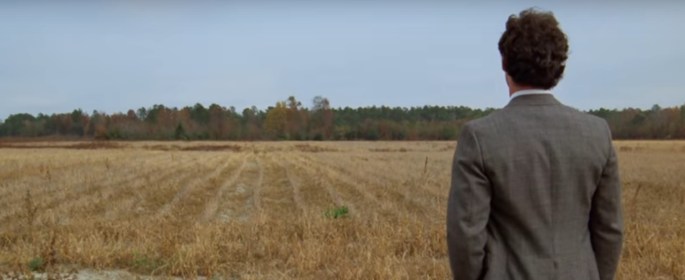
Kasdan’s sad, humorous, intelligent, and introspective narrative allowed for scenes to play out in a very naturalistic fashion, with friendships and romantic relationships tested and rekindled over the long weekend that the story comprises. The film’s casual visual style also never intruded on the actors or the words, as everyone knew that the power of the material was contained in the delicate strands of the narrative. Kevin Costner’s scenes were famously deleted from the final cut; Kasdan has stated that there’s no “director’s cut” floating around with the additional footage. The prolific Michael Shamberg (Pulp Fiction, A Fish Called Wanda, Gattaca) was the film’s main producer. Filmed on location in South Carolina, the production used the same house that was showcased in The Great Santini. A short-lived television adaptation called Hometown was attempted by CBS but was quickly cancelled. The film’s robust classic rock soundtrack includes cuts from The Rolling Stones, Credence Clear Water Revival, Three Dog Night, The Temptations, Marvin Gaye, and Aretha Franklin. The Criterion Collection offers an immaculate Blu-ray with ample special features.

3

JASON REITMAN’S THANK YOU FOR SMOKING — A REVIEW BY NICK CLEMENT

2

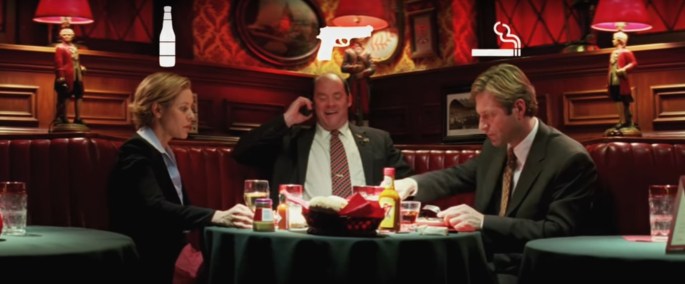
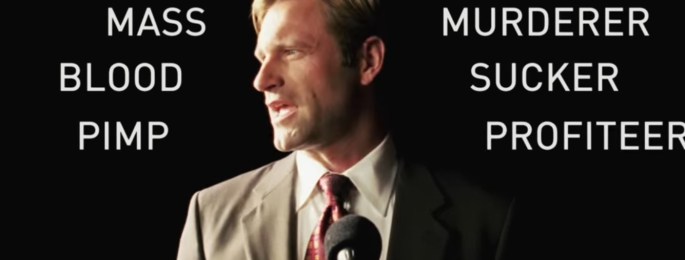
Thank You For Smoking was Jason Reitman’s first film, and it’s still his best, though Up in the Air comes close. This is a razor-sharp satire featuring Aaron Eckhart in a totally blazing performance as a cigarette lobbyist who will do anything to protect the product that he knows is killing lots and lots of people. Based on the book by Christopher Buckley, Reitman’s adaptation is witty in both a verbal and pictorial sense, with not one wasted scene, while every character is excitingly drawn, and the fascinating comments that it makes about a variety of topical subjects still feels very fresh despite just hitting its 10th anniversary this past March.

3

Maria Bello, David Koechner, JK Simmons, Sam Elliot, William H. Macy, Katie Homes, Cameron Bright, Robert Duvall, and the absolutely hilarious team of Adam Brody and Rob Lowe all added terrific support, while Eckhart was given his richest performance since In the Company of The Men, which is still one of the iciest movies I’ve ever seen. The film also boasts very stylish technical work, thanks to cinematographer James Whitaker’s bold visuals and film editor Dana E. Glauberman fleet pacing. Cynical, mean, and all-too-true, there are big laughs in this dark comedy, and everything is coming from a place of intelligence all throughout.

1

Manhunter – A Review By Kyle Jonathan

Manhunter

1986.  Directed by Michael Mann.

manhunter

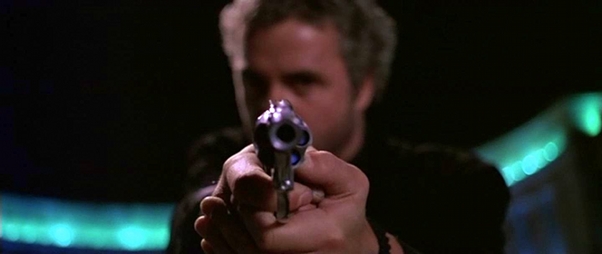
A hyper stylized crime procedural that introduced the world to Hannibal Lecter, Michael Mann’s outstanding mood piece, Manhunter, is one of the more thoughtful entries into the serial killer genre.  Featuring Mann’s trademark visual flamboyance. memorable performances, and a brooding script, this is a film that bleeds cool from its somber opening to it’s unforgettable climax.

Will Graham is an ex FBI profiler who retired after suffering a mental breakdown as a result of apprehending notorious murderer, Hannibal Lecter.  He’s recruited by his former mentor Jack Crawford to assist with a new serial killer, dubbed The Tooth Fairy who is preying on entire families.  The reluctant Graham enlists Lecter’s aid in catching the killer, which initiates a bloody cat and mouse game in which Graham’s family comes into harm’s way, forcing him to confront the psychological horrors of his past, setting up a chilling moonlight showdown in which the line between harrier and quarry are dangerously blurred.

man6

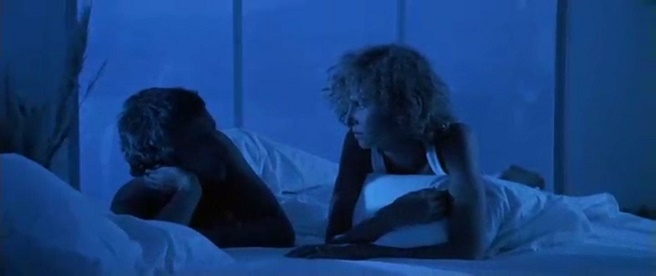
Mann cast William Petersen as Graham after seeing his performance in To Live and Die in L.A.  Petersen’s portrayal has a subtle restraint that is immediately engaging.  He’s human and he’s hurting, victimized by the ghosts of the ones he couldn’t save and the audience pays the price for his emotional torment, following his quietly growing obsession with eagerness.  Mann’s typical central archetype is the brooding outsider, and Petersen takes this rote concept and unleashes a melancholy knight errant, cruising the blue neon highways of the night searching for an evil that he already knows will shred the fibers of his soul, and yet he’s morally unable to stop the pursuit.

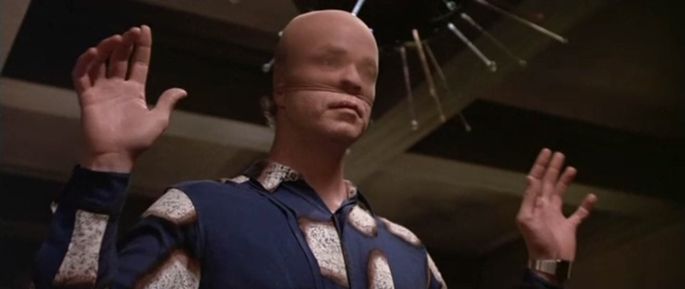
The always formidable Tom Noonan supports as the killer, bringing his well known soft spoken and disturbing persona to bear.  Dennis Farina, Kim Griest, and Joan Allen round out the cast, each of them portraying flesh and blood influences on the two central players.  Underrated legend Brian Cox stars as the first screen incarnation of Hannibal Lecter.  His performance is organic and dangerous, giving Lecter a level of realness that is both unsettling and a perfect representation of the demons that Graham carries in his subconscious.  One the strongest aspects of this film is how understated it is, despite the visuals and the talent.  Cox’s Lecter is obviously a monster, but he subsides with wit and malign rather than the grim etiquette that would later make the role famous.

manhunterblue

Mann spent years writing the script, spending time with law enforcement and corresponding with a convicted serial killer.  Underneath Dante Spinotti’s blue tinged cinematography is a laconic rumination on the price for facing the monsters.  The cop jargon is real, replete with gallows humor and the undeniable compartmentalization of those who wear the badge.  The violence, particularly the aftermath, present in Jack Blackman’s art direction, is so visceral that the viewer can feel the congealed blood on their shoes.  Richard Keefe’s editing frames every scene so that the focus remains on the emotional content, using Spinotti’s jarring angles and off centered close ups to bolster the suspense, creating a delirious prison in which violence is the only escape.

The Reds, Shriekback, and Mark Rubini composed the score, giving Manhunter a dichotomy of synth ballads and pulsing rhythmic tones that awkwardly oppose the intensity, mirroring Mann;s treatment of the material.  The unthinkable violence is approached from a distance, easing the viewer into the madness at the heart of Graham’s world, a place that most civilians wouldn’t dream existed,and yet the viewer is helplessly entranced by the harmonic symmetry in every scene.

man1

Available now for digital rental, on HBOGO, and on a crisp blu ray release by Shout Factory, Manhunter was a critical and commercial misfire upon its debut.  Thankfully, over the thirty years since its release, critics have returned to it and recognized it as one of the most artistic studio pictures of the 80’s.  A heady detective story with more flash than resonance, Manhunter is a one of kind film from one of the best directors working today.  If you’re interesting in seeing an underrated take on one of the most infamous characters in fiction and a truly indulgent crime thriller, Manhunter will not disappoint.

Highly recommend.

manhunter-1986