ANTOINE FUQUA’S TRAINING DAY — A REVIEW BY NICK CLEMENT

2

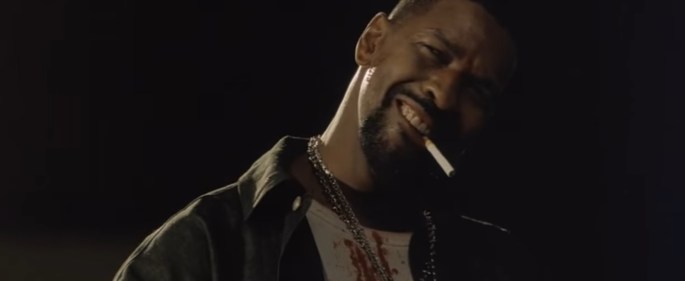
Training Day continues to be one of my favorite modern cop films. It smartly balanced entertainment value, social commentary, and genre expectations, with David Ayer’s superb script feeding into director Antoine Fuqua’s muscular visual style, aided by polished yet gritty camerawork from Mauro Fiore, and razor sharp editing courtesy of Conrad Buff. Denzel Washington delivered a massive lead performance as a morally bankrupt and wildly corrupt Los Angeles narcotics officer, with Ethan Hawke providing extremely strong and emotionally engaging support as a relative newbie who is taken under Washington’s volatile wing for a 24 hour period, where literally anything can (and will) happen. Some people complained that Ayer’s highly quotable original screenplay was too contrived, and yes, I’ll submit that much has to happen in a very specific way for the story to arrive at its destination. But I don’t care about any of that. This is a movie, not real life. And as presented by the creative team, this is a thrillingly cinematic tale of both sides of the law, and I respected how Ayer and Fuqua went for the hot-blooded jugular in all instances. The dynamic ensemble cast added colorful support, with Scott Glenn, Tom Berenger, Dr. Dre, Snoop Dogg, Nick Chinlund, Peter Greene, Cliff Curtis, Raymond Cruz, Macy Gray, Noel Gugliemi, Harris Yulin, and an especially sultry (and fully nude) Eva Mendes as one of Washington’s various women on the side. Tough and violent but never over the top or too loud for its own good, this is easily one of the very best of Fuqua’s efforts, duking it out with the even more ambitious policier Brooklyn’s Finest for top prize honors.

1

THE ALCHEMIST COOKBOOK (2016) – A REVIEW BY RYAN MARSHALL

vlcsnap-2016-11-08-20h01m33s296.png

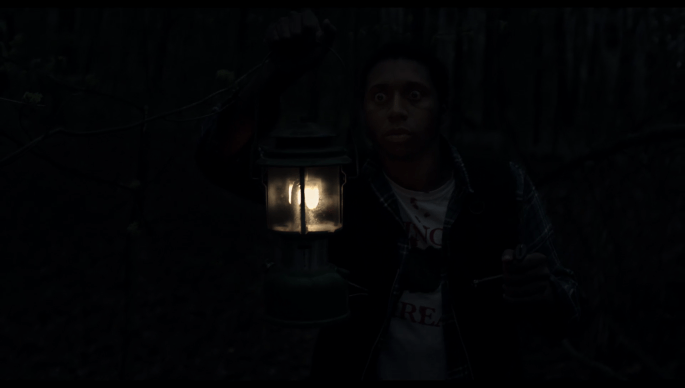
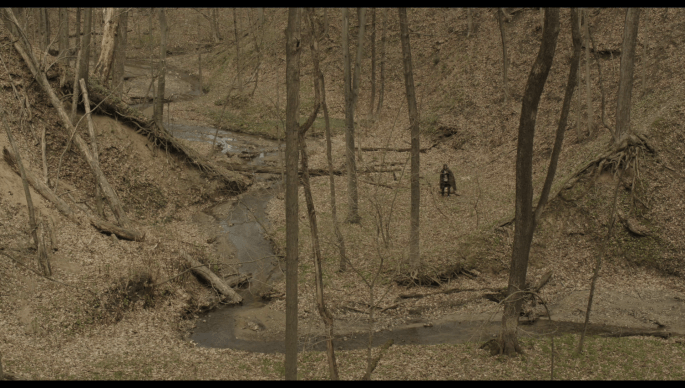
The forest has always been an essential breeding ground for cinematic insanity, and it’s not hard to imagine why; after all, the things closest to us but which we have really have only begun to understand are among the most terrifying. Writer/Director Joel Potrykus uses the woodlands to summon a consistent air of dread in his latest genre-defying curio, THE ALCHEMIST COOKBOOK, though it’s hardly the sole location herein whose deep-seeded hallucinatory horrors are so cleverly uprooted throughout the film’s tight, disconcerting narrative.

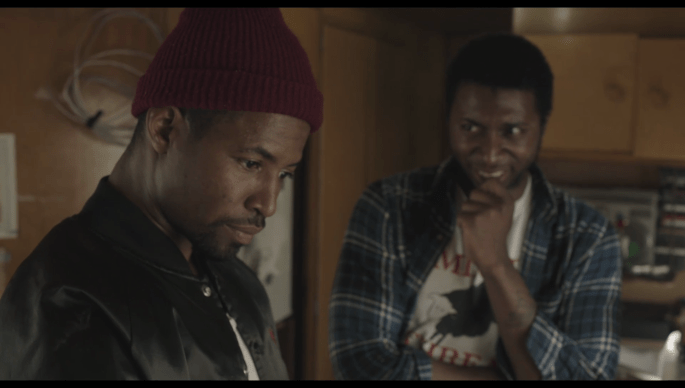
Ty Hickson, a relative newcomer with only a few credits to his name, stars as Sean, a mentally unstable young man who lives in a trailer somewhere in the woods where he can be alone with only himself and his cat Kaspar to practice alchemy as a means of acquiring a fortune. It’s clear that Sean’s pill-popping may be the source of his wild ambition, but at the very least he’s committed, and his friend Cortez (a hilarious Amari Cheatom) visits often to ensure that he’s got plenty of food, tools, and has his prescription refilled to boot. As good of a friend as Cortez is, he is far from perfect, and one day he forgets to bring the meds.

vlcsnap-2016-11-08-19h52m34s710.png

Before we can even begin to settle down within the pitch-perfect representation of Sean’s unbalanced psyche, he’s dabbling in black magic as a means of speeding up his process; which of course could potentially be the final nail in the coffin for our tragically delusional friend. It’s at this point that the mood shifts from that of a breezy and often hilarious hang-out pic (in which one of the two people involved only sometimes shows up) with subtle macabre flourishes to a genuinely disturbing body horror film, and it’s the seemingly effortless way in which the narrative alternates between the two – and others as well – that makes it so unforgettable.

The Michigan-based Potrykus prefers to work with restrained budgets and unhinged characters, challenges and limitations which seem to have worked in his favor thus far (this is his third feature, after 2012’s APE and 2014’s BUZZARD). The simplicity of the build-up benefits the lasting ambience of the truly haunting payoff; it’s ultimately more effectively horrifying than the majority of straight genre efforts. In Sean’s phantasmagorical fantasy world, the forest is very much alive with beastly bellowing, low growls, and big splashes (in the wetland areas). No animal, not even a seemingly innocent possum, can be trusted other than the faithful feline, who should be commended for the magnitude of the madness he puts up with here. Everything with any semblance of purity is reduced to savage animalism in the end, and perhaps that is what the film is really about – going backwards through forced progress. Sometimes, we must let nature take its course, for it works in mysterious ways.

vlcsnap-2016-11-08-20h01m22s551.png

Potrykus dares to find beauty in Sean’s plight, and the fact that he does so in spades is no easy feat. The character’s misery is entirely of his own making, though the implication seems to be that there’s still time for Sean to redeem himself. There’s also a great deal of humor to be wrought from Sean and Cortez’s interactions, with one scene in particular involving the consumption of cat food being a prime example of pure, thoroughly awkward observational comedy. Absurdism runs through this whole strange exercise, though there’s an honest sadness in Sean’s eventual transformation. We’ve been so up close and personal with the unlikely protagonist leading up to this point that there’s absolutely no reason why we shouldn’t be made to witness his ultimate decline on a similarly intimate scale. We grow to like the guy – a lot – in spite of his flaws, though luckily this feels more like fate than outright punishment.

Empathy is the key and love is the spirit. THE ALCHEMIST COOKBOOK is certainly a strange one by any conventional standards, but it’s just not that simple. There is real humanity here, both in its passionate ode to the benefits of solitude itself and its singular tale of a man running out of nature and losing himself to what’s left of it. Its commitment to staying well within the boundaries of its protagonist’s headspace brings to mind the similar triumphs of John Hancock’s LET’S SCARE JESSICA TO DEATH, the effects of which are genuinely devastating. Potrykus is more than just one of the most singular minds in contemporary American independent cinema; here, he’s solidified himself even further as one of the most important voices for the outcasts of the silver screen and the damned spaces they occupy. His latest is akin to a waking nightmare – of a similar essence to the abandoned dinghy in the middle of the pond that just begs to be investigated further – and yet it brings such profound joy.

vlcsnap-2016-11-08-20h02m14s483

Suture – A Review by Kyle Jonathan

Suture

1993.  Directed by Scott McGehee & David Siegel.

MBDSUTU EC006

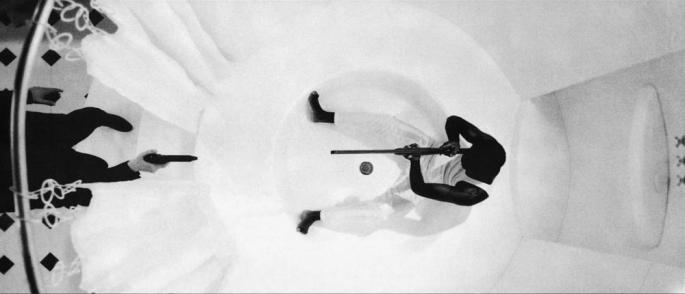
A minimalist neo noir that flirts with the morality of memory, Suture is a black and white psychological thriller that separates the classical archetypes of good and evil through the use of color.  From afar, Suture plays like an art house piece on identity and racial consciousness, however, its spartan atmosphere uses the representations of colors to subvert these concepts, delivering a cyclical story on the nature of consciousness.

Clay is a blue collar worker who is invited to visit with his half brother, Vincent, after the murder of their father.  The two brothers are nearly identical, and Vincent uses this to his advantage, faking his own death by blowing up his car while Clay is driving and ensuring that Clay is identified as him.  Clay miraculously survives the explosion, but with amnesia.  He begins to undergo rigorous psychological treatment while the police clamor for explanations into the father’s death.  As Clay slowly begins to understand his predicament, he falls in love with one of his therapists and Terence returns to the family’s palatial estate, looking to silence Clay once and for all.

suture-haysbert

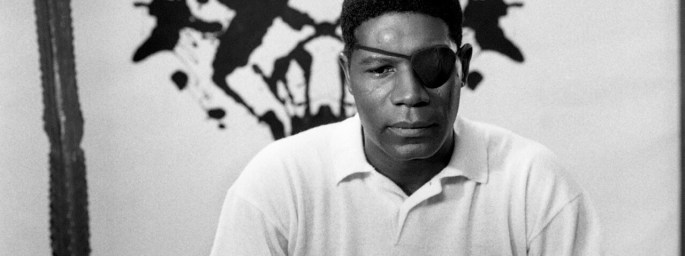
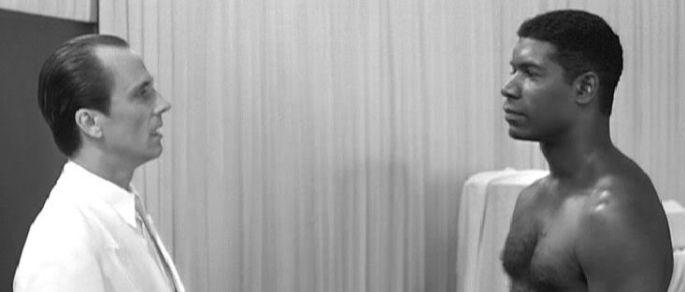
Dennis Haysbert stars as Clay, while Michael Harris portrays Terence.  The directors chose to use a black actor for Clay and a white actor for Terence, making the entire narrative design appear to be a statement on race, but as the story unfolds, it becomes clear that this was done to set the two characters completely apart.  Aside from the last few lines, most of the story remains grounded in Clay’s ordeal with him instantly accepting his new persona while slowly beginning to realize that something is wrong.  This is a slick film that takes great pains with stylistic choices, valuing cool aesthetics in place of depth.  There are several uncomfortably hilarious scenes, with Clay being the only black man in a lineup taking the crown.  Suture knows exactly what it is doing, and its constant decision to stay focused on the mystery rather than the social implications is what makes it work.

Mette Hansen’s costume design is pivotal.  Clay, begins in a flannel and denim, but as he accepts his role as Terence, he switches to crisp white suits, fully symbolizing his true nature.  Terence abandons the white garb in the final sequence, opting for coal black attire that mimics his heart.  The attention to detail shines in virtually every scene, with Greg Gardiner’s blissful cinematography winning top honors at Sundance, capturing the action with Hitchockian emulation.  There are gorgeous wide shots of mysterious Arizona buildings, one of which is an abandoned bank, brilliantly decorated by Nancy Wenz to appear as a lonely stronghold of decadence.

suture1

Steven Soderbergh viewed an early cut and came on board as an executive producer.  McGehee and Siegel’s outstanding script pilfers from Frakenheimer and Teshigahara casually evoking deeper concepts but never fully committing.  This is a noir film, through and through, and it’s this conceit that is perhaps the film’s greatest weakness.  The racially motivated casting is purely to create division between “hero” and villain.

Available now on an outstanding blu ray transfer from Arrow Video, Suture is a unique independent thriller.  Taking an overdone premise and using color to visually remodel the Cain and Abel parable into a slick neo noir that brims with attitude.  If you’re looking for something unique that doesn’t overshadow it’s story with deafening symbolism, Suture is an excellent choice.

Recommend.

images

GELA BABLUANI’S 13 TZAMETI — A REVIEW BY NICK CLEMENT

2

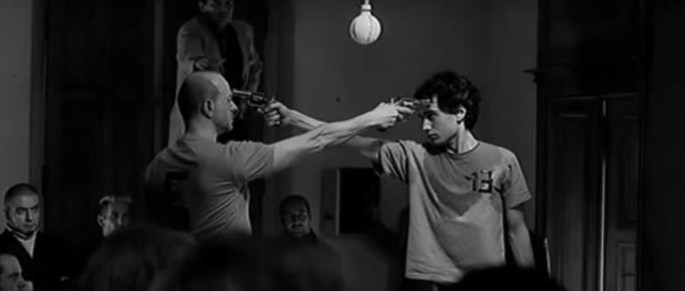
13 Tzameti, from director Gela Babluani, is a riveting piece of filmmaking that I’ve only needed to see one time, as I remember each and every moment, and honestly, I think my palms might still be a tad sweaty from the experience. Shot in shadowy and smoky black and white by cinematographer Tariel Meliava, the plot concerns a young immigrant worker (Georges Babluani, the director’s younger brother) who lucks his way into a Russian roulette tournament via a series of mysterious notes, but I guess that would depend on your definition of the word “luck.” The tension in this film is nearly unbearable, you never know what’s going to happen, and because the film is comprised of actors you’ve likely never seen, it becomes all the more engrossing and scary; there’s no movie stars here to save the day. Babluani was unfortunately coerced by Hollywood producers to remake his own film, and while I’ve never seen it, the fact that it sat on the shelf for a long period of time probably speaks to the overall quality; he’s also yet to issue a follow up effort which seems a shame. But beyond the needless remake, this is one of the more unnerving foreign language films I can think of, presenting a sinister, suspenseful world with deep swaths of mordant black comedy to match the visceral nature of the high-stakes “games” being played.

1

Taxi Driver – A Review by Kyle Jonathan

Taxi Driver

1976.  Directed by Martin Scorsese.

taxi-driver-1976-film-rcm762x429u

A cinematic journey into an urban purgatory, Scorsese’s masterpiece Taxi Driver is not only one of the most influential American films in history, but also continues to be one of the most artistically important movies ever created.   Using the concepts of mental illness and post Vietnam paranoia, Taxi Driver unequivocally presents a salient exploration of the lone gunmen mythology that continues to remain disturbingly relevant 40 years later.

Travis Bickle is a veteran who suffers from depression and insomnia.  He takes a job as a cab driver, working endless night shifts on the haunted streets of New York, traversing even the most dangerous neighborhoods.  Travis becomes enamored with a political operative working on a presidential campaign, however the relationship rapidly erodes due to Travis’s odd predilections.  In the wake of his emotional distress, Travis begins to plot the assassination of the presidential hopeful, while simultaneously trying to liberate a child prostitute from the clutches of the street, hurtling him towards one of the most brutally iconic climaxes in history.

images

Winning the coveted Palm d’Or at Cannes, the film’s brooding script was penned by the legendary Paul Schrader.  Using Travis’s disjointed voice overs to narrate his descent into madness, Taxi Driver has a devilish quality, ruthlessly critiquing societal mores with a blistering cacophony of senseless monologues, whose uncomfortable notions slowly evolve, matching Travis’s mental undoing with verbal harmony.  All of the characters that exist in Travis’s orbit are shadows, petty dispensers of street curb wisdom, tainted Madonnas, and suits full of empty promises.  Each interaction, including an unforgettable cameo by Scorsese himself, is a dangerous escalation, slowly moving Travis closer to his murderous finality.

Michael Chapman’s cinematography captures the cigarette stained locales of a fallen New York with diabolic neon reds and lonely blues and greens.  This is a film that wears the heart’s blood of the Big Apple on it’s soiled Army jacket sleeve, eloquently capturing the symbiosis of a festering inner city with the privileged echelons that trample upon it.  The bulk of the shots are from the interior of the taxi, mimicking Travis’s longing to be part of a world he holds in contempt because he doesn’t understand it.  The infamous tracking shot (which took several months to complete) uses an overhead point of view to present the aftermath of the finale as an out of body experience, further enhancing the often debated conclusion.

hero_eb20040101reviews08401010364ar

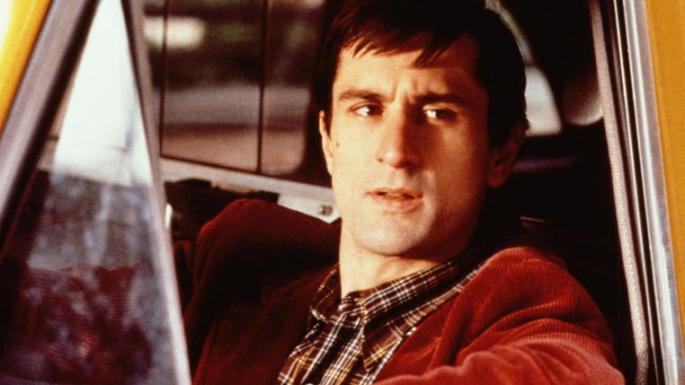
Using a vicious conflagration of primal instinct and last ditch endearment, De Niro creates a living urban legend in the performance of a lifetime as Travis.  Within minutes, you know how the story will most likely end, but De Niro’s formidable incarnation of the troubled outsider garners a tenuous empathetic relationship with the viewer.  You care, but are always questioning why and this the definition of acting.  The famous “You talkin’ to me?” line is so powerful because of the way De Niro wields it, challenging the viewer to accept Travis’s deadly plea for attention, a flawless interpretation of the character’s wounded soul.  Jodie Foster’s virginal Iris is a poisoned breath of fresh air, portraying an all too real child casualty of the unforgiving metropolis.  Her role was so controversial that she was required to undergo a psychological evaluation prior to accepting the part to ensure she was mentally capable.  Both De Niro and Foster would go on to be nominated for Academy Awards.

Peter Boyle gives a broken fortune cookie turn as Wizard, the cabbie veteran whose counsel for Travis is ill advised and perfectly simulates the false concern of bandwagon camaraderie.  Harvey Keitel spent time with an actual pimp in preparation for his portrayal of Matthew, and his handful of scenes are masterfully woven into the story to ironically give Travis’s ire a legitimate target.  Bernard Herrmann’s saxophone laced score is the fallen Angel on Travis’s shoulder, taking what would conventionally be a jazz infused New York love note and subverting it to display a false grandeur, fully encompassing Scorsese’s vision of a tarnished and counterfeit American dream.  Herrmann’s work was also nominated for an Oscar.

10244015_ori

Scorcese’s direction is the epitome of control.  The entirety of Taxi Driver could easily be construed as a fever dream, but even the most expansive parts of Travis’s litany of hate remain grounded in the nocturnal underbelly of New York, with each street representing an infected vein feeding into a rotting heart.  Scorsese’s ability to take a deceptively simple premise and produce an atmospheric chamber piece in which the prison is a city without limits is a one of kind experience.  There have been many films about vengeful outcasts, but none have managed to capture the unrelenting darkness of the mind quite like Taxi Driver, a feat made possible by Scorsese’s mastery of the malign.

Available now for digital rental, Taxi Driver is an essential American film that uses the mental disarray of a lone wolf as an expose’ on a fractured, post war America.  From the way veteran’s were casually discarded to the political distrust that gripped the nation, Taxi Driver depicts a plausible Hell on Earth in which the devil is not only very real, but nihilistic and motivated, a concept that continues to remain frighteningly realistic to this day.

Highly.  Highly. Recommend.

taxi-driver-movie-screencaps-com-17

Gore Verbinski’s The Lone Ranger: A Review by Nate Hill 

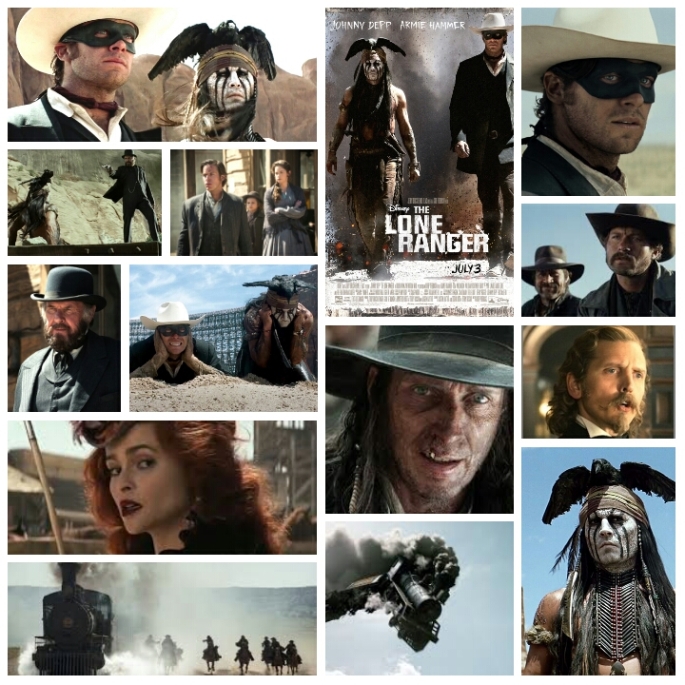
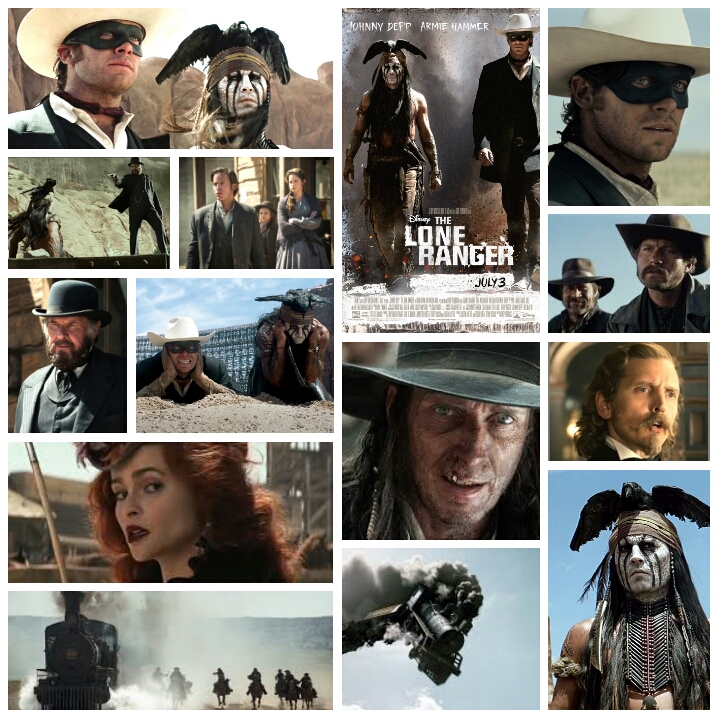
There’s always those films that get buried under a landslide of terrible reviews upon release, prompting me to avoid seeing them, and to wait a while down the line, sometimes years, to take a peek. I was so excited for Disney’s The Lone Ranger, being a die hard fan of both Gore Verbinski and Johnny Depp’s monolithic work on Pirates Of The Caribbean, and just a lover of all this western, as well as the old television serial. The film came out, was met with an uproar of negative buzz, I went “well, shit”, and swiftly forgot it even existed. The other day I give it a watch, and would now like to pull a Jay and Silent Bob, save up cash for flights and tour the continent beating up every critic I can find in the phone book. I was whisked away like it was the first Pirates film all over again, the swash, buckle and spectacle needed for a rousing adventure picture all firmly present and hurtling along like the numerous speeding locomotives populating the action set pieces. Obviously the material has been vividly revamped from the fairly benign black and white stories of the tv show, especially when you have a circus ringmaster like Verbinski at the reigns, the guy just loves to throw everything he has into the action, packed with dense choreography and fluid camerawork that never ceases to amaze. Johnny Depp loves to steal the show with theatrical prancing and garish, peacock like costumes, and he kind of takes center stage as Tonto, the loyal sidekick to the Lone Ranger, who is given a decidedly roguish, unstable and altogether eccentric edge that the series never had, but I consider it a welcome addition to a character who always seemed one note in the past. Armie Hammer has a rock solid visage with two electric blue eyes peeking out of that iconic leather strap mask. It’s an origin story of sorts, chronicling Reid’s journey to visit his legendary lawman brother (James Badge Dale) and family in the small town West. Also arriving, however, is ruthless butcher and psychopathic outlaw Butch Cavendish (William Fichtner) at the behest of opportunistic railroad tycoon Latham Cole (Tom Wilkinson). Tempers flare and violence erupts, and before you know it Reid is without a family, left for dead in the desert and befriended by Tonto, who himself is a tragic loner in a way. Revenge is on the minds of both, as they venture on a journey to find Cavendish and his men, discover what slimy Cole is up to and bring order to the west, one silver bullet at a time (actually there’s only one silver bullet used in the entire film, but let’s not get technical). Now, I’ll admit that the middle of the film meanders and drags quite a bit, half losing my interest until the intrigue steps up a notch. A sequence where the pair visit a circus brothel run by a take no shit Helena Bonham Carter seems like unnecessary dead weight and could have been heavily trimmed, as could other scenes in that area that just aren’t needed and might have been excised to make the film more streamlined. It’s no matter though, because soon we are back in the saddle for a jaw dropping third act full of gunfights, train destruction and unreal stunts that seem like the sister story to Pirates, some of the action often directly mimicing parts from those films. Depp is like fifty, and still scampers around like a squirrel, it’s a sight to see. Fichtner is a world class act, his mouth permanently gashed into a gruesome snarl, the threat of violence oozing from his pores and following him like a cloud. Wilkinson can take on any role, period, and he’s in full on asshole mode, Cole is a solid gold prick and a villain of the highest order. Barry Pepper has a nice bit as a cavalry honcho who never seems to quite know what’s going on (it’s perpetual chaos), watch for Stephen Root and Ruth Wilson as Reid’s sister in law who ends up… well you’ll see. It’s fairly dark and bloody for a Disney film as well, there’s a grisly Temple Of Doom style moment and attention is paid towards America’s very dark past with the indigenous people, which is strong stuff indeed for a kid orientated film. Nothing compares to the flat out blissful adrenaline during the final action sequence though. That classic William Tell overture thunders up alongside two careening trains and your tv will struggle to keep up with such spectacle, it’s really the most fun the film has and a dizzyingly crowd pleasing sequence. All of this is told by an elderly Tonto in a museum exhibit, to a young boy who dreams of the west. A ghost from the past, part comic relief and part noble warrior, Tonto is a strange character indeed, and the old version of him has a glassy eyed reverence for his adventures before, the last one alive to remember. Many a review will tell you how bad this film is, but not mine. I found myself in pure enjoyment for the better part of it, and would gladly watch again.

TODD HAYNES’ I’M NOT THERE — A REVIEW BY NICK CLEMENT

1

When one really takes a hard look at all of the films released in 2007, you really start to form the idea in your head that more great movies came from that year than possibly any other since the beginning of the 2000’s. Yet another superb piece of cinema from that year was Todd Haynes’ experimental, eclectic film I’m Not There, a willfully strange and bold work that strenuously avoided the routine conventions of the Hollywood musical biopic. Bob Dylan’s diverse career and life was the subject at hand, and Haynes, who had previously directed the colorful and piercing satire of 1950’s melodramas Far From Heaven, took his audience on a trippy, surreal, occasionally frustrating ride through the many moments of Dylan’s impressionistic life. Abandoning the traditional three act structure and casting six different actors to play versions of Dylan, Haynes’ film is unique and fresh in ways that seem almost impossible for the genre. Starting with the film’s title and continuing on with its defiance of a conventional narrative, I’m Not There is about how Dylan was/is, essentially, a vapor of an individual. Representing different things to different people and different points in time, Haynes’ nervy decision to cast multiple actors as the singer was an audacious move, a stunt that repeatedly paid off. It allowed the audience to indulge in a multitude of feelings and sensations about the legendary singer, and the actors he chose were more than up to the task.

2

And what a roster of talent he assembled: Christian Bale, Cate Blanchett, Richard Gere, Heath Ledger, Ben Whishaw, and youngster Marcus Carl Franklin all took on their roles with gusto and passion. All of them did splendid, varied work, with Blanchett leading the pack, followed closely by Ledger and Bale, and though I initially felt that Gere was miscast, multiple viewings have slightly quelled that first impression. They all brought a distinct style to their interpretation, and when melded all together, the result became mildly trippy to experience, as the various performances all help to bridge the film’s desire to marry the expected with the unexpected. I’m Not There was an artistic expression first and foremost, with entertainment running second in the goals department. It’s personal and uncompromising in its vision and design, and it’s unlike any other musical biopic I’ve ever seen. And if you’re a fan of Dylan (which I assume anyone who will take the time to watch this film will be), the music is predictably smashing, with a wide range of the master’s songs on display.
3

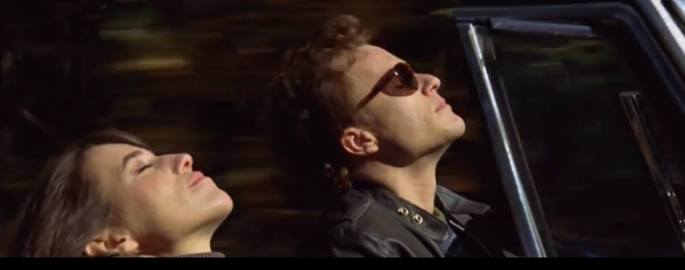
Haynes, who co-wrote the film with the supremely talented writer/director Oren Moverman, cut back and forth between the various actors, forming a kaleidoscope effect of emotions, styles, and moods. Blanchett (brilliant) is the drugged out Dylan, unable to respond adequately to the press and critics, stumbling around in a stony daze. Ledger is a famous actor playing a role in a film that is Dylan-esque; he’s married (to the lovely French actress Charlotte Gainsbourg) and has a kid and shows zero desire to be a part of the family dynamic. Bale is Dylan as innovator and creator; one of the best scenes in the film is the infamous Virginia Beach concert where Dylan went electric for the first time, much to the anger of his loyal fans. Whishaw, who was phenomenal in the criminally underrated Perfume: The Story of a Murderer, was a bit underused as the talking-head Dylan, spouting off lines of psychological assessment that work as links between the segments. Franklin, who has a natural screen presence despite his young age and relative lack of acting experience, is Dylan represented as naive child, and the tender moments with Franklin singing with some train hobos is lyrical and sweet. And Gere, who roughly approximates Dylan when the singer took a role in Sam Peckinpah’s classic Western Pat Garrett and Billy The Kid, plays Dylan as a lost soul, drifting around a Fellini-esque circus-setting that contains all manner of magical realism with direct homages to 8 1/2.

4

I’m Not There was crafted with love, passion, and reverence for Dylan by Haynes and Moverman, and it’s a film for anyone who considers themselves a true Dylan fan. The beautiful texture and diverse multi-format cinematography by the estimable Ed Lachman (Far From Heaven, The Limey) is a pleasure for anyone who considers themselves a cinematography buff. And as I mentioned earlier, the music is dynamic. I’m Not There is a private, challenging film that will certainly frustrate viewers who go into it looking for easy answers and clear-cut ideas. Haynes, who has established himself as a singularly idiosyncratic filmmaker (aside from the brilliantly conceived Far From Heaven his work includes the stunning glam-rock expose Velvet Goldmine, the creepy domestic “thriller” Safe, and last year’s achingly romantic Carol), is an artist working overtime in artist mode, never interested in playing it safe or capitulating to the studio suits. This is an epic yet intimate film that works up a full, heady stream of images, sound, and ideas, and culminates with an exceptional final shot that beautifully wraps the film up.
5

Speed Racer – A Review by Kyle Jonathan


sracer_trailer4

Speed Racer

2008.  Directed by Lilly & Lana Wachowski.

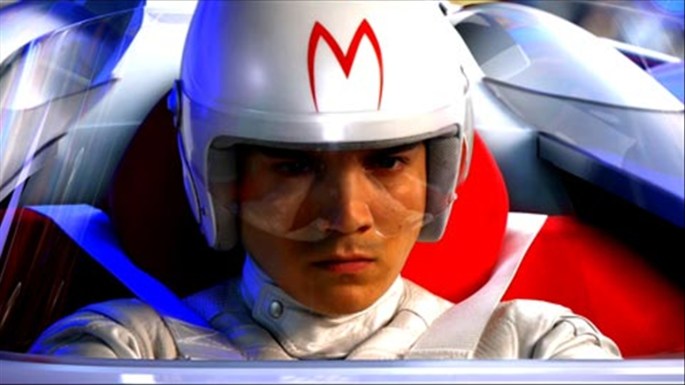
A bacchanal of cheesy excess, the Wachowski’s Speed Racer is a unique incarnation of the family film, bringing the eponymous anime serial to life.  Featuring the directors’s patented theme of artistic rebellion against authoritative control, Speed Racer also delivers a blitzkrieg of CGI visuals and a heartwarming story about familial love conquering all.

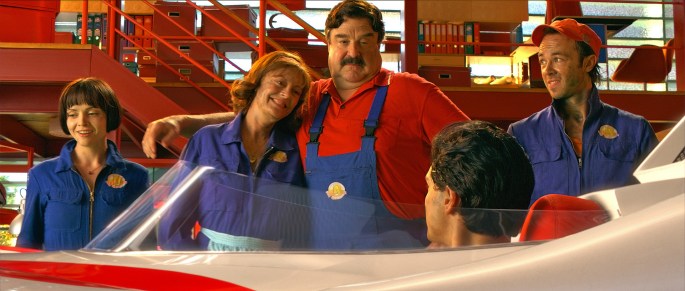
Speed is an 18 year old racing prodigy, living in the shadow of his brother Rex who died on the track.  He races for his family’s independently owned company, valuing his personal tribe and the art of racing over fortune and fame.  Speed is approached by Royalton, CEO of a mega corporation, and offered the contract of a lifetime.  After he rejects the offer, Royalton retaliates by placing a bounty on Speed’s head, one that other drivers are eager to collect.  Speed finds an ally in another independent racing company who asks him for help in The Crucible, the circuit’s most notorious race, in order to ensure that their company will not be consumed by Royalton’s empire.  Things become further complicated when Speed is joined by Inspector Detector and the mysterious Racer X, a crime fighting duo who are desperate to put an end to Royalton’s schemes once and for all.

speed_racer__span

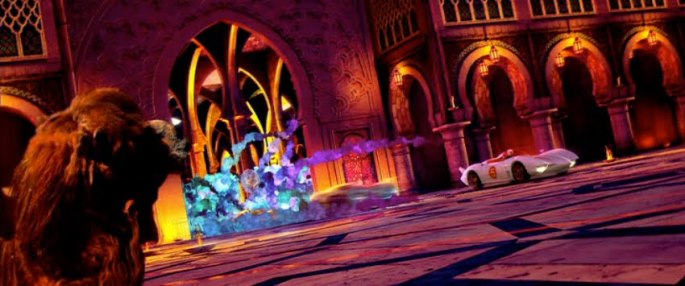
The film took 60 days to shoot entirely on green screen.  David Tattersall’s trippy cinematography captures the the cartoonish action in an explosion of neon.  The framing is all over the place, with the backgrounds melding with the characters to optically dazzle and confuse whenever the cars are engaged in vehicular combat. Kym Barrett’s costume designs are flawless reproductions from the show, while Hugh Bateup’s art direction recreates not only iconic scenes, but double’s down on the outright insanity of the visual acrobatics.  Stephanie Fowler’s makeup has a synthetic quality, allowing each character to mimic their animated counterparts with frightening accuracy, a quality that takes some time getting used to.

The turbulent editing during the race scenes captures the CGI mayhem with a lightning cadence, doubling down on Speed Racer’s relentless visual assault.  The action is mostly harmless, with peril never being a factor, but that is part of the charm.  The technical gadgetry of the race cars has a neo steampunk feel that is one of the many intriguing aspects of the world Speed Racer creates.  Despite the epic run time, many details of the actual universe in which the saga takes place are sadly never explored, using the bulk of the narrative to focus on the contests and the internal struggles of Speed’s family.

Speed Racer

The Wachowski’s script has a infectious B movie vibe that replaces traditional acting with ludicrous pantomiming.  Every cast member is playing a preconceived role with virtually no freedom to explore the depths of their characters. However, this is not so much a weakness as it is a testament to the directorial vision.  The idea was to make a living cartoon and the result is exactly that, complete with the logical flaws that accompany an animated universe.  Roger Allam as Royalton chews up the excessive scenery by portraying his character as a walking symbol of corporate greed.  Matthew Fox gives a surprisingly good performance as the tough guy Racer X and it’s his story line that elevates the entire affair above the endless clones of family films.  Speed Racer has a lot to say when it gives the time to think on its themes of family and artistic freedom, but these moments are few and far between.

Ultimately, this an overlong confusing mess of a film that is a perfect representation of the Wachowski’s volume of work.  They consistently pick interesting concepts that, if accomplished, would completely change the game with respect to the medium.  Like Cloud Atlas, this is one of the most unique cinematic experiences out there, offering of the first attempts at creating a live action film that is a complete copy of its predecessor.   Sometimes, too much, is too much, and the film suffers as a result, collapsing in the final leg of it’s bloated story line.  Despite these concessions, witnessing this film for the first time is truly an unforgettable experience.

speed-racer-4
Available now for digital rental, Speed Racer uses a painfully loyal adaptation as a means to once again allow the Wachowski’s to saber rattle against authority, while also presenting a touching story about the sacrifices we all make for our families.  A one of kind visual delight, Speed Racer is a flawed, but poignantly resplendent experiment that succeeds far more than it fails.

Recommend.

speedracerlogo

DOCTOR STRANGE–A REVIEW BY TIM FUGLEI

null

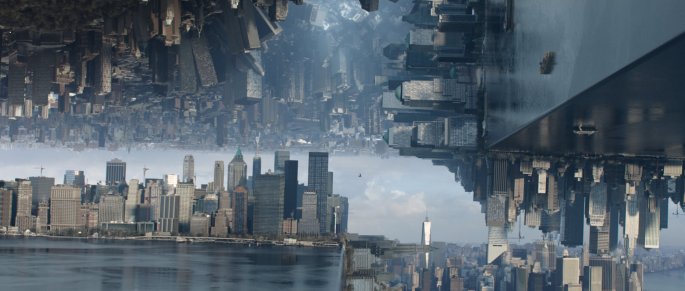
Countless clickbait headlines roam around the internet on the back of Marvel Studios and their 14 blockbuster films, begging readers to enjoy conjecture, rumor, even falsehoods about their upcoming properties.  It seems people can’t get enough of producer Kevin Feige’s massive comic book to screen empire. They are the undeniable box office champions of the cosmos in 2016, with no sign of slowing down assuming they can gracefully age their current stars and add new ones to an expansive interlocking series of hero and villain yarns the likes of which has never been seen elsewhere (so far, that includes from their primary competition over at DC/Warners).  After the expansive and somewhat tedious Captain America: Civil War, which along with the preceding Avengers sequel and Batman V Superman: Dawn of Justice tried, as if on a dare, to cram as many superheroes together in one bloated cinematic run time as possible, Marvel now has given its fans a more traditional, fleet origin story for one of its prized properties, the Sorceror Supreme himself, Doctor Strange.  Steven Ditko’s creation for Marvel Comics back in the 1960s introduced a psychedelic element to the printed kingdom that is almost the exact opposite of the technology-rooted Iron Man that launched the movie universe. The result is a fun ride with a new ensemble to enjoy, as always loaded with recognizable Hollywood faces and now spiked with visuals that put to shame even the most cosmic exercises they’ve already attempted.

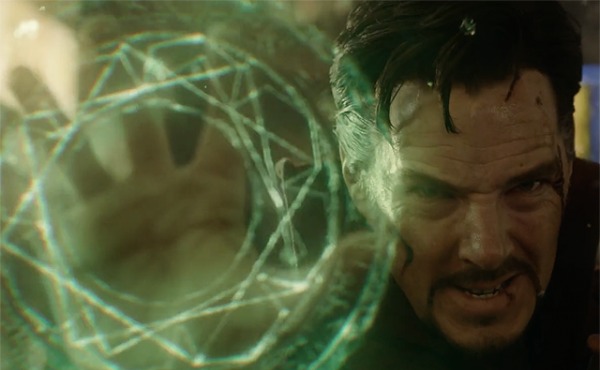
Benedict Cumberbatch puts on his best American accent (which, to be fair, is probably not THE best American accent you’ll ever catch a Brit on screen passing off on us, but it ceases to be a distraction quickly which is a victory in itself) and introduces us to Steven Strange, superstar surgeon and arrogant citizen of the galaxy.  A surprisingly common modern danger sends him literally off the rails in his sportscar, and before we’ve barely gotten to know him his hands are useless in an operating theater.  Modern medicine fails him, of course, and the action switches to Nepal, where he’s tipped off there may be a solution outside of the Western world.  Chewitel Ejiofor’s Mordo and Tilda Swinton’s Ancient One take him under their wing after a false start or two, and we’re on the way towards the once proud doctor becoming a mighty magical warrior.  They are of course in need of more soldiers in helping to protect Earth from mystical foes, and said foes (led by the ever icy Mads Mikkelsen) are of course rallying to bring death and mayhem to all, justified by the Marvel Cinematic Universe’s standard villainous logic of bringing about some form of twisted golden age through allowing evil to take the reins.

If this all sounds a bit familiar for those of us who’ve been consuming comic books on celluloid for years now, it is.  However, Doctor Strange has many things going for it that help override the familiarity of yet another “promising miscreant called up to greatness” starter story for a new character.  First is Cumberbatch, who may hold several copyrights on charming snarkiness, and he manages to make a potentially unlikable protagonist fit right in alongside the likes of Tony Stark and Peter Quill.  The rest of the cast do their characters credit too, from Ejiofor’s steadfast moralist to Swinton’s playful master magician harboring a secret or two.  Rachel McAdams has a somewhat thankless role as a former love interest of Strange’s, but their easy chemistry and her humorous annoyance with the mystical goings on that the Doctor brings into her hospital make every scene she’s in a fun one to watch.  So as usual, Marvel remembers that character counts, and give you just enough to care as threats increase.  Above and beyond this, director Scott Derrickson delivers what is easily the best looking Marvel film to date, with Inception-style world bending taken several levels above what anyone’s put on screen before.  This also feels like one of the more action packed entries into the MCU; once the story really gets going, we’re treated to a grand mashup of martial arts and supernatural powers slamming characters around in high combat style.  And unlike many other entries in the genre, a clever path to victory is well developed and used to save the day instead of One Last Big Fight.  With a quick runtime of 115 minutes, the film doesn’t overstay its welcome while adding the standard Marvel post credit teasers to prepare audiences for what’s coming next with these heroes and more.  Finally, Derrickson and his co-writers Robert Cargill and John Spaihts show an understanding of and love for the source material that represents the true bedrock of this studio’s success.  All in all, another entertaining ride from the Marvel Movie Machine, giving us the equal parts familiarity and newness that the brand promises and delivers like clockwork.

dr-strange

THE EXPENDABLES – A Review by Frank Mengarelli

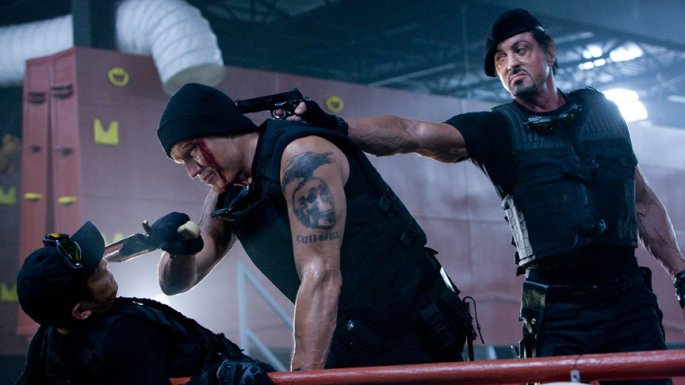
THE EXPENDABLES is that hard R-rated film that hits the sweet spot for adults craving adult oriented action and humor with past and present staples of actions cinema. Sylvester Stallone crafts not only a film, but a hugely successful franchise, around himself and his movie star buddies. The film is so much fun to watch, watching these ancient relics double-fisting machine guns and laying waste to anyone in their path.

expendables_wide-7dfd5214e738da28b5d1264a1f3e377066746eb9-s900-c85

Sure, the film is riddled with hammy dialogue, campy acting, ridiculous character names, and obnoxious action – but that is EXACTLY what this film should be, and is. Sylvester Stallone is one of cinema’s most unsung and undervalued auteurs. This is a guy, who has made catastrophic career choices; yet he’s been able to resurrect his career four, count it, four times due to his directing and writing abilities. Rocky, Rambo, Expendables, and now his reinvention of Rocky in last year’s CREED.

Stallone took a film with an eighty million dollar budget that yielded 275million at the worldwide box office, and spurred two successful sequels. The subgenre of the hard R rated B action films have seemed to have slipped off the cinematic radar in past years. Either we get a tent-pole movie star grazing his way through a watered down PG-13 film, or we get some sort of intentional franchise starter with an over-the-hill star fighting alongside a fresh face who more times than not, lacks acting chops severely.

ex-roberts

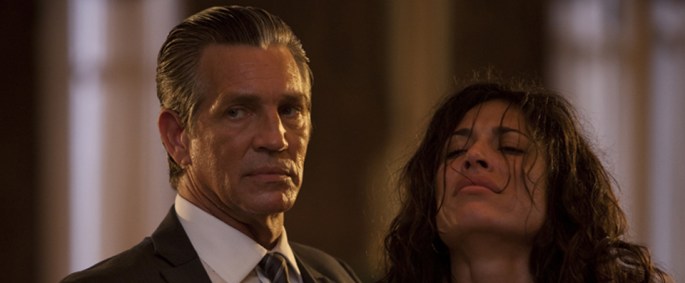
THE EXPENDABLES goes for it, and resets the mold of that strain of films we have missed. Stallone headlines Jason Statham, Dolph Lundgren, Mickey Rourke, Jet Li, Terry Crews, Randy Couture, Steve Austin, Bruce Willis, Arnold Schwarzenegger, and Eric Roberts. Not to mention all the other wonderful additions Stallone recruited for the two sequels.

Stallone creates a world that takes place inside the movie world. These guys are big, tough, and ooze masculinity. The dialogue is akin to what we heard from the same actors in the 80’s, the practical explosions are bigger, and the CGI blood is absolutely egregious. The director’s cut of the film stands slightly taller, adding a bit more depth, and rounds out some of the more clunky characters in the film.

ex-rourke

While this film is nowhere near perfect, it is perfect for what it is. Dolph Lundgren lynching Somalin pirates, Stallone quick drawing a revolver and taking out six guys, Eric Roberts being over-the-top snarling through his teeth, Jason Statham putting his fist through skulls, Mickey Rourke looking obnoxious as ever yet putting on an acting clinic in his brief scene, and everything else you’d want from a hard R, quickly paced B movie filled with explosions and gunfire. THE EXPENDABLES and its two sequels is a feverishly welcome return from an auteur that refuses to be rendered obsolete.