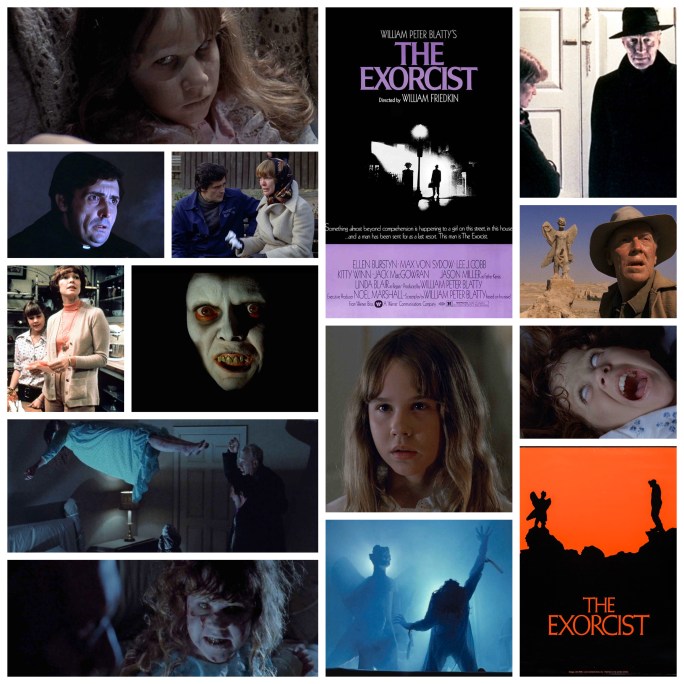
William Friedkin’s The Exorcist

I saw William Friedkin’s The Exorcist for the first time the other night and it definitely lived up to its reputation, while also being totally not what I expected in a good way. I think that if you go a long time not experiencing a piece of art that is iconic and referenced everywhere in pop culture you kind of project your own image of what it’s going to be like and just assume, and then when you finally get around to it you’re sort of blindsided by the product itself. That happened here with a horror film where I’d seen so many memes, editorials, parodies, pastiches, reworking and ripoffs that when I finally got around to it I was pleasantly surprised at the result.

The main thing that augmented my expectations was pacing; I always Linda Blair’s Regan was to be possessed right from the get go and to see that famous establishing shot before the credits, then have the story progress from there. The film takes its time building character, that of Regan, her mother (Ellen Burstyn) and Father Damien Karras (Jason Miller), the deeply unsure and fragile priest hired to do the deed. I enjoyed the fact that her mom was a famous actress working on a film and felt some touches of meta there, as well as a spooky prologue set in Africa where we meet Max Von Sydow’s Super Priest Lancaster Merrin.

So, did it live up to the hype of being one of the scariest films of all time? Well… that’s a complicated question and gets to the roots of what irks me about how we view horror films back then and now. Yes, this was a terrifying film and all the recognizable scenes of Blair being possessed still hold potency and crawl along the spine. They’re also placed well enough that you don’t necessarily expect them and as distill more shock. I’m not talking about a cheaply orchestrated jump scare, but simply cutting back on buildup or discernible beats and letting the disturbing imagery seem more organic. The head spinning around is a kicker. Thing is, this film was made in 1973 and there have been a thousand and one horror movies made since then that had this as a barometer for the envelope to push. So.. *back then*, yes, this would have been the scariest shit to grace the screen, but we gotta update our way of thinking and take into account what’s come since, and how our favourites have become dated whether we like it or not. Is it one of the *best* horror films ever made, scare-o-meter aside? There’s certainly a case for that, I found it to be an extremely well crafted, atmospheric, unnerving piece and for one that *was* made back then, definitely scary. I also appreciated the discussions had by characters around the concept of an exorcism and how science relates to theology, bringing it’s central premise into thematic conversation as opposed to simply framework for horror. One thing I was disappointed by though is the lack of that spider crab running down the stairs thing she does that I’ve scene in so many SyFy movie of the week promos. I’m guessing there are different cuts out there but that is a barnstormer of a scare moment and I’m not sure why they wouldn’t include that in every version.

-Nate Hill
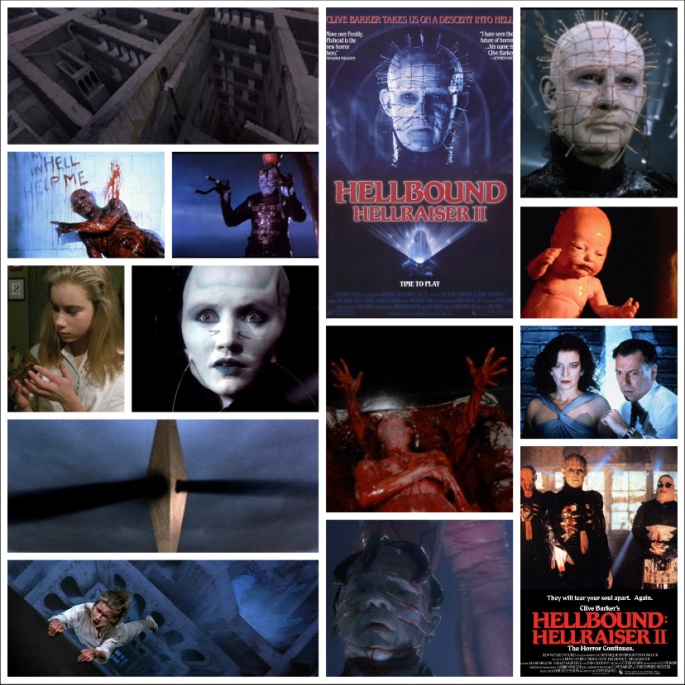
Hellbound: Hellraiser II

So what can be said about Hellbound: Hellraiser II.. well for starters it’s so fucking off the map crazy that it makes the first film look like a modest teaser trailer. It’s like they gathered up the entire collective special effects team employed by Hollywood in the 80’s, turned them upside down to see what shook loose and the result was this bonkers, smor-gore-sbord of a flick.

In the first film the Cenobites and all manner of pandemonium they brought with them were largely limited to the confines of one very haunted house, where they tormented the humans within. This time we follow what’s left of these people, namely Kirsty (Ashley Lawrence) as she ventures into the hellish realm that these things come from and… well it’s quite a wild ride. After finding herself in an asylum run by a mad doctor (Kenneth Cranham) who gets a little too curious with that ol’ Rubik’s cube, she gets sucked into a portal and spit out onto a vast labyrinthine plane of pure evil, and that’s pretty much all there is for story. Oh and some neato backstory elements to the Cenobites that show they weren’t always supernatural dominatrix freaks, I liked that touch.

Honestly I preferred this over the first one simply for the level of ambition and sheer lunacy thrown at it and it’s ability to (mostly) hold up a coherent story throughout the din. Setting the story within the dimension of hell itself allows for so many more effects, cues, scares and opens up the tableaux much wider. Also, this picks up pretty much right where the first left off and as such we’re plopped down right in the mayhem whereas the first took some time and held back while lore was established. Sound, fury, gore and momentum propel this onto a level that is impressive even in the land of bonkers 80’s horror sequels. The loony surgeon whose fault the horrors are this time around gets a grisly Pokémon type evolution that has to be seen to be believed, not to mention a metropolis of stone catacombs where anything can happen, a Cenobite vs Cenobite Mortal Kombat death match and some weird sentient floating monolith thing that hovers over the land and looks down like Sauron’s eye. That isn’t even to mention the hundreds of gallons of blood, guts, pus, fake tissue, gristle and glorious glistening body horror on display. A true step up from the first and one hell of a twisted flick.

-Nate Hill

Amazon Prime’s Goliath: Season 3

Amazon Prime has released season 3 of their excellent original series Goliath and I pretty much binged the thing in one night. While the first entry set the stage for a darkly funny, deeply emotional and consistently eccentric brand of storytelling, season 2 diverged from that into the decidedly perverse and unconventional in terms of a narrative bereft of catharsis, obvious beats or satisfactory resolution. That’s not to say it wasn’t good, it was just… different. This third season both continues to trailblazer those off colour paths and also gets back to the roots of what made the first season such an engaging genesis.

Billy Bob Thornton’s Billy McBride takes on the case of his old buddy (Griffin Dunne) whose wife (Sherilyn ‘Audrey Horne’ Fenn) has a deep connection to their past and has now died under mysterious circumstances. This eventually pits McBride and his trusty motley crew up against the deranged Blackwood clan and their acolytes, an elite society of billionaire ranchers who are corrupt to the bone, willfully malicious and have been stealing the county’s water for their own gross financial gain. Led by brother and sister Wade (Dennis Quaid) and Diana (Amy Brenneman), they and their peeps prove to be a titanic adversary for Billy & Co. and the story here feels fresh, funny, immediate and fully fleshed out right down to the smaller roles and one episode arc players. I love this show because it doesn’t just cast ‘of the moment’ stars, attractive young blood or flavour of the month hotshots like a lot of other stuff, it delves back into the collective cinematic and televised past and pulls out some truly talented people that we maybe haven’t seen onscreen in the past decade or so but certainly haven’t forgotten and recall with a smile as soon as they show up. As such we get excellent work from folks like Beau Bridges, Illeanna Douglas, Julia Jones, the great Graham Greene, Monica Potter, musician Paul Williams and season 1 villain William Hurt who comes back with a nasty vengeance here.

Thornton rocks the McBride role, cultivating the jet black humour, deadpan self deprecation and fiercely guarded but incredibly soulful empathy that make the character come alive and the performance stick in your mind. Nina Arianda returns as ruthless scene stealer Patty Solis-Papagian (pronounce it wrong and I wouldn’t wanna be you) and steals scenes harder than she ever has, this girl whips up Emmy worthy work and makes it seem effortless. The season focuses a lot on the villains and their struggles as well as their wicked acts, particularly Quaid and Brenneman who are both flat out phenomenal. There’s this kinky, just plain wrong aesthetic between the two of them but they never seem like moustache twirlers or one note monsters, always complicated and conflicted. You get a sense of region, of history and of real human strife on their side of things and I heartily applaud all artists involved for the work put in to invoke such a world and such reactions from me. The narrative is airtight to this season too and feels as conclusive as a hammer blow while still leaving plenty of room for more story and keeping one ever present, omniscient antagonist in the wings for more storytelling later. Also kept up is the strange, experimental and increasingly surreal style, and you haven’t seen anything until you’ve seen Dennis Quaid take peyote and dream that he’s singing Conway Twitty’s Some Say Love to an auditorium packed with other Dennis Quaid’s. He’s got some pipes too. All in all this is such a rich, unique and invigorating piece of storytelling and I hope they never cancel it.

-Nate Hill

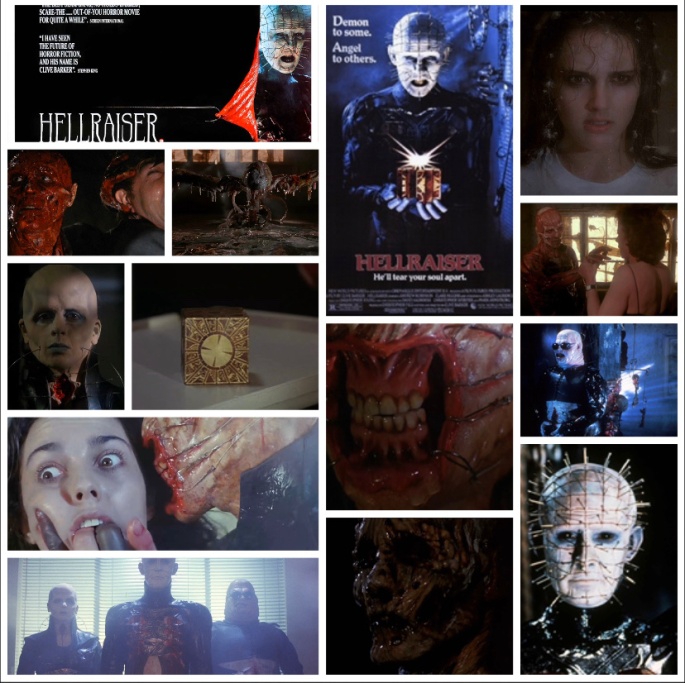
Clive Barker’s Hellraiser

“Jesus wept!” exclaims a character in Clive Barker’s Hellraiser before being ripped to shreds. No kidding, and I bet David Cronenberg did too. Explaining the plot of rgis film to someone who hasn’t seen it can be vague and pretty bizarre. “Magic evil Rubik’s cube has the power to summon mutilated, sadomasochist beings from hell who inflict both pain and pleasure by maiming, mauling, dismembering and otherwise dispatching those who called for them in the most inventively graphic ways possible.” Well it is that, but you kind of have to watch it all unfold yourself to see how cool it actually is or it just sounds weird.

Many horror films start by showing a family moving into a house that has a dubious past and so does this but where it goes from there will floor you. Andrew Robinson (cast against type here as a meek dude) is a chatty yuppie who moves his new wife (Claire Higgins) into a family inherited home for some relaxation. Never mind that there’s maggots and decrepitude everywhere, the real danger is the lingering ghost of his reckless alpha male brother Frank (Sean Chapman in a role originally intended for Mickey Rourke which I would have paid big money to see) who got too curious with aforementioned Rubik’s cube and started all kind of trouble. Before too long his half dead corpse is resurrected, Robinson’s young daughter (Ashley Lawrence) becomes involved as do the inter-dimensional Cenobites and yes, all kinds of hell is raised.

It’s cool to see the impact that one film can have on so much in culture after it, the ultra gory practical effects, kinky costume design and overall distinct vibe here has obviously gone on to influence everything from Jacob’s Ladder, Event Horizon, Beetlejuice to countless video games and graphic novels. Pinhead is now an iconic character to the point where people know him before they do the film but back here he wasn’t even called Pinhead, credited simply as ‘Lead Cenobite.’ Every infamous legacy has its beginnings though and this is quite an arresting, gruesome, atmospheric and deliberately weird piece of cosmic horror. The performances are all sensual 80’s melodrama which just somehow works, the score is a bombastic orchestral overture courtesy of Christopher Young but it’s really the special effects that win the day here. Whether it’s a corpse crawling across the floor with no skin, razor sharp meat hooks ripping though flesh, living room walls opening up into other worlds or the startling, otherworldly design of the Cenobites themselves, this is one visually gorgeous piece of horror and looks even better on Blu Ray.

-Nate Hill

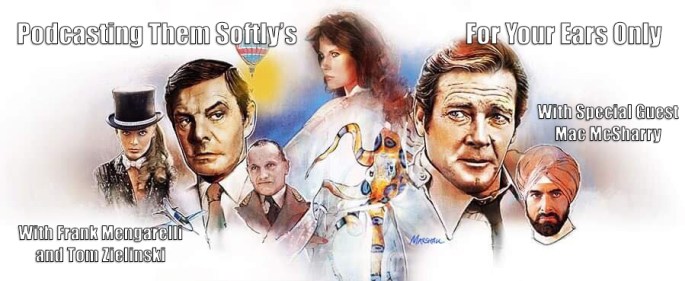
For Your Ears Only: John Glen’s OCTOPUSSY

Octopussy Banner
Artwork courtesy of Jeffrey Marshall.

Join Frank and Tom with special guest Mac McSharry as they discuss John Glen’s OCTOPUSSY in all its glory. They discuss Moore’s turn, Maud Adams’ return to the series, and Louis Jordan as well as the behind the scenes production as well as the original source material written by Fleming. Join us next time as they cover Sean Connery’s return as James Bond in NEVER SAY NEVER AGAIN.

B Movie Glory: Ripper – Letter From Hell

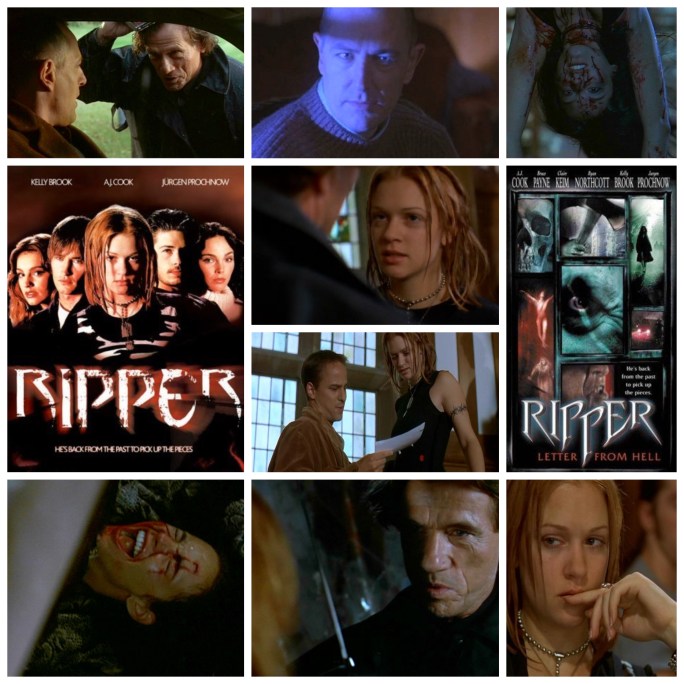
The early 2000’s saw a lot of MTV crowd, ensemble piece slasher flicks try and imitate the success of the Scream franchise. Some are great (Urban Legend) and some, like Ripper: Letter From Hell, fall short of being anything but vaguely entertaining distractions.

AJ Brook plays the survivor of a previous slew of killings studying the psychology of mass murder under a creepy but well researched college professor (Bruce Payne). Suddenly a new killer emerges who uses the crimes of infamous Jack The Ripper as a baseline and commits horrific copycat murders. She finds herself in the crosshairs of this fiend while her friends all start falling victim one by one and a mysterious homicide cop (Jurgen Prochnow) from her past begins to open new investigations.

This is some bottom of the barrel stuff, not gonna lie. Payne and Prochnow genre pedigree amongst the newbie teenage cannon fodder but even they seem too melodramatic for this. I will say it has a cool atmosphere though, and anything to do with the Ripper legacy will always be fascinating.

-Nate Hill

Todd Phillips’ Joker

Gotham City, 1981. Sanitation services are on strike, leaving piles of garbage curb side. Mounting inequality and rampant poverty poison the collective climate and spur on bubbling unrest. Billionaire Thomas Wayne (Brett Cullen) makes the kind of callous comments on live tv that don’t help anyone’s situation much. “Is it just me or are things getting crazier out there?” laments Joaquin Phoenix’s Arthur Fleck. He’s more right than he knows, both in terms of ‘out there’ and closer to home. Todd Phillips’ Joker is a brilliant, flammable, uncomfortable, thought provoking, beautifully crafted piece not only on its own terms as a standalone character study but also as part of the Batman universe as well.

Arthur lives with his ailing mother (Frances Conroy) in a shit box apartment, works as a street clown for an agency that resents him, sees a dour social worker until funding is cut along with access to his medication. He idolizes a funny-man TV talk show host (Robert Deniro in scenery chewing mode) until the guy cruelly mocks him for laughs. Arthur is as close to snapping as the entire city around him and one can almost use his gradually disintegrating grasp on reality and coherence as a barometer for that of Gotham itself and the world outside the cinema that we know too. Phoenix is indescribably good in the role, shedding pounds and growing a shaggy mane to portray this beyond iconic antagonist and giving us a portrayal that is so well built up, so scarily developed that by the time he has incarnated into the full fledged clown prince of crime we feel like running for the door in terror. But he’s also madly human too, a man repeatedly stomped down by the forces around him until a combination of stress, untreated mental illness, hurt and humiliation push him over that edge in a startling act of violence. Joaquin is the star here but Phillips also populates his Gotham with a variety of faces both new and familiar including Douglas Hodge, Zazie Beets, Brian Tyree Henry, Josh Pais, Bill Camp, Shea Wigham, Glenn ‘The Yellow King’ Fleshler and more.

So, about that elephant in the room. I don’t usually like to address this kind of thing in my reviews but this film has inexplicably whipped up a hilariously misguided fever of opinions, so read loud and clear folks: The Joker is a comic book character. This is a film. The way he’s written here is as a mentally ill victim of an would be standup comedian who is pushed to the brink, left to stew in his own mind as well as a horrifying cycle of abuse and finally loses it. This film in no way glorifies, condones or puts lone wolf violence onto a pedestal and if you think otherwise than you either haven’t seen the film or gravely misunderstood it’s themes. This maniacal, dogmatic, woke-a-cola nonsense has no business here and those peddling it should be embarrassed of themselves, shut both their mouths and their laptops, go into the corner and count to ten. Got it? Good.

Philips has created quite the vision of Gotham and The Joker here, drawing inspiration from Martin Scorsese’s work, lovingly observing key touchstones of the Batman universe and adding his own stylistic flairs that help this thing do a dance all its own. This is not a crowd pleaser or a pleasant experience though. Gotham has none of the Hammer aura of Burton or Broadway kitsch of Schumacher, but is simply a weary, dirty, worn out avatar for late seventies New York with just a tad of 30’s/40’s atmosphere present in the soundtrack choices and a terrific cameo from Charlie Chaplin. Phoenix owns the film and can’t really be compared. I love every Joker portrayal so far in cinema (yes even Jared Leto) for a host of different reasons and Phoenix adds another incendiary notch to the belt here with his psychologically shredded howl of a performance. Add to that gorgeous, gritty urban cinematography by Lawrence Sher, stunningly grimy and beautifully lit production design by Mark Friedberg and a surprisingly ethereal, skin crawling score from Hildur Guanodóttir and you’ve got quite the package. One of the best films of the year so far.

-Nate Hill

Hidden Gems: Brad Anderson’s Stonehearst Asylum aka Eliza Graves

Ever heard the expression ‘inmates running the asylum?’ Brad Anderson’s Stonehearst Asylum has, and quite literally spins a terrifically gothic horror yarn for the ages around it, packed with stars, ideas, twists, beautiful scenery and a wistful aesthetic reminiscent of old Hammer horror stuff. Now if the premise sounds like a final act twist let me assure you I haven’t spoiled anything that the trailers don’t cheerfully announce early on. This film is so bonkers it starts at level ten madness and only ratchets the lever up from there. But don’t get the idea that this is a raving madhouse without story or subtlety either, for all its wanton spectacle there are well drawn human beings with something to say behind these walls.

Based on a short story by Edgar Allen Poe, Jim Sturgess stars as an apprentice Alienist shipped off to the austere Stonehearst Asylum in rural Britain (actually stunning Bulgarian countryside) to learn the trade. Once there he discovers that the facility’s real staff have been overthrown by the patients in a violent revolution and now a cunning madman (Ben Kingsley doing a sly riff on his Shutter Island character) is impersonating the actual superintendent (an icy Michael Caine) and calling the shots. This is apparent right off the bat since the place seems to have no security protocol in place and oddballs of all shape and size cavort freely about the manor. One patient who doesn’t seem to be a hopeless basket case though is the mysterious Eliza Graves (Kate Beckinsale), a girl with a shady past and secrets up her sleeve.

Director Anderson is an unsung horror thriller maestro with an incredibly solid track record including The Machinist, Session 9, The Call, Vanishing On 7th Street and now this which is a proper old school horror flick like you don’t really see anymore. This is a film that throws in subplots simply to have them there, amps up simple set pieces until they are unnecessarily but wonderfully cacophonous and is just overall in love with storytelling. The cast are all clearly having the time of their lives especially Kingsley who injects some genuine pathos into a role that could come across as high camp in someone else’s hands, exploring the notion of what would happen for real in this outlandish scenario. We also get familiar faces like Brendan Gleeson, Jason Flemyng, Christopher Fulford, Sinead Cusack and others. Standouts include newcomer Sophie Kennedy Clarke as a scene stealing patient with a penchant for childlike melodrama and David ‘Professor Lupin’ Thewlis as a particularly scary homicidal resident. You’ve kind of gotta employ considerable suspension of disbelief here, this is a film where spectacle, atmosphere and incident dance over the graves of logic and continuity, but there’s a rich tale to be absorbed with many fine performances, gorgeous cinematography and a creaky gothic vibe. Highly recommended, you can find this streaming on Amazon Prime.

-Nate Hill

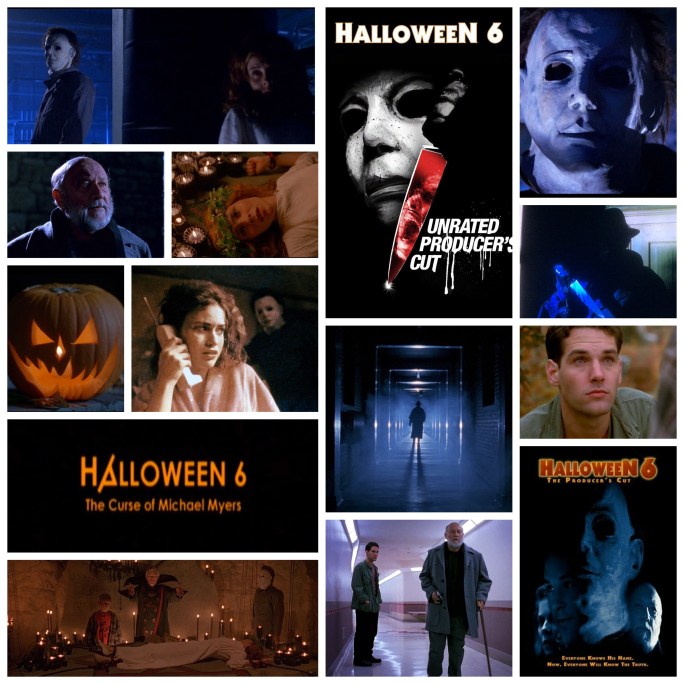
Halloween 6: The Curse Of Michael Myers – that glorious Producer’s Cut

Halloween 6: The Curse Of Michael Myers was one curious and troubled production, living up to that title and then some. Bashed on release, fans heard hushed rumours of the fabled ‘Producer’s cut’, a much different take on the story with numerous alternate scenes, augmented kills and a brand new score by Alan Howarth. I finally got a chance to snag a Blu Ray of it from amazon (for six bucks no less, I’d get on that now if you’re interested) and after checking it out last night I’m elated to say it’s pretty much a whole new film as well as one of the best of the sequels, between the changes to story and the beautiful picture restoration.

Here’s the cool thing about Halloween 6 for me: while the rest in the franchise all sort of come as stylistic and narrative package deals/double feature type things with one another, this really stands on its own. The original and 2 happen on the same Halloween night and both have Carpenter’s stamp plus Laurie Strode. 4 & 5 feature Danielle Harris’s Jamie Lloyd and bear similar approaches. H20 and Resurrection both have an early 2000’s Scream/MTV vibe and an older Laurie Strode. Rob Zombie’s two versions were intrinsic to one another and even the 2018 reboot is getting some three’s company fellowship in the coming years. But 6 is really a singular, unique vision and stands like a lighthouse of originality albeit still bearing the framework and blueprint of the Myers legacy.

Michael is back and more violent than ever as he hunts down Jamie (J.C. Brandy stepping in for Danielle Harris) and in turn pursued by the now semi retired Dr. Loomis (beloved Donald Pleasance in his final franchise appearance), his colleague Dr. Wynn (Mitchel Ryan) and the now grown up Tommy Doyle, played by a young Paul Rudd in a turn that can only be described as a knowingly campy harbinger of his then untapped comic talent. Michael shows up in 90’s Haddonfield on that night of nights to cause quite a bit of trouble for the family living in his old house, but his ultimate endgame is to find Jamie’s baby, who somehow holds the key to… something.

So this is known as that Halloween film that betrayed the legacy by explaining away Michael’s evil with the inclusion of a spooky pagan cult that worships the power of ancient Celtic runes and thereby both gives him his power and uses him for their agenda. Not even Rob Zombie was that brazen with his extended Smith’s Grove childhood sequence. I have no real problems with the direction they went here though. Maybe it’s because I’m a sucker for spooky folk horror, maybe it’s the excellently atmospheric Howarth score that sells the weirdness, who knows. I suspect it’s the big, unwieldy and multi-canon best that this franchise has become over the years though. There’s been a few restarts, do overs, lapses in overall logic and liberties taken with continuity to allow new ideas and the paving over of them next time someone gets out the crayons. What’s wrong with a Myers timeline in which he’s controlled by a spooky Pagan cult whose leader looks like Jack The Ripper dresses by Johnny Cash’s tailor? It’s cool, it’s well done and in terms of camp, style and music it holds a candle and then some to other entries in this run. This Producer’s Cut is the way to go though mind you, I’ll probably toss my old DVD and only ever revisit this cut again.

-Nate Hill

B Movie Glory: Charles Winkler’s Disturbed

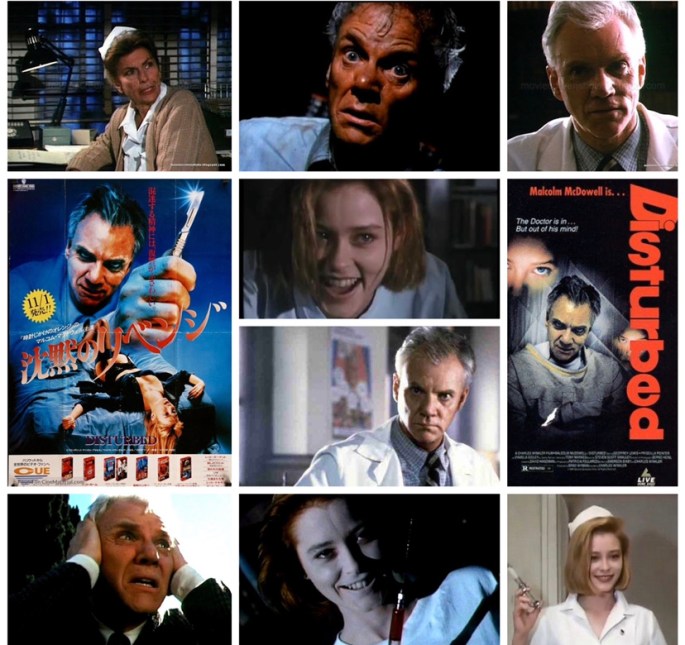
The horror genre has this hilarious unwritten rule that the head doctor of any asylum featured in a narrative simply must be far crazier than any of the patients and Charles Winkler’s Disturbed definitely checks out in that category. Malcolm McDowell stars here as the psychiatrist in question, an amoral basket case with a nasty habit of snatching female patients from their beds at night, drugging and raping them until one such atrocity ends in death, and he seeks to cover up his nocturnal escapades. When one would be victim (Pamela ‘Teresa Banks’ Gidley) takes a fatal plunge off the roof while running from he thinks he’s got away with it… until she literally comes back and starts haunting him. This allows McDowell to do his trademark loony bin routine and slowly lose it bit by bit, chewing more and more scenery with each new scene. Is he nuts? Is her ghost really there? How much were their paycheques to star in this trash? Not to be a hard ass but this really is sleazy, bottom of the barrel shock value trash and the only real reason to check it out is, naturally, McDowell. His Dr. Russell is truly an unhinged creation and it’s fun watching him between unorthodox group therapy sessions, whacked out hallucinations and his eventual grisly comeuppance. The film itself is unabashed bottom feeding swill but there’s other familiar faces like Irwin Keyes, Priscilla Pointer, Clint Howard and Geoffrey Lewis to spice things up. The highlight of the film is when a nurse tells McDowell he needs professional help to which he triumphantly replies “I AM professional help!!” and starts cackling like a witch. Sure, bud.

-Nate Hill