“I’m not fallin’ all over myself to talk about much anywhere, Jack.” Manhunter Revisited – by Josh Hains

“He who fights with monsters should be careful lest he thereby become a monster. And if thou gaze long into an abyss, the abyss will also gaze into thee.”
– Friedrich Neitzsche

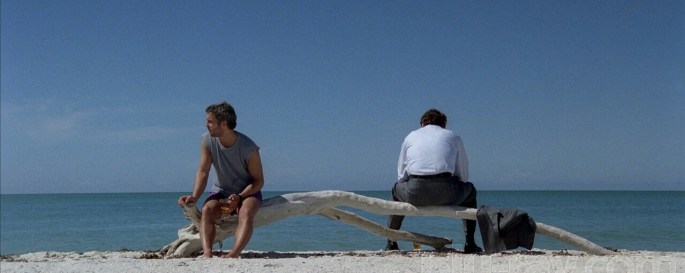
Will Graham doesn’t want to take the job Jack Crawford is offering, and we can hardly blame him. We are able to infer that whatever happened to him was of such a horrific nature that it caused his retirement from the FBI as a criminal profiler. We later learn in little bits and pieces (and not in an unnecessary prologue; I’m looking at you, Red Dragon) that a confrontation with the cannibalistic serial killer Dr. Hannibal Lecktor left him physically scarred from presumably gruesome injuries, and mentally broken. Through his body language and the stern, almost melancholic tone of his voice, we discern his reluctance, his unpreparedness, and we can sense the deep pain broiling beneath his calm surface. His peaceful existence in Marathon, Florida with his wife Molly (Kim Griest) and son Kevin is now on the brink of being shattered, all thanks to Jack’s perseverance. All it takes for him to crawl back into darkness is one look at a photograph of the deceased Leeds family, and the knowledge that he can help track down this one last psychopath, as if catching the killer will somehow put to rest his own inner demons from his years as a profiler. Easier said than done.

I revisited Manhunter on September 4th, over two years since the last time I’d seen it in March of 2016, and have given myself these last twelve days to absorb the film all over again. I had forgotten that for all of the darkness, despair, and violence, Manhunter is a beautifully photographed film, particularly during the opening scenes that establish Will’s moral quandary, and the serene dream sequence that occurs when Will falls asleep on a plane later in the picture. Even if Manhunter was somehow a genuinely awful movie, I believe I’d still remember those jaw droppingly gorgeous images conjured up by director Michael Mann and the director of photography Dante Spinotti. It certainly helps that I was watching it in high definition.

We later see that Will Graham (William Petersen) was indeed unprepared for this final job when he comes face to face with Dr. Lecktor in his cell, and experiences some manner of anxiety attack that sends him rushing out of the colossal building he’s incarcerated in. I recognized as with previous viewings, that unlike other interpretations of Lecter (spelled “Lecktor” only here in Manhunter, and spelled “Lecter” in the books by author Thomas Harris, and the other films and television shows) that reach for grandiose heights with the kind of theatricality one might expect from a Broadway production, Dr. Lecktor as played by the great Brian Cox, is a mild mannered, relaxed, everyman take on the character. He’s undoubtedly a psychopath, but his menace doesn’t come though in how he speaks but rather in what is spoken. This approach makes him all the more chilling than later versions because we know from human history that many of the most vile beings who have ever walked this earth, walked upon it in a manner as calmly, politely, and “normally” as Lecktor presents himself to be. What’s more frightening to you, reader: the Lecter you know is crazy before he’s ever opened his mouth because he practically smells of insanity, or the Lecktor you never suspect is insane until you’ve awoken under his knife?

Of course, no serial killer thriller is complete without the law enforcement affiliated lead, here personified with a palpable depth and a grounded everyman quality by William Petersen, in a performance as subdued and internalized as Cox’s Lecktor. Petersen never once strays into any kind of territory that would evoke feeling of his performance appearing fake or forced. He’s as natural as they come, and were it not for the knowledge that he is in fact, merely behaving for the screen, one might assume from his naturalism in Manhunter, To Live And Die In L.A., and CSI: Crime Scene Investigation, that maybe he’s the real deal, a cop turned actor like his co-star in Manhunter, the late Dennis Farina. Farina, who was a police officer in the Chicago Police Department’s burglary division for 18 years before Michael Mann used him as a consultant on his feature film debut, Thief (for which Farina also had a small role as an enforcer), turns in an equally as grounded, and entirely believable and authentic performance as Jack Crawford.

And then there’s the cause of Will’s return to profiling, the serial killer dubbed “The Tooth Fairy” for the bite marks he leaves on the bodies of his victims post mortem, better known to us as Francis Dollarhyde (Tom Noonan, who also has a small role in Mann’s Heat). His height and implied strength make him an imposing figure, though he’s also a shy little boy tucked away inside this monstrous shell, afraid to show his cleft palate, and obsessed with William Blake’s painting “The Great Red Dragon and the Woman Clothed in Sun”, later witnessed in a horrific scene with one of Dollarhyde’s victims, the sleazy reporter Freddy Lounds (the great Stephen Lang). That same painting has inspired an alternate personality borne out of his psychopathy he calls “Great Red Dragon”, which comes to life when he seemingly can’t control urges of both violent and sexual natures. Thanks in large part to Noonan’s eerie performance, and the subtle writing of Dollarhyde by Mann himself, the thin line between compassion and love, witnessed in intimate moments between Dollarhyde and blind co-worker Reba McClane (Joan Allen) with whom he starts a relationship with, and uncontrollable murderous rage, is narrower than the edge of a piece of paper, creating a figure all the more real and subtly terrifying.

It wouldn’t be a Michael Mann film without a memorable score or the use of a popular song, and Manhunter is no exception, complete with a thrilling, pulsating score from Michael Rubini, and The Reds, and the incredibly effective, memorable use of Iron Butterfly’s “In-A-Godda-Da-Vida” during the climactic confrontation between Dollarhyde and law enforcement led by Graham and Crawford. The use of Red 7’s “Heartbeat” over the credits offers up a welcomed upbeat conclusion to an otherwise dark picture.

In my revisitation of Manhunter, I took note of something that I had noticed the very first time I saw Manhunter in my teens (at the very least 11 years ago), and that has stuck with me ever since: the scene when Will visits the Leeds family home to scour the crime scene for clues to their murders, which is also where I came intonthe movie all those years ago when I caught it on television. This interpretation of Will Graham doesn’t just stand in the bedroom of the deceased Mr. and Mrs. Leeds and state into a tape recorder what he thinks occurred, like later versions. He scans the room before he ever says a word, his eyes circling the room from left to right, his mind at work taking in all of this visual information and formulating his idea of what happened simultaneously. When he’s done absorbing the scene, he speaks, low and taking his time, telling us how he thinks they died, and more, in full graphic detail. While we thankfully never bear witness to the events that actually occurred, we move onto the next scene with a clear understanding of what more than likely happened, without the sensation that we just listened to an unnecessarily long exposition dump. It’s a bone chilling scene, given the terrible subject matter, but an effective one we might not soon forget.

I’ve also come to recognize as I’ve grown older, that this same scene also conveys what it is about Will’s brilliant skillset as an FBI criminal profiler that compelled Jack Crawford to ask Will to step out of retirement to help him capture this one last criminal in the first place; to knowingly pull him out of paradise only to thrust him into a personal hell that endangers his family and himself. And why Will Graham said okay.
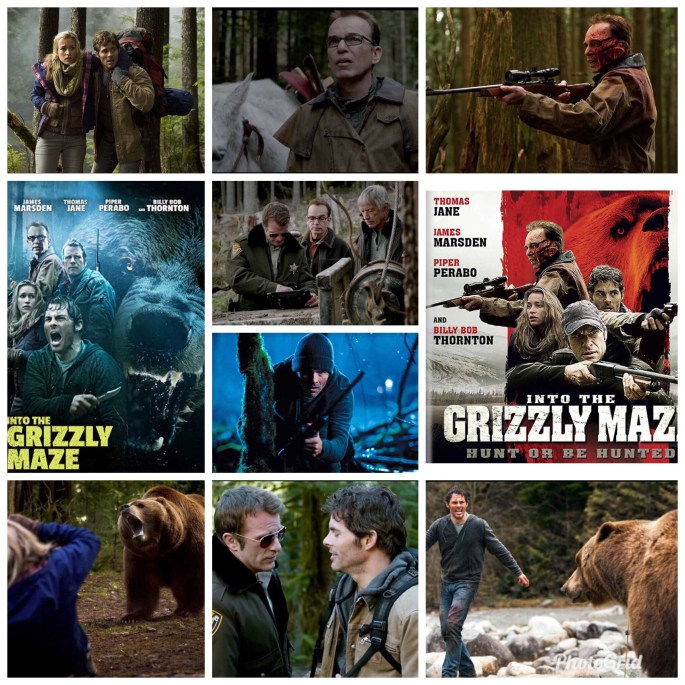
B Movie Glory: Into The Grizzly Maze

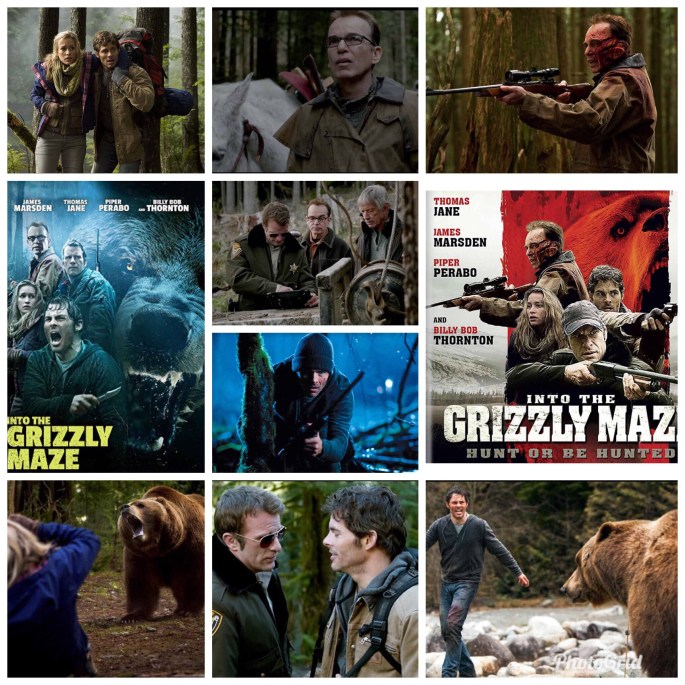
I’ve never seen potential, cast and atmosphere so wasted like I did in Into The Grizzly Maze, there’s just no excuse for dicking up such a great premise like they did here. Originally titled Red Machine, which is way better anyways, it concerns various characters chasing down a monstrous rogue grizzly bear somewhere in the Pacific Northwest (actually Vancouver, naturally). These folks include ex con James Marsden, his park ranger brother Thomas Jane, Sheriff Scott Glenn, poacher Adam Beach and miscast Billy Bob Thornton as some sort of guru bear hunter. The character and writing are almost all flat, which amazes me because I’d be hard pressed not to write at least some engaging dialogue for a cast this badass, but nope. Marsden is as bland as sandpaper, Jane seems bored to tears, Thornton is so misplaced even his coat looks uncomfortable, Glenn is more grizzly than the bear but is underwritten, while Piper Perabo has a classic thankless chick role that’s beneath her talents. Seemingly immortal actor Bart The Bear is used effectively here but he can’t carry a film on his own and as a result the only truly memorable things are the beautiful locations and a particularly gruesome bit of makeup where half of Thornton’s face is literally slashed to ribbons, nice touch that. This seems to be a vague rehash of a 70’s bear flick that, from the looks of it, is probably eons better than this TV movie level garbage. Shame, as we’ll probably never see this cast together again. Avoid.

-Nate Hill

“You vicious snowflake.” A review of Mandy – By Josh Hains

The last time I saw a movie as batshit-fucking-insane as this year’s Mandy, a young woman was hacking apart her demonically possessed friends during a rainstorm of literal blood in Evil Dead (2013). And just like Evil Dead before it, Mandy earns its insanity by establishing it right from frame one with an epigraph containing the last words of the deceased murderer Douglas Roberts (who killed a man whilst under the influence of drugs):
“When I die, bury me deep, lay two speakers at my feet, put some headphones in my head and rock ’n’ roll me when I’m dead.”, a stanza which is evocative of the impending descent into a similarly drug induced murderous frenzy the character of Red will endure.

The plot is so exceptionally simple you can practically predict the ending from a mile away: happily in love lumberjack Red Miller (Nicolas Cage) and the introverted artist and convenience store worker Mandy Bloom (Andrea Riseborough, who doesn’t have to stretch much here but is still great nonetheless), are living a peaceful existence near the Shadows Mountains of the Mojave desert in California, when the megalomaniacal cult leader Jeremiah Sand (Linus Roache) and his drug addled Jesus-freak followers and a few near demonic drug fueled psycho bikers who growl and roar like pissed off dragons, kidnap and murder Mandy, and Red sets out on an obvious path of bloodthirsty revenge. You’ve seen plenty of movie with similar plots to this one, haven’t you?

While your answer may be a resounding yes, what separates Mandy from the typical revenge thriller is how the movie is executed by director Panos Cosmatos (the son of the late George P. Cosmatos, whom directed Rambo: First Blood Part II, and Cobra), with lush and often trippy visuals occuping the space between small bouts of impactful dialogue, or gory killings at the hands of the broken hearted Red. After kickstarting the movie with the aforementioned metal mantra, and accompanied by a haunting score from the late Jóhann Jóhannsson that sounds like a 2 hour theme for the arrival of an apocalypse, Cosmatos beautifully conveys the idyllic lifestyle of Mandy and Red through lush, high contrasted photography while simultaneously gradually disintegrating the visuals into a trippy style that operates like a fusion between the surrealism of Lars Von Trier’s Antichrist, and the nightmarishly hallucinatory trip of Oliver Stone’s Natural Born Killers, as the film’s events become more hellish and violent.

This first half of the movie is literally separated from its second half by the title card “Mandy”, followed by Red suffering an all-out emotional and psychological breakdown that allows Cage to go “full Cage” without the scene itself feeling fake or forced. Red then arms himself for bloody battle, collecting a crossbow from an old friend (Bill Duke) forging an axe that would give Thor heart palpations, and unleashes his near animalistic, boiling like an active volcano rage upon Mandy’s murderers. And yes, the rumours are true, there is indeed a one-on-one chainsaw duel, and it’s every bit as metal, badass, and grotesque as you’re wishing it to be. And no, that’s not the goriest death in Mandy.

Of course, Mandy does have a couple flaws in its blood drenched body armour. A confrontation between Mandy and the cult that provides deeper insight into their madness serves great purpose, but ultimately felt like it brought the movie to a grinding halt until this prolonged sequence finally came to a close. I also found a supporting performance by an unknown actor as a cult member who I can only assume was intentionally meant to annoy the audience, didn’t match the tone of the movie and was distractingly campy, though thankfully limited in their screen time.

Mandy may not be a revolutionary, game changing motion picture by any means, but along with the similarly slick and brutal (and goddamned great) revenge flick Upgrade, it is the kind of gloriously gory genre fare that Hollywood used to make in fistfuls, and needs to keep producing at this level of craftsmanship. So if you’re looking to spend the night all cozied up with a violent movie pulsing on your television, or screaming in your ears at your go-to theatre, look no further than the blood soaked beast that is Mandy.

*Mandy is currently in limited theatrical release and available through VOD and iTunes across North America, and features a brief post-credits sequence.

Panos Cosmatos’s Mandy

“When I die

bury me deep

lay two speakers around my feet…

wrap two headphones around my head, and rock and roll me when I’m dead”

Panos Cosmatos’s Mandy. Wow. This is a film I have been waiting a year for, and while I eagerly devoured up every production still, sound byte and trailer released for marketing, none of that diminished the thunderous, neon drenched nirvana that was the experience seeing it on the big screen. Cosmatos is madly, deeply in love with 80’s horror/fantasy/scifi cinema, and after the initial stroke of brilliance that was Beyond The Black Rainbow, he has evolved into something more cohesive and specific, but no less balls out surreal and brazenly expressionistic. Set in the same austere, timeless 1983 twilight zone meta-verse as Rainbow, this one sees tortured lumberjack Red (Nicolas Cage) exacting apocalyptic vengeance on both a maniacal cult and a clan of demon bikers for the murder of his beloved girlfriend Mandy (Andrea Riseborough). That is of course the nutshell, analytical summary you’ll see in the online rental guide. What really fills up this two hours of nightmarish bliss is a more free flowing, right brain amalgamation of everything special to Cosmatos in both cinema and music, mottled using material from his own lively imagination, wearing influences both proudly and organically on his sleeve and giving us the gift of one of the most intensely invigorating pieces of art I’ve ever seen. The rage is all about Cage and his gonzo performance, and while that is a sideshow later on, it’s certainly not the main event and the real strength of his performance lies in the restrained, beautiful relationship he has with Mandy, which only makes his crazed rampage cut all the more deep later on. Riseborough is really something special in her role too, she’s the crux of the whole deal and gives Mandy an ethereal, introverted aura that’s just creepy enough and cute enough to live up the film’s title. Linus Roache is really something else as Jeremiah Sand, the fiercely insecure, manically dangerous cult leader, it’s a career peak for the former Thomas Wayne and he plays him like a bratty failed folk musician who’s delusions have fused into his very soul and made him really fucking sick. Ned Dennehy is freakishly deadpan as his second in command, while chameleon actor Richard Brake has a key cameo and veteran Bill Duke shows up to provide both weapons for Cage and a tad of exposition regarding the Hallraiser-esque bikers. This is the final original score composed by Johann Jóhannsson before his untimely passing, and it’s one hell of a swan song. After a gorgeous, arresting opening credit sequence set to King Crimson’s Starless, its all dreamy synths, thunderclaps of metal, extended passages of moody, melodic strains and threatening drones, a composition that leaves a scorched, fiery wake in its fog filled path. One thing that’s missing or at least depleted in film these days versus yesteryear is atmosphere: Back then there were ten smoke machines for every acre of set, title fonts were lovingly hand painted and scenes took their time to unfold, rather than tumbling out of the drawer in a flurry ADHD addled action and exposition. Cosmatos is a physician to this cause and his films feel like both blessed nostalgia and an antidote to that which many filmmakers have forgotten. With Mandy he has created a masterpiece of mood, violence, dark humour, hellish landscapes, softly whispered poetic dialogue, Nic Cage swilling down a sixty pounder of vodka in his undies, fire, brimstone, roaring engines, beautiful music, a tiger named Lizzie, and a pure unbridled dove for making the kinds of films I want to see at the multiplex. Best of the year so far.

-Nate Hill

The Predator

THE PREDATOR

The 80s are bathed in a nostalgic glow these days, with music, fashion and certainly movies getting replayed, rehashed, sequeled and rebooted at a brisk clip.  Two totems of the cinematic end of the phenomenon, tough guy alien attack classic Predator and funny/violent writer/director Shane Black, have been yoked together in a Hollwyood laboratory to hopefully mine some gold from the fond memories many fans have of the franchise and filmmaker.  Black appears on the surface to be a perfect fit to breathe new yet familiar life into the Predator universe; the scribe of The Last Boyscout, Lethal Weapon and more didn’t just craft some of the most memorable action movies of that decade, he actually played a blink and you’ll miss it soldier in the original film itself.  After seemingly taking a decade or so off, he’s come roaring back in recent years with the successful Iron Man 3 and The Nice Guys, his skills in crafting action and doing it with good bawdy humor seemingly undiminished with age and the passage of time.

So how does this perfect pairing work out?  A great deal of that will depend on your love of the franchise and your feelings about what Shane Black does—personally I found Iron Man 3, for example, to be a delightful exercise in Shane Black hijacking a major franchise to make a Shane Black movie.  Jokes and action are plentiful, and standards and expectations are undercut in any given scene.  Others find it to be horrid on all levels, and I expect that kind of sharp division to meet The Predator.  While the original had a joke here and there, the main point of John McTiernan’s film was sci fi action, shot through with some genuinely gory and horrific moments.  At the end of the day, it’s a monster movie buried in shell casings and explosions.  Black clearly knows and respects the source material—we have jungles, chases, and no shortage of carnage—but he’s put together a thrill ride that is unmistakably his own.

This, of course, means jokes.  Lots of them which, based on the crowd I screened the film with, land quite nicely if you’re game.  His beloved Christmastime setting, on display in most of his other films, has been updated to a more appropriate holiday.  Black added a plucky kid to Tony Stark’s adventures, a very bright and knowing beyond her years daughter in The Nice Guys, and here we get Jacob Tremblay’s Rory, the brilliant autistic son of our gruff hero, Army Ranger sniper Quinn, played by Boyd Holbrook.  Quinn’s clearly there to fight, but ultimately Rory is something of a lynchpin to the story, and is given some nice if occasionally clichéd moments to shine.  The camaraderie of the original team fighting this creature is replicated here with a goofier group of soldiers, but as in Iron Man 3 Black subtly uses the cadre to reference PTSD, not to mention a government response that can’t in any way be trusted.  The feds are commandeered by a preening and dangerous Sterling K. Brown, who recruits and tosses aside people as he sees fit—most notably, Olivia Munn’s scientist, Casey Bracket, who inevitably ends up with our ragtag band of heroes, including a Tourette’s Syndrome toting Thomas Jane and an R rated joke spewing Keegan-Michael Key.

The Predator plays out as more of a chase movie than a hunt, which might feel off to some adherents to the original.  It also doesn’t appear to have the kind of budget that this kind of endeavor usually gets in this day and age.  That said, you can tell Black has great love for Predator and shows it near constantly, be it a clever nod to previous entries in the franchise, a jaw dropping kill, a tarnished tough guy hero moment or a clever burst of unexpected action.  He’s made an assured thrill ride of a film here, inevitably setting the stage for a sequel through some expansions of the mythology that are both goofy sci fi and honest to everything that’s come before it.  Any viewers who hold the 80s classic as sacrosanct will probably find more than a few things to complain about; the rest of us will grab the popcorn and settle in for a fun time.

the-predator-olivia-munn-boyd-holbrook

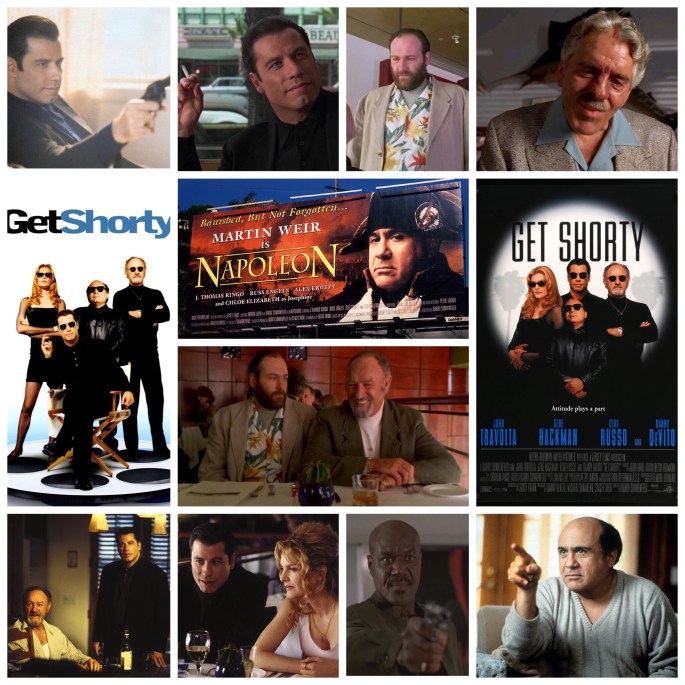
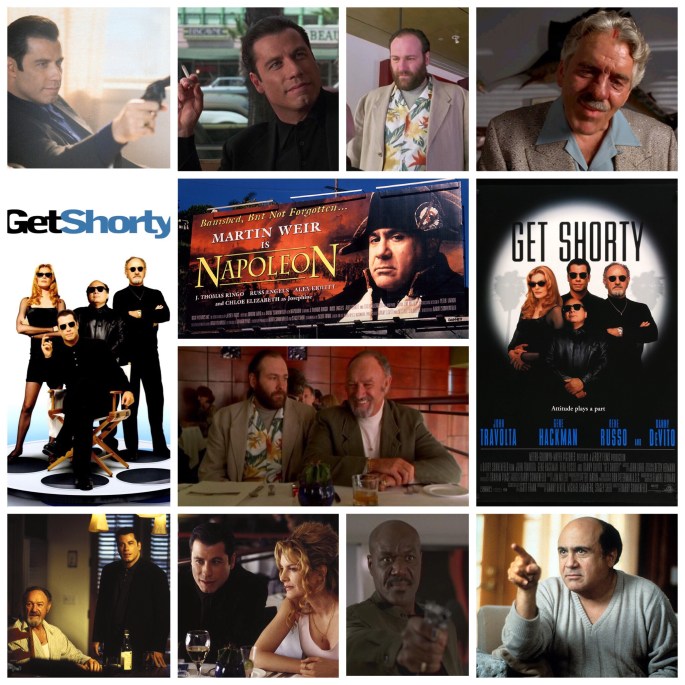
Barry Sonnenfeld’s Get Shorty

Barry Sonnenfield’s Get Shorty could also laterally be called Elmore Leonard’s Get Shorty, since star John Travolta fought tooth and nail to keep all of the author’s dense, intelligent and pop culture soaked dialogue intact. The film is not only better for it but comes out a glowing gem, a giddy crime/comedy classic that’s as special to me as a comfort blanket to a toddler. A rainy day film, a lazy Sunday go-to DVD, I could watch the thing anytime and not only be consistently entertained with each revisit, but notice something I didn’t the previous couple hundred times. Travolta has never been cooler as Chili Palmer, a silver tongued Miami mobster who is propelled on a meta odyssey to Los Angeles after his boss dies and a whirlwind of confusion is whipped up. There he gets a taste for the film industry after meeting sad-sack B movie mogul Harry Zimm (Gene Hackman, priceless), scream queen actress Karen Flores (Rene Russo, never sexier) and a host of others. It’s a Hollywood satire, a pulpy crime thriller, a brilliant dark comedy and ensemble screwball piece that comes as close to the shores of perfection as movies can get. Dennis Farina gives one of his timelessly precious, angry wiseguy turns as Ray ‘Bones’ Barboni, another Miami hood and the barbaric, obnoxious answer to Travolta’s cool cucumber gentleman act. Delroy Lindo has further villain duties as crime kingpin Bo Catlett, who also has his sights set on celluloid and will intimidate, kill and extort his way there at any cost. Danny DeVito does a sly, biting send up of method acting as Martin Weir, a lovable thespian with his head just a wee bit jammed up his own ass. James Gandolfini is pure class as Bear, the stuntman who moonlights as an enforcer and carries his adorable daughter around anywhere he goes. Rounding out the cast are perfectly pitched turns from Jon Gries, David Paymer, Bette Midler, Martin Ferrero, Miguel Sandoval, Jack Conley and a special surprise cameo that I won’t spoil. Although not my favourite Leonard adaptation (Steven Soderbergh’s Out Of Sight holds those honours), it’s definitely the most fun, and by far the most entertaining. The cleverness of offhand Hollywood jargon, peppered with obscure references that expect the cinephile in you to keep up are pure bliss, not to mention the tongue in cheek tough guy banter, the playful music by John Lurie, the lighthearted, whip crack editing from Jom Miller/Ted Woerner and the showcase performances from all actors involved, feasting on Elmore’s fine dialogue like steak & lobster. There’s a sequel called Be Cool which I have been reluctant to see, so I can’t weight in on it but apparently it doesn’t measure up, so you could always divert and check out Sonnenfield’s 2001 comedy Big Trouble, which is fun too and shares some costars with this (Farina and Russo appear in both). Or you can just pop this masterpiece in for another visit, and let it be it’s own sequel. I do all the time.

-Nate Hill

Terrence Malick’s The Tree Of Life

No other film simultaneously reaches as far as it can to the heavens and remains as grounded in inwardness as Terrence Malick’s The Tree Of Life, an experience that isn’t so much a film as it is a meditative, open ended question, a quiet and gentle nudge that reminds to remember and revere how miraculous life is in the simple fact that it even exists. It also tries to discern what makes a life, from the individual to the human race to the very cosmos around us all, and isn’t something to be even approached in traditional critical analysis. Malick directs Jessica Chastain, Brad Pitt, Hunter McCracken, Laramie Eppler and Tye Sheridan through a series of fly-on-the-wall vignettes in hazy, comforting 1950’s Americana. They are every white picket fence Midwest family. Pitt is firm, strict and fearless in raising his sons with the lessons given to him as a boy, Chastain is warm, compassionate and intuitive, two energies that visibly shape the boys into young men. Decades later, Sean Penn plays the older version of one of them, and ponders on his youthful years as he goes about adult life in an introspective trance. And.. that’s the film. In writing, anyways. What’s special about it can’t really be described, you just have to see and hear it, which is the same for all films, I suppose, but this one really immerses you in something deeply felt. Using emotionally affecting classical music and employing unbelievable visual camera work, Malick sets up time and place like no other filmmaker, making the streets, sun dappled backyards, tree lined laneways and beckoning house interiors come alive in a way that stirs up memories long buried for many who had childhoods just like this. On a grander scale, he also explores the universe in a mid-film sequence that had some walking out of theatres but is really an inspired bit, a time rift to rival the bone toss in Kubrick’s 2001. Malick’s aesthetic isn’t for everyone, you kind of either tune into it wholly or you’re left cold and adrift, but here he spins up something to be marvelled at, his own treatise on human life and the realms around it, both distant and close. A masterpiece, no review I write could properly impart my love for this one, it’s an important, vital film to be absorbed with focus and vulnerability, and thought upon deeply after.

-Nate Hill

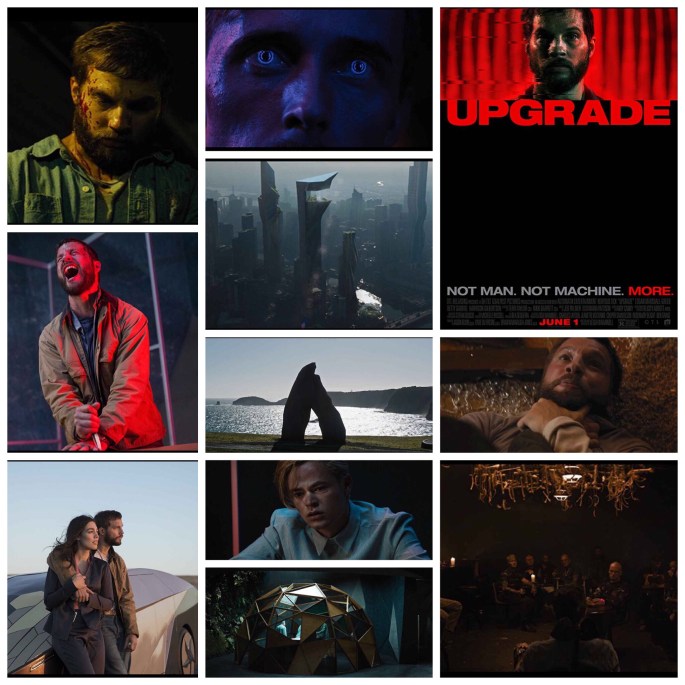
Leigh Whannell’s Upgrade

Leigh Whannell’s Upgrade is slick, bloody, wired Sci Fi action pulp and I loved every second of it, mounted on a high concept premise that’s just this side of outrageous and filled with both enough body shredding extreme violence and atmospheric mood to fuel an entire TV show. A quirky, intelligent mix of horror and futurism, Whannell puts the same brains responsible for the first Saw film into the story of Grey (Logan Marshall Green) a mechanic who is given a nifty new implant following the murder of his wife (Melanie Vallejo) that also leaves him a quadriplegic. Dubbed the Stem and cooked up by a weirdo tech mogul (Harrison Gilbertson), it latches onto his nervous system and makes him a super fast, highly capable killing machine and he sets out to find his attackers and… well.. kill them all in just about as violent ways as anyone could think up. There is actual thought, care and innovation put into this world and it’s construction though, until the very exploitive genre material feels lifted up by pure creation and we get something that thinks, feels and ponders just as much as it stabs and bleeds. An organic mix of Blade Runner style setting is welcome, as both the city they live in and the esoteric score by Jed Palmer are very LA 2049 with a hint of steampunk. Green is a great actor who has slowly been building steam in fits and starts, he had a smaller role in Prometheus and headlined the very underrated Cinemax original Quarry recently, but her he shows he can do leading man work in bigger projects, he’s tough, engaging and sympathetic. This is an extreme vision of a futuristic world that although seems alien to us, is not so different in many ways, and that makes it both scary and compelling. One of the best this year so far.

-Nate Hill

Peter Hyams’ End Of Days

Arnold Schwarzenegger versus The Devil. Just let that sink in. It had to happen at some point in the guy’s career, and I’m thankful it turned out to be Peter Hyams’ End Of Days, a slam bang action horror party of a film that is lowkey one of the best things Arnie has ever done, both in terms of production and the character he gets to play. As Jericho Cane, he’s a far cry from the competent badasses he usually plays, an alcoholic ex secret service agent dealing with the trauma of a murdered family. The last thing he needs is Satan setting up shop in Manhattan on his watch, but that’s exactly what’s in store, for every millennium or so, the red guy gets to take a vacation earth-side in a human host, and if he’s able to get laid with a carefully chosen girl, he gets to take over the world. Some dodgy theology there, but this is an Arnie flick. The human host in question happens to be slick stockbroker Gabriel Byrne, who is soon causing havoc all over the Big Apple in his search for Robin Tunney, the girl marked by a satanist cult decades before and groomed to be his concubine. Arnie’s hangdog private security tough guy and sidekick Kevin Pollak are unlikely heroes to stop the prince of evil himself, but Theron lies the fun, and Cane is actually one of his best, most unique characters to date. Throw in Rod Steiger as a priest whose middle name is exposition, Miriam Margoyles as Tunney’s sinister Aunt (also the only 5 foot tall, chubby middle aged woman to whip Arnie’s ass in a fight), Udo Kier as the freaky cult priest, CCH Pounder as a no nonsense NYPD bigshot, Mark Margolis as the melodramatic Pope in Rome and others, you’ve got one solid cast. Byrne really steals the show and is up there with my favourite cinematic incarnations of Beezle, especially in his smooth, smug and smouldering delivery of some truly patronizing, vicious dialogue to try and dispel Jericho. Arnie’s retort? “You ah ah fucking choirboy compared to me!!” Priceless. The action is big, loud and utilizes NYC to its full scope, with subway scenes, a daring helicopter chase sequence and all kinds of explosive mayhem. The horror element is spooky as all hell too, especially in the first third of the film where atmosphere mounts and dread creeps in (that weird albino dude on the train will forever haunt me), plus the score from “ echoes around like a spectre as well. Not one of Arnie’s most celebrated critically, but will always be one of my favourites.

-Nate Hill

Platinum Dunes’ The Hitcher

I won’t pretend to be a fan of horror remakes other than Rob Zombie’s Halloween, but when they cast Sean Bean as iconic highway madman John Ryder in the inevitable second lap of Robert Harmon’s horror classic The Hitcher, I perked up. Bean, like Rutger Hauer in the original, is one of my favourite actors of all time and I had to to see what he did with the character (he pulled out of another contract and jumped a plane just to accept this gig). The good news is.. he lives up to Hauer’s original asphalt angel of death, and I’ll fight anyone who argues. The bad news? The film doesn’t. It’s one of those dodgy, hit or miss Platinum Dunes horror updates (avoid Jason and Freddy like the plague, but their first Leatherface incarnation is quite good) and really misses out on the atmospheric, haunting pace of the first, where nightmares and reality blend into the mirages appearing on the desert horizon for lone motorist Jim Halsey… the thing is, here Jim isn’t alone at all but travelling with his girlfriend and that takes some of the primal fear out of it. Zachary Knighton fills C. Thomas Howell’s shoes and a surprisingly adept Sofia Bush plays the gal, on a road trip for spring break when they’re suddenly tormented by Bean’s Ryder, an intense creation by the actor that carefully avoids any callbacks or mimicry of Hauer. How could he though? Rutger made that role his own and Bean wisely does the same with a sardonic, smouldering aura all his own, and wins a spot in horror pantheon as a worthy update on this boogeyman of the backroads (he’s also better than Gary Busey’s kid was in that god awful sequel that no one wants to admit was even made). Everything here gets a torqued update, from the infamous body tied between two trucks scene (yuck) to the car chases (that Trans Am tho) to the violence itself, to legendary highway super-cop Lt. Esteridge, trading in cucumber cool Jeffrey DeMunn for hilariously hammy Neal McDonough, who kills it as the only officer who isn’t a bumbling moron. But who needs all that sound and fury when you’re trying to throwback to an atmosphere classic? I guess go your own way, but it really doesn’t do the Hitcher legacy any justice. Aside from Bean who elevates his scenes to horror greatness, it’s a slapdash, needlessly gruesome slice of knockoff cash grab slasher fare that takes everything that was spooky, shadowy and mysterious about the first one, shines a big broad daylight aesthetic on it that shakes off the cobwebs we never wanted gone in the first place, like Bon Jovi trying to cover a song by The Cure. There is, however, one moment that gets it right and rises to a level of quality deserving of the Hitcher brand. It’s right at the end, everything has gone haywire, all the cops are dead, all the cars have been thoroughly blown up, and Ryder makes one last dash to escape. Sofia Bush takes up a dead cop’s shotgun and musters one final confrontation with him, as the score by Steve Jablonsky swells to adrenaline heights and we get an exchange of dialogue between the two, both beautifully delivered, that is the first shred of originality the film displays and almost, *almost* redeems itself. Where was that for the previous eighty five minutes? In any case, this holds a spot in my heart simply because I’ve watched it enough times and has crystallized into something nostalgic, which as we all know sometimes supersedes what we know is quality from that which we know is not. Worth it for Bean, the score and that supersonic final scene.

-Nate Hill