Denis Villeneuve’s Arrival

Every few years, if we’re lucky, we get a science fiction movie as good as Denis Villeneuve’s Arrival, a cosmic miracle of a film. Built around the ages old trope of aliens invading earth, and even throwing shout outs to sci fi flicks of yore (Robert Zemeckis’s Contact, Roland Emmerich’s Independence Day to name a few), it ultimately is completely it’s own thing and there has never been anything quite like it ever before in the genre, or in Big Hollywood. Villeneuve, whether working in crime, thriller or mind-fuck territory, has always proudly broke the mold and blasted new crevices into seemingly charted out tonal territory. It’s only fitting that a SciFi outing from him is something remarkable, and he terraforms the genre to incredible thematic plateaus here. Amy Adams is reliably terrific as a linguistics guru brought in by the government to try and communicate with a mysterious race of extraterrestrials, shadowy beings who have illegally parked their mammoth, monolithic ships systematically all over the globe. What do they want? Why are they her? Tensions rise when the military (Forest Whitaker gives the obligatory general role his trademark brand of implosive compassion) and the CIA (Michael Stuhlburg does paranoia to a turn) butt heads over what to do, while a snarky mathematician (Jeremy Renner, excellent) has his own ideas. Adams develops an inspired way of both understanding these beings via their unique brand of written language and imparting to them our English words, or at least a variation. The scenes inside their ship are so haunting and atmospheric we get the sense this is real footage we’re sneaking a peek at, and the government may bust in and raid our TV room any moment. The beings themselves are a visually intriguing bunch, like dreamy space elephant/whale/spiders who evoke a strange, genuinely alien aura. But time is running out, and if Adams can’t make both their language and intentions clear, the big guns of fear and ignorance threaten to come out and play. The film has an important, uplifting message that communication should always supersede violence, a hard truth but a necessary one. My favourite aspect of this film is its elliptical final act, and anyone who has already seen it knows what I’m talking about. Much of the film, although artistic, is straightforward, but Villeneuve really plumbs the fathoms of human consciousness and pulls forth ideas that not only are rarely explored this maturely onscreen, are also very difficult to understand in linear, analytical fashion. It’s this drive to push his audience, to dole out just as much brain and soul candy as eye candy into our cinematic trick or treat bags that’s the reason he’s such an important, landmark filmmaker, and it’s a joy to see such films take centre stage at the multiplex. With key supporting work from the great Tzi Ma and a ghostly original score by the late maestro Johan Johansson that eerily inhabits the film like an alien force all its own, every individual and element involved combine to give this film something special and rare: a genuine sense of wonder.

-Nate Hill

DJ Caruso’s The Salton Sea

DJ Caruso’s The Salton Sea is a brilliant piece of filmmaking, a fascinating hybrid between go-for-broke, tweaked out drug cinema, bloody, violent crime revenge thriller and moody, jazz soaked neo-noir, with a central performance from a committed Val Kilmer that goes waist deep in all three. I would say that it was ahead of its time and for that reason didn’t quite fully find its audience, but upon years of reflection I think it’s just such a specific piece that one has to be tuned in just right, and invest enough attention to appreciate it, the first time anyways. Kilmer is washed out meth head snitch Danny Parker, playing both sides of the narcotics game in hazy LA. Or is he trumpet player Tom Van Allen, haunted by past tragedy? The first half of the film sees him awash in an endless cycle of drug fuelled debauchery, stuck in a tireless set of hijinks with his tweaked out ‘friends’ (Adam Goldberg, Peter Saarsgard and more), and habitually snitching out dealers to two very corrupt cops (Doug Hutchison and Anthony Lapaglia, both royally sleazy). The second half shows us why, what dark passage of events led him to the lifestyle and the cursed trajectory he finds himself on in the final act. Kilmer is a restless fallen angel in the role, a man with secrets that the film respects by taking its time unfolding and not revealing too much too soon (avoid any trailers). His Danny even begs the audience to stick around, promising us there’s more to his story than rampant substance abuse. The cast is thick with talent, including Danny Trejo, R. Lee Ermey, Chandra West, B.D. Wong, Shirley Knight, Luis Guzman, Meat Loaf, Deborah Kara Unger and a crazed, memorable Glenn Plummer. The scene stealer award has to go to thespian Vincent D’Onofrio though as one of the antagonists, a terrifying drug baron called Pooh Bear because he railed so much blow they had to cut off his nose and replace it with a disturbing prosthetic. His favourite pastimes include reenacting the Kennedy assassination with pigeons and an air rifle, smoking crack to yodel music CD’s and setting a rabid badger called ‘Captain Striving’ loose on the genitals of disloyal employees. The film finds a demented dark humour in him and many other characters, but the other side of that coin is the emotional turbulence and tragic resonance to Kilmer’s arc, two conflicting energies that seem to somehow coexist beautifully. The score by Thomas Newton is noirish and sad, with strains that sound almost like heavenly choirs too, giving the city of angels a half lit, otherworldly quality. The title is important; the Salton Sea represents three key elements to the film. The incident that spurs Kilmer down the rabbit hole takes place right near the picturesque titular place, but it also represents both the sea of excess and scum that Danny basks in, and the ocean of anguish, regret and sadness that engulfs Tom. A brilliant piece.

-Nate Hill

BlacKkKlansman with Ron Stallworth

blackkklansman

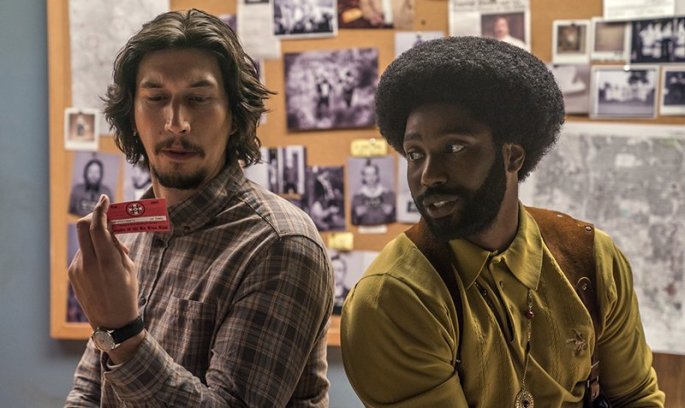
Spike Lee’s return from the relative wastelands of Hollywood hired gun director culminates with his latest film, the extremely timely and satisfying BlacKkKlansman, based on the true story of Ron Stallworth. The first African American officer to join the Colorado Springs Police Force in the 1970s, he somewhat inadvertently stumbled into an undercover operation into a small but dedicated batch of Ku Klux Klan members.  As Stallworth himself told it at a special screening at the Alamo Drafthouse Denver, he almost destroyed the investigation from the get-go by using his real name when he first decided to contact the group and impersonate a Caucasian when speaking with them over the phone.  Still, he hatched a plan with a Jewish officer nicknamed Flip to show up for physical meetings to put forward a white face to attach to “Ron Stallworth,” and the result was a unique takedown of this vile organization that would see the two rise to the attention and affection of none other than Grand Wizard David Duke himself.  Lee’s film demonstrates his wide ranging power as a masterful, confident director: It’s a clinic on tone, skipping effortlessly from comedy to drama, suspense to action, all with a laser hot gaze on the broken racial past and present America carries around like a foul albatross.

Ironically, Stallworth almost killed the project before it got off the ground with a hilarious and awkward first meeting with Lee.  Having seen the book’s adaptation to film fall through several times prior, he was heartened when Jordan Peele signed on to direct.  Then Peele reached out to say he’d decided to produce it instead, which left Ron crestfallen until the filmmaker said “and Spike Lee’s gonna direct.”  Ron and his wife flew out to New York and found themselves at 40 Acres And A Mule headquarters, ready to meet one of their heroes.  When Spike stepped out of his office, Stallworth said “man, you’re a little guy!”  Lee pivoted and walked back in, shutting the door behind him.  Soon the two came to bond over their lack of social filters, and everything was back on track.  Stallworth had always wanted his favorite actor, Denzel Washington, to play him in the film, but Denzel’s 62 years didn’t quite match up with a rookie cop role.  As the policeman noted, it wasn’t settling to instead see his son, John David Washington, land the role; it’s a true breakout for an up and coming actor we’ll be seeing plenty more of in the years to come.  You’ll hear echoes of his father’s cadences on the regular, but John David more than holds his own in a complex portrayal of a man trying to do the right thing while alienating his community thanks to the badge he carries.  Adam Driver also does fine work as his partner in snookering the racists, and their story underscores the important notion of allies in the war against prejudice and hate that Lee weaves in and out of the story, all the way up to the final, somewhat controversial shot of the film.  Those who feel Lee’s other work can put whites at arm’s length should be heartened here; it’s all hands on deck time, and the good guys can come in all shapes, sizes, and colors.

BlacKkKlansman brought swoons to the Cannes Film Festival this past May, receiving an unprecedented 6 ½ minute standing ovation as well as the Grand Prix Award.  Stallworth said John David Washington smiled and waved on the red carpet afterwards, but crumpled into a ball of tears once they reached the limousine. Ron’s wife noted they were actually more pleased with its win of the Prize of the Ecumenical Jury, a social justice focused body comprised of clergy from around the globe that noted the film was “a wake-up call about continuing racism not only in the USA, but for the wider world”, which “condemns the misappropriation of religion in the cause of hatred.” Coming on the heels of these heady victories, Stallworth said to Lee and Washington something about their chances for Oscar gold.  Both the director and star howled that “you never say the word out loud, you’ll jinx it!” Then they jumped out of their chairs and started doing a dance in a circle to ward off 30+ years of bad Academy Award luck.  Based on the audience response—truly, there was laughter and tears in equal measure—Spike may want to dust off his tuxedo and book a spring trip to Los Angeles.  BlacKkKlansman is a triumph of cinema that stands tall next to his best work, and the best that American cinema has to offer in any year.

RonStallworth

Wolfgang Petersen’s In The Line Of Fire

Wolfgang Petersen’s In The Line Of Fire is as solid as action pictures get, a three course thriller meal, and one of my favourite Clint Eastwood flicks. Starting to show his age here and adopting a brittle, calcified hardness, he plays disgraced secret service agent Frank Horrigan, a quiet, resolute man who is haunted by his failure to protect Kennedy from that infamous bullet. He’s on undercover sting operations with his rookie partner (Dylan McDermott) these days, and is battling some health issues that go hand in hand with getting up there in years. No better time for predatory, mercurial ex CIA assassin Mitch Leary (a terrifying John Malkovich) to taunt him out of retirement with threats against the new president, up for election. Leary is a cunning psychopath who won’t go down so easy, and Frank is just the determined wolfhound to take him down, as a dangerous, violently suspenseful game of cat and mouse plays out. There’s an obligatory female love interest too, but the film shirks the usual ditzy throwaway chick and goes for something classier in Rene Russo, a capable senior agent who initially roasts Frank for his age before eventually warming up. Russo is an unconventionally attractive, intuitively engaging actress whose subtly likeable nature sneaks up on you and the muted chemistry she has with Eastwood is terrific. The three excellent leads are surrounded by a nebulae of awesome supporting players including John Mahoney, the always solid Gary Cole, Fred Dalton Thompson, a sleazy Tobin Bell and scene stealing character actor Steve Railsback in a brilliant cameo as Leary’s shady former Agency handler. Subtlety has never been Petersen’s forte, but his approach works here as he tells the story in big, bold strokes that highlight each set piece with sterling suspense. There’s also a brooding score by the master himself, Ennio Morricone, which takes the solemn, scary route instead of blaring up the Zimmer-esque fireworks. As great as the action is here (that plastic 3D printed gun though), my favourite scenes are the creepy late night phone calls that Malkovich makes to Eastwood, teasing him but also betraying notes of loneliness in his perverted psyche. This is a battle of wills before it even gets physical, and the two heavyweights spar off of each other with calculated portent and restrained, fascinated loathing. A thriller classic.

-Nate Hill

Martin Scorsese’s Cape Fear

Martin Scorsese’s Cape Fear is a harrowing film, one with enough perverse psychosexual energy, dripping southern atmosphere, stalker suspense and domestic trauma to raise the dead from the swamps of North Carolina where it takes place. Technically a remake of an old 60’s black & whiter with Gregory Peck and Robert Mitchum, I have to give Scorsese’s version the edge no matter how controversial that opinion may be, he just had the freedom to take it further and not have to be so tame as films were back then. He also benefits from having star Robert Deniro in the hot seat as Max Cady, a monstrous, homicidal lunatic out to get Nick Nolte’s Sam Bowden, the slick heeled lawyer who put him away for years. Disclaimer: this is a thoroughly fucked up, highly disturbing film that goes to places you don’t even want showing up on the fringes of your nightmares, and doesn’t shy away from showing these atrocities in wild screaming life. Cady is an extremely clever, resourceful southern gentleman when he wants to be, and when the facade comes off he’s an unabashed, mass murdering psychopathic beast who will get at Sam any way he can, including the harassment and abuse of his wife (Jessica Lange) and teenage daughter (Juliette Lewis). It’s a setup for a wild ride of a thriller that seldom lets up once the wheels are rolling, and flies towards a conclusion set on the bayou that will raise hairs. Lewis, in one of her earliest roles, was rightly nominated for an Oscar, her simultaneous terror and mesmerization when Cady eerily seduces her is magnetic. The Mitchum and The Peck have two fun cameos too, the former as a sceptical cop and the latter as a hilarious, bible spouting asshole lawyer who shamelessly defends Cady. Nolte and Lange are charismatic in their scenes, but this is Deniro’s show all the way, and he creates a villain for the ages. Whether he’s beating up the guys Sam hires to beat him up, cackling maniacally in a movie theatre to piss everyone off, giving off violent rapey vibes to both Lewis and Lange or using freaky disguises to follow them all around, he’s a charming, ruthless boogeyman that has since become iconic. This is one of the premier psycho thriller of the 90’s, an intense, evocatively shot southern gothic freak show that has only gotten better with age.

-Nate Hill

David Fincher’s Panic Room

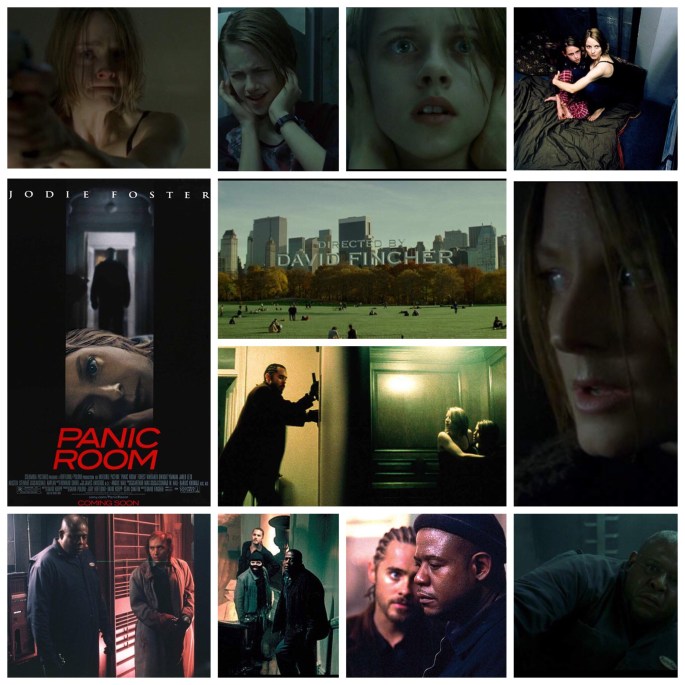
You know a thriller is gonna pack some torque when the opening credits are emblazoned boldly against the skyline of a huge metropolitan city. Well, not necessarily, but it’s a nice urban atmospheric touch, and David Fincher’s Panic Room employs the tactic before it unleashes an unholy, seriously suspenseful bag of tricks on Jodie Foster and her young daughter (an androgynous looking Kristen Stewart). Recently divorced and poised to move into an airy, gorgeous NYC brownstone, she quite literally walks into the perfect setup for a thriller that Fincher milks for all it’s worth and then some. As the real estate agent (Ian ‘Dick Tremayne’ Buchanan) theatrically informs her, this townhome comes with a fortified Panic Room, a steel box installation in which one may safely hide from any and all intruders. That safely part gets shot to shit when three burglars bust in on their first night staying there, and turn it into one of those real time ‘one long night from hell’ motifs. Aloof, slightly compassionate Forest Whitaker, sketchy, strung out Jared Leto and vicious psychopath Dwight Yoakam are a hectic mix, but the chemistry is there and they’re all freaky in their own way, like wayward trick or treaters who grew up and graduated into petty thievery. They’re after something that’s only accessible through the panic room, but Jodie and Kristen won’t let them inside, which prompts the ultimate siege game of cat, mouse and upper class NYC mom that goes into the wee hours of a typically rainy night. Fincher could be considered the crown prince of the big budget, R rated Hollywood thriller, and he absolutely goes for broke in every department here. He’s got two mad dog cinematographers in Darius Kondji and Conrad W. Hall, who prowl the apartment like panthers and achieve some truly great WTF shots, turning the home into an elongated nightmare of barren hallways, rain streaked bay windows flickering surveillance cameras. Musical deity Howard Shore composes a baroque, threatening piece that practically booms across Central Park and echoes through the adjacent skyscrapers before it whistles through the steel rivets of the panic room like the dangerous propane that Whitaker maniacally tries to smoke them out with. Originally written with Nicole Kidman in mind (she has a super quick cameo), I think Foster is a better suit for the role with her narrow eyed, breathless intensity and lithe, lynx like physicality. Things get satisfyingly brutal later on, with some shocking violence when mommy grabs a sledgehammer and starts bashing heads in. The suspense here is real, it’s tactile, tangible, earned tension, the kind you can’t just fake or stage every other scene without detailed setups to catalyze the payoff. This isn’t Fincher’s first rodeo, and he rides this thing in the captain’s chair all the way to suspense nirvana. One of the best thrillers out there.

-Nate Hill

Gregory Jacob’s Criminal

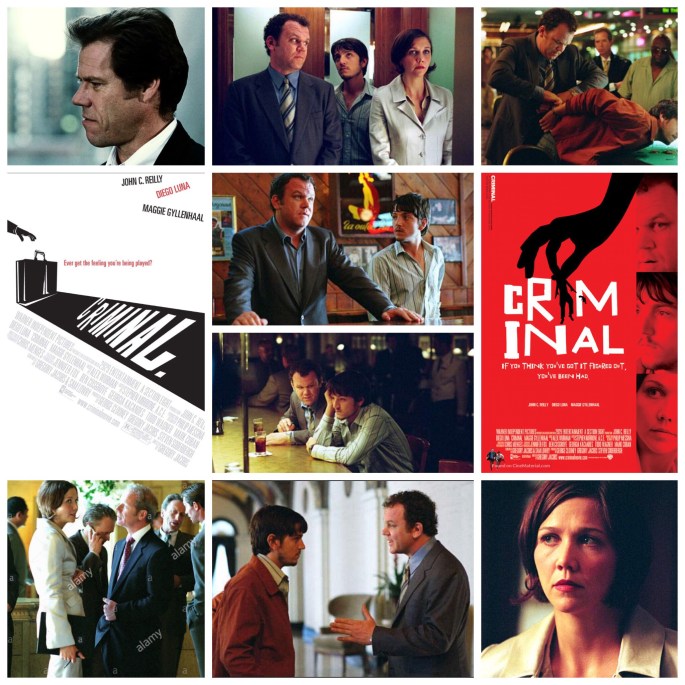
Look up ‘hidden gem’ in the dictionary and you’ll find a one sheet for Gregory Jacobs’s Criminal. Alongside many others, but you catch my drift. This is a virtually unknown grifter flick that is smart, funny and really acidic and unpredictable in spots. It also has that low key ‘small movie’ feel, which is welcome in a con artist flick anyways because you can ditch the big budget gloss and focus more on story and character instead. John C. Reilly plays a middle aged con man here who, simply put, is a huge asshole, but has charmed his way through the hustling game and made some serious cash. He’s saddled with a rookie youngster (Diego Luna) who wants to learn the ropes, but the old guy basically wants nothing to do with him. It’s a sour partnership that never seems to quite gel, which provides suspense as to when the back stabbing will start. With the help of a feisty colleague (Maggie Gyllenhaal), their plan is to rob a wealthy, intimidating Scottish currency collector (the great Peter Mullan) for millions, using a carefully implemented bag of tricks and a vast contact network of fellow tricksters. As is the case with all great caper flicks, nothing is as it seems and the plot revelations are fast and heavy, in this one’s case packing a whallop of an unconventional twist ending. The terrific supporting cameo cast includes Deborah Van Valkenburgh, Brent Sexton, Michael Shannon, Malik Yoba, character actor Jack Conley and more. This is a hugely entertaining film, with an unlikeable protagonist whose arc is really a curious one to watch. Director Jacobs has only helmed two other flick, the Magic Mike sequel and the Emily Blunt horror vehicle Wind Chill, but he really shows a flair for fun exposition and labyrinthine plot turns here, as well as bringing out interesting qualities in his carefully picked actors. Steven Soderbergh also did uncredited screenplay work, which only adds to the capability and slickness. A treat.

-Nate Hill

John McTiernan’s Basic

John McTiernan’s Basic is a film that commits the cardinal sin of cheating its audience with an obnoxious, horrendous twist ending that it neither earns nor properly makes sense of. It’s a real crying shame too, because the film up until then is a hell of a lot of fun and has a rambunctious John Travolta performance that could shake the cobwebs loose from a barn. When a near mythic drill instructor (a volcanic Samuel L. Jackson) with some terrifying over-the-line tactics disappears along with some of his cadets on a routine training exercise deep in the jungles of Panama, Travolta’s rowdy DEA Agent is called in to investigate. Why a DEA agent, you ask? Well, it being Panama one might assume that any controversy anywhere could be drug related, but the film states that it’s because no one is as skilled at interrogation than him. That proves to be true, as he slowly, cleverly speaks with the remaining trainees and starts to piece together a cluttered version of events from each one. They are played by the reliable likes of Dash Mihok, Taye Diggs, Giovanni Ribisi, Brian Van Holt and Harry Connick Jr., and as such many of the scenes are quite engaging. It doesn’t hurt that Connie Nielsen is good too as Travolta’s anal retentive, by the book partner. The film oscillates through various scenarios, teasing us with which mystery might be real, and when it comes time to whisk the curtains back and land the pirouette of a reasonable final act… it just… shits itself and completely ruins not only everything that came before, but the entire film, which is really too bad. At first I thought I was just too stoned to get what happened the first time years ago, but I’ve since rewatched it a few more times and… nope. It’s illogical, unwarranted horse shit that doesn’t work any way you spin it. I would have honestly preferred the central mystery to never even get solved over the half assed resolution they cooked up. Roger Ebert pointed out that this film deserves to be in a genre he calls the ‘Jerk Around Movie,’ and I agree. It shamefully wastes the viewer’s time with an ending that’s both insulting to the efforts of the actors who really worked hard here, betrays it’s own narrative to the grave. Bleh.

-Nate Hill

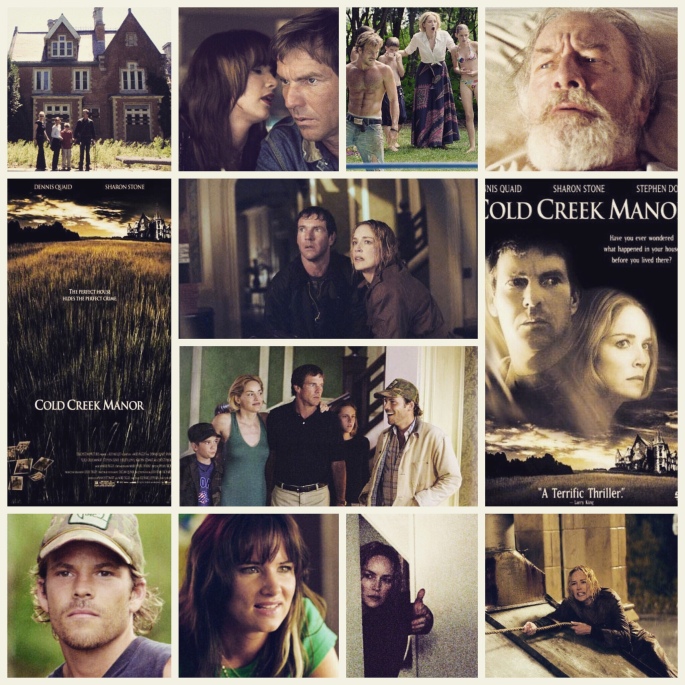
Mike Figgis’s Cold Creek Manor

Mike Figgis’s Cold Creek Manor is one of those lurid thrillers that got absolutely shit on by critics, but I’ve always enjoyed its steely, mean spirited edge and nasty central antagonist performance from Stephen Dorff. There’s also the atmospheric locales of rural Ontario that add to the vibe, as well as the high pedigree class of actors you wouldn’t normally see in something this knowingly low brow. Dennis Quaid plays Cooper Tillson, a family man forced to move to the sticks for work. He buys up an ancient house in the woods with a lot of history behind it and some psychological baggage that’s not forgotten so easily. Dorff is Dale Massie, previous inhabitant and local roughneck who hates the idea of big city boy Quaid and his clan taking up roost in his former digs, probably because it stirs up past trauma for him and induces the scary, pissed off state he spends most of the film in. Quaid’s wife (Sharon Stone) and kids including a very young Kristen Stewart, start to get routinely creeped out when Dorff shows up more and more, insinuating his way into their collective idyllic country lives, until he gets downright violent and Quaid is forced to unlock the secrets of the manor to protect his family. Christopher Plummer has a barely coherent appearance as Dorff’s bedridden, dementia addled father, a deeply unnerving cameo if I’ve ever seen one. Spunky Juliette Lewis plays the local hoe-bag who openly mocks Quaid & Clan too. Ultimately this is glossy trash and they marketed it with trailers that made it seem like a straight up horror or supernatural thing, when in reality it’s much more of a stalker thriller, which is alright too, if you have a villain as intense as glowering, seething Dorff. It certainly doesn’t warrant the shit storm of bad reviews it’s amassed though, there’s fun to be had if you approach it with a popcorn movie mindset, and with that cast alone at least you get to watch them do their thing. Hey, at least it’s light years better than that fucking Dream House thing with Daniel Craig.

-Nate Hill