The Collector

The Collector is a booby trap rigged horror flick that not only gives Saw a run for it’s money, but outdoes it in the atmosphere department. This is one seriously spooky film, made so by it’s eerie, claustrophobia ridden single-location setting, elaborate and maximum pain inflicting terror traps and burnished, browned out cinematography that gives it it’s own aesthetic. In a creaky old heritage mansion, a cat burglar leads his team from room to room, robbing the place to pay back a hefty debt owing to his ex-wife. Only problem is, they’re not alone in there. Stalking through the shadows is a silent, mask wearing phantom with a fucked up bag of tricks and a disconcerting leather face mask. Each new hallway or edifice finds them falling into one of his gory, well staged snares, from razor wire to full on bear traps and every gnarly device in between. It’s never really clear who he is or why he’s there save for a minuscule expository scene that you’ll miss if you blink, but it’s scarier that way in most cases, he could be robbing the place too for all they know and he’s just getting territorial. The film is a shadow laced game of spider and fly, as each individual finally realizes they’re no match for this fiend. Terrifically well made horror outing, but avoid the sequel (unimaginably called The Collection), as it takes everything that works so well here and shines a silly, noisy spotlight on it. This one will work you over and spit you out a clammy, nervous mess after it’s 90 minute stranglehold has had it’s way with you.

-Nate Hill

M. Night Shyamalan’s The Visit

I’ve seen M. Night Shyamalan’s The Visit several times now and it gets funnier with every viewing. Funny in a good way, and scary too as it’s a great little fright flick, but there’s just something about demented old people who aren’t right in the head that shunts the deranged part of my funny bone into overdrive (I must’ve subconsciously picked that up from David Lynch). It’s first and foremost a dark comedy for me, and seems like it wants to be that anyways when you consider how it’s shot, edited and lit, but the horror just happens naturally through this very weird set of circumstances, which I found neat. There’s also an unexpected emotional gravitas running through the plot line, which is impressive when you consider how short and fast paced the film is and that it actually had time to throw some real drama in there. In true Hansel and Gretel allegorical form, a brother (Ed Oxenbould, quite irritating and the only weak link in the cast, especially when he ‘raps’) and sister (Olivia DeJonge, radiating talent both beyond her years and what her character is written as, hope to see more of her) head out into the sticks to visit the grandparents they’ve never met, whilst their single mother (Kathryn Hahn) heads off on a cruise with her beau to be. The kids are at first quite taken with their Nana (Deanna Dunegan) and Pop Pop (Daredevil’s Peter McRobbie), but, as any trailer will show, gradually they start to act in a way that would put the word strange in the understatement zone. There’s something terminally off with these two sweet old codgers, as the kids discover hour by hour of their visit, from Pop Pop hoarding up soiled diapers in the shed to Nana scuttling about the house naked at night like a geriatric Emily Rose. Are they possessed? Dementia ridden? High on bath salts? It’s best you figure out the nasty little surprises of Shyamalan’s narrative for yourself, and squirm at every delicious little bit of unpleasantness along the way. McRobbie and Dunegan offer a staggering number of both bone chilling and riotously funny moments in two performances that they should be proud of, for both scaring our socks off and providing endless off colour comedic moments. Now as for the found footage camera aspect, that’s usually something I hate these days, but given how well it works with the subject matter and tone here, plus how non intrusive it is, I can’t bash it too much. This is a neat little departure for Shyamalan, whose usual somber, bleak and airily atmospheric tone definitely needed a little shaking up, and what better new avenue to explore than darkly comic, hyperactive horror?

-Nate Hill

The Greatest Showman


the-greatest-showman-bar

Critics and audiences alike embraced Hugh Jackman’s R-rated finale (we’ll see about that) as the Wolverine character earlier this year in the highly successful Logan, but I have little doubt the star was more excited about the release of his light-as-a-feather biopic musical of Phineas T. Barnum, The Greatest Showman.  The X-Men made him a star, a franchise player and no doubt a millionaire many times over, but Jackman’s always wanted to sing and dance his way into your heart, not stab his adamantium claws through it.  A longtime stage performer, he lent his star power to the immediately cancelled Viva Laughlin television series—apparently viewers weren’t ready for a Vegas-set musical weekly in 2007—and found Oscar nomination glory belting out Jean Valjean’s songs in Les Miserables.  It’s no surprise, then, that he’d gladly jump into this role, a modestly budgeted tale about the birth of the best known circus and its risk taking founder.  Whether or not it works probably depends entirely on how open the particular heart in the theater seat is to the musical form itself.

To those who peruse the genre with regularity, there won’t be too many surprises here.  A plucky American myth about a poor kid turning his dreams into reality and riches, set to regular breaks into song with lavish attention paid to costume, set, lighting and choreography throughout, The Greatest Showman checks the boxes like clockwork.  The music itself reminds one less of Rent or Hamilton than Katy Perry; syrupy inspirational pop that reinforces the easy ideals of belief in oneself, true love, overcoming obstacles, etc.  In other words, the music of the musical, sadly, isn’t one of its high points.  That said, each sequence is lovingly conceived and shot by special effects coordinator turned director Michael Gracey, and the dance sequences are anywhere from solid to spectacular depending on the given number.  The cast isn’t given anything groundbreaking or unpredictable to do, but seem to get caught up in fearless leader Jackman’s clear enthusiasm for the project, so there’s a genuine spring in most everyone’s steps even as we’re moved dutifully through the rise, fall, and of course rise again of the titular character.  Every time Barnum is about to turn to complete narcissism, a vibrant new musical sequence or grounding romantic interlude with steadfast wife Charity (Michelle Williams) pops up to remind us that we, too, love this scallywag.

Before I make it sound like The Greatest Showman is barely more than a brightly colored candy wrapper ready to blow away in the wind, it should be mentioned that the film has a bit more to say than white guys in America really can make it after all.  As long as you’re not looking for anything approaching a docudrama recounting Barnum’s original “employees” being purchased slaves, or a deeper exploration of the exploitation weaved throughout the whole concept of a freak show, you’ll find some comfort in the script’s earnest attempts to cast the circus entourage as outsiders getting their own shot at fame, glory and perhaps even a measure of equality.  Jackman’s Barnum is himself a poor kid at heart running in (and yet always just outside of) wealthy circles, and the class warfare that permeated 1850s America and hasn’t exactly disappeared in 2017 informs large swaths of his character arc.  Thus the fizzy charms of a film seemingly based more on sound and spectacle than anything else actually find some social justice underpinnings that, if not exactly creating true gravitas, make The Greatest Showman appear to care about more than just a quick good time.

the-greatest-showman-featurettes-fire

Dario Argento’s Suspiria

download

Dario Argento’s masterpiece, Suspiria, is a sinister mood experiment, that uses incoherent dream logic and wicked visuals to create a mysterious world of living nightmares.

Suzy is an American ballet dancer who enrolls at a prestigious performance academy in Germany.  Soon after her arrival, a series of bizarre murders grips the campus.  As Suzy delves into the accursed history of the school, she is drawn deeper into a place beneath reality, a place of dark magic and madness.

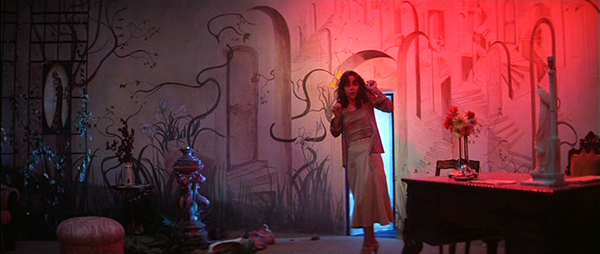
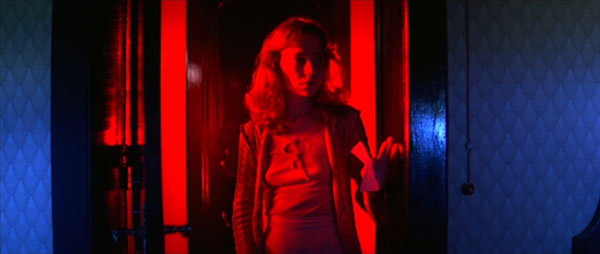
Argento’s script presents Suspiria as a string of ideas rather than a conventional plot, making a film that defies explanation.  The performances are overly melodramatic, the set design is impossibly audacious, and the colors are loud and out of control.  These elements bleed into one another, making it difficult to determine what is real and what is dream, while also conceding to the viewer that this was done with intent.  Guiseppe Bussan’s enigmatic sets appear alien and inhospitable.  The compositions of every scene are meticulous down the placement of objects and the positioning of the cast.  Everything is a clue to a mystery that never asks to be solved, with Suzy sleepwalking from one terrifying experience to the next.  Every door promises violence and every window teases a false hope of sanctuary.

download (1)

Luciano Tivoli’s cinematography uses strange angles and brilliant colors to show that the subconscious is in control and reality is an ethereal concept, lying just beyond the viewer’s reach. The visual presentation borders on sensory overload, requiring multiple viewings to decipher all of the clues and symbols.  Both the cinematography and set design are considered to be the pinnacle of the horror genre.  This is what sets Suspiria apart from other classics.  It is a high concept film presented in a vibrant, unforgettable package that continues to be imitated and dissected 40 years later.

Jessica Harper’s performance as Suzy is paradoxically cliched and nuanced.   Suzy is the conduit through which the story is told, making her a passive protagonist.  This tactic would normally be a weakness, but Harper uses considerable skill to convey genuine terror and dangerous curiosity, an attribute that Argento continually explores in many of his Giallo works.  One of the more intriguing aspects of her turn is that Suzy never ascends to “final girl” status.  Every action she takes is a reaction to the fear that she is experiencing and even in the climax, her response to the horror is organic and clumsy, harnessing primal instinctual response and subliminal surrender in equal amounts.
download (2)

Goblin’s legendary soundtrack has a repetitive quality that bolsters Suspiria’s surreal framework.  Luciano Anzellotti’s sound editing fills the spaces in between with ominous footsteps and creepy incantations, making the supernatural elements auditory phantoms that loom in the shadows.   The amount of restraint with regard to the fantastical elements is remarkable.   Everything is pointedly vague to the point of frustration, with Argento stingily doling out kernels of explanation in a randomized pattern. The abrupt appearance of the credits is a perfect footnote to the experience, snapping the viewer out of the reverie and back to reality.

Available now on a gorgeous 4K transfer from Synapse Films, Suspiria is one of the greatest horror films ever made.  Fans of traditional storytelling may be discouraged by Argento’s design, but if approached with complete surrender to its atmosphere, this is a film that delivers an unforgettable cinematic experience.

Highly.  Highly Recommend.
Suspiria_logo.png

Ridley Scott’s HANNIBAL 

The third Hannibal Lecter film is an unorthodox and strange beast. It doesn’t quite live up to the previous two films, MANHUNTER and SILENCE OF THE LAMBS, on the whole; yet it feels like a natural cinematic progression that does the film franchise justice, yet falls short of the powerful impression the novel left.

The film is handicapped before it even leaves the gate with the recasting of Julianne Moore as Clarice Starling. The recasting really isn’t that catastrophic due to Scott’s ability to minimize Starling’s impact on the story and refocus the narrative on the title character and Gary Oldman’s grotesque and obscene performance as Mason Verger, a character so complex he quickly goes from victim to antagonist. 

Over the course of the film, it’s an almost exhilarating journey watching Hopkins reprise his seminal role in a way that feels fresh, even though Hopkins has since worn his welcome out in that role. It’s a different Lecter, a reborn Lecter who has been living a new life, leaving his past behind him; or so he tries. 

The transgressive nature of the film is a stark contrast to the soft aesthetic and alluring score, and beautiful Italian set pieces. The depravity the film slowly and softly sinks and is startling if you are paying attention. The homoeroticism between Oldman and Hopkins in a flashback, the feeding of the wild hogs, and the infamous Ray Liotta dinner scene are all prime examples of how subversive and disgusting the film can get. 

While the ending of the film is a drastic change from the brilliant ending of Thomas Harris’ novel, it’s a sensible and cinematic ending, even though it runs the risk of not saying much, which almost hinders the film as a whole. The film isn’t great, and can feel worn out around some of its edges, but when it’s good, it is really good. 

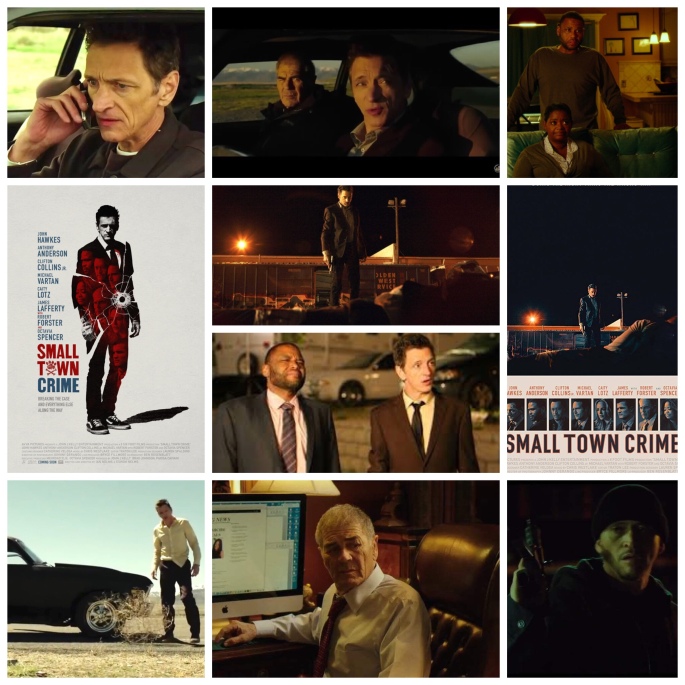
The Nelms Brother’s Small Town Crime

Looking for your annual rural crime/drama/black comedy/character study fix? Well, Three Billboards, which I reviewed the other day, provides that with something more illusory and profound. If you’re after one that’s a bit more old school and straightforward, check out the Nelms Brother’s Small Town Crime, a brutal, breezy thriller starring John Hawkes, an actor I remember from the fringes of the 90’s who seems to have gone newly platinum these days thanks to an Oscar nomination for 2010’s Winter’s Bone. He’s hilariously sympathetic here as a raging alcoholic ex-cop who stumbles right into the middle of a murder ring with the crosshairs latched onto a group of local underage prostitutes. Never one to back down once he gets a few cold ones in him before noon, he’s on the case between sessions at the dive bar and inebriated joyrides in his souped up muscle car. There’s a slightly off kilter, surreal quality to his story and that of those around him, a coming and going sense that these are a cartoonish series of events that aren’t really happening, when one looks at the supporting characters. Robert Forster has never been more deadpan or watchable as the tycoon grandfather of one of the slain hookers, a hands-on gent who isn’t afraid to dust off his giant scoped rifle to help out. He’s joined by outlandish Latino pimp Mood (Clifton Collins Jr., who needs way more roles), both of them assisting Hawkes in his crusade. Even the psychotic hitman (Jeremy Ratchford) dispatched to kill everyone in sight has a distinctly ‘out there’, roadrunner vibe. But Hawkes anchors the whole deal with the mopey, sad-sack realism of his character, a loser who’s dead-end existence has been given a new lease on legacy. His best buddy Anthony Anderson and wife Octavia Spencer give the plot some gravity too, a neat seesaw effect that sits opposite Forster and Collins exaggerated antics. The film has a funny way of both ambling along at it’s own pace and jumping out at you with warp speed jump cuts and brazen, bloody violence. The dialogue is pure poetry in areas and knowing camp in others, neatly balanced. Don Harvey and veteran tough gal Dale Dickey have great bits as salty bartenders, while Daniel Sunjata and haggard looking ex-pretty boy (remember him in Monster In Law with Jane Fonda and J-Lo?) Michael Vartan play two local detectives who are always frustrated to be a step behind Hawkes, who plays off the grid and close to the chest. Small Town Crime is a small time film, but the craft gone into bringing it to our screens couldn’t be bigger or more commendable from all angles. Highly recommended.

-Nate Hill

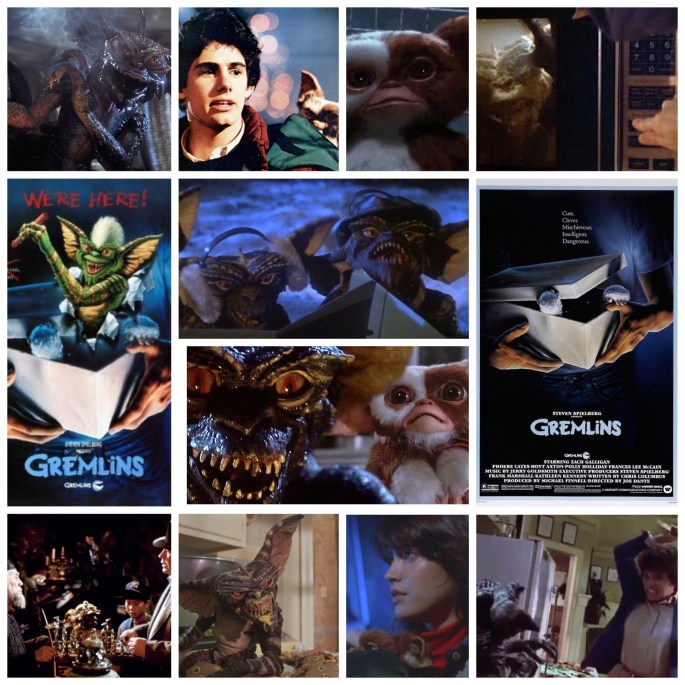
Joe Dante’s Gremlins

I’d forgotten that Joe Dante’s Gremlins balances creature feature, slapstick comedy, charming holiday movie and outright horror flick so expertly, but it’s a delicious mix that makes for one of the most timeless fantasy films out there. Director Dante is an expert on all things 80’, gooey and larger than life, this being his flagship film of sorts, the one gemstone in a career full of mischievous monsters and supernatural moonshines. Gremlins is an ‘inmates running the asylum’ formula, distilled into the simple premise of little renegade monsters loose about a small town during Christmas. After a wacky inventor (Hoyt Axton, like John Goodman by way of John Candy) buys an adorable Furby looking thing from the back end of Chinatown, things get nuts when he gives it to his son (Zach Galligan). The rules are don’t get the little tyke wet or feed him after midnight, which of course are promptly disobeyed, causing a full on invasion of little green scaly caffeinated crackhead monsters. It’s funny because as playful and charming as most of the film’s vibe is, these creatures are actually straight up down to kill people and cause maximum destruction, a violent atmosphere that hilariously clashes with the benign, Fisher Price motifs also on display. The special effects are gloriously 80’s, tactile and practical to their bones, every grisly gremlin death a symphony of slime and projectile ooze to be savoured, if that’s your thing. The Yuletide setting is perfect for such mayhem, the increasingly dastardly antics of these little fuckers acting as a sly metaphor for the feverish, stressful hoops and hangups we all deal with over the Christmas season, whether it be bustling through a crowded mall last minute or shredding a midget goblin in a whirring magic bullet blender, anyone would be hard pressed to decide which would be more intense. The score from Jerry Goldsmith is cheeky, catchy and has an off kilter Danny Elfman vibe, perfect for the madcap, demented story onscreen. A holiday classic and then some, fuel for anyone who gets a few drinks in them over Christmas and gets bitten by the rowdy big until they’re swinging from the chandeliers throwing plates at people. The sequel, also helmed by Dante, is a lot of fun in it’s own high tech way, but nothing beats the first high flying outing, and plus it’s a Christmas movie to. Good,

Gooey times.

-Nate Hill

B Movie Glory: Silent Night

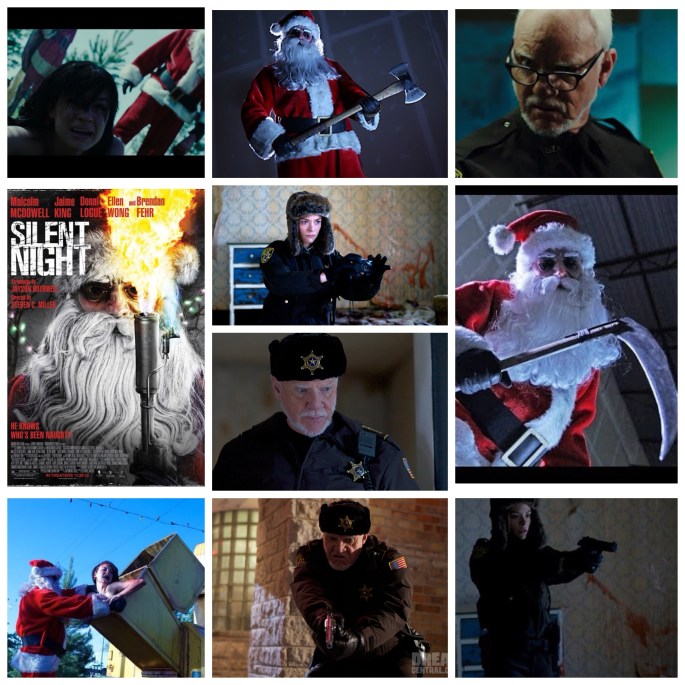
Santa is an axe wielding mass murderer! In Silent Night he is anyway, a slick, excessively gory remake of an obscure 80’s slasher called Silent Night, Deadly Night, which I’ve still yet to see. This new version is a heavy handed, knowingly silly affair, as a small town Sheriff’s department races to find a heinous killer who dresses like the red guy and has been wantonly slaughtering townsfolk all morning. A timid deputy (Sin City’s Jaime King) is the front runner to head him off at the pass, joined by the cantankerous, mouthy Sheriff, played by a hammy Malcolm McDowell with attitude to spare. The murders are so over the top it seems like the filmmakers wanted to outdo each and every slasher film out there, an impossible task, but they throw Paint at the wall furiously anyway. Electrocution by Christmas lights, high powered flamethrower, a souped up stun gun used to skewer an annoying 14 year old chick, but my favourite has to be the naked stripper fed through a giant wood chipper in a scene that would have Fargo covering it’s eyes. That’s the kind of flick it is, sleazed out to the max, tongue firmly in it’s cheek and never too serious. Problem is, a few of the actors (I’m looking at you,

priest dude) take it way too far into camp territory and ruin whole sequences with their wannabe satirical blathering. McDowell gets the tone right though, and is a right treat as the world’s most sarcastic lawman. Donal Logue also fares well as a bad tempered grinch of a mall Santa who eventually tangles with the murderer in a fiery police station set piece. Maybe I was just tired, but when the origin of the killer is finally revealed, which I waited for the whole time, it seemed like kind of a confusing letdown, a bit less of a surprise than it should have been. Worth it for the kills and a couple entertaining performances, but ultimately not much.

-Nate Hill

Martin McDonough’s Three Billboards Outside Ebbing Missouri

Irish writing/directing guru Martin McDonough has pulled a miraculous hat-trick with Three Billboards Outside Ebbing Missouri, a pitch perfect follow up to his other two black dramedies, In Bruges and Seven Psychopaths. He’s an unbelievable talent who specializes in caustic, vigorously sharp dialogue and comic moments organically drawn from real life situations, not to mention a heap of earned emotional moments and narratives that, try as the viewer might, are impossible to predict. This is a near perfect bookend to the trilogy, with a late career encore turn from Frances Mcdormand, who cements an oddly Coen-esque vibe that’s welcome. She plays Mildred Hays here, a fiery single mother whose frustration and rage at the rape and murder of her teen daughter is fuelled into the purchase of three advertising billboards on the outskirts of town, calling out the Sheriff (Woody Harrelson) and his department for their lack of arrests or convictions. Needless to say, this brazen act causes a hailstorm Of events both funny and sad, strange and mundane, but never boring. Harrelson is a blast of potent poignancy as Chief Willoughby, a stern family man who laconically protests the Billboards, but understands the poor woman’s intentions. His arc is one that leaves you puzzled and tugs at the heartstrings unexpectedly, especially when it comes to his relationship with his beautiful wife (Abbie Cornish, most excellent). Sam Rockwell is the height of hilarity as Dixon, a certifiably nuts, volatile man-child of a deputy who violently takes matters into his own hands and exacerbates the whole deal wonderfully with his antics. Rockwell was a dynamo enough in Seven Psychos, and here he takes that loony persona into the stratosphere, a whirling dervish of bizarre, idiosyncratic wonderment. Other standouts include Peter Dinklage as a love-struck dwarf that everyone refers to as a midget, John Hawkes as Mildred’s troubled ex husband, Lucas Hedges as her traumatized son and Caleb Landry Jones as an oddball local advertising mogul. McDonough’s calling card is his defiant refusal to tell a story in Hollywood’s glossy, surface level terms, deliberately punctuating his tales with vagueness, eccentricity and constant reminders that people, emotions, characters and narratives are complex, weird concepts which are seldom black and white or clear cut in any direction. The arcs here are broad, surprising and beautifully drawn, with the same deep set sadness he brought us In Bruges, accented by the acidic, dysfunctional and cheerfully profane writing that showed up in Seven Psychos. This is a film that ducks the pesky limbo bar of standards set by the Hollywood machine in favour of something more unique, a road less travelled when it comes to comedy dramas, but one that anyone seeking fresh, alive and different material would be much rewarded trekking down. One of the best films of the year.

-Nate Hill

Paint Your Wagon

I’ve never understood the cloud of negativity surrounding Paint Your Wagon, a terminally eccentric, raucously bawdy musical western epic in which old school tough guys Lee Marvin and Clint Eastwood get to sing, or at least do their best. Sure it’s a giant unwieldy spectacle, not all of the songs make a three point landing and it runs on far too long, but it’s such an interesting piece from many perspectives, it doesn’t deserve even half the shade thrown on it by critics over the years. I like it specifically because of how odd and random it is at times, how it meanders and lingers across the gold rush frontier town it takes place in, following the paths of it’s strange characters diligently. Marvin is the life of the party as Ben Rumson, a booze soaked, misanthropic prospector idling his way through the west in a haze of hangovers and hijinks. Eastwood is Pardner, a soft spoken stoic type whose life is saved by Ben, and the two strike a bond that’s eventually tested by Elizabeth (Jean Seberg), the beauty who loves them both. The trio makes the best of life in a rough n’ tumble settlement called No Name City, a feverish shantytown on the precipice of nowhere, populated by scoundrels, miscreants and hooligans. And that’s pretty much it, the story punctuated by a whole gallery of songs, some brilliant and others excruciating. The best is a haunting, melancholy melody by Marvin called ‘Wandering Star’, which is so good it could be listened to on repeat. ‘They Call The Wind Mariah’ is a gorgeous tune belted out by a young looking Harve Presnell as Rotten Luck Willie, a slick kingpin who basically runs the township. ‘There’s a Coach Comin In’ rouses spirits, and the titular theme is well staged too. Unfortunately all of the songs sung solely by Eastwood are a slog through the mud, as he bleats like a goat and gets saddled with the most boring tracks like ‘I Talk To The Trees’, the sappy ‘Elisa’ and ‘Gold Fever’, a musical sleeping pill. Whenever Marvin is around it’s a banger of a party, he goes the extra mile to keep the energy levels unbridled, while Eastwood is a little sleepier. There’s no way the film deserves the dodgy reputation it’s been slapped with though, a lot of it is fun as all hell, the big budget is spent well on fantastic production design, epic sets and big names who earn their keep, Marvin in particular.

-Nate Hill