Jon Amiel’s Copycat


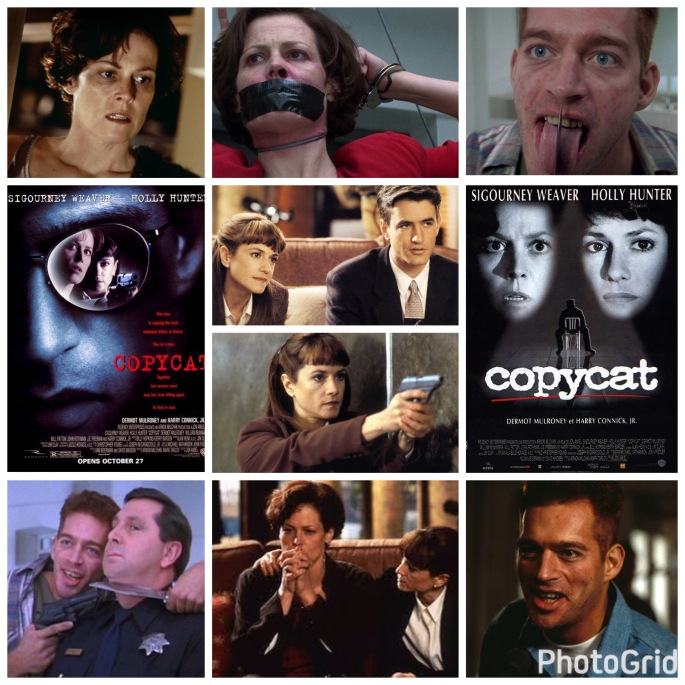
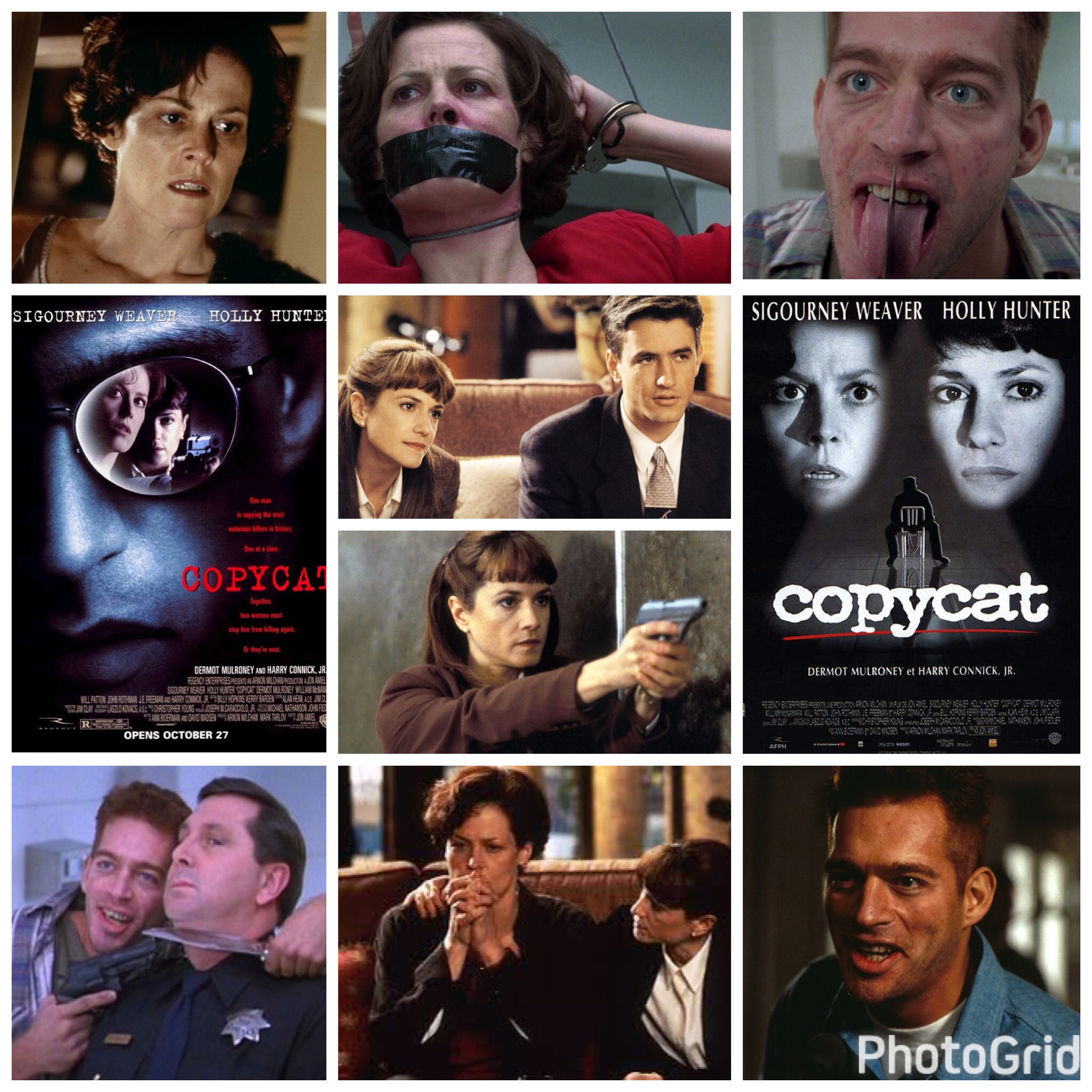
Jon Amiel’s Copycat is one intense piece of work, as tightly wound as razor wire and primed to stir up the adrenal glands. Sigourney Weaver contends with not one, but two extremely vicious serial killers a lá Silence Of The Lambs, with a bit of ass kicking help from spitfire Holly Hunter. Weaver is a clinical psychologist specializing in serial killers, and like most in her cinematic profession, just happens to be a serial killer magnet as well. After narrowly escaping a perverted maniac (Harry Connick Jr.), and assisting in his capture, she retreats to the sanctuary of her San Francisco penthouse apartment in a fit of agoraphobia following the trauma. But there’s another killer out there, one who meticulously recreates the crimes of others. Weaver is reluctantly coerced into helping to find him, and who better to help her than her old buddy Connick Jr.? He’s an odd choice to play this type of character, but he sells it with a sickly swagger and that off kilter grin, a much more lively performance than that of the actor playing the copycat killer. Holly Hunter provides the kick in the ass that timid Weaver needs to see the job done, but there’s danger around every corner, and the film earns it’s hard R rating with some truly uncomfortable bits. Along for the ride is veteran actor J.E. Freeman, Will Patton and good old Dermot Mulroney as fellow cops on the case. Not as instantly iconic or memorable as many in the genre, but takes what could have easily been generic trash and gives it life, style and a sense of real, sweaty danger. 

-Nate Hill

Kurt Russell Week: Top Ten Performances

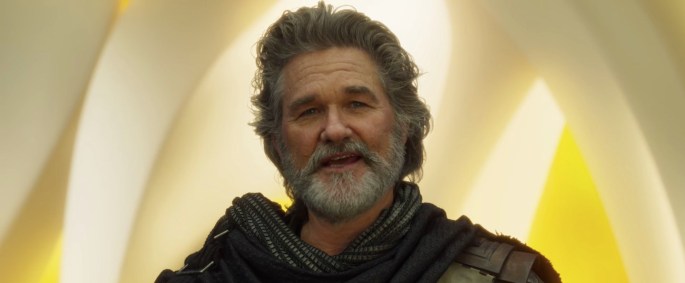
Leading up to one of the year’s most anticipated films Marvel’s Guardian’s of the Galaxy Vol. 2, which by and large promises another great performance from Kurt Russell, let’s take a look back at the ten best performances from one of cinema’s last standing movie stars.
Author’s note: There are so many performances of his to choose from and after spending more time than I probably should have narrowed down the list, here’s what I came up with.

10. Breakdown

In Jonathan Mostow’s 1997 thriller, Russell finds himself in a familiar Hitchcockian trope, the everyman put in an extraordinary situation. He’s not a cowboy or a guy trained in special forces, he is simply a regular man who’s wife gets snatched by a truck driver and is completely on his own finding her.

9. Bone Tomahawk

The gruesome horror western hybrid was anchored by Russell in a seminal turn as a lawman of the old west. Sporting a tamer version of his glorious facial hair that was the hallmark to his character in The Hateful Eight, here Russell plays the very stoic and calculated Sheriff Franklin Hunt who embarks with a small posse on a suicide mission into the heart of darkness. Sure, we’ve seen a character like this on screen before but what makes this performance so unique is that the familiar genre character is pushed beyond his limits with facing the primal humanoid tribe that has kidnapped a townsman’s wife.

8. The Deadly Tower

In Russell’s first major post-Disney role he took on the true story of Charles Whitman, who after killing his wife and mother buys a bounty of rifles and goes to the top of the tower at the University of Texas in Austin and begins to shoot random people. The film, but more importantly Russell’s performance, tackles the issue of mental illness decades before there was any emphasis put on treating it by our society.

7. The Hateful Eight

In Russell’s second collaboration with Quentin Tarantino, he is featured as a dopey, under-educated hangman with outlandish facial hair and a larger than life personality. In the film, Russell purposefully does the best John Wayne impression that we have ever seen on screen, and gives us a character who we’re not quite sure if he is supposed to be likable or not. Regardless of the nobility of John ‘The Hangman’ Ruth, Russell is an absolute joy to watch as he hams his way through Tarantino’s colorful dialogue and twisty narrative.

6. Escape from New York

The collaboration between filmmaker John Carpenter and Kurt Russell is one of the best actor/director pairings in cinema history. It ranks up there with John Ford and John Wayne, Martin Scorsese and Robert De Niro/Harvey Keitel, and any other pairing that you can think of. In 1981 the two of them made the greatest b movie ever with Escape from New York, a film that birthed one of our favorite antiheroes of all time, Snake Plissken. Kurt Russell smoothly navigates a post-apocalyptic New York City with his dry humor, gravely voice, and arctic camo pants. Truly a performance and character for the ages.

5. Tombstone

In the early 90s, there were two Wyatt Earp films in production. The smart money was on Lawrence Kasdan’s Wyatt Earp starring Kevin Costner, Gene Hackman, and Dennis Quaid in a life spanning epic that underperformed at the box office. Parallel to that film, Tombstone quietly finished production with Kurt Russell in an uncredited role taking directorial duties over for original director George P. Cosmatos. In this film, Russell gives one of his staple performances as the retired lawman forced to pick up his six-shooter and gold star to stop Powers Boothe and his evil gang of red-sashed cowboys.

4. Big Trouble in Little China

In 1986 Carpenter and Russell reunited for a film that was a critical and commercial bomb, but over time the picture has reached an unbelievable cult following that is constantly championed by its fans. Present day, the film is universally loved with an abundant amount of quotable dialogue. Here, Russell gives a charming yet intentionally clumsy performance as the “everyman” put in an unheard of situation. Donning an amazing mullet and driving his big rig, the Porkchop Express, Russell gives one of his most iconic performances in an already crowded filmography.

3. Dark Blue

In 2002 director Ron Shelton, writer James Elroy and screenwriter David Ayer brought to the screen Kurt Russell’s most undervalued performance as a corrupt and racist cop navigating through his professional and personal life as it self-destructs while the entire country is waiting for a verdict on the Rodney King beating. Russell’s turn as Detective Eldon Perry is hands-down one of his best performances as he embodies a character who is cool on the outside but is being torn apart on the inside over his morality and emotional pain. Russell has never been one to make a political statement in the press or through his films, but Dark Blue tackles an important aspect of our society well before it was brought to national attention.

2. The Thing

John Carpenter’s The Thing is one of the best science fiction films ever made. It’s isolation, iciness, and the impending doom of a score by Ennio Morricone lays an incredible foundation of terror. Russell is forced to deal with an extreme threat, a space monster that can shape-shift and remain unnoticed as it slowly picks off each member of the small research outpost in Antarctica. Russell adds a ton of dimension to the apathetic helicopter pilot who lives by himself up in his outpost drinking J&B and playing chess on his computer.

1. Death Proof

While Death Proof remains Quentin Tarantino’s “worst film” (and if this is your worst film, you’re doing pretty terrific as a filmmaker), there is still a lot to love and admire about it. Particularly Russell’s villainous turn as Stuntman Mike. In this film, Russell is as evil as it gets yet he plays on his career’s worth of cinematic charm and affability so we not only accept Stuntman Mike, but we can’t wait to see what he does next. This film marks Russell’s first pairing with Quentin Tarantino along with a career resurgence that reminded us that after all this time that Kurt Russell is a cinematic treasure.

DANIEL ESPINOSA’S LIFE — A REVIEW BY NICK CLEMENT

2

Despite a generic title and trailers that felt fairly derivative, the new sci-fi horror thriller Life, from director Daniel Espinosa (Safe House, Snabba Cash, Child 44), takes its familiar genre ingredients and twists them just enough, never overstaying its welcome at a brisk hour and 40 minutes, and provides some solid late winter entertainment that arrives with a considerable mean streak running through its R-rated bones. Gorgeously shot by master cinematographer Seamus McGarvey and featuring a particularly awesome musical score by Jon Ekstrand, the beautifully designed film opens with a nearly 10 minute single-take opening shot stunner, before all hell breaks loose on an international space station that’s doing some potentially dangerous testing on the first alien life-form found on Mars. The trailers have done a very good job of hiding many of the film’s most explosive moments, so I’m hesitant to say much more than I already have, and while not mind-blowing, this is the sort of bluntly effective genre entertainment that gets the job done. Everyone in the sturdy cast sells the material like pros, with Jake Gyllenhaal and Rebecca Ferguson doing the heaviest of the lifting, while the final moments kick the movie up a full notch on the overall enjoyment scale. This is a surprisingly ruthless and effective piece of outer-space nastiness, with a killer of a finish.

3

Elle

Elle

2016.  Directed by Paul Verhoeven.

hero_Elle-2016

Films are a complex gathering of essential ingredients, with each piece of the production working in concert to communicate a story and elicit an emotional response from the audience.  Rarely, a film will come along where the central performance is so overwhelming, so relentlessly powerful, that the other elements at play vanish into the ether.  Isabelle Huppert’s seminal performance in Paul Verhoeven’s Elle is such an animal, the elusive white rhino that haunts the boundaries of the medium, conjured into existence by an emotionally resonant and devious embrace of the material.  Using an uncharacteristic understanding of the pathos of victimization, Huppert delivers one of the most unforgettable performances in cinematic history before vanishing back into the void where the legends of film roam pathways of the soul.


Elle is a film that does not work without Huppert.  Her notorious style of risqué abandon harmonizes with Verhoeven’s explosive style to weave a thunderous tapestry of woe and desire.  Lesser talents require long scenes of exposition with quotable dialogue, to implant their personas within the viewer’s mind, a feat Huppert accomplishes with a mere glance of disdain.  At its core, David Birke’s script is about power:  Power in the workplace, in relationships, and in sexual encounters.  Huppert’s Michele is a victim, enshrined in the armor of an intimidating, sexually empowered executive who has built an empire of illusions around her.  The revelry is shattered when she is brutally raped and in the aftermath, casually goes back to her ruined kingdom, refusing to make the incident anything more than an apparent inconvenience, despite the concern from her friends and lovers.

movie-scene3

Verhoeven flirts with ideas of a victim’s revenge, but this is merely the surface of Elle’s harrowing intent.  As Michele attempts to bolster her surroundings, she understands her powerlessness, using the perceived weakness of her situation to an advantage, finding an advantage where none should exist.  This is a dark story that is definitely not for the casual viewer.  Aside from the disturbing depth of the story, there are brutal sequences of sexual violence along all of Verhoeven’s hallmarks.  His film is about a woman who finds strength in her victimization and chooses to embrace it, finding pleasure in the freedom of the idea of losing the basest notions of control, but yet never actually surrendering.


Stephane Fontaine’s suffocating cinematography keeps everything at the ground level.  Every look and each transgression of the flesh are on full display, peeling back the falsities to reveal the casual awfulness of everyday people which, when contrasted against the sexual deviancy at the center, appears almost worse.  This is the sheer brilliance of Elle.  Verhoeven sprinkles comic relief in the darkest corners of the narrative while flatly refusing to shy away from the discomfort.  Just when you think you’ve exhausted your tolerance and understanding of Michele’s plight she delves further into the darkness and you willingly take her icy hand, eager not only to explore the basement of the soul but ultimately, to decide where Michele’s limits end and yours begin.

isabelle huppert, elle

Verhoeven is notorious for violent exploitation with charm and Elle is the crown jewel in his gory pantheon of excess.  Every interaction is a negotiation and every scene of lust is a whispered rumor of scandal, overseen by a brooding and accusatory score by Anne Dudley.  Perhaps the best surprise of this sexual parable is that in the end, both the viewer and Michele find hope in her predicament, a wry admission that things that break us also strengthen and define us, a point that could only be made by Huppert’s flawless, tour de force performance.


Available now for digital rental, Elle is one of the best films of 2016.  Huppert received an Academy Award nomination for her performance, which given her fabled career is perhaps Elle’s greatest trick.  If you’re willing to explore a pitch black world of desire and control, in which the only escape is through self-acceptance via personal empowerment, Elle is an essential experience.


Highly.  Highly Recommend.
facebook-cover

Stephen Hopkin’s The Ghost & The Darkness


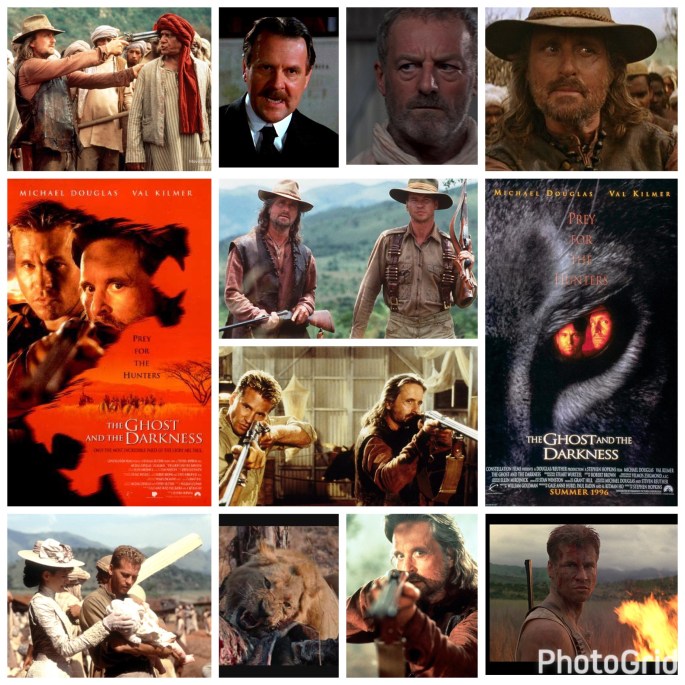
Nothing beats the sheer adventurous spirit and eerie primal mythos that fuels Stephen Hopkin’s The Ghost And The Darkness. It’s a go-to comfort movie for me whenever I’m feeling down or stuck inside on a rainy night. It’s like a campfire tale told on a quite windless night on the Serengeti, and like all the best scary stories, this one has roots in fact. In 1898, production of the East Africa Railroad along the Tsavo River was stalled for weeks, the workers suffering repeated attacks from two savage, mysterious lions. Acting against instinct, killing for sport rather than food and disappearing back into the night as quickly as they came, they were so ferocious and relentless that locals gave the eerie nicknames “the ghost and the darkness.” The story has film written all over it, and Hopkins chooses the swashbuckling, Universal style horror route, and an irresistible tone. Val Kilmer, in his heyday, plays Patterson, an engineer sent by the boorish railroad tycoon Beaumont (Tom Wilkinson, chewing scenery like steak) to speed up production and pick up the slack in order to finish ahead of schedule. Not on the lions watch. He’s scarcely arrived when they begins their endless tirade of horrific attacks, forcing him to trust in the skills of leathery game hunter Remington (Michael Douglas), sort of like Van Helsing crossed with Indiana Jones. The film clocks in under two hours but it seems longer somehow, like we’re stuck with them in real time as the hopelessness of the situation sets into our bones, raising the stakes for our hunters and hammering home how terrifying an ordeal like this must be. Casting is on point here, watch for Bernard Hill as the sympathetic camp doctor, the late Om Puri and a brief early career cameo from Emily Mortimer as Patterson’s wife. Occasionally straying into the realm of melodrama is this one’s only fault, for the most part it’s a hair raising, nightmarish account of adventure and terror told with style, packed with atmospheres and primed to get pulses racing. 

-Nate Hill

Power Rangers

Power Rangers

2017.  Directed by Dean Israelite.

powerrangers-group-powercoin

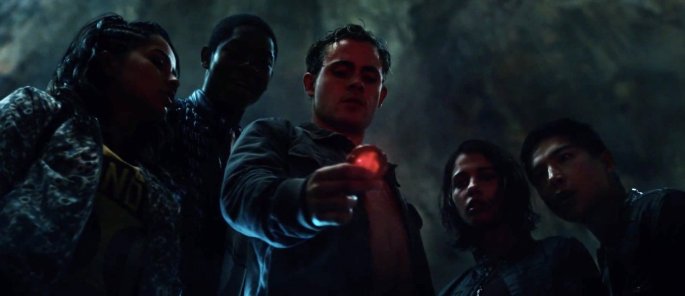
2017’s first genuine surprise is here.  An outright refusal to slip into the creature comforts of the spandex universe, Dean Isrealite’s Power Rangers doesn’t redefine the superhero film, it makes it actually matter.  An intense, self-aware script plays to the strengths of a refreshingly diverse cast to deliver a crowd pleasing experience that is both playful and serious, mimicking the coming of age experience by telling a tale about self-acceptance and the importance of friendship.

Five misfits find mystical colored coins that turn them into the Power Rangers, a legion of larger than life soldiers who are charged with defending life.  They begin training in an attempt to unlock their “morphs”, powered armor that not only protects them, but uses their mutual bonds as a weapon against the ultimate evil, a fallen Ranger with designs on Earth.  John Gatins’ outstanding script checks every box on the list for a film like this, but rather than simply hitting the note and moving on to the next fight sequence, the story remains grounded in the plight of the young adults at its core.  Featuring the first autistic and LGBTQ superheroes and a wonderful mix of campy and somber themes, Power Rangers takes it time, making you care about these personas as they discover who they really are.

Power-Rangers-Official-Trailer-3

Matthew J. Lloyd’s cinematography, particularly during the first two acts is sensational.  It begins with a dizzying car accident sequence that sets the tone before transitioning into crisp close ups of the stunning and beautifully imperfect cast.  These are real heroes, not pristine statues and the camera masterful captures their inner struggles while keeping the fantastical elements of the story present, but in the background.  There’s an inverted underwater sequence offset by slick lighting that is the standout, a telling whisper that the genre can be so much more than what it currently is.  There are moments of horror sprinkled throughout, with Elizabeth Banks’ Rita Repulsa obtaining gold in unspeakable ways, which is a reminder of the narrative’s refusal to be categorized.  The pacing and gliding between themes may be a turn off, however it is indicative of the comic book brand.  Many films of this type double down on the gritty or lighthearted side of the action, while Power Rangers asks “Why not both?” and it mostly works.

Sadly, the final act devolves into the standard destruction of the city/world ending scenario in which the heroes must save the day, but the fact that there is essentially only one fight sequence is astounding, and it doesn’t transpire until well over 90 minutes into the story.  Isrealite’s faith in the material and his cast is evident in every scene.  The matter of fact acceptance displayed by each character when confronted with their mortality is the centerpiece.  Where other films chronicle the journey of a flawed hero to greatness, the Power Rangers use their flaws to strengthen their bonds through self-love and mutual respect, with their intimate knowledge of their compatriots being the key to their survival.  Brian Tyler’s synth score encapsulates the teenagers vs. weirdness experience with pulsing tones and mysterious rhythms, touchstones to films where wonder and imagination are the real weapons against oppression and greed.

_KF17640.NEF

The CGI is well done and the lack of fight scenes allows it to not overstay its welcome.  The television show involved big robots fighting big creatures, concepts that beg for this kind of treatment and the film delivers, not only showcasing interesting vehicles, but using slick editing to allow the viewer to actually comprehend what is happening once the mayhem begins.  Banks’ villain is underdeveloped, which is a hallmark of the genre, but her presence is menacing to the point that the final confrontation will have your attention, if only for her dedication to the melodrama.

In theaters now, Power Rangers is a welcome injection of fun and maturity to the blockbuster experience.  It’s not a perfect film by any means, but its patient storytelling, exceptional camera work, and perfect cast more than compensate for its expected shortcomings.  The studio has a six movie arc planned and if this film is an indicator of the possibilities for the franchise, viewers can expect great things if it succeeds.

Highly.  Highly Recommend.

PR2017movielogo

A Week of Monsters – Creature from the Black Lagoon

Creature from the Black Lagoon

1954.  Directed by Jack Arnold.

20130620-222304

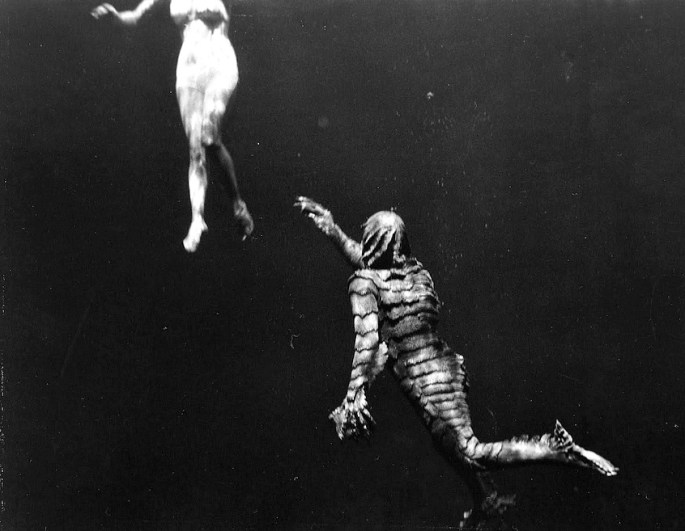
As the 3D fad of the early 1950’s was dying, studios opted to film Creature from the Black Lagoon in the medium in an effort to draw out its welcome.  Despite failing in that endeavor, the film features stunning underwater cinematography that has inspired horror films since its debut.  Unable to extricate itself from the romance angle, Creature from the Black Lagoon spends the majority of its time building suspense, presenting the man vs. nature conflict as a forefather of the slasher film.

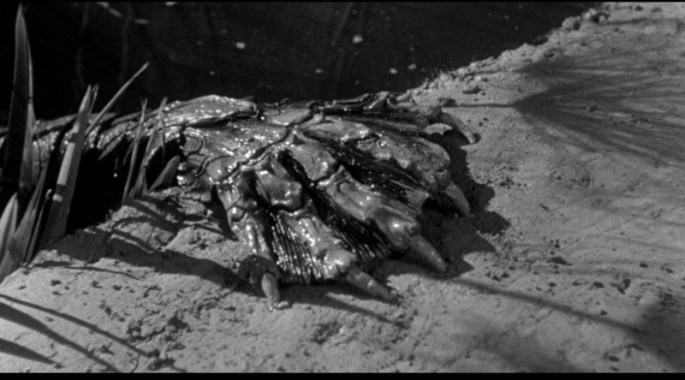
Scientists searching for the missing link intrude on the lair of an amphibious humanoid holdout from the prehistoric age.  The creature begins to stalk its hunters in an effort to defend its home while simultaneously becoming enamored with the expedition’s lone female member.  Even for the time, the premise was overdone, but The Creature from the Black Lagoon is not defined by its plot.  It is the sum of an engaging fraternity of technical achievements that support one another to cement Creature as a subconscious definition of terror.

tumblr_mbftr4bK5M1qfqx4io1_1280

William Snyder’s aquatic cinematography is timeless, building off preceding legends to form a sinister foundation for the future.  The underwater sequences are terrifyingly evocative, with compositions reminiscent of Night of the Hunter that later would be used by Spielberg in Jaws.  The black depths are offset by natural light flittering through the surface to illuminate a world unknown to man and yet essential to mankind’s evolution, symbolizing the dark symmetry of the story.

The creature’s design was conceived by Disney animator Millicent Patrick, though lead makeup artist Bud Westmore claimed credit for several decades.  Constructed by prosthetic artists from World War II the creature is an original amalgam of myth and legend that is not text based, another stark difference from the other Universal Monsters.  Ben Chapman remained in the body suit for over 10 hours each day.  Unable to sit down, he spent down time in a lake near the shooting location in Florida to stay cool, a real life parallel to the primordial onus endured by the beast.

creature-from-black-lagoon-julie-adams-1

At its core, Creature from the Black Lagoon is an exploration of animalistic survival.  There are environmental underpinnings, but the film is best when taken as a horror story about confronting the unknown and the dangers of scientific discovery.  Many of the Universal films deal with the pathos of their monstrous leads and Creature side steps this in favor of focusing on the excitement of the reveal.  Whether it involves an innocent swim or an ill-advised showdown, Creature aims to unsettle with its simplicity and it mostly succeeds.

Available now for digital rental, Creature from the Black Lagoon is one of the greatest horror films ever made, if only for its undeniable influence on the genre and its memorable cinematography.  Featuring remarkable costuming and makeup effects, this is the cornerstone of the Universal Monsters and a hallmark of American horror films.

Highly.  Highly Recommend.

Creature From The Black Lagoon Title

Scott Cooper’s Out Of The Furnace 


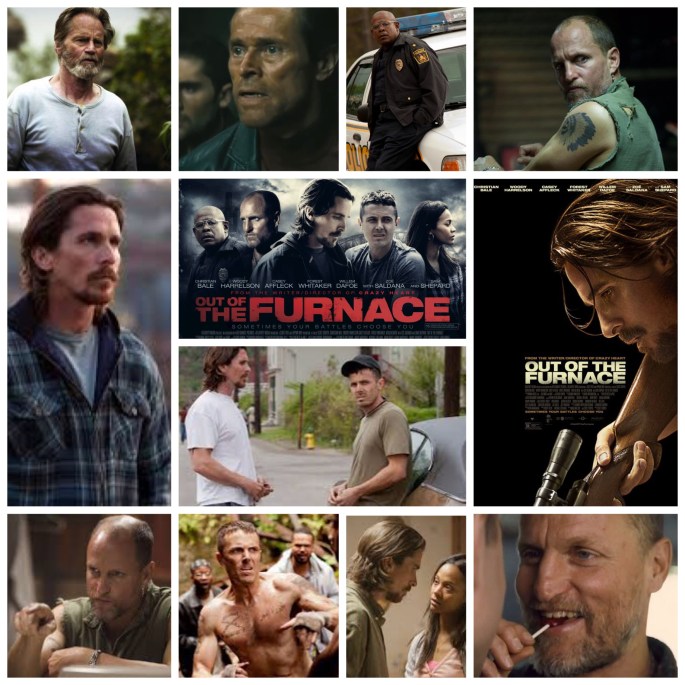
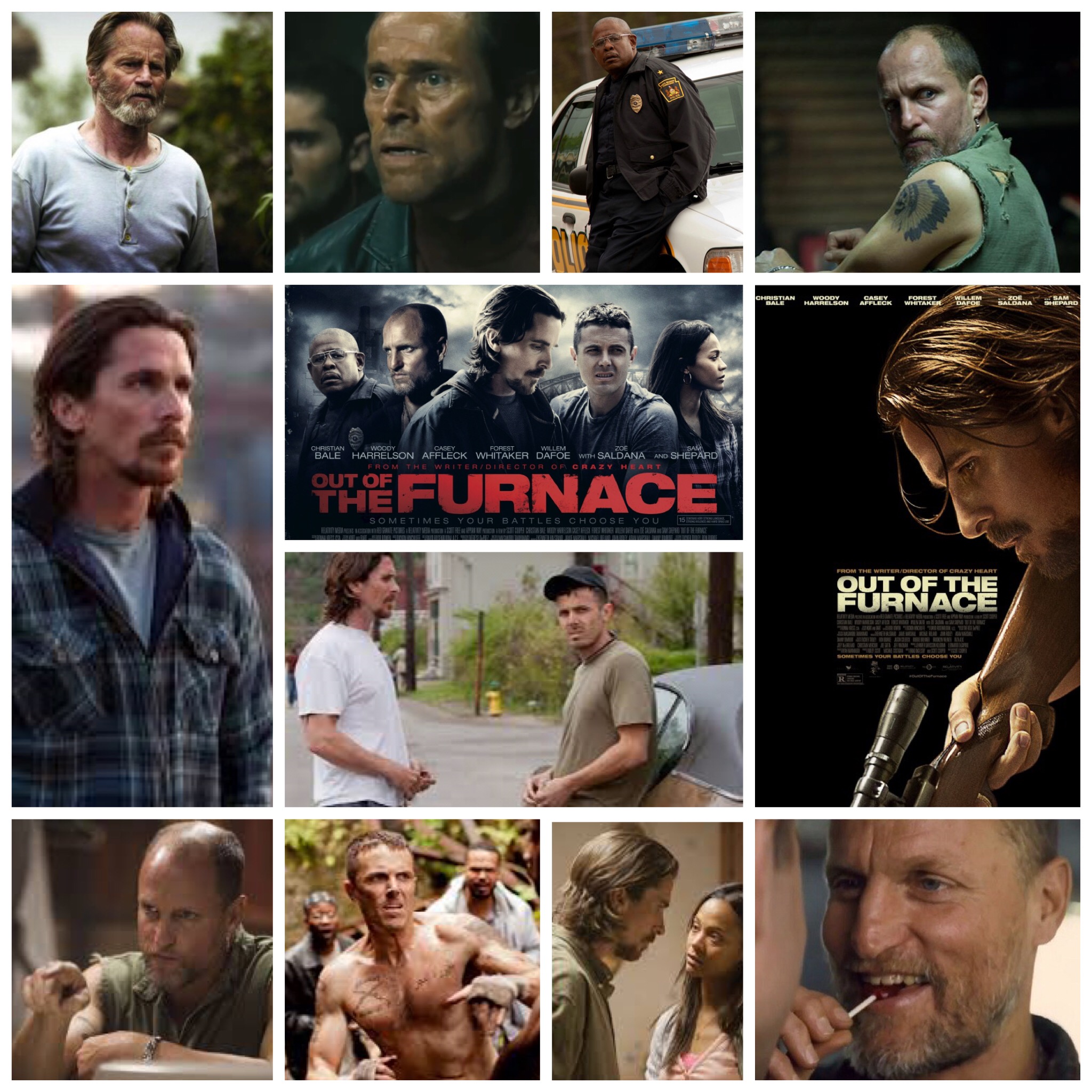
While not quite in the pantheon of powerhouse that the filmmakers intended it to be, Scott Cooper’s Out Of The Furnace is still a bleak, devastating picture. This is a film about endings, and not resolute, satisfactory ones either. Set in a borderline derelict mining town somewhere in the rust belt, industry has come to a grinding halt, giving way to the inevitable rise of rural crime, spreading like a cancer across land that once flourished and prospered. Every character in the film meets their bitter end somehow, and what’s fascinating is that earlier in life they all could have been more whole, and come from some other, brighter genre film, but the lives they’ve led set them on the same course as their county, and one by one we see them reach the last bend in the road, and the light in their life unceremoniously flicker out, leaving a cold shell. If I’m making this sound depressing, I’m doing my job well. This is a soul crushing film, with no light at either end of the tunnel and all glimmers of hope already extinguished before the opening titles even show up, so just make sure you have Finding Nemo or Wallace & Gromit queued up next in line if you give it a go. Opening with a prologue that leaves a bad taste in your mouth, you know right off the bat what you’re in for, as we’re introduced to Woody Harrelson’s Harlan Groat, an absolute monster who runs everything from underground fight clubs to an intricate web of meth trade in the region. Groat is at odds with steelworker Russell Baze (An implosive Christian Bale), a hard man with anger issues just looking for an excuse to get fired up. Russell’s brother Rodney (Casey Affleck in the film’s best work) is a broken Iraqi war vet who got on the wrong side of Groat’s gang, and has since disappeared. Since the law won’t venture into the near mythic backwood hills where Groat skulks, Baze goes vigilante, waging personal war and raging against a light that has long since gone dead. This is a big cast we’re looking at here, and some of the subplots either distract from the main show or just seem like overkill, like Zoe Zaldana as Russell’s ex who has since shacked up with the local Sheriff (Forest Whitaker), or an underused Sam Shepherd as his uncle Red. Willem Dafoe has a nice bit as a seedy but sympathetic local gangster though, it’s always nice to see him, as well as Tom Bower as the salt of the earth bartender. It’s all about Woody and the danger he brings, he’s terrifying in the most mundane of exchanges, and lethal when he gets worked up. The feeling of economic decay follows him like a noxious cloud, his brittle ruthlessness a mascot for the hard times that many a town in the US has fallen on in recent years. One need only look at the poster to see the obvious and intentional shades of Michael Cimino’s The Deer Hunter, and though the film wears its influences on its heavy flannel sleeve, it finds its own dark, despairing poetry, and leaves you gutted in the final, anticlimactic frame. 

-Nate Hill

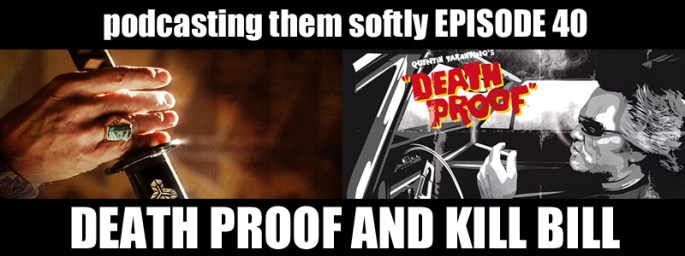
EPISODE 40: DEATH PROOF and KILL BILL Vol. 2

episode 40

Join Tim and Frank as they discuss their respective favorite Quentin Tarantino films!  It’ll be a, spirited, discussion to say the least!

Review of T2 TRAINSPOTTING

Ewan McGregor, Johnny Lee Miller, Ewen Bremner, Robert Carlyle, Anjela Nedyalkova. Directed by Danny Boyle. Rated R. 117 minutes. 2017.

Stewing in nostalgia is no way to go through life, but it’s the only way the characters in T2 Trainspotting know how to live. The film, catching us up on the lives of characters to whom we were introduced in 1996’s rambunctiously enjoyable Trainspotting, also stews in that sense of nostalgia, much of it empty, because while the ending of the first film certainly hinted at an enormous amount of interpersonal conflict between its characters through the self-preservative actions of one of them, this film only deals with that conflict when the machinations of John Hodge’s screenplay allow it to do so. Instead of dealing honestly with its wounded characters, director Danny Boyle inserts each of them into separate plots, then shifts randomly between them. The sense of focus and rhythm has been replaced by routine.

One of the plots dedicated to these characters works surprisingly well, and that would be our reunion with Spud (Ewen Bremner), whose position as the comic-relief of the central foursome hasn’t really changed. There’s a sense of melancholy to the character this time around, as we learn that his wife Gail (Shirley Henderson) has left him, with their son in tow, after he relapsed and spiraled into the drug world once more. There’s also a lot of potential in what we learn about what Renton (Ewan McGregor), the de facto leader of the group, has done in the interim since making off with almost all of the money owed to the others. The only one to whom he gave any money was Spud, who of course abused his chance at an escape. Spud is in the middle of attempting suicide when Renton is reunited with him and saves his life.

If these two are the ones who are treated as genuine characters, the others in the group are treated as narrative devices. Sick Boy (Jonny Lee Miller) has been leading a life of con artistry with Veronica (Anjela Nedyalkova), blackmailing upper-class society people with forged sex tapes to take a considerable portion of their income. Begbie (Robert Carlyle) has been in prison, although he breaks out by staging a shivving with a fellow prisoner and being sent to hospital. When he gets out, he can’t wait to get back into his life of crime, even going so far as to employ his son in a scheme that nearly goes terribly awry. Much of these threads is played as comedy, although Sick Boy’s schemes quickly evaporate as the film sees less and less use for them and Begbie’s animosity toward Renton (once the film, in its last act, finally reunites the two) leads to a massive shift in tone as it all becomes a caper with a horror-movie killer as the predator.

Interwoven through this surprisingly thin material is a movie that consistently looks backward with an oddly misplaced sense of fondness that misses the point of the earlier film. There was at least a bit of optimism in that film, particularly when Renton twisted an anti-drug advertisement to look forward; here, he gets a similar moment that has itself been twisted into something as cynical as how he once viewed Scotland. He eventually turns to his old ways, which feels like an obligation in a screenplay that also contrives for Diane (Kelly Macdonald) to return for one scene to pass judgment on Renton. With T2 Trainspotting, Hodge and Boyle commit an act of revisionist history that feels dishonest, both toward its audience and toward characters who, for all of their flaws, deserve better.