TINKER TAILOR SOLDIER SPY -A Review by Frank Mengarelli

“We are not so very different, you and I. We’ve both spent our lives looking for the weaknesses in one another.”

TINKER TAILOR SOLDIER SPY is a film I have watched countless times, and a film I look forward to constantly revisiting. It’s easily one of my favorite films of recent years. It’s a simmering, taut film that is masterfully constructed with painstaking detail.

TTSP 3

Tomas Alfredson creates a lived in world of spy v spy. Timelines are blurred, present day and the past intermingle throughout the duration of the film, and all we can do is absorb it. The cast is remarkable; each actor is laid upon Alfredson’s pallet, and he takes his time softly brushing each one across the screen.

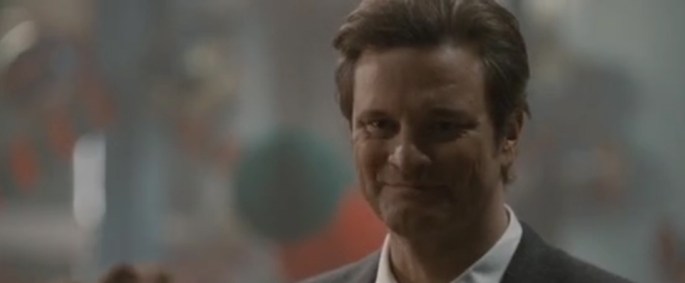
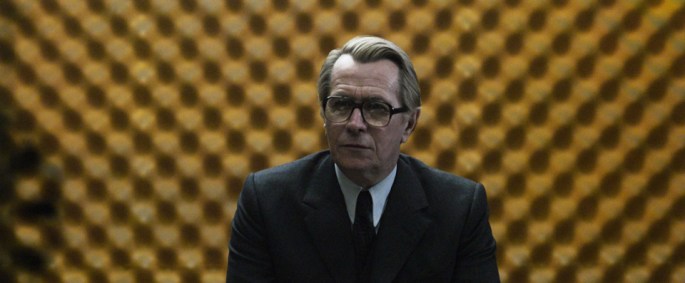
Gary Oldman is in top form, giving his most low key performance as George Smiley, the master spy. Oldman spends a majority of the film silently lurking, watching, listening; stealthily seeking the traitor in their midst. Colin Firth cashes in on his career’s worth of affability, slyly charming his way throughout the film.

TTSP 2

Alfredson, along with cinematographer Hoyte van Hoyteman and production designer Maria Djurkovic build a smoky and dreary world of moral ambiguity in which the characters hide in the shadows, and enter into a game that has already been resolved before it begins.

The film’s ending is as heartbreaking as it is rewarding, resolving just enough to satisfy the audience, but desperately leaving us wanting more. While certain events of the film are closed, there is so much more to be told. The beauty of the craftsmanship of TINKER TAILOR SOLDIER SPY is that it shows us very little, yet tells us everything.

TTSP 1.jpg

PETER BOGDANOVICH’S SAINT JACK — A REVIEW BY NICK CLEMENT

1

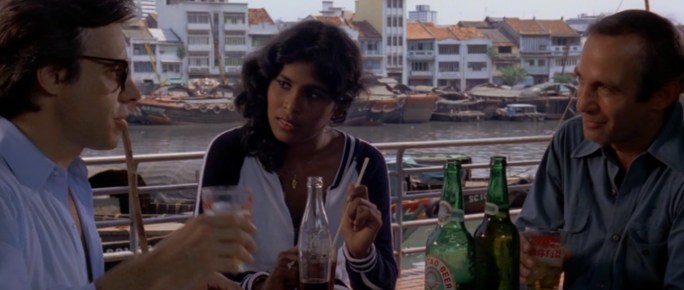
I’m not sure if I’ve ever seen a film quite like Peter Bogdanovich’s labor of love Saint Jack, and I doubt that anything remotely resembling it will be made any time soon. Released in 1979 and based on the Paul Theroux novel from six years earlier, the narrative pivots on the life of Jack Flowers (the absolutely amazing Ben Gazzara), a nice-guy hustler with pimping aspirations, living in Singapore who feels like he’s stuck in a personal rut. So, he decides to enter into the big time, by opening up his own bordello in conjunction with the CIA as a station for American soldiers who are on leave, which angers local Chinese gangsters who feel that he’s encroaching on their business and territory. Honestly, I think we need a big-screen revival of cathouse movies in general; there’s all sorts of possibilities with this milieu, and in regards to Saint Jack, the way that Bogdanovich subverted expectations and told a generally amiable story with flashes or threats of violence speaks to the unique way in which he approached his material. The film has an appropriately scuzzy visual style, with the great cinematographer Robby Müller calling the shots behind the camera, and bathing the film in a layer of textural grime that fit perfectly with the humid setting and mildly ramshackle production design. The fantastic supporting cast includes Denholm Elliot, James Villiers, George Lazenby, Joss Ackland, Rodney Bewes, Mark Kingston, and Bogdanovich in a quick and sly cameo.

3

As with the best of Bogdanovich’s work, Saint Jack eschews cheap and easy narrative exposition in favor of the story being motivated solely by character and behavior, with Gazzara’s strangely-warm-for-a-pimp performance giving the film an added layer of moral ambiguity that’s so rare in today’s brand of storytelling. Shot for a reported $1 million and lensed entirely on location in Singapore, and as of 2006 the only Hollywood production to do so (not sure if anyone has done a film there since then…), Saint Jack angered government officials over its portrayal of their society, and the film was banned from local cinemas. The filmmakers even lied about the plot of the film because they apparently figured that they’d be met with hostility from various groups. And despite never receiving the theatrical release it deserved, Bogdanovich has stated in interviews that he feels it’s one of his best works as an artist. This cinematic adaptation of Theroux’s book took root when Cybill Shepherd sued Playboy magazine after they printed photos of her from the set of The Last Picture Show; her settlement included the novel’s film rights. Hugh Hefner and Roger Corman are credited as producers. Available on DVD with audio commentary by Bogdanovich, new and old interviews, and other assorted bits of extra fun.

2

Joss Whedon’s In Your Eyes: A Review by Nate Hill 

JOSS WHEDON ALERT
Now that I have your attention, let’s talk about In Your Eyes, a lovely little romantic/fantasy/drama written by the J Man, concerning a boy and girl who have shared a strange psychic bond over hundreds of miles since they were kids, despite never having met. 

  Its a slightly unconventional romance, a charming, breezy little piece that took me by surprise, having known nothing about it going in except Whedon’s involvment. It starts with his lovely script, laying down the bones for two adorable leads (Zoe Kazan and Michael Stahl David) to go to work. Dylan and Rebecca have never met. They live on opposite sides of the US, and lead considerably different lives. They would have nothing in common if it weren’t for an odd metaphysical connection. They can periodically (and often at inconvenient times) see into each others lives like a perceptive window, complete with senses like smell, taste and touch. When they are growing up its confusing and stunted, but I imagine it blossoms along with every other attribute, and suddenly they’ve discovered they’re not both crazy, and that there’s a real person on the other end of this bewitching mutual conduit. Soon they are communicating, much to the puzzlement of everyone else in their lives, who just observes them talking to themselves like loons. Romance isn’t far off, as we can well guess, and soon they are deeply in love in spite of their differences and the great gulf of distance between them. He’s a troubled fellow with a criminal past, a lenghthy RAP sheet and a nosy parole officer (Steve Harris). She’s a mild mannered, fragile girl married to a prissy control freak of a Doctor (Mark Fuerstein). Both of their lives are continuously disrupted by their relationship until they’re at the brink of crisis, and it seems the only way out is to find one a other in person. The almost supernatural aspect of their connection  is treated frankly, like more of a biological anomaly as opposed to ghostly gimmicks. It can be seen as Whedon exploring the nature of love in our world, finding “the one” who is always out there, somewhere, waiting. Or are they? The real hero is his incredibly down to earth script, an easy going, hilarious and poignant piece of writing. The cast is from all walks of Hollywood and includes Nikki Reed, Shameless’s Steve Howey, Richard Rhiele and a priceless cameo from Dirty Dancing’s Jennifer Grey, who is starting to look like a character from Desperate Housewives. Kazan and David are just the cutest, most earnest couple I’ve seen in a romantic film of late. She’s unsure, passionate and intuitive, he’s a scrappy patchwork teddy bear and together they’re perfect, capturing the essence of the relationship in a single very unique sex scene, nestled in with all of their “spiritual Skype” bonding, and eventual face to face meeting. Whedon loves his characters, right down to the bit parts and it shows. His writing is never short of sterling, and this one is another winner for him. 

Joss Whedon’s In Your Eyes: A Review by Nate Hill 

JOSS WHEDON ALERT
Now that I have your attention, let’s talk about In Your Eyes, a lovely little romantic/fantasy/drama written by the J Man, concerning a boy and girl who have shared a strange psychic bond over hundreds of miles since they were kids, despite never having met. 

  Its a slightly unconventional romance, a charming, breezy little piece that took me by surprise, having known nothing about it going in except Whedon’s involvment. It starts with his lovely script, laying down the bones for two adorable leads (Zoe Kazan and Michael Stahl David) to go to work. Dylan and Rebecca have never met. They live on opposite sides of the US, and lead considerably different lives. They would have nothing in common if it weren’t for an odd metaphysical connection. They can periodically (and often at inconvenient times) see into each others lives like a perceptive window, complete with senses like smell, taste and touch. When they are growing up its confusing and stunted, but I imagine it blossoms along with every other attribute, and suddenly they’ve discovered they’re not both crazy, and that there’s a real person on the other end of this bewitching mutual conduit. Soon they are communicating, much to the puzzlement of everyone else in their lives, who just observes them talking to themselves like loons. Romance isn’t far off, as we can well guess, and soon they are deeply in love in spite of their differences and the great gulf of distance between them. He’s a troubled fellow with a criminal past, a lenghthy RAP sheet and a nosy parole officer (Steve Harris). She’s a mild mannered, fragile girl married to a prissy control freak of a Doctor (Mark Fuerstein). Both of their lives are continuously disrupted by their relationship until they’re at the brink of crisis, and it seems the only way out is to find one a other in person. The almost supernatural aspect of their connection  is treated frankly, like more of a biological anomaly as opposed to ghostly gimmicks. It can be seen as Whedon exploring the nature of love in our world, finding “the one” who is always out there, somewhere, waiting. Or are they? The real hero is his incredibly down to earth script, an easy going, hilarious and poignant piece of writing. The cast is from all walks of Hollywood and includes Nikki Reed, Shameless’s Steve Howey, Richard Rhiele and a priceless cameo from Dirty Dancing’s Jennifer Grey, who is starting to look like a character from Desperate Housewives. Kazan and David are just the cutest, most earnest couple I’ve seen in a romantic film of late. She’s unsure, passionate and intuitive, he’s a scrappy patchwork teddy bear and together they’re perfect, capturing the essence of the relationship in a single very unique sex scene, nestled in with all of their “spiritual Skype” bonding, and eventual face to face meeting. Whedon loves his characters, right down to the bit parts and it shows. His writing is never short of sterling, and this one is another winner for him. 

HARD BOILED – A REVIEW BY J.D. LAFRANCE

hard1

In retrospect, John Woo’s Hard Boiled (1992) can be seen as his audition reel for Hollywood. And what a helluva audition reel it was – a masterfully orchestrated magnum opus of mayhem. After its release, he moved to the United States and started over (directing a Jean Claude-Van Damme film no less – ouch!). Woo’s film took the gangster melodrama, that he started with A Better Tomorrow (1986), to the next level. In doing so, he created what is arguably the greatest action film ever made.

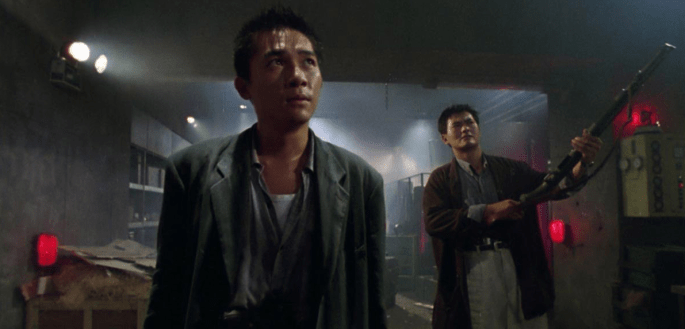
We are introduced to a city mired in crime and corruption – one that is at the mercy of the Triads, gun smuggling gangsters with very little regard for human life as evident from the bloody shoot-out in a teahouse that kicks off the film. We are also introduced to a police officer named Tequila (Chow Yun-Fat), a one-man army with two guns in his hands; able to gun down bad guys while sliding down a banister (which has since become one of the iconic images from the movie). However, when the gangsters kill his partner, Tequila makes it his life’s goal to take them all down, the law be damned. He eventually crosses paths with Tony (Tony Leung), an undercover cop working deep within the Triads as an efficient killer. So deep, in fact, that he’s beginning to lose his original identity. Once Tequila discovers Tony’s true identity, they team-up for a show-stopping finale that can only be described as a bullet-ridden blow-out of epic proportions.

Hard Boiled is structured around three major action set pieces: the teahouse shoot-out that introduces Tequila, a warehouse gun battle where the cop meets his undercover counterpart, and the hospital showdown where the two men team-up to take down the bad guys. Each sequence is more ambitious than the one that came before and this culminates in the hospital battle that includes an impressive three-minute action sequence without any edits – virtually unheard of in an action film, especially one with as much mayhem as this one.

Woo plays with action film conventions by imparting intentionally sappy, sentimental moments like Tequila rescuing a room full of babies from gangsters and then gives it a mischievous twist by having one baby pee on the fire that started on the cop’s leg after he outran an explosion with said child.

While Woo purists cite The Killer (1989) as his finest achievement, Hard Boiled tops it in terms of kinetic action and choreography. While the previous film may deal with weightier themes, the latter film has a stronger foil to interact with Chow Yun-Fat. The chemistry between him and Tony Leung is excellent. Their characters start off as antagonists but over the course of the film they become allies, developing the kind of deep, meaningful bond that a lot of characters in Woo films share with one another. Tequila’s girlfriend (Teresa Mo) almost seems like an afterthought. After all, how can she compete with what Tequila and Tony go through together over the course of the film?

hard2Hard Boiled was Woo’s last Hong Kong film and this caused some critics to speculate that the film reflected his conflict between staying in a country he loved but that was facing an uncertain future, and leaving it for a prosperous new beginning. This metaphor was said to be expressed symbolically in the besieged hospital at the film’s finale. It represented Woo’s state of mind at the time: does he stay in a place that will potentially kill him, or escape and live but at a cost. The cost was the many restrictions that the Hollywood studios imposed on his first two American films, Hard Target (1993) and Broken Arrow (1996). It wasn’t until Face/Off (1997) that he was able to finally cut loose stylistically but it still felt like highlights from his Hong Kong output. This makes fans nostalgic for his older films and is why Hard Boiled has stood the test of time. It is still superior to any action film that has been made since.

DON’T BREATHE: A Review by Joel Copling

Rating in Stars: *** (out of ****)
Cast:  Jane Levy, Stephen Lang, Dylan Minnette, Daniel Zovatto
Director: Fede Alvarez
MPAA Rating: R (for terror, violence, disturbing content, and language throughout including sexual references)
Running Time: 1:28
Release Date: 08/26/16

There is a lot to commend in Don’t Breathe, a compact thriller that seeks to perform a volte-face on the home-invasion movie. Here we are asked to sympathize with the intruders, who form a trio of protagonists, specifically with regard to their victim, here positioned as the antagonist. For the first hour, the screenplay by Rodo Ayagues and director Fede Alvarez essentially splits the difference. We understand the motivations of the intruders, for whom the burglary represents the only method by which they might escape their current living situation. We empathize with the victim, who is blind, presumably divorced or widowed, grieving father to a girl who died in a car accident, and a veteran of the Gulf War, the well-documented effects of which are more than likely at the center of this man’s sad existence.

The film, then, seeks to apply all of this emotional baggage to a horror exercise, and it’s an effective one, not least because of how Alvarez and cinematographer Pedro Luque navigate the geography of the centerpiece house. It rests in a deserted suburb of Detroit, a canny decision on the parts of screenwriters who understand that much of this story’s impact will come from the fact that there is no one for miles around. The house is in shabby condition but kept well-maintained by its owner. The number of rooms in the house suggests a once-happier life, poisoned, perhaps, by years of grief and neglect. The basement, though, is another matter entirely.

What (or who) might reside in that basement is a question answered almost the moment the halfway mark of the film is reached, but I’m getting ahead of myself. The set-up is terrific, especially as we are introduced to the three anti-protagonists. In descending order of moral clarity, there is Alex (Dylan Minnette), the son of the man who runs the security company that provides the locks to houses he burgles with two others; he spends the majority of the film questioning the escalating legal circumstances of this particular burglary. Rocky (Jane Levy) has survived a terrible childhood with a disengaged, oft-abusive mother, only to see her younger sister faced with the same possible childhood; her wish is to escape to California. Money (Daniel Zovatto) is Rocky’s boyfriend, who proposes they hit this particular home, believing it to hold $300,000 from a legal settlement.

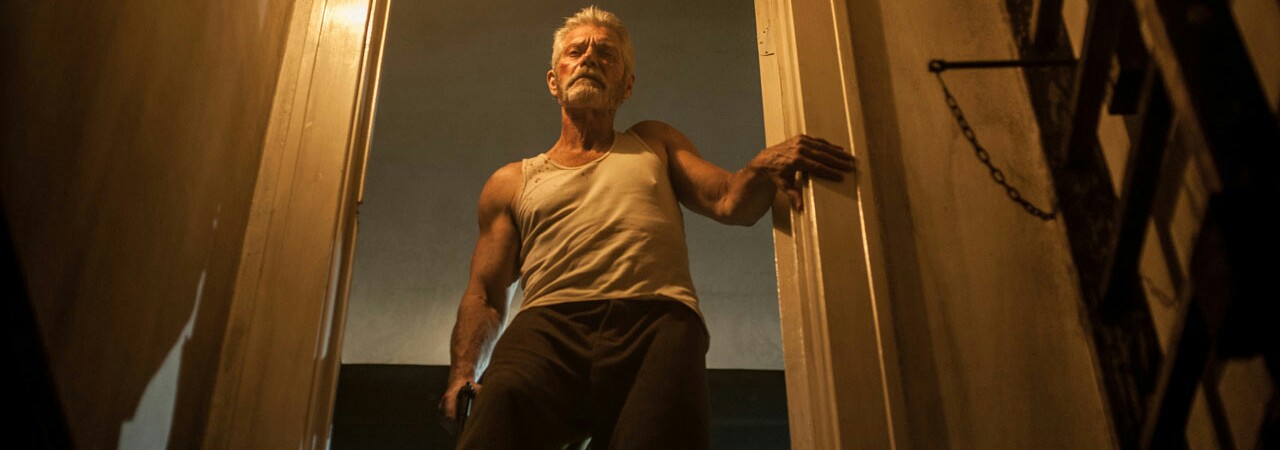
We never learn the name of the blind man whom they target, but it’s really of no enormous consequence to the director and his co-writer, nor does it seem to be of great importance to Stephen Lang, an actor whose performance here is heavily focused on the man’s physicality. Lang is convincing enough that the man’s blindness never doesn’t seem like a lack of sight (Think of the many actors who treat physical handicaps as having a built-in toggle switch and know that this is not one of those instances), and his swift gait as he moves inexorably forward is downright unsettling. A lot of the film rests on believing this man poses a threat, and on that front, it is very effective.

What (or who) resides in the basement is also important, though it would be criminal to reveal anything further. What I can reveal is that the cloudy morality of the final act is troubling, particularly in a scene that hinges upon a threat of sexual domination seemingly for the thrill of it and muddies whatever might follow it. Alvarez also interrupts his solid method with some narrative silliness (An extended sequence involving the man’s foaming, growling dog is marred by obvious fakery), but it matters little in the long run. Don’t Breathe is a crafty thriller for so long that a recommendation in spite of such hiccups is easy to make.
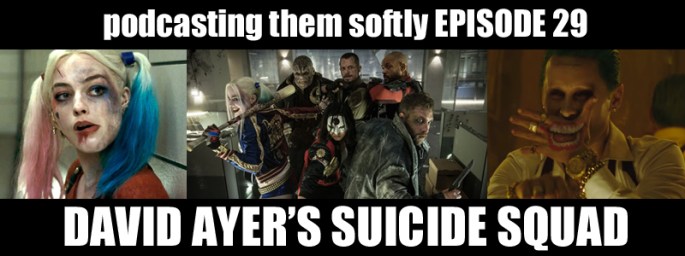
EPISODE 29: DAVID AYER’S SUICIDE SQUAD

SS POWERCAST

We’re back with a regular episode.  This time we talk about David Ayer’s SUICIDE SQUAD and touch upon BATMAN v SUPERMAN, and the future of the DC Universe.

DON’T BREATHE – A Review by Frank Mengarelli

​”Who’s there?”

There’s no other way to put this; DON’T BREATHE is fucking gnarly.  Set inside a singular house, a group of young friends set to rob a blind man for an easy “once in a lifetime” heist.  Sounds simple enough.

Except the blind man is Stephen Lang.

Fede Alvarez is one of the best young directors currently working in Hollywood.  His EVIL DEAD remake, which at the time seemed incredibly unnecessary, remains to be one of the best remakes of recent years (very much akin to Marcus Nispel’s fantastic TEXAS CHAINSAW MASSACRE remake).  Alvarez is an absolute maestro behind the camera.

While the film could have been just another run of the mill genric horror/thriller film, it excels with Avarez’s razor sharp eye and the casting of Stephen Lang in one of his most sinister and brutal turns yet.

Lang is one of my favorite actors.  The guy has been in so many great films, projected so many great characters, yet he never has been held to a typecast.  In this film, he takes the big bad antagonist and obliterates the screen with his physical intensity.  He’s a blind man, with a dark secret, who surpasses any and all boundaries to keep it safe.

Alvarez creates a small and intimate film, that builds and layers suspense to the point where you are constantly squirming in your seat and find yourself looking away from the transgressive visuals and sounds protruding off the screen.  If you enjoyed the dark nature of GREEN ROOM, you’re going to love DON’T BREATHE.

PAUL WILLIAMS’ DEALING: OR THE BERKELEY-TO-BOSTON FORTY-BRICK LOST-BAG BLUES — A REVIEW BY NICK CLEMENT

1

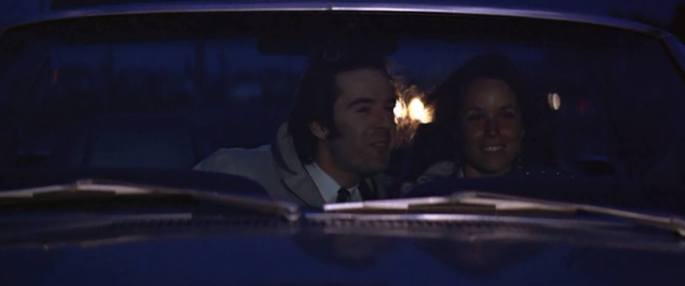
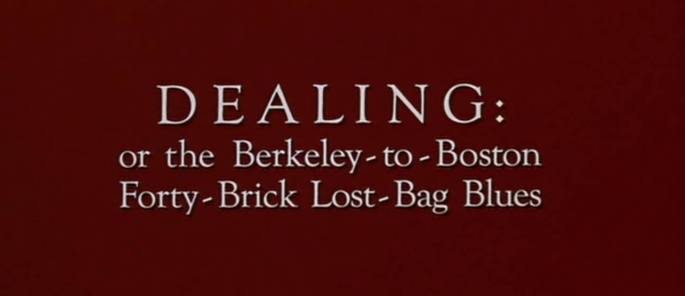
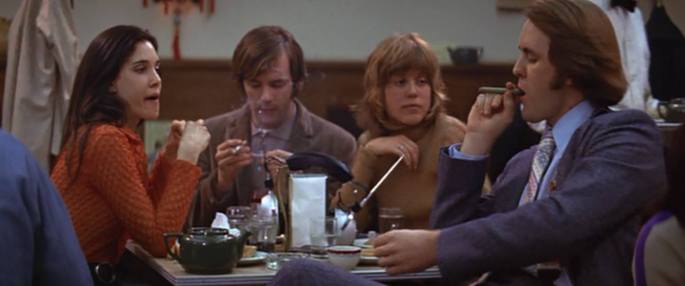
Dealing: Or the Berkeley-to-Boston Forty-Brick Lost-Bag Blues is one of my favorite recent obscure cinematic finds. Available on DVD thru Warner’s Archives label, this is a sly, strange, and totally cool movie that juggles genres and tones all the way up until the surprisingly nasty finale. Directed by Paul Williams (Out of It, The Revolutionary), Dealing: Or the Berkeley-to-Boston Forty-Brick Lost-Bag Blues was released in 1972, and was based on the novel by Michael and Douglas Chrichton under the pseudonym Michael Douglas(!). The plot centers on a Harvard law grad student, played by the interesting if a bit stiff Robert F. Lyons, who decides to smuggle of massive shipment of marijuana from Berkeley to Boston after doing numerous smaller-scaled jobs. Along for the ride is Barbara Hershey, in all of her youthful, gorgeous splendor, as the reluctant pseudo-girlfriend who decides to help with the big score, but soon finds herself in way over her pretty head. And can she fully be trusted?

2

Produced by cinematic legend Ed Pressman (Conan the Barbarian, American Psycho, Walker, Blue Steel, Wall Street, Phantom of the Paradise), Dealing: Or the Berkeley-to-Boston Forty-Brick Lost-Bag Blues has the distinction of having one of longest official titles in movie history. The film also sports a nifty supporting cast including John Lithgow (in his film debut as a shifty pot dealer), Charles Durning as a shady cop, Paul Sorvino as a cabbie, and the prolific character actor Victor Argo. The jazzy and offbeat musical score by Michael Small contributed to the overall stoniness of the entire picture. It was also very well shot by cinematographer Edward R. Brown (The Hot Rock, Lovin’ Molly), who gave the film a laid back vibe while still keeping things visually interesting. Funny, weirdly sexy, offbeat, and dangerous in spots, this is a unique item that would likely please many viewers who are looking for something totally unexpected.

3

Captain Fantastic: A Review by Nate Hill 

Somewhere deep in the rugged mountainsides of the Pacific Northwest, a mother and father have chosen to raise their five children off the grid, away from society and by a completely different set of rules and customs than anyone in our day and age is used to. Viggo Mortensen doesn’t take on just any film, and in fact since his breakout role in Lord of The Rings which allowed him some clout, he’s done nothing but carefully thought out, worthwhile cinema, Captain Fantastic being probably one of the best. He is intense and caring as Ben, an intellectual renaissance man who has been bitterly put off of capitalism and commercialism. His wife (Trin Miller, angelic in flashbacks) is mentally ill and eventually passes away, leaving him on his own with the brood. He does what he knows best, sticking to the rigid physical and intellectual education plan in place for them. They learn to hunt wild game with homemade tools, read from classics like Lolita and Brothers Karamazov every evening, grow all their own grains and vegetation, practice complex defense, combat and survival skills, and live a life of elemental potency, far from the lemming’s march of consumerism just beyond their verdant and very isolated homeland. Trouble has a way of finding paradise though, however well it hides, and here it arrives in the simplest form of all: the absence of a mother. Things aren’t the same following her death, and they all take up arms and head south to New Mexico for her funeral, in a big old repurpoused school bus. They’re the most ecentric family you’ve ever met, and the ironic part is they’re the closest thing to what we were meant to live like in this world you’ll find. The real absurdity is the technicolor strip mall fast food fever dream we inhabit today, far removed from our earthy origins. It’s just because it’s become so commonplace that it seems normal to us. The family clashes spectacularly with an unprepared outside world who react to their behaviour in many different ways. The children all have the physique of a professional athlete and the academic abilities of six college professors, but somewhere along the way Ben forgot to teach them about what matters most: How to interact with one another, how to care for and love another human, and the simple social cues one aquires from growing up around a large number of people. His jaded father in law (knockout work from Frank Langella) sees Ben as a loose cannon, a danger to his grandchildren and the cause of his daughter’s death. At one point the film levels out and let’s us see things in a complete objective way: yes there are extreme benefits to a method of raising children like this, an experience that no one else could have and an implementation of their human potential that goes several degrees farther than usual. But how far is too far? Is there a dangerous element to their training and conditioning that goes beyond what they’re capable of and poses a threat? Mortensen is a picture of conflict, his undying love for his children tested when he’s thrown out of the comfort coccoon he has forged for them. Suddenly he is not the all knowing protector they’ve gotten used to, and the world outside is just as much a cause of fear for him as it is for them. They are a family though, which is achingly, evidently clear in each performance. George Mackay is the eldest and bears the brunt of realization when it comes time to meet other people. The others, including Annaliese Basso, Shree Crooks, Nicholas Hamilton and Samantha Isler are all sensational and have a lived in, well worn and often quite hilarious dynamic. It’s essentially a fish out of water story that begs us to question both the water and the land, and how going from one environment to the other, both worlds apart but in the same realm, can affect a human being. This is the best film I have seen so far this year, one that challenges us to ponder what we see unfold, urges us to be more than just another fish in the school, but to laugh, be crazy, think for ourselves and pitch in an effort to find the scattered pieces of the puzzle we call the human condition. Fantastic is the word indeed.