JACK CARDIFF’S DARK OF THE SUN — A REVIEW BY NICK CLEMENT

1

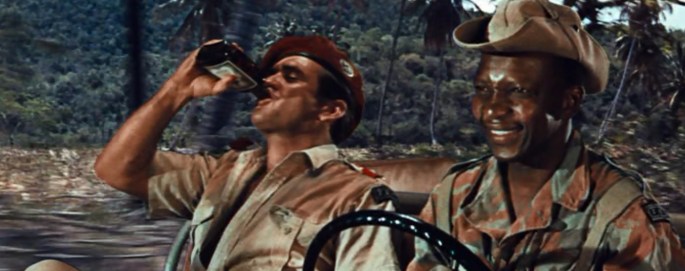
Spectacular. Absolutely spectacular. The amount of overall ass-kicking on display in this reckless, exceedingly entertaining action-adventure film from 1968 can’t be underestimated or denied. For nearly 100 straight minutes, director Jack “I’m More of A Man Than You Are” Cardiff brought the full-throttle action with hardly any relenting, and yet was still able to dole out important character beats and have everything make coherent sense thanks to a terse, extremely macho screenplay by Adrian Spies and Ranald MacDougall, who based their work on Wilbur Smith’s novel. Rod Taylor gave one of the most masculine performances that I’ve ever seen as a Soldier of Fortune who accepts a dangerous job in the Congo — guard a train that’s carrying $50 million in diamonds that needs to make an extremely dangerous journey through the jungle with hostile rebel troops armed and at the ready for battle. And make no mistake, most of the blunt-force narrative consists of massive combat scenes on and off the train, tremendous shoot-outs with huge body counts, hand-to-hand violence galore, and as the all-time great one-sheet suggests, you DO get to see men fighting with chainsaws.

3

The full-bodied, richly textured widescreen cinematography by Edward Scaife is glorious, the rousing musical score by Jacques Loussier is bold and triumphant, and the extremely tight editing by Ernest Walter kept a rip-roaring pace but still allowed for a few small grace notes. Jim Brown tore it up as Taylor’s right-hand man on the battlefield, while Kenneth More played a hard-drinking doctor who provides key help along the ride. Peter Carsten turned in a very memorable performance as a former Nazi who wants to help the group, and the beyond sexy Yvette Mimieux was on full display as an innocent caught up in all of the madness. Critics lambasted the film for it’s excessive sequences of violence and torture (the rape and pillaging of the village at the film’s midsection is utterly insane to witness) but now the movie is rightfully seen as a lost classic. Quentin Tarantino sampled musical tracks from Dark of the Sun for his WW2 film Inglorious Basterds, and even cast Taylor as Winston Churchill. Dark of the Sun was shot on location in Jamaica, and was also known as The Mercenaries in parts of Europe. Available on Warner Brothers Archives DVD label.

2

Nicolas Wind Refn’s THE NEON DEMON – A Review by Frank Mengarelli

Nicolas Winding Refn’s cinematic progression is something to be marveled at.  With his latest film, THE NEON DEMON, he pushes every boundary imaginable, creating a film with so much impending doom that it will make the most unflappable cinephile become seemingly uncomfortable as his tale of vanity and debauchery comes to a brilliant conclusion.

Refn has reached the top tier brotherhood of self indulgent filmmakers featuring Lars von Trier, Terrence Malick, and Bob Fosse.  Making his own films, without having to concede anything to anyone, allowing his own unique kaleidoscope of artistic vision to wash over the screen.

This film is fantastic, and it is Refn’s best film to date.  His unbound storytelling is wrapped tautly by Natasha Brier’s fluid cinematography, a perfect ensemble, and one of the best film scores of all time composed by Cliff Martinez.

Refn’s cinematic world is dark and dangerous, vicious and surreal.  He monumentally cashed in on DRIVE, allowing himself the freedom to make the films that he wants to make, pushing the boundaries of cinema to new heights.  With THE NEON DEMON he forgoes star power and box office anchors, and makes a film so twisted it becomes incredibly serene in a way that would make Stanley Kubrick proud.

Every single actor and crew member deserves all the accolades in the world for their accomplishments on this film.  One could spend an entire essay talking about each actor in this film. 

Elle Fanning.  Wow.  She absolutely commands every frame of this film.  Keanu Reeves completely shakes his on screen persona in a scummy and sleazy hard supporting role that will leave you wanting more.  Desmond Harrington FINALLY got his role.  He is silent, gaunt, and cathartic in his few scenes; showing off his previously untapped potential.

Refn’s latter day films are not for the People.  They aren’t made for the average Friday night moviegoer, they aren’t made for art house cinephiles.  They are made because he has his own story to tell. 

In an age where great cinematic story’s are told in a novelization over the medium of television; I don’t know how this film got made, or how it got a wide cinematic release – but we should all celebrate the fact that it did.

Wonderland: A Review by Nate Hill 

  
I’ve always thought of this as the Oliver Stone Movie that the man never made. It has the sordid, excessive sleaziness of U Turn, and the studious inquisition into true crime and intriguing Americana that he showed us in JFK. Both films explore the violence and ugliness that peppers American history in different ways, the brash and the academic which often exist in opposite poles colliding in Wonderland, a wholeheartedly nasty account of a stomach churning multiple murder involving one of the most infamous porn stars who ever lived, John Holmes (Val Kilmer). I don’t know what the real Holmes was like (besides tell rumours of his anaconda cock), but the version we see here is a sniveling, unrepentant scumbag who is very hard to empathize with unless you flip the nihilism switch on in your brain and lose yourself in it. The film follows his association with a group of fellow undesirables, interested only in furthering their own drug habits by any means necessary, legal or otherwise. John is late in bis career and on the cusp of being a washout, his underage girlfriend (Kate Bosworth) pretty much the only friend he has in the world. He spends his days getting involved in all kinds of smutty business, along with a crew of fellow junkies led by loose cannon Josh Lucas, grim biker Dylan McDermott and timid Tim Blake Nelson. When they collectively catch wind of the wealth of one of John’s acquaintances, a dangerous club owning mobster (Eric Bogosian in full psycho mode), the dollar signs swirl in their already dilated pupils. After an ill advised robbery, Bogosian reacts with all the wrath of the Israeli mafia, fuelled by his personal vendetta, brutally slaughtering each and every one of John’s gang, letting him live as a branded snitch. The film is based on notoriously grisly crime scene photos which can be seen online, laying speculation on Holmes’s part in the killings, and spinning a sinfully chaotic, noisy web of pulpy hijinks surrounding the case. The film is told from two different perspectives, a fractured narrative laid down by Kilmer and McDermott in respective and very different summaries of the event. Ted Levine and Franky G. play the two detectives who take it all in and work the case, and the excellent M.C. Gainey plays a veteran ex cop who they bring simply because he’s the only familiar face which skittish Holmes will open up to. This is an ugly, nasty film and I won’t pretend it doesn’t get very gratuitous both in dialogue and action. It goes the extra mile of obscenity and then some in its efforts to make us squirm, but every time I pondered the necessity of such sustained atrocities, I reminded myself that in real life there’s even more of such stuff, and the film is just trying to hit the themes of decay home hard, albeit with a sledgehammer, not a whiffle ball bat in this case. Kilmer is fidgety brilliance as Holmes, a severely damaged dude who hangs onto the last strand of our sympathy by the wounded dog whine in his voice alone. The only time I felt anything for the dude is when he visits his estranged ex wife (a flat out fantastic Lisa Kudrow, cast against type and nailing it) and we see flickers of a dignity in him that’s long since been consumed by darkness. One of his best roles for sure. Watch for further work from Michael Pitt, Louis Lombardi, Janeane Garofalo, Scoot Mcnairy, Christina Applegate, Faizon Love, Chris Ellis, Paris Hilton and Natasha Gregson Warner too. This one is like Boogie Nights, Rashomon and Natural Born Killers tossed in together on spin dry. It’s a wicked concoction, but you’ll need to bring a strong stomach and the foreknowledge that you’re going to be spending two hours with some of the most deplorable human beings this planet has to offer. The silver lining is you get to see it all play out in killer style, smoky and evocative 1970’s cinematography and dedicated thespians branding each scene with their own lunacy. Tough to swallow, but great stuff.

BRYAN SINGER’S THE USUAL SUSPECTS — A REVIEW BY NICK CLEMENT

1

“The greatest trick the devil ever pulled was convincing the world he didn’t exist.” This fantastic line of dialogue, a quote from Charles Baudelaire, is uttered more than once by Kevin Spacey in The Usual Suspects, and pretty much sums up Bryan Singer’s smashing crime picture, which was his second feature film after the little seen Public Access. And in my opinion, The Usual Suspects stands as his best, most satisfying film to date. It’s odd that after The Usual Suspects and Apt Pupil that Singer became a blockbuster comic-book movie director (The X-Men, X-2, Superman Returns, Jack the Giant Slayer, X-Men: Days of Future Past, and X-Men: Apocalypse) with only 2008’s crisply efficient WWII thriller Valkyrie as the other traditional or realistic film that the filmmaker has attempted. Elegantly written by Christopher McQuarrie, The Usual Suspects is an example of low-budget neo-noir done correct, with a twisty, serpentine screenplay that never stops pulling the rug out from underneath the viewer until the very end, but most importantly, adds up and makes sense when all of the pieces are closely examined. McQuarrie’s previous background in private detective work and criminal law also bolstered the film’s authenticity, both in the spoken word and in the small details that fill the edges of this elaborately gripping thriller. And it’s one of those films with a doozy of a twist ending that at the time was nearly impossible to predict, even for the most astute of viewers. Part of that had to do with the relatively unknown quality that Spacey possessed 20 years ago (he’d go on to take the Oscar for Best Supporting Actor for his incredible work in Suspects), and part of it had to do with McQuarrie’s ultimately ingenious screenplay (for which he was bestowed the Oscar for Best Original Screenplay), that tells a convoluted tale that all comes together in the final moments with striking clarity and immense narrative force.
4

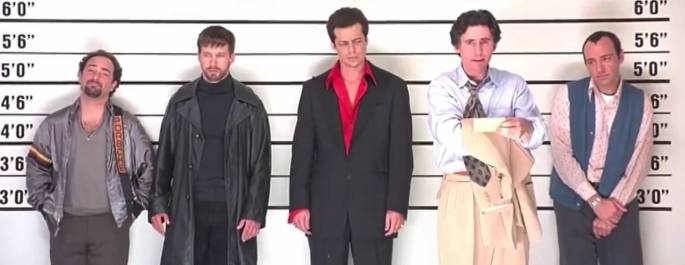
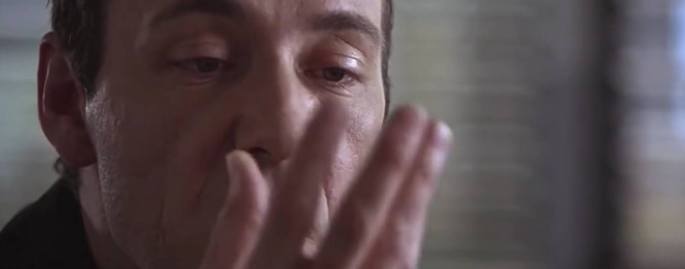
The Usual Suspects is the story of five criminals, all pulled together to do a job for a mysterious gangster, known only by his now famous name, Keyser Soze. After we’re treated to a string of small jobs to establish each man’s particular set of skills, the group encounters a force to be reckoned with. All of the criminals have in one way or another screwed over Soze in previous crime related jobs, and now it’s time for them to repay him, or else. They are tasked with taking over a docked ship at the Port of Los Angeles, in an effort to secure and destroy $91 million dollars of heroin that Soze doesn’t want to end up in the hands of a rival criminal enterprise. Gabriel Byrne is the group’s stoic leader, Dean Keaton, a former corrupt cop who is trying to give up the life of crime in an effort to settle down with his lawyer girlfriend. Spacey is Roger “Verbal” Kint, a half-paralyzed con-man who sits in the office of detective Kujan (a fantastic and surly Chazz Palminteri) and spins a story about the group’s misgivings and various illegal operations and how they all ended up on the boat that left Kint’s entire crew dead or missing. Also rounding out the group are the volatile thief McManus (Stephen Baldwin), McManus’ partner Freddy Fenster (a baby-faced and hilariously accented Benicio del Toro), and Todd Hockney, a skilled hijacker played with crusty attitude by Kevin Pollak. Pete Postlethwaite showed up as the mysterious Kobayashi, Keyser Soze’s legal rep and business associate, and coerces the gang of criminals into the big job for his boss, which will either make them all rich or leave them all dead. Each actor is given more than one moment to shine, with Byrne cutting an imposing portrait of an angry, morally complicated man who while thinking he’s in control, is constantly reminded that he’s not. Baldwin delivered the best performance of his career (I know that’s not saying much!) and del Toro gets some of the film’s biggest laughs, due in no small part to his manner of speech and fun with the English language. But it’s Spacey who totally owns this picture, skillfully portraying a pathetic man who is in way over his head, but who as we all know by now, is really pulling the strings like a magician behind the curtain.
3

Shot with supreme, noir-drenched style by cinematographer Newton Thomas Sigel (who would later go on to lens Three Kings, Drive, and Confessions of a Dangerous Mind, to name only a few), with dynamic editing and an absolutely propulsive musical score supplied by the uber-talented John Ottman (it’s insane to think about how many trailers have borrowed Ottman’s amazing musical cues from The Usual Suspects), The Usual Suspects succeeds as has visual flair AND dramatic substance, with a couple of action scenes thrown in to spice up the proceedings. But this film is mostly about its characters and how they speak and interact with one another, and how words are used as importantly, and as memorably, as guns, affording the picture a cerebral streak that allows it to tickle your brain every time you watch it. Singer patiently allows the non-linear story to unfold, never rushing anything, but also keeping the film moving at a brisk pace; there’s not one scene of narrative fat or superfluous style on this movie’s cold and calculating bones. It would be great to see Singer tackle something of this sort again, to see him go smaller and more sophisticated. Even the biggest of directors seem to want to change it up every now and again, so it’s curious to observe Singer’s career trajectory, and I think it’s sort of sad how Singer’s talents have really only been transferred to the world of popcorn escapism, because he’s clearly more talented than his later work implies. Shot in a reported 35 days on a budget of $6 million, it’s fascinating to think how Singer has never returned to the smaller-scaled waters of his absolute best film. And I love how the big finale is foreshadowed multiple times before it ever arrives; it’s a testament to everyone’s abilities that the twist was able to take almost everyone by surprise on their first viewing. Because upon further re-visits, you can see how Spacey was able to pull it all off, even noticing some discrepancies which would give away the big reveal if you’re able to spot these secret-breaking instances. I loved all of the dark humor, the tough-guy posturing, the rapid-fire nature of the dialogue, and how it’s the sort of film that obfuscates the truth for as long as humanly possible, and then when the big reveal comes, not only is not a cheat, but it’s something that elevates the film to a new realm, and makes for a wildly satisfying experience because you’re able to see how you were hoodwinked by the filmmakers.

2


Turbulence: A Review by Nate Hill

image

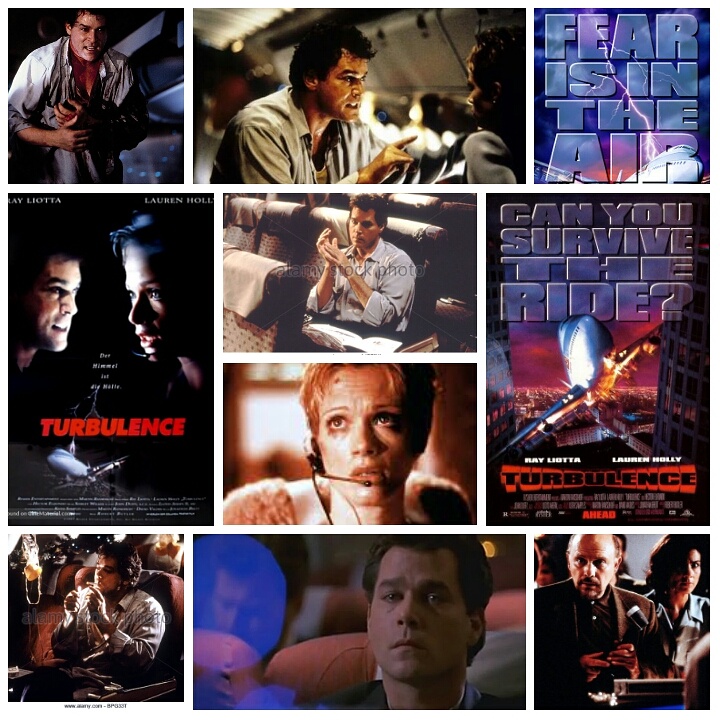
Before there were snakes on a plane, there was a charming serial killer named Ryan Weaver (Ray Liotta). We meet Ryan as he’s about to go on a blind date with a cutie, and he seems like your average sweet guy. The scene plays out in romcom mode… until a SWAT team led by a veteran detective (Hector Elizondo) busts in and arrests Weaver, apparantly just minutes in time. We then learn that Weaver is an extremely dangerous Ted Bundy type of dude who suckers women in with his flashy grin and good looks, only to murder them soon after. With the big bad wolf now in chains, Elizondo can rest easy, as it becomes clear he has been hunting him for some years now. The last step: transporting him by plane to the state where he will be tried and senteanced. Naturally, every security protocol is rigidly in effect, right down to Elizondo stubbornly accompanying the flight. And, naturally, Weaver finds a harebrained way to break his shackles and terrorize the nearest thing to him, which in this case happens to be a gorgeous flight attendant (Lauren Holly). Now they’re 30,000 feet in the air with not a cop in sight but the aging Elizondo, and Weaver free to roam about as he pleases, teasing and taunting Holly with both mirth and menace. The film hinges on an actor’s ability to be convincing, and Liotta is downright perfect in the role. He’s played so many nut jobs and angry lunatics he could do it in his sleep by now, yet he still manages to give each baddie their own unique flavor and flourish. He is downright scary here, geniunly winning you over with his dapper gentleman act, then pouncing like a lion. He’s a one man Con Air, and means business, piloting the movie with a sure hand and leading man talents. I consider this one of the great overlooked thrillers of the 90’s, and certainly my favourite one set on a plane. Watch for appearances from Rachel Ticotin, Ben Cross, Jeffrey Demunn and Brendan Gleeson. Now there’s two sequels: one with Tom Berenger and Jennifer Beals, which I still have to see, and another called ‘Turbulence 3: Heavy Metal’, which is a demented little shit of a flick with Rutger Hauer and Gabrielle Anwar. Neither have Liotta on their side, but the third is worth a watch just for its unintentional hilarity. This first one is the real deal, though.

WERNER HERZOG’S FITZCARRALDO — A REVIEW BY NICK CLEMENT

1

Fitzcarraldo is nothing less than a herculean achievement in filmmaking. Directed with a serious sense of epic scope yet still with a fine eye for intimate detail by the masterful and eclectic storyteller Werner Herzog, who seems to be attracted to madness in all of its permutations, in the way that a fly is a attracted to animal droppings. Surreal, grand, in love with itself and the very idea of cinema, Fitzcarraldo is one of a few masterpieces for this most eccentric filmmaker, and stands as one of the true awe-inspiring feats that the medium has known. Just thinking about the nuts and bolts logistics of this film gives me a headache, and it goes without saying that a production such as this one would never, ever get attempted in this CGI-infested day and age. The very lack of artifice is what gets me about this movie; it feels as organic as it could possibly get, with the exotic surroundings producing an earthy sense of time and place. Released in 1982, Herzog’s wild narrative centers around an obsessive entrepreneur with dreams of becoming a rubber baron, a role inhabited by the director’s spiritual cousin Klaus Kinski, in a maniacal and wholly committed performance of intense bravado. Already reeling from previous business failures and prone to very large ideas, he becomes overwhelmed with a crushing desire to spread the sounds of big opera all throughout the Peruvian jungle; his dream of a massive opera house nestled in the middle of indigenous territory must be met.

2

He enlists hordes of natives to help him lug a massive steamship over the steepest of hills in the middle of the Amazon, seemingly unafraid of the various dangers that could cause calamitous ruin. The film is an adventure, a romance, a study of dogged determination, and a sly portrait of the exploitation of human beings for one individual’s personal gain and existential triumph. Based on events surrounding the life of Carlos Fitzcarrald, Herzog was wise to root his story in something tangible, but he never became slavish to history, as so much of the movie feels like in the inner-workings of Herzog’s unhinged and esoteric mind, totally unleashed and splashed all over the screen. The gorgeous Claudia Cardinale was fantastic in the role of Kinski’s adventurous companion and lover, a brothel owner with smart business sense, bringing warmth and heart to an already passionate story that feels as lived-in as a movie could ever possibly feel. Thomas Mauch’s can’t-believe-your-eyes cinematography conjures up one spectacular image after another, filling the frame with vibrant color and a strict sense of unfettered naturalism. Mauch also collaborated with Herzog on the magisterial Aguirre, The Wrath of God and early charmer Even Dwarfs Started Small, and clearly the two men had a superb working relationship, more than likely consisting of some sort of artistic shorthand as their partnerships are some of the most ever-lasting in Herzog’s overwhelmingly amazing filmography. Iquitos POWER. I literally feel this movie in my bones every single day. Enrico Caruso POWER.

3


Battle For Terra: A Review by Nate Hill

  
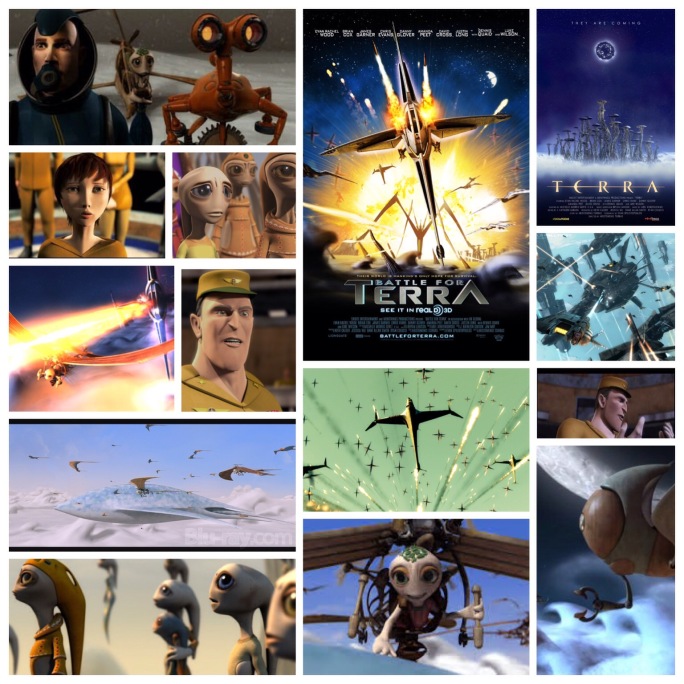
Battle For Terra is right up there with Titan AE as one of the most underrated animated films out there. It was shunted to the area off the beaten path of the genre, released quietly and inconspicuously back in 2009, sneaking just past people’s radar. Not mine. I waited eagerly for a theatrical release, which never came, and grabbed the dvd as soon as it hit shelves. It’s a dazzling science fiction parable not unlike Avatar, but a little softer, reverent and easy on the pyrotechnics. The story takes place some years after the remainder of the human race has been left to wander the stars in a giant spaceship called The Ark, left homeless after devastating the resources of earth, and three subsequent planets after. Soon they set their sights on a newfound world they dub Terra. Terra is populated by a peaceful alien race who spend most of their time in harmony, studying their heritage and bettering their existence. They now face annihilation, however, as the humans wish to settle, mine resources and deeply unbalance their way of life. One young Terran girl named Nala (Evan Rachel Wood) is a plucky young inventress and wonderer who finds one of the human astronauts (Luke Wilson) crash landed and stranded in her neck of the woods. They form a bond which may turn out to be the only way to find peace between humanity and the population of Terra. The story is wonderful, universal and carried out in a childlike manner full of earnestness that anyone can relate too. The Terrans resemble something like upright tadpoles crossed with sock puppets, and are fascinating to look upon. More interesting still is the natural world they inhabit; they sort of swim/glide through their thick atmosphere, and coexist with the many strange creatures and bioluminescence around them, including gigantic blue whale type things that fly around with them. I’m describing this to try and impart to you the level of thought and detail which went into creating this world, so you can see how high the filmmakers have jacked up the stakes in attempt to let you see the length humans will blindly go to further their survival, without voluntary compromise. The world the Terrans live on is a lush paradise in perfect balance, and the humans aboard The Ark, no matter how desperate, threaten it. They are led by stern General Hammer (Brian Cox), who is an antagonist, but not a villain in the least, a determind leader who will go to extremes to protect his people if his lack of empathy is allowed to go unchecked. The supporting cast is stacked high with incredible talent, and one can practice ones skill for identifying voices by listening for Danny Glover, Ron Perlman, Danny Trejo, Justin Long, Rosanna Arquette, David Cross, Beverly D’Angelo, Chris Evans, James Garner, Mark Hamill, Amanda Peet and Dennis Quaid. What a lineup. Imagination, storytelling ambition and visual genius govern this overlooked piece, and anyone who is a fan of animation (which is brilliant here, I might add) or science fiction needs to take a look.

John Dahl’s Unforgettable: A Review by Nate Hill

image

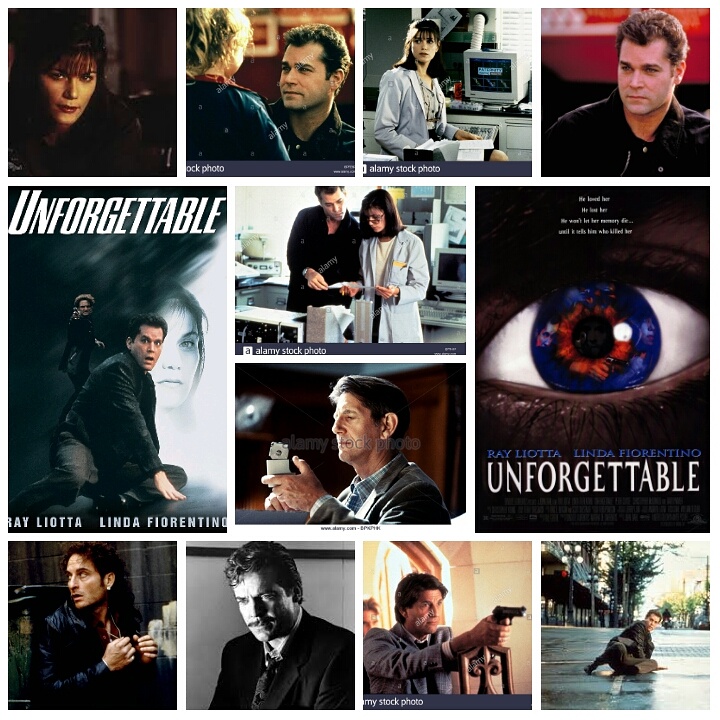
John Dahl’s Unforgettable plays around with a trippy high concept premise in which people’s memories can be accessed by using an experimental, controversial drug. Ray Liotta plays the troubled Doctor whose wife has been recently murdered. He desperately reaches out to the scientist (Linda Fiorentino) who synthesized the compound, and the two set out to use it unofficially, in order to retain his wife’s dying moments, see them for himself and establish who her killer is. The serum takes its toll on his already stressed mind though, and soon he’s questioning his own reality, his trust levels towards those around him dropping considerably. Director Dahl is beyond proficient when it comes to thrillers, usually taking on crime pieces with a noirish vibe. Here he tries his hand at science fiction, coexisting with a classic whodunit narrative, and the result is quite good. Liotta relies on the information that his detective friend (Peter Coyote) gives him, and combined with the knowledge he absorbs from his deceased wife’s brain, begins to piece the puzzle together. There’s also a troublesome detective played by Christopher Mcdonald he must deal with, and a violent thug (Kim Coates) involved as well. Liotta is usually tough, capable and would normally be found playing one of the two cops, but the doctor on the run without a lot of tactical skill suits him and allows the guy some work other than just cops or psychos. Watch for work from David Paymer, Kim Cattrall, William B. Davis, Callum Keith Rennie and Garwin Sanford as well. The premise may be too farfetched for some folks, but for others with imagination it’ll be a blast. It’s also fairly violent and graphic, which may seem gratuitous for such a cerebral outing, but I find it gives it a stylistic edge and raises the stakes, just like Total Recall. Great flick. Not Total Recall, I mean this one. Well Total Recall too, obviously. Yeesh. 

PTS PRESENTS WHEN PODCASTS COLLIDE with THE COOPER AND RUPERT PODCAST

BASEBALL PODCAST

We were joined with Doug Cooper and Mikey Rupert from THE COOPER AND RUPERT PODCAST where we talked our favorite baseball films.  It’s an entertaining chat where we argue and bond over our favorite and least favorite baseball films.  Please find their podcast here.

IN THE MOOD FOR LOVE – A REVIEW BY J.D. LAFRANCE

maxresdefault

Hong Kong filmmaker Wong Kar-Wai may be the master of unrequited love. Think of the cop with a crush on a femme fatale in Chungking Express (1994) or the hitman whose handler admires him from afar in Fallen Angels (1995). However, In the Mood for Love (2000) is his masterpiece – a rich, atmospheric ode to romantic longing and yearning. Inspired by the short story “Intersection” by celebrated Chinese writer Liu Yi-chang and Wong’s own memories of growing up in the 1960s, his film depicts the friendship that develops between two lonely people in Hong Kong, 1962.

Chow Mo-wan (Tony Leung) is a newspaperman who has just moved into an apartment with his wife. Next door, Si Li-zhen (Maggie Cheung), an executive secretary, has also moved into a place with her husband. It just so happens that their respective spouses are constantly out of town at the same time and are having an affair. Initially, Chow and Su are unaware of their spouses cheating ways and contact with each other is brief and fleeting, kind and courteous. Chow and Su being to flirt with having one of their own. Interestingly, we never get a good look at the faces of the cheating spouses and they get very little screen-time with the focus on Chow and Su.

Tony Leung and Maggie Cheung make for a fascinating almost-couple and over the course of the film we want so badly for them to give in to their feelings for each other, but, of course, common sense and the cultural decorum of the day prevents them from acting on their impulses. It is what their characters don’t say to each other, but is conveyed through longing glances, that says so much. Speaking of which, there are incredible moments of longing, like the sequence where Chow and Su, caught out in the rain at night, take refuge at different spots on the street. Their respective body language conveys their loneliness, while how they are framed in a shot relates to their isolation.

Wong has a fantastic eye for detail, not just the period clothes and furniture (which are incredible), but also in showing the everyday minutia of Chow and Su’s lives, like showing them at work. It is these bits of business that inform us about their characters. What they do and say tells us a lot about them. So does what they wear, from Su’s stunning, form-fitting floral print dresses to Chow’s impeccably-tailored business suits.

There are beautiful, almost hypnotic slow motion shots of Chow and Su going to and from work through dimly-lit streets at night or up and down the stairs of their building to the repeated strains of a waltz. Thanks to Christopher Doyle and Mark Lee Ping-bin’s breathtaking atmospheric cinematography, Wong immerses us in this cinematic world he has created. It’s a place where people dine on green jadeite plates while Nat King Cole plays in the background of a restaurant.

In the Mood for Love has become Wong’s most acclaimed film, just edging out his popular breakthrough, Chungking Express. He has yet to surpass this film, coming close with the admirable effort 2046 (2004), a sequel or sorts to In the Mood, which also features world class cinematography but it is too abstract narratively. It lacks the former film’s passion and soul.