Chattahoochee tells the sad and disturbing tale of Emmett Foley (Gary Oldman) a Korean War veteran who has returned home with severe PTSD. In a tragic and scary sequence, he shoots up his neighborhood in confusion and fear, injuring himself in the process. He is then sent to a ‘maximum security’ mental facility, and anyone who has heard what places like that were like in the 1950’s cam imagine what he’s in for next. The place is an unkempt, filthy sinkhole where the inmates are abused, neglected and subjected to inhuman maltreatment. So now, in addition to dealing with his mental illness, Emmet must witness this miscarriage of medical treatment on a daily basis, and suffer through it himself. He is befriended by deceptively cavalier Walker Benson (a funny and touching Dennis Hopper), and the two of them try to seek out better treatment and conditions for their fellow inmates. Only problem is, the beauricratic faction doesn’t want to hear any of this, stone walling and throwing it in their faces with callous indifference. It becomes the struggle of Emmet’s lifetime to win the day against this rotten system, and he’s aided by his sister (Frances Mcdormand) in his efforts. Oldman is as intense as you’d imagine with subject matter like this, an implosive tsunami of dread and outrage as he both bears witness and cries out in protest. Ned Beatty plays a nasty doctor, and there’s also work from Matt Craven, Gary Bullock, M. Emmett Walsh, Richard Portnow and Pamela Reed. This one is tough to find, and a tad forgotten, but it’s worth the hunt. It’s also based on a true story about a real veteran named Christopher Calhoun, who later wrote a book detailing his experiences. Harrowing, but important stuff.
Category: Film Review
B Movie Glory with Nate: Hardwired
The first IMDB review to pop up when you look up Hardwired has the log line “wtf?”, which just about sums up the movie. It’s straight up cow dung, a stunningly bad attempt to emulate everything from Blade Runner to Minority Report, failing in all imaginable ways. It does, however, possess a few deranged qualities which are worth a look purely for your own mirth and amusement. Let’s start with Val Kilmer’s hairdo. He sports a getup that looks as if someone threw the head of a mop into a wheat thresher, put it on his head and tried to style it like an emo anime character. It’s baffling, shocking and the hairpiece gives a better performance than the former Bruce Wayne sitting beneath it. Now,here’s the curious thing: on the dvd cover, Kilmer has a garden variety haircut, with no trace of the horror to come once you hit play. This makes not a bit of sense to me; if I were the filmmaker and it was my movie and I’d chosen that epic Goku hairdo for Kilmer, let alone get him to agree to it, I’d advertise it loud and proud, and put his image like nine different times all over the cover art. It’s ironic that a film about excessive commercialism is guilty of false advertising, but there you have it. Anywho, Kilmer and the hair play Virgil Killiger, a whacky PR manager of a mega corporation whose main revenue comes from serial advertising, in a half assed future where society has reached the oft imagined 1984 dystopia. He’s tasked with harassing Luke Gibson (Cuba Gooding Jr.), a man who owes a heavy debt to the company due to their products saving his life following an accident. Only problem is, it doesn’t end there. The corporation gets greedy and tries to insinuate itself into every aspect of people’s lives. Gooding bands together with a group of cyberpunk hackers led by Michael Ironside, and together attempt to bring down the company once and for all. It’s al big dumb dumb of a flick that doesn’t even put a modicum of effort in most of the time. Lance Henriksen fans beware: despite a credit, he’s not even in the thing, except for a single recycled photograph which sets the film up for sequels that I will bet my left testicle will never get made.
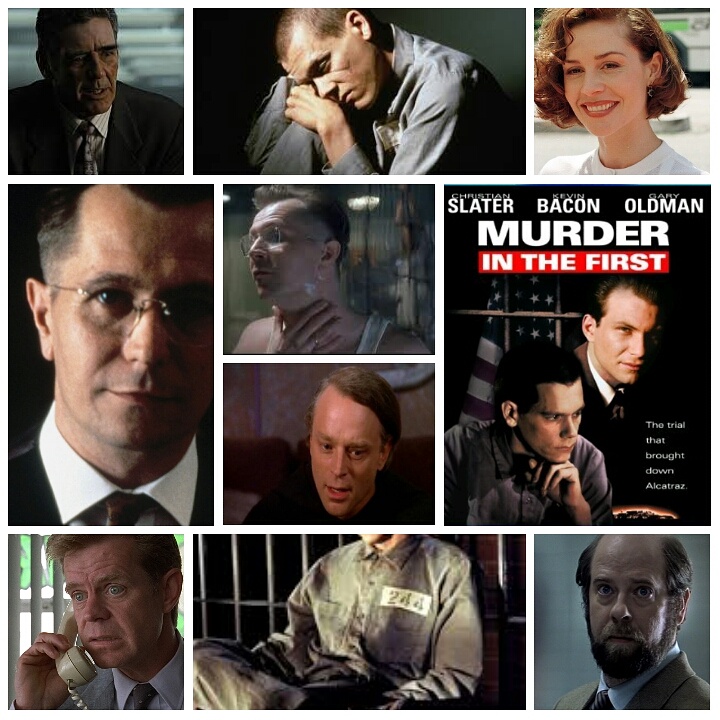
Murder In The First: A Review by Nate Hill
Murder In The First examines courtroom intrigue in San Francisco, concerning an Alcatraz inmate (Kevin Bacon) who has been accused of killing a fellow prisoner upon being let out of a cruelly long stint in solitary. In fact, the word cruel seems to be the running theme of his incarceration, at the hands of sinister and sadistic Warden Milton Glen (Gary Oldman). A decade prior, Bacon almost succeeded in escaping the island, which seems to have given the correctional officers the idea that they can do whatever they want to him. His plight creates ripples in the D.A.’s office, and soon a young, inexperienced attorney (Christian Slater) is assigned to his case. His boss (Stephen Tobolowsky) seems to think, and I quote, that a monkey would be more suited for the job. The D.A. (William H. Macy) has hope. And so it happens, with Bacon arriving in an obvious shellshocked state, Slater trying to exploit his maltreatment at the Warden’s hands and win not only his innocence, but his freedom. Bacon can swing his internal compass from victim to villain at the drop of a hat, taking up the bruised martyr mantle here and proving to be quite affecting. Slater is… Slater, the guy doesn’t have endless range but can carry a scene decently enough. Oldman is sly and scary, covering up the true nature of Glen’s monstrosity underneath a beauricratic sheen. The cast is wonderful, with further standouts from Brad Dourif as Slater’s veteran lawman brother, Embeth Davidz as a key witness, R. Lee Ermey as the stern judge overseeing the trial and brief appearances from Mia Kirshner, Charles Cyphers and Kyra Sedgwick. The expert cast carries it along with innate talent and applied teamwork, with Bacon and Oldman taking front and center. Now I’m not entirely sure if this is based on a true story, but it’s very fascinating nonetheless and serves to show the rotten places in the penal system which definitely do exist in real life. Solid stuff.
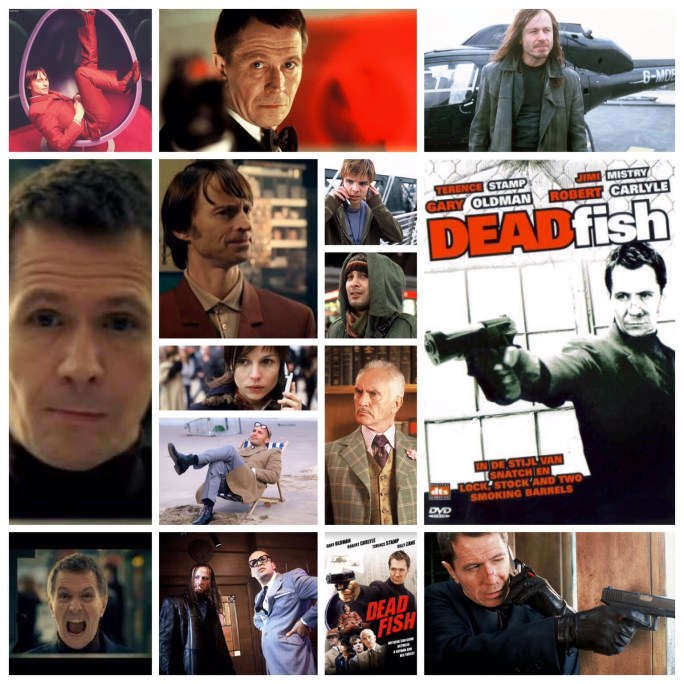
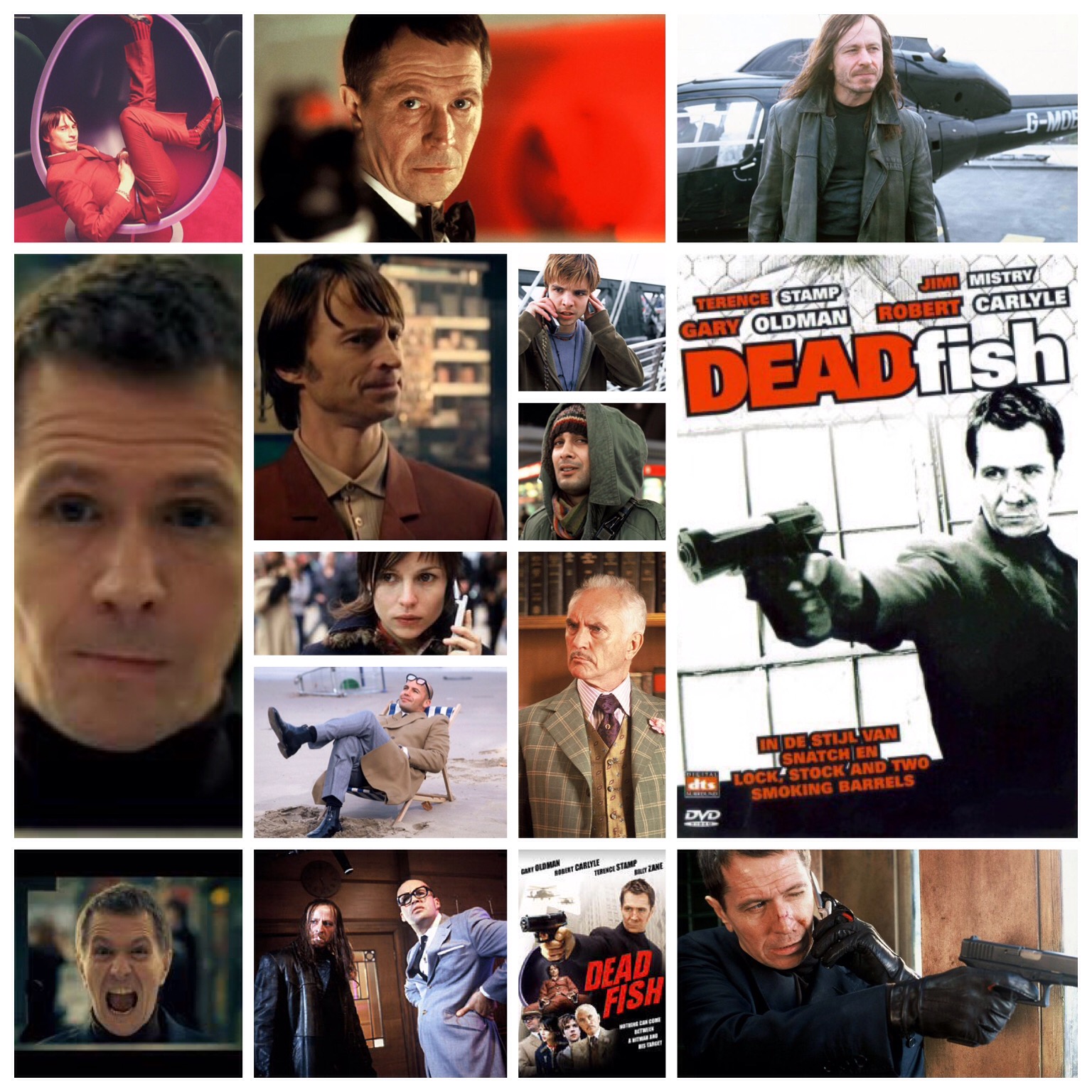
Dead Fish: A Review by Nate Hill
There’s a minefield of British gangster flicks out there, riding the colourful wake of Guy Ritchie’s output, and similar fare. Some are solid, and some blow up in your face with mediocrity when you come across them. Dead Fish falls somewhat in between those two reactions. On the one hand, it’s slick, visually adept, well casted and for the most part acted and knows how to set up a stylized scene. On the other hand, parts of it are silly, incongruent to the piece as a whole and kind of.. Shitty. It’s both a good bad movie and a bad good movie, and I know that doesn’t give much of a concise picture or really tell you whether to watch it or not, but too bad, that was my conflicted reaction. Gary Oldman, in one of his last loopy performances before he reigned it in, plays Lynch, a lively assassin with an unstable personality. He jumps from contract to contract, until a beautiful girl (Elena Anaya) catches his eye, and he’s struck with alarming and slightly creepy lovesickness for her. She’s got an American boyfriend (Andrew Lee Potts, who almost brings the film toppling down with his shoddy acting) who is on the run from violent loan shark Danny Devine (Robert Carlyle, frothing at the mouth like a pissy little windup toy). Lynch collides with them all including Pott’s stoner buddy (Jimi Mistry always looks like he needs to pee really bad and he’s waiting for them to say “cut”). It’s not super clear what Oldman’s character objective is besides going off on a freaky bi-polar tangent as he pursues his perceived dream girl and seems ready to forsake the high paying hitman job he seems so comfortable in. Nevertheless it’s fun to see him run around shooting people and being a mental head, and no one can do that like our Gary. The plot thickens, or rather becomes unintelligible, when two secret spy operatives are brought in by some agency to.. do…man I don’t even know. Billy Zane is a weird loony toons caricature as Virgil, a stuffy old spook with a plummy upper crust accent and some… wardrobe issues. He’s paired with Eastern European psycho Dragan (the always excellent Karel Roden) and the two literally spend their portion of the film bickering, cat fighting and squabbling, having actually no real interaction or function with the plot. Oh well, they’re amusing if nothing else. There’s also a brief appearance from Terence Stamp, who classes up the affair as Samuel Fish, a shady businessman with a vaguely coherent part to play in the madness. It’s all very strange and seems assured that it knows what it’s doing and where it’s going, even if at times the audience has not a clue. On the plus side, this is the only film I can think of where you can behold Gary Oldman break out into a musical number whilst tied down by a 250 pound S&M hooker. Yikes. Keep your ears peeled for a sonic little score from Groove Armada as well.
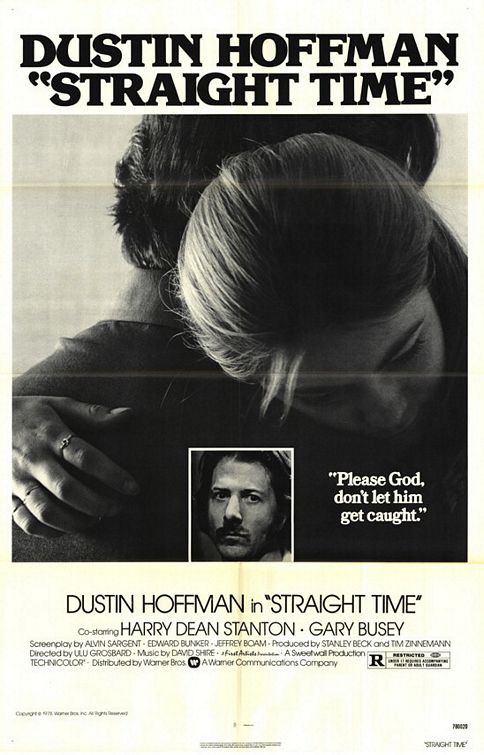
ULU GROSBARD’S STRAIGHT TIME — A REVIEW BY NICK CLEMENT

Helmed by stage and screen director Ulu Grosbard and written by screenwriters Alvin Sargent (Ordinary People), Edward Bunker (whose life the film is based on), and Jeffrey Boam (Lethal Weapon 2, Indiana Jones and the Last Crusade, Innerspace), the 1978 film Straight Time feels more like a Michael Mann production than anything else (he was an uncredited writer on the project, along with Slap Shot’s Nancy Dowd), with certain aspects feeling like early warm-ups for the events that would comprise the narratives of Thief and Heat. Starring Dustin Hoffman as a career criminal in what ultimately amounts to more than likely the best performance of his legendary career, this is a film of simple, direct power, never straying over the top, preferring sensible, if sudden and surprising, plot developments that propel the story forward at a brisk pace.

The fantastic M. Emmet Walsh co-stars as Hoffman’s overbearing parole officer, a man all too eager to throw Hoffman back into the joint after he’s been released in the first scene after six years in the pen, and there’s one scene between him and Hoffman at the film’s midpoint that’s got to be one of the funniest, most unexpected things I’ve seen in any movie. An innocent looking Theresa Russell, 21 at the time(!), is Hoffman’s love interest, a job-finder working with ex-cons who develops an unlikely crush on Hoffman. She knows he’s bad, just not HOW bad, and her character struck me as an almost exact match to Amy Brenneman’s role in Mann’s Heat. She’s the normally sensible woman who just gravitates towards the wrong man, even if her head is telling her no, because her heart is telling her yes.

The Heat-isms don’t stop there either; in one scene, Hoffman gives a moralistic speech that sounds like a junior version of De Niro’s cold-hearted “walk out on ’em in 30 seconds flat if you spot the heat around the corner” spiel that’s now become so popular. Hoffman’s increasingly desperate string of robberies mimics the late in the game plotting of Heat, and one lead character’s decision to kill another character feels incredibly reminiscent of Mann having De Niro take care of business during the final 30 minutes of Heat. Harry Dean Stanton, Gary Busey(!), and an almost unrecognizable Kathy Bates also have memorable bit parts. Hoffman is just electric here, quiet and reserved one moment, then all explosive rage the next, and while it feels a bit movie-movie that a sweet girl like the one Russell portrays would fall for a guy like Hoffman, I went along with it at all times because of the conviction of Grosbard’s unfussy direction, the uniformity of the performances, and the surprising beats that the story took at more than one juncture.

Grosbard, a talented storyteller who moved back and forth between movies and theater, never got in the way of his performers or added any unnecessary stylistic flourishes that would have otherwise distracted from his highly disciplined aesthetic. Owen Roizman’s crisp and clean cinematography eschewed any sense of artifice, bringing the same stripped down quality he brought to such seminal 70’s films such as The French Connection, Network, and The Exorcist. Hopefully, Warner Brothers will put out a special edition Blu-ray or license the rights to The Criterion Collection, because this is a film that’s worthy of long-term preservation.

Bang: A review By Nate Hill
Bang, a film by Ash. It’s a tough one to find, but it’s a scrappy little treasure trove of a flick. It’s a guerrilla film in the sense that the filmmakers had no permits, schedule, a puny budget and a barebones script which is mostly hijacked by wicked improv thanks to the cast. This seat of the pants storytelling technique doesn’t exactly ensure a wide distribution of any efforts in marketing, but they managed to pull of one of the most galvanizing, unpredictable and emotional films of the 1990’s, as far as I’m concerned. On a bright sunny morning in Beverly Hills, a young Asian American actress (Darling Narita in an arresting, pulverizing debut performance) heads to a make it or break audition with a hotshot Hollywood producer (David Alan Graf), who turns out to be an outright scumbag rapist, leaving her distraught and afraid. Her only friend seems to be Adam (Peter Greene), a ra,bun riots and slightly unstable homeless man who valiantly defends her by trashing every garbage can on the block, handling the arrival of a motorcycle cop (Michael Newland) who chases our heroine down, and attempts to persuade her into sucking him off as an exit to vandalism charges. Her fuse reaches its end and all of a sudden she overpowers him, take his gun and clothes and assumes much feared mantle of the LAPD. From there on in its a surreal odyssey of crime, mistaken identity, personal awakening and a riveting exploration of what makes a person powerful, what it takes for a woman to gain respect in a cutthroat city where misogyny runs rampant and unchecked, and ultimately how a downtrodden individual can regain their footing through the most traumatizing of encounters. It’s like baptism by fire, only the fire comes from the end of the police issue handgun she never wanted, and the baptism from the death it’s deals out in the extreme circumstances she finds herself in because of what the uniform, the symbol, represents. Narita is a startling wonder, attacking each scene with renewed intuition and never missing a beat. Greene is a rare revelation; he almost always plays nasty psychos, and here is given a shot at the eccentric loony toons style character that would usually be given to to Jim Carrey or Robin Williams. He shows what a talent he is as everyone’s favourite livable bum, displaying a gift for improv and off the cuff performing. Narita and him have an unforced friendship that blossoms early, ebbing and flowing as both find a modicum of solace within each other’s company that is periodically broken and reunited. Watch for Lucy Liu as a reprehensible young hooker as well. Ebert sung this ones praises when it came out.. No one heard. I imagine because of its extremely indie nature. It’s worth seeking out for the important message it brands upon the viewer, it’s frank and very candid approach, and it’s rabbit hole glance at one woman in trouble, navigating a zone out of her depth in an unchosen guise. One of the best films of the 90’s.
Rain Fall: A Review by Nate Hill
Rain Fall, like the meteorological event of its namesake, came and went with little fanfare when it was released. Based one novel in a series by Barry Eisler, it follows John Rain (Kippei Shina), a Japanese assassin for hire who becomes deeply embroiled in a hunt for a mysterious flash drive, the contents of which could have nasty consequences if released. Between the Yakuza, Japanese government and the CIA, Rain has his plate full, especially when he has to take a young girl under his wing who is in danger from all factions involved. Gary Oldman makes twitchy work playing William Holtzer, the unsavory and corrupt Token CIA station chief. He barks orders like he’s in a Bourne film, bends rules and is a morally blank, ruthless A-hole. Oldman plays him without his usual villainous and eccentric flair, opting for a stressed out, nervy turn which suits the gloomy tone of the film. It is a drab yet exciting affair, the intrigue dimmed down to dull greys and muted gunfights that ebb and flow with a minimal pulse. Shina is awesome as Rain, and seems born to play the spy thriller protagonist. Under the radar is how this one plays it, an atmospheric cloak and dagger outing well worth a watch.
The Chronicles Of Riddick: A Review by Nate Hill
David Twohy’s Pitch Black was a dank, murky horror sci fi that took place inside a claustrophobic killing jar, all the action unfolding on one planet, and over a short amount of time. With The Chronicles Of Riddick, he lifts the lid off that jar, unveiling more planets, characters, creatures and broadening both the scope of what is seen visually and what takes place in the story. What began as a simple human vs. monster survival tale crystallizes into a full blown operatic space saga, and I loved every minute of it. Now there are a lot of people who hate it, and fine for them if they want to live inside such negativity. I was sold after the intro, in which a snarky, canine – like bounty hunter (Nick Chinlund) chases a haggard looking Riddick a across the bizarre, jagged face of a planet that would make the asteroid from Armageddon sweat. This film takes place sometime after Pitch Black, the few survivors scattered across the galaxy. There’s a price on Riddick’s head, which Toombs (Chinlund) intends to collect. Riddick unwittingly wanders into the path of something far more dangerous in his evasive efforts: a powerful, fascist master race known as the Necromongers are cutting a swath through the known universe, converting or killing anyone they find. They are led by the “” (Colm Feore), and commanded by Lord Vaako (another badass character for Karl Urban to another do to his rogue’s gallery), a nasty piece of work who is futher soured by his insidious wife (Thandie Newton). Riddick has encounter with them, as well as an old friend from former times (an all too brief Keith David) and is taken far and away, to a dangerous prison on a planet called Crematoria, where the wrecking ball of a sun fries everything on the surface every half hour or so. It all happens fast (and furious hehe), in a somewhat rushed frenzy of sci fi action, cool effects and surprisingly vicious antics for a PG-13 flick. Diesel was born to play Riddick, a growling night wolf of an antihero and endlessly watchable. There’s all sorts of half Cooke ideas running around, some fun and others left unexplored. There’s a prophecy involving the Purifier (Linus Roache) who has ties to Riddick’s tragic past and the fate of his race, a strange elemental (Judi Dench looking confused), another person from his past (Alexa Davalos) and other intrigue involving Urban. Best to sit back and let it wash over you like the fun it is. Chinlund is hilarious as Toombs, the only character who seems to have wandered in from inner city L.A., a wide ass prick with a hate streak for Riddick and that old school charisma that carries scenes. The set pieces are exhilarating and make up for the plot which is at times spread too thinly, but never hurts the film. I love it, watch it all the time, let the haters sulk… more for us.
LOVE & FRIENDSHIP: A Review by Joel Copling
Rating in Stars: ***½ (out of ****)
Cast: Kate Beckinsale, Xavier Samuel, Morfydd Clark, Stephen Fry, Chloe Sevigny
Director: Whit Stillman
MPAA Rating: PG (for some thematic elements)
Running Time: 1:32
Release Date: 05/20/16 (limited)
Love & Friendship gambles with our good will from the get-go with a protagonist who would be, in any other movie, the antagonist by trying to control everything with her manipulative hands. By positioning her as the head of a small ensemble and, thus, the person with whom we are supposed to empathize, writer/director Whit Stillman (adapted a novella by Jane Austen) tests our ability by then attempting to force us to buy into the woman’s motivation. It is an experiment that works, because Lady Susan Vernon, the recently widowed woman who deals with her grief by vainly clutching everything and everyone dearest to her close to her chest, is a once-in-a-blue-moon creation.
She is also played by Kate Beckinsale in a performance that receives the majority of the quick-witted dialogue (Imagine if Aaron Sorkin had written a period piece, and this character is that creation in microcosm), transforms itself into an art piece of its own, and then transcends all expectations we have for this character–even the ones higher on the list. This is a truly magnificent turn from the actress, who doesn’t merely chew but eats and digests the scenery, all the while remaining empathetic. It might be a rather cliché sentiment, but one is unable to take one’s eyes off of her.
Her husband, who was entitled with great wealth that has now passed onto her and their daughter Frederica (Morfydd Clark), has indeed died, and Susan has arrived to stay with his family–her in-laws–including his brother Charles (Justin Edwards) and Charles’ much younger wife Catherine DeCourcy (Emma Greenwell). Susan must also contend with the husband (Stephen Fry) of one of her best friends, an American named Alicia Johnson (Chloe Sevigny), who believes she will be sent back to the States if her husband has his way. Meanwhile, the dashing Lord Manwaring (Lochlann O’Mearáin) has left his wife (Jenn Murray) in a tizzy about potential infidelity.
That latter subplot doesn’t have much significance until a development at the end, but until then, the film is concerned with affairs of the heart, as two potential suitors enter the picture. The first is Reginald DeCourcy (Xavier Samuel), Catherine’s brother, who is younger by far than Susan but falls head over heels for her nevertheless. Sir James Martin (an uproariously funny Tom Bennett) courts Frederica, much to the young woman’s dismay, for the gentleman is, not to put too fine a point on it, foolish in the extreme. He means well, though, and is well off when it comes to money.
It takes about 15 minutes for Stillman to catch his stride and for us to engage with the film’s breakneck pacing, but once Love & Friendship hits, it’s impossible to dislike. It even provides a bait-and-switch for an audience expecting the narrative to go in one direction while the film’s two love stories take sharp left turns in a final few minutes. The cast are all on-target, the tendency for the film to introduce us to characters by way of close-ups and profiles with his or her name and a non sequitur description underneath never fails to garner a chuckle, and generally speaking, everything that could have come off precious and quirky gains a richness through the film’s capturing an era wherein a woman has no place to be manipulative. Even more surprising: We get a sense of why she is and how she got there. Here is a delightful surprise.
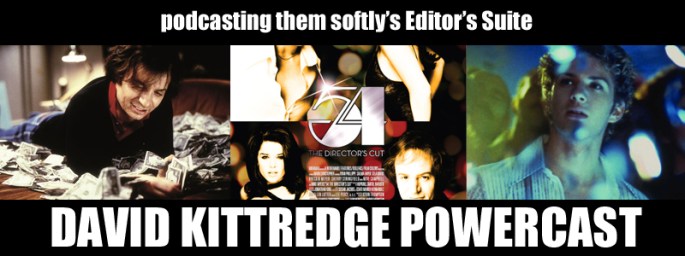
PTS Presents Editor’s Suite with DAVID KITTREDGE

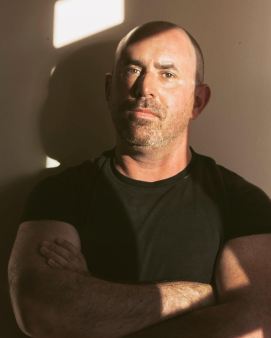
Podcasting Them Softly is extremely excited to present a discussion with special guest David Kittredge, the editor of 54: The Director’s Cut, which can be streamed via Amazon and iTunes and is now available to own on Blu-ray. Back in 1997, Mark Christopher’s disco club odyssey was released in theaters in a compromised state, featuring edits and reshoots not ever planned by the filmmakers, and which changed the general shape and scope of the picture. Now, nearly 20 years later, the creative team was able to go back to the original footage which test screening audiences balked at, and have reformed the movie as the ultimate director’s cut. There are so few films that experience a life like this one, as it’s a movie that got hit hard by critics and ignored by theatrical audiences at the time of its release. But because of our constantly shifting social attitudes and the advent of the DVD cult classic, it’s now time for this vibrant, sexy, and totally entertaining film to see the light of day as fully intended. A graduate of NYU’s Tisch School of the Arts and creative director of LA-based Triple Fire Productions, David is also the writer/director of film festival favorite Pornography: A Thriller, and has worked on various short films in multiple capacities. We also riff for a bit on one of our mutually favorite filmmakers, the late, great Tony Scott, which is always an exciting way to spend an evening. We hope you enjoy this fascinating, truly inside-Hollywood discussion about a film that deserves to find a new following!