BEN WHEATLEY’S HIGH-RISE — A REVIEW BY NICK CLEMENT

1

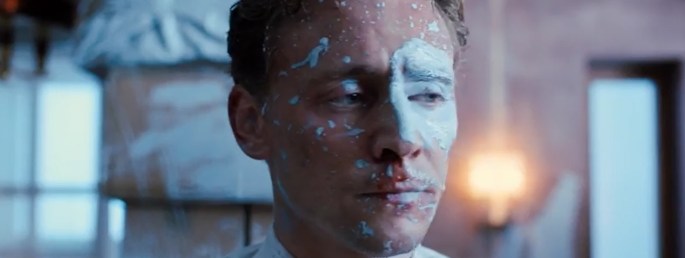
I’ve now come to expect something special from writer/director Ben Wheatley with each new film. In a short period of time, he’s unleashed Down Terrace, Kill List, Sightseers, and A Field In England, all movies that I feel are terrific pieces of cinema, and have totally confirmed him as one of the premiere filmmakers within his age group. His latest, the gloriously surreal and exceedingly stylish futurist satire High-Rise, takes him into Grand Guginol territory with flashes of sexual intrigue while overall presenting a wildly maniacal vibe to the proceedings. Based on J.G. Ballard’s famous and much-loved novel (which I’ve not read), my guess is that this film will be a very, very different viewing experience for those familiar with the source material than from those with no preconceived expectations. Being that I never, ever compare movies to books (one of the single most pointless endeavors that anyone could possibly waste their time with), I can only report about what I’ve seen with my two eyes in terms of the movie. I loved every, single depraved, erotic, disgusting moment of it. This will be a repellent film for some. For others, it’ll be exactly the kind of decadent showmanship that you’re looking for. This is an intense film, in every sense of the phrase, forcing the viewer into a constant stream of excess, never relenting for a moment.

2

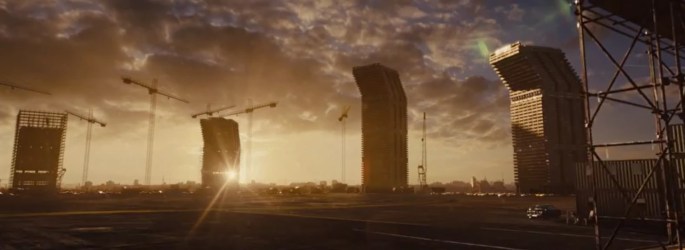
Tom Hiddleston finally has a juicy role to call his own, sexy Sienna Miller is back in smoking-hot mode (with some peek-a-boo nudity for extra frustration), and the entire movie has been crafted with a sophisticated visual style that blends ingenious sound work with feverish cinematography by Laurie Rose. Jeremy Irons is the brilliant yet foolhardy architect who has constructed a mega apartment building that in essence works as its own self-contained environment. There’s a gym, a grocery store, a school, restaurants, and all the creature comforts you might expect in high-society living, with each level to the high-rise comprising a different sect of society; the higher up in the high-rise, the more wealthy the inhabitants. All hell breaks loose when a series of power failures hit the complex, resulting in a total breakdown of acceptable behavior. Feeling like a thematic cousin to Snowpiercer, Wheatley stuffs his film with a locked and loaded aesthetic, and as usual, the results are wholly cinematic and form pushing; coming on the heels of the hallucinatory A Field in England, his latest walk on the wild side seems like a logical next step, further cementing Wheatley’s anarchist social worldview. The up-for-anything supporting cast includes Sienna Guillory, Luke Evans, Elizabeth Moss, Keeley Hawes, Augustus Prew, Peter Ferdinando, and a totally debauched James Purefoy. I’ve seen the film twice in three days and I can already tell that this one will be binged – HARD – once it hits Blu-ray.

3


GoldenEye: A Review by Nate Hill

image

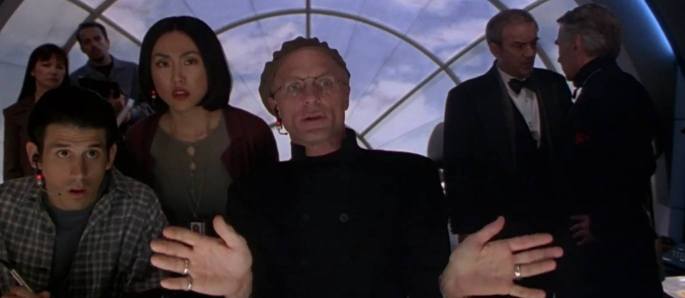
GoldenEye is the very finest hour that Pierce Brosnan had as James Bond, both as a film and in terms of what he gets to do as the character. It’s my third favourite Bond film of all time and stands as one of the most exciting ventures the series has seen to this day. It definitely falls into a campy style, but one that’s removed from that of the original Bond films from way back when, one that’s all its own and decidedly 90’s. It’s also got one of the strongest and classiest villains of the series, a man who is in fact an ex agent himself which was a neat switch up. Brosnan is so photogenic it’s ridiculous,  whether dolled up in the tux or careening through a valley in a fighter jet. He just looks so damn good as Bond, and I sometimes wish he’d gotten a fifth crack at the character. Here we join up with 007 on a mission gone wrong, where he is ambushed and his partner Agent Alec Trevelyan a.k.a. 006 (Sean Bean) is killed, or so he thinks. 006 is in fact alive and well, with a few gnarly facial scars and a new nasty attitude. He puts Bond through a wringer with a diabolical scheme to hijack a Russian nuclear space weapon and do all kinds of lovely things with it. Bond teams up with the survivor of a decimated Russian research centre, a beautiful scientist named Natalya  (Isabella Scorupco) who inevitably ends up in his bed. It’s slick, it’s stylish, it’s sexy and everything a Bond flick needs to be. 006 has a dangerous asset in Xenia Onatopp (Famke Janssen), a lethal assassin whose weapon of choice are her thighs which she employs with the crushing power of two Amazonian pythons. Janssen plays the role with ferocious relish and the kind of enthusiasm that hadn’t been seen in a Bond villainess since Barbara Carrera in Never Say Never Again. Bean plays it ice cold, letting restraint and calculated malice steal the scenes as opposed to flagrant mustache twirling. I always thought he would have made a cracking good 007 as he has so much residual danger to his vibe from playing many heartless bastards in his career, but perhaps in another life. One of my favourite characters to ever hang out in a Bond flick shows up here, a cranky but lovable russian general named Valentin Zukofsky, played by the awesome Robbie Coltrane, an actor who really, really needs to be in more stuff. His few short scenes are the stuff that makes a piece timeless, and I wish we’d gotten to see more Valentin and more Hagrid elsewhere in the franchise. There’s the usual suspects like Judi Dench as M and Desmond Llewellyn as a crusty Q, and a host of other actors including Joe Don Baker, Tchecky Karyo, Minnie Driver and the irritating Alan Cumming who singlehandedly ruins scenes with his hammy preening. The film thunders along with furious energy and nicely paced action sequences, including a chaotic tank chase through the streets of Moscow and a stunner of a climax set atop a giant satellite dish. As Bond films go, you can never go wrong with this one.

PETER WEIR’S THE TRUMAN SHOW — A REVIEW BY NICK CLEMENT

1

The Truman Show is easily one of the most disturbing and prophetic films of my lifetime. Directed with extreme care by Peter Weir (Witness, Picnic at Hanging Rock) and written by Andrew Niccol (Gattaca, Lord of War, Simone) who always seems one step ahead of everyone else, this is a genuinely sad film about stolen identity, the loss of innocence, the understanding of evil, and how one man decides to finally think and act for himself after years of bowing to the expected norm. Jim Carrey was absolutely brilliant (and probably never better) than he was here, subverting the silly-man image he had cultivated for a few years before dropping this dramatic bombshell during the summer of 1998. The fact that The Truman Show came out in the popcorn movie season, and grossed $130 million domestic after rapturous critical response, is still one of the coolest cinematic notions I can think of. Just think about it for a moment – a movie built on ideas becoming a huge success in the mostly brain dead, CGI summer movie landscape. It seems almost too good to be true. And I’m not so sure that this movie does that sort of business if it gets released this summer, or next summer. Both of the moment and completely ahead of its time, The Truman Show sought to expose the fraudulent nature of reality television in the darkest way possible, while skewering the notion of 15 minutes of fame, and seeking to examine the fallacies of every day life. Ed Harris was hypnotic in an Oscar nominated performance as the magician behind the scenes, calling all the shots in poor Truman’s life, and the way that he truly feels that he’s his father in the final act, and most especially in those heartbreaking and liberating final scenes, still creeps me out to this day.

2

Peter Biziou’s tricky and stylish cinematography took on a uniquely voyeuristic aesthetic, and Weir’s decisions to set the story in a bright and sunny and antiseptic seaside town as opposed to Niccol’s originally scripted rainy and nighttime and noir-ish NYC, was a stroke of visual and thematic genius. Take some of the most frightening emotional material ever conjured up and place it inside this friendly, sterile environment that would seem inviting to anyone. Dennis Gassner’s exquisite and duplicitous production design is worthy of intense study, as it’s always working to suppress the behind-the-scenes shenanigans while giving off a radiant, scarily friendly vibe. The concluding moments of this film with Truman heading up that perfectly surreal set of steps still makes the hairs on the back of my neck stand up, and the decision on the part of the filmmakers to smash cut to black in the exact fashion that they did will always remain one of the best storytelling decisions that I can think of. The absolutely insane supporting cast was an embarrassment of riches, including the stunningly beautiful Natascha McElhone, cocky-funny Paul Giamatti, the brilliant Laura Linney, everyone’s best buddy Noah Emmerich, Harry Shearer, and Philip Baker Hall. The ensemble was in total synch in this film, allowing Carrey and Harris to totally dominate, while still providing the film with warmth and edge where needed. Producer Scott Rudin first approached Brian De Palma (and then many others) to direct before hiring Weir, who has had one of the more bizarre careers I can think of. The absolute final shot of this work of art stings with such ironic humor that it hurts to laugh. This is one of the great existential films of the 1990’s, and a film that has only gained in its masterfulness as the years have progressed.

3

Taken: A Review by Nate Hill

image

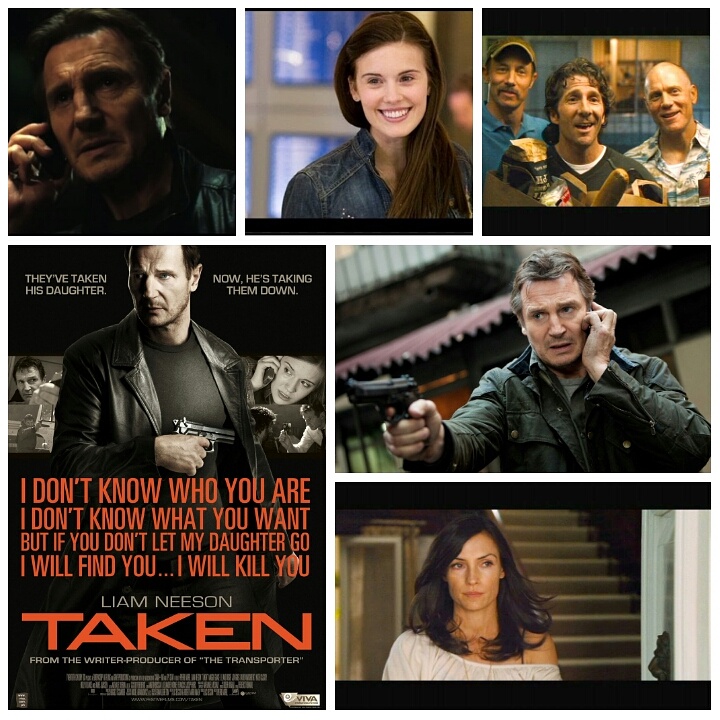
The Taken series has been done to death, memed out to glory and mined for market value a million times over since the first film came out way back in 2008, which has somewhat dimmed the charm of that original vehicle, at least for some of us. Like, how many times can Liam Neeson or his relatives be Taken before even they as characters realize that it couldn’t be happening and that they’re in a movie? Eventually the material unwittingly spoofs it’s origin in its need to repeat itself time and again. That’s not to say the first isn’t enjoyable on it’s own, in fact it’s quite the streamlined little dose of adrenaline that essentially coasts on some great pacing, neat choreography and the endlessly watchable Liam Neeson, whose career took a shot of nitrous to the heart after gamely stepping into the well worn shoes of the grizzled action hero. This was him nimbly ducking through the genre boundaries that his career was in up til that point, and the action thing fit him like a glove. The film is at its best when it follows Bryan Mills (Neeson) in action, which thankfully is most of the time. Mills is an ex CIA spook with some tactics that will seriously put a hurtin’ on you if you cross him in any way. A gaggle of moronic Bosnian human traffickers come under the receiving end of these tactics when they kidnap his vacationing daughter (Maggie Grace, looking suspiciously like she’s a decade older than her character is supposed to be) from Paris and auctioning her off to rich raghead perverts. This propels him into like an hour of non stop energetic ass kicking that is so fun to watch, as he shoots, stabs, sprains and splatters his way through hordes of eastern European cannon fodder, with not a second to spare for even the utterance of a any cheesy one liners. He’s assisted via Bluetooth by his three ex agency barbecue buddies (Jon Gries, Leland Orser and David Warshofsky) and has a few encounters with his jaded ex wife (Famke Janssen). And that’s about it, but Neeson sells the bare minimum as far as the genre goes with his effortless cool and stony, formidable stature that springs into startlingly spry motion every time he has to dispatch a new troupe of Slavic wise guys. If only they didn’t have to desecrate this little piece of lightning in a bottle with two sequels that dampen the momentum with cheap attempts at thrills, I may still feel strongly about this one as I did when it first came out. Hopefully they quit while they’re ahead, shirk the slimy dollar signs and let their first outing age in peace.

YORGOS LANTHIMOS’ THE LOBSTER — A REVIEW BY NICK CLEMENT

1

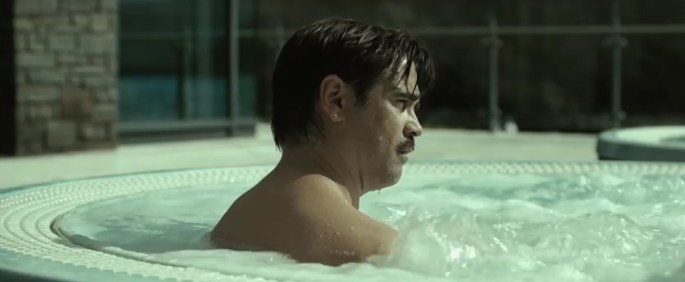
From the startling opening moments and continuing all throughout its entirely beguiling and metaphorical narrative, The Lobster presents us with another bizarre cinematic world from Greek director Yorgos Lanthimos (the Oscar nominated shock-fest Dogtooth and the funereal drama Alps), an emotional sadist who is constantly picking at his filmic subjects like itchy scabs, always trying to expose the raw and volatile relationship between humans and their fragile sensibilities. Co-written by Lanthimos and Efthymis Filippou, this is true, absurdist, pitch-black comedy, with plot threads that will make you feel purposefully uncomfortable, which you then feel bad about laughing over. The only thing I’m not super keen on in Lanthimos’ decidedly bleak yet strangely hopeful worldview is his strange obsession with weird animal violence; not sure where all of that comes from, but it’s a recurring theme for him that’s very noticeable. Colin Farrell isn’t the first actor you think of when dry comedy is the order of the day, but he fits perfectly within this rigidly stylish film that continually subverts its own sense of pictorial precision with a story that’s alternately confounding and exhilarating. Lanthimos is a true original and I can safely say that his films feel like the creations of only himself, so it comes as no surprise that this bizarre film won the Grand Jury prize at the Cannes Film Festival, and that so many big movie stars would jump at the chance to work with this brazen and unpredictable filmmaker.

2

The Lobster supposes a near-future where, by law, people must have a life companion. If you’re single, you’re sent to this ominous and ostentatious hotel that rests near the ocean, and you’re given 45 days to find a mate. And if you’re unsuccessful in your romantic quest, no worries, you’ll be turned into the animal of your choice, and released into the nearby woods, where you can look for love as a different species. If all of this sounds lunatic, well, it is, but it most certainly has a point of view in terms of relationships and societal expectations and honesty within the construct of partnership, and it basically serves as a corrective to the mindless crap that the Hollywood studios churn out on a weekly basis. Lanthimos recruited a starry cast for his first English language movie, including the magnificent Rachel Weisz, a priceless John C. Reilly, the brittle Olivia Colman, the uniquely photogenic Lea Seydoux, and a mysterious Ben Whishaw. Each shot by cinematographer Thimios Bakatakis feels formally perfect and in total synch with the sharp editing by Yorgos Mavropsaridis, the keep-you-on-edge musical jolts add a repeated sense of menace, and the way Lanthimos builds his entire creation to its haunting finale will keep you buzzing after the last frame has been exposed. I’ll certainly need to see this offbeat item again to unlock all of its secrets, but like the best of films, it’s begging me for an immediate revisit.

3


The Silver Stallion: A Review by Nate Hill

image

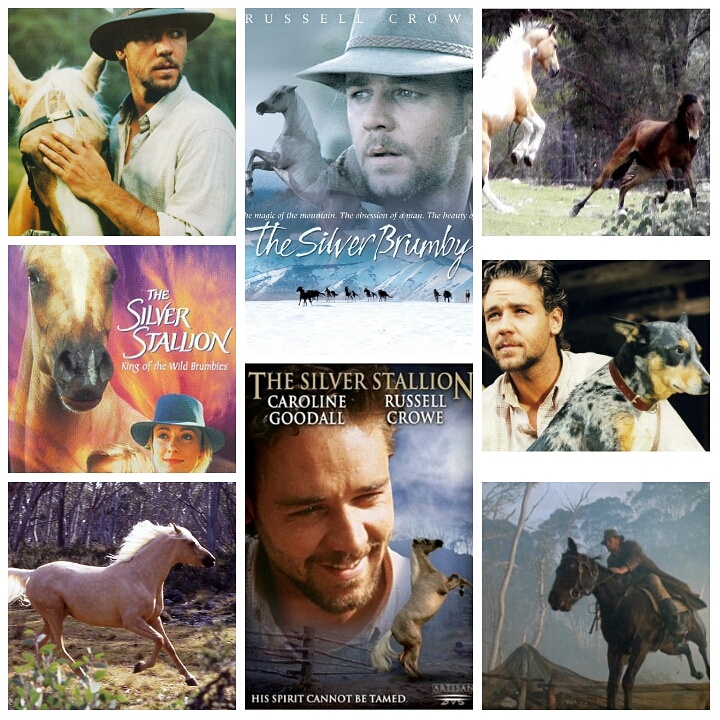
Before Russell Crowe blew up big time in North America, he did a few peculiar little flicks in his homeland of Australia. A couple rowdy gang stories popped up, and then he appeared in a little seen film called The Silver Stallion, or The Silver Brumby, which means horse in down-under-talk. Horse flicks are a dime a dozen and can go either way, usually pinning their focus on a target audience of adolescent viewers. This one is more of a visual tone poem than any sort of grand planned narrative, letting the horses do most of the emoting and character work, with the humans showing up now and again to provide their side of the story. An Australian mother (Caroline Goodall) tells her daughter (Amiel Daemien) tales of the prince of the brumbies, a member of a feral tribe of horses who has been separated from his heard and must find a way back. A relentless outback Man (Crowe) is dead set on both capturing and taming the silver Brumby, a quest which leads him to the very precipice of desperation. The horse traverses mountains, plains and many acres of beautiful northern Australian countryside to reunite with his clan. The scenes with just horses are amazing when one considers just how tough it must have been to coherently get them all together and have them interact according to the shots which the filmmakers needed to get. Quite the achievment indeed. The cinematography is pure misty magic, with both animal and nature alike providing some truly unforgettable images onscreen. Crowe is excellent, with a wild glint in his eye, quite committed to the character. There’s an overarching and altogether mythic tone to this film that always left me in awe when I saw it as a youngster. One gets the sense of true lore unfolding in front of us, the camera and script creating a piece of celluloid that’s purely entrenched in Australian storytelling, bringing it alive in the most visually impressive way possible. Very much worth your time, if you can track down a copy. 

John Dahl’s Rounders: A Review by Nate Hill

image

John Dahl’s Rounders is the premier poker movie, an utterly charming, never too serious and surprisingly slight look at the lives of several very different individuals whose lives revolve around the game in New York City. The main focus lands on two young men who are fast friends, yet reside on somewhat opposite sides of the responsibility coin. Poker prodigy Mike (Matt Damon) has since given up his art after a soul crushing loss to local russian bigwig Teddy KGB (John Malkovich). He’s content to simmer in solitude with his perky girlfriend (Gretchen Mol, who never fails to convince me that she’s Samantha Mathis until I double check on imdb). Right in time to disrupt his quiet life is cocky street rat Worm (Edward Norton), fresh out of prison and looking for the type of trouble that landed him there in the first place. It’s to long before he’s racked up some serious debt to dangerous people with ties to Teddy KGB, and Mike is forced to come out of retirement and risk everything he has once again, this time for his friend. The poker scenes are staged with meticulous eye for detail and mannerisms in attempt to put you at the same table as the players, and it’s nifty to see each acting style played to the microscopic hilt as Dahl maintains patient focus on his work. Norton is appropriately scuzzy with just a dollop of endearing, scrappy charm and Damon fills the protagonist’s shoes very well. It’s Malkovich, however, who pulls the stops out and is my favourite character of the piece. With a muddy russian accent that rivals his french one from Johnny English, a lazily snarky streak with just a hint of intimidation and a bag of oreos at his side without fail, he’s a hoot, holler and a half as the life of the poker party. Sexy Famke Janssen has as great bit as as shady chick with eyes for Damon and connections with dodgy folks, expertly playing the half sweet and seductive, half menacing game. Watch for topnotch work from John Turturro, Josh Pais, Michael Rispoli, Josh Mostel, Adam Lefevre, David Zayas, Goran Visjnic, Lenny Clarke and Martin Landau in an earnest turn as a kindly professor who looks out for Mike. It’s short, sweet, concisely paced, tightly written, flawlessly acted and wonderfully entertaining stuff.

PTS PRESENTS CINEMATOGRAPHER’S CORNER with TRENT OPALOCH Vol 1

OPALOCH POWERCAST


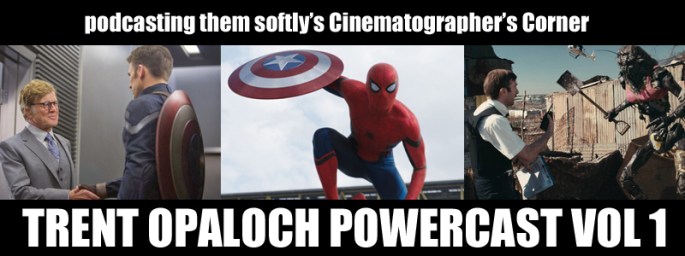
OpalochPodcasting Them Softly is extremely excited to present a chat with the incredible cinematographer Trent Opaloch. Trent is one of the hottest, most in demand shooters currently working in Hollywood, having shot District 9, Elysium, and the absurdly underrated Chappie for director Neill Blomkamp, while also becoming a member of the Marvel cinematic universe, having lensed both Captain America: The Winter Soldier and this weekend’s Captain America: Civil War. The future looks to hold even more superhero action, as he’ll be reteaming with the Russo brothers for both chapters of The Avengers: Infinity Wars. He’s also a veteran of the commercial world, having collaborated with such directors as Jake Scott, Todd Field, Phil Joanou, and Frederik Bond on a variety of worldwide advertisements. He’s clearly got a very exciting future ahead, and we’re beyond thrilled to have him as a guest – we hope you enjoy this exciting discussion!
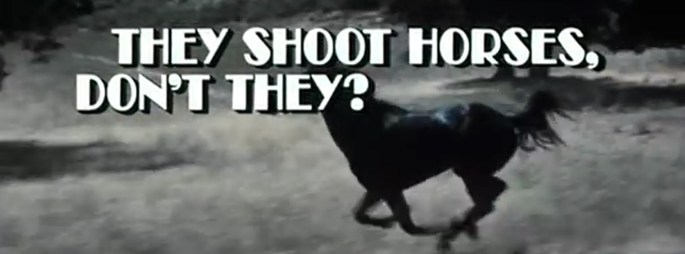
SYDNEY POLLACK’S THEY SHOOT HORSES, DON’T THEY? — A REVIEW BY NICK CLEMENT

1

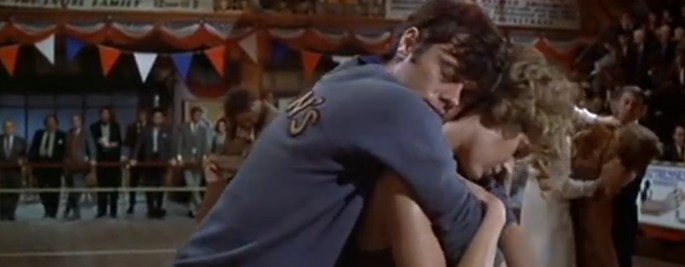
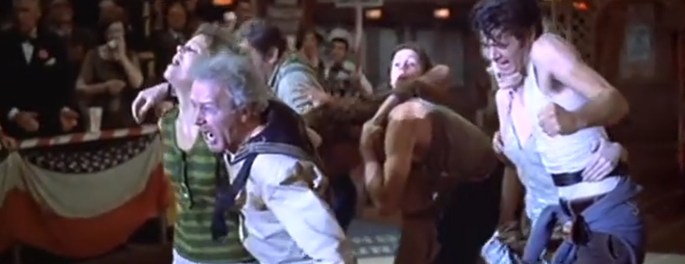
They Shoot Horses, Don’t They? is an absolutely devastating movie. Disturbing to the core, really. It’s deceptive in its sadness, instead taking something as potentially jubilant like a marathon dance contest, and using it as a backdrop for some of the most poignant and cynical comments about the human experience and psyche. While I’ve not seen everything that Sidney Pollack directed, I’m tempted to say that, from what I’ve seen, this is his best, most defining work. How this epic yet intimate film hasn’t been picked up by The Criterion Collection or Twilight Time I’ll never know, as it’s the sort of picture from a lost era of filmmaking, that would never, ever get made today. And while certainly a product of its time, it still tells a thoroughly timeless story that anyone could connect with. Jane Fonda was at her iciest here, and did an extraordinary job of communicating sadness with only her facial expressions.


2

Released in 1969 and based on the Horace McCoy novel from 1935, screenwriters James Poe and Robert E. Thompson crafted a true piece of cinematic Americana, and via Pollack’s steadfast and unwavering direction, the film resonates just as strongly now as it likely did upon first glance. An amazing supporting cast including Michael Sarrazin, Susannah York, Bruce Dern, Bonnie Bedelia, and Gig Young were all on hand, while the dusty images by cinematographer Philip H. Lathrop reinforced the desperate, hardscrabble nature of the disparate group of characters. Johnny Green’s musical score, in tandem with various era-specific classics, ranged from jaunty to severe, lively to melancholy, while the film would become noted for its use of flash-forwards, especially during the extremely grim, final sequences. They Shoot Horses, Don’t They? screened at the Cannes Film Festival, and would prove to be a critical success and box office hit, but really needs to be rescued by a boutique physical media company as it deserves major Special Edition treatment.

3

CAPTAIN AMERICA: CIVIL WAR: A Review by Joel Copling

Rating in Stars: ***½ (out of ****)
Cast: Chris Evans, Robert Downey Jr., Scarlett Johansson, Sebastian Stan, Anthony Mackie
Directors: Anthony Russo, Joe Russo
MPAA Rating: PG-13 (for extended sequences of violence, action and mayhem)
Running Time: 2:27
Release Date: 05/06/16

Captain America: Civil War sews doubt within the group of superheroes known as the Avengers for the first time since they became a collective attempting to overthrow an external conflict in the form of an alien villain with supernatural abilities. The second and clumsier time saw one of them creating the threat against which they were to fight by accident and ego, and now the consequences of the actions taken in 2015’s Avengers: Age of Ultron have shown themselves with this new film. It is positioned as a direct sequel to the previous movies that included the character of the surtitle, but it really isn’t for a long time past somewhere in the second act. Screenwriters Christopher Markus and Stephen McFeely have quite a lot to juggle with this sequel, the latest in the Marvel Cinematic Universe, and in spite of the business, it’s a roaring entertainment.

There are more serious concerns here than the ones to which we are usually accustomed (often, though not always, limited to the introduction of a hero or heroes and the thrusting of them into a generic conflict). Here the conflict arises due to the machinations of a villain who has a specific–and, surprisingly and ultimately, sympathetic–goal to tear the Avengers apart from within. He is Baron Zemo (Daniel Brühl), a hardened former militant whose motivation to fight back against the heroes will not be revealed in this writing. Let’s just say that it’s central to the concerns that crop up in the first act. After a prologue in 1991 that introduces a biological weapon of MacGuffinish importance, there is an attack that forces one of our heroes to contain a blast, whose energy she can control with her mind, away from its intended target. It still ends in the deaths of a dozen peaceful people.

The central debate, says the Secretary of State (William Hurt, making his first appearance in the franchise since 2008’s The Incredible Hulk), is a largely a political one, exacerbated by measures taken by the United Nations to police the Avengers for good. The Sokovia Accords, named after the disaster that leveled an Eastern European city, are drafted. Steve Rogers (Chris Evans), aka Captain America, is against regulation of this sort, believing that the collateral damage is an unfortunate necessity so as to eventually no longer necessitate it, and Tony Stark (Robert Downey Jr., very good), aka Iron Man, thinks the Accords are necessary to keep them in check. Battle lines are very literally drawn, but no one’s side is disregarded here. When “Bucky” Barnes (Sebastian Stan), aka the Winter Soldier, is framed for another explosion that results in yet more death, all bets are off.

The fact of the matter is that Steve probably has the more salient point in the matter, and later, he and Sam Wilson (Anthony Mackie), aka the Falcon, recruit the returning likes of Wanda Maximoff/Scarlet Witch (Elizabeth Olsen), the energy-manipulating telekinetic who caused the first aforementioned explosion, Clint Barton/Hawkeye (Jeremy Renner), who comes equipped with his usual contingent of clever arrows, and Scott Lang/Ant-Man (Paul Rudd), whose ability to shrink in size as his strength is multiplied seems oddly downplayed here. On side of Tony, who has increasingly personal stakes in the matter that ultimately define his motivation, are Natasha Romanoff/Black Widow (Scarlett Johansson), the KGB agent whose persuasive ability is all but ignored this time around, James Rhodes/War Machine (Don Cheadle), Tony’s best friend and sidekick, and the Vision (Paul Bettany), the inexplicable fusing of Tony’s old, artificially-intelligent computer with an Infinity Stone.

There are a lot of characters–perhaps too many in the grand scheme of things, especially considering the niece of Steve’s old love interest, Sharon Carter (Emily VanCamp), offers her support, some sort of official agent guy named Everett Ross (Martin Freeman) shows up to be present for stuff, and Cheadle, Rudd, and Renner all feel extraneous to the proceedings. They pale compared to the highlights of the new characters, such as an African prince named  T’Challa (Chadwick Boseman), aka Black Panther, and Peter Parker (Tom Holland, whose performance is brief but fantastic), aka Spider-Man, a kid from Queens whom Tony has been investigating. These two in particular are given either a solid motivation (revenge for T’Challa) or moral compass (a clear-cut vision of right, wrong, and the answer to both for Peter).

It’s an overflowing ensemble given a healthy amount of time (nearer two-and-a-half hours than any film in the franchise so far) to find their footing, even if it doesn’t always pay dividends. The action is particularly well-mounted in an extended sequence of clashing egos that finds the heroes doing battle in an abandoned airport (Spider-Man in particular holds his own in this sequence). No one is truly in danger because their powers are about equal, but the screenwriters and directors Anthony and Joe Russo understand this, saving the action with genuine gravitas for an extended, three-way duel between characters who don’t truly want to win in such a permanent way. It’s the emotional charge of that particular scene, though, that mirrors the desire on the part of the filmmakers to set Captain America: Civil War apart in a series that has started to feel like a lot of the same old same-old. These are superheroes treated, where it counts, as separate entities who desperately need to sit down and talk–preferably without their suits.