The Man in the Director’s Chair: An Interview with Michael Schroeder by Kent Hill

It was owning a fast car that booked a young Michael Schroeder his first trip onto a film set. With Chief Dan George (The Outlaw Josey Wales) in the seat next to him, Michael was instructed to drive as fast as he could toward camera. He took this request literally.

While no one was injured, and though this early encounter did not go exactly according to plan, the crew assembled in cowboy hats and shorts seemed to be having a lot more fun than the group of aging lawyers with whom Schroeder had spent this previous evening. So he quit trying to be become a lawyer and ran of to join the movie business.

205338_10151708248292481_58462632_n

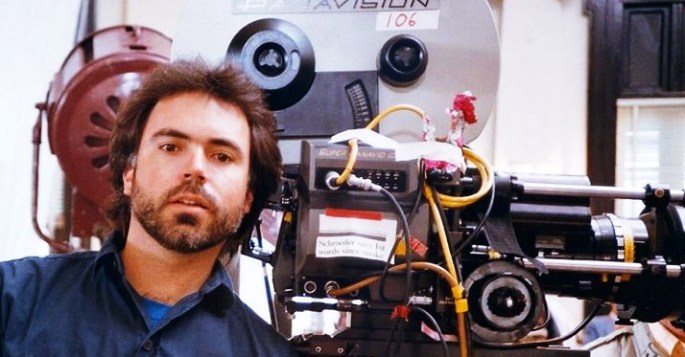
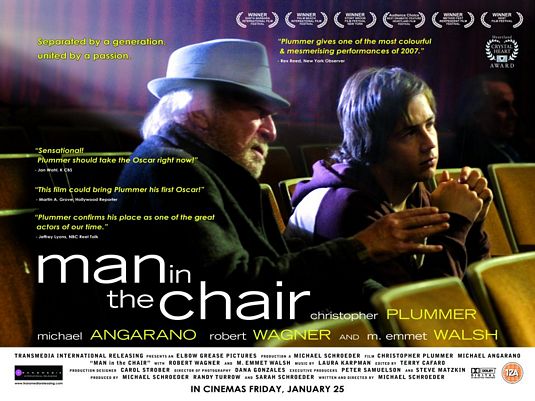
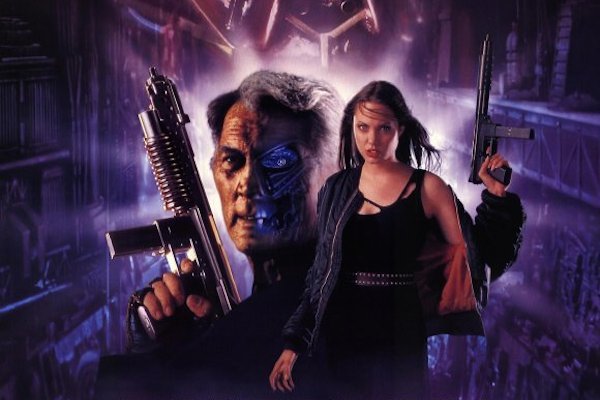
He began his professional career as an assistant director working on such films as Revenge of the Ninja, Lambada, Highlander 2 and Guests of the Emperor. In 1988 he would take the director’s chair on Mortuary Academy. Fourteen features would follow, among them Dead On: Relentless 2, Angelina Jolie’s debut Cyborg 2: Glass Shadow, Cyborg 3 (apparently Schroeder’s most lamentable experience) and his career high and passion project, the wonderful Man in the Chair.

man_in_the_chair_ver2

He is a talented director who came to movies late – but he has since established himself as a consummate artiste of the motion picture. He was a font of great stories, optimism, on top of being an eloquent gentleman.

It is my privilege to present to you this interview.

Ladies and Gentlemen . . . Michael Schroeder.

8+Cyborg+2


DO YOU SEE? Back to the Event Horizon with Philip Eisner by Kent Hill


image-w1280

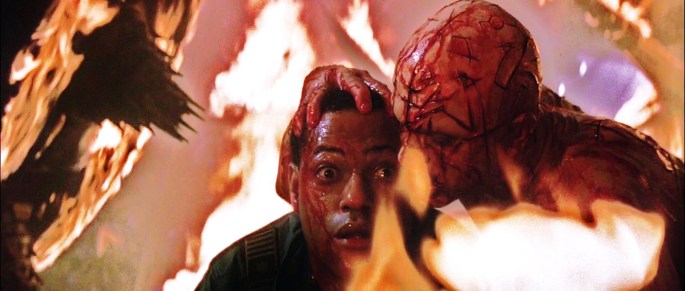
It was a good day for a movie. When is it not? I was home from university and had the agenda to go to a flick that started soon and looked good. Science fiction looked good and I had heard and read little about this new offering from the director of Mortal Kombat, the future impresario of  the Resident Evil franchise, Paul W.S. Anderson.

My buddy Paul was just coming out of the theatre, and as it happened he had just watched Event Horizon. I recall him being angry, “That’s shocking, terrible, grotesque,” he said. Well it’s been a while. But I certainly remember the look on his face and he was, for lack of a better word, mortified.
fd735ecee0c8ed2c8576669b71152e90

Now when someone tells you not to look at something, what’s the first thing you do? That’s right, you go check it out. I knew I was going to. I knew my friend to be no coward, so I was automatically intrigued by the prospect of seeing this movie that had gotten to him on such a visceral level. I recall him saying, before we parted company, “Don’t waste your time with it,” or something to that effect.

I bullshitted and said sure, don’t worry, I’m seeing a different movie. After that review I was definitely going inside, and the movie I encountered therein was really cool.
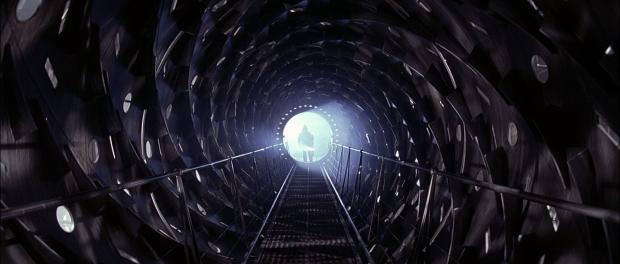
event-horizondddd

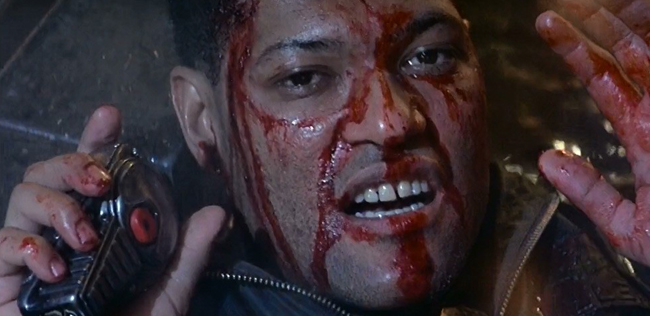
Coming out I felt satisfied. The movie worked on all levels. It was terrifying, impactful, funny at the right time, suspenseful, beautifully composed, strongly acted and above all, well written.

The world was not as socially connected at the time. Nor was it part of my complete breakfast during that period to track down and try to arrange interviews with the good people who make the movies.

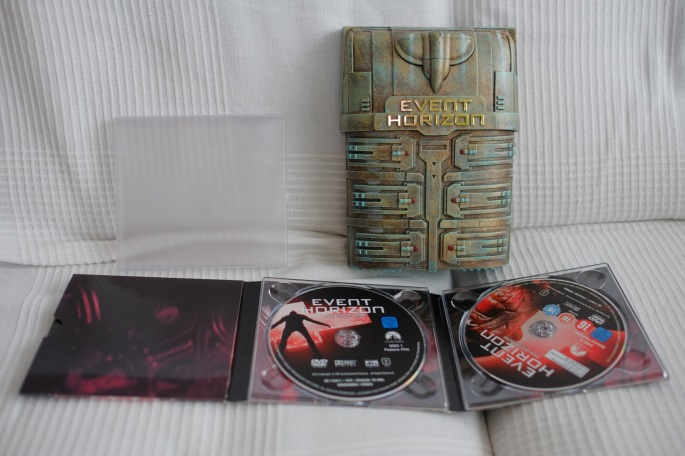
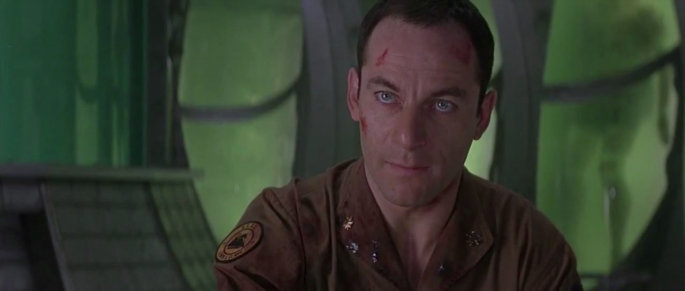
Behind the scenes material was scant at best, and Event Horizon, no one at the time could have known, would go on to become a cult favorite and get a really nice re-release with a handsome collector case and lots of juicy bonus features. There is a great documentary included, commentary and the likes. But there was little about the film’s author and the script is only a brief part of the BTS discussion.
untitledsssssss

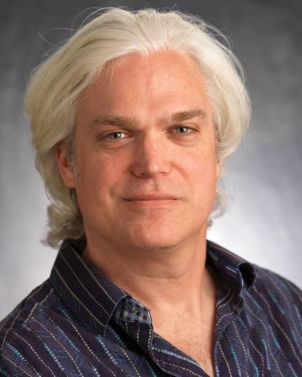
Fortunately the world has moved on and we are all now accessible via a myriad of networking tools. Thus it was my good fortune to finally get in touch with and interview the very excellent screenwriter and all-round gentleman Philip Eisner. The man who was once locked away with nothing but The Road Warrior for a week, was an absolute pleasure to interview.

I feel, like I often do, when talking to the makers of my favorite films, like I’m getting the commentary track that should be included with the feature. After all, it is the with the screenwriter that these journey’s begin.

As I like to keep things as informal as possible, our chat was not restricted to Event Horizon. We discussed Philip’s journey to writing, the genesis of the script, how sometimes you homage and other times steal, what he thought of Rogue One (’cause us Star Wars boys can’t help ourselves), how it’s easier to say “No” in Hollywood and much more.

I sincerely hope you’ll enjoy this interview as much as I did and, in case you have wanted to know more about the true gem that is Event Horizon, or were looking for an excuse to watch it, if indeed you haven’t already…

Well now folks . .  . you’ll see.
13-event-horizon

event-horizon-limited-edition_563549


SEAN STONE: An Interview with Kent Hill

Many of us can only imagine what it must be like to grow up in a household where one or both of our parents are people of extraordinary ability. We can only muse further what it must be like if that said parent were internationally recognized in their chosen field of expertise.

On the other hand, when we are young, we don’t really question such things. They are the ‘norm’, the everyday, and our parents are simply Mum and Dad. They do what they do and we are none the wiser. Then of course we reach an age when that changes. We realize that there are differences, and our worlds shrink or growth according to the depth of that perception.

61TzhdXDn1L__SY300_QL70_

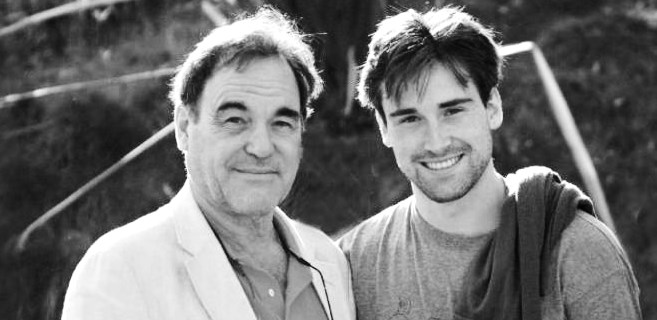
So imagine growing up and one day the realization hits that your Dad is the acclaimed filmmaker Oliver Stone; on top of that you have essentially grown up in the movies your father has been making. Now you were unaware to the extent of just how different things at home where compared to other people. But, it’s just how things were, and it’s just how things were for Sean Stone.

1002004006473548

Being on the set was normal because making movies is what Dad did for a living. These famous actors were simply people that were helping Dad out. It all seems fine that is till, as Sean told me, the world opens up and your understanding of that which you have been exposed to becomes evident.

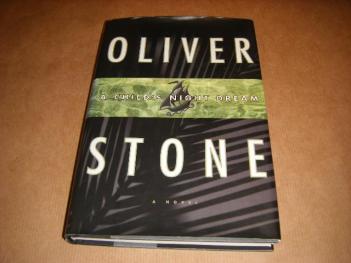
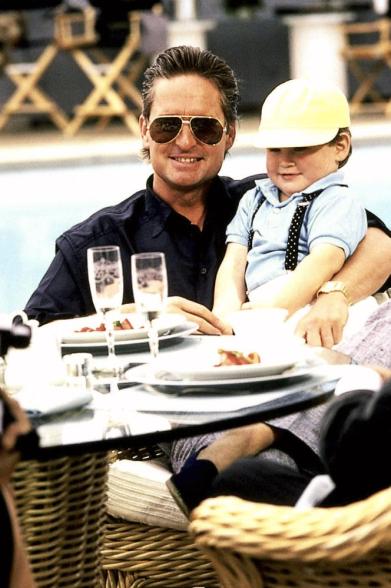
Being a lover of the work of Sean’s dad, I, like the rest of you, have seen him as a baby on the lap of Gordon Gekko, as a young Jim Morrison, as the brother of an eventual mass murderer and more. He is now, however, a storyteller in his own right. Beginning with the chronicling of the making of Alexander, Sean has emerged as a naturally talented filmmaker. He has continued exploring the documentary as well as genre filmmaking, and I eagerly anticipate his intended adaptation of his father’s book A Child’s Night Dream.

35445

It was a real treat to chat with him at the dawn of 2017 . . . ladies and gentlemen, I give you . . . Sean Stone.

MCDWAST FE007

https://www.amazon.com/Alexander-Revisited-Blu-ray-Colin-Farrell/dp/B00CSKQ5TK/ref=sr_1_9?ie=UTF8&qid=1491450945&sr=8-9&keywords=alexander+blu+ray

https://www.amazon.com/Greystone-Park-Blu-ray-Combo-Pack/dp/B008NNY93K/ref=sr_1_2?s=movies-tv&ie=UTF8&qid=1491451403&sr=1-2&keywords=greystone+park

https://www.amazon.com/Childs-Night-Dream-Oliver-Stone/dp/0312167989/ref=sr_1_1?ie=UTF8&qid=1491451496&sr=8-1&keywords=a+childs+night+dream+oliver+stone

What began with Weng Weng: An Interview with Andrew Leavold by Kent Hill

When Shakespeare wrote about all the world being a stage, and all the people in it being merely players with their entrances and exits, he was on to something. But it is the line: and one man in his time plays many parts that brings to mind the life and now the burgeoning cinema of Andrew Leavold.

Here is a man for whom movies are a great passion, a grand obsession, and they have been the catalyst for the direction in which he has moved through his life. Beginning with his own video store, Andrew filled the shelves with everything from the opulent and the uniquely obscure. For the better part of two decades he brought awareness and ultimately his love for film to the renting public – but the times, as they are bound to do, started a changin’. The landscape of delivering entertainment to the masses forced the then proprietor of Trash Video to reassess.

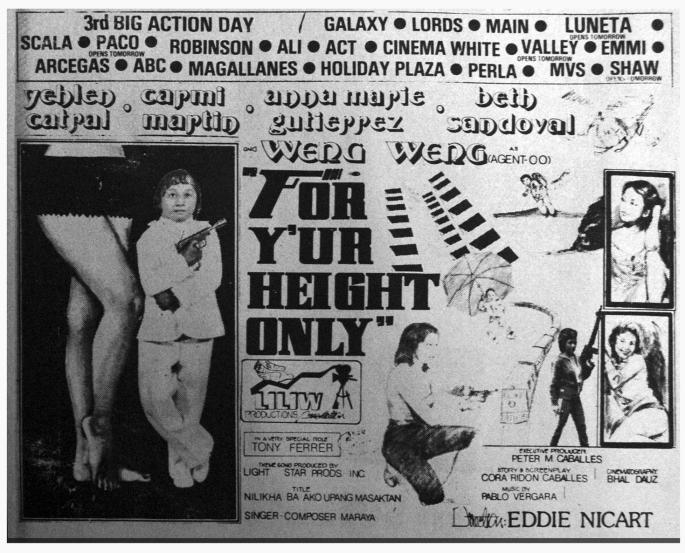
Fortunately by the time the demise of the video store descended, Andrew had already encountered the thing that would prove to be the gateway to the next phase in the evolution of him realizing his dream. That ‘thing’ would appear in the form of a little man the world, up until that point, knew simply as Weng Weng; a pint-sized Filipino actor that had been propelled into recognition as Agent 00 in a film called For Y’ur Height Only.

for_your_height_only_1

Andrew’s fascination with the tiny action man would see him embark on a seven year odyssey, returning multiple times to the Philippines in search of Weng Weng and the story surrounding his life and cinematic career. All of this became the basis of the incredible documentary which still continues to evolve; its release bringing to light more and more stories about this petite performer seemingly enshrouded by magic and myth. But The Search for Weng Weng (the film) is only a piece of the adventure. There is now a book, the print companion to the documentary in which Leavold extends and expands upon all he has and continues to unearth.

What I took away from our conversation is that the spark that fuels the fire which burns within us, inspires us, drives us toward that which we seek to achieve can come, at the best of times, from the most unlikely of places. For Andrew, a mysterious video tape catapulted him from one dream to the next, now, he is the filmmaker he thought he would never become. It was a privilege to talk with him and I sincerely hope you will check out The Search for Weng Weng, the book and the film and help Andy continue his work, keeping the dream alive.

Ladies and Gentlemen . . . Andrew Leavold.

Me


To get your hands of the book and the film please visit:

https://www.facebook.com/TheSearchForWengWeng

https://www.facebook.com/andrew.leavold

PTS Presents Writer’s Workshop with MARK PROTOSEVICH

protosevich-banner

mark-protosevichWe’re very excited to be joined by screenwriter Mark Protosevich, who we are huge fans of.  Mark’s credits include THE CELL, I AM LEGEND, POSEIDON, OLDBOY, screen story for THOR, the unproduced follow-up to BATMAN & ROBIN, and the upcoming FLASH GORDON directed by Matthew Vaughn.  We go in depth with Mark, talking about his writing process, his love for cinema, and his journey to becoming a writer.  We hope you enjoy, this was an amazing chat!
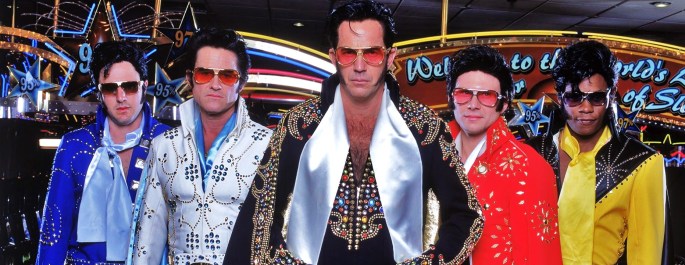
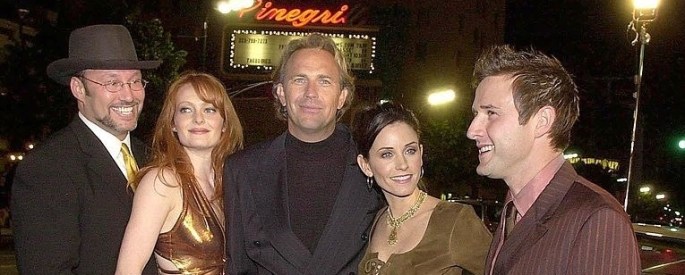


Back to Graceland: An Interview with Demian Lichtenstein by Kent Hill

If you have seen the restored Lawrence of Arabia then there’s a chance you’ve seen the extras on the second disc? One such extra is an interview with Spielberg, in which he recounts sitting down with David Lean for a screening of the film. As they watched, Lean provided what Spielberg describes as a ‘live’ director’s commentary, pontificating about all aspects of the production while the pair sat through the movie.

Now Spielberg himself doesn’t do commentaries, but a lot of directors do. Of course I have a list of films that to date, do not boast a commentary track which I wish, so badly, that they did. Near the top of that list are a pair of movies that stick out. One is John Milius’s Farewell to the King and the other is Demian Lichtenstein’s 3000 Miles to Graceland.

But now for something really cool.

At the close of 2016 I had the chance to chat with Demian, and what eventuated was quite extraordinary. I was working my way through my questions when, all of a sudden, Demian started to unload his fantastic tales from the production, and it just kept getting better. As I listened, I imagined Spielberg listening to Lean, receiving first-hand all of those astonishing insights, and here I was in a similar situation getting the good oil on the production of Graceland.

It has become a cult film with the passage of time, but there remains no chance of Demian ever being gifted the ability to go back in and retool his movie. Perhaps in some small way set certain things to right.

I was tired when we spoke, it was 3am here Down Under, but, by the time we were through, I was energized and so sat back and re-watched 3000 Miles to Graceland with fresh eyes. Demian’s stories swirled in my head. When we were talking, just when I thought it was over, he went on. I received scene-specific commentary and even insights into scenes that were written but never shot.

It was a genuine thrill, along with being a great and one of the most surprising interviews I’ve ever done.

3000 Miles to Graceland is out there waiting for you to watch it again or to discover it for the first time. It makes me proud as a fan to think that this interview may serve as the bonus material we never received. A director’s commentary of a splendidly intricate and playfully unique movie with great anecdotes, favorite scenes and even deleted scenes in the form of unrealized story elements.

So, for all you fans and even the first-timers, the journey of 3000 Miles back to Graceland begins here, for your listening pleasure.

51589485

Don’t Argue: A Conversation with an Australian Screen Icon by Kent Hill

David Argue is a brilliant, unpredictable talent. At his greatest when left to his own devices and instincts, he has graced Australian screens for the better part of five decades.

Gaining is equity card as an infant, he soon found his way to the National Institute of Dramatic Arts whose graduates include the likes of Mel Gibson (Lethal Weapon, Braveheart), Judy Davis (Celebrity, Absolute Power) and Colin Friels (Dark City, Darkman) just to name a few. He has worked with our finest behind the camera as well, under the direction of Peter Weir (The Truman Show, Dead Poets Society), Brian Trenchard-Smith (The Man from Hong Kong, Turkey Shoot) and Russell Mulcahy (Highlander, The Shadow).

He has enjoyed a career of richly diverse roles. Playing everything from outback lunatics to bumbling criminals to budding cinema proprietors. Sharing the screen with the cream of both Australian and international talent from a then unknown Nicole Kidman to being the cellmate of Ray Liotta.

David has watched the industry thrive, shrink and change as well as having the distinction of seeing himself decapitated. (If anyone out there reads this and knows the whereabouts of David’s fake head from the film Blood Oath – he would like it back)

David sat down with me recently, in one of the most fun and certainly funniest conversations I’ve yet had, talking about his life of many parts, about his hours of strutting and fretting upon the stage, as well as his hopes for a BMX Bandits 2.

Ladies and Gentlemen I give you the irrepressible, the incomparable, the irresistible David Argue.

mvm_david_argue-245x300

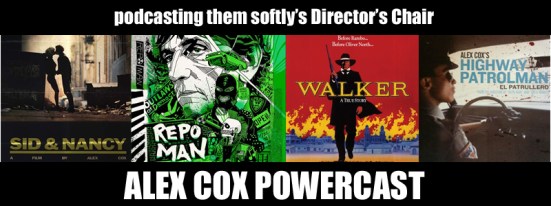
PTS Presents Director’s Chair with ALEX COX

cox-banner

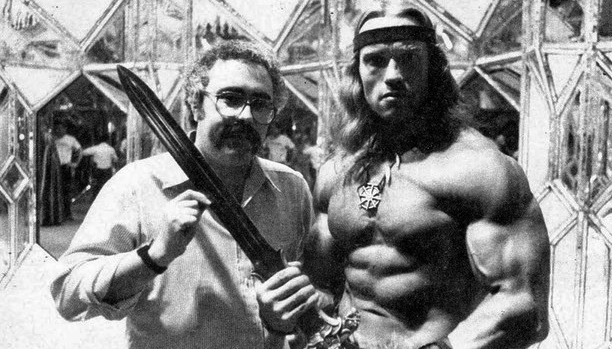
alex-coxWe are so incredibly proud to publish our latest chat in our Director’s Chair series.  We were joined by filmmaker ALEX COX.  We had limited time with him, and cannot thank him enough for his time, but we were able to ask him about SID & NANCY, WALKER, REPO MAN, and a film he’s in talks with releasing through the Criterion Collection, HIGHWAY PATROLMAN!  We hope you guys enjoy!
For the Love of the Movies: A Conversation with Paul M. Sammon by Kent Hill

Those of us who love the movies were bitten by the bug at an early age. Paul M. Sammon is no different, though as he told me, his options regarding entertainment whilst growing up on a military base were limited. If you were athletic there was baseball, if you were a reader there was a library. Then of course there was the cinema.

When you are young there is no such thing as a bad movie. You devour all you can of the sights, the sounds, the sensations that rip through your entire being as screen comes alive and you are transported. At times to far-flung stars, only to be besieged by angry armies of giant bugs or thrust into the midst of a crime wave, surrounded by urban decay only to turn and find yourself staring down the barrel of a gun in the hand of a cyborg police officer who instructs you in no uncertain terms to, “think it over creep.”

Paul M. Sammon has spent over thirty-five years in and around the movie business. His ferocious zeal and meticulous attention to detail have garnered him a reputation. Not merely for his comprehensive and passionate coverage of the films that he admirers but also (and in this I share his passion in equal measure) for the journey that a film must undertake from its inception to its coming soon to a theatre near you.

He has brought his veracious eye for intricacies to many a fine piece that has graced the pages of publications such as The American Cinematographer, Cinefantastique and Cinefex. He has served within the industry as everything from a special effects coordinator to a still photographer. Then of course there are his books; the most memorable of these being Future Noir: The Making of Blade Runner. During his time on the production he came to know better the film’s director Ridley Scott, whom he would later serve as biographer.

He has rubbed shoulders with many of Hollywood’s finest talents and been present to document the triumphs and the tragedies that have occurred on the film sets, upon which the lamentable and the legendary have been photographed at twenty-four frames a second.

To converse with Paul was everything I had hoped for and more. His candidness, his cleverness, his unbridled joy for cinema ebbs and flows from his deliciously detailed delivery. But that’s enough from me.

Sit back and enjoy this reminiscence, as a great storyteller reflects on his adventures in the sometimes fun, sometimes fickle but often fascinating land where movies are born, raised and once in a while butchered.

Ladies and Gentlemen, I give you, Paul M. Sammon…


The Blind Wolf speaks: An Interview with Kurando Mitsutake by Kent Hill

Independent film making is a minefield.

I recall Tarantino being asked for his advice on how to break into the film business. In his response he compared films to waves breaking against the shore. One after another, after another. I’m paraphrasing here, but at the end of his answer he said if you really want people to stand up and take notice, then you have to put a killer shark on one of those waves.

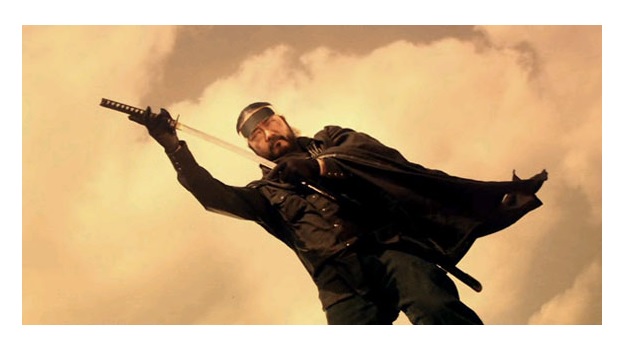
Kurando Mitsutake has been climbing the mountain towards success in the industry for a while now. Burdened by low budgets and tight schedules, he has refused to surrender to defeat by virtue of his tenacity and creativity. Thus he has gone on to produce a collection of eclectic, action-packed explosions that not only homage but summon the spirit of the heady days of that glorious age that saw the rise of exploitation cinema.

Beginning with his audacious debut Samurai Avenger: The Blind Wolf, Mitsutake brought to my mind memories of Jodorowsky’s El Topo as he would himself write, direct, produce and even star in the ultra-violent extravaganza that carried all the delightful hallmarks of a revenge western, along with shades of Kenji Misumi’s Lone Wolf and Cub series.

Success lies at the ends of roads that present everything from gentle rises to precipitous falls. Kurando has known both and has managed to endure. His ability to deliver furious and engaging movies on a shoestring has preempted his rise, and rise again. He is a filmmaker on the verge of greatness, and what he may he yet achieve with a healthier budget or, dare I say it, studio backing will be (I have no doubt) a film the likes of which the world has not yet experienced.

He was an absolute delight to talk to and I say to you now, mark well and remember – Kurando Mitsutake has only just begun. His journey will captivate, his cinema will excite.

I give now, The Blind Wolf himself . . . . Kurando Mitsutake.