Slimy, icky, yucky and gooey don’t even begin to cover James Gunn’s Slither, a corrosively funny low budget schlock-fest that took the genre by storm a decade ago, charmed horror fans all over and put him squarely on the map. A throwback to many mindless low budget creature features of yore, but still with enough brains in its head (and some splattering the wall) to have decently written characters and a monster that doesn’t feel lame or copied and pasted. When a strange asteroid lands in the forests outside small town USA, it’s only a matter of time before someone stumbles across whatever it contains and becomes infected. That someone happens to be Michael Rooker, here playing the deftly named Grant Grant, local bigwig and proud husband to trophy wife Elizabeth Banks. There’s a deadly parasite with the rock, one that takes him over, turns him into a giant disgusting inbred octopus, and has apocalyptic plans for our planet. Nathan Fillion, who is in literally every Gunn film, does a sly and charming turn as the local Sheriff, never losing his cool long enough to let up with the attitude, and backed up by his trusty deputy (the lovely Jennifer Copping). Gregg Henry, another Gunn veteran, steals the show as the town’s sleazy, foul mouthed mayor who laments “I’ve never seen anything like this before, and I watch Animal Planet all the fuckin time!!!”. Rooker is a champ for sitting through all the makeup, as most of his scenes are him whipping around tentacles that chop people up and covered in a deluge of slimy deformations. There’s slug like parasites that’ll make you suirm (careful getting in that bathtub), morbid obesity to hilarious lengths, gore galore and a tongue in cheek attitude that’s irresistible. What more do you need from a horror comedy?
I DRINK YOUR BLOOD (1970) – A REVIEW BY RYAN MARSHALL
One look at David E. Durston and one might guess that he would be the least likely person to have directed one of the most genuinely shocking horror films of the 1970’s, and one brief glance at the truly ridiculous synopsis for his crowning cinematic achievement, I DRINK YOUR BLOOD, might cause one to anticipate that the sum will not indeed be greater than its parts. Billed during its time alongside I EAT YOUR SKIN, a voodoo cheapie straight out of the 60’s, this is the sort of film that we only think we know going in, although most viewers will soon discover that this is not the case. This is a curio and a half, an invigorating subversion of genre filmmaking that is as delightfully demented as it is thoroughly engaging. It wears its sleaze on its sleeves, devoid of any real pretentions; all thrills and chills with little time for filler.
We open on a naked fireside ritual being held somewhere in the woods amongst a group of hippies with a penchant for the dark arts, led by the exotic Horace Bones (Bhaskar, an Indian performance artist). They kill a chicken and drain its blood into a goblet before spotting a local girl (Iris Brooks) sneaking a peek at the action from between some trees, who is then chased down and raped by a couple of their men. Devastated, she drags herself back into the sleepy town of Sally Hills the next morning, where she’s taken into the care of her kid brother Pete (Riley Mills) and the owner of the town bakery, Mildred (Elizabeth Marner-Brooks). Her grandfather comes over to check on the poor girl and decides that these rowdy characters must be dealt with immediately.
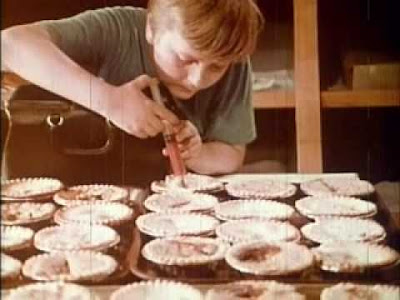
Meanwhile, the Manson-esque cult makes themselves at home in one of the town’s many abandoned hotels, where they run rampant hunting rats and destroying what’s left of the furniture. The grandfather grabs his shotgun and heads out the door in search of the group, but when he finds them, they take him down and he is force-fed LSD before returning home. Unable to stand by whilst his grandpa is in the throes of a bad trip, Pete takes the gun and goes out into the woods to do some snooping of his own. While exploring the woodland, Pete spots a rabid dog that charges at him, but he’s quick to shoot and after killing the wild animal, he takes some of its blood in a syringe. And what, do you imagine, he does with it? Why, what any other reasonable young fellow would – meaning that he injects the blood into some meat pies back at the bakery, which are then sold to the hippies.
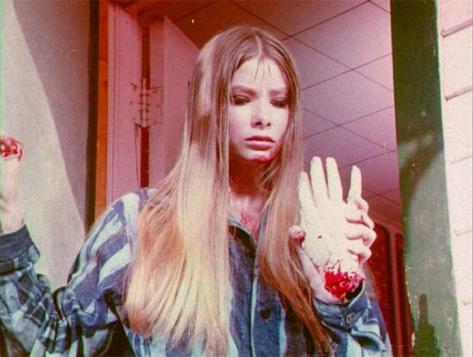
Everyone but Andy (Tyde Kierney), the suspicious and insecure local kid who somehow got mixed up in the group’s nasty business, digs in to the pies and you can probably – emphasis on PROBABLY – imagine where it’s going from there. What ensues is nothing short of sheer lunacy. Psychopathic – not to mention hydrophobic – hippies running rabid around a US ghost town, foaming at the mouth and spreading their disease far and wide. Durston goes all the way, trying his damned hardest to offend as many parties as he possibly can – religious folks, animal lovers, anyone with the tiniest glimmer of hope in the Good Old American Way – and he gets the job done with a more genuine style and class than one might expect.
Jacques Demarecaux’s work here (as cinematographer) should be commended, certainly more than it has been in the past, with his ethereal and startlingly naturalistic compositions complementing the film’s shamelessly nasty contents. Sometimes, filthy movies are shot beautifully, and this is one of them. However, it’s Durston’s willingness to manipulate tone and audience expectations that makes this a significant cut above the rest and it’s interesting to note that it doesn’t immediately register as a dark comedy for most viewers. This nevertheless appears to be the intention, or so the unforgettably over-the-top dialogue (“Let it be known, sons and daughters, that Satan was an acid head!”) and performances, totally psyched-out self-aware soundtrack (credited to Clay Pitts, who has yet to be found), blatant disregard for scientific fact and frequently amusing editing would suggest.

Sure, it all seems quite mean-spirited, but deep down it is the work of a man whose roots and interests were not necessarily in the macabre, and whose sole desire is to entertain. The tonal shifts may prove to be a bit much for some, alternating between hysterical hippie hangout and sad, disturbing body horror once the pies have been consumed, but they are undoubtedly what make up the film’s distinctive identity. For all their inherent crassness, one feels something akin to sympathy for the deadly deadbeats by the end of their separate ordeals, although it’s understood that they’ve made their own problems up to this point. As hard as it is to watch them destroy one-another, it does make for some spectacular set pieces, such as a sequence which has a mute Lynn Lowry wielding an electric meat carver, and another where Horace squares off against a fellow rabid Satanist, Rollo (George Patterson) in an axe-sword fight. There are many others, but one should embrace all the secrets and ask questions later.
The residents of Sally Hills are like lost souls occupying a space where time does not apply. Mildred looks as if she’s just walked off the set of a porno film, Pete’s an overly moralistic little shit who is most likely based on Durston himself, and the construction workers are an ugly bunch who show their true colors once the epidemic is well underway. A kind of hazy ambience hangs over the film, infusing it with a surreal sense of danger which in turn ensures that it never feels too relaxed. There is authentic tension here, and the pacing could not be more perfect; as mentioned before, there’s little time left for wandering around aimlessly. This is a spectacular entertainment as well as a surprisingly transcendent one and there even seems to be a running commentary about the deconstruction of the American Dream, but perhaps that’s all just as a result of context. It’s nothing that is explored in great detail, but these are the kinds of themes that can make or break a movie like this just by showing up (or not).
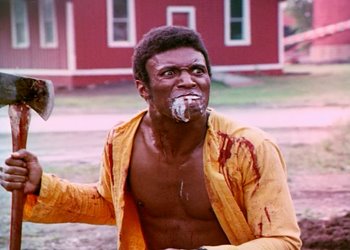
We feel as if we’re seeing something we shouldn’t, and the emotions that such an experience arouses from deep within are conflicting to say the least, but healthy nevertheless. The grime oozes consistently from this one – reach out and touch it and you might just learn something. I DRINK YOUR BLOOD revels in its absurdism and artifice, playing more like a perverted piece of performance art than a silver screen serenade, and also works well as an invaluable time capsule. Some films skate by on that alone, but luckily Durston’s opus has plenty more going for it. This is quintessential viewing for the insane, the unstable, and the amoral; it may be the closest some come to sheer filth without actually involving themselves directly. The title may be misleading, as there is no drinking of the liquid red at any point and this is certainly no vampire tale, but make no mistake – this is a groovy good time, an important entry in the unofficial “psych” horror sub-genre that is less about mind-melting visuals and more about the essence of psychedelia. Exploitation cinema doesn’t get much better. “Drink from his cup, pledge yourselves. And together we’ll all freak out!”
JOHN CARPENTER’S BIG TROUBLE IN LITTLE CHINA — A REVIEW BY NICK CLEMENT

Big Trouble in Little China is an awesomely goofy movie that has a pleasure zone a mile wide, and because it’s so bonkers without ever looking back, it’s nearly impossible not to be fully entertained by the spirited, comic-book inspired antics on display. Despite bombing in theaters when it was released in 1986, John Carpenter’s action romp has found a massive cult following thanks in large part to the VHS-era and the huge cable movie boom of the 80’s and 90’s. Gary Goldman and David Weinstein’s original script (set in the old West circa 1880) was completely re-worked by Buckaroo Banzai helmer W.D. Richter, with the final result splicing martial arts, Asian sorcerery, genial comedy, big stunts, and lots of cheesy-awesome special effects into a tongue-in-cheek package that feels as audacious as it does harmlessly silly. Kurt Russell was absolute gold as beefy truck driver Jack Burton, all cocky swagger and macho bluster, while Kim Cattrall, Victor Wong, Dennis Dun, and James Hong delivered robust supporting performances.

The plotting is totally ridiculous and all the more enjoyable for being positively over the top; movies like this are a tough nut to crack on a tonal level but all of the creative parties knew exactly what they were doing. Dean Cundey’s shimmery widescreen cinematography is absolutely gorgeous in that old-school celluloid fashion, while the adventurous musical score from Carpenter and Alan Howarth set the perfect mood. And the sets and production design by John Lloyd were totally remarkable, resulting in a film that feels twice as big as its reported $25 million budget. After the lukewarm critical reception and box office failure of the film, Carpenter took a more independent direction with his filmmaking career before settling into lower-budgeted studio offerings with mixed success. While my favorite film of his continues to be Starman, and Escape from New York is a bonafide classic and The Thing a fan favorite for so many, there’s something rambunctiously exuberant about Big Trouble in Little China that really allows it to stand out in the crowd as an extremely memorable and offbeat piece of work.

ROBERT MONTGOMERY’S RIDE THE PINK HORSE — A REVIEW BY NICK CLEMENT

Ride the Pink Horse. I had never heard of this film until my father purchased the Criterion disc for me, but I’m not surprised that this esteemed purveyor of fine cinema decided to include this underrated and fantastic film noir in their extraordinary catalog. Released in 1947, the film was directed by actor Robert Montgomery, who also starred, and was adapted for the screen by Ben Hecht (Scarface), who based his devilish script off of the novel by Dorothy B. Hughes. Co-starring Wanda Hendrix, Andrea King, and Thomas Gomex in an Oscar nominated supporting performance, the narrative centers on a war veteran who descends upon a small town in New Mexico, looking to kick some ass and take some names over the death of one of his friends. This film has a shady and shifty narrative, juicy performances, magnificently stark cinematography, and a devilish musical score to tie everything together. Montgomery was incredibly commanding in the lead role, knowing exactly how to direct himself and take full advantage of the rest of his cast and pulpy material. This is a little cinematic gem that I’m glad that I finally got around to seeing.

PTS Presents DIRECTOR’S CHAIR with John D. Hancock

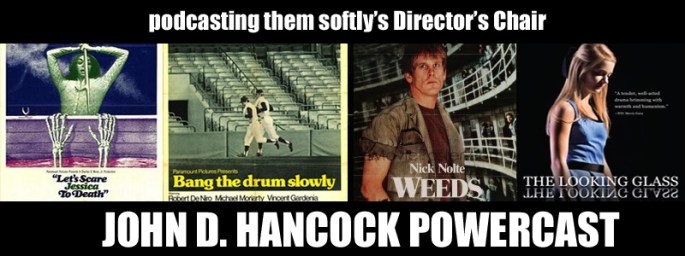
Podcasting Them Softly is thrilled to present a discussion with filmmaker John D. Hancock! John is the director of the 70’s horror classic Let’s Scare Jessica to Death, the highly acclaimed baseball drama Bang the Drum Slowly with Robert De Niro and Michael Moriarity, Baby Blue Marine with Jan-Michael Vincent, the cult classic California Dreaming, family holiday favorite Prancer, and the prison drama Weeds with Nick Nolte. His most recent film was The Looking Glass (currently streaming on Netflix), which was a collaboration between John and his wife, Dorothy Tristan, who in addition to delivering a superb lead performance, wrote the film’s sensitively observed screenplay. His impressive TV credits include Cover Up, Lady Blue, Hill Street Blues, and The Twilight Zone, as well as multiple made for TV movies. He’s also a veteran of the stage, having directed works from Shakespearre to Saul Bellow, as well as versions of ‘night, Mother and Noises Off. He served as the Artistic Director of the San Francisco Actor’s Workshop in 1965, and later became Artistic Director of the Pittsburgh Playhouse and the New Repertory Theater in New York City, while also collaborating with famed playwright Tennessee Williams. It was a total honor to speak with him about his fabulous career – we hope you enjoy!
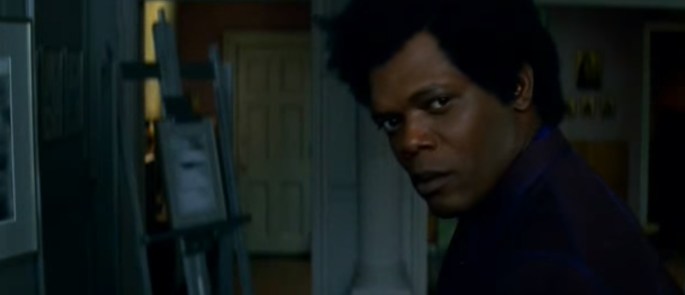
M. NIGHT SHYAMALAN’S UNBREAKABLE — A REVIEW BY NICK CLEMENT


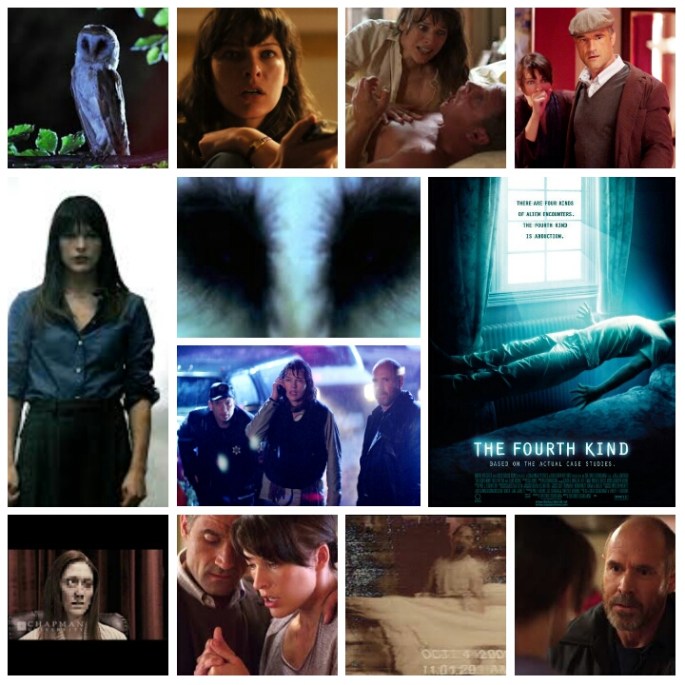
The Fourth Kind: A Review by Nate Hill

One should go into The Fourth Kind aware of a single important fact: Despite claiming to be based on a true story, and featuring numerous realistically creepy candid accounts, it’s essentially entirely made up stuff. People seemed to have a huge bee in their bonnet about that, but curiously weren’t bothered by it in The Blair Witch Project, another film guilty of the same gimmicks. Cinema is make believe anyways, and if the story works, then what does it matter. This is one of the scariest films I’ve ever seen, thanks to a few well orchestrated and very bizarre moments that transcend what usually gets passed off as horror these days. It tells the alleged story of several incidents and encounters with paranormal beings in and around Nome, Alaska, from the perspective of psychologist Abigail Tyler, played by Milla Jovovich in elaborate, atmospheric reenactments, and by Charlotte Milchard in terrifying newsreel testimonials. Something has come to Nome, and is causing not only disappearances but very, very weird behaviour among the townsfolk, and a general aura of poisonous unease. Abigail does her best to work with patients and locate the source ofnthe trauma without losing her mind or having an encounter herself. Her patients babble and rave, but there’s consistency to their claims, prompting her further belief and summoning of other experts, including a language specialist (Hakeem Kae Kazim) and an old colleague (Elias Koteas), who are equally as stumped. The town sheriff (Will Patton) believes her to be a complete whacko and does everything to hinder her efforts at every turn. Patton starred in another film that’s very similar to this, Mark Pellington’s The Mothman Prophecies, and his grave presence only perpetuates the same kind of eerie supernatural vibe, albeit far closer to outright horror than Mothman. The way the film shows the ‘real’ Abigail sometime following the events chilled me to the bone. She’s broken, haunted and speaks as if there’s a stain on her soul from some otherworldly force. The film knows what gives people that creeping, cold dread fear that we seek so desperatly in the genre, and gave me a fair helping of it. Whether or not the story is even remotely true is trivial; they’ve made a gruesomly scary tale out of it, and that’s what’s important. Also, you’ll never look at owls quite the same way after seeing this. Top shelf horror.
WARREN BEATTY’S BULWORTH — A REVIEW BY NICK CLEMENT

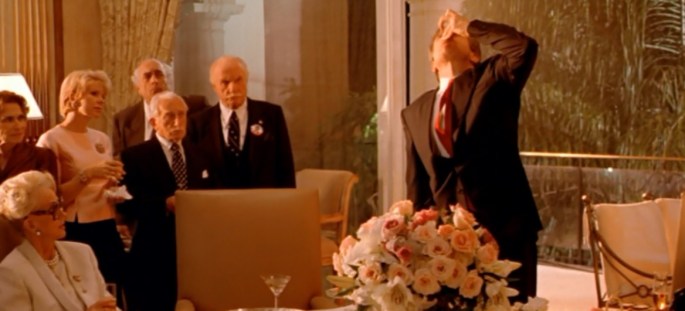
Bulworth remains just as funny and incisive now as it did back in 1998 when it scorched movie screens. Directed with verve by Warren Beatty and co-written with obscene ferocity by Beatty and Jeremy Pikser, the film stings with blunt truth, outlandish yet cogent satire, and an eerily prescient vibe that feels more and more bracing as the years have progressed. Beatty was absolutely hilarious in the lead role, playing a burnt out California Senator who is up for re-election but facing stiff competition, and who tips over the edge in every possible manner. Oliver Platt stole the show as his beleaguered campaign manager, delivering a hyperactive performance of intense comedic force; his cocaine bits are priceless. Halle Berry appeared as the unlikely love interest with a twist, while the assassination-for-hire subplot gets more amusing the more times it’s viewed. Vittorio Storaro’s edgy, tactile cinematography made smart use of physical locations, swerving in one direction for a moment and then the opposite the next, while projecting a jittery visual atmosphere that meshed perfectly with the emotionally and politically charged material and overall unpredictable tone.

Don Cheadle, Jack Warden, Paul Sorvino, Amiri Baraka, Sean Astin, Isaiah Washington, and Christine Baranski as Bulworth’s constantly annoyed wife were all superb in supporting roles, especially Cheadle, who really grabbed his character and went for it. And I absolutely LOVE the final scene and shot and lines of dialogue and what it implies and leaves open for the viewer to interpret. Rumor has it that Aaron Sorkin and James Toback helped to write the script, and that the film was shot mostly in secret (only an outline was shown to studio execs), and released by 20th Century Fox who were fearful of a lawsuit stemming from their backing out of producing Beatty’s Dick Tracy. With hardly any major promotional efforts and only appearing in limited to medium theatrical release, the film grossed nearly $30 million domestic, and received Oscar and WGA nominations for Best Original Screenplay. Aggressively humorous, socially astute, and more timely than ever, Bulworth is long overdue the Blu-ray treatment, and is ripe for rediscovery as its message still feels sharp as a tack and wholly resonant.

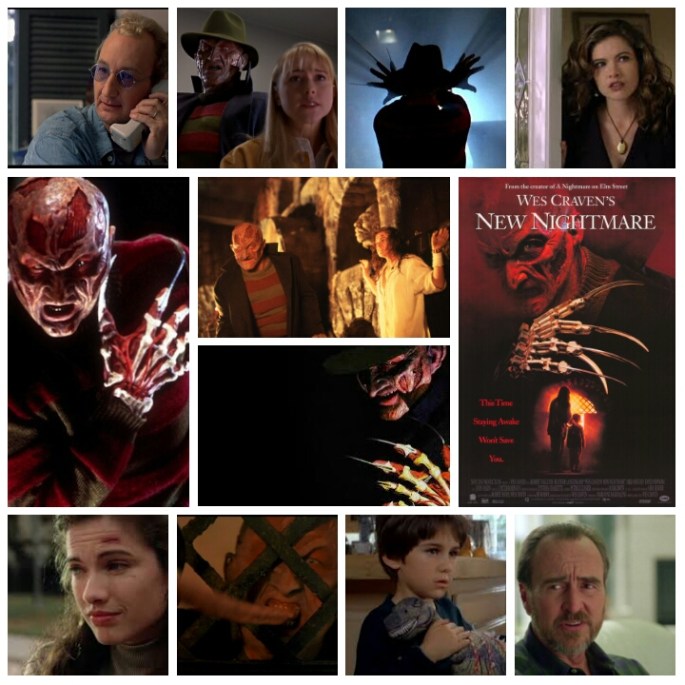
Wes Craven’s New Nightmare: A Review by Nate Hill
Sleek, frightening update on a sagging franchise. Brilliant use of a meta concept that could have easily taken the silly route. Imaginitive, jaw dropping practical effects. A darker, less flamboyant take on the iconic character Freddy Krueger. Wes Craven’s New Nightmare was the best Freddy flick to come along since Dream Warriors, the third installment. After the stale and awkward sixth film, Freddy’s Dead: The Final Nightmare (my ass final), there really needed to be a game changer, something fresh and solid that would shake up a routine that had been getting fairly silly for some time. Who better to facilitate that than the man who kicked the entire legacy off back in 84′, Wes Craven himself? Back with a vengeance and a whole grab bag of new ideas, Crane brought forth a new, remodeled version of the Freddy lore, with some innovative twists. This one takes place in the real world, where Heather Langenkamp is Heather Langenkamp and not Nancy, Robert Englund is actually Englund and not Freddy. Heather has a young son (Miko Hughes, the go to little tyke of the 90’s), Englund is relaxing and trying out the artist’s life, and Craven, also playing himself, has big bold ideas for the Nightmare franchise. The meta doesn’t stop there though; Whatever Craven is cooking up has somehow awoken a very real, very serious and very scary version of Freddy who is now trying to break free from dreams and into our world, using young Hughes as a conduit, and wreaking havoc left right and center. Heather knows the only way to put a stop to the evil is to face Freddy, as Nancy, one last epic time. I love the high concept, I love that Craven conceived of this and got it made, it’s one of the most inventive horrors ofnthe decade. When Freddy does show up, he’s dead straight serious without a quip or wisecrack in sight. His design and attitude are way darker too, he’s a suitable real world dream demon that makes the Englund of past outings look like Big Bird. The special effects crafted for the netherworld Heather ventures into are a confusing labyrinth of body horror, ornate production design and impressive imagination. A complete vision of the Elm Street legacy that does what few horror franchises attempt, let alone succeed at: It reaches beyond the tropes that have got it to where it is and pleased audiences so far, breaks new ground and reinvents the legend.
JOHN IRVIN’S HAMBURGER HILL — A REVIEW BY NICK CLEMENT

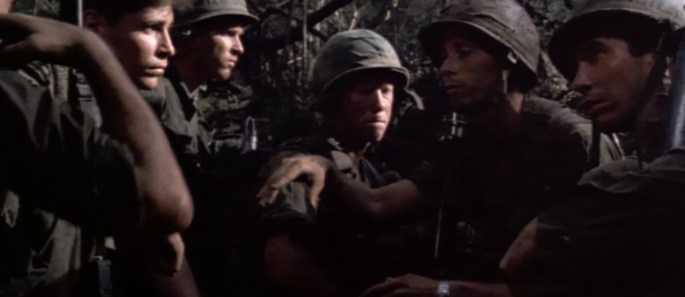
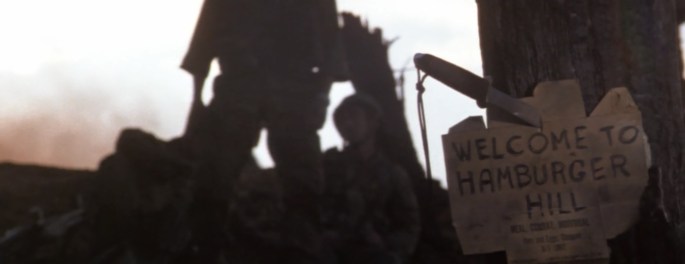
War films are rarely as harrowing or as gritty as Hamburger Hill, which is easily one of the more underrated entries in this most venerable of genres. Released in 1987 to strong reviews but small box office returns, this is a movie that has gained a considerable reputation throughout the years, and is ripe for rediscovery after films such as Black Hawk Down, Saving Private Ryan, Lone Survivor, We Were Soldiers and 13 Hours have all subscribed to the same sort of cinematic aesthetic of absolute bombardment by way of on-screen combat. Directed with solemn integrity by macho director John Irvin (The Dogs of War, Next of Kin, Raw Deal, City of Industry, Shiner) and written with a strict sense of discipline by Vietnam veteran James Carabatsos, the film details the bloody and exhausting battle for the Ap Bia Mountain in 1969 between the U.S. Army and the Vietcong, near the border of North Vietnam and Laos.

Starring a roll-call of then-fresh-faced acting talent including Dylan McDermott, Steven Weber, Courtney B. Vance, Don Cheadle, and many others, Hamburger Hill stays focused on the horrific event while also providing a strong sense of political and social context, given that strategic military incompetence, racism within the ranks of soldiers, the treatment of Veterans at home after serving tours of duty, and the cavalier attitude of superiors who weren’t in harm’s way are explored and dealt with in a blunt and forceful manner. Peter Macdonald’s intense and documentary style cinematography never shied away from any of the battlefield brutality, while Philip Glass supplied the mournful musical score. Peter Tanner’s editing did a tremendous job of keeping all of the action coherent, while giving the film a fast and purposeful pace. This is a heavy duty piece of filmmaking that spares no emotional or visceral expense in terms of highlighting a hugely sad and ferocious conflict.