Sam Raimi’s Army Of Darkness: A Review by Nate Hill 

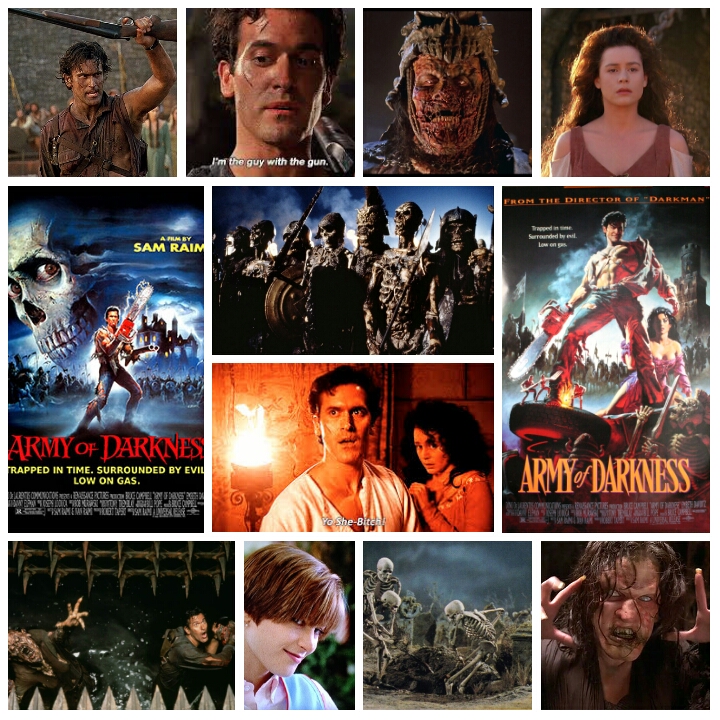
Sam Raimi’s Army Of Darkness completes his demented Evil Dead trilogy in high style, and with way more off the wall humour than the first two, which made you laugh while simultaneously going straight for the jugular with gore. Slapstick seems to be the theme here, as Ash and his trusty accessories of destruction find themselves catapulted straight into the heart of the Middle Ages, where the denizens of the Necronomicon have somehow once again found him. Joining forces with a medieval King, and hopping into bed with a shapely princess (Embeth Davidz), Ash uses his modern day know-how and sassy disposition to battle hordes of skeletal beasties and flying deadites, with occasional breaks for absurd humour and near surreal set pieces. My personal favorite is when he finds himself under attack from numerous pint sized versions of himself after setting off an ancient spell in the nearby dark forests. “Ramming speed” they chirp as they jab him in the ass with a metal fork and giggle like demonic Borrowers. Only in these movies, man. The change of setting from a cabin in the woods to a castle allows for a much larger scale of action, involving entire armies and much more moving parts. The deadite horde has a satisfyingly creaky, Harryhausen-esque way of moving, and look great when blown to bits by the ol’ boomstick as well. They also inherit the silliness and near constant mischief of the demons from the first two films too. Whether it’s trees, deer heads, zombies or skeletons, anything that materializes as a result of that book just seems to have a flair for bizarre and childish shenanigans, kind of like their trademark mode of behaviour.  That too is what makes these films so distinct; they’re horror comedies, yes, but not in the sense that Scary Movie or Young Frankenstein is. They’re like a clown with ADHD prancing about the place and destroying things in their own special and unhinged way. Different from the other films in the series, no doubt, but a welcome and very successful departure. 
CHRISTOPHER NOLAN’S INCEPTION — A REVIEW BY NICK CLEMENT

3

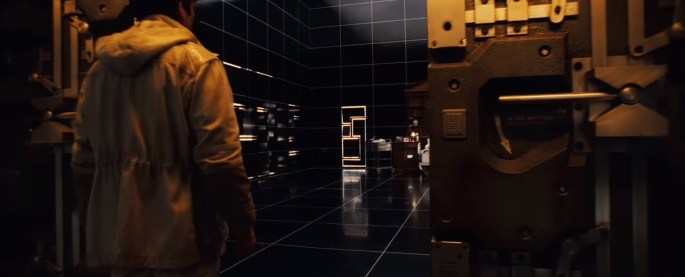
I still don’t understand everything that happens in Christopher Nolan’s spellbinding sci-fi epic Inception, but I don’t care, because I am convinced that Nolan understands it all, and that’s good enough for me. This is a supremely satisfying movie that leaves your head spinning, much like the best of Nolan’s work (The Prestige, Interstellar, The Dark Knight Rises, Memento), and given that I’m a massive fan of his entire filmography and overall aesthetic, it’s no small thing to say that this film might be his most totally realized effort to date. I’m not sure. It’s debatable, of course. The Prestige is probably my favorite of his overall, just because it’s so damn fun and unique for a period film. But on repeated viewings of Inception, zero impact has been lost over the astounding cast (I absolutely LOVE Tom Hardy in this movie), the impeccable cinematography by Wally Pfister, the dreamy narrative concocted by Nolan, the nearly operatic musical score courtesy of Hans Zimmer, and the overall sense that anything’s possible within the visually stunning fantasy sequences that mix architectural rigidity with a sensual swirl of emotions and passion and free-form association that our most vivid dreams and nightmares are capable of concocting. The ending is deliciously tantalizing to ponder, constructed not as a cheat, but as a further extension of all that has come before it. Leonardo DiCaprio was seriously on-point, much like everyone else who Nolan recruited, while the thundering action scenes resonate with nods to Bond, the Wachowskis, and classic action movie cinema, all of which has further cemented Nolan as a populist popcorn auteur with a cerebral streak that separates him from the rest of the blockbuster pack.

2

Stephen King’s Silver Bullet: A Review by Nate Hill 

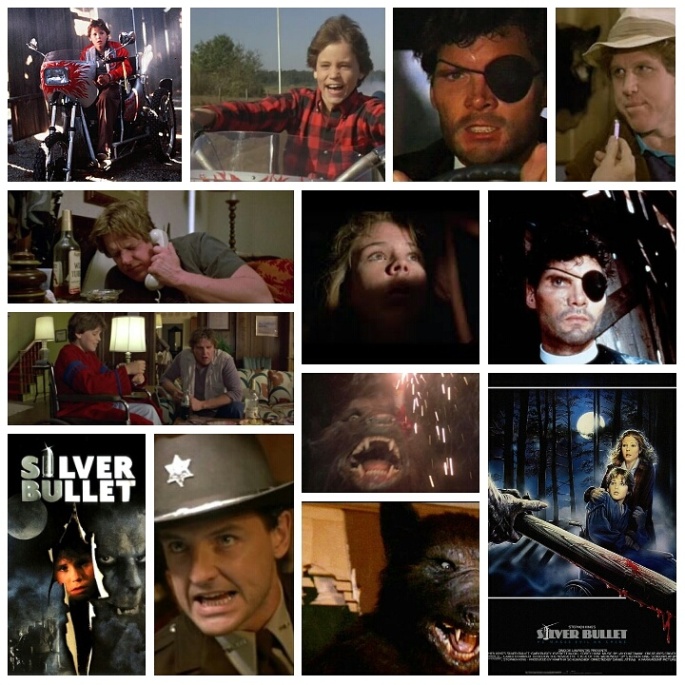
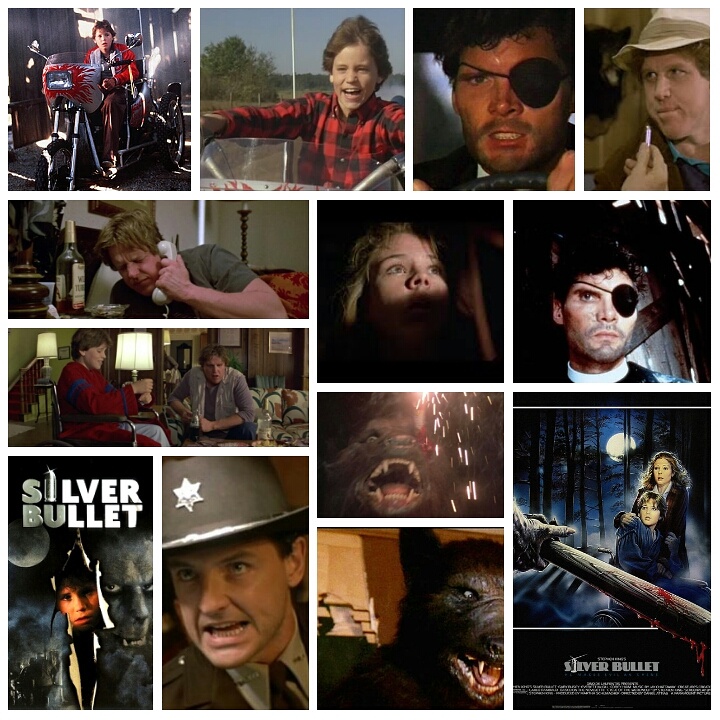
Stephen King’s Silver Bullet is one of the most charming werewolf flicks in the stable, one that combines adult orientated, gory horror with the fable-esque, childlike sensibility that seems to permeate King’s work. It’s also quite funny, thanks to the presence of a boisterous, rotund and quite young Gary Busey. Young Marty (Corey Haim) lives in a sleepy little town where not much of anything happens, until a rash of brutal murders occur in the area. Attributed to a serial killer by townsfolk, Marty has other ideas, specifically that a werewolf has taken up residence among them, and is snatching victims in the night. Taken seriously only by his sister (Megan Follows) and kindly Uncle Red (Busey) he bravely stalks suspect number one, who happens to be the creepy town priest (an intimidating Everett Mcgill). Things escalate into a series of gooey, effects driven set pieces that drip with wonderful 80’s schlock and awe, as of course is the tradition with anything based on King’s work. Other notables include Terry O Quinn, Bill Smitrovitch, Lawrence Tierney, King’s own son Joe Wright, and late great character actor James Gammon in an opening sequence cameo. It’s not all that scary, but more about the beloved tropes of such stories as these, the timeless monsters that inhabit them, as well the the intrepid young heroes whose lives growing up and finding themselves equally as important and high stakes as the horror elements. 

Eduardo Sanchez’s Lovely Molly: A Review by Nate Hill 

Eduardo Sanchez is a name you may or may not know, but title the title of the film which put him on the map you will most definitely remember. The Blair Witch Project was the little horror indie that caught the snowball effect and went on to become one of the most legendary fright flicks ever made, as well as unfortunately spawning the found footage sub genre. So the question was, how would a filmmaker who accidentally captured lightning in a bottle top such an achievement? Well, by not trying to recreate said lightning, that’s how. By branching off, by breaking new ground, and by giving us a terrifying little character study of a horror like Lovely Molly, which has unsettled me like no other in the past couple years since I’ve seen it. It’s a character study in the sense that the horror comes mostly from a psychological place, with the slightest suggestion of external and paranormal torment, a subtlety that goes a long way in scaring the pants off us. The story focuses on Molly (Gretchen Lodge, superb), and her husband Tim (Johnny Lewis, or halfsack for anyone who watches Sons Of Anarchy). They are a young newlywed couple just starting life together, until some restless demons from Molly’s past come back to haunt her. Tim is gone for extended periods of time with his trucking job, leaving Molly alone in their secluded house, a sitting duck for supernatural and psychological forces to hunt her. Raw, disconcerting terror sets in as we witness a tragic downward spiral of disturbing sexual behaviour, unseen phantoms and unending torment befall the poor girl. Scarier still is Sanchez’s blatant refusal to spell out in bold fonts just exactly what is happening to her. Is this just extreme mental illness cauded by residual trauma leftover from an abusive childhood that is hinted at? Are there actually percievable paranormal entities at work? It’s the murky deliberation to not draw lines or give solid answers that makes the film work so well, right up until a climax from darkest nightmares. Lodge is beyond capable with the role, taking Molly’s mania and sickness to levels beyond comprehension or reprieve, truly gone to a place of boiling internal horror. This is a different kind of horror for Sanchez, and he proves to be just as adept with the slow cooker style as he was in frenzied found footage. Don’t go expecting any clear cut answers here though, this is the realm of feverish ambiguity. Some people take issue with that and need a breadcrumb trail laid out for them. I for one love not knowing, just increases the intrigue and the creep factor. A horror gem. 

IRA SACHS’ LOVE IS STRANGE — A REVIEW BY NICK CLEMENT

3
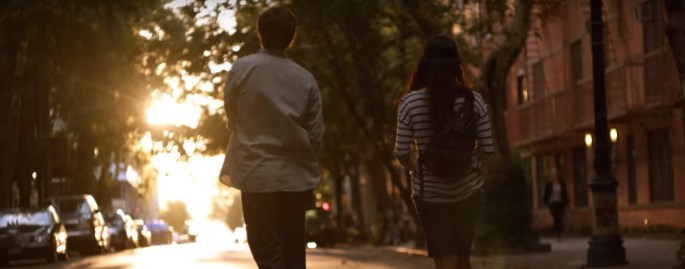
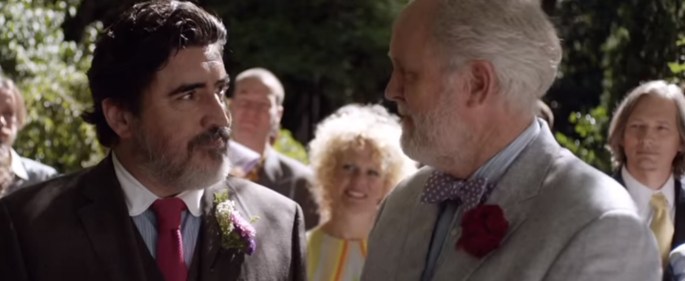
John Lithgow and Alfred Molina deliver wonderful, sensitively attuned performances in Ira Sachs’ warmhearted drama Love is Strange. Portraying an older gay couple living in a gorgeous NYC apartment when they’re suddenly and unexpectedly forced to move out, the film takes a simple and observant look at the lives of these two dapper, eccentric, and compassionate people, and the various individuals that they come into daily contact with. The two men have also decided, that after 39 years of living together, that it’s time to get married. But when Molina is fired from his job at a Catholic school because of his decision to marry, their entire life is turned upside down as a result, as they’re forced to temporarily split up and live with either friends or family until they can get things sorted out.
2.jpg
 
Filled with honest humor, a quiet sense of grace, and the desire to tell a story that’s universal yet very specific at the same time, Love is Strange has an unforced level of dignity about itself that felt very refreshing to experience. The intelligent screenplay, co-written by Sachs and Mauricio Zacharias, pokes at the societal hypocrisies that face same-sex couples on a daily basis, and while never preachy, it’s very clear that this is a topic that means something to Sachs as a filmmaker. And while Love is Strange has a surprisingly sad ending, I would hesitate to call it depressing, as it’s yet a further reflection on the fragility of life, and how people should value their friends and loved ones as much as possible as there’s nothing ever guaranteed during our relatively fleeting time on this planet.
1

Jim Mickle’s Stake Land: A Review by Nate Hill 

Jim Mickle’s Stake Land is one of my favourite vampire films of the last twenty years, ousted only by 30 Days Of Night, but that one is tough to compete with in anyone’s book. The vampire movie and all it’s trimmings has been done to death a million times over, under every stylistic filter and narrative tweak you could imagine, so this one can’t really break too much new ground simply by default, but what it does do is show us a bleak, lived in and worn out world, a world that has been under attack from vampires for a long time, and as such is starting to fray at the seams. These aren’t quiet, regal, brooding vamps either, they’re quick, feral nasties who actually pose a threat and cause a lot of damage, as our young hero Martin (Connor Paolo)  finds out in an arresting opening sequence set in a farmhouse. Left without a family in a world he not ready for, he’s taken under the wing of gruff and rugged Mister (Nick Damici, also the brilliantly talented writer behind Mickle’s films), and the two set off on an increasingly tragic, Cormac Mccarthy esque trek across a broken world, finding lost souls and ravenous monsters at every turn. One thing that seems to escape many vampire films is an emotional core, something to latch onto amidst the cold and clinical happenings, but this one finds that in several key places, including the father son dynamic between Mister and Martin, as well as an encounter with a wounded pregnant girl (Danielle Harris in what is probably her best work so far). It’s sad, downbeat stuff though, without much hope or solace for anyone involved. Kelly McGillis of all people has a brief appearance you can keep your eyes peeled for. Grungy, desolate, tragic, extremely well made, touching and unique in the vampire subgenre. Highly recommended. 

ROBERT LIEBERMAN’S FIRE IN THE SKY — A REVIEW BY NICK CLEMENT

3

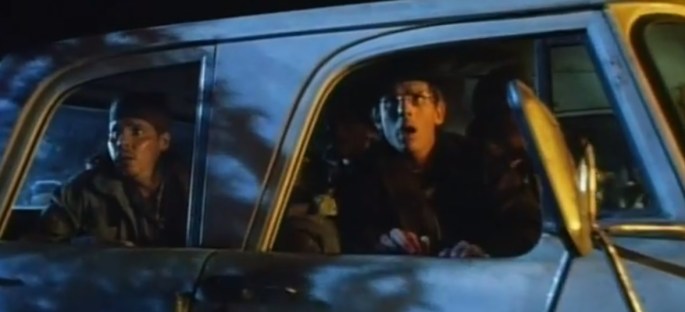
Few movies have frightened me more in the theater than Fire in the Sky. I was 13 years old when my dad took me to see this incredible alien abduction film, and we went opening night because I was so excited that an alien movie was coming out on the big screen. My fascination with UFO’s and extraterrestrials was in full swing, The X-Files would air its debut a few months later, and all I did was go to the library and read as many books about Area 51 that I could find. Directed by Robert Lieberman and written by Tracy Torme, the film is loosely based on the famous Travis Walton alien abduction story, and while the scenes on board the UFO in the film don’t necessarily jive with Walton’s personal account, few movies have shown a more terrifying surgery-by-ET than this film. Seriously – everything on board the ship is wholly gripping and rather terrifying.

1

Shot on a limited budget but featuring absolutely stunning special effects work by Industrial Light and Magic, the scenes aboard the ship are absolutely extraordinary, and make up for the more pedestrian scenes set back on Earth. The excellent cast includes D.B. Sweeney as Walton, Robert Patrick as his best friend, Peter Berg, Craig Scheffer, Henry Thomas, Bradley Gregg, and James Garner as a crusty local cop trying to make sense of a situation that he absolutely believes is a hoax. Bill Pope’s fantastic cinematography made the film look five times as expensive as it probably was, and Mark Isham’s creepy music unsettles at nearly every turn. I don’t get scared by movies too often, but this one absolutely scared the shit out of me. Oh, and since 1993, I’ve never looked at maple syrup in quite the same way.

2

JEAN-FRANCOIS RICHET’S MESRINE — A REVIEW BY NICK CLEMENT

2

The two-part French crime opus Mesrine (released as Mesrine: Killer Instinct and Mesrine: Public Enemy Number One) was one of the most under the radar pieces of cinema from 2008. Completely fantastic and totally riveting, the sprawling films took a cue from gangster Jacques Mesrine’s autobiographical book L’instinct de mort, while trading off of well-worn genre conventions that were artfully spruced up by underrated director Jean-Francois Richet (this year’s superb pulp thriller Blood Father, the 2005 remake of The Assault on Precinct 13). Starring Vincent Cassell in a towering performance as the titular character, there’s an epic sweep to the 60’s and 70’s-set narrative that never loses sight of some fine intimate details, while the superb supporting cast, including Gerard Depardieu, Cecile De France, Ludivine Sagnier, Michel Duchaussoy, Gilles Lellouche, Myriam Boyer, Mathieu Amalric, Olivier Gourmet, Roy Dupuis, and Elena Anaya, truly came to play in every single moment. Robert Gantz’s stark and vibrant cinematography captured all of the bloody violence and live-wire passion that Mesrine’s life brought forth, and because Cassell was so laser focused on the work, you become totally engrossed in his character despite him being a fairly reprehensible person. Critics made apt comparisons to Brian De Palma’s Scarface, as both films certainly share some of the same operatic flourishes, with the script by Richet and Abdel Raouf Dafri balancing the business and personal dealings of their larger than life criminal with great ease. Richet won Best Director at the Cesar Awards, and Cassell won Best Actor.

3

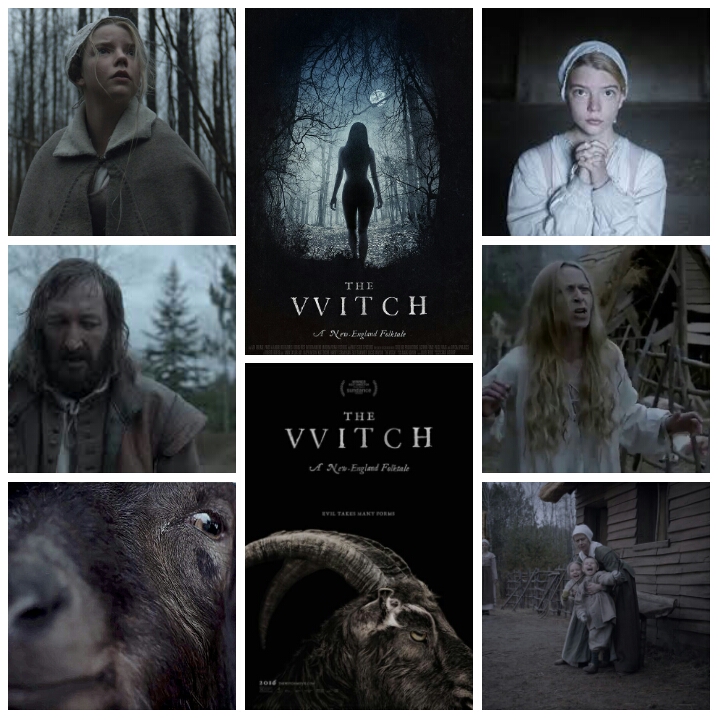
The Witch: A Review by Nate Hill 

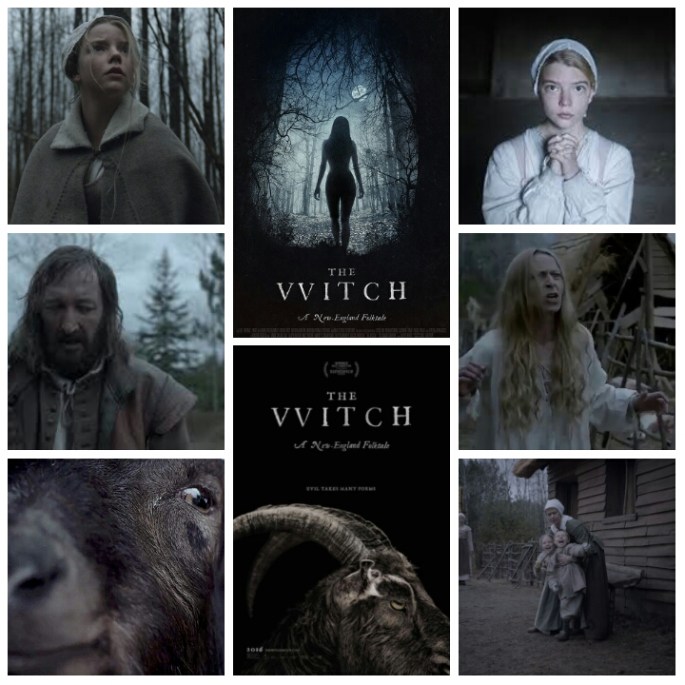
 The Witch offers up an oppresively freaky folktale that still manages to go for broke with demented and disturbing stuff, whilst still keeping it moody and reigned in in equal measure, walking an admirable tightrope with style on one side, substance on the other. The substance lies in the interpersonal relationships between a hapless New England pioneer family trying to hack it alone in the land, living next to a deep dark forest that serves home to the titular cretin, plaguing their existence at every turn. The style lies in that forest, as well as a musical score that kwill shake your bones up and then some, accenting a tale of religious dread, insidious distrust and primal paranoia in a time before reason had grasped humanity, it seems. Plus there’s a big scary fucking goat called Black Philip who seems sentient, which was enough to give me the creepin willies. The family is booted from a plantation for some vague religious politics involving the haughty patriarch (Ralph Ineson is excellently fervent and riled up). Tryon to start a homestead on their own proves to be one nightmare after another out there though, especially when virginal daughter Thomasin (Anya Taylor Joy, a striking beauty) loses the young baby during a split second game of peekaboo on the outskirts of the forest. Things go depressingly downhill from there as the collective sanity of this clan starts to evaporate into feverish mania, while the woods and the witch constantly loom over everything. The dialogue is all period specific which helps with authenticity, and as far as atmosphere goes, you practically drown in it, quite an achievement really. I took quite a long time in getting to see this, and I didn’t quite expect then level of literal horror on display. I was thinking it’d be more unseen, metaphorical, slow paced. It really does mean witch though, as well as that nasty damn goat. You’ll watch your back at the petting zoo after sitting through this one. Well done. 

PTS Presents Writer’s Workshop with MATTHEW SAND

sand-powercast

mattsand_mingasson_025Matthew Sand is the co-writer of “Deepwater Horizon.” On April 20, 2010, one of the world’s largest man-made disasters occurred on the Deepwater Horizon oil rig in the Gulf of Mexico. Directed by Peter Berg (“Lone Survivor”), this story honors the brave men and women whose heroism would save many on board, and changed everyone’s lives forever. The film stars Mark Wahlberg, Kurt Russell, John Malkovich, Gina Rodriguez, Dylan O’Brien and Kate Hudson. Lionsgate is set to release the Summit/Participant production on September 30, 2016. For Sand, the story is not about the tragedy, but a simple act of heroism.

Sand was drawn to the story of “Deepwater Horizon” after reading a New York Times piece about a floor-hand on the rig, Mike Williams, and many others. Williams, a father-figure to the crew, risked his life to save others. When Sand began working on the project in 2010, there was no list of the eleven people who died (and no president at their funerals). To honor those men, one of the first things he did was find their names and set them down.

After moving to Los Angeles from his native Brooklyn where he worked in fine art, Sand quickly began writing and has written over 40 screenplays and teleplays for all of the major studios including “The Summoner,” “Beowulf” and “10,000 BC.” This lead him to meeting sibling American film directors Lana and Lilly Wachowski, who hired him for his first credited screenplay job, “Ninja Assassin.”

“Ninja Assassin,” directed by James McTeigue (“V for Vendetta”) was released in 2009.  The story follows a young ninja who turns his back on the orphanage that raised him, leading to a confrontation with a fellow ninja from the clan.  Sand resides in Los Angeles with his wife where he enjoys rock climbing and museums.

Currently, he is working on a mini-series for the BBC about the 3rd Crusade, “Little Brother” based on the novel by Cory Doctorow for Paramount, and an untitled feature film script for Netflix.