This slideshow requires JavaScript.
When you were a kid, did you ever play pretend? Did you ever tie your Mother’s red table cloth around your neck and make-believe you were the Man of Steel. Or maybe with an arsenal of plastic pistols and a gang of friends image yourself in the heat of battle? Did you ever crawl inside a cardboard box and take off into the stars?
Eric Luke sat down at is desk one night many years ago and began musing on just that very notion. The only difference being, what if the cardboard box was a real spacecraft, which would propel you above the stratosphere and into the depths of space? What adventures would await you?
The film that would emerge from this glorious concept was Explorers; starring Ethan Hawke, River Phoenix, that guy Dick Miller, Robert Picardo and James Cromwell among others. It would be directed by Joe Dante; the man behind Gremlins, The ‘Burbs, Innerspace and Small Soldiers. He would lead a team of marvellous creative talents and craft a beloved film which has, at long last, garnered the appreciation it richly deserves, and along the way see itself elevated to a true classic.
It is a film that I hold dear and it (now it can be told) was also my first encounter with the concept of video piracy. But should the authorities read this, it was my Uncle Gary that did it, not me.
I have watched it often throughout the years and it still speaks to me. Ben, played by a young Ethan Hawke, was very much like I was at that age; a kid who loves dreaming and stories of the fantastic, and movies, staying up all hours and watching movies. Each time I revisit this picture I feel myself transported. I am back in my old room, movie posters all over the walls, the old set with the top-loading VCR situated above it and the joy, the wonder of watching dreams come alive on the screen.
I first contacted Eric when I asked him if he would be interested in writing a foreword for my friend Kevin Candela’s book Weedeaters. Turned out Eric is a huge fan of Day of the Triffids, so it was a great fit. Kevin confessed that he had not seen Explorers so I urged him to check it out. If you, dear reader have not seen it yet, then you might want to abstain from reading the following, as spoilers abound. If you have seen it then please kick back, relax and read the story of the man who took his childhood imaginings and shared them with the world.
KH: Explorers was one of the high water mark films of my formative years, and I figured who better to talk to about than the gentleman who wrote it?
EL: That’s great, that’s great. It’s always nice – I mean, it’s been such a long time and it was the sort of experience where it was released and it didn’t do very well, in fact it did horribly initially and I thought, well that’s that, it was a nice pipe dream and it really paid the bills in a nice way while it happened but that time is over and, you know, I happy that it happened, but, you know good bye. Well over the years, it’s come back again and again, I’ll be talking to somebody, and it’s people of a certain age who I think were still watching VHS tapes, you know, because it was released on VHS and could, so the idea was they could watch the tapes over and over and over, and sort of get to know the movie a little bit better than they would nowadays where you stream it once and go on to the next thing.
KH: Well certainly for my age group, and I only ever saw the film on VHS, I did not see it at the cinema…
EL: Right, not many people did by the way.
KH: (laughter) Like a lot of these movies it seems to be the trend. They come and don’t meet expectations as far as the studios are concerned…
EL: Well back then was the beginning of this trend, if it didn’t do well in the opening weekend, they did not give it time to catch on, and especially back then, there was no secondary market. It was not going to Netflix, there was no Netflix, there was online market. It would basically disappear unless they gave it a release on VHS and then you could go rent it at a store. Now, it did so poorly, the initial weekend, that they said Oh we’re not going to release it on VHS, then a short time later they said, well let’s give this a try, and it did moderately well, but it was always called a cult hit. But, you know, never was considered any kind of financial hit at all.
KH: But it has gone on because I believe it has a lot of enduring qualities about it. There are so few films that have some of the ingredients which Explorers has. It has a wonderful cast, it has a wonderful message – it’s a film with something to say. There used to be this crossroads in the arts were it wasn’t always the singular direction of how much can we sell, it used to be also: what do we have to say?
EL: The thing that sold it, because I was working I a science fiction bookstore, I had graduated from UCLA film department, and had written a couple of scripts and nothing took off, but the thing that sold it, that Paramount thought, let’s make this was like the one sentence concept, because E.T. had just come out and been the biggest hit ever, so my answer to that was three boys build their own space and go into space and it all works, it’s not just a fantasy, there’s some scientific underpinning. It was beginning to be the era where it was the concept of the film that was selling it rather than character. So I have to say that that one sentence is what sold it, but then having the characters to back it up and the emotion and all the stuff that needs to be there for a good story I think is what has made it last. But they were really open to high concept movies in a big way and I think it’s been the same ever since. It’s, you know, sort of stayed that way for a long time.
KH: So were you were always interested in movies and making movies?
EL: Yes, ever since I was a kid, I picked up the home movie camera and started making movies as early as elementary school and just kept at it all the way through, through high school and then went to UCLA for college to learn how to do that. But, you know, I didn’t grow up in Los Angeles, I had no concept of how to try and be successful and get into the film industry. It was a big mystery. So to have this script was my ticket in, and I think I chanced on the right idea at the right time, but, you know, I was basically working, I was going to a film editor at this small special effects house and I had no idea what the future looked like. Then, one night, this idea came to me. It was actually back from when I was a kid and we used to actually pretend we had our own spaceship, so I went back and played let’s pretend again and that’s how the whole thing happened. That’s how it worked.
KH: Ok, so you sit down and write the script – where did you go from there – did you go through the regular channels or did you manage to get it somebody who was interested?
EL: Yeah, I got out of UCLA with a short film and just took it to all the studios and you know, the big story at the time was that Spielberg had crawled over the back fence at Universal and set up an office and put up a name plate on an office door and pretended like (laughter) he was part of the film department, and nobody questioned it, and, you know, that’s how he got his career going. So I knew you had to be fearless, so I just cold called from the outside and said I have this, would you like to look at it and got an agent through that, and then they actually passed on it and said we think this script is sellable, or marketable, then one of those agents broke off and formed her own agency and said I think I can do something with this. So it was like a series of dominoes falling over, and she submitted it over a weekend read, everybody passed on it except for the last guy who said, I like this a lot. He took it around, all the studios passed on it except for Paramount at the very end who said we like this, we think we can do something with it. I developed it with them and they showed it to all kinds of directors, everybody passed on it and one of the last directors was Joe Dante, who said, I love this, who do I talk to about it this? So it was a series of steps right to the cliff edge where I though, that was it, it was a nice career while it lasted, but nothing ever happened, and at the very end it actually did go into production.
KH: So is the film that we have seen, is it true to your script or was it drastically altered?
EL: It was altered a lot; it was my first big experience with the studio development process. And my third act, once they go to outer space was always more of a boy’s adventure movie and there was more at stake, there were more bad aliens and good aliens and the kids are caught in the middle and they were trying to get a crystal that had all the secrets of Martian civilisation, so it really felt like boy’s adventure or something like that. And then Joe Dante came in and his whole thing is pulling out the rug under people’s expectations and he, I think in response to the feeling like everybody going to expect them to have this Spielbergian cosmic experience in space, wanted to say no, actually the big reveal is they are kids like you – and they watch TV, they watch monster just like you, they love science fiction just like you. So that was his big twist, so that third act never felt like mine but I certainly worked with Joe to try and work with that concept, and make it the best it could be. But it really did change from my first draft.
KH: So worked more with Joe on the script than the producers or equally with both?
EL: It was a long process. I initially worked with the producers and the studio, developing it in order to get it to Joe Dante and then Joe said, because he had just had Gremlins, again one of the most successful movies ever, so he was the 800 pound gorilla who could say no, I want to develop it my way, and the studio backed off, so suddenly I was working with Joe and his team. So I got a real education about what the development process is like and who has the creative power to finally put their foot down and say this is mine now and this is my vision.
KH: So was that a better experience, working with the director who is going to bring about the films conception as opposed to a bunch of story people who are essentially trying to make your story fit into a mould?
EL: Absolutely, because it was all art by committee and it felt like people, you know, giving me creative notes based on marketing, or based on some concept that I had no idea why, I didn’t understand it, but at that point I was saying O boy anything, just tell me what to do. There’s a feeling, you know, because you sell the script and you are working on it by virtue of them saying yes, we want you to be here, but we just as easily give it to somebody else so, me being really young thought, I’ll work with these people, I definitely want to be involved in this, I still feel owner even though its changing. So to work with Joe was a relief. He’s a great guy; he included me in the entire process, where I said I actually want to stay on this through production and through post-production, and he said absolutely, so it was like the best film school in the world for me, you know, apprenticing myself to him. So he was great.
KH: You were there, hanging out on the set?
EL: Constantly. I went with Joe up to ILM, I sat through the sound mix, you know, all the way up to the release, I was just really sort of shadowing Joe, and have nothing but good memories. I was really a great time, a very exciting time.
KH: Well it really was a double whammy for you, I mean; you sell your first script, you get to be present at your first production. You hear so many stories where the writer sells the script but the movie is never made. You not only sell your script, but are gifted the full ride?
EL: Oh yeah, and so many scripts get taken away from people, and you just sort of wave good bye to it, and it turns up later in the theatre and you don’t recognise it. Explorers I was on all the way, through the production – cause there was these huge stages over at Paramount, like that whole set, you know, the creek, where they build the spaceship, a life creek that they build in the back of this stage…
KH: The creek bed was a set?
EL: Right, right. I think there were a few helicopter fly-over shots, aerial shots where they have establishing day time shots of the real neighbourhood, but the rest was shot on a sound stage. It was really odd for me because I based that on a creek behind my house when I was a kid, and here it was recreated in Hollywood on a great big sound stage, and it was so real that I remember one day the first AD said: “I have to make an announcement, we want the grips to stop urinating in the underbrush.” (laughter) Because it was so real, I guess they just lost track of that, but it was horrible (laughter).
KH: Well that is incredible; so a good portion of the film was sound stage shot. Obliviously locations were used for exteriors?
EL: Yes that is pretty obvious those are real exteriors, but so much of it, day time and night time had to be shot on that sound stage that they said, let’s just build it, it gives us much more control, and there is so much that has to happen there, from building the spaceship – it just makes much more sense that way.
KH: Right and you don’t have to fight the weather?
EL: Exactly. And also they were kids, you know, they can only work with them so many hours per day, they were all fourteen, so there was all this scheduling stuff with them. And then of course the whole ending, the interior of that spaceship was on a huge stage too. It doesn’t look that big on the finished film, but when you walked onto that set it was pretty amazing.
KH: I can image. Where they land on the alien craft, it appears to be quite a cavernous space, also the moon lounge, if you will, where they sit and watch TV?
EL: It was pretty clever as far as multi-purposing the different sections, cause the whole interior of the spaceship had that look. I remember Joe walking in and saying this feels like 5000 fingers of Dr. T, if you’ve seen the old Dr. Seuss film?
KH: I have.
EL: He said it feels like that, hopefully that’s not a bad omen because that film did so badly (laughter). But the look of that, with those oddly reflective, dully reflective surface and those colours – anyway, great memories.
KH: Wonderful – that was something I was unaware of, that the creek was a stage – fantastic. No I think it’s a great picture, more specifically I love the three boys, cause I think they represent a good cross-section of people in the world, you’ve got the dreamers, the sceptics, and the scientific or logical minds – it is a great balance that carries us through this fantastic tale – and like you’ve mentioned in your conception of the script, who didn’t, when they were little sit behind the wheel of the family car and pretend they were driving, or turn a cardboards box into and rocket ship. Another part I love, watching the climax where they were all flying above the clouds, coming off watching Superman, and wondering how marvellous it would be to soar through the air. Flying on to more expansive dreams and certainly other adventures?
EL: Yeah, and that’s what I thought at the end, that left it open. I was going to say that, it was essential for me when I was a kid, I loved science fiction and part of that, my father was a scientist at NASA for a first moon shots, and all of that excitement for John Glenn and then for the first moon landing, my father was part of the NASA, he was a computer programmer and so for me growing up it was always this feeling that the science had to be working also. So, you know, you can write a screenplay where anything can happen and it’s a fantasy, but the underpinnings of, hey, maybe this really could work, and back then computers were really just starting to be this thing, where if you had a feeling like if you could program in these pre-internet days, if you could find the right circuit board, or the right program – computers were the new magic, and they hadn’t come into their own the way they have nowadays and there wasn’t any social media, there weren’t apps that you could download every day, every second of the day – it was really basic computers and computer graphics and really simple straight forward programming language but, it was just the beginning of that where it did feel like the new magic, and that you could fly, or that you could create force fields, you could do whatever you wanted to do if you just knew the right program.
KH: You must have been influenced by the science fiction films from the 50’s, and there seems to be a lot of references in Explorers to Joseph Newman’s This Island Earth, which I had seen prior to watching Explorers, and indeed Ethan Hawke is watching that film within the film. The idea I noticed that was similar was human’s being brought together to work on alien technology?
EL: Yeah, and there is also the idea at the beginning that they are given the special message, the thing to build, which will allow them to communicate with outer space, the magic crystal in effect, the alien technology that will then expand the world and allow them the explore outer space.
KH: Like you have mentioned, you had a privileged entrance into the business in working with Joe Dante, who has a marvellous career. He had just come off of Gremlins – had you seen that film and where you aware of him before your collaboration began?
EL: Yeah, in fact that was one of the nights of my life, because they said, oh there’s this new movie Gremlins and the director of it is interested in Explorers. There’s a screening of it tonight at, it was called the Mann’s Chinese Theatre but it used to be Grauman’s Chinese Theatre in Hollywood, and Joe is gonna be there. So I went and I watch Gremlins sitting behind Joe Dante, and we hadn’t met yet, but I knew that that was him. And the crowd was going nuts, they loved it, and I just thought oh god, if this guy says yes to this script, this is fantastic. So it was really memorable.
KH: I started to mention the cast before, a great young cast; a young Ethan Hawke, a young River Phoenix. It wouldn’t be a Joe Dante movie without Dick Miller or Robert Picardo.
EL: Exactly, exactly.
KH: I guess the element that brought me into the film is that I identified with the character of Ben because that’s how I was as a kid, always like, why can’t we just go off in the spaceship, and Wolfgang’s like, no we need to run tests, and Darren’s like who cares, in the beginning that is?
EL: And also we gave Darren the mechanical aptitude to assemble the whole thing, and work with tools and the unhappy home life, you just get a little hint that that’s going on, so within himself he’s looking for a reason to escape.
KH: I loved the whole christening of the ship with his Dad’s beer, I christen thee, the Thunder Road from the Springsteen song, cause the other guys are trying to come up with something grander and arguably pretentious with the Jules Vern or the Einstein?
EL: That’s another great memory. They said we don’t think we are going to able to get the rights to call it the Thunder Road. So I said, can I write a personal letter to Bruce Springsteen cause that’s one the anthems of my youth. So I wrote a really heartfelt letter to him about, you know, as I was growing up I used to just drive all night and play that on the car stereo, so it was just like it is supposed to be, and it really speaks to me, and he wrote back and said ok, use it. So that was another great moment.
KH: I don’t know if it was your intention, but is the Starkiller reference a nod to the fact that in the original Stars Wars story Luke Skywalker was originally named Luke Starkiller?
EL: Yep. I had read an early script of Star Wars that somebody slipped me called like the Starkiller Chronicles or something like that, or Chronicles of some alien name that was really awkward, but that was definitely from that, so I thought, I’ll use that (laughter).
KH: I would have really have loved to have seen more of the Starkiller movie that is going on in the drive-in scene…
EL: Me too!
KH: Was that – that was obviously a separate little production?
EL: Yeah they built that over on another stage, and I have to say that that was the day that Joe was obviously having the most fun.
KH: It must have been like a flashback to his Corman days?
EL: Yes, yes exactly, and, you know, he was dealing with the studio, and all of this – some tension every day, but that particular day he just had a blast. You could see him just open up and go, oh, this is what I love! (laughter)
KH: I loved how it appeared to be dubbed badly?
EL: It was supposed to be an Italian production that had been poorly dubbed into English.
KH: I love how Ben was the one that had seen the film already and the boys are discussing it and Darren says does she take her clothes off, referring to the girl in the movie, and Ben says yeah, she has three navels…
EL: (laughter)
KH: Another part, the part played by Dick Miller I have always wanted to know or have confirmed, when he is on the phone to his buddy and says, I’ve been having dreams and I haven’t had dreams like this since I was a kid – is he or has he had the same dream that the boys are having?
EL: Yeah, that was the idea. Joe would come to me at the end of every day and say, here are the scenes for tomorrow, can we get something more, and we would sort of work day to day, which I was surprised at because the studio would try and lock the script and say, no more changes, and here was Joe improvising with the kids and coming up greats ideas and little moments – and with the Dick Miller character, he said I need something more from him, you know, he was initially just a threat that they would be discovered and somehow stop them from going to space, there needed to be that threat for them to overcome. And so, through discussion with Joe, he said what if he remembers, and through him remembering his own childhood it’s the same dream. It’s not a big plot point, but it’s there if you notice it.
KH: I admit I was always curious, particularly when he says I haven’t had these kind of dreams since I was a kid. Then at the end of the film, because all the kids are having the collective dream, then Ben’s love interest wakes up near the end like she too has experienced the dream and is then flying with him and the others in the dream preceding the credits?
EL: Definitely. All of that is true.
KH: Great. That’s been bugging me for a while now, and I thought if I ever get to talk with someone connected to the movie, that is something I want to know.
EL: You know, so much of what just falls apart in movies is that everything is spelt out, there is no mystery, no question marks, you know, you need – the studio thinks that you not only need to tell everybody, but you need to tell them twice or three times because they are underestimating the intelligence of the audience or even of kids to involve and ask questions and sort of leave something mysterious. So that was the idea there, was to make it more interesting by never stating it.
KH: I have always loved it because it was subtle. In another scene, when they take off for the stars finally, Dick Miller is watching them, and the way he is watching them, and he says, nice going kid. It is almost like he doesn’t want to stop them really – he only wants a kind of verification that the dreams he has been having, have substance and…
EL: …Are real, and that this kid is going to get to go and do something he never got to do himself.
KH: It’s wonderful, and I think it is something that is missing from films today. It’s like you said, they are so good at crossing all the t’s and dotting all the i’s and there’s nothing to ponder at the end?
EL: I mean, you see smaller independent films where there are lots of things that a mysterious, and poetic and left up to your interpretation. But big studio films are seldom like that because they have to play it so safe – for sure.
And by the way, it strikes me, it’s really great to talk about all these story points after all these years.
KH: Oh this is a gift for me sir. I was different from all of my friends in that I watched films more intently, the first time was for enjoyment but after that I would go back again and really pick it to pieces. I was and am very much a student of movies aside from watching them for enjoyment.
EL: And I was the same way. I watched film, I mean, back then you couldn’t – films were not on demand. You had to wait for them to come to the local theatre, or film festivals or maybe they would be on TV and maybe you’d get to see it a second time, but never a third time. So it was really odd to be on the other side, to actually be making the movie and seeing, you know, each one of these moments is going on screen and, are people ever going to watch it at all or more than once. It’s great, and thank you for doing this, it’s great to talk about it again.
KH: It’s my pleasure. Can you tell me what that feels like, I mean, you’re sitting there with this script you’ve written, you’ve obviously thought about it a long time, you’ve put it down on paper, you hope that it would get made and now you are sitting there on the set watching it come alive – that’s gotta be an indescribable experience?
EL: Initially it just feels like a rollercoaster that’s going too fast, because the writing process is all really, the timeline of the writing is up to you. You get to consider every word and do it in silence, and it’s very solitary – then, all of a sudden there are 30 to 40 to 50 people all waiting for the thing to be done and to move on to the next thing, and you’re looking at performance, there are all kinds of people: actors being the foremost, but then the people interpreting what you’re thinking, and if it doesn’t feel right to you, and you say to yourself okay wait a minute, with did that feel right and actually what can I say to change it that people will understand – and all of sudden, it’s onto the next shot, and onto the next moment. So that was one thing I had to get used to was the pace, was unbelievable compared to actually sitting down and writing it, but then there are moments were you go, that was exactly how I imaged it in my head and somehow it all came together.
KH: So did you do a lot of rewriting during filming?
EL: On a daily basis. Like I said, Joe would come to me, and have ongoing discussions, because again, I said, can I be involved in this whole thing, and he said absolutely, I would love to have a writer on the set every day, because then we can talk about how we can make these little changes. So, I remember even coming up to him during the shot, or saying, because they were going to do a second take, and I said, how ‘bout this, how about giving them this, and he was completely open to that which any other director might have said shut up, you’re bothering me, but Joe was really open to that.
KH: I’ll tell you, another thing I’ve always wanted to know, is the line yours or was it improvised, the line about Lassie – when the alien says I watched four episodes of Lassie before I realized why the little hairy kid never spoke?
EL: (laughter) Arh, that was actually Robert Picardo, and Joe really liked to work with him because he improvises, and I’ll tell you, they put him in that make-up, and turned on the camera and let him go, and he was coming out with one-liners that had everyone on the floor. So they just let him go and edited together the ones they thought were best, including the Lassie line.
KH: That is still one of my favourite lines: why the little hairy kid never spoke, I mean sure he rolled over fine, but I don’t think he deserved a serious for that.
EL: (laughter)
KH: So Rob Bottin also worked on the film, doing creature effects?
EL: Yes, yes, in fact the look of the creatures which, of course Joe loves Warner Bros. cartoons, and that whole design thing that comes out of Chuck Jones, and there’s always references to Chuck Jones, I mean, I don’t know, Joe when he was a kid just watched Warner Bros. cartoons all the time and loves that aesthetic and the timing and all of that stuff, so he was able to bring all of that with him and Rob Bottin, you know, there was all these designs which were very realistic, cause again, E.T. had just come out, and this film being a response to E.T., and a lot of the initial designs were very realistic – then, all of a sudden, all these cartoony designs came in and Joe said, that’s perfect, look at theses, you know, that’s what these aliens are going to like – and I went with it. I mean I look at them and said ok, I’m trusting in Joe, because this is his film now and that’s how it happened. I think Rob brought in those designs for the aliens.
KH: He having worked with Joe on The Howling and he did The Thing and so many others.
EL: That whole idea of change make-up and rubber make-up and transformation make-up is really a lost art now because digital effects can do anything, and you can’t see the effect coming, whereas back then, the shot would start and there’d be something a little odd about it and then you’d say ok, this is great what’s gonna happen? So you would sort of prepare and see what the make-up artist could come up with because it was physical, it was right there in front of you, and it’s like looking at a puppet master or that kind of craft as opposed to a digital artist working, but behind the scenes.
KH: It have made it easier in a sense, because as you say, it’s right there for the boys to interact with – his ears, his antennas, was the mouth operated by a puppeteer?
EL: No that was Picardo’s mouth. That was one of the few things that he could control aside from the arms and fingers and the body language. There was a team of maybe eight technicians surrounding him with bicycle cables that were controlling the eyes, the antennas, the nose, I mean, everything about him and all he had was the mouth so that’s what he started to do, tell jokes constantly.
KH: Could he see?
EL: No he couldn’t see. They had to lead him onto the set, cause he was blind, and then set him up and let him do his thing.
KH: So, if we may talk briefly about it, after Explorers did you go on and try to get other movies developed?
EL: Yeah, one great thing that happened is I got put on contract at Paramount, which they were still doing at the time, it’s unheard of now, but they actually had a few writers on contract that they would have work on different – like, make this script funnier, or we’ve got this project we want to develop in this direction, so can you develop it, and for me, I got lots of experience writing screenplays and unfortunately, responding to studio notes about how to change scripts, rather than taking a step back and saying I want do a deeply personal project the way that Explorers was. So it really paid the bills, and for the rest of my life I’m really happy I had that time, in fact I followed the regime over to Disney. When Michael Eisner and Jeffrey Katzenberg moved from Paramount to Disney, they took me along and put me on contract over at Disney and one thing I got to do was write and direct for Disney Television. There were a couple of movies called Not Quite Human, about a robot boy who wanted to be a real boy – and at the time they were really successful, you know I got to do the sequel also, because it was successful for Disney TV. But it didn’t lead anywhere. I got to develop scripts or pitch scripts, and some got picked up at MGM and at a few other places, and then eventually – I think because I kinda reached the end of my creative, whatever it was that drove me in the first place – you know, it kind of reached the point where the phone wasn’t ringing anymore, to be brutally truthful, and I went, you know what, I have got to start doing something that is really meaningful to me, so I started to write, I started to write novels and rediscovered that fire that originally got Explorers written.
KH: That’s great. So do you have any amusing anecdotes from Explorers you can share?
EL: Ok so there’s the grips that were peeing in the creek, that’s one, and Ethan Hawke broke his ankle riding dirt bikes with River Phoenix, so he had to do the rest of the film in a cast, you know, that sort of Jackie Chan thing, where they make it look like a shoe? So he was in a cast for the last part of the film and they had to hide it through production. Arh, let’s see, O boy, that maybe it. I’m sure I’ll think of something, if I think of something I’ll email you.
KH: That’s cool.
EL: Oh you know who was great to work with? James Cromwell as Wolfgang’s Dad. To see his career just skyrocket was fantastic. I ran into him two years ago, he was giving a lecture or a dramatic reading in Los Angeles here, and I went and I said, hey, I don’t know if you remember me but I wrote Explorers, and his face lit up. So it was great to see him again after all these years.
KH: Yes – is the bug bomb in the basement?
EL: (laughter) Yes, right, exactly.
KH: Did you pinch anything from the set?
EL: Oh boy, no, no I can’t think of anything right off the top of my head. There was no real – you know, when I went up to ILM, they had the miniature Thunder Road and all that stuff, but that was under lock and key, I couldn’t get any of that. I see some great online home kits of the Thunder Road, one in particular, the guy made decals and everything, it was a perfect replica, but I don’t have it. Someday, someday.
KH: I just wondered, cause I have interviewed other filmmakers and they say, hey you gotta do it – that stuff is worth a fortune today.
EL: if I had been thinking at the time, yeah I would’ve, but I was being very good about everything, I didn’t want to rock the boat, I was pretty young at the time.
I tell you though, a lot of the experiences the, you know, like the post-production and mixing the sound I was able use in Interference, in my audio book. I went back and remembered a lot of those – like there’s one chapter in there about a guy who’s kind of washed up and on his way out and used to do, you know, like Roger Corman type movies, and that whole chapter, all of that detail is from talking with Joe about that whole time and that sort of West Hollywood washed out, you know, sound stages and really low budget, backstreet Hollywood feel, was all based on that, sitting down with those sound mixers and all those post-production guys who’d been doing it forever, since the old days, since the 1950’s, 1940’s – so I was able to use all that detail later on.
But no physical objectives that I stole off the set that I can remember.
KH: Well Mr Luke it has been truly a pleasure talking with you. Explorers is a very dear film to me, and I have enjoyed immensely conversing with, ultimately, the creator of it.
EL: Thank you so much, this is really a lot of fun and again, it’s so great after all these years to be recalling it.
That was Eric Luke ladies and gentlemen – and it was extraordinarily humbling for this fan of Explorers to talk with him. I have been seeing other articles on Explorers popping up online lately so I figured it was a good time to type up this interview.
It is a grand experience and I believe to this day, it is something we all wish we could do. Both in terms of the story, being gifted with a vision that enables you to ascend to dizzying heights, and for those of us that write, to have one of our dreams picked up by those in the halls of power in Hollywood, to have them read our adventures, to look us in the eye and say: “Tonight, we launch.”
COMING SOON: IS THAT YOUR FIRST NAME OR YOUR LAST NAME? REMEBERING DEATHSTALKER 2 WITH JIM WYNORSKI BY KENT HILL

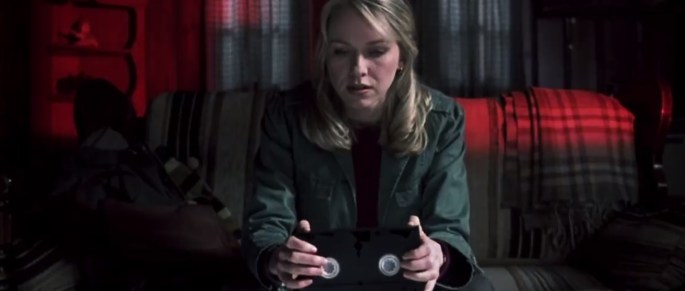
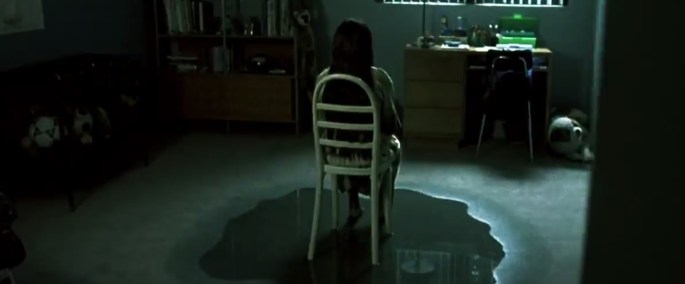 I can still vividly remember seeing Gore Verbinski’s extra-sketchy horror thriller The Ring at a test screening deep in the San Fernando Valley, roughly five months before the film’s official release, and how absolutely floored the audience was by the conclusion, and on a personal level, how totally unnerved I felt when I left the theater and headed to the parking lot. I had not seen the original film, I had no real idea of the notion of “J-horror,” and because this genre is the one that’s the least traveled for me as a viewer, I wasn’t prepared for how lethal and odd this movie would be. I am a massive fan of Gore Verbinski’s work, from the smaller films (The Weather Man) to the blockbusters (The Lone Ranger, Pirates 1-3) to the outright surreal (Rango) and everything else in between (Mousehunt, The Mexican); he’s got a tremendous visual eye, he’s attracted to smart and quirky material, and I love his attention to detail and his sense of cinematic excitement.

 Hugely ambitious, extremely tough and gritty, and telling a story of massive scope that might’ve benefited from at least 30 more minutes of screen time, the 1995 war/crime hybrid Dead Presidents was the extra-stylish and hot-blooded follow-up for sibling filmmakers Allen and Albert Hughes, who had conquered cinema a few years previous with the crimes-in-Compton classic Menace II Society. Larenz Tate was absolutely sensational in the lead role of a lifetime, playing a young hi






 Podcasting Them Softly