Creep: A Review by Nate Hill 

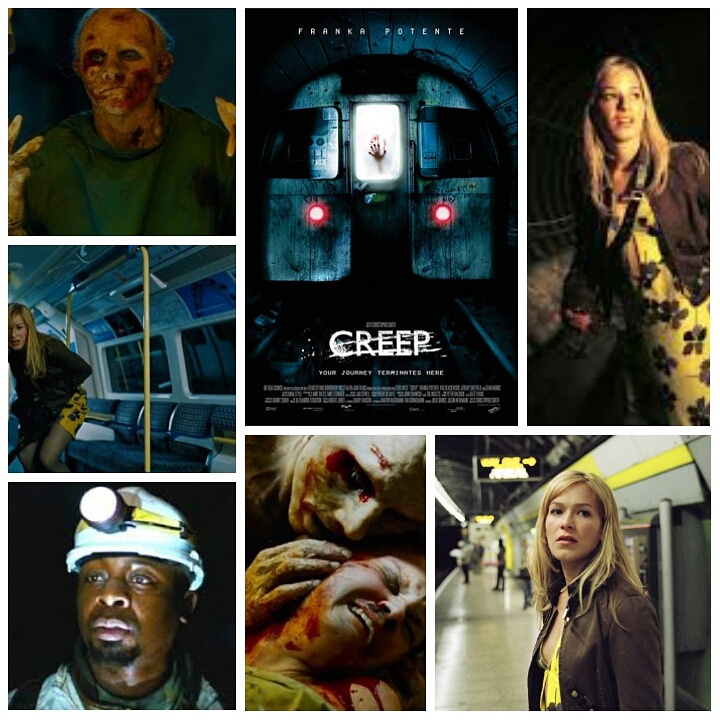
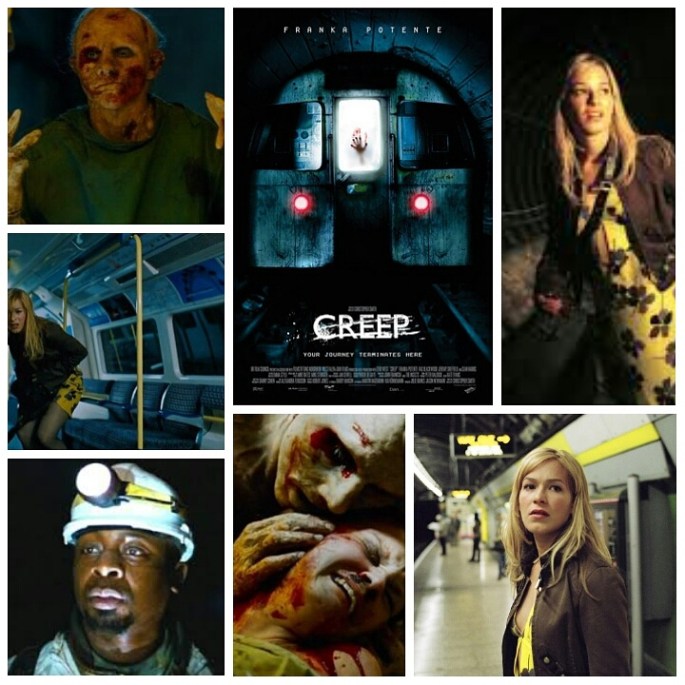
Everyone has, at some point, wondered what lurks in dark corners and abandoned tunnels within a city’s underground subway system. Well Franka Potente gets to find out exactly what’s down there in the murky and atmospheric horror flick Creep, and trust me it ain’t pretty. Potente plays Kate, a girl on her way home from an office party in the heart of London. Harassed and stalked by a no good coworker, she dips into a derelict train, and her attacker follows. Suddenly, somethin crawls out of the dark, murders him and drags his corpse off into the night. Kate goes from the frying pan into the fire as she realizes that whatever this thing is, it’s really not something you want to be stuck in a labyrinth of desolate subway tunnels with. I won’t spoil too much, but the Creep himself is a repulsive deformation whose origin I’ll let you see for yourself. The actor who plays him is terrific though, admittedly a maniacal monster, but almost a little bored and jaded by his situation and just dryly going through the motions, which proves to be oddly amusing. That’s not to say he’s not dangerous or smart though, as Kate repeatedly finds out, fleeing through the dark accompanied by a terrified homeless couple. Potente is riveting in anything, and she seems to seek out more intense fare to star in, always taking her performance to the extreme without ever losing that gravity that I love so much in her work. This one will put you through a wringer, all across the board. It doles out gross out horror, eerie chills and suspense in equal measures. Solid horror. 

PETER BERG’S DEEPWATER HORIZON — A REVIEW BY NICK CLEMENT

1

Deepwater Horizon is an absolute tour de force of action filmmaking, and one of the most gargantuan physical productions that I’ve ever witnessed on a movie screen. Seeing this film in the IMAX format is a must; the experience is damn near overwhelming. I am predisposed to being interested by true life, topical stories that define our lifetime, and the BP oil spill is one such event. There are any number of ways that one could fashion a story around this monumental disaster, but what director Peter Berg, screenwriters Matthew Sand and Matthew Michael Carnahan, director of photography Enrique Chediak production designer Chris Seagers, and the rest of the insanely committed crew and cast did was put the audience on the middle of an exploding oil rig for nearly an hour, after some very effective character intros coupled with almost unbearable tension building. Berg, a director mainly drawn to projects either based in truth (Friday Night Lights, Lone Survivor) or inspired by the world around us (The Kingdom), has been one of the most continually underrated filmmakers for the last 15 years, inspired by the work of cinematic greats like one-time mentor Michael Mann, Tony Scott, and Michael Bay, and seemingly always hard at work on something new and exciting. Deepwater Horizon has been made on a scale that would make James Cameron blush, and is a testament to heroism, and the idea of sudden, catastrophic loss, and similar to this year’s superb Clint Eastwood film Sully, a study of doing one’s job and doing it extraordinarily well, and in some instances, going above what could ever be expected.

3

After setting some quick and skillful character introductions into motion during the first 25 minutes, Sand and Carnahan’s script gets right to business, showing the formation of the rig’s various crew members that span multiple companies, with a handful of them being taken away to the station off the Louisiana coast, to commence their work. Ever reliable Mark Wahlberg, who really shines in these types of roles, is our entry point into the story, a rig technician named Mike Williams who experienced first-hand the incompetence being demonstrated by BP officials and other station members. His boss, played with true salt-of-the-earth grittiness by the great Kurt Russell, is revered by the rest of the crew for his commitment to safety; in an ironic twist, on the night of the devastating explosion, he was honored with a corporate safety award by his callous superiors. John Malkovich sports an amazing accent and excels as the chief villain of the piece, Donald Vidrine, a man who clearly could have cared less about anything other than the bottom line and making a profit at any cost. In a sly cameo, Berg even shows up during the first act, as a BP exec who relays important information to his workers under the deafening whirring of helicopter blades; this is a film that nobody at BP is going to appreciate on any level, as it took smart measures to crush them as an organization while still staying focused on the riveting events on board Deepwater Horizon. Gina Rodriguez is also excellent as one of the few women on board; it’s insane to think that anyone survived this event but without her actions and the actions of Harrell and others, the death toll would surely have been higher than 11 souls.


2

Berg and his team recreated the Deepwater Horizon to 85% scale, and in doing so, produced a film that feels 100% authentic at every turn. Had this film been shot on a closed stage with wrap-around green screens, it would be nowhere near as effective. Whatever CGI that was used has been brilliantly and seamless integrated into each shot; there are so many moments of “How they do that?” movie magic that a second viewing is definitely in order. Chediak’s breathtaking hand-held cinematography is appropriately rough yet extremely coherent, with the camera trying to make sense of the devastation, but no more so than how any member of the crew would have experienced it. The individual acts of heroism are too frequent to list in a review; let’s just say that a huge number of people are still alive because of the sacrifices of a few. And even at a relatively lean 100 minutes, Berg and his screenwriters rather hauntingly suggested at the environmental devastation that took place in one horrifying sequence that will make you cry so long as you have a heart. This is an utterly massive film to take in as a viewer, as the visual are overwhelming in their ferocity and power, and the dialogue took great pains to accurately depict the on-the-job jargon that these people have to spew while operating some extremely dangerous equipment. And the sound work should also be mentioned as it’s truly electrifying, amplifying every moment with extreme intensity. Deepwater Horizon is the sort of film that produces dread one moment, excites the next, crushes you emotionally for a long period, and then sends you out of the theater angry and disturbed by the actions of one of the world’s biggest and most profitable companies. The film is an action masterwork for Berg, and easily one of his grandest, most fully realized pictures to date, and while it might not have the intimacy or societal examination of Friday Night Lights, which for me is still my favorite work of his, it’s the epitome of a “big-screen experience” and it’s not to be missed.

4

Summer’s Moon: A Review by Nate Hill 

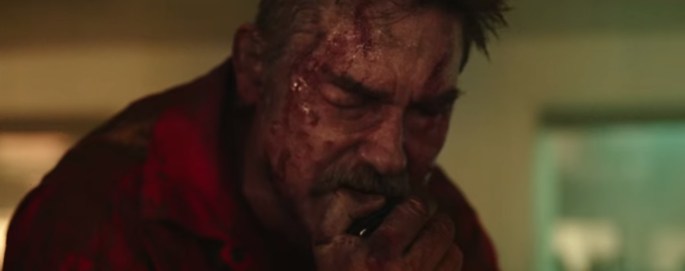
Summer’s Moon, also given the slightly less exotic title Summer Blood, is a fascinating little family centered psycho sexual treat, starring an actress who previously hadn’t ventures into such intense territory. Ashley Greene is a porcelain beauty best known for those Twilight train wrecks, and its that marketing style these filmmakers have latched onto because of her involvement. The poster has a hazy hue that almost hints at the dreaded vampiric sparkle we’ve come to loathe. It’s picturesque to be sure, but doesn’t really provide any warning to the disturbing, gritty and uncomfortably intimate nature ofnthe story. Greene plays Summer, a wayward drifter who arrives in a small bucolic burg, out to find the father she never knew. Enter the Hoxeys, an I’ll adjusted family of serial killers claiming to be her long lost family, and beckoning her into depravity with all the charm and hospitality that small town folks can muster. Her brother Tom (Peter Mooney) keeps a kidnapped girl in the basement as a plaything and sleeps with his unstable mother (Barbara Nixon), and that’s but a taste of the horror that Summer has waded into. The film takes on new virility when the resident patriarch Gant Hoxey blows back into town, played with visceral ferocity by veteran tough guy Stephen Mchattie. Intense is the word for this guy (ever catch his cameo in A History Of Violence? Christ), and he’s a beast as Gant, Summer’s estranged father, a man who functions on violence and feeds of fear. The film examines how a clan of murderers might indeed function, right down to twisted lover’s spats and drama right out of an R rated Addams Family special. Greene nicely shatters her teen image by bringing us a broken protagonist who finds her dark passenger through resilience and torment, the blackness that sweeps over her soul clearly visible, loomed over by Mchattie’s grim reaper influence. Murder and the desire to do so is regarded as a genetic trait in this film, passed along the line of kin, generation to generation, wreaking havoc in the process. A film that I underestimated going in, a terrific horror entry that takes its it’s with character and suspense, slow burning up to a spectacularly gory third act filled with tension, blood and Mchattie, that icy voiced devil who steals every scene he’s in. Well worth your time. 

THE HOUSE WITH THE LAUGHING WINDOWS (1976) – A REVIEW BY RYAN MARSHALL

vlcsnap-2016-10-01-08h10m11s101.png

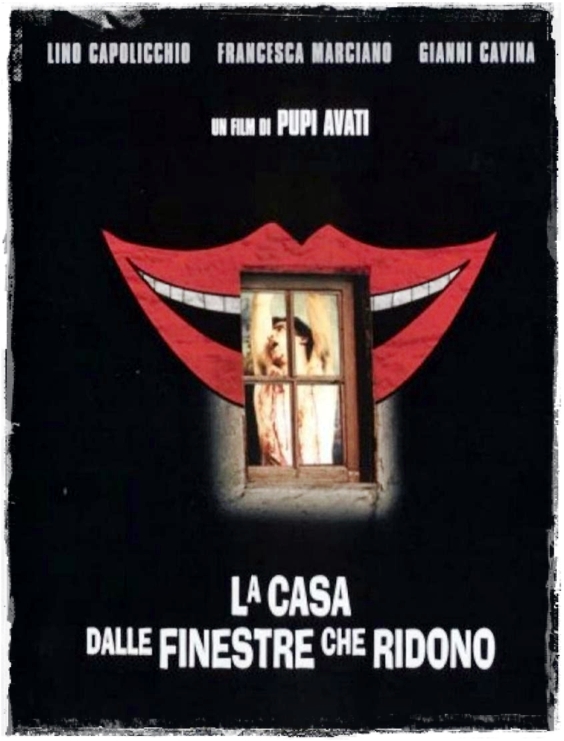
I must have been thirteen or fourteen at the time, and I don’t remember too much about what my world was like then, with the exception of it being a lesser variation of what it is now. If Argento, Fulci, and Bava are the more obvious names who introduced me to the black leather and brighter blood which would eventually shape my definitive creative conscious, director Pupi Avati opened up different doors entirely with his magnificent THE HOUSE WITH THE LAUGHING WINDOWS, a brilliant subversion of the Giallo formula with heavy doses of folk horror and genuine social-political subtext.

The Gialli that I am particularly fond of have more in common with THROUGH THE LOOKING GLASS than the standard crime narratives of the yellow paperback novels from which they derive their title, and as such, this is as important an entry as SUSPIRIA, Fulci’s THE PSYCHIC, or Sergio Martino’s delectably psyched-out masterpiece ALL THE COLORS OF THE DARK. What is perhaps most immediately intriguing is the placement of this particular rabbit hole in a twisted, though ultimately familiar semblance of reality. By association, the Giallo is a heightened affair, but Avati is skillful in how and where he engages with the fantastical.

vlcsnap-2016-10-01-08h06m37s379.png

The log-line for this one is refreshingly simple: a man, Stefano (Lino Capolicchio) arrives at a small, seemingly quiet villa on business, tasked with restoring a fresco of (what at least appears to be) Saint Sebastian in the town’s church. Soon after arriving, however, things take a sharp turn for the macabre as our hero receives anonymous threatening phone calls and gets kicked out of his hotel to make room for another guest; a guest who never shows up, and was never booked to begin with. He then moves into an old house in the woods which he shares with only an elderly woman upstairs and although she never seems to leave her bed, movement is explicitly heard at all hours of the night. A dark secret seems to hang over the village, one the locals would prefer to keep from the knowledge of the general public. After the sudden murder of a friend who seemed to have some answers, Stefano decides to do some amateur detective work of his own which will ultimately drive him to madness.

But will curiosity kill the cat? When one is watching a Giallo – and a good one, to boot – all cards are on the table. As a long-time admirer of films that depict the deterioration of a mind in unison with depicting an industry, culture, or world at large on its way out, I find Avati’s film to be utterly fascinating. Here we have the classic descent-into-madness narrative, a staple of the genre, unfolding beside a positively post-apocalyptic landscape; the villa, with all its abandoned ambitions and lost souls, is most likely intended as a commentary on post-War Italy and how certain communities struggled to escape their past. Stefano’s various romantic flings with school teachers and conversations with drunks, bat-shit crazy altar boys, and of course the old woman upstairs reveal a tight circle of damned spirits, only a handful of whom dream of escape, though most only wish to keep a vicious cycle going for as long as it possibly can.

vlcsnap-2016-10-01-08h07m48s091.png

It’s quite interesting, or at least it might be to certain readers, to note that in the course of a career spanning nearly half a century, Avati only made (to my knowledge) about half a dozen features that could be branded as horror films, the most widely-acknowledged of which are this one and the equally exceptional ZEDER (aka REVENGE OF THE DEAD). Skimming through an extensive filmography such as this, it seems Avati has covered just about every base he can, returning to the realm of the macabre time and time again, but mostly at the helm of much lighter, though I’m sure no less thoughtful fare. It is clear that while he is not technically a “genre” director, Avati has a penchant for brooding phantasmagoria; a dark side that only shows itself when deemed absolutely necessary – which in turn makes for some of the most consistently engaging tales of terror on the market.

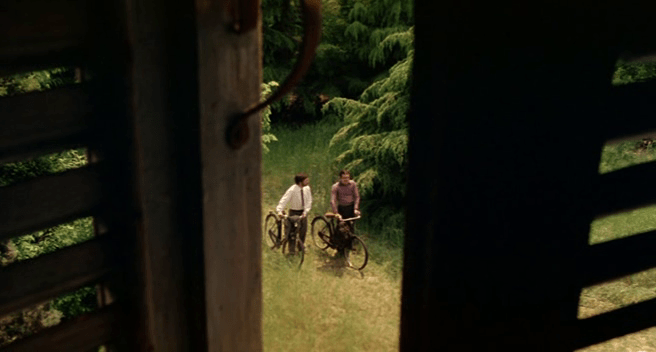
Pasquale Rachini’s photography is a real treat; I have always loved how the camera finds raw beauty early on, and throughout, in the wide lavish wetlands and partially destroyed old houses featured around the villa. A sense of purest reality is created, and then soon shattered, as day becomes night and lighting becomes more evocative, locating what lurks behind and between the shadows as well as what creates them in the first place. And yet, it will seem rather understated to those for whom “Giallo” is defined only by 70’s-era Argento (DEEP RED, SUSPIRIA, etc.), but alas, I believe it is as stunning as anything the genre has to offer. And who could forget to mention Amedeo Tommasi’s score, which swings effortlessly between nail-biting tension and fleeting romanticism, and remains shamefully unavailable to the general public to this day. One can only hope somebody, anybody, will rectify this sooner than later; it really is fantastic.

vlcsnap-2016-10-01-08h10m51s237

Some films just feel as if they were made for you, and at their best, Gialli have that precise effect on me. THE HOUSE WITH THE LAUGHING WINDOWS, for all its WICKER MAN-esque outsider horror, nevertheless feels like home. This may seem like a bit of an odd notion to those who seldom dance with the devils of celluloid, but if it happens that you do so more often than not, you will know exactly what I mean. Danger and mystery alike can be so invigorating, and Avati has conjured an atmosphere of dread so palpable that a knife (of any kind) simply wouldn’t cut it. Further proof that some of the genre’s best offerings come from those who don’t necessarily specialize in but nonetheless retain an honest appreciation for its seductive allure; one of many horror films that is more or less about watching horror films, and luckily, we are spared the usual contradictory moralism and regrettable air of superiority. Nothing but love emits from these frames. Love, blood, sweat, tears, purple flowers, tape recorders, and architecture with eyes and ears acute enough to catch even the lowest whisper.

PHIL ALDEN ROBINSON’S SNEAKERS — A REVIEW BY NICK CLEMENT

3

Spy capers are rarely as charming or as light on their feet as the 1992 film Sneakers. I’ll never understand why writer/director Phil Alden Robinson didn’t have a more prolific career (maybe he did lots of uncredited rewrites?) This is the guy who wrote All of Me for Carl Reiner, and then later went on to craft one of the finest American sports and family movies of all-time, with the utterly magical Field of Dreams. And then a few years later, he finally got his long gestating project, Sneakers, out to the public, a film he co-wrote with Walter Parkes and Lawrence Lasker (the duo behind WarGames). And despite the fact that the film was a box office hit and well received critically, he essentially fell of the movie planet, only directing 2002’s underrated The Sum of all Fears and episodes of the HBO program Band of Brothers before helming the (apparently) misbegotten Robin Williams starrer The Angriest Man in Brooklyn. He’s a smart filmmaker, typically attracted to classy material, and I’ll never get it why his output just ceased. In Sneakers, Robert Redford slyly played the leader of a team of security specialists who are drafted by the NSA to do some covert work for them, the catch being that Redford’s character has been on the run since 1969 for a politically motivated crime.

2

The cast in this movie is just…I’m not sure what the word is…it’s just really damn cool. Redford, Sidney Poitier, Dan Ackroyd, Ben Kingsley, Mary McDonnell, River Phoenix(!), and David Strathairn are all part of Redford’s crew, with Timothy Busfield(!) as one of the NSA agents who may have more up his sleeve than we first expect. The breezy style complimented the snappy screenplay, while Robinson’s graceful and stylish direction kept everything moving at a perfect hum. This is a film with multiple red herrings, Macguffins galore, and all sorts of shadowy spook-speak that all adds up to create a heady brew of sensible, intelligent excitement. James Horner’s playful score was one of his best, and John Lindley’s smooth cinematography added immeasurably to the proceedings. Sneakers is the sort of movie that gets lost over time, overshadowed by flashier tales of skullduggery with more lavish special effects and action set-pieces; it’s a true “thinking person’s action film,” and a further reminder that as a filmmaker, Phil Alden Robinson has been sorely missed.

1

PTS Presents Editor’s Suite with MARK GOLDBLATT Vol. 3

goldblatt-v3

goldblatt

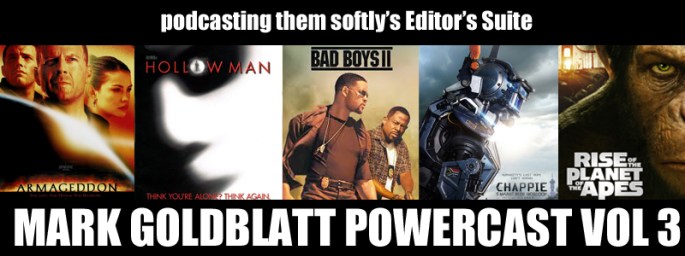
Podcasting Them Softly is incredibly excited to present PART 3 of our epic conversation with veteran film editor Mark Goldblatt! Up for discussion — his work on ARMAGEDDON, DETROIT ROCK CITY, PEARL HARBOR, XXX, BAD BOYS 2, CHAPPIE and much, much more! This is yet another fabulous and informative chat with a true legend in the industry. We can’t thank Mark enough for his time that he spent chatting with us!  We hope you enjoy!


ANTOINE FUQUA’S THE MAGNIFICENT SEVEN — A REVIEW BY NICK CLEMENT

1

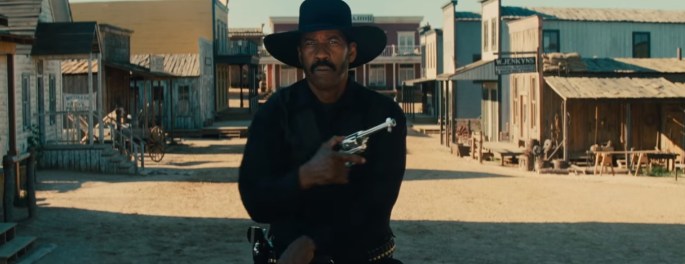
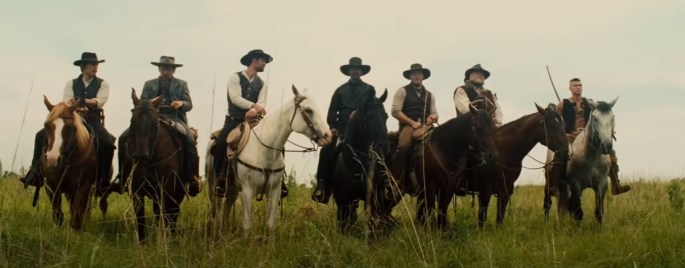
Antoine Fuqua’s solid updating of The Magnificent Seven is a good time at the movies, an easily digestible modern Western that isn’t interested in anything else other than providing two hours of comfortable, great-looking entertainment. Denzel Washington is excellent, as usual, and leads a very sturdy ensemble cast, with Ethan Hawke, Chris Pratt, and a nearly unrecognizable and absolutely hysterical Vincent D’Onofrio as the standouts. Peter Sarsgaard twirls his literal and figurative mustache as the slimy, happily vicious baddie, and Haley Bennett makes for an extremely fetching frontierswoman who isn’t afraid of picking up a gun and getting down and dirty. The conventional screenplay by Nic Pizzolatto (True Detective) and Richard Wenk doesn’t offer up anything in the way of surprise but works fine enough; their rendition is content to be serviceable and traditional, with some punchy one-liners thrown in for good measure. But what impressed me the most about this film, other than James Horner’s final, rousing score (with an assist from Simon Franglen), was the fantastic cinematography by long-time Fuqua collaborator Mauro Fiore (Training Day, The Island, Avatar). Every smoky, dusty, and burnished image in this big-budget oater looks splendid, with Fuqua and Fiore trading off of classic cinematic Western iconography, and it was refreshing to see a film shot and cut with a classical eye for coherence and space.


2

The explosions were all noticeably free of unnecessary CGI, and for a PG-13 film, it must be said — this new Magnificent Seven is wildly violent with a massive body count, including the graphic killing of a woman in a key dramatic moment. Yes, all of it is relatively bloodless, and nothing is lingered upon for too long, but holy WOW a lot of people got shot to bits in this film. The final act is essentially one massive battle, with the destruction of an entire balsa-wood town, and it’s in these moments that Fuqua and his surly cast clearly had a ball. Some of the action beats felt reminiscent of Fuqua’s underappreciated King Arthur, which, for my money, still features one of the coolest battle scenes in recent memory (the fight on the frozen lake). There’s nothing revelatory or overwhelmingly amazing about this new incarnation of the classic material, and yet, it all goes down smooth and sports an itchy trigger finger, and is likely the best overall effort from Fuqua since his superb and deeply underrated policier Brooklyn’s Finest. This is a film where the commanding performances and the phenomenal aesthetic package rule the day, and for fans of this longstanding milieu, the fact that there’s a gorgeous looking new widescreen Western up on the big screen should be reason enough to smile.

3

Zero Defects: Remembering Innerspace with Vernon Wells by Kent Hill


This slideshow requires JavaScript.

It just occurred to me, over this past month, that I have interviewed two Hollywood veterans with ties to Joe Dante films. One was Eric Luke, writer of Explorers (my interview with him I’ll be posting soon) and two, Vernon Wells star of Innerspace.

Both movies ironically, did not fare well upon their initial release. But with the passage of time the pair have, at last, been realized for the true gems that they are.

Innerspace I saw for the first time on VHS. I vividly remember the video store giving away these promotional plastic visors, similar to those worn by WWF superstar Bret “The Hitman” Hart, but a transparent yellow with the film’s title emblazoned upon them.

I watched the film with my friend Christopher Elkington. He had already seen it and so grabbed the remote, and fast-forwarded to where he thought the movie should have started. This was just beyond the point where Tuck (Dennis Quaid) gets hammered at a military soiree and is helped home by his love, Lydia (Meg Ryan.) She leaves early the next morning intent on never seeing Tuck again. Dennis is hot on her heels, pleading for forgiveness when she jumps into a cab, driven by that guy, Dick Miller, speeding off and taking Tuck’s towel, leaving him bare-assed out in the street.

To this day I have no idea why Chris wanted to skip this portion of the film, but after he left I watched the whole thing again from start to finish.

Innerspace, in this dude in the audience’s opinion, is the second outing (Explorers being the first) in which Dante puts a new spin on a classic movie, long before the age of the ‘reimagined’ flicks like Burton’s horrific Planet of the Apes. When I spoke with Eric Luke, we discussed the influence of This Island Earth on Explorers. So too did Vernon Wells reveal that the studio believed ardently that Innerspace could be marketed as a kind of remake of Fantastic Voyage. There are parallels sure. But Dante’s film is far more nuanced than the pretty standard fare which is played out in Voyage. I love the film mind you, but I believe it was foolish to try to sell Dante’s movie based on its ties to a 60’s film with generally serious tone.

I wanted to talk with someone who worked on the film and could think of no one better than Vernon Wells. He was extremely kind in contributing to my book Conquest of the Planet of the Tapes: Straight to Video III, so I called him up and asked if Mr. Igoe wouldn’t mind sharing his reminiscences.


KH: I’m sure you are bored to death telling Road Warrior and Commando stories, so I wondered if we could talk about Innerspace?

VW: Oh yes, one of my favourite movies.

KH: That must have been a bit of a dream part for an actor because well, you don’t have anything to say?

VW: I don’t say anything period. No, it was great. Didn’t have to learn any dialogue, didn’t have to do nothin’. I wish they were all like that.

KH: (laughter) It was good to just stand there and look menacing hey?

VW: Yeah, just about, yeah.

KH: So whereabouts were you in your career when the part came along?

VW: I had finished Commando and was actually heading back to Australia, and my manager rang me and said they wanted to see me about a new film called Innerspace. Joe Dante was directing it, who was famous for the Gremlin movies, and I thought this could be fun. So I said well, you know I’m headed to the airport to get on a plane and fly home. She said yeah I know that, we’ll set it up so you can go do your interview before you head to the airport. Ok, so I went the interview with Joe Dante at his office over at the studio at 20th Century, and I walked in, and he was very happy to see me, we chatted for a while, and we sitting around a round table that had a glass top. So we talked about things, and he told me a little about the film and I was very interested in the whole thing – then he said they wouldn’t know until they got to speak to Steven Spielberg, cause it was Steven Spielberg’s film, and he was in England overseeing *batteries not included at that time. So I said ok, that’s fine, no probs, I’m headed back to Australia to see my parents and things so just, let me know. So I stood up and as I stood up I leant down on the table, and the whole top of the table lifted up in the air and fell on top of me. So I was kinda lying on the floor with the table on top of me, and Joe just looked down at me and he went; “Now there’s an interesting way to get a movie.” Then they lifted it off of me, and I got up totally embarrassed and thought well that’s that, and I told my manager as I was being taken to the airport, I said you know, you can forget that one, I screwed the whole thing, I had the table fall on me and anything that could go wrong did go wrong. So she went, “No worries,” another time sorta thing. So I went back to Australia and I got off the plane and was walking towards where you get picked up by your friends, after you’ve gone through customs, and there’s a guy standing there with a card, with my name on it. And I thought, O my god, seriously, my parents have sent a driver to pick me up cause I’m an actor now. I thought yeah they’re trying to give a hard time. So, I walked over and said alright, who put you up to this, and he said, “I’m sorry?” I said, who put you up to this? He said, “Up to what?” I said, carrying the card with my name on it, I said I don’t need a driver. He said, “I’m not a driver sir, I’ve actually got a telegram for you.” Well then I got all worried, because I’m thinking someone meeting me at the airport with a telegram, something might be wrong with my mother or my father or my brother or my other siblings. So I was all concerned so got the telegram off him, ripped it open and read it, and it said, Dear Vernon, please go to the Qantas desk and get your ticket for your return flight to America, you’re due in San Francisco for special effects in two days, and I went what? So I was like, you gotta be bloody kidding me, I got the film, and now I got to Australia, I was turning around and flying back. So as I walked through to go where I had to get the ticket and find out when the next flight was out, my mother and brother were waiting for me behind this line, and I waved to them as I went past, so walked over and said well guys, give me a cuddle and a kiss cause I’m back on a to America. And my mother was like, what? And I said yeah, maybe I’ll have an hour or so to spend with you, and they took all my baggage and stuff and it all went back on the plane. I think I had a couple of hours before the plane left, so I had a cup of coffee with my folks and jumped back on plane and flew back to Los Angeles and then to San Francisco, to start prepping all of the special effects stuff they had to do at the end of the film when I become very small, inside Martin Short’s body.

KH: Yeah, you had to climb inside that suit, the robotic suit?

VW: Yeah. It was actually quite interesting, cause I thought there’s no chance in the world. But, I was told later, when Steven Spielberg saw the interviews of each of the people, he stopped at mine and said that’s the guy out of Mad Max – and Joe said yeah, and Steven said I want him, I think he did a brilliant job in that movie and I love George Miller so I want him. And that’s how I got it, I didn’t get it because I could act, I got because of George Miller.

KH: I’m sorry to say it, but that’s gotta be a thing with you – it’s like, hey that’s the guy from the Road Warrior or get me the guy from Mad Max?

VW: It was, for about ten years it was like a big mill stone around my neck.

KH: So you often heard the old chestnut: get me the guy from Mad Max?

VW: Yeah, and the other one was yeah, yeah we’d like to use you, but unfortunately you’d probably be like that Mad-Maxy-character, and that’s not what we’re looking for. And I said yeah, that’s why I’m an actor, cause I can only do one thing. And it was that way for quite a while, but eventually it went away, but it’s terribly annoying when you’re the person that it’s about, and you know you can do other things but you’re not going to get the chance.

KH: Yes it must be frustrating as an actor identified by a memorable part, but then being constantly measured by said part?

VM: Yep, an annoyance sometimes, but, you know, you sorta gotta to look at it logically. I did two classic films, I did Commando, with Arnold Schwarzenegger and I did Road Warrior for George, and then I did Weird Science which has become a classic and then Innerspace. So I look at it logically, if George never had the faith in me, that I didn’t, and put me in Road Warrior I wouldn’t be talking to you. And that’s where my career started, and that’s what got me going, and that character became, and still is, the definition of who I am. And you know what, I am damn proud of it now, but for a long time it was like, bloody movie, cause it was always the yard stick I was measured against, and you know sometimes that yard stick gets to be really heavy.

KH: Especially when that’s all people seem to see that you’ve done, missing all other accomplishments?

VW: Yeah, and they don’t want to try you in anything else, its only gotta be that, and it was fun when I started playing just normal people in films, good guys as they say, it actually took me a few films to actually get into the rhythm of it because I was so used to being on the other side of the stick, which when you’re playing a villain there’s no rules you know, villains have no rules, they go out there and kick everybody’s arse and shoot people and go for it. When you’re the good guy you’re not allowed to do that. I had to get used to that.

KH: Just on that, when you said people were expecting you to do “that part,” it must have been cathartic to do Weird Science, where you essentially do a parody of that character?

VW: It took quite a while for them to convince me to do it actually, because I really didn’t want to go back there. It was sorta like, been there, done that, didn’t like it much, going home now. But, once again, if I hadn’t done it I wouldn’t be talking to you sort of thing, it was just one of those things. I think I just wanted to move on and try to find out what else there was cause I wasn’t old enough and I wasn’t mature enough in my acting to except the fact that the one that had made me who I was, was Road Warrior and I should be damn proud of it, you know, live up to it, but I couldn’t, I was, you know, it was there, like this ghost that haunted me continuously and I began to hate it, but then you get past that and you get to realize, shit, that’s what got me here, you know, that’s the thing that people remember me by, and that’s the thing that people talk about so I should be proud of that. And of course I am now, it’s the greatest thing in the world, but back then, for a few years was like urgh! But not anymore, so when I got asked to do Innerspace, it was just so much fun, it seriously was. It was just, out of control and I loved every second of it.

KH: Cool. So getting back to Innerspace; you had the quick turnaround, and you were off to do special effects. I guess you did that at ILM?

VW: Yes, they encased my in plaster, to make a little dummy of me that was going to be used for all those final scenes, which was kinda fun, and they kinda had a lot of fun with me while I was encased in plaster, they stood me between two desks in the foyer to let me dry, and everyone that walked past me would slap me on the arse – which was kinda of fun.

KH: There’s no stopping these people?

VW: I know, they just can’t help themselves. But that was kinda fun and doing the all the things that we had to do it, it was just, it was interesting and I got to do all the fun stuff. I had the arm that changed into anything they wanted including a very large dildo. It was just a fun time, you know, Joe Dante is just totally hysterical to work for, I’ve done two films for him now, and he’s wonderful to work with, but of course I got to work with my other hero , the first one being George Miller, and the second one being Steven Spielberg.

KH: Did you meet Steven?

VW: Yes I did. It was on the set and it was only because Joe knew what I was like about Steven, and Steven came to the set and I was there and Joe was working with me and he was saying “Back up, back up Vernon.” And there I am backing across the set and I’m thinking, dear god, I’m going to be half an inch tall in the shot if I keep going back. So I just kept backing up and I bumped into somebody, and I turned around and said I’m sorry and it’s like whoa, Steven Spielberg. And I said Mr. Spielberg I loved . . . I loved . . . what was his film?

KH: Jaws?

VW: No.

KH: Raiders?

VW: No. Phone home, phone home…

KH: Arh, E.T.

VW: E.T. yeah. So I said to him, as soon as I spun around and saw him, I said oh my god, I’m sorry Mr. Spielberg, Oh I loved E.T. and as soon as I said it I went, why did I say that. Of all the dumb shit things to say, I had to say that.

KH: No, no, I know what it’s like, when I’m talking to people who I admire like yourself – in fact I said to my wife this morning – should I get him to do some lines from his movies, and she’s like no, save it till after the interview, don’t piss him off otherwise he won’t want to talk with you.

VW: (laughter) I don’t get pissed off that easily. Were they lines from Innerspace cause I don’t know which ones they’d be?

KH: (laughter) That’s what she said – he doesn’t have any lines in that. No, I meant some of the classics from your other films like: “How come two unpopular dicks like you, is havin’ a party?”

VW: Arh yes, Weird Science. That was fun.

KH: So at what point did you look at the script and think “Woohoo, no lines to learn?”

VW: I knew about that right from the start, Joe told me. Joe told me that Steven had said he was taking away all of my tools as an actor. One being my hands, cause I use my hands when I act, the other being my eyes cause I have these big blue eyes, and the third one being my voice because, Steven said, your voice is just too known, because when I talk people just know who I am – so he just took all of them off me – to see if I could act.

KH: That has to be more challenging for an actor, not being to use those elements of you – to have to then emote without physically and verbally emoting?

VW: Oh yeah. Well now you have to create the character internally create the whole thing that you wouldn’t have to do when you can use your hands, your eyes, your voice, you project the character, you don’t have to do so much work, so to speak. But I enjoyed it, it was a great challenge and I had all this fun stuff to do. I worked with great people throughout the whole film.

KH: So what was the shoot like?

VW: It was shot in California and San Francisco. We worked up in the park by the Golden Gate Bridge, we worked up there, and shot stuff in San Francisco on the hills, there was two or three scenes like the taxi scenes that we shot there, but the majority of the film was shot back here in California. All the stuff in the shopping center was California, all the stuff where I was driving around in the BMW was California. All the internal set stuff was shot over at Warner Bros. A funny aside to that is, while I was on the Warner Bros. lot shooting Innerspace, at the same, Mel (Gibson) was there shooting the first of his Lethal Weapon movies and George (Miller) was directing Witches of Eastwick – all that the same time, the three of us and none of us saw each other.

KH: I was just about to say, did you happen to bump into each other?

VW: We were all working in closed sets and things and so never ran into each other cause we had different hours – so we never got to see each other – but the three of us, from one film (The Road Warrior) shooting three different films at the same studio.

KH: Wow – that’s a great story. So during the film, did you get to work with everyone or where your scenes shot separately and later intercut?

VW: I got to work with most of them. I got to work with Kevin (McCarthy) who played my boss.

KH: He must have been a great guy to hang out with?

VW: I love Kevin, loved him a lot, he was great to work with. And I worked with Meg Ryan and Martin Short, cause I was inside Martin Short, so I had to work with Martin, and worked with a lady, I can never remember her name, she was my boss, who I worked for, I can never think of her name, but she was wonderful. So I basically worked with the four leads, continuously. (The actress Mr Wells couldn’t remember at the time was Fiona Lewis as Dr. Margaret Canker)

KH: So did you get meet Dennis outside of Martin?

VW: Dennis was wonderful, everybody was wonderful. Martin was wonderful – every time Joe Dante came on the set Martin would sing, Joooeee Daannnte, wo wo, until Joe got sick of it. He was always joking, and Meg was very quiet, but very lovely, and Dennis was great. They were all just really cool people to be around.

KH: I thought it was a great ensemble cast?

VW: Oh yes, really fun.

KH: As I often ask – are there any tales from the set you can share that have not yet surfaced?

VW: Yeah, well everybody knows it. There was one, when I was inside that big costume, they take it from straight up and it goes over, down, down, down, to being flat and there’s like this door that comes across it when I go into the machine to be, you know, taken down to being small. I have a phobia about being in small places, and I have a bigger phobia when I have all these batteries around me and lights. So they were going to try to get this scene done as quickly as possible, cause Joe knew I was a little bit unhappy about it. So they did it a couple of times, the on the third take doing it, it all got stuck with me under the floor and they couldn’t open the floor and they couldn’t get me out. And it was funny because in very big stage whisper one of the stage hands went, “Shit, Vernon’s stuck down there, and he hates being in small spaces.” And I went. “Arhhh Crap!” So now I had to convince myself not to panic, cause I was in this thing underneath and I had all these batteries around me that could leak. It was just one of those interesting times that you have, of course, nothing happened, it was like all inside my mind and I was paranoid that I was gonna get fried or something. But they got me out and I was fine. But the other classic thing happened was that Whoopi Goldberg came to the set to have lunch with me. I had met Whoopi in New York a couple of months earlier, and she was in town to do an interview I think, but she came across and came on the set around lunch and came and had lunch with me and Joe, and Mike I believe, his producer. So it was kinda really cool, cause I knew Whoopi – so that was nice. The whole thing was just fun, really laid back set, cause Joe is just really laid back when he’s directing, you don’t have any tension, everyone just does their job and it’s all done well.

KH: I was leading up to Joe Dante, he is big hitter, made some great moves. As a director does he give you much, or do you know what he’s looking and give it to him?

VW: No he gives you a lot, you know, he sets the scene, he lets you know where he wants you to go and it’s up to you to deliver. He expects, since he’s hired you to do the job, he expects you to deliver. You know some directors can be very like . . . just their attitude makes the set a little bit . . . tight, everyone’s a little bit wound up, but on Joe’s sets it’s the opposite, everyone’s sort of mellow and laid back and doing their job and you don’t have any kind of tension on the set at all, which is really cool, I love working with him, he’s a really cool dude.

KH: I think, it might be just me, I think it’s great that in two films you’ve been in, there has been a shopping mall chase/action scene. Of course you weren’t in the scenes in Commando with Arnie in the mall, but you were chasing Martin around the shopping center. Was that shot during business hours?

VW: I think we actually filmed that on a weekend, no we couldn’t have, cause that would’ve been hell. I thing we would’ve shot earlier or midweek so there wasn’t a lot of people around, and that particular area we were in was closed off so we could shoot. I had a lot of fun doing it, and it was so funny because we had to figure out something I could do to the clown that was just horrible, and we came up with popping the balloon that he had in his hand – and that’s probably the worst thing you can do if you’ve got a clown who’s blowing balloons and you come up and pop his balloon. So Joe had me do that which was kind of mean to say the least, to the poor clown.

KH: I liked your interchangeable hand. How did that work?

VW: They had a fake part in my sleeve that I could put my hand into and then the bits they were using could screw into that, and I could hold them and if they had to move or do anything, I could put my fingers into whatever there was to control them. It was a little uncomfortable sometimes, but once you got used to it, it was fine.

KH: One of my favourite scenes is when you are being watched by the kid with toy gun and you then blow the smoke from your ‘hand’ gun?

VW: Yeah, the old chestnut, blow the smoke off the finger.

KH: Was it a treat to finally see the finished film?

VW: I loved it, I thought it was a really, really good movie and should have done so much better than it did. It was just a matter of timing; a matter of Warner Bros. didn’t seem to get behind it for some reason, there wasn’t a hell of a lot advertising, and the actual advertising they did with the hand and the little capsule that was inside Martin Short – you had no idea what it meant. So I don’t think that worked at all and just the wrong time to bring it out. It’s just one of those things, you know you sometimes – we have no control over that, we have to go with what happens. But I was a little disappointed that it didn’t go gangbusters, but it’s still, totally beloved by everybody.

KH: Indeed. I think it’s great what Joe Dante does. I spoke recently with Eric Luke the writer of another of his films, Explorers, and we were discussing how he likes to make movies that aren’t essentially remakes, but kind of a different spin on older movies. In the case of Explorers it was a different take on This Island Earth, and with Innerspace it was a different spin, if you will, on Fantastic Voyage?

VW: Yes. It was the same kind of thing and when it came out, that poster with the hand with that little capsule on the hand; people thought it was just a remake of Fantastic Voyage, which it wasn’t. And I think they tried to play on that, and it just didn’t work. But me personally, I don’t care, I love the movie and thought it was extremely well done, and I’m really proud of it.

KH: Another sequence I wanted to touch on, when the two pods do battle inside Martin Short, was that purely effects with insert shots of your face?

VW: Some of it was that way, but a lot of it was us doing it on cables, and fighting and to give the illusion of being in liquid inside the body. But then, a lot of the far away scenes – that’s why they had to make a body cast of me, to use it for those scenes with models. So some of those scenes were shot wide, they could use that, but for the close ups it was us, doing our thing and having fun.

KH: It is one those films that has endured, why do you think that is?

VW: (laughter) I think it’s just that I’m a bloody good actor.

KH: (laughter) Well that’s a given.

VW: I think its television to be really honest with you. The fact that they play everywhere on cable and you’ve got all these movies and the younger generation gets to see them, and people who now have kids that saw it when they were young they go oh my god, I remember this, this was that movie and they get their kids to watch it, and their kids like it, so you now have another generation that’s suddenly going, you wanna see this. It’s like another one of mine, Weird Science, it’s all over the internet at the moment – they’ve got this whole big thing cause Weird Science is playing somewhere, I’m not sure where, but you’ve got this whole internet thing, and it’s you know, let’s have Weird Science back, and it lists all the people in it, and it’s let’s see Weird Science. So it’s a new generation that’s catching on to these movies, and there’s no blood and guts in ‘em, they’re just fun movies, and I think people just like to relax and watch something that’s fun and funny and nice without everything blowing up and people getting shot everywhere.

KH: It’s true, and Innerspace is such a good balance of comedy, drama, and action. There are so few films that achieve that?

VW: Yeah, and I think that, having done plenty of movies where things blow up and people get shot and killed, being able to do the occasional movie that’s like a family movie or a kid-friendly movie is kinda fun.

KH: Well it’s been a number of years now, but the film continues delight, and let me sincerely thank you sir for chatting with me today. It’s been a rare treat and I have been trying real hard not to geek out.

VW: Are sure you don’t want me to do the lines?

KH: (laughter) No, no, it’s ok, you don’t have to.

VW: I could do one for you?


Mr. Wells did go on and he was very gracious to say some of his famous lines that I enjoy. It is a peril of the type of work and one cannot help sometimes getting a little star struck.

So dear readers if you’ve not enjoyed Innerspace for a while, or if you’ve never seen it, go check it out. I know that I feel like watching it again right now.


(Coming Soon: Big Ass Sensation: An Interview with Mike Mendez by Kent Hill)
Stir Of Echoes: A Review by Nate Hill 

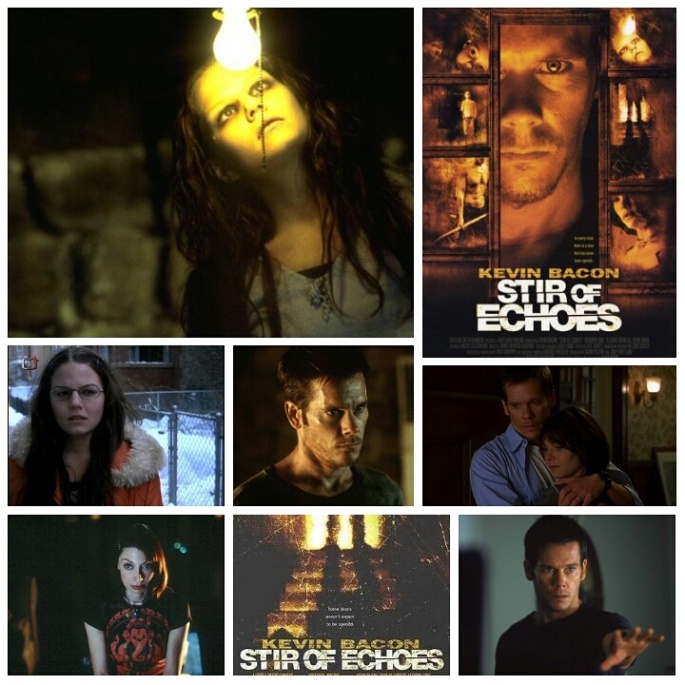
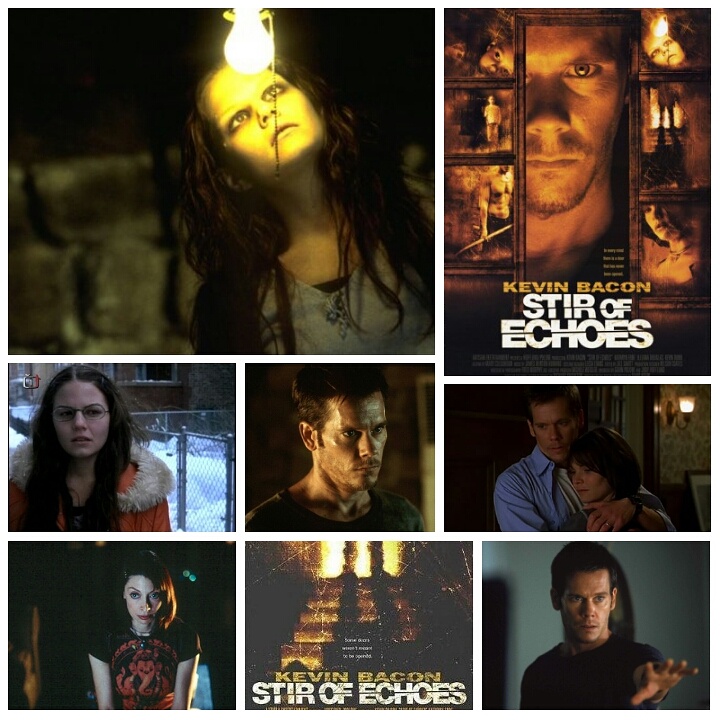
Stir Of Echoes is not outright horror, not plain old thriller but rests somewhere in between, a nerve frying festival of suspense and the type of scares which send those lovely shivers down your spine. Kevin Bacon plays Tom Witzky, an ordinary dude who agrees to be hypnotized, just for funsies, by his sister in law (Illeanna Douglas). As soon as he’s under, he’s subjected to a terrifying and confusion vision that suggests violent torment. It turns out that he’s one of the fabled ‘one percent’ of humans who are so succeptible to hypnotism that they unwittingly soak up other psychic energies in their vicinity. Something, or someone from the other side has found him and latched on, which is bad news for him and us, as we get to sit through several sequences that will cause you to need new pants. The initial vision is nothing outright or discernable; just images and abstract impressions that eventually serve as clues. That’s what makes it so creepy though. Someone being murdered is someone being murdered, but specific, harrowing little glimpses unnerve us all the more in their fleeting nature. Reminds me of that infamous videotape from The Ring in it’s style. Tom finds himself trying to solve a murder mystery, never sure whether the forces guiding him are on his side or pose a threat, always hit with a sense of dread upon turning every corner. This is the only kind of horror that actually scares me, in the true sense of the concept. Creeping, uneasy and subtle, where anything could be haunted and the scares aren’t predictable. What’s more,  it’s a smartly written, tightly paced, remarkably well made film. One of the best paranormal thrillers out there, plain and simple. There’s a sequel with Rob Lowe (of all people lol), but I’ve avoided it thus far, it looks kind of cheap. Stick with this original fright fest, it holds up wonderfully.  

PETE TRAVIS’ DREDD — A REVIEW BY NICK CLEMENT

1

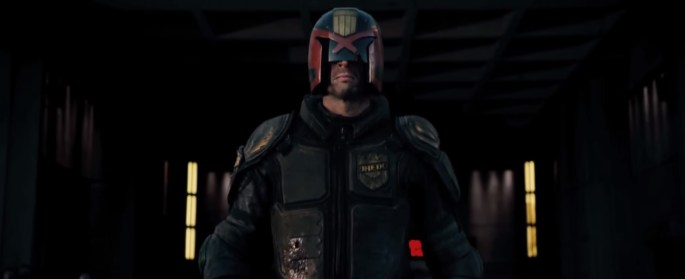
Dredd is a nasty action movie, supremely stylish at all times, unexpectedly funny (though in a very dark fashion), unrelenting with its pyrotechnics and blood-splattering, and for the better part of its quick yet lethal run-time, the film reminds you that sometimes it’s possible for an ultra-violent, hard-R endeavor to be both artistically fascinating and consumer friendly. Flamboyantly directed by Pete Travis (Vantage Point) and crisply written by Alex Garland (Ex-Machina, Sunshine, Never Let Me Go), this is an explosive piece of filmmaking that continually shreds on repeated viewings, dipping into exploitation realms and subversive genre-busting sometimes in the same scene, with the all-forward-momentum plotting involving Judge Dredd (the perfectly cast Karl Urban) taking on an army of drug-dealing goons, all of whom work for a psychopathic boss named Ma-Ma (wonderfully vile Lena Headey), inside of a 200-story high-rise living space where the only law is death. There are some seriously gnarly bits in this film, all of it gruesome yet strangely beautiful in a dark, grungy, tripped-out fashion.

2

That’s because the real star of Dredd is the film’s bold and brilliant cinematographer Anthony Dod Mantle (Slumdog Millionaire, Rush, Trance, Snowden, Antichrist); this movie is eye-popping to such a degree that numerous shots require immediate rewind POWER because of how insane they are. The drug-induced slow-motion sequences are transfixing, and to be honest, visually intoxicating; I had never seen anything like it before I had experienced what they did in Dredd. Olivia Thirlby was also very memorable as Dredd’s rookie-partner with a special secret; Garland is adroit in layering surprises into his narratives. Released in 2012 to surprisingly excellent reviews yet anemic box office results, there’s been talk of a sequel by this film’s rabid fan base, with some signs pointing to a follow-up potentially happening in the near future. Original Judge Dredd creator John Wagner served as a consultant on the film, despite the fact that the filmmakers took an all-new approach to his iconic material. Comparisons to The Raid are inevitable and apt.

3