DAVID MACKENZIE’S HELL OR HIGH WATER — A REVIEW BY NICK CLEMENT

3

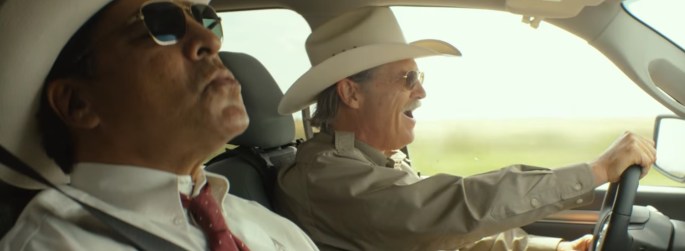
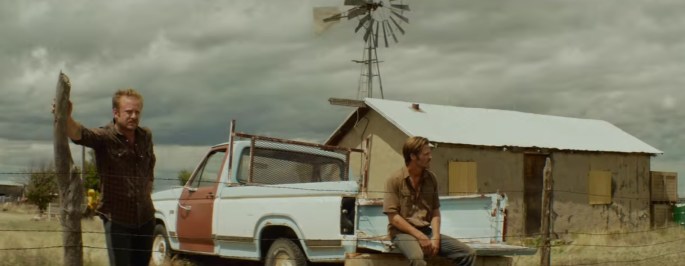
Hell or High Water is easily my second favorite movie of the year, not far behind the hard to classify gem Midnight Special. Of course Peter Berg produced (and was at one point attached to direct) this shit-kicking, dusty, Texas-set tale of brotherly love and bank robbing. It’s nothing revolutionary, but rather, underrated filmmaker David Mackenzie does everything just about correct, with a perfect sense of tone, atmosphere, and dramatics. Jeff Bridges brilliantly garbles his way through yet another study of neo-Western machismo, the volatile Ben Foster is literally a loose-cannon all throughout this dangerous little film, and Chris Pine delivers the best, most nuanced performances of his career, while resembling Colin Farrell in both Miami Vice and True Detective Season 2. There’s zero fat on Taylor Sheridan’s terse and authentic screenplay, and after his firecracker of a script for last year’s thoroughly absorbing Sicario, he’s at the top of my list in terms of writers whose name means quality.

2

Shot with striking clarity in a no nonsense fashion by cinematographer Giles Nuttgens, the film never overreaches, and gets down and dirty with its locations, themes, and overall presentation.  Pacing is kept crisp and clean by ace cutter Jake Roberts. The score from Nick Cave and Warren Ellis is evocative without ever becoming cloying, hitting repeated grace notes to match more menacing chords of sonic edginess. The topical overtones about the greediness of banks and the lunacy of open-carry gun permit laws only sweeten the deal. Honestly, watching this film slightly restored my faith in the theatrical experience, after months of films that have failed to lived up to their various expectations, or just a lack of interesting options in general. I was on board with Mackenzie as a filmmaker after the one-two-punch of Perfect Sense and Starred Up, but this movie really announces the arrival of someone special, and is one instance where the critical acclaim is highly warranted.
1

The Men Who Stare At Goats: A Review by Nate Hill 

Stephen Lang Week: Day 2 
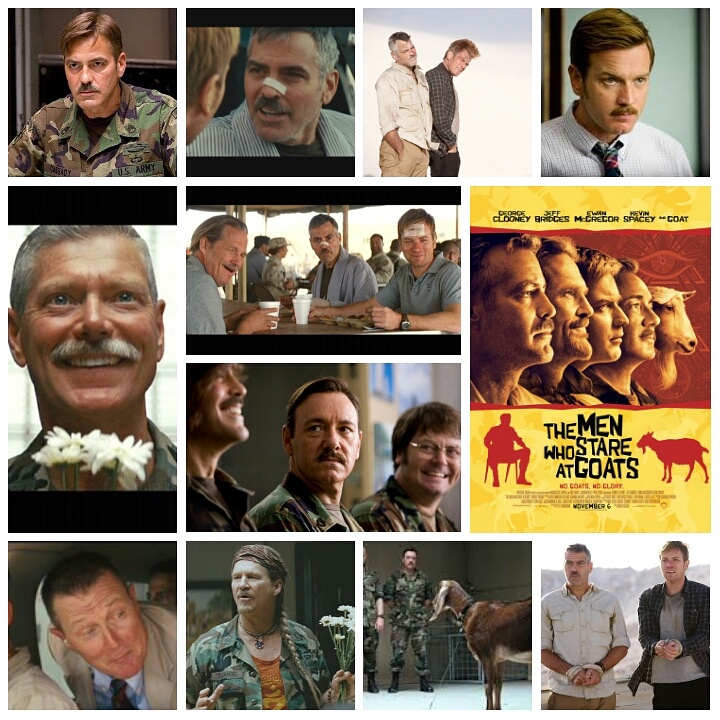
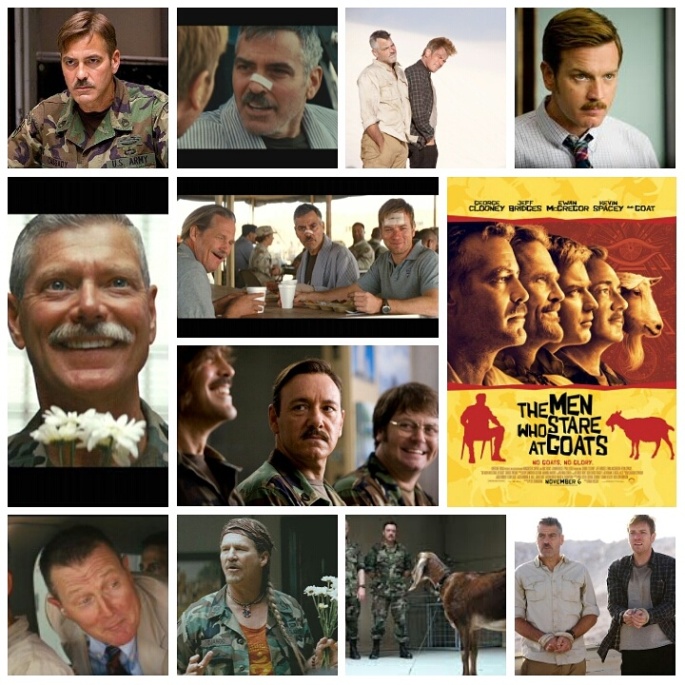
There’s a scene early on in The Men Who Stare at goats where hapless General Dean Hopgood (Stephen Lang) attempts a platform 9 & 3 quarters style sprint towards a solid wall, in attempt to use ‘psychic abilities’ he is being taught at a hush-hush military base. He smashes headlong into it, and in the most deadpan drawl, mutters “damn” in all seriousness. This one moment sort of sums up the absurd vibe that thrums throughout the whole film. It’s kind of like a Coen Brothers thing; you either get it or you don’t. This film isn’t quite as hilarious as it’s sister, Burn After Reading, but damn if it doesn’t try, and come out with some really weird and memorable stuff. It’s colorful hogwash that the cast sells with the enthusiasm of a drunken used car salesman, and speaking of cast, wow there are a lot of heavy hitters playing in the sandbox here. George Clooney, in yet another of his patented lovable goof roles, plays Lyn Cassidy, a former US Army nutjob who claims to have been a part of a clandestine program called the New Earth Army, employing paranormal powers in their missions. Bemused journalist Ewan McGregor is shanghai’d into following him on a mad goose chase to find out if any of his stories are true, but mostly just to babysit him, as he’s kind of a walking disaster. Ineptitude reaches a breaking point when we meet pseudo hippie Bill Django, played by Jeff Bridges who channels every other oddball role he’s done for maximum effect. Bill headed up the program until he got stymied by opposing official Larry Hooper (Kevin Spacey), a tight ass skeptic with no patience for such silliness. In fact, one must have a huge tolerance for such silliness to sit through this, and a sense of humour just south of normal to appreciate what it has to offer. I have both, and greatly enjoyed it, despite being thoroughly bewildered. Watch for Stephen Root, Glenn Moreshower, Rebecca Mader, Nick Offerman and good old Robert Patrick in a cameo as some sort of vague spy dude. A clown show to rival a high school play, no doubt, and I mean that as a compliment. 

NOAH BAUMBACH AND JAKE PALTROW’S DE PALMA — A REVIEW BY NICK CLEMENT

3

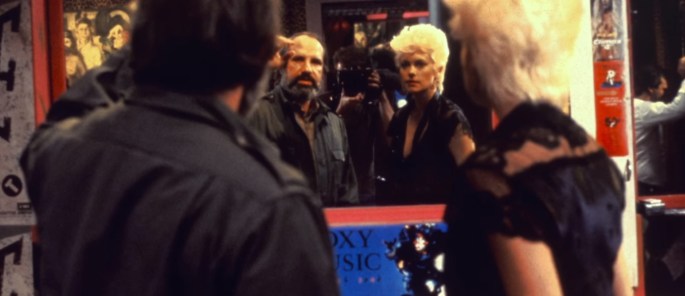
What can I really say about the fascinating and beyond entertaining new documentary De Palma? It was two glorious hours of listening to one of my absolute favorite directors discussing his remarkable and ludicrously underrated career. He’s made a roll-call of perverse, transgressive masterpieces, including Femme Fatale, Body Double, Carrie, Blow Out, Dressed to Kill, Casualties of War and bold, operatic crime drams like Scarface, Carlito’s Way, The Untouchables, and Snake Eyes. He’s dabbled in big budget studio popcorn fare with Mission: Impossible and Mission to Mars, while still allowing for more quirky, edgy, and personal projects like Phantom of the Paradise, Redacted and Passion to find their way to the screen. He’ll likely forever be known as one of the great masters of the erotic thriller, a director enamored by the work of Alfred Hitchcock, with films like Sisters and Raising Cain tipping their hat to the original master of suspense. So when I heard that the brilliant filmmaker Noah Baumbach and his co-directing partner Jake Paltrow would be interviewing De Palma, and touching upon every single film on his resume, I nearly fainted with anticipation. Doing nothing more than setting up a camera on a tripod, pressing record, and letting De Palma go full force with the anecdotes and remembrances would have been perfectly enough, but when combined with all of the top-shelf footage from his aggressively awesome filmography, you’re constantly reminded of how distinct and memorable his work has been.

2

Because even when some of De Palma’s movies have been misfires overall, there are moments and sequences of astounding movie-making that are sometimes better than entire feature films made by other directors. Think of the bravura opening moments of The Bonfire of the Vanities, or the staircase set piece and opening brawl in The Black Dahlia — these films weren’t his best but they have flashes of greatness all throughout. But when all of the ingredients added up and fell into the blender in the proper order, few cinematic voices have offered up this many kinky thrills and long lasting works. If you’re a fan of De Palma’s sensibilities as a filmmaker, then this movie is literally a cinegasm of pure delight. If you’re not a fan of his brand of shock-the-senses cinema, then maybe you’ll gain a new found appreciation or respect for this tremendously smart and gifted filmmaker’s output. It seems so beyond crazy to think that De Palma has NEVER been nominated by the Academy for Best Director, but this is a sad fact of life, and if it’s any consolation to him and his devoted legion of fans, this engrossing documentary is a fitting tribute to a director who relishes in the notion of “pure cinema,” and when you watch the various images from all of his sexy and sinewy and stylish films, it dawns on you how consistently provocative and unique a filmmaker De Palma has become after years of butting heads with studio execs and the MPAA over the enveloping pushing content of his edgy motion pictures.

1

The I Inside: A Review by Nate Hill 

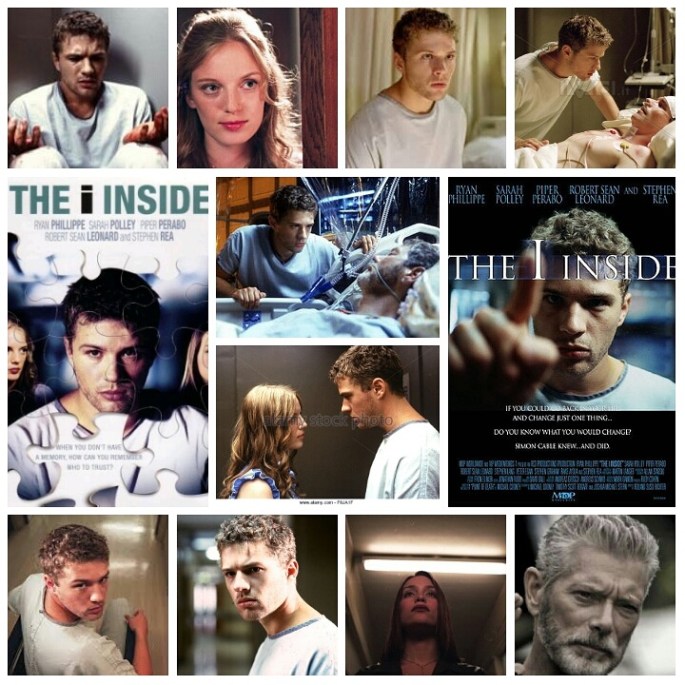
It’s mind-bender time with The I Inside, a supremely trippy little psychological thriller with shades of everything from Stay and Jacob’s Ladder to Memento and The Jacket. It’s not derivitive though, finding it’s own little bubble of confusing plot twists and unreliable reality for our protagonist, played by Ryan Phillipe, to navigate. He plays a man who awakens in a hospital with no memory of the last two years, how he got there or what went wrong. The head doctor (Stephen Rea) informs him he’s come out of a coma, but offers little other information. Soon time blurs out of mind and he awakens yet again, this time two years in the future, once again in the same hospital. Somehow he can travel in a rift between 2000 and 2002, and must find the connection between the two, and how it relates to him. Now, forewarning: This is one goddamn confusing film. I’m usually pretty adept at distilling dense, scattered or otherwise inaccessible story lines, but this is a doozy. I’ve only seen it once and wound up not having a clue how it all ended up, whether it was due to scattershot writing, or the filmmakers deliberatly making it near unfathomable just to put you in his predicament for effect. Either way, it’s a confounding blizzard of time shifts, strange characters, mental blank spots and perceptive trickery that I’ll need at least a few more viewings to get a handle on. Two different women show up at various points in time, played by Piper Perabo and a chilling Sarah Polley, each claiming to be his wife and messing with his head even more. The only thread that links the two time periods besides him is a mysterious heart trauma patient (an excellent Stephen Lang) who recognizes him in the future and gets his own dose of WTF in the process. This is based on a stage play called Point Of Death, and as such has that intimate, one location feel. We’re never allowed to see outside the hospital in either era, adding to Phillipe’s paranoia and unease. I sometimes think about this film, and what it all really meant, and keep reminding myself to slot in time for a revisit. Take a look, and see if you can figure it out the first time around. 

TINKER TAILOR SOLDIER SPY -A Review by Frank Mengarelli

“We are not so very different, you and I. We’ve both spent our lives looking for the weaknesses in one another.”

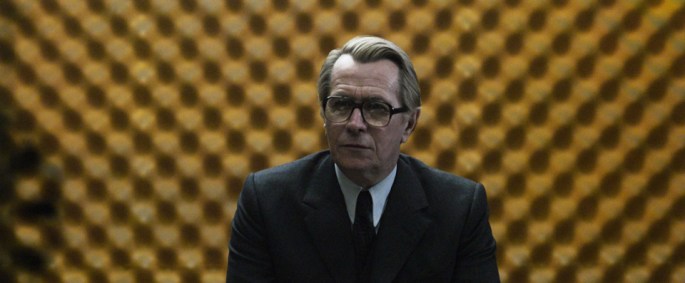
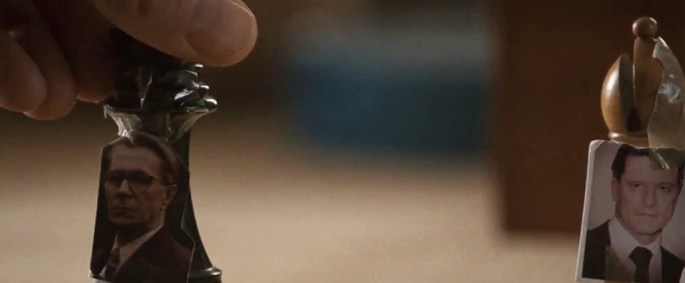
TINKER TAILOR SOLDIER SPY is a film I have watched countless times, and a film I look forward to constantly revisiting. It’s easily one of my favorite films of recent years. It’s a simmering, taut film that is masterfully constructed with painstaking detail.

TTSP 3

Tomas Alfredson creates a lived in world of spy v spy. Timelines are blurred, present day and the past intermingle throughout the duration of the film, and all we can do is absorb it. The cast is remarkable; each actor is laid upon Alfredson’s pallet, and he takes his time softly brushing each one across the screen.

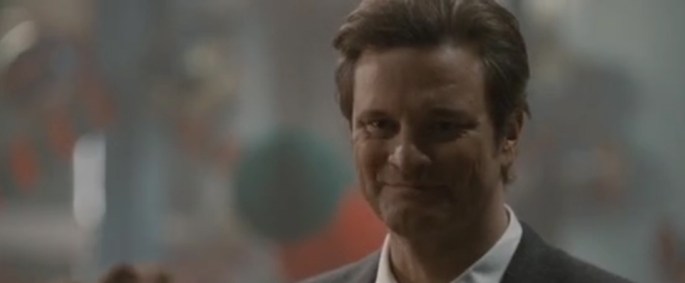
Gary Oldman is in top form, giving his most low key performance as George Smiley, the master spy. Oldman spends a majority of the film silently lurking, watching, listening; stealthily seeking the traitor in their midst. Colin Firth cashes in on his career’s worth of affability, slyly charming his way throughout the film.

TTSP 2

Alfredson, along with cinematographer Hoyte van Hoyteman and production designer Maria Djurkovic build a smoky and dreary world of moral ambiguity in which the characters hide in the shadows, and enter into a game that has already been resolved before it begins.

The film’s ending is as heartbreaking as it is rewarding, resolving just enough to satisfy the audience, but desperately leaving us wanting more. While certain events of the film are closed, there is so much more to be told. The beauty of the craftsmanship of TINKER TAILOR SOLDIER SPY is that it shows us very little, yet tells us everything.

TTSP 1.jpg

PETER BOGDANOVICH’S SAINT JACK — A REVIEW BY NICK CLEMENT

1

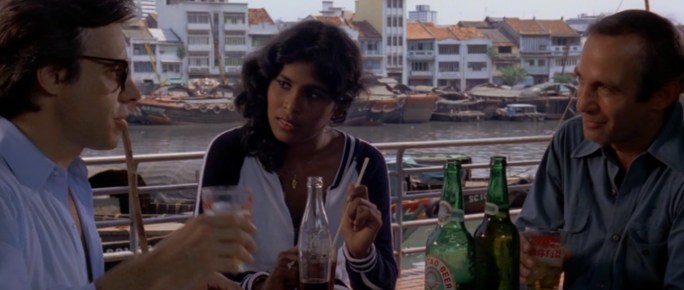
I’m not sure if I’ve ever seen a film quite like Peter Bogdanovich’s labor of love Saint Jack, and I doubt that anything remotely resembling it will be made any time soon. Released in 1979 and based on the Paul Theroux novel from six years earlier, the narrative pivots on the life of Jack Flowers (the absolutely amazing Ben Gazzara), a nice-guy hustler with pimping aspirations, living in Singapore who feels like he’s stuck in a personal rut. So, he decides to enter into the big time, by opening up his own bordello in conjunction with the CIA as a station for American soldiers who are on leave, which angers local Chinese gangsters who feel that he’s encroaching on their business and territory. Honestly, I think we need a big-screen revival of cathouse movies in general; there’s all sorts of possibilities with this milieu, and in regards to Saint Jack, the way that Bogdanovich subverted expectations and told a generally amiable story with flashes or threats of violence speaks to the unique way in which he approached his material. The film has an appropriately scuzzy visual style, with the great cinematographer Robby Müller calling the shots behind the camera, and bathing the film in a layer of textural grime that fit perfectly with the humid setting and mildly ramshackle production design. The fantastic supporting cast includes Denholm Elliot, James Villiers, George Lazenby, Joss Ackland, Rodney Bewes, Mark Kingston, and Bogdanovich in a quick and sly cameo.

3

As with the best of Bogdanovich’s work, Saint Jack eschews cheap and easy narrative exposition in favor of the story being motivated solely by character and behavior, with Gazzara’s strangely-warm-for-a-pimp performance giving the film an added layer of moral ambiguity that’s so rare in today’s brand of storytelling. Shot for a reported $1 million and lensed entirely on location in Singapore, and as of 2006 the only Hollywood production to do so (not sure if anyone has done a film there since then…), Saint Jack angered government officials over its portrayal of their society, and the film was banned from local cinemas. The filmmakers even lied about the plot of the film because they apparently figured that they’d be met with hostility from various groups. And despite never receiving the theatrical release it deserved, Bogdanovich has stated in interviews that he feels it’s one of his best works as an artist. This cinematic adaptation of Theroux’s book took root when Cybill Shepherd sued Playboy magazine after they printed photos of her from the set of The Last Picture Show; her settlement included the novel’s film rights. Hugh Hefner and Roger Corman are credited as producers. Available on DVD with audio commentary by Bogdanovich, new and old interviews, and other assorted bits of extra fun.

2

Joss Whedon’s In Your Eyes: A Review by Nate Hill 

JOSS WHEDON ALERT
Now that I have your attention, let’s talk about In Your Eyes, a lovely little romantic/fantasy/drama written by the J Man, concerning a boy and girl who have shared a strange psychic bond over hundreds of miles since they were kids, despite never having met. 

  Its a slightly unconventional romance, a charming, breezy little piece that took me by surprise, having known nothing about it going in except Whedon’s involvment. It starts with his lovely script, laying down the bones for two adorable leads (Zoe Kazan and Michael Stahl David) to go to work. Dylan and Rebecca have never met. They live on opposite sides of the US, and lead considerably different lives. They would have nothing in common if it weren’t for an odd metaphysical connection. They can periodically (and often at inconvenient times) see into each others lives like a perceptive window, complete with senses like smell, taste and touch. When they are growing up its confusing and stunted, but I imagine it blossoms along with every other attribute, and suddenly they’ve discovered they’re not both crazy, and that there’s a real person on the other end of this bewitching mutual conduit. Soon they are communicating, much to the puzzlement of everyone else in their lives, who just observes them talking to themselves like loons. Romance isn’t far off, as we can well guess, and soon they are deeply in love in spite of their differences and the great gulf of distance between them. He’s a troubled fellow with a criminal past, a lenghthy RAP sheet and a nosy parole officer (Steve Harris). She’s a mild mannered, fragile girl married to a prissy control freak of a Doctor (Mark Fuerstein). Both of their lives are continuously disrupted by their relationship until they’re at the brink of crisis, and it seems the only way out is to find one a other in person. The almost supernatural aspect of their connection  is treated frankly, like more of a biological anomaly as opposed to ghostly gimmicks. It can be seen as Whedon exploring the nature of love in our world, finding “the one” who is always out there, somewhere, waiting. Or are they? The real hero is his incredibly down to earth script, an easy going, hilarious and poignant piece of writing. The cast is from all walks of Hollywood and includes Nikki Reed, Shameless’s Steve Howey, Richard Rhiele and a priceless cameo from Dirty Dancing’s Jennifer Grey, who is starting to look like a character from Desperate Housewives. Kazan and David are just the cutest, most earnest couple I’ve seen in a romantic film of late. She’s unsure, passionate and intuitive, he’s a scrappy patchwork teddy bear and together they’re perfect, capturing the essence of the relationship in a single very unique sex scene, nestled in with all of their “spiritual Skype” bonding, and eventual face to face meeting. Whedon loves his characters, right down to the bit parts and it shows. His writing is never short of sterling, and this one is another winner for him. 

Joss Whedon’s In Your Eyes: A Review by Nate Hill 

JOSS WHEDON ALERT
Now that I have your attention, let’s talk about In Your Eyes, a lovely little romantic/fantasy/drama written by the J Man, concerning a boy and girl who have shared a strange psychic bond over hundreds of miles since they were kids, despite never having met. 

  Its a slightly unconventional romance, a charming, breezy little piece that took me by surprise, having known nothing about it going in except Whedon’s involvment. It starts with his lovely script, laying down the bones for two adorable leads (Zoe Kazan and Michael Stahl David) to go to work. Dylan and Rebecca have never met. They live on opposite sides of the US, and lead considerably different lives. They would have nothing in common if it weren’t for an odd metaphysical connection. They can periodically (and often at inconvenient times) see into each others lives like a perceptive window, complete with senses like smell, taste and touch. When they are growing up its confusing and stunted, but I imagine it blossoms along with every other attribute, and suddenly they’ve discovered they’re not both crazy, and that there’s a real person on the other end of this bewitching mutual conduit. Soon they are communicating, much to the puzzlement of everyone else in their lives, who just observes them talking to themselves like loons. Romance isn’t far off, as we can well guess, and soon they are deeply in love in spite of their differences and the great gulf of distance between them. He’s a troubled fellow with a criminal past, a lenghthy RAP sheet and a nosy parole officer (Steve Harris). She’s a mild mannered, fragile girl married to a prissy control freak of a Doctor (Mark Fuerstein). Both of their lives are continuously disrupted by their relationship until they’re at the brink of crisis, and it seems the only way out is to find one a other in person. The almost supernatural aspect of their connection  is treated frankly, like more of a biological anomaly as opposed to ghostly gimmicks. It can be seen as Whedon exploring the nature of love in our world, finding “the one” who is always out there, somewhere, waiting. Or are they? The real hero is his incredibly down to earth script, an easy going, hilarious and poignant piece of writing. The cast is from all walks of Hollywood and includes Nikki Reed, Shameless’s Steve Howey, Richard Rhiele and a priceless cameo from Dirty Dancing’s Jennifer Grey, who is starting to look like a character from Desperate Housewives. Kazan and David are just the cutest, most earnest couple I’ve seen in a romantic film of late. She’s unsure, passionate and intuitive, he’s a scrappy patchwork teddy bear and together they’re perfect, capturing the essence of the relationship in a single very unique sex scene, nestled in with all of their “spiritual Skype” bonding, and eventual face to face meeting. Whedon loves his characters, right down to the bit parts and it shows. His writing is never short of sterling, and this one is another winner for him. 

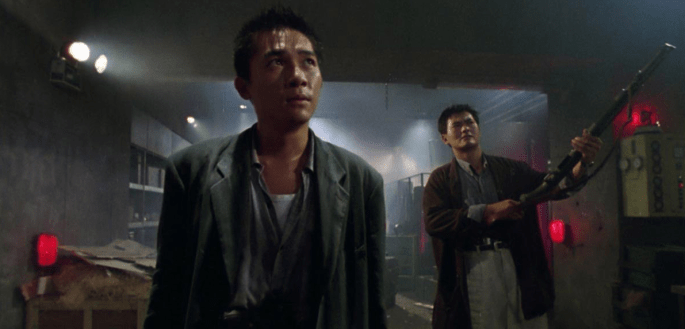
HARD BOILED – A REVIEW BY J.D. LAFRANCE

hard1

In retrospect, John Woo’s Hard Boiled (1992) can be seen as his audition reel for Hollywood. And what a helluva audition reel it was – a masterfully orchestrated magnum opus of mayhem. After its release, he moved to the United States and started over (directing a Jean Claude-Van Damme film no less – ouch!). Woo’s film took the gangster melodrama, that he started with A Better Tomorrow (1986), to the next level. In doing so, he created what is arguably the greatest action film ever made.

We are introduced to a city mired in crime and corruption – one that is at the mercy of the Triads, gun smuggling gangsters with very little regard for human life as evident from the bloody shoot-out in a teahouse that kicks off the film. We are also introduced to a police officer named Tequila (Chow Yun-Fat), a one-man army with two guns in his hands; able to gun down bad guys while sliding down a banister (which has since become one of the iconic images from the movie). However, when the gangsters kill his partner, Tequila makes it his life’s goal to take them all down, the law be damned. He eventually crosses paths with Tony (Tony Leung), an undercover cop working deep within the Triads as an efficient killer. So deep, in fact, that he’s beginning to lose his original identity. Once Tequila discovers Tony’s true identity, they team-up for a show-stopping finale that can only be described as a bullet-ridden blow-out of epic proportions.

Hard Boiled is structured around three major action set pieces: the teahouse shoot-out that introduces Tequila, a warehouse gun battle where the cop meets his undercover counterpart, and the hospital showdown where the two men team-up to take down the bad guys. Each sequence is more ambitious than the one that came before and this culminates in the hospital battle that includes an impressive three-minute action sequence without any edits – virtually unheard of in an action film, especially one with as much mayhem as this one.

Woo plays with action film conventions by imparting intentionally sappy, sentimental moments like Tequila rescuing a room full of babies from gangsters and then gives it a mischievous twist by having one baby pee on the fire that started on the cop’s leg after he outran an explosion with said child.

While Woo purists cite The Killer (1989) as his finest achievement, Hard Boiled tops it in terms of kinetic action and choreography. While the previous film may deal with weightier themes, the latter film has a stronger foil to interact with Chow Yun-Fat. The chemistry between him and Tony Leung is excellent. Their characters start off as antagonists but over the course of the film they become allies, developing the kind of deep, meaningful bond that a lot of characters in Woo films share with one another. Tequila’s girlfriend (Teresa Mo) almost seems like an afterthought. After all, how can she compete with what Tequila and Tony go through together over the course of the film?

hard2Hard Boiled was Woo’s last Hong Kong film and this caused some critics to speculate that the film reflected his conflict between staying in a country he loved but that was facing an uncertain future, and leaving it for a prosperous new beginning. This metaphor was said to be expressed symbolically in the besieged hospital at the film’s finale. It represented Woo’s state of mind at the time: does he stay in a place that will potentially kill him, or escape and live but at a cost. The cost was the many restrictions that the Hollywood studios imposed on his first two American films, Hard Target (1993) and Broken Arrow (1996). It wasn’t until Face/Off (1997) that he was able to finally cut loose stylistically but it still felt like highlights from his Hong Kong output. This makes fans nostalgic for his older films and is why Hard Boiled has stood the test of time. It is still superior to any action film that has been made since.

DON’T BREATHE: A Review by Joel Copling

Rating in Stars: *** (out of ****)
Cast:  Jane Levy, Stephen Lang, Dylan Minnette, Daniel Zovatto
Director: Fede Alvarez
MPAA Rating: R (for terror, violence, disturbing content, and language throughout including sexual references)
Running Time: 1:28
Release Date: 08/26/16

There is a lot to commend in Don’t Breathe, a compact thriller that seeks to perform a volte-face on the home-invasion movie. Here we are asked to sympathize with the intruders, who form a trio of protagonists, specifically with regard to their victim, here positioned as the antagonist. For the first hour, the screenplay by Rodo Ayagues and director Fede Alvarez essentially splits the difference. We understand the motivations of the intruders, for whom the burglary represents the only method by which they might escape their current living situation. We empathize with the victim, who is blind, presumably divorced or widowed, grieving father to a girl who died in a car accident, and a veteran of the Gulf War, the well-documented effects of which are more than likely at the center of this man’s sad existence.

The film, then, seeks to apply all of this emotional baggage to a horror exercise, and it’s an effective one, not least because of how Alvarez and cinematographer Pedro Luque navigate the geography of the centerpiece house. It rests in a deserted suburb of Detroit, a canny decision on the parts of screenwriters who understand that much of this story’s impact will come from the fact that there is no one for miles around. The house is in shabby condition but kept well-maintained by its owner. The number of rooms in the house suggests a once-happier life, poisoned, perhaps, by years of grief and neglect. The basement, though, is another matter entirely.

What (or who) might reside in that basement is a question answered almost the moment the halfway mark of the film is reached, but I’m getting ahead of myself. The set-up is terrific, especially as we are introduced to the three anti-protagonists. In descending order of moral clarity, there is Alex (Dylan Minnette), the son of the man who runs the security company that provides the locks to houses he burgles with two others; he spends the majority of the film questioning the escalating legal circumstances of this particular burglary. Rocky (Jane Levy) has survived a terrible childhood with a disengaged, oft-abusive mother, only to see her younger sister faced with the same possible childhood; her wish is to escape to California. Money (Daniel Zovatto) is Rocky’s boyfriend, who proposes they hit this particular home, believing it to hold $300,000 from a legal settlement.

We never learn the name of the blind man whom they target, but it’s really of no enormous consequence to the director and his co-writer, nor does it seem to be of great importance to Stephen Lang, an actor whose performance here is heavily focused on the man’s physicality. Lang is convincing enough that the man’s blindness never doesn’t seem like a lack of sight (Think of the many actors who treat physical handicaps as having a built-in toggle switch and know that this is not one of those instances), and his swift gait as he moves inexorably forward is downright unsettling. A lot of the film rests on believing this man poses a threat, and on that front, it is very effective.

What (or who) resides in the basement is also important, though it would be criminal to reveal anything further. What I can reveal is that the cloudy morality of the final act is troubling, particularly in a scene that hinges upon a threat of sexual domination seemingly for the thrill of it and muddies whatever might follow it. Alvarez also interrupts his solid method with some narrative silliness (An extended sequence involving the man’s foaming, growling dog is marred by obvious fakery), but it matters little in the long run. Don’t Breathe is a crafty thriller for so long that a recommendation in spite of such hiccups is easy to make.