BARRY LEVINSON’S BUGSY — A REVIEW BY NICK CLEMENT

2

The director’s cut of Barry Levinson’s brooding and stylish gangster epic Bugsy is sensational entertainment, made huge by a massive lead performance from Warren Beatty, fabulous production values, an all-star supporting cast, and a pungent and gritty screenplay by James Toback that peppered the proceedings with humor, heart, and an appropriate amount of violent confrontation. Released in theaters in 1991, the theatrical version excised 13 additional minutes which can be seen on the DVD, and sadly, the movie didn’t do as well as expected at the box office despite generally excellent reviews, but over time, this has solidified itself as one of the better offerings in this very crowded genre. Spanning the turbulent and erratic life of mobster Bugsy Siegel, Beatty’s larger than life performance as the titular hoodlum brought him a much deserved Oscar nomination, while future wife Annette Bening dropped a sensitive and stellar early star turn as Siegel’s love interest, Virginia Hill. Featured in the background were Harvey Keitel, Ben Kingsley, Elliot Gould, Joe Mantegna, Bill Graham, and Bebe Neuwirth, all knocking it out of the park, while master cinematographer Allen Daviau evoked old-school Hollywood with his burnished and elegantly composed photography. Ennio Morricone’s rich and full-bodied score only sweetens the deal. This is easily one of Levinson’s strongest overall films, and fully reminds that when he was firing on all cylinders, he was capable of smart and well-appointed films that knew how to balance commercial demands with artsier instincts.

3

Veronica Guerin: A Review by Nate Hill 

I can remember seeing Joel Schumacher’s Veronica Guerin when I was first allowed to start checking out R rated, more intense fare. Being far more impressionable that the desensitized veteran you see before you today, I had a royal emotional gut punch coming that I wasn’t even prepared for. I didn’t know what it was about or what I would see, all I knew was I loved watching movies and I was going to devour each and every one I could get my hands on. Well, it tells the true and very tragic story of Veronica Guerin, an incredibly fearless Irish journalist who almost singlehandedly waged war on the drug trade back in 1996. It’s a suicidal mission that involves hassling very dangerous people, putting her and her family’s lives in jeopardy and overturning stones that lead to nothing but trouble. But she won’t back down for a second, and Blanchett finds the noble belligerence in her. Now anyone who knows the story also knows that later in life she was assassinated, by order of the very same drug lord she was trying to take down, John Gilligan (Gerard McSorley). I feel like it isn’t really a spoiler and should be spoken of in a review, as it’s a huge beat and the essential part of the film. Poke the hornet’s nest and you’re liable to get stung, it’s just a shame that no one on her side could have done more to protect her and prevent the outcome, but when you have one woman crusading against both evil and casually corrupt indifference then I suppose she’s on her own anyway. “” is a chilling monster, an absolute sociopathic maniac who will go to any lengths of cruelty and darkness to keep his empire, and McSorley will give you shudders with his portrayal. Ciaran Hinds is great as sleazy and slightly conflicted John Traynor, an underworld informant who fed Veronica information and played a big part in her story. Colin Farrell shows up in an odd and completely random cameo, and watch for Brenda Fricker too. The end of the film and the events surrounding her death are intoned with a haunting musical montage, and I dare you not to burst into to tears or be swept away and deeply affected by Schumacher’s tender direction, the cast’s work and the sheer tragedy of it all. There’s another film about Guerin called When The Sky Falls with Joan Allen, and it’s worth a look, but this is the real deal, going to great pains to show the personal nature of Veronica’s quest, how much it meant to her, the sickness of a nation infected with drug addiction and corruption, and the game changing power which one human being can have over it all, even if they must sacrifice their life for it. Powerful stuff.

B Movie Glory with Nate: The Prophecy II 

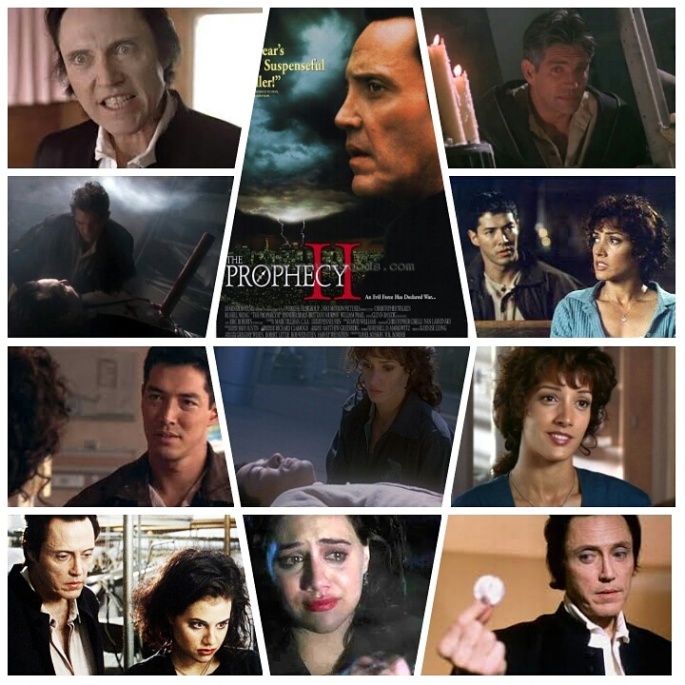
The Prophecy II continues around the same time the first entry left off, and while it’s not the same haunting, unique genre poem they managed with their first crack at it, it’s still got a few terrific things going for it, namely Christopher Walken. The guy is just charisma incarnate, and the implosive work he puts in as an angry, bitter Angel Gabriel in this franchise is some of the best I’ve ever seen from him. Gabriel is once again out to harm the humans, or ‘monkeys’ as he dryly puts it. The story is as murky as any self respecting Dimension films horror sequel should be, but from what I remember, an innocent human woman (Jennifer Beals) is impregnated by some sort of demi-angel named Danyael (Russell Wong), and the resulting birth will give humanity a kind of savior. Naturally, Walken tries to put a stop to this by hunting her down in appropriately scary fashion, and all sorts of schlocky supernatural hijinks ensue. It ain’t intellectual hour, but it’s held up very nicely by Walken, who clearly loves playing this character, and an eventual confrontation with Archangel Michael, played by Eric Roberts in what is delightfully inspired casting. The two of them have a quiet, focused exchange that elevates the material to near celestial heights which the film scarcely deserves. “How many world’s must burn before you’re satisfied?” Roberts inquires. “Just one. This one.” Walken purrs back. It’s a great scene and to this date the only time these two titans of the craft have shared the screen, and I’m thankful for it. Theres an amusing bit with Brittney Murphy, and a cameo by musician Glenn Danzig as well. The rest of the film is so so, but whenever Walken is there, baby it crackles. 

TODD PHILLIPS’ WAR DOGS — A REVIEW BY NICK CLEMENT

war_dogs_ver2_xlg

With War Dogs, it’s clear that cinematic funnyman Todd Phillips (The Hangover, Due Date, Old School) wanted to make a film that would raise his dramatic credibility as a storyteller. Sort of akin to the transition that Adam McKay made with his blistering financial meltdown drama The Big Short, this new and extremely entertaining film takes a real-life story and runs with all of its most absurd aspects, and as a result, the audience is left with a larger than life tale that feeds off of everyone’s collective desire for quick and sensational success. This is exactly the sort of movie that I want to see on the big screen. It’s smart, it’s got bite, it’s got some pointed social commentary, and it further showcases the notion of the Misguided American Dream, a concept that has informed other recent efforts like Michael Bay’s terrific Pain & Gain and Martin Scorsese’s juggernaut The Wolf of Wall Street.

1

At this point, with very few exceptions, I am all set with CGI dominated movies. I am TOTALLY done with swirling vortexes in the sky that have to be defeated in the final act. I want to see real films based on real stories that are tangible and topical and that feature characters that are morally questionable and interesting on various levels. Phillips and his extremely talented cinematographer Lawrence Sher tip their aesthetic hats in the direction of Scorsese, employing freeze frames in some choice spots, and using on-screen title cards that then become lines of dialogue in the next passage. This is an energetic and visually vibrant and distinctive movie, much like the rest of Phillips’ output, and even if War Dogs is satisfied to harness a traditional arc rather than anything groundbreaking, when a story is told this confidently by the chief creative parties, you just sit back and go for the ride and watch the wheels eventually fall off the operation.

2

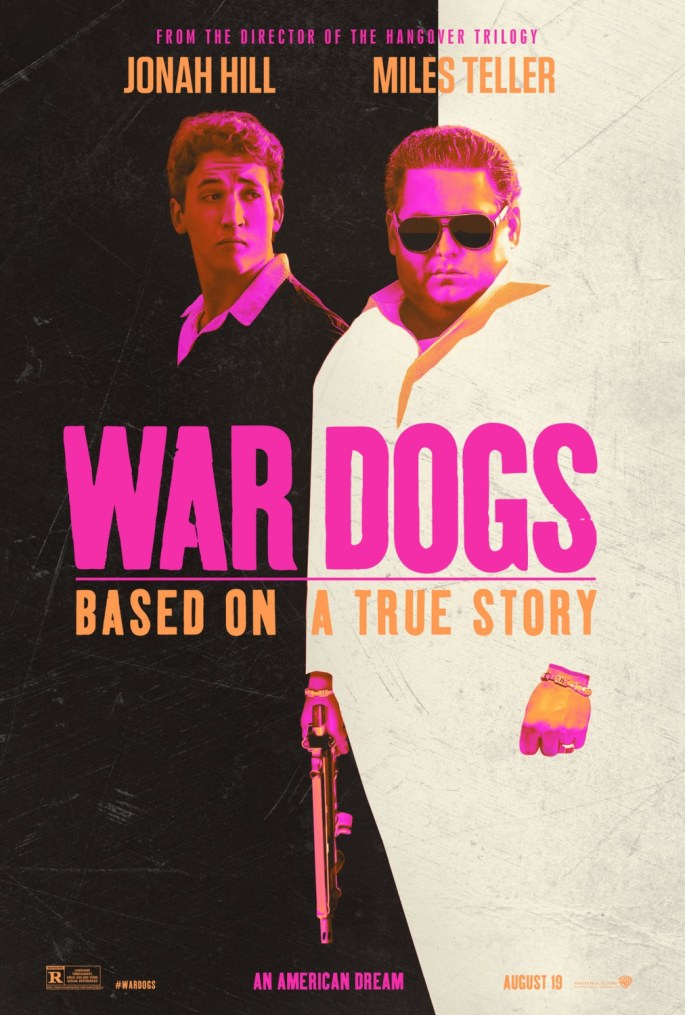
Inspired by the Rolling Stone article and subsequent novel by Guy Lawson and previously known as Arms and the Dudes (a title which I personally prefer), War Dogs was written by Phillips, Jason Smilovic, and Stephen Chin, and charts the improbable but true story of two 20-something arms dealers, Efraim Diveroli (the absolutely amazing Jonah Hill) and David Packouz (a solid Miles Teller), who were able to procure government contracts to supply various types of weapons and ammo to U.S. troops stationed in Afghanistan during the high points of the War on Terror. Riffing on some beats that the more cynical Lord of War explored, the filmmakers offer up some potent questions about military and governmental decision making, the ease in which people are able to get their hands on vast quantities of weapons, and how those who are smart enough will always find a way to exploit the system.
war_dogs_xlg

While the film is no doubt dramatized for poetic license and dramatic effect, the root of the story remains intact, and what the audience is presented with takes the shape of an edgy, sometimes dangerous “process narrative,” where we see and learn what it takes to accomplish what Diveroli and Packouz did. Co-starring a shady Bradley Cooper as the team’s potentially devious mentor and the alarmingly photogenic Ana de Armas as Packouz’s disapproving girlfriend, War Dogs wisely chooses to center much of the action on the dynamic between Hill and Teller, with some major laugh out loud moments coming courtesy of Hill’s blustery and obnoxious creation of a toxic soul run amok. That obnoxious and creepy laugh seals the deal. He’s really cornered the market on aggressive, potentially hostile, and totally unpredictable loose cannon-characters; he could be the next Joe Pesci as he has that brilliant actor’s impeccable sense of comedic timing. War Dogs is easily one of the better movies that I’ve seen this summer.

3

The Beatnicks: A Review by Nate Hill 

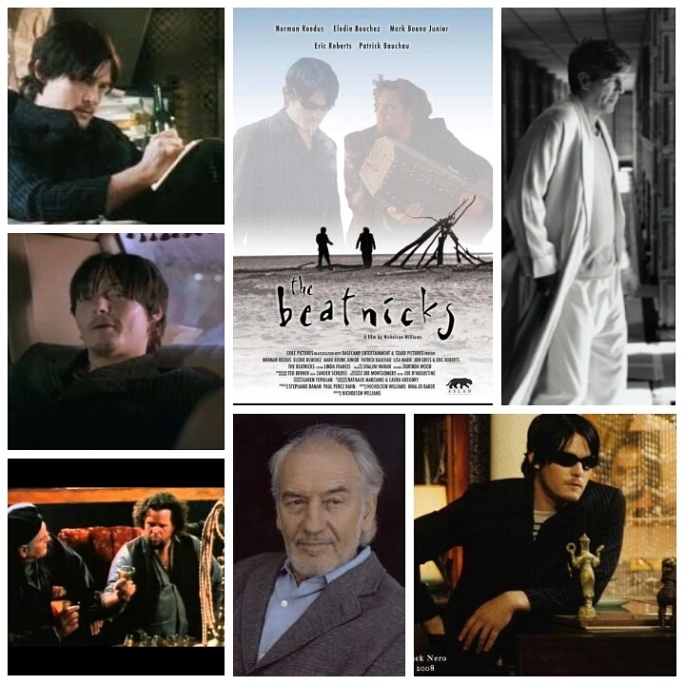
The Beatnicks is an kooky, shambling little indie that I can’t really say whether or not I liked, because not much of anything happens the whole time. The filmmakers have obviously tried hard to capture the quaint feeling of the beat generation, whether or not they succeeded though isn’t for me to say, I kind of avoid stuff in that style, never appealed to me. It’s a strange little story concerning Nick Nero (Norman Reedus) and Nick Beat (Mark Boone Jr), two aimless wandering performers who are down on their luck and desperate for a gig. Most of the film is just them wandering around, pontificating on life and art and not much else. Reedus clashes with mysterious night club owner Mack Drake (a slick Eric Roberts) over the affections of his moll-esque girlfriend (Elodie Bouchez), whilst Boone gets handed a series of arbitrary, cryptic tasks by enigmatic stranger Hank (the underrated Patrick Bachau). And that’s it. There are pockets of the film filled with nothing but air, places where they’ve tried to stretch ‘not much’ into ‘a whole lot’ and have caused their creative well to run dry. In a film about beat poets who I imagine spend most of their time filling up time and space with constant stream of consciousness output, dead air isn’t a good thing to have lingering around in your story. An odd duck of a film that didn’t really chime with me, but some may find it worth a gander.  

Todd Phillips and Lawrence Sher on WAR DOGS

share

Podcasting Them Softly is beyond thrilled to present an extremely entertaining chat with filmmaker Todd Phillips and cinematographer Lawrence Sher, as they discuss their new political action-comedy-drama WAR DOGS! This was a true honor to speak with Todd and Larry as they’ve become a major collaborative force over the last decade, working on some of the funniest movies that have been released (THE HANGOVER TRILOGY, DUE DATE), and with WAR DOGS, the creative duo appear to be taking on an even meatier story, this time one that’s based on real-life escapades of gun running in the Middle East. Listen in for tidbits on the casting process, the challenge of getting a movie like this made in today’s filmic landscape, and their approach to a project that was shot in multiple countries with a large scope and exciting action! Big thanks to Todd and Larry for their time, and we hope you enjoy this terrific discussion with two supremely talented artists!

B Movie Glory With Nate: The Immortals


The Immortals is one of those brilliant little action crime flicks that seemed to slip through the cracks and disappear soon after it aired on TV. That wouldn’t be a problem if it was one of the many intolerable embarrassments that speckle Eric Robert’s career like goose shit on a manicured lawn. But it’s actually a really great time, with a bunch of actors who are super into what the script has them do, and geniunly fascinating story to tell us, which it does so at a breakneck pace. Roberts plays Jack, a silver tongued nightclub owner with ties to some dangerous underworld players. One night he calls a meeting with eight different petty thieves from all walks of life, announcing that he’s planning to orchestrate a heist against criminal kingpin Dominic (screen legend Tony Curtis in one of his final roles), and proceeds to send them off to perform risky jobs all over town, rapidly gaining Dominics attention and hostility. During an extended face off between his forces and Jack’s merry band of miscreants, they discover that Jack has a very specific and secretive reason for selecting them all for this venture, and nothing is what it seems. William Forsythe is a kicker as Tim, the loose cannon of the bunch, a rowdy psycho who smartens up during the finale, which gives him terrific dialogue to chow on. Chris Rock is the fast talking dude among them, Tia Carrere is sexy and stunt savvy as always, Clarence Williams III does his bug eyed weirdo shtick to the hilt, and Joe Pantoliano never misses a beat either. Roberts is the ringmaster of this chaotic little circus though, failing up that southern prince charm and flashing the mile wide million dollar grin whenever he gets the chance. There’s a lived in, easy breezy feel to this, like these characters are really getting to know each other, bonds are formed and tested amidst a haughty atmosphere and a lethal situation. Twists, turns and somersaults punctuate the narrative, and they’re super fun to try and sniff out as you watch the fireworks blow up the screen. A B movie, yes, but an extremely well made one that gives it it’s all and comes out a grinning winner.

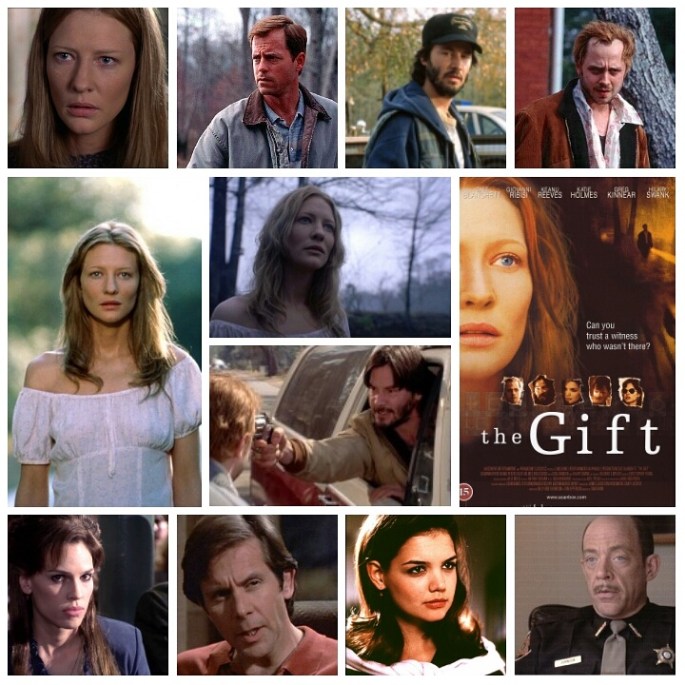
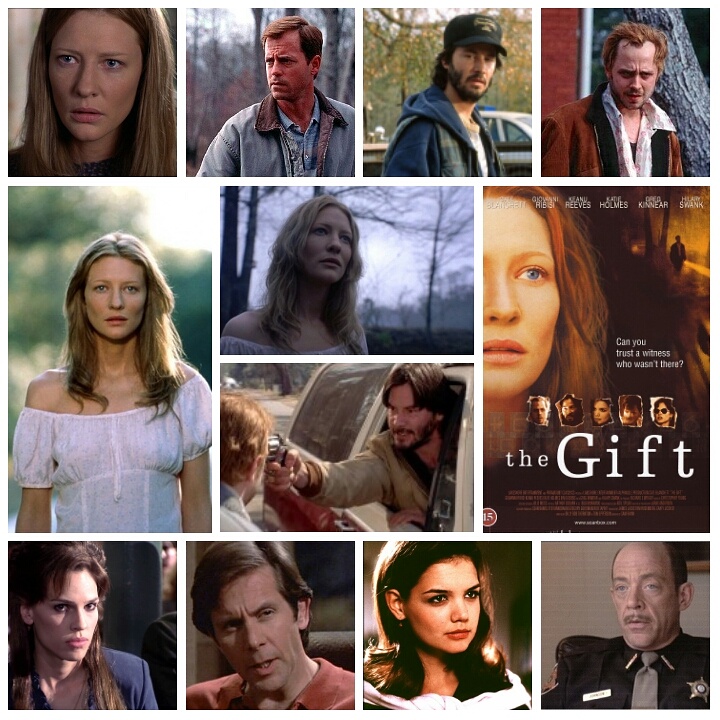
Sam Raimi’s The Gift: A Review by Nate Hill 

Anyone who loves a good slice of southern gothic murder mystery should check out Sam Raimi’s The Gift, one of several films in the eclectic scoundrel’s ouvre which made a departure from his usual brand of chaotic horror. Cate Blanchett stars as Annabelle, a single mother with a very perceptive telepathic ability, which in rural USA is greeted without any skepticism by the locals. She is renowned for her gift, and often approached by people in need. The story sees her trying to locate young Jessica (Katie Holmes), who has gone missing, and discovering some nasty secrets about the people around her in the process, people she thought she knew better. Jessica’s fiance (Greg Kinnear) is desperate but clearly knows something he’s not saying. Also involved is battered housewife Valerie (Hilary Swank), her terrifying abusive boyfriend Donnie (Keanu Reeves), a local mechanic (Giovanni Ribisi) who befriends Annabelle,  and others. It’s an ugly tale contrasted by Blanchett’s striking beauty, which the cameras capture in all the right instances. She could be rearranging a bookshelf and still be compelling and elegant, and always is in whichever role she takes on. Reeves is a scary tornado of pent up rage and sickness, cast way against type and loving every rage fuelled second. As if the main cast wasn’t packed enough with talent, we also get stellar work from Gary Cole, Michael Jeter, Kim Dickens, Rosemary Harris, a random cameo from Danny Elfman and a sly turn from J.K. Simmons as the county sheriff. What a cast, eh? Raimi puts them to good use, and each one gets their moment to shine. I’ve never seen a film by the director I haven’t loved; the guy just makes super fun, accessible genre treats that are irresistibly likable. Pair that with the evocative southern tone and Blanchett’s winning presence and you’ve got one hell of a little package. Very overlooked stuff. 

UNDER THE TUSCAN SUN – A REVIEW BY J.D. LAFRANCE

under-the-tuscan-sun

From her screenplay for The Truth About Cats and Dogs (1996) to her directorial debut with Guinevere (1999), Audrey Wells has created films with strong female protagonists. She continues this thematic preoccupation with Under the Tuscan Sun (2003) featuring a main character that goes on a journey of self-discovery in Italy. Based on the bestselling 1996 memoir of the same name by Frances Mayes, the film is a warm and inviting romantic comedy that attempts to deviate from some of the conventions of the genre.

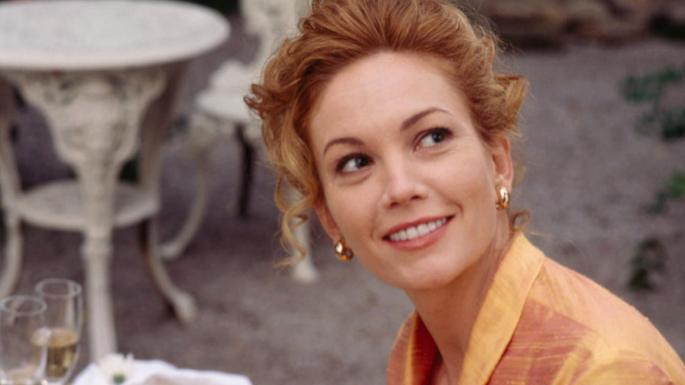
Frances Mayes (Diane Lane) is a professor of literature living in San Francisco with her husband. Her bad reviews of other people’s books comes back to haunt her when a writer harboring a grudge hints that her husband has been having an affair. During the messy divorce, and understandably upset over his betrayal, she sells her half of their house rather than pay up via alimony. Frances moves into a noisy apartment building and tries to figure out what to do with her life. She suffers from writer’s block — not just with her book, but with her life. Patty (Sandra Oh), her best friend and support group, is unable to go on a ten-day trip to Tuscany because of her upcoming pregnancy. So, she gets Frances to go in the hopes that a change of pace and scenery will provide her with a fresh start.

Before she knows it, Frances is on a bus full of gay people in Italy with the tour guide telling everyone her life story. She spots a charming little villa on the tour and decides to get off the bus. She becomes enchanted with the place, meets the owner and decides to buy it. To say that the house is fix-it-upper opportunity is a mild understatement but Frances plugs away, renovating the house and, in the process, her life.

Under the Tuscan Sun was a nice change of pace for Diane Lane, fresh from her role in the dark, erotic thriller, Unfaithful (2002). She is quite good as a newly independent woman trying to start her life over. The gorgeous Lane looks absolutely radiant and brings a lot of charm to the role. She shows a real knack for light comedy as well and is not afraid to look silly or vulnerable.

It also doesn’t hurt that director Audrey Wells surrounds the stunning Lane with a picturesque, postcard perfect Italian countryside. Every frame is filled with resplendent scenery and everyone eats delicious looking food. It is a shameless love letter to Italy. A more cynical person might say that this film is just one long ad for the tourism board of the country. It works. Under the Tuscan Sun really makes you want to go there, discover your very own villa and escape from it all.

Under the Tuscan Sun is reminiscent of Enchanted April (1992) in that it also features women getting away from dreary past lives and moving to Italy to gain their independence and start their lives anew. In terms of plotting and dialogue, Tuscan Sun is pretty standard fare but it is quite entertaining, features a winning performance by Diane Lane and is handsomely photographed.

ELAINE MAY’S MIKEY AND NICKY — A REVIEW BY NICK CLEMENT

3

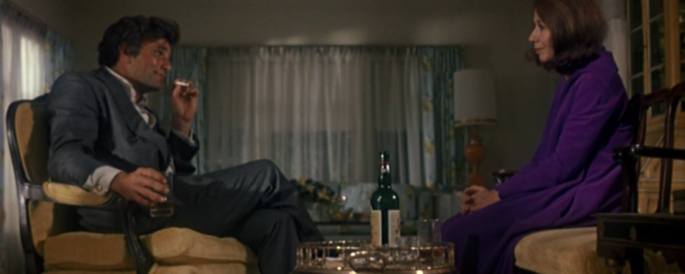
Funny, dark, uncompromising, and totally a product of the auteur-driven studio system of the 1970’s, Mikey and Nicky was written and directed by Elaine May, and it wouldn’t be the last time she had to deal with a turbulent production. To hear it from Victor Kemper’s candid interviews on the DVD, the shoot for this film was anything but easy (Kemper would quit the production twice!), but as so often with influential pieces of cinema, the terrific end result almost had to be born out of some form of madness. The action centers on Nicky (John Cassavetes, desperate and sad), who yet again needs help from his best friend Mikey (Peter Falk, intense and filled with quick-tempered rage), as he’s in over his head with debts to gangsters, and at the start of the film, is holed up inside a sketchy hotel, losing his collective mental shit in the process. Mikey tries to help is buddy, but at almost every turn, Nicky screws it all up, leading to a potentially tragic finale that tests the boundaries of friendship and sacrifice. This is one of those tricky films that was able to find the perfect balance between dangerous plotting, character based comedy, and genuine heart. May had such a distinct cinematic voice that it seems a shame that her career would often be plagued with issues having nothing to do with the overall quality of her work.

2

Because May was happy to leave cameras rolling (according to the internet she shot 1.4 million feet of film!), there’s a spontaneous feeling to the loose and gritty aesthetic favored by Kemper and the various other collaborators who worked on this scrappy little picture. And the natural rapport between Cassavetes and Falk really was something special; these two actors knew precisely how to play off of each other, always bringing out the best that they had to offer. The film clearly had to have influenced filmmaker Jon Favreau when he was working on his comedy classic Made, as the casting of Falk as the guy who sets the plot in motion in that 2001 film seems especially astute in retrospect. Ned Beatty, M. Emmett Walsh, Carol Grace, William Hickey, and Rose Arrick round out the solid supporting cast, while Sheldon Kahn’s jagged editing patterns contributed to the frenetic quality to the storytelling and filmmaking aesthetic. Also, it must be noted, and this is according to Wikipedia: “Budgeted at $1.8 million and scheduled for a summer 1975 release, the film ended up costing $4.3 million and not coming out until December 1976. May was eventually fired by Paramount Pictures (the studio which financed the film), but succeeded in getting herself rehired by hiding two reels of the negative until the studio gave in.” Those were the days – filmmakers holding films for ransom from the studios! If only this sort of anarchic spirit still lurked in Tinseltown.

1