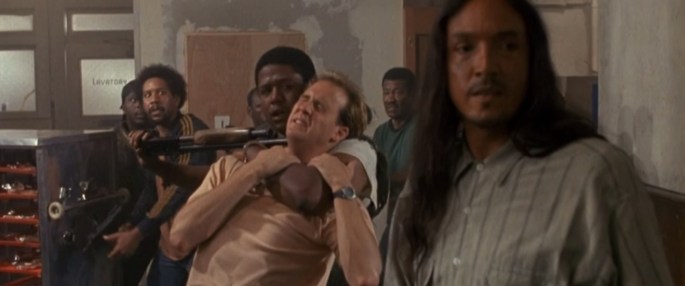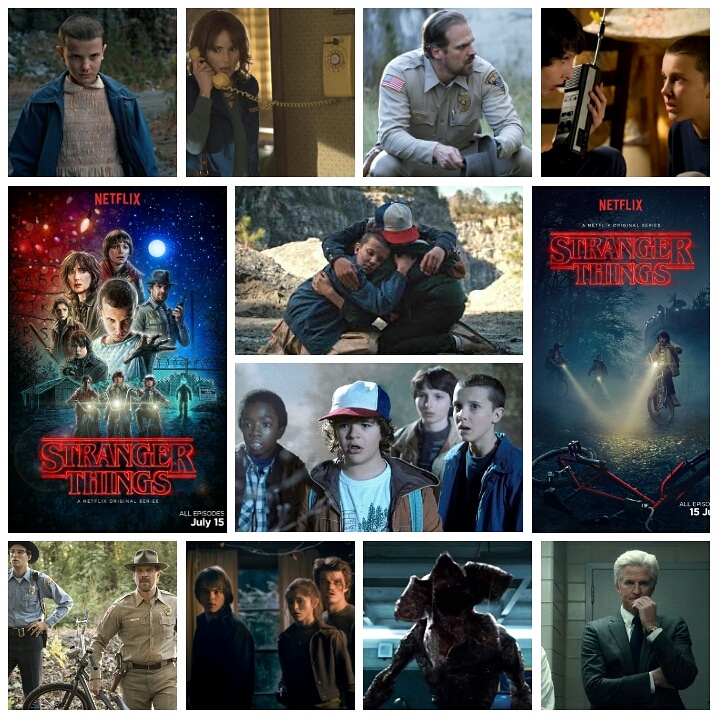
Netflix’s Stranger Things snuck up and floored me. You’d think that a long form mystery series concocted from the DNA of Amblin/ET/Goonies and retro, gooey Stephen King horror would have made a significant blip on my radar months in advance, but nope. That almost made watching it even more special; this wasnt something I’d spent oodles of time hyping up and thinking about (which often leads to expectations being dashed). It came out of the blue and knocked me sideways six ways to Sunday. I came home one night with the notion to check out the pilot before I went to bed. I fell deeply in love within the first ten minutes, and slashed my curfew to bits as I devoured about half the season in one go, hitting stop only because I would have been depressed to wake up the following morning and have no more to watch. I took the next day off work to finish up the remaining episodes, after which I sat there in a gaping stupor. I’ve since rewatced it all again. Yes, it’s that good. It’s not just the nostalgia bursting at the seams that suckered me in. This is is a show with a meticulous pace where you feel every beat naturally, some of the most fleshed out characters of recent times that you actually really CARE about, and a wondrous story relating to fear of the unknown, the bonds of friendships both new and old, redemption in the face of ages old trauma and grief, a reverence to all things creepy & crawly, an understanding of the importance fear holds in both our entertainment and collective psyches and above all, a sense of adventure. As soon as the retro opening credits flared up, I knew I was in for something special. They’re a flurry of neon letters that assemble in fashion and font achingly similar to King’s books, set to an ominous synth rhapsody that echoes everything from Refn to Sinoia Cave’s Beyond The Black Rainbow. Immediately we are transported to a setting drawn forth from the past and the nightmares of many other artists before it’s time, which is not to say it’s at all derivitive or lazy. That’s the issue with deliberatly nostalgic stuff: it can come across as forced or cheap novelty trying to play to our sentimental sides. This one uses it naturally and never feels like a gimmick for one second. What’s amazing is that despite the fact that nearly every element of story it uses has been done before multiple times throughout the years, it all somehow feels completely new, and never once leans on the crutch of inspiration any harder than it has to, which in this day and age deserves a goddamn medal. The story opens up in small town Hawkins, Indiana, sometime in the mid 80’s. Just outside of town, trouble brews deep within a mysterious CIA sanctioned research laboratory. A dangerous portal is opened, something from another dimension gets out, a girl with telepathic abilities named Eleven (Millie Bobby Brown) escapes into the town, and young Will Byers (Noah Schnapp) disappears without a trace from his home. All this happens in the first half hour, kicking off a well timed wind chime of inciting incidents to get the tale underway. The town is thrown into a panic as Will’s mother Joyce (Winona Ryder) frantically searches for him. The forlorn, sad sack police chief Hopper (David Harbour, beyond excellent in so many ways) tries to reign in the growing mania, but the situation only gets worse. Will’s sister Nancy (Natalia Dyer) witnesses another disappearance, and Eleven finds herself hiding out with Will’s endearing gang of buddies (Finn Wolfhard, Caleb Mclaughlin and Gaten Matarazzo), who valiantly launch a quest to ensure his safe return from the netherworld. Meanwhile, the laboratory’s sinister, silver haired head Doctor Brenner (a chilling Matthew Modine) is an amoral prick who will stop at nothing to get Eleven back and continue his godawful experiments. It’s a hell of a lot crammed into eight hours, but not a second is wasted, not a scene or a line of dialogue misplaced. Everything glides smoothly and the whole thing is so joyously watchable that I had trouble even thinking about picking up my phone or reaching for the iPad (I’m easily distracted). There’s teen drama, heartbreaking tragedy, first love, palpable danger without being too gory or messed up, and damn if the Spielberg/King flavour isn’t just delactable. The monster is a gooey, walking Venus fly trap that instills real fear in the opening moments of the pilot. The ideas explored are presented in ways that would make both the X Files and Twilight Zone jealous. My favourite performance has to be Brown as Eleven. Of all the child roles hers is the most difficult to land and she’s a revelation. Seeing the world outside the facility with new eyes, falling for Wolfhard, protecting her newfound friends, it’s all handled impeccably and I think we can expect great things from this young actress. David Harbour has consistently shown versatility in anything he does, and when one looks at his role here contrasted against work in, say, A Walk Among The Tombstones, it’s uncanny. His arc goes from sheepish to badass to tragic and he positively soars. Modine channels the very essence of King style villains, over pronouncing every syllable with poised venom on the tongue and cloaked malice oozing from every pore. Ryder works herself up into a frenzy that any mother must feel in the situation, and it’s just great to see her in a central role in anything these days. The kids provide heart and levity, proving wise beyond their years to the point of Calvin & Hobbes esque insight, yet still maintaining their innocence in the face of peril. Not only does the soundtrack showcase a whole whack of 80’s treasures (that Joy Division tho♡), the score itself by Kyle Dixon and Michael Stein is a love letter to everything from Tangerine Dream to Cliff Martinez, evoking the setting beautifully and bringing forth atmosphere in scene after scene after scene. Stranger Things lovingly blows a trumpet of times past, wears it’s influences proudly and unobtrusively on its sleeve and brilliantly blazes it’s own trail. There are monsters out there, both human and otherwise. Never give up hope, not matter how bleak the prognosis. There’s still some wonder and unknown to be discovered in this world of ours (and beyond). Redemption is only a few daring acts around the bend. Kindness goes a long way, as does trust. Friends don’t lie. These are but a few things you’ll discover if you give this one a shot, which I hope you will. Bring on Season 2, man.
RICHARD BENJAMIN’S DOWNTOWN — A REVIEW BY NICK CLEMENT


PETER BOGDANOVICH’S WHAT’S UP, DOC? — A REVIEW BY NICK CLEMENT

This movie is tons of fun from start to finish. I love the busy plotting and frenetic vibe, and count me in for any successful attempt at screwball comedy from any year; these types of movies would clearly never be made today and thanks to the people at TCM, their programming slate has been on fire of late. Peter Bogdanovich obviously had a total blast with this wild and crazy little movie, one that seems to be in love with the fact that it exists solely to entertain; there isn’t a pretentious bone in this film’s charming body. The inspired absurdity, which pays reference to Bringing Up Baby and various Bugs Bunny cartoons, revolves around four strangers who all happen to be carrying the same piece of plaid luggage and staying at the same hotel, with everyone getting their belongings mixed up, and hijinks ensuing.There’s a gleeful sense of madcap to most of this movie, which always puts a smile on my face, and I love how the entire film felt like an escalating series of nonsense that everyone took just seriously enough to make it all work.

Ryan O’Neal and Barbara Streisand were both superb, while Madeline Kahn stole the film in her first big-screen outing. Kenneth Mars, Michael Murphy, Austin Pendleton, John Hillerman, and many others all contributed to the sterling supporting roster. Released in 1972, What’s Up, Doc? grossed nearly $70 million domestic on a $5 million budget, making it a massive financial success while receiving warm critical embrace. The cinematography by master of the era László Kovács paid tribute to films that had come before, while still staying zippy and displaying a sense of visual energy that bolstered the entire production. Verna Field’s brisk editing kept a fast pace which felt appropriate for the material. And despite not being a traditional musical, there’s a harmonious vibe to the entire movie that is very pleasing, with the WGA-winning screenplay by Buck Henry, David Newman, and Robert Benton hitting one hilarious beat after another. Bogdanovich made some absolutely brilliant movies and this is one of his loosest and most purely enjoyable on a simple but never stupid level.

Priest: A Review by Nate Hill
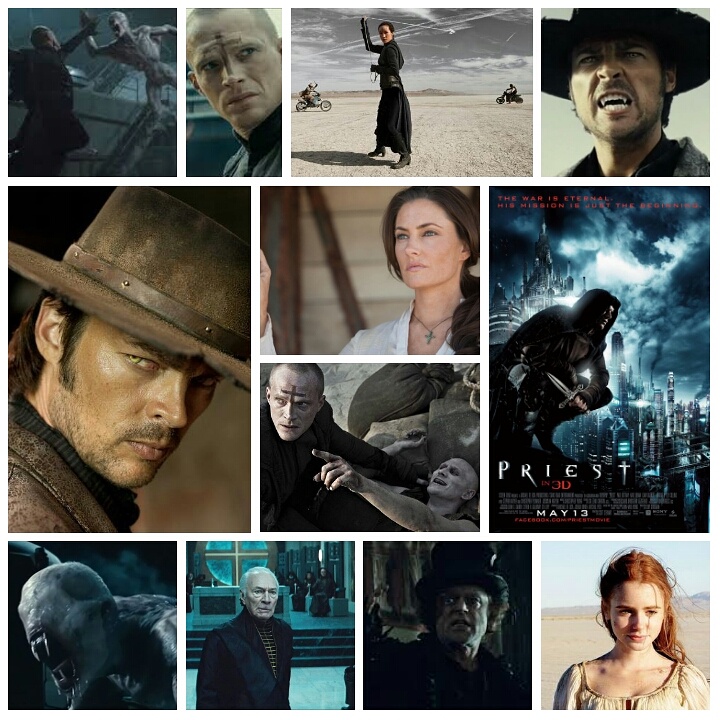
Priest is one of those flashy missed opportunities, a visually stimulating comic book flick that just couldn’t amp the substance metre up enough til it’s flush with style, and ultimately feels somewhat hollow. It’s still a gorgeous Blu Ray that will give your system a workout though, with some neat vampires and a great cast. Sometime in a murky post apocalyptic future, humanity lives in a giant gloomy city on the edge of oblivion, walled in for fear of vampires who have preyed upon them in the past. An order of warrior priests protects citizens and keeps order, until one rogue from their sect (Paul Bettany) discovers that the creatures may be back when an outsider couple (Stephen Moyer and Madchen Amick) have their daughter (Lily Collins) kidnapped from their desert dwelling outside the city. They come to Bettany for help, but the leader of his priesthood (a smug Christopher Plummer) is an obstinate son of a bitch and refuses to act. Bettany goes renegade along with Priestess (Maggie Q) and ventures into the wasteland to rescue Collins and fight these baddies. It’s frustrating because the look and design of this world is brilliant, like a dark opulant jewel that clearly has some thought put into it. But then… the dialogue and story are so numbingly pedestrian, straying not a kilometer into uncharted narrative waters to give us something even a little bit exciting or unpredictable. Quality jumps with Karl Urban’s dapper villain Black Hat, a vampire cowboy outlaw who oddly resembles what I’d imagine Stephen King’s Roland Deschain would look like if the powers that be took their heads out of their ass and recasted Idris Elba. But I digress. Like I said, terrific cast; Brad Dourif has a great cameo as a snide hustler peddling trinkets to superstitious townsfolk, and watch for the great Alan Dale too. Bettany always makes for a solid action hero, he just has a bit of trouble finding the right projects (have you seen that turd Legion? Good lord) that deserve bis talents. This one falls just short. It could have really used a few rounds of defibrillation from another screenwriter, and perhaps a hard R rating to take advantage of the horror aspects. Still, the vampires are creepy enough (echoes of Blade II are always welcome), the actors keep it going and there’s no shortage of style.
To boldly go where no man has gone before – A Star Trek Beyond review by Josh Hains
Always imitated but never duplicated, Star Trek has stood the test of time for 50 years, and has influenced not just the vast majority of science fiction generated in the decades after its fruition (film, television, comics, and books alike), but also pop culture itself. The fingerprints of Star Trek are everywhere, similar to Star Wars (original trilogy) for example, and it seems that hardly any sci-fi movies, specifically space operas like Guardians Of The Galaxy (drop the Marvel logo and the Thanos and Howard The Duck cameos and you have a pure space opera) go by without taking influence of some magnitude from these iconic franchises, whether purposefully in homage, or unintentionally. Because of the heavy influence of these two titanic properties (especially Star Trek), familiarity between properties has become an ever increasing issue in the science fiction community. What was groundbreaking then is cliche and familiar today, so Paramount Pictures has wisely chosen to embed fresh takes on old stories in their latest cinematic franchise rather than conjuring up completely new stories that might stray too far from source material for Trekkies. To the untrained eye of some of today’s more picky audiences, the familiarity of the stories is a let-down and hindrance to their movie going experiences, yet precisely what others want out of the ongoing series (a fourth installment is on the way).
Beyond opens with Captain Kirk via Captain’s log, explaining how the crew of the Enterprise has been handling the third year of their five year voyage mentioned in the last installment. Kirk, now a year older than his father George, was when he died heroically in the riveting opening sequence of Star Trek, is contemplating his position as Captain, and his place in an unlimited universe. Spock too, is grappling with his place in the universe after *possible spoiler alert* he learns that Spock Prime has passed away (a respectful way to tie up that recurring subplot). During the Enterprise crew’s all too brief shore leave at the Yorktown Starbase, they’re called into action to rescue a ship stranded on a planet in the nebula. The Enterprise comes under attack by the brutal Krall and his formidable army, leaving crew members scattered on the planet, with some taken captive by Krall. You can probably guess what happens next.
For some (and quite absurdly) the familiarity and predictability lodged within the plot of Star Trek Beyond, is a detriment to the movie. For this life long Trekkie (and Star Wars lover), to quote Bones McCoy in Beyond, “That’s just typical.” Familiarity isn’t a bad thing in the slightest in Beyond, because rather than feeling like a clone of something it’s striving to be (Into Darkness aiming for Wrath Of Khan status), Beyond feels more akin to the 2009 Star Trek reboot. Refreshing, ridiculously fun and enjoyable, yet touching and deeply heartfelt. It feels like a return to what made the original series great, performing a delicate balancing act between humour, drama, and spectacular action set pieces, none of which take a back seat in Beyond. The cerebral nature of the series, a thinking person’s movie or show with a finely tuned focus on dialogue and relationships rather than spectacle and action, has slightly diminished with the recent movie series in favour of lens flares and big explosive blockbuster action sequences, but still remains present and potent as ever. Take note of a scene late in the movie involving a picture. I won’t say anymore, you’ll know the scene when you see it, but it works because we too have been there, we can understand the emotions of the character, and our hearts bleed for them.
Star Trek has always worked best when the characters, the relationships between them, and the fun bantering, are at the forefront. They don’t talk too much in Beyond, I saw that complaint and it makes me laugh even as I type this. I’ve seen a Star Trek episodes with too much talking, and Beyond is far from those. A random and awkward complaint that the characters dictate their feelings to the audience, is just asinine by all accounts. Communication in Star Trek is key, and with a foundation built around dimensional characters, one comes to expect that they share their feelings, thoughts, and emotions between each other…out loud. Sharing in loss, expressing confusions, and bringing to light insecurities isn’t having the characters dictate their internal struggles to the audience, it’s a heartfelt way of building further connective tissue between full blooded characters, and making us care more deeply for them. That’s far from an issue in this movie.
The action comes fast and furious (try not to groan at the pun), but is as delightful, inspired, and slick as ever, popping in the 3D screening I saw, wonderfully highlighting the eye popping visual effects director Justin Lin handles with energy and style to spare. Never for a second did the action lack spacial awareness or coherence, it’s rather easy to follow. The special effects, a fine blend of CGI and practical effects, are as convincing as anything in The Force Awakens, and the 3D adds an extra layer of excitement to it all, continually involving the audience in everything from the crashes and explosions to brawls and shootouts. It’s wickedly fun stuff!
The cast is once again in fine working order, feeling at home in their roles, comfortable compared to when the 2009 reboot was launched. Sofia Boutella as the skillful, and rather hilarious fighter Jayla, is a welcome addition to the cast and bounces off the other characters effortlessly. Idris Elba fearsome and ferocious as ever, is obviously fantastic as usual as Krall, though he’s vastly underused in Beyond. A good ten more minutes of Krall could have made him all the more intimidating, but as it sits he’s a fine villain along the lines of Nero from the 2009 reboot or the typical Marvel villain. Ronan The Accuser comes to mind. In his last major film role after his tragic passing a little over a month ago, Anton Yelchin is a delight as Pavel Chekov, and will be a sorely missed presence in future Star Trek movies. I always had fun with his quick one liners and innocent nature.
Does Star Trek Beyond boldly go where no man has gone before? Not really, it lacks the harsh darkness and risk taking of Into Darkness (thankfully), the storytelling never breaks new ground, but it’s not a bad thing because it doesn’t have to. It just has to be a traditional Star Trek movie, and it damn well is. Live long and prosper Star Trek!
TODD HAYNES’ SAFE — A REVIEW BY NICK CLEMENT

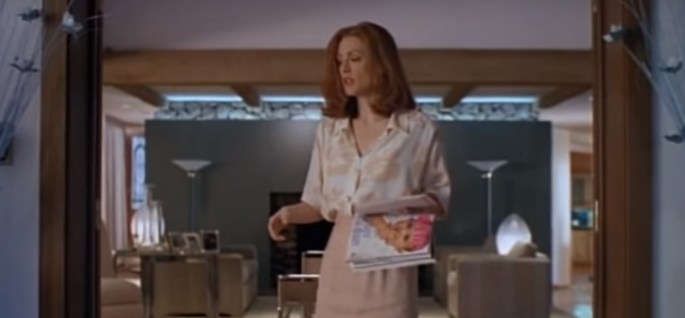
There aren’t many films like the extra creepy “environmental allergy” movie Safe from unpredictable and eclectic filmmaker Todd Haynes (I’m Not There, Far From Heaven, Carol). Released in 1995 and featuring a then rising star Julianne Moore in what amounts to a powerhouse performance of internal anguish, the film was unjustly overlooked by many in favor of splashier projects, but still cuts very, very deep and close to the bone. A psychological horror film of the first order, Moore plays a wealthy Los Angeles homemaker who develops multiple and unexplained allergies to everything around her – smells, sounds, sights, and the overall environment start to make her physically sick and mentally unstable. Apparently, it’s called Multiple Chemical Sensitivity, and her husband, played by an at first concerned and then by the end totally exasperated Xander Berkeley, is at a complete loss for words and understanding, her friends can’t comprehend any of it, and worst of all, she can’t figure any of it out for herself.
Providing no easy answers for any of his characters (or the audience), Haynes and the adroit cinematographer Alex Nepomniaschy (Narc) used compositional space to suggest isolation and loneliness and mental despair, while the complicated sound mix, which utilized multiple layers of sound in order to distort and augment reality for Moore’s emotionally fragile character, never allowed the viewer to know anything more than any of the characters at any point in the narrative. Movies rarely get as underrated or as unsung as something like Safe; it’s a small film with big ideas and it’ll mess with your head long after the final shot fades to black. And as always, Moore was mesmerizing to watch, dropping a tour de force piece of acting that registers as one of her best and most unhinged portrayals of a damaged soul on screen. Available on Criterion Blu-Ray.

Riddick: A Review by Nate Hill
Being a huge fan of the two previous Riddick films, I was overjoyed to hear that Vin Diesel would be raiding his own couch for change to save up in order to make this R rated follow up, still helmed by David Twohy. It’s reassuring that in a franchise with more than a few haters, Diesel has the passion and ambition for his character to go out of his way in bringing this to fans. Not to mention what a kick ass, gnarly little space yarn it turned out to be. Pitch Black was a claustrophobic horror fest set on a single harsh world, and The Chronicles Of Riddick opened up into a vast galactic space opera. This one reigns it in closer again (partly because of budget, I would imagine) and gets back to the roots established in Pitch Black. After defeating the Necromongers and becoming their King, Riddick is betrayed and sent into exile by the treacherous Lord Vaako (Karl Urban in a brief but memorable reprisal). Cast out into the stars with a ship running low on fuel, he finds himself marooned on a small, deadly planet that’s more challenging than any other he has found himself on (and if you remember, he has been to some hellish little nooks in the past). This world is a dry, acrid rock where every form of wildlife seems to be incredibly lethal, and out to get him. The first half of the film is pure genius, and consists of Riddick playing Survivorman with his environment, battling aliens and elements and befriending a small hell-pup type doggo that grows up into a teeth and claw ridden killing machine that is at one point referred to as a ‘dingo dango thing’. This is where it’s at for the film, and as soon as the more generic second half arrives, the air gets a bit stale, but it’s still heaps of fun. After mastering the terrain and ingeniously dispatching a snakelike alien that seems to have wandered right in from Wolfgang Petersen’s Enemy Mine (practical effects POWER), he encounters trouble of the human variety, in the form of bounty hunters. Two teams of outlaws have arrived to claim him: the stern Boss Johns (Matt Nable) who has an old bone to pick with Riddick, and the psychotic A-hole Santana (Jordi Molla, who I think of as the Latin Gary Oldman). They bicker a whole bunch on who gets the prize, unknowingly being infiltrated and messed up by the guy before they’ve barely landed. Katee Sackhoff is nutso awesome as Dahl, a lesbo tough chick who legit has the line “I don’t fuck guys, but occasionally I fuck them up.” Soon there’s more charming wildlife, this time in droves of shrieking reptilian predators who intend to see each of them, Riddick included, dead. This forces an amusingly unstable team-up from all forces to battle the uglies and escape this godforsaken place. It’s giddy sci-fi pulp good times, and benefits from its hard R rating, something which the other two films never had on their side. Diesel was born to play Riddick, the growling teddy bear, and I hope he gets to continue wearing the goggles for more of these movies, indefinitely if possible. A hell of a great time.
PTS PRESENTS EDITOR’S SUITE with JIM HELTON

Podcasting Them Softly is honored and extremely excited to present a discussion with feature film editor Jim Helton. Jim‘s big screen credits include Blue Valentine, The Place Beyond the Pines, and this September’s The Light Between Oceans — all of which were directed by Derek Cianfrance. It’s very clear that Jim has forged a unique and intense artistic relationship with Cianfrance, who ranks as one of our favorite filmmakers currently working, and throughout this extremely informative chat, we discuss how their unique partnership came to be born. Jim has also worked on a variety of short films and documentaries, and also edited the indie dramedy Lovely By Surprise and the street-racing action thriller Quattro Nozza. He also contributed to the dynamic soundtrack for The Place Beyond the Pines, as music is a big passion for him, which is something we also had a chance to discuss. He even crafted the extremely memorable title sequences for Blue Valentine. Jim‘s work is smart, stylish, and extremely disciplined and we’re thrilled to add him to our Editor’s Suite series. We hope you enjoy!
JOHN MCTIERNAN’S DIE HARD — AN EXPRESSION OF LOVE BY NICK CLEMENT

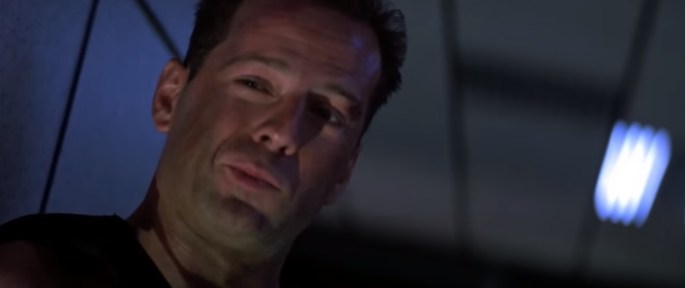
Remains a stone cold classic of American cinema. Masterpiece goes without saying. The very definition of timeless. I find so few flaws – if any – in John McTiernan’s Die Hard. Many, many imitators and copycats have tried to replicate the brilliance of this film and almost all have failed. From the air-tight plotting to the muscular direction this was an action movie that literally shattered the genre; Joel Silver would never be the same as a producer and it forever changed the landscape of the Hollywood action picture. Jan De Bont’s silky yet robust 2.35:1 cinematography stretched the frame to the max; his work as a cinematographer was always fantastic. Bruce Willis was both a credible “every-man” hero and the projection of something more – it’s an underrated performance that he nailed in every single respect. The historic screenplay by Jeb Stuart and Steven E. de Souza stressed narrative economy, logical plotting, and ironic humor that never, ever delivered its jokes with a tongue in cheek vibe. The first blast of bloody violence doesn’t happen for nearly 40 minutes, and it’s close to 20 minutes before the “plot” kicks in. Instead of immediately clobbering the audience over the head with a sensory blast, McTiernan, ever the craftsman, ummm, you know, told a story with actual characters and dialogue that was witty and smart and THEN he let the bullets fly and the explosions rip. He knew that none of the violent mayhem would matter if the audience didn’t care. Die Hard also marked the birth of Bruce Saving the Day in a stained undershirt POWER and Look at Bruce Make that Grimaced Face POWER and look at all of the sleazy Hart Bochner POWER. This is an unassailable tour de force of thrilling pop corn entertainment that never, ever gets old. It’s a firm example of what I call Grade A Entertainment.

Broken Lizard’s The Slammin Salmon: A Review by Nate Hill
The hype surrounding comedy troupe Broken Lizard quieted down somewhat after the hullabaloo of both Super Troopers and Beerfest, but that didn’t mean they halted their output. In 2009 they released the insanely funny screwball romp The Slammin Salmon, which nobody seems to have seen and garnered nowhere near as much buzz as their previous films. It’s just as much of a riot, this time landing the gang into a Miami seafood restaurant, after their jaunts in rural law enforcement and extreme competitive alcohol consumption. The restaurant they all ‘work’ at is owned by a hulking bull in a china shop named Cleon ‘Slammin’ Salmon, a gigantic ex pro boxer played by the late great Michael Clarke Duncan in one of his last, and best, appearances. Cleon runs the restaurant with an obnoxious iron fist, a giant petulant brat with a penchant for beating up his staff and the social skills of a grizzly bear. On a busy night he announces to his staff that they must sell enough deceased marine life on plates to come up with a ten grand debt he owes to the Asian mob. This sets off a chain of reliably hilarious shenanigans involving the whole Broken Lizard crew, and a few cameos from salty hollywood veterans, a welcome trend that is commonplace among their films. The pushover manager Rich (Kevin Hefferman) attempts to keep the order. The lunatic head chef (Paul Soter) and his dimbulb busboy brother (also Soter) create trouble for everyone. Douchey waiter Guy (Eric Stolhanske) plays dirty to boost his sales. Ditzy server Mia (April Bowlby) dolls up her smile and smart one Tara (Cobie Smulders) plays it crafty to get ahead. Funniest by far is Jay Chandrasekhar as Nuts, a weirdo whose alter ego Zongo makes insane appearances whenever he forgets to take his meds. Clarke Duncan is the bellowing life of the party though, in an untethered romp through the comedic corn that clearly has been improvised a lot and shows the actor having some of the most fun I’ve ever seen onscreen. It’s a chaotic flick that captures the mania of restaurant life perfectly, with nods to everything from Monty Python to Blake Edward’s The Party, while still retaining a contemporary personality of it’s own. Broken Lizard has a knack for making every joke land in their films, and it’s laugh city all the way through this one. From engagement rings in fecal matter, third degree burns from scalding soup, endless situational fisacos and satirical characters, it’s just wild. Watch for Lance Henriksen, Carla Gallo, Olivia Munn, Jim Gaffigan, Sendhil Ramamurthy, Morgan Fairchild, Vivica A. Fox as a pop star named Nutella (lol) and a priceless Will Forte. On par with Troopers and Beerfest, funny in spades and so damn re-watchable. An essential for comedy fans.


Podcasting Them Softly is honored and extremely excited to present a discussion with feature film editor