Emerald Fennell’s Promising Young Woman

Carey Mulligan is a tornado of righteous fury and ruthless retribution in Emerald Fennel’s Promising Young Woman, an unconventional revenge thriller and icky glimpse into the world of men being horrible to women, and the often decades later snowball effect that can have on many lives. This is a crisply made, acid edged, cheerfully furious piece with a bubblegum pop-art visual and musical aesthetic that provides playful contrast to its very dark and fucked up subject matter and while I had a few major issues in the third act, I greatly enjoyed it overall. Mulligan is Cassie, a thirty year old girl working a humdrum barista job and living at home with her quaintly innocuous parents (Clancy Brown & Jennifer Coolidge). Many nights she gets all dolled up, hits the dive bars and takes guys home pretending to be too hammered to object to any advances, and then turns the tables on them in whip-smart fashion. Why does she do this? Well besides the surface level ‘teach shitheads a lesson’ aspect, there’s a much deeper and more personal reason for her actions that stems back to her days ten years earlier in med-school, where she has memories of a best friend who went through something terrible and isn’t around anymore. That’s all I’ll say about the languid and loose yet pointed and intricately structured narrative that is guarded about revealing backstory and let’s the expository nuggets land with devastating thunderclaps as they come. The soundtrack choices are all bangers that are fun yet have a menacing undercurrent, especially a choice like the unbearably eerie theme from the 1955 film Night Of The Hunter in which Robert Mitchum plays a terrifyingly misogynistic psycho disguised as a benign preacher. The supporting cast is meticulously peppered with an eclectic and multigenerational roster of names including Alison Brie, Adam Brody, that McLovin kid, Laverne Cox, Connie Britton, Molly Shannon and a very memorable Alfred Molina as a scumbag former defender attorney wracked with suicidal guilt. Mulligan herself seems to have been born for this role, or at least tailors her acting style quite a bit off her usual path to play Cass. She’s an actor who mostly finds herself in quiet, observant, introspectively wistful characterizations, full of long stares, sustained silences and expressions that constantly have you wondering what she’s thinking. Here she’s the antithesis of that, punishingly verbose, uncomfortably rambunctiousness and perpetually has her defences up like a cobra ready to strike. And strike she does, although I’m not sure I was quite okay with the script’s decision on her arc overall. Thats not to say I didn’t understand, appreciate and recognize the integral nature of such a turn of events and I can’t say much without spoiling it but I can say that as much as it’s a darkly poetic way for the film to go out, it didn’t quite run congruent with my aspirations for this horrific tale and left somewhat of a bad vibe in my soul. But I suppose in trying to make a story like this 100% effective and memorable, you’ve got to throw a few ‘shock and awe’ curveballs that shirk the usual limbo bar of predictable catharsis and aim to leave the viewer feeling pulverized, disoriented and unnerved to the maximum. In that aspiration, it has certainly succeeded. Great film, if one that left my mental/emotional equilibrium feeling considerably infringed upon. Mission accomplished, I suppose.

-Nate Hill

For Your Ears Only: Martin Campbell’s CASINO ROYALE

Welcome everyone to a very special episode of Podcasting Them Softly’s For Your Ears Only series. Today we are going to discuss Martin Campbell’s return to the Bond franchise with CASINO ROYALE. Released in 2006 this was Daniel Craig’s debut as James Bond, based on Ian Flemings’s first Bond novel of the same name. Featuring an amazing cast coupled with Chris Cornell’s show-stopping title song, CASINO ROYALE had a worldwide box office total of 600 million and went on to win a bounty of BAFTA awards and Daniel Craig became the first actor to be nominated for a BAFTA for portraying James Bond. 

What makes this episode so very special, is that we are joined with returning guest and one of our favorite filmmakers Wayne Kramer and actress Ivana Milicevic who co-starred in both CASINO ROYALE as Valenka – Mads Mikkelson’s girlfriend, and Wayne’s neo-noir masterpiece, RUNNING SCARED. 

Johannes Nyholm’s Koko-Di Koko-Da

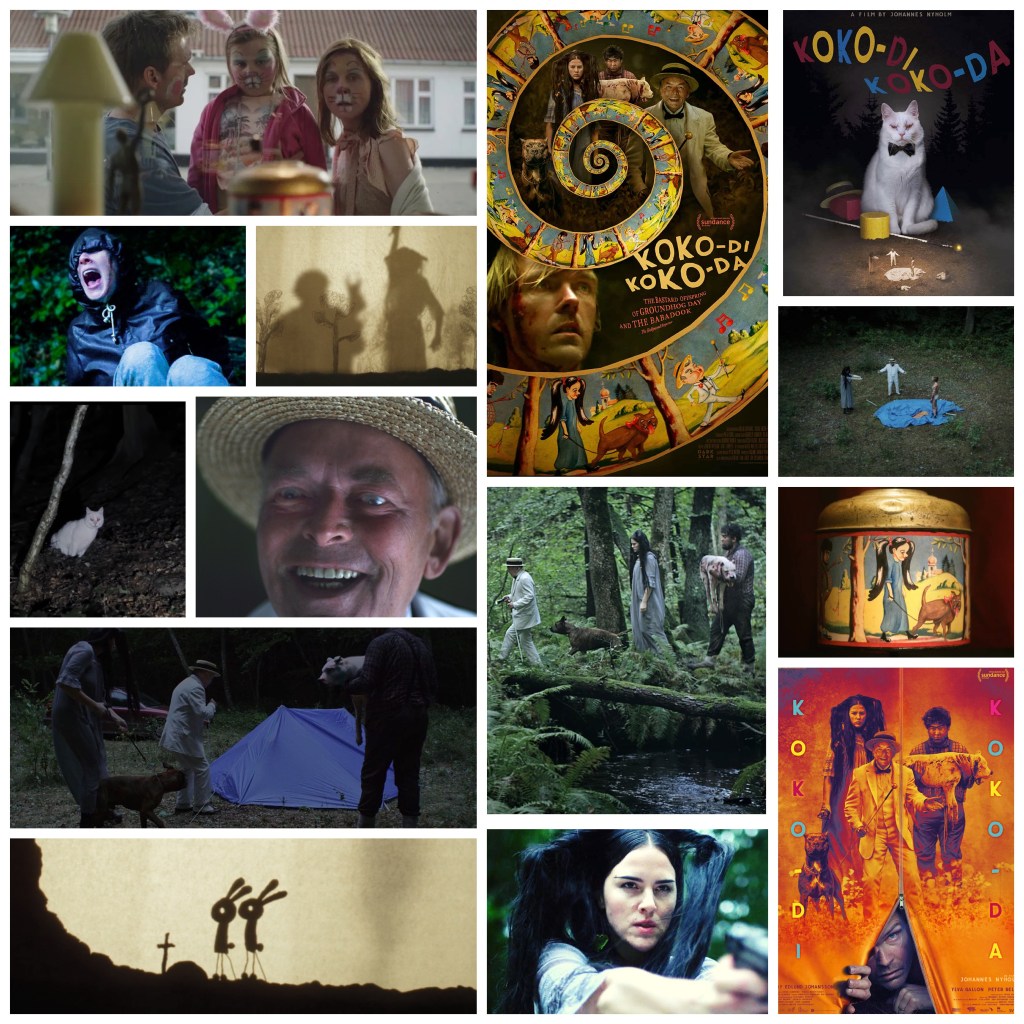
Shudder is a great streaming service if you’re looking to get lost off the beaten path within the horror genre and come across some truly weird shit that you otherwise might not have the chance to see. Long lost keystones of 80’s schlock, obscure off kilter creature features and more recently some bizarre foreign arthouse experiments like Johannes Nyholm’s Koko-Di Koko-Da, a terrifyingly surreal plunge into grief, madness, waking nightmares and past trauma that manifests in some dark, fairy tale esque ways. When a vacationing Swedish couple loses their young daughter in an accident that’s.. odd to say the least, her death sets deep rooted trauma in both of them. Sometime after they decide to go on a camping trip to rekindle their marriage and attempt to heal from the loss.. and let’s just say it doesn’t go too well. No sooner have they pitched a tent and are trying to get some sleep, three mysterious and *very* strange individuals emerge out of the forest from nowhere, proceed to torment, harass and eventually murder them. There’s a scary little white suited ringmaster dude, a big giant oaf carrying a dead dog and an unnerving mute girl with hair that would make Lady Gaga cringe. This trio of freaks continues to find and terrorize them in one of those scintillating time loops where they find themselves on the road, in the tent, under attack and murdered again and again and again. Who are they? Why do they keep accosting them? Why do they look like rejects from a Rob Zombie film or a travelling gypsy circus? Well, there’s a reason for that that’s actually a lot simpler and more straightforward than how the material is presented, through this sort of nightmarish prism of music, sound, surreal forest visuals and disorienting stylistic flourishes. The film isn’t going to work for everyone, simply for how bleak, unrelenting and alien the atmosphere is, and how the resolution of this couple’s grief and trauma comes in a fashion that’s anything but easy to process and absorb, much like their issues in question. There’s a specific object in the film, a sort of totemic MacGuffin that holds the key to everything, the identity of these three nocturnal scoundrels, related directly to their daughter and the eerie, ethereal nursery rhyme that hovers in the film’s auditory psycho sphere as a constant reminder and gives the film its inane but inherently menacing gibberish title. A challenging, deeply unsettling yet greatly rewarding piece of tricky arthouse neo-surrealism.

-Nate Hill

McG’s The Babysitter: Killer Queen

The first Babysitter on Netflix is one of my favourite 80’s nostalgia bath horror flicks out there, so naturally I was curious about the recent sequel, Babysitter: Killer Queen. The first film is a blast of retro pop culture referential bliss, cheerfully gruesome cartoon gore, vividly farcical archetypal characterizations, a beautifully bold colour palette and some punishingly funny dark humour. So how much of that does this sequel bring to the table? Well thankfully a lot, and ends being like… 70% as dope as the first with a ton of rambunctious energy and clever new ideas.. however, it implodes a bit in the third act with some inexplicably off kilter character/plot curveballs that just feel weird, which I’ll get to in a moment. It’s been a year or so since the events of the first films and young Cole (Judah Lewis) is still processing almost being murdered and sacrificed to Satan by his evil babysitter Bee (Samara Weaving) and her mad dog gang of psycho high schoolers. Life goes on and no one seems to believe him until it all happens again, his would be best friend Em (Emily Alyn Lind) turns out to be another devil worshipping bitch who goes nuts on him right as Bee’s followers all rise from the dead for one night’s last chance to finish what they started and dispatch Cole for good. He’s joined by the ‘new girl’ in his class, a spitfire problem kid named Phoebe (Jenna Ortega) and soon enough genuine sparks fly between them. The action is shifted from the pastel suburbia aesthetic and placed on a riverboat and the surrounding Arizona desert/lake atmosphere for a nice change. The gore is fast and furious, the dialogue whip smart and reliably hilarious and the soundtrack packed with joyous 80’s deep cuts of everything from Alannah Myles’ Black Velvet to Tangerine Dream’s Love On A Real Train. It’s a ton of fun, except… well the problem here is Samara Weaving, or a lack of her anyways. Her character is pretty much absent for most of the film, while her exuberant cronies do much of the chasing, terrorizing and wise cracking. When she does eventually show up in the eleventh hour, she seems distracted, listless, even a little pale and not up to the task, like she was somehow forced into this by a contractual obligation and kept her presence as scant as possible. Nowhere to be found is the spunky, sexy, full of charisma and deadly sex appeal we remember her having from the first film. Additionally, they’ve chosen a completely out of left field twist on her character that makes absolutely zero sense when you look at the first film and feels just, so shoehorned in for whatever behind the scenes reasons, most likely spearhead by Weaving’s own ideas about the whole thing. It’s shocking and a bit frustrating and kind of derails the entire franchise, if I’m being honest. Still though, the first two thirds of the film are cracking stuff and on the level of pedigree as the first film, I’m just not sold on the ending, and whoever’s plan it was to go that route with this Bee character.

-Nate Hill

Netflix’s Marianne

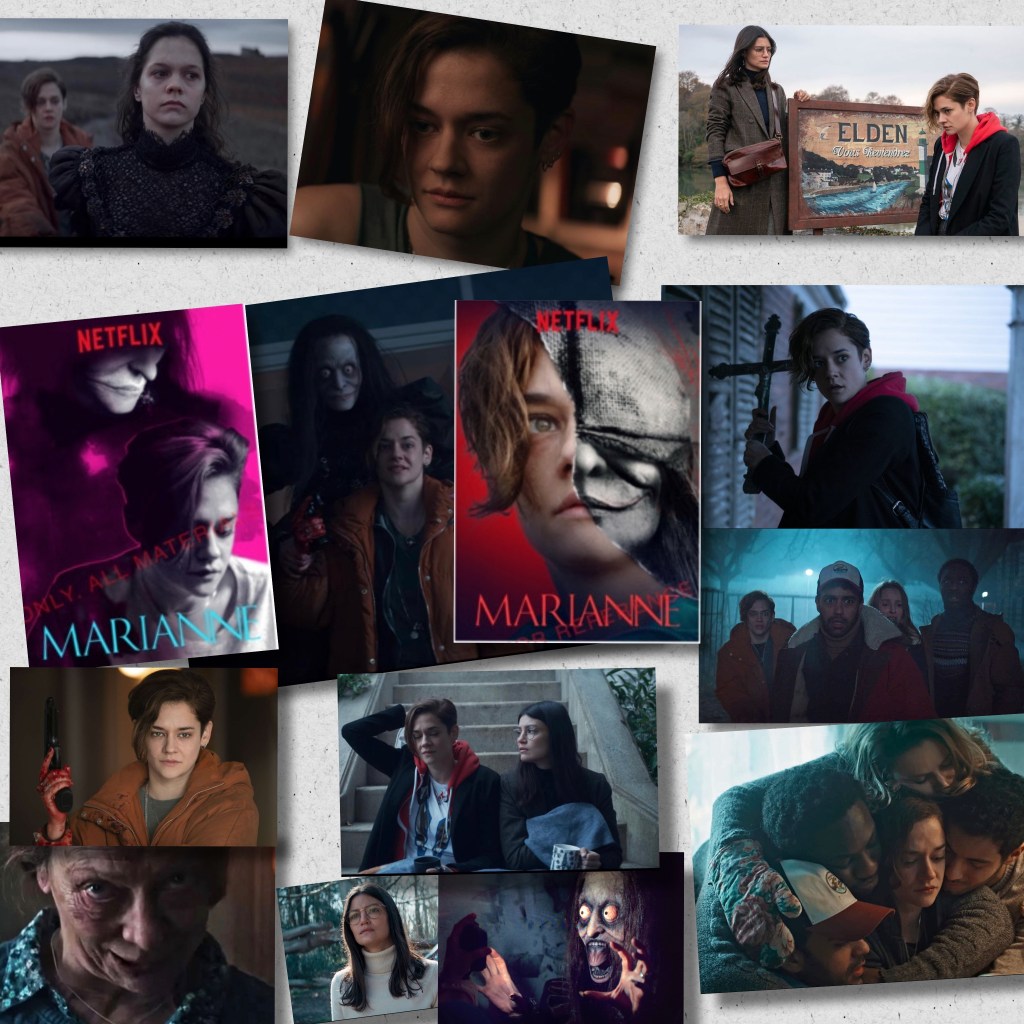
It’s always great to find horror content that is *actually* scary, like ‘scare a desensitized adult with decades of genre nerding out’ scary. France’s Netflix original series Marianne is most definitely scary as fuck, one of the qualities that makes it stand out amidst the multitudinous ranks of horror material streaming out there. What it also has is strong, emotionally rich storytelling, a unique and sometimes disorienting but organic way of presenting its story, characters with depth, compassion and complexity and a kind of meta storyline that feels like a tale within a tale at times, like King’s In The Mouth Of Madness or the like. Emma (Victoire DuBois) is a famous horror novelist whose work has taken her from the sleepy seaside town of Elden to big city Paris for book tours, autograph seminars and overall big-shot writer lifestyle. Her many books tell the ongoing story of nasty pagan witch Marianne, a monstrous force of evil who, it turns out, isn’t just a creation out of Emma’s imagination but is a very real entity from her childhood and that of all her friends back home she’s become so estranged from. This leads her on a journey back to Elden to reconnect with her friends, discover just how real (and how fucking terrifying) Marianne is, what she’s been up to and what can be done to end her reign of unholy terror over the town and everyone in her life. The story starts off jaggedly and it can be tricky to get a sense of (gotta keep up with those snappy subtitles) at first but once she’s settled back into Elden the magic really happens. Emma is a confident, assured and independent woman who has the rug of her cavalier personality yanked from under her when it becomes clear what a force to be reckoned with Marianne is, and Dubois’s performance is one of emotional resilience, startling vulnerability and aching sex appeal. Marianne herself takes several different forms, each more hair raising than the last and is really a fascinating character once the mythology fully unfolds. I won’t beat around the bush: this is one fucking scary ass show, and I *dare* you not to be totally freaked out by the makeup effects (those bulging eyes), shocked by the relentless, very efficient jump scares and just immersed in the overall atmosphere. There’s also a deep emotional core emanating from out of all the horror, as we see Emma’s varying relationships to her many childhood friends, how each bond is tested by time and the evil surrounding them. The town of Elden (actually the port of Doëlen) feels real and mysterious, complete with its own spooky lighthouse, as every small coastal town in a horror film should. The story is one full of mystery, pathos, hurt, horror, super high stakes (Marianne is one ruthless being with absolutely no regard for compassion or mercy) and just… everything about it *works.* Could not recommend this highly enough.

-Nate Hill

THE ROBERT ALTMAN FILES: CALIFORNIA SPLIT (1974)

“You know, I know, rent means dough,

Landlord goin’ kick us in the cold, cold snow.

Rufus Rastus Johnson Brown,

What you goin’ do when the rent comes round?”

-Harry Von Tilden

“Pal… I’m gonna win!!!”

So says George Segal’s Bill Denny as he’s being flattened by the pressures of his overdue gambling debts, his irritated bookie, and being stuck in the unenviable position of having run out of personal items to sell for gambling money. It should also be said that he’s been on one hell of an impressive losing streak over the past couple of weeks. But, still, gripped by the kind of desperation that occurs when there are no options left, he says that he’s going to win a high rolling poker match in Reno as if it’s an absolute certainty. Given his circumstances, what the hell else is he going to say?

Robert Altman’s California Split is a film that understands that specific kind of desperation better than any movie I’ve ever seen. It also has a lot to say about dysfunction, camaraderie, semi-homoerotic male bonding, codependency, ennui, danger, disappointment, and, finally, the empty feeling one has after going jowls-deep into the depths of your own mania. For a small movie about two lost souls who luck out to find each other and enjoy a few eventful weeks together, California Split, one of Altman’s very best efforts, is alive in a way other films can only dream of being.

After randomly being seated at the same table at an L.A. poker club and then escaping the wrath of a fellow player who might as well wear a cape that says “sore loser,” Bill and Charlie Waters (Elliott Gould, never cooler than he is here) connect again in a nearby bar where Charlie’s infectious and quick witted assessments on basketball wagers win Bill over. Soon, they’re drunkenly staring over a graveyard of empty beer glasses and making low-stakes, bullshit bets as to whether or not they can name all seven dwarfs in their present condition. The evening ends with them getting beaten up, robbed of their winnings, arrested, and then, in the hazy, early morning hours, bailed out of jail by Gould’s call girl roommates (Ann Prentiss and Gwen Welles, both unforgettable and fantastic) which then leads to a fruitful, winning partnership.

There are many things going on under the surface but there truly is a sly romantic comedy at the heart of California Split. Sure it’s not very conventional but I’m not sure what other subgenre creates the kind of unfettered joy Bill and Charlie feel when they’re around each other. There are times that George Segal is smiling so widely, you can see all of his back teeth and fear that somehow the top half of his head may become unhooked from his lower jaw. As the movie rolls along, their relationship ebbs and flows as winning and losing streaks exchange hands leading to a temporary separation, a reconciliation, and one last big dance before finally breaking up. The film is set during the Christmas season but it’s not something the audience would notice given Altman’s insistence on keeping the two protagonists cloistered in the details of their own world and blinded by their mutual, raw enthusiasm for action and each other’s company.

The film immediately frames Elliott Gould’s flashy Charlie in stark contrast to George Segal’s more buttoned-down Bill. They come off as two very different guys but, in the granular, they really aren’t all that different. Charlie may seem like the wise guy motormouth who is careening toward disaster but it’s actually Bill who is on the path to rack and ruin. Charlie is just already there; a smooth-talking loser who takes life one day at a time and doesn’t even pretend to give a hang about a day job. He bets like a chaos agent and doesn’t seem to care whether he wins or loses. Bill, on the other hand, still keeps an office in the startup magazine for which he works though it’s not clear if he’s paid for writing, which we never see him do, or avoiding his boss (an impossibly young Jeff Goldblum), at which he’s more adept. And though it’s not explicitly telegraphed, the audience gets the sense that Bill’s failed marriage is probably still within view in the rear view mirror and that a reconciliation wouldn’t necessarily be completely out of the question.

But the screenplay by Joseph Walsh (who turns up as Sparkie, Bill’s bookie whose patience has finally run out) is less interested in the well-worn path of personal redemption when it comes its characters as, a recovering gambling addict himself, Walsh understands that the joys of the compulsive gambler are small, fleeting, and infrequent. After Bill runs a streak that nets $84,000, he goes into a semi-trance and shakily rids every pocket of its gambling chips as if he’s vomiting after a particularly impressive bender. Exhausted, he holds his head in his hands as the life is drained out of him. Even winning is painful and empty. “Don’t mean a fuckin’ thing, does it?” Charlie observes.

While he had churned out a few masterpieces in the previous four years, California Split cemented Robert Altman as one of his generation’s most observational filmmakers. Standing the tallest in a class that included Paul Mazursky, Jonathan Demme, and Hal Ashby, Altman reveled in the details and quirky inhabitants that (still) make America unique and special. Early in the film, the audience is treated to a mini-drama that erupts between a bottomless go-go dancer and her gambling addicted girlfriend which ends with the dancer having to borrow against her earnings just to get the girlfriend out of the bar. It’s a small moment that occurs courtesy of Altman’s penchant for overlapping dialogue and roaming camera but it comes alive and makes three-dimensional people out of who would be nothing more than glorified extras living on the edge of the frame in a lesser filmmaker’s work. Altman argues for an America being a country of Mom and Apple Pie as long as we understand that Mom is a hooker named Barbara who compulsively reads the TV Guide to unwind and Apple Pie is Froot Loops (or Lucky Charms, your choice) and beer. It’s an America of gambling superstitions, all night brothels, and Friday night prize fights. It’s an America choking on a cloud of cigarette smoke in tiny rooms with poor ventilation, watered down drinks at the racetrack, and lonely people perfumed in Shalimar. In short, it’s not Norman Rockwell’s America but, instead, an America that actually exists.

At the end of the film, Bill and Charlie go their separate ways with the former saying “I gotta go home.” But Charlie can see Bill even when Bill refuses to see himself. Charlie knows Bill doesn’t live anywhere outside the action and that he’s only pretending that he does. For there was probably a time in his life that Charlie admitted that he, too, had to go home only to realize that, sadly, he was already home. All of this is unspoken, by the way. It’s just that California Split is that rarity of a movie where the dialogue tells us plenty but the characters’ actions tell us more.

Joe Carnahan’s Boss Level

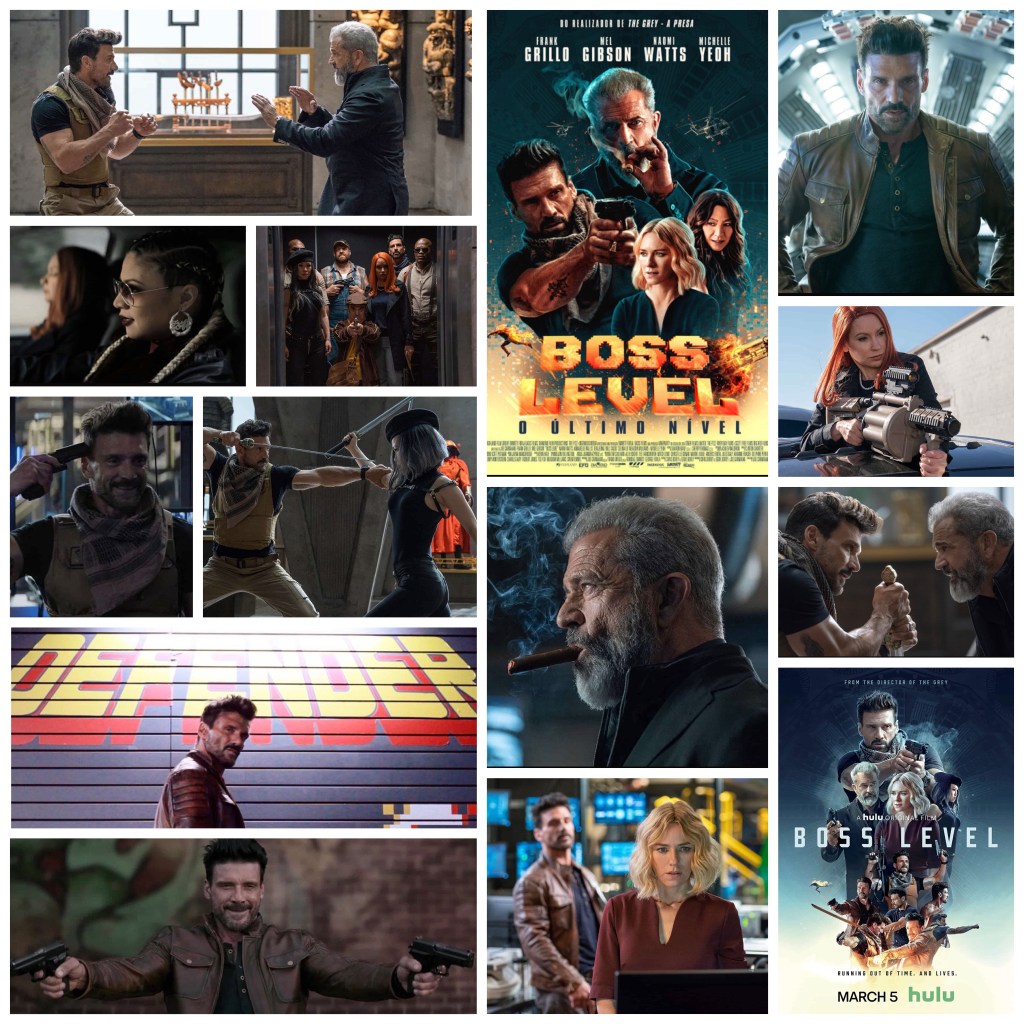
If I was mayor of FilmTown, I’d make the day a new Joe Carnahan film came out a national holiday. The guy is such a great storyteller and to me, each of his movies over the years is a solid gold classic, from the gritty Narc to the cult status Smokin Aces to the emotional masterpiece The Grey to the criminally overlooked Stretch. His new film Boss Level just dropped on Hulu and various other platforms for rental and let me tell you, it’s my favourite thing I’ve seen in awhile and most definitely of 2021 so far. The infusion of action and SciFi has always been a great love of mine and when done with wit, intelligence, inspiration and badassery it can be a truly special sub-genre. Frank Grillo stars as ex special forces soldier Roy Pulver, who finds himself in a curious metaphysical time loop on the day of his death: he wakes up, is immediately confronted with a host of eccentric and quite lethal contract killers, some of whom he is able to kill, and others not so much. The day is often a variation on the same template, but one thing remains unchanged: at some point, in some way, he always ends up dead. Who placed him in this purgatorial halo of mayhem? Does it have something to do with his ex girlfriend (Naomi Watts) who works at a mysterious physics research lab owned by a Machiavellian despot (Mel Gibson) hellbent on some nefarious agenda? Well of course it does but the fun is in seeing how, and how with each new day, or each new crack at the level as this thing is a terrific mirror board for video game concepts, he learns a little more, and gets a little closer to figuring out what’s happened, who has it in for him and why. Grillo is a great choice for an action hero because not only is he physically adept and imposing, he also has acting talent and charisma for days and just feels like someone you want to be around. He narrates the film in hilarious, touching and sardonic voiceover and makes Roy a terrific character creation. Gibson is in scenery chewing Bond villain mode, munching on a giant cigar and commanding hordes of minions like some dark god, while Watts is terrific as ever. Keep an eye out for Will Sasso, Michelle Yeoh, Annabelle Wallis, Quinton Rampage Jackson and Ken Jeong as a lippy bartender. This is a wonderful motion picture with balls to the wall ruthless gory action, absolutely hilarious and colourful dialogue (Carnahan has a way with words like no other), a SciFi concept that is just this side of silly yet still tantalizes the brain (the Osiris Spindle is such a cool idea) and feels intricate and trippy enough to keep us guessing and immerse us in the world. You know what really hit it home for me though? Roy is a real character with an arc who not only has to fix the dilemmas imposed upon him by an external antagonist, but fix his own heart and mend his own wayward tendencies, particularly in the relationship with his son (Rio Grillo, Frank’s real life kid) who he’s never seemed to find the time for, until now when all he has is one day, but a day that scintillates into eternity. There is real pathos in this story and for a 90 minute action film with this much destruction, mayhem, crazy characters, conceptual exposition and layered plotting it’s rare to find an emotional core emanating from it as well, but this one really has it all. Kinda like Source Code meets Groundhog Day with splashes of Bond and this exhilarating undercurrent of video game thematics, and also fiercely and singularly its own thing. Best film of the year so far.

-Nate Hill

Antoine Fuqua’s Shooter

I’ve always loved the absolute hell out of Antoine Fuqua’s Shooter, a mean, violent, very broad and totally enjoyable action flick with a western flavour woven in and some jaw dropping set pieces along the way. The story is like, beyond over the top, Mark Wahlberg is a near invincible force of nature, the villains are so intense they feel like they’ve walked out of a Walter Hill flick and the overall tone is just this side of tongue in cheek territory while still feeling like a legitimate thriller. Marky Mark plays an ex marine sniping guru who lives alone in the Canadian wilderness with his doggo until he’s lured back to Vancouver by his conniving former boss (Danny Glover) for a high profile political assassination. Basically blackmailed into it, he finds himself set up by his own people to take the fall for the job, betrayed, left for dead, the works. Also, as we observed in John Wick, don’t kill the dog of someone who can take out literal armies of goons and will come gunning for you and everyone in your employ. On the run he’s assisted by a rookie cop (Michael Pena) who intuits his innocence and the girlfriend (a smokin hot Kate Mara) of a former army buddy who he seeks shelter with. The villains here are truly spectacular and I must spend a portion of my review on them: Glover is so arch and evil he literally gets to say “I win, you lose” *twice* and he somehow pulls off a ridiculous line like that just because he’s Danny Glover and he’s smirking like he knows damn well what kind of script he’s waded into. His top lieutenant is a despicable, sadistic piece of work played by the great Elias Koteas in high style, all leering stubble, violent urges towards Mara and creepy charisma in spades. They all work for the the most evil US Senator in the country, a tubby, southern fried, amoral, genocidal maniac Colonel Sanders wannabe played by Ned Beatty, who doesn’t just chew the scenery, but strangles it with his bare hands while he’s at it. The cast is off the hook and also includes Tate Donovan, Mackenzie Grey, Rhona Mitra, Lane Garrison, Rade Serbedzija and a cameo from The Band’s Levon Helm. They just don’t make actioners like this anymore and even for 2007 this felt like a dying breed. Classic, melodramatic, hyper violent, neo-western revenge stuff that was huge in the 80’s and 90’s and I miss greatly. There’s a brilliant exchange of dialogue where Beatty and Glover marvel in desperation at Wahlberg’s refusal to back down or stop hunting them. “I don’t think you understand,” he growls at them: “You killed my dog.” It’s a great line sold 100% by Wahlberg and the film is full of spot on moments like that as well as visually breathtaking action sequences (that mountaintop standoff tho), a playful yet deadly tone and villains that would be at home in the Looney Toons. Great film.

-Nate Hill

Nikole Beckwith’s Stockholm Pennsylvania

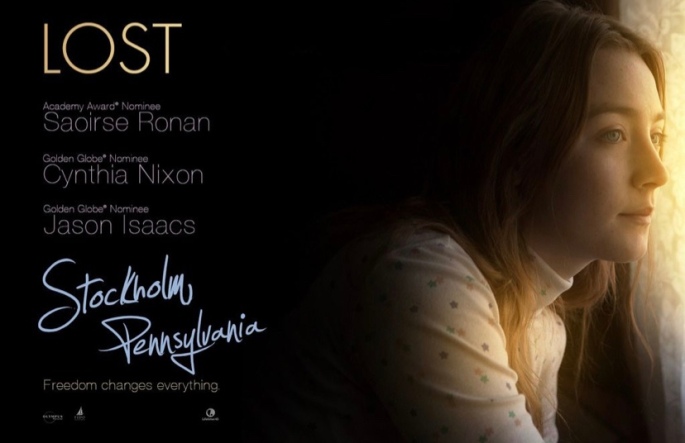
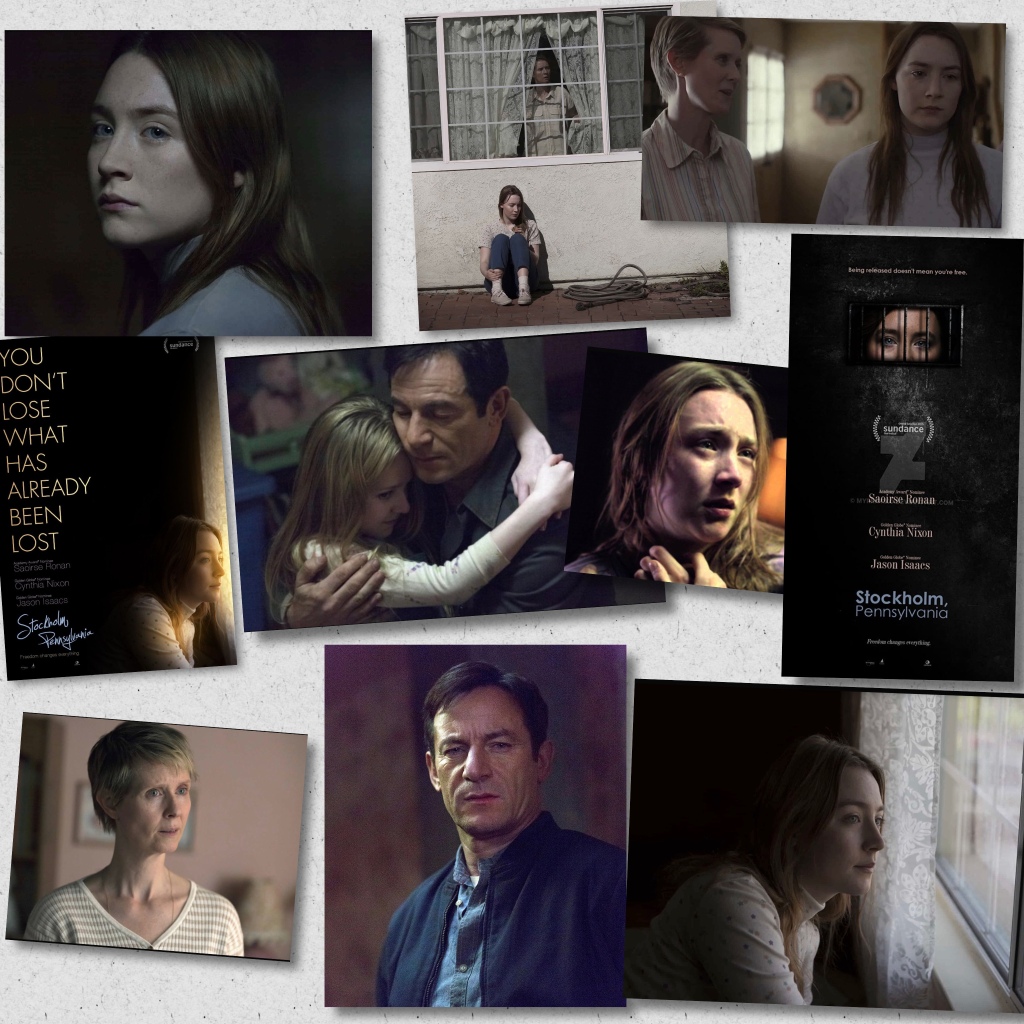
I struggled with Nikole Beckwith’s Stockholm Pennsylvania on several levels, despite it having a wicked strong cast and premise so full of potential I almost want to write my own version that does it more justice than this incredibly frustrating film. Saoirse Ronan gives a typically superb performance as Leia, a young woman who was kidnapped when she was very young by doomsday obsessed, ill adjusted Benjamin (Jason Isaacs) and raised in his captivity and care for over a decade. When she’s eventually found and freed, she returns to a life she barely has memory of, to two parents (Cynthia Nixon and David Warshofsky) who feel like strangers to her. Her life with Benjamin was never filled with abuse or horror or anything like that, beyond kidnapping her and filling her mind with all sorts of end of the world, anti-humanity nonsense he actually cared for her as his own kid and treated her decently, all things considered. So there’s this alienation from the real world, this wall of separation from parents who desperately try and reconnect with her and this strange bond with her captor who is still out there in jail, thinking of her. How does the script take this situation and evolve it into something challenging, believable and emotionally resonant? Well, it doesn’t really. Ronan, Isaacs and Warshofsky are terrific but Nixon gives this shrill, unpleasant and altogether inexplicable portrait of tyrannical maternal instinct gone wrong that curdles into her own version of holding Leia captive when she can’t reconcile that her daughter just isn’t the same person she used to be. I’m not sure what Beckwith was going for or drawing on with this original script, it seems as if she is deliberately trying to tell a knowingly obtuse, in-your-face uncomfortable story and the result is a maddening experience, or at least was for me. It’s a shame because the idea, setup and execution of the first act is really good and drew me in and then it just goes off the deep end appears to lose itself in histrionic, grim, unnecessary Mommie Dearest nonsense that feels like it walked in from a much lesser film, and as such it drags the whole experience down and you just feel emotionally depleted afterwards, with no reward, pathos, thought provocation or narrative satisfaction. An interesting experiment that needlessly nosedives and betrays both the audience and its characters to masochistic doom and gloom that doesn’t feel warranted.

-Nate Hill

Roman Polanski’s The Ghost Writer

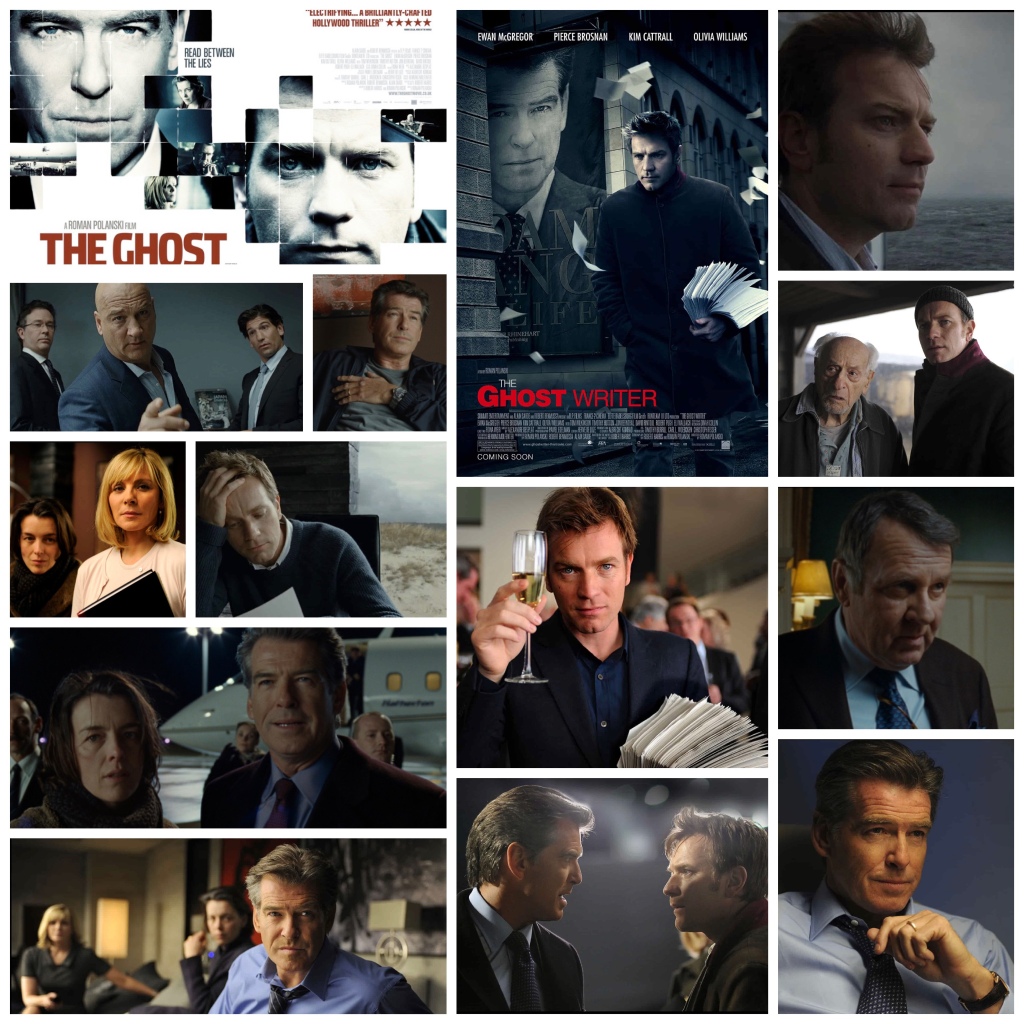
Roman Polanski’s The Ghost Writer is a tantalizing political l thriller with one powerhouse performance from Pierce Brosnan as the UK’s shadiest former politician, a galaxy of terrific supporting talent, some truly inspired bits of brilliantly orchestrated suspense, and Ewan McGregor too. He plays the titular ghost writer, a handpicked scribe first hired to unofficially pen the memoirs of Brosnan’s fiery former Prime Minister, an endeavour that turns into much more of an… involved position than anyone ever planned on. The moment he arrives at the man’s lavish Cape Cod private island residence, a nasty scandal springs forth in the media that forces him into hiding and causes McGregor to suspiciously question his past, both personal and professional. McGregor serves as kind of an audience proxy and gives a solid if unremarkable turn, but Brosnan removes the muffler and fires on all cylinders for a charismatic, cunning barnstormer of a performance, especially in the last act where his life and reputation are thoroughly unravelled. The supporting cast is wonderful, with Olivia Williams being the standout as Brosnan’s long suffering wife who teeters on the brink between loyalty and exasperation. Jon Bernthal is McGregor’s agent, Timothy Hutton and a startlingly bald Jim Belushi are bigwig fixers for Brosnan and there’s nice work from Kim Cattrall, Robert Pugh, a fossilized Eli Wallach and a subtle Tom Wilkinson as a mysterious lynchpin character. The film has a luxurious, over two hour runtime which allows you properly sink into the serpentine narrative full of murky political espionage, dirty secrets, sins of the past, clandestine shifts in power and some truly impressive Hitchcockian twists of fate. Much of the action is set on Brosnan’s beautiful Cape Cod island home, which is actually filmed in Germany and Denmark because, as we know, Polanski can’t go stateside but it looks and feels right just the same and provides a chilly, mist shrouded coastal atmosphere that suits the mysterious nature of this story unfolding. The ending is a kick right in the balls in several different ways and each character reaches the end of their arc with a ruthless, grim yet very appropriate sense of dark, poetic and karmic justice. Excellent film.

-Nate Hill