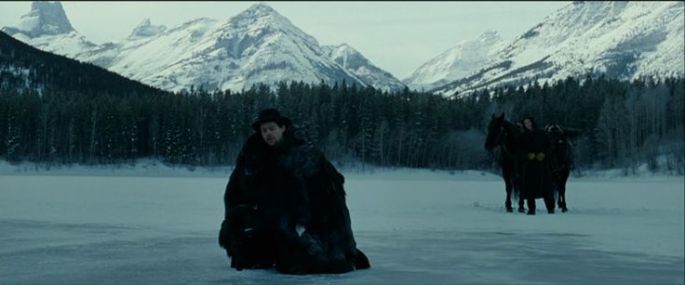
Conviction: A Review By Nate Hill


Tony Goldwyn’s Conviction is a searing dramatic tale that’s heavily based on true events, and is essentially the underdog story boiled down to its most effective elements, with inspiration running throughout its truly remarkable storyline. Hilary Swank can be a force of nature in her work, and she’s dynamite here as Betty Anne Waters, a small town girl who is very close with her rambunctious sibling Kenny (Sam Rockwell), who grows up as the troublemaker of the two, running afoul of a nasty local police officer (Melissa Leo). When his next door neighbour is found stabbed to death, Leo sees it as her opportunity to get rid him for good, and tampers with evidence, until he is convicted. Guilty until proven innocent is the mantra with this difficult tale, and because it’s based on a true story that happened in real life, it unfolds at a snails pace of tragic events in which a satisfying outcome sometimes just seems out of reach. With Kenny in wrongfully convicted and rotting in prison while his wife and daughters edge towards moving on, Betty does the unthinkable: with no previous experience in college, let alone law, she decides to study for the bar exam, in order to eventually represent Kenny in court, and prove his innocence. It seems like something from a movie, and here we see it, but this is something that really, really happened, which to me is extraordinary and essential to make known. She persists through many obstacles both great and small, and with the help of a dapper senior colleague (Peter Gallagher), and a perky fellow law student (Minnie Driver) she passes the exam and sets out to defend her brother. It’s a rocky road, beset with the decayed and deliberately lost memories of years before, and the police officer’s longstanding belligerence. Unreliable witnesses, uncooperative testimonials and all sorts of stuff get in her way, but Betty ain’t a girl to quit or back down, a character trait which Swank seems to have been born to play, and is the lighthouse which guides this fantastic film along its track. Rockwell exudes burrowing frustration as a man in a position of incomprehensible sadness, hopeful yet resigned to his fate which has been orchestrated by evil, targeting him in wanton cruelty. Painful is the word for him here, and when Rockwell sets out for a mood in his work, you damn well feel it. Juliette Lewis briefly rears her head as a dimbulb witness who plays a part in Betty’s quest, as does Clea Duvall very briefly as another witness who seems to have no idea what she actually saw. Melissa Leo is an actress who is utterly and totally convincing whether she’s on the good or the evil side of the coin, holding the audience in rapturous awe with seemingly little effort. Here she’s so nasty it radiates off the screen, providing a core incentive for Betty’s struggle, whether or not the events actually played out like that. Director Tony Goldwyn is an actor himself and uses that experience to forge a film with respect and sympathy for its two leads. One of the more underrated films of 2010.

The Jungle Book: A Review by Nate Hill

image

Prepare your eyes for maximum bogglement, work out your abs so you don’t bust a gut laughing, and most importantly, dust off that childlike sense of wonder before going to see Rudyard Kipling’s The Jungle Book, boldly and lovingly retold by Jon Favreau in what is the most flat out exciting, adventurous film of the year thus far. The director pulls  off a balancing act between palpable tension, character interactions that come straight from the heart and land squarely in ours, and some of the most believable, jaw dropping CGI I have ever seen on screen. The animals look so impressive and lifelike that after seeing them I shelved away some of my inherent reservations about computer generated effects as a dominant force in a piece, and simply gave in. The atmosphere is lush, intoxicating and deeply detailed, with a naturalistic feel and tone. Young Neel Sethi is tasked with being the only fully human component, and is perfect. His interactions seem real and rehearsed, immersing the viewer further into the visuals. Mowgli is a young man cub, found on the edge of the jungle by the panther Bagheera (stately, compassionate Ben Kingsley) and given to a wolf pack to be raised by alpha Akela (Giancarlo Esposito) and Raksha (Lupita Nyong’o). Not all in the animal kingdom are receiving of this man cub, especially a terrifying Bengal tiger called Shere Khan, given the rumbling tones of Idris Elba, inspiring fear in animals and audience alike. He has a rocky relationship with man, and wants Mowgli dead. Bagheera takes him far into the jungle, where they are separated and Mowgli’s adventure truly begins. He wanders into the path of Kaa (a slithery Scarlett Johansson) a monstrous, seductive python, and is taken under the wing of Baloo, an adult Winnie the poo voiced by Bill Murray. Murray is one of the film’s great delights, and as soon as he shows up we forget about all the menace and threat which preceded his arrival, and are swept up into his affable, lounging lifestyle and brightly colored neck of the woods. Murray clearly ad libbed a lot of Baloo’s dialogue, and anything he didn’t he still gives that unmistakable, winking ‘Murray’ twinge that I so love. Mowgli’s adventure continues, as he stays one step ahead of Shere Khan and is visited by the king of the monkeys, a twenty foot tall, lumbering orangutan named Louie, voiced with demented, pithy glee by Christopher Walken. As soon as he showed up the laughs erupted from within me, and reached a manic peak as he belts out the ‘Oobie Doo’ song in priceless Walken fashion, his monkey mannerisms uncannily starting to resemble Walken’s own distinct visage. Many of the animals serve as differing parental figures to Mowgli, representing elemental factions of raising one’s young. Bagheera is cautious, doubting and skeptical. Baloo is the fun loving, lenient one. Even Shere Khan has a curdled paternal feel to him, like the brutal stepfather who is damaging to his offspring. Raksha is the unconditional mother, and that devotion comes out wonderfully in Nyong’o’s souful performance. The vocal performances are aided by the stunning effects; the CGI of facial features allow the actors work to truly extend into the realm of what’s visible, with real emotions displayed by the creatures, and not a single rendering that’s anything short of lifelike. The film evokes true wonder and primal excitement, escapism that takes itself seriously yet knows when and how to play, a dazzling technical marvel, a timeless story well told, all in one cinematic package that is not to be missed. Oh, and stick around for the credits, instead of Walken out of the theatre and missing a final musical treat.

THE LAST DETAIL – A REVIEW BY J.D. LAFRANCE

ld-one

Hal Ashby directed some of the best films to come out of the 1970s, exploding out of the gates with four motion pictures over five years. They were all quirky comedy-drama hybrids that, in terms of subject matter, couldn’t be more different and yet are united in the sense that they all feature offbeat protagonists. They focus on outsiders that exist on the margins of mainstream society, like the death-obsessed young man who falls in love an unflappable, optimistic septuagenarian in Harold and Maude (1971). In its own way, The Last Detail (1973) is a comedy tinged with drama and one that features marginalized protagonists in the form of two veteran United States Navy petty officers that have to transport a young sailor from Virginia to New Hampshire and end up learning something about themselves and each other along the way.

At the time, Ashby was coming off the commercial and critical failure of Harold and Maude when Jack Nicholson told him about The Last Detail. Then up-and-coming screenwriter Robert Towne had adapted Darryl Ponicsan’s novel of the same name with the actor (they were close friends) in mind. Nicholson was on an incredible run of classic film roles that started with Easy Rider (1969) and continued with two Bob Rafelson films – Five Easy Pieces (1970) and The King of Marvin Gardens (1972). His role in The Last Detail would yet again demonstrate his power and versatility as an actor, resulting in him being crowned Best Actor at the 1974 Cannes Film Festival.

Billy “Badass” Buddusky (Nicholson) and Richard “Mule” Mulhall (Otis Young) are assigned “chasers” duty, which involves taking a young sailor by the name of Larry Meadows (Randy Quaid) to Portsmouth Naval Prison. He’s been sentenced to eight years for trying to steal $40 from the Commanding Officer’s wife’s pet charity project. They have a week to do it, but Buddusky proposes that they can pocket more of the per diem and spend it on the way home if they get Meadows there as fast as possible. I like how the film settles into a character-driven groove with a series of colorful encounters that provide insight into these guys after efficiently setting up the premise.

Meadows is just a scared kid that did something stupid and pissed off the wrong person as a result. Meadows has hardly had any life experiences and will be denied the possibility of them for eight long years unless Buddusky and Mulhall do something about it. Not surprisingly, Buddusky’s original plan goes out the window as he and Mulhall bond with Meadows by getting him drunk, stoned and laid in one last hurrah before eight years of imprisonment.

The Last Detail continued Jack Nicholson’s fascination with angry outsiders that live on the margins. It was the start of a great run of like-minded characters, beginning with Easy Rider. It is interesting to watch the choices he makes as an actor in this role, from the way Buddusky seems to sarcastically chew his gum to the way he wears his sailor’s cap. Nicholson is equally adept at showing the anger that simmers under his character’s façade and the explosion of rage that occurs when provoked, like the famous scene where a bartender refuses to serve the three sailors, which is reminiscent of the even more well-known diner scene in Five Easy Pieces. Later on, there’s a nice moment where Buddusky explains why he gets so angry and how liberating he finds it to wail on someone that ticks him off. He even tries to pick a fight with Meadows. It gives us some valuable insight into Buddusky’s volatile nature. Nicholson also shows us moments where his character is a consummate bullshit artist, like when he, Mulhall and Meadows get invited to a party in New York City and he tries to impress a young woman (Nancy Allen) by romanticizing life in the Navy. He’s stoned and getting nowhere with this girl who looks like she’d rather be anywhere else. Nicholson effortlessly inhabits the role in a way that seemed to disappear through the late 1980s and beyond when he relied more and more on his movie star persona.

Fresh-faced Randy Quaid does a nice job of conveying his character’s clueless naiveté. He plays Meadows as a pathetic mess of a human being. With his young, soft face, the actor projects a kind of innocence, but his actions sometimes say otherwise. For example, on the train he tries to make a break for it and when caught breaks down crying. Quaid achieves just the right mix of awkwardness and an occasional sympathetic side to keep us interested in this bundle of contractions all the while holding his own against a flashy actor like Nicholson. Quaid exhibits character behavior that is intriguing to watch – so much so that we want to know more about Meadows. Why did he try to steal the money? Over the course of the film, Buddusky and Mulhall try to find out what motivates this kid. As they get closer to prison, Quaid shows how the inevitable weighs more and more on Meadows’ mind by facial expressions, which oscillate between contemplative and anxious.

Otis Young has the least flashiest role, but it is a crucial one as he provides the stable, calming voice of reason, trying to keep everyone on track. When Buddusky comes up with some wild idea or wants to diverge from their mission, Mulhall is the sober realist and this sometimes causes friction between him and Buddusky, but when they are presented with an outside threat they quickly close ranks.

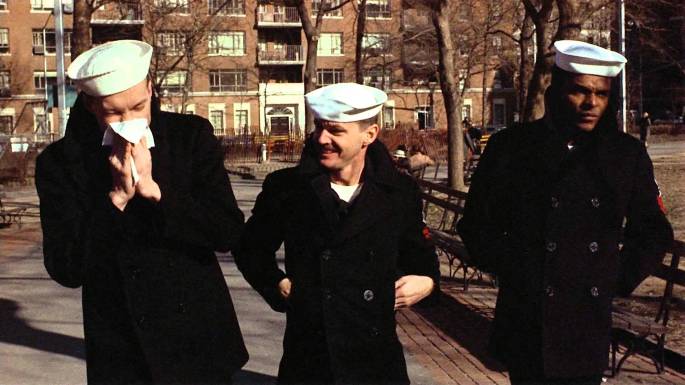
Robert Towne’s script hits us up with salty language right from the get-go, but it never feels false or forced because it rolls off the tongue so easily off someone like Nicholson who curses as naturally as breathing. I also like how the film is set during the winter months and you can tell that they actually shot it during that time by how you can see the actors’ breath in outdoor scenes. It looks so cold that it is almost tangible, most notably in a scene towards the end when the three sailors decide to have a makeshift picnic out in a snowbound park. They stand around freezing their asses off while trying to start a fire to cook hotdogs.

Producer Gerry Ayres had bought the rights to Darryl Ponicsan’s novel The Last Detail in 1969, but had difficulty getting it made because the studio was concerned about all of the bad language in Robert Towne’s screenplay, asking him to reduce the number of curse words. Towne told them, “This is the way people talk when they’re powerless to act; they bitch.” The screenwriter had refused to tone down the language and the project remained in limbo until Jack Nicholson, who was by then a bankable movie star, got involved. Towne, who was good friends with Nicholson, had written the role of Buddusky with the actor in mind.

Director Hal Ashby was in pre-production on Three Cornered Circle at MGM when Nicholson told him about The Last Detail, his upcoming project at Columbia Pictures. Ashby had actually been sent the script in the fall of 1971, but the reader’s report called it, “lengthy and unimaginative.” After looking at it again, he had warmed up to it. Ashby wanted to do it, but the project conflicted with his schedule for Three Cornered Circle. However, he pulled out of his deal, impressed by Nicholson’s loyalty, with MGM and took Nicholson’s suggestion that they work together on The Last Detail.

Ashby and Ayres read Navy publications and interviewed current and ex-servicemen who helped them correct minor errors in the script. During pre-production, Ashby worked with Towne on polishing the script and with Nicholson on his character. Ashby wanted to shoot on location at the naval base in Norfolk, Virginia and the brig at Portsmouth, New Hampshire, but was unable to get permission from the U.S. Navy. However, the Canadian Navy was willing to cooperate and in mid-August 1972, Ashby and his casting director, Lynn Stalmaster, traveled to Toronto to look at a naval base and meet with actors. The base suited their needs and Ashby met actress Carol Kane whom he would cast in a small, but significant role.

Nicholson was set to play Buddusky and so the casting of The Last Detail focused mainly on the roles of Mulhall and Meadows. Nicholson and Towne were friends with Rupert Crosse and felt that he would be perfect as Mulhall. Bud Cort, who had worked with Ashby on Harold and Maude, begged the director to play Meadows, but he felt that the actor was not right for the role. Stalmaster gave Ashby a final selection of actors and the two that stood out were Randy Quaid and John Travolta. Quaid had the offbeat and vulnerable qualities that Ashby wanted.

Shortly before principal photography was to begin, Crosse discovered that he had terminal cancer and Ashby delayed production a week so that Crosse could come to terms with the news and decide if he still wanted to do the film. However, a day before filming was to begin, Crosse had to pull out and Ashby and Stalmaster scrambled to find a replacement, quickly casting Otis Young as Mulhall. Ashby had tried to get Haskell Wexler, Nester Almendros and Gordon Willis as the film’s director of photography, but when none of them were available, he promoted Michael Chapman, his camera operator on The Landlord (1970). Ashby and Chapman worked together to create a specific look for the film that involved using natural lighting to create a realistic, documentary style.

Ashby decided to shoot The Last Detail chronologically in order to help the inexperienced Quaid and the recently cast Young ease into their characters. Quaid was indeed very nervous and wanted to make a good impression. Ashby kept a close eye on the actor, but allowed him to grow into the role. With the exception of Toronto doubling as Norfolk, the production shot on location, making the same journey as the three main characters.

The day after principal photography was completed; Ashby had his editor send what he had cut together up to that point. The director was shocked at the results and fired the editor. The director was afraid that he’d have to edit the film himself. Ayres recommended brining in Robert C. Jones, one of the fastest editors in the business and who had been nominated for an Academy Award for Guess Who’s Coming to Dinner (1967). Jones put the film back into rushes and six weeks later had a first cut ready that ran four hours. Ashby was very impressed with Jones’ abilities and trusted him completely.

However, the studio was not happy with the length of time it was taking to edit The Last Detail as well as the amount of bad language in it. Columbia was in major financial trouble and needed a commercial hit. Jones called Ashby while he was in London meeting with Peter Sellers about doing Being There (1979), telling him that Columbia was fed up. The head of the editing department called to tell Ashby that a studio representative was coming to take the film away. However, Jones refused to give up the film and Ashby called the studio and managed to smooth things over with them.

By August 1973, the final cut of The Last Detail was completed and submitted to the MPAA, which gave it an R rating. Columbia was still not happy with the film and asked for 26 lines with the word “fuck” in them to be cut. Ashby convinced the studio to let him preview the film as it was to see how the public would react. The film was shown in San Francisco and the screening was a success. Columbia decided to give the film a limited release to qualify for Oscar consideration with a wide release in the spring of 1974. Both Nicholson and Quaid were nominated for Academy Awards for Best Actor and Best Supporting Actor respectively.

For all of their fun and wild times – including picking a fight with some army soldiers in a train station washroom – Meadows’ fate hangs over them like an ominous storm cloud that occasionally makes itself known. While Mulhall wants to take Meadows straight to prison, Buddusky wants to show the kid a good time because it will be the last one he’ll have for eight years. Even though, by the end of The Last Detail, Buddusky and Mulhall do their job, you can tell that Meadows got to them, past their hardened Navy lifer exteriors. For them, Meadows represents how fucked up the system is – that someone could get punished so severely for such a minor crime. It’s not right, but there is nothing they can do about it, which ends things on a rather melancholic note of resignation that is refreshing for a film that started off as a comedy.

The Last Detail performed well at the box office and it has gone to become an influential film, representing one of Nicholson’s finest performances of the ‘70s. It was an excellent early role for Quaid and was also part of a fine run of films during this decade for the character actor. And finally, for Ashby it marked another great effort in a decade chock full of classics as he would go on to make, including Shampoo (1975), Coming Home (1978), and Being There.

EPISODE 27 THE WORKS OF TONY SCOTT AND QUENTIN TARANTINO with SPECIAL GUEST SHELBY SIM

SHELBY POWERCAST

We were honored to be joined by Shelby Sim who is the Executive Director of Visit Santa Ynez Valley, and who sponsored the press/filmmaker lounge where Frank hung out when he was at the Santa Barbara International Film Festival.   The three of us riff on films that were filmed in the Valley, including Quentin Tarantino’s DEATH PROOF.  From there, we bounce all over Quentin Tarantino and Tony Scott’s filmography.  Visit www.visitsyv.com and contact Shelby if you’re interested on going on an amazing vacation!

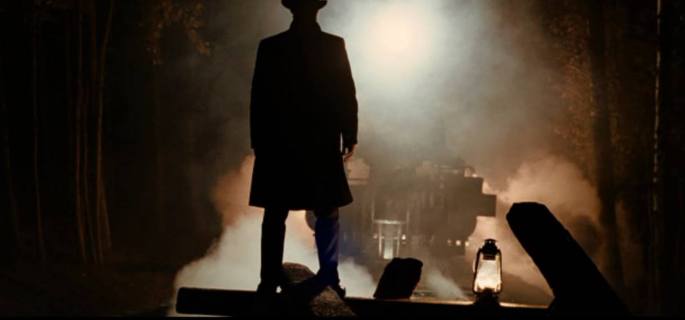
ANDREW DOMINIK’S THE ASSASSINATION OF JESSE JAMES BY THE COWARD ROBERT FORD — A REVIEW BY NICK CLEMENT

jj2

Directed by Andrew Dominik, who had previously made the nasty Australian prison movie Chopper with that incredible performance from Eric Bana, The Assassination of Jesse James by the Coward Robert Ford, his second picture, was the complete antithesis of his first, an epic, lyrical, brooding, atmospheric western that distorted time and reality in a heightened fashion. Whereas Chopper was compact, tight, and extremely intimate, Dominik went in the complete opposite direction with this stylized drama, immediately showing that there was more than one layer to him as a filmmaker and artist. It might have been easier to expect a film of this power and force to come from a more established filmmaker; I just don’t think critics and audiences were prepared for what Dominik brought to the table with this grand effort. He must’ve gotten tons of big Hollywood offers after Chopper exploded on the scene in 2000, so it’s sort of telling that he waited seven years in between movies; he’s not a filmmaker to just go out and accept a “for hire” director’s assignment.

jj1

It’s obvious that he’s interested in telling stories that are personal, and I’m glad he waited for that length of time instead of rushing into something cheap and easy. And then to follow up this beyond underrated effort with 2012’s woefully neglected crime film Killing Them Softly?! The man’s work has been done no favors by skittish distributors and bean counting studio overlords. The Assassination of Jesse James by the Coward Robert Ford is a magisterial effort, the closest thing to a Terrence Malick movie that Terrence Malick never directed, echoing that legendary filmmaker’s glorious achievement The New World, while creating a striking ode to the lawless back country of Missouri and surrounding areas. There are stretches with no dialogue, a heavy emphasis on nature, and a poetic, meditative, lyrical tone complete with a “voice-of-god” narrator. Stark and crisp in its visual ideas, and always fascinating on an informational level, the film is languidly paced yet never boring or restless, with an overall aesthetic that begins to take the shape of an evocative dream.

assassination_of_jesse_james_by_the_coward_robert_ford

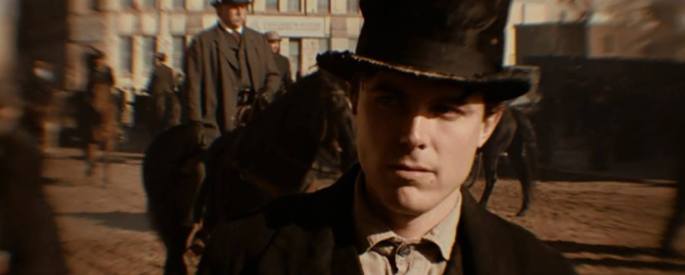
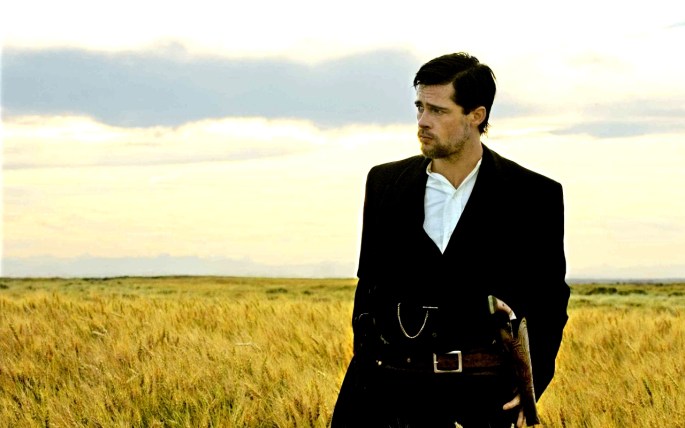
The Assassination of Jesse James by the Coward Robert Ford is essentially a psychological study of a murder and a murderer, and it doesn’t play to the many cliché western conventions that we’ve seen over and over again. Jesse James, played by an intensely focused Brad Pitt, is winding down his gun-slinging outlaw days in Missouri. His older brother, played briefly by Sam Shephard, has had enough of him, and James’s surly crew are growing tired and rightfully scared of their emotionally repressed boss, due to James’s increasingly erratic behavior. Local politicians and lawmen want James and his gang brought to justice, so they recruit the sketchy weasel Bob Ford (Casey Affleck, in a career making performance) to ingratiate himself into James’s gang with the hopes of bringing him down. James finds Ford awkward and odd, yet for some reason allows him into his life and home; the ideas of hero and celebrity worship are beautifully explored in many sequences. Meanwhile, the members of the James gang are all getting paranoid as they begin to feel that Jesse has them all in his sights; its house cleaning time and nobody will be spared. Not wanting to risk being ratted out, James sets out to kill every one of his followers so that nobody can double cross him. I am not spoiling anything to say that it’s too little too late, and by the time that Jesse’s fate is sealed, the audience is waiting with baited breath for the titular murder to take place on screen.

jj3

Affleck is absolutely amazing as Ford. It’s a highly specific, tightly coiled, slow burn performance that’s chilling to consider in all of its stratums. Before his work here, I didn’t know what to make of him as an actor, but that all changed while watching his magnetic performance in this film, and his other excellent performance from 2007 in Gone Baby Gone. He also did great work in the little seen Gus Van Sant film Gerry, which is absurdly undervalued. He had a very, very tough character to portray in The Assassination of Jesse James by the Coward Robert Ford, portraying a deeply unsympathetic man who the audience knows will end up killing Jesse James at some point in the narrative. Affleck brings a strung-out, beaten-down quality to the character of Ford, and as the movie progresses, you watch as he becomes more confident of himself, however false that sense of confidence may ultimately be, and how he starts to believe in his own madness and self-perpetuated lore. Just look at him as he spins stories and tall tales about Jesse James and his gang of outlaws; a quiet desperation seeps into the recesses of his eyes and it’s then you realize that Ford has been a lost soul for quite some time.

1

Pitt, owning the role of Jesse James totally and completely, brings a cocky swagger and a brutish masculinity to his performance that is awesome to behold. Prone to mumbling and not expressing his deepest thoughts, the character of James is a man of internal rage and sadness, and it’s easily one of Pitt’s most layered and interesting performances. For years, he’s been consistently underrated as an acting talent, with his overwhelming good looks having a tendency of blinding people from the fact that he’s got a reservoir of talent. And over the past few years, and sort of starting with his downtrodden work in this film, he’s been happy to subvert his pretty boy image in a series of down and dirty performances that keep pushing him further and further into character actor territory, despite the demands of the Hollywood star system. Just watch the way that Pitt slowly smokes his cigars and methodically moves his head and eyes from scene to scene in this film; it’s a wonderfully modulated performance that depends on silence just as much as it does explosive action. One scene, in which Pitt is seen sitting in a rocking chair in his back yard with a rattlesnake slithering over his forearm, is as creepy as it is profoundly majestic. There is a brazen, cavalier attitude to the performance; Pitt knows that Jesse was a psychopath and he doesn’t allow the audience the chance to warm up to him. Pitt is a movie star giving a totally un-movie star performance. In reality, Jesse James was a legend, a pseudo-celebrity before the era of tabloid magazines and paparazzi. So having an actor of Pitt’s stature playing him is a genius stroke of casting in and of itself.

007AJJ_Sam_Rockwell_022

The supporting cast is aces across the board, with Sam Rockwell registering best as Ford’s brother. This guy is so damn good—all the time—that it’s a crime he doesn’t get more attention. His work in Ridley Scott’s incredible conman flick Matchstick Men is still his finest performance, but he’s terrific here as well, providing sly comic relief and a sense of building anxiety that creates palpable tension within the gang of bandits. Mary Louise Parker, Paul Schneider, Jeremy Renner, Garrett Dellahunt, and a slew of excellent character actors round out the solid cast. What makes The Assassination of Jesse James by the Coward Robert Ford better than most films in the genre are the moral shades of gray that the characters exhibit. The film is basically about how one man comes to the decision to kill his idol, and in the crudest comparison, I guess maybe the movie is sort of like a stalker-thriller. Ford idolizes Jesse, wants to ride with him, wants to rob with him, and ultimately wants to be him. But the relationship that develops between the two men is awkward and volatile, giving off an un-easy feeling all throughout.

deakins

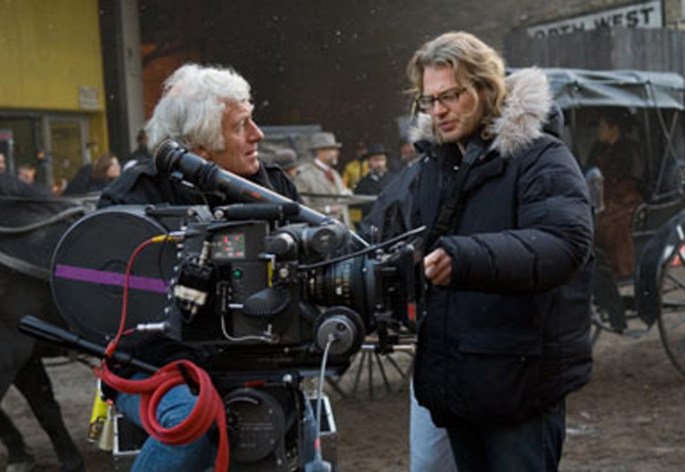
And then there’s the technical side to the film. The Assassination of Jesse James by the Coward Robert Ford has been put together with great style and tremendous atmosphere by the production team and crew. It’s a tone poem of sorts about a gritty, dark period in American history. It feels extremely intimate yet very epic due in large part to the stunning cinematography by Roger Deakins, who was double Oscar nominated in 2007 for his work here and on No Country for Old Men (he would lose the trophy to There Will be Blood’s Robert Elswit). Using what appeared to be natural light almost exclusively and an overall impressionistic shooting style composed of beautiful vistas, extreme close-ups, silhouettes, moonlight, train-light, and a gauzy effect similar to Robert Richardson’s brilliant cinematography in Snow Falling on Cedars, Deakins’s work here is simply astonishing. Every shot is perfect. No joke. I’m always attracted to the different ways that filmmakers can present their ideas through visuals rather than words, and with The Assassination of Jesse James by the Coward Robert Ford, Dominik and Deakins have earned their place in the company of some of the most striking visual teams to craft a major motion picture.

4

I fell in love with this film immediately. From the dry, matter of fact voiceover narration that runs over the entire movie to the obviously enormous attention paid to each and every shot, with moments of sublime beauty at almost every turn. It’s an art film set in the old west and when the story gets violent, it has moments of shocking brutality. In fact, one of the things that I loved about this film so much was the constant sense of dread and uncertainty that runs through each scene. Right from the start, you get the feeling that any character could meet their maker at any point. And that’s one of the things about the old West that made that time period so dangerous; people got killed in a heartbeat, over simple, mundane stuff. There are no big shoot-outs down at the corral and there are no crazily choreographed horse-chase sequences in this film. But when people get shot, it’s brutal and unflinching, not sensationalized or over the top, but rather grim and raw. Like what you’d see on HBO’s Deadwood. There are so many aspects to this film that I loved: the time Dominik took to tell his story, the gripping performances, the literate dialogue, the incredible scenery, and the breathtakingly perfect ending. The Assassination of Jesse James by the Coward Robert Ford is the kind of movie that makes me happy to be a film buff.

3


Passengers: A Review by Nate Hill

image

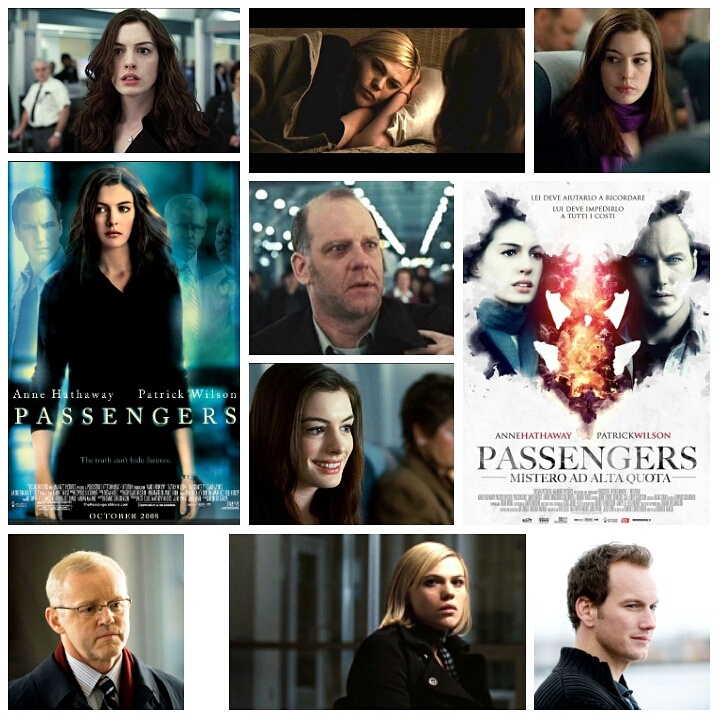
Passengers is a low key supernatural drama that came and went with little fanfare or attention back in 2008. Part of the reason for that could have been that it was marketed as a thriller, which is not so much the case. There is an eerie vibe to it, and certainly a paranormal component, but it’s quieter and much closer to the chest than advertising might suggest. It wasn’t reviewed very well, branded as predictable and derivitive. Some of its plot devices have been used before in the past, to be sure, but I greatly enjoyed the film and loved the way in which it’s story unfolds, told very well by its sturdy cast. Like Mark Pellington says, fuck the people, that’s why there’s 31 flavors. Anne Hathaway is excellent as Claire, a grief counselor who is tasked with looking out for a handful of people who have survived a catastrophic plane crash. She’s new to her profession, her eagerness laced with self doubt, yet she remains hopeful. All of a sudden, the patients in her cate begin to disappear mysteriously, and she starts to question the situation, as well as her own reality. The survivors are damaged and not fully willing to open up to her, collectively scared of some unseen threat. Claire has repeated run ins with a unknown and very distressed man (Andrew Wheeler, local vancouver actor and former teacher of mine) who has ties to the accident. It’s all hush hush and quietly unsettling, until we slowly begin to realize what’s actually happening, and the it changes gears and becomes very touching and thoughtful. Clea Duvall is great as one of the skeptical survivors, Patrick Wilson solid as always, and there’s work from Dianne Wiest, William B. Davis, Andre Braugher and briefly David Morse. Sure, this type of story has been done to death time and time again, draining new efforts of some of their effect, but if one comes along that gets it right, tells it’s story in a way that holds both my emotion and interest in its spell, I’m all ears. This one did just that.

SIN CITY: A DAME TO KILL FOR – A REVIEW BY J.D. LAFRANCE

sin-city2

In 2005, Robert Rodriguez adapted the comic book Sin City into a film with help from its creator Frank Miller who co-directed it. Convincing the veteran comic book writer/artist to come on board was a smart move on the filmmaker’s part as it assured that Miller’s luridly violent noir tales would be faithfully translated. This was achieved through a then-groundbreaking green screen environment that allowed Rodriguez to place his actors in Miller’s stylish world with a striking look comprised of black and white with strategic splashes of color. This innovative approach attracted a star-studded cast that included Bruce Willis, Mickey Rourke, Clive Owen and Benicio Del Toro among others. The final result dazzled audiences and was a commercial success.

A sequel seemed inevitable, but instead Rodriguez went on to team up with Quentin Tarantino on the box office misfire that was the Grindhouse double bill (2007) while Miller applied the Sin City aesthetic to a disastrous adaptation of Will Eisner’s comic book The Spirit (2008). Over the years, talk of a sequel surfaced occasionally with the likes of Johnny Depp and Angelina Jolie being mentioned in potential leading roles. Nine long years later and the stars (and money) aligned for Rodriguez and Miller to reunite with Sin City: A Dame to Kill For (2014). The film promptly tanked at the box office and received mixed to negative reviews. What happened? Did Miller and Rodriguez wait too long? A green screen-heavy film is no longer a novelty. Two cast members with characters in the film had passed away and some roles have been recast. The general consensus seems to be that they waited too long to make a sequel and interest in the film had waned.

Some might complain that A Dame to Kill For is just more of the same. As a big fan of the first film this is not necessarily a bad thing. After seeing Sin City, I wanted to see more of Miller’s stories brought to life. In addition to adapting A Dame to Kill For and the short story “Just Another Saturday Night” from the Booze, Broads, & Bullets collection, Miller created two new stories specifically for the film – “The Long Bad Night” and “Nancy’s Last Dance.” By doing this, he has given the fans a real treat by offering two stories where the outcome is not known and introducing new characters into this universe.

In “Just Another Saturday Night,” Marv (Rourke) wakes up amidst a car accident unable to remember how he got there. He proceeds to recall what happened via flashback on a snowy Saturday night. This segment is a nice way to reacquaint us to the brutal yet darkly humorous world of Sin City. “The Long Bad Night” introduces us to Johnny (Joseph Gordon-Levitt), a confident gambler who decides to take on Senator Roark (Powers Boothe), the most powerful man in the city, in a high-stakes poker game and gets more than he bargained for. It’s a lot of fun to see Joseph Gordon-Levitt square off against Powers Boothe, the former playing a young upstart and the latter an evil, influential man.

The centerpiece of the film is “A Dame to Kill For,” which features Dwight McCarthy (Josh Brolin) as a private investigator taking photographs of a businessman (Ray Liotta) cheating on his wife with a hooker (Juno Temple). When the man tries to kill her, Dwight intervenes. He has a tortured past, which involves keeping his homicidal impulses in check. Afterwards, Dwight gets a call from an ex-lover by the name of Ava Lord (Eva Green), a beautiful woman married to a very rich man. She’s in some kind of trouble and he finds himself drawn into her tangled web yet again. He soon runs afoul of her imposing bodyguard Manute (Dennis Haysbert) who proceeds to work him over. Realizing that he’s out of his depth and bent on rescuing Ava, Dwight enlists Marv’s help, which only complicates things in typical noir fashion.

In “Nancy’s Last Dance,” Nancy Callahan (Jessica Alba) is an exotic dancer still haunted by the death of her lover John Hartigan (Bruce Willis) and is obsessed with avenging his death by killing Roark, the man responsible for it. Over time, she’s counseled/haunted by Hartigan’s ghost, which drives her increasingly crazy.

Actors Josh Brolin, Joseph Gordon-Levitt and Eva Green slip seamlessly into the Sin City world. It helps that they have that old school noir look, especially Brolin with his chiseled tough guy features and gravelly voice – perfect for his character’s voiceover narration. In no time, the actor makes you forget that he plays a character once portrayed by Clive Owen. Gordon-Levitt is excellent as the young newcomer with a secret and manages to elicit sympathy for his ultimately doomed character. Green plays Sin City’s reigning femme fatale. The stunning actress has an alluring, exotic look and can turn a vulnerability on and off at will all the while playing a cold-hearted manipulator of men. Green gives key line deliveries the right venomous spin that makes Ava Lord a fearsome figure in this world.

It’s great to see Mickey Rourke return to the role of Marv, a character he inhabits so well. He brings a world-weary charm and a much-needed dose of dark humor to the film. Powers Boothe, who only had a minor role in the first film, gets a much meatier part in A Dame to Kill For and it’s a lot of fun to see him sink his teeth into such a deliciously evil character. Unfortunately, Jessica Alba is once again miscast as Nancy, the stripper with a heart of gold. While she looks the part, the actress doesn’t have the chops to pull off the tricky evolution of character that goes from sweet girl traumatized by the death of loved one to a revenge-obsessed vigilante. Miller’s stylized dialogue needs to be delivered a certain way. Some actors can pull it off and others can’t. Alba falls into the latter category and it becomes painfully obvious in her segment. Even her dancing is unconvincing.

While it no longer has the technological novelty factor as an incentive (shooting it in 3D really didn’t help either), there is certainly no other film out there that looks like Sin City. There have been a few imitators since, most notably The Spirit and Max Payne (2008), but the look of the film is so specific to its universe that few have dared to emulate it. Rodriguez has said that with the first Sin City he held back somewhat stylistically for fear that it would be too much for audiences. Emboldened by its commercial success, he took the look further and made it even more faithful to Miller’s comic book. So, there are things like Ava being rendered in black and white accentuated with red lips and green eyes, and visual flourishes like Marv recounting past exploits while a tiny car chase revolves around him, or the moody storm clouds that hang heavy in the cemetery where Nancy visits Hartigan’s grave. And why not? It’s not like the characters or the world they inhabit are based on any kind of reality. They exist in a hyper-stylized neo-noir universe drenched in atmosphere.

The dialogue in A Dame to Kill For is riddled with clichés and the characters are drawn from archaic stereotypes, but that’s the point. Miller is paying homage to the Mickey Spillane crimes stories he clearly idolizes. The film immerses itself in noir clichés and wears them proudly like a badge of honor, refusing to make any excuses for trading in them. There’s really nothing more to it than that, which may make the film seem instantly forgettable, but Rodriguez’s film never aspires to be art as it is unrepentedly sexual and violent with very few if any redeeming characters. The first Sin City film came out at the right time and tapped into popular culture zeitgeist. A Dame to Kill For is not so lucky, but you have to give Miller and Rodriguez credit for sticking to their guns and delivering another faithful adaptation of the comic book, which may only appeal to fans and probably won’t convert the uninitiated.

NOAH BAUMBACH’S THE SQUID AND THE WHALE — A REVIEW BY NICK CLEMENT

1

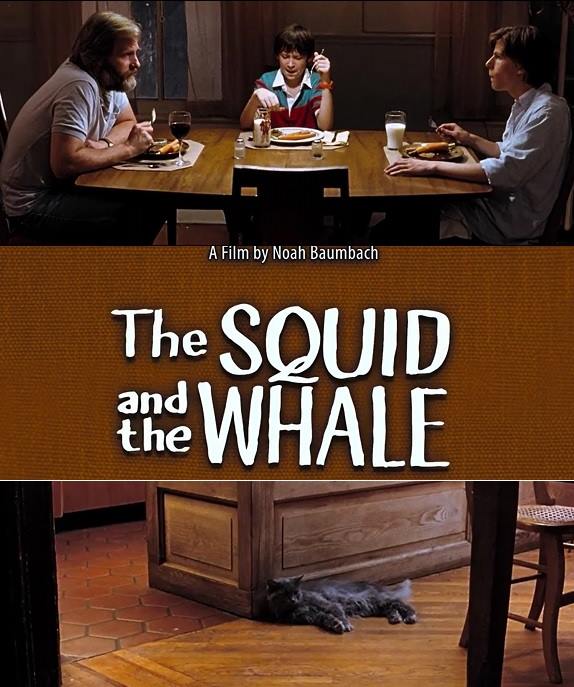
This film is a model of cinematic perfection. There’s not one wasted scene, one bad performance, or one false note. It all feels so heartbreakingly real and raw and honest. Noah Baumbach can sometimes be, especially in his earlier, darker films, an emotional sadist in disguise, and in The Squid and the Whale, he crafted one of the most painfully hilarious films I’ve ever seen. This is a work that I view at least once a year because it’s just so effortlessly brilliant, with an  acting ensemble that totally crushes the emotionally scarring material, and air-tight direction from Baumbach who clearly knew this story inside and out. Rumor has it that some of this script was informed by his real life upbringing, which if true, paints an even more distressing portrait of an artist working out his inner personal demons through his craft. Jeff Daniels was such a smart casting decision as the asshole father that it almost hurts to think about him in this film — he’s a monumental prick. Laura Linney was icy and incisive, painting a portrait of a woman fed up with all around her, longing for something that feels ever so slightly out of reach. Jesse Eisenberg as their oldest son was hugely effective here, and had terrific chemistry with Owen Kline, who played his fragile and damaged younger brother. The joke of casting William Baldwin as the tennis pro/lover to Linney was a stroke of comic genius (“My brother!” POWER), and the way Baumbach loaded every single scene with hostility, anger, and unexpected humor should be studied by all who are interested in black comedy and familial satire. This is a 100 Star Gem and a film that you should immediately track down if you’re unfamiliar. It is a masterpiece of filmmaking and storytelling.

B Movie Glory With Nate: The Last Stop

  
Agatha Christie takes a trip to the Pacific Northwest in The Last Stop, a chilly little indie B movie in which we have the pleasure of watching Adam Beach and Rose McGowan try to smoke out a killer amidst a group of people stranded in a remote motel during a blinding snowstorm. A welcome setup for intrigue indeed, if you’re into cozying up to these actors for a tense little 90 minute guessing game packed with just the right amounts of cheesiness and tension. Beach plays a local Sheriff who is stuck at the establishment while its Proprietor (the great Jurgen Prochnow, refreshingly cast against type) struggles with a guest overload as the storm gathers steam. Beach’s old flame (the ever alluring McGowan) has resurfaced in his life with little explanation. There’s also an obnoxious hustler (Callum Keith Rennie) a sleazy would be cowboy (Winston Reckert) and other disconcerting weirdos lurking about. Some are red herrings, some simply filler for the narrative, and all are entertaining, whether intentionally or not. The plot meanders in snowy, typically nonsensical b-movie form until it pulls itself together for a very grounded finale that seems misplaced given what came before, but welcome all the same. McGowan could dub a Korean pop song and still be riveting, and it kills me she isn’t in more stuff, but she’s made it clear that acting was never her first love. Nevertheless she’s great as both the most mysterious and fascinating character. Shades of The Hateful Eight, Eye See You with Stallone, and many a snowbound mystery. Fun stuff. 

Anamorph: A Mini Review by Nate Hill


Anamorph is a loving ode to the wilfully nasty serial killer flicks of the 90’s, obviously borrowing heavily from a few specific ones, the clearest example being Fincher’s Sev7n. It’s got the same dank, dispirited tone of that one, a restless urban nightmare wherein one lone detective searches for a heinous murderer that seems to elude him every step of the way, leaving increasingly grisly crimes in his wake. The detective here is Stan Aubrey (Willem Dafoe), a troubled fellow suffering from OCD, as if he didn’t have enough to handle, with a killer on the loose. Dusky New York streets are the predator’s playground, and he kills using some very elaborate, and very u settling techniques. Anamorphosis is a method used during times such as the Renaissance, where a painter would create a seemingly nonsensical sprawl with neither shape nor form, but when looked at through a tiny window of exposure (camera obscure), or from a painstakingly meticulous angle, a new image comes to light, in this case providing Dafoe with clues. Now this isn’t any Renaissance painter we’re dealing with, and he doesn’t use oil base, if you catch my drift. The crime scenes in this film are very, very horrifying and hard to watch, almost on the level of Sev7n. Dafoe gets help from his art fanatic buddy Blair (Peter Stormare), and tries to look after the troubled Sandy (a moody Clea Duvall), the relative of a deceased friend. There’s also work from Yul Vasquez, Scott Speedman, Don Harvey and the late James Rebhorn. Nasty stuff, this one, but stylish and well worth a late night watch with the lights low and your nerves on edge.