JONATHAN GLAZER’S BIRTH — A REVIEW BY NICK CLEMENT

2

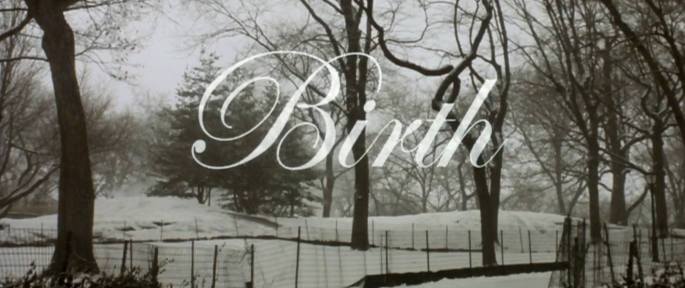
Directed by Stanley Kubrick’s ghost by using Jonathan Glazer’s body as a vessel, the eerie, creepy, totally brilliant (and disgustingly underrated — 38% at Rottentomatoes – are people insane?) 2004 movie Birth is a film that gets absolutely no love. And that’s just wrong – anything this powerful and trippy needs to be repeatedly studied, explored, and discussed. A complete 180 in terms of style and tone from his debut picture, the crime masterpiece Sexy Beast, Birth marked new territory for Glazer as a filmmaker. Visually haunting at every turn (shot by the late, legendary director of photography Harris Savides), with a memorable classical musical score that accentuates every scene, this is a hard-to-describe drama about a grieving widow (Nicole Kidman, never better except for maybe in To Die For), who is paid a visit by a 10 year old boy (Cameron Bright, also excellent in Wayne Kramer’s exuberantly nasty Running Scared) who claims to be her reincarnated husband. From the chilly opening moments of this offbeat, strangely wondrous film, you’re under Glazer’s moody directorial spell, and he never lets you out of his stylish grasp for the entire run-time.

3

One shot in particular – that of Kidman entering an in-progress opera in an extremely fragile emotional state, all done in one, extra-long take – is one of the greatest single shots I’ve ever seen in any movie. A bit hyperbolic maybe, but trust me, you’ll be blown away by the power of this extended moment, which ranks as the best single scene of acting Kidman’s ever given us; the shot means more because it heightens the narrative while stretching the limits of Glazer’s striking visual aesthetic. Alexandre Desplat’s soulful, haunting, and almost overwhelming score sets a funeral tone from the first moment, offering moments of psychological acuity not normally reserved for musical arrangements. Honestly, I dare not spoil ANYTHING to the uninformed viewer; the less you know about this film going in, the better of you’ll be. This is the sort of cult-favored classic that Twilight Time DVD Label or The Criterion Collection should look into licensing, a film made by a still budding auteur, and now with the popularity of Glazer’s hypnotic game-changer Under the Skin, I think it’s time that more appreciation be heaped upon Birth, as it’s truly one-of-a-kind in all the best ways that cinema can offer.

1

LOST HIGHWAY: AN APPRECIATION BY TIM FUGLEI

Lost-Highway-david-lynch-11179820-1024-429

To say David Lynch has elicited a head-scratching moment or two in his career is akin to carrying on about the wetness of water; even at his most commercial, an air of mystery and the surreal lurks at the edges, and at his most personal, nightmare logic and a dreamy take on the familiar are pervasive.  Having soured on answering to studio heavy-handedness after Dune, much like Kubrick did after Spartacus, Lynch has gone on to craft stubbornly individual cinema and television, much to the delight of his many followers.  In 1997, after having alienated a large contingent of drive-by Twin Peaks fans with the “valentine wrapped in barbed wire” prequel to the television series, Fire Walk With Me, he unleashed Lost Highway onto an unsuspecting public, and heads were scratched like never before.  The film starts with an oppressive, almost claustrophobic quiet and dread, then builds to a frenetic, hallucinatory finale that is shot through with pure madness.  In between, we are shown murder and sex, as well as rebirth and metamorphosis.  Noir tropes abound, set to one of the most varied and contemporary soundtracks of Lynch’s career.  Even if you’ve strung a narrative together in your head by the end, the closing shot remains a source of debate.  In other words, hardly an easy two hours of escapism at the multiplex.  That said, stringing a narrative together is a valuable and, if you’ve been paying attention to how this director tells stories throughout his career, highly rewarding exercise.

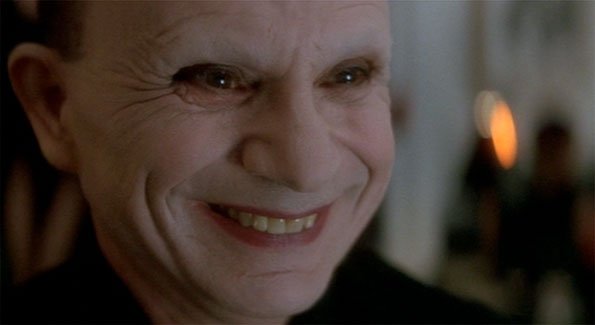
First of all, the idea that one part of the film is fantasy while the other is “real” needs to be set aside.  We are, after all, watching a film, not our neighbors in the real world walking their dog down the street.  Film is fiction, and Lynch is always asking his audience to go on a journey into the unreal.  Even what can be construed as the foundational happenings in Lost Highway are weaving in and out of reality; we’re told early on that we are being led by a particularly unreliable narrator who likes to remember things his own way.  This is Fred, the protagonist albeit hardly hero of the tale.  He has more in common with the ill-fated Leland Palmer than some of Lynch’s more traditional leads played by Kyle Maclachlan; his double life teetered between respectability and murderous rampages, and Fred’s is on the verge of crossing over those boundaries as we meet him.  Reminiscent of Killer Bob in Twin Peaks, our eyes are first drawn to the lanky doppleganger of a shadow that follows Fred around his home as he grows to suspect his wife Renee of infidelity, and soon see this dark side, the evil that men do (or are about to do) personified as The Mystery Man.  Robert Blake’s relentlessly eerie performance is wide-eyed and shot through with delight at the thought that Fred will succumb to his worst instincts, and his appearance in conjunction with the video tapes that start showing up are our first clues that even at this early stage of the game, Fred and Lost Highway are not telling us a straight story.  Nothing about the supposed external threats presented by Blake’s character or the videotapes make sense, nor should they:  They are fragments of Fred’s frayed psyche informing and inspiring the heinous act to come.

To continue piecing together Lost Highway’s labyrinth descent, it’s oddly appropriate to fast forward to Lynch’s later film, the celebrated Mulholland Drive.  A bit of a Frankenstein Monster itself, Mulholland Drive was originally conceived as a Twin Peaks style serialized mystery, but after fearful ABC Network suits decided it was too dark for a post-Columbine audience and pulled the plug Lynch was given the funding and opportunity to turn it into a feature film.  Instead of tacking on a whodunit ending, he followed Lost Highway’s lead and recast the tale as a doomed romance that ends in murder, with the perpetrator once again fleeing reality for a large part of the movie until whatever strands of reality exist come slithering, then crashing, through the façade.  The order of operations is different—Mulholland Drive starts with the escapist dream of “Betty,” who envisions a lively Hollywood yarn with her former girlfriend re-cast as an amnesiac best friend, and then we are shown snapshot scenes of how Betty’s true self, Diane, actually loved and lost and arranged to have her ex murdered.  Lost Highway, on the other hand, begins with what can be briefly referred to as Fred’s reality and then jumps into the fantasy in its second act, when Fred reimagines himself as the young hotshot mechanic Pete, surrounded by willing lovers and fast cars, being the focus of a cheating blonde’s affection instead of the scorned cuckold husband.  Like Rita in Mulholland Drive, even a seemingly game and pliable imagined version of the object of his desire named Alice quickly breaks down and declares herself as unattainable as Renee was.

As usual, Lynch surrounds himself with high quality cohorts.  Peter Deming’s lensing is sublime, capturing the inky blacks and blood reds of the opening as well as the sun-dappled Los Angeles Fred imagines Pete is adventuring through, with whirlwind, heat and flash defining the chaotic imagery of the finale.  Angelo Badalamenti turns in yet another classic score, filled with everything from the fiery jazz of Red Bats With Teeth to the appropriately sad Haunting & Heartbreaking to the devastating Fred’s World.  He’s joined this time by the likes of David Bowie and Trent Reznor, who provide a thrilling opening and a brutal finale, respectively.  Longtime editor Mary Sweeney is razor sharp, and co-writer Barry Gifford adds the Pinter-esque sparseness of his prose in much of the simple but mysterious dialogue. Memorable performances abound, and not just from the aforementioned Blake and Bill Pullman playing against type as Fred—Robert Loggia lights up the screen as rage-fuelled Mr. Eddy/Dick Laurent, Balthazar Getty and Natasha Gregson Wagner stick the landing as young lovers caught up in a much meaner game than either could imagine, Gary Busey manages his sanest appearance in front of a camera in several decades, and even Richard Pryor and Henry Rollins show up for memorable cameos.  The heavy lifting throughout is done by Patricia Arquette, who even by the rough standards of existence most women find in Lynchland has a relentlessly tough row to hoe.  Playing not one but two objects of mad desire, she is a sexual fantasy and lurid crime victim, and one can’t help applaud her fortitude in pulling Renee/Alice off (she famously called Lynch “Satan” on set at one juncture of the shoot, indicating the roles certainly took a toll).

In all, it’s a typically dense film for Lynch, perhaps one of his most complicated on the surface, yet driven by a fundamental emotional simplicity at its core.  We are witness to a cycle of jealousy and pain, followed by violence and confusion, and that final shot mentioned above leaves the door open to the cycle continuing, as Fred appears to be morphing yet again, perhaps into Pete, perhaps into something new.  For me, the pounding soundtrack and swarm of police cars combined with the smoke and flashing lights around Fred has always felt symbolic (as many moments in the final act do as Fred reemerges) of the killer finding a final home on the electric chair, but who knows?  Even with a relatively clear overarching story, Lost Highway will always hide at least a few secrets away, like a smiling Mystery Man who’s just glad to watch his companions stumble about in confusion.
losthighway1

TERRENCE MALICK’S TO THE WONDER — A REVIEW BY NICK CLEMENT

1

It didn’t matter what film Terrence Malick released directly after The Tree of Life. He could have dropped the next best thing since sliced bread and people still wouldn’t have emerged from the powerful trance that The Tree of Life leaves you in. So, it’s no surprise that the overall critical reaction that met To the Wonder was as mixed as it was (an uncalled-for 46% at Rottentomatoes). This is an intense film experience worthy of multiple viewings, maybe too intense or impressionistic for some. It’s certainly defiantly uncommercial and esoteric in its minutiae. Even more challenging and narratively private than The Tree of Life, To the Wonder is less epic and even more intimate, focusing on Malick himself as a young man (embodied by a mostly silent and observational Ben Affleck), struggling over the various loves of his life (Rachel McAdams, Olga Kurylenko) while trying to determine where to plant his familial roots. Much of the expressionistic tone and story developments shouldn’t be considered “real” — this is a film that is more interested in feelings, textures, mood, atmosphere, and memories. Like The Tree of Life, the events of To the Wonder feel cut from a dream, like half-remembered glimpses into one’s own past, filtered through a cinematic landscape that allows for introspection and reflection.

2

Almost half of what you “see” in To the Wonder is more a projection of each character’s thoughts and desires; the constantly swirling camera and lingering shots of the actors ensconced in deep, contemplative thought strikes me as more metaphorical than literal. Javier Bardem appears as an emotionally conflicted priest and it’s amazing how Malick wraps Bardem’s powerful and dark scenes into the rest of the film. This is an endlessly inquisitive and beguiling work, a subtly sexy and sensual film that will mean something different for every viewer. The incomparable cinematographer Emmanuel Lubezki captures natural light in ways that you’ve never seen in To the Wonder; each shot is worthy of intense artistic scrutiny because the images feel so alive and vital. Malick was interested in pushing the boundaries of cinema with both The Tree of Life and To the Wonder, but in this film, he’s asked the viewer to get engulfed in a mostly silent story, relying even more heavily on voice-over than in his previous films, and the results are positively dreamy and the very definition of unique. It’s that special breed of film that’s truly designed for the audience to ask themselves questions about what they’ve just seen, and it yet again underscores the fact that Malick is working on a level that’s above and beyond everyone else. Greatness is rarely immediately grasped by everyone all at once, and in the case of To the Wonder, time will allow this film’s gifts to grow and spread.

3.jpg

LENNY ABRAHAMSON’S ROOM — A REVIEW BY NICK CLEMENT

1

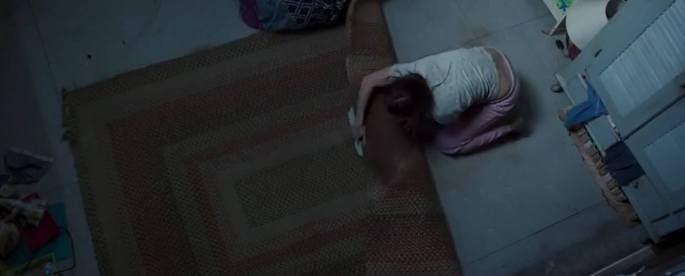
Room is a gut punch. This film snuck up on me and overpowered my emotions. I knew the general gist before sitting down, but I wasn’t prepared for how powerful the film would be. Lenny Abrahamson’s critically acclaimed film concentrates on a horrifying, immensely terrible situation – the imprisonment of a woman with the subsequent birth of a child in captivity – and does so with verve, intelligence, and a keen understanding of what constitutes as cinematic. Brie Larson, in nothing less than a shattering performance, conveys every emotion you might think possible for a human being, never over emoting or coming off as grandstanding; there’s a level of sensitivity to her work in this film that was gracious and revealing, though all of her previous performances have hinted at this doozy of a role. In film after film, especially Short Term 12, Greenberg, and her scene stealing work in Trainwreck, she’s been a major attraction, and in Room, she’s given a part that every single actress must’ve been dying to get. And very much her equal is newcomer Jacob Tremblay, who plays her five year old son, and does so with a sense of honesty and openness usually reserved for actors ten times his age. The filmmakers have taken the interesting approach by focusing the story on Tremblay, with much of the film unfolding through his internalized point of view, which makes the narrative even more contextualized and layered. It’s important to note that, yet again, another challenging and distinctive piece of art was produced by the people at A24; if only they could figure out the distribution portion of the filmmaking process.

2

Make no mistake – this film is not going to sit well with many people, as it’s themes are beyond disturbing, emotionally devastating, and all too believable; this sort of thing happens way too often. By shooting in 2.35:1 widescreen in such a cramped setting, Abrahamson and his sharp cinematographer Danny Cohen play with expressionistic angles and skewed vantage points, as the first 45 minutes of this movie are almost entirely contained to the nightmarish shed that Larson and Tremblay have been calling home. The sequence showing Tremblay’s escape is knot-in-your-stomach intense; I haven’t been that edge of my seat in a long time in a theater, at least since the tunnel sequence in Sicario. And when you mix in “This Will Destroy You” by The Mighty Rio Grande on the soundtrack, those moments take on massive visceral impact. Again, Abrahamson’s inherent understanding of what’s cinematic in a story like this is sort of bracing to witness; time after time, this movie doesn’t exactly do what you think it will. Joan Allen is terrific in a small but pivotal supporting role, and the final act stings with a truthful poignancy that wisely makes it clear that NOTHING is OK by the time the credits start rolling. I questioned one, maybe two small things from a plot standpoint, but they were hardly major issues. And as a new parent, I’d be lying if I said that this movie didn’t make me upset on numerous occasions, as there’s something so primal about the ideas at play during this unquestionably forceful piece of filmmaking and storytelling.

3.jpg

F. GARY GRAY’S STRAIGHT OUTTA COMPTON — A REVIEW BY NICK CLEMENT

3

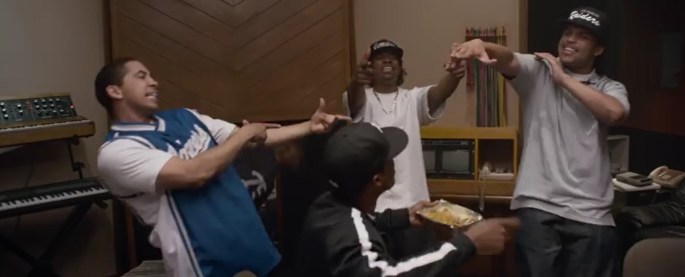
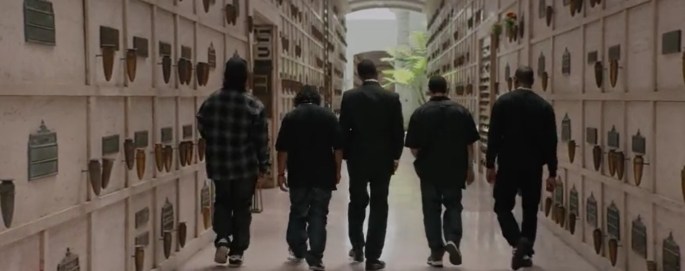
Straight Outta Compton is robust, vital entertainment, painting a vivid tapestry of one of the most turbulent periods of modern societal unrest, and telling an oversized, extremely engrossing tale that’s distinctly American and part of the greater cultural shift over the last 20 years. In a field of 10 potential nominees, even if I felt that there were better films, I am shocked that this movie didn’t have enough votes to get a Best Picture nomination with the Academy, especially considering the fact that it received a hat tip in the Original Screenplay category. It’s timely, it’s provocative, and it’s BIG. But whatever…Oscars or no Oscars…the movie was a massive critical and box office success, and for journeyman director F. Gary Gray, easily the best, most polished work of his career. The film has a dynamic visual style thanks to the slick yet gritty cinematography by Matthew Libatique, and it goes without saying, the movie moves to a SERIOUSLY awesome beat as a result of the near constant greatest hits that play over the soundtrack. Performances across the board are excellent and emotionally affecting, especially those by Jason Mitchell as Eazy-E, O’Shea Jackson, Jr. as Ice Cube (Cube’s son in real life, hence the uncanny physical resemblance), and Corey Hawkins as Dr. Dre. All three of these guys absolutely ripped into their roles with conviction and gusto, and are never unconvincing at any point. They have a great sense of chemistry with one another, and they all complimented each other’s performances by never allowing any one actor to overly dominate.

2

And what Gray and his crew of screenwriters achieved extremely well in Straight Outta Compton was to present the viewer with a time capsule of a city, and a nation, in flux, with the topical discussion of racism and unnecessary brutality and harassment at the hands of the police still an important and incendiary top of discussion. Gangster rap is as American as apple pie and baseball, intrinsically linked to certain sections of this country, with seepage occurring at random and all over. To denounce gangster rap as sensationalistic or as a glamorization of violence and drugs and misogyny would require you to push back against years of TV shows and movies that have all done the same thing – exploit the exploitable elements with a certain degree of swagger. But the difference, if you’re paying attention, was that there were messages in the songs of NWA, songs that spoke to a distinct set of people first and foremost, but offered a glimpse into another world for many others. Yes, the film has a traditional arc, and you get the scenes you’d expect from the musical biopic genre, but even then there’s a zesty sense of professionalism occurring in every filmmaking department. Fans of NWA will love this film, and the uninitiated should walk out with a new understanding, and hopefully respect, for an art form that may not be everyone’s cup of tea, but one that speaks its mind loud and clear, with an understanding of the difficulties of life at the center of the action. Version screened was a Blu-ray of the 2 hour 50 minute unrated director’ cut; I think I know which bit of sexual shenanigans was cut by the prudish asses at the MPAA.

1

PAOLO SORRENTINO’S YOUTH — A REVIEW BY NICK CLEMENT

1

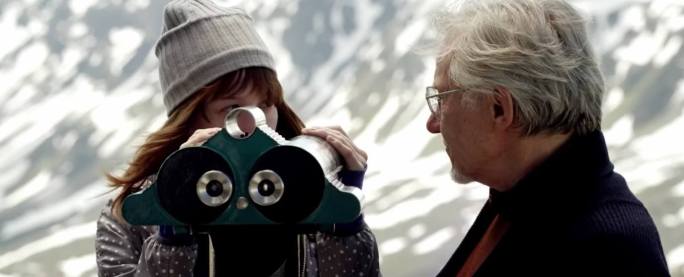
Youth, from director Paolo Sorrentino, is another visually lush and expressive mood piece from this extremely thoughtful filmmaker. Concentrating on the artistic process (both internally and externally), male camaraderie, long lost love, and above all else, the notion of vanity and one’s own life slowly slipping away, perhaps the film was too slow and melancholy for some, or too introspective for others. And while ultimately it might not shed any new light on its often explored themes, the entire package feels uniquely fresh and in awe of its own sense of cinematic richness. Similar to his previous effort, The Great Beauty, Youth has an almost ADD quality to the skipping narrative and to the intoxicating visuals, with Sorrentino adopting an almost Malickian sense of random intimacy, and his skilled cinematographer Luca Bigazzi capturing the exquisite Swiss Alps countryside in all its 2.35:1 widescreen glory. Anchored by a tender and soulful performance by Michael Caine and supported strongly by a wise Harvey Keitel, an emotionally frazzled Rachel Weisz, and a scene stealing, Kabuki-esque Jane Fonda, Youth explores a 50+ year friendship between a famed maestro (Caine) and a storied Hollywood filmmaker (Keitel), who take a vacation together at an ultra-luxury resort and come into contact with an interesting array of people, all of whom dredge up memories from the past, and help to set the course for the future.

4

I never expected the big whammy moment that comes at the top of the third act, Caine really brings it during the home stretch, the various bouts of visual whimsy and fantasy were beyond stylish and well integrated into the main story, and Weisz cut a painful portrait of a scorned woman who is looking to overcome some serious personal sadness. I was reminded, yet again, how much I love her as an actress, as she possesses a striking combination of sexiness and vulnerability, not to mention having some of the best dramatic chops in the industry; one monologue in particular should have netted her more awards talk (if that sort of thing is to be taken seriously…). The eclectic musical score by David Lang sets a playful yet pensive tone right from the start, and it was definitely fun to see Paul Dano with a fake moustache, to say nothing of his late in the game, um, transformation. Youth premiered at the Cannes Film Festival and competed for the Palme d’Or, and received a miniscule theatrical release this past December; I saw the film courtesy of a Region B Italian Blu-ray. Youth was shot at the Waldhaus Flims resort, and from what I read, the entire cast and crew stayed there during filming. Tough life.

2

ANTOINE FUQUA’S SOUTHPAW — A REVIEW BY NICK CLEMENT

1

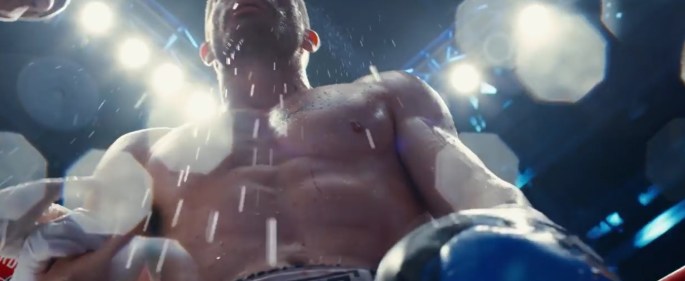
Southpaw is more square-jawed, darkly-lit, extremely predictable entertainment from director Antoine Fuqua (The Equalizer), who seems very content to embrace clichés and never look back. He’s always been a great shooter (The Replacement Killers POWER) with a terrific eye for detail and visual composition, but he’s never better than the script he’s given, and here, working with a bluntly effective if wholly routine narrative from Sons of Anarchy creator Kurt Sutter, Fuqua lets his ace star, Jake Gyllenhaal, do all the heavy lifting. And once again, Jake G. delivers — this guy is just crushing every single role of late, and he brings a buff and vigorous determination to the role of a broken down boxer trying to win his entire life back after suffering tragedy after tragedy. This movie is sort of odd in that it feels overstuffed but not unwieldy; it’s a boxing movie, a vigilante justice film for a spell, and a father-daughter drama that couldn’t be more on-the-nose if it tried. You’ve seen almost every single scene and set-up that Southpaw has to offer in countless other films, but never blended together quite like this, and while every moment is telegraphed from the get-go, Gyllenhaal’s brutish and extremely physical performance carries the film, keeping it watchable if never surprising.

2

Rachel McAdams shows up in the first act looking all trashy-hot, Forest Whitaker does some reliably solid supporting work, and the boxing scenes are ferociously if unimaginatively shot by Fuqua’s cameraman of choice, Mauro Fiore, stressing tight angles, shutter retention tactics, and in a few instances, some incredible wide shots. The film features one of the final scores by James Horner and it’s one of those amp-up-the-big-moments crowd pleasers that fits for the story. Outside of Training Day (David Ayer’s screenplay is genius), Fuqua’s best film, for me, was his underrated period action drama King Arthur for producer Jerry Bruckheimer; if you’ve never see it, I suggest checking out the unrated director’s cut on Blu-ray. It has a rock solid script, beefy performances, and it looks absolutely fantastic thanks to the gritty and misty cinematography by Slawomir Idziak. I also enjoyed Tears of the Sun more than most, and have always wondered what that movie would have been like had the studio not tampered with the final cut; the editing process on that film, as I recall, was filled with complications. I’ve still not seen Olympus Has Fallen. But back to Southpaw – it’s the sort of movie that you can see coming a mile away, but that you can still engage with because of the performances and the familiarity of the material.

3

PTS PRESENTS CINEMATOGRAPHER’S CORNER with PAUL CAMERON

cameron powercast2

793c55ef-3227-46d8-82e3-3cb271a88e1fPodcasting Them Softly is extremely honored to present a chat with the fantastic cinematographer Paul Cameron. Paul has been responsible for shooting some of our absolute favorite modern action films, from his collaborations with the late Tony Scott including MAN ON FIRE, DEJA VU, and the BMW films entry BEAT THE DEVIL, to his groundbreaking work on Michael Mann’s COLLATERAL. Other efforts include the slick and gritty actioners GONE IN SIXTY SECONDS from director Dominic Sena and producer Jerry Bruckheimer, the crazy-fun cyber-terrorism thriller SWORDFISH with John Travolta and Hugh Jackman, the lens-flare gorgeous Total Recall remake, and the underrated thriller Dead Man Down. Paul has some massive projects coming up next year and beyond, with the HBO series WESTWORLD from Jonathan Nolan hitting TV screens in 2016, and he’s just wrapped principal photography on the latest PIRATES OF THE CARIBBEAN installment which is set for release in summer 2017. As most listeners of this podcast will know, we are both huge fans of Tony Scott and his artistically expressive aesthetic, so it was a real highlight to get a chance to speak with one of his key camera collaborators. We hope you enjoy!

DEREK CIANFRANCE’S BLUE VALENTINE — A REVIEW BY NICK CLEMENT

1

In 2010, writer/director Derek Cianfrance dropped a hot-blooded cinematic bombshell on discerning audiences looking for a challenging, unquestionably mature look at a marriage coming apart at the seams. Clearly inspired by the freewheeling yet emotionally rigorous work of 60’s and 70’s era John Cassavettes, Cianfrance and his co-writers Joey Curtis and Cami Delavigne cooked up a stormy two-hander for stars Ryan Gosling and Michelle Williams, both of whom deliver tragically believable performances that should have netted them every single acting award that year; only Williams would be recognized by the Academy with a nomination. Named after the Tom Waits album, Blue Valentine premiered as a competition item at the 26th Sundance Film Festival, and became an immediate sensation, and features an evocative and deeply moving musical score by the band Grizzly Bear. This is a sad and searing film that some people might find too honest and harsh for their comfort levels. Gosling and Williams were outstanding and wholly believable as husband and wife, and it’s downright shocking at times to see how intense the two of them got with each other on a physical level, to say nothing of a personal level. The bruising screenplay goes to some deep, tough places that might hit too close to home for people who have been in volatile relationships.

2

The grittiness of just about everything in the film (the look, the sound, the textures) also helps to make the entire piece feel like a slice of life; at times you feel like you’re watching home video footage of a crumbling marriage. Blue Valentine shows you a marriage with all the highs and all the lows, and how two people who think they know each other are really just scratching the surface with one another. I dare not reveal any of the revelations or surprises that this film has in store as there are any number of moments while watching that you’ll feel the floor moving under your feet. When you have two incredible actors like Gosling and Williams crushing every scene and imbuing every moment with emotional honesty and openness, it’s almost impossible to not become totally consumed and engrossed as a viewer. And that’s what happens during Blue Valentine, or at least, that’s what has happened to me over the course of a few viewings. I forget that I’m watching a movie and I feel like I’m observing two real people and their very real problems. And even though the film ends on a note of slight discontent, there is an oddly uplifting undercurrent that can be felt as the final frames appear and the AMAZING closing song starts to play. It’s a totally sublime ending to an already extremely confident piece of filmmaking, one that carries a raw-nerve sexuality that few modern films ever dare to explore.

3

JAMES GRAY’S TWO LOVERS — A REVIEW BY NICK CLEMENT

2.jpg

All of the movies written and directed by James Gray look, feel, and sound alike. And while Two Lovers, which might be his richest and best yet (fine, The Immigrant is something special…), doesn’t revolve around the sordid world of crime, Russian-NY gangsters, and bloody shoot-outs (Little Odessa, The Yards, and We Own the Night are his other efforts), it’s no less of an accomplishment. Gray is a 70’s filmmaker at heart. His color palette consists of burnished browns, jet blacks, and gun-metal grey. His characters are ambiguous, morally conflicted, and quiet. Themes of family, loyalty, and violence run through all of his narratives, which jump from melodrama to genuine feeling with a peculiar grace. And this is what makes Two Lovers so excellent — it has a timeless quality, its characters seem real without ever falling into cliché, and Gray’s refusal to play anything safe imbues the film with a level of unpredictability that makes for great entertainment. And while Two Lovers may finally be too dour, possibly too portentous for some, the crafty decisions made by Gray and his co-scenarist Ric Menello should not go unnoticed, though they probably will, considering the ridiculously limited theatrical release that the film received. I hope that this movie has found an audience on DVD/Blu-ray/cable, because it deserves to win its share of fans.

3.jpg

The film is essentially a love story, but one shot through with heartache and dysfunction. Leonard Kraditor (the phenomenal Joaquin Phoenix) is depressed, miserable, and more than likely bi-polar. Still reeling from being dumped by his fiancée, he’s moved back in with his loving parents (played wonderfully by Isabella Rossellini and Moni Moshonov). They’re a family of Jews from the Brighton Beach section of Brooklyn, and Gray gets all of the familial minutiae just right. Leonard’s parents want nothing but the best for their boy and are deeply concerned about his well-being. Fearing that he might be regressing back to his addict-days, they arrange a date for Leonard with the charming Sandra Cohen (the extremely natural and appealing Vinessa Shaw, who deserves a helluva lot more work than she’s been afforded), who happens to be the daughter of a business associate of Leonard’s father. If sparks were to fly between the two of them, it might make the merging of Leonard’s parent’s dry-cleaning business with Sandra’s parent’s business run even smoother. But a monkey wrench is thrown into potential domestic and professional bliss when Leonard meets the sexy and emotionally wounded Michelle, played with damaged-goods allure by Gwyneth Paltrow, in one of her absolute best performances. It’s the classic situation: Seemingly good-hearted Jewish man needs to choose between the sensible Jewish woman who is loved by his parents, and the blond shiksa goddess who Leonard craves in a seriously carnal way. Relationships are struck up with both of the women by Leonard, and as he twists and turns his way between the two of them, the audience twists and turns in their seat because of the realistically awkward situations that the characters find themselves in. Who will Leonard end up with? How will his parents react? And will Leonard ever be able to shake off the demons from his past?

1

Two Lovers is the sort of adult-minded movie that people complain never gets made any more. Well, movies like this do exist — the problem is that distributors don’t have any faith in them. This is a shame because there are a lot of people out there who crave this sort of character and detail oriented work. The performances from Phoenix, Shaw, and Paltrow register as career highs for all of them, with Phoenix continuously providing varied and distinctive work all throughout his career. Leonard isn’t necessarily a likable guy, and many of the decisions that her makes seem foolish, but when you look at the story from a slight remove, you realize that the choices made are probably the ones that would be decided upon in the real world. Phoenix has a way with introverted, damaged souls, and it’s clear that repeatedly working with Gray has expanded his abilities as a dramatic artist. You like Leonard even though you probably shouldn’t. At least I did. Paltrow, who has an innate ability to convey sexiness and sympathy in the proper role, shines in a way that she rarely has on the big screen in Two Lovers — she’s totally hot, she’s total trouble, and she totally knows it. And the wildly undervalued Shaw exudes an effortless charm and a natural quality that so few major actresses’ possess. I had hoped that her terrific but subtle work in this film would have led to bigger parts down the road, or maybe a starring role on an HBO or Showtime or FX series, but alas, it’s not happened for whatever reason. And as always with Gray, the film has a stylish but unfussy visual style. Long takes are employed, static cameras are set in place, and the actors were given all the room they needed to carefully etch their layered characters. Films like Two Lovers are rare in that, typically, with a romantic drama, the audience has easy sentiment spoon-fed to them. Not here. Gray makes you work for a potential happy ending, and even when that ending comes, you can bet that there will be shades of uncertainty attached to it. Two Lovers may be small in scale, but it’s huge in heart and feeling.