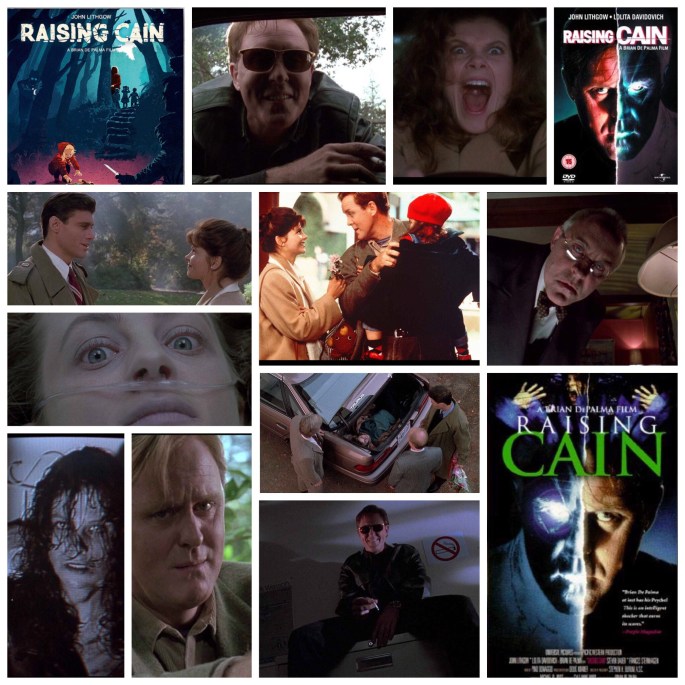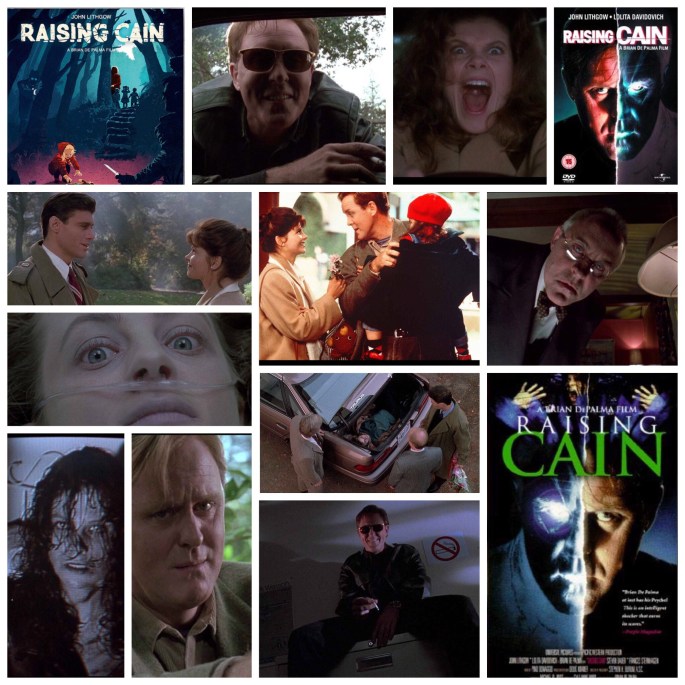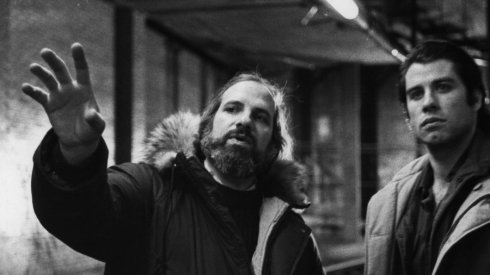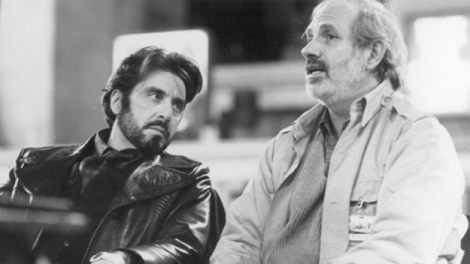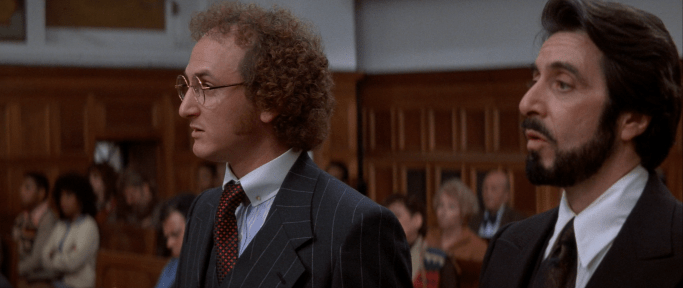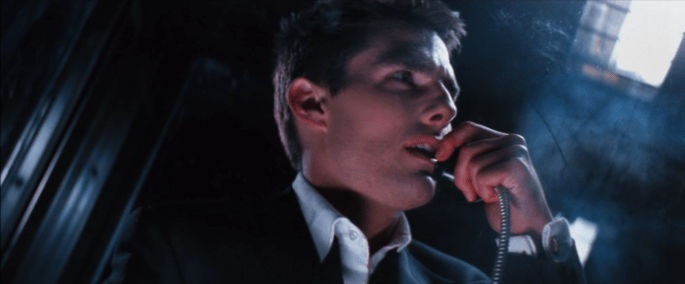
Brian De Palma’s Raising Cain

Not too many films can claim to be as certifiably, outright insane as Brian De Palma’s Raising Cain. Crazy, off the wall, nuts, there’s plenty of that in Hollyweird,

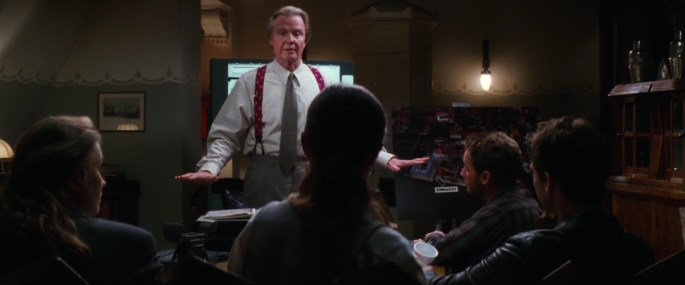
but Cain is so thoroughly deranged that I’m curious how De Palma arrived at such a specific brand of left field lunacy when he sat down at his typewriter. Get this: John Lithgow pulls an overtime shift playing Dr. Carter Nix, a slightly disturbed child psychologist who shows an unnatural budding interest in his daughter’s upbringing, so much so that it unnerves his wife (Lolita Davidovitch) to a degree. I describe him as only slightly disturbed because his level of mania pales in comparison to his multiple emerging split personalities, which is where the trouble really begins. Carter’s father (also Lithgow) was a psychotic Norwegian doctor who had a habit of using children for bizarre mind control experiments, and it seems that one of Carter’s multiples has decided to take up his work. Soon there’s a rash of baby kidnappings in the area and all hell breaks loose. His wife is too busy having an adulterous affair with a hunk (steamy Steven Bauer) to really take control either. Sounds crazy in writing? The film takes it way further than you could ever imagine. Lithgow always seems a bit nuts, even when playing straight-laced characters we always get this vibe like he’s a court jester who has lost his marbles, and he revs that organic looniness into overdrive here. Frances Sternhagen is a hoot as the obligatory exposition here, a stern doctor who lays out Carter’s complex, condition to two cynical detectives (Tom Bower and Gregg Henry, both great) who try to keep up with this whole circus. I can understand why this film didn’t do too well, I mean… how do you even classify it? Almost everything about the subject matter is highly uncomfortable stuff that threatens to siege over into the lands of taboo, and there’s all kinds of freaky shit in this screaming haunted asylum of a flick. That’s the fun of though, if you’re able to have some. De Palmer has always had a gift for shocker material even when he’s not operating in the thriller genre. There’s a cold, caustic edge to this film that barely contains the sea of menace and mirth roiling beneath, which is an odd, off colour and chilling mix. See it for yourself.

-Nate Hill

Emerging from the river of wind: Remembering Slipstream with Tony Kayden by Kent Hill

maxresdefault

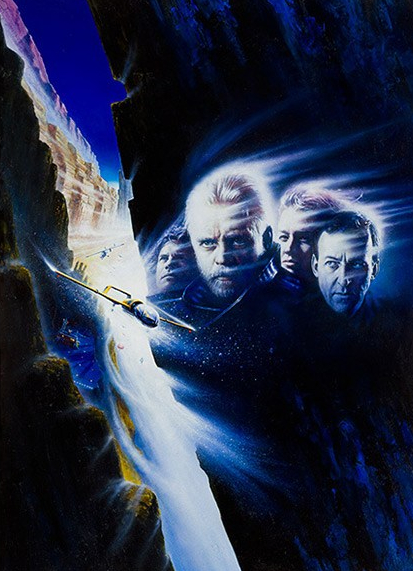
Slipstream was alluring from the moment I saw the poster in the front window of my local theater. From the producer of STAR WARS and the director of TRON was the proclamation, and I was sold. The film, even then, delivered, as far as I am concerned. It offered a different world, an intriguing premise, great performances and . . . yes, I’ll admit a disjointed viewing experience. Still, I love the movie and have always been curious as to the production and what elements combined to bring this fascinating story to the screen.

At length, I finally made contact with Tony Kayden, a veteran screenwriter and the credited scribe of the film (as well as a man with his own amazing set of adventures in the screen trade). And it didn’t take long to learn that the narrative irregularities of Slipstream were the result of no one really knowing what kind of film they wanted to make.

slipstream

With the money in escrow, the movie was being made, that was definite. The script that Tony was brought on to rework was, at its heart, a stock-standard Star Wars rehash. Enter producer Gary Kurtz. After enjoying success serving alongside George Lucas and Jim Henson on the Dark Crystal, Kurtz came to the project seeing another unique film on a grand scale and an adventure born in the wind. The director tapped to steer the ship was Tron director Steve Lisberger. His work on Tron was extraordinary, original, and one could only imagine what he might do with a larger canvas combined with thrilling aerial action, accompanying a compelling human story. But then then problems began. The Producers wanted action and more sexual interaction where possible. Kurtz wanted something cleaner, no graphic violence and something more Star Wars. Lastly there was Lisberger, having just become a father, and wanting to make something for kids.

Then you have the poor writer. Only hired for four weeks, Tony ended up residing in England for three months, trying in vain to mix this maelstrom of indecisiveness into a cohesive plot. Kayden saw the movie as a kind of post-apocalyptic version of the The Last Detail. You can see the surviving elements of this in the interactions between Bill Paxton and Bob Peck’s characters of Matt and Byron. One a fugitive being taken in for the reward, the other an opportunist looking to make a quick buck. But, ultimately they become friends and seek to merely flow with the slipstream they are, for better or worse, traveling along.

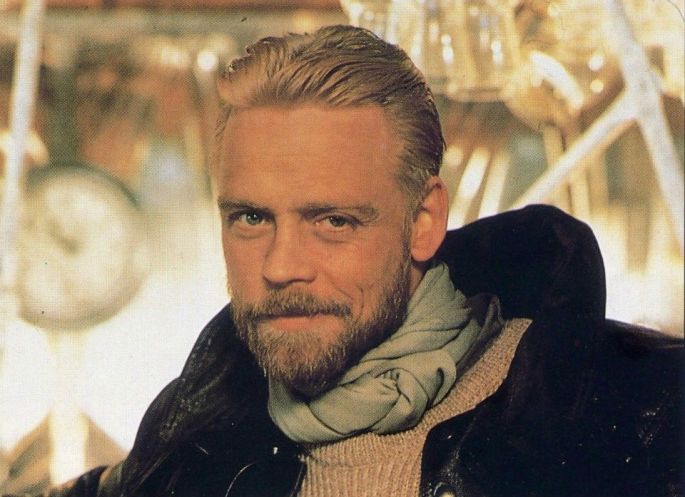
These two are chased by Tasker, Mark Hamill, in a platinum performance as the mustache-twisting law man whose faith has been replaced by devotion to duty and routine whilst maintaining order here in this desolate society. He harbors a Javert/Valijean type relationship with Peck’s curiously, emotionally-distant accused killer – who just so happens to be an android.

The journey down the stream brings Matt and Bryon into contact with fellow adventurers/survivors Sir Ben Kingsley (who after a chat about the script in the commissary with Tony, sought out a part in the movie), and eventually, another Oscar winner in the person of F. Murray Abraham, the caretaker of one of the last sanctuaries – a literal museum to the past, complete with all its folly and decadence.

But the movie ends in tragedy and triumph. While the evil pursuer is vanquished, Bryon’s hopes for happiness are dashed. He is forced to leave his new found friend and seek out his own kind, wherever they may be.

That all might come across as a little confusing? Like I said before, the film is disjointed. This doesn’t prevent it, however, from being fun. The the actors give solid performances, the photography is brilliant, the locations amazing, Elmer Bernstein’s score magnificent – it is just a shame that the powers behind this movie couldn’t seem to agree.

As Tony told me, “the writer often takes the blame.” Though that is not the case here. If anything he should be commended for fighting the good fight in a losing battle.

Still, my fondness for Slipstream endures. In part for what it is, but also for the possibility of what it might have been. Like I said to Tony, in the age of the reboot, there might be a second life yet for Slipstream. Now all we need to do is get Dwayne Johnson on board…

EPISODE 33 – Brian De Palma’s RAISING CAIN with SPECIAL GUEST PEET GELDERBLOM

raising-cain

_vb_3133-optPodcasting Them Softly is extremely excited to present a chat with editor, filmmaker, and movie buff Peet Gelderblom, who most recently re-cut Brian De Palma’s 1992 thriller Raising Cain as a passion project. Indiewire posted the re-cut on Vimeo, it went viral, De Palma saw it, and it became a director approved special feature on the newly released Shout! Factory Special Edition Blu-ray. Raising Cain had a troubled production history, with changes made to the overall narrative after poor test screenings; De Palma has long felt that the released version was in a compromised state. Peet is a massive De Palma aficionado, so this was an especially fun chat to record. And considering that this personal experience for Peet is something of a surreal dream come true, we couldn’t help but gush a bit — it was very enjoyable to speak with someone who shares the same sense of cinematic excitement as all of us do at PTS. Check out Peet’s work at http://www.directorama.net/   If you’ve not seen Raising Cain, you can order it right here https://www.shoutfactory.com/film/film-crime/raising-cain-collector-s-edition And then check out Peet’s version, as De Palma himself says it’s the best way to see it!
De PALMA – A Review by Frank Mengarelli

de-palma

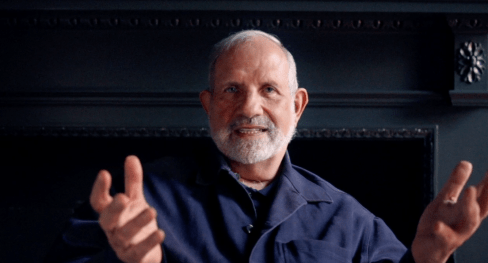
DE PALMA is without a doubt one of the best films of the year. It is a candid and refreshing documentary on one of cinema’s most important voices. He speaks about his beginnings, his failures, successes, in a very honest and touching way.

Like his filmography, the doc’s singular voice is De Palma, not once is the interviewer heard, and only once does De Palma himself address them. It is an incredible amount of joy to sit and listen to him talk for nearly two hours about each one of his films, giving us unique insight, humorous anecdotes, how his personal life affects his films, and brutally honest assessments of his work and actors he’s collaborated with.

de-palma-de-palma-still-travolta_rgb_wide-8a9f5debe007a2831070e3cee8c2226283de950c-s900-c85

De Palma doesn’t shy away from talking about his unpleasant working relationship with Cliff Robertson on OBSESSION, or his disdain for Robert Towne’s changes to MISSION IMPOSSIBLE, or how he had to have Oliver Stone removed from the set of SCARFACE. Perhaps the best story is of the constant strife between Sean Penn and Michael J. Fox on the set of CASUALTIES OF WAR.

What makes a great documentary is honesty. Particularly when the director of the doc isn’t purposefully manipulating the doc to their liking, or trying to control the subject and/or film into having a preordained outcome.

carlitos-way-brian-de-palma-al-pacino

Directors Noah Baumbach and Jake Paltrow just let De Palma talk. They allow him to speak freely about everything, and it is a marvel to watch. The only negative marks this film gets is that it’s only an hour and fifty minutes. Surely we could listen to De Palma speak for at least six hours, right?

CARLITO’S WAY – A REVIEW BY J.D. LAFRANCE

release_carlitosway

There was a lot of anticipation when Carlito’s Way was released in 1993. Director Brian De Palma had just come off a lukewarm reception for yet another Alfred Hitchcock homage, Raising Cain (1992) and was in need of a hit to appease the studios. And so, a re-teaming with Al Pacino in an effort to recreate the magic of Scarface (1983) made commercial sense. Carlito’s Way was much more somber in tone than the cinematic shotgun blast that is Scarface. It is a tragedy about how a criminal tries to go straight but is ultimately doomed from the get-go.

Carlito’s Way features one of the oldest chestnuts in the world. Narrating his story during the last moments of his life, Carlito Brigante (Pacino) is a veteran criminal recently released from prison and intent on leading a normal, law-abiding life. Of course, it isn’t going to be that easy and when he returns to his old neighborhood, his reputation precedes him. Local gangster Benny Blanco from the Bronx (John Leguizamo) is a cocky, up and comer who sets his sights on Carlito after he is shamed by him in public. Carlito, however, barely notices him as he’s torn between reuniting with an old flame, Gail (Penelope Ann Miller), a struggling Broadway dancer, and keeping his lawyer friend, David Kleinfeld (Sean Penn) out of trouble.

As a personal favor to David, Carlito runs a nightclub so that he can raise enough money to start his own business renting cars in a tropical paradise with Gail. However, Carlito’s loyalty to David will be his undoing because his friend has become so corrupt during the time that Carlito was in prison.

As always, De Palma injects the film with his trademark bravura action sequences, including one early on when Carlito accompanies his cousin on a routine drug deal that turns into a violent blood bath. One look at the set-up and, like Carlito, we know that something is not right. De Palma prolongs the violent confrontation for as long as possible, gradually building the tension as we feel Carlito’s apprehension. The director orchestrates the entire scene like a pro, knowing just how long to build things up before the inevitable eruption of violence.

Carlito is a role tailor-made for Al Pacino, allowing him to essay another larger-than-life character. Carlito is a smart guy who cannot escape what he is no matter how hard he tries and Pacino conveys the melancholy that lurks behind the bravado of his character. The real scene stealer, however, is Sean Penn’s sleazy, coked-up lawyer. The actor reportedly did the film to help finance his second directorial effort, The Crossing Guard (1995). For a paycheck role, Penn does a great job as he disappears into the character, complete with a frizzy afro and cheap suits. It’s almost as if Pacino’s presence inspired Penn to step up his game. And this makes Penn’s memorable turn so much fun to watch.

The rest of the cast is filled out by solid character actors like John Leguizamo, who plays Benny as a pushy little runt with a motor-mouth, and the always reliable Luis Guzman as Carlito’s right-hand man. The only miscasting is Penelope Ann Miller as Pacino’s love interest. She looks out of place and just doesn’t have the chops to hold her own against Pacino.

Despite the cliched premise, Carlito’s Way works so well because of the caliber of actors, David Koepp’s screenplay with memorable dialogue (“You think you’re big time?! You’re gonna fucking die big time!”), and De Palma’s stylish direction. This film is proof that given the right material, De Palma can still make a hell of an entertaining movie.

MISSION: IMPOSSIBLE – A REVIEW BY J.D. LAFRANCE

micruise

A lot was riding on Mission: Impossible (1996) for Tom Cruise. Not only was it the first film he produced (in addition to starring), it was also his first attempt to kick start his own film franchise. And what better way to do this than resurrecting a classic television show from the 1960s? Cruise, always the calculated risk taker, wisely surrounded himself with talented people: Robert Towne co-wrote the screenplay, Brian De Palma directing and the likes of Jon Voight, Jean Reno, and Vanessa Redgrave in the cast. At the time, the James Bond franchise was in a transitional period and didn’t produce a new film until the following year. Mission: Impossible was a huge box office success spawning a franchise that continues to produce installments.

Jim Phelps (Voight) leads his group of IMF agents on a mission to intercept Alexander Golitsyn (Marcel Iures), a traitorous attaché, who has stolen a list of the code names for all of the CIA operatives in Europe. He plans to steal the other half of the list with their real names from an embassy in Prague. One by one, members of the team are killed off by mysterious assailants. Only Ethan Hunt (Cruise) survives the bungled mission and rendezvous later with his superior, Kittridge (a wonderfully twitchy Henry Czerny) in a restaurant. Over the course of their conversation, Ethan realizes that he was set-up and that another team was shadowing his own. Kittridge reveals that the embassy debacle was actually an elaborate scheme to expose a traitor within the IMF organization and he believes that it is Ethan and that he also killed his entire team.

De Palma conveys Ethan’s growing sense of paranoia and panic in this scene through increasingly skewed camera angles as the magnitude of what has happened begins to sink in. Henry Czerny plays the scene beautifully as Kittridge talks to Ethan as a parent might scold a child. The conversation between them culminates with a daring escape as Ethan causes a large aquarium to explode, using the ensuing chaos to make his getaway. This scene was Cruise’s idea. There were 16 tons of water in all of the tanks but there was a concern that when they blew, a lot of glass would fly around. De Palma tried the sequence with a stuntman but it did not look convincing and he asked Cruise to do it despite the possibility that the actor could have drowned.

Ethan regroups at a safe house where he meets Claire (Emmanuelle Beart), another surviving member of his team. He must find out who set him up and retrieve the list. To aid him in his endeavor, Ethan enlists the help of Claire and two other disavowed agents (Ving Rhames and Jean Reno). The film really gets going once Cruise hooks up with Reno and Rhames (playing an ace hacker no less) and they decide to break into CIA headquarters for what is Mission: Impossible’s most famous set piece. This impressively staged sequence is cheekily dubbed the “Mount Everest of hacks” by Ethan and is masterfully orchestrated by De Palma. The heart of this sequence is nearly soundless proving that one doesn’t need a ton of explosions and gunfire to have an exciting, tension-filled action sequence (Michael Bay take note).

Paramount Pictures owned the rights to the television series and had tried for years to make a film version but had failed to come up with a viable treatment. Cruise was a fan of the show since he was young and thought that it would be a good idea for a film. The actor chose Mission: Impossible to be the first project of his new production company and convinced Paramount to put up a $70 million budget. Cruise and his producing partner Paula Wagner worked on a story with filmmaker Sydney Pollack for a few months when the actor hired Brian De Palma to direct. They went through two screenplay drafts that no one liked. The screenwriting team of Willard Huyck and Gloria Katz (Indiana Jones and the Temple of Doom) wrote a draft and then David Koepp (The Shadow) was reportedly paid $1 million to rewrite it. According to one project source, there were problems with dialogue and story development. However, the basic plot remained intact. De Palma brought in screenwriter Steve Zaillian (A Civil Action) and finally Robert Towne to work on the script. According to the director, the goal of the script was to “constantly surprise the audience.”

Amazingly, even with all of these talented screenwriters working on it, the film went into pre-production without a script that the filmmakers wanted to use. De Palma designed the action sequences but neither Koepp nor Towne were satisfied with the story that would make these sequences take place. Towne helped organize a beginning, middle and end to hang story details on while De Palma and Koepp worked on the plot. The director convinced Cruise to set the first act of the film in Prague, a city rarely seen in Hollywood films at the time. Reportedly, studio executives wanted to keep the film’s budget in the $40-$50 million range but Cruise wanted a “big, showy action piece” that took the budget up to the $70 million range.

The script that Cruise approved called for a final showdown to take place on top of a moving train. The actor wanted to use the famously fast French train the TGV but rail authorities did not want any part of the stunt performed on their trains. When that was no longer a problem, the track was not available. De Palma visited railroads on two continents trying to get permission. Cruise took the train owners out to dinner and the next day they were allowed to use it. For the actual sequence, the actor wanted wind that was so powerful that it could knock him off the train. Cruise had difficulty finding the right machine that would create the wind velocity that would look visually accurate before remembering a simulator he used while training as a skydiver. The only machine of its kind in Europe was located and acquired. Cruise had it produce winds up to 140 miles per hour so it would distort his face. Most of the sequence, however, was filmed on a stage against a blue screen for later digitizing by the visual effects team at Industrial Light & Magic.

The filmmakers delivered Mission: Impossible on time and under budget with Cruise doing most of his own stunts. Initially, there was a sophisticated opening sequence that introduced a love triangle between Phelps, his wife Claire and Ethan that was removed because it took the test audience “out of the genre,” according to De Palma. There were rumors that Cruise and De Palma did not get along and they were fueled by the director excusing himself at the last moment from scheduled media interviews before the film’s theatrical release.

In some scenes, Cruise has a tendency to over-emote, like when Ethan is reunited with Claire after their entire team has been wiped out. Sleep deprived and paranoid, Ethan yells at Claire, “They’re dead! They’re all dead!” It’s an embarrassing bit of overacting on Cruise’s part but the actor redeems himself somewhat later on in a cheeky bit of acting when he cons Reno over a CD of vital information through a clever display of sleight of hand.

The film’s overriding theme is one of deception, a world where nothing is what it seems. The prologue has a disguised Ethan trick a captive man into giving up a name of a key operative. This is only one of many disguises (created by make-up legend Rob Bottin) he adopts throughout the film in order to obtain information or trick an opponent. The prologue also cleverly serves as a metaphor for filmmaking. The spy trade, like cinema, is all about creating an illusion and pretending to be something that you’re not. In addition, several members of his team are not who they appear to be as well and this keeps the audience guessing as to who is “good” and who is “bad.”

mi_still02The common complaint leveled at Mission: Impossible was that it was hard to follow, fueling speculation that De Palma’s original cut was non-linear in nature and that Cruise re-cut it after disastrous test screenings. Regardless, if one is paying attention to what is happening and what is being said (or not being said, in some cases) it isn’t difficult to navigate the film’s narrative waters. The script is lean and unusually well-written for a big budget action blockbuster, which is quite amazing when you consider how many writers worked on it. Make no mistake about it; this is a paycheck film for De Palma. However, being the consummate professional that he is, the veteran director still delivers an entertaining film with some nice stylistic flourishes. What more could you ask for from this kind of film?

THE UNTOUCHABLES – A REVIEW BY J.D. LAFRANCE

UntouchablesConnery

Brian De Palma’s The Untouchables (1987) is a film that asks the burning question: is police brutality ever justified? It is when you’re dealing with the likes of Al Capone and Frank Nitti – gangsters that had no problem blowing up children and killing nebbish accountants to get what they wanted. The film doesn’t exactly adhere to historical fact opting instead to go with John Ford’s famous credo of printing the legend and in doing so raising the characters and their exploits to mythic status. De Palma’s adaptation of Eliot Ness’ 1957 memoir of the same name had all the makings of a powerhouse production destined for greatness. It featured a screenplay written by legendary playwright David Mamet (Glengarry Glen Ross), expert cinematographer Stephen H. Burum (Rumble Fish) was behind the camera, master composer Ennio Morricone (The Good, the Bad & the Ugly) was scoring the film, and Robert De Niro and Sean Connery were signed on to play larger-than-life characters. The result was an exciting, action-packed epic that helped revitalize De Palma’s struggling career (after the critical and commercial failure of Wise Guys) and earned Connery his first Academy Award.

It is 1930 and gangster Al Capone (Robert De Niro) controls most of the illegal business in Chicago with a ruthless, iron fist. After a ten-year old girl is killed in a gang-related incident, Federal Treasury Agent Eliot Ness (Kevin Costner) is brought in to clean up the city. His first attempt is an embarrassing failure so he tries a different approach. He decides to form his own task force of three men to help him take down Capone and his empire. He picks a veteran beat cop named Malone (Sean Connery), who knows the city and becomes Ness’ mentor. He also selects Stone (Andy Garcia), a cop fresh out of the academy and ace shot with a pistol. Rounding out the group is Wallace (Charles Martin Smith), a bookish FBI accountant who figures out a way to nail Capone. Together, they form an incorruptible group determined to bring Capone to justice.

De Palma and Mamet make it clear right from the get-go that The Untouchables isn’t going to be some half-assed, sanitized gangster film as they proceed to have Frank Nitti (Billy Drago) blow up a bar with a little girl in it. This shocking sequence, juxtaposed with Capone lying about not using violence to enforce his will, sets an all-bets-are-off tone as we get an idea of just how brutal life is in Chicago and how far Capone is willing to go to make a point. This is then contrasted with Eliot Ness’ blandy-McPlainWrap home life with a loving and dutiful wife (Patricia Clarkson) and cute-as-a-button child. We see just how far removed from Chicago Ness’ home life is and what a rude wake-up call he will get when he starts working in the city.

Kevin Costner is wisely cast as the stiff, idealistic Ness. He’s the least interesting character and plays the role straight, trying not to go the obvious heroic route. His all-American looks and Gary Cooper-esque style are ideally suited for the role of the last honest man in the corrupt town (which Oliver Stone would also utilize in JFK). His Ness is as straight an arrow as they come, which makes the character’s arc over the course of the film an interesting one. He goes from staunch upholder of the law to someone who has adopted Malone’s by-any-means-necessary philosophy.

This allows Connery to rightfully shine as the aging cop torn between riding out his remaining time and retire alive or making a difference with Ness and his crew. Unlike Ness, Malone has grown up on and worked the mean streets of Chicago. He understands that they are at war with Capone and must do whatever it takes to bust him and break up his empire because he will be just as ruthless. Upon the first meeting, Malone imparts a valuable lesson to Ness: “Make sure when you shift is over you go home alive.” It seems obvious but is an important one to know. It is also the reason why Malone initially turns down Ness’ offer to form the Untouchables. Connery shows what a once great actor can do with the right material and this results in a truly inspired performance — arguably the veteran actor’s last great one.

Rounding out his trilogy of memorable cameos in the 1980s (including Brazil and Angel Heart), Robert De Niro put on the pounds again (which he first and most famously did for Raging Bull) and transformed himself into Al Capone. Like Tony Montana in De Palma’s Scarface (1983), Capone is surrounded by luxury and opulence but is still just a cruel thug at heart. In the few scenes that he has, De Niro makes them count and it is a thrill to hear a great actor say Mamet’s tough-guy dialogue (listen to how he says the word, “enthusiasms,” in a scene). The actor clearly relishes the role and treats the dialogue like he’s enjoying a rich meal and each word is a juicy morsel that he savors.

The supporting roles feature some fantastic actors, chief among them Billy Drago who exudes just the right amount of oily menace as Nitti. For example, there is a scene where he cordially threatens Ness and his family. On the surface there is the appearance of civility but we know what his true intentions are and it doesn’t take Ness much time to figure it out but by then Nitti is speeding off in his car. He’s made his point. Drago doesn’t get many lines or a lot of screen time but makes the most of what he’s given, making a fine addition to De Palma’s roster of cinematic sociopaths.

Speaking of Mamet’s dialogue, it crackles and pops with intensity and provides many of the film’s classic scenes, perhaps none more memorable than Malone’s famous speech to Ness where he tells him how to get Capone. “He pulls a knife, you pull a gun. He sends one of yours to the hospital, you send one of his to the morgue. That’s the Chicago way.” Sean Connery delivers this speech with the passion and conviction that rightfully earned him an Oscar. The other scene of classic Mamet dialogue is Capone’s infamous dinner table monologue where he talks about teamwork before braining a hapless flunky with a baseball bat for not being a part of the “team.”

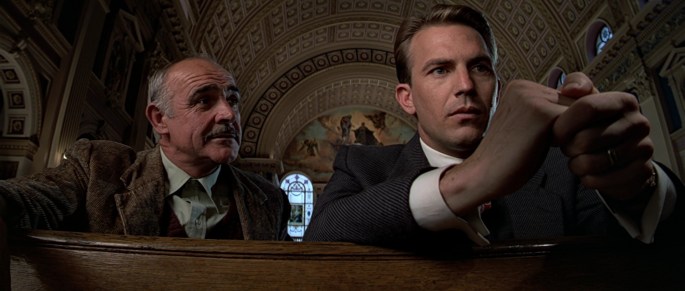
Brian De Palma’s stylish direction is perfect for this epic story: long, uninterrupted takes, slow motion and excellent compositions within the widescreen format. He may well be one of the greatest practioners of this aspect ratio. Just look at a simple set-up in the scene where Malone takes Ness to a church and lays it all out for how they’re going to get Capone. Both men take up most of the foreground occupying either side of the screen. The camera is low looking up at them so that we also see part of the beautifully ornate church ceiling. It is this kind of shot that would be totally destroyed when shown pan and scanned on television. Then there is the much-celebrated train station shoot-out, which was a shameless homage to a famous sequence in the legendary film, Battleship Potemkin (1925). It’s a bravura sequence that is beautifully orchestrated by De Palma as he builds the tension leading up to the shoot-up for what seems like an unbearable eternity. The entire sequence is a brilliant lesson in editing and camerawork.

Although, De Palma does go a little over-the-top (even for him) with the Ness-Nitti show down at the end, which features the director’s obligatory homage to Alfred Hitchcock. There is also a silly bit of business where we see two old cops duking it in a rainy alleyway as Connery and veteran character actor Richard Bradford laughably beat each other up in a scene that I could’ve done without. Also, Malone’s prolonged death scene drags on for what feels like an eternity but these are really minor flaws in an otherwise unimpeachable stone cold classic as De Palma does his best to distract us from these histrionics with giallo lighting in the Connery fight scene and suspenseful point-of-view steadicam work in the death scene.

In 1984, producer Art Linson met with Paramount Studio’s president Ned Tanen about adapting The Untouchables television series into a film. Tanen liked the idea but Linson did not want to do a sequel, a remake or a parody. He wanted “to create a big-scale movie about mythical American heroes.” Linson needed a screenwriter and thought of David Mamet, fresh from just having won a Pulitzer Prize for his Broadway play Glengarry Glen Ross. He met with Mamet and the writer agreed to do the film. The screenwriter was a native of Chicago and something of a gangster history buff. He envisioned a story about “the old gunfighter and the young gunfighter … It occurred to me, what happens if this young innocent, who’s charged with defending the law but only understands that in an abstract way, meets an old disenchanted veteran, the caretaker of the law, soured at the end of his career because of the corruption in the city?”

Mamet asked Paramount to show him two episodes of the original series and he liked them but felt that “there was nothing I could use in the movie.” Mamet wrote an original story after realizing that the real events – Capone being caught for tax evasion – were not that dramatic. Mamet created the character of Malone and gave Ness a family (he did not have one in real life). After eight months, Brian De Palma was approached to direct by Linson after Mamet wrote the third draft of the script. The director liked that the script was more about the characters and did not see it as a gangster film but more like The Magnificent Seven (1960). He felt that the project was “different from anything I’ve done in the past, because it’s a traditional Americana picture, like a John Ford picture.” He, Linson and Mamet worked together on it with De Palma emphasizing the Capone character more. According to De Palma, the film “reflects upon the incredible pressure we place on our police by not equipping them to adequately fight criminals. Why are we surprised that some of them go overboard?”

For the role of Eliot Ness, Linson and De Palma initially considered William Hurt and Harrison Ford, but, according to Linson, they wanted “someone with the right combination of naiveté, earnestness and strength.” They ended up casting Kevin Costner who wanted to do the film because it was so different from the television series and Ness “has to ask for help. It’s the more modern notion that a smart man takes a step back sometimes – that to be a hero you don’t have to be Rambo.” For Jimmy Malone, the filmmakers wanted Sean Connery but assumed that he would not want to play a supporting role and take a pay cut. However, Connery was drawn to the project because of Mamet’s script and the chance to work with Robert De Niro. He ended up signing on for a percentage of the profits. For the role of Al Capone, De Palma wanted De Niro. Paramount initially balked at the actor’s asking price of $1.5 million but relented.

The principal actors rehearsed together for a full week and Connery tried to remain in character even when the cast was relaxing. By the time principal photography began, whole scenes had been blocked and unworkable ideas rejected. A rapport between the actors playing the Untouchables had also been established, which definitely shows in the film. In preparation for the film, De Niro put on 30 pounds between the end of his Broadway run in Cuba and His Teddy Bear and his days of filming scheduled at the end of the 70-day production schedule. He analyzed old Movietone newsreels in order to get Capone’s voice, movements and mannerisms. On an interesting note, the famous scene in the church between Ness and Malone as originally written, took place on a street, but Connery suggested it take place in a church – the only place left in the city where they could speak freely.

Principal photography started in mid-August 1986 and utilized over 25 separate locations in Chicago with the border raid sequence shot on the Old Hardy Bridge spanning the Missouri River because of its period look. The train station shoot-out cost $200,000 to light because extra light was needed to shoot the sequence in slow motion. It took six days to shoot the scene, which cost an additional $100,000. Not surprisingly, staging this sequence like the one in Battleship Potemkin was De Palma’s idea. The budget escalated from $17 million to $24 million thanks to the cost of production designer Patrizia von Brandenstein transforming an entire block of LaSalle Street in Chicago into the 1930s complete with 125 costumed extras and 60 period cars.

The production design for The Untouchables is fantastic, especially the opulence of Capone’s headquarters, with Morricone’s score resembling a 1930s riff on the music from De Palma’s Scarface. This film is one of those rare big-budget, star-studded blockbusters that actually works. All of the right elements came together at just the right time and place and resulted in an incredibly entertaining motion picture. The Untouchables shows what a master filmmaker like De Palma can do with a director-for-hire paycheck movie. He may not be making a personal statement with this film but he still gives it his all in terms of style and virtuoso camerawork. This film certainly set a high standard for period gangster films, casting a long shadow over future endeavors like Michael Mann’s Public Enemies (2009) and the HBO T.V. series Boardwalk Empire.