Spiral: from the book of cheap, lazy Saw rip-offs

There’s a part in Spiral, the new attempt to resuscitate the Saw franchise, where Samuel L. Jackson’s tough guy police captain bellows out something to the killer like “You wanna play games mothafucka, alright, I’ll play!” I was immediately reminded of the part in Scary Movie 4 that parodies Saw with Shaquille O’Neill and Dr. Phil trapped in one of Jigsaw’s dungeons, played for utmost comedic effect. Now, if I make that kind of association to a Saw film that’s supposed to be taken seriously it’s really not a good sign and is a dead indicator of just how inexcusably, punishingly bad this film is, a true spiral of the downward variety. If you’re going to take property like Saw, which has an incredibly detailed and specific lineage and one of the most die-hard franchise fandoms out there, if you’re going to rework that and fashion it into something that’s supposed to nostalgic yet fresh, something that must hold the connective tissue to the lore steadfast yet also open up new neural pathways in the mythology you better make sure you’re on your A-game and come up with something special and…. this is what they fucking did? Really? First of all, Chris Rock and Sam Jackson just don’t fit the bill, I’ll say it. As a father son duo of detectives who work in a precinct packed with morally shady cops (them included) they just seem to stand out in the worst way. Rock is alternatively manic and withdrawn, every note he chooses is off-key, while Jackson just seems bored and confused. Everyone else is miscast, from Hungarian-American bombshell Marisol Nichols as their worried lieutenant to MacMurray from freaking Letterkennny as an ill fated cop from their team who looks like he just walked out from a high stakes poker game aboard a Mississippi paddle-wheeler boat. And as for the identity of the killer? It’s fairly obvious who it is in the first ten minutes of the film, which was a massive letdown. Also the thing is just so bizarrely over-lit, like every scene is just weirdly bright, and even the underground or dungeon scenes that should feel murky and shadowy still have this odd fluorescent sheen, it’s like their gaffer was packing every illuminating device from an aircraft carrier in his gear trailer. As far as ties to the John Kramer jigsaw murders go and any respects paid to the franchise overall, it’s just lazy coincidental conjecture and bad, half assed writing. Like, why did this even need to be a Saw related film? Why did they need to shoehorn the trademark vicious booby trap aesthetic into their dumb, overcooked, predictable cop killer whodunit? And furthermore who thought it was a remotely good idea to add a bunch of silly rap songs to the soundtrack and smother any atmosphere they hoped to generate almost as badly as the lighting does? I suppose they knew they needed some kind of brand name to juice up their lifeless script and try to distract viewers from how much they didn’t even try. Pure shit.

-Nate Hill

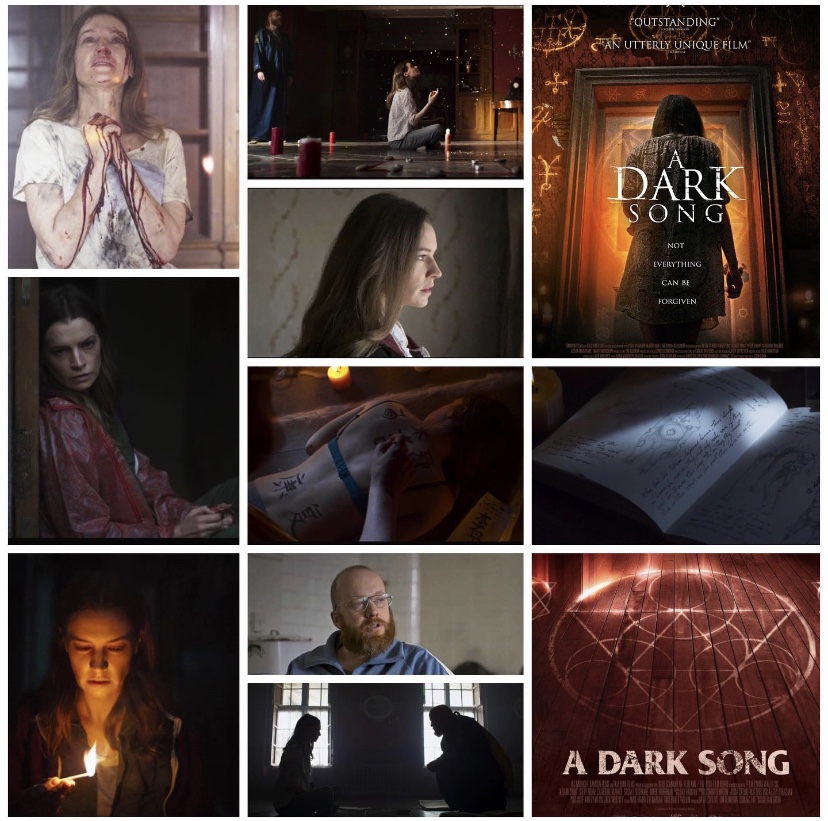
Liam Gavin’s A Dark Song

I always appreciate it when a horror film spends like 80% of its runtime lulling you into a trance with slow burn pacing and impossibly subtle advances in plot and then, in the final few minutes just cranks the dial up way past eleven and let’s it’s climax rip for a no holds barred grand finale that leaves you in the dust. Liam Gavin’s A Dark Song does precisely that and is superior quality atmospheric horror that sees a haunted, introverted young woman (Catherine Walker, who has an appropriately angelic presence) hire the services of a jaded, ill tempered occultist (Steve Oram) to guide her through a spiritual summoning ritual, for reasons that she’s.. not entirely honest about. So the two of them rent a small cottage in the remote English countryside (filmed just outside Dublin) and vigorously prepare to summon some otherworldly forces. Now, I wasn’t kidding when I said this is a slow burn, because for literally most of the film we see these two odd characters simply interacting, practicing occult magick, bickering and running about the house looking for signs that their efforts are even doing anything at all. It might feel interminable to an impatient viewer and I wouldn’t blame anyone for giving up at least halfway through. However, if you have the patience to stick it out through this very, very restrained and character based piece and make it to the final ten minutes or so… well, let’s just say you’ll be rewarded with one of the most harrowing, bonkers, surreal, atmospherically disorienting, thoroughly creepy final acts I’ve ever seen in the horror genre complete with a few dark narrative surprises and even a light one. It’s a brave, bold story structure and once the ritual takes hold, the heavens shake and the supersensible realm is made tangible, it’s nothing short of breathtaking and terrifying in equal measures, and all the more effective as a jarring thunderclap in the story after almost an entire runtime of only restless overcast skies. Terrific, unconventional and highly recommended.

-Nate Hill

The Breed

How scary can killer dogs be? I imagine in real life they’d be terrifying but in the horror genre (perhaps, Cujo aside) they’ve seldom gotten the aesthetic right and especially so in The Breed, a movie about some hard partying college kids on a remote, plane-only accessible island who find themselves hunted by a pack of angry, homicidal pooches. There isn’t much to it, it’s shot in striking broad daylight and the island isn’t much to look at scenery wise so in terms of atmosphere it’s kind of a dud. Honestly it’s strongest asset is the very young duo of Michelle Rodriguez and Taryn Manning, two edgy, cult actresses who don’t usually do the bikini clad slasher scream Queen stuff and as such are a standout here. The male actors are a few forgettable cookie cutter dude bros who make zero impression whatsoever. The production feels cheap, rushed and tactfully awkward, the dogs are good enough actors but, like, how hard is it to slather up some puppets in corn syrup blood, get a PA to dangle a drumstick on a string and have it look like they’re chasing people around an island? Oh and don’t be fooled by Wes Craven’s name above the title, he has nothing to do with this beyond an arbitrary executive producer’s credit. Silly times.

-Nate Hill

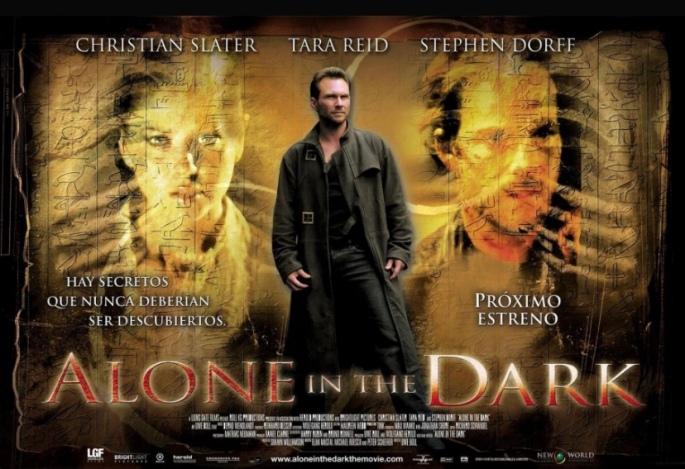
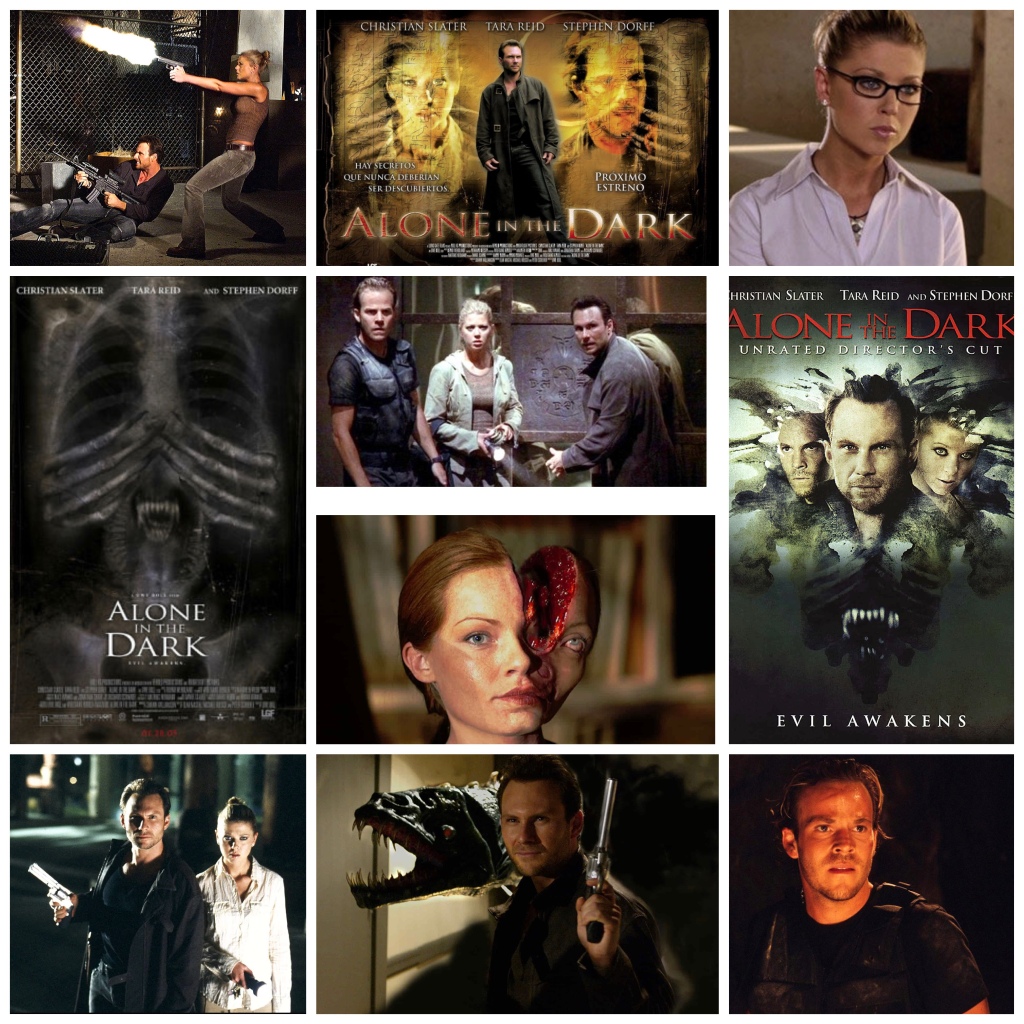
Uwe Boll’s Alone In The Dark

I know Uwe Boll’s reputation as a horror video game adaption filmmaker and I’ve seen a few of them so my personal expectations for Alone In The Dark were set pretty damn low, and yes it was a terrible godawful cheap mess but not… *quite* as bad as I was anticipating. Here’s the thing: I have years of watching B grade horror trash under my belt and when you’ve got that kind of buffer there’s not much, Boll’s output included, that can make you really, truly recoil, like I love trashy shit, it’s fun if it knows it’s place and fits it’s groove. This? This one is especially lowbrow and unapologetically so, as we see Christian Slater being a wannabe Blade/Van Helsing type monster hunter complete with an emo trench-coat, hilariously moody narration and a sexy/nerdy scientist sidekick played by Tara Reid who is about the farthest from nerdy scientist type you can get, which is great for a laugh here. Slater is embroiled in some murky supernatural hogwash involving human inter dimensional hybrid monster things that lurk around dark corners and disembowel people occasionally. He shoots some of them in between bouts of adorably sincere expository diarrhea dialogue and silly high tech gadgetry, and clashes with the gruff commander (Stephen Dorff) of a paranormal tactical squad and that’s about it. A weird subplot about an orphanage and the kids being used for experiments there back in the day went right over my head but I never played the game this is based on so that could be why, although I suspect it’s Boll’s haphazard direction and complete lack of focus in editing. I will hand it to the guy though for doing Vancouver proud, he not only films most of his stuff here in my city (and owns a restaurant in Gastown no less) but he actually sets it here too, so that Britannia Mines, Lions Gate Bridge and the Robson art gallery actually get to play themselves for once and not double for some hack USA location. This is cheap slipshod stuff, full of dodgy effects, indecipherably shadowy monster attacks and complete with an out of nowhere soft-core porn sex scene between Slater and Reid set to a giggle inducing emo lament by a group called ‘Nightwish’ who I’ve never heard of but outdo themselves in the Evanescence-lite department. This is one of the rare cases where there’s a sequel that’s way better than the original, they made a follow up with Lance Henriksen and Danny Trejo that actually attempts to do something worth watching, whereas this is just shameless, throw-in-the-towel dogshit.

-Nate Hill

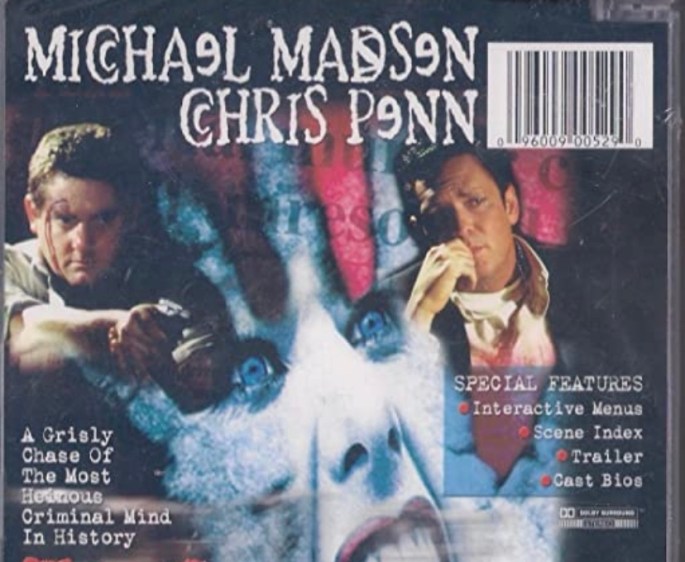
B Movie Glory: Papertrail aka Trail Of A Serial Killer

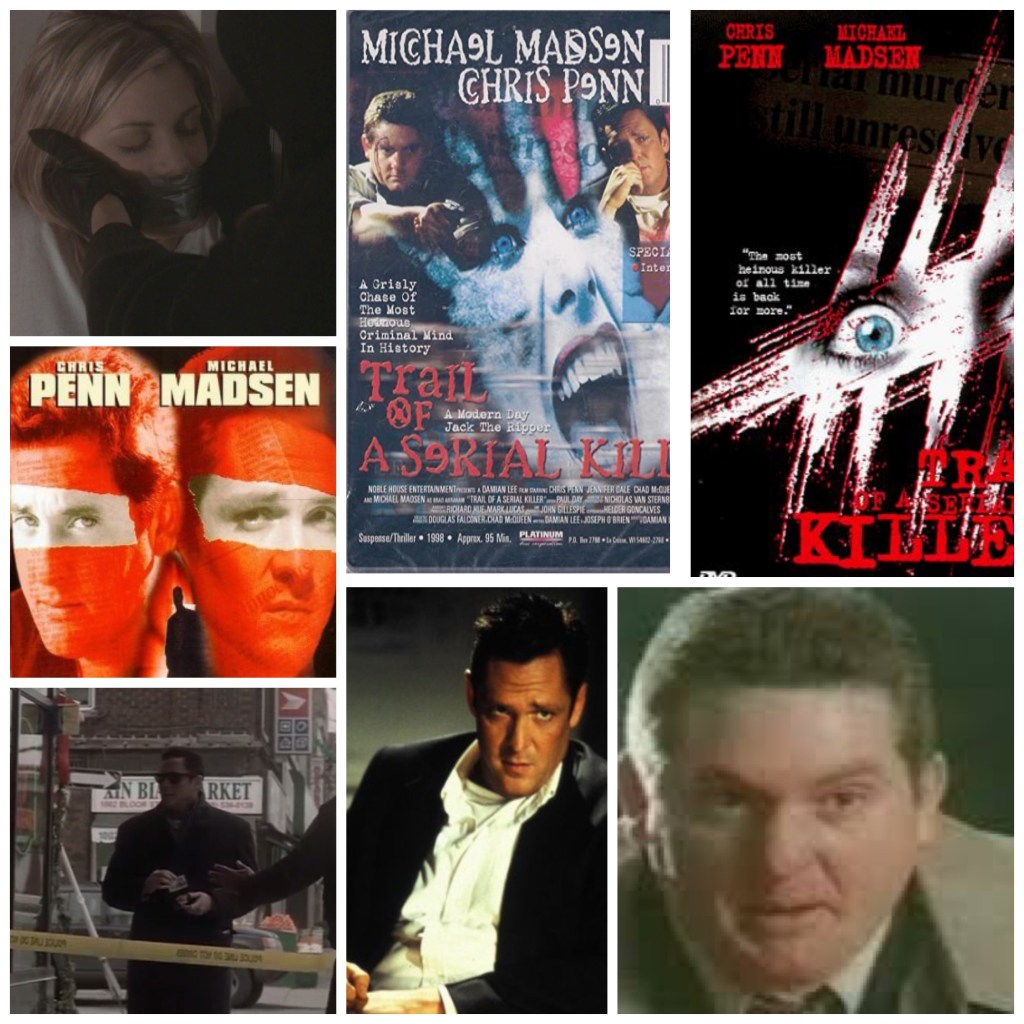
In the realm of cheap, lazy, perpetually nocturnal Seven ripoffs you can do worse than watching Papertrail aka Trail Of A Serial Killer but unfortunately you can also do way, way better. This is a murky, messily plotted, bizarrely acted, clunky, borderline incomprehensible mess that is given the dimmest bit of pedigree from two things: Michael Madsen and Chris Penn. The two have acted together quite a bit over the years before Chris’s untimely death and here they give notably overcooked tough guy turns as FBI Agents stationed in Toronto, one a weary, stressed out one (Madsen) and the other a disgraced unstable one (Penn). The latter is apparently a notoriously gifted asset for hunting killers in the tradition of Will Graham and such and is lured in by the former to track a murderer who has been eluding them for several years. Their investigation leads them to many dimly lit, depressing urban locales and eventually to the therapy group of a mysterious shrink (Jennifer Dale), one of whose patients, it seems, might just be the killer. While we’re on the subject of ripoffs, that idea is a blatant loft from the Bruce Willis erotic flick Colour Of Night, I might add. That’s about the most sense I could make out of the plot, which at best is a lurid frenzy of odd elements parading by and at worst is a flatlining series of WTF plot turns with no real interest. Penn was a genuinely good actor, despite what some people may tell you, and he isn’t half bad here as the near suicidal divorced lawman who is at the hysterical end of his rope. Madsen gives a performance that is just plain weird, he’s fired up and pissed in scenes that require him to be restrained and low key and then he’s oddly relaxed in instances where he should be on edge. It kind of works in a counterintuitive fashion, if you’re willing to overlook credibility and just accept that any Madsen is good Madsen in a film. This is honestly just a shamelessly trashy B grade pile of nonsense that I would never have lent ninety minutes of my time to if it didn’t star these two great actors, and I won’t lie in saying that if you aren’t an avid fan of both, you’re gonna hate this thing and resent giving it a shot.

-Nate Hill

Dark Places (2015)

Any fans of deep southern gothic potboilers with shamelessly lurid trappings, hectic, labyrinthine mysteries spanning decades acted wonderfully by a massive cast of character versions both old and young should greatly appreciate Dark Places as much as I did. It’s based on a book by Gillian Flynn who also penned the source material for David Fincher’s Gone Girl but for me this was a much, much stronger and more rewarding film. Fincher approached the material with his custom clinical, cynical tunnel vision detachment and meticulously calibrated style while director Gilles Paquet-Brenn adopts a much more sprawling, scattered, rough around the edges vernacular that is more narratively oblong and hazy yet no less compelling and even throws in the faintest glimmer of humanity. Charlize Theron is excellent as ever as Libby, the lone survivor of a farmhouse massacre that left her entire family dead when she was a kid, the killer never found and her left wandering as a broken adult trying to cope. The film intersperses dense, overlapping flashbacks to her difficult childhood life, a troubled brother (Tye Sheridan and Corey Stoll in present day scenes) who was ultimately blamed for the crimes, a desperate mother (Christina Hendricks) and aggressive deadbeat father (Sean Bridgers) who all may have had some hand in the events, although nothing is made clear until you are well beyond neck deep in this tragic, increasingly bizarre small town family saga. Chloe Grace Moretz gives a terrifically creepy performance as her brother’s unstable, untrustworthy teen girlfriend and there’s lots of solid supporting work from great folks like Glenn Moreshower, Andrea Roth, Jeff Chase, Laura Cayouette and Drea de Matteo as a shady stripper with ties to Libby’s past. You know this is a film for true crime fans (even if the story itself is fictitious) when a subplot literally features a club of true crime aficionados led by a twitchy Nicholas Hoult who reach out to Libby in attempts to help her bring the case to a close. There is a *lot* going on in this film, and while not all of it gels into an ultimately cohesive tapestry, the resulting patchwork quilt is beautifully scrappy, full of jagged loose threads and is just an awesome, inky black, deliberately overcooked, chokingly sleazy pit of depravity, hidden half truths, deplorable human beings and even some very well buried pathos that sneaks up out of the slime to surprise you in the back end of the final act. Theron anchors it with her haunted, pensive aura as a fiercely guarded woman who is likely a lot more vulnerable and damaged than she’d care to admit, and the messy, bloody trajectory she must descend down to solve an infamous murder she was unwittingly at the centre of. Absolutely great film.

-Nate Hill

Captain Ron

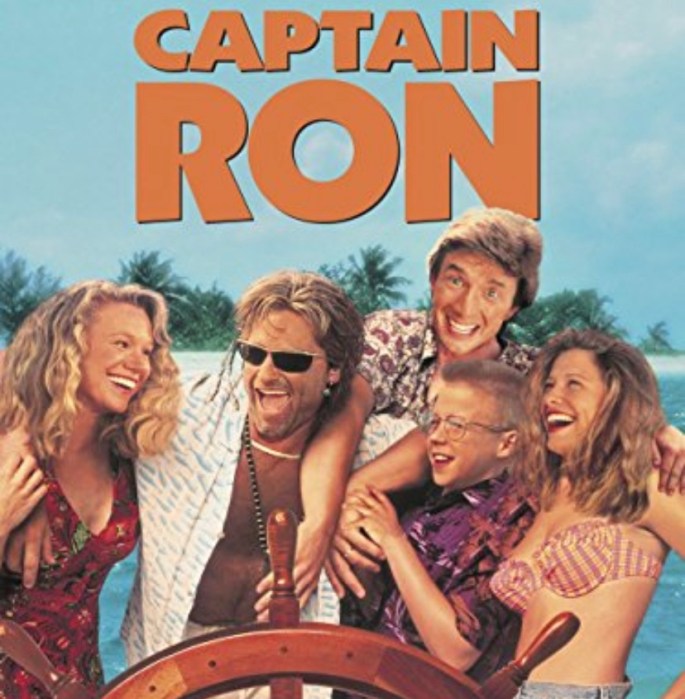
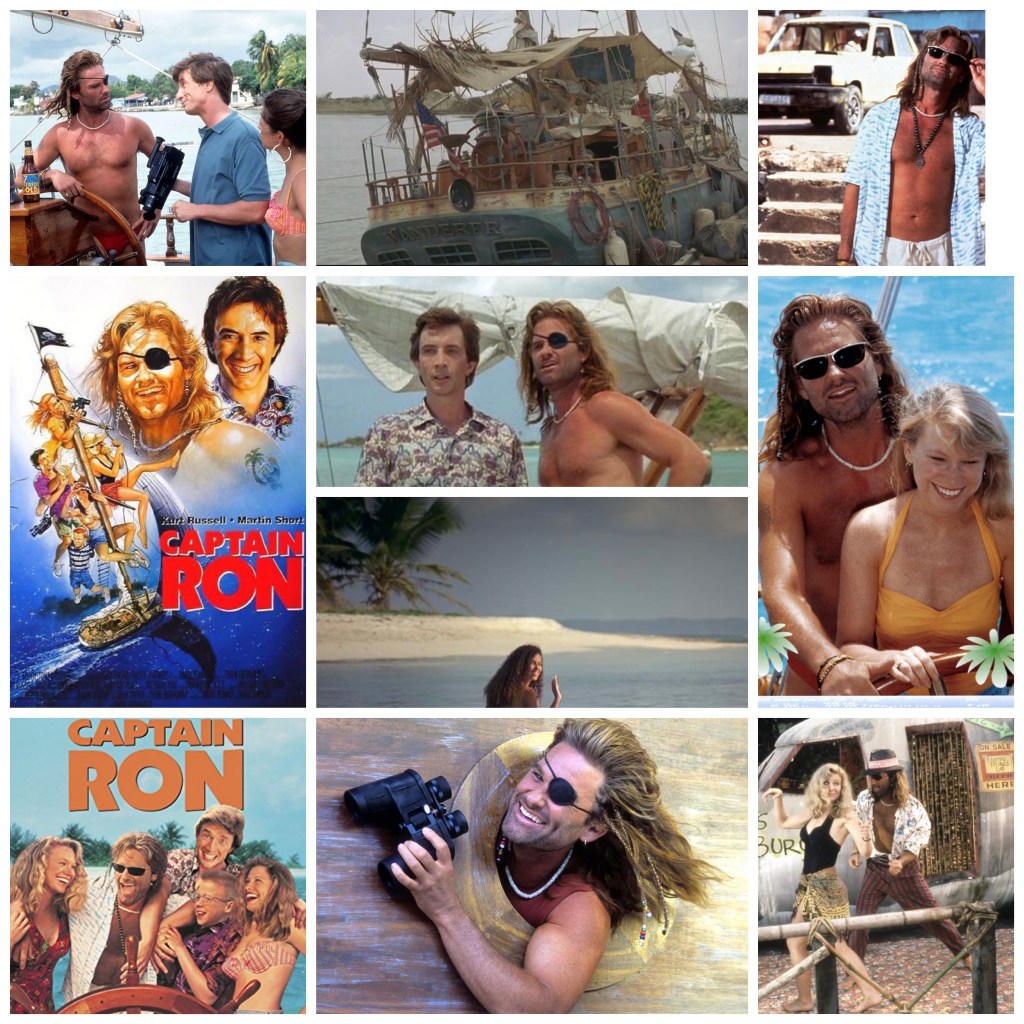
Kurt Russell doesn’t usually go for the comedy scripts so I wasn’t quite sure what to expect from Captain Ron but it was a legit blast of good times and the character he creates here is a legendary tornado of dreadlocked, suntanned, beer swillin’ manic energy. Martin Short plays a reliably high strung Chicago businessman who inherits a decent sized sailboat from a distant relative, and has to go down to the Caribbean to sail it back up before it can be appraised by an oily marine magnate (Paul Anka, of all people). So he decides to take his wife (Mary Kay Place) and two teenage kids along for the adventure, and since Russell’s renegade rascal Ron seems to be the only skipper on the rock who isn’t too hungover to be their guide and navigator, he hires him on the spot. What could go wrong? Well… not as much as I expected from the marketing on this thing but like… in a good way. The comedy is surprisingly restrained, very situational and well written where it could have been pretty 90’s silly slapstick and Russell’s performance, although loopy as all hell, is actually pretty subtle when it comes to getting those small, spur of the moment laughs that sneak in and become the funniest bits of the film. Like when he’s explaining the hierarchy of a ship crew to this clueless family and he goes “incentives are important. I learned that in rehab.” They encounter storms, pirates, packed harbours ready to party hard and armed ‘guerrillas’ (another joke that landed spectacularly) attempting to overthrow an unstable government and although Short’s attitude sometimes makes this feel like the ‘trip from hell downward spiral of insanity’ kind of flick it wants to be, it inadvertently just ends up having a great time out at sea and becomes a party, laidback hangout film, which is fine by me. This is thanks mainly to Russell and his effortless good ol’ boy charisma; even when he’s playing the most stoic, unfriendly badasses you always just get the sense that he’d be a guy you’d love to have a beer and just kick it with. Well you can do that here, and Captain Ron is one of the most easygoing, flat out hilarious and downright fun films of his career. Good times.

-Nate Hill

Ben Wheatley’s In The Earth

In The Earth is only the second film from Ben Wheatley I’ve seen, the first being his spunky noir shootout flick Free Fire which seems to be the odd duck out and a far cry from the dark, morose, esoteric folk horror fans are used to from him. This was a very interesting film and while the pieces don’t necessarily all fit together in a way that struck the ultimate timbre with me, it’s certainly a visually galvanizing, stylistically impressive work. As a research scientist (Joel Fry) and a park ranger (Ellora Torchia) trek deep into a wild forest in rural England on some sort of mission they encounter two very different individuals who are both trying to communicate and study some sort of… I dunno, entity or force that hides within the very structure of the natural world. There’s borderline zealot Zach (Reece Shearsmith) who lives as a homeless person would and approaches this being from a folk point of view, offering it iconography in a religious fashion like the pagans who lived in the region eons ago would have. His ex wife Olivia (Hayley Squires) lives in another region of the woods where nary the two stray into each other’s path (like most exes) and her efforts are a lot more scientific but no less bizarre, using complex machinery to reach out to this thing with light, sound and rhythm. The two leads find themselves stuck squarely between two duelling fanatics who are in way over their heads with a force of life neither can comprehend and are both slowly being driven mad by. And that’s as far as the plot goes in the realm of what is coherent and comprehensible anyways. The closest thing you could describe this entity as is a stone monolith punctuated by an opening through which you can view the stars, and nature on its terms but never is it presented as a physical or visible ethereal being beyond hints, abstract hallucinations and sounds out there in the dark. If that’s your thing than cool, I enjoyed the odd, surreal, impenetrable nature of it and recognized the welcome nods to many influences including Alex Garland’s Annihilation, M. Night Shyamalan’s The Happening and even John Carpenter’s Prince Of Darkness in a few brief strokes. Just don’t expect to walk out of this thing with answers; it’s a moody horror SciFi that quickly transforms itself into a wild arthouse romp from which there is no rhyme or reason to be distilled from but what one’s own intuition says.

-Nate Hill

Mark Pavia’s Fender Bender

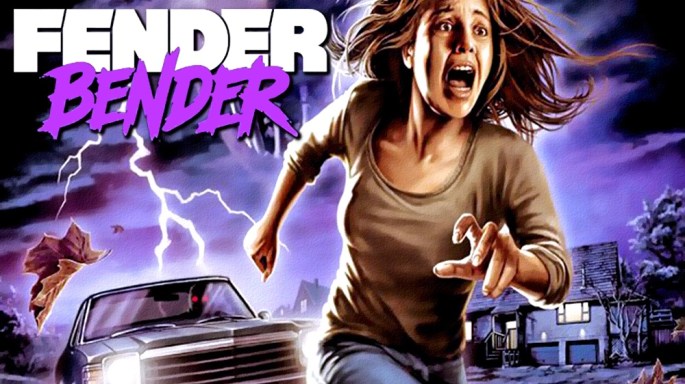
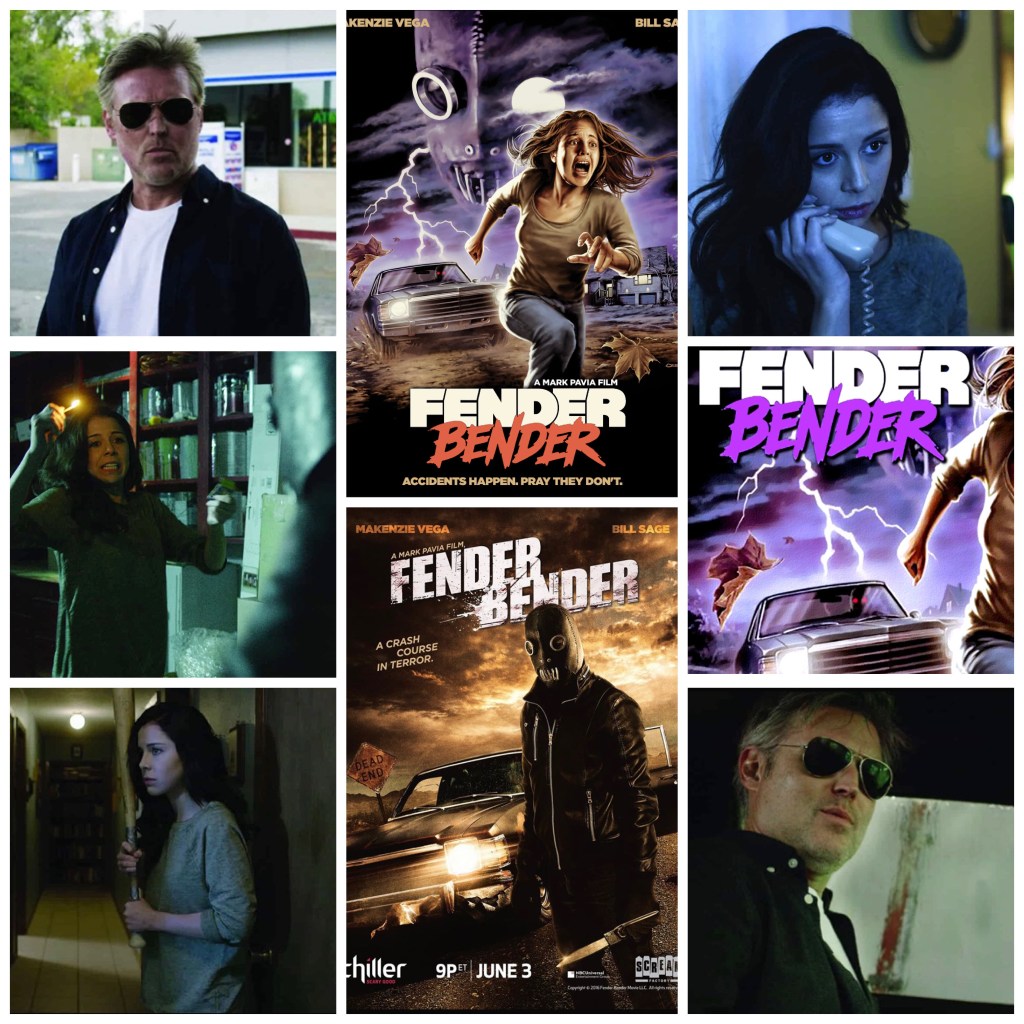
The next time you get into a mild vehicular dustup be careful how much of your personal information you give to the other party involved, lest you end up like the unfortunate girls in Mark Pavia’s Fender Bender, a vicious little Grindhouse exercise that doesn’t quite achieve genre greatness but is still good fun. When a teenage girl (Mackenzie Vega, Sin City) is rear ended by a weird guy (Bill Sage, American Psycho) in a mysterious black muscle car she exchanges information and heads home to face the disappointment and subsequent grounding alone at home from her parents for taking the car out, she discovers that that’s the least of her worries for the night. It turns out this guy, beyond just having creeper vibes, is a stalker/serial killer who deliberately causes fender benders and uses the insurance contact info to hunt girls down and murder them, and he’s on his way to her place. This leaves her to fight him off initially alone, and then with the help of two ditzy friends. Now, this is a competently made, atmospheric and very suspenseful piece and while I *usually* am not the type of person to be like “why didn’t this character do this” etc in terms of plot, these characters, including our lead, are especially stupid in their attempts to evade and overpower this guy, to the point where the ‘slasher trope’ excuse just doesn’t cut it. That aside it’s a good time and Sage is wonderfully sinister as this dude, credited simply as ‘The Driver.’ The score is done by an electronic group called Nightrunner and adds a lot of dark sonic synth ambience too, which is always great. Aside from how braindead the lead is in frantic situations this is a nice little retro slasher with tense set pieces and a genuinely memorable killer.

-Nate Hill

THE MICHAEL MANN FILES: THE LAST OF THE MOHICANS (1992)

I’ve never read anything by American novelist James Fenimore Cooper, author of the book from which The Last of the Mohicans was adapted. But if Mark Twain is to be believed a decent critic of letters, I’m not missing much. Or, to be precise and on the contrary, I’m missing a lot because, as a friend once opined, “I wish he were James Feniless Cooper.” So it seems that the consensus is that if Cooper was anything, it wasn’t economical. And neither, really, is filmmaker Michael Mann (though it’s not necessarily a bad thing with him). A man who toils in ostensible action films, Mann’s work slowly percolates before hitting a full roil as he allows minute details to create the fuller flavor when the action finally hits.

So it’s sort of a surprise that Mann’s adaptation of The Last of the Mohicans is such a tight and nimble affair that yet still feels robust and epic. But in all transparency, Mann’s film isn’t a finely combed reworking of the original source material, but is a copy of a copy; less adapted from the novel itself but from the 1936 adaptation by John L. Balderston, Daniel Moore, Paul Perez, and Philip Dunne which was the basis of the George Seitz-directed version of The Last of the Mohicans starring Randolph Scott.

Set in 1757 during the third year of the French and Indian war, The Last of the Mohicans spins the yarn of Cora (Madeline Stowe) and Alice (Jodhi May) Munro, daughters of British Colonel Edmund Munro (Maurice Roëves) who are attacked by their Mohawk-née-Huron guide, Magua (Russell Means) on a march to a military fort and are subsequently intercepted and led to safety by a frontier family unit made up of the white born/native raised Nathanial ‘Hawkeye’ Bumppo (Daniel Day-Lewis); his Mohican father, Chingachgook (Russell Means); and brother, Uncas (Eric Schweig). Throw in some frontier romance that looks like the cover of a million and one bodice-rippers that would litter the rack of a Safeway in years long extinguished, a gloriously unsubtle and full-blooded score by Randy Edelman and Trevor Jones, and Dante Spinotti’s cinematography making damn sure that every shot looks like a gorgeously textured painting, and you’ve got yourself one hell of a rousing adventure film that cleverly folds pulp into purpose.

If all of this sounds a little rustic for the glossy kind of urban plotting favored by Michael Mann, it’s not. For The Last of the Mohicans plays very well to Mann’s strengths and shows what makes him such a special filmmaker. Here the examination of a crime scene is replaced with the almost preternatural knowledge of just who and what slaughtered a defenseless frontier cabin. Nobody cases a score but Magua plots diligently and carefully to satiate his obsession with slaughtering the entire Munro family. Nobody has a history of existential baggage causing their personal lives to be high-tension quagmires of personal failure but there is an inevitable march to the same kind of doom and loneliness that befell Thief’s Frank and Miami Vice’s Sonny Crockett and caused the endings to their tales to contain bitter, Pyrrhic victories.

Aside from expanding the widescreen visual language that had eluded Mann the previous seven years during his sojourn in television, The Last of the Mohicans is perhaps the most foundational embodiment of the Mann hero. Nathanial Bumppo is a man without a heritage, a white man raised in a native family in a land that is wild and tangled beyond its small British foothold. Not only does this expand to Magua, likewise disconnected from his roots after being taken a slave by the Mohawk people, this also expands to Mann’s reflection of the America as contemporarily dressed westerns in which the protagonists reside in the absolute middle between law and lawlessness, even when they themselves are cops and/or criminals. Mann’s heroes are just the progeny of the cast of Sam Peckinpah’s The Wild Bunch; fiercely independent and untamed criminals with a modicum of personal honor battling against authority figures right on the dividing line of the two. This is why Nathanial’s declaration of “I do not call myself subject to much at all” sounds suspiciously like Frank’s “I am Joe the Boss of my own body.”

As is his wont to do, Mann’s insistence on giving Magua a third dimension and not rendering him a cartoon villain without proper motivation makes the character a little less than the symbolic Francis Dollarhyde from Manhunter who served as a literal reflection of the protagonist. Here, the antagonist is placed into much more devastating territory, painted as someone understandably twisted by a hate in regards to a tragedy with which the audience can empathize. After all, didn’t we cheer Clint Eastwood’s titular character in The Outlaw Josey Wales back in 1976 for doing pretty much the same thing? And let the record state that I don’t exactly not root for Magua to kill Colonel Monroe and eat his heart, I’m just a little bearish on him killing the kids.

Mann puts his actors through the absolute ringer as they traverse uphill and down dale in some pretty rough terrain, earning themselves every layer of dishevelment that occurs to their wardrobes along the way. And while the whole cast is amazing, special mention has to be given to Daniel Day-Lewis for giving straight men the meaning of what it is to look like a whole snack. Despite its technical prowess, flawless pacing, and containing some of the most beautiful cinematography this side of Barry Lyndon or The Duellists the secret sauce of The Last of the Mohicans is likely its casting. Every now and again, I see a tweet make the rounds that states “My sexual orientation is the cast of 1999’s The Mummy,” replete with four stills of its principles. Well, I’ll see your Mummy and raise you a Last of the Mohicans because I know of no other film that oozes base sexuality and affects its viewers quite like this one without doing much of anything at all (though, quite honestly, neither does The Mummy). For about 55 minutes into the film, Mann stages one of the most erotically charged moments of his career that is astonishing in its ability to raise the temperature to a ridiculous degree without showing a single thing outside a passionate kiss. And it serves as a reminder that, though not generally thought of as a composer of romantic moments, Michael Mann certainly knows how to create almost painfully gorgeous sequences of physical sensuality. When Madeline Stowe coos “The whole world is on fire,” one is tempted to mutter “Yeah it is. Go ahead and let it burn.”

Put another way, a family dinner with my much more conservative parents and sister turned into a literal thirst trap as my mom, a woman who thinks long hair looks positively awful on men, couldn’t help but bemoan the fact that Daniel Day-Lewis cut his hair after production on The Last of the Mohicans wrapped and my sister, generally demur in such moments, offered up “Now… see… I liked his brother in that.”

A little something for everyone, America.

(C) Copyright 2021, Patrick Crain